EP4036794A1 - Verfahren und vorrichtung zur prädiktion von überdichte einer menge - Google Patents
Verfahren und vorrichtung zur prädiktion von überdichte einer menge Download PDFInfo
- Publication number
- EP4036794A1 EP4036794A1 EP21821878.2A EP21821878A EP4036794A1 EP 4036794 A1 EP4036794 A1 EP 4036794A1 EP 21821878 A EP21821878 A EP 21821878A EP 4036794 A1 EP4036794 A1 EP 4036794A1
- Authority
- EP
- European Patent Office
- Prior art keywords
- monitored area
- persons
- checkpoint
- determining
- overcrowding
- Prior art date
- Legal status (The legal status is an assumption and is not a legal conclusion. Google has not performed a legal analysis and makes no representation as to the accuracy of the status listed.)
- Withdrawn
Links
Images

Classifications
-
- G—PHYSICS
- G06—COMPUTING OR CALCULATING; COUNTING
- G06V—IMAGE OR VIDEO RECOGNITION OR UNDERSTANDING
- G06V20/00—Scenes; Scene-specific elements
- G06V20/50—Context or environment of the image
- G06V20/52—Surveillance or monitoring of activities, e.g. for recognising suspicious objects
- G06V20/53—Recognition of crowd images, e.g. recognition of crowd congestion
-
- G—PHYSICS
- G06—COMPUTING OR CALCULATING; COUNTING
- G06Q—INFORMATION AND COMMUNICATION TECHNOLOGY [ICT] SPECIALLY ADAPTED FOR ADMINISTRATIVE, COMMERCIAL, FINANCIAL, MANAGERIAL OR SUPERVISORY PURPOSES; SYSTEMS OR METHODS SPECIALLY ADAPTED FOR ADMINISTRATIVE, COMMERCIAL, FINANCIAL, MANAGERIAL OR SUPERVISORY PURPOSES, NOT OTHERWISE PROVIDED FOR
- G06Q10/00—Administration; Management
- G06Q10/04—Forecasting or optimisation specially adapted for administrative or management purposes, e.g. linear programming or "cutting stock problem"
-
- G—PHYSICS
- G06—COMPUTING OR CALCULATING; COUNTING
- G06Q—INFORMATION AND COMMUNICATION TECHNOLOGY [ICT] SPECIALLY ADAPTED FOR ADMINISTRATIVE, COMMERCIAL, FINANCIAL, MANAGERIAL OR SUPERVISORY PURPOSES; SYSTEMS OR METHODS SPECIALLY ADAPTED FOR ADMINISTRATIVE, COMMERCIAL, FINANCIAL, MANAGERIAL OR SUPERVISORY PURPOSES, NOT OTHERWISE PROVIDED FOR
- G06Q10/00—Administration; Management
- G06Q10/06—Resources, workflows, human or project management; Enterprise or organisation planning; Enterprise or organisation modelling
- G06Q10/063—Operations research, analysis or management
- G06Q10/0635—Risk analysis of enterprise or organisation activities
-
- G—PHYSICS
- G07—CHECKING-DEVICES
- G07C—TIME OR ATTENDANCE REGISTERS; REGISTERING OR INDICATING THE WORKING OF MACHINES; GENERATING RANDOM NUMBERS; VOTING OR LOTTERY APPARATUS; ARRANGEMENTS, SYSTEMS OR APPARATUS FOR CHECKING NOT PROVIDED FOR ELSEWHERE
- G07C9/00—Individual registration on entry or exit
Definitions
- the present disclosure relates to the field of computer visions, and in particular to overcrowding prediction methods and overcrowding prediction apparatuses.
- Crowd density detection is to detect whether a number of persons in a closed area reaches a limit by an image recognition technology. When it is determined that the closed area is overcrowded, an official may be noted to limit a flow rate of persons entering the closed area, so as to prevent dangerous events.
- an overcrowding prediction method which is applied to a server.
- the method includes: obtaining a plurality of images of at least one checkpoint of a monitored area; according to the plurality of images of the at least one checkpoint of the monitored area, determining a number of already-accommodated persons in the monitored area and a net inflow rate of persons to the monitored area; and according to the number of already-accommodated persons in the monitored area, a number of accommodatable persons in the monitored area and the net inflow rate of persons to the monitored area, determining an overcrowding time of the monitored area.
- determining the number of already-accommodated persons in the monitored area includes: identifying a number of persons entering the monitored area and a number of persons leaving the monitored area from the plurality of images of the at least one checkpoint of the monitored area; according to the number of persons entering the monitored area and the number of persons leaving the monitored area, determining the number of already-accommodated persons in the monitored area.
- the method before determining the overcrowding time of the monitored area, the method further includes: determining the monitored area is at a risk of overcrowding in response to the net inflow rate of persons to the monitored area is positive.
- the method further includes: sending the overcrowding time of the monitored area to a terminal device.
- determining the number of already-accommodated persons in the monitored area includes: for each of the plurality of checkpoints, from a plurality of images of the checkpoint, identifying a number of persons entering the monitored area via the checkpoint and a number of persons leaving the monitored area via the checkpoint; obtaining a total number of persons entering the monitored area by adding up the numbers of persons entering the monitored area via all of the checkpoints; obtaining a total number of persons leaving the monitored area by adding up the numbers of persons leaving the monitored area via all of the checkpoints; determining the number of already-accommodated persons in the monitored area by subtracting the total number of persons leaving the monitored area from the total number of persons entering the monitored area.
- determining the net inflow rate of persons to the monitored area includes: for each of the plurality of checkpoints, identifying a number of persons entering the monitored area via the checkpoint and a number of persons leaving the monitored area via the checkpoint within a target time period from a plurality of images of the checkpoint; obtaining an inflow rate of persons at the checkpoint by dividing the number of persons entering the monitored area via the checkpoint with a time length of the target time period; and obtaining an outflow rate of persons at the checkpoint by dividing the number of persons leaving the monitored area via the checkpoint with the time length of the target time period; obtaining an inflow rate of persons to the monitored area by adding up the inflow rates of persons at all of the checkpoints; obtaining an outflow rate of persons from the monitored area by adding up the outflow rates of persons at all of the checkpoints; and determining the net inflow rate of
- determining the net inflow rate of persons to the monitored area includes: for each of the plurality of checkpoints, identifying a number of persons entering the monitored area via the checkpoint and a number of persons leaving the monitored area via the checkpoint within a target time period from a plurality of images of the checkpoint; obtaining an inflow rate of persons at the checkpoint by dividing the number of persons entering the monitored area via the checkpoint with a time length of the target time period; obtaining an outflow rate of persons at the checkpoint by dividing the number of persons leaving the monitored area via the checkpoint with the time length of the target time period; and obtaining a net inflow rate of persons at the checkpoint by subtracting the outflow rate of persons at the checkpoint from the inflow rate of persons at the checkpoint; and determining the net inflow rate of persons to the monitored area by adding up the net inflow rates of persons at all of the
- an overcrowding prediction apparatus configured to obtain a plurality of images of at least one checkpoint of a monitored area; a first determining module, configured to, according to the plurality of images of the at least one checkpoint of the monitored area, determine a number of already-accommodated persons in the monitored area and a net inflow rate of persons to the monitored area; a second determining module, configured to, according to the number of already-accommodated persons in the monitored area, a number of accommodatable persons in the monitored area and the net inflow rate of persons to the monitored area, determine an overcrowding time of the monitored area.
- the first determining module is configured to: identify a number of persons entering the monitored area and a number of persons leaving the monitored area from the plurality of images of the at least one checkpoint of the monitored area; according to the number of persons entering the monitored area and the number of persons leaving monitored area, determine the number of already-accommodated persons in the monitored area.
- the first determining module is configured to: identify a number of persons entering the monitored area and a number of persons leaving the monitored area within a target time period from the plurality of images of the at least one checkpoint of the monitored area; according to the number of persons entering the monitored area and the number of persons leaving the monitored area within the target time period, determine an inflow rate of persons at the at least one checkpoint and an outflow rate of persons at the at least one checkpoint; and according to the inflow rate of persons at the at least one checkpoint and the outflow rate of persons at the at least one checkpoint, determine the net inflow rate of persons to the monitored area.
- the second determining module is configured to: according to the number of already-accommodated persons in the monitored area and the number of accommodatable persons in the monitored area, determine a number of remaining accommodatable persons in the monitored area; and according to the number of remaining accommodatable persons in the monitored area and the net inflow rate of persons to the monitored area, determine the overcrowding time of the monitored area.
- the apparatus further includes a third determining module, configured to determine the monitored area is at a risk of overcrowding in response to the net inflow rate of persons to the monitored area is positive.
- the third determining module is further configured to: determine the monitored area is not at a risk of overcrowding in response to the net inflow rate of persons to the monitored area is negative.
- an electronic device including a memory and a processor, where the memory is configured to store instructions executable by the processor; and the processor is configured to perform various optional overcrowding prediction methods of the first aspect of the present disclosure by executing the executable instructions.
- a storage medium storing computer programs thereon, where the computer programs implement various optional overcrowding prediction methods of the first aspect when executed by a processor.
- a processor when executing the computer program, a processor implements various optional overcrowding prediction methods of the first aspect.
- a current number of persons inside the closed area can be determined based on a crowd counting method.
- determining the current number of persons inside the closed area it may not be enough to predict an overcrowding time of the closed area accurately and thus it is impossible to take some measures in advance to prevent overcrowding.
- the embodiments of the present disclosure provide overcrowding prediction methods and overcrowding prediction apparatuses, so as to solve the problem that an overcrowding time of a closed area cannot be accurately predicted.
- an overcrowding time of the monitored area may be determined, thereby improving the prediction accuracy of the overcrowding time/the time at which overcrowding will occur.
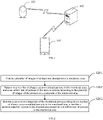
- FIG. 1 is a schematic diagram illustrating an application scenario of an overcrowding prediction method according to an embodiment of the present disclosure.
- images of at least one checkpoint of a monitored area may be acquired in real time by at least one image acquisition device 101 and then sent to a server 102.
- the server 102 determines whether the monitored area is at a risk of overcrowding according to a plurality of images of the at least one checkpoint of the monitored area, and if the monitored area is at the risk of overcrowding, the server 102 may further determine an overcrowding time/a time at which overcrowding will occur.
- the server 102 may send the overcrowding time to a terminal device 103, such that a manager may take measures to prevent overcrowding based on the overcrowding time displayed on the terminal device 103.
- the server 102 may be a server or a server in a cloud service platform.
- the server 102 may receive images of the at least one checkpoint of the monitored area from the at least one image acquisition device 101 and send an overcrowding time to the terminal device 103.
- the monitored area may be a closed area such as a building, a park and a library.
- the application scenario of the embodiments of the present disclosure may be the application scenario shown in FIG. 1 but not limited thereto.
- the embodiments of the present disclosure may be further applied to other scenarios requiring overcrowding prediction.
- overcrowding prediction method may be implemented by an overcrowding prediction apparatus provided by the embodiments of the present disclosure, and the overcrowding prediction apparatus may be a part or all of a particular device, for example, may be a server or a processor in the server.
- FIG. 2 is a flowchart illustrating an overcrowding prediction method according to an embodiment of the present disclosure.
- the execution subject is a server.
- the method includes steps S201-S203.
- the monitored area may be a closed area such as a building, a park and a library.
- the at least one checkpoint each may be an exit or entrance of the monitored area.
- an image acquisition device may be disposed at the checkpoint of the monitored area to acquire images of the checkpoint of the monitored area in real time and send the images of the checkpoint of the monitored area to a server, such that the server stores the images of the checkpoint of the monitored area in its memory.
- the server may extract a plurality of images of the checkpoint of the monitored area from the memory.
- a number of the at least one checkpoint of the monitored area is not limited in the embodiments of the present disclosure, which may be one or more.
- the server needs to obtain a plurality of images of the plurality of checkpoints.
- a number of already-accommodated persons in the monitored area and a net inflow rate of persons to the monitored area are determined according to the plurality of images of the at least one checkpoint of the monitored area.
- the server may determine the number of already-accommodated persons in the monitored area and the net inflow rate of persons to the monitored area according to the plurality of images of the at least one checkpoint of the monitored area.
- the net inflow rate of persons may be a difference between an inflow rate of persons and an outflow rate of persons.
- the server may firstly identify a number of persons entering the monitored area and a number of persons leaving the monitored area from the plurality of images of the at least one checkpoint of the monitored area. Next, the server determines the number of already-accommodated persons in the monitored area according to the number of persons entering the monitored area and the number of persons leaving the monitored area.
- the server may determine a net inflow number of persons at each checkpoint according to a number of persons entering the monitored area via each checkpoint and a number of persons leaving the monitored area via each checkpoint, and then obtain the number of already-accommodated persons in the monitored area by adding up the net inflow numbers of persons at all of the checkpoints.
- the server may obtain a total number of persons entering the monitored area by adding up the numbers of persons entering the monitored area via all of the checkpoints, and obtain a total number of persons leaving the monitored area by adding up the numbers of persons leaving the monitored area via all of the checkpoints.
- the server may determine the number of already-accommodated persons in the monitored area by subtracting the total number of persons leaving the monitored area from the total number of persons entering the monitored area.
- the manner in which the number of persons entering the monitored area and the number of persons leaving the monitored area are determined is not limited in the embodiments of the present disclosure, and therefore any available image recognition technology may be employed.
- the number of persons entering the monitored area and the number of persons leaving the monitored area may be determined by a cross-line counting method.
- the server may firstly identify a number of persons entering the monitored area and a number of persons leaving the monitored area within a target time period from a plurality of images of the at least one checkpoint of the monitored area, and then determine an inflow rate of persons at the at least one checkpoint and an outflow rate of persons at the at least one checkpoint according to the number of persons entering the monitored area and the number of persons leaving the monitored area within the target time period. Next, the server determines the net inflow rate of persons to the monitored area according to the inflow rate of persons at the at least one checkpoint and the outflow rate of persons at the at least one checkpoint.
- a time length of the target time period is not limited. Therefore, the target time period may be a time period with a time point at which an overcrowding time is detected (referred to as detection time point) as ending time point. Illustratively, the target time period may be 60 seconds prior to the detection time point, or 120 seconds prior to the detection time point.
- an overcrowding time of the monitored area is determined according to the number of already-accommodated persons in the monitored area, a number of accommodatable persons in the monitored area and the net inflow rate of persons to the monitored area.
- the server may determine the overcrowding time of the monitored area according to the number of already-accommodated persons in the monitored area, the number of accommodatable persons in the monitored area and the net inflow rate of persons to the monitored area.
- the server may determine a number of remaining accommodatable persons in the monitored area according to the number of already-accommodated persons in the monitored area and the number of accommodatable persons in the monitored area. Next, the server may determine the overcrowding time of the monitored area according to the number of remaining accommodatable persons in the monitored area and the net inflow rate of persons to the monitored area.
- the server may further detect the net inflow rate of persons to the monitored area. If the net inflow rate of persons to the monitored area is negative, it indicates that more people leave the monitored area than enter the monitored area. In this case, the server may determine that the monitored area is not at the risk of overcrowding. As a result, the server no longer needs to determine the overcrowding time. If the net inflow rate of persons to the monitored area is positive, it indicates that more people enter the monitored area than leave the monitored area. In this case, the server determines that the monitored area is at the risk of overcrowding, and thus needs to determine the overcrowding time.
- the server may determine the monitored area is already overcrowded.
- the server may send the overcrowding time of the monitored area to a terminal device, such that the terminal device displays the overcrowding time and sends an overcrowding prompt to a manager.
- the manager may take measures in time to prevent overcrowding.
- overcrowding prediction method firstly, a plurality of images of at least one checkpoint of a monitored area are obtained; and then a number of already-accommodated persons in the monitored area and a net inflow rate of persons to the monitored area are determined according to the plurality of images of the at least one checkpoint of the monitored area; and finally, a overcrowding time of the monitored area is determined according to the number of already-accommodated persons in the monitored area, a number of accommodatable persons in the monitored area and the net inflow rate of persons to the monitored area.
- the overcrowding time/the time at which overcrowding will occur can be predicted based on the number of already-accommodated persons in the monitored area, the number of accommodatable persons in the monitored area and the net inflow rate of persons to the monitored area, thereby improving the prediction accuracy of the time at which overcrowding will occur.
- FIG. 3 is a flowchart illustrating another overcrowding prediction method according to an embodiment of the present disclosure.
- the execution subject is a server.
- the method includes steps S301-S306.
- a number of persons entering the monitored area and a number of persons leaving the monitored area are identified from the plurality of images of the at least one checkpoint of the monitored area.
- the number of persons entering the monitored area and the number of persons leaving the monitored area may be counted from a preset time point until a time point at which the overcrowding time is detected.
- the preset time point may be 3 o'clock PM each day.
- a number of already-accommodated persons in the monitored area is determined according to the number of persons entering the monitored area and the number of persons leaving the monitored area.
- the server may obtain the number of already-accommodated persons in the monitored area by subtracting the number of persons leaving the monitored area from the number of persons entering the monitored area.
- the server may, for each of the plurality of checkpoints, firstly identify a number of persons entering the monitored area via the checkpoint and a number of persons leaving the monitored area via the checkpoint from a plurality of images of the checkpoint. Next, the server may determine a net inflow number of persons at the checkpoint by subtracting the number of persons leaving the monitored area via the checkpoint from the number of persons entering the monitored area via the checkpoint. Finally, the server may obtain the number of already-accommodated persons in the monitored area by adding up the net inflow numbers of persons at all of the checkpoints.
- the server may, for each of the plurality of checkpoints, firstly identify a number of persons entering the monitored area via the checkpoint and a number of persons leaving the monitored area via the checkpoint from a plurality of images of the checkpoint. Next, the server may obtain a total number of persons entering the monitored area by adding up the numbers of persons entering the monitored area via all of the checkpoints; and obtain a total number of persons leaving the monitored area by adding up the numbers of persons leaving the monitored area via all of the checkpoints. Finally, the server may determine the number of already-accommodated persons in the monitored area by subtracting the total number of persons leaving the monitored area from the total number of persons entering the monitored area.
- an inflow rate of persons at the at least one checkpoint and an outflow rate of persons at the at least one checkpoint are determined according to a number of persons entering the monitored area and a number of persons leaving the monitored area within a target time period.
- a net inflow rate of persons to the monitored area is determined according to the inflow rate of persons at the at least one checkpoint and the outflow rate of persons at the at least one checkpoint.
- the server may obtain an inflow rate of persons to the monitored area by adding up the inflow rates of persons at all of the checkpoints, and obtain an outflow rate of persons from the monitored area by adding up the outflow rates of persons at all of the checkpoints.
- the server may determine the net inflow rate of persons to the monitored area by subtracting the outflow rate of persons from the monitored area from the inflow rate of persons to the monitored area.
- an overcrowding time of the monitored area is determined according to the number of already-accommodated persons in the monitored area, the number of accommodatable persons in the monitored area and the net inflow rate of persons to the monitored area.
- step S203 shown in FIG. 2 for understanding the step S306 and thus relevant contents will not be repeated herein.
- FIG. 4 is a flowchart illustrating yet another overcrowding prediction method according to an embodiment of the present disclosure.
- the execution subject is a server.
- the method includes steps S401-S404.
- a number of already-accommodated persons in the monitored area and a net inflow rate of persons to the monitored area are determined according to the plurality of images of the at least one checkpoint of the monitored area.
- a number of remaining accommodatable persons in the monitored area is determined according to the number of already-accommodated persons in the monitored area and a number of accommodatable persons in the monitored area.
- the server may obtain the number of remaining accommodatable persons in the monitored area by subtracting the number of already-accommodated persons Cnt_cur in the monitored area from the number of accommodatable persons Cnt_thresh in the monitored area.
- the server may input the number of remaining accommodatable persons in the monitored area and the net inflow rate of persons to the monitored area into an algorithm model shown in the formula (1) to determine the overcrowding time of the monitored area.
- a plurality of images of at least one checkpoint of the monitored area are firstly obtained.
- a number of already-accommodated persons in the monitored area and a net inflow rate of persons to the monitored area are determined according to the plurality of images of the at least one checkpoint of the monitored area.
- an overcrowding time of the monitored area is determined according to the number of already-accommodated persons in the monitored area, the number of accommodatable persons in the monitored area and the net inflow rate of persons to the monitored area.
- the overcrowding time of the monitored area is sent to a terminal device.
- the overcrowding time can be predicted based on the number of already-accommodated persons in the monitored area, the number of accommodatable persons in the monitored area and the net inflow rate of persons to the monitored area, thereby improving the prediction accuracy of the overcrowding time.
- the program may be stored in a computer readable storage medium.
- the program may be executed to perform the steps including the above method embodiments, whereas the storage medium includes read only memory (ROM), random access memory (RAM), magnetic diskette, or compact disk and the like which may store program codes.
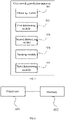
- FIG. 5 is a structural schematic diagram illustrating an overcrowding prediction apparatus according to an embodiment of the present disclosure.
- the overcrowding prediction apparatus may be implemented by software, hardware or a combination of both to perform the overcrowding prediction method of the above embodiments. As shown in FIG.
- the overcrowding prediction apparatus includes an obtaining module 501, configured to obtain a plurality of images of at least one checkpoint of a monitored area; a first determining module 502, configured to, according to the plurality of images of the at least one checkpoint of the monitored area, determine a number of already-accommodated persons in the monitored area and a net inflow rate of persons to the monitored area; a second determining module 503, configured to, according to the number of already-accommodated persons in the monitored area, a number of accommodatable persons in the monitored area and the net inflow rate of persons to the monitored area, determine an overcrowding time of the monitored area.
- the first determining module 502 is configured to identify a number of persons entering the monitored area and a number of persons leaving the monitored area from the plurality of images of the at least one checkpoint of the monitored area; determine the number of already-accommodated persons in the monitored area according to the number of persons entering the monitored area and the number of persons leaving the monitored area.
- the first determining module 502 is configured to identify a number of persons entering the monitored area and a number of persons leaving the monitored area within a target time period from the plurality of images of the at least one checkpoint of the monitored area; determine an inflow rate of persons at the at least one checkpoint and an outflow rate of persons at the at least one checkpoint according to the number of persons entering the monitored area and the number of persons leaving the monitored area within the target time period; and determine the net inflow rate of persons to the monitored area according to the inflow rate of persons at the at least one checkpoint and the outflow rate of persons at the at least one checkpoint.
- the first determining module 502 is configured to identify a number of persons entering the monitored area and a number of persons leaving the monitored area within a target time period from the plurality of images of the at least one checkpoint of the monitored area; determine a net inflow number of persons to the monitored area according to the number of persons entering the monitored area and the number of persons leaving the monitored area within the target time period; and determine the net inflow rate of persons to the monitored area according to the net inflow number of persons to the monitored area.
- the second determining module 503 is configured to determine a number of remaining accommodatable persons in the monitored area according to the number of already-accommodated persons in the monitored area and the number of accommodatable persons in the monitored area; determine the overcrowding time of the monitored area according to the number of remaining accommodatable persons in the monitored area and the net inflow rate of persons to the monitored area.
- the apparatus further includes a third determining module 505, configured to determine the monitored area is at a risk of overcrowding in response to the net inflow rate of persons to the monitored area is positive.
- the third determining module 505 is further configured to determine the monitored area is not at a risk of overcrowding in response to the net inflow rate of persons to the monitored area is negative.
- the apparatus further includes a sending module 504, configured to send the overcrowding time of the monitored area to a terminal device.
- the first determining module 502 is configured to, for each of the plurality of checkpoints, identify a number of persons entering the monitored area via the checkpoint and a number of persons leaving the monitored area via the checkpoint from a plurality of images of the checkpoint; determine a net inflow number of persons at the checkpoint according to the number of persons entering the monitored area via the checkpoint and the number of persons leaving the monitored area via the checkpoint; and obtain the number of already-accommodated persons in the monitored area by adding up the inflow numbers of persons at all of the checkpoints.
- the first determining module 502 is configured to, for each of the plurality of checkpoints, identify a number of persons entering the monitored area via the checkpoint and a number of persons leaving the monitored area via the checkpoint from a plurality of images of the checkpoint; obtain a total number of persons entering the monitored area by adding up the numbers of persons entering the monitored area via all of the checkpoints; obtain a total number of persons leaving the monitored area by adding up the numbers of persons leaving the monitored area via all of the checkpoints; determine the number of already-accommodated persons in the monitored area by subtracting the total number of persons leaving the monitored area from the total number of persons entering the monitored area.
- the first determining module 502 is configured to, for each of the plurality of checkpoints, identify a number of persons entering the monitored area via the checkpoint and a number of persons leaving the monitored area via the checkpoint within a target time period from a plurality of images of the checkpoint; obtain an inflow rate of persons at the checkpoint by dividing the number of persons entering the monitored area via the checkpoint with a time length of the target time period; and obtain an outflow rate of persons at the checkpoint by dividing the number of persons leaving the monitored area via the checkpoint with the time length of the target time period; obtain an inflow rate of persons to the monitored area by adding up the inflow rates of persons at all of the checkpoints; obtain an outflow rate of persons from the monitored area by adding up the outflow rates of persons at all of the checkpoints; and determine the net inflow rate of persons to the monitored area by subtracting the outflow rate of persons from the monitored area from the inflow rate of persons to the monitored area.
- the first determining module 502 is configured to, for each of the plurality of checkpoints, identify a number of persons entering the monitored area via the checkpoint and a number of persons leaving the monitored area via the checkpoint within a target time period from a plurality of images of the checkpoint; obtain an inflow rate of persons at the checkpoint by dividing the number of persons entering the monitored area via the checkpoint with a time length of the target time period; obtain an outflow rate of persons at the checkpoint by dividing the number of persons leaving the monitored area via the checkpoint with the time length of the target time period; and obtain a net inflow rate of persons at the checkpoint by subtracting the outflow rate of persons at the checkpoint from the inflow rate of persons at the checkpoint; and determine the net inflow rate of persons to the monitored area by adding up the net inflow rates of persons at all of the checkpoints.
- the overcrowding prediction apparatus provided by the embodiments of the present disclosure may perform the overcrowding prediction method of the above method embodiments, and due to similar implementation principle and technical effects, no redundant descriptions will be made herein.
- FIG. 6 is a structural schematic diagram illustrating an electronic device according to an embodiment of the present disclosure. As shown in FIG. 6 , the electronic device includes at least one processor 601 and a memory 602. In FIG. 6 , an electronic device including one processor is taken as an example.
- the memory 602 is configured to store programs. Specifically, the programs include program codes and the program codes include computer operation instructions.
- the memory 602 may include high speed random access memory (RAM) or non-volatile memory, for example, at least one magnetic disk memory.
- RAM high speed random access memory
- non-volatile memory for example, at least one magnetic disk memory.
- the at least one processor 601 each is configured to execute the computer executable instructions in the memory 602 to implement the overcrowding prediction method as above.
- the processor 601 may be a Central Processing Unit (CPU), or an Application Specific Integrated Circuit (ASIC), or configured as one or more integrated circuits for implementing the embodiments of the present disclosure.
- the communication interface, the memory 602 and the processor 601 may be interconnected through a bus to complete mutual communications.
- the bus may be a bus of Industry Standard Architecture (ISA), a bus of Peripheral Component (PCI), or a bus of Extended Industry Standard Architecture (EISA) or the like.
- ISA Industry Standard Architecture
- PCI Peripheral Component
- EISA Extended Industry Standard Architecture
- the bus may include address bus, data bus, control bus and the like, but does not mean only one bus or one type of bus.
- the communication interface, the memory 602 and the processor 601 are implemented by integrating in one chip, the communication interface, the memory 602 and the processor 601 may complete communication via an interval interface.
- an overcrowding prediction system including an image acquisition device, a server and a terminal device.
- the image acquisition device is configured to acquire images of at least one checkpoint of a monitored area
- the server is configured to determine an overcrowding time and send it to the terminal device
- the terminal device is configured to receive and display the overcrowding time.
- One or more embodiments of the present disclosure further provide a chip including a processor and an interface.
- the interface is configured to input and output data or instructions processed by the processor.
- the processor is configured to perform the method provided in the above embodiments.
- the chip may be applied to an overcrowding prediction apparatus.
- One or more embodiments of the present disclosure further provide a program product, for example, a computer readable storage medium.
- the program product stores instructions.
- a computer may perform the overcrowding prediction methods provided by the above method embodiments when the instructions run on the computer.
- the above embodiments may be implemented wholly or partially by software, hardware, firmware or any combination thereof.
- the embodiments may be implemented partially or wholly in the form of computer program product.
- the computer program product includes one or more computer instructions.
- the computer program instructions are loaded and executed on a computer, the flows or functions according to the embodiments of the present disclosure are generated partially or wholly.
- the computer may be a general computer, a dedicated computer, a computer network, or other programmable apparatus.
- the computer instructions may be stored in the computer readable storage medium or transmitted from one computer readable storage medium to another computer readable storage medium, for example, the computer instructions may be transmitted from one website, computer, server or data center to another website, computer, server or data center in a wired (for example, coaxial cable, optical fiber, DSL) or wireless (for example, infrared, wireless, microwave and the like) manner.
- the computer readable storage medium may be any available medium accessible by a computer or a data storage device such as a server and a data center including one or more available mediums.
- the available medium may be magnetic medium (for example, floppy disk, hard disk and magnetic tape), optical medium (for example, DVD), or semiconductor medium (for example, Solid State Disk (SSD)) or the like.
Landscapes
- Engineering & Computer Science (AREA)
- Business, Economics & Management (AREA)
- Human Resources & Organizations (AREA)
- General Physics & Mathematics (AREA)
- Physics & Mathematics (AREA)
- Economics (AREA)
- Strategic Management (AREA)
- Theoretical Computer Science (AREA)
- Entrepreneurship & Innovation (AREA)
- Tourism & Hospitality (AREA)
- Development Economics (AREA)
- Game Theory and Decision Science (AREA)
- General Business, Economics & Management (AREA)
- Marketing (AREA)
- Operations Research (AREA)
- Quality & Reliability (AREA)
- Multimedia (AREA)
- Educational Administration (AREA)
- Image Analysis (AREA)
- Closed-Circuit Television Systems (AREA)
- Alarm Systems (AREA)
- Testing, Inspecting, Measuring Of Stereoscopic Televisions And Televisions (AREA)
Applications Claiming Priority (2)
| Application Number | Priority Date | Filing Date | Title |
|---|---|---|---|
| CN202010510936.4A CN111652161A (zh) | 2020-06-08 | 2020-06-08 | 人群过密预测方法、装置、电子设备及存储介质 |
| PCT/CN2021/098382 WO2021249306A1 (zh) | 2020-06-08 | 2021-06-04 | 人群过密预测方法及装置 |
Publications (2)
| Publication Number | Publication Date |
|---|---|
| EP4036794A1 true EP4036794A1 (de) | 2022-08-03 |
| EP4036794A4 EP4036794A4 (de) | 2023-01-25 |
Family
ID=72344845
Family Applications (1)
| Application Number | Title | Priority Date | Filing Date |
|---|---|---|---|
| EP21821878.2A Withdrawn EP4036794A4 (de) | 2020-06-08 | 2021-06-04 | Verfahren und vorrichtung zur prädiktion von überdichte einer menge |
Country Status (7)
| Country | Link |
|---|---|
| EP (1) | EP4036794A4 (de) |
| JP (1) | JP2023503528A (de) |
| KR (1) | KR20220063280A (de) |
| CN (1) | CN111652161A (de) |
| BR (1) | BR112022011625A2 (de) |
| TW (1) | TW202211082A (de) |
| WO (1) | WO2021249306A1 (de) |
Families Citing this family (7)
| Publication number | Priority date | Publication date | Assignee | Title |
|---|---|---|---|---|
| CN111652161A (zh) * | 2020-06-08 | 2020-09-11 | 上海商汤智能科技有限公司 | 人群过密预测方法、装置、电子设备及存储介质 |
| CN114900669B (zh) * | 2020-10-30 | 2025-12-19 | 深圳市商汤科技有限公司 | 场景监测方法、装置、电子设备及存储介质 |
| CN113344649A (zh) * | 2021-08-05 | 2021-09-03 | 江西合一云数据科技有限公司 | 社会调查大数据构建系统 |
| KR102921368B1 (ko) | 2023-02-03 | 2026-01-30 | 단국대학교 산학협력단 | 군중 밀도 시뮬레이션 시스템 및 방법 |
| KR20240131114A (ko) | 2023-02-23 | 2024-08-30 | 단국대학교 산학협력단 | 전이 학습을 이용한 실시간 군중 관리 시스템 및 방법 |
| KR102594435B1 (ko) | 2023-09-05 | 2023-10-27 | 비티에스 유한회사 | Ai 기반 재난안전 및 방범용 영상감시시스템과 그 방법 |
| KR102832127B1 (ko) | 2023-11-16 | 2025-07-09 | 주식회사 세진테크 | 군중의 평면상 밀도 분포를 이용한 군중상태 예측 및 위험도 분석장치 |
Family Cites Families (24)
| Publication number | Priority date | Publication date | Assignee | Title |
|---|---|---|---|---|
| JPH077080B2 (ja) * | 1990-11-27 | 1995-01-30 | 技研トレーディング株式会社 | 平均滞留時間の測定装置 |
| CN101325690A (zh) * | 2007-06-12 | 2008-12-17 | 上海正电科技发展有限公司 | 监控视频流中人流分析与人群聚集过程的检测方法及系统 |
| US8775359B2 (en) * | 2007-09-19 | 2014-07-08 | Utc Fire & Security Corporation | System and method for occupancy estimation |
| CN100583171C (zh) * | 2008-09-04 | 2010-01-20 | 上海交通大学 | 基于客流预测和自适应仿真的拥挤预警系统 |
| KR101480348B1 (ko) * | 2013-05-31 | 2015-01-09 | 삼성에스디에스 주식회사 | 사람 검출 장치 및 방법과 사람 계수 장치 및 방법 |
| US10623888B2 (en) * | 2015-03-05 | 2020-04-14 | Telenav, Inc. | Computing system with crowd prediction mechanism and method of operation thereof |
| CN105095991A (zh) * | 2015-07-20 | 2015-11-25 | 百度在线网络技术(北京)有限公司 | 用于人群风险预警的方法及装置 |
| CN105512772B (zh) * | 2015-12-22 | 2020-09-15 | 重庆邮电大学 | 一种基于移动网络信令数据的动态人流量预警方法 |
| CN105763853A (zh) * | 2016-04-14 | 2016-07-13 | 北京中电万联科技股份有限公司 | 一种公共区域拥挤、踩踏事件应急预警方法 |
| CN105791022B (zh) * | 2016-04-14 | 2019-07-30 | 北京中电万联科技股份有限公司 | 一种拥挤度检测预警系统 |
| CN106251578B (zh) * | 2016-08-19 | 2019-05-07 | 深圳奇迹智慧网络有限公司 | 基于探针的人流预警分析方法和系统 |
| CN107862437B (zh) * | 2017-10-16 | 2022-02-22 | 中国人民公安大学 | 基于风险概率评估的公共区域人群聚集预警方法及系统 |
| CN108345857A (zh) * | 2018-02-09 | 2018-07-31 | 北京天元创新科技有限公司 | 一种基于深度学习的区域人群密度预测方法及装置 |
| CN108388852B (zh) * | 2018-02-09 | 2021-03-23 | 北京天元创新科技有限公司 | 一种基于深度学习的区域人群密度预测方法及装置 |
| CN109034355B (zh) * | 2018-07-02 | 2022-08-02 | 百度在线网络技术(北京)有限公司 | 致密人群的人数预测方法、装置、设备以及存储介质 |
| CN109446989A (zh) * | 2018-10-29 | 2019-03-08 | 上海七牛信息技术有限公司 | 人群聚集检测方法、装置及存储介质 |
| CN109697435B (zh) * | 2018-12-14 | 2020-10-23 | 重庆中科云从科技有限公司 | 人流量监测方法、装置、存储介质及设备 |
| CN110414715B (zh) * | 2019-06-28 | 2023-06-09 | 武汉大学 | 一种基于社团检测的客流量预警方法 |
| CN110544001A (zh) * | 2019-07-15 | 2019-12-06 | 中国平安财产保险股份有限公司 | 客流量预警方法、装置、计算机装置及存储介质 |
| CN110705494A (zh) * | 2019-10-10 | 2020-01-17 | 北京东软望海科技有限公司 | 人流量监测方法、装置、电子设备及计算机可读存储介质 |
| CN110929648B (zh) * | 2019-11-22 | 2021-03-16 | 广东睿盟计算机科技有限公司 | 监控数据处理方法、装置、计算机设备以及存储介质 |
| CN110956122B (zh) * | 2019-11-27 | 2022-08-02 | 深圳市商汤科技有限公司 | 图像处理方法及装置、处理器、电子设备、存储介质 |
| CN111178276B (zh) * | 2019-12-30 | 2024-04-02 | 上海商汤智能科技有限公司 | 图像处理方法、图像处理设备及计算机可读存储介质 |
| CN111652161A (zh) * | 2020-06-08 | 2020-09-11 | 上海商汤智能科技有限公司 | 人群过密预测方法、装置、电子设备及存储介质 |
-
2020
- 2020-06-08 CN CN202010510936.4A patent/CN111652161A/zh active Pending
-
2021
- 2021-06-04 EP EP21821878.2A patent/EP4036794A4/de not_active Withdrawn
- 2021-06-04 BR BR112022011625A patent/BR112022011625A2/pt not_active IP Right Cessation
- 2021-06-04 WO PCT/CN2021/098382 patent/WO2021249306A1/zh not_active Ceased
- 2021-06-04 JP JP2022532700A patent/JP2023503528A/ja not_active Withdrawn
- 2021-06-04 KR KR1020227013875A patent/KR20220063280A/ko not_active Withdrawn
- 2021-06-07 TW TW110120579A patent/TW202211082A/zh unknown
Also Published As
| Publication number | Publication date |
|---|---|
| WO2021249306A1 (zh) | 2021-12-16 |
| CN111652161A (zh) | 2020-09-11 |
| BR112022011625A2 (pt) | 2022-12-13 |
| JP2023503528A (ja) | 2023-01-30 |
| KR20220063280A (ko) | 2022-05-17 |
| EP4036794A4 (de) | 2023-01-25 |
| TW202211082A (zh) | 2022-03-16 |
Similar Documents
| Publication | Publication Date | Title |
|---|---|---|
| EP4036794A1 (de) | Verfahren und vorrichtung zur prädiktion von überdichte einer menge | |
| CN115878394B (zh) | 内存测试方法、装置、电子设备及存储介质 | |
| CN111694673B (zh) | 内存处理方法、装置、电子设备及计算机可读存储介质 | |
| CN113792341A (zh) | 应用程序的隐私合规自动化检测方法、装置、设备及介质 | |
| CN110381310B (zh) | 一种检测视觉系统的健康状态的方法及装置 | |
| CN110852253A (zh) | 梯控场景检测方法、装置及电子设备 | |
| EP4580121A1 (de) | Verfahren und vorrichtung zur verarbeitung von dienstanfragen sowie elektronische vorrichtung und speichermedium | |
| CN113483760A (zh) | 巡更监测方法及装置、电子设备及计算机可读存储介质 | |
| CN110674050B (zh) | 内存越界检测方法、装置、电子设备及计算机存储介质 | |
| CN113326888B (zh) | 标注能力信息确定方法、相关装置及计算机程序产品 | |
| CN113129127A (zh) | 预警方法和装置 | |
| CN115170878B (zh) | 一种飞机状态识别方法、装置、设备及存储介质 | |
| CN111210120A (zh) | 极震区和影响场方向的确定方法、装置、设备及存储介质 | |
| CN118940022A (zh) | 一种数据处理方法、装置、电子设备及存储介质 | |
| HK40030787A (en) | Crowd over-secret prediction method, device, electronic equipment and storage medium | |
| US12299992B2 (en) | Information acquisition support apparatus, information acquisition support method, and recording medium storing information acquisition support program | |
| CN116032597B (zh) | 平台接口流量控制方法、装置、电子设备及可读存储介质 | |
| CN111222421A (zh) | 水域中人员状态检测方法、装置及电子设备 | |
| CN114116425B (zh) | 一种应用程序卡顿的检测方法、装置和存储介质 | |
| CN115080211B (zh) | 一种虚拟化平台系统的任务调度方法、系统及相关组件 | |
| CN119360582A (zh) | 一种敏感区域临近预警方法、装置、设备及存储介质 | |
| CN116401133A (zh) | 结束时间预测方法、装置、设备及存储介质 | |
| CN117636478A (zh) | 一种实验室智能管理系统、电子设备及介质 | |
| CN118677678A (zh) | 一种接口越权测试方法、系统、存储介质和电子设备 | |
| CN118736502A (zh) | 预警方法、装置及电子设备 |
Legal Events
| Date | Code | Title | Description |
|---|---|---|---|
| STAA | Information on the status of an ep patent application or granted ep patent |
Free format text: STATUS: THE INTERNATIONAL PUBLICATION HAS BEEN MADE |
|
| PUAI | Public reference made under article 153(3) epc to a published international application that has entered the european phase |
Free format text: ORIGINAL CODE: 0009012 |
|
| STAA | Information on the status of an ep patent application or granted ep patent |
Free format text: STATUS: REQUEST FOR EXAMINATION WAS MADE |
|
| 17P | Request for examination filed |
Effective date: 20220426 |
|
| AK | Designated contracting states |
Kind code of ref document: A1 Designated state(s): AL AT BE BG CH CY CZ DE DK EE ES FI FR GB GR HR HU IE IS IT LI LT LU LV MC MK MT NL NO PL PT RO RS SE SI SK SM TR |
|
| A4 | Supplementary search report drawn up and despatched |
Effective date: 20230102 |
|
| RIC1 | Information provided on ipc code assigned before grant |
Ipc: G06V 20/52 20220101ALI20221220BHEP Ipc: G06Q 10/06 20120101ALI20221220BHEP Ipc: G06Q 10/04 20120101ALI20221220BHEP Ipc: G07C 9/00 20200101ALI20221220BHEP Ipc: G06K 9/00 20220101AFI20221220BHEP |
|
| DAV | Request for validation of the european patent (deleted) | ||
| DAX | Request for extension of the european patent (deleted) | ||
| STAA | Information on the status of an ep patent application or granted ep patent |
Free format text: STATUS: THE APPLICATION IS DEEMED TO BE WITHDRAWN |
|
| 18D | Application deemed to be withdrawn |
Effective date: 20230801 |