EP4040338A1 - Auf einer beschränkten boltzmannmaschine basiertes quellentrennungsmodell mit anwendung auf die lastentrennung - Google Patents
Auf einer beschränkten boltzmannmaschine basiertes quellentrennungsmodell mit anwendung auf die lastentrennung Download PDFInfo
- Publication number
- EP4040338A1 EP4040338A1 EP21205146.0A EP21205146A EP4040338A1 EP 4040338 A1 EP4040338 A1 EP 4040338A1 EP 21205146 A EP21205146 A EP 21205146A EP 4040338 A1 EP4040338 A1 EP 4040338A1
- Authority
- EP
- European Patent Office
- Prior art keywords
- aoi
- appliances
- rbm
- appliance
- softmax
- Prior art date
- Legal status (The legal status is an assumption and is not a legal conclusion. Google has not performed a legal analysis and makes no representation as to the accuracy of the status listed.)
- Granted
Links
Images

Classifications
-
- G—PHYSICS
- G06—COMPUTING OR CALCULATING; COUNTING
- G06N—COMPUTING ARRANGEMENTS BASED ON SPECIFIC COMPUTATIONAL MODELS
- G06N3/00—Computing arrangements based on biological models
- G06N3/02—Neural networks
- G06N3/04—Architecture, e.g. interconnection topology
- G06N3/045—Combinations of networks
-
- G—PHYSICS
- G06—COMPUTING OR CALCULATING; COUNTING
- G06F—ELECTRIC DIGITAL DATA PROCESSING
- G06F18/00—Pattern recognition
- G06F18/20—Analysing
- G06F18/21—Design or setup of recognition systems or techniques; Extraction of features in feature space; Blind source separation
- G06F18/214—Generating training patterns; Bootstrap methods, e.g. bagging or boosting
-
- G—PHYSICS
- G01—MEASURING; TESTING
- G01R—MEASURING ELECTRIC VARIABLES; MEASURING MAGNETIC VARIABLES
- G01R21/00—Arrangements for measuring electric power or power factor
- G01R21/133—Arrangements for measuring electric power or power factor by using digital technique
- G01R21/1333—Arrangements for measuring electric power or power factor by using digital technique adapted for special tariff measuring
- G01R21/1336—Measuring overconsumption
-
- G—PHYSICS
- G06—COMPUTING OR CALCULATING; COUNTING
- G06F—ELECTRIC DIGITAL DATA PROCESSING
- G06F18/00—Pattern recognition
- G06F18/20—Analysing
- G06F18/21—Design or setup of recognition systems or techniques; Extraction of features in feature space; Blind source separation
- G06F18/211—Selection of the most significant subset of features
-
- G—PHYSICS
- G06—COMPUTING OR CALCULATING; COUNTING
- G06N—COMPUTING ARRANGEMENTS BASED ON SPECIFIC COMPUTATIONAL MODELS
- G06N3/00—Computing arrangements based on biological models
- G06N3/02—Neural networks
- G06N3/04—Architecture, e.g. interconnection topology
-
- G—PHYSICS
- G06—COMPUTING OR CALCULATING; COUNTING
- G06N—COMPUTING ARRANGEMENTS BASED ON SPECIFIC COMPUTATIONAL MODELS
- G06N3/00—Computing arrangements based on biological models
- G06N3/02—Neural networks
- G06N3/04—Architecture, e.g. interconnection topology
- G06N3/044—Recurrent networks, e.g. Hopfield networks
-
- G—PHYSICS
- G06—COMPUTING OR CALCULATING; COUNTING
- G06N—COMPUTING ARRANGEMENTS BASED ON SPECIFIC COMPUTATIONAL MODELS
- G06N3/00—Computing arrangements based on biological models
- G06N3/02—Neural networks
- G06N3/04—Architecture, e.g. interconnection topology
- G06N3/047—Probabilistic or stochastic networks
-
- G—PHYSICS
- G06—COMPUTING OR CALCULATING; COUNTING
- G06N—COMPUTING ARRANGEMENTS BASED ON SPECIFIC COMPUTATIONAL MODELS
- G06N3/00—Computing arrangements based on biological models
- G06N3/02—Neural networks
- G06N3/04—Architecture, e.g. interconnection topology
- G06N3/0475—Generative networks
-
- G—PHYSICS
- G06—COMPUTING OR CALCULATING; COUNTING
- G06N—COMPUTING ARRANGEMENTS BASED ON SPECIFIC COMPUTATIONAL MODELS
- G06N3/00—Computing arrangements based on biological models
- G06N3/02—Neural networks
- G06N3/04—Architecture, e.g. interconnection topology
- G06N3/0499—Feedforward networks
-
- G—PHYSICS
- G06—COMPUTING OR CALCULATING; COUNTING
- G06N—COMPUTING ARRANGEMENTS BASED ON SPECIFIC COMPUTATIONAL MODELS
- G06N3/00—Computing arrangements based on biological models
- G06N3/02—Neural networks
- G06N3/08—Learning methods
-
- G—PHYSICS
- G06—COMPUTING OR CALCULATING; COUNTING
- G06N—COMPUTING ARRANGEMENTS BASED ON SPECIFIC COMPUTATIONAL MODELS
- G06N3/00—Computing arrangements based on biological models
- G06N3/02—Neural networks
- G06N3/08—Learning methods
- G06N3/0895—Weakly supervised learning, e.g. semi-supervised or self-supervised learning
-
- G—PHYSICS
- G06—COMPUTING OR CALCULATING; COUNTING
- G06N—COMPUTING ARRANGEMENTS BASED ON SPECIFIC COMPUTATIONAL MODELS
- G06N3/00—Computing arrangements based on biological models
- G06N3/02—Neural networks
- G06N3/08—Learning methods
- G06N3/09—Supervised learning
-
- G—PHYSICS
- G06—COMPUTING OR CALCULATING; COUNTING
- G06N—COMPUTING ARRANGEMENTS BASED ON SPECIFIC COMPUTATIONAL MODELS
- G06N3/00—Computing arrangements based on biological models
- G06N3/02—Neural networks
- G06N3/08—Learning methods
- G06N3/096—Transfer learning
-
- G—PHYSICS
- G06—COMPUTING OR CALCULATING; COUNTING
- G06Q—INFORMATION AND COMMUNICATION TECHNOLOGY [ICT] SPECIALLY ADAPTED FOR ADMINISTRATIVE, COMMERCIAL, FINANCIAL, MANAGERIAL OR SUPERVISORY PURPOSES; SYSTEMS OR METHODS SPECIALLY ADAPTED FOR ADMINISTRATIVE, COMMERCIAL, FINANCIAL, MANAGERIAL OR SUPERVISORY PURPOSES, NOT OTHERWISE PROVIDED FOR
- G06Q50/00—Information and communication technology [ICT] specially adapted for implementation of business processes of specific business sectors, e.g. utilities or tourism
- G06Q50/06—Energy or water supply
Definitions
- the disclosure herein generally relates to load disaggregation, and, more particularly, to system and method that implement a Restricted Boltzmann Machine (RBM) based source-separation model with application to load disaggregation.
- RBM Restricted Boltzmann Machine
- a processor implemented method for load disaggregation of appliances of interest comprises: receiving, via one or more hardware processors, an input comprising power consumption of a first set of appliances deployed in an infrastructure for a specific time period; obtaining, via the one or more hardware processors, information pertaining one or more power consumption patterns specific to a second set of appliances; learning, via a Restricted Boltzmann Machine (RBM) executed by the one or more hardware processors, (i) one or more representations of one or more appliances of interest (AoI), wherein the one or more AoI are subset of at least one of the first set of appliances and the second set of appliances, wherein each softmax layer comprised in the RBM learns a representation of a corresponding AoI from the one or more AoI based on a discriminative output obtained from remaining one or more softmax
- RBM Restricted Boltzmann Machine
- the appliance signature is indicative or comprises an identifier and power consumption associated with an AoI from the one or more AoI.
- the one or more representations comprise power consumption of the one or more AoI.
- the method further comprises triggering the appliances for scheduling on and off based on the appliance signatures.
- the method further comprises obtaining (i) softmax information of a plurality of appliances from the first set and the second set of appliances, wherein the softmax information is obtained through one visible layer of the RBM connected to the one or more softmax layers, and (ii) a partition function serving as an output of another visible layer of the RBM; and learning, via an intermediate function, one or more combinational outputs of each of the one or more RBMs based on an interaction between the softmax information and the partition function.
- a system for load disaggregation of appliances of interest comprises: a memory storing instructions; one or more communication interfaces; and one or more hardware processors coupled to the memory via the one or more communication interfaces, wherein the one or more hardware processors are configured by the instructions to: receive an input comprising power consumption of a first set of appliances deployed in an infrastructure for a specific time period; obtain information pertaining one or more power consumption patterns specific to a second set of appliances; learning, via a Restricted Boltzmann Machine (RBM) executed by the one or more hardware processors, (i) one or more representations of one or more appliances of interest (AoI), wherein the one or more AoI are subset of at least one of the first set of appliances and the second set of appliances, wherein each softmax layer comprised in the RBM learns a representation of a corresponding AoI from the one or more AoI based on a discriminative output obtained from remaining one or more softmax layers of the RBM; map, via one or
- the appliance signature is indicative or comprises an identifier and power consumption associated with an AoI from the one or more AoI.
- the one or more representations comprise power consumption of the one or more AoI.
- the instructions are configured by the one or more hardware processors to trigger the appliances for scheduling on and off based on the appliance signatures.
- the instructions are configured by the one or more hardware processors to trigger obtain (i) softmax information of a plurality of appliances from the first set and the second set of appliances, wherein the softmax information is obtained through one visible layer of the RBM connected to the one or more softmax layers, and (ii) a partition function serving as an output of another visible layer of the RBM; and learn, via an intermediate function, one or more combinational outputs of each of the one or more RBMs based on an interaction between the softmax information and the partition function.
- one or more non-transitory machine readable information storage mediums comprising one or more instructions which when executed by one or more hardware processors causes load disaggregation of appliances of interest by receiving, via the one or more hardware processors, an input comprising power consumption of a first set of appliances deployed in an infrastructure for a specific time period; obtaining, via the one or more hardware processors, information pertaining one or more power consumption patterns specific to a second set of appliances; learning, via a Restricted Boltzmann Machine (RBM) executed by the one or more hardware processors, (i) one or more representations of one or more appliances of interest (AoI), wherein the one or more AoI are subset of at least one of the first set of appliances and the second set of appliances, wherein each softmax layer comprised in the RBM learns a representation of a corresponding AoI from the one or more AoI based on a discriminative output obtained from remaining one or more softmax layers of the RBM; mapping, via one or more full connected layers
- the appliance signature is indicative or comprises an identifier and power consumption associated with an AoI from the one or more AoI.
- the one or more representations comprise power consumption of the one or more AoI.
- the instructions which when executed further cause the hardware processors to trigger the appliances for scheduling on and off based on the appliance signatures.
- the instructions which when executed further cause the hardware processors to obtain (i) softmax information of a plurality of appliances from the first set and the second set of appliances, wherein the softmax information is obtained through one visible layer of the RBM connected to the one or more softmax layers, and (ii) a partition function serving as an output of another visible layer of the RBM; and learn, via an intermediate function, one or more combinational outputs of each of the one or more RBMs based on an interaction between the softmax information and the partition function.
- Load disaggregation may be useful in terms of both the consumers and producers of energy.
- the present-day supervised learning models for load disaggregation necessitate the learning of models for every appliance load of interest, which incurs high computational costs.
- the amount of training data that is available in real-life is scarce and the models must be built with such a constraint in mind.
- the presence of common states like motor operation in certain appliances, are likely to make the supervised models vulnerable to errors; therefore, a trade-off between supervised and unsupervised is intended.
- Such models can easily adapt to OOD which is necessary criterion for problem at hand.
- Embodiments of the present disclosure provide system and method that implement a Restricted Boltzmann Machine (RBM) based source-separation model with application to load disaggregation of appliances of interest. More specifically, the present disclosure provides a system and method for cognitive processing-based load disaggregation that use Restricted Boltzmann Machine (RBM) in a discriminative setup to obtain the semi-supervised approach to load disaggregation. Representations are learnt in an alternating fashion, between the power aggregate data and the appliance signatures, to output the mapping of data representations on the appliance signatures, for load disaggregation. Discriminative ability for each load/appliance of interest is achieved by adding the free energies of softmax layers of the RBM on other loads/appliance, as a discriminating gradient to the approximate gradients obtained on the load under consideration.
- RBM Restricted Boltzmann Machine
- FIGS. 1 through 2 where similar reference characters denote corresponding features consistently throughout the figures, there are shown preferred embodiments and these embodiments are described in the context of the following exemplary system and/or method.
- FIG. 1 depicts a system 100 for load disaggregation of appliances of interest using a Restricted Boltzmann Machine (RBM) based source-separation model, in accordance with an embodiment of the present disclosure.
- the system 100 includes one or more hardware processors 104, communication interface device(s) or input/output (I/O) interface(s) 106 (also referred as interface(s)), and one or more data storage devices or memory 102 operatively coupled to the one or more hardware processors 104.
- the one or more processors 104 may be one or more software processing components and/or hardware processors.
- the hardware processors can be implemented as one or more microprocessors, microcomputers, microcontrollers, digital signal processors, central processing units, state machines, logic circuitries, and/or any devices that manipulate signals based on operational instructions.
- the processor(s) is/are configured to fetch and execute computer-readable instructions stored in the memory.
- the system 100 can be implemented in a variety of computing systems, such as laptop computers, notebooks, hand-held devices, workstations, mainframe computers, servers, a network cloud and the like.
- the I/O interface device(s) 106 can include a variety of software and hardware interfaces, for example, a web interface, a graphical user interface, and the like and can facilitate multiple communications within a wide variety of networks N/W and protocol types, including wired networks, for example, LAN, cable, etc., and wireless networks, such as WLAN, cellular, or satellite.
- the I/O interface device(s) can include one or more ports for connecting a number of devices to one another or to another server.
- the memory 102 may include any computer-readable medium known in the art including, for example, volatile memory, such as static random-access memory (SRAM) and dynamic random-access memory (DRAM), and/or non-volatile memory, such as read only memory (ROM), erasable programmable ROM, flash memories, hard disks, optical disks, and magnetic tapes.
- volatile memory such as static random-access memory (SRAM) and dynamic random-access memory (DRAM)
- non-volatile memory such as read only memory (ROM), erasable programmable ROM, flash memories, hard disks, optical disks, and magnetic tapes.
- ROM read only memory
- ROM erasable programmable ROM
- flash memories hard disks
- optical disks optical disks
- magnetic tapes such as magnetic tapes.
- a database 108 is comprised in the memory 102, wherein the database 108 comprises input received by the system 100 in terms of smart meter data corresponding to a set of appliances.
- the database 108 further stores
- the database 108 further stores information related to learning of one or more representations, discriminative output(s) of the RBM, mapped appliance power consumption patterns for each of appliance of interest, appliance signature(s), scheduling ON and OFF information specific to various appliances of interest, softmax information and partition function associated with the RBM, combinational outputs associated with softmax layers of the RBM, and the like.
- the information stored in the database 108 further comprises various techniques such as scheduling technique(s) for scheduling ON and OFF of appliances for optimum utilization, propagation technique(s) (e.g., back propagation technique and the like) as known in the art, and the like.
- the above-mentioned techniques comprised in the memory 102/database 108 are invoked as per the requirement by the system 100 to perform the methodologies described herein.
- the memory 102 further comprises (or may further comprise) information pertaining to input(s)/output(s) of each step performed by the systems and methods of the present disclosure. In other words, input(s) fed at each step and output(s) generated at each step are comprised in the memory 102 and can be utilized in further processing and analysis.
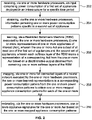
- FIG. 2 depicts an exemplary flow chart illustrating a method for load disaggregation of appliances of interest using a Restricted Boltzmann Machine (RBM) based source-separation model, using the system 100 of FIG. 1 , in accordance with an embodiment of the present disclosure.
- the system(s) 100 comprises one or more data storage devices or the memory 102 operatively coupled to the one or more hardware processors 104 and is configured to store instructions for execution of steps of the method by the one or more processors 104.
- the steps of the method of the present disclosure will now be explained with reference to components of the system 100 of FIG. 1 , and the flow diagram as depicted in FIG. 2 .
- the one or more hardware processors 104 receive an input (e.g., smart meter data) comprising power consumption of a first set of appliances deployed in an infrastructure for a specific time-period (or time interval).
- Example of the input power consumption pattern of the first set of appliances include but are not limited to: (i) a refrigerator typically consuming 150 ⁇ 200 watts in the normal state, microwave usually registers a spike of 1000 ⁇ 1500 watts, a washer-dryer register a magnitude of 1500 watts approximately, followed by cyclic consumption states in the range (> 500 ⁇ ⁇ 1000 watts).
- the one or more hardware processors 104 obtain information (e.g., from a publicly available dataset) pertaining one or more power consumption patterns specific to a second set of appliances.
- the system 100 collects historical aggregate and appliance signature data and segments them into N-length windows.
- the appliance data is usually collected such that it is representative of the usual power consumption patterns in the household, in one example embodiment.
- Example of infrastructures such as household(s) shall not be construed as limiting the scope of the present disclosure.
- the present disclosure may obtain smart meter data at step 202, and information from the publicly available dataset at step 204 from various premises such as corporate buildings, shopping malls, retail outlets, government offices, and the like.
- the first set of appliances and the second set of appliances may be different from each other, in one embodiment.
- the first set of appliances and the second set of appliances are identical, in another embodiment.
- the first set of appliances and the second set of appliances have at least a few appliances in common in terms of make, specification, brand, and the like, in yet another embodiment.
- the one or more hardware processors 104 learn, via a RBM executed by the one or more hardware processors, one or more representations of one or more appliances of interest (AoI) to obtain one or more learned representations.
- the one or more representations comprise magnitude as mentioned above in step 202.
- the one or more representations comprise power consumption (or power consumption pattern) associated with a corresponding AoI, in one embodiment of the present disclosure.
- the one or more AoI are subset of at least one of the first set of appliances and the second set of appliances. In other words, the one or more AoI are subset of either the first set of appliances, or the second set of appliances or subset of the combinations thereof.
- each softmax layer of the RBM learns a representation of a corresponding AoI from the one or more AoI based on a discriminative output obtained from remaining one or more softmax layers of the RBM. In one embodiment, each softmax layer of the RBM learns a representation of a corresponding AoI from the one or more AoI based on a discriminative output obtained from remaining one or more softmax layers amongst 'n' softmax layers of the RBM.
- the partition function is computed and along with it the approximate gradients for the input aggregate data is also obtained.
- the historical aggregate data is transformed using the RBM and the free energy ( F c ) is observed for the training period.
- Each of the softmax layers also registers non-linear transformation(s) for different appliance(s).
- the combinational transformations are learnt as a representation of the free energy of the RBM through a likelihood maximization approach/ algorithm (e.g., the present disclosure implements likelihood maximization approach as known in the art).
- softmax layers each trained on an appliance's historical consumption data connected in parallel.
- the output of the softmax layers is related to the free energy of the RBM through an intermediate function.
- the occurrence of a windowed consumption P l is related to the associated consumption contribution of all the appliances. If appliance A i ⁇ A k was operational (or subset of the total set of appliances were operational), the disaggregated results are obtained through likelihood maximization objective function between the partition function due to aggregate data and the non-linear transformed states of appliances, which is equal to the least free energy combination of the appliance(s) of the RBM framework of the present disclosure.
- the one or more hardware processors 104 map, via one or more full connected layers of a neural network executed by the one or more hardware processors, the one or more learned representations to a corresponding power consumption pattern from the one or more consumption patterns to obtain one or more mapped appliance consumption patterns (also referred as mapped appliance power consumption pattern) for each of the one or more AoI.
- the neural network (not shown in FIGS.) is comprised in the memory 102.
- the softmax layers register the non-linear transformations for the power consumption patterns of different appliances of interest. Assuming that the appliances of interest are refrigerator, washer-dryer, microwave for this experiment.
- the non-linearly transformed output of the softmax layers convey the same information (which is mapping information for each of the appliance of interest - in this case refrigerator, washer-dryer, microwave, and the like).
- the one or more hardware processors 104 estimate one or more appliance signatures for the one or more AoI based on the one or more mapped appliance consumption patterns.
- the appliance signature is indicative or comprises an identifier and power consumption associated with an AoI.
- the present disclosure and its system and the method use/implement a propagation technique/an efficient (appropriate) objective function or a backward propagation algorithm (the aforesaid intermediate function), to associate the free energy ( F c ) with the softmax outputs.
- the combination of such associations yields least energy corresponds to the combination of appliances contributing to the observed input aggregate data. In this case, this algorithm is expected to yield the least free energy to the combination of the microwave and refrigerator.
- the system 100 obtains softmax information of a plurality of appliances from the first set and the second set of appliances wherein the softmax information is obtained through a softmax function of one visible layer of the RBM.
- the system also obtains a partition function z serving as an output of another visible layer of the RBM.
- the system 100 obtains (i) the softmax information through the softmax function of one visible layer of the RBM connected to the one or more softmax layers and (ii) the partition function z serving as an output of another visible layer of the RBM to the one or more softmax layers (wherein the softmax layers are either integral part of the system 100 or externally connected to the system 100 via the I/O interface(s) 106).
- the partition function z is obtained based on an input aggregate data fed to one visible layer of the RBM. Both the softmax information and the partition function z are then used as an input to learn combinational outputs of each layer of the RBM.
- partition function z of one visible layer of the RBM is added to the softmax information of every softmax layer of the RBM via a function to learn the one or more combinational outputs (e.g., free energy).
- Such combinational output is learnt by the system 100 via an intermediate function (not shown in FIGS.) implemented in the system 100.
- one or more combinational outputs of each layer of the RBM is learnt and this learning of the one or more combinational outputs is based on an interaction between the softmax information and the partition function z.
- the interaction of the softmax information and the partition function z is discussed in the mapping step 208.
- the combinational outputs (or combinational free energies) are learnt, and these outputs correspond to the input aggregate data.
- the present disclosure ensures that there is a reduction in (i) computational efforts/cost(s) by the system and method and (ii) the complexity involved in the architecture. For instance, existing regression-based approaches require multiple instances of the network - one each to learn the aggregate data and appliance data association.
- the present disclosure is essentially stand-alone RBM which is used in the regressive context for the purpose of load disaggregation. This means that a single RBM is attached with softmax layers and this simplifies the network architecture to a great extent. This architecture obviously helps to also bring computational lightness to the problem of disaggregation.
- Such computer-readable storage means contain program-code means for implementation of one or more steps of the method, when the program runs on a server or mobile device or any suitable programmable device.
- the hardware device can be any kind of device which can be programmed including e.g., any kind of computer like a server or a personal computer, or the like, or any combination thereof.
- the device may also include means which could be e.g., hardware means like e.g., an application-specific integrated circuit (ASIC), a field-programmable gate array (FPGA), or a combination of hardware and software means, e.g., an ASIC and an FPGA, or at least one microprocessor and at least one memory with software processing components located therein.
- the means can include both hardware means and software means.
- the method embodiments described herein could be implemented in hardware and software.
- the device may also include software means. Alternatively, the embodiments may be implemented on different hardware devices, e.g., using a plurality of CPUs.
- the embodiments herein can comprise hardware and software elements.
- the embodiments that are implemented in software include but are not limited to, firmware, resident software, microcode, etc.
- the functions performed by various components described herein may be implemented in other components or combinations of other components.
- a computer-usable or computer readable medium can be any apparatus that can comprise, store, communicate, propagate, or transport the program for use by or in connection with the instruction execution system, apparatus, or device.
- a computer-readable storage medium refers to any type of physical memory on which information or data readable by a processor may be stored.
- a computer-readable storage medium may store instructions for execution by one or more processors, including instructions for causing the processor(s) to perform steps or stages consistent with the embodiments described herein.
- the term "computer-readable medium” should be understood to include tangible items and exclude carrier waves and transient signals, i.e., be non-transitory. Examples include random access memory (RAM), read-only memory (ROM), volatile memory, nonvolatile memory, hard drives, CD ROMs, DVDs, flash drives, disks, and any other known physical storage media.
Landscapes
- Engineering & Computer Science (AREA)
- Physics & Mathematics (AREA)
- Theoretical Computer Science (AREA)
- Data Mining & Analysis (AREA)
- General Physics & Mathematics (AREA)
- Life Sciences & Earth Sciences (AREA)
- Artificial Intelligence (AREA)
- General Engineering & Computer Science (AREA)
- Evolutionary Computation (AREA)
- General Health & Medical Sciences (AREA)
- Molecular Biology (AREA)
- Software Systems (AREA)
- Mathematical Physics (AREA)
- Computing Systems (AREA)
- Health & Medical Sciences (AREA)
- Biomedical Technology (AREA)
- Biophysics (AREA)
- Computational Linguistics (AREA)
- Bioinformatics & Cheminformatics (AREA)
- Evolutionary Biology (AREA)
- Bioinformatics & Computational Biology (AREA)
- Computer Vision & Pattern Recognition (AREA)
- Power Engineering (AREA)
- Probability & Statistics with Applications (AREA)
- Management, Administration, Business Operations System, And Electronic Commerce (AREA)
Applications Claiming Priority (1)
| Application Number | Priority Date | Filing Date | Title |
|---|---|---|---|
| IN202121004907 | 2021-02-04 |
Publications (3)
| Publication Number | Publication Date |
|---|---|
| EP4040338A1 true EP4040338A1 (de) | 2022-08-10 |
| EP4040338B1 EP4040338B1 (de) | 2025-01-15 |
| EP4040338C0 EP4040338C0 (de) | 2025-01-15 |
Family
ID=78414282
Family Applications (1)
| Application Number | Title | Priority Date | Filing Date |
|---|---|---|---|
| EP21205146.0A Active EP4040338B1 (de) | 2021-02-04 | 2021-10-28 | Auf einer beschränkten boltzmannmaschine basiertes quellentrennungsmodell mit anwendung auf die lastentrennung |
Country Status (2)
| Country | Link |
|---|---|
| US (1) | US20220284237A1 (de) |
| EP (1) | EP4040338B1 (de) |
Families Citing this family (1)
| Publication number | Priority date | Publication date | Assignee | Title |
|---|---|---|---|---|
| US20240005143A1 (en) * | 2022-06-30 | 2024-01-04 | Capital One Services, Llc | Machine learning for power consumption attribution |
-
2021
- 2021-10-28 EP EP21205146.0A patent/EP4040338B1/de active Active
- 2021-11-02 US US17/453,316 patent/US20220284237A1/en active Pending
Non-Patent Citations (2)
| Title |
|---|
| MOCANU ELENA: "Machine Learning applied to Smart Grids", 9 October 2017 (2017-10-09), pages 1 - 165, XP055907281, ISBN: 978-90-38-64338-0, Retrieved from the Internet <URL:https://pure.tue.nl/ws/files/77436888/20171009_Mocanu.pdf> [retrieved on 20220330] * |
| SAGAR VERMA ET AL: "Multi Label Restricted Boltzmann Machine for Non-Intrusive Load Monitoring", ARXIV.ORG, CORNELL UNIVERSITY LIBRARY, 201 OLIN LIBRARY CORNELL UNIVERSITY ITHACA, NY 14853, 17 October 2019 (2019-10-17), XP081517241 * |
Also Published As
| Publication number | Publication date |
|---|---|
| US20220284237A1 (en) | 2022-09-08 |
| EP4040338B1 (de) | 2025-01-15 |
| EP4040338C0 (de) | 2025-01-15 |
Similar Documents
| Publication | Publication Date | Title |
|---|---|---|
| CN114205106B (zh) | 用于检测可疑网络行为的深度嵌入式自学系统和方法 | |
| US20220004931A1 (en) | Root cause discovery engine | |
| CN116210211B (zh) | 网络拓扑中的异常检测 | |
| KR101879416B1 (ko) | 이상 금융거래 탐지 방법 및 그 전자 장치 | |
| JP2017021772A (ja) | コピュラ理論に基づく特徴選択 | |
| Mohammadpourfard et al. | Benchmark of machine learning algorithms on capturing future distribution network anomalies | |
| CN111401570A (zh) | 针对隐私树模型的解释方法和装置 | |
| CN104869581A (zh) | 经由无线传感器网络内的标签传播确定故障节点 | |
| LU509798B1 (en) | Detection method, device, equipment and storage medium for electricity theft behavior | |
| Binna et al. | Subset level detection of false data injection attacks in smart grids | |
| US12579409B2 (en) | Identifying sensor drifts and diverse varying operational conditions using variational autoencoders for continual training | |
| EP4040338A1 (de) | Auf einer beschränkten boltzmannmaschine basiertes quellentrennungsmodell mit anwendung auf die lastentrennung | |
| CN114443113A (zh) | 异常应用或组件的识别方法、装置、存储介质与电子设备 | |
| US11487650B2 (en) | Diagnosing anomalies detected by black-box machine learning models | |
| US11531830B2 (en) | Synthetic rare class generation by preserving morphological identity | |
| JP7316722B2 (ja) | ランダムシーケンス埋込みを用いた記号シーケンス解析における計算効率 | |
| EP4036822B1 (de) | Verfahren und system zur energiemodellierung und -vorhersage auf basis einer graphsignalverarbeitung | |
| CN114675942B (zh) | 基于动态图的群体识别方法和系统 | |
| CN119892660A (zh) | 接口流量预测方法、装置、设备、介质及程序产品 | |
| US20240428049A1 (en) | Anomoly detection in time-based events via pattern mining | |
| US20260119926A1 (en) | Hiding an internal state of a computer network | |
| CN115859170B (zh) | 一种恶意软件家族分类模型生成方法、装置 | |
| CN107622048B (zh) | 一种文本模式识别方法及系统 | |
| US20130311232A1 (en) | Method, System and Program Product for Forecasting | |
| Harshavardhan et al. | Household electricity bill prediction using random forest algorithm over support vector machine algorithm with improved accuracy |
Legal Events
| Date | Code | Title | Description |
|---|---|---|---|
| PUAI | Public reference made under article 153(3) epc to a published international application that has entered the european phase |
Free format text: ORIGINAL CODE: 0009012 |
|
| STAA | Information on the status of an ep patent application or granted ep patent |
Free format text: STATUS: THE APPLICATION HAS BEEN PUBLISHED |
|
| STAA | Information on the status of an ep patent application or granted ep patent |
Free format text: STATUS: REQUEST FOR EXAMINATION WAS MADE |
|
| AK | Designated contracting states |
Kind code of ref document: A1 Designated state(s): AL AT BE BG CH CY CZ DE DK EE ES FI FR GB GR HR HU IE IS IT LI LT LU LV MC MK MT NL NO PL PT RO RS SE SI SK SM TR |
|
| 17P | Request for examination filed |
Effective date: 20220725 |
|
| RBV | Designated contracting states (corrected) |
Designated state(s): AL AT BE BG CH CY CZ DE DK EE ES FI FR GB GR HR HU IE IS IT LI LT LU LV MC MK MT NL NO PL PT RO RS SE SI SK SM TR |
|
| STAA | Information on the status of an ep patent application or granted ep patent |
Free format text: STATUS: EXAMINATION IS IN PROGRESS |
|
| 17Q | First examination report despatched |
Effective date: 20230821 |
|
| REG | Reference to a national code |
Ref country code: DE Ref legal event code: R079 Free format text: PREVIOUS MAIN CLASS: G06N0003040000 Ipc: G06N0003044000 Ref country code: DE Ref legal event code: R079 Ref document number: 602021024910 Country of ref document: DE Free format text: PREVIOUS MAIN CLASS: G06N0003040000 Ipc: G06N0003044000 |
|
| RIC1 | Information provided on ipc code assigned before grant |
Ipc: G06Q 50/06 20120101ALN20240911BHEP Ipc: G06N 3/096 20230101ALI20240911BHEP Ipc: G06N 3/09 20230101ALI20240911BHEP Ipc: G06N 3/047 20230101ALI20240911BHEP Ipc: G06N 3/045 20230101ALI20240911BHEP Ipc: G06N 3/044 20230101AFI20240911BHEP |
|
| GRAP | Despatch of communication of intention to grant a patent |
Free format text: ORIGINAL CODE: EPIDOSNIGR1 |
|
| STAA | Information on the status of an ep patent application or granted ep patent |
Free format text: STATUS: GRANT OF PATENT IS INTENDED |
|
| INTG | Intention to grant announced |
Effective date: 20241025 |
|
| GRAS | Grant fee paid |
Free format text: ORIGINAL CODE: EPIDOSNIGR3 |
|
| GRAA | (expected) grant |
Free format text: ORIGINAL CODE: 0009210 |
|
| STAA | Information on the status of an ep patent application or granted ep patent |
Free format text: STATUS: THE PATENT HAS BEEN GRANTED |
|
| AK | Designated contracting states |
Kind code of ref document: B1 Designated state(s): AL AT BE BG CH CY CZ DE DK EE ES FI FR GB GR HR HU IE IS IT LI LT LU LV MC MK MT NL NO PL PT RO RS SE SI SK SM TR |
|
| REG | Reference to a national code |
Ref country code: CH Ref legal event code: EP Ref country code: GB Ref legal event code: FG4D |
|
| REG | Reference to a national code |
Ref country code: DE Ref legal event code: R096 Ref document number: 602021024910 Country of ref document: DE |
|
| REG | Reference to a national code |
Ref country code: IE Ref legal event code: FG4D |
|
| U01 | Request for unitary effect filed |
Effective date: 20250115 |
|
| U07 | Unitary effect registered |
Designated state(s): AT BE BG DE DK EE FI FR IT LT LU LV MT NL PT RO SE SI Effective date: 20250121 |
|
| PG25 | Lapsed in a contracting state [announced via postgrant information from national office to epo] |
Ref country code: RS Free format text: LAPSE BECAUSE OF FAILURE TO SUBMIT A TRANSLATION OF THE DESCRIPTION OR TO PAY THE FEE WITHIN THE PRESCRIBED TIME-LIMIT Effective date: 20250415 |
|
| PG25 | Lapsed in a contracting state [announced via postgrant information from national office to epo] |
Ref country code: PL Free format text: LAPSE BECAUSE OF FAILURE TO SUBMIT A TRANSLATION OF THE DESCRIPTION OR TO PAY THE FEE WITHIN THE PRESCRIBED TIME-LIMIT Effective date: 20250115 |
|
| PG25 | Lapsed in a contracting state [announced via postgrant information from national office to epo] |
Ref country code: ES Free format text: LAPSE BECAUSE OF FAILURE TO SUBMIT A TRANSLATION OF THE DESCRIPTION OR TO PAY THE FEE WITHIN THE PRESCRIBED TIME-LIMIT Effective date: 20250115 |
|
| PG25 | Lapsed in a contracting state [announced via postgrant information from national office to epo] |
Ref country code: IS Free format text: LAPSE BECAUSE OF FAILURE TO SUBMIT A TRANSLATION OF THE DESCRIPTION OR TO PAY THE FEE WITHIN THE PRESCRIBED TIME-LIMIT Effective date: 20250515 Ref country code: NO Free format text: LAPSE BECAUSE OF FAILURE TO SUBMIT A TRANSLATION OF THE DESCRIPTION OR TO PAY THE FEE WITHIN THE PRESCRIBED TIME-LIMIT Effective date: 20250415 |
|
| PG25 | Lapsed in a contracting state [announced via postgrant information from national office to epo] |
Ref country code: HR Free format text: LAPSE BECAUSE OF FAILURE TO SUBMIT A TRANSLATION OF THE DESCRIPTION OR TO PAY THE FEE WITHIN THE PRESCRIBED TIME-LIMIT Effective date: 20250115 |
|
| PG25 | Lapsed in a contracting state [announced via postgrant information from national office to epo] |
Ref country code: GR Free format text: LAPSE BECAUSE OF FAILURE TO SUBMIT A TRANSLATION OF THE DESCRIPTION OR TO PAY THE FEE WITHIN THE PRESCRIBED TIME-LIMIT Effective date: 20250416 |
|
| PG25 | Lapsed in a contracting state [announced via postgrant information from national office to epo] |
Ref country code: SM Free format text: LAPSE BECAUSE OF FAILURE TO SUBMIT A TRANSLATION OF THE DESCRIPTION OR TO PAY THE FEE WITHIN THE PRESCRIBED TIME-LIMIT Effective date: 20250115 |
|
| PG25 | Lapsed in a contracting state [announced via postgrant information from national office to epo] |
Ref country code: CZ Free format text: LAPSE BECAUSE OF FAILURE TO SUBMIT A TRANSLATION OF THE DESCRIPTION OR TO PAY THE FEE WITHIN THE PRESCRIBED TIME-LIMIT Effective date: 20250115 |
|
| PG25 | Lapsed in a contracting state [announced via postgrant information from national office to epo] |
Ref country code: SK Free format text: LAPSE BECAUSE OF FAILURE TO SUBMIT A TRANSLATION OF THE DESCRIPTION OR TO PAY THE FEE WITHIN THE PRESCRIBED TIME-LIMIT Effective date: 20250115 |
|
| REG | Reference to a national code |
Ref country code: CH Ref legal event code: U11 Free format text: ST27 STATUS EVENT CODE: U-0-0-U10-U11 (AS PROVIDED BY THE NATIONAL OFFICE) Effective date: 20251101 |
|
| PLBE | No opposition filed within time limit |
Free format text: ORIGINAL CODE: 0009261 |
|
| STAA | Information on the status of an ep patent application or granted ep patent |
Free format text: STATUS: NO OPPOSITION FILED WITHIN TIME LIMIT |
|
| U20 | Renewal fee for the european patent with unitary effect paid |
Year of fee payment: 5 Effective date: 20251027 |
|
| 26N | No opposition filed |
Effective date: 20251016 |
|
| PGFP | Annual fee paid to national office [announced via postgrant information from national office to epo] |
Ref country code: GB Payment date: 20251023 Year of fee payment: 5 |
|
| PGFP | Annual fee paid to national office [announced via postgrant information from national office to epo] |
Ref country code: CH Payment date: 20251101 Year of fee payment: 5 |