EP4040433A1 - Génération dynamique d'une chaîne de modules fonctionnels d'un assistant virtuel - Google Patents
Génération dynamique d'une chaîne de modules fonctionnels d'un assistant virtuel Download PDFInfo
- Publication number
- EP4040433A1 EP4040433A1 EP21155121.3A EP21155121A EP4040433A1 EP 4040433 A1 EP4040433 A1 EP 4040433A1 EP 21155121 A EP21155121 A EP 21155121A EP 4040433 A1 EP4040433 A1 EP 4040433A1
- Authority
- EP
- European Patent Office
- Prior art keywords
- max
- virtual assistant
- function module
- user
- request
- Prior art date
- Legal status (The legal status is an assumption and is not a legal conclusion. Google has not performed a legal analysis and makes no representation as to the accuracy of the status listed.)
- Granted
Links
Images


Classifications
-
- G—PHYSICS
- G10—MUSICAL INSTRUMENTS; ACOUSTICS
- G10L—SPEECH ANALYSIS TECHNIQUES OR SPEECH SYNTHESIS; SPEECH RECOGNITION; SPEECH OR VOICE PROCESSING TECHNIQUES; SPEECH OR AUDIO CODING OR DECODING
- G10L15/00—Speech recognition
- G10L15/22—Procedures used during a speech recognition process, e.g. man-machine dialogue
-
- G—PHYSICS
- G06—COMPUTING OR CALCULATING; COUNTING
- G06F—ELECTRIC DIGITAL DATA PROCESSING
- G06F40/00—Handling natural language data
- G06F40/30—Semantic analysis
-
- G—PHYSICS
- G06—COMPUTING OR CALCULATING; COUNTING
- G06F—ELECTRIC DIGITAL DATA PROCESSING
- G06F40/00—Handling natural language data
- G06F40/30—Semantic analysis
- G06F40/35—Discourse or dialogue representation
-
- G—PHYSICS
- G10—MUSICAL INSTRUMENTS; ACOUSTICS
- G10L—SPEECH ANALYSIS TECHNIQUES OR SPEECH SYNTHESIS; SPEECH RECOGNITION; SPEECH OR VOICE PROCESSING TECHNIQUES; SPEECH OR AUDIO CODING OR DECODING
- G10L15/00—Speech recognition
- G10L15/22—Procedures used during a speech recognition process, e.g. man-machine dialogue
- G10L2015/223—Execution procedure of a spoken command
Definitions
- the present invention relates to the technical field of virtual assistants and in particular virtual voice assistants.
- a method and a module for generating functions of voice assistants are specified.
- virtual assistants select a static command chain, in particular a so-called “voice chain”, for a specific user in order to process requests. If a user logs into a portal, for example, or if his voice is recognized by the virtual assistant and assigned to a specific profile, the user's static command chain can be loaded. This means in particular that the specific selection of, for example, the ASR ("automated speech recognition") parameters, the NLU ("natural language understanding”) type and/or the speech synthesizer depend solely on the user who made the request.
- virtual assistants offer users the opportunity to define specific configurations for themselves, for example that a user wants to use different languages, these profiles are also statically assigned to the respective user or are statically linked to the user.
- the virtual assistant is able to flexibly and dynamically select and apply the appropriate function modules based on the request. It is therefore possible to dynamically adapt to the request during runtime without the user having to change their profile manually. In particular, a communication possible in several languages.
- the virtual assistant's output voice can also change the skill to dynamically adjust voice parameters such as mood, volume, and others according to the situation. All this enables a unique user experience.
- a further advantage of the method according to the invention is that the first use of the virtual assistant by the user is significantly improved since no complex set-up scenario for creating a user profile, for example using a companion app, is necessary.
- the selection algorithm preferably determines additional parameters, in particular it selects those that are suitable with the highest probability P Para ,Max for processing the user's request and transfers these parameters P Para ,Max to the selected function module PF,Max .
- parameters could be loaded, for example, which characterize the user's typical idiosyncrasies with regard to his pronunciation.
- parameters for the processing times can also be dynamically adapted to the function being executed. For example, a quiz skill can adjust the amount of time the user has to answer the question, depending on the difficulty level. This affects the entire speech processing chain (end of speech detection, beginning of speech detection, request timeouts, etc.), because the assistant has to be put into a "waiting state". In order to achieve this, it must be possible to adjust the corresponding timeouts at runtime of a request in order to do justice to the respective function.
- a function module P F,Max from the library with the highest probability P Max is selected again for processing the request in this step, ie for the first Step the function module P F1,Max with the probability P 1,Max , for the second step the function module P F2,Max with the probability P 2,Max and for the nth step the function module P Fn,Max with the probability P n ,Max .
- PF,Max For each processing step of the query, in addition to the function module PF,Max with the highest probability PMax , another function module PF,lower with a different probability Plower , in particular with the second-highest probability PF ,2nd, is preferably determined, in particular from the library selected. This procedure is preferably carried out for each processing step. In the example: "Play favorite playlist on my iPhone". So, in addition to the function module P F,Max for the German language, the function module P F,lower could be selected for the English language.
- the virtual assistant evaluates the query in parallel with the function modules P F,Max and P F,lower and stores the results obtained in each case. The results are marked accordingly so that they can be assigned to the function module with which they were generated.
- the virtual assistant preferably uses the result of the function module P F,lower instead of the result of the function module P F,Max for the further evaluation of the request if it turns out that the function module P F,Max was not the most suitable module for evaluating the request .
- the request is preferably processed, in particular parallel to the processing with the function module P F,lower with which another function module P F,lower is processed, if P lower exceeds a predetermined probability value.
- This predefined probability value can be selected such that it is no more than 10%, particularly preferably no more than 25%, smaller than P Max .
- the predetermined probability value is chosen to be at least 50%.
- background information can also be used in addition to the content of the query. For example, if a user is in a train station when using the virtual assistant, this can influence the selection of the most suitable domain.
- the selection of the function module P F,Max by the selection algorithm can also take into account a command history of the user. Since users typically often repeat their queries "What's the weather like in Darmstadt?" Information from the command history can be very helpful when selecting the most suitable function module P F,Max .
- the chain of function modules predefined for the user for evaluating the request is advantageously loaded if the selection algorithm was unable to determine a function module P F,Max .
- the virtual assistant comprises a sort of emergency program that comes into effect if the request would otherwise not be processed.
- This emergency program essentially corresponds to the functionality of common virtual assistants.
- the virtual assistant can be a voice virtual assistant or a text-based virtual assistant.
- the virtual language assistant can be addressed flexibly via communication using a browser but also using a user terminal such as a smartphone, an intelligent loudspeaker, a smartwatch, a tablet or similar devices; in particular, the request can be entered as a voice via a microphone of the user terminal.
- a user terminal such as a smartphone, an intelligent loudspeaker, a smartwatch, a tablet or similar devices; in particular, the request can be entered as a voice via a microphone of the user terminal.
- a virtual assistant is specified, the virtual assistant being set up to dynamically generate a chain of function modules of the virtual assistant, wherein the virtual assistant is implemented on a computing unit of a server and/or a user terminal, wherein the virtual assistant receives a request from a user, wherein the virtual assistant has a selection algorithm that is set up to select the most suitable function module P F,Max according to the method described above, wherein the virtual assistant has a processing module that processes the query using the function module P F,Max and provides the result of the processing as an answer, wherein the virtual assistant has means for outputting the answer to the user.
- the means for outputting the response can in particular be a microphone and/or a screen on the user terminal.
- the virtual assistant is able to flexibly and dynamically select and apply the appropriate function modules based on the request. It is therefore possible to dynamically adapt to the request during runtime without the user having to change their profile manually. In particular, communication in several languages is made possible.
- the Virtual Assistant's output voice can also change the skill to dynamically adjust voice parameters such as mood, volume, and others according to the situation. All this enables a unique user experience.
- a user terminal is specified, the virtual assistant according to the invention being implemented on the user terminal.
- the user terminal can be a smartphone, a tablet, a computer, a smart watch, a smart speaker.
- Such a user terminal offers the advantage that the user can use the virtual assistant efficiently, these devices are either able to carry out the method according to the invention themselves or to forward the request via a data channel to a server on which the virtual assistant or the method , is realized.
- a computer program for dynamically generating a chain of function modules of a virtual assistant is specified, the computer program being set up to execute the steps of the method according to the invention described above.
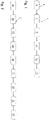
- command chain 1 shows how, according to the current status of the virtual assistant, a fixed configuration of a command chain 1 loaded by function modules is loaded according to the recognized user. This command chain 1 is maintained throughout the processing of the query that was issued in response to the query to the user.
- the user or an administrator must manually change settings in the voice chain configuration. For example, the user can select a different language via the app or activate a different skill for a specific purpose. However, once this change is made, it will be applied to every subsequent request until manually changed again.
- a generic chain of command 1 as in 1 can have the following steps: Step 5: Detection of the "wake-up word" and the request to the virtual assistant -> Step 7: Identify user, user terminal, provider -> Step 9: Load the voice chain configuration -> Step 11: Execute the voice chain configuration -> Step 13: Generate the response to the request -> Step 15: Output the response as a voice signal to the user.
- FIG. 2 shows a concrete example of 1 and illustrates the static command chain 1'.
- a change be made according to the context, the utterance, or an external parameter of the request.
- the same models, language settings, and skills and skill parameters are applied to every request that the user utters.
- the example from 2 can have the following steps: Step 17: "Hello Magenta, play music" as wake-up word and request-> Step 19: Provider "Telekom”-> Step 21: Load the voice chain configuration -> Step 23: Transcribe German voice signal into text -> Step 25: Detect domain , Intent, Entity using German function modules -> Step 27: Execute the skill with the statically specified function modules -> Step 29: Generate an audio output based on the response of the skill in German -> Step 31: Send the response -> Step 33: Output of the response to the user.
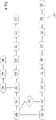
- FIG. 3 shows a generic, flexible, dynamically generated command chain 100 of a virtual assistant, in particular a virtual language assistant, according to the invention.
- the request and optionally additionally further available information can be analyzed in order to determine the suitable function module for this step and then to select it for processing.
- the generic chain of command 100 may have the following steps: Step 105: Detection of the wake-up word and the request -> Step 107: Analysis of the wake-up word -> Step 109: Generate the initial configuration of the virtual assistant based on the wake-up word -> Step 111: Start the transcription of the request or the command -> Step 113: flexible actual adjustment of the configuration of the ASR module -> step 115: loading special models, modules and/or parameters, if necessary -> step 117: transcription of the request or the command -> step 119: determining and specifying the NLU configuration (Model selection, language selection), if necessary -> Step 121: Send text to the NLU model -> Step 123: dynamic determination of the skill or the function module for the intent of the current request -> Step 125: Send request to the selected skill function module, possibly with additional parameters -> Step 127: flexible determination of the TTS configuration according to the skill and the skill response -> Step 129: generate audio signals for the output -> Step 131: sends the response to
- the real-time language chain analyzes the input and derives requirements for each step of the command chain 100. According to the requirements, the next step will be configured accordingly or even the current step will be repeated for a better match.
- the user logs on in step 141 with a French wake-up word.
- the virtual assistant or the selection algorithm, recognizes the French wake-up word.
- the selection algorithm selects the appropriate functional module, specifically in the example of 4 loads the ASR configuration with the generic French model to transcribe the command of the query in step 147 following the wake-up word.
- this request is detected in step 149 and analyzed as a German command with German technical terms. For example, the user can ask for information about setting up an Internet device.
- This request contains some technical terms that are related to a corresponding domain, so that the selection algorithm in step 151 loads the corresponding function module that provides the functionality of the ASR module for German technical terms.
- the command chain 100' is therefore not static, but has reacted flexibly to the user's request.
- this request is then transcribed in German.
- step 155 the German dispatcher model for technical terms is loaded.
- step 157 The information about the recognized domain and the model used is passed in step 157 to the NLU model.
- step 159 the correct dispatcher is selected as the appropriate function module in order to optimize intent recognition. However, if no intent or skill is found (step 160), the query is repeated and the command chain 100' returns to step 155. In this case, the standard dispatcher model can be used to find the intent or the skill when it is run again. If a skill or an intent has been successfully identified, the chain of command 100' runs in step 161.
- step 161 the request and the determined parameters, possibly together with the payload, are passed to the appropriate skill.
- the skill which is also implemented via a corresponding function module, processes the user's request. In particular, the skill also decides how to proceed in order to provide the best answer for the user.
- step 163 the virtual assistant dynamically determines which output channel to select for the response. In particular, this does not have to be the same channel through which the request was sent by the user.
- step 165 output via the screen can be selected.
- step 167 the request is transmitted to a function module of the user terminal, which implements a display of the response on the screen.
- step 169 the response is presented on the screen of the user terminal to the user.
- step 171 the algorithm determines that the query contains both German and English terms.
- step 173 the virtual assistant determines the best TTS model to use according to the given answer. Since many English terms are mixed in the German sentence, the best model for this case is selected dynamically and the speech output is synthesized accordingly. This greatly reduces the need for special SSML tags to optimize pronunciation and handles this by loading the best model. This also allows for smaller and faster TTS models that can be optimized for specific domains.
- step 175 the audio signal for the response is generated.
- step 177 the response has been provided, in step 177 it can be routed to the appropriate output channel. This does not necessarily have to be the device from which the request originated. Preferences and privacy settings are used to appropriately send the response to the user.
- step 179 the virtual assistant responds to the user in the form of an audio signal via a loudspeaker on the user terminal.
- the dynamically generated command chain 100' according to FIG 4 So advantageously allows a previously unattainable flexibility in the interaction of the virtual assistant with the
Landscapes
- Engineering & Computer Science (AREA)
- Theoretical Computer Science (AREA)
- Audiology, Speech & Language Pathology (AREA)
- Health & Medical Sciences (AREA)
- Computational Linguistics (AREA)
- Physics & Mathematics (AREA)
- General Health & Medical Sciences (AREA)
- General Engineering & Computer Science (AREA)
- General Physics & Mathematics (AREA)
- Artificial Intelligence (AREA)
- Human Computer Interaction (AREA)
- Acoustics & Sound (AREA)
- Multimedia (AREA)
- Machine Translation (AREA)
Priority Applications (1)
| Application Number | Priority Date | Filing Date | Title |
|---|---|---|---|
| EP21155121.3A EP4040433B1 (fr) | 2021-02-04 | 2021-02-04 | Génération dynamique d'une chaîne de modules fonctionnels d'un assistant virtuel |
Applications Claiming Priority (1)
| Application Number | Priority Date | Filing Date | Title |
|---|---|---|---|
| EP21155121.3A EP4040433B1 (fr) | 2021-02-04 | 2021-02-04 | Génération dynamique d'une chaîne de modules fonctionnels d'un assistant virtuel |
Publications (2)
| Publication Number | Publication Date |
|---|---|
| EP4040433A1 true EP4040433A1 (fr) | 2022-08-10 |
| EP4040433B1 EP4040433B1 (fr) | 2025-01-01 |
Family
ID=74553597
Family Applications (1)
| Application Number | Title | Priority Date | Filing Date |
|---|---|---|---|
| EP21155121.3A Active EP4040433B1 (fr) | 2021-02-04 | 2021-02-04 | Génération dynamique d'une chaîne de modules fonctionnels d'un assistant virtuel |
Country Status (1)
| Country | Link |
|---|---|
| EP (1) | EP4040433B1 (fr) |
Cited By (1)
| Publication number | Priority date | Publication date | Assignee | Title |
|---|---|---|---|---|
| DE102023101499A1 (de) | 2023-01-23 | 2024-07-25 | Bayerische Motoren Werke Aktiengesellschaft | Verfahren und Vorrichtung zum Betrieb eines virtuellen Assistenten |
Citations (2)
| Publication number | Priority date | Publication date | Assignee | Title |
|---|---|---|---|---|
| WO2018067402A1 (fr) * | 2016-10-03 | 2018-04-12 | Google Inc. | Sélection d'agent de calcul informatique pour réaliser une tâche |
| WO2019203795A1 (fr) * | 2018-04-16 | 2019-10-24 | Google Llc | Détermination automatique d'une langue pour la reconnaissance de la parole d'un énoncé vocal reçu par l'intermédiaire d'une interface d'assistant automatisé |
-
2021
- 2021-02-04 EP EP21155121.3A patent/EP4040433B1/fr active Active
Patent Citations (2)
| Publication number | Priority date | Publication date | Assignee | Title |
|---|---|---|---|---|
| WO2018067402A1 (fr) * | 2016-10-03 | 2018-04-12 | Google Inc. | Sélection d'agent de calcul informatique pour réaliser une tâche |
| WO2019203795A1 (fr) * | 2018-04-16 | 2019-10-24 | Google Llc | Détermination automatique d'une langue pour la reconnaissance de la parole d'un énoncé vocal reçu par l'intermédiaire d'une interface d'assistant automatisé |
Non-Patent Citations (2)
| Title |
|---|
| LEE AKINOBU ET AL: "Mmdagent-A fully open-source toolkit for voice interaction sys", ICASSP, IEEE INTERNATIONAL CONFERENCE ON ACOUSTICS, SPEECH AND SIGNAL PROCESSING - PROCEEDINGS 1999 IEEE, IEEE, 26 May 2013 (2013-05-26), pages 8382 - 8385, XP032508902, ISSN: 1520-6149, ISBN: 978-0-7803-5041-0, [retrieved on 20131018], DOI: 10.1109/ICASSP.2013.6639300 * |
| MEURISCH CHRISTIAN ET AL: "AssistantGraph: An Approach for Reusable and Composable Data-Driven Assistant Components", 2019 IEEE 43RD ANNUAL COMPUTER SOFTWARE AND APPLICATIONS CONFERENCE (COMPSAC), IEEE, vol. 1, 15 July 2019 (2019-07-15), pages 513 - 522, XP033610023, ISBN: 978-1-7281-2607-4, [retrieved on 20190702], DOI: 10.1109/COMPSAC.2019.00079 * |
Cited By (1)
| Publication number | Priority date | Publication date | Assignee | Title |
|---|---|---|---|---|
| DE102023101499A1 (de) | 2023-01-23 | 2024-07-25 | Bayerische Motoren Werke Aktiengesellschaft | Verfahren und Vorrichtung zum Betrieb eines virtuellen Assistenten |
Also Published As
| Publication number | Publication date |
|---|---|
| EP4040433B1 (fr) | 2025-01-01 |
Similar Documents
| Publication | Publication Date | Title |
|---|---|---|
| DE60222093T2 (de) | Verfahren, modul, vorrichtung und server zur spracherkennung | |
| DE69829235T2 (de) | Registrierung für die Spracherkennung | |
| DE69822296T2 (de) | Mustererkennungsregistrierung in einem verteilten system | |
| DE60005326T2 (de) | Erkennungseinheiten mit komplementären sprachmodellen | |
| DE69827988T2 (de) | Sprachmodelle für die Spracherkennung | |
| DE10220524B4 (de) | Verfahren und System zur Verarbeitung von Sprachdaten und zur Erkennung einer Sprache | |
| EP1927980B1 (fr) | Procédé de classification de la langue parlée dans des systèmes de dialogue vocal | |
| DE60302407T2 (de) | Umgebungs- und sprecheradaptierte Spracherkennung | |
| DE60015531T2 (de) | Client-server spracherkennungssystem | |
| DE112015003382T5 (de) | Spracherkennungseinrichtung und Spracherkennungsverfahren | |
| DE102015106280B4 (de) | Systeme und Verfahren zum Kompensieren von Sprachartefakten in Spracherkennungssystemen | |
| EP3735688B1 (fr) | Procédé, dispositif et support d'informations lisible par ordinateur ayant des instructions pour traiter une entrée vocale, véhicule automobile et terminal d'utilisateur doté d'un traitement vocal | |
| DE10304460B3 (de) | Generieren und Löschen von Aussprachevarianten zur Verringerung der Wortfehlerrate in der Spracherkennung | |
| EP3095114B1 (fr) | Procédé et système pour générer une instruction de commande | |
| EP4040433B1 (fr) | Génération dynamique d'une chaîne de modules fonctionnels d'un assistant virtuel | |
| WO2001086634A1 (fr) | Procede pour produire une banque de donnees vocales pour un lexique cible pour l'apprentissage d'un systeme de reconnaissance vocale | |
| EP3791386A1 (fr) | Configuration de dialogue efficace | |
| DE60029456T2 (de) | Verfahren zur Online-Anpassung von Aussprachewörterbüchern | |
| EP1361738A1 (fr) | Méthode et système de traitement du signal de parole à l'aide de reconnaissance de parole et d'analyse fréquentielle | |
| DE102007042971A1 (de) | Spracherkennungsverfahren und Spracherkennungsvorrichtung | |
| EP3989218A1 (fr) | Assistant vocal virtuel facile à utiliser | |
| WO2005069278A1 (fr) | Procede et dispositif pour traiter un signal vocal pour la reconnaissance vocale robuste | |
| EP2012218B1 (fr) | Procédé pour influencer l'interprétation d'entrées multimodales | |
| DE102008025532B4 (de) | Kommunikationssystem und Verfahren zum Durchführen einer Kommunikation zwischen einem Nutzer und einer Kommunikationseinrichtung | |
| EP1363271A1 (fr) | Méthode et système pour le traitement et la mémorisation du signal de parole d'un dialogue |
Legal Events
| Date | Code | Title | Description |
|---|---|---|---|
| PUAI | Public reference made under article 153(3) epc to a published international application that has entered the european phase |
Free format text: ORIGINAL CODE: 0009012 |
|
| STAA | Information on the status of an ep patent application or granted ep patent |
Free format text: STATUS: REQUEST FOR EXAMINATION WAS MADE |
|
| 17P | Request for examination filed |
Effective date: 20220120 |
|
| AK | Designated contracting states |
Kind code of ref document: A1 Designated state(s): AL AT BE BG CH CY CZ DE DK EE ES FI FR GB GR HR HU IE IS IT LI LT LU LV MC MK MT NL NO PL PT RO RS SE SI SK SM TR |
|
| STAA | Information on the status of an ep patent application or granted ep patent |
Free format text: STATUS: EXAMINATION IS IN PROGRESS |
|
| 17Q | First examination report despatched |
Effective date: 20230327 |
|
| RIN1 | Information on inventor provided before grant (corrected) |
Inventor name: PLATSCHEK, MARTIN MICHAEL Inventor name: MINOW, JASCHA Inventor name: EL MALLOUKI, SAID Inventor name: JAHN, CARL |
|
| GRAP | Despatch of communication of intention to grant a patent |
Free format text: ORIGINAL CODE: EPIDOSNIGR1 |
|
| STAA | Information on the status of an ep patent application or granted ep patent |
Free format text: STATUS: GRANT OF PATENT IS INTENDED |
|
| INTG | Intention to grant announced |
Effective date: 20240920 |
|
| GRAS | Grant fee paid |
Free format text: ORIGINAL CODE: EPIDOSNIGR3 |
|
| GRAA | (expected) grant |
Free format text: ORIGINAL CODE: 0009210 |
|
| STAA | Information on the status of an ep patent application or granted ep patent |
Free format text: STATUS: THE PATENT HAS BEEN GRANTED |
|
| AK | Designated contracting states |
Kind code of ref document: B1 Designated state(s): AL AT BE BG CH CY CZ DE DK EE ES FI FR GB GR HR HU IE IS IT LI LT LU LV MC MK MT NL NO PL PT RO RS SE SI SK SM TR |
|
| REG | Reference to a national code |
Ref country code: GB Ref legal event code: FG4D Free format text: NOT ENGLISH |
|
| REG | Reference to a national code |
Ref country code: DE Ref legal event code: R096 Ref document number: 502021006236 Country of ref document: DE |
|
| REG | Reference to a national code |
Ref country code: CH Ref legal event code: EP |
|
| REG | Reference to a national code |
Ref country code: IE Ref legal event code: FG4D Free format text: LANGUAGE OF EP DOCUMENT: GERMAN |
|
| PGFP | Annual fee paid to national office [announced via postgrant information from national office to epo] |
Ref country code: AT Payment date: 20250417 Year of fee payment: 5 |
|
| REG | Reference to a national code |
Ref country code: LT Ref legal event code: MG9D |
|
| REG | Reference to a national code |
Ref country code: NL Ref legal event code: MP Effective date: 20250101 |
|
| PG25 | Lapsed in a contracting state [announced via postgrant information from national office to epo] |
Ref country code: NL Free format text: LAPSE BECAUSE OF FAILURE TO SUBMIT A TRANSLATION OF THE DESCRIPTION OR TO PAY THE FEE WITHIN THE PRESCRIBED TIME-LIMIT Effective date: 20250101 |
|
| PG25 | Lapsed in a contracting state [announced via postgrant information from national office to epo] |
Ref country code: FI Free format text: LAPSE BECAUSE OF FAILURE TO SUBMIT A TRANSLATION OF THE DESCRIPTION OR TO PAY THE FEE WITHIN THE PRESCRIBED TIME-LIMIT Effective date: 20250101 |
|
| PG25 | Lapsed in a contracting state [announced via postgrant information from national office to epo] |
Ref country code: PL Free format text: LAPSE BECAUSE OF FAILURE TO SUBMIT A TRANSLATION OF THE DESCRIPTION OR TO PAY THE FEE WITHIN THE PRESCRIBED TIME-LIMIT Effective date: 20250101 |
|
| PG25 | Lapsed in a contracting state [announced via postgrant information from national office to epo] |
Ref country code: ES Free format text: LAPSE BECAUSE OF FAILURE TO SUBMIT A TRANSLATION OF THE DESCRIPTION OR TO PAY THE FEE WITHIN THE PRESCRIBED TIME-LIMIT Effective date: 20250101 |
|
| PG25 | Lapsed in a contracting state [announced via postgrant information from national office to epo] |
Ref country code: NO Free format text: LAPSE BECAUSE OF FAILURE TO SUBMIT A TRANSLATION OF THE DESCRIPTION OR TO PAY THE FEE WITHIN THE PRESCRIBED TIME-LIMIT Effective date: 20250401 Ref country code: IS Free format text: LAPSE BECAUSE OF FAILURE TO SUBMIT A TRANSLATION OF THE DESCRIPTION OR TO PAY THE FEE WITHIN THE PRESCRIBED TIME-LIMIT Effective date: 20250501 |
|
| PG25 | Lapsed in a contracting state [announced via postgrant information from national office to epo] |
Ref country code: HR Free format text: LAPSE BECAUSE OF FAILURE TO SUBMIT A TRANSLATION OF THE DESCRIPTION OR TO PAY THE FEE WITHIN THE PRESCRIBED TIME-LIMIT Effective date: 20250101 |
|
| PG25 | Lapsed in a contracting state [announced via postgrant information from national office to epo] |
Ref country code: LV Free format text: LAPSE BECAUSE OF FAILURE TO SUBMIT A TRANSLATION OF THE DESCRIPTION OR TO PAY THE FEE WITHIN THE PRESCRIBED TIME-LIMIT Effective date: 20250101 Ref country code: PT Free format text: LAPSE BECAUSE OF FAILURE TO SUBMIT A TRANSLATION OF THE DESCRIPTION OR TO PAY THE FEE WITHIN THE PRESCRIBED TIME-LIMIT Effective date: 20250502 |
|
| PG25 | Lapsed in a contracting state [announced via postgrant information from national office to epo] |
Ref country code: GR Free format text: LAPSE BECAUSE OF FAILURE TO SUBMIT A TRANSLATION OF THE DESCRIPTION OR TO PAY THE FEE WITHIN THE PRESCRIBED TIME-LIMIT Effective date: 20250402 Ref country code: BG Free format text: LAPSE BECAUSE OF FAILURE TO SUBMIT A TRANSLATION OF THE DESCRIPTION OR TO PAY THE FEE WITHIN THE PRESCRIBED TIME-LIMIT Effective date: 20250101 |
|
| PG25 | Lapsed in a contracting state [announced via postgrant information from national office to epo] |
Ref country code: CZ Free format text: LAPSE BECAUSE OF FAILURE TO SUBMIT A TRANSLATION OF THE DESCRIPTION OR TO PAY THE FEE WITHIN THE PRESCRIBED TIME-LIMIT Effective date: 20250101 |
|
| PG25 | Lapsed in a contracting state [announced via postgrant information from national office to epo] |
Ref country code: SE Free format text: LAPSE BECAUSE OF FAILURE TO SUBMIT A TRANSLATION OF THE DESCRIPTION OR TO PAY THE FEE WITHIN THE PRESCRIBED TIME-LIMIT Effective date: 20250101 |
|
| REG | Reference to a national code |
Ref country code: CH Ref legal event code: PL |
|
| REG | Reference to a national code |
Ref country code: DE Ref legal event code: R097 Ref document number: 502021006236 Country of ref document: DE |
|
| PG25 | Lapsed in a contracting state [announced via postgrant information from national office to epo] |
Ref country code: SM Free format text: LAPSE BECAUSE OF FAILURE TO SUBMIT A TRANSLATION OF THE DESCRIPTION OR TO PAY THE FEE WITHIN THE PRESCRIBED TIME-LIMIT Effective date: 20250101 |
|
| PG25 | Lapsed in a contracting state [announced via postgrant information from national office to epo] |
Ref country code: DK Free format text: LAPSE BECAUSE OF FAILURE TO SUBMIT A TRANSLATION OF THE DESCRIPTION OR TO PAY THE FEE WITHIN THE PRESCRIBED TIME-LIMIT Effective date: 20250101 |
|
| PG25 | Lapsed in a contracting state [announced via postgrant information from national office to epo] |
Ref country code: MC Free format text: LAPSE BECAUSE OF FAILURE TO SUBMIT A TRANSLATION OF THE DESCRIPTION OR TO PAY THE FEE WITHIN THE PRESCRIBED TIME-LIMIT Effective date: 20250101 |
|
| PG25 | Lapsed in a contracting state [announced via postgrant information from national office to epo] |
Ref country code: LU Free format text: LAPSE BECAUSE OF NON-PAYMENT OF DUE FEES Effective date: 20250204 Ref country code: IT Free format text: LAPSE BECAUSE OF FAILURE TO SUBMIT A TRANSLATION OF THE DESCRIPTION OR TO PAY THE FEE WITHIN THE PRESCRIBED TIME-LIMIT Effective date: 20250101 |
|
| PG25 | Lapsed in a contracting state [announced via postgrant information from national office to epo] |
Ref country code: CH Free format text: LAPSE BECAUSE OF NON-PAYMENT OF DUE FEES Effective date: 20250228 |
|
| PG25 | Lapsed in a contracting state [announced via postgrant information from national office to epo] |
Ref country code: EE Free format text: LAPSE BECAUSE OF FAILURE TO SUBMIT A TRANSLATION OF THE DESCRIPTION OR TO PAY THE FEE WITHIN THE PRESCRIBED TIME-LIMIT Effective date: 20250101 |
|
| PG25 | Lapsed in a contracting state [announced via postgrant information from national office to epo] |
Ref country code: RO Free format text: LAPSE BECAUSE OF FAILURE TO SUBMIT A TRANSLATION OF THE DESCRIPTION OR TO PAY THE FEE WITHIN THE PRESCRIBED TIME-LIMIT Effective date: 20250101 |
|
| PG25 | Lapsed in a contracting state [announced via postgrant information from national office to epo] |
Ref country code: SK Free format text: LAPSE BECAUSE OF FAILURE TO SUBMIT A TRANSLATION OF THE DESCRIPTION OR TO PAY THE FEE WITHIN THE PRESCRIBED TIME-LIMIT Effective date: 20250101 |
|
| PLBE | No opposition filed within time limit |
Free format text: ORIGINAL CODE: 0009261 |
|
| STAA | Information on the status of an ep patent application or granted ep patent |
Free format text: STATUS: NO OPPOSITION FILED WITHIN TIME LIMIT |
|
| REG | Reference to a national code |
Ref country code: BE Ref legal event code: MM Effective date: 20250228 |
|
| 26N | No opposition filed |
Effective date: 20251002 |
|
| PG25 | Lapsed in a contracting state [announced via postgrant information from national office to epo] |
Ref country code: BE Free format text: LAPSE BECAUSE OF NON-PAYMENT OF DUE FEES Effective date: 20250228 |
|
| PG25 | Lapsed in a contracting state [announced via postgrant information from national office to epo] |
Ref country code: IE Free format text: LAPSE BECAUSE OF NON-PAYMENT OF DUE FEES Effective date: 20250204 |
|
| PGFP | Annual fee paid to national office [announced via postgrant information from national office to epo] |
Ref country code: GB Payment date: 20260219 Year of fee payment: 6 |
|
| PGFP | Annual fee paid to national office [announced via postgrant information from national office to epo] |
Ref country code: DE Payment date: 20260217 Year of fee payment: 6 |
|
| PGFP | Annual fee paid to national office [announced via postgrant information from national office to epo] |
Ref country code: FR Payment date: 20260223 Year of fee payment: 6 |