EP4042706B1 - Détection de fausse vidéo au moyen d'une chaîne de blocs - Google Patents
Détection de fausse vidéo au moyen d'une chaîne de blocs Download PDFInfo
- Publication number
- EP4042706B1 EP4042706B1 EP20875032.3A EP20875032A EP4042706B1 EP 4042706 B1 EP4042706 B1 EP 4042706B1 EP 20875032 A EP20875032 A EP 20875032A EP 4042706 B1 EP4042706 B1 EP 4042706B1
- Authority
- EP
- European Patent Office
- Prior art keywords
- video
- altered
- original
- hash
- block chain
- Prior art date
- Legal status (The legal status is an assumption and is not a legal conclusion. Google has not performed a legal analysis and makes no representation as to the accuracy of the status listed.)
- Active
Links
Images






Classifications
-
- H—ELECTRICITY
- H04—ELECTRIC COMMUNICATION TECHNIQUE
- H04L—TRANSMISSION OF DIGITAL INFORMATION, e.g. TELEGRAPHIC COMMUNICATION
- H04L9/00—Cryptographic mechanisms or cryptographic arrangements for secret or secure communications; Network security protocols
- H04L9/32—Cryptographic mechanisms or cryptographic arrangements for secret or secure communications; Network security protocols including means for verifying the identity or authority of a user of the system or for message authentication, e.g. authorization, entity authentication, data integrity or data verification, non-repudiation, key authentication or verification of credentials
- H04L9/3236—Cryptographic mechanisms or cryptographic arrangements for secret or secure communications; Network security protocols including means for verifying the identity or authority of a user of the system or for message authentication, e.g. authorization, entity authentication, data integrity or data verification, non-repudiation, key authentication or verification of credentials using cryptographic hash functions
- H04L9/3239—Cryptographic mechanisms or cryptographic arrangements for secret or secure communications; Network security protocols including means for verifying the identity or authority of a user of the system or for message authentication, e.g. authorization, entity authentication, data integrity or data verification, non-repudiation, key authentication or verification of credentials using cryptographic hash functions involving non-keyed hash functions, e.g. modification detection codes [MDCs], MD5, SHA or RIPEMD
-
- G—PHYSICS
- G06—COMPUTING OR CALCULATING; COUNTING
- G06N—COMPUTING ARRANGEMENTS BASED ON SPECIFIC COMPUTATIONAL MODELS
- G06N20/00—Machine learning
-
- G—PHYSICS
- G06—COMPUTING OR CALCULATING; COUNTING
- G06N—COMPUTING ARRANGEMENTS BASED ON SPECIFIC COMPUTATIONAL MODELS
- G06N3/00—Computing arrangements based on biological models
- G06N3/02—Neural networks
- G06N3/04—Architecture, e.g. interconnection topology
- G06N3/044—Recurrent networks, e.g. Hopfield networks
- G06N3/0442—Recurrent networks, e.g. Hopfield networks characterised by memory or gating, e.g. long short-term memory [LSTM] or gated recurrent units [GRU]
-
- G—PHYSICS
- G06—COMPUTING OR CALCULATING; COUNTING
- G06N—COMPUTING ARRANGEMENTS BASED ON SPECIFIC COMPUTATIONAL MODELS
- G06N3/00—Computing arrangements based on biological models
- G06N3/02—Neural networks
- G06N3/04—Architecture, e.g. interconnection topology
- G06N3/045—Combinations of networks
-
- G—PHYSICS
- G06—COMPUTING OR CALCULATING; COUNTING
- G06N—COMPUTING ARRANGEMENTS BASED ON SPECIFIC COMPUTATIONAL MODELS
- G06N3/00—Computing arrangements based on biological models
- G06N3/02—Neural networks
- G06N3/04—Architecture, e.g. interconnection topology
- G06N3/0464—Convolutional networks [CNN, ConvNet]
-
- G—PHYSICS
- G06—COMPUTING OR CALCULATING; COUNTING
- G06N—COMPUTING ARRANGEMENTS BASED ON SPECIFIC COMPUTATIONAL MODELS
- G06N3/00—Computing arrangements based on biological models
- G06N3/02—Neural networks
- G06N3/08—Learning methods
-
- G—PHYSICS
- G06—COMPUTING OR CALCULATING; COUNTING
- G06N—COMPUTING ARRANGEMENTS BASED ON SPECIFIC COMPUTATIONAL MODELS
- G06N3/00—Computing arrangements based on biological models
- G06N3/02—Neural networks
- G06N3/08—Learning methods
- G06N3/09—Supervised learning
-
- G—PHYSICS
- G06—COMPUTING OR CALCULATING; COUNTING
- G06N—COMPUTING ARRANGEMENTS BASED ON SPECIFIC COMPUTATIONAL MODELS
- G06N3/00—Computing arrangements based on biological models
- G06N3/02—Neural networks
- G06N3/08—Learning methods
- G06N3/092—Reinforcement learning
-
- H—ELECTRICITY
- H04—ELECTRIC COMMUNICATION TECHNIQUE
- H04L—TRANSMISSION OF DIGITAL INFORMATION, e.g. TELEGRAPHIC COMMUNICATION
- H04L63/00—Network architectures or network communication protocols for network security
- H04L63/12—Applying verification of the received information
- H04L63/123—Applying verification of the received information received data contents, e.g. message integrity
-
- H—ELECTRICITY
- H04—ELECTRIC COMMUNICATION TECHNIQUE
- H04L—TRANSMISSION OF DIGITAL INFORMATION, e.g. TELEGRAPHIC COMMUNICATION
- H04L63/00—Network architectures or network communication protocols for network security
- H04L63/16—Implementing security features at a particular protocol layer
- H04L63/168—Implementing security features at a particular protocol layer above the transport layer
-
- H—ELECTRICITY
- H04—ELECTRIC COMMUNICATION TECHNIQUE
- H04L—TRANSMISSION OF DIGITAL INFORMATION, e.g. TELEGRAPHIC COMMUNICATION
- H04L9/00—Cryptographic mechanisms or cryptographic arrangements for secret or secure communications; Network security protocols
- H04L9/06—Cryptographic mechanisms or cryptographic arrangements for secret or secure communications; Network security protocols the encryption apparatus using shift registers or memories for block-wise or stream coding, e.g. DES systems or RC4; Hash functions; Pseudorandom sequence generators
- H04L9/0618—Block ciphers, i.e. encrypting groups of characters of a plain text message using fixed encryption transformation
- H04L9/0637—Modes of operation, e.g. cipher block chaining [CBC], electronic codebook [ECB] or Galois/counter mode [GCM]
-
- H—ELECTRICITY
- H04—ELECTRIC COMMUNICATION TECHNIQUE
- H04L—TRANSMISSION OF DIGITAL INFORMATION, e.g. TELEGRAPHIC COMMUNICATION
- H04L9/00—Cryptographic mechanisms or cryptographic arrangements for secret or secure communications; Network security protocols
- H04L9/50—Cryptographic mechanisms or cryptographic arrangements for secret or secure communications; Network security protocols using hash chains, e.g. blockchains or hash trees
-
- H—ELECTRICITY
- H04—ELECTRIC COMMUNICATION TECHNIQUE
- H04N—PICTORIAL COMMUNICATION, e.g. TELEVISION
- H04N21/00—Selective content distribution, e.g. interactive television or video on demand [VOD]
- H04N21/20—Servers specifically adapted for the distribution of content, e.g. VOD servers; Operations thereof
- H04N21/23—Processing of content or additional data; Elementary server operations; Server middleware
- H04N21/234—Processing of video elementary streams, e.g. splicing of video streams or manipulating encoded video stream scene graphs
- H04N21/23418—Processing of video elementary streams, e.g. splicing of video streams or manipulating encoded video stream scene graphs involving operations for analysing video streams, e.g. detecting features or characteristics
-
- H—ELECTRICITY
- H04—ELECTRIC COMMUNICATION TECHNIQUE
- H04N—PICTORIAL COMMUNICATION, e.g. TELEVISION
- H04N21/00—Selective content distribution, e.g. interactive television or video on demand [VOD]
- H04N21/20—Servers specifically adapted for the distribution of content, e.g. VOD servers; Operations thereof
- H04N21/27—Server based end-user applications
- H04N21/274—Storing end-user multimedia data in response to end-user request, e.g. network recorder
- H04N21/2743—Video hosting of uploaded data from client
-
- H—ELECTRICITY
- H04—ELECTRIC COMMUNICATION TECHNIQUE
- H04N—PICTORIAL COMMUNICATION, e.g. TELEVISION
- H04N21/00—Selective content distribution, e.g. interactive television or video on demand [VOD]
- H04N21/20—Servers specifically adapted for the distribution of content, e.g. VOD servers; Operations thereof
- H04N21/27—Server based end-user applications
- H04N21/278—Content descriptor database or directory service for end-user access
-
- H—ELECTRICITY
- H04—ELECTRIC COMMUNICATION TECHNIQUE
- H04N—PICTORIAL COMMUNICATION, e.g. TELEVISION
- H04N21/00—Selective content distribution, e.g. interactive television or video on demand [VOD]
- H04N21/40—Client devices specifically adapted for the reception of or interaction with content, e.g. set-top-box [STB]; Operations thereof
- H04N21/43—Processing of content or additional data, e.g. demultiplexing additional data from a digital video stream; Elementary client operations, e.g. monitoring of home network or synchronising decoder's clock; Client middleware
- H04N21/439—Processing of audio elementary streams
- H04N21/4394—Processing of audio elementary streams involving operations for analysing the audio stream, e.g. detecting features or characteristics in audio streams
-
- H—ELECTRICITY
- H04—ELECTRIC COMMUNICATION TECHNIQUE
- H04N—PICTORIAL COMMUNICATION, e.g. TELEVISION
- H04N21/00—Selective content distribution, e.g. interactive television or video on demand [VOD]
- H04N21/40—Client devices specifically adapted for the reception of or interaction with content, e.g. set-top-box [STB]; Operations thereof
- H04N21/43—Processing of content or additional data, e.g. demultiplexing additional data from a digital video stream; Elementary client operations, e.g. monitoring of home network or synchronising decoder's clock; Client middleware
- H04N21/44—Processing of video elementary streams, e.g. splicing a video clip retrieved from local storage with an incoming video stream or rendering scenes according to encoded video stream scene graphs
- H04N21/44008—Processing of video elementary streams, e.g. splicing a video clip retrieved from local storage with an incoming video stream or rendering scenes according to encoded video stream scene graphs involving operations for analysing video streams, e.g. detecting features or characteristics in the video stream
-
- H—ELECTRICITY
- H04—ELECTRIC COMMUNICATION TECHNIQUE
- H04N—PICTORIAL COMMUNICATION, e.g. TELEVISION
- H04N21/00—Selective content distribution, e.g. interactive television or video on demand [VOD]
- H04N21/40—Client devices specifically adapted for the reception of or interaction with content, e.g. set-top-box [STB]; Operations thereof
- H04N21/45—Management operations performed by the client for facilitating the reception of or the interaction with the content or administrating data related to the end-user or to the client device itself, e.g. learning user preferences for recommending movies, resolving scheduling conflicts
- H04N21/454—Content or additional data filtering, e.g. blocking advertisements
- H04N21/4542—Blocking scenes or portions of the received content, e.g. censoring scenes
-
- H—ELECTRICITY
- H04—ELECTRIC COMMUNICATION TECHNIQUE
- H04N—PICTORIAL COMMUNICATION, e.g. TELEVISION
- H04N21/00—Selective content distribution, e.g. interactive television or video on demand [VOD]
- H04N21/40—Client devices specifically adapted for the reception of or interaction with content, e.g. set-top-box [STB]; Operations thereof
- H04N21/45—Management operations performed by the client for facilitating the reception of or the interaction with the content or administrating data related to the end-user or to the client device itself, e.g. learning user preferences for recommending movies, resolving scheduling conflicts
- H04N21/466—Learning process for intelligent management, e.g. learning user preferences for recommending movies
- H04N21/4662—Learning process for intelligent management, e.g. learning user preferences for recommending movies characterized by learning algorithms
-
- H—ELECTRICITY
- H04—ELECTRIC COMMUNICATION TECHNIQUE
- H04N—PICTORIAL COMMUNICATION, e.g. TELEVISION
- H04N21/00—Selective content distribution, e.g. interactive television or video on demand [VOD]
- H04N21/60—Network structure or processes for video distribution between server and client or between remote clients; Control signalling between clients, server and network components; Transmission of management data between server and client, e.g. sending from server to client commands for recording incoming content stream; Communication details between server and client
- H04N21/65—Transmission of management data between client and server
- H04N21/658—Transmission by the client directed to the server
- H04N21/6582—Data stored in the client, e.g. viewing habits, hardware capabilities, credit card number
-
- H—ELECTRICITY
- H04—ELECTRIC COMMUNICATION TECHNIQUE
- H04N—PICTORIAL COMMUNICATION, e.g. TELEVISION
- H04N21/00—Selective content distribution, e.g. interactive television or video on demand [VOD]
- H04N21/80—Generation or processing of content or additional data by content creator independently of the distribution process; Content per se
- H04N21/83—Generation or processing of protective or descriptive data associated with content; Content structuring
- H04N21/835—Generation of protective data, e.g. certificates
- H04N21/8352—Generation of protective data, e.g. certificates involving content or source identification data, e.g. Unique Material Identifier [UMID]
-
- H—ELECTRICITY
- H04—ELECTRIC COMMUNICATION TECHNIQUE
- H04N—PICTORIAL COMMUNICATION, e.g. TELEVISION
- H04N21/00—Selective content distribution, e.g. interactive television or video on demand [VOD]
- H04N21/80—Generation or processing of content or additional data by content creator independently of the distribution process; Content per se
- H04N21/83—Generation or processing of protective or descriptive data associated with content; Content structuring
- H04N21/835—Generation of protective data, e.g. certificates
- H04N21/8358—Generation of protective data, e.g. certificates involving watermark
-
- G—PHYSICS
- G06—COMPUTING OR CALCULATING; COUNTING
- G06N—COMPUTING ARRANGEMENTS BASED ON SPECIFIC COMPUTATIONAL MODELS
- G06N3/00—Computing arrangements based on biological models
- G06N3/02—Neural networks
- G06N3/04—Architecture, e.g. interconnection topology
- G06N3/044—Recurrent networks, e.g. Hopfield networks
Definitions
- the application relates generally to technically inventive, non-routine solutions that are necessarily rooted in computer technology and that produce concrete technical improvements.
- a system includes at least one processor configured to access at least one computer storage with instructions executable by the processor to access at least one block chain storing video information.
- the instructions also are executable to determine whether a first video sought to be added to the block chain is an altered copy of an original video represented in the block chain.
- the instructions are further executable to, responsive to determining that the first video sought to be added to the block chain is an altered copy of the original video, either refuse to add information pertaining to the first video to the block chain, or add the first video to the block chain with an indication that the first video has been altered from the original video.
- the instructions are executable to, responsive to determining that the first video sought to be added to the block chain is an altered copy of the original video, refuse to add information pertaining to the first video to the block chain. In other examples, the instructions are executable to, responsive to determining that the first video sought to be added to the block chain is an altered copy of the original video, add the first video to the block chain with an indication that the first video has been altered from the original video.
- the instructions may be executable to determine whether the first video is an altered copy of the original video at least in part by determining whether at least one texture irregularity on a face in the first video or between the face and background in the first video or both is present in the first video, and determining whether the first video is altered from the original video at least in part based on the texture irregularity.
- the instructions may be executable to determine whether the first video is an altered copy of the original video at least in part by using at least one discrete Fourier transform (DFT) for outputting a spectrum representing at least a portion of the first video, and determining whether the first video is altered from the original video at least in part using the spectrum.
- the instructions may be executable to detect at least one irregularity in the spectrum that may include at least one region of brightness that is brighter than a corresponding region in the original video. The instructions can be executable to determine that the first video has been altered responsive to detecting the irregularity in the spectrum.
- DFT discrete Fourier transform
- the instructions are executable to receive a sequence of frames in the first video, and to output feature vectors representing whether movement of a person's face as shown in the sequence of frames exhibits natural movement.
- the instructions may be further executable to determine whether the sequence of frames is altered from the original video based on the feature vectors.
- the system may include at least one frequency transform configured for receiving audio related to a sequence of frames in the first video and configured for outputting a spectrum.
- the system also may include at least one neural network configured for receiving the spectrum and outputting audio feature vectors that represent the audio.
- the system can include at least one analysis module trained to learn natural human speech characteristics configured for receiving the audio feature vectors and outputting indication based thereon as to the audio being altered from original audio.
- the instructions may be executable to execute a video hash on the first video.
- the instructions further may be executable to compare the video hash on the first video with a video hash of the original video represented in the block chain, and responsive to comparing the video hash on the first video with the video hash of the original video, determine whether the first video is an altered copy of the original video.
- a method in another aspect, includes detecting that a first video derived from an original video has been altered from the original video. The method also includes either adding the first video to a block chain containing information representing the original video along with an indication that the first video has been altered or refusing a request to add the first video to the block chain.
- a system herein may include server and client components, connected over a network such that data may be exchanged between the client and server components.
- the client components may include one or more computing devices including game consoles such as Sony PlayStation ® or a game console made by Microsoft or Nintendo or other manufacturer virtual reality (VR) headsets, augmented reality (AR) headsets, portable televisions (e.g. smart TVs, Internet-enabled TVs), portable computers such as laptops and tablet computers, and other mobile devices including smart phones and additional examples discussed below.
- game consoles such as Sony PlayStation ® or a game console made by Microsoft or Nintendo or other manufacturer virtual reality (VR) headsets, augmented reality (AR) headsets, portable televisions (e.g. smart TVs, Internet-enabled TVs), portable computers such as laptops and tablet computers, and other mobile devices including smart phones and additional examples discussed below.
- VR virtual reality
- AR augmented reality
- portable televisions e.g. smart TVs, Internet-enabled TVs
- portable computers such as laptops and tablet computers, and
- client computers may employ, as examples, Linux operating systems, operating systems from Microsoft, or a Unix operating system, or operating systems produced by Apple Computer or Google.
- These operating environments may be used to execute one or more browsing programs, such as a browser made by Microsoft or Google or Mozilla or other browser program that can access websites hosted by the Internet servers discussed below.
- an operating environment according to present principles may be used to execute one or more computer game programs.
- Servers and/or gateways may include one or more processors executing instructions that configure the servers to receive and transmit data over a network such as the Internet.
- a client and server can be connected over a local intranet or a virtual private network.
- a server or controller may be instantiated by a game console such as a Sony PlayStation ® , a personal computer, etc.
- servers and/or clients can include firewalls, load balancers, temporary storages, and proxies, and other network infrastructure for reliability and security.
- servers may form an apparatus that implement methods of providing a secure community such as an online social website to network members.
- instructions refer to computer-implemented steps for processing information in the system. Instructions can be implemented in software, firmware or hardware and include any type of programmed step undertaken by components of the system.
- a processor may be any conventional general-purpose single- or multi-chip processor that can execute logic by means of various lines such as address lines, data lines, and control lines and registers and shift registers.
- Software modules described by way of the flow charts and user interfaces herein can include various sub-routines, procedures, etc. Without limiting the disclosure, logic stated to be executed by a particular module can be redistributed to other software modules and/or combined together in a single module and/ or made available in a shareable library.
- logical blocks, modules, and circuits described below can be implemented or performed with a general purpose processor, a digital signal processor (DSP), a field programmable gate array (FPGA) or other programmable logic device such as an application specific integrated circuit (ASIC), discrete gate or transistor logic, discrete hardware components, or any combination thereof designed to perform the functions described herein.
- DSP digital signal processor
- FPGA field programmable gate array
- ASIC application specific integrated circuit
- a processor can be implemented by a controller or state machine or a combination of computing devices.
- connection may establish a computer-readable medium.
- Such connections can include, as examples, hard-wired cables including fiber optics and coaxial wires and digital subscriber line (DSL) and twisted pair wires.
- Such connections may include wireless communication connections including infrared and radio.
- a system having at least one of A, B, and C includes systems that have A alone, B alone, C alone, A and B together, A and C together, B and C together, and/or A, B, and C together, etc.
- the first of the example devices included in the system 10 is a consumer electronics (CE) device such as an audio video device (AVD) 12 such as but not limited to an Internet-enabled TV with a TV tuner (equivalently, set top box controlling a TV).
- AVD 12 alternatively may be an appliance or household item, e.g. computerized Internet enabled refrigerator, washer, or dryer.
- the AVD 12 alternatively may also be a computerized Internet enabled (“smart") telephone, a tablet computer, a notebook computer, a wearable computerized device such as e.g.
- AVD 12 is configured to undertake present principles (e.g. communicate with other CE devices to undertake present principles, execute the logic described herein, and perform any other functions and/or operations described herein).
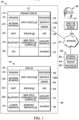
- the AVD 12 can be established by some or all of the components shown in Figure 1 .
- the AVD 12 can include one or more displays 14 that may be implemented by a high definition or ultra-high definition "4K" or higher flat screen and that may be touch-enabled for receiving user input signals via touches on the display.
- the AVD 12 may include one or more speakers 16 for outputting audio in accordance with present principles, and at least one additional input device 18 such as e.g. an audio receiver/microphone for e.g. entering audible commands to the AVD 12 to control the AVD 12.
- the example AVD 12 may also include one or more network interfaces 20 for communication over at least one network 22 such as the Internet, an WAN, an LAN, etc.
- the interface 20 may be, without limitation, a Wi-Fi transceiver, which is an example of a wireless computer network interface, such as but not limited to a mesh network transceiver. It is to be understood that the processor 24 controls the AVD 12 to undertake present principles, including the other elements of the AVD 12 described herein such as e.g. controlling the display 14 to present images thereon and receiving input therefrom.
- the network interface 20 may be, e.g., a wired or wireless modem or router, or other appropriate interface such as, e.g., a wireless telephony transceiver, or Wi-Fi transceiver as mentioned above, etc.
- the AVD 12 may also include one or more input ports 26 such as, e.g., a high definition multimedia interface (HDMI) port or a USB port to physically connect (e.g. using a wired connection) to another CE device and/or a headphone port to connect headphones to the AVD 12 for presentation of audio from the AVD 12 to a user through the headphones.
- the input port 26 may be connected via wire or wirelessly to a cable or satellite source 26a of audio video content.
- the source 26a may be, e.g., a separate or integrated set top box, or a satellite receiver.
- the source 26a may be a game console or disk player containing content that might be regarded by a user as a favorite for channel assignation purposes described further below.
- the source 26a when implemented as a game console may include some or all of the components described below in relation to the CE device 44.
- the AVD 12 may further include one or more computer memories 28 such as disk-based or solid state storage that are not transitory signals, in some cases embodied in the chassis of the AVD as standalone devices or as a personal video recording device (PVR) or video disk player either internal or external to the chassis of the AVD for playing back AV programs or as removable memory media.
- the AVD 12 can include a position or location receiver such as but not limited to a cellphone receiver, GPS receiver and/or altimeter 30 that is configured to e.g. receive geographic position information from at least one satellite or cellphone tower and provide the information to the processor 24 and/or determine an altitude at which the AVD 12 is disposed in conjunction with the processor 24.
- a position or location receiver such as but not limited to a cellphone receiver, GPS receiver and/or altimeter 30 that is configured to e.g. receive geographic position information from at least one satellite or cellphone tower and provide the information to the processor 24 and/or determine an altitude at which the AVD 12 is disposed in conjunction with the
- the AVD 12 may include one or more cameras 32 that may be, e.g., a thermal imaging camera, a digital camera such as a webcam, and/or a camera integrated into the AVD 12 and controllable by the processor 24 to gather pictures/images and/or video in accordance with present principles.
- a Bluetooth transceiver 34 and other Near Field Communication (NFC) element 36 for communication with other devices using Bluetooth and/or NFC technology, respectively.
- NFC element can be a radio frequency identification (RFID) element.
- the AVD 12 may include one or more auxiliary sensors 37 (e.g., a motion sensor such as an accelerometer, gyroscope, cyclometer, or a magnetic sensor, an infrared (IR) sensor, an optical sensor, a speed and/or cadence sensor, a gesture sensor (e.g. for sensing gesture command, etc.) providing input to the processor 24.
- the AVD 12 may include an over-the-air TV broadcast port 38 for receiving OTA TV broadcasts providing input to the processor 24.
- the AVD 12 may also include an infrared (IR) transmitter and/or IR receiver and/or IR transceiver 42 such as an IR data association (IRDA) device.
- IRDA IR data association
- a battery (not shown) may be provided for powering the AVD 12.
- the system 10 may include one or more other CE device types.
- a first CE device 44 may be used to send computer game audio and video to the AVD 12 via commands sent directly to the AVD 12 and/or through the below-described server while a second CE device 46 may include similar components as the first CE device 44.
- the second CE device 46 may be configured as a VR headset worn by a player 47 as shown.
- only two CE devices 44, 46 are shown, it being understood that fewer or greater devices may be used. For example, principles below discuss multiple players 47 with respective headsets communicating with each other during play of a computer game sourced by a game console to one or more AVD 12.
- the example non-limiting first CE device 44 may be established by any one of the above-mentioned devices, for example, a portable wireless laptop computer or notebook computer or game controller, and accordingly may have one or more of the components described below.
- the first CE device 44 may be a remote control (RC) for, e.g., issuing AV play and pause commands to the AVD 12, or it may be a more sophisticated device such as a tablet computer, a game controller communicating via wired or wireless link with the AVD 12 and/or a game console, a personal computer, a wireless telephone, etc.
- RC remote control
- the first CE device 44 may include one or more displays 50 that may be touch-enabled for receiving user input signals via touches on the display.
- the first CE device 44 may include one or more speakers 52 for outputting audio in accordance with present principles, and at least one additional input device 54 such as e.g. an audio receiver/microphone for e.g. entering audible commands to the first CE device 44 to control the device 44.
- the example first CE device 44 may also include one or more network interfaces 56 for communication over the network 22 under control of one or more CE device processors 58.
- a graphics processor 58A may also be included.
- the interface 56 may be, without limitation, a Wi-Fi transceiver, which is an example of a wireless computer network interface, including mesh network interfaces.
- the processor 58 controls the first CE device 44 to undertake present principles, including the other elements of the first CE device 44 described herein such as e.g. controlling the display 50 to present images thereon and receiving input therefrom.
- the network interface 56 may be, e.g., a wired or wireless modem or router, or other appropriate interface such as, e.g., a wireless telephony transceiver, or Wi-Fi transceiver as mentioned above, etc.
- the first CE device 44 may also include one or more input ports 60 such as, e.g., a HDMI port or a USB port to physically connect (e.g. using a wired connection) to another CE device and/or a headphone port to connect headphones to the first CE device 44 for presentation of audio from the first CE device 44 to a user through the headphones.
- the first CE device 44 may further include one or more tangible computer readable storage medium 62 such as disk-based or solid-state storage.
- the first CE device 44 can include a position or location receiver such as but not limited to a cellphone and/or GPS receiver and/or altimeter 64 that is configured to e.g.
- the CE device processor 58 receive geographic position information from at least one satellite and/or cell tower, using triangulation, and provide the information to the CE device processor 58 and/or determine an altitude at which the first CE device 44 is disposed in conjunction with the CE device processor 58.
- another suitable position receiver other than a cellphone and/or GPS receiver and/or altimeter may be used in accordance with present principles to e.g. determine the location of the first CE device 44 in e.g. all three dimensions.
- the first CE device 44 may include one or more cameras 66 that may be, e.g., a thermal imaging camera, a digital camera such as a webcam, and/or a camera integrated into the first CE device 44 and controllable by the CE device processor 58 to gather pictures/images and/or video in accordance with present principles.
- a Bluetooth transceiver 68 and other Near Field Communication (NFC) element 70 for communication with other devices using Bluetooth and/or NFC technology, respectively.
- NFC element can be a radio frequency identification (RFID) element.
- the first CE device 44 may include one or more auxiliary sensors 72 (e.g., a motion sensor such as an accelerometer, gyroscope, cyclometer, or a magnetic sensor, an infrared (IR) sensor, an optical sensor, a speed and/or cadence sensor, a gesture sensor (e.g. for sensing gesture command), etc.) providing input to the CE device processor 58.
- the first CE device 44 may include still other sensors such as e.g. one or more climate sensors 74 (e.g. barometers, humidity sensors, wind sensors, light sensors, temperature sensors, etc.) and/or one or more biometric sensors 76 providing input to the CE device processor 58.
- climate sensors 74 e.g. barometers, humidity sensors, wind sensors, light sensors, temperature sensors, etc.
- biometric sensors 76 providing input to the CE device processor 58.
- the first CE device 44 may also include an infrared (IR) transmitter and/or IR receiver and/or IR transceiver 78 such as an IR data association (IRDA) device.
- IR infrared
- IRDA IR data association
- a battery (not shown) may be provided for powering the first CE device 44.
- the CE device 44 may communicate with the AVD 12 through any of the above-described communication modes and related components.
- the second CE device 46 may include some or all of the components shown for the CE device 44. Either one or both CE devices may be powered by one or more batteries.
- At least one server 80 includes at least one server processor 82, at least one tangible computer readable storage medium 84 such as disk-based or solid state storage, and at least one network interface 86 that, under control of the server processor 82, allows for communication with the other devices of Figure 1 over the network 22, and indeed may facilitate communication between servers and client devices in accordance with present principles.
- the network interface 86 may be, e.g., a wired or wireless modem or router, Wi-Fi transceiver, or other appropriate interface such as, e.g., a wireless telephony transceiver.
- the server 80 may be an Internet server or an entire server "farm”, and may include and perform "cloud” functions such that the devices of the system 10 may access a "cloud" environment via the server 80 in example embodiments for, e.g., network gaming applications.
- the server 80 may be implemented by one or more game consoles or other computers in the same room as the other devices shown in Figure 1 or nearby.
- the methods herein may be implemented as software instructions executed by a processor, suitably configured application specific integrated circuits (ASIC) or field programmable gate array (FPGA) modules, or any other convenient manner as would be appreciated by those skilled in those art.
- ASIC application specific integrated circuits
- FPGA field programmable gate array
- the software instructions may be embodied in a non-transitory device such as a CD ROM or Flash drive.
- the software code instructions may alternatively be embodied in a transitory arrangement such as a radio or optical signal, or via a download over the internet.
- FIGs 2-6 a first technique for determining whether an image is "fake", i.e., has been digitally altered from an original image, is illustrated.
- an original image 200 that may be presented on a display 202 is shown of a person having a face 204 speaking an audible phrase 206.
- the image 200 may be an image such as an I-frame from a video stream, and some or all of the frames of the video stream may be processed as disclosed herein.
- a person operating a computer 208 with an input device 210 such as but not limited to a keyboard may alter the image and/or audio to produce an altered image 212 of the person, potentially depicted speaking an altered audible phrase 214.
- Present principles are directed to detecting that the altered image 212 in fact has been altered from the original 200.
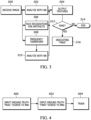
- Figure 3 illustrates logic that may be executed in the first technique while Figure 6 provides an example architecture that may embody the logic of Figure 3 .
- Commending at block 300 an image is received.
- the image can be directly analyzed at block 302 by processing the image through a first neural network (NN) such as a convolutional NN (CNN).
- NN neural network
- CNN convolutional NN
- the first NN outputs feature vectors representing the image at block 304.
- the image may be input to a face recognition module to analyze for artifacts, also referred to herein as irregularities, in the face and/or background of the image, as well as lighting irregularities in the image.
- the face recognition module which may employ one or more NNs, outputs feature vectors to block 304.
- an irregularity in a face in the image may include a small region having a checkerboard-like appearance, indicating blurry resolution owing to digital altering.
- the image may be converted to the frequency domain at block 308 using, for example, a discrete Fourier transform (DFT) that outputs a frequency spectrum which is analyzed at block 310 with another NN such as a CNN to detect irregularities in the image in the frequency domain.
- Feature vectors representing the spectrum are provided to block 304.
- an irregularity in the frequency domain may include one or more bright spots along the periphery of a graphic representation of the image in the frequency domain.
- a detection module which may include one or more NNs analyzes the feature vectors form block 304 to determine whether one or more irregularities exist in the spatial and/or frequency domains. If no irregularities exist the process may end at state 314, but in some implementations, if any irregularity exists in any domain, an indication may be returned at block 316 that the image is fake. In other implementations, an indication may be returned at block 316 that the image is fake only if both an irregularity exists in the spatial domain and an irregularity exists in the frequency domain.
- ground truth original, unaltered images are input to the NN.
- ground truth altered, or fake images are input to the NN at block 402.
- the fake images may be generated using "deepfake” techniques from the ground truth original images by the designer.
- the NN may be programmed to start analysis using for example any or the example irregularities discussed above for both the frequency and spatial domains.
- the NN is trained on the ground truth inputs at bock 404. Reinforcement learning subsequently may be applied to refine training of the NN at block 404.
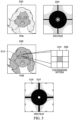
- Figure 5 illustrates example spatial and frequency domain irregularities.
- An original image 500 is shown in an original spatial domain 502 and original frequency domain 504.
- An altered image 506 of the original image 500 has an altered spatial domain image 508 and an altered frequency domain depicted at 510.
- a region 512 in the altered spatial domain image 508 has a checkerboard pattern enlarged and depicted at 514. Lighting irregularities also may exist between the original and altered images.
- One or more frequency domain irregularities 516 also may be detected in the representation of the image in the frequency domain 510.
- the frequency domain irregularities 516 may include bright spots along the edges or periphery of the frequency domain graphic depiction as shown. In the example shown, two bright spots per side exist, indicating an image-altering-produced irregularity in the frequency domain.
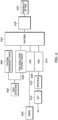
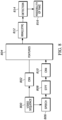
- Figure 6 illustrates an example architecture that may be used to embody the logic of Figure 3 .
- An image 600 to be tested for alteration is input to a face detection module 602, which analyzes the image in the spatial domain to detect at a neural network (NN) 604 of the module 602 lighting irregularities in the image as well as face resolution/irregularity checks at 606.
- the face detection module 602 may employ image recognition principles and may be embodied by one or more NNs.
- the image 600 may be input directly to a NN 608 for direct analysis using additional rules, which may be a CNN. It should be noted that the NN 608 extracts feature vectors of the image. Also, the NN 604 executes image processing and is particularly advantageous in the absence of sufficient training data. However, the NNs 604, 608 may be implemented by a single NN.
- the image 600 is processed through a discrete Fourier transform (DFT) 610, which outputs a spectrum 612 representing the image 600 in the frequency domain.
- DFT discrete Fourier transform
- the spectrum 612 is sent to a CNN 614 for analyzing the spectrum.
- the face recognition module 602 (including lighting irregularity check 604 and face resolution/artifact check 606), as wells as the CNNs 608 and 614, produce a group 616 of feature vectors representing the image 600 in both the spatial and frequency domains.
- a detection module 618 which may be implemented by one or more NNs such as a recurrent NN (RNN) such as a long short-term module (LSTM), analyzes the feature vectors to ascertain whether the image 600 contains digital alterations from an original image in accordance with principles advanced herein. If it does, at 620 an indication that the image 600 possibly is a fake is generated.
- RNN recurrent NN
- LSTM long short-term module
- Figure 7 illustrates a second technique for detecting an altered video
- Figure 8 provides an example architecture for embodying the logic of Figure 7 .
- a video sequence such as a video clip or other sequence of video frames, is input at block 700 to a NN.
- the sequence is analyzed at block 702 using the NN, which outputs feature vectors representing the video sequence at 704.
- the NN may be trained to learn natural human patterns of facial movement during, for example, speaking.
- the alterer may not precisely model the natural pattern of movement of, for instance, the lips, and so a slightly unnatural pattern of movement may be detected by the NN in a fake video sequence.
- audio associated with the video sequence is input at block 706 to a frequency transform.
- the spectrum output by the frequency transform 706 is provided to a NN at block 708 for analysis of the spectrum to output feature vectors to block 704 that represent the audio.
- the NN may be trained to learn natural human speech characteristics, such as cadence, tone, pitch patterns, and emphasis.
- natural human speech characteristics such as cadence, tone, pitch patterns, and emphasis.
- audio such as voice audio
- the alterer may not precisely model the natural pattern of human speech.
- a slightly unnatural pattern of speech such as unnatural cadence or tone or pitch, may be detected by the NN in a fake audio sequence. Training may be accomplished along the lines shown in Figure 4 , with ground truth audio and fake ground truth audio derived from the original ground truth audio being used as training sets.
- the feature vectors 704 may be provided to a NN such as an RNN 710 to analyze the feature vectors to detect at decision diamond 712 whether the input video sequence and/or accompanying audio has been altered from an original. If no anomalies/irregularities are found, the process may end at state 714, but if an irregularity is detected, an indication that the video sequence may have been altered is output at block 716.
- a NN such as an RNN 710 to analyze the feature vectors to detect at decision diamond 712 whether the input video sequence and/or accompanying audio has been altered from an original. If no anomalies/irregularities are found, the process may end at state 714, but if an irregularity is detected, an indication that the video sequence may have been altered is output at block 716.
- an indication of a fake is output at block 716 if any irregularity is detected in either the audio or the video. In other embodiments, an indication of a fake is output at block 716 only if an irregularity is detected in both the audio and the video.
- Figure 8 illustrates an architecture that can be used to embody the logic of Figure 7 .
- a video sequence 800 is input to a NN 802 such as a CNN to extract feature vectors 804 therefrom.
- audio such as speech 806 is input to a frequency transform 808 such as a short time Fourier transform (STFT) to generate a representation of the audio in the frequency domain, which is analyzed by a NN 810 such as a CNN to extract feature vectors therefrom.
- a NN 212 such as an RNN such as a LSTM analyzes the feature vectors according to principles described herein to detect, at block 814, any irregularities in the video sequence 800 and audio 806.
- State 816 indicates output of an indication that the input is possibly a fake.
- FIG. 9 a third technique is shown for addressing fake video generation using block chain technology and/or digital fingerprint technology.
- hashing/signing of videos may be integrated into an imaging device such as a smart phone or other recording device using, for example, a web browser or encoded into hardware.
- Digital fingerprinting can be generated from the bits of data in the entire video or sub-tracks, such that if the video content is changed, the fingerprint also will change.
- the digital fingerprints can be generated together with metadata such as location and timestamp of where and when the video is originally made.
- the distributor Every time a video is sought to be redistributed, the distributor must request permission from the original one on the block chain and a new block for the new (copied) video is chained, making it easy to trace back to the original video and any node on the black chain. Before the video is uploaded again, the fingerprint of the video can be matched to the original fingerprint to determine if the video sought to be added has been manipulated.
- a video website may have a video fingerprint detector incorporated so every time a video is upload/downloaded, it will be logged and stamped. If the video is classified as fake based on the fingerprint not matching the original video fingerprint, it may be logged as such on the entire chain. This emulates an antivirus software but in this case all the users are protected at the same time.
- an original (“real") video is added to a video blockchain along with a hash of the video, which hash may function as a digital fingerprint and is typically based on pixel values or encoding information or other image-dependent values in the video.
- a request to copy the video may be received at block 902, and the request may be granted at block 904.
- a request may be received to add a new video that is a copy of the original video back into the block chain.
- the request to be valid, may be accompanied by a hash (fingerprint) on the new video.
- the hash of the video sought to be added to the block chain is compared to the hash of the original video from whence it was copied, and if the hashes match, the new video may be added at block 910 to the block chain.
- the logic may move to block 912 to either deny adding the new video to the block chain, or to add it to the block chain with an indication that the new video has been altered from the original and thus may be a fake. If desired, the altered video may be rendered inaccessible from the block chain or otherwise unplayable at block 914.
- the logic may move to block 916 to report to the internet service provider (ISP) or other distributor of the new, altered video that the video has in fact been digitally altered from an original video and thus should be examined for deciding whether to remove the new (altered) video from public view.
- ISP internet service provider
- a user interface (UI) 1000 may be presented on a display 1002 of a device executing the logic of Figure 9 and/or receiving information from a device executing the logic of Figure 9 .
- the UI 1000 may include a prompt 1004 that a potentially fake video has been detected.
- the UI 1000 may also include a selector 1006 to enable a user to report the existence of the fake along with identifying information to a distributor or other authority.
- Figures 11 and 12 illustrate additional fingerprint logic.
- a hash is performed in the frame. Proceeding to block 1002, the hash is then embedded into the frame from whence it was derived.
- the hash of a video frame may be steganographically embedded in the video frame, in a way that is undetectable to the naked eye and may be distributed uniformly across the video frame.
- the pixels of each piece of the steganographic hash can be in a known location, either because it is always a fixed location, or because the location is contained in the video metadata for the frame (allowing for every frame to be different). Knowing this location allows pixels representing the hash to be excluded from the video data that is hashed. In other words, the original hash is created only from non-steganographically altered pixels. This location may also be used by video compression algorithms to ensure that pixels representing the hash are not compressed or altered in a way that would affect the hash.
- Figure 12 illustrates that video playback software would then reverse this process.
- the steganographically embedded hash is extracted from the video frame.
- the remaining pixels of the video frame are hashed.
- the fresh hash is compared with the hash extracted from the frame. If they match, the frame has been unaltered from the original source video and so the logic moves to block 1206 to indicate such, and if desired to add to the block chain the video (assuming all or at least a threshold number of frame hashes match). If the hashes do not match, the logic moves to block 1208 to indicate that the video being viewed has been altered from the original, with (for example) a red border or highlight around the frame which has been altered. Even the altered portion of the frame may be outlined.
- This same verification process may be executed on a backend server that detects fakes and either proactively prevents them from being published or appends a warning to the video.
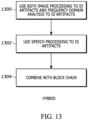
- Block 13 illustrates that hybrid techniques combining above principles may be employed.
- Block 1300 indicates that both image processing/video sequencing coupled with frequency domain analysis may be used to identify artifacts/irregularities in videos.
- Block 1302 indicates further that speech processing may be used in combination with any of the above techniques to identify artifacts/irregularities in videos.
- Block 1304 indicates that the identification of artifacts/irregularities in videos may be combined with the block chain technique to track original (real) videos and copies thereof that have been altered (fake).
- Figures 14-16 provide additional examples of artifacts or irregularities that can appear in altered images, labeled "fake” images in the figures.
- a first real image 1400 in Figure 14 has been altered to produce a corresponding altered image 1402 in which, in a region 1404, lighting appears to be brighter than in the corresponding region in the first real image 1400.
- a second real image 1406 has been altered to produce an altered image 1408 in which lighting in a region 1410 on the face appears to be brighter than in the real image 1406.
- the resolutions of the altered images 1402, 14108 are also less than the resolutions of the corresponding real image 1400, 1406, meaning that the NNs can learn to distinguish altered images on the basis of either or both lighting irregularities and resolution decreases.
- Figure 15 illustrates an altered image 1500 in which, in a small area 1502, image irregularities or artifacts exist due to generative adversarial network (GAN) upsampling executed to produce the altered image 1500.
- GAN generative adversarial network
- the GAN irregularity may include a uniformly solid color of a region of the image in which nonuniform solid color subject matter (in the example shown, grass with various degrees of shading) appears in the original image.
- Figure 16 illustrates a real image 1600 and an altered image 1602 derived from the real image 1600 by superimposing the face of another person onto the face of the subject in the real image 1600. As shown at 1604, this superimposition results in misalignment of the face to the head or the rest of the body, in this case, the misalignment of the nose to the angle at which the head is depicted.
Landscapes
- Engineering & Computer Science (AREA)
- Signal Processing (AREA)
- Theoretical Computer Science (AREA)
- Physics & Mathematics (AREA)
- Multimedia (AREA)
- Computer Security & Cryptography (AREA)
- Computing Systems (AREA)
- General Engineering & Computer Science (AREA)
- Software Systems (AREA)
- Artificial Intelligence (AREA)
- General Physics & Mathematics (AREA)
- Data Mining & Analysis (AREA)
- Evolutionary Computation (AREA)
- Mathematical Physics (AREA)
- Computational Linguistics (AREA)
- Molecular Biology (AREA)
- General Health & Medical Sciences (AREA)
- Biophysics (AREA)
- Biomedical Technology (AREA)
- Health & Medical Sciences (AREA)
- Life Sciences & Earth Sciences (AREA)
- Databases & Information Systems (AREA)
- Computer Networks & Wireless Communication (AREA)
- Computer Hardware Design (AREA)
- Computer Vision & Pattern Recognition (AREA)
- Medical Informatics (AREA)
- Image Analysis (AREA)
- Two-Way Televisions, Distribution Of Moving Picture Or The Like (AREA)
- Testing, Inspecting, Measuring Of Stereoscopic Televisions And Televisions (AREA)
Claims (12)
- Système comprenant :
au moins un processeur configuré pour accéder à au moins un stockage informatique contenant des instructions exécutables par le processeur pour :accéder à au moins une chaîne de blocs stockant des informations vidéo ;déterminer (908) si une première vidéo à ajouter à la chaîne de blocs (906) est une copie modifiée d'une vidéo d'origine représentée dans la chaîne de blocs (900) ;après avoir déterminé que la première vidéo à ajouter à la chaîne de blocs est une copie modifiée de la vidéo d'origine, ajouter la première vidéo à la chaîne de blocs en indiquant que la première vidéo a été modifiée par rapport à la vidéo d'origine (912). - Système selon la revendication 1, dans lequel les instructions sont exécutables pour déterminer si la première vidéo est une copie modifiée de la vidéo d'origine, au moins en partie, par :le fait de déterminer si au moins une irrégularité de texture sur un visage dans la première vidéo ou entre le visage et l'arrière-plan dans la première vidéo, ou les deux, est présente dans la première vidéo ; etle fait de déterminer si la première vidéo est modifiée par rapport à la vidéo d'origine, au moins en partie, sur la base de l'irrégularité de texture.
- Système selon la revendication 1, dans lequel les instructions sont exécutables pour déterminer si la première vidéo est une copie modifiée de la vidéo d'origine, au moins en partie, par :l'utilisation d'au moins une transformée de Fourier discrète (TFD) pour produire un spectre représentant au moins une partie de la première vidéo ; etle fait de déterminer si la première vidéo est modifiée par rapport à la vidéo d'origine, au moins en partie, à l'aide du spectre.
- Système selon la revendication 3, dans lequel les instructions sont exécutables pour :détecter au moins une irrégularité dans le spectre, dans lequel l'irrégularité dans le spectre comprend au moins une région de luminosité plus claire qu'une région correspondante dans la vidéo d'origine ; etdéterminer que la première vidéo a été modifiée à la suite de la détection de l'irrégularité dans le spectre.
- Système selon la revendication 1, dans lequel les instructions sont exécutables pour :recevoir une séquence de trames dans la première vidéo ;produire des vecteurs de caractéristiques représentant le fait de savoir si le mouvement du visage d'une personne tel qu'il apparaît dans la séquence de trames présente un mouvement naturel ; etdéterminer si la séquence de trames est modifiée par rapport à la vidéo d'origine sur la base des vecteurs de caractéristiques.
- Système selon la revendication 1, comprenant en outre :au moins un transformateur de fréquence configuré pour recevoir des données audio liées à une séquence de trames dans la première vidéo et configuré pour produire un spectre ;au moins un réseau neuronal configuré pour recevoir le spectre et produire des vecteurs de caractéristiques audio qui représentent les données audio ; etau moins un module d'analyse entraîné à l'apprentissage de caractéristiques naturelles de discours humain, configuré pour recevoir les vecteurs de caractéristiques audio et produire des indications sur la base de ces vecteurs quant à l'altération des données audio par rapport aux données audio d'origine.
- Système selon la revendication 1, dans lequel les instructions sont exécutables pour :exécuter un hachage vidéo sur la première vidéo ;comparer le hachage vidéo de la première vidéo avec le hachage vidéo de la vidéo d'origine représentée dans la chaîne de blocs ; eten réponse à la comparaison du hachage vidéo sur la première vidéo avec le hachage vidéo de la vidéo d'origine, déterminer si la première vidéo est une copie modifiée de la vidéo d'origine.
- Procédé mis en oeuvre par ordinateur comprenant :l'accès à au moins une chaîne de blocs stockant des informations vidéo ;le fait de détecter (908) qu'une première vidéo (906) dérivée d'une vidéo d'origine (900) a été modifiée par rapport à la vidéo d'origine ; et en réponse au fait de détecter qu'une première vidéo dérivée d'une vidéo d'origine a été modifiée par rapport à la vidéo d'origine,l'ajout de la première vidéo à la chaîne de blocs contenant des informations représentant la vidéo d'origine ainsi qu'une indication selon laquelle la première vidéo a été modifiée.
- Procédé selon la revendication 8, dans lequel la détection est exécutée, au moins en partie, par :le rendu d'une empreinte numérique de la première vidéo ;la comparaison de l'empreinte numérique de la première vidéo avec l'empreinte numérique de la vidéo d'origine contenue dans la chaîne de blocs.
- Procédé selon la revendication 9, dans lequel l'empreinte numérique de la vidéo d'origine comprend un hachage réalisé sur au moins une trame de la vidéo d'origine et intégré dans la trame à partir de laquelle le hachage est dérivé.
- Procédé selon la revendication 10, dans lequel le hachage est intégré de manière stéganographique dans la trame de manière indétectable à l'oeil humain.
- Procédé selon la revendication 11, dans lequel le hachage est réparti sur l'ensemble de la trame à des endroits connus dans la trame, le hachage étant créé uniquement à partir de pixels dans la trame qui n'ont pas été modifiés par la stéganographie.
Priority Applications (1)
| Application Number | Priority Date | Filing Date | Title |
|---|---|---|---|
| EP24152690.4A EP4340377B1 (fr) | 2019-10-09 | 2020-09-30 | Détection vidéo factice à l'aide d'une chaîne de blocs |
Applications Claiming Priority (2)
| Application Number | Priority Date | Filing Date | Title |
|---|---|---|---|
| US16/597,698 US11039205B2 (en) | 2019-10-09 | 2019-10-09 | Fake video detection using block chain |
| PCT/US2020/053523 WO2021071721A1 (fr) | 2019-10-09 | 2020-09-30 | Détection de fausse vidéo au moyen d'une chaîne de blocs |
Related Child Applications (2)
| Application Number | Title | Priority Date | Filing Date |
|---|---|---|---|
| EP24152690.4A Division EP4340377B1 (fr) | 2019-10-09 | 2020-09-30 | Détection vidéo factice à l'aide d'une chaîne de blocs |
| EP24152690.4A Division-Into EP4340377B1 (fr) | 2019-10-09 | 2020-09-30 | Détection vidéo factice à l'aide d'une chaîne de blocs |
Publications (3)
| Publication Number | Publication Date |
|---|---|
| EP4042706A1 EP4042706A1 (fr) | 2022-08-17 |
| EP4042706A4 EP4042706A4 (fr) | 2023-11-01 |
| EP4042706B1 true EP4042706B1 (fr) | 2024-07-31 |
Family
ID=75382267
Family Applications (2)
| Application Number | Title | Priority Date | Filing Date |
|---|---|---|---|
| EP24152690.4A Active EP4340377B1 (fr) | 2019-10-09 | 2020-09-30 | Détection vidéo factice à l'aide d'une chaîne de blocs |
| EP20875032.3A Active EP4042706B1 (fr) | 2019-10-09 | 2020-09-30 | Détection de fausse vidéo au moyen d'une chaîne de blocs |
Family Applications Before (1)
| Application Number | Title | Priority Date | Filing Date |
|---|---|---|---|
| EP24152690.4A Active EP4340377B1 (fr) | 2019-10-09 | 2020-09-30 | Détection vidéo factice à l'aide d'une chaîne de blocs |
Country Status (5)
| Country | Link |
|---|---|
| US (3) | US11039205B2 (fr) |
| EP (2) | EP4340377B1 (fr) |
| JP (1) | JP7467615B2 (fr) |
| CN (1) | CN114731457B (fr) |
| WO (1) | WO2021071721A1 (fr) |
Families Citing this family (12)
| Publication number | Priority date | Publication date | Assignee | Title |
|---|---|---|---|---|
| US11039205B2 (en) * | 2019-10-09 | 2021-06-15 | Sony Interactive Entertainment Inc. | Fake video detection using block chain |
| US12182897B2 (en) * | 2020-01-06 | 2024-12-31 | Accenture Global Solutions Limited | Methods and systems for protecting digital content against artificial intelligence-based unauthorized manipulation of the digital content |
| CN113938702A (zh) * | 2020-07-13 | 2022-01-14 | 富泰华工业(深圳)有限公司 | 基于区块链系统的多媒体数据流防篡改装置、方法及介质 |
| CN112200198B (zh) * | 2020-07-31 | 2023-11-24 | 星宸科技股份有限公司 | 目标数据特征提取方法、装置及存储介质 |
| US11733823B2 (en) * | 2021-05-19 | 2023-08-22 | Microsoft Technology Licensing, Llc | Synthetic media detection and management of trust notifications thereof |
| US11989266B2 (en) * | 2021-06-15 | 2024-05-21 | Richard Banh | Method for authenticating digital content items with blockchain and writing digital content items data to blockchain |
| WO2023117104A1 (fr) * | 2021-12-23 | 2023-06-29 | Fujitsu Technology Solutions Gmbh | Procédés et systèmes d'enregistrement d'un support numérique et de vérification d'un enregistrement d'un support numérique |
| US20240096051A1 (en) * | 2022-04-21 | 2024-03-21 | Digicert, Inc. | Determining whether a questionable video of a prominent individual is real or fake |
| KR20240036293A (ko) | 2022-09-13 | 2024-03-20 | 삼성전자주식회사 | 저장 장치, 그것을 갖는 호스트 시스템 및 그것의 동작 방법 |
| KR20240132874A (ko) * | 2023-02-27 | 2024-09-04 | 삼성전자주식회사 | 전자 장치 및 전자 장치에서 nft 표절 방지 방법 |
| US12526151B2 (en) | 2023-02-27 | 2026-01-13 | Samsung Electronics Co., Ltd. | Electronic device and method for preventing non-fungible token plagiarism in electronic device |
| EP4721345A1 (fr) | 2023-06-05 | 2026-04-08 | Alibi LLC | Systèmes, procédés et produits-programmes informatiques pour fournir un témoignage numérique immuable |
Family Cites Families (52)
| Publication number | Priority date | Publication date | Assignee | Title |
|---|---|---|---|---|
| JP4456185B2 (ja) * | 1997-08-29 | 2010-04-28 | 富士通株式会社 | コピー防止機能を持つ見える透かし入り動画像記録媒体とその作成・検出および録画・再生装置 |
| US6343204B1 (en) | 1999-08-25 | 2002-01-29 | Hewlett-Packard Company | Detection and deterrence of counterfeiting of documents with tokens characteristic color and spacing |
| US7043048B1 (en) * | 2000-06-01 | 2006-05-09 | Digimarc Corporation | Capturing and encoding unique user attributes in media signals |
| JP4231286B2 (ja) | 2002-12-11 | 2009-02-25 | 日本放送協会 | コンテンツ送信装置、コンテンツ送信プログラム、コンテンツ受信装置、及びコンテンツ受信プログラム |
| JP4189025B2 (ja) | 2005-10-18 | 2008-12-03 | パナソニック株式会社 | 情報処理装置及びその方法 |
| US10169646B2 (en) * | 2007-12-31 | 2019-01-01 | Applied Recognition Inc. | Face authentication to mitigate spoofing |
| JP4446400B2 (ja) | 2008-06-20 | 2010-04-07 | Kddi株式会社 | コンテンツの電子透かし埋め込み方式および認証方式 |
| US11195057B2 (en) | 2014-03-18 | 2021-12-07 | Z Advanced Computing, Inc. | System and method for extremely efficient image and pattern recognition and artificial intelligence platform |
| US9159321B2 (en) | 2012-02-27 | 2015-10-13 | Hong Kong Baptist University | Lip-password based speaker verification system |
| US8989376B2 (en) * | 2012-03-29 | 2015-03-24 | Alcatel Lucent | Method and apparatus for authenticating video content |
| US9396382B2 (en) | 2012-08-17 | 2016-07-19 | Flashscan3D, Llc | System and method for a biometric image sensor with spoofing detection |
| JP6163029B2 (ja) | 2013-06-25 | 2017-07-12 | キヤノン株式会社 | 画像処理装置およびその方法 |
| WO2014207752A1 (fr) | 2013-06-27 | 2014-12-31 | Hewlett-Packard Development Company, L.P. | Authentification d'utilisateur par mise en corrélation de paroles et de forme des lèvres correspondantes |
| US20160005050A1 (en) | 2014-07-03 | 2016-01-07 | Ari Teman | Method and system for authenticating user identity and detecting fraudulent content associated with online activities |
| US10102593B2 (en) * | 2016-06-10 | 2018-10-16 | Understory, LLC | Data processing system for managing activities linked to multimedia content when the multimedia content is changed |
| JP6932150B2 (ja) | 2016-06-30 | 2021-09-08 | コーニンクレッカ フィリップス エヌ ヴェKoninklijke Philips N.V. | 顔検出/認識システム用の方法及び装置 |
| US10692502B2 (en) | 2017-03-03 | 2020-06-23 | Pindrop Security, Inc. | Method and apparatus for detecting spoofing conditions |
| US10515199B2 (en) | 2017-04-19 | 2019-12-24 | Qualcomm Incorporated | Systems and methods for facial authentication |
| CN107580196B (zh) * | 2017-07-28 | 2020-01-21 | 国创科视科技股份有限公司 | 一种视频数据共享系统及方法 |
| US11036863B2 (en) * | 2017-08-01 | 2021-06-15 | Dell Products, L.P. | Validating an image using an embedded hash in an information handling system |
| US20190042853A1 (en) * | 2017-08-04 | 2019-02-07 | Facebook, Inc. | System and Method of Determining Video Content |
| WO2019089432A1 (fr) | 2017-10-30 | 2019-05-09 | The Research Foundation For The State University Of New York | Système et procédé associés à une authentification utilisateur basée sur une écho-signature à base acoustique |
| CN108471510A (zh) * | 2018-01-29 | 2018-08-31 | 东莞理工学院 | 一种基于区块链的视频操作记录保护方法及系统 |
| US11265168B2 (en) | 2018-03-07 | 2022-03-01 | Private Identity Llc | Systems and methods for privacy-enabled biometric processing |
| US10938852B1 (en) | 2020-08-14 | 2021-03-02 | Private Identity Llc | Systems and methods for private authentication with helper networks |
| JP6664585B2 (ja) | 2018-03-20 | 2020-03-13 | ヤフー株式会社 | 情報処理装置、情報処理方法、及び情報処理プログラム |
| CN108846924A (zh) * | 2018-05-31 | 2018-11-20 | 上海商汤智能科技有限公司 | 车辆及车门解锁控制方法、装置和车门解锁系统 |
| CN108806718B (zh) | 2018-06-06 | 2020-07-21 | 华中师范大学 | 基于对enf相位谱和瞬时频率谱分析的音频鉴定方法 |
| US10593336B2 (en) | 2018-07-26 | 2020-03-17 | Accenture Global Solutions Limited | Machine learning for authenticating voice |
| US10361866B1 (en) | 2018-08-13 | 2019-07-23 | Truepic Inc. | Proof of image authentication on a blockchain |
| US11023618B2 (en) * | 2018-08-21 | 2021-06-01 | Paypal, Inc. | Systems and methods for detecting modifications in a video clip |
| CN109040781B (zh) * | 2018-08-27 | 2021-04-30 | 北京京东尚科信息技术有限公司 | 视频认证方法、装置、系统、电子设备及可读介质 |
| US10846522B2 (en) | 2018-10-16 | 2020-11-24 | Google Llc | Speaking classification using audio-visual data |
| US10631036B1 (en) * | 2018-10-24 | 2020-04-21 | Gfycat, Inc. | Identifying altered digital video content |
| US10896493B2 (en) | 2018-11-13 | 2021-01-19 | Adobe Inc. | Intelligent identification of replacement regions for mixing and replacing of persons in group portraits |
| CN109543065B (zh) | 2018-11-14 | 2023-04-28 | 成都皓图智能科技有限责任公司 | 一种结合区块链的视频主动识别方法 |
| US10964006B2 (en) | 2018-11-16 | 2021-03-30 | Artifical Intelligence Foundation, Inc | Identification of neural-network-generated fake images |
| US11455380B2 (en) * | 2018-11-20 | 2022-09-27 | International Business Machines Corporation | Chain-of-custody of digital content in a database system |
| CN109600620B (zh) * | 2018-12-07 | 2021-03-16 | 四川长虹电器股份有限公司 | 视频文件保护方法 |
| US11114086B2 (en) | 2019-01-18 | 2021-09-07 | Snap Inc. | Text and audio-based real-time face reenactment |
| US10880619B2 (en) * | 2019-02-21 | 2020-12-29 | Raytheon Bbn Technologies Corp. | Verifying provenance of digital content |
| US20200302952A1 (en) | 2019-03-20 | 2020-09-24 | Amazon Technologies, Inc. | System for assessing vocal presentation |
| CN110266711B (zh) * | 2019-06-27 | 2022-02-18 | 深圳市科迈爱康科技有限公司 | 区块链节点的数据上链方法、装置、系统及区块链节点 |
| KR20190106852A (ko) | 2019-08-27 | 2019-09-18 | 엘지전자 주식회사 | Xr 컨텐츠 제공 방법 및 xr 컨텐츠 제공 디바이스 |
| US11425789B2 (en) * | 2019-09-03 | 2022-08-23 | GeoPost, Inc. | Gateway device |
| US11158329B2 (en) | 2019-09-11 | 2021-10-26 | Artificial Intelligence Foundation, Inc. | Identification of fake audio content |
| US11308185B1 (en) | 2019-09-23 | 2022-04-19 | T-Mobile Innovations Llc | System and method for determining modifications of media files |
| US12120384B2 (en) | 2019-09-27 | 2024-10-15 | Mcafee, Llc | Methods and apparatus to improve deepfake detection with explainability |
| US11039205B2 (en) * | 2019-10-09 | 2021-06-15 | Sony Interactive Entertainment Inc. | Fake video detection using block chain |
| US10931976B1 (en) | 2019-10-14 | 2021-02-23 | Microsoft Technology Licensing, Llc | Face-speech bridging by cycle video/audio reconstruction |
| US11922532B2 (en) | 2020-01-15 | 2024-03-05 | Digimarc Corporation | System for mitigating the problem of deepfake media content using watermarking |
| US11417041B2 (en) | 2020-02-12 | 2022-08-16 | Adobe Inc. | Style-aware audio-driven talking head animation from a single image |
-
2019
- 2019-10-09 US US16/597,698 patent/US11039205B2/en active Active
-
2020
- 2020-09-30 CN CN202080079220.1A patent/CN114731457B/zh active Active
- 2020-09-30 EP EP24152690.4A patent/EP4340377B1/fr active Active
- 2020-09-30 WO PCT/US2020/053523 patent/WO2021071721A1/fr not_active Ceased
- 2020-09-30 EP EP20875032.3A patent/EP4042706B1/fr active Active
- 2020-09-30 JP JP2022521716A patent/JP7467615B2/ja active Active
-
2021
- 2021-06-15 US US17/348,483 patent/US11736763B2/en active Active
-
2023
- 2023-07-02 US US18/346,247 patent/US20240048799A1/en active Pending
Non-Patent Citations (1)
| Title |
|---|
| GALLO PIERLUIGI ET AL: "BlockSee: Blockchain for IoT Video Surveillance in Smart Cities", 2018 IEEE INTERNATIONAL CONFERENCE ON ENVIRONMENT AND ELECTRICAL ENGINEERING AND 2018 IEEE INDUSTRIAL AND COMMERCIAL POWER SYSTEMS EUROPE (EEEIC / I&CPS EUROPE), IEEE, 12 June 2018 (2018-06-12), pages 1 - 6, XP033422373, DOI: 10.1109/EEEIC.2018.8493895 * |
Also Published As
| Publication number | Publication date |
|---|---|
| EP4042706A4 (fr) | 2023-11-01 |
| EP4340377A3 (fr) | 2024-04-03 |
| EP4340377B1 (fr) | 2025-09-17 |
| CN114731457A (zh) | 2022-07-08 |
| EP4042706A1 (fr) | 2022-08-17 |
| US20210112306A1 (en) | 2021-04-15 |
| CN114731457B (zh) | 2024-07-09 |
| WO2021071721A1 (fr) | 2021-04-15 |
| US11039205B2 (en) | 2021-06-15 |
| US11736763B2 (en) | 2023-08-22 |
| JP7467615B2 (ja) | 2024-04-15 |
| US20210314658A1 (en) | 2021-10-07 |
| JP2022551661A (ja) | 2022-12-12 |
| US20240048799A1 (en) | 2024-02-08 |
| EP4340377A2 (fr) | 2024-03-20 |
Similar Documents
| Publication | Publication Date | Title |
|---|---|---|
| EP4042706B1 (fr) | Détection de fausse vidéo au moyen d'une chaîne de blocs | |
| US11551474B2 (en) | Fake video detection | |
| US20210117690A1 (en) | Fake video detection using video sequencing | |
| US11281709B2 (en) | System and method for converting image data into a natural language description | |
| US11450353B2 (en) | Video tagging by correlating visual features to sound tags | |
| JP2025041866A (ja) | フェイクビデオの検出 | |
| CN107172084A (zh) | 一种身份验证的方法和设备 | |
| US20240127390A1 (en) | Metadata watermarking for 'nested spectating' | |
| EP3544705B1 (fr) | Rematriçage par émulation | |
| US20250065230A1 (en) | Varying Just Noticeable Difference (JND) Threshold or Bit Rates for Game Video Encoding Based on Power Saving Requirements | |
| US20220180854A1 (en) | Sound effects based on footfall | |
| US11032340B2 (en) | Using camera on computer simulation controller | |
| US20210034146A1 (en) | Eye tracking with recorded video confirmation of face image upon accepting terms |
Legal Events
| Date | Code | Title | Description |
|---|---|---|---|
| STAA | Information on the status of an ep patent application or granted ep patent |
Free format text: STATUS: THE INTERNATIONAL PUBLICATION HAS BEEN MADE |
|
| PUAI | Public reference made under article 153(3) epc to a published international application that has entered the european phase |
Free format text: ORIGINAL CODE: 0009012 |
|
| STAA | Information on the status of an ep patent application or granted ep patent |
Free format text: STATUS: REQUEST FOR EXAMINATION WAS MADE |
|
| 17P | Request for examination filed |
Effective date: 20220407 |
|
| AK | Designated contracting states |
Kind code of ref document: A1 Designated state(s): AL AT BE BG CH CY CZ DE DK EE ES FI FR GB GR HR HU IE IS IT LI LT LU LV MC MK MT NL NO PL PT RO RS SE SI SK SM TR |
|
| DAV | Request for validation of the european patent (deleted) | ||
| DAX | Request for extension of the european patent (deleted) | ||
| A4 | Supplementary search report drawn up and despatched |
Effective date: 20231005 |
|
| RIC1 | Information provided on ipc code assigned before grant |
Ipc: H04N 21/8358 20110101ALI20230928BHEP Ipc: H04L 9/00 20220101ALI20230928BHEP Ipc: H04N 21/8352 20110101ALI20230928BHEP Ipc: H04N 21/658 20110101ALI20230928BHEP Ipc: H04N 21/454 20110101ALI20230928BHEP Ipc: H04N 21/278 20110101ALI20230928BHEP Ipc: H04N 21/2743 20110101ALI20230928BHEP Ipc: H04N 21/234 20110101ALI20230928BHEP Ipc: H04L 9/32 20060101ALI20230928BHEP Ipc: G06N 3/08 20060101ALI20230928BHEP Ipc: G06N 3/045 20230101ALI20230928BHEP Ipc: H04L 9/40 20220101ALI20230928BHEP Ipc: H04N 21/44 20110101AFI20230928BHEP |
|
| GRAP | Despatch of communication of intention to grant a patent |
Free format text: ORIGINAL CODE: EPIDOSNIGR1 |
|
| STAA | Information on the status of an ep patent application or granted ep patent |
Free format text: STATUS: GRANT OF PATENT IS INTENDED |
|
| RIC1 | Information provided on ipc code assigned before grant |
Ipc: H04N 21/8358 20110101ALI20240206BHEP Ipc: H04L 9/00 20220101ALI20240206BHEP Ipc: H04N 21/8352 20110101ALI20240206BHEP Ipc: H04N 21/658 20110101ALI20240206BHEP Ipc: H04N 21/454 20110101ALI20240206BHEP Ipc: H04N 21/278 20110101ALI20240206BHEP Ipc: H04N 21/2743 20110101ALI20240206BHEP Ipc: H04N 21/234 20110101ALI20240206BHEP Ipc: H04L 9/32 20060101ALI20240206BHEP Ipc: G06N 3/08 20060101ALI20240206BHEP Ipc: G06N 3/045 20230101ALI20240206BHEP Ipc: H04L 9/40 20220101ALI20240206BHEP Ipc: H04N 21/44 20110101AFI20240206BHEP |
|
| INTG | Intention to grant announced |
Effective date: 20240229 |
|
| GRAS | Grant fee paid |
Free format text: ORIGINAL CODE: EPIDOSNIGR3 |
|
| GRAA | (expected) grant |
Free format text: ORIGINAL CODE: 0009210 |
|
| STAA | Information on the status of an ep patent application or granted ep patent |
Free format text: STATUS: THE PATENT HAS BEEN GRANTED |
|
| P01 | Opt-out of the competence of the unified patent court (upc) registered |
Free format text: CASE NUMBER: APP_33802/2024 Effective date: 20240606 |
|
| AK | Designated contracting states |
Kind code of ref document: B1 Designated state(s): AL AT BE BG CH CY CZ DE DK EE ES FI FR GB GR HR HU IE IS IT LI LT LU LV MC MK MT NL NO PL PT RO RS SE SI SK SM TR |
|
| REG | Reference to a national code |
Ref country code: CH Ref legal event code: EP Ref country code: GB Ref legal event code: FG4D |
|
| REG | Reference to a national code |
Ref country code: DE Ref legal event code: R096 Ref document number: 602020035062 Country of ref document: DE |
|
| REG | Reference to a national code |
Ref country code: IE Ref legal event code: FG4D |
|
| REG | Reference to a national code |
Ref country code: LT Ref legal event code: MG9D |
|
| REG | Reference to a national code |
Ref country code: NL Ref legal event code: MP Effective date: 20240731 |
|
| PG25 | Lapsed in a contracting state [announced via postgrant information from national office to epo] |
Ref country code: PT Free format text: LAPSE BECAUSE OF FAILURE TO SUBMIT A TRANSLATION OF THE DESCRIPTION OR TO PAY THE FEE WITHIN THE PRESCRIBED TIME-LIMIT Effective date: 20241202 |
|
| REG | Reference to a national code |
Ref country code: AT Ref legal event code: MK05 Ref document number: 1709664 Country of ref document: AT Kind code of ref document: T Effective date: 20240731 |
|
| PG25 | Lapsed in a contracting state [announced via postgrant information from national office to epo] |
Ref country code: PT Free format text: LAPSE BECAUSE OF FAILURE TO SUBMIT A TRANSLATION OF THE DESCRIPTION OR TO PAY THE FEE WITHIN THE PRESCRIBED TIME-LIMIT Effective date: 20241202 |
|
| PG25 | Lapsed in a contracting state [announced via postgrant information from national office to epo] |
Ref country code: NO Free format text: LAPSE BECAUSE OF FAILURE TO SUBMIT A TRANSLATION OF THE DESCRIPTION OR TO PAY THE FEE WITHIN THE PRESCRIBED TIME-LIMIT Effective date: 20241031 |
|
| PG25 | Lapsed in a contracting state [announced via postgrant information from national office to epo] |
Ref country code: FI Free format text: LAPSE BECAUSE OF FAILURE TO SUBMIT A TRANSLATION OF THE DESCRIPTION OR TO PAY THE FEE WITHIN THE PRESCRIBED TIME-LIMIT Effective date: 20240731 Ref country code: NL Free format text: LAPSE BECAUSE OF FAILURE TO SUBMIT A TRANSLATION OF THE DESCRIPTION OR TO PAY THE FEE WITHIN THE PRESCRIBED TIME-LIMIT Effective date: 20240731 Ref country code: PL Free format text: LAPSE BECAUSE OF FAILURE TO SUBMIT A TRANSLATION OF THE DESCRIPTION OR TO PAY THE FEE WITHIN THE PRESCRIBED TIME-LIMIT Effective date: 20240731 Ref country code: GR Free format text: LAPSE BECAUSE OF FAILURE TO SUBMIT A TRANSLATION OF THE DESCRIPTION OR TO PAY THE FEE WITHIN THE PRESCRIBED TIME-LIMIT Effective date: 20241101 |
|
| PG25 | Lapsed in a contracting state [announced via postgrant information from national office to epo] |
Ref country code: BG Free format text: LAPSE BECAUSE OF FAILURE TO SUBMIT A TRANSLATION OF THE DESCRIPTION OR TO PAY THE FEE WITHIN THE PRESCRIBED TIME-LIMIT Effective date: 20240731 |
|
| PG25 | Lapsed in a contracting state [announced via postgrant information from national office to epo] |
Ref country code: LV Free format text: LAPSE BECAUSE OF FAILURE TO SUBMIT A TRANSLATION OF THE DESCRIPTION OR TO PAY THE FEE WITHIN THE PRESCRIBED TIME-LIMIT Effective date: 20240731 |
|
| PG25 | Lapsed in a contracting state [announced via postgrant information from national office to epo] |
Ref country code: AT Free format text: LAPSE BECAUSE OF FAILURE TO SUBMIT A TRANSLATION OF THE DESCRIPTION OR TO PAY THE FEE WITHIN THE PRESCRIBED TIME-LIMIT Effective date: 20240731 Ref country code: IS Free format text: LAPSE BECAUSE OF FAILURE TO SUBMIT A TRANSLATION OF THE DESCRIPTION OR TO PAY THE FEE WITHIN THE PRESCRIBED TIME-LIMIT Effective date: 20241130 |
|
| PG25 | Lapsed in a contracting state [announced via postgrant information from national office to epo] |
Ref country code: HR Free format text: LAPSE BECAUSE OF FAILURE TO SUBMIT A TRANSLATION OF THE DESCRIPTION OR TO PAY THE FEE WITHIN THE PRESCRIBED TIME-LIMIT Effective date: 20240731 |
|
| PG25 | Lapsed in a contracting state [announced via postgrant information from national office to epo] |
Ref country code: RS Free format text: LAPSE BECAUSE OF FAILURE TO SUBMIT A TRANSLATION OF THE DESCRIPTION OR TO PAY THE FEE WITHIN THE PRESCRIBED TIME-LIMIT Effective date: 20241031 Ref country code: ES Free format text: LAPSE BECAUSE OF FAILURE TO SUBMIT A TRANSLATION OF THE DESCRIPTION OR TO PAY THE FEE WITHIN THE PRESCRIBED TIME-LIMIT Effective date: 20240731 |
|
| PG25 | Lapsed in a contracting state [announced via postgrant information from national office to epo] |
Ref country code: RS Free format text: LAPSE BECAUSE OF FAILURE TO SUBMIT A TRANSLATION OF THE DESCRIPTION OR TO PAY THE FEE WITHIN THE PRESCRIBED TIME-LIMIT Effective date: 20241031 Ref country code: PL Free format text: LAPSE BECAUSE OF FAILURE TO SUBMIT A TRANSLATION OF THE DESCRIPTION OR TO PAY THE FEE WITHIN THE PRESCRIBED TIME-LIMIT Effective date: 20240731 Ref country code: NO Free format text: LAPSE BECAUSE OF FAILURE TO SUBMIT A TRANSLATION OF THE DESCRIPTION OR TO PAY THE FEE WITHIN THE PRESCRIBED TIME-LIMIT Effective date: 20241031 Ref country code: NL Free format text: LAPSE BECAUSE OF FAILURE TO SUBMIT A TRANSLATION OF THE DESCRIPTION OR TO PAY THE FEE WITHIN THE PRESCRIBED TIME-LIMIT Effective date: 20240731 Ref country code: LV Free format text: LAPSE BECAUSE OF FAILURE TO SUBMIT A TRANSLATION OF THE DESCRIPTION OR TO PAY THE FEE WITHIN THE PRESCRIBED TIME-LIMIT Effective date: 20240731 Ref country code: IS Free format text: LAPSE BECAUSE OF FAILURE TO SUBMIT A TRANSLATION OF THE DESCRIPTION OR TO PAY THE FEE WITHIN THE PRESCRIBED TIME-LIMIT Effective date: 20241130 Ref country code: HR Free format text: LAPSE BECAUSE OF FAILURE TO SUBMIT A TRANSLATION OF THE DESCRIPTION OR TO PAY THE FEE WITHIN THE PRESCRIBED TIME-LIMIT Effective date: 20240731 Ref country code: GR Free format text: LAPSE BECAUSE OF FAILURE TO SUBMIT A TRANSLATION OF THE DESCRIPTION OR TO PAY THE FEE WITHIN THE PRESCRIBED TIME-LIMIT Effective date: 20241101 Ref country code: FI Free format text: LAPSE BECAUSE OF FAILURE TO SUBMIT A TRANSLATION OF THE DESCRIPTION OR TO PAY THE FEE WITHIN THE PRESCRIBED TIME-LIMIT Effective date: 20240731 Ref country code: ES Free format text: LAPSE BECAUSE OF FAILURE TO SUBMIT A TRANSLATION OF THE DESCRIPTION OR TO PAY THE FEE WITHIN THE PRESCRIBED TIME-LIMIT Effective date: 20240731 Ref country code: BG Free format text: LAPSE BECAUSE OF FAILURE TO SUBMIT A TRANSLATION OF THE DESCRIPTION OR TO PAY THE FEE WITHIN THE PRESCRIBED TIME-LIMIT Effective date: 20240731 Ref country code: AT Free format text: LAPSE BECAUSE OF FAILURE TO SUBMIT A TRANSLATION OF THE DESCRIPTION OR TO PAY THE FEE WITHIN THE PRESCRIBED TIME-LIMIT Effective date: 20240731 |
|
| PG25 | Lapsed in a contracting state [announced via postgrant information from national office to epo] |
Ref country code: DK Free format text: LAPSE BECAUSE OF FAILURE TO SUBMIT A TRANSLATION OF THE DESCRIPTION OR TO PAY THE FEE WITHIN THE PRESCRIBED TIME-LIMIT Effective date: 20240731 Ref country code: RO Free format text: LAPSE BECAUSE OF FAILURE TO SUBMIT A TRANSLATION OF THE DESCRIPTION OR TO PAY THE FEE WITHIN THE PRESCRIBED TIME-LIMIT Effective date: 20240731 Ref country code: SM Free format text: LAPSE BECAUSE OF FAILURE TO SUBMIT A TRANSLATION OF THE DESCRIPTION OR TO PAY THE FEE WITHIN THE PRESCRIBED TIME-LIMIT Effective date: 20240731 |
|
| PG25 | Lapsed in a contracting state [announced via postgrant information from national office to epo] |
Ref country code: MC Free format text: LAPSE BECAUSE OF FAILURE TO SUBMIT A TRANSLATION OF THE DESCRIPTION OR TO PAY THE FEE WITHIN THE PRESCRIBED TIME-LIMIT Effective date: 20240731 Ref country code: EE Free format text: LAPSE BECAUSE OF FAILURE TO SUBMIT A TRANSLATION OF THE DESCRIPTION OR TO PAY THE FEE WITHIN THE PRESCRIBED TIME-LIMIT Effective date: 20240731 |
|
| PG25 | Lapsed in a contracting state [announced via postgrant information from national office to epo] |
Ref country code: CZ Free format text: LAPSE BECAUSE OF FAILURE TO SUBMIT A TRANSLATION OF THE DESCRIPTION OR TO PAY THE FEE WITHIN THE PRESCRIBED TIME-LIMIT Effective date: 20240731 |
|
| PG25 | Lapsed in a contracting state [announced via postgrant information from national office to epo] |
Ref country code: SK Free format text: LAPSE BECAUSE OF FAILURE TO SUBMIT A TRANSLATION OF THE DESCRIPTION OR TO PAY THE FEE WITHIN THE PRESCRIBED TIME-LIMIT Effective date: 20240731 Ref country code: IT Free format text: LAPSE BECAUSE OF FAILURE TO SUBMIT A TRANSLATION OF THE DESCRIPTION OR TO PAY THE FEE WITHIN THE PRESCRIBED TIME-LIMIT Effective date: 20240731 |
|
| REG | Reference to a national code |
Ref country code: CH Ref legal event code: PL |
|
| REG | Reference to a national code |
Ref country code: DE Ref legal event code: R097 Ref document number: 602020035062 Country of ref document: DE |
|
| PG25 | Lapsed in a contracting state [announced via postgrant information from national office to epo] |
Ref country code: LU Free format text: LAPSE BECAUSE OF NON-PAYMENT OF DUE FEES Effective date: 20240930 |
|
| PLBE | No opposition filed within time limit |
Free format text: ORIGINAL CODE: 0009261 |
|
| STAA | Information on the status of an ep patent application or granted ep patent |
Free format text: STATUS: NO OPPOSITION FILED WITHIN TIME LIMIT |
|
| 26N | No opposition filed |
Effective date: 20250501 |
|
| REG | Reference to a national code |
Ref country code: BE Ref legal event code: MM Effective date: 20240930 |
|
| PG25 | Lapsed in a contracting state [announced via postgrant information from national office to epo] |
Ref country code: BE Free format text: LAPSE BECAUSE OF NON-PAYMENT OF DUE FEES Effective date: 20240930 |
|
| PG25 | Lapsed in a contracting state [announced via postgrant information from national office to epo] |
Ref country code: CH Free format text: LAPSE BECAUSE OF NON-PAYMENT OF DUE FEES Effective date: 20240930 |
|
| PG25 | Lapsed in a contracting state [announced via postgrant information from national office to epo] |
Ref country code: IE Free format text: LAPSE BECAUSE OF NON-PAYMENT OF DUE FEES Effective date: 20240930 |
|
| PG25 | Lapsed in a contracting state [announced via postgrant information from national office to epo] |
Ref country code: SE Free format text: LAPSE BECAUSE OF FAILURE TO SUBMIT A TRANSLATION OF THE DESCRIPTION OR TO PAY THE FEE WITHIN THE PRESCRIBED TIME-LIMIT Effective date: 20240731 |
|
| PGFP | Annual fee paid to national office [announced via postgrant information from national office to epo] |
Ref country code: DE Payment date: 20250820 Year of fee payment: 6 |
|
| PGFP | Annual fee paid to national office [announced via postgrant information from national office to epo] |
Ref country code: GB Payment date: 20250822 Year of fee payment: 6 |
|
| PGFP | Annual fee paid to national office [announced via postgrant information from national office to epo] |
Ref country code: FR Payment date: 20250820 Year of fee payment: 6 |
|
| PG25 | Lapsed in a contracting state [announced via postgrant information from national office to epo] |
Ref country code: CY Free format text: LAPSE BECAUSE OF FAILURE TO SUBMIT A TRANSLATION OF THE DESCRIPTION OR TO PAY THE FEE WITHIN THE PRESCRIBED TIME-LIMIT; INVALID AB INITIO Effective date: 20200930 |
|
| PG25 | Lapsed in a contracting state [announced via postgrant information from national office to epo] |
Ref country code: HU Free format text: LAPSE BECAUSE OF FAILURE TO SUBMIT A TRANSLATION OF THE DESCRIPTION OR TO PAY THE FEE WITHIN THE PRESCRIBED TIME-LIMIT; INVALID AB INITIO Effective date: 20200930 |