EP4043980A1 - Système de prevention de la corruption de systèmes critiques pour la securité des reseaux neuronaux sur un aeronef - Google Patents
Système de prevention de la corruption de systèmes critiques pour la securité des reseaux neuronaux sur un aeronef Download PDFInfo
- Publication number
- EP4043980A1 EP4043980A1 EP22155690.5A EP22155690A EP4043980A1 EP 4043980 A1 EP4043980 A1 EP 4043980A1 EP 22155690 A EP22155690 A EP 22155690A EP 4043980 A1 EP4043980 A1 EP 4043980A1
- Authority
- EP
- European Patent Office
- Prior art keywords
- aircraft
- aircraft control
- test
- control module
- module
- Prior art date
- Legal status (The legal status is an assumption and is not a legal conclusion. Google has not performed a legal analysis and makes no representation as to the accuracy of the status listed.)
- Granted
Links
Images


Classifications
-
- G—PHYSICS
- G05—CONTROLLING; REGULATING
- G05D—SYSTEMS FOR CONTROLLING OR REGULATING NON-ELECTRIC VARIABLES
- G05D1/00—Control of position, course, altitude or attitude of land, water, air or space vehicles, e.g. using automatic pilots
- G05D1/0055—Control of position, course, altitude or attitude of land, water, air or space vehicles, e.g. using automatic pilots with safety arrangements
- G05D1/0077—Control of position, course, altitude or attitude of land, water, air or space vehicles, e.g. using automatic pilots with safety arrangements using redundant signals or controls
-
- B—PERFORMING OPERATIONS; TRANSPORTING
- B64—AIRCRAFT; AVIATION; COSMONAUTICS
- B64F—GROUND OR AIRCRAFT-CARRIER-DECK INSTALLATIONS SPECIALLY ADAPTED FOR USE IN CONNECTION WITH AIRCRAFT; DESIGNING, MANUFACTURING, ASSEMBLING, CLEANING, MAINTAINING OR REPAIRING AIRCRAFT, NOT OTHERWISE PROVIDED FOR; HANDLING, TRANSPORTING, TESTING OR INSPECTING AIRCRAFT COMPONENTS, NOT OTHERWISE PROVIDED FOR
- B64F5/00—Designing, manufacturing, assembling, cleaning, maintaining or repairing aircraft, not otherwise provided for; Handling, transporting, testing or inspecting aircraft components, not otherwise provided for
- B64F5/60—Testing or inspecting aircraft components or systems
-
- B—PERFORMING OPERATIONS; TRANSPORTING
- B64—AIRCRAFT; AVIATION; COSMONAUTICS
- B64D—EQUIPMENT FOR FITTING IN OR TO AIRCRAFT; FLIGHT SUITS; PARACHUTES; ARRANGEMENT OR MOUNTING OF POWER PLANTS OR PROPULSION TRANSMISSIONS IN AIRCRAFT
- B64D43/00—Arrangements or adaptations of instruments
-
- B—PERFORMING OPERATIONS; TRANSPORTING
- B64—AIRCRAFT; AVIATION; COSMONAUTICS
- B64D—EQUIPMENT FOR FITTING IN OR TO AIRCRAFT; FLIGHT SUITS; PARACHUTES; ARRANGEMENT OR MOUNTING OF POWER PLANTS OR PROPULSION TRANSMISSIONS IN AIRCRAFT
- B64D45/00—Aircraft indicators or protectors not otherwise provided for
- B64D45/04—Landing aids; Safety measures to prevent collision with earth's surface
-
- G—PHYSICS
- G05—CONTROLLING; REGULATING
- G05B—CONTROL OR REGULATING SYSTEMS IN GENERAL; FUNCTIONAL ELEMENTS OF SUCH SYSTEMS; MONITORING OR TESTING ARRANGEMENTS FOR SUCH SYSTEMS OR ELEMENTS
- G05B19/00—Program-control systems
- G05B19/02—Program-control systems electric
- G05B19/04—Program control other than numerical control, i.e. in sequence controllers or logic controllers
- G05B19/048—Monitoring; Safety
-
- G—PHYSICS
- G05—CONTROLLING; REGULATING
- G05B—CONTROL OR REGULATING SYSTEMS IN GENERAL; FUNCTIONAL ELEMENTS OF SUCH SYSTEMS; MONITORING OR TESTING ARRANGEMENTS FOR SUCH SYSTEMS OR ELEMENTS
- G05B23/00—Testing or monitoring of control systems or parts thereof
-
- G—PHYSICS
- G05—CONTROLLING; REGULATING
- G05D—SYSTEMS FOR CONTROLLING OR REGULATING NON-ELECTRIC VARIABLES
- G05D1/00—Control of position, course, altitude or attitude of land, water, air or space vehicles, e.g. using automatic pilots
- G05D1/0088—Control of position, course, altitude or attitude of land, water, air or space vehicles, e.g. using automatic pilots characterized by the autonomous decision making process, e.g. artificial intelligence, predefined behaviours
-
- G—PHYSICS
- G06—COMPUTING OR CALCULATING; COUNTING
- G06F—ELECTRIC DIGITAL DATA PROCESSING
- G06F11/00—Error detection; Error correction; Monitoring
- G06F11/36—Prevention of errors by analysis, debugging or testing of software
- G06F11/3668—Testing of software
-
- G—PHYSICS
- G06—COMPUTING OR CALCULATING; COUNTING
- G06N—COMPUTING ARRANGEMENTS BASED ON SPECIFIC COMPUTATIONAL MODELS
- G06N20/00—Machine learning
Definitions
- the present invention relates to aircraft control systems.
- the present invention relates to aircraft control systems comprising machine learning models.
- Aircraft typically comprise control systems, which are developed by devising rules to govern the operation of the aircraft control system in a range of scenarios and coding these rules into the aircraft control system. Developing these control systems generally involves a considerable amount of time and planning. While techniques involving artificial intelligence may be employed and may decrease the time taken to develop such systems, sufficient trust has to be afforded to such techniques before they are considered to be safe.
- a first aspect of the present invention provides an aircraft control system comprising: an aircraft control module comprising a memory storing a machine learning model adapted, based on received live aircraft operating inputs, to generate live aircraft control outputs, to perform aircraft control; and a test module comprising a memory storing input data representing test aircraft operating inputs and respective output data representing expected aircraft control outputs that are expected to be generated by the aircraft control module in response to an input of the respective test aircraft operating inputs, wherein, the test module is adapted, while the aircraft control module is not performing aircraft control, to: write test aircraft operating inputs to the aircraft control module; read test aircraft control outputs of the aircraft control module generated based on the respective test aircraft operating inputs; and selectively remove the authority of the aircraft control module to perform aircraft control if the test aircraft control outputs do not conform to the respective expected aircraft control outputs.
- the authority of the aircraft control module is selectively removed by powering off the aircraft control module.
- Powering off the aircraft control module may provide an effective way to selectively remove the authority of the aircraft control module and ensure that no erroneous aircraft control is transmitted to the aircraft.
- the aircraft control module is part of any of: an avionics system, a flight control system, a braking control system, an instrumentation and recording system, a landing gear control system and a fuel system.
- the aircraft control system comprises a backup system to replace the aircraft control module when the authority of the aircraft control module is selectively removed.
- non-erroneous aircraft controls can be sent to the aircraft to control other systems of the aircraft, for example, while ensuring the control of these systems.
- the backup system may be used to replace the aircraft control module for the rest of the duration the flight/ journeyney when the authority of the aircraft control module has been removed.
- the backup system is a manual system operable to perform aircraft control or a backup aircraft control module storing a second machine learning model adapted to generate live aircraft control outputs to perform aircraft control.
- the pilots of the aircraft may operate the manual system (for example, the brakes of the plane) for the rest of the duration of a current flight or an alternative control module storing a second neural network which may be the same as the first neural network may be used to generate the aircraft controls.
- the manual system may be a manually-defined, rules-based set of logic for aircraft control.
- any second neural network may be different from the first neural network.
- the second neural network may also be tested to ensure that it is not corrupted and that the aircraft controls are reliable.
- test module writes test aircraft operating inputs to the aircraft control module while the aircraft control module is not performing aircraft control for a predefined duration.
- test aircraft operating inputs comprise multiple different sets of test aircraft operating inputs
- test module is adapted to write each set of test aircraft operating inputs to the aircraft control module, read test aircraft control outputs of the aircraft control module generated based on each set of the respective test aircraft operating inputs, and selectively remove the authority of the aircraft control module to perform aircraft control if at least one of the test aircraft control outputs do not conform to the respective expected aircraft control outputs for the respective test aircraft operating input set.
- the multiple sets of test aircraft operating inputs are arranged to use each weight, bias and activation function of the machine learning model.
- a second aspect of the present invention provides a method for controlling an aircraft, the method comprising receiving live aircraft operating inputs and generating live aircraft control outputs, based on the received live aircraft operating inputs, at an aircraft control module comprising a memory storing a machine learning model; writing test aircraft operating inputs to the aircraft control module while the aircraft control module is not performing aircraft control; reading test aircraft control outputs of the aircraft control module generated based on the respective test aircraft operating inputs; and selectively removing the authority of the aircraft control module to perform aircraft control if the test aircraft control outputs do not conform to the respective expected aircraft control outputs.
- selectively removing the authority of the aircraft control module comprises powering off the aircraft control module.
- Powering off the aircraft control module may provide an effective way to selectively remove the authority of the aircraft control module and ensure that no erroneous aircraft control is transmitted to other systems of the aircraft.
- the aircraft control module is part of: an avionics system, a flight control system, a braking control system, an instrumentation and recording system, a landing gear control system and a fuel system.
- the method comprises replacing the aircraft control module with a backup system when the authority of the aircraft control module is selectively removed.
- non-erroneous aircraft controls can be sent to the aircraft to control systems of the aircraft, for example, while ensuring the control of these systems.
- the backup system may be used to replace the aircraft control module for the rest of the duration the flight/ journeyney when the authority of the aircraft control module has been removed.
- the backup system is a manual system or a backup aircraft control module storing a backup aircraft control module storing a second machine learning model adapted to generate live aircraft control outputs to perform aircraft control.
- the pilots of the aircraft may operate the manual system (for example, the brakes of the plane) for the remainder of a current flight or an alternative control module storing a second neural network which may be the same as the first neural network may be use to generate the aircraft controls.
- the manual system may be a manually-defined, rules-based set of logic for aircraft control.
- any second network may be different from the first network.
- the second neural network may also be tested to ensure that it is not corrupted and that the aircraft controls are reliable.
- the writing test aircraft operating inputs to the aircraft control module occurs while the aircraft control module is not performing aircraft control for a predefined duration.
- systems such as, for example, a flight control system or a navigation system which are operating intermittently during flights may be tested while operating.
- test aircraft operating inputs comprise multiple different sets of test aircraft operating inputs
- the method comprises writing each set of test aircraft operating inputs to the aircraft control module, reading test aircraft control outputs of the aircraft control module generated based on each set of the respective test aircraft operating inputs, and selectively removing the authority of the aircraft control module to perform aircraft control if at least one of the test aircraft control outputs do not conform to the respective expected aircraft control outputs for the respective test aircraft operating input set.
- the multiple sets of test aircraft operating inputs are arranged to use each weight, bias and activation function of the machine learning model.
- a third aspect of the present invention provides an aircraft comprising the aircraft control system described above for controlling an aircraft.
- Aircraft systems are becoming increasingly complex. As aircraft systems have grown in complexity, automation has been used, for example 'fly-by-wire', to alleviate an increasing burden on pilots of these aircraft. However, developing systems to provide the automation is commensurately complex.
- Machine learning models in the present context may be considered to be the output of a machine learning training process that typically employs a machine learning algorithm that learns from a training dataset.
- a machine learning model typically comprises both data and procedures that employ the data to process inputs and produce outputs.
- One kind of machine learning model which is used in the illustrations herein, is an artificial neural network or simply 'neural network'.
- a neural network comprises data in the form of weights and biases and procedures in the form of activation functions.
- Neural networks that may be deployed in the aviation industry may be large, complex and multi-layered and may control systems. Such neural networks may comprise a vast array of constants defining weights and biases of neurons and their connections. It has been appreciated that one potential issue that may be encountered when using systems comprising neural networks at high altitude is the corruption of the neural network due to electromagnetic radiation, such as gamma radiation. In particular, it has been appreciated that gamma radiation may cause single event upsets or multi-event upsets in data, stored in random access memory (RAM), which defines the neural network or, indeed, any other kind of machine learning model). Even small changes in data, for example even a change in one bit of data, would have the potential to modify weights and biases in a neural network and change the behaviour thereof. In this way, a neural network that was well-designed and robust, and previously capable of safely controlling an aircraft, may become unreliable.
- RAM random access memory
- an aircraft control system comprising an aircraft control module of known kind comprising a neural network, wherein the aircraft control system controls the aircraft based on outputs from the aircraft control module.
- a test module may be used to determine whether the neural network is corrupted by comparing test aircraft control outputs generated by the neural network of the aircraft module with respective excepted aircraft control outputs.
- the test module may selectively remove the authority of the aircraft control module in case of corruption.
- a backup system such as a manual system or another neural network may be used to replace the aircraft control module for the rest of the duration of the current flight.
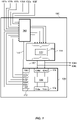
- Figure 1 shows an aircraft control system 100 comprising an aircraft control module 110 and a test module 120.
- the aircraft control system 100 may be implemented in any appropriate combination of hardware and software components including, for example, at least one processor, at least one memory, and one or more interfaces for interfacing with equipment in the aircraft.
- the at least one memory includes any suitable combination of transitory and non-transitory storage and stores computer-readable instructions for implementing the aircraft control module 110 and the test module 120.
- the aircraft control module 110 of the aircraft control system 100 is adapted to receive live aircraft operating inputs, 102a-102f, and to generate live aircraft control outputs, 104a- 104b, which are used to control an aircraft.
- the test module 120 is adapted to write test aircraft operating inputs, 102a'-102f', to the aircraft control module 110 and read test aircraft control outputs, 104a'-104b', of the aircraft control module 110 generated based on the respective test aircraft operating inputs.
- the test module 120 uses these test aircraft control outputs, 104a'-104b', to determine whether they conform to respective expected aircraft control outputs, 114a-114b. It will be appreciated that while in this example the neural network has six inputs and two outputs, in other examples there can be any appropriate number of inputs and outputs.
- a neural network may, in practice, be subjected to a vast array of different arrangements or combinations of live aircraft operating inputs, 102a-102f Any individual set of live aircraft operating inputs, 102a-102f, may produce respective aircraft control outputs by using only a portion of the neural network. Put another way, only a subset of the weights, biases and activation functions of a neural network may be brought to bear (i.e. used) to process any one individual set of aircraft operating inputs.
- each set of test aircraft operating inputs 102a'-102f' may be selected and adapted to ensure that every weight, bias and activation function of a respective neural network dominates, or is 'used', at least once in performing a test operation comprising use of the multiple sets of test aircraft operating inputs.
- each set of test aircraft operating inputs 102a'-102f' may comprise a different arrangement of six inputs.
- each input may be defined to result in a known output (the expected aircraft control outputs, 114a-114b) and thereby each bias and each weight of the neural network 130 may be tested.
- the test aircraft operating inputs, 102a'-102f may include values of hidden neurons of the neural network 130 and the test module 120 may, during testing, override values of the hidden neurons in order to test one layer of the neural network 130 at a time. In this way, it can be assured that corruption to any bit in any part of the neural network can be identified by at least one set of test aircraft operating inputs.
- each individual test may involve multiple sets of test aircraft operating inputs. In such examples, multiple tests, each comprising multiple sets of test aircraft operating inputs, may be required to assure that every weight, bias and activation function of a respective neural network dominates, or is 'used', at least once in performing a test operation.
- the aircraft control module 110 comprises a memory 170 storing a neural network 130.
- the memory 170 includes volatile memory that may suffer from data corruption, for example due to gamma radiation as explained hereinbefore, and so may include random-access memory (RAM), synchronous dynamic random-access memory (SDRAM), or any other type of memory where respective bit values may be corrupted.
- RAM random-access memory
- SDRAM synchronous dynamic random-access memory
- the weights and biases of the neural network 130 may suffer from data corruption.
- the neural network 130 may be, for example, any known type of neural network that can be trained and deployed as an element in an aircraft control system.
- the neural network 130 may be a fully connected neural network 130, a convolutional neural network, or a recurrent neural network.
- the neural network 130 in the aircraft control module 110 has been trained in a known way, for example by reference to training data relating to the operation and behaviour of a known aircraft system. Training may be performed using a large data set comprising historic data from known aircraft systems, or by being installed on an aircraft in a purely passive role, for period of time, to record and train using live data.
- the test module 120 comprises a memory 172 storing input data representing test aircraft operating inputs, 102a'-102f', and a memory 176 storing respective output data representing expected aircraft control outputs, 114a-114b.
- the memories 172, 176 may comprise any suitable combination of volatile and non-volatile memories.
- the test module 120 also comprises a monitor 160, to monitor an operating status of the control module 110 via a sense line 182, and select, via a control line 180, which inputs to send to the aircraft control module 110.
- the test module also comprises a memory 174 storing test aircraft control outputs, 104a'-104b' from the aircraft control module 110.
- the test module 120 also comprises a comparison module 150 for comparing the test aircraft control outputs, 104a'-104b' and respective output data representing expected aircraft control outputs, 114a-114b.
- the aircraft control system 100 comprises a selector 140 for selecting inputs to be sent to the aircraft control module 110.
- the selector 140 which may comprise a multiplexor or a switch device, may select live aircraft operating inputs, 102a-102f, or test aircraft operating inputs, 102a'-102f', to be sent to the aircraft control module 110.
- the aircraft control system 100 may also comprise a second selector module (not shown in Figure 1 ) for selecting the outputs to be sent to the aircraft or to the test module 120.
- such a second selector module may select live aircraft control outputs, 104a-104b, to be sent to the aircraft (to perform aircraft control), or test aircraft control outputs, 104a'-104b', to be sent to the test module 120, based on a status of the control module 110 determined by the monitor 160.
- Certain examples described herein provide a method for controlling an aircraft using an aircraft control module 110 comprising a neural network 130 and a test module 120 for removing the authority of the aircraft control module 110 if test the aircraft control outputs 104a'-10b' generated by the aircraft control module 110 do not conform to respective expected aircraft control outputs 114a-114b stored in the test module 120.
- Figure 2 shows a method 200 which is implemented by the aircraft control system 100, in the form of a flow chart, 202 to 208.
- the method 200 comprises, at a first block 202, receiving live aircraft operating inputs, 102a-102f, and generating live aircraft control outputs, 104a-104b, based on the received live aircraft operating inputs, 102a-102f, at an aircraft control module 110 comprising a memory 170 storing a neural network 130.
- the live aircraft operating inputs, 102a- 102f represent an operating state of the aircraft and include, for example, signals from sensors and signals resulting from user operations and inputs.
- Signals from user inputs include control signals generated at interfaces such as switches, levers, buttons, inputs from touch screens, and the like. These input control signals are received from any suitable interfaces in the aircraft, for example, flight controls, cabin environment controls, communication controls, and others. The specific nature and origin of the user inputs depends on the systems in the aircraft which the aircraft control system 100 is adapted to control.
- Signals from sensor outputs include signals from any suitable sensors in the aircraft. These sensors can include environmental sensors, which monitor the environmental conditions of the aircraft, and equipment sensors, which monitor the operational states of equipment in the aircraft.
- the live aircraft operating inputs, 102a-102f may indicate live operational states of one or more hydraulic systems which are configured to operate the brakes, as well as the status of one or more alternative (e.g. electrical) motors and respective power sources for operating the brakes in the event of hydraulic failure.
- the live aircraft operating inputs, 102a-102f may also comprise other relevant information, for example, a live operational state of the engines of the aircraft, an indication of whether there is weight-on-wheels, and indications of environmental conditions such as wind speed and direction, and outside temperature and humidity, derived from one or more aircraft sensors.
- the live aircraft operating inputs 102a to 102f may represent states of equipment comprised in other aircraft systems.
- the live aircraft operating inputs, 102a-102f may be received or sampled in a time period or may be time-varying, and may be analogue or digital in nature. Analogue signals are converted, for example via an appropriate analogue-to-digital convertor (not shown), before being input to the aircraft control module 110.
- the live aircraft control outputs, 104a-104b, generated by the aircraft control module 110 are used to perform aircraft control.
- the aircraft control module 110 is part of an aircraft system.
- the aircraft control module 110 may be part of any of: an avionics system, a flight control system, a braking control system or other partly or fully hydraulic control system, an instrumentation and recording system, a landing gear control system and a fuel system.
- the aircraft control module 110 may be adapted to receive live aircraft operating inputs, 102a-102f, relating to wheel speed, aircraft speed, and an amount of braking specified at a brake pedal by the pilot.
- the aircraft control module 110 may process these inputs and determine an amount of braking to be applied.
- the aircraft control module 110 may then operate the brakes in a manner dictated by outputs of the aircraft control module 110 according to the received live aircraft operating inputs, 102a-102f.
- the live aircraft control outputs, 104a-104b may be conditioned or converted in any way that is necessary for a required downstream control.
- the method 200 then comprises, at a second block 204, writing test aircraft operating inputs, 102a'-102f', to the aircraft control module 110 while the aircraft control module 110 is not performing aircraft control, for example, as determined by the monitor 160.
- the test aircraft operating inputs, 102a'-102f' represent an operating state of the aircraft that may otherwise have been received as live aircraft operating inputs, 102a-102f.
- test aircraft operating inputs, 102a'-102f' may reflecting a possible operational state of at least one operating component of the aircraft.
- a possible operational state of the at least one component of the aircraft may comprise a possible control input.
- the possible control input may be due to aircrew such as a pilot operating or actuating a device, apparatus or system.
- the possible control input may include a value of a control input, for example, a value representing the position of a throttle, a braking actuator, and/or other control inputs.
- the possible control input may comprise a rate of change rather than a value.
- the possible control input may be a multivariate quantity indicating both an instantaneous value (e.g. a position) and a rate and/or direction of change.
- the possible control input may be represented by a plurality of values or a plurality of multivariate quantities expressing an operation of a device, apparatus or system over a defined period.
- the at least one component associated with the aircraft control system 100 may be the brakes of an aircraft, and the test aircraft operating inputs, 102a'-102f', may indicate whether there is weight-on-wheels, environmental conditions such as wind speed and direction, and outside temperature and humidity.
- the expected aircraft control outputs, 114a-114b are generated by inputting the test aircraft operating inputs, 102a'-102f', into a neural network when operating under controlled or test conditions, which are designed to mirror a real operation of the aircraft and aircraft control module 110. Before and after the generation of the expected aircraft control outputs, 114a-114b, the values of the constants of the neural network are checked to establish that no unexpected changes have occurred and thereby confirm that the expected aircraft control outputs, 114a-114b, are correct. Once confirmed, the expected aircraft control outputs, 114a-114b, are stored in the test module 120.
- the expected aircraft control outputs 114a, 114b may be generated by a neural network being the same as the neural network 130 of the aircraft control module 110.
- test aircraft operating inputs, 102a'-102f' may indicate whether there is weight-on-wheels, environmental conditions such as wind speed and direction, and outside temperature and humidity.
- the excepted aircraft control outputs, 114a-114b may then represent the control of the brakes based on the weight-on-wheels, environmental conditions, and outside temperature and humidity inputs.
- the test module 120 is adapted to write the test aircraft operating inputs, 102a'-102f', to the aircraft control module 110 while the aircraft control module 110 is not performing aircraft control, so that the operation of the aircraft control module is not disturbed.
- the test module 120 may write the test aircraft operating inputs, 102a'-102f', to the aircraft control module 110 at any time of the flight other than while landing.
- the monitor 160 determines whether the aircraft control module 110 is performing aircraft control and controls the selector 140 to communicate to the aircraft control module 110 either:
- the aircraft control system 100 is adapted to control the brakes of an aircraft.
- the monitor 160 of the test module 120 is adapted to determine whether the aircraft control module 110 is performing brake control. This may be determined in this example by checking the status of the aircraft control system 110. If the monitor 160 determines that the control module 110 is not performing brake control, the test module 120 writes test aircraft operation inputs, 102a'-102f', related to brake operations (for example, information related to whether there is weight-on-wheels, environmental conditions such as wind speed and direction, and outside temperature and humidity) to the selector 140 and controls the selector 140 to select and transmit the test aircraft operating inputs, 102a'-102f', to the aircraft control module 110. At all other times, for instance when the aircraft control module 110 is performing aircraft (e.g. brake) control, the selector 140 is arranged to transmit live aircraft operating inputs, 102a-102f, to the aircraft control module 110.
- the test module 120 may write test aircraft operating inputs, 102a'-102f', to the aircraft control module 110 while the aircraft control module 110 is not performing aircraft control and based on certain criteria. For example, in respect of an aircraft braking system, the test module 120 may be responsive to the passing of a predetermined period of time after take-off (i.e. when it is known that braking is not required). In another example, in which the aircraft control system 100 may be adapted to control a navigation system of an aircraft. The navigation system may be operating intermittently during flight and, therefore, the monitor 160 of the test module 120 may be adapted to determine whether the aircraft control module 110 is not performing navigation control for at least a predefined duration of time. The predefined duration of time may be, for example, 1 ms, 10 ms, or 1 s.
- the method 200 also comprises, at a third block 206, reading test aircraft control outputs, 104a'-104b', of the aircraft control module 110 generated based on the respective test aircraft operating inputs, 102a'-102f'.
- the aircraft control module 110 generates test aircraft control outputs, 104a'-104b', based on the received test aircraft operating inputs, 102a'-102f'. For example, according the previous example, if the test aircraft operation inputs, 102a'-102f', represent information related to whether there is weight-on-wheels, environmental conditions such as wind speed and direction, and outside temperature and humidity, the aircraft control module 110 generates test aircraft control outputs, 104a'-104b', that relate to the operation of the brakes of the aircraft based on the received information related to whether there is weight-on-wheels, environmental conditions such as wind speed and direction, and outside temperature and humidity.
- the aircraft control module 110 outputs the test aircraft control outputs, 104'-104b' and the test module 120 is adapted to read the test aircraft control outputs, 104'-104b', generated by the aircraft module 110.
- the test module 120 comprises a comparison module 150 adapted to perform a comparison function between the test aircraft control outputs, 104'-104b', and the respective expected aircraft control outputs, 114a-114b.
- the method also comprises at a fourth block 208, selectively removing the authority of the aircraft control module to perform aircraft control if the test aircraft control outputs do not conform to the respective expected aircraft control outputs. If the comparison module 150 determines that the test aircraft control outputs, 104'-104b', conform to the respective excepted aircraft control outputs, 114a-114b, no action is taken. However, if the comparison module 150 determines that the test aircraft control outputs, 104'-104b', do not conform to the respective excepted aircraft control outputs, 114a-114b, the test module 120 is adapted to selectively remove the authority of the control module 110. For example, the test module 120 may selectively remove the authority of the control module 110 for at least the duration of a current journey/flight.
- the test module 120 may selectively remove the authority of the aircraft control module 110, for example, by powering-off, or in some other way, disabling the aircraft control module 110. Additionally, a pilot of the aircraft may be notified that the aircraft control module 110 has been de-authorised and/or disabled.
- the aircraft control system 100 may comprise a backup system to replace the aircraft control module 110 when the authority of the aircraft control module 110 is selectively removed.
- the backup system may be a manual system operable to perform aircraft control.
- the aircraft control module 110 may be part of the braking control system. If the test module 120 determines that the test aircraft control outputs, 104a'-104b', do not conform to the respective expected aircraft control outputs, 114a-114b, the test module 120 selectively removes the authority of the aircraft control module 110. The pilots of the aircraft may operate the brakes for the rest of the duration of a current flight.
- the manual system may be a manually-defined, rules-based set of logic for aircraft control.
- the backup system may be a backup aircraft control module comprising a second neural network adapted to generate live aircraft control outputs to perform aircraft control.
- the second neural network may be the same as the neural network 130 of the aircraft control module 110 which may be used for the rest of the duration of the current flight.
- the second neural network may be different from the neural network 130.
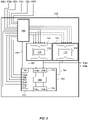
- FIG 3 shows an example of an aircraft control system 100 according to an example.
- the aircraft control system 100 comprises all the features discussed above in relation to Figures 1 and 2 , and also comprises a backup aircraft control module 110'.
- the backup aircraft control module 110' comprises a memory 170' storing a neural network 130'.
- the memory 170' may be the same as the memory 170 of the aircraft control module 110, and the neural network 130' may be the same as the neural network 130 of the aircraft control module 110.
- the aircraft control module 110' may not include a neural network.
- the backup aircraft control module 110' is adapted to replace the aircraft control module when the authority of the first aircraft control module 110 is selectively removed.
- the comparison module 150 is adapted to determine whether the test aircraft control outputs, 104'-104b', do not conform to the respective excepted aircraft control outputs, 114a-114b, and the test module 120 is adapted to selectively remove the authority of the control module 110 if the test aircraft control outputs, 104'-104b', do not conform to the respective excepted aircraft control outputs, 114a-114b.
- the test module 120 is adapted to authorise the operation of the backup aircraft control module 110' via a control line 184.
- the selector 140 is adapted to select the live aircraft operating inputs, 102a-102f, to be sent to the aircraft control module 110'.
- the backup aircraft control module 110' is adapted to receive the live aircraft operating inputs, 102a-102f, and generate the live aircraft control outputs, 104a- 104b.
- the comparison module 150 of the test module 120 determines that the test aircraft control outputs, 104'-104b', do not conform to the respective excepted aircraft control outputs, 114a-114b.
- the test module 120 selectively removes the authority of the control module 110 for the remainder of the current flight.
- the test module 120 authorises the operation of the backup aircraft control module 110' for the remainder of the current flight.
- the backup aircraft control module 110' receives the live aircraft operating inputs, 102a-102f, related, for example, to an indication of whether there is weight-on-wheels, and indications of environmental conditions such as wind speed and direction, and outside temperature and humidity.
- Figure 4 shows an aircraft control system 100 and an alternative aircraft control system 100'.
- the aircraft control system 100 and the alternative aircraft control system 100' comprise all the features discussed above in relation to Figures 1 and 2 .
- the aircraft control system 100 comprises a main or primary aircraft control module 110 whereas the alternative aircraft control system 100' comprises a backup aircraft control module 110'.
- the backup aircraft control module 110' is a manual system operable to perform aircraft control.
- the backup aircraft control module 110' may comprise a second neural network.
- the comparison module 150 of the test module 120 determines that the test aircraft control outputs, 104'-104b', do not conform to the respective excepted aircraft control outputs, 114a-114b.
- the test module 120 selectively removes the authority of the control module 110 for the rest of the duration of the current flight and a handover operation is performed to replace the aircraft control system 100 with the alternative aircraft control system 100'.
- the pilots of the aircraft may receive an alert to operate the manual system (e.g. the alternative aircraft control system 100').
- the pilots of the aircraft operate the brakes for the rest of the duration of a current flight.
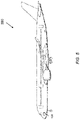
- FIG. 5 shows an example of an aircraft 300 an aircraft control system 100 according to the examples described above in relation to Figures 1 2 and 3 .
- the aircraft 300 is a fully operational aircraft.
- the aircraft 300 comprises an aircraft control module 110 and a test module 120 according to any of the examples described above and at least one of the following systems: an avionics system, a flight control system, a braking control system, an instrumentation and recording system, a landing gear control system and a fuel system comprising the aircraft control module 110.
- the aircraft 300 may be a test aircraft 300 which may not be a fully operational aircraft but may be part of an aircraft.
- the aircraft control system 100 may be comprised in the test aircraft 300 comprising aircraft systems which the control system 100 is adapted to control.
- the test aircraft 300 may be missing one or more aircraft systems, such as an avionic system, and may be confined to a test station at which tests are performed on specific aircraft systems which are comprised in the test aircraft 300, such as those controlled by the aircraft control system 100.
- the aircraft 300 may comprise the aircraft control system 100' according to the examples described above in relation to Figure 5 .
- an aircraft control module of the kind that is described herein may employ a machine learning model other than or in addition to a neural network, for instance a Random Forest or a Support Vector Machine. It is to be understood that any feature described in relation to any one example may be used alone, or in combination with other features described, and may also be used in combination with any features of any other of the examples, or any combination of any other of the examples.
Landscapes
- Engineering & Computer Science (AREA)
- Physics & Mathematics (AREA)
- General Physics & Mathematics (AREA)
- Aviation & Aerospace Engineering (AREA)
- Automation & Control Theory (AREA)
- Theoretical Computer Science (AREA)
- Remote Sensing (AREA)
- Radar, Positioning & Navigation (AREA)
- Software Systems (AREA)
- Medical Informatics (AREA)
- Artificial Intelligence (AREA)
- General Engineering & Computer Science (AREA)
- Evolutionary Computation (AREA)
- Data Mining & Analysis (AREA)
- Transportation (AREA)
- Computer Vision & Pattern Recognition (AREA)
- Manufacturing & Machinery (AREA)
- Mathematical Physics (AREA)
- Computing Systems (AREA)
- Computer Hardware Design (AREA)
- Quality & Reliability (AREA)
- Business, Economics & Management (AREA)
- Health & Medical Sciences (AREA)
- Game Theory and Decision Science (AREA)
- Feedback Control In General (AREA)
- Testing And Monitoring For Control Systems (AREA)
- Traffic Control Systems (AREA)
Applications Claiming Priority (1)
| Application Number | Priority Date | Filing Date | Title |
|---|---|---|---|
| GB2101929.4A GB2603777A (en) | 2021-02-11 | 2021-02-11 | Aircraft control system |
Publications (2)
| Publication Number | Publication Date |
|---|---|
| EP4043980A1 true EP4043980A1 (fr) | 2022-08-17 |
| EP4043980B1 EP4043980B1 (fr) | 2025-06-11 |
Family
ID=75338861
Family Applications (1)
| Application Number | Title | Priority Date | Filing Date |
|---|---|---|---|
| EP22155690.5A Active EP4043980B1 (fr) | 2021-02-11 | 2022-02-08 | Système pour prévenir la corruption de systèmes critiques pour la sécurité des réseaux neuronaux sur des aéronefs |
Country Status (3)
| Country | Link |
|---|---|
| US (1) | US12434859B2 (fr) |
| EP (1) | EP4043980B1 (fr) |
| GB (1) | GB2603777A (fr) |
Families Citing this family (1)
| Publication number | Priority date | Publication date | Assignee | Title |
|---|---|---|---|---|
| CN121084626A (zh) * | 2025-09-24 | 2025-12-09 | 西安航空制动科技有限公司 | 一种飞机测试管理系统和方法 |
Citations (4)
| Publication number | Priority date | Publication date | Assignee | Title |
|---|---|---|---|---|
| EP2910440A1 (fr) * | 2014-02-25 | 2015-08-26 | Goodrich Corporation | Systèmes et procédés pour équipement d'essai incorporé dans un système de commande de frein |
| US10032111B1 (en) * | 2017-02-16 | 2018-07-24 | Rockwell Collins, Inc. | Systems and methods for machine learning of pilot behavior |
| EP3415416A1 (fr) * | 2017-06-15 | 2018-12-19 | Aurora Flight Sciences Corporation | Système et procédé permettant d'effectuer une descente et une atterrissage d'urgence |
| EP3663211A1 (fr) * | 2018-12-07 | 2020-06-10 | The Boeing Company | Mehode de maintenance d'avion |
Family Cites Families (11)
| Publication number | Priority date | Publication date | Assignee | Title |
|---|---|---|---|---|
| US5901272A (en) * | 1996-10-24 | 1999-05-04 | The United States Of America As Represented By The Secretary Of The Navy | Neural network based helicopter low airspeed indicator |
| US7295135B2 (en) * | 2006-02-06 | 2007-11-13 | Trutrak Flight Systems, Inc. | Flight information system |
| US9550583B2 (en) * | 2015-03-03 | 2017-01-24 | Honeywell International Inc. | Aircraft LRU data collection and reliability prediction |
| CN108154230B (zh) * | 2016-12-05 | 2020-09-01 | 赛灵思公司 | 深度学习处理器的监控方法和监控装置 |
| US11151472B2 (en) * | 2017-03-31 | 2021-10-19 | At&T Intellectual Property I, L.P. | Dynamic updating of machine learning models |
| CN111433612B (zh) * | 2017-10-11 | 2023-10-13 | 埃姆普里萨有限公司 | 用于估计飞行器空中数据的基于模型和飞行信息的组合训练的神经网络系统 |
| US10810114B2 (en) * | 2018-04-02 | 2020-10-20 | Hamilton Sundstrand Corporation | Testing autonomous reconfiguration logic for an electromechanical actuator |
| US11360476B1 (en) * | 2019-01-03 | 2022-06-14 | Rockwell Collins, Inc. | Systems and methods for monitoring aircraft control systems using artificial intelligence |
| WO2022026293A1 (fr) * | 2020-07-29 | 2022-02-03 | SkyRyse, Inc. | Systèmes de redondance pour petits véhicules à commandes de vol électriques |
| US20220177154A1 (en) * | 2020-12-04 | 2022-06-09 | The Boeing Company | Testing system and method for detecting anomalous events in complex electro-mechanical test subjects |
| CN114690028B (zh) * | 2020-12-31 | 2025-05-30 | 蒂普爱可斯有限公司 | 用于在运行时测试系统中的部件的片上系统和方法 |
-
2021
- 2021-02-11 GB GB2101929.4A patent/GB2603777A/en not_active Withdrawn
-
2022
- 2022-02-08 EP EP22155690.5A patent/EP4043980B1/fr active Active
- 2022-02-10 US US17/669,011 patent/US12434859B2/en active Active
Patent Citations (4)
| Publication number | Priority date | Publication date | Assignee | Title |
|---|---|---|---|---|
| EP2910440A1 (fr) * | 2014-02-25 | 2015-08-26 | Goodrich Corporation | Systèmes et procédés pour équipement d'essai incorporé dans un système de commande de frein |
| US10032111B1 (en) * | 2017-02-16 | 2018-07-24 | Rockwell Collins, Inc. | Systems and methods for machine learning of pilot behavior |
| EP3415416A1 (fr) * | 2017-06-15 | 2018-12-19 | Aurora Flight Sciences Corporation | Système et procédé permettant d'effectuer une descente et une atterrissage d'urgence |
| EP3663211A1 (fr) * | 2018-12-07 | 2020-06-10 | The Boeing Company | Mehode de maintenance d'avion |
Also Published As
| Publication number | Publication date |
|---|---|
| US12434859B2 (en) | 2025-10-07 |
| US20220250769A1 (en) | 2022-08-11 |
| GB202101929D0 (en) | 2021-03-31 |
| EP4043980B1 (fr) | 2025-06-11 |
| GB2603777A (en) | 2022-08-17 |
Similar Documents
| Publication | Publication Date | Title |
|---|---|---|
| Zhang et al. | Issues on integration of fault diagnosis and reconfigurable control in active fault-tolerant control systems | |
| CN104504248B (zh) | 一种基于设计数据分析的故障诊断建模方法 | |
| US5161158A (en) | Failure analysis system | |
| US5550736A (en) | Fail-operational fault tolerant flight critical computer architecture and monitoring method | |
| US20040176887A1 (en) | Aircraft condition analysis and management system | |
| Ackerman et al. | Automation situation awareness display for a flight envelope protection system | |
| OHara et al. | Human-system interfaces to automatic systems: Review guidance and technical basis | |
| Kerstholt et al. | The effect of a priori probability and complexity on decision making in a supervisory control task | |
| Mackall | Development and flight test experiences with a flight-crucial digital control system | |
| EP4043980B1 (fr) | Système pour prévenir la corruption de systèmes critiques pour la sécurité des réseaux neuronaux sur des aéronefs | |
| Koopman et al. | Artificial intelligence for real-time tolerance to critical flight data errors in large aircraft | |
| STEWART et al. | Flight-testing of the self-repairing flight control system using theF-15 highly integrated digital electronic control flight research facility | |
| Zolghadri et al. | Integrity monitoring of flight parameters using analytical redundancy | |
| URNES et al. | Flight demonstration of the self-repairing flight control system in a NASA F-15 aircraft | |
| Cortellessa et al. | Certifying adaptive flight control software | |
| Hindson et al. | A pilot rating scale for evaluating failure transients in electronicflight control systems | |
| Khan et al. | Integration Issues for Vehicle Level Distributed Diagnostic Reasoners | |
| LARSON et al. | Flight-test results using nonlinear control with the F-8C digital fly-by-wire aircraft | |
| Maul et al. | Sensor Data Qualification for Autonomous Operation of Space Systems. | |
| Hewett et al. | The development of an automated flight test management system for flight test planning and monitoring | |
| Mahmoud et al. | Stochastic analysis and synthesis. Active fault tolerant control systems | |
| Toscano | Preventive Maintenance | |
| Glover et al. | The use of prognostic health management for autonomous unmanned air systems | |
| Soares et al. | A Flight Test Demonstration of On-line Neural Network Applications in Advanced Aircraft Flight Control System | |
| Arnold et al. | Classification of Flight Control Law Requirements in the Context of Model-Based Software Development and Verification |
Legal Events
| Date | Code | Title | Description |
|---|---|---|---|
| PUAI | Public reference made under article 153(3) epc to a published international application that has entered the european phase |
Free format text: ORIGINAL CODE: 0009012 |
|
| STAA | Information on the status of an ep patent application or granted ep patent |
Free format text: STATUS: THE APPLICATION HAS BEEN PUBLISHED |
|
| AK | Designated contracting states |
Kind code of ref document: A1 Designated state(s): AL AT BE BG CH CY CZ DE DK EE ES FI FR GB GR HR HU IE IS IT LI LT LU LV MC MK MT NL NO PL PT RO RS SE SI SK SM TR |
|
| STAA | Information on the status of an ep patent application or granted ep patent |
Free format text: STATUS: REQUEST FOR EXAMINATION WAS MADE |
|
| 17P | Request for examination filed |
Effective date: 20230217 |
|
| RBV | Designated contracting states (corrected) |
Designated state(s): AL AT BE BG CH CY CZ DE DK EE ES FI FR GB GR HR HU IE IS IT LI LT LU LV MC MK MT NL NO PL PT RO RS SE SI SK SM TR |
|
| STAA | Information on the status of an ep patent application or granted ep patent |
Free format text: STATUS: EXAMINATION IS IN PROGRESS |
|
| 17Q | First examination report despatched |
Effective date: 20230420 |
|
| GRAP | Despatch of communication of intention to grant a patent |
Free format text: ORIGINAL CODE: EPIDOSNIGR1 |
|
| STAA | Information on the status of an ep patent application or granted ep patent |
Free format text: STATUS: GRANT OF PATENT IS INTENDED |
|
| INTG | Intention to grant announced |
Effective date: 20250102 |
|
| GRAS | Grant fee paid |
Free format text: ORIGINAL CODE: EPIDOSNIGR3 |
|
| GRAA | (expected) grant |
Free format text: ORIGINAL CODE: 0009210 |
|
| STAA | Information on the status of an ep patent application or granted ep patent |
Free format text: STATUS: THE PATENT HAS BEEN GRANTED |
|
| AK | Designated contracting states |
Kind code of ref document: B1 Designated state(s): AL AT BE BG CH CY CZ DE DK EE ES FI FR GB GR HR HU IE IS IT LI LT LU LV MC MK MT NL NO PL PT RO RS SE SI SK SM TR |
|
| REG | Reference to a national code |
Ref country code: GB Ref legal event code: FG4D |
|
| REG | Reference to a national code |
Ref country code: CH Ref legal event code: EP |
|
| REG | Reference to a national code |
Ref country code: IE Ref legal event code: FG4D |
|
| REG | Reference to a national code |
Ref country code: DE Ref legal event code: R096 Ref document number: 602022015693 Country of ref document: DE |
|
| PG25 | Lapsed in a contracting state [announced via postgrant information from national office to epo] |
Ref country code: ES Free format text: LAPSE BECAUSE OF FAILURE TO SUBMIT A TRANSLATION OF THE DESCRIPTION OR TO PAY THE FEE WITHIN THE PRESCRIBED TIME-LIMIT Effective date: 20250611 Ref country code: FI Free format text: LAPSE BECAUSE OF FAILURE TO SUBMIT A TRANSLATION OF THE DESCRIPTION OR TO PAY THE FEE WITHIN THE PRESCRIBED TIME-LIMIT Effective date: 20250611 |
|
| REG | Reference to a national code |
Ref country code: LT Ref legal event code: MG9D |
|
| PG25 | Lapsed in a contracting state [announced via postgrant information from national office to epo] |
Ref country code: GR Free format text: LAPSE BECAUSE OF FAILURE TO SUBMIT A TRANSLATION OF THE DESCRIPTION OR TO PAY THE FEE WITHIN THE PRESCRIBED TIME-LIMIT Effective date: 20250912 Ref country code: NO Free format text: LAPSE BECAUSE OF FAILURE TO SUBMIT A TRANSLATION OF THE DESCRIPTION OR TO PAY THE FEE WITHIN THE PRESCRIBED TIME-LIMIT Effective date: 20250911 |
|
| REG | Reference to a national code |
Ref country code: NL Ref legal event code: MP Effective date: 20250611 |
|
| PG25 | Lapsed in a contracting state [announced via postgrant information from national office to epo] |
Ref country code: BG Free format text: LAPSE BECAUSE OF FAILURE TO SUBMIT A TRANSLATION OF THE DESCRIPTION OR TO PAY THE FEE WITHIN THE PRESCRIBED TIME-LIMIT Effective date: 20250611 |
|
| PG25 | Lapsed in a contracting state [announced via postgrant information from national office to epo] |
Ref country code: HR Free format text: LAPSE BECAUSE OF FAILURE TO SUBMIT A TRANSLATION OF THE DESCRIPTION OR TO PAY THE FEE WITHIN THE PRESCRIBED TIME-LIMIT Effective date: 20250611 |
|
| PG25 | Lapsed in a contracting state [announced via postgrant information from national office to epo] |
Ref country code: RS Free format text: LAPSE BECAUSE OF FAILURE TO SUBMIT A TRANSLATION OF THE DESCRIPTION OR TO PAY THE FEE WITHIN THE PRESCRIBED TIME-LIMIT Effective date: 20250911 |
|
| PG25 | Lapsed in a contracting state [announced via postgrant information from national office to epo] |
Ref country code: LV Free format text: LAPSE BECAUSE OF FAILURE TO SUBMIT A TRANSLATION OF THE DESCRIPTION OR TO PAY THE FEE WITHIN THE PRESCRIBED TIME-LIMIT Effective date: 20250611 |
|
| PG25 | Lapsed in a contracting state [announced via postgrant information from national office to epo] |
Ref country code: NL Free format text: LAPSE BECAUSE OF FAILURE TO SUBMIT A TRANSLATION OF THE DESCRIPTION OR TO PAY THE FEE WITHIN THE PRESCRIBED TIME-LIMIT Effective date: 20250611 |
|
| PG25 | Lapsed in a contracting state [announced via postgrant information from national office to epo] |
Ref country code: PT Free format text: LAPSE BECAUSE OF FAILURE TO SUBMIT A TRANSLATION OF THE DESCRIPTION OR TO PAY THE FEE WITHIN THE PRESCRIBED TIME-LIMIT Effective date: 20251013 |
|
| REG | Reference to a national code |
Ref country code: AT Ref legal event code: MK05 Ref document number: 1802758 Country of ref document: AT Kind code of ref document: T Effective date: 20250611 |
|
| PG25 | Lapsed in a contracting state [announced via postgrant information from national office to epo] |
Ref country code: IS Free format text: LAPSE BECAUSE OF FAILURE TO SUBMIT A TRANSLATION OF THE DESCRIPTION OR TO PAY THE FEE WITHIN THE PRESCRIBED TIME-LIMIT Effective date: 20251011 |
|
| PG25 | Lapsed in a contracting state [announced via postgrant information from national office to epo] |
Ref country code: AT Free format text: LAPSE BECAUSE OF FAILURE TO SUBMIT A TRANSLATION OF THE DESCRIPTION OR TO PAY THE FEE WITHIN THE PRESCRIBED TIME-LIMIT Effective date: 20250611 Ref country code: SM Free format text: LAPSE BECAUSE OF FAILURE TO SUBMIT A TRANSLATION OF THE DESCRIPTION OR TO PAY THE FEE WITHIN THE PRESCRIBED TIME-LIMIT Effective date: 20250611 |
|
| PG25 | Lapsed in a contracting state [announced via postgrant information from national office to epo] |
Ref country code: CZ Free format text: LAPSE BECAUSE OF FAILURE TO SUBMIT A TRANSLATION OF THE DESCRIPTION OR TO PAY THE FEE WITHIN THE PRESCRIBED TIME-LIMIT Effective date: 20250611 |
|
| PG25 | Lapsed in a contracting state [announced via postgrant information from national office to epo] |
Ref country code: PL Free format text: LAPSE BECAUSE OF FAILURE TO SUBMIT A TRANSLATION OF THE DESCRIPTION OR TO PAY THE FEE WITHIN THE PRESCRIBED TIME-LIMIT Effective date: 20250611 |
|
| PG25 | Lapsed in a contracting state [announced via postgrant information from national office to epo] |
Ref country code: EE Free format text: LAPSE BECAUSE OF FAILURE TO SUBMIT A TRANSLATION OF THE DESCRIPTION OR TO PAY THE FEE WITHIN THE PRESCRIBED TIME-LIMIT Effective date: 20250611 |
|
| PG25 | Lapsed in a contracting state [announced via postgrant information from national office to epo] |
Ref country code: SK Free format text: LAPSE BECAUSE OF FAILURE TO SUBMIT A TRANSLATION OF THE DESCRIPTION OR TO PAY THE FEE WITHIN THE PRESCRIBED TIME-LIMIT Effective date: 20250611 |
|
| REG | Reference to a national code |
Ref country code: DE Ref legal event code: R097 Ref document number: 602022015693 Country of ref document: DE |
|
| PGFP | Annual fee paid to national office [announced via postgrant information from national office to epo] |
Ref country code: GB Payment date: 20260220 Year of fee payment: 5 |
|
| PG25 | Lapsed in a contracting state [announced via postgrant information from national office to epo] |
Ref country code: DK Free format text: LAPSE BECAUSE OF FAILURE TO SUBMIT A TRANSLATION OF THE DESCRIPTION OR TO PAY THE FEE WITHIN THE PRESCRIBED TIME-LIMIT Effective date: 20250611 |
|
| PGFP | Annual fee paid to national office [announced via postgrant information from national office to epo] |
Ref country code: DE Payment date: 20260218 Year of fee payment: 5 |
|
| PG25 | Lapsed in a contracting state [announced via postgrant information from national office to epo] |
Ref country code: IT Free format text: LAPSE BECAUSE OF FAILURE TO SUBMIT A TRANSLATION OF THE DESCRIPTION OR TO PAY THE FEE WITHIN THE PRESCRIBED TIME-LIMIT Effective date: 20250611 |
|
| PLBE | No opposition filed within time limit |
Free format text: ORIGINAL CODE: 0009261 |
|
| STAA | Information on the status of an ep patent application or granted ep patent |
Free format text: STATUS: NO OPPOSITION FILED WITHIN TIME LIMIT |
|
| PGFP | Annual fee paid to national office [announced via postgrant information from national office to epo] |
Ref country code: FR Payment date: 20260219 Year of fee payment: 5 |
|
| REG | Reference to a national code |
Ref country code: CH Ref legal event code: L10 Free format text: ST27 STATUS EVENT CODE: U-0-0-L10-L00 (AS PROVIDED BY THE NATIONAL OFFICE) Effective date: 20260423 |
|
| 26N | No opposition filed |
Effective date: 20260312 |
|
| PG25 | Lapsed in a contracting state [announced via postgrant information from national office to epo] |
Ref country code: LT Free format text: LAPSE BECAUSE OF FAILURE TO SUBMIT A TRANSLATION OF THE DESCRIPTION OR TO PAY THE FEE WITHIN THE PRESCRIBED TIME-LIMIT Effective date: 20250611 |
|
| PG25 | Lapsed in a contracting state [announced via postgrant information from national office to epo] |
Ref country code: SE Free format text: LAPSE BECAUSE OF FAILURE TO SUBMIT A TRANSLATION OF THE DESCRIPTION OR TO PAY THE FEE WITHIN THE PRESCRIBED TIME-LIMIT Effective date: 20250611 |