EP4044480A1 - Ntn-basiertes datenübertragungsverfahren und vorrichtung sowie speichermedium - Google Patents
Ntn-basiertes datenübertragungsverfahren und vorrichtung sowie speichermedium Download PDFInfo
- Publication number
- EP4044480A1 EP4044480A1 EP20884447.2A EP20884447A EP4044480A1 EP 4044480 A1 EP4044480 A1 EP 4044480A1 EP 20884447 A EP20884447 A EP 20884447A EP 4044480 A1 EP4044480 A1 EP 4044480A1
- Authority
- EP
- European Patent Office
- Prior art keywords
- harq
- manner
- harq process
- dci
- transmission
- Prior art date
- Legal status (The legal status is an assumption and is not a legal conclusion. Google has not performed a legal analysis and makes no representation as to the accuracy of the status listed.)
- Pending
Links
Images





Classifications
-
- H—ELECTRICITY
- H04—ELECTRIC COMMUNICATION TECHNIQUE
- H04L—TRANSMISSION OF DIGITAL INFORMATION, e.g. TELEGRAPHIC COMMUNICATION
- H04L1/00—Arrangements for detecting or preventing errors in the information received
- H04L1/12—Arrangements for detecting or preventing errors in the information received by using return channel
- H04L1/16—Arrangements for detecting or preventing errors in the information received by using return channel in which the return channel carries supervisory signals, e.g. repetition request signals
- H04L1/18—Automatic repetition systems, e.g. Van Duuren systems
- H04L1/1822—Automatic repetition systems, e.g. Van Duuren systems involving configuration of automatic repeat request [ARQ] with parallel processes
-
- H—ELECTRICITY
- H04—ELECTRIC COMMUNICATION TECHNIQUE
- H04L—TRANSMISSION OF DIGITAL INFORMATION, e.g. TELEGRAPHIC COMMUNICATION
- H04L1/00—Arrangements for detecting or preventing errors in the information received
- H04L1/08—Arrangements for detecting or preventing errors in the information received by repeating transmission, e.g. Verdan system
-
- H—ELECTRICITY
- H04—ELECTRIC COMMUNICATION TECHNIQUE
- H04L—TRANSMISSION OF DIGITAL INFORMATION, e.g. TELEGRAPHIC COMMUNICATION
- H04L1/00—Arrangements for detecting or preventing errors in the information received
- H04L1/12—Arrangements for detecting or preventing errors in the information received by using return channel
- H04L1/16—Arrangements for detecting or preventing errors in the information received by using return channel in which the return channel carries supervisory signals, e.g. repetition request signals
- H04L1/18—Automatic repetition systems, e.g. Van Duuren systems
- H04L1/1812—Hybrid protocols; Hybrid automatic repeat request [HARQ]
-
- H—ELECTRICITY
- H04—ELECTRIC COMMUNICATION TECHNIQUE
- H04L—TRANSMISSION OF DIGITAL INFORMATION, e.g. TELEGRAPHIC COMMUNICATION
- H04L1/00—Arrangements for detecting or preventing errors in the information received
- H04L1/12—Arrangements for detecting or preventing errors in the information received by using return channel
- H04L1/16—Arrangements for detecting or preventing errors in the information received by using return channel in which the return channel carries supervisory signals, e.g. repetition request signals
- H04L1/18—Automatic repetition systems, e.g. Van Duuren systems
- H04L1/1825—Adaptation of specific ARQ protocol parameters according to transmission conditions
-
- H—ELECTRICITY
- H04—ELECTRIC COMMUNICATION TECHNIQUE
- H04L—TRANSMISSION OF DIGITAL INFORMATION, e.g. TELEGRAPHIC COMMUNICATION
- H04L1/00—Arrangements for detecting or preventing errors in the information received
- H04L1/12—Arrangements for detecting or preventing errors in the information received by using return channel
- H04L1/16—Arrangements for detecting or preventing errors in the information received by using return channel in which the return channel carries supervisory signals, e.g. repetition request signals
- H04L1/18—Automatic repetition systems, e.g. Van Duuren systems
- H04L1/1829—Arrangements specially adapted for the receiver end
- H04L1/1864—ARQ related signaling
-
- H—ELECTRICITY
- H04—ELECTRIC COMMUNICATION TECHNIQUE
- H04L—TRANSMISSION OF DIGITAL INFORMATION, e.g. TELEGRAPHIC COMMUNICATION
- H04L1/00—Arrangements for detecting or preventing errors in the information received
- H04L1/12—Arrangements for detecting or preventing errors in the information received by using return channel
- H04L1/16—Arrangements for detecting or preventing errors in the information received by using return channel in which the return channel carries supervisory signals, e.g. repetition request signals
- H04L1/18—Automatic repetition systems, e.g. Van Duuren systems
- H04L1/1867—Arrangements specially adapted for the transmitter end
- H04L1/189—Transmission or retransmission of more than one copy of a message
-
- H—ELECTRICITY
- H04—ELECTRIC COMMUNICATION TECHNIQUE
- H04L—TRANSMISSION OF DIGITAL INFORMATION, e.g. TELEGRAPHIC COMMUNICATION
- H04L1/00—Arrangements for detecting or preventing errors in the information received
- H04L1/12—Arrangements for detecting or preventing errors in the information received by using return channel
- H04L1/16—Arrangements for detecting or preventing errors in the information received by using return channel in which the return channel carries supervisory signals, e.g. repetition request signals
- H04L1/18—Automatic repetition systems, e.g. Van Duuren systems
- H04L1/1867—Arrangements specially adapted for the transmitter end
- H04L1/1896—ARQ related signaling
-
- H—ELECTRICITY
- H04—ELECTRIC COMMUNICATION TECHNIQUE
- H04L—TRANSMISSION OF DIGITAL INFORMATION, e.g. TELEGRAPHIC COMMUNICATION
- H04L5/00—Arrangements affording multiple use of the transmission path
- H04L5/003—Arrangements for allocating sub-channels of the transmission path
- H04L5/0053—Allocation of signalling, i.e. of overhead other than pilot signals
-
- H—ELECTRICITY
- H04—ELECTRIC COMMUNICATION TECHNIQUE
- H04W—WIRELESS COMMUNICATION NETWORKS
- H04W72/00—Local resource management
- H04W72/20—Control channels or signalling for resource management
- H04W72/23—Control channels or signalling for resource management in the downlink direction of a wireless link, i.e. towards a terminal
-
- H—ELECTRICITY
- H04—ELECTRIC COMMUNICATION TECHNIQUE
- H04W—WIRELESS COMMUNICATION NETWORKS
- H04W84/00—Network topologies
- H04W84/02—Hierarchically pre-organised networks, e.g. paging networks, cellular networks, WLAN [Wireless Local Area Network] or WLL [Wireless Local Loop]
- H04W84/04—Large scale networks; Deep hierarchical networks
- H04W84/06—Airborne or Satellite Networks
-
- Y—GENERAL TAGGING OF NEW TECHNOLOGICAL DEVELOPMENTS; GENERAL TAGGING OF CROSS-SECTIONAL TECHNOLOGIES SPANNING OVER SEVERAL SECTIONS OF THE IPC; TECHNICAL SUBJECTS COVERED BY FORMER USPC CROSS-REFERENCE ART COLLECTIONS [XRACs] AND DIGESTS
- Y02—TECHNOLOGIES OR APPLICATIONS FOR MITIGATION OR ADAPTATION AGAINST CLIMATE CHANGE
- Y02D—CLIMATE CHANGE MITIGATION TECHNOLOGIES IN INFORMATION AND COMMUNICATION TECHNOLOGIES [ICT], I.E. INFORMATION AND COMMUNICATION TECHNOLOGIES AIMING AT THE REDUCTION OF THEIR OWN ENERGY USE
- Y02D30/00—Reducing energy consumption in communication networks
- Y02D30/70—Reducing energy consumption in communication networks in wireless communication networks
Definitions
- This application relates to communication technologies, and in particular, to a non-terrestrial network (non-terrestrial network, NTN)-based data transmission method and apparatus and a storage medium.
- NTN non-terrestrial network
- Satellite communication is characterized by a long communication distance, a large coverage area, and flexible networking, and can provide services for various mobile terminals as well as fixed terminals.
- 3rd generation partnership project (3rd Generation Partnership Project, 3GPP) standards organization has released 5G technology standards to study a space-ground integrated communication technology, which is mainly integrating existing 5G standards and satellite communication technologies to meet full coverage on a global scale.
- Hybrid Automatic Repeat reQuest (Hybrid Automatic Repeat reQuest, HARQ) manner is used.
- a receive end stores a data packet with a decoding error in a HARQ buffer, and merges the data packet with a subsequently received retransmitted packet to obtain a data packet that is more reliable than one decoded alone (a "soft combining" process). If decoding still fails, a process of "requesting retransmission, and then performing soft combining" is repeated.
- Current HARQ uses a stop-and-wait protocol (stop-and-wait protocol) to transmit data.
- a transmit end stops and waits for feedback information fed back by a receive end.
- the receive end uses 1-bit information to make an acknowledgment (ACK) or negative acknowledgment (NACK) feedback for the TB.
- ACK acknowledgment
- NACK negative acknowledgment
- the transmit end stops and waits for a feedback after each transmission, causing a very low throughput. Therefore, a plurality of parallel stop-and-wait processes (stop-and-wait process) are used.
- stop-and-wait process When waiting for feedback information, the transmit end may continue to send data by using another HARQ process, so that data may be continuously transmitted.
- Each HARQ process requires an independent HARQ buffer at the receive end to perform soft combining on received data.
- Embodiments of this application provide an NTN-based data transmission method and apparatus and a storage medium, to resolve a problem that a communication delay and buffer pressure of a receive end are greatly increased if an existing HARQ solution applied to LTE or NR is directly used in a process of data transmission using an NTN.
- a first aspect of this application provides an NTN-based data transmission method, applied to a terminal device.
- the method includes:
- the first HARQ process for data transmission does not use the HARQ transmission manner, and an unused bit in the DCI may be multiplexed.
- the network device and the terminal device perform data transmission by using the DCI.
- This solution provides a transmission solution that does not use the HARQ manner, uplink or downlink transmission is performed by using DCI indicating a related parameter, and a transmit end does not need to wait for a feedback from a receive end, thereby effectively reducing a communication delay.
- the DCI further includes a second part of bits indicating the process number of the first HARQ process, and/or a bit indicating a transmission manner of the first HARQ process.
- This solution means as follows: When data transmission is not performed in the HARQ manner, if there are a relatively large quantity of processes, the process number may be greater than 16, and the bits in the DCI that are originally used to send the process number are insufficient to send the process number. In this case, the process number may be sent by using another bit in the DCI and the bits originally used to send the process number, and some other parameters may be further sent by using unused bits in the DCI, for example, the transmission manner may be sent.
- a throughput can be increased and flexibility can be improved while a transmission delay is reduced.
- the method further includes: determining that the transmission manner used for the first HARQ process includes repetition or aggregation.
- the bit indicating the transmission manner of the first HARQ process is used to indicate a quantity of transmission times in repetition.
- the bit indicating the transmission manner of the first HARQ process is used to indicate a transmitted version in aggregation.
- data transmission may be implemented through repetition or aggregation.
- the method further includes:
- the terminal device may determine, by using a protocol agreement, configuration of the network device, channel quality, or quality of service, whether to use HARQ or not to use HARQ in a HARQ process for uplink or downlink data transmission.
- a length of the DCI is consistent with a length of DCI used when the first HARQ process uses the HARQ manner for transmission.
- the length of the DCI used when the HARQ process uses the HARQ manner is consistent with the length of the DCI used when the HARQ process does not use the HARQ manner.
- the HARQ manner is not used, no other information needs to be sent in the DCI except the bits for the process number. Therefore, other bits are unused.
- these unused bits are multiplexed, so that parameters such as the process number and the transmission manner may be sent, thereby increasing a throughput of NTN-based data transmission, reducing a transmission delay, and improving flexibility.
- a second aspect of this application provides an NTN-based data transmission method, applied to a network device.
- the method further includes:
- the first HARQ process for data transmission does not use the HARQ transmission manner, and an unused bit in the DCI may be multiplexed.
- the network device sends the DCI to the terminal device.
- the DCI includes the first part of bits indicating the process number of the first HARQ process. Another part of bits of the DCI may be used to indicate the process number or another parameter.
- uplink or downlink transmission is performed by using the DCI indicating a related parameter, and a transmit end does not need to wait for a feedback from a receive end, thereby effectively reducing a communication delay.
- the DCI further includes a second part of bits indicating the process number of the first HARQ process, and/or a bit indicating a transmission manner of the first HARQ process.
- the method further includes: determining that the transmission manner used for the first HARQ process includes repetition or aggregation.
- the bit indicating the transmission manner of the first HARQ process is used to indicate a quantity of transmission times in repetition.
- the bit indicating the transmission manner of the first HARQ process is used to indicate a transmitted version in aggregation.
- the method further includes:
- the method further includes: sending a radio link control RRC message to the terminal device, where the RRC carries indication information, and the indication information is used to indicate that the first HARQ process does not use the HARQ manner or the first HARQ process uses the HARQ manner.
- a length of the DCI is consistent with a length of DCI used when the first HARQ process uses the HARQ manner for transmission.
- a third aspect of this application provides an NTN-based data transmission apparatus, including:
- the DCI further includes a second part of bits indicating the process number of the first HARQ process, and/or a bit indicating a transmission manner of the first HARQ process.
- the processing module is further configured to: determine that the transmission manner used for the first HARQ process includes repetition or aggregation.
- the bit indicating the transmission manner of the first HARQ process is used to indicate a quantity of transmission times in repetition.
- the bit indicating the transmission manner of the first HARQ process is used to indicate a transmitted version in aggregation.
- a length of the DCI is consistent with a length of DCI used when the first HARQ process uses the HARQ manner for transmission.
- a fourth aspect of this application provides an NTN-based data transmission apparatus, including:
- the DCI further includes a second part of bits indicating the process number of the first HARQ process, and/or a bit indicating a transmission manner of the first HARQ process.
- the processing module is further configured to: determine that the transmission manner used for the first HARQ process includes repetition or aggregation.
- the bit indicating the transmission manner of the first HARQ process is used to indicate a quantity of transmission times in repetition.
- the bit indicating the transmission manner of the first HARQ process is used to indicate a transmitted version in aggregation.
- the transceiver module is further configured to: send a radio link control RRC message to the terminal device, where the RRC carries indication information, and the indication information is used to indicate that the first HARQ process does not use the HARQ manner or the first HARQ process uses the HARQ manner.
- a length of the DCI is consistent with a length of DCI used when the first HARQ process uses the HARQ manner for transmission.
- a fifth aspect of this application provides a communication apparatus, including a processor and a communication interface.
- the communication interface is configured to receive to-be-processed data and/or output processed data.
- the processor is configured to perform the method according to the first aspect on the to-be-processed data.
- the communication apparatus further includes a memory, configured to store program instructions.
- the program instructions When the program instructions are executed by the processor, the method according to the first aspect is performed.
- a sixth aspect of this application provides a communication apparatus, including a processor and a communication interface.
- the communication interface is configured to receive to-be-processed data and/or output processed data.
- the processor is configured to perform the method according to the second aspect on the to-be-processed data.
- the communication apparatus further includes a memory, configured to store program instructions.
- the program instructions are executed by the processor, the method according to the second aspect is performed.
- a seventh aspect of this application provides a communication apparatus, including a logic circuit and an input interface.
- the input interface is configured to obtain to-be-processed data.
- the logic circuit is configured to perform the method according to the first aspect on the to-be-processed data, to obtain processed data.
- the communication apparatus further includes an output interface, and the output interface is configured to output the processed data.
- An eighth aspect of this application provides a communication apparatus, including a logic circuit and an output interface.
- the logic circuit is configured to perform the method according to the second aspect on to-be-processed data, to obtain processed data.
- the output interface is configured to output the processed data.
- the communication apparatus further includes an input interface, and the input interface is configured to obtain the to-be-processed data.
- a ninth aspect of this application provides a computer-readable storage medium.
- the computer-readable storage medium is configured to store a program.
- the program is executed by a processor to perform the method according to the first aspect.
- a tenth aspect of this application provides a computer-readable storage medium.
- the computer-readable storage medium is configured to store a program.
- the program is executed by a processor to perform the joint switching method according to the second aspect.
- a first HARQ process for data transmission does not use a HARQ transmission manner, some fields in DCI does not need to be defined, and corresponding bits become unused bits. In this case, the unused bits in the DCI may be multiplexed.
- a network device sends the DCI to a terminal device.
- the DCI includes a first part of bits indicating a process number of the first HARQ process. Another part of bits of the DCI may be used to indicate the process number or another parameter. After the terminal device obtains the DCI, the network device and the terminal device perform data transmission by using the DCI.
- This solution provides a transmission solution that does not use the HARQ manner, uplink or downlink transmission is performed by using DCI indicating a related parameter, and a transmit end does not need to wait for a feedback from a receive end, thereby effectively reducing a communication delay and relieving buffer pressure of the receive end.
- Hybrid Automatic Repeat reQuest In long term evolution (Long Term Evolution, LTE) and new radio (New Radio, NR) systems, to improve reliability of data transmission, data transmission is performed in a hybrid automatic repeat request (Hybrid Automatic Repeat reQuest, HARQ) manner.
- HARQ Hybrid Automatic Repeat reQuest
- whether an error occurs on a received packet is determined through cyclic redundancy check (Cyclic Redundancy Check, CRC), and the CRC is performed after soft combining. If the CRC succeeds, a receive end sends an acknowledgment feedback (Acknowledge, ACK). If the CRC fails, the receive end sends a negative acknowledgment feedback (NACK).
- the manner includes the following steps:
- HARQ uses a stop-and-wait protocol (stop-and-wait protocol) to send data. That is, after sending a TB, the transmit end stops and waits for feedback information.
- the receive end uses 1-bit information to make an acknowledgment (ACK) or negative acknowledgment (NACK) feedback for the TB.
- ACK acknowledgment
- NACK negative acknowledgment
- the transmit end stops and waits for a feedback after each transmission, causing a very low throughput. Therefore, a plurality of parallel stop-and-wait processes are used.
- the transmit end may continue to send data by using another HARQ process, so that data may be continuously transmitted.
- Each HARQ process requires an independent HARQ buffer at the receive end to perform soft combining on received data.
- data sent from a media access control (Media Access Control, MAC) layer of the receive end to a radio link control (Radio Link Control, RLC) layer may be out of order. Therefore, the RLC layer needs to reorder received data.
- the RLC layer needs to be responsible for reordering data. This is because the RLC layer is invisible to carrier aggregation, and each carrier unit has an independent HARQ entity, so that one RLC layer needs to receive data from a plurality of HARQ entities, and the data received from the plurality of HARQ entities is likely to be out of order.
- HARQ After receiving feedback information (ACK/NACK), the transmit end needs to know a HARQ process (process) corresponding to the feedback information, which is determined by using a fixed timing relationship between the feedback information and transmitted data (this is applicable to both uplink and downlink cases).
- HARQ it makes sense to discuss "initial transmission” and "retransmission” only on the basis of corresponding to a same transport block (Transport Block, TB), that is, a same HARQ process.
- HARQ is divided into downlink HARQ and uplink HARQ. Downlink HARQ is for DL-SCH data, and uplink HARQ is for UL-SCH data. Downlink HARQ and uplink HARQ are independent of each other, and have different processing manners.
- both an uplink and a downlink use asynchronous HARQ transmission. Retransmission may occur at any moment, and HARQ processes may be used in any order. A HARQ process corresponding to current transmission needs to be explicit in DCI.
- NTN non-terrestrial network
- this application provides a data transmission manner applicable to the NTN.
- a HARQ manner adapted to the NTN is provided.
- a dynamic HARQ mechanism is supported.
- Each HARQ process may independently use a respective HARQ manner.
- data transmission is performed using the HARQ manner, namely, HARQ enabling (HARQe for short), or not using the HARQ manner, namely, HARQ disabling (HARQd for short).
- a throughput, a delay, reliability, and the like in an NTN system may be comprehensively considered in specific implementations of using the HARQ manner and not using the HARQ manner.
- an unused bit in a PDCCH may be multiplexed, to indicate a process number or another transmission parameter.
- the technical solutions provided in this application mainly relate to two execution bodies, namely, a network device and a terminal device, and may be applied to a communication system such as 5G, and in particular, to a non-terrestrial network data transmission process.
- the network device may provide communication coverage for a particular geographic area, and communicate with a terminal device within the coverage area.
- the network device may be a satellite, a base station (Base Transceiver Station, BTS) in a GSM system or a CDMA system, or may be a base station (NodeB, NB) in a WCDMA system, or may be an evolved NodeB (Evolutional NodeB, eNB, or eNodeB) in an LTE system, or a radio controller in a cloud radio access network (Cloud Radio Access Network, CRAN).
- BTS Base Transceiver Station
- NodeB NodeB
- NB base station
- eNodeB evolved NodeB
- eNodeB evolved NodeB
- CRAN Cloud Radio Access Network
- the network device may be a mobile switching center, a relay station, an access point, a vehicle-mounted device, a wearable device, a hub, a switch, a bridge, a router, a network side device in a 5G network, a network side device in a future new network system, or the like.
- the terminal device includes, but is not limited to, an apparatus configured to receive/send a communication signal via a wired line connection, for example, via a public switched telephone network (Public Switched Telephone Network, PSTN), digital subscriber line (Digital Subscriber Line, DSL), digital cable, or direct cable connection; and/or another data connection/network; and/or via a wireless interface, for example, via a cellular network, a wireless local area network (Wireless Local Area Network, WLAN), a digital television network such as a DVB-H network, a satellite network, an AM-FM broadcast transmitter; and/or another terminal device; and/or an internet of things (Internet of Things, IoT) device.
- PSTN Public Switched Telephone Network
- DSL Digital Subscriber Line
- WLAN wireless Local Area Network
- WLAN wireless local area network
- a digital television network such as a DVB-H network
- satellite network such as a satellite network, an AM-FM broadcast transmitter
- AM-FM AM-FM broadcast transmitter
- IoT internet of things
- a terminal device configured to communicate through a wireless interface may be referred to as a "wireless communication terminal", a “wireless terminal”, or a “mobile terminal”.
- the terminal device include, but are not limited to, a satellite phone or a cellular phone; a personal communications system (Personal Communications System, PCS) terminal that can combine a cellular radio telephone with data processing, faxing, and data communication capabilities; a PDA that may include a radio telephone, a pager, internet/intranet access, a web browser, a notepad, a calendar, and/or a global positioning system (Global Positioning System, GPS) receiver; and a conventional laptop and/or palmtop receiver or another electronic apparatus including a radio telephone transceiver.
- PCS Personal Communications System
- GPS Global Positioning System
- the terminal device may refer to an access terminal, a subscriber unit, a subscriber station, a mobile station, a remote station, a remote terminal, a mobile device, a user terminal, a terminal, a wireless communication device, a user agent, or a user apparatus.
- the terminal device may also be a cellular phone, a cordless telephone set, a session initiation protocol (Session Initiation Protocol, SIP) phone, a wireless local loop (Wireless Local Loop, WLL) station, a personal digital assistant (Personal Digital Assistant, PDA), a handheld device with a wireless communication function, a computing device, another processing device connected to a wireless modem, a vehicle-mounted device, a wearable device, UE in a 5G network, a future evolved terminal, or the like.
- SIP Session Initiation Protocol
- WLL Wireless Local Loop
- PDA Personal Digital Assistant
- FIG. 1 is a schematic diagram of a scenario of a satellite network according to this application.
- a terrestrial mobile terminal accesses a network by using 5G new radio
- a 5G base station is deployed on a satellite, and is connected to a terrestrial core network over a radio link.
- the network device related to the technical solutions of this application is the 5G base station, and the terminal device related thereto is the terminal in the figure.
- Network elements and their interfaces in FIG. 1 are described as follows:
- the terminal is a mobile device that supports the 5G new radio, typically for example, a mobile device such as a mobile phone or a pad.
- the terminal may access a satellite network through an air interface, initiate a call, access the Internet, and the like.
- the 5G base station mainly provides a radio access service, schedules a radio resource for an access terminal, and provides a reliable radio transmission protocol and a reliable data encryption protocol.
- the 5G core network includes services such as user access control, mobility management, session management, user security authentication, and charging.
- the 5G core network includes a plurality of functional units, which may be classified into a control-plane functional entity and a data-plane functional entity.
- An access and mobility management unit Authentication Management Function, AMF
- AMF Authentication Management Function
- APF user plane unit
- UPF user-plane data transmission, traffic statistics collection, lawful interception, and the like.
- a terrestrial station is responsible for forwarding signaling and service data between a satellite base station and a 5G core network.
- the 5G new radio is a radio link between the terminal and the base station.
- An Xn interface is an interface between 5G base stations and is configured for signaling exchange, such as handovers.
- An NG interface is an interface between the 5G base station and the 5G core network, and mainly exchanges NAS or other signaling of the core network and user service data.
- FIG. 2 is a flowchart of Embodiment 1 of the NTN-based data transmission method according to this application. As shown in FIG. 2 , the method is applied between a terminal device and a network device.
- the network device may be the 5G base station in FIG. 1
- the terminal device may be the terminal in FIG. 1 .
- the NTN-based data transmission method specifically includes the following steps:
- This application provides a HARQ manner adapted to the NTN.
- a dynamic HARQ mechanism is supported.
- Each HARQ process may perform data transmission using the HARQ manner, namely, HARQ enabling (HARQe for short), or not using the HARQ manner, namely, HARQ disabling (HARQd for short).
- HARQe HARQ enabling
- HARQd HARQ disabling
- the network device when performing uplink data transmission or downlink data transmission, the network device needs to send control information to the terminal device, that is, sends DCI.
- the first HARQ process does not use the HARQ manner. Therefore, only a process number needs to be indicated in the DCI sent to the terminal device. That is, the DCI only needs to include a bit indicating the process number of the first HARQ process.
- the terminal device at the receive end receives the DCI, and may obtain the process number of the first HARQ process by using the DCI.
- both the network device and the terminal device need to determine whether a HARQ process for transmission uses the HARQ manner, which may be specifically determined in at least the following several manners.
- the network device and the terminal device may determine, by using a protocol agreement, whether the HARQ manner is used when data transmission is performed. This manner is applicable to both uplink transmission and downlink transmission.
- the terminal device determines, based on an indication of the network device, whether the HARQ manner is used in an uplink transmission or downlink transmission process.
- the terminal device may receive an RRC message sent by the network device.
- the RRC carries indication information. Then, it is determined, based on the indication information, whether the first HARQ process for data transmission uses the HARQ manner or does not use the HARQ manner. For example, in this embodiment, that the first HARQ process does not use the HARQ manner is determined based on the indication information.
- the terminal device may alternatively determine, based on at least one of channel quality, quality of service (Quality of Service, QoS), and a previous uplink/downlink transmission status (including a throughput rate, an error frequency, and the like), whether the HARQ manner is suitable or the HARQ manner is not used for subsequent data transmission, and then send a request to the network device.
- a manner is used after determined.
- uplink transmission is used as an example.
- the terminal device determines, based on at least one of downlink channel quality (the terminal device may determine the channel quality based on statuses of a downlink control channel and a downlink data channel), QoS, and a previous uplink/downlink transmission status (including a throughput rate, an error frequency, and the like), that the first HARQ process does not use the HARQ manner, and sends a request message to the network device.
- the request message is used to indicate that the first HARQ process does not use the HARQ manner.
- the network device determines, based on a process distribution status or the like, whether the HARQ manner may not be used, and sends a feedback to the terminal device.
- the terminal device may further determine, based on DCI, whether a HARQ process for process transmission uses or does not use the HARQ manner. In a specific implementation, it may be indicated by using an unused bit in the DCI, or may be determined based on specific information in the DCI. Similarly, it may also be determined by the network device in this manner. For example, if the DCI indicates only a process number, and does not indicate a resource, a parameter, or the like for retransmission, the terminal device may determine that a process corresponding to the process number does not use the HARQ manner.
- the network device may determine, in the following manners, whether to use or not to use the HARQ manner.
- the network device receives a request message sent by the terminal device.
- the request message is used to request to use the HARQ manner or not to use the HARQ manner in subsequent data transmission.
- the network device determines, based on the request message, whether a process uses or does not use the HARQ manner, and needs to send a feedback to the terminal device.
- the request message is used to indicate that the first HARQ process does not use the HARQ manner, and the network device may determine, based on a process distribution status and the request message, that the first HARQ process does not use the HARQ manner.
- the network device may alternatively determine, based on at least one of channel quality, QoS, a previous uplink/downlink transmission status (including a throughput rate, an error frequency, and the like), and a network load status, that a process for data transmission uses or does not use the HARQ manner.
- downlink transmission is used as an example.
- the network device determines, based on uplink channel quality (the network device may determine the channel quality based on a status of an uplink control channel or an uplink data channel) or network load, that the first HARQ process does not use the HARQ manner.
- the network device may send an indication to the terminal device by using an RRC message.
- the terminal device as the receive end may determine, based on a status (for example, data buffer pressure, statuses of a plurality of times of decoding, and an MCS) of the terminal device and a channel quality (CQI) threshold, and notify the network device to use the HARQ manner or not to use the HARQ manner, that is, to perform or not to perform HARQd.
- a status for example, data buffer pressure, statuses of a plurality of times of decoding, and an MCS
- CQI channel quality
- the network device as the receive end determines, by combining statuses of all current HARQ process, including a ratio between HARQd and HARQe processes and a total quantity of HARQ processes, whether to use the HARQ manner or not to use the HARQ manner.
- the network device may indicate, by using RRC signaling, whether each HARQ process uses HARQd or HARQe.
- the network device may indicate, based on channel quality in an uplink control channel by using RRC signaling, whether each HARQ process uses HARQd or HARQe.
- the network device and the terminal device perform uplink data transmission or downlink data transmission based on the DCI.
- the terminal device may perform processing such as encoding, modulation, and rate matching on data based on the DCI to obtain processed data, and send the processed data to the network device through a communication interface.
- the network device performs processing such as data parsing and outputs obtained data.
- the network device performs processing such as encoding, modulation, and rate matching corresponding to the DCI to obtain processed data, and then sends the processed data to the terminal device through a communication interface.
- the terminal device performs processing such as data parsing based on the DCI, and outputs the processed data.
- the network device sends, to the terminal device, the DCI including the first part of bits indicating the process number of the first HARQ process, and the network device and the terminal device perform data transmission by using the DCI, so that a transmission solution that does not use the HARQ manner is provided, uplink or downlink transmission is performed by using DCI indicating a related parameter, and a transmit end does not need to wait for a feedback from a receive end, thereby effectively reducing a communication delay and relieving buffer pressure of the receive end.
- the DCI when the HARQ manner is used for transmission, the DCI further needs to carry some information such as a retransmission indication or a retransmission resource.
- an existing standard specifies interpretations of some specific bits of DCI. For example, in [5, TS 38.212] and [5, TS 38.213], information carried in bits of DCI is specified, and is specifically shown in Table 1.
- HARQ-related DCI bits Format 1-0 bits
- HARQ process number 4 New data indicator
- New data indicator 1 Redundancy version (Redundancy version, RV)
- Downlink assignment index Downlink assignment index, DAI
- PUCCH resource indicator PUCCH resource indicator
- PDSCH-to-HARQ feedback timing indicator PDSCH-to-HARQ feedback timing indicator
- a quantity of HARQ processes may exceed a current quantity 16.
- the quantity of HARQ processes exceeds 16, as the current four bits in the DCI can only indicate 16 at most, a larger process number cannot be indicated. In this case, the quantity of bits indicating a process number needs to be increased, to indicate the process number.
- this application further proposes a manner of multiplexing an unused bit in DCI. Because the first HARQ process does not perform data transmission in the HARQ manner, in this solution, except a bit originally used to indicate a process number, a remaining bit of the DCI is unused. Table 1 is used as an example. For Format 1-0, except the bits used to indicate a process number of a HARQ process, the other 11 bits are in an unused state. Therefore, these unused bits may be multiplexed, to indicate the process number of the HARQ process and/or a transmission manner of the process, and the like.
- the DCI sent by the network device further includes a second part of bits used to indicate the process number of the first HARQ process, that is, the process number of the first HARQ process is indicated by using two parts of bits.
- the first part of bits and the second part of bits indicate the process number of the first HARQ process together.
- a quantity of bits in an unused part of the DCI that are used for indication may be determined based on magnitude of a specific process number.
- a maximum quantity of HARQ processes is 64.
- Each HARQ process needs six bits to indicate a process number (also referred to as a process identifier, ID).
- ID process number
- two bits are required.
- remaining bits are further used to additionally indicate another HARQd process number, a transmission manner, or the like. It should be noted that an increase of the quantity of HARQ processes and a corresponding process number may be indicated by using additional bit overheads. In this solution, some bits in DCI corresponding to HARQd may be multiplexed, so that a HARQ process increase of a user is implemented without or with less additional signaling overheads.
- the DCI sent by the network device further includes a bit used to indicate a transmission manner of the first HARQ process.
- an unused bit in the DCI may be further used to indicate a transmission manner.
- the transmission manner includes repetition or aggregation.
- a data transmission manner may be changed to a repetition or aggregation manner, for example, a manner of transmitting a plurality of RV versions at a time or transmitting a plurality of duplicate versions at a time.
- some bits in DCI corresponding to HARQd are used to indicate a data transmission manner of the current HARQ process.
- one bit that is in the DCI and that originally indicates the NDI may be used to indicate a specific transmission manner.
- the bit is 0, the repetition manner is indicated.
- the bit is 1, the aggregation manner is indicated.
- two reserved bits for the redundancy version (RV) may be further used to indicate a repetition quantity.
- the bit that is in the DCI and that indicates the transmission manner of the first HARQ process may be used to indicate a quantity of transmission times of repetition.
- RV redundancy version
- the reserved bits for the redundancy version (Redundancy version, RV) or one or more remaining bits may be used to indicate the user to use different RV versions for aggregation, as shown in Table 3.
- RV combination manners There may be a plurality of RV combination manners, which are not limited to this table. When a quantity of combinations is relatively large, more bits need to be used to indicate a data transmission manner of the HARQ process.
- Table 3 Combination manner index RV combination manner 0 0, 1 1 0,2 2 0, 3 3 0, 1, 2 4 0, 1, 3 5 0, 2, 3 6 0, 1, 2, 3 ... ...
- bits that are in the DCI and that indicate the transmission manner of the first HARQ process may be used to indicate a transmitted version of aggregation, specifically including a version number, a version combination manner, or the like.
- the transmission manner may be indicated by using the NDI bit and one or more other bits in the 11 original unused bits in the DCI.
- the repetition quantity in Table 2 and/or the transmitted version in Table 3 may also be indicated based on one or more other bits in the 11 unused bits.
- a purpose of this solution is to multiplex an unused bit in the DCI, and a bit is not limited to being used to indicate a specific parameter.
- the original NDI bit may be used to indicate other content.
- a transmitted RV version may be only one version, for example, only an RV0 version is transmitted.
- an unused part of the DCI may include the second part of bits indicating the process number of the first HARQ process and the bit indicating the transmission manner of the first HARQ process.
- An indication manner in a specific application process is similar to the foregoing.
- a data throughput rate can be effectively increased.
- an unused bit in the DCI is multiplexed, so that the transmission manner and/or the process number can be indicated without adding a new bit, thereby reducing a data transmission delay and improving flexibility.
- the unused part in the DCI may indicate the process number or the transmission manner, and a remaining bit may be further used to indicate a process number of a process using the HARQ manner.
- Format 1-0 in Table 1 is used as an example. Except the bits used to indicate the process number of the HARQ process, the other 11 bits are in an unused state.
- a maximum quantity of HARQ processes is 64.
- Each HARQ process needs six bits to indicate a process number (also referred to as a process identifier, ID).
- ID process number
- two bits are required.
- DCI corresponding to one HARQd may additionally indicate ID numbers of four HARQe. Assuming that a maximum process quantity is N ID , a quantity of HARQe that can be indicated by DCI corresponding to one HARQd is Floor((15- log 2 N ID )/( log 2 N ID - 4)) .
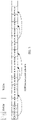
- FIG. 3 is a schematic diagram of an indication status of HARQ processes according to this application. As shown in FIG. 3 , DCI in a HARQd process may be further used to indicate a process number of an adjacent HARQ process.
- FIG. 4 is a schematic diagram of an assignment status of HARQ processes according to this application. As shown in FIG. 4 , in all processes, HARQd processes are evenly distributed, and may be used to indicate process numbers of a plurality of fixed adjacent HARQe processes.
- FIG. 5 is a schematic diagram of another assignment status of HARQ processes according to this application. As shown in FIG. 5 , in all processes, HARQd processes are continuously distributed, and DCI of each HARQd may be used to indicate process numbers of some subsequent HARQe processes.
- the HARQd processes may alternatively be distributed in one or more fixed manners, and during data transmission, transmission is performed in an agreed distribution manner, or a transmit end assigns HARQd and HARQe processes in an indicated manner, or in a 1:1 manner, or HARQd additionally indicates a process number of a HARQ process in HARQe. This is not limited in this solution.
- HARQd and HARQe processes may both use the aggregation or repetition manner.
- remaining bits in DCI may indicate a data transmission manner of the current process and a data transmission manner of a HARQe process.
- a time of a HARQ process is increased, to reduce a quantity of HARQ processes, and reduce signaling overheads for indicating a process quantity.
- each process may use a flexible transmission manner in this embodiment.
- Data (data obtained by encoding a same transport block) transmitted in each process may be transmitted in the repetition or aggregation manner each time to improve reliability.
- network devices for example, base stations in the scenario shown in FIG. 2
- network devices for example, base stations in the scenario shown in FIG. 2
- additional overheads of bits indicating the process quantity are saved, a plurality of pieces of data (corresponding to a plurality of duplicate versions or a plurality of RV versions of a same data block) are transmitted each time, and a time of each process is increased.
- Adaptive means that a corresponding transmission manner is indicated by a control channel.
- RV indicates a version number of data transmission.
- Non-adaptive means that a specified manner is used, and a default RV version order is used for each retransmission.
- each data transmission may be performed in a manner such as an agreed version quantity, version combination, or repetition quantity.
- RV0 corresponds to one piece of data
- RV0 and RV2 correspond to two pieces of data of a same data block
- RV0, RV1, and RV2 correspond to three pieces of data of a same data block
- RV0, RV1, RV2, and RV3 correspond to four pieces of data of a same data block.
- a quantity of pieces of data transmitted in each process at a time may be agreed.
- Satellites with different orbital altitudes may use different agreed manners. For example, a low-orbit satellite transmits two pieces of data at a time, a medium-orbit satellite transmits three pieces of data at a time, and a high-orbit satellite transmits four pieces of data at a time.
- RTD Round Trip Delay
- HARQ-related bits may be used, or a meaning of an RV parameter may be redefined, to indicate a data transmission manner, as shown in Table 3, which lists examples of several RV version combination manners. Because there is no retransmission, the RV0 version is included in each combination.
- an existing transmission manner (one piece of data is transmitted at a time) may be used.
- the foregoing transmission manner of HARQd may also be used in each transmission. That is, the non-adaptive manner is used, and the adaptive manner may also be used.
- satellites with different orbital altitudes may have corresponding transmission manners (HARQd performs only one transmission; when a receive end feeds back a NACK, HARQe performs a next transmission, that is, the non-adaptive manner may be used in each transmission), including a quantity of pieces of data and an RV combination manner in each transmission.
- an unused bit in HARQd may be used for indication.
- the two bits of the RV may alternatively represent different data transmission manners, referring to Table 3.
- a transmission manner used for a process that uses the HARQ manner may be further indicated, and specifically, a version, a version combination, a repetition quantity, or the like of transmitted data may be further indicated.
- an MCS index that is not used in an MCS table may be used to implicitly indicate a corresponding data transmission manner. This is not limited in this solution.
- the technical solutions of this application are not limited to a fixed process quantity.
- the process quantity may vary with different orbital altitudes and RTDs.
- terrestrial and low-orbit cases have 16, and medium and high-orbit cases have 32.
- terrestrial and low-orbit cases have 16, medium-orbit cases have 32, and high-orbit cases have 64.
- a process number of HARQe may be additionally indicated by a DCI bit in HARQd.
- a data transmission manner, for example, an RV version combination, and a HARQe process ID may also be additionally indicated by a DCI bit in HARQd.
- a remaining bit in HARQd may additionally indicate an ID of a HARQe process or a data transmission manner.
- process quantity configuration of HARQd and the HARQe refer to the solution in the foregoing embodiment.
- an unused bit in control signaling corresponding to the process is multiplexed to indicate a process number of a process that uses the HARQ manner, that is, an ID corresponding to HARQe, to reduce overheads.
- configuration of HARQd and HARQe is designed, to ensure that sufficient resources are available to indicate the ID of HARQe.
- FIG. 6 is a schematic diagram of a structure of Embodiment 1 of an NTN-based data transmission apparatus according to this application. As shown in FIG. 6 , the NTN-based data transmission apparatus 10 includes:
- the NTN-based data transmission apparatus provided in this embodiment is configured to perform the technical solution on the terminal device side in any one of the foregoing method embodiments.
- the first HARQ process for data transmission does not use the HARQ transmission manner, an unused bit in the DCI may be multiplexed, uplink or downlink transmission is performed by using the DCI indicating a related parameter, and a transmit end does not need to wait for a feedback from a receive end, thereby effectively reducing a communication delay and relieving buffer pressure of the receive end.
- the DCI further includes a second part of bits indicating the process number of the first HARQ process, and/or a bit indicating a transmission manner of the first HARQ process.
- the processing module 12 is further configured to: determine that the transmission manner used for the first HARQ process includes repetition or aggregation.
- the bit indicating the transmission manner of the first HARQ process is used to indicate a quantity of transmission times in repetition.
- the bit indicating the transmission manner of the first HARQ process is used to indicate a transmitted version in aggregation.
- a length of the DCI is consistent with a length of DCI used when the first HARQ process uses the HARQ manner for transmission.
- the NTN-based data transmission apparatus provided in this embodiment is configured to perform the technical solution on the terminal device side in any one of the foregoing method embodiments. Implementation principles and technical effects of the NTN-based data transmission apparatus are similar thereto, and details are not described herein again.
- FIG. 7 is a schematic diagram of a structure of Embodiment 2 of an NTN-based data transmission apparatus according to this application. As shown in FIG. 7 , the NTN-based data transmission apparatus 20 includes:
- the NTN-based data transmission apparatus provided in this embodiment is configured to perform the technical solution on the network device side in any one of the foregoing method embodiments.
- the first HARQ process for data transmission does not use the HARQ transmission manner, an unused bit in the DCI may be multiplexed, uplink or downlink transmission is performed by using the DCI indicating a related parameter, and a transmit end does not need to wait for a feedback from a receive end, thereby effectively reducing a communication delay and relieving buffer pressure of the receive end.
- the DCI further includes a second part of bits indicating the process number of the first HARQ process, and/or a bit indicating a transmission manner of the first HARQ process.
- the processing module 22 is further configured to: determine that the transmission manner used for the first HARQ process includes repetition or aggregation.
- the bit indicating the transmission manner of the first HARQ process is used to indicate a quantity of transmission times in repetition.
- the bit indicating the transmission manner of the first HARQ process is used to indicate a transmitted version in aggregation.
- the transceiver module 21 is further configured to: send a radio link control RRC message to the terminal device, where the RRC carries indication information, and the indication information is used to indicate that the first HARQ process does not use the HARQ manner or the first HARQ process uses the HARQ manner.
- a length of the DCI is consistent with a length of DCI used when the first HARQ process uses the HARQ manner for transmission.
- the NTN-based data transmission apparatus provided in this embodiment is configured to perform the technical solution on the network device side in any one of the foregoing method embodiments. Implementation principles and technical effects of the NTN-based data transmission apparatus are similar thereto, and details are not described herein again.
- FIG. 8 is a schematic diagram of a structure of Embodiment 1 of a communication apparatus according to this application.
- the communication apparatus 100 includes a processor 101 and a communication interface 102.
- the communication interface 102 is configured to receive to-be-processed data and/or output processed data.
- the processor 101 is configured to perform the technical solution on the terminal device side in any one of the foregoing embodiments on the to-be-processed data.
- the communication apparatus 100 further includes a memory 103, configured to store program instructions.
- the program instructions are executed by the processor, the technical solution on the terminal device side in any one of the foregoing embodiments is executed.
- the to-be-processed data received by the communication interface 102 includes data carried in DCI, data in an RRC message sent by a network device, data in downlink transmission performed by the network device, and the like.
- the output processed data includes data such as a request message sent to the network device, data in uplink transmission to the network device, and feedback information.
- the communication apparatus 100 may be a terminal device, or may be a chip, an integrated circuit, or the like. This is not limited in this solution.
- FIG. 9 is a schematic diagram of a structure of Embodiment 2 of a communication apparatus according to this application.
- the communication apparatus 200 includes a processor 201 and a communication interface 202.
- the communication interface 202 is configured to receive to-be-processed data and/or output processed data.
- the processor 201 is configured to perform the technical solution on the network device side in any one of the foregoing embodiments on the to-be-processed data.
- the communication apparatus 200 further includes a memory 203, configured to store program instructions.
- a memory 203 configured to store program instructions.
- the program instructions are executed by the processor, the technical solution on the network device side in any one of the foregoing embodiments is performed.
- the to-be-processed data received by the communication interface 202 includes a request message sent by a terminal device, uplink data sent by the terminal device, feedback information sent by the terminal device, and the like.
- the output processed data includes data carried in DCI, data in a sent RRC message, data in downlink transmission, a feedback message sent to the terminal device, and the like.
- the communication apparatus 200 may be a network device, or may be a chip, an integrated circuit, or the like. This is not limited in this solution.
- the memory and the processor are directly or indirectly electrically connected to implement data transmission or interaction, that is, the memory and the processor may be connected by using an interface, or may be integrated.
- these elements may be electrically connected to each other by using one or more communication buses or signal lines, for example, may be connected by using a bus.
- the memory stores computer-executable instructions for implementing a data access control method, including at least one software functional module that can be stored in the memory in a form of software or firmware.
- the processor executes various function applications and data processing by running a software program and a module stored in the memory.
- the memory may be but is not limited to a random access memory (Random Access Memory, RAM for short), a read-only memory (Read-Only Memory, ROM for short), a programmable read-only memory (Programmable Read-Only Memory, PROM for short), an erasable read-only memory (Erasable Programmable Read-Only Memory, EPROM for short), an electrically erasable read-only memory (Electrically Erasable Programmable Read-Only Memory, EEPROM for short), and the like.
- the memory is configured to store a program, and the processor executes the program after receiving execution instructions.
- the software program and the module in the memory may further include an operating system.
- the operating system may include various software components and/or drivers used for system task management (for example, memory management, storage device control, and power management), and may communicate with various hardware or software components to provide a running environment of other software components.
- the processor may be an integrated circuit chip and has a signal processing capability.
- the foregoing processor may be a general-purpose processor, including a central processing unit (Central Processing Unit, CPU for short), a network processor (Network Processor, NP for short), or the like.
- the processor may implement or perform the methods, steps, and logical block diagrams that are disclosed in embodiments of this application.
- the general-purpose processor may be a microprocessor, or the processor may be any conventional processor, or the like.
- this application further provides a communication apparatus, including a logic circuit and an input interface.
- the input interface is configured to obtain to-be-processed data.
- the logic circuit is configured to perform the technical solution on the terminal device side in the foregoing method embodiment on the to-be-processed data, to obtain processed data.
- the communication apparatus may further include an output interface, and the output interface is configured to output the processed data.
- the to-be-processed data obtained by the input interface includes data carried in DCI, data in an RRC message sent by a network device, data in downlink transmission performed by the network device, and the like.
- the processed data output by the output interface includes data such as a request message sent to the network device, data in uplink transmission to the network device, and feedback information.
- This application further provides a communication apparatus, including a logic circuit and an output interface.
- the logic circuit is configured to perform the technical solution on the network device side in the foregoing method embodiment on to-be-processed data, to obtain processed data.
- the output interface is configured to output the processed data.
- the communication apparatus further includes an input interface, and the input interface is configured to obtain the to-be-processed data.
- the to-be-processed data obtained by the input interface includes a request message sent by a terminal device, uplink data sent by the terminal device, feedback information sent by the terminal device, and the like.
- the processed data output by the output interface includes data carried in DCI, data in a sent RRC message, data in downlink transmission, a feedback message sent to the terminal device, and the like.
- the communication apparatus may be implemented as a chip.
- This application further provides a computer-readable storage medium.
- the computer-readable storage medium is configured to store a program.
- the program is executed by a processor to perform the technical solution on the terminal device side in the foregoing embodiment.
- This application further provides a computer-readable storage medium.
- the computer-readable storage medium is configured to store a program.
- the program is executed by a processor to perform the technical solution on the network device side in the foregoing embodiment.
- the program product includes a computer program.
- the computer program is stored in a readable storage medium.
- At least one processor of a network device may read the computer program from the readable storage medium.
- the at least one processor executes the computer program, to enable the network device to implement the technical solution in any one of the foregoing method embodiments.
- the program product includes a computer program.
- the computer program is stored in a readable storage medium.
- At least one processor of a terminal may read the computer program from the readable storage medium.
- the at least one processor executes the computer program, to enable the terminal device to implement the technical solution in any one of the foregoing method embodiments.
- the program may be stored in a computer-readable storage medium.
- the foregoing storage medium includes any medium that can store program code, such as a ROM, a RAM, a magnetic disk, or an optical disc.
- a specific medium type is not limited in this application.
Landscapes
- Engineering & Computer Science (AREA)
- Signal Processing (AREA)
- Computer Networks & Wireless Communication (AREA)
- Mobile Radio Communication Systems (AREA)
Applications Claiming Priority (2)
| Application Number | Priority Date | Filing Date | Title |
|---|---|---|---|
| CN201911088858.7A CN112787770B (zh) | 2019-11-08 | 2019-11-08 | 基于ntn的数据传输方法、装置和存储介质 |
| PCT/CN2020/120333 WO2021088594A1 (zh) | 2019-11-08 | 2020-10-12 | 基于ntn的数据传输方法、装置和存储介质 |
Publications (2)
| Publication Number | Publication Date |
|---|---|
| EP4044480A1 true EP4044480A1 (de) | 2022-08-17 |
| EP4044480A4 EP4044480A4 (de) | 2022-11-23 |
Family
ID=75748914
Family Applications (1)
| Application Number | Title | Priority Date | Filing Date |
|---|---|---|---|
| EP20884447.2A Pending EP4044480A4 (de) | 2019-11-08 | 2020-10-12 | Ntn-basiertes datenübertragungsverfahren und vorrichtung sowie speichermedium |
Country Status (4)
| Country | Link |
|---|---|
| US (1) | US12580691B2 (de) |
| EP (1) | EP4044480A4 (de) |
| CN (2) | CN112787770B (de) |
| WO (1) | WO2021088594A1 (de) |
Families Citing this family (5)
| Publication number | Priority date | Publication date | Assignee | Title |
|---|---|---|---|---|
| CN114026810B (zh) * | 2021-09-29 | 2024-09-03 | 北京小米移动软件有限公司 | 一种混合自动重传请求进程号的确定方法及其装置 |
| WO2023050401A1 (zh) * | 2021-09-30 | 2023-04-06 | Oppo广东移动通信有限公司 | 无线通信方法和设备 |
| CN114503482B (zh) * | 2021-12-31 | 2025-07-29 | 北京小米移动软件有限公司 | 信息接收、传输方法和装置、通信装置和存储介质 |
| US20250350405A1 (en) * | 2022-05-04 | 2025-11-13 | Hyundai Motor Company | Method and device for harq in non-terrestrial network |
| CN114900269B (zh) * | 2022-07-08 | 2022-09-27 | 广州思德医疗科技有限公司 | 数据传输方法、电子设备及计算机存储介质 |
Family Cites Families (8)
| Publication number | Priority date | Publication date | Assignee | Title |
|---|---|---|---|---|
| EP3434056B1 (de) * | 2016-03-25 | 2020-11-18 | Intel Corporation | Verfahren, vorrichtung und system zur aufteilung von steuerungsebene und nutzerebene zur mediumzugriffssteuerung in einem funkzugriffsnetzwerk |
| US10630410B2 (en) * | 2016-05-13 | 2020-04-21 | Telefonaktiebolaget Lm Ericsson (Publ) | Network architecture, methods, and devices for a wireless communications network |
| US10581572B2 (en) * | 2016-12-16 | 2020-03-03 | Qualcomm Incorporated | Autonomous uplink transmissions on a shared communication medium |
| WO2019160737A1 (en) * | 2018-02-14 | 2019-08-22 | Idac Holdings, Inc. | Methods and procedures for harq management in nr-based non-terrestrial networks |
| WO2020065530A1 (en) * | 2018-09-27 | 2020-04-02 | Telefonaktiebolaget Lm Ericsson (Publ) | Adapting harq procedures for non-terrestrial networks |
| EP3874647B1 (de) * | 2018-11-01 | 2024-10-16 | Telefonaktiebolaget LM Ericsson (publ) | Lch-abbildung auf harq-prozess-id für nichtterrestrische netzwerke |
| CN111356215B (zh) * | 2018-12-20 | 2021-09-10 | 大唐移动通信设备有限公司 | 一种信息处理方法、装置、设备及计算机可读存储介质 |
| GB2585857A (en) * | 2019-07-17 | 2021-01-27 | Samsung Electronics Co Ltd | Improvements in and relating to dynamic HARQ in a non-terrestrial network |
-
2019
- 2019-11-08 CN CN201911088858.7A patent/CN112787770B/zh active Active
- 2019-11-08 CN CN202210598361.5A patent/CN114900271A/zh active Pending
-
2020
- 2020-10-12 WO PCT/CN2020/120333 patent/WO2021088594A1/zh not_active Ceased
- 2020-10-12 EP EP20884447.2A patent/EP4044480A4/de active Pending
-
2022
- 2022-05-06 US US17/738,632 patent/US12580691B2/en active Active
Also Published As
| Publication number | Publication date |
|---|---|
| CN112787770B (zh) | 2022-06-14 |
| CN112787770A (zh) | 2021-05-11 |
| WO2021088594A1 (zh) | 2021-05-14 |
| CN114900271A (zh) | 2022-08-12 |
| EP4044480A4 (de) | 2022-11-23 |
| US12580691B2 (en) | 2026-03-17 |
| US20220263606A1 (en) | 2022-08-18 |
Similar Documents
| Publication | Publication Date | Title |
|---|---|---|
| US11984989B2 (en) | Transmission method and apparatus | |
| US12580691B2 (en) | NTN-based data transmission method and apparatus and storage medium | |
| KR102566795B1 (ko) | 데이터 송신을 위한 방법, 디바이스, 및 시스템 | |
| US10673699B2 (en) | Methods and apparatus in a wireless communications network | |
| US9749097B2 (en) | Method for wireless communications testing using downlink and uplink transmissions between an access point and mobile terminals | |
| US20080270866A1 (en) | Transmission with automatic repeat request process | |
| US11778689B2 (en) | Method and device for processing data | |
| CN110235398A (zh) | 用于部分重传的方法 | |
| WO2018018620A1 (zh) | 反馈ack/nack信息的方法、终端设备和网络侧设备 | |
| CN107682128B (zh) | 数据传输方法、装置、设备及存储介质 | |
| CN113767584B (zh) | 终端、基站、接收方法及发送方法 | |
| WO2023273754A1 (zh) | 一种混合自动重传请求反馈的方法和装置 | |
| CN104321997B (zh) | 传输数据的方法、基站和用户设备 | |
| EP3550909B1 (de) | Verfahren zur übertragung von daten in mehrträger-basierter kommunikation, endgerät und netzwerkvorrichtung | |
| CN116208232A (zh) | 一种数据传输方法、装置和系统 | |
| US20230050066A1 (en) | Telecommunications apparatus and methods | |
| US9025489B2 (en) | Method of configuring radio resource by a MAC layer of terminal in wireless communication system | |
| US12556317B2 (en) | Methods and apparatus for transmitting sidelink control information indicating no sidelink data | |
| WO2021012283A1 (zh) | 无线通信的方法及设备 | |
| CN113316922A (zh) | 用于传输数据分组的设备、方法、装置以及计算机可读存储介质 | |
| US20250150211A1 (en) | Method and apparatus for receiving ptp-based retransmission for multicast | |
| US20250113356A1 (en) | Apparatus, method and computer program | |
| US20230336315A1 (en) | Hybrid automatic repeat request method, semi-persistent scheduling method, and communication apparatus | |
| WO2021146865A1 (zh) | 通信方法、装置、设备及存储介质 | |
| EP2521398A1 (de) | Verfahren, vorrichtung und system zur verarbeitung von benutzergeräteübergaben in einem lte-system |
Legal Events
| Date | Code | Title | Description |
|---|---|---|---|
| STAA | Information on the status of an ep patent application or granted ep patent |
Free format text: STATUS: THE INTERNATIONAL PUBLICATION HAS BEEN MADE |
|
| PUAI | Public reference made under article 153(3) epc to a published international application that has entered the european phase |
Free format text: ORIGINAL CODE: 0009012 |
|
| STAA | Information on the status of an ep patent application or granted ep patent |
Free format text: STATUS: REQUEST FOR EXAMINATION WAS MADE |
|
| 17P | Request for examination filed |
Effective date: 20220429 |
|
| AK | Designated contracting states |
Kind code of ref document: A1 Designated state(s): AL AT BE BG CH CY CZ DE DK EE ES FI FR GB GR HR HU IE IS IT LI LT LU LV MC MK MT NL NO PL PT RO RS SE SI SK SM TR |
|
| A4 | Supplementary search report drawn up and despatched |
Effective date: 20221026 |
|
| RIC1 | Information provided on ipc code assigned before grant |
Ipc: H04W 72/12 20090101ALI20221020BHEP Ipc: H04L 1/08 20060101ALI20221020BHEP Ipc: H04L 1/18 20060101AFI20221020BHEP |
|
| DAV | Request for validation of the european patent (deleted) | ||
| DAX | Request for extension of the european patent (deleted) | ||
| STAA | Information on the status of an ep patent application or granted ep patent |
Free format text: STATUS: EXAMINATION IS IN PROGRESS |
|
| 17Q | First examination report despatched |
Effective date: 20240628 |