EP4044511A1 - Procédé, appareil, système, dispositif et support de stockage pour la gestion de dispositifs - Google Patents
Procédé, appareil, système, dispositif et support de stockage pour la gestion de dispositifs Download PDFInfo
- Publication number
- EP4044511A1 EP4044511A1 EP20883474.7A EP20883474A EP4044511A1 EP 4044511 A1 EP4044511 A1 EP 4044511A1 EP 20883474 A EP20883474 A EP 20883474A EP 4044511 A1 EP4044511 A1 EP 4044511A1
- Authority
- EP
- European Patent Office
- Prior art keywords
- network device
- self
- network
- extended
- collection
- Prior art date
- Legal status (The legal status is an assumption and is not a legal conclusion. Google has not performed a legal analysis and makes no representation as to the accuracy of the status listed.)
- Pending
Links
Images




Classifications
-
- H—ELECTRICITY
- H04—ELECTRIC COMMUNICATION TECHNIQUE
- H04L—TRANSMISSION OF DIGITAL INFORMATION, e.g. TELEGRAPHIC COMMUNICATION
- H04L43/00—Arrangements for monitoring or testing data switching networks
- H04L43/06—Generation of reports
- H04L43/065—Generation of reports related to network devices
-
- H—ELECTRICITY
- H04—ELECTRIC COMMUNICATION TECHNIQUE
- H04L—TRANSMISSION OF DIGITAL INFORMATION, e.g. TELEGRAPHIC COMMUNICATION
- H04L41/00—Arrangements for maintenance, administration or management of data switching networks, e.g. of packet switching networks
- H04L41/02—Standardisation; Integration
- H04L41/0246—Exchanging or transporting network management information using the Internet; Embedding network management web servers in network elements; Web-services-based protocols
- H04L41/0266—Exchanging or transporting network management information using the Internet; Embedding network management web servers in network elements; Web-services-based protocols using meta-data, objects or commands for formatting management information, e.g. using eXtensible markup language [XML]
-
- H—ELECTRICITY
- H04—ELECTRIC COMMUNICATION TECHNIQUE
- H04L—TRANSMISSION OF DIGITAL INFORMATION, e.g. TELEGRAPHIC COMMUNICATION
- H04L41/00—Arrangements for maintenance, administration or management of data switching networks, e.g. of packet switching networks
- H04L41/08—Configuration management of networks or network elements
- H04L41/0803—Configuration setting
- H04L41/0813—Configuration setting characterised by the conditions triggering a change of settings
-
- H—ELECTRICITY
- H04—ELECTRIC COMMUNICATION TECHNIQUE
- H04L—TRANSMISSION OF DIGITAL INFORMATION, e.g. TELEGRAPHIC COMMUNICATION
- H04L41/00—Arrangements for maintenance, administration or management of data switching networks, e.g. of packet switching networks
- H04L41/08—Configuration management of networks or network elements
- H04L41/0803—Configuration setting
- H04L41/084—Configuration by using pre-existing information, e.g. using templates or copying from other elements
- H04L41/0846—Configuration by using pre-existing information, e.g. using templates or copying from other elements based on copy from other elements
-
- H—ELECTRICITY
- H04—ELECTRIC COMMUNICATION TECHNIQUE
- H04L—TRANSMISSION OF DIGITAL INFORMATION, e.g. TELEGRAPHIC COMMUNICATION
- H04L41/00—Arrangements for maintenance, administration or management of data switching networks, e.g. of packet switching networks
- H04L41/08—Configuration management of networks or network elements
- H04L41/0895—Configuration of virtualised networks or elements, e.g. virtualised network function or OpenFlow elements
-
- H—ELECTRICITY
- H04—ELECTRIC COMMUNICATION TECHNIQUE
- H04L—TRANSMISSION OF DIGITAL INFORMATION, e.g. TELEGRAPHIC COMMUNICATION
- H04L41/00—Arrangements for maintenance, administration or management of data switching networks, e.g. of packet switching networks
- H04L41/14—Network analysis or design
-
- H—ELECTRICITY
- H04—ELECTRIC COMMUNICATION TECHNIQUE
- H04L—TRANSMISSION OF DIGITAL INFORMATION, e.g. TELEGRAPHIC COMMUNICATION
- H04L43/00—Arrangements for monitoring or testing data switching networks
- H04L43/08—Monitoring or testing based on specific metrics, e.g. QoS, energy consumption or environmental parameters
-
- H—ELECTRICITY
- H04—ELECTRIC COMMUNICATION TECHNIQUE
- H04L—TRANSMISSION OF DIGITAL INFORMATION, e.g. TELEGRAPHIC COMMUNICATION
- H04L43/00—Arrangements for monitoring or testing data switching networks
- H04L43/08—Monitoring or testing based on specific metrics, e.g. QoS, energy consumption or environmental parameters
- H04L43/0805—Monitoring or testing based on specific metrics, e.g. QoS, energy consumption or environmental parameters by checking availability
- H04L43/0817—Monitoring or testing based on specific metrics, e.g. QoS, energy consumption or environmental parameters by checking availability by checking functioning
-
- H—ELECTRICITY
- H04—ELECTRIC COMMUNICATION TECHNIQUE
- H04L—TRANSMISSION OF DIGITAL INFORMATION, e.g. TELEGRAPHIC COMMUNICATION
- H04L63/00—Network architectures or network communication protocols for network security
- H04L63/04—Network architectures or network communication protocols for network security for providing a confidential data exchange among entities communicating through data packet networks
- H04L63/0428—Network architectures or network communication protocols for network security for providing a confidential data exchange among entities communicating through data packet networks wherein the data content is protected, e.g. by encrypting or encapsulating the payload
- H04L63/0435—Network architectures or network communication protocols for network security for providing a confidential data exchange among entities communicating through data packet networks wherein the data content is protected, e.g. by encrypting or encapsulating the payload wherein the sending and receiving network entities apply symmetric encryption, i.e. same key used for encryption and decryption
-
- H—ELECTRICITY
- H04—ELECTRIC COMMUNICATION TECHNIQUE
- H04W—WIRELESS COMMUNICATION NETWORKS
- H04W12/00—Security arrangements; Authentication; Protecting privacy or anonymity
- H04W12/30—Security of mobile devices; Security of mobile applications
- H04W12/37—Managing security policies for mobile devices or for controlling mobile applications
Definitions
- This application relates to the field of communications technologies, and in particular, to a device management method, apparatus, system, and device, and a storage medium.
- SDN software defined network
- Embodiments of this application provide a device management method, apparatus, system, and device, and a storage medium, to resolve a problem provided in a related technology.
- the technical solutions are as follows:
- a device management method includes: obtaining, by a first network device, an extended YANG model file from a second network device, where the extended YANG model file includes a self-explanation tag, and the self-explanation tag is used to label network operation and maintenance data; obtaining the self-explanation tag from the extended YANG model; and managing the second network device based on the self-explanation tag.
- the network operation and maintenance data is labeled by using the self-explanation tag. This facilitates device management such as data collection and is not prone to errors, thereby not only achieving relatively high management accuracy, but also improving management efficiency.
- the managing the second network device based on the self-explanation tag includes: determining an extensible markup language path language XPATH path of a collection object in the second network device based on the self-explanation tag, where the XPATH of the collection object is used to describe an obtaining path of the collection object in the YANG model file; sending a subscription request of the collection object to the second network device based on the XPATH path of the collection object; and receiving information about the collection object that is sent by the second network device.
- the determining an extensible markup language path language XPATH path of a collection object in the second network device based on the self-explanation tag includes: obtaining a network element driver package of the second network device based on the self-explanation tag, where the network element driver package is used to describe collection-related information of the second network device; and determining the XPATH path of the collection object in the second network device based on the collection-related information of the second network device.
- the obtaining a network element driver package of the second network device based on the self-explanation tag includes: receiving collection capability notification information sent by the second network device, where the collection capability notification information is used to indicate a mechanism capability of the second network device; and generating the network element driver package of the second network device based on the self-explanation tag and the mechanism capability of the second network device.
- a device management method includes: obtaining, by a second network device, an extended YANG model file, where the extended YANG model file includes a self-explanation tag, and the self-explanation tag is used to label network operation and maintenance data; and sending information about the extended YANG model file to the first network device.
- the sending information about the extended YANG model file to the first network device includes: sending the extended YANG model file to the first network device, or sending a location of the extended YANG model file to the first network device.
- the method further includes: receiving a subscription request of a collection object that is sent by the first network device; and sending information about the collection object to the first network device based on the subscription request.
- the method further includes: sending collection capability notification information to the first network device, where the collection capability notification information is used to indicate a mechanism capability of the second network device.
- a device management apparatus is provided.
- the apparatus is used in a first network device, and the apparatus includes:
- the management module is configured to: determine an extensible markup language path language XPATH path of a collection object in the second network device based on the self-explanation tag, where the XPATH of the collection object is used to describe an obtaining path of the collection object in the YANG model file; send a subscription request of the collection object to the second network device based on the XPATH path of the collection object; and receive information about the collection object that is sent by the second network device.
- the management module is configured to: obtain a network element driver package of the second network device based on the self-explanation tag, where the network element driver package is used to describe collection-related information of the second network device; and determine the XPATH path of the collection object in the second network device based on the collection-related information of the second network device.
- the management module is configured to: receive collection capability notification information sent by the second network device, where the collection capability notification information is used to indicate a mechanism capability of the second network device; and generate the network element driver package of the second network device based on the self-explanation tag and the mechanism capability of the second network device.
- a device management apparatus is provided.
- the apparatus is used in a second network device, and the apparatus includes:
- the sending module is configured to send the extended YANG model file to the first network device, or send a location of the extended YANG model file to the first network device.
- the apparatus further includes:
- the sending module is further configured to send collection capability notification information to the first network device, where the collection capability notification information is used to indicate a mechanism capability of the second network device.
- the mechanism capability of the second network device includes one or more of a subscription mode of the second network device, a reporting protocol, an encryption protocol, an encoding/decoding mode, a supported collection object, information indicating whether conditional subscription is supported, a subscription condition, a quantity of supported sensors, and a quantity of extensible markup language path language XPATH paths to which each sensor can subscribe.
- a first network device is further provided.
- the first network device is configured to perform the method according to any one of the first aspect.
- a second network device is further provided.
- the second network device is configured to perform the method according to any one of the second aspect.
- a device management system includes a first network device and a second network device; and the first network device performs the method according to any one of the first aspect, and the second network device performs the method according to any one of the second aspect.
- a network device is further provided.
- the device includes a memory and a processor.
- the memory stores at least one instruction; and the processor loads and executes the at least one instruction, to implement the method according to either the first aspect or the second aspect.
- a computer-readable storage medium stores at least one instruction, and the processor loads and executes the instruction, to implement the method according to either the first aspect or the second aspect.
- the apparatus includes a transceiver, a memory, and a processor.
- the transceiver, the memory, and the processor communicate with each other through an internal connection channel.
- the memory is configured to store instructions.
- the processor is configured to execute the instructions stored in the memory, to control the transceiver to receive and send a signal.
- the processor executes the instructions stored in the memory, the processor is enabled to perform the method in any one of the foregoing possible implementations.
- processors there are one or more processors, and there are one or more memories.
- the memory may be integrated with the processor, or the memory and the processor are disposed separately.
- the memory may be a non-transitory (non-transitory) memory, for example, a read-only memory (read only memory, ROM).
- the memory and the processor may be integrated on a same chip, or may be separately disposed on different chips.
- a type of the memory and a manner of disposing the memory and the processor are not limited in this embodiment of this application.
- a computer program (product) is provided.
- the computer program (product) includes computer program code.
- the computer program code is run on a computer, the computer is enabled to perform the methods in the foregoing aspects.
- a chip includes a processor, configured to invoke, from a memory, instructions stored in the memory and run the instructions, to enable a communications device on which the chip is installed to perform the methods in the foregoing aspects.
- the chip includes an input interface, an output interface, a processor, and a memory.
- the input interface, the output interface, the processor, and the memory are connected to each other through an internal connection channel.
- the processor is configured to execute code in the memory. When the code is executed, the processor is configured to perform the methods in the foregoing aspects.
- a Telemetry (Telemetry) technology can meet the foregoing requirements.
- the Telemetry technology supports an intelligent operation and maintenance system in managing more devices, and monitoring data with higher precision and higher real-time performance.
- a monitoring process has little impact on device functions and performance. This provides the most important big data basis for fast network problem locating and network quality optimization and adjustment.
- Network quality analysis is converted into big data analysis, which effectively supports intelligent operation and maintenance. Therefore, the Telemetry technology is increasingly widely applied.
- a network device can automatically push data to an NMS side in a periodic or dynamic change-triggering manner, thereby avoiding repeated query and improving monitoring performance.
- a push process is shown in FIG. 1 .
- a device side pushes subscribed data to the NMS side, and the NMS side waits for the data sent by the device side.
- the data sent by the device side may include a timestamp, to avoid impact of a network delay.
- the device side may package the data and send the data, to reduce interaction between the NMS side and the device side.
- the NMS side monitors and manages, by using a network monitoring system, the data pushed by the device side.
- a network monitoring system shown in FIG. 2 is used as an example.
- the NMS side is connected to devices of different vendors, types, and versions by using the network monitoring system to collect various types of network operation and maintenance data. Device models and interfaces of different vendors, types, and versions vary greatly. Therefore, the network monitoring system has a driver layer.
- the driver layer is used to complete collection and adaption, to classify and collect device operation and maintenance data and convert the data into a unified model.
- a configuration file is manually compiled to complete device matching.
- the upper-layer network monitoring system needs to be connected to various devices, with varying capabilities, of different vendors, types, and versions.
- the device vendor needs to manually compile a configuration file on the upper-layer network monitoring system for matching. This is inefficient and error-prone.
- the upper-layer network monitoring system further needs to cooperate with the device to release a version, leading to low efficiency.
- the embodiments of this application provide a device management method.
- Telemetry operation and maintenance data can be automatically labeled and dynamically learned, to change a complex Telemetry collection and matching process from a manual process to an automatic process.
- Telemetry matching does not need to be manually performed on the upper-layer network monitoring system. Instead, dynamic learning is performed.
- a yet another next generation (yet another next generation, YANG) model is a language defined by the Internet Engineering Task Force (internet engineering task force, IETF) standards organization to model network configuration and management data. Because the YANG model supports complete description of data between a NETCONF client and a NETCONF server, the YANG model is used to describe configuration data, status data, a remote procedure call (remote procedure call, RPC), and a notification (Notification) that are exchanged between the NETCONF client and the NETCONF server. Therefore, in the embodiments of this application, a manner of managing the device based on the YANG model is used.
- the device management method provided in the embodiments of this application may be applied to a device management system shown in FIG. 3 .
- the device management system includes a package management service system and a network monitoring management system on the NMS side and a device A, a device B, and a device C on the device side. It should be noted that, in FIG. 3 , only the device A, the device B, and the device C on the device side are used as an example for description, and a quantity of devices is not limited in the embodiments of this application.
- the package management service system and the network monitoring management system may be deployed on one network device, or may be deployed on different network devices. A manner of deploying the package management service system and the network monitoring management system is not limited in the embodiments of this application either.
- the package management service system is responsible for, but not limited to, management of a YANG model file and a protocol (proto) file package, for example, management such as creation, deletion, and modification.
- the network monitoring management system is responsible for, but not limited to, learning a service YANG file that is based on an object type, property and metric (object type, property and metric, OPM) model annotation, extracting the OPM model annotation and an extensible markup language path language (xml path language, XPATH) corresponding to a collection object, listening to a Telemetry capability notification of a managed device, and subscribing to the collection object based on the OPM model annotation of the managed device.
- OPM object type, property and metric
- OPM extensible markup language path language
- the managed device is configured to perform, but not limited to, the following operations: receiving a package management request from a YANG model package management service system, detecting impact of package management on a device version, receiving a subscription request from the network monitoring management system, and receiving a YANG model Schema query request.
- a device on the NMS side is a first network device and a device on the device side is a second network device is used to describe the device management method provided in the embodiments of this application.
- FIG. 4 The method includes the following several processes.
- the second network device obtains an extended YANG model file, where the extended YANG model file includes a self-explanation tag, and the self-explanation tag is used to label network operation and maintenance data.
- the extended YANG model file is the foregoing service YANG file that is based on the OPM model annotation and that is shown in FIG. 3 .
- the OPM model annotation is the self-explanation tag included in the extended YANG model file, and the OPM model annotation includes but is not limited to the following content:
- FIG. 5 shows a correspondence between OPM and fault, configuration, accounting, performance, security (fault configuration accounting performance and security, FCAPS).
- FCAPS is five basic functions of a network management system proposed by the International Telecommunication Union-Telecommunication Standardization Sector (international telecommunication union, ITU-T), and is also five standards for the network management work.
- ITU-T International Telecommunication Union-Telecommunication Standardization Sector
- the object type in OPM corresponds to a resource management object, a performance management object, and an alarm management object in an FCAPS model
- the property in OPM corresponds to the resource management object in the FCAPS model and is used to describe an object property
- the metric in OPM corresponds to a status, statistics, an alarm, and the like in the FCAPS model.
- the extended YANG model file may be obtained by the second network device from the package management service system, or may be directly configured by a network administrator on the second network device.
- a manner in which the second network device obtains the extended YANG model file is not limited in the embodiments of this application. Regardless of a manner of obtaining the extended YANG model file, the extended YANG model file includes the self-explanation tag, and the self-explanation tag is used to label the network operation and maintenance data.
- extension extension may be performed in a service YANG model, and the extended YANG model file is obtained in a manner of classifying and labeling the network operation and maintenance data.
- extension content of YANG syntax is as follows:
- content of the obtained extended YANG model file may be as follows:
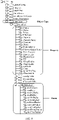
- the extended YANG model file is visualized, and a display manner is shown in FIG. 6 . It can be learned from FIG. 6 that, a structure named "Interfaces" in the YANG model is labeled with Object type, a name leaf node ifName and the like of a name "interface” in the YANG model are labeled with Property, and ifStatistics in the YANG model is labeled with Metric.
- the method provided in the embodiments of this application further supports obtaining the extended YANG model file in a manner of extending a node tag based on an ietf module tag.
- the following node tag module structure is used as an example:
- the obtained extended YANG model file may be as follows:
- the extended YANG model file obtained in the foregoing manner of extending the node tag based on the ietf module tag may be still visually displayed, as shown in FIG. 6 .
- Network monitoring data can be visualized in real time to quickly respond to network operation and maintenance requirements.
- the second network device sends information about the extended YANG model file to the first network device.
- the second network device After the second network device obtains the extended YANG model file, the second network device sends the obtained extended YANG model file to the first network device, so that the first network device learns the extended YANG model file.
- the second network device may send the extended YANG model file to the first network device through a management plane interface.
- the second network device may further send a location of the extended YANG model file, so that the first network device obtains the extended YANG model file based on the location.
- the first network device obtains the extended YANG model file from the second network device.
- the second network device may send the extended YANG model file to the first network device through the management plane interface, so that the first network device obtains the extended YANG model file from the second network device through the management plane interface.
- the first network device obtains the extended YANG model file based on the location.
- the first network device obtains the self-explanation tag from the extended YANG model file.
- the first network device After obtaining the extended YANG model file, the first network device obtains the self-explanation tag from the extended YANG model file. Because different versions of a same service YANG file are uploaded for different device types and versions, in this embodiment of this application, after obtaining the extended YANG model file, the first network device may extract an OPM model, that is, the self-explanation tag, from the extended YANG model file by using a highest version as a baseline.
- the first network device manages the second network device based on the self-explanation tag.
- the first network device determines an XPATH path of a collection object in the second network device based on the self-explanation tag.
- the self-explanation tag includes the XPATH path of the collection object, and the XPATH of the collection object is used to describe an obtaining path of the collection object in the YANG model file. Therefore, the XPATH path of the collection object in the second network device may be directly determined based on the self-explanation tag.
- the second network device may further perform capability negotiation with the first network device.
- capability negotiation if a mechanism capability of the second network device is notified to the first network device, the first network device performs more accurate management on the second network device in a more targeted manner.
- the method further includes: The second network device sends collection capability notification information to the first network device, where the collection capability notification information is used to indicate the mechanism capability of the second network device.
- An occasion on which the second network device sends the collection capability notification information to the first network device is not limited in this embodiment of this application.
- the second network device may be triggered to send the collection capability notification information to the first network device.
- the collection capability notification information may alternatively be periodically sent.
- the mechanism capability of the second network device includes one or more of a subscription mode (for example, static subscription or dynamic subscription) of the second network device, a reporting protocol (for example, gRPC or the UDP), an encryption protocol, an encoding/decoding mode (gpb or gpbkv), a supported collection object, information indicating whether conditional subscription is supported, a subscription condition, a quantity of supported sensors, and a quantity of extensible markup language path language XPATH paths to which each sensor can subscribe.
- a subscription mode for example, static subscription or dynamic subscription
- a reporting protocol for example, gRPC or the UDP
- an encryption protocol for example, gpb or gpbkv
- a supported collection object information indicating whether conditional subscription is supported, a subscription condition, a quantity of supported sensors, and a quantity of extensible markup language path language XPATH paths to which each sensor can subscribe.
- the mechanism capability may further include a hierarchical capability model of the second network device, for example, a global-level parameter, a datastore dataset parameter, or a node-level parameter of the second network device.
- a hierarchical capability model of the second network device, for example, a global-level parameter, a datastore dataset parameter, or a node-level parameter of the second network device.
- definition of a lower-level capability covers an upper level. That is, the upper level and a lower level have a same capability.
- the lower level further has a specific capability.
- the mechanism capability may be negotiated by using a model.
- Telemetry capability negotiation is performed by using the YANG model is used.
- a structure of the YANG may be as follows: module: telemetry-capabilities +-- ro datastore-subscription-capabilities +-- ro (update-period) ?
- max-sensors indicates the quantity of supported sensors
- max-xpaths-per-sensor indicates the quantity of XPTH paths to which each sensor can subscribe
- supported-subscription-type indicates a supported subscription type
- supported-protocol indicates the reporting protocol
- supported-encryption indicates the encryption protocol
- supported-encoding indicates the encoding/decoding mode.
- max-sensors indicates that the quantity of supported sensors is 10
- max-xpaths-per-sensor indicates that the quantity of XPTH paths to which each sensor can subscribe is 5
- supported-subscription-type indicates that the supported subscription type is dynamic (dynamic) and static (static)
- supported-protocol indicates that the reporting protocol is gRPC and the UDP
- supported-encryption indicates that the encryption protocol is SSL 3.0 and TLS 1.0
- supported-encoding indicates that the encoding/decoding mode is GBP and JSON.
- a YANG instance may be as follows:
- the obtaining a network element driver package of the second network device based on the self-explanation tag includes: The first network device receives the collection capability notification information sent by the second network device, where the collection capability notification information is used to indicate the mechanism capability of the second network device; and generates the network element driver package of the second network device based on the self-explanation tag and the mechanism capability of the second network device.
- that the first network device determines an XPATH path of a collection object in the second network device based on the self-explanation tag includes: obtaining the network element driver package of the second network device based on the self-explanation tag, where the network element driver package is used to describe collection-related information of the second network device; and determining the XPATH path of the collection object in the second network device based on the collection-related information of the second network device.
- FIG. 8 shows a process in which the network monitoring system converts a device model into an OPM model and a NED package.
- the network monitoring system obtains a YANG node that supports Telemetry and a related mechanism capability of the second network device, and generates a NED package with reference to an OPM self-explanation tag.
- the network monitoring system compiles a class file online based on a device proto file. The class file is loaded when a collector is running, for GPB decoding.
- the network element driver (NED) package describes Telemetry collection-related information of a network element at a granularity of a network element type and a version.
- a Telemetry collection related model has an OPM annotation model and a Proto file, a corresponding XPATH, an XPATH configuration of enabling metric statistics collection, a measurement formula (if differentiated matching is required), and the like.
- the first network device sends a subscription request of the collection object to the second network device based on the XPATH path of the collection object.
- the first network device may send the subscription request of the collection object to the second network device based on the XPATH path of the collection object, to subscribe to information about the collection object.
- the second network device receives the subscription request of the collection object that is sent by the first network device.
- the second network device sends the information about the collection object to the first network device based on the subscription request.
- the subscription request carries an identifier of the collection object, and the second network device may report the information about the collection object to the first network device.
- the first network device receives the information about the collection object that is sent by the second network device.
- the first network device receives the information about the collection object that is sent by the second network device, to perform device management based on the information.
- the network operation and maintenance data is labeled by using the self-explanation tag. This facilitates device management such as data collection and is not prone to errors, thereby not only achieving relatively high management accuracy, but also improving management efficiency.
- the mechanism capability of the second network device is notified to the first network device through capability notification, so that management precision and management efficiency of the second network device by the first network device are further improved.
- network monitoring data can be visualized in real time to quickly respond to network operation and maintenance requirements.
- development and maintenance costs can be further reduced, and a description of a Telemetry capability model can be directly converted by using the YANG model file in a running state to ensure same metadata during design and running.
- the device management method includes the following processes.
- the YANG model package management service system generates an OPM model annotation based model set and a corresponding Protocol file to form a software package, and downloads and installs the software package to a corresponding network device by using a package management module.
- the device A performs upgrade based on the software package, and the device A senses a change of a device version.
- the device A sends a Telemetry capability notification to the network monitoring management system (a collector), to notify XPATH path information of a collection object with an OPM annotation.
- the network monitoring management system establishes a NETCONF session with the device A, negotiates capabilities of the device and a network management system based on the NETCONF session, and queries the device for information about a list of all YANG models supported by the device.
- the network monitoring management system obtains a YANG model from the device A by using ⁇ get-schema>, the device A returns URL obtaining location information corresponding to the YANG model, and the network monitoring management system obtains, based on the URL obtaining location information, the information about the list of all the YANG models supported by the device.
- the network monitoring management system obtains and stores a service YANG model file that is based on the OPM annotation.
- the network monitoring management system initiates a subscription request to the device Abased on the XPATH path information of the collection object corresponding to an OPM model.
- the device A returns the information about the subscribed collection object.
- a process in which the network monitoring management system establishes the NETCONF session with the device A may be further performed before the device A obtains an extended YANG model package.
- the device management method includes the following processes.
- the network monitoring management system establishes a NETCONF session with the device, negotiates capabilities of the device and a network management system based on the NETCONF session, and queries the device for information about a list of all YANG models supported by the device.
- the network monitoring management system obtains a YANG model from the device A by using ⁇ get-schema>, the device A returns URL obtaining location information corresponding to the YANG model, and the network monitoring management system obtains, based on the URL obtaining location information, the information about the list of all the YANG models supported by the device.
- the network monitoring management system obtains and stores a service YANG model file that is based on an OPM annotation.
- the YANG model package management service system generates an OPM model annotation based model set and a corresponding Protocol file to form a software package, and downloads and installs the software package to a corresponding network device by using a package management module.
- the device A performs upgrade based on the software package, and the device senses a change of a device version.
- the device A sends a Telemetry capability notification to the network monitoring management system (a collector), to notify XPATH path information of a collection object with an OPM annotation and other Schema information.
- a Telemetry capability notification to the network monitoring management system (a collector), to notify XPATH path information of a collection object with an OPM annotation and other Schema information.
- the network monitoring management system initiates a subscription request to the device Abased on the XPATH path information of the collection object corresponding to an OPM model.
- the device A returns the information about the subscribed collection object.
- An embodiment of this application provides a device management apparatus.
- the apparatus is used in a first network device.
- the first network device is the first network device in FIG. 4 , FIG. 7 , FIG. 9 , and FIG. 10 .
- the device management apparatus shown in FIG. 11 can perform all or some of operations performed by the first network device.
- the apparatus includes:
- the management module 1103 is configured to: determine an XPATH path of a collection object in the second network device based on the self-explanation tag, where the XPATH of the collection object is used to describe an obtaining path of the collection object in the YANG model file; send a subscription request of the collection object to the second network device based on the XPATH path of the collection object; and receive information about the collection object that is sent by the second network device.
- the management module 1103 is configured to: obtain a network element driver package of the second network device based on the self-explanation tag, where the network element driver package is used to describe collection-related information of the second network device; and determine the XPATH path of the collection object in the second network device based on the collection-related information of the second network device.
- the management module 1103 is configured to: receive collection capability notification information sent by the second network device, where the collection capability notification information is used to indicate a mechanism capability of the second network device; and generate the network element driver package of the second network device based on the self-explanation tag and the mechanism capability of the second network device.
- the mechanism capability of the second network device includes one or more of a subscription mode of the second network device, a reporting protocol, an encryption protocol, an encoding/decoding mode, a supported collection object, information indicating whether conditional subscription is supported, a subscription condition, a quantity of supported sensors, and a quantity of extensible markup language path language XPATH paths to which each sensor can subscribe.
- the apparatus provided in this embodiment of this application labels the network operation and maintenance data by using the self-explanation tag. This facilitates device management such as data collection and is not prone to errors, thereby not only achieving relatively high management accuracy, but also improving management efficiency.
- the mechanism capability of the second network device is notified to the first network device through capability notification, so that management precision and management efficiency of the second network device by the first network device are further improved.
- An embodiment of this application provides a device management apparatus.
- the apparatus is used in a second network device.
- the second network device is the second network device in FIG. 4 , FIG. 7 , FIG. 9 , and FIG. 10 .
- the device management apparatus shown in FIG. 12 or FIG. 13 can perform all or some of operations performed by the second network device.
- the apparatus includes:
- the sending module 1202 is configured to send the extended YANG model file to the first network device, or send a location of the extended YANG model file to the first network device.
- the apparatus further includes:
- the sending module 1202 is further configured to send collection capability notification information to the first network device, where the collection capability notification information is used to indicate a mechanism capability of the second network device.
- the mechanism capability of the second network device includes one or more of a subscription mode of the second network device, a reporting protocol, an encryption protocol, an encoding/decoding mode, a supported collection object, information indicating whether conditional subscription is supported, a subscription condition, a quantity of supported sensors, and a quantity of extensible markup language path language XPATH paths to which each sensor can subscribe.
- the apparatus provided in this embodiment of this application labels the network operation and maintenance data by using the self-explanation tag. This facilitates device management such as data collection and is not prone to errors, thereby not only achieving relatively high management accuracy, but also improving management efficiency.
- the mechanism capability of the second network device is notified to the first network device through capability notification, so that management precision and management efficiency of the second network device by the first network device are further improved.
- An embodiment of this application further provides a network device 1400.
- the network device 1400 shown in FIG. 14 is configured to perform operations related to the foregoing device management method.
- the network device 1400 includes a memory 1401, a processor 1402, and an interface 1403.
- the memory 1401, the processor 1402, and the interface 1403 are connected by using a bus 1404.
- the memory 1401 stores at least one instruction, and the at least one instruction is loaded and executed by the processor 1402, to implement any one of the foregoing device management methods.
- the interface 1403 is used for communication with another device in a network.
- the interface 1403 may implement communication in a wireless or wired manner.
- the interface 1403 may be a network adapter.
- the network device 1400 may communicate with a server by using the interface 1403.
- the network device shown in FIG. 14 is the first network device in FIG. 4 , FIG. 7 , FIG. 9 , and FIG. 10 .
- the processor 1402 reads the instruction from the memory 1401, to enable the network device shown in FIG. 14 to perform all or some of operations performed by the first network device.
- the network device shown in FIG. 14 is the second network device in FIG. 4 , FIG. 7 , FIG. 9 , and FIG. 10 .
- the processor 1402 reads the instruction from the memory 1401, to enable the network device shown in FIG. 14 to perform all or some of operations performed by the second network device.
- FIG. 14 shows only a simplified design of the network device 1400.
- the network device may include any quantity of interfaces, processors, or memories.
- the processor may be a central processing unit (Central Processing Unit, CPU), or may be another general-purpose processor, a digital signal processor (digital signal processor, DSP), an application-specific integrated circuit (application specific integrated circuit, ASIC), a field programmable gate array (field-programmable gate array, FPGA), or another programmable logic device, a discrete gate or a transistor logic device, a discrete hardware component, or the like.
- the general-purpose processor may be a microprocessor, any conventional processor, or the like.
- the processor may be a processor that supports an advanced reduced instruction set computing machines (advanced RISC machines, ARM) architecture.
- the memory may include a read-only memory and a random access memory, and provide instructions and data for the processor.
- the memory may further include a nonvolatile random access memory.
- the memory may further store information about a device type.
- the memory may be a volatile memory or a nonvolatile memory, or may include both a volatile memory and a nonvolatile memory.
- the nonvolatile memory may be a read-only memory (read-only memory, ROM), a programmable read-only memory (programmable ROM, PROM), an erasable programmable read-only memory (erasable PROM, EPROM), an electrically erasable programmable read-only memory (electrically EPROM, EEPROM), or a flash memory.
- the volatile memory may be a random access memory (random access memory, RAM) that is used as an external cache.
- RAMs are available, for example, a static random access memory (static RAM, SRAM), a dynamic random access memory (dynamic random access memory, DRAM), a synchronous dynamic random access memory (synchronous DRAM, SDRAM), a double data rate synchronous dynamic random access memory (double data rate SDRAM, DDR SDRAM), an enhanced synchronous dynamic random access memory (enhanced SDRAM, ESDRAM), a synchlink dynamic random access memory (synchlink DRAM, SLDRAM), and a direct rambus random access memory (direct rambus RAM, DR RAM).
- static random access memory static random access memory
- DRAM dynamic random access memory
- DRAM dynamic random access memory
- SDRAM synchronous dynamic random access memory
- double data rate SDRAM double data rate SDRAM
- DDR SDRAM double data rate SDRAM
- ESDRAM enhanced synchronous dynamic random access memory
- synchlink dynamic random access memory synchlink dynamic random access memory
- direct rambus RAM direct rambus RAM
- a device management system is further provided.
- the system includes a first network device and a second network device.
- the first network device is configured to perform a function performed by the first network device in the foregoing device management method
- the second network device is configured to perform a function performed by the second network device in the foregoing device management method.
- a computer-readable storage medium is further provided.
- the storage medium stores at least one instruction, and a processor loads and executes the instruction, to implement any one of the foregoing device management methods.
- This application provides a computer program.
- a processor or the computer may be enabled to perform corresponding operations and/or procedures in the foregoing method embodiments.
- All or some of the foregoing embodiments may be implemented by using software, hardware, firmware, or any combination thereof.
- software is used to implement the embodiments, all or some of the embodiments may be implemented in a form of a computer program product.
- the computer program product includes one or more computer instructions.
- the computer may be a general-purpose computer, a dedicated computer, a computer network, or another programmable apparatus.
- the computer instructions may be stored in a computer-readable storage medium or may be transmitted from a computer-readable storage medium to another computer-readable storage medium.
- the computer instructions may be transmitted from a website, computer, server, or data center to another website, computer, server, or data center in a wired (for example, a coaxial cable, an optical fiber, or a digital subscriber line) or wireless (for example, infrared, radio, or microwave) manner.
- the computer-readable storage medium may be any usable medium accessible by a computer, or a data storage device, for example, a server or a data center, integrating one or more usable media.
- the usable medium may be a magnetic medium (for example, a floppy disk, a hard disk, or a magnetic tape), an optical medium (for example, a DVD), a semiconductor medium (for example, a solid-state disk Solid State Disk), or the like.
Landscapes
- Engineering & Computer Science (AREA)
- Computer Networks & Wireless Communication (AREA)
- Signal Processing (AREA)
- Computer Security & Cryptography (AREA)
- Environmental & Geological Engineering (AREA)
- Computer Hardware Design (AREA)
- Computing Systems (AREA)
- General Engineering & Computer Science (AREA)
- Data Exchanges In Wide-Area Networks (AREA)
- Computer And Data Communications (AREA)
- Management, Administration, Business Operations System, And Electronic Commerce (AREA)
- Automatic Tape Cassette Changers (AREA)
Applications Claiming Priority (2)
| Application Number | Priority Date | Filing Date | Title |
|---|---|---|---|
| CN201911055635.0A CN112751698B (zh) | 2019-10-31 | 2019-10-31 | 设备管理方法、装置、系统、设备及存储介质 |
| PCT/CN2020/118221 WO2021082844A1 (fr) | 2019-10-31 | 2020-09-28 | Procédé, appareil, système, dispositif et support de stockage pour la gestion de dispositifs |
Publications (2)
| Publication Number | Publication Date |
|---|---|
| EP4044511A1 true EP4044511A1 (fr) | 2022-08-17 |
| EP4044511A4 EP4044511A4 (fr) | 2022-10-26 |
Family
ID=74067411
Family Applications (1)
| Application Number | Title | Priority Date | Filing Date |
|---|---|---|---|
| EP20883474.7A Pending EP4044511A4 (fr) | 2019-10-31 | 2020-09-28 | Procédé, appareil, système, dispositif et support de stockage pour la gestion de dispositifs |
Country Status (7)
| Country | Link |
|---|---|
| US (1) | US12095637B2 (fr) |
| EP (1) | EP4044511A4 (fr) |
| JP (1) | JP7418565B2 (fr) |
| CN (3) | CN112751698B (fr) |
| BR (1) | BR112022008014A2 (fr) |
| MX (1) | MX2022005204A (fr) |
| WO (1) | WO2021082844A1 (fr) |
Families Citing this family (11)
| Publication number | Priority date | Publication date | Assignee | Title |
|---|---|---|---|---|
| CN112751698B (zh) | 2019-10-31 | 2023-10-24 | 华为技术有限公司 | 设备管理方法、装置、系统、设备及存储介质 |
| CN112994918B (zh) * | 2019-12-17 | 2022-05-31 | 华为技术有限公司 | 一种设备管理方法及装置 |
| CN113300888B (zh) * | 2021-05-21 | 2022-07-22 | 刘超 | 一种yang模型浏览器及客户端设备 |
| CN116170272A (zh) * | 2021-11-24 | 2023-05-26 | 中盈优创资讯科技有限公司 | 基于新一代云网运营体系的网络质量管理调度方法及装置 |
| CN115328568A (zh) * | 2021-12-24 | 2022-11-11 | 中国银联股份有限公司 | 用于生成网络设备驱动文件的系统、方法、设备和介质 |
| CN116743831A (zh) * | 2022-03-04 | 2023-09-12 | 中国移动通信有限公司研究院 | 数据采集方法及数据采集设备 |
| CN114979242A (zh) * | 2022-05-18 | 2022-08-30 | 中国电信股份有限公司 | 一种动态订阅数据的方法、装置、电子设备及存储介质 |
| US12526733B2 (en) | 2022-08-26 | 2026-01-13 | Cisco Technology, Inc. | Network telemetry capabilities discovery |
| CN118540332B (zh) * | 2023-02-23 | 2026-01-09 | 华为技术有限公司 | 文件同步方法及相关设备 |
| WO2024247197A1 (fr) | 2023-05-31 | 2024-12-05 | 富士通株式会社 | Dispositif de communication, dispositif radio, dispositif de commande, système de communication radio et procédé de commande |
| US12483467B1 (en) * | 2024-07-25 | 2025-11-25 | Hewlett Packard Enterprise Development Lp | Dynamically injected yang modules |
Family Cites Families (32)
| Publication number | Priority date | Publication date | Assignee | Title |
|---|---|---|---|---|
| US20070121870A1 (en) * | 2005-11-03 | 2007-05-31 | Microsoft Corporation | Subscription service integration application program interface and schema |
| CN102299812A (zh) * | 2010-06-22 | 2011-12-28 | 华为技术有限公司 | 一种访问控制方法及网络设备 |
| CN105281940B (zh) * | 2014-07-18 | 2020-08-21 | 南京中兴软件有限责任公司 | 一种基于netconf协议的hello报文交互的方法、设备和系统 |
| CN105530115B (zh) | 2014-10-23 | 2019-10-22 | 华为技术有限公司 | 一种实现操作管理维护功能的方法及装置 |
| CN106209931A (zh) * | 2015-04-30 | 2016-12-07 | 中兴通讯股份有限公司 | 一种资源的信息的更新方法、装置和系统 |
| US9715380B2 (en) * | 2015-05-26 | 2017-07-25 | Cisco Technology, Inc. | Techniques for enabling dynamic update of device data models |
| CN106257868B (zh) * | 2015-06-19 | 2020-11-03 | 中兴通讯股份有限公司 | 配置数据推送方法及装置 |
| US9900209B2 (en) | 2015-09-14 | 2018-02-20 | Cisco Technology, Inc. | Techniques for YANG model version control validation |
| CN106559251B (zh) * | 2015-09-30 | 2019-03-15 | 中兴通讯股份有限公司 | 一种基于yang模型的编译方法、及对应的接口、组件和系统 |
| US20170270157A1 (en) | 2016-03-21 | 2017-09-21 | Virtual Network Element, Inc. | TCP/IP Network Automation and Orchestration Tools |
| CN107302443B (zh) | 2016-04-15 | 2020-10-16 | 华为技术有限公司 | 基于网络配置协议的设备配置方法及装置 |
| US10666638B2 (en) * | 2016-05-20 | 2020-05-26 | Avaya Inc. | Certificate-based dual authentication for openflow enabled switches |
| US10148506B1 (en) | 2016-06-28 | 2018-12-04 | Juniper Networks, Inc. | Network configuration service discovery |
| US10200248B1 (en) * | 2016-06-30 | 2019-02-05 | Juniper Networks, Inc. | Translating high-level configuration instructions to low-level device configuration |
| WO2018049677A1 (fr) * | 2016-09-19 | 2018-03-22 | Telefonaktiebolaget Lm Ericsson (Publ) | Procédé de gestion de réseau sur la base d'un protocole netconf, et dispositif de réseau associé |
| CN106301956B (zh) | 2016-09-27 | 2019-05-07 | 北京交通大学 | 一种基于netconf的网络设备配置管理方法 |
| US10326657B1 (en) * | 2016-09-30 | 2019-06-18 | Juniper Networks, Inc. | Multi vendor device support in network management systems |
| US10230585B1 (en) * | 2016-09-30 | 2019-03-12 | Juniper Networks, Inc. | Multi vendor device support in network management systems |
| US20190220778A1 (en) | 2016-10-04 | 2019-07-18 | Mitsubishi Electric Corporation | Information processing apparatus, information processing method, and computer readable medium |
| US10785278B2 (en) | 2016-11-04 | 2020-09-22 | Google Llc | Network management interface |
| CN108363545B (zh) * | 2017-01-26 | 2021-12-03 | 华为技术有限公司 | 一种数据配置方法及数据配置装置 |
| US11018945B2 (en) * | 2017-03-13 | 2021-05-25 | Futurewei Technologies, Inc. | Telemetry aggregation and network autonomic scaling |
| CN109033483B (zh) * | 2017-06-12 | 2023-11-14 | 中兴通讯股份有限公司 | 一种在yang模型中定义数据关系的方法、装置及系统 |
| CN109144490A (zh) | 2017-06-27 | 2019-01-04 | 中兴通讯股份有限公司 | 一种yang模型扩展校验的方法及装置、计算机可读存储介质 |
| WO2019083843A1 (fr) * | 2017-10-23 | 2019-05-02 | Nokia Solutions And Networks Oy | Configuration de tranches de réseau |
| KR102424056B1 (ko) * | 2017-10-31 | 2022-07-25 | 한국전자통신연구원 | Netconf 기반의 네트워크 시스템 명령어를 yang 언어로 모델링하는 방법 및 장치 |
| CN110018835B (zh) | 2018-01-09 | 2022-08-02 | 中兴通讯股份有限公司 | Yang模型配置数据处理方法及装置、终端设备及存储介质 |
| DE102019103055B4 (de) | 2018-02-07 | 2024-06-06 | Mavenir Systems Inc. | Management von funkeinheiten in cloud radio access netzwerken |
| CN109412850B (zh) | 2018-10-25 | 2022-02-11 | 新华三技术有限公司合肥分公司 | 消息订阅控制方法及装置 |
| CN109361550B (zh) * | 2018-11-21 | 2021-06-08 | 国家计算机网络与信息安全管理中心 | 网络设备配置管理的方法、装置及设备 |
| CN109951315B (zh) * | 2019-02-14 | 2022-02-22 | 烽火通信科技股份有限公司 | 一种实现yang模型到内部模型映射的方法及系统 |
| CN112751698B (zh) * | 2019-10-31 | 2023-10-24 | 华为技术有限公司 | 设备管理方法、装置、系统、设备及存储介质 |
-
2019
- 2019-10-31 CN CN201911055635.0A patent/CN112751698B/zh active Active
- 2019-10-31 CN CN202311283068.0A patent/CN117499196A/zh active Pending
- 2019-10-31 CN CN202010957241.0A patent/CN112187525B/zh active Active
-
2020
- 2020-09-28 EP EP20883474.7A patent/EP4044511A4/fr active Pending
- 2020-09-28 WO PCT/CN2020/118221 patent/WO2021082844A1/fr not_active Ceased
- 2020-09-28 BR BR112022008014A patent/BR112022008014A2/pt not_active IP Right Cessation
- 2020-09-28 MX MX2022005204A patent/MX2022005204A/es unknown
- 2020-09-28 JP JP2022525161A patent/JP7418565B2/ja active Active
-
2022
- 2022-04-28 US US17/731,533 patent/US12095637B2/en active Active
Also Published As
| Publication number | Publication date |
|---|---|
| MX2022005204A (es) | 2022-05-18 |
| CN112187525A (zh) | 2021-01-05 |
| CN112187525B (zh) | 2021-08-20 |
| US12095637B2 (en) | 2024-09-17 |
| US20220255818A1 (en) | 2022-08-11 |
| WO2021082844A1 (fr) | 2021-05-06 |
| CN112751698B (zh) | 2023-10-24 |
| CN117499196A (zh) | 2024-02-02 |
| JP2022554262A (ja) | 2022-12-28 |
| JP7418565B2 (ja) | 2024-01-19 |
| CN112751698A (zh) | 2021-05-04 |
| BR112022008014A2 (pt) | 2022-07-12 |
| EP4044511A4 (fr) | 2022-10-26 |
Similar Documents
| Publication | Publication Date | Title |
|---|---|---|
| US12095637B2 (en) | Device management method, apparatus, system, and device, and storage medium | |
| CN111416736B (zh) | 网络设备的配置管理方法、装置、计算设备及存储介质 | |
| US11894995B2 (en) | Data processing method and apparatus | |
| US8099425B2 (en) | Relational model for management information in network devices | |
| DK2914022T3 (en) | Device management method, middleware and machine-to-machine communication platform, device and system | |
| US20230308348A1 (en) | Server to support client data models from heterogeneous data sources | |
| WO2015127603A1 (fr) | Entité de service de gestion d'interfaces, entité fonctionnelle de services et procédé de gestion d'éléments de réseau | |
| Rodrigues et al. | Mobile application webservice performance analysis: Restful services with json and xml | |
| CN114980259B (zh) | 用于通信网络中数据的注册、发现和获取的机制 | |
| WO2013056571A1 (fr) | Procédé et dispositif pour gérer une poursuite de signaux | |
| US20240340646A1 (en) | Collecting and managing access to management data in a telecommunications network | |
| CN117950591A (zh) | 网关的存储管理方法及装置、电子设备、存储介质 | |
| EP4075731A1 (fr) | Procédé et appareil de gestion de données, et dispositif, support d'enregistrement lisible par ordinateur et système | |
| CN102480373A (zh) | 一种网管系统接口内容版本的管理方法及装置 | |
| CN114205098B (zh) | 查询操作权限的方法、装置、设备及计算机可读存储介质 | |
| US20250310205A1 (en) | Managing cloud-native virtual network functions | |
| EP4214908A1 (fr) | Appareil, procédé et programme informatique | |
| CN105991316A (zh) | 一种传输网资源数据的实时管理方法和装置 | |
| US11973660B1 (en) | Method and system for data model mapping for network management | |
| US12574293B2 (en) | Managing cloud-native virtual network functions | |
| Arnaudov | Unified Management of Heterogeneous Sensor Networks In the Atlantis Framework | |
| US20240201947A1 (en) | Collecting and preparing searchable network data | |
| CN121935309A (zh) | 资源查询方法及计算设备 | |
| CN120881173A (zh) | 数据处理方法、装置、光储直柔设备、系统及存储介质 | |
| CN121664640A (zh) | 一种新能源设备运维方法及系统 |
Legal Events
| Date | Code | Title | Description |
|---|---|---|---|
| STAA | Information on the status of an ep patent application or granted ep patent |
Free format text: STATUS: THE INTERNATIONAL PUBLICATION HAS BEEN MADE |
|
| PUAI | Public reference made under article 153(3) epc to a published international application that has entered the european phase |
Free format text: ORIGINAL CODE: 0009012 |
|
| STAA | Information on the status of an ep patent application or granted ep patent |
Free format text: STATUS: REQUEST FOR EXAMINATION WAS MADE |
|
| 17P | Request for examination filed |
Effective date: 20220425 |
|
| AK | Designated contracting states |
Kind code of ref document: A1 Designated state(s): AL AT BE BG CH CY CZ DE DK EE ES FI FR GB GR HR HU IE IS IT LI LT LU LV MC MK MT NL NO PL PT RO RS SE SI SK SM TR |
|
| REG | Reference to a national code |
Ref country code: DE Ref legal event code: R079 Free format text: PREVIOUS MAIN CLASS: H04L0012240000 Ipc: H04L0041026600 |
|
| A4 | Supplementary search report drawn up and despatched |
Effective date: 20220927 |
|
| RIC1 | Information provided on ipc code assigned before grant |
Ipc: H04L 9/40 20220101ALI20220921BHEP Ipc: H04L 41/14 20220101ALI20220921BHEP Ipc: H04L 43/08 20220101ALI20220921BHEP Ipc: H04L 41/084 20220101ALI20220921BHEP Ipc: H04L 41/0266 20220101AFI20220921BHEP |
|
| DAV | Request for validation of the european patent (deleted) | ||
| DAX | Request for extension of the european patent (deleted) | ||
| STAA | Information on the status of an ep patent application or granted ep patent |
Free format text: STATUS: EXAMINATION IS IN PROGRESS |
|
| 17Q | First examination report despatched |
Effective date: 20240816 |
|
| RIC1 | Information provided on ipc code assigned before grant |
Ipc: H04L 41/0266 20220101AFI20260114BHEP Ipc: H04L 41/084 20220101ALI20260114BHEP Ipc: H04L 41/14 20220101ALI20260114BHEP Ipc: H04L 43/08 20220101ALI20260114BHEP Ipc: H04W 12/37 20210101ALI20260114BHEP |
|
| GRAP | Despatch of communication of intention to grant a patent |
Free format text: ORIGINAL CODE: EPIDOSNIGR1 |
|
| STAA | Information on the status of an ep patent application or granted ep patent |
Free format text: STATUS: GRANT OF PATENT IS INTENDED |
|
| INTG | Intention to grant announced |
Effective date: 20260220 |