EP4046403B1 - Procédé de fourniture d'un message d'objet concernant un objet détecté dans l'environnement d'un usager de la route dans un réseau de communication pour la communication avec d'autres usagers de la route - Google Patents
Procédé de fourniture d'un message d'objet concernant un objet détecté dans l'environnement d'un usager de la route dans un réseau de communication pour la communication avec d'autres usagers de la route Download PDFInfo
- Publication number
- EP4046403B1 EP4046403B1 EP20781321.3A EP20781321A EP4046403B1 EP 4046403 B1 EP4046403 B1 EP 4046403B1 EP 20781321 A EP20781321 A EP 20781321A EP 4046403 B1 EP4046403 B1 EP 4046403B1
- Authority
- EP
- European Patent Office
- Prior art keywords
- parameter
- detected
- road user
- movement parameter
- message
- Prior art date
- Legal status (The legal status is an assumption and is not a legal conclusion. Google has not performed a legal analysis and makes no representation as to the accuracy of the status listed.)
- Active
Links
Images

Classifications
-
- H—ELECTRICITY
- H04—ELECTRIC COMMUNICATION TECHNIQUE
- H04W—WIRELESS COMMUNICATION NETWORKS
- H04W4/00—Services specially adapted for wireless communication networks; Facilities therefor
- H04W4/30—Services specially adapted for particular environments, situations or purposes
- H04W4/40—Services specially adapted for particular environments, situations or purposes for vehicles, e.g. vehicle-to-pedestrians [V2P]
-
- G—PHYSICS
- G08—SIGNALLING
- G08G—TRAFFIC CONTROL SYSTEMS
- G08G1/00—Traffic control systems for road vehicles
- G08G1/01—Detecting movement of traffic to be counted or controlled
- G08G1/0104—Measuring and analyzing of parameters relative to traffic conditions
-
- G—PHYSICS
- G06—COMPUTING OR CALCULATING; COUNTING
- G06V—IMAGE OR VIDEO RECOGNITION OR UNDERSTANDING
- G06V20/00—Scenes; Scene-specific elements
- G06V20/50—Context or environment of the image
- G06V20/56—Context or environment of the image exterior to a vehicle by using sensors mounted on the vehicle
- G06V20/58—Recognition of moving objects or obstacles, e.g. vehicles or pedestrians; Recognition of traffic objects, e.g. traffic signs, traffic lights or roads
-
- G—PHYSICS
- G08—SIGNALLING
- G08G—TRAFFIC CONTROL SYSTEMS
- G08G1/00—Traffic control systems for road vehicles
- G08G1/16—Anti-collision systems
-
- H—ELECTRICITY
- H04—ELECTRIC COMMUNICATION TECHNIQUE
- H04W—WIRELESS COMMUNICATION NETWORKS
- H04W4/00—Services specially adapted for wireless communication networks; Facilities therefor
- H04W4/30—Services specially adapted for particular environments, situations or purposes
- H04W4/38—Services specially adapted for particular environments, situations or purposes for collecting sensor information
Definitions
- the invention relates to a method, an evaluation unit, a computer program and a computer-readable medium for providing an object message about an object recognized in a road user's environment in a communication network for communication with other road users.
- V2I vehicle-to-infrastructure communication
- V2V vehicle-to-vehicle communication
- V2X vehicle-to-X communication
- Collective perception relies on messages about the road user's current environment being sent to or received by other connected stations, such as other vehicles, pedestrians or infrastructure elements, via V2X communication, as described, for example, in ETSI TR 103 562, Intelligent Transportation System (ITS); Vehicular Communications; Basic Set of Applications; Analysis of the Collective Perception Service (CPS).
- These messages also called Collective Perception Messages (CPM)
- CCM Collective Perception Messages
- a typical scenario is, for example, motorway entrances, where messages about detected objects are exchanged between vehicles entering and vehicles traveling on the motorway.
- Such messages can include, for example, information about an ego vehicle and its sensors as well as a list of detected objects.
- Collective perception can reduce the environmental uncertainty of participating stations with respect to their current environment by allowing a comparatively higher number of objects to be perceived and also improving the quality of the perceived object data.
- a collective perception service for standardization in the EU is currently being proposed by the Intelligent Transport Systems Committee of the European Telecommunications Standards Institute (ETSI).
- ETSI European Telecommunications Standards Institute
- the proposal mainly concerns the content of the messages exchanged and the frequency with which the messages should be generated.
- V2X messages in a wireless communication system.
- An importance level can be determined for each V2X message. For example, a high level of importance can be determined for V2X messages that contain information about a nearby object. The V2X messages can then be transmitted depending on their respective level of importance in the communication system.
- Embodiments of the present invention advantageously make it possible to select, from a number of objects that have been sensorily detected and recognized in the surroundings of a road user, those objects that have particular relevance for the road user as well as for other road users. Relevance can be calculated based on several criteria. In particular, the relevance can be calculated by assigning different priority values to different properties of the recognized objects and calculating an overall priority from these priority values. Based on the overall priority assigned to a recognized object, it can now be determined whether a message regarding the object in question should be generated and sent to other road users or, if the message contains a list of recognized objects, whether the recognized object should be included in the list of recognized objects shall be. For this purpose, the overall priority can be compared, for example, with a predefined threshold value. This has the advantage that only a single threshold value comparison has to be carried out for each detected object in order to decide whether an object message should be generated or not, instead of, as was previously the case, carrying out a separate threshold value comparison for each of the detected properties of the object.
- a first aspect of the invention relates to methods for providing an object message about an object recognized in a road user's environment in a communication network for communication with other road users.
- the road user includes a sensor system for detecting the environment and an evaluation unit for evaluating sensor data generated by the sensor system. Furthermore, the evaluation unit is configured to transmit, ie send and/or receive, object messages via the communication network.
- the method comprises the steps of independent claim 1.
- the sensor system can include, for example, a camera, a radar or lidar sensor.
- the evaluation unit can, for example, be a component of an on-board computer of the road user, such as a vehicle. Furthermore, the evaluation unit can be designed to control the road user, for example to steer, brake and/or accelerate.
- the road user can have actuators that can be controlled by the evaluation unit.
- the actuators can include, for example, a steering or brake actuator or an engine control unit.
- the evaluation unit can also be designed to control the road user based on object messages provided by other road users and received via the communication network.
- a road user can be understood to mean, for example, a motor vehicle, such as a car, truck, bus or motorcycle, an element of a transport infrastructure, also called a roadside unit, a bicycle, a scooter or a pedestrian.
- a motor vehicle such as a car, truck, bus or motorcycle
- an element of a transport infrastructure also called a roadside unit, a bicycle, a scooter or a pedestrian.
- a communication network may include a traffic networking network, for example vehicle-to-vehicle (V2V or Car2Car), vehicle-to-road (V2R), vehicle-to-infrastructure (V2I), vehicle-to-network (V2N), or vehicle-to-person (V2P ), can be understood.
- V2V or Car2Car vehicle-to-vehicle
- V2R vehicle-to-road
- V2I vehicle-to-infrastructure
- V2N vehicle-to-network
- V2P vehicle-to-person
- the object messages can be transmitted between participants in the communication network via a wireless communication connection such as a WLAN, Bluetooth or cellular connection.
- an object message can, for example, contain a list of recognized objects, information about the road user, such as the steering angle, Position, direction or speed of the road user, and information about the road user's sensors, such as a field of vision or range of the sensor system.
- the recognized objects can be described, among other things, by a position, location, speed, size or object class.
- the movement parameter can, for example, describe a position, location, speed, acceleration or expected trajectory of the object in a vehicle coordinate system permanently connected to the road user and/or an external coordinate system with geographical coordinates.
- a further object parameter can generally be understood as meaning a parameter that is determined independently of the at least one movement parameter of the object. What can be specifically understood by an object parameter is explained in more detail using the following embodiments.
- An object transfer priority can be understood as a calculated overall priority value.
- Each recognized object can be assigned exactly one object transmission priority.
- the object transmission priority can be calculated from at least one parameter relating to at least one property of the recognized object, for example by adding and/or multiplying the movement parameter with at least one further object parameter.
- a priority value assigned to the movement parameter is calculated based on the movement parameter and a priority value assigned to the further object parameter is calculated based on the further object parameter and the object transmission priority is then calculated from the priority values.
- the movement or other object parameters can first be converted in a suitable manner into a corresponding priority value before the object transmission priority is calculated from the priority values.
- the movement or other object parameters can be weighted according to their importance or relevance for the road user. In this way, different types of parameters can be made comparable with one another.
- the object transmission priority can be compared with a stored threshold value.
- the object message can be generated with the detected object if the object transfer priority is above the threshold. Conversely, if the object transfer priority is below the threshold, the object message may not be generated or may be generated without the detected object.
- a second aspect of the invention relates to an evaluation unit which is designed to carry out the method as described above and below.
- Features of the method, as described above and below, can also be features of the evaluation unit.
- the computer-readable medium can be, for example, a hard drive, a USB storage device, a RAM, ROM, EPROM or flash memory.
- the computer-readable medium can also be a data communication network such as the Internet that enables a download of program code.
- the computer-readable medium may be transitory or non-transitory.
- the exchange of object messages explained above between connected stations of the communication network can bring a decisive advantage for automated driving functions by using the environment model of the road user can be improved.
- not all detected objects are equally relevant to the environmental model.
- an object located on a road that can pose a potential threat to multiple vehicles may provide a greater functional benefit to the road user than an object located on a sidewalk.
- the periodic transmission of such object messages can lead to channel overload and thus to reduced performance of the communication network.
- the objects to be transmitted and the transmission frequency for example, one and the same object can be sent multiple times if it is detected more than once by the on-board sensors
- a compromise should be found between the functional use of the objects and network utilization.
- the generation rules described here are based on assigning priorities to the detected objects.
- the priority of a detected object is calculated according to the estimated functional benefit of the detected object for the road user or other road users.
- the movement parameter and the further object parameter can be added and/or multiplied together to calculate the object transfer priority.
- at least one of the two parameters can be weighted and the object transfer priority can be calculated from the weighted parameter.
- the weighting can be carried out, for example, by multiplying or exponentiating the relevant parameter with a suitable weighting factor.
- the weighting factors can, for example, be predefined and in the Evaluation unit must be stored. This means that different types of parameters can be made comparable with one another with little effort.
- the movement parameter can indicate whether the detected object moves longitudinally and/or transversely to a direction of travel of the road user.
- the movement parameter can be weighted higher if the detected object moves transversely to the direction of travel. Additionally or alternatively, the movement parameter can be weighted lower if the detected object moves longitudinally to the direction of travel. This allows the object transfer priority to be calculated with higher accuracy.
- the method further comprises: inserting the recognized object into an environmental model representing the road user's environment, the environmental model storing the movement parameter and/or the further object parameter.
- the stored movement parameter and/or the stored further object parameters can be updated in successive time steps based on the sensor data. Furthermore, a change in the stored movement parameter and/or a change in the stored further object parameter can be determined between at least two time steps. The object transmission priority can then be calculated from the change in the stored movement parameter and/or the change in the stored further object parameter.
- the movement parameter or the further object parameter changes can be determined to what extent the movement parameter or the further object parameter changes by updating the environmental model with sensor data from a current measurement.
- the degree of change it can be concluded that the detected object has a higher or lower priority. For example, the larger the change, the higher the priority.
- An environmental model can be understood as a model, in particular three-dimensional, representation of the road user's surroundings.
- the environment model can be a dynamic data structure in which relevant objects such as other vehicles or infrastructure elements can be represented in a common reference system with the road user in place and time.
- a road user's own movement can be determined, for example, using a self-movement model, in the simplest case a kinematic, linear single-lane model, or based on driver intention recognition.
- the environmental model can, for example, model a traffic area of the road user, for example through road marking recognition, recognition of freely accessible areas, localization of the road user relative to a lane or in a digital map, or through recognition of traffic signs or traffic signals.
- the sensor system can, for example, continuously detect objects in the road user's surroundings and track them over time, also known as tracking.
- the states of the objects for example their position, location or speed, can be estimated.
- the sensor data can include fused data from one or more sensor units of the sensor system.
- information from a digital map or information external to the vehicle received via the communication network can be used to recognize objects with the environment model.
- the objects can be detected and/or classified, also called object discrimination. During a detection, a decision is made as to whether an object is present. Classification assigns an object to a predefined object class, such as a vehicle, tree, building, or person object class.
- a recognized object can be stored in the environmental model as a point model or an extended two- or three-dimensional model with information about position, attitude, speed, acceleration, yaw angle or yaw rate relative to the road user. This information can be continuously estimated based on the sensor data from the sensor system in several successive time steps, i.e. H. be updated.
- a measurement reliability with regard to the recognized object can be determined.
- the object transfer priority can be calculated from the measurement reliability.
- a certainty of measurement in Generally a measure of the accuracy or trustworthiness of an object recognition can be understood.
- the measurement reliability can indicate whether or to what extent the detected object corresponds to an object that is actually present.
- the measurement reliability can be described by a value of an existence or state probability, a covariance or another probability measure with regard to the detection, detection and / or classification of an object based on the sensor data.
- At least one further object in the road user's surroundings can be recognized based on the sensor data.
- Time spans up to a possible collision (time to collision or TTC for short) of the detected object with the detected additional object and/or the road user can be determined.
- the shortest time period can be selected from the determined time periods.
- the object transfer priority can then be calculated from this selected shortest time period. For example, the shorter the selected shortest period of time, the greater the object transfer priority.
- a degree of concealment can be determined which indicates that at least one further object in the road user's surroundings is obscured by the recognized object.
- the object transmission priority can be calculated from the degree of concealment.
- the degree of concealment can be described, for example, by a value of an area obscured by the recognized object.
- the object can be assigned to at least one object class.
- Each object class can have a priority value assigned to it.
- the object transfer priority can be calculated from the priority value of the object class associated with the object.
- Different object classes can be relevant to road users in different ways. Accordingly, different object classes can differ from each other in the priority values assigned to them.
- An object class can be understood as a predefined object category or object type.
- the assignment of the object to at least one object class, also called classification can be carried out using a machine learning algorithm, for example.
- the object can also have several Object classes can be assigned. In this case, the individual priority values of the object classes assigned to the object can be combined into a single value. The individual value can then be used to calculate the object transfer priority.
- a transmission time period since a previous transmission and/or reception of a previous object message about the recognized object can be determined via the communication network.
- the object transfer priority can be calculated from the transfer time period.
- other neighboring road users can also be configured to send object messages about objects in the road user's surroundings via the communication network.
- the road user's evaluation unit can, for example, receive these object messages and process them in a suitable manner to update its own environment model. Based on the transmission period, conclusions can be drawn about whether the detected object is up-to-date. For example, the longer the transfer time period, the higher the object transfer priority.
- Fig. 1 shows a vehicle 100 with an evaluation unit 102, which is connected to a sensor system 104 of the vehicle 100 in order to process sensor data 106 generated by the sensor system 104.
- the sensor system 104 is designed to monitor the surroundings of the vehicle 100.
- the sensor system 104 is implemented here as a camera.
- the sensor system 104 can also include several different types of sensor units.
- the sensor system 104 can have at least one radar, lidar or ultrasonic sensor in addition to or as an alternative to a camera.
- the evaluation unit 102 is connected to an actuator system 108 of the vehicle 100.
- the actuator system 108 can include, for example, a steering or braking actuator or an actuator for engine control.
- the evaluation unit 102 can be designed to generate a control signal 110 for controlling the actuator system 108 based on the sensor data 106 in order to control the vehicle 100 automatically, i.e. H. to steer, brake, accelerate or navigate according to a given route on a digital map. Additionally or alternatively, the evaluation unit 102 can be designed to generate a signal for driver information based on the sensor data 106.
- the evaluation unit 102 includes an evaluation module 112 and a communication module 114 connected to the evaluation module and configured to transmit data via a communication network.
- the communication network networks the vehicle 100 with other road users, for example via a wireless communication connection.
- the modules 112, 114 can be implemented in hardware and/or software.
- the evaluation module 112 is configured to receive the sensor data 106 from the sensor system 104 and to process and evaluate them to detect objects in the surroundings of the vehicle 100.
- the evaluation module 112 recognizes another vehicle 116 that is driving ahead of the vehicle 100 based on the sensor data 106.
- the evaluation module 112 recognizes a position, speed and object class of the further vehicle 116.
- the evaluation module 112 calculates an object transmission priority based on the position, speed and object class of the further vehicle 116, which indicates how relevant the further vehicle 116 is for the vehicle 100 or also for an entire one driving environment.
- the evaluation module 112 decides whether an object message 118, which contains information about the other vehicle 116, here its position, speed and object class, should be provided in the communication network. In this example, the evaluation module 112 determines a sufficiently high object transmission priority and accordingly generates the object message 118 regarding the other vehicle 116.
- the communication module 114 sends the object message 118 via the communication network.
- the object message 118 may, for example, be received by a third vehicle 120, which may be configured similarly to the vehicle 100 to communicate with other road users via the communications network.
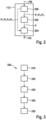
- the evaluation module 112 which can be understood as an implementation of an environmental model of the vehicle 100 in hardware and/or software, includes a recognition component 200 which receives the sensor data 106 and, for example, determines a speed and acceleration of the additional vehicle 116 from the sensor data 106. Furthermore, the recognition component 200 determines an object class of the further vehicle 116, to which the object class “vehicle” is assigned here, for example.
- the detection component 200 outputs three parameters p 1 , p 2 , p 3 , where the first parameter p 1 is an amount of the speed of the further vehicle 116, the second parameter p 2 is an amount of the acceleration of the further vehicle 116 and the third parameter p 3 describes a priority value determined depending on the recognized object class of the further vehicle 116.
- the parameters p 1 , p 2 , p 3 go into a priority calculation component 202, which calculates the object transmission priority p from the parameters p 1 , p 2 , p 3 .
- the parameters p 1 , p 2 , p 3 can be weighted, for example, as described in more detail below.
- a message generation component 204 is configured to determine whether an object message regarding the additional vehicle 116 should be sent based on the object transmission priority p. For this purpose, the message generation component 204 compares the object transmission priority p, for example, with a stored threshold value. In this example the Object transfer priority p greater than the threshold. Accordingly, the message generation component 204 generates the object message 118 with information about the detected additional vehicle 116.
- the object message 118 can, for example, include the parameters p 1 , p 2 , p 3 .
- the object message 118 may include further parameters p i about further recognized properties of the further vehicle 116. The further parameters p i are determined and provided by the recognition component 200 based on the sensor data 106.
- Fig. 3 shows a flowchart of a method 300, for example from the evaluation unit 102 Figures 1 and 2 can be carried out.
- a first step 310 the sensor data 106 is received.
- a second step 320 object recognition is carried out based on the sensor data 106.
- the other vehicle 116 is recognized. More specifically, at least one movement parameter p 1 , p 2 and/or at least one further object parameter p 3 is estimated with respect to the further vehicle 116.
- the estimation can be carried out continuously in several successive time steps. In other words, the parameters p 1 , p 2 , p 3 can be continuously updated based on the sensor data 106.
- a third step 330 the parameters p 1 , p 2 , p 3 are combined to form the object transfer priority p.
- the object transmission priority p is evaluated to decide whether the object message 118 should be generated regarding the further vehicle 116 or not.
- the object message 118 is generated in a fifth step 350 and sent via the communication network to other road users, for example to the other vehicles 116 and 120.
- the evaluation unit 102 can be configured, for example, to calculate an environmental model of the vehicle 100.
- a list of objects that are detected by the sensor system 104 can be stored in the environment model.
- Each recognized object has an object transfer priority p assigned to it.
- Each time a new object message is generated multiple priority values p i are calculated for each detected object and combined together to form the object transmission priority p.
- the object transfer priority p is not stored in the environment model, but is calculated based on object data in the environment model.
- the individual priority values p i can be based, for example, on the following criteria or questions.
- the increase in trustworthiness of the detected object also called object confidence
- Deviation is a deviation between the object confidence after the measurement is integrated into the environment model and the object confidence before the measurement is integrated into the environment model, to understand.
- the deviation can be expressed, for example, by a subtraction or a quotient.
- the recognized object 116 can partially or completely cover other objects so that they can no longer be detected by the vehicle 100.
- a parked truck can prevent or make it difficult to detect vehicles or pedestrians behind it.
- the priority values p i are combined into the object transfer priority p using an appropriate function of p i .
- the list of detected objects with the object transfer priorities can, for example, be periodically sent to a transfer protocol.
- the transmission protocol can use the object transmission priorities p to select which of the recognized objects should be transmitted. If the number of selected objects is greater than zero, an object message 118 is generated. Otherwise, for example, no object message 118 is generated.
Landscapes
- Engineering & Computer Science (AREA)
- Physics & Mathematics (AREA)
- General Physics & Mathematics (AREA)
- Computer Networks & Wireless Communication (AREA)
- Signal Processing (AREA)
- Chemical & Material Sciences (AREA)
- Analytical Chemistry (AREA)
- Multimedia (AREA)
- Theoretical Computer Science (AREA)
- Traffic Control Systems (AREA)
Claims (7)
- Procédé (300) permettant de fournir un message d'objet (118) concernant un objet (116) identifié dans un environnement d'un usager de la route (100) dans un réseau de communication pour communiquer avec d'autres usagers de la route (116), dans lequel l'usager de la route (100) présente un système de capteurs (104) pour détecter l'environnement et une unité d'évaluation (102) pour évaluer des données de capteur (106) générées par le système de capteurs (104), et pour transmettre des messages d'objet (118) par le réseau de communication, dans lequel le procédé (300) comprend les étapes consistant à :recevoir (310) dans l'unité d'évaluation (102) des données de capteur (106) générées par le système de capteurs (104) ;identifier (320) au moins un objet (116) dans l'environnement de l'usager de la route (100) sur la base des données de capteur (106), dans lequel au moins un paramètre de déplacement (p1, p2) décrivant un déplacement de l'objet (116), et/ou au moins un paramètre d'objet (p3) décrivant au moins une autre propriété de l'objet (116) sont établis ;calculer (330) une priorité de transmission d'objet (p) à partir du paramètre de déplacement (p1, p2) et/ou de l'autre paramètre d'objet (p3), dans lequel la priorité de transmission d'objet (p) représente une pertinence de l'objet identifié (116) pour l'usager de la route (100) et/ou pour les autres usagers de la route (116), dans lequel le paramètre de déplacement (p1, p2) et/ou l'autre paramètre d'objet (p3) sont pondérés, et la priorité de transmission d'objet (p) est calculée à partir du paramètre de déplacement pondéré (p1, p2) et/ou de l'autre paramètre d'objet pondéré (p3), dans lequel exactement une priorité de transmission d'objet est associée à chaque objet identifié ;déterminer (340) à l'aide de la priorité de transmission d'objet (p) si l'objet identifié (116) doit être inclus dans un message d'objet (118) ; etsi oui : générer (350) le message d'objet (118) avec l'objet identifié (116) et envoyer (350) le message d'objet (118) par le réseau de communication.
- Procédé (300) selon la revendication 1, dans lequel le paramètre de déplacement (p1, p2) et l'autre paramètre d'objet (p3) sont additionnés et/ou multipliés afin de calculer la priorité de transmission d'objet (p).
- Procédé (300) selon la revendication 1 ou 2, dans lequel le paramètre de déplacement (p1, p2) indique si l'objet identifié (116) se déplace longitudinalement et/ou transversalement par rapport au sens de la marche de l'usager de la route (100) ;dans lequel le paramètre de déplacement (p1, p2) est pondéré plus fortement si l'objet identifié (116) se déplace transversalement par rapport au sens de la marche ; et/oudans lequel le paramètre de déplacement (p1, p2) est pondéré moins fortement si l'objet identifié (116) se déplace longitudinalement par rapport au sens de la marche.
- Procédé (300) selon l'une quelconque des revendications précédentes, comprenant en outre :l'insertion de l'objet identifié (116) dans un modèle d'environnement représentant l'environnement de l'usager de la route (100), le modèle d'environnement stockant le paramètre de déplacement (p1, p2) et/ou l'autre paramètre d'objet (p3) ;dans lequel le paramètre de déplacement stocké (p1, p2) et/ou l'autre paramètre d'objet stocké (p3) sont mis à jour sur la base des données de capteur (106) dans des incréments de temps consécutifs ;dans lequel une variation du paramètre de déplacement stocké (p1, p2) et/ou une variation de l'autre paramètre d'objet stocké (p3) est établie entre au moins deux incréments de temps ;dans lequel la priorité de transmission d'objet (p) est calculée à partir de la variation du paramètre de déplacement stocké (p1, p2) et/ou de la variation de l'autre paramètre d'objet stocké (p3).
- Unité d'évaluation (102) qui est réalisée pour effectuer le procédé (300) selon l'une quelconque des revendications précédentes.
- Programme informatique qui, lorsqu'il s'exécute sur un processeur, effectue le procédé (300) selon l'une quelconque des revendications 1 à 4.
- Support lisible par ordinateur sur lequel est stocké un programme informatique selon la revendication 6.
Applications Claiming Priority (2)
| Application Number | Priority Date | Filing Date | Title |
|---|---|---|---|
| DE102019216074.3A DE102019216074A1 (de) | 2019-10-18 | 2019-10-18 | Verfahren zum Bereitstellen einer Objektnachricht über ein in einer Umgebung eines Verkehrsteilnehmers erkanntes Objekt in einem Kommunikationsnetzwerk zur Kommunikation mit anderen Verkehrsteilnehmern |
| PCT/EP2020/076407 WO2021073839A1 (fr) | 2019-10-18 | 2020-09-22 | Procédé de fourniture d'un message d'objet concernant un objet détecté dans l'environnement d'un usager de la route dans un réseau de communication pour la communication avec d'autres usagers de la route |
Publications (2)
| Publication Number | Publication Date |
|---|---|
| EP4046403A1 EP4046403A1 (fr) | 2022-08-24 |
| EP4046403B1 true EP4046403B1 (fr) | 2023-11-08 |
Family
ID=72665231
Family Applications (1)
| Application Number | Title | Priority Date | Filing Date |
|---|---|---|---|
| EP20781321.3A Active EP4046403B1 (fr) | 2019-10-18 | 2020-09-22 | Procédé de fourniture d'un message d'objet concernant un objet détecté dans l'environnement d'un usager de la route dans un réseau de communication pour la communication avec d'autres usagers de la route |
Country Status (8)
| Country | Link |
|---|---|
| US (1) | US12444297B2 (fr) |
| EP (1) | EP4046403B1 (fr) |
| JP (1) | JP7446419B2 (fr) |
| KR (1) | KR102860452B1 (fr) |
| CN (1) | CN114631130B (fr) |
| DE (1) | DE102019216074A1 (fr) |
| ES (1) | ES2970346T3 (fr) |
| WO (1) | WO2021073839A1 (fr) |
Families Citing this family (5)
| Publication number | Priority date | Publication date | Assignee | Title |
|---|---|---|---|---|
| US12613309B2 (en) * | 2021-07-23 | 2026-04-28 | Zoox, Inc. | Radar and doppler analysis and concealed object detection |
| KR102780617B1 (ko) * | 2021-12-23 | 2025-03-11 | 국립한국교통대학교산학협력단 | 데이터연계지원장치 및 그 동작 방법 |
| US20240112573A1 (en) * | 2022-10-04 | 2024-04-04 | Autotalks Ltd. | System and method for v2x transmission congestion control based on safety relevance and movement similarity |
| JP7768101B2 (ja) * | 2022-11-21 | 2025-11-12 | 株式会社デンソー | メッセージ制御装置、及びメッセージ制御方法 |
| DE102024207436A1 (de) * | 2024-08-06 | 2026-02-12 | Robert Bosch Gesellschaft mit beschränkter Haftung | Verfahren und Vorrichtung für ein Fahrzeug oder eine Infrastruktureinrichtung |
Family Cites Families (19)
| Publication number | Priority date | Publication date | Assignee | Title |
|---|---|---|---|---|
| DE202013008392U1 (de) * | 2013-09-21 | 2015-01-08 | GM Global Technology Operations LLC (n. d. Gesetzen des Staates Delaware) | Vorrichtung zum Abschätzen einer Fahreraufmerksamkeit |
| DE102014008746A1 (de) * | 2014-06-12 | 2015-12-17 | Audi Ag | Verfahren zur Fahrerunterstützung und zugeordnete Infrastruktureinrichtung |
| US10854022B2 (en) * | 2016-09-19 | 2020-12-01 | Qualcomm Incorporated | Location based sensor sharing |
| JP2018142921A (ja) * | 2017-02-28 | 2018-09-13 | パナソニックIpマネジメント株式会社 | 自動運転制御装置、自動運転制御方法、自動運転制御プログラム、自動運転車両、遠隔制御装置、遠隔制御方法、及び遠隔制御プログラム |
| US10216189B1 (en) * | 2017-08-23 | 2019-02-26 | Uber Technologies, Inc. | Systems and methods for prioritizing object prediction for autonomous vehicles |
| JP6815958B2 (ja) * | 2017-09-19 | 2021-01-20 | トヨタ自動車株式会社 | 車両周辺監視装置 |
| US11576148B2 (en) * | 2017-10-13 | 2023-02-07 | Lg Electronics Inc. | Method for transmitting sidelink message by terminal in wireless communication system, and terminal using same method |
| WO2019099413A1 (fr) * | 2017-11-14 | 2019-05-23 | AWARE Technologies | Systèmes et procédés de localisation, de notification et d'alerte prédictives relatives à des objets en mouvement |
| JP7103733B2 (ja) | 2017-12-20 | 2022-07-20 | アルパイン株式会社 | 運転支援装置および運転支援システム |
| CN108921418B (zh) * | 2018-06-26 | 2022-03-25 | 成都爱车保信息技术有限公司 | 一种基于汽车定位及综合信息大数据的驾驶风险评估方法 |
| DE102018213230A1 (de) * | 2018-08-07 | 2020-02-13 | Volkswagen Aktiengesellschaft | Verfahren und Steuervorrichtung zum Warnen eines Fahrers eines Kraftfahrzeugs sowie Kraftfahrzeug mit einer derartigen Steuervorrichtung |
| US11024175B2 (en) * | 2018-10-17 | 2021-06-01 | Ford Global Technologies, Llc | Adaptive vehicle-infrastructure communications |
| WO2020091088A1 (fr) * | 2018-10-29 | 2020-05-07 | 엘지전자 주식회사 | Appareil et procédé de communication v2x |
| CN109922439B (zh) | 2019-03-29 | 2020-10-16 | 重庆长安汽车股份有限公司 | 多传感器数据的融合方法、基于v2x的目标检测方法及系统 |
| KR20190091419A (ko) * | 2019-07-17 | 2019-08-06 | 엘지전자 주식회사 | 자율주행 차량의 제어방법 및 이를 위한 제어장치 |
| US11222542B2 (en) * | 2019-08-22 | 2022-01-11 | Qualcomm Incorporated | Planning and control framework with communication messaging |
| KR20190106844A (ko) * | 2019-08-26 | 2019-09-18 | 엘지전자 주식회사 | 입력 신호 우선 순위에 따른 자율 주행 제어 방법 및 이를 이용한 자율 주행 시스템 |
| KR20190109333A (ko) * | 2019-09-05 | 2019-09-25 | 엘지전자 주식회사 | V2x 메시지를 처리하는 방법 및 장치 |
| KR20190116187A (ko) | 2019-09-23 | 2019-10-14 | 엘지전자 주식회사 | 차량 단말 및 그의 동작 방법 |
-
2019
- 2019-10-18 DE DE102019216074.3A patent/DE102019216074A1/de active Pending
-
2020
- 2020-09-22 WO PCT/EP2020/076407 patent/WO2021073839A1/fr not_active Ceased
- 2020-09-22 CN CN202080073448.XA patent/CN114631130B/zh active Active
- 2020-09-22 ES ES20781321T patent/ES2970346T3/es active Active
- 2020-09-22 KR KR1020227016205A patent/KR102860452B1/ko active Active
- 2020-09-22 JP JP2022522845A patent/JP7446419B2/ja active Active
- 2020-09-22 US US17/767,753 patent/US12444297B2/en active Active
- 2020-09-22 EP EP20781321.3A patent/EP4046403B1/fr active Active
Also Published As
| Publication number | Publication date |
|---|---|
| ES2970346T3 (es) | 2024-05-28 |
| EP4046403A1 (fr) | 2022-08-24 |
| KR20220084339A (ko) | 2022-06-21 |
| KR102860452B1 (ko) | 2025-09-17 |
| US20240087445A1 (en) | 2024-03-14 |
| DE102019216074A1 (de) | 2021-04-22 |
| CN114631130B (zh) | 2024-06-14 |
| JP2022552690A (ja) | 2022-12-19 |
| US12444297B2 (en) | 2025-10-14 |
| WO2021073839A1 (fr) | 2021-04-22 |
| JP7446419B2 (ja) | 2024-03-08 |
| CN114631130A (zh) | 2022-06-14 |
Similar Documents
| Publication | Publication Date | Title |
|---|---|---|
| DE102018129048B4 (de) | Verfahren zum durchführen einer autonomen fahrzeugbetriebsanalyse | |
| EP3830522B1 (fr) | Procédé pour estimer la qualité de la localisation lors de la localisation propre d'un véhicule, dispositif pour mettre en oeuvre le procédé, véhicule et programme informatique | |
| DE102017126877B4 (de) | Kraftfahrzeug | |
| DE102018100112B4 (de) | Verfahren und Systeme zum Verarbeiten von lokalen und Cloud-Daten in einem Fahrzeug | |
| DE102020129456A1 (de) | Trajektorienvorhersage aus einer vorberechneten oder dynamisch generierten bank von trajektorien | |
| DE102022110890A1 (de) | Kooperative-adaptive-geschwindigkeitsregelungs-(cacc-) system für die steuerung von vernetztes- und autonomes-fahrzeug- (cav-) platoons | |
| DE102019115421B4 (de) | Kraftfahrzeug | |
| DE102016217645B4 (de) | Verfahren zum Bereitstellen von Information über eine voraussichtliche Fahrintention eines Fahrzeugs | |
| DE102021132218A1 (de) | Prädiktive Analytik für Fahrzeuggesundheitszustand | |
| DE102020101140A1 (de) | Verfahren und system zum bestimmen einer aktion eines autonomen fahrzeugs (av) basierend auf fahrzeug- und edge-sensordaten | |
| DE102020128155A1 (de) | Bedingte bewegungsvorhersagen | |
| DE102018119469A1 (de) | System und verfahren zur verbesserten hinderniserkennung unter verwendung eines v2x-kommunikationssystems | |
| EP4046403A1 (fr) | Procédé de fourniture d'un message d'objet concernant un objet détecté dans l'environnement d'un usager de la route dans un réseau de communication pour la communication avec d'autres usagers de la route | |
| DE102018105293A1 (de) | Verfahren und vorrichtung zur vernetzten szenendarstellung und -erweiterung in fahrzeugumgebungen in autonomen fahrsystemen | |
| DE102016205140A1 (de) | Verfahren und Regelungssysteme zur Bestimmung einer Verkehrslücke zwischen zwei Fahrzeugen für einen Fahrstreifenwechsel für ein Fahrzeug | |
| DE102019110759A1 (de) | System und verfahren zum steuern eines autonomen fahrzeugs | |
| DE112015005775B4 (de) | Fahrzeugkommunikationsendgerät | |
| DE102017114876A1 (de) | Fahrerassistenzsystem zur Kollisionsvermeidung mittels Warn- und Interventionskaskade | |
| DE102018131453B4 (de) | Verfahren zum Ermitteln eines Kollisionsrisikos eines Fortbewegungsmittels | |
| EP3688538A1 (fr) | Procédé et système de mise à jour d'un modèle de commande pour une commande automatique d'au moins une unité mobile | |
| DE102018121009A1 (de) | System und verfahren zur abstandsregelung für ein autonomes fahrzeug | |
| DE102015221183B4 (de) | Verfahren und Vorrichtung zur Zuordnung von Verkehrsteilnehmern und Kommunikations-Identifikatoren | |
| DE102020102955B4 (de) | Verfahren zum Steuern eines Trägerfahrzeugs | |
| DE102016218934A1 (de) | Verfahren zum Datenaustausch und Datenfusionierung von Umfelddaten | |
| DE102020115356A1 (de) | Systeme und verfahren zur netzknotenkommunikation unter verwendung dynamisch konfigurierbarer interaktionsmodi |
Legal Events
| Date | Code | Title | Description |
|---|---|---|---|
| STAA | Information on the status of an ep patent application or granted ep patent |
Free format text: STATUS: UNKNOWN |
|
| STAA | Information on the status of an ep patent application or granted ep patent |
Free format text: STATUS: THE INTERNATIONAL PUBLICATION HAS BEEN MADE |
|
| PUAI | Public reference made under article 153(3) epc to a published international application that has entered the european phase |
Free format text: ORIGINAL CODE: 0009012 |
|
| STAA | Information on the status of an ep patent application or granted ep patent |
Free format text: STATUS: REQUEST FOR EXAMINATION WAS MADE |
|
| 17P | Request for examination filed |
Effective date: 20220518 |
|
| AK | Designated contracting states |
Kind code of ref document: A1 Designated state(s): AL AT BE BG CH CY CZ DE DK EE ES FI FR GB GR HR HU IE IS IT LI LT LU LV MC MK MT NL NO PL PT RO RS SE SI SK SM TR |
|
| DAV | Request for validation of the european patent (deleted) | ||
| DAX | Request for extension of the european patent (deleted) | ||
| GRAP | Despatch of communication of intention to grant a patent |
Free format text: ORIGINAL CODE: EPIDOSNIGR1 |
|
| STAA | Information on the status of an ep patent application or granted ep patent |
Free format text: STATUS: GRANT OF PATENT IS INTENDED |
|
| INTG | Intention to grant announced |
Effective date: 20230421 |
|
| GRAS | Grant fee paid |
Free format text: ORIGINAL CODE: EPIDOSNIGR3 |
|
| GRAA | (expected) grant |
Free format text: ORIGINAL CODE: 0009210 |
|
| STAA | Information on the status of an ep patent application or granted ep patent |
Free format text: STATUS: THE PATENT HAS BEEN GRANTED |
|
| AK | Designated contracting states |
Kind code of ref document: B1 Designated state(s): AL AT BE BG CH CY CZ DE DK EE ES FI FR GB GR HR HU IE IS IT LI LT LU LV MC MK MT NL NO PL PT RO RS SE SI SK SM TR |
|
| REG | Reference to a national code |
Ref country code: GB Ref legal event code: FG4D Free format text: NOT ENGLISH |
|
| REG | Reference to a national code |
Ref country code: CH Ref legal event code: EP |
|
| REG | Reference to a national code |
Ref country code: DE Ref legal event code: R096 Ref document number: 502020005978 Country of ref document: DE |
|
| REG | Reference to a national code |
Ref country code: IE Ref legal event code: FG4D Free format text: LANGUAGE OF EP DOCUMENT: GERMAN |
|
| REG | Reference to a national code |
Ref country code: LT Ref legal event code: MG9D |
|
| REG | Reference to a national code |
Ref country code: NL Ref legal event code: MP Effective date: 20231108 |
|
| PG25 | Lapsed in a contracting state [announced via postgrant information from national office to epo] |
Ref country code: GR Free format text: LAPSE BECAUSE OF FAILURE TO SUBMIT A TRANSLATION OF THE DESCRIPTION OR TO PAY THE FEE WITHIN THE PRESCRIBED TIME-LIMIT Effective date: 20240209 |
|
| PG25 | Lapsed in a contracting state [announced via postgrant information from national office to epo] |
Ref country code: IS Free format text: LAPSE BECAUSE OF FAILURE TO SUBMIT A TRANSLATION OF THE DESCRIPTION OR TO PAY THE FEE WITHIN THE PRESCRIBED TIME-LIMIT Effective date: 20240308 |
|
| PG25 | Lapsed in a contracting state [announced via postgrant information from national office to epo] |
Ref country code: LT Free format text: LAPSE BECAUSE OF FAILURE TO SUBMIT A TRANSLATION OF THE DESCRIPTION OR TO PAY THE FEE WITHIN THE PRESCRIBED TIME-LIMIT Effective date: 20231108 |
|
| PG25 | Lapsed in a contracting state [announced via postgrant information from national office to epo] |
Ref country code: NL Free format text: LAPSE BECAUSE OF FAILURE TO SUBMIT A TRANSLATION OF THE DESCRIPTION OR TO PAY THE FEE WITHIN THE PRESCRIBED TIME-LIMIT Effective date: 20231108 |
|
| PG25 | Lapsed in a contracting state [announced via postgrant information from national office to epo] |
Ref country code: NL Free format text: LAPSE BECAUSE OF FAILURE TO SUBMIT A TRANSLATION OF THE DESCRIPTION OR TO PAY THE FEE WITHIN THE PRESCRIBED TIME-LIMIT Effective date: 20231108 Ref country code: LT Free format text: LAPSE BECAUSE OF FAILURE TO SUBMIT A TRANSLATION OF THE DESCRIPTION OR TO PAY THE FEE WITHIN THE PRESCRIBED TIME-LIMIT Effective date: 20231108 Ref country code: IS Free format text: LAPSE BECAUSE OF FAILURE TO SUBMIT A TRANSLATION OF THE DESCRIPTION OR TO PAY THE FEE WITHIN THE PRESCRIBED TIME-LIMIT Effective date: 20240308 Ref country code: GR Free format text: LAPSE BECAUSE OF FAILURE TO SUBMIT A TRANSLATION OF THE DESCRIPTION OR TO PAY THE FEE WITHIN THE PRESCRIBED TIME-LIMIT Effective date: 20240209 Ref country code: BG Free format text: LAPSE BECAUSE OF FAILURE TO SUBMIT A TRANSLATION OF THE DESCRIPTION OR TO PAY THE FEE WITHIN THE PRESCRIBED TIME-LIMIT Effective date: 20240208 Ref country code: PT Free format text: LAPSE BECAUSE OF FAILURE TO SUBMIT A TRANSLATION OF THE DESCRIPTION OR TO PAY THE FEE WITHIN THE PRESCRIBED TIME-LIMIT Effective date: 20240308 |
|
| REG | Reference to a national code |
Ref country code: ES Ref legal event code: FG2A Ref document number: 2970346 Country of ref document: ES Kind code of ref document: T3 Effective date: 20240528 |
|
| PG25 | Lapsed in a contracting state [announced via postgrant information from national office to epo] |
Ref country code: SE Free format text: LAPSE BECAUSE OF FAILURE TO SUBMIT A TRANSLATION OF THE DESCRIPTION OR TO PAY THE FEE WITHIN THE PRESCRIBED TIME-LIMIT Effective date: 20231108 Ref country code: RS Free format text: LAPSE BECAUSE OF FAILURE TO SUBMIT A TRANSLATION OF THE DESCRIPTION OR TO PAY THE FEE WITHIN THE PRESCRIBED TIME-LIMIT Effective date: 20231108 Ref country code: PL Free format text: LAPSE BECAUSE OF FAILURE TO SUBMIT A TRANSLATION OF THE DESCRIPTION OR TO PAY THE FEE WITHIN THE PRESCRIBED TIME-LIMIT Effective date: 20231108 Ref country code: NO Free format text: LAPSE BECAUSE OF FAILURE TO SUBMIT A TRANSLATION OF THE DESCRIPTION OR TO PAY THE FEE WITHIN THE PRESCRIBED TIME-LIMIT Effective date: 20240208 Ref country code: LV Free format text: LAPSE BECAUSE OF FAILURE TO SUBMIT A TRANSLATION OF THE DESCRIPTION OR TO PAY THE FEE WITHIN THE PRESCRIBED TIME-LIMIT Effective date: 20231108 Ref country code: HR Free format text: LAPSE BECAUSE OF FAILURE TO SUBMIT A TRANSLATION OF THE DESCRIPTION OR TO PAY THE FEE WITHIN THE PRESCRIBED TIME-LIMIT Effective date: 20231108 |
|
| PG25 | Lapsed in a contracting state [announced via postgrant information from national office to epo] |
Ref country code: DK Free format text: LAPSE BECAUSE OF FAILURE TO SUBMIT A TRANSLATION OF THE DESCRIPTION OR TO PAY THE FEE WITHIN THE PRESCRIBED TIME-LIMIT Effective date: 20231108 |
|
| PG25 | Lapsed in a contracting state [announced via postgrant information from national office to epo] |
Ref country code: CZ Free format text: LAPSE BECAUSE OF FAILURE TO SUBMIT A TRANSLATION OF THE DESCRIPTION OR TO PAY THE FEE WITHIN THE PRESCRIBED TIME-LIMIT Effective date: 20231108 |
|
| PG25 | Lapsed in a contracting state [announced via postgrant information from national office to epo] |
Ref country code: SK Free format text: LAPSE BECAUSE OF FAILURE TO SUBMIT A TRANSLATION OF THE DESCRIPTION OR TO PAY THE FEE WITHIN THE PRESCRIBED TIME-LIMIT Effective date: 20231108 |
|
| PG25 | Lapsed in a contracting state [announced via postgrant information from national office to epo] |
Ref country code: SM Free format text: LAPSE BECAUSE OF FAILURE TO SUBMIT A TRANSLATION OF THE DESCRIPTION OR TO PAY THE FEE WITHIN THE PRESCRIBED TIME-LIMIT Effective date: 20231108 Ref country code: SK Free format text: LAPSE BECAUSE OF FAILURE TO SUBMIT A TRANSLATION OF THE DESCRIPTION OR TO PAY THE FEE WITHIN THE PRESCRIBED TIME-LIMIT Effective date: 20231108 Ref country code: RO Free format text: LAPSE BECAUSE OF FAILURE TO SUBMIT A TRANSLATION OF THE DESCRIPTION OR TO PAY THE FEE WITHIN THE PRESCRIBED TIME-LIMIT Effective date: 20231108 Ref country code: IT Free format text: LAPSE BECAUSE OF FAILURE TO SUBMIT A TRANSLATION OF THE DESCRIPTION OR TO PAY THE FEE WITHIN THE PRESCRIBED TIME-LIMIT Effective date: 20231108 Ref country code: EE Free format text: LAPSE BECAUSE OF FAILURE TO SUBMIT A TRANSLATION OF THE DESCRIPTION OR TO PAY THE FEE WITHIN THE PRESCRIBED TIME-LIMIT Effective date: 20231108 Ref country code: DK Free format text: LAPSE BECAUSE OF FAILURE TO SUBMIT A TRANSLATION OF THE DESCRIPTION OR TO PAY THE FEE WITHIN THE PRESCRIBED TIME-LIMIT Effective date: 20231108 Ref country code: CZ Free format text: LAPSE BECAUSE OF FAILURE TO SUBMIT A TRANSLATION OF THE DESCRIPTION OR TO PAY THE FEE WITHIN THE PRESCRIBED TIME-LIMIT Effective date: 20231108 |
|
| REG | Reference to a national code |
Ref country code: DE Ref legal event code: R097 Ref document number: 502020005978 Country of ref document: DE |
|
| PLBE | No opposition filed within time limit |
Free format text: ORIGINAL CODE: 0009261 |
|
| STAA | Information on the status of an ep patent application or granted ep patent |
Free format text: STATUS: NO OPPOSITION FILED WITHIN TIME LIMIT |
|
| 26N | No opposition filed |
Effective date: 20240809 |
|
| PG25 | Lapsed in a contracting state [announced via postgrant information from national office to epo] |
Ref country code: SI Free format text: LAPSE BECAUSE OF FAILURE TO SUBMIT A TRANSLATION OF THE DESCRIPTION OR TO PAY THE FEE WITHIN THE PRESCRIBED TIME-LIMIT Effective date: 20231108 |
|
| PG25 | Lapsed in a contracting state [announced via postgrant information from national office to epo] |
Ref country code: SI Free format text: LAPSE BECAUSE OF FAILURE TO SUBMIT A TRANSLATION OF THE DESCRIPTION OR TO PAY THE FEE WITHIN THE PRESCRIBED TIME-LIMIT Effective date: 20231108 |
|
| PG25 | Lapsed in a contracting state [announced via postgrant information from national office to epo] |
Ref country code: MC Free format text: LAPSE BECAUSE OF FAILURE TO SUBMIT A TRANSLATION OF THE DESCRIPTION OR TO PAY THE FEE WITHIN THE PRESCRIBED TIME-LIMIT Effective date: 20231108 |
|
| REG | Reference to a national code |
Ref country code: CH Ref legal event code: PL |
|
| PG25 | Lapsed in a contracting state [announced via postgrant information from national office to epo] |
Ref country code: LU Free format text: LAPSE BECAUSE OF NON-PAYMENT OF DUE FEES Effective date: 20240922 |
|
| REG | Reference to a national code |
Ref country code: BE Ref legal event code: MM Effective date: 20240930 |
|
| PG25 | Lapsed in a contracting state [announced via postgrant information from national office to epo] |
Ref country code: BE Free format text: LAPSE BECAUSE OF NON-PAYMENT OF DUE FEES Effective date: 20240930 |
|
| PG25 | Lapsed in a contracting state [announced via postgrant information from national office to epo] |
Ref country code: CH Free format text: LAPSE BECAUSE OF NON-PAYMENT OF DUE FEES Effective date: 20240930 |
|
| PG25 | Lapsed in a contracting state [announced via postgrant information from national office to epo] |
Ref country code: IE Free format text: LAPSE BECAUSE OF NON-PAYMENT OF DUE FEES Effective date: 20240922 |
|
| PG25 | Lapsed in a contracting state [announced via postgrant information from national office to epo] |
Ref country code: FI Free format text: LAPSE BECAUSE OF FAILURE TO SUBMIT A TRANSLATION OF THE DESCRIPTION OR TO PAY THE FEE WITHIN THE PRESCRIBED TIME-LIMIT Effective date: 20231108 |
|
| PGFP | Annual fee paid to national office [announced via postgrant information from national office to epo] |
Ref country code: GB Payment date: 20250923 Year of fee payment: 6 |
|
| PGFP | Annual fee paid to national office [announced via postgrant information from national office to epo] |
Ref country code: FR Payment date: 20250924 Year of fee payment: 6 Ref country code: AT Payment date: 20251020 Year of fee payment: 5 |
|
| PGFP | Annual fee paid to national office [announced via postgrant information from national office to epo] |
Ref country code: DE Payment date: 20251121 Year of fee payment: 6 |
|
| PG25 | Lapsed in a contracting state [announced via postgrant information from national office to epo] |
Ref country code: CY Free format text: LAPSE BECAUSE OF FAILURE TO SUBMIT A TRANSLATION OF THE DESCRIPTION OR TO PAY THE FEE WITHIN THE PRESCRIBED TIME-LIMIT; INVALID AB INITIO Effective date: 20200922 |
|
| PGFP | Annual fee paid to national office [announced via postgrant information from national office to epo] |
Ref country code: ES Payment date: 20251020 Year of fee payment: 6 |
|
| PG25 | Lapsed in a contracting state [announced via postgrant information from national office to epo] |
Ref country code: HU Free format text: LAPSE BECAUSE OF FAILURE TO SUBMIT A TRANSLATION OF THE DESCRIPTION OR TO PAY THE FEE WITHIN THE PRESCRIBED TIME-LIMIT; INVALID AB INITIO Effective date: 20200922 |