EP4047355A1 - Procédé et système de détection de signaux micro-ondes portant des informations de la dynamique fonctionnelle des particules biologiques - Google Patents
Procédé et système de détection de signaux micro-ondes portant des informations de la dynamique fonctionnelle des particules biologiques Download PDFInfo
- Publication number
- EP4047355A1 EP4047355A1 EP21382142.4A EP21382142A EP4047355A1 EP 4047355 A1 EP4047355 A1 EP 4047355A1 EP 21382142 A EP21382142 A EP 21382142A EP 4047355 A1 EP4047355 A1 EP 4047355A1
- Authority
- EP
- European Patent Office
- Prior art keywords
- biological particle
- microwave
- electromagnetic waves
- biological
- illuminating
- Prior art date
- Legal status (The legal status is an assumption and is not a legal conclusion. Google has not performed a legal analysis and makes no representation as to the accuracy of the status listed.)
- Withdrawn
Links
Images

Classifications
-
- G—PHYSICS
- G01—MEASURING; TESTING
- G01N—INVESTIGATING OR ANALYSING MATERIALS BY DETERMINING THEIR CHEMICAL OR PHYSICAL PROPERTIES
- G01N22/00—Investigating or analysing materials by the use of microwaves or radio waves, i.e. electromagnetic waves with a wavelength of one millimetre or more
-
- G—PHYSICS
- G01—MEASURING; TESTING
- G01N—INVESTIGATING OR ANALYSING MATERIALS BY DETERMINING THEIR CHEMICAL OR PHYSICAL PROPERTIES
- G01N27/00—Investigating or analysing materials by the use of electric, electrochemical, or magnetic means
- G01N27/02—Investigating or analysing materials by the use of electric, electrochemical, or magnetic means by investigating impedance
- G01N27/22—Investigating or analysing materials by the use of electric, electrochemical, or magnetic means by investigating impedance by investigating capacitance
- G01N27/221—Investigating or analysing materials by the use of electric, electrochemical, or magnetic means by investigating impedance by investigating capacitance by investigating the dielectric properties
-
- G—PHYSICS
- G01—MEASURING; TESTING
- G01N—INVESTIGATING OR ANALYSING MATERIALS BY DETERMINING THEIR CHEMICAL OR PHYSICAL PROPERTIES
- G01N33/00—Investigating or analysing materials by specific methods not covered by groups G01N1/00 - G01N31/00
- G01N33/48—Biological material, e.g. blood, urine; Haemocytometers
- G01N33/483—Physical analysis of biological material
Definitions
- the present invention relates to measurements of the functional dynamics of biological particles.
- the invention relates to the measurement of the membrane potential of biological particles with microwave frequency mixing adapted to the characteristic signal signature of the membrane making use of the nonlinearity of the voltage-current response of the membrane of biological particles.
- action potential refers to the electrical signaling that occurs within neurons or bacteria biofilms, arising from changes in membrane potential from ion concentrations in the vicinity of membranes.
- An action potential is a rapid rise and subsequent fall in voltage, or membrane potential, across a cellular membrane with a characteristic pattern. Sufficient current is required to initiate a voltage response in a cell membrane; if the current is insufficient to depolarize the membrane to the threshold level, an action potential will not be triggered [5], [6].
- Membrane potential refers to the difference in charge between the inside and outside of a cell (such as neurons or bacteria), which is created due to the unequal distribution of ions on both sides of the cell.
- the plasma membrane of a cell typically has a transmembrane potential of approximately -100mV (negative inside) as a consequence of k +, Na + and CI - concentration gradients that are maintained by active transport processes. Typically it is detected by means of optical techniques using biological markers [7], [8]. For instance based on optogenetics by incorporating into an electrically excitable cell an optical reporter [10], [11]. A signal is obtained from the optical reporter in response to a stimulation of the cell.
- potentiometric optical probes enable membrane potential measurements in organelles and in bacterial cells that are too small for microelectrodes.
- Potentiometric probes are an indirect method of detecting the translocation of these ions, whereas the fluorescent ion indicators can be used to directly measure changes in specific ion concentrations. Moreover, in conjunction with imaging techniques, these probes can be employed to map variations in membrane potential across excitable cells, with spatial resolution and sampling frequency that cannot be obtained using microelectrodes. Furthermore, patch-clamp technique allows direct measurements of electrical potential but it is highly invasive . Patch-clamp technique has been applied only with isolated bacterial membranes or giant spheroplasts and protoplasts. Therefore, while patch clamp is a powerful technique for studying prokaryotic ion channels, it is not suitable for functional studies of membrane potential dynamics under physiological conditions.
- SHG Second Harmonic Generation
- optical techniques [9]
- electromagnetic waves interact with inhomogeneous particles and the corresponding electromagnetic-matter interaction process is referred to as scattering.
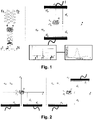
- a general scheme of the configuration of electromagnetic illumination and detection of scattering by a small bio-particle (e.g., bacteria) in a medium (e.g., water) is depicted in Fig. 1 .
- particle refers to a region in space characterized by a dielectric complex permittivity ( ⁇ s , ⁇ s ) which is different from that of the surrounding medium ( ⁇ m , ⁇ m ).
- the conditions are of near-field.
- the bio-particle is isolated due to using dilute enough solutions, only is considered single scattering (not considering multiple scattering) as described in [12]-[14].
- the same physical principles would apply and multiple-scattering would be considered.
- E ⁇ sca [ k 2 a 3 r ⁇ s ⁇ ⁇ ⁇ s + 2 ⁇ ⁇ a 3 r 3 ⁇ s ⁇ ⁇ ⁇ s + 2 ⁇ ]
- the membrane's capacitance (related to the real part of the complex permittivity) of bacteria depends on its surface area, while the conductivity of the membrane depends on its cross-sectional area [15]. Hence, it is not expected to easily observe a large variation between a biological particle at rest and at generating an action potential by making use of typical linear electromagnetic techniques, because these physical dimensions of the biological particles are not expected to have a major change.
- An object of the present invention is thus to provide a microwave sensing configuration for membrane potential measurement which overcomes the limitations of the prior art.
- the invention comprises the steps of exciting microwave oscillating potentials in order to produce mixing of the microwave illuminating electromagnetic field at given frequencies within the membrane of biological particles, which will generate a scattered field at the fundamental frequency and also at harmonics related to the non-linear relation between the voltage and current in the membrane of biological particles.
- Embodiments of the present invention provide according to a first aspect a method for detecting microwave signals which carry information of the functional dynamics of biological particles.
- the method comprises illuminating one or more biological particles with microwave electromagnetic waves, the microwave electromagnetic waves being comprised in a non-thermal intensity regime, having frequencies with wavelengths much larger than characteristic dimensions of the biological particle(s) and being adapted to a functional dynamics signature of the biological particle(s); adapting/transforming the illuminating microwave electromagnetic waves to produce additional frequencies (i.e.
- harmonics by a process of frequency mixing in the membrane of the biological particle(s) with a nonlinear relationship; capturing a response affected by the nonlinear relationship at different functional states of the biological particle(s); and detecting resulting frequency components of the captured response by means of a filtering element, so as to thereby infer the functional dynamics of the biological particle(s).
- the nonlinear relationship is a non-linear current-voltage relationship.
- the illuminating microwave electromagnetic waves are operated in power far below a threshold for thermal damaging the biological particle(s).
- the illuminating microwave electromagnetic waves are operated such that the duration of the illumination is adapted to the temporal functional dynamics of the biological particle(s).
- the frequencies of the illuminating microwave electromagnetic waves can be adjusted to resonances of the dynamics of the biological particle(s).
- the method further comprises a step of isolating the frequencies of the illuminating microwave electromagnetic waves, either spatially or in frequency.
- Embodiments of the present invention also provide according to a second aspect a system for detecting microwave signals which carry information of the functional dynamics of biological particles.
- the system comprises a biological particle, a microwave generator, an illumination adapter/controller, a microwave detector and a filter element.
- the microwave generator is adapted/configured to produce microwave electromagnetic waves to illuminate the biological particle, the microwave electromagnetic waves being comprised in a non-thermal intensity regime, having frequencies with wavelengths much larger than characteristic dimensions of the biological particle and being adapted to a functional dynamics signature of the biological particle.
- the illumination adapter is adapted/configured to adapt the illuminating microwave electromagnetic waves to produce additional frequencies through a process of frequency mixing in a membrane of the biological particle with a nonlinear relationship.
- the microwave detector is adapted/configured to capture a response affected by the nonlinear relationship at different functional states of the biological particle.
- the filter element is adapted/configured to detect resulting frequency components of the captured response.
- the system also includes a spatial or frequency isolating element to isolate the frequencies of the illuminating microwave electromagnetic waves.
- the microwave generator is adapted to be pulsed and operated such that the duration of the illumination is adjusted to the temporal functional dynamics of the biological particle.
- the illumination adapter and the microwave detector can be positioned either collinear or adjacent to each other.
- the illumination adapter can be arranged at one of the sides of the biological particle whereas the microwave detector is arranged at another side of the biological particle. In any case, both elements/units do not need to be directly confronted.
- the filter element is a high-pass frequency filter.
- the filter element comprises a matched filter receiver configured to exploit matched filter signal processing schemes, for example Passive Intermodulation Products, among others.
- the microwave detector is based on sensitive quantum electromagnetic detection schemes.
- Present invention is based on the transformation of the illuminating energy in the microwave illuminating frequencies in order to produce subsequent harmonics within the nonlinear current-voltage dependence in the membranes of biological particles.
- present invention provides a method and system for measuring membrane potential which carries information on the functional dynamics of biological particles by means of a microwave nonlinear scattering.
- the invention operates microwave signals by means of the signal signature of the dynamics of the biological particles, combined with the non-linear response of the membrane of microorganisms, transforms the frequencies of the incident illuminating microwave electromagnetic field in a sequence of harmonics, and detects the resulting signal.
- the signal detected is a proxy for the biological particles functional dynamics.
- the cell's membrane is illuminated with microwave fields while the bias working point in the non-linear voltage-current model will be determined by the biological particle self-potential state.
- the adjusted impinging microwave signals will scatter having multiple generated frequency harmonics (due to the non-linear voltage-current model of the membrane), compared to the incident illuminating signals.
- induced currents density is generated on the working point of the membrane potential state, where its magnitude and frequency harmonics are incremented when the cell is at an action potential compared to a rest state.
- the illumination frequencies (pump) scattering due to the membrane (around 10 nm ) is obscured compared to the scattering generated by the cell's whole body (which is at least two orders of magnitude larger), making it very difficult to sense the difference between the bacteria at rest and in an action potential state.
- the second frequency harmonic there is around 11 orders of magnitude difference at the two cell's state, because it is essentially sensing directly the effect of the membrane potential and not the whole bacterial body.
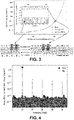
- Fig. 3 The expected relative second-order response at different frequencies, with respect to the fundamental pump frequency, at rest and at action potential state, are shown in Fig. 3 . Furthermore, as known, the size of the bacteria scales the response with the cube of the radius, hence it is more challenging to detect 1 ⁇ m than 10 ⁇ m cells.
- Fig. 4 is shown the second harmonic generation signal level with respect the pump frequencies in the GHz range and the pump power in the mW range. It is shown, as it is common for frequency conversion, the non-linear relation between pump power and generated harmonics' power, while the dependence on pump frequency is smoother.
- the noise level is around -164dBm, while at 4K cryogenic temperature levels the equivalent noise is around -182dBm.
- the response levels of the electric and magnetic fields are not the same.
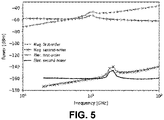
- the magnetic field more closely related to currents, computes to have a higher level of electromagnetic response for higher frequencies, as shown in Fig. 5 .
- the expected intensity levels and the equivalent noise levels are of the same order.
- a cryogenic low noise amplifier, or other similar techniques, may be appropriate to experiment with to detect such low signal levels to achieve a reasonable SNR and enter into the sensitivity limits of detectors.
- the illuminating microwave signals are adapted to the signature of the functional dynamics of the biological particle, in order to detect these from the potential other signals present in the system and not carrying information of the functional dynamics of the biological particles.
- Fig. 6A shows in the time domain the expected signal signature of the functional dynamics of the biological particles, the generated microwave signals adapted to the specific signature, the tailored generated signals from the functional dynamics of the biological particle and the detected signal carrying information of the functional dynamics of the biological particles.
- Fig. 6B shows in the time domain the expected signal signature of the functional dynamics of the biological particles, generated microwave signals not adapted to the specific signature, the generated signals from the functional dynamics of the biological particle and the not detected signal carrying information of the functional dynamics of the biological particles. Note that the signal signature is not scale, but not detrimental to the procedure, in order to easily show the steps described in this invention.
Landscapes
- Health & Medical Sciences (AREA)
- Life Sciences & Earth Sciences (AREA)
- Physics & Mathematics (AREA)
- Chemical & Material Sciences (AREA)
- Engineering & Computer Science (AREA)
- Pathology (AREA)
- General Health & Medical Sciences (AREA)
- General Physics & Mathematics (AREA)
- Immunology (AREA)
- Analytical Chemistry (AREA)
- Biochemistry (AREA)
- Biomedical Technology (AREA)
- Hematology (AREA)
- Biophysics (AREA)
- Electromagnetism (AREA)
- Molecular Biology (AREA)
- Urology & Nephrology (AREA)
- Food Science & Technology (AREA)
- Medicinal Chemistry (AREA)
- Chemical Kinetics & Catalysis (AREA)
- Electrochemistry (AREA)
- Investigating Or Analyzing Materials By The Use Of Electric Means (AREA)
- Apparatus Associated With Microorganisms And Enzymes (AREA)
Priority Applications (5)
| Application Number | Priority Date | Filing Date | Title |
|---|---|---|---|
| EP21382142.4A EP4047355A1 (fr) | 2021-02-23 | 2021-02-23 | Procédé et système de détection de signaux micro-ondes portant des informations de la dynamique fonctionnelle des particules biologiques |
| ES22705800T ES2994792T3 (en) | 2021-02-23 | 2022-02-15 | A method and a system for detecting microwave signals which carry information of the functional dynamics of biological particles |
| EP22705800.5A EP4298432B1 (fr) | 2021-02-23 | 2022-02-15 | Procédé et système de détection de signaux micro-ondes portant des informations de la dynamique fonctionnelle des particules biologiques |
| PCT/EP2022/053659 WO2022179887A1 (fr) | 2021-02-23 | 2022-02-15 | Procédé et système de détection de signaux micro-ondes portant des informations relatives à la dynamique fonctionnelle de particules biologiques |
| US18/277,540 US20240230556A9 (en) | 2021-02-23 | 2022-02-15 | A method and a system for detecting microwave signals which carry information of the functional dynamics of biological particles |
Applications Claiming Priority (1)
| Application Number | Priority Date | Filing Date | Title |
|---|---|---|---|
| EP21382142.4A EP4047355A1 (fr) | 2021-02-23 | 2021-02-23 | Procédé et système de détection de signaux micro-ondes portant des informations de la dynamique fonctionnelle des particules biologiques |
Publications (1)
| Publication Number | Publication Date |
|---|---|
| EP4047355A1 true EP4047355A1 (fr) | 2022-08-24 |
Family
ID=74758733
Family Applications (2)
| Application Number | Title | Priority Date | Filing Date |
|---|---|---|---|
| EP21382142.4A Withdrawn EP4047355A1 (fr) | 2021-02-23 | 2021-02-23 | Procédé et système de détection de signaux micro-ondes portant des informations de la dynamique fonctionnelle des particules biologiques |
| EP22705800.5A Active EP4298432B1 (fr) | 2021-02-23 | 2022-02-15 | Procédé et système de détection de signaux micro-ondes portant des informations de la dynamique fonctionnelle des particules biologiques |
Family Applications After (1)
| Application Number | Title | Priority Date | Filing Date |
|---|---|---|---|
| EP22705800.5A Active EP4298432B1 (fr) | 2021-02-23 | 2022-02-15 | Procédé et système de détection de signaux micro-ondes portant des informations de la dynamique fonctionnelle des particules biologiques |
Country Status (4)
| Country | Link |
|---|---|
| US (1) | US20240230556A9 (fr) |
| EP (2) | EP4047355A1 (fr) |
| ES (1) | ES2994792T3 (fr) |
| WO (1) | WO2022179887A1 (fr) |
Citations (6)
| Publication number | Priority date | Publication date | Assignee | Title |
|---|---|---|---|---|
| US5144224A (en) * | 1991-04-01 | 1992-09-01 | Larsen Lawrence E | Millimeter wave flow cytometer |
| US20160320316A1 (en) * | 2013-12-24 | 2016-11-03 | Universite De Limoges | Method for determining the cell aggressiveness grade of cancer cells or of cancer stem cells |
| US10161937B2 (en) | 2010-08-23 | 2018-12-25 | President And Fellows Of Harvard College | Systems, methods, and workflows for optogenetics analysis |
| US20190125871A1 (en) | 2013-04-29 | 2019-05-02 | The Board Of Trustees Of The Leland Standford Junior University | Devices, systems and methods for optogenetic modulation of action potentials in target cells |
| US10352945B2 (en) | 2010-08-23 | 2019-07-16 | President And Fellows Of Harvard College | Optogenetic probes for measuring membrane potential |
| US20200209169A1 (en) * | 2018-12-26 | 2020-07-02 | New York University | Device and method for harmonic electromagnetic spectroscopy |
Family Cites Families (4)
| Publication number | Priority date | Publication date | Assignee | Title |
|---|---|---|---|---|
| EP0823734A1 (fr) * | 1996-07-23 | 1998-02-11 | DORNIER GmbH | Réseau aux dispositifs à jonction Josephson et procédé de fabrication |
| US7190832B2 (en) * | 2001-07-17 | 2007-03-13 | Amnis Corporation | Computational methods for the segmentation of images of objects from background in a flow imaging instrument |
| US9926596B2 (en) * | 2011-05-27 | 2018-03-27 | Genapsys, Inc. | Systems and methods for genetic and biological analysis |
| WO2014144548A2 (fr) * | 2013-03-15 | 2014-09-18 | Nanobiosym, Inc. | Systèmes et procédés pour une analyse par dispositif mobile d'acides nucléiques et de protéines |
-
2021
- 2021-02-23 EP EP21382142.4A patent/EP4047355A1/fr not_active Withdrawn
-
2022
- 2022-02-15 ES ES22705800T patent/ES2994792T3/es active Active
- 2022-02-15 US US18/277,540 patent/US20240230556A9/en not_active Abandoned
- 2022-02-15 WO PCT/EP2022/053659 patent/WO2022179887A1/fr not_active Ceased
- 2022-02-15 EP EP22705800.5A patent/EP4298432B1/fr active Active
Patent Citations (6)
| Publication number | Priority date | Publication date | Assignee | Title |
|---|---|---|---|---|
| US5144224A (en) * | 1991-04-01 | 1992-09-01 | Larsen Lawrence E | Millimeter wave flow cytometer |
| US10161937B2 (en) | 2010-08-23 | 2018-12-25 | President And Fellows Of Harvard College | Systems, methods, and workflows for optogenetics analysis |
| US10352945B2 (en) | 2010-08-23 | 2019-07-16 | President And Fellows Of Harvard College | Optogenetic probes for measuring membrane potential |
| US20190125871A1 (en) | 2013-04-29 | 2019-05-02 | The Board Of Trustees Of The Leland Standford Junior University | Devices, systems and methods for optogenetic modulation of action potentials in target cells |
| US20160320316A1 (en) * | 2013-12-24 | 2016-11-03 | Universite De Limoges | Method for determining the cell aggressiveness grade of cancer cells or of cancer stem cells |
| US20200209169A1 (en) * | 2018-12-26 | 2020-07-02 | New York University | Device and method for harmonic electromagnetic spectroscopy |
Non-Patent Citations (24)
| Title |
|---|
| "The origins of the brain's endogenous electromagnetic field and its relationship to provision of consciousness I", JOURNAL OF INTEGRATIVE NEUROSCIENCE, 11 July 2020 (2020-07-11), Retrieved from the Internet <URL:https://www.worldscientific.com/doi/abs/10.1142/S0219635214400056> |
| A. ISHIMARU: "Electromagnetic Wave Propagation, Radiation, and Scattering: From Fundamentals to Applications", 2017, JOHN WILEY & SONS |
| A. RAMA. W. LO: "Is Smaller Better? A Proposal to Use Bacteria For Neuroscientific Modeling", FRONT. COMPUT. NEUROSCI., vol. 12, 2018 |
| BALZANO QUIRINO ET AL: "A doubly resonant cavity for detection of RF demodulation by living cells", BIOELECTROMAGNETICS, vol. 29, no. 2, February 2008 (2008-02-01), US, pages 81 - 91, XP055825132, ISSN: 0197-8462, DOI: 10.1002/bem.20365 * |
| BALZANO QUIRINO ET AL: "RF nonlinear interactions in living cells-I: Nonequilibrium thermodynamic theory", BIOELECTROMAGNETICS, vol. 24, no. 7, October 2003 (2003-10-01), US, pages 473 - 482, XP055825129, ISSN: 0197-8462, DOI: 10.1002/bem.10126 * |
| BALZANO QUIRINO: "Proposed test for detection of nonlinear responses in biological preparations exposed to RF energy", BIOELECTROMAGNETICS, vol. 23, no. 4, May 2002 (2002-05-01), US, pages 278 - 287, XP055825126, ISSN: 0197-8462, DOI: 10.1002/bem.10017 * |
| BALZANO QUIRINO: "RF nonlinear interactions in living cells-II: Detection methods for spectral signatures", BIOELECTROMAGNETICS, vol. 24, no. 7, October 2003 (2003-10-01), US, pages 483 - 488, XP055825133, ISSN: 0197-8462, DOI: 10.1002/bem.10125 * |
| BO YANG ET AL: "Non-Invasive Imaging Method of Microwave Near Field Based on Solid State Quantum Sensing", ARXIV.ORG, CORNELL UNIVERSITY LIBRARY, 201 OLIN LIBRARY CORNELL UNIVERSITY ITHACA, NY 14853, 5 January 2018 (2018-01-05), XP081204011, DOI: 10.1109/TMTT.2018.2812204 * |
| C. A. BALANIS: "Advanced Engineering Electromagnetics", 2012, JOHN WILEY & SONS |
| DOES THE RESTING POTENTIAL OF CHARA BRAUNII HAVE AN ELECTROGENIC COMPONENT?, 12 December 2020 (2020-12-12), Retrieved from the Internet <URL:https://cdnsciencepub.com/doi/abs/10.1139/b73-089> |
| E. M. IZHIKEVICH: "Simple model of spiking neurons", IEEE TRANSACTIONS ON NEURAL NETWORKS, vol. 14, no. 6, November 2003 (2003-11-01), pages 1569 - 1572, XP055277291, DOI: 10.1109/TNN.2003.820440 |
| G. FRANCESCHETTII. PINTO: "Cell Membrane Nonlinear Response to an Applied Electromagnetic Field", IEEE TRANS. MICROWAVE THEORY TECHN., vol. 32, no. 7, July 1984 (1984-07-01), pages 653 - 658 |
| J. M. BENARROCHM. ASALLY: "The Microbiologist's Guide to Membrane Potential Dynamics", TRENDS IN MICROBIOLOGY, vol. 28, no. 4, April 2020 (2020-04-01) |
| J. P. STRATFORD ET AL.: "Electrically induced bacterial membrane-potential dynamics correspond to cellular proliferation capacity", PNAS, vol. 116, no. 19, May 2019 (2019-05-01) |
| JEROME J W ET AL: "Computational Modeling Evidence of a Nonthermal Electromagnetic Interaction Mechanism With Living Cells: Microwave Nonlinearity in the Cellular Sodium Ion Channel", IEEE TRANSACTIONS ON MICROWAVE THEORY AND TECHNIQUES, PLENUM, USA, vol. 52, no. 8, August 2004 (2004-08-01), pages 2040 - 2045, XP011115663, ISSN: 0018-9480, DOI: 10.1109/TMTT.2004.831924 * |
| JOHNSON ET AL.: "The Molecular Probes Handbook", 2010 |
| L. HODGKINA. F. HUXLEY: "A quantitative description of membrane current and its application to conduction and excitation in nerve", J PHYSIOL, vol. 117, no. 4, August 1952 (1952-08-01), pages 500 - 544, XP055759938, DOI: 10.1113/jphysiol.1952.sp004764 |
| L. N. MILLERW. T. BREWERJ. D. WILLIAMSE. M. FOZOT. R. CALHOUN ET AL.: "Second Harmonic Generation Spectroscopy of Membrane Probe Dynamics in Gram-Positive Bacteria", BIOPHYSICAL JOURNAL, vol. 117, no. 8, October 2019 (2019-10-01), pages 1419 - 1428, XP085862611, DOI: 10.1016/j.bpj.2019.09.014 |
| M. N. SHNEIDERM. PEKKER: "Initiation and blocking of the action potential in an axon in weak ultrasonic or microwave fields", PHYS. REV. E, vol. 89, no. 5, May 2014 (2014-05-01) |
| P. PHILLIPSON: "A Comparative Study of the Hodgkin-huxley and Fitzhugh-nagumo Models of Neuron Pulse Propagation", I. J. BIFURCATION AND CHAOS, vol. 15, December 2005 (2005-12-01), pages 3851 - 3866 |
| R. FITZHUGH: "Impulses and Physiological States in Theoretical Models of Nerve Membrane", BIOPHYS J, vol. 1, no. 6, July 1961 (1961-07-01), pages 445 - 466, XP008085378 |
| THE BIG AND THE SMALL: CHALLENGES OF IMAGING THE BRAIN'S CIRCUITS I SCIENCE, 11 July 2020 (2020-07-11), Retrieved from the Internet <URL:https://science.sciencemag.org/content/334/6056/618/tab-article-info> |
| V. PIKOVX. ARAKAKIM. HARRINGTONS. E. FRASERP. H. SIEGEL: "Modulation of neuronal activity and plasma membrane properties with low-power millimeter waves in organotypic cortical slices", J. NEURAL ENG., vol. 7, no. 4, July 2010 (2010-07-01) |
| W. C. CHEW: "Waves and fields in inhomogeneous media", CERN DOCUMENT SERVER, 1995, Retrieved from the Internet <URL:https://cds.cern.ch/record/1480882> |
Also Published As
| Publication number | Publication date |
|---|---|
| EP4298432A1 (fr) | 2024-01-03 |
| US20240230556A9 (en) | 2024-07-11 |
| EP4298432C0 (fr) | 2024-09-18 |
| US20240133826A1 (en) | 2024-04-25 |
| WO2022179887A1 (fr) | 2022-09-01 |
| ES2994792T3 (en) | 2025-01-31 |
| EP4298432B1 (fr) | 2024-09-18 |
Similar Documents
| Publication | Publication Date | Title |
|---|---|---|
| Barry et al. | Optical magnetic detection of single-neuron action potentials using quantum defects in diamond | |
| Robinson | Interrelating anatomical, effective, and functional brain connectivity using propagators and neural field theory | |
| Makarov et al. | Disentanglement of local field potential sources by independent component analysis | |
| Chen et al. | Two-dimensional nanosecond electric field mapping based on cell electropermeabilization | |
| Agrawal et al. | Inventing atomic resolution scanning dielectric microscopy to see a single protein complex operation live at resonance in a neuron without touching or adulterating the cell | |
| Bédard et al. | Evidence for frequency-dependent extracellular impedance from the transfer function between extracellular and intracellular potentials: intracellular-LFP transfer function | |
| Atencio et al. | Auditory cortical local subnetworks are characterized by sharply synchronous activity | |
| Hwang | Label-free noninvasive cell characterization: A methodology using broadband impedance spectroscopy | |
| Seyyedmasoumian et al. | The integration of machine learning in microwave dielectric sensing: From design to postprocessing | |
| Ignatov et al. | Infrared thermal field emitted from human body. thermovision | |
| EP4298432B1 (fr) | Procédé et système de détection de signaux micro-ondes portant des informations de la dynamique fonctionnelle des particules biologiques | |
| Kučera et al. | Technical aspects of measurement of cellular electromagnetic activity | |
| Yadav et al. | Tracking nanoscale perturbation in active disordered media | |
| Djordjević et al. | Application of neural network to study of frequency range effect to photoacoustic measurement of thermoelastic properties of thin aluminum samples | |
| Sandu et al. | Realistic models of cultured cells for electroporation simulations starting from phase images | |
| Chai et al. | Electrical impedance tomography for sensing with integrated microelectrodes on a CMOS microchip | |
| Merla et al. | Changes in hydration of liposome membranes exposed to nanosecond electric pulses detected by wide-field Coherent anti-Stokes Raman microspectroscopy | |
| Rózsa et al. | Iso-orientation bias of layer 2/3 connections: the unifying mechanism of spontaneous, visually and optogenetically driven V1 dynamics | |
| Siems et al. | Dissociated cortical phase-and amplitude-coupling patterns in the human brain | |
| Vorobieva et al. | Evaluation of quantal neurosecretion from evoked and miniature postsynaptic responses by deconvolution method | |
| Taskova et al. | Application of all-optical magnetometry for detection of weak magnetic fields generated by a current-carrying metallised track | |
| Ignatov et al. | Biophysical Results of Bioinfluence of Dimitar Risimanski as Base of Medical Effects | |
| Muruganandam et al. | Manifestation of strange nonchaotic attractors in extended systems: a study through out-of-time-ordered correlators | |
| Andrean et al. | Feasibility of Neural Activity Modulation with Lithium Niobate Photo-Induced Electric Fields: A Simulation Study | |
| Abdul Djawad et al. | Robust feature extraction from impedimetric signals using wavelet packet decomposition with application to cytotoxicity testing |
Legal Events
| Date | Code | Title | Description |
|---|---|---|---|
| PUAI | Public reference made under article 153(3) epc to a published international application that has entered the european phase |
Free format text: ORIGINAL CODE: 0009012 |
|
| STAA | Information on the status of an ep patent application or granted ep patent |
Free format text: STATUS: THE APPLICATION HAS BEEN PUBLISHED |
|
| AK | Designated contracting states |
Kind code of ref document: A1 Designated state(s): AL AT BE BG CH CY CZ DE DK EE ES FI FR GB GR HR HU IE IS IT LI LT LU LV MC MK MT NL NO PL PT RO RS SE SI SK SM TR |
|
| STAA | Information on the status of an ep patent application or granted ep patent |
Free format text: STATUS: THE APPLICATION IS DEEMED TO BE WITHDRAWN |
|
| 18D | Application deemed to be withdrawn |
Effective date: 20230225 |