EP4047519A1 - Dispositifs et procédés pour le traitement de prescriptions optiques - Google Patents
Dispositifs et procédés pour le traitement de prescriptions optiques Download PDFInfo
- Publication number
- EP4047519A1 EP4047519A1 EP21158494.1A EP21158494A EP4047519A1 EP 4047519 A1 EP4047519 A1 EP 4047519A1 EP 21158494 A EP21158494 A EP 21158494A EP 4047519 A1 EP4047519 A1 EP 4047519A1
- Authority
- EP
- European Patent Office
- Prior art keywords
- spectacle lens
- refractive values
- data related
- lens prescription
- refractive
- Prior art date
- Legal status (The legal status is an assumption and is not a legal conclusion. Google has not performed a legal analysis and makes no representation as to the accuracy of the status listed.)
- Granted
Links
Images





Classifications
-
- G—PHYSICS
- G06—COMPUTING OR CALCULATING; COUNTING
- G06V—IMAGE OR VIDEO RECOGNITION OR UNDERSTANDING
- G06V30/00—Character recognition; Recognising digital ink; Document-oriented image-based pattern recognition
- G06V30/40—Document-oriented image-based pattern recognition
- G06V30/41—Analysis of document content
- G06V30/414—Extracting the geometrical structure, e.g. layout tree; Block segmentation, e.g. bounding boxes for graphics or text
-
- G—PHYSICS
- G06—COMPUTING OR CALCULATING; COUNTING
- G06V—IMAGE OR VIDEO RECOGNITION OR UNDERSTANDING
- G06V30/00—Character recognition; Recognising digital ink; Document-oriented image-based pattern recognition
- G06V30/40—Document-oriented image-based pattern recognition
- G06V30/41—Analysis of document content
- G06V30/412—Layout analysis of documents structured with printed lines or input boxes, e.g. business forms or tables
-
- G—PHYSICS
- G06—COMPUTING OR CALCULATING; COUNTING
- G06V—IMAGE OR VIDEO RECOGNITION OR UNDERSTANDING
- G06V30/00—Character recognition; Recognising digital ink; Document-oriented image-based pattern recognition
- G06V30/10—Character recognition
- G06V30/19—Recognition using electronic means
- G06V30/191—Design or setup of recognition systems or techniques; Extraction of features in feature space; Clustering techniques; Blind source separation
- G06V30/1916—Validation; Performance evaluation
-
- G—PHYSICS
- G06—COMPUTING OR CALCULATING; COUNTING
- G06V—IMAGE OR VIDEO RECOGNITION OR UNDERSTANDING
- G06V30/00—Character recognition; Recognising digital ink; Document-oriented image-based pattern recognition
- G06V30/40—Document-oriented image-based pattern recognition
- G06V30/41—Analysis of document content
- G06V30/413—Classification of content, e.g. text, photographs or tables
-
- G—PHYSICS
- G06—COMPUTING OR CALCULATING; COUNTING
- G06V—IMAGE OR VIDEO RECOGNITION OR UNDERSTANDING
- G06V2201/00—Indexing scheme relating to image or video recognition or understanding
- G06V2201/10—Recognition assisted with metadata
Definitions
- the present invention relates to a processing device, a computer-implemented method and a related computer program for determining data related to refractive values from at least one spectacle lens prescription document, to a system, a computer-implemented method and a related computer program for processing at least one spectacle lens prescription document and to a method for producing at least one spectacle lens based on the data related to refractive values as determined from the at least one spectacle lens prescription document.
- the non-standard spectacle lens prescription document is, usually, forwarded by fax to a spectacle lens manufacturer, at whose site the data are entered manually into a computer system for further processing.
- the eye care professional can take an image of the completed non-standard spectacle lens prescription document and transmit the image via a computer network to the manufacturer.
- the eye care professional can directly enter the data related to the refractive values into a computer system and forward the data via an electronic network to the spectacle lens manufacturer for further processing.
- a two-stage-method is used for electronically reading the prescriptions:
- image segmentation the scanned version is segmented into a number of blocks, thereby identifying different regions, such as computer printed parts or images, and handwritten texts, wherein the blocks comprising the handwritten texts are considered as regions of interest.
- handwritten text recognition words are extracted and characters are identified from the regions of interest which are used as input to this step.
- US 10,749,929 B2 disclose a method implemented by computer means for providing at least part of eyewear equipment adapted to a wearer.
- the method comprises a wearer data receiving step, a wearer data storing step, an identifier sending step, an eyewear equipment design sending step, an eyewear equipment data receiving step, an eyewear equipment data storing step, and an eyewear equipment data sending step.
- US 2005/0278229 A1 discloses a web-based system for order and fulfillment of occupational prescription eyewear, which includes providing a user account initiation interface, an interface prompting user selection of eyewear components; a prescription form to the user, and a fulfillment of an eyewear order based on user selection of eyewear components and the prescription from such professional and based on receipt of a completed prescription form from a professional qualified to make such prescription.
- sudarsanghosh 15 it is therefore an objective of the present invention to provide a processing device, a computer-implemented method and a computer program for determining data related to refractive values from at least one spectacle lens prescription document, a system, a computer-implemented method and a computer program for processing at least one spectacle lens prescription document and a method for producing at least one spectacle lens based on the data related to refractive values as determined from the at least one spectacle lens prescription document, which at least partially overcome the limitations of the state of the art.
- a processing device for determining data related to refractive values from at least one spectacle lens prescription document
- a system for processing at least one spectacle lens prescription document and a method for producing at least one spectacle lens having the features of the independent claims.
- Preferred embodiments which can be implemented in an isolated fashion or in any arbitrary combination, are listed in the dependent claims and the following description.
- the present invention relates to a processing device for determining data related to refractive values from at least one spectacle lens prescription document.
- the processing device is configured to
- processing refers to applying at least one algorithm in order to extract data from at least one input file, wherein the data is provided, such as for further processing, as at least one output file.
- data refers to at least one piece of information.
- the at least one piece of information is related to refractive values.
- the at least one algorithm may be configured to determine the data related to refractive values by evaluating the at least one input file according to a predefined scheme, wherein, as described below in more detail, artificial intelligence, in particular at least one machine learning algorithm, may also be applied, especially by using a neuronal network.
- the term "processing device” refers to an apparatus which is designated for determining the data related to refractive values from the at least one input file, which may, preferably, be provided to the processing device by at least one input interface, and to provide the data related to the refractive values, such as for further processing, preferably by at least one input interface, in particular by using a system as described below in more detail.
- the processing device may comprise at least one of an integrated circuit, in particular an application-specific integrated circuit (ASIC), or a digital processing device, in particular at least one of a digital signal processor (DSP), a field programmable gate array (FPGA), a microcontroller, a microcomputer, a computer, or an electronic communication unit, specifically a smartphone or a tablet.
- ASIC application-specific integrated circuit
- DSP digital signal processor
- FPGA field programmable gate array
- the processing device may, preferably, be configured to perform at least one computer program, in particular at least one computer program performing or supporting the determining of the data related to the refractive values from the at least one input file, wherein the processing of the data be performed in a consecutive, a parallel, or a combined fashion.
- the processing device is configured to determine data related to refractive values from at least one spectacle lens prescription document.
- the term “determine” or any grammatical variation thereof refers to a process of generating representative results which are, typically, denoted as "data”.
- the data comprise pieces of information which are related to refractive values of a spectacle lens designated to correct at least one refractive error of at least one eye of a person.
- a different term, such as ""user", “subject”, or “wearer” may also be applicable.
- the data related to the refractive values actually comprise refractive values which correspond to the at least one refractive error of the at least one eye of the person, which may, in particular, be used for producing at least one spectacle lens which exhibits, based on the refractive values, a dioptric power which is capable of correcting the at least one refractive error of the at least one eye of the person.
- the refractive values comprise at least one value for each of a sphere, a cylinder, and an axis (i.e. the cylinder axis) of the spectacle lens, and optionally, at least one further value selected from at a prism, a base, (i.e. the prism base) and an addition.
- the refractive values may comprise
- first or second are considered as a description of an element without specifying an order or a chronological sequence and without excluding a possibility that other elements of the same may be present.
- the term “spectacle lens” refers to an optical lens which is used for correcting the at least one refractive error of the at least one eye of the person, wherein the optical lens is carried in front of the eye of the person, thereby avoiding a direct contact with the eye of the person.
- the spectacle lens may be selected from a spherical lens, a spherocylindrical lens, or a prismatic-power lens, each of which could be a single-vision lens, a bifocal lens, a multifocal lens, or a progressive-addition lens, also denoted as a variofocal lens.
- the term “glasses” refers to an element which comprises two individual spectacle lenses and a spectacle frame, wherein each spectacle lens is prepared for being received by the spectacle frame selected by the person.
- spherical power usually abbreviated to "sphere” or “sph”, refers to a value of a back vertex power of a spherical-power lens, or for a back vertex power in one of two principal meridians of an astigmatic-power lens, depending on a principal meridian chosen for reference.
- cylinder As defined in the Standard, Section 3.13.7, the term “cylinder”, usually abbreviated to “cylinder” or “cyl”, refers to an algebraic difference between principal powers with power of the principal meridian chosen for reference being subtracted from the other principal power.
- cylinder axis As defined in the Standard, Section 3.13.8, the term “cylinder axis”, usually abbreviated to "cyl axis” or “axis”, refers to a direction of the principal meridian of a lens whose vertex power is chosen for reference.
- the term “prismatic power”, usually abbreviated to “prism” refers to a magnitude of a prismatic effect which is a collective name for a prismatic deviation and a prism base setting, wherein the term “prismatic deviation” indicates a change in direction imposed on a ray of light as a result of refraction.
- the term “prism base setting”, usually abbreviated to “base” refers to a direction of a line from an apex to a base in a principal section of a prism.
- addition also abbreviated to “add” refers to a difference between the vertex power of a near portion and the vertex power of a distance portion in a multifocal or power-variation lens.
- single-vision lens refers to a particular type of spectacle lens having a single dioptric power
- bifocal lens refers to a particular type of spectacle lens comprising two or more portions, respectively, wherein each portion has a different value for the dioptric power
- the data related to the refractive values may, in addition, comprise at least one piece of metadata.
- metadata refers to a particular piece of data which, compared to the piece of data that directly comprise the refractive values, refers to a different type of data which is, however, related to the piece of data to which the metadata refer to.
- the at least one piece of metadata may, preferably, be selected from at least one of:
- the term "spectacle lens prescription document” is a document which comprises the data related to the refractive values, in particular, the pieces of information as indicated above in more detail, preferably on at least on page or a portion thereof, wherein a single page is preferred.
- standard spectacle lens prescription documents exist which are, typically, employed by ophthalmologists for medical purposes, eye care professionals, such as opticians, rather use non-standard spectacle lens prescription documents for recording the data related to the refractive values to be used for producing at least one spectacle lens.
- standard spectacle lens prescription document refers to a particular type of spectacle lens prescription documents whose content and distribution of the content over the surface of the spectacle lens prescription documents has been defined by a competent body, such as a governmental council, an administrative council, an ophthalmological council, or a manufacturer of spectacle lenses.
- the non-standard spectacle lens prescription documents are drafted in a plurality of fashions, specifically by distributing text which comprises the data related to the refractive values in at least one pattern over the surface of the at least one page or the portion thereof.
- text refers to a plurality of alphanumeric items as comprised by the at least one spectacle lens prescription document, wherein the term “alphanumeric item” relates to at least one of a letter, a number or a sign, such as a "+"-sign or a"-"-sign being placed in front a number.
- pattern refers to a particular structure on the surface of the at least one spectacle lens prescription document which can be identified by the processing device at a particular location on the at least one page or the portion thereof, wherein the particular structure may comprise at least one of
- the text which comprises the desired data related to the refractive values can be further processed, whereas the text which comprises anything else or the particular structure which comprises anything else can be disregarded.
- the pattern may, preferably, comprise a sequence of refractive values, in particular one of the first sequence of the refractive values or of the second sequence of the refractive values as defined above.
- processing device may be configured to
- determining the data related to the refractive values from a standard or a non-standard spectacle lens prescription document can considerably be improved, especially for being adequate for the prescription of the spectacle lenses for the purpose of producing the at least one spectacle lens by, additionally, applying at least one pattern recognition algorithm which is configured for determining at least one pattern that comprises the desired data related to the refractive values from the at least one spectacle lens prescription document by identifying and using the surface distribution of the at least one pattern over the surface of the at least one spectacle lens prescription document.
- the term "surface distribution" refers to a spatial arrangement of the at least one pattern on the surface of the electronic representation of the at least one spectacle lens prescription document, in particular, with regard to a location of each pattern on the at least one page or the portion of the at least one spectacle lens prescription document.
- the electronic representation of the at least one spectacle lens prescription document comprises at least two different patterns, specifically
- the term “electronic representation” refers to providing data related to an object in fashion in which the data can be processed by a computer.
- the electronic representation of the at least one spectacle lens prescription document can be provided in form of at least one of an image file or a portable document format.
- image file refers to electronic data comprising a two-dimensional representation of the at least one page or the portion thereof comprising the at least one spectacle lens prescription document, wherein the term "two-dimensional representation" indicates that the electronic data, additionally, comprises at least one piece of spatial information which refers to a location of the at least one pattern comprising the data related to the refractive values over the at least one page or the portion thereof.
- the term "portable document format" refers to both a text comprised by the at least one spectacle lens prescription document and a two-dimensional representation of the location of the text over the at least one page or the portion thereof.
- the electronic representation of the location of the text over the at least one page or the portion thereof comprising the at least one spectacle lens prescription document in a two-dimensional manner can contribute, in an advantageous fashion, to the identifying of the surface distribution of the at least one pattern comprising the data related to the refractive values over the surface of the electronic representation of the at least one spectacle lens prescription document.
- the data related to the refractive values as provided by the electronic representation of the at least one spectacle lens prescription document may, in a preferred embodiment, comprise the at least one first pattern comprising a first sequence of refractive values assigned to a right spectacle lens, and the at least one second pattern comprising a second sequence of refractive values assigned to a left spectacle lens.
- each pattern comprising a sequence of refractive values may, preferably, comprise, for each spectacle lens,
- each pattern comprising a sequence of refractive values comprises the refractive values in an order of the first value followed by the second value followed by the third value, wherein, optionally, the third value may be followed by the fourth value which may be followed by the fifth value which may be followed by the sixth value.
- the refractive values in each sequence are, preferably, arranged in one of the following alternatives:
- the at least one pattern comprising a sequence of refractive values may, in a further preferred embodiment, selected from
- the refractive values in each sequence are, preferably, arranged in one of the following alternatives:
- the processing device may, further, be configured to validate a content of the data related to the refractive values.
- content refers to a value or a sense of the alphanumeric items as comprised by the text.
- validating a data content refers to a process, typically denoted as “data content validation process", of confirming whether the content of the data related to the refractive values which have been identified by the processing device from the electronic representation of the at least one spectacle lens prescription document constitute the desired data, specifically whether a particular value obtained in this fashion may constitute a refractive value or a particular piece of metadata, or whether a particular word obtained in this fashion may exhibit a sense that may qualify it as a further particular piece of metadata, or not.
- a data content validation process can provide an answer whether the data as identified by the processing of the electronic representation of the at least one spectacle lens prescription document may actually be a valid value or not, wherein the term "valid value” refers to a particular value which is considered as admissible for a further processing of the identified data, while the term “invalid value” refers to a different value which is not considered as admissible for the further processing of the identified data.
- valid value refers to a particular value which is considered as admissible for a further processing of the identified data
- invalid value refers to a different value which is not considered as admissible for the further processing of the identified data.
- the data content validation process may comprise a step of ascertaining whether a particular refractive value may fall within a first predefined range or not.
- range refers to an interval of numbers, wherein the term “fall” indicates that a particular number is comprised by the predefined range.
- ascertaining refers to a process of confirming whether a predefined condition, such as falling within a predefined range or being provided as a multitude of a predefined value, is met or not.
- the validating of the content of the data related to the refractive values as determined from the electronic representation of the at least one spectacle lens prescription document may comprise ascertaining whether the particular refractive value for each spectacle lens may fall within a first predefined range or not, specifically whether at least one of:
- the data content validation process may comprise a step of ascertaining whether a particular refractive value may be provided as a multitude of a predefined value or not.
- the validating of the content of the data related to the refractive values as determined from the electronic representation of the at least one spectacle lens prescription document may comprise ascertaining whether at least one refractive value which is given in diopters (dpt), i.e.
- the data content validation process may comprise a step of ascertaining whether a further particular refractive value may fall within a second predefined range or not in an event in which the particular refractive value as defined above falls within the first predefined range.
- a further particular refractive value may fall within a second predefined range or not in an event in which the particular refractive value as defined above falls within the first predefined range.
- the data content validation process may comprise a step of ascertaining whether a difference between two particular refractive values may fall within a third predefined range or not.
- the validating of the content of the data related to the refractive values as determined from the electronic representation of the at least one spectacle lens prescription document may comprise ascertaining whether
- the data content validation process may comprise a step of ascertaining whether a particular piece of metadata may correspond to an expected form and content of the particular piece of metadata nor not, specifically at least one of
- the data content validation process may comprise at least one further step which may be adapted to the particular piece of data being which may be subject to data content validation.
- the validation process may fail by generating an invalid value as defined above, in particular since
- the processing device may, further, be configured to execute at least one training of at least one step of any one of the methods as disclosed herein.
- training indicates that a performance of a particular method step is improved during a training phase by providing a plurality of training data sets and executing them by the particular method step.
- each training data set which is used for a training purpose resembles an expected data set, such as an electronic representation of a particular spectacle lens prescription document, which, however, comprises a known content.
- the particular method step is, then, performed with the particular training data set, wherein the result for the content as obtained in this fashion is adjusted to the known content of the particular training data set.
- a plurality of training data sets is iteratively applied during the training phase in order to improve an approximation of the result as achieved during the execution of the particular method step, specifically by repeated the training of the particular method step until a deviation between the content as obtained by executing the particular method step and the known content as comprised by each training data set may be below a threshold.
- the content as obtained by executing the particular method step can reasonably be expected to approximate the known content in the same manner as achieved during the training phase. In this fashion, a more accurate determination of the content of the expected data set can be obtained during the training phase.
- the desired performance of the particular method step may be acquired.
- the determining of the data related to the refractive values from the electronic representation of the at least one spectacle lens prescription document may be performed in accordance with a predefined scheme, however, artificial intelligence, in particular machine learning, may also be applied, especially by using a neuronal network.
- machine learning refers to a process of applying artificial intelligence to automatically generate a statistical model for classification or regression.
- a machine learning algorithm configured to generate the desired model based on a large number of training data sets can, preferably, be used.
- the machine learning algorithm can be a supervised algorithm or a self-learning algorithm.
- the machine learning algorithm can use and/or comprise a neural network, which may, preferably, be developed into a trained neural network by using the at least one training data set.
- the neural network may comprise at least one element selected from hierarchical decision trees, Hough forest, regression forest, Convolutional Neural Network (CNN), Deep Neural Network (DNN) Residual Neural Network, Pixel-wise Voting, Pixel-wise Fusion Network, Deep learning.
- CNN Convolutional Neural Network
- DNN Deep Neural Network
- Residual Neural Network Pixel-wise Voting
- Pixel-wise Fusion Network Deep learning.
- at least one other artificial intelligence method preferably a kernel method, especially a Support Vector Machine (SVM), may also be feasible.
- SVM Support Vector Machine
- the processing device may, specifically, be configured to execute at least one training of the determining of the at least one pattern comprising the data related to the refractive values from the electronic representation of the at least one spectacle lens prescription document.
- the following sub-steps may be, preferably, be performed:
- the processing device may, specifically, be configured to execute at least one training of the determining of the text comprising the data related to the refractive values from the at least one pattern.
- the following sub-steps may be, preferably, be performed:
- the processing device may, specifically, be configured to execute at least one training of the validating of the content of the data related to the refractive values as determined from the electronic representation of the at least one spectacle lens prescription document.
- the following sub-steps may be, preferably, be performed:
- the processing device may, further, be configured to preprocess the electronic representation of the at least one spectacle lens prescription document.
- the preprocessing may, in particular, comprise validating a quality of the electronic representation of the at least one spectacle lens prescription document.
- quality refers to a readability of the electronic representation of the at least one spectacle lens prescription document, specifically of the at least one of an image file or the portable document format file comprising the electronic representation of the at least one spectacle lens prescription document.
- the term "readability" refers to a possibility of easily recognizing both the at least one pattern and at least one text within the electronic representation of the at least one spectacle lens prescription document by the at least one processing device as a consequence of providing sufficient structure within the electronic representation of the at least one spectacle lens prescription document.
- the preprocessing may comprise classifying the at least one spectacle lens prescription document into one of at least two classes, wherein each class refers to a different type of spectacle lens prescription document.
- classifying or any grammatical variation thereof refers to a process, typically denoted as “classification process", of assigning a particular spectacle lens prescription document to a predefined type of spectacle lens prescription document.
- classification process typically denoted as “classification process”
- the type of spectacle lens prescription document can be selected from one of
- the machine written spectacle lens prescription document in table format may be or comprise a consumer card.
- the tem "consumer card” relates to a particular kind of spectacle lens prescription document which is issued for a particular person summarizing the refractive values of the eyes of the particular person in machine written form, wherein each piece of data is arranged in accordance with a table format.
- the determining of the at least one pattern and/or the text as comprised by the at least one spectacle lens prescription document could be facilitated based on a result of the classification process.
- the processing device may, specifically, be configured to execute at least one training of the preprocessing of the electronic representation of the at least one spectacle lens prescription document.
- the following sub-steps may be, preferably, be performed:
- the present invention relates to a system for processing at least one spectacle lens prescription document.
- system refers to a combination of at least two components each of which is configured to perform a particular task, wherein, however, the at least two components may cooperate and/or interact with each other in order to achieve the desired task.
- the system comprises:
- the processing device may, preferably, comprise at least one communication interface configured to provide communication with both the at least one input interface and the at least one output interface.
- the term "communication interface" refers a transmission channel being designated for a transmission of data.
- the communication interface may be arranged as a unidirectional interface which is configured to forward at least one piece of data into a single direction, from the at least one input interface to the processing device, or from the processing device to the at least one output interface.
- the communication interface may be arranged as a bidirectional interface which is configured to forward at least one piece of data into one of two directions, from a communication unit, which may comprise both the input interface and the output interface, to the processing device, or vice versa.
- the communication interface may comprise at least one of wire-bound element or a wireless element, wherein the wireless element may be configured to operate by using at least one wireless communication protocol, such as Wi-Fi or Bluetooth.
- the communication may be or comprise an encrypted data transfer or an encrypted data exchange.
- a further kind of communication interface may also be feasible.
- the term "input interface” refers to an apparatus which is configured to receive an electronic representation of at least one input file comprising at least one piece of data, specifically the electronic representation of the at least one spectacle lens prescription document.
- the electronic representation of the at least one spectacle lens prescription document can, for this purpose, preferably be provided in form of at least one of an image file or a portable document format, and forwarded to the processing device for determining the desired data related to the refractive values.
- a single input interface may be sufficient for this purpose, however, at least one additional input interface may, in general, also be feasible, such as at least one replacement input interface unit, or at least two different kinds of input interfaces each configured to receive a different kind of format of the electronic representation of the at least one spectacle lens prescription document.
- the term "output interface” refers to a further apparatus which is configured to provide at least one output file comprising at least one further piece of data, specifically the data related to the refractive values as determined by the processing device, especially for further processing of the data.
- the processing device may, preferably, be configured to provide the data related to refractive values in form of a structured output file to the at least one output interface.
- structured output file refers to a file in which the pieces of data follow a predefined arrangement, in particular, in order to facilitate further processing of the output file by a recipient, specifically by at least data processing system operating a manufacturing unit for producing at least one spectacle lens.
- a single output interface may be sufficient for this purpose, however, at least one additional output interface may, in general, also be feasible, such as at least one replacement output interface, or at least one further kind of output interface configured to provide the received at least one further piece of data, specifically the data related to the refractive values as determined by the processing device, in a different kind of format to a further recipient.
- the further recipient can be selected from a data storage unit, which may be configured to store a copy of the data related to the refractive values as determined by the processing device, or an operator of the system, such as the optician, or a customer who each may receive a copy of the data related to the refractive values as determined by the processing device, possibly each in a different format.
- the at least one additional output interface may, further, be configured to provide at least one item of information related to at least one recommended procedure to a user of the system.
- the at least one recommended procedure may be selected from at least one of reviewing at least one of refractive value or at least one piece of metadata as provided in the at least one spectacle lens prescription document, demanding a repeated scanning of the at least one spectacle lens prescription document, or increasing an illumination level in a room in which the at least one spectacle lens prescription document is scanned.
- a further kind of recommended procedure may also be feasible.
- the at least one additional output interface may be configured to provide the at least one recommended procedure to the user of the system in an electronic, visual, acoustic, tactile or any arbitrary combination thereof to the recipient, preferably in a receptive manner, i.e. in a manner that a user of the system may be capable of comprehending the received piece of information in the desired fashion.
- the system may comprise or may be implemented by using at least one mobile communication device.
- the term "mobile communication device” refers to at least one of a smartphone, a tablet, or a personal digital assistant, which can be carried by the person and, can thus, move together with the person.
- the at least one mobile communication device may comprise the at least one input interface, the at least one processing device, and the at least one output interface.
- a mobile operating system running on the at least one mobile communication device may be configured to facilitate a use of software, multimedia functionalities, and communication facilities, such as internet or at least one wireless communications protocol, such as Wi-Fi or Bluetooth.
- the at least one input interface may be selected from at last one of:
- the at least one output interface may be selected from at last one of:
- the present invention relates to a computer-implemented method for determining data related to refractive values from a spectacle lens prescription document.
- the method comprises the step of determining data related to refractive values from an electronic representation of the at least one spectacle lens prescription document by
- the present invention relates to a computer-implemented method for processing at least one spectacle lens prescription document, wherein the method comprises the following steps:
- the method for processing at least one spectacle lens prescription document may, further, comprise a step of at least one of preprocessing the electronic representation of the at least one spectacle lens prescription document, in particular by validating a quality of the electronic representation of the at least one spectacle lens prescription document.
- the method for processing the at least one spectacle lens prescription document may, still further, comprise a step of training the preprocessing of the electronic representation of the at least one spectacle lens prescription document.
- the term "computer-implemented method” refers to a method involving at least one programmable device, particularly, be selected from a mobile communication device, a virtual reality device, or an augmented reality device.
- the at least one programmable device may, in particular, comprise or have access to the processing device, wherein at least one of the features of the methods is performed by using at least one computer program.
- the computer program may be provided on the at least one programmable device, or the at least one mobile communication device may have access to the computer program via a network, such as an in-house network or the internet.
- the system in particular the processing device, may, specifically, be configured to use at least one of the following exemplary algorithms for executing the respectively denoted tasks that to be performed during the computer-implemented processing of the electronic representation of the at least one spectacle lens prescription document, in particular during the computer-implemented determining data related to refractive values from the electronic representation of the spectacle lens prescription document:
- the present invention relates to a computer program comprising instructions which, when the program is executed by a computer, cause the computer to carry out the methods according to any one of the preceding method embodiments.
- the computer program may be stored on a computer-readable, non-transitory data carrier.
- any one of the method steps as indicated above may be performed by using a computer or a computer network, preferably by using a computer program.
- the present invention relates to a computer program product having program code means, in order to perform the methods according to the present invention when the program is executed on a computer or computer network.
- the program code means may be stored on a computer-readable data carrier.
- the present invention relates to a data carrier having a data structure stored thereon, which, after loading into a computer or computer network, such as into a working memory or main memory of the computer or computer network, may execute any one of the methods according to one or more of the embodiments disclosed herein.
- the present invention relates to a computer program product with program code means stored on a machine-readable carrier, in order to perform the methods according to one or more of the embodiments disclosed herein, when the program is executed on a computer or computer network.
- computer program product refers to the program as a tradable product.
- the product may generally exist in an arbitrary format, such as in a paper format, or on a computer-readable data carrier.
- the computer program product may be distributed over a data network, such as the internet.
- the present invention relates to a modulated data signal which comprises instructions readable by a computer system or computer network, for performing any one of the methods according to one or more of the embodiments as disclosed herein.
- the present invention relates to a method for producing at least one spectacle lens.
- the producing of the at least one spectacle lens comprises processing at least one lens blank by using data related to refractive values as determined by the method for determining data related to refractive values from the spectacle lens prescription document, in particular, by using the processing device.
- the devices and methods for determining data related to refractive values from at least one spectacle lens prescription document according to the present invention exhibit the following advantages.
- they provide an "ease of use" consumer experience by uploading an image of the spectacle lens prescription document, such as the consumer card, and immediately obtaining the validated results instead of being required to generate manual data entry which is, in general, prone to errors.
- prescription can be validated much faster for the end user and an order can immediately be released in order to commence earlier with the production of the spectacle lenses.
- the devices and methods according to the present invention allow processing standard or non-standard spectacle lens prescription documents which may be drafted in a plurality of fashions and may be provided by eye care professionals, such as opticians, or by end consumers in one of a plurality of European and Asian languages, in particular selected from one of English, French, Italian, German, Spanish, Mandarin, Japanese and Korean. Further languages seem to be feasible. As result, they are highly scalable to varying demands viewed on a global scale. The desired data related to the refractive values can be determined in a reliable and automated fashion. Instead of requiring back office people for such a task, the devices and methods according to the present invention provide an efficient solution by automatically validating the desired data.
- the terms “have”, “comprise” or “include” or any arbitrary grammatical variations thereof are used in a non-exclusive way. Thus, these terms may refer to both a situation in which, besides the feature introduced by these terms, no further features are present in the entity described in this context and to a situation in which one or more further features are present.
- the expressions “A has B”, “A comprises B” and “A includes B” may both refer to a situation in which, besides B, no other element is present in A (i.e. a situation in which A solely and exclusively consists of B) and to a situation in which, besides B, one or more further elements are present in entity A, such as element C, elements C and D or even further elements.
- the terms “preferably”, “more preferably”, “particularly”, “more particularly”, or similar terms are used in conjunction with optional features, without restricting alternative possibilities.
- features introduced by these terms are optional features and are not intended to restrict the scope of the claims in any way.
- the invention may, as the skilled person will recognize, be performed by using alternative features.
- features introduced by "in an embodiment of the invention” or similar expressions are intended to be optional features, without any restriction regarding alternative embodiments of the invention, without any restrictions regarding the scope of the invention and without any restriction regarding the possibility of combining the features introduced in this way with other features of the invention.
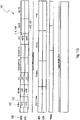
- Figure 1 illustrates a plurality of examples of typical non-standard spectacle lens prescription documents 110 as used for the purposes of the present invention.
- the spectacle lens prescription document 110 is a document which comprises data related to refractive values 112 which are, usually, comprised by at least on page or a portion thereof, wherein a single page is usually preferred.
- eye care professionals such as opticians, typically, use non-standard spectacle lens prescription documents 110 for recording the data related to the refractive values 112, which can, subsequently, be used for further processing, in particular, for producing spectacle lenses in a manufacturing unit.
- each exemplary spectacle lens prescription document 110 as used herein comprises a plurality of patterns 114, 114', ... which are distributed over a surface of the at least one page or the portion thereof.
- each pattern 114, 114', ... comprises a particular structure that can be identified at a particular location on the at least one page or the portion thereof, wherein the particular structure may comprise at least one of
- the text 116 comprising the data related to the refractive values 112 as comprised by each pattern 114, 114', ..., typically, comprises at least one of:
- each pattern 114, 114', ... which comprises the at least one sequence 124, 124', ...of the refractive values 112 comprises the refractive values 112 in an order of a first value related to a sphere, usually abbreviated to "sphere” or “sph”, followed by a second value related to a cylindrical power, usually abbreviated to "cylinder” or “cyl”, followed by a third value related to a cylinder axis, usually abbreviated to "cyl axis" or "axis”.
- refractive value 112 may, in addition, comprise at least one further kind of refractive value 112, in particular a fourth value related to a prismatic effect, usually abbreviated to "prism", and a fifth value related to a prism base, usually abbreviated to "base”, or a sixth value related to an addition, usually abbreviated to "add”, wherein the third value may, typically, be followed by the fourth value which may be followed by the fifth value, or wherein the third value may, directly, be followed by the sixth value.
- a first set of refractive values 112 assigned to the right eye to be used for the right spectacle lens as denoted by at least one of the terms “Right”, “OD”, “RT” or “ ⁇ R>” is, especially when the spectacle lens prescription document 110 is provided in a European language, arranged above the second set of refractive values assigned to the left eye to be used for the left spectacle lens as denoted by at least one of the terms “Left”, “OS”, “LT” or “ ⁇ L>”.
- a different arrangement may also be feasible.
- the refractive values 112 in each sequence 124, 124', ... are arranged in a vertical fashion over the at least one the at least one page or the portion thereof comprising the spectacle lens prescription document 110.
- the first pattern 114 is arranged left of the second pattern 114'
- the first set of refractive values 112 assigned to the right eye to be used for the right spectacle lens is, typically, arranged left to the second set of refractive values assigned to the left eye to be used for the left spectacle lens.
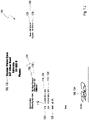
- Figure 2 illustrates an exemplary embodiment of a system 210 for processing the spectacle lens prescription document 110 according to the present invention.
- the system 210 comprises at least an input interface 212 configured to receive an electronic representation of the at least one spectacle lens prescription document 110, a processing device 214 configured to determine the data related to refractive values 112 from the electronic representation of the at least one spectacle lens prescription document 110, and an output interface 216 configured to provide the data related to the refractive values 112 to a recipient (not depicted here).
- the input interface 212 can, preferably, be configured to receive the electronic representation of the spectacle lens prescription document 110, in particular of one of the exemplary spectacle lens prescription documents 110 as illustrated in Figure 1 , preferably in form of an image file or a portable document format.
- the processing device 214 can, preferably, be configured to provide the data related to refractive values 112 in form of a structured output file 218 to the output interface 216.
- the processing device 214 comprises a processing unit 220 which is configured to
- the surface distribution of the plurality of patterns 114, 114', ... which comprise the data related to the refractive values 112 can, firstly, be identified from the electronic representation of the spectacle lens prescription document 110, wherein the text which comprises the data related to the refractive values 112 can, subsequently, be determined from the plurality of patterns 114, 114', ....
- the text which comprises the data related to the refractive values 112 can, firstly, be determined from the electronic representation of the spectacle lens prescription document 110, wherein the surface distribution of the plurality of patterns 114, 114', ... which comprises the text can, subsequently, be identified from the electronic representation of the spectacle lens prescription document 110.
- an evaluating algorithm 222 can be applied which may be configured to determine the data related to refractive values 112 by evaluating the electronic representation of the spectacle lens prescription document 110 according to a predefined scheme, in particular by applying one or more algorithms configured for pattern recognition, text recognition, typo correction, handwritten text recognition, or grouping handwritten word segments, specifically as described above in more detail.
- the machine learning algorithm 224 may be configured to execute a training of
- the processing device 214 may comprise a preprocessing unit 226.
- the preprocessing unit 226 may be configured to preprocess the electronic representation of the spectacle lens prescription document 110 by validating a quality of the electronic representation of the spectacle lens prescription document 110 as received from the input interface 212.
- the preprocessing unit 226 may be configured to preprocess the electronic representation of the spectacle lens prescription document 110 by classifying the spectacle lens prescription document 110 into one of two or more classes, wherein each class refers to a different type of spectacle lens prescription document, specifically a
- the processing device 214 may, further, comprise a data content validating unit 232.
- the data content validating unit 232 may be configured to validate a content of the data related to the refractive values 112, specifically for providing an answer whether the data as identified in the electronic representation of the spectacle lens prescription document 110 by the processing unit 220 may actually be a valid value or not, such that only data comprising a valid value are considered as admissible for a further processing of the identified data.
- one or more data content validating algorithms 234 may be used for the validating of the content of the data related to the refractive values 112 may, in particular, by:
- the data content validating unit 232 may comprise a still further machine learning algorithm 236 which may be configured to execute the training of the validating of the content of the data related to the refractive values 112, specifically in a fashion as described above in more detail.
- a first communication interface 238 may provide communication between the input interface 212 and the processing device 214, while a second communication interface 240 provide communication between the processing device 214 and the output interface 216.
- each the communication interface 238, 240 may be or comprise a unidirectional interface which may be configured to forward the at least one piece of data into the indicated single direction in least one of a wire-bound element or a wireless fashion, preferably via encrypted data transfer.
- a further kind of communication interface may also be feasible.
- Figure 3 illustrates an exemplary embodiment of a computer-implemented method 310 for processing the spectacle lens prescription document 110 according to the present invention.
- a receiving step 312 an electronic representation of the spectacle lens prescription document 110 which comprises the data related to refractive values 112 is received, in particular in a fashion as described above in more detail.
- one or more preprocessing procedures may be applied to the electronic representation of the spectacle lens prescription document 110.
- a quality validating step 316 a quality of the electronic representation of the spectacle lens prescription document 110 may be validated, specifically in a fashion as described above.
- the spectacle lens prescription document 110 may be classified into one of two or more classes, specifically into a class as described above in more detail.
- a determining step 320 the data related to the refractive values 112 is determined from the electronic representation of the spectacle lens prescription document 110 by applying the following steps:
- the pattern determining step 322 may be performed before the text determining step 324.
- the surface distribution of the plurality of the patterns 114, 114', ... which comprises the data related to the refractive values 112 can, firstly, be identified from the electronic representation of the spectacle lens prescription document 110, wherein the text which comprises the data related to the refractive values 112 can, subsequently, be determined from the plurality of the patterns 114, 114', ....
- the text determining step 324 may be performed before the pattern determining step 322.
- the text which comprises the data related to the refractive values 112 can, firstly, be determined from the electronic representation of the spectacle lens prescription document 110, wherein the surface distribution of the plurality of the patterns 114, 114', ... which comprises the text can, subsequently, be identified from the electronic representation of the spectacle lens prescription document 110.
- the content of the data related to the refractive values 112 may be validated, specifically for providing an answer whether the data as identified in the electronic representation of the spectacle lens prescription document 110 may actually be a valid value or not, such that only data comprising a valid value are considered as admissible for a further processing of the identified data.
- the data content validating unit 232 may perform the following data content validating process:
- the data content validating unit 232 may perform the following data content validating process:
- the data content validating unit 232 may perform a further data content validating process in which it may be ascertained whether the spectacle lens prescription document 110 may be valid with respect to the issuance date 128 and/or the expiration date 130 of the refractive values 112 or not.
- the expiration date 130 as directly recognized on the spectacle lens prescription document 110 may be used.
- the issuance date 128 may be used, in which case a predefined calculation rule may, further, be employed, wherein the predefined calculation rule may comprise a period of time, such as 6 months, 1 year, 2 years, or 5 years, that may, specifically, depend on a country of issuance of the spectacle lens prescription document 110.
- the piece of metadata 126 in particular a determination of the expiration date 130 from the issuance date 128, can depend on a specific regulatory framework, which may be applicable for at least one particular country. However, further examples are feasible.
- the data content validating unit 232 may comprise validating whether a signature 134 may be present on the electronic representation of the spectacle lens prescription document 110 or not.
- the data content validating unit 232 may comprise validating whether the at least one piece of imprint information 132 about an issuer of the refractive values 112 may refer to an existing optician or not.
- the at least one piece of imprint information 132 may comprise at least one of a name, an address, a phone number, a fax number, or an email address of the corresponding issuer.
- the data related to the refractive values 112 may be provided for further processing, specifically to one or more recipients 330 in a fashion as described above in more detail, specifically for the producing of one or more spectacle lenses, wherein the producing of the spectacle lenses comprises processing at least one lens blank by using the data related to the refractive values 112 as determined by the method 320 for determining the data related to refractive values 112 from the electronic representation of the spectacle lens prescription document.
- the computer-implemented method 310 for processing the spectacle lens prescription document 110 according to the present invention as used herein may, further, comprise one or more training steps (not depicted here).
- the one or more training steps may be configured to execute at least one training of any one of the mentioned steps, in particular of the pattern determining step 322 and/or the text determining step 324 as well as of the optional quality validating step 316, of the optional classifying step 318 and/or of the optional data content validating step 326, specifically in manner fashion as described above in more detail.
Landscapes
- Engineering & Computer Science (AREA)
- Computer Vision & Pattern Recognition (AREA)
- Physics & Mathematics (AREA)
- General Physics & Mathematics (AREA)
- Multimedia (AREA)
- Theoretical Computer Science (AREA)
- Artificial Intelligence (AREA)
- Computer Graphics (AREA)
- Geometry (AREA)
- Eyeglasses (AREA)
- Management, Administration, Business Operations System, And Electronic Commerce (AREA)
- Pharmaceuticals Containing Other Organic And Inorganic Compounds (AREA)
- Medicines Containing Plant Substances (AREA)
Priority Applications (9)
| Application Number | Priority Date | Filing Date | Title |
|---|---|---|---|
| ES21158494T ES2993665T3 (en) | 2021-02-22 | 2021-02-22 | Devices and methods for processing eyeglass prescriptions |
| EP21158494.1A EP4047519B1 (fr) | 2021-02-22 | 2021-02-22 | Dispositifs et procédés pour le traitement de prescriptions optiques |
| CA3209056A CA3209056A1 (fr) | 2021-02-22 | 2022-02-21 | Dispositifs et procedes de traitement de prescriptions de lunettes |
| ES22711180T ES3044883T3 (en) | 2021-02-22 | 2022-02-21 | Devices and methods for processing eyeglass prescriptions |
| PCT/EP2022/054195 WO2022175511A1 (fr) | 2021-02-22 | 2022-02-21 | Dispositifs et procédés de traitement de prescriptions de lunettes |
| EP22711180.4A EP4295263B1 (fr) | 2021-02-22 | 2022-02-21 | Dispositifs et procédés pour le traitement de prescriptions optiques |
| AU2022221990A AU2022221990A1 (en) | 2021-02-22 | 2022-02-21 | Devices and methods for processing eyeglass prescriptions |
| US18/452,683 US20230394864A1 (en) | 2021-02-22 | 2023-08-21 | Devices and methods for processing eyeglass prescriptions |
| AU2025263861A AU2025263861A1 (en) | 2021-02-22 | 2025-11-07 | Devices and methods for processing at least one spectacle lens prescription document |
Applications Claiming Priority (1)
| Application Number | Priority Date | Filing Date | Title |
|---|---|---|---|
| EP21158494.1A EP4047519B1 (fr) | 2021-02-22 | 2021-02-22 | Dispositifs et procédés pour le traitement de prescriptions optiques |
Publications (3)
| Publication Number | Publication Date |
|---|---|
| EP4047519A1 true EP4047519A1 (fr) | 2022-08-24 |
| EP4047519C0 EP4047519C0 (fr) | 2024-08-07 |
| EP4047519B1 EP4047519B1 (fr) | 2024-08-07 |
Family
ID=74673132
Family Applications (2)
| Application Number | Title | Priority Date | Filing Date |
|---|---|---|---|
| EP21158494.1A Active EP4047519B1 (fr) | 2021-02-22 | 2021-02-22 | Dispositifs et procédés pour le traitement de prescriptions optiques |
| EP22711180.4A Active EP4295263B1 (fr) | 2021-02-22 | 2022-02-21 | Dispositifs et procédés pour le traitement de prescriptions optiques |
Family Applications After (1)
| Application Number | Title | Priority Date | Filing Date |
|---|---|---|---|
| EP22711180.4A Active EP4295263B1 (fr) | 2021-02-22 | 2022-02-21 | Dispositifs et procédés pour le traitement de prescriptions optiques |
Country Status (6)
| Country | Link |
|---|---|
| US (1) | US20230394864A1 (fr) |
| EP (2) | EP4047519B1 (fr) |
| AU (2) | AU2022221990A1 (fr) |
| CA (1) | CA3209056A1 (fr) |
| ES (2) | ES2993665T3 (fr) |
| WO (1) | WO2022175511A1 (fr) |
Citations (22)
| Publication number | Priority date | Publication date | Assignee | Title |
|---|---|---|---|---|
| JPS50140022A (fr) | 1974-04-25 | 1975-11-10 | ||
| JPS592191A (ja) | 1982-06-29 | 1984-01-07 | Fujitsu Ltd | 手書き日本語文の認識処理方式 |
| JPS61213982A (ja) | 1985-03-19 | 1986-09-22 | Sanyo Electric Co Ltd | 手書き文字認識装置 |
| JPS61233881A (ja) | 1985-04-09 | 1986-10-18 | Omron Tateisi Electronics Co | 手書き文字読取り装置 |
| US6108444A (en) | 1997-09-29 | 2000-08-22 | Xerox Corporation | Method of grouping handwritten word segments in handwritten document images |
| KR20050054713A (ko) | 2003-12-05 | 2005-06-10 | (주)동방에스앤씨 | 문자 군집화 기술 기반 문서의 디지털화 검증 시스템 및방법 |
| US20050278229A1 (en) | 2003-12-02 | 2005-12-15 | Gilbert Igo | System for order and fulfillment of occupational prescription eyewear |
| US7092870B1 (en) | 2000-09-15 | 2006-08-15 | International Business Machines Corporation | System and method for managing a textual archive using semantic units |
| US7499891B2 (en) | 2000-06-19 | 2009-03-03 | Correlogic Systems, Inc. | Heuristic method of classification |
| US7499588B2 (en) | 2004-05-20 | 2009-03-03 | Microsoft Corporation | Low resolution OCR for camera acquired documents |
| US7880730B2 (en) | 1999-05-27 | 2011-02-01 | Tegic Communications, Inc. | Keyboard system with automatic correction |
| US8352400B2 (en) | 1991-12-23 | 2013-01-08 | Hoffberg Steven M | Adaptive pattern recognition based controller apparatus and method and human-factored interface therefore |
| US20150055085A1 (en) * | 2013-08-22 | 2015-02-26 | Bespoke, Inc. | Method and system to create products |
| EP3200123A1 (fr) | 2016-01-28 | 2017-08-02 | Siemens Aktiengesellschaft | Reconnaissance de texte |
| WO2019092672A2 (fr) | 2017-11-13 | 2019-05-16 | Way2Vat Ltd. | Systèmes et procédés de récupération de données visuelles-linguistiques neuronales à partir d'un document imagé |
| CN110399798A (zh) | 2019-06-25 | 2019-11-01 | 朱跃飞 | 一种基于深度学习的离散图片文件信息提取系统及方法 |
| CN110399845A (zh) | 2019-07-29 | 2019-11-01 | 上海海事大学 | 一种图像中连续成段文本检测与识别方法 |
| US20190362829A1 (en) * | 2018-05-25 | 2019-11-28 | Click Vision Group, LLC. | Optical Prescription Management and Fulfillment System |
| WO2020073535A1 (fr) | 2018-10-12 | 2020-04-16 | 歌尔股份有限公司 | Module de haut-parleur |
| EP3647859A1 (fr) * | 2017-06-28 | 2020-05-06 | Hoya Lens Thailand Ltd. | Procédé de fabrication de verre de lunettes, système de fabrication de verre de lunettes et verre de lunettes |
| CN111435407A (zh) | 2019-01-10 | 2020-07-21 | 北京字节跳动网络技术有限公司 | 错别字的纠正方法、装置、设备及存储介质 |
| US10749929B2 (en) | 2012-10-18 | 2020-08-18 | Essilor International | Providing eyewear equipment using a same identifier among designer, manufacturer, and purchaser |
Family Cites Families (1)
| Publication number | Priority date | Publication date | Assignee | Title |
|---|---|---|---|---|
| CN104823098B (zh) * | 2012-11-28 | 2018-05-18 | Hoya株式会社 | 眼镜镜片、用于眼镜镜片的制造设备和制造方法 |
-
2021
- 2021-02-22 ES ES21158494T patent/ES2993665T3/es active Active
- 2021-02-22 EP EP21158494.1A patent/EP4047519B1/fr active Active
-
2022
- 2022-02-21 ES ES22711180T patent/ES3044883T3/es active Active
- 2022-02-21 CA CA3209056A patent/CA3209056A1/fr active Pending
- 2022-02-21 WO PCT/EP2022/054195 patent/WO2022175511A1/fr not_active Ceased
- 2022-02-21 AU AU2022221990A patent/AU2022221990A1/en not_active Abandoned
- 2022-02-21 EP EP22711180.4A patent/EP4295263B1/fr active Active
-
2023
- 2023-08-21 US US18/452,683 patent/US20230394864A1/en active Pending
-
2025
- 2025-11-07 AU AU2025263861A patent/AU2025263861A1/en active Pending
Patent Citations (22)
| Publication number | Priority date | Publication date | Assignee | Title |
|---|---|---|---|---|
| JPS50140022A (fr) | 1974-04-25 | 1975-11-10 | ||
| JPS592191A (ja) | 1982-06-29 | 1984-01-07 | Fujitsu Ltd | 手書き日本語文の認識処理方式 |
| JPS61213982A (ja) | 1985-03-19 | 1986-09-22 | Sanyo Electric Co Ltd | 手書き文字認識装置 |
| JPS61233881A (ja) | 1985-04-09 | 1986-10-18 | Omron Tateisi Electronics Co | 手書き文字読取り装置 |
| US8352400B2 (en) | 1991-12-23 | 2013-01-08 | Hoffberg Steven M | Adaptive pattern recognition based controller apparatus and method and human-factored interface therefore |
| US6108444A (en) | 1997-09-29 | 2000-08-22 | Xerox Corporation | Method of grouping handwritten word segments in handwritten document images |
| US7880730B2 (en) | 1999-05-27 | 2011-02-01 | Tegic Communications, Inc. | Keyboard system with automatic correction |
| US7499891B2 (en) | 2000-06-19 | 2009-03-03 | Correlogic Systems, Inc. | Heuristic method of classification |
| US7092870B1 (en) | 2000-09-15 | 2006-08-15 | International Business Machines Corporation | System and method for managing a textual archive using semantic units |
| US20050278229A1 (en) | 2003-12-02 | 2005-12-15 | Gilbert Igo | System for order and fulfillment of occupational prescription eyewear |
| KR20050054713A (ko) | 2003-12-05 | 2005-06-10 | (주)동방에스앤씨 | 문자 군집화 기술 기반 문서의 디지털화 검증 시스템 및방법 |
| US7499588B2 (en) | 2004-05-20 | 2009-03-03 | Microsoft Corporation | Low resolution OCR for camera acquired documents |
| US10749929B2 (en) | 2012-10-18 | 2020-08-18 | Essilor International | Providing eyewear equipment using a same identifier among designer, manufacturer, and purchaser |
| US20150055085A1 (en) * | 2013-08-22 | 2015-02-26 | Bespoke, Inc. | Method and system to create products |
| EP3200123A1 (fr) | 2016-01-28 | 2017-08-02 | Siemens Aktiengesellschaft | Reconnaissance de texte |
| EP3647859A1 (fr) * | 2017-06-28 | 2020-05-06 | Hoya Lens Thailand Ltd. | Procédé de fabrication de verre de lunettes, système de fabrication de verre de lunettes et verre de lunettes |
| WO2019092672A2 (fr) | 2017-11-13 | 2019-05-16 | Way2Vat Ltd. | Systèmes et procédés de récupération de données visuelles-linguistiques neuronales à partir d'un document imagé |
| US20190362829A1 (en) * | 2018-05-25 | 2019-11-28 | Click Vision Group, LLC. | Optical Prescription Management and Fulfillment System |
| WO2020073535A1 (fr) | 2018-10-12 | 2020-04-16 | 歌尔股份有限公司 | Module de haut-parleur |
| CN111435407A (zh) | 2019-01-10 | 2020-07-21 | 北京字节跳动网络技术有限公司 | 错别字的纠正方法、装置、设备及存储介质 |
| CN110399798A (zh) | 2019-06-25 | 2019-11-01 | 朱跃飞 | 一种基于深度学习的离散图片文件信息提取系统及方法 |
| CN110399845A (zh) | 2019-07-29 | 2019-11-01 | 上海海事大学 | 一种图像中连续成段文本检测与识别方法 |
Non-Patent Citations (1)
| Title |
|---|
| DAVID W EMBLEY ET AL: "Table-processing paradigms: a research survey", INTERNATIONAL JOURNAL OF DOCUMENT ANALYSIS AND RECOGNITION (IJDAR), SPRINGER, BERLIN, DE, vol. 8, no. 2-3, 9 May 2006 (2006-05-09), pages 66 - 86, XP019385667, ISSN: 1433-2825, DOI: 10.1007/S10032-006-0017-X * |
Also Published As
| Publication number | Publication date |
|---|---|
| EP4047519C0 (fr) | 2024-08-07 |
| EP4047519B1 (fr) | 2024-08-07 |
| ES2993665T3 (en) | 2025-01-03 |
| EP4295263B1 (fr) | 2025-09-03 |
| EP4295263C0 (fr) | 2025-09-03 |
| CA3209056A1 (fr) | 2022-08-25 |
| EP4295263A1 (fr) | 2023-12-27 |
| AU2022221990A1 (en) | 2023-09-07 |
| ES3044883T3 (en) | 2025-11-27 |
| WO2022175511A1 (fr) | 2022-08-25 |
| AU2025263861A1 (en) | 2025-11-27 |
| US20230394864A1 (en) | 2023-12-07 |
Similar Documents
| Publication | Publication Date | Title |
|---|---|---|
| CN110298245B (zh) | 兴趣收集方法、装置、计算机设备及存储介质 | |
| CN111986744B (zh) | 医疗机构的患者界面生成方法、装置、电子设备及介质 | |
| JP6724090B2 (ja) | 情報処理装置、情報処理方法、および情報処理プログラム | |
| CA3115954A1 (fr) | Systeme de generation de donnees d'evaluation des risques d'immigration | |
| KR20130103153A (ko) | 고객 맞춤형 안경 및 콘택트렌즈 버추얼 피팅 방법 및 그 시스템 | |
| US11393597B1 (en) | Prescription label scanner | |
| CN109598578A (zh) | 业务对象数据的推送方法及装置、存储介质、计算机设备 | |
| Prakash et al. | Towards enhancing low vision usability of data charts on smartphones | |
| JP7263825B2 (ja) | 情報処理装置、情報処理方法、および情報処理プログラム | |
| JP2020013538A (ja) | 情報処理装置、情報処理方法、および情報処理プログラム | |
| CN114830162B (zh) | 用于情境化设备推荐的装置、方法和计算机可读存储介质 | |
| EP4295263B1 (fr) | Dispositifs et procédés pour le traitement de prescriptions optiques | |
| CN111370100A (zh) | 基于云端服务器的整容推荐方法及系统 | |
| JP2021089650A (ja) | 登録済質問文判定方法、コンピュータプログラム及び情報処理装置 | |
| CN114973374A (zh) | 基于表情的风险评测方法、装置、设备及存储介质 | |
| CN117222354A (zh) | 用于辅助确定对象的最终验光处方的系统和相关方法 | |
| Poreddy et al. | Retail Transformation in Healthcare: A Comprehensive Framework for Intelligent Eye Care Services Integration | |
| JP2022029398A (ja) | データ処理装置、データ処理方法及びデータ処理プログラム | |
| JP7668976B1 (ja) | 決済サーバ、情報処理装置、情報処理方法、およびプログラム | |
| CN116473501B (zh) | 一种插片式主观验光结果自动记录方法、装置及系统 | |
| US20220059048A1 (en) | System and method for ocular assistance | |
| US20260069020A1 (en) | Augmented Reality Glasses for Enhanced Vision and Integration in Beauty Product Application | |
| JP2024079012A (ja) | 薬剤判定システム | |
| WO2019220751A1 (fr) | Dispositif, procédé et programme de traitement d'informations | |
| Chinnaswamy et al. | Eyecare for All, a Service Design Approach |
Legal Events
| Date | Code | Title | Description |
|---|---|---|---|
| PUAI | Public reference made under article 153(3) epc to a published international application that has entered the european phase |
Free format text: ORIGINAL CODE: 0009012 |
|
| STAA | Information on the status of an ep patent application or granted ep patent |
Free format text: STATUS: THE APPLICATION HAS BEEN PUBLISHED |
|
| AK | Designated contracting states |
Kind code of ref document: A1 Designated state(s): AL AT BE BG CH CY CZ DE DK EE ES FI FR GB GR HR HU IE IS IT LI LT LU LV MC MK MT NL NO PL PT RO RS SE SI SK SM TR |
|
| STAA | Information on the status of an ep patent application or granted ep patent |
Free format text: STATUS: REQUEST FOR EXAMINATION WAS MADE |
|
| 17P | Request for examination filed |
Effective date: 20221221 |
|
| RBV | Designated contracting states (corrected) |
Designated state(s): AL AT BE BG CH CY CZ DE DK EE ES FI FR GB GR HR HU IE IS IT LI LT LU LV MC MK MT NL NO PL PT RO RS SE SI SK SM TR |
|
| STAA | Information on the status of an ep patent application or granted ep patent |
Free format text: STATUS: EXAMINATION IS IN PROGRESS |
|
| 17Q | First examination report despatched |
Effective date: 20230315 |
|
| REG | Reference to a national code |
Ref country code: DE Ipc: G06V0030412000 Ref country code: DE Ref legal event code: R079 Ref document number: 602021016651 Country of ref document: DE Free format text: PREVIOUS MAIN CLASS: G06K0009000000 Ipc: G06V0030412000 |
|
| GRAP | Despatch of communication of intention to grant a patent |
Free format text: ORIGINAL CODE: EPIDOSNIGR1 |
|
| STAA | Information on the status of an ep patent application or granted ep patent |
Free format text: STATUS: GRANT OF PATENT IS INTENDED |
|
| RIC1 | Information provided on ipc code assigned before grant |
Ipc: G06V 30/412 20220101AFI20240209BHEP |
|
| INTG | Intention to grant announced |
Effective date: 20240319 |
|
| GRAS | Grant fee paid |
Free format text: ORIGINAL CODE: EPIDOSNIGR3 |
|
| GRAA | (expected) grant |
Free format text: ORIGINAL CODE: 0009210 |
|
| STAA | Information on the status of an ep patent application or granted ep patent |
Free format text: STATUS: THE PATENT HAS BEEN GRANTED |
|
| AK | Designated contracting states |
Kind code of ref document: B1 Designated state(s): AL AT BE BG CH CY CZ DE DK EE ES FI FR GB GR HR HU IE IS IT LI LT LU LV MC MK MT NL NO PL PT RO RS SE SI SK SM TR |
|
| REG | Reference to a national code |
Ref country code: GB Ref legal event code: FG4D |
|
| REG | Reference to a national code |
Ref country code: CH Ref legal event code: EP |
|
| REG | Reference to a national code |
Ref country code: IE Ref legal event code: FG4D |
|
| REG | Reference to a national code |
Ref country code: DE Ref legal event code: R096 Ref document number: 602021016651 Country of ref document: DE |
|
| U01 | Request for unitary effect filed |
Effective date: 20240819 |
|
| U07 | Unitary effect registered |
Designated state(s): AT BE BG DE DK EE FI FR IT LT LU LV MT NL PT RO SE SI Effective date: 20240902 |
|
| REG | Reference to a national code |
Ref country code: ES Ref legal event code: FG2A Ref document number: 2993665 Country of ref document: ES Kind code of ref document: T3 Effective date: 20250103 |
|
| PG25 | Lapsed in a contracting state [announced via postgrant information from national office to epo] |
Ref country code: NO Free format text: LAPSE BECAUSE OF FAILURE TO SUBMIT A TRANSLATION OF THE DESCRIPTION OR TO PAY THE FEE WITHIN THE PRESCRIBED TIME-LIMIT Effective date: 20241107 |
|
| PG25 | Lapsed in a contracting state [announced via postgrant information from national office to epo] |
Ref country code: PL Free format text: LAPSE BECAUSE OF FAILURE TO SUBMIT A TRANSLATION OF THE DESCRIPTION OR TO PAY THE FEE WITHIN THE PRESCRIBED TIME-LIMIT Effective date: 20240807 Ref country code: GR Free format text: LAPSE BECAUSE OF FAILURE TO SUBMIT A TRANSLATION OF THE DESCRIPTION OR TO PAY THE FEE WITHIN THE PRESCRIBED TIME-LIMIT Effective date: 20241108 |
|
| PG25 | Lapsed in a contracting state [announced via postgrant information from national office to epo] |
Ref country code: IS Free format text: LAPSE BECAUSE OF FAILURE TO SUBMIT A TRANSLATION OF THE DESCRIPTION OR TO PAY THE FEE WITHIN THE PRESCRIBED TIME-LIMIT Effective date: 20241207 |
|
| PG25 | Lapsed in a contracting state [announced via postgrant information from national office to epo] |
Ref country code: HR Free format text: LAPSE BECAUSE OF FAILURE TO SUBMIT A TRANSLATION OF THE DESCRIPTION OR TO PAY THE FEE WITHIN THE PRESCRIBED TIME-LIMIT Effective date: 20240807 |
|
| PG25 | Lapsed in a contracting state [announced via postgrant information from national office to epo] |
Ref country code: RS Free format text: LAPSE BECAUSE OF FAILURE TO SUBMIT A TRANSLATION OF THE DESCRIPTION OR TO PAY THE FEE WITHIN THE PRESCRIBED TIME-LIMIT Effective date: 20241107 |
|
| PG25 | Lapsed in a contracting state [announced via postgrant information from national office to epo] |
Ref country code: RS Free format text: LAPSE BECAUSE OF FAILURE TO SUBMIT A TRANSLATION OF THE DESCRIPTION OR TO PAY THE FEE WITHIN THE PRESCRIBED TIME-LIMIT Effective date: 20241107 Ref country code: PL Free format text: LAPSE BECAUSE OF FAILURE TO SUBMIT A TRANSLATION OF THE DESCRIPTION OR TO PAY THE FEE WITHIN THE PRESCRIBED TIME-LIMIT Effective date: 20240807 Ref country code: NO Free format text: LAPSE BECAUSE OF FAILURE TO SUBMIT A TRANSLATION OF THE DESCRIPTION OR TO PAY THE FEE WITHIN THE PRESCRIBED TIME-LIMIT Effective date: 20241107 Ref country code: IS Free format text: LAPSE BECAUSE OF FAILURE TO SUBMIT A TRANSLATION OF THE DESCRIPTION OR TO PAY THE FEE WITHIN THE PRESCRIBED TIME-LIMIT Effective date: 20241207 Ref country code: HR Free format text: LAPSE BECAUSE OF FAILURE TO SUBMIT A TRANSLATION OF THE DESCRIPTION OR TO PAY THE FEE WITHIN THE PRESCRIBED TIME-LIMIT Effective date: 20240807 Ref country code: GR Free format text: LAPSE BECAUSE OF FAILURE TO SUBMIT A TRANSLATION OF THE DESCRIPTION OR TO PAY THE FEE WITHIN THE PRESCRIBED TIME-LIMIT Effective date: 20241108 |
|
| U20 | Renewal fee for the european patent with unitary effect paid |
Year of fee payment: 5 Effective date: 20250221 |
|
| PG25 | Lapsed in a contracting state [announced via postgrant information from national office to epo] |
Ref country code: SM Free format text: LAPSE BECAUSE OF FAILURE TO SUBMIT A TRANSLATION OF THE DESCRIPTION OR TO PAY THE FEE WITHIN THE PRESCRIBED TIME-LIMIT Effective date: 20240807 |
|
| PG25 | Lapsed in a contracting state [announced via postgrant information from national office to epo] |
Ref country code: CZ Free format text: LAPSE BECAUSE OF FAILURE TO SUBMIT A TRANSLATION OF THE DESCRIPTION OR TO PAY THE FEE WITHIN THE PRESCRIBED TIME-LIMIT Effective date: 20240807 |
|
| PG25 | Lapsed in a contracting state [announced via postgrant information from national office to epo] |
Ref country code: SK Free format text: LAPSE BECAUSE OF FAILURE TO SUBMIT A TRANSLATION OF THE DESCRIPTION OR TO PAY THE FEE WITHIN THE PRESCRIBED TIME-LIMIT Effective date: 20240807 |
|
| PLBE | No opposition filed within time limit |
Free format text: ORIGINAL CODE: 0009261 |
|
| STAA | Information on the status of an ep patent application or granted ep patent |
Free format text: STATUS: NO OPPOSITION FILED WITHIN TIME LIMIT |
|
| PGFP | Annual fee paid to national office [announced via postgrant information from national office to epo] |
Ref country code: ES Payment date: 20250331 Year of fee payment: 5 |
|
| 26N | No opposition filed |
Effective date: 20250508 |
|
| PG25 | Lapsed in a contracting state [announced via postgrant information from national office to epo] |
Ref country code: MC Free format text: LAPSE BECAUSE OF FAILURE TO SUBMIT A TRANSLATION OF THE DESCRIPTION OR TO PAY THE FEE WITHIN THE PRESCRIBED TIME-LIMIT Effective date: 20240807 |
|
| REG | Reference to a national code |
Ref country code: CH Ref legal event code: PL |
|
| PG25 | Lapsed in a contracting state [announced via postgrant information from national office to epo] |
Ref country code: CH Free format text: LAPSE BECAUSE OF NON-PAYMENT OF DUE FEES Effective date: 20250228 |
|
| PG25 | Lapsed in a contracting state [announced via postgrant information from national office to epo] |
Ref country code: IE Free format text: LAPSE BECAUSE OF NON-PAYMENT OF DUE FEES Effective date: 20250222 |
|
| U20 | Renewal fee for the european patent with unitary effect paid |
Year of fee payment: 6 Effective date: 20260225 |
|
| PGFP | Annual fee paid to national office [announced via postgrant information from national office to epo] |
Ref country code: GB Payment date: 20260220 Year of fee payment: 6 |