EP4047569B1 - Procédé, dispositif de traitement des données et système - Google Patents
Procédé, dispositif de traitement des données et système Download PDFInfo
- Publication number
- EP4047569B1 EP4047569B1 EP22157067.4A EP22157067A EP4047569B1 EP 4047569 B1 EP4047569 B1 EP 4047569B1 EP 22157067 A EP22157067 A EP 22157067A EP 4047569 B1 EP4047569 B1 EP 4047569B1
- Authority
- EP
- European Patent Office
- Prior art keywords
- data
- route
- truck
- received
- driving
- Prior art date
- Legal status (The legal status is an assumption and is not a legal conclusion. Google has not performed a legal analysis and makes no representation as to the accuracy of the status listed.)
- Active
Links
Images

Classifications
-
- G—PHYSICS
- G07—CHECKING-DEVICES
- G07C—TIME OR ATTENDANCE REGISTERS; REGISTERING OR INDICATING THE WORKING OF MACHINES; GENERATING RANDOM NUMBERS; VOTING OR LOTTERY APPARATUS; ARRANGEMENTS, SYSTEMS OR APPARATUS FOR CHECKING NOT PROVIDED FOR ELSEWHERE
- G07C5/00—Registering or indicating the working of vehicles
- G07C5/08—Registering or indicating performance data other than driving, working, idle, or waiting time, with or without registering driving, working, idle or waiting time
- G07C5/0841—Registering performance data
- G07C5/085—Registering performance data using electronic data carriers
-
- G—PHYSICS
- G07—CHECKING-DEVICES
- G07C—TIME OR ATTENDANCE REGISTERS; REGISTERING OR INDICATING THE WORKING OF MACHINES; GENERATING RANDOM NUMBERS; VOTING OR LOTTERY APPARATUS; ARRANGEMENTS, SYSTEMS OR APPARATUS FOR CHECKING NOT PROVIDED FOR ELSEWHERE
- G07C5/00—Registering or indicating the working of vehicles
- G07C5/008—Registering or indicating the working of vehicles communicating information to a remotely located station
Definitions
- the present invention relates generally and in particular to a method, a device for data processing and a system for detecting manipulation of travel data of a control device of a vehicle.
- Control devices for vehicles are generally known, particularly for commercial vehicles and trucks. Such control devices are also known as electronic tachographs. By law, such electronic tachographs must be provided in commercial freight transport to monitor driving and break times in trucks with a total weight of over 7.5 t (tonnes). Typically, the recorded journey data can be read out via a communication interface on the electronic tachograph and transferred to a storage medium (e.g., USB stick).
- a storage medium e.g., USB stick
- Common electronic tachographs contain identification cards (driver cards) on which personalized card usage data is stored.
- the data stored on the driver cards represents, for example, information about the distance traveled during the journey and information about the driver's current status.
- the driver's status describes, for example, whether the driver is currently driving the truck, performing other work, or taking a break.
- the electronic tachograph is typically connected to an odometer sensor ("KITAS" - Kienzle Sensor).
- KITAS odometer sensor
- the odometer sensor uses a Hall sensor to determine the rotations of the drive axle. Furthermore, it can calculate the driving speed and, from this, the distance traveled based on the number of pulses (based on a unit of time).
- electronic tachographs are additionally connected to the truck's engine control unit via a communication bus (e.g. CAN bus; CAN stands for "Controller Area Network") for further verification.
- the electronic tachograph receives additional movement information from the engine control unit regarding the current driving speed of the vehicle. Truck. This movement information can be compared with the movement information determined by the distance sensor in a subsequent analysis.
- the journey data from the tachograph and the inserted ticket are typically evaluated with regard to the distance traveled, the driving speed of the last few days, any position data obtained via a connected GNS system (GNS stands for "Global Navigation System”), as well as the entered movement states (e.g. driving, break, work and break) that a driver enters, for example, via a control panel on the tachograph.
- GNS Global Navigation System
- evaluations are carried out, for example, regarding the driving and break times that the driver has complied with or not complied with during the last few days.
- distance pulses can be manipulated to manipulate driving data and thus complicate investigations into violations of the maximum permitted speed or driving and break time regulations. It is also known that the inserted tickets can be manipulated by making unauthorized copies.
- the movement information coming from the engine control unit may also be manipulated; for example, by making changes to the engine control unit itself, using emulators to simulate a speed signal from the engine control unit.
- the operating software of the control device is capable of detecting such manipulations and storing corresponding error messages in the journey data, which are subsequently read from the tachograph by the control authorities.
- error messages are stored in the engine control unit and can be read out later.
- error messages in the engine control unit can be deleted by external devices that are connected via the onboard diagnostic connector (OBD connector) in the vehicle.
- OBD connector onboard diagnostic connector
- the situation is different if the distance signal has been successfully manipulated without the error detection routines in the control unit detecting this manipulation.
- the distance traveled/speed is stored in such a way that entries with manipulated movement states (driving and break times) may not be detected during any inspections.
- the manipulations by changing the firmware in the control device are typically realized by the fact that the movement states (driving and break times) of the truck are no longer entered by the driver, but by the manipulated firmware of the control device, for example by storing corresponding data in the control device.
- the detection of manipulated control devices is therefore based on the public's strong need for security.
- the present invention provides a data processing apparatus according to claim 8.
- the present invention provides a system according to claim 9.
- the procedure can be used on-site, for example during a check (e.g. by stopping) by control authorities, or during a later analysis of stored driving data.
- the method aims to determine whether manipulation of the trip data is likely or has occurred, whereby in some embodiments, determining the exact cause or the exact type of manipulation is not important.
- some embodiments provide for a classification result to be displayed to the inspection authorities, which is indicative of, for example, existing manipulation, probable manipulation, or no manipulation of the trip data, so that possible further steps can then be initiated by the inspection authorities to determine the type and extent of the manipulation.
- a (portable) device that can be used for on-site inspections and features a GPS system for determining their position.
- the device reads the travel data from the on-site inspection device via a data bus and then transmits its own determined position and the travel data to the data processing device. Since in some embodiments the position is also determined directly on-site during the inspection, it is also indicative of a section of the route traveled by the vehicle, which then corresponds to a section of the route in the vicinity of the checkpoint.
- the electronic circuit of the device may contain one or more processors (e.g. CPU, application processor, graphics processor, etc.), one or more memory elements (e.g. hard disk, RAM, ROM, semiconductor memory, etc.), one or more FPGAs ("Field Programmable Gate Array"), one or more application-specific circuits (ASICs - "Application Specific Integrated Circuit”) and/or contain typical electronic components that are configured accordingly to carry out the method.
- the method can be based on computer programs containing a sequence of instructions which, when executed, cause a computer/processor to carry out the method described herein.
- the method can be based in part on computer programs and in part on electronic circuits.
- the electronic circuit of the device contains a communication interface for exchanging data with other computers, devices, mobile communication devices, etc.
- the network can be a cellular network, a computer network (e.g., the Internet), etc.
- the electronic circuit of the device then contains corresponding hardware interfaces (e.g., LTE module ("Long Term Evolution")) and implements corresponding communication protocols for data exchange.
- the electronic circuit of the device can support Wi- Fi® , Bluetooth® , etc. for communication with mobile communication devices.
- the device's electronic circuit contains a GNS module for determining position, for example via GPS ("Global Positioning System”) or Galileo.
- GNS Global Positioning System
- Galileo Galileo
- the device's electronic circuit contains interfaces/data buses for reading the trip data and control unit data and then implements corresponding communication protocols.
- the obtained trip data and the obtained at least one position of the vehicle are input into a machine learning algorithm, wherein the machine learning algorithm is configured (i.e., trained) to determine whether the obtained trip data has been tampered with based on the vehicle's movement profile and the obtained at least one position of the vehicle.
- the machine learning algorithm is based on a neural network.
- the machine learning algorithm can also be based on an SVM ("Support Vector Machine"), a logistic regression, a decision tree, or the like, which is not claimed.
- the machine learning algorithm is configured, i.e., trained, to determine a classification result for the received trip data, which indicates whether the received trip data has been manipulated.
- a classification result is output for the obtained trip data, wherein the classification result is indicative of a probability of whether the trip data is tampered with.
- the electronic circuit of the device is further configured to communicate with a mobile communication device and to transmit its own position and/or the read-out travel data to the mobile communication device.
- the electronic circuit of the device is further configured to receive a classification result for the transmitted travel data from the data processing device and to transmit the classification result to the mobile communication device.
- the electronic circuit of the device is designed to enable control of the device by means of the mobile communication device (e.g. notebook, smartphone, tablet, etc.) which is, for example, in the possession of the control authorities at the time of the control.
- the mobile communication device e.g. notebook, smartphone, tablet, etc.
- the obtained at least one position of the vehicle enables filtering of possible route sections of the route traveled by the vehicle, since within a limited period of time, only route sections in the vicinity of the vehicle's position are considered.
- each of these possible route sections has a characteristic movement profile, particularly a driving speed profile for trucks.
- the driving speed profile is different in a city or on a country road than on a highway.
- the machine learning algorithm is therefore trained, based on a large amount of comparison data, to classify movement profiles of a vehicle on a driven route/route section into manipulated and non-manipulated movement profiles.
- the comparison data can, for example, be recorded driving data from other real vehicles, which can then be classified accordingly and used for training.
- the comparison data can, for example, be driving data from training vehicles that have driven on a variety of routes and were manipulated and/or not manipulated.
- the comparison data can, for example, be based on traffic simulations or other known simulation methods.
- environmental data of the route section is obtained and the obtained environmental data of the route section is incorporated into the machine learning algorithm entered, whereby the machine learning algorithm further determines whether the obtained journey data has been manipulated based on the obtained environmental data of the route section.
- the environmental data can be determined from digital maps based on the at least one position and/or loaded from a memory.
- the environmental data of the route section represents positions of parking lots, rest areas, gas stations and/or toll booths.
- environmental data can be retrieved wired and/or wirelessly.
- Environmental data can also be received wirelessly via any radio equipment, such as those located at parking lots, rest areas, gas stations, toll booths, and the like, as well as via radio equipment of other vehicles.
- Environmental data can, for example, be retrieved (wirelessly) by enforcement officers from other vehicles that are in the vicinity of the checkpoint or, for example, are driving past the checkpoint. This allows, for example, position data and/or movement profiles of other vehicles to be used to detect tampering.
- the vehicle's movement profile includes break times, for example, the driving speed during the break time is practically zero, and the break time can only have occurred at certain designated locations, e.g., in parking lots, at rest areas, at gas stations, and/or at toll booths.
- the distance to the position at which the break was taken can be determined in some embodiments. If the distance deviates from the actual distance to the parking lots, rest areas, gas stations, and/or toll booths on the route section, this could also be indicative of manipulation of the travel data. In some embodiments, such pattern recognition can be trained into the machine learning algorithm.
- route data of the route section can improve the accuracy of the classification result of the machine learning algorithm.
- route data of the route section is obtained and the obtained route data of the route section is input to the machine learning algorithm, wherein the machine learning algorithm further determines whether the obtained trip data is tampered with based on the obtained route data of the route section.
- the route data of the route section represents a maximum speed profile, an elevation profile, past traffic jams and/or past traffic reports.
- the road data can, for example, be determined based on the at least one position from digital maps and can be determined from (official) traffic data platforms and/or loaded from a memory.
- Each route section is fundamentally characterized by a predetermined maximum speed profile and a predetermined elevation profile, whereby in some embodiments, characteristic patterns occur in the driving speed profile of a large number of vehicles.
- characteristic patterns occur in the driving speed profile, e.g., a lower driving speed on steep inclines, whereby the time interval between the patterns is also characteristic.
- characteristic patterns occur due to braking and acceleration, so that the machine learning algorithm can be trained to recognize the presence or absence of these patterns in the driving speed profile of the obtained trip data.
- movement profiles in traffic jams or other traffic situations that can be determined on the basis of traffic reports (e.g. road closures, slippery roads, etc.).
- vehicle ECU data can improve the accuracy of the classification result of the machine learning algorithm.
- control unit data of the vehicle which was recorded at least partially within the time period of the trip data, is obtained and input into the machine learning algorithm, wherein the machine learning algorithm further determines, based on the obtained control unit data, whether the obtained trip data is tampered with.
- the control unit data can be received/read from an engine control unit, an ABS control unit (anti-lock braking system), an airbag control unit, a transmission control unit or the like.
- the electronic circuit of the device is configured to read the vehicle's control unit data and transmit it to the device for data processing via the network.
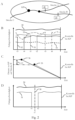
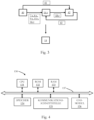
- the device 5 determines a position 9 during the check, which is indicative of the position of the vehicle 2 and thus also of the checkpoint KP.
- FIG. 2B Examples of embodiments of movement profiles on the AC routes are illustrated schematically.
- Fig. 2B shows the real movement profile 30 of vehicle 2 on route B.
- Fig. 2B shows the movement profile 31 of the vehicle 2 on the route B recorded by the control device 3, which can be extracted from the read-out travel data 7.
- the first comparison movement profile 32 of the route B has a typical pause time between the times t3 and t4.
- the machine learning algorithm 14 determines that the recorded movement profile 31 for route A is to be classified as manipulated. For example, due to the pause time between t1 and t2 and not between t5 and t6 and the significantly different course of the movement profiles 31 and 33.
- Route A also has a maximum speed profile and an altitude profile (route data 16 of route A), which mean that the recorded movement profile 31 cannot have been created on route A.
- the machine learning algorithm 14 determines that the recorded movement profile 31 for the route B is to be classified as manipulated, for example due to the pause time between t1 and t2 and not between t3 and t4 and the temporally compressed course of the recorded movement profile 31 compared to the first comparison movement profile 32.
- the machine learning algorithm 14 could still classify the recorded movement profile 31 as manipulated on route B due to the temporally compressed course of the recorded movement profile 31 compared to the first comparison movement profile 32.
- Fig. 2C is shown schematically and by way of example how environmental data 15 improves the classification of the machine learning algorithm 14.
- the dotted line illustrates the distance to the checkpoint KP based on the recorded movement profile 31.
- Point 35 marks the distance at which the supposed break time was taken.
- the short dashed line illustrates the distance to the control point KP based on the first comparison movement profile 32.
- Point 36 marks the distance at which the typical break time is taken.
- the distance 37 marks the discrepancy between the two distances.
- the environmental data show that in the vicinity of the checkpoint KP on route B there is only rest area 21 where breaks can be taken.
- the distance resulting from the environmental data corresponds to the distance at point 36. Therefore, based on the environmental data, the machine learning algorithm 14 further classifies the recorded movement profile 31 as manipulated on route B.
- Fig. 2D is shown schematically and by way of example how control unit data 8 could improve the classification of the machine learning algorithm 14.
- the read-out control unit data 8 shows an error message 38 at time t7, which here reports, for example, the triggering of the ABS system.
- error message 38 occurs within the pause time between t1 and t2, so the ABS system's activation at this time is highly unlikely. Error message 38 could also be used to identify mileage readings that appear to be manipulated, since error message 38 stores the mileage at the time the error occurs.
- the machine learning algorithm 14 outputs a classification result 18, which is indicative of a manipulation of the trip data 7.
- Fig. 3 schematically illustrates in a block diagram an embodiment of a training method for a machine learning algorithm 14-t for determining a manipulation of travel data 7 of a control device 3 of a vehicle 2.
- the machine learning algorithm 14-t is in the training phase here and is based on a neural network in this embodiment.
- the machine learning algorithm 14-t is trained with a training dataset 40.
- the training data set 40 was determined using a large number of comparison data from a large number of vehicles and from a large number of journeys with a training vehicle, with manipulated and non-manipulated data being available.
- the data sets (except for classification 41) are fed into the machine learning algorithm 14-t, which outputs a classification result 18-t for each data set based on this.
- the classification result 18-t and the classification 41 are input into a loss function 42, where the loss function 42 is a cross entropy loss.
- the weight changes 43 are output and the weights of the machine learning algorithm 14-t are updated accordingly.
- the trained machine learning algorithm 14 with trained weights is available.
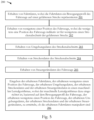
- Fig. 4 schematically illustrates in a block diagram an embodiment of a general-purpose computer 130.
- the general-purpose computer 130 represents an electronic circuit with which the data processing apparatus 12 and the device 5 can be implemented as described herein.
- the general purpose computer 130 has components 131 to 135, a GNS module 136 in the case of device 5 and a data bus 137.
- Embodiments that use software, firmware, programs, or the like to perform the methods described herein may be installed on the general-purpose computer 130, which is then configured to be suitable for the particular embodiment.
- the general-purpose computer 130 has a CPU 131 ("Central Processing Unit”) that can execute various types of procedures and methods as described herein, e.g., in accordance with programs stored in a read-only memory (“ROM”) 132, stored in a memory 134, and loaded into a random access memory (“RAM”) 133.
- ROM read-only memory
- RAM random access memory
- the CPU 131, the ROM 132, the RAM 133 and the memory are connected to the data bus 137.
- a communication interface 135 is connected to the data bus 137, which can be configured, for example, for communication via a local area network (LAN), a wireless local area network (WLAN), a mobile telecommunications system (GSM, UMTS, LTE, NR, etc.), Bluetooth, infrared, etc.
- the communication interface implements corresponding hardware interfaces and communication protocols.
- the GNS module 136 is connected to the data bus 137 and can determine a position in accordance with a global navigation system such as GPS or Galileo.
- Fig. 5 schematically illustrates in a flowchart an embodiment of a method 200 for determining manipulation of travel data of a control device of a vehicle, which in some embodiments runs on the general-purpose computer 130.
- trip data is obtained, wherein the trip data represents a movement profile of the vehicle along a traveled route, as discussed herein.
- At 202 at least one position of the vehicle is obtained, wherein the at least one position of the vehicle is indicative of at least one route segment of the traveled route as discussed herein.
- route data of the route section is obtained as discussed herein.
- control unit data of the route section is obtained as discussed herein.
- the obtained travel data, the obtained at least one position of the vehicle, the obtained environmental data, the obtained route data and the obtained control unit data are input into a machine learning algorithm, wherein the machine learning algorithm is configured to determine, based on the movement profile of the vehicle, the obtained at least one position of the vehicle, the obtained environmental data, the obtained route data and the obtained control unit data, whether the obtained travel data has been manipulated.
Landscapes
- Physics & Mathematics (AREA)
- General Physics & Mathematics (AREA)
- Traffic Control Systems (AREA)
Claims (9)
- Procédé pour déterminer une manipulation de données d'itinéraire (7) d'un appareil de contrôle (3) d'un camion (2), comprenant :acquisition des données d'itinéraire (7), les données d'itinéraire (7) représentant un profil de déplacement (31) du camion (2) sur un trajet parcouru, le profil de déplacement (31) étant caractérisé par un profil de vitesse de conduite ainsi que par des temps de conduite et des temps de pause qui sont représentés dans les données d'itinéraire (7) ;acquisition d'une position (9) du camion (2), ladite position étant déterminée à un point de contrôle (KP) lors d'un contrôle du camion (2), ladite position (9) du camion (2) étant indicative d'au moins un tronçon du trajet parcouru ; etentrée des données d'itinéraire (7) acquises et de ladite position (9) du camion (2) acquise dans un réseau neuronal (14), le réseau neuronal (14) étant configuré pour déterminer, sur la base du profil de déplacement (31) du camion (2) et de ladite position (9) du camion (2) acquise, si les données d'itinéraire (7) acquises ont été manipulées.
- Procédé selon la revendication 1, comprenant en outre :acquisition, sur la base de ladite position (9), de données environnementales (15) du tronçon de trajet ; etentrée des données environnementales (15) acquises du tronçon de trajet dans le réseau neuronal (14), le réseau neuronal (14) déterminant en outre, sur la base des données environnementales (15) acquises du tronçon de trajet, si les données d'itinéraire (7) acquises ont été manipulées.
- Procédé selon la revendication 2, dans lequel les données environnementales (15) du tronçon de trajet représentent des positions de parkings (20), d'aires de repos (21), de stations-service et/ou de péages.
- Procédé selon l'une des revendications précédentes, comprenant en outre :acquisition, sur la base de ladite position (9), de données de trajet (16) du tronçon de trajet ; etentrée des données de trajet (16) acquises pour le tronçon de trajet dans le réseau neuronal (14), le réseau neuronal (14) déterminant en outre, sur la base des données de trajet (16) acquises pour le tronçon de trajet, si les données d'itinéraire (7) acquises ont été manipulées.
- Procédé selon la revendication 4, dans lequel les données de trajet (16) du tronçon de trajet représentent un profil de vitesse maximale et/ou un profil d'altitude du tronçon de trajet.
- Procédé selon l'une des revendications précédentes, comprenant en outre :acquisition de données d'unité de commande (8) du camion (2), les données d'unité de commande (8) ayant été enregistrées au moins en partie pendant la période des données d'itinéraire (7); etentrée des données d'unité de commande (8) acquises dans le réseau neuronal (14), le réseau neuronal (14) déterminant en outre, sur la base des données d'unité de commande (8) acquises, si les données d'itinéraire (7) acquises ont été manipulées.
- Procédé selon la revendication 6, dans lequel les données d'unité de commande (8) contiennent des données d'erreur, les données d'erreur représentant des messages d'erreur (38).
- Dispositif de traitement de données (12) comprenant un circuit électronique, dans lequel le circuit électronique est configuré pour exécuter le procédé selon l'une des revendications précédentes.
- Système (1) pour déterminer une manipulation de données d'itinéraire (7) d'un appareil de contrôle (3) d'un camion (2), comprenant :
un appareil (5) comprenant un circuit électronique, le circuit électronique étant configuré pour :lire les données d'itinéraire (7) de l'appareil de contrôle (3), les données d'itinéraire (7) représentant un profil de déplacement (31) du camion (2) sur un trajet parcouru, le profil de déplacement (31) étant caractérisé par un profil de vitesse de conduite ainsi que par des temps de conduite et des temps de pause qui sont représentés dans les données d'itinéraire (7),déterminer une propre position (9) à un point de contrôle (KP) lors d'un contrôle du camion (2)transmettre les données d'itinéraire (7) lues et la propre position (9) à un dispositif de traitement de données (12) via un réseau (11), la propre position (9) étant indicative d'une position (9) du camion (2) et la position (9) du camion (2) étant indicative d'au moins un tronçon du trajet parcouru; etle dispositif de traitement de données (12) comprenant un circuit électronique, le circuit électronique étant configuré pour :recevoir les données d'itinéraire (7) ;recevoir la position (9) de l'appareil (5) ; etentrer les données d'itinéraire (7) acquises et la position (9) de l'appareil (5) acquise dans un réseau neuronal (14), le réseau neuronal (14) étant configuré pour déterminer, sur la base du profil de déplacement (31) du camion (2) et de la position (9) de l'appareil (5) acquise, si les données d'itinéraire (7) acquises ont été manipulées.
Applications Claiming Priority (1)
| Application Number | Priority Date | Filing Date | Title |
|---|---|---|---|
| DE102021103697.6A DE102021103697A1 (de) | 2021-02-17 | 2021-02-17 | Verfahren, vorrichtung zur datenverarbeitung, gerät und system |
Publications (2)
| Publication Number | Publication Date |
|---|---|
| EP4047569A1 EP4047569A1 (fr) | 2022-08-24 |
| EP4047569B1 true EP4047569B1 (fr) | 2025-07-09 |
Family
ID=80449090
Family Applications (1)
| Application Number | Title | Priority Date | Filing Date |
|---|---|---|---|
| EP22157067.4A Active EP4047569B1 (fr) | 2021-02-17 | 2022-02-16 | Procédé, dispositif de traitement des données et système |
Country Status (2)
| Country | Link |
|---|---|
| EP (1) | EP4047569B1 (fr) |
| DE (1) | DE102021103697A1 (fr) |
Family Cites Families (7)
| Publication number | Priority date | Publication date | Assignee | Title |
|---|---|---|---|---|
| DE102012215601A1 (de) | 2012-09-03 | 2014-03-06 | Continental Automotive Gmbh | Verfahren und Vorrichtung zum Ermitteln eines Werts einer bewegungsabhängigen Größe |
| WO2018204253A1 (fr) | 2017-05-01 | 2018-11-08 | PiMios, LLC | Diagnostics automobiles faisant appel à des modèles d'apprentissage supervisés |
| DE102017209817A1 (de) | 2017-06-09 | 2018-12-13 | Robert Bosch Gmbh | Verfahren zur Manipulationssicherung eines Kilometerstandes eines Fahrzeugs |
| DE102018201064B4 (de) | 2018-01-24 | 2025-10-02 | Bayerische Motoren Werke Aktiengesellschaft | Verfahren zum überwachen einer zurückgelegten gesamtwegstrecke sowie vorrichtung, fahrzeug und server |
| US11328219B2 (en) * | 2018-04-12 | 2022-05-10 | Baidu Usa Llc | System and method for training a machine learning model deployed on a simulation platform |
| DE102019119784B4 (de) | 2019-07-22 | 2021-06-10 | Bayerische Motoren Werke Aktiengesellschaft | Verfahren und System zum Erkennen einer Manipulation eines Fahrzeugs |
| DE102019135608A1 (de) | 2019-12-20 | 2021-06-24 | Bayerische Motoren Werke Aktiengesellschaft | Verfahren, Vorrichtung und System zur Detektion von anomalen Betriebszuständen eines Geräts |
-
2021
- 2021-02-17 DE DE102021103697.6A patent/DE102021103697A1/de active Pending
-
2022
- 2022-02-16 EP EP22157067.4A patent/EP4047569B1/fr active Active
Also Published As
| Publication number | Publication date |
|---|---|
| DE102021103697A1 (de) | 2022-08-18 |
| EP4047569A1 (fr) | 2022-08-24 |
Similar Documents
| Publication | Publication Date | Title |
|---|---|---|
| EP0700009B1 (fr) | Procédé et système d'évaluation individuelle du risque véhicule automobile | |
| DE202019005891U1 (de) | Fahrzeugtelematik von Fahrzeugunfällen | |
| DE102016220913A1 (de) | Verfahren und Vorrichtung zur Generierung von Testfällen für autonome Fahrzeuge | |
| DE102012021919B4 (de) | Modell-basiertes Effizienz-Scoring in der Automobiltechnik | |
| DE102019133268A1 (de) | Auslöserbasierte boni mit blockchain für fahrzeugflotte | |
| CN206684779U (zh) | 一种基于adas智能车载终端的车险管理服务系统 | |
| DE112018005030T5 (de) | Verwaltungseinrichtung, fahrzeug, überprüfungseinrichtung undfahrzeugüberprüfungssystem sowie informationsverarbeitungsverfahren dafür | |
| EP1979886B1 (fr) | Procédé et dispositif de détection du trafic traversant une zone | |
| WO2018036824A1 (fr) | Système et procédé de production de manière interrogeable et d'actualisation de données de classification relatives à de places de stationnement | |
| EP3446302B1 (fr) | Procédé, dispositif et agencement de poursuite d'objets en mouvement | |
| DE102017211387A1 (de) | System und Verfahren zum automatisierten Manövrieren eines Ego-Fahrzeugs | |
| WO2018059874A1 (fr) | Procédé et dispositif de création d'une carte de danger dynamique | |
| DE102018126830A1 (de) | Vorrichtung und Steuereinheit zur Automatisierung einer Zustandsänderung einer Fensterscheibe eines Fahrzeugs | |
| DE102020206128A1 (de) | Verfahren zum Steuern einer flottenbasierten Zustandsüberwachung eines Straßenabschnitts eines Straßennetzes sowie zugehöriges System und Kraftfahrzeug und zugehörige Servereinrichtung | |
| CN109094574A (zh) | 一种基于台架的无人车驾驶状态测量控制系统 | |
| AT524959B1 (de) | Datenerfassung im Fahrzeug | |
| DE112018000494T5 (de) | Fahrzeugsteuerungsvorrichtung und managementsystem | |
| DE102017223621A1 (de) | Verfahren und Steuereinheit zur Steuerung einer Funktion eines zumindest teilweise automatisiert fahrenden Fahrzeugs | |
| DE102012222931A1 (de) | Verfahren und Vorrichtung zur Ermittlung einer Position und/oder Art einer Straßeninfrastruktureinrichtung | |
| DE102021201978A1 (de) | Sammeln von sensordaten von fahrzeugen | |
| DE102020211477A1 (de) | Verfahren zum Bewerten eines Fahrverhaltens eines Kraftfahrzeugs | |
| DE102017004473A1 (de) | Verfahren und Vorrichtung zum Erstellen eines Modells für die Umgebung eines Fahrzeugs | |
| DE102019206870A1 (de) | Verfahren zum Ermitteln einer durch einen Verkehrsteilnehmer verursachten Gefährdung und zum Einleiten einer Überwachung des Verkehrsteilnehmers und Steuergerät | |
| WO2009015989A1 (fr) | Procédé de contrôle d'un message de position du véhicule émis par un véhicule et un émetteur-récepteur destiné à être utilisé dans un véhicule | |
| DE102015213594A1 (de) | Verfahren, computer-lesbares Medium, und System zum Erfassen einer Verkehrssituation eines oder mehrerer Fahrzeuge in einer Umgebung eines Egofahrzeugs |
Legal Events
| Date | Code | Title | Description |
|---|---|---|---|
| PUAI | Public reference made under article 153(3) epc to a published international application that has entered the european phase |
Free format text: ORIGINAL CODE: 0009012 |
|
| STAA | Information on the status of an ep patent application or granted ep patent |
Free format text: STATUS: THE APPLICATION HAS BEEN PUBLISHED |
|
| AK | Designated contracting states |
Kind code of ref document: A1 Designated state(s): AL AT BE BG CH CY CZ DE DK EE ES FI FR GB GR HR HU IE IS IT LI LT LU LV MC MK MT NL NO PL PT RO RS SE SI SK SM TR |
|
| STAA | Information on the status of an ep patent application or granted ep patent |
Free format text: STATUS: REQUEST FOR EXAMINATION WAS MADE |
|
| 17P | Request for examination filed |
Effective date: 20230222 |
|
| RBV | Designated contracting states (corrected) |
Designated state(s): AL AT BE BG CH CY CZ DE DK EE ES FI FR GB GR HR HU IE IS IT LI LT LU LV MC MK MT NL NO PL PT RO RS SE SI SK SM TR |
|
| GRAP | Despatch of communication of intention to grant a patent |
Free format text: ORIGINAL CODE: EPIDOSNIGR1 |
|
| STAA | Information on the status of an ep patent application or granted ep patent |
Free format text: STATUS: GRANT OF PATENT IS INTENDED |
|
| INTG | Intention to grant announced |
Effective date: 20250311 |
|
| RAP3 | Party data changed (applicant data changed or rights of an application transferred) |
Owner name: VOGT, JUERGEN |
|
| RIN1 | Information on inventor provided before grant (corrected) |
Inventor name: VOGT, JUERGEN |
|
| GRAS | Grant fee paid |
Free format text: ORIGINAL CODE: EPIDOSNIGR3 |
|
| GRAA | (expected) grant |
Free format text: ORIGINAL CODE: 0009210 |
|
| STAA | Information on the status of an ep patent application or granted ep patent |
Free format text: STATUS: THE PATENT HAS BEEN GRANTED |
|
| AK | Designated contracting states |
Kind code of ref document: B1 Designated state(s): AL AT BE BG CH CY CZ DE DK EE ES FI FR GB GR HR HU IE IS IT LI LT LU LV MC MK MT NL NO PL PT RO RS SE SI SK SM TR |
|
| REG | Reference to a national code |
Ref country code: GB Ref legal event code: FG4D Free format text: NOT ENGLISH |
|
| REG | Reference to a national code |
Ref country code: CH Ref legal event code: EP |
|
| REG | Reference to a national code |
Ref country code: IE Ref legal event code: FG4D Free format text: LANGUAGE OF EP DOCUMENT: GERMAN |
|
| REG | Reference to a national code |
Ref country code: DE Ref legal event code: R096 Ref document number: 502022004560 Country of ref document: DE |
|
| REG | Reference to a national code |
Ref country code: NL Ref legal event code: MP Effective date: 20250709 |
|
| PG25 | Lapsed in a contracting state [announced via postgrant information from national office to epo] |
Ref country code: PT Free format text: LAPSE BECAUSE OF FAILURE TO SUBMIT A TRANSLATION OF THE DESCRIPTION OR TO PAY THE FEE WITHIN THE PRESCRIBED TIME-LIMIT Effective date: 20251110 |
|
| PG25 | Lapsed in a contracting state [announced via postgrant information from national office to epo] |
Ref country code: NL Free format text: LAPSE BECAUSE OF FAILURE TO SUBMIT A TRANSLATION OF THE DESCRIPTION OR TO PAY THE FEE WITHIN THE PRESCRIBED TIME-LIMIT Effective date: 20250709 |
|
| PG25 | Lapsed in a contracting state [announced via postgrant information from national office to epo] |
Ref country code: IS Free format text: LAPSE BECAUSE OF FAILURE TO SUBMIT A TRANSLATION OF THE DESCRIPTION OR TO PAY THE FEE WITHIN THE PRESCRIBED TIME-LIMIT Effective date: 20251109 |
|
| PG25 | Lapsed in a contracting state [announced via postgrant information from national office to epo] |
Ref country code: NO Free format text: LAPSE BECAUSE OF FAILURE TO SUBMIT A TRANSLATION OF THE DESCRIPTION OR TO PAY THE FEE WITHIN THE PRESCRIBED TIME-LIMIT Effective date: 20251009 |
|
| REG | Reference to a national code |
Ref country code: LT Ref legal event code: MG9D |
|
| PG25 | Lapsed in a contracting state [announced via postgrant information from national office to epo] |
Ref country code: FI Free format text: LAPSE BECAUSE OF FAILURE TO SUBMIT A TRANSLATION OF THE DESCRIPTION OR TO PAY THE FEE WITHIN THE PRESCRIBED TIME-LIMIT Effective date: 20250709 |
|
| PG25 | Lapsed in a contracting state [announced via postgrant information from national office to epo] |
Ref country code: HR Free format text: LAPSE BECAUSE OF FAILURE TO SUBMIT A TRANSLATION OF THE DESCRIPTION OR TO PAY THE FEE WITHIN THE PRESCRIBED TIME-LIMIT Effective date: 20250709 |
|
| PG25 | Lapsed in a contracting state [announced via postgrant information from national office to epo] |
Ref country code: GR Free format text: LAPSE BECAUSE OF FAILURE TO SUBMIT A TRANSLATION OF THE DESCRIPTION OR TO PAY THE FEE WITHIN THE PRESCRIBED TIME-LIMIT Effective date: 20251010 |
|
| PG25 | Lapsed in a contracting state [announced via postgrant information from national office to epo] |
Ref country code: SE Free format text: LAPSE BECAUSE OF FAILURE TO SUBMIT A TRANSLATION OF THE DESCRIPTION OR TO PAY THE FEE WITHIN THE PRESCRIBED TIME-LIMIT Effective date: 20250709 |
|
| PG25 | Lapsed in a contracting state [announced via postgrant information from national office to epo] |
Ref country code: LV Free format text: LAPSE BECAUSE OF FAILURE TO SUBMIT A TRANSLATION OF THE DESCRIPTION OR TO PAY THE FEE WITHIN THE PRESCRIBED TIME-LIMIT Effective date: 20250709 |
|
| PG25 | Lapsed in a contracting state [announced via postgrant information from national office to epo] |
Ref country code: BG Free format text: LAPSE BECAUSE OF FAILURE TO SUBMIT A TRANSLATION OF THE DESCRIPTION OR TO PAY THE FEE WITHIN THE PRESCRIBED TIME-LIMIT Effective date: 20250709 Ref country code: PL Free format text: LAPSE BECAUSE OF FAILURE TO SUBMIT A TRANSLATION OF THE DESCRIPTION OR TO PAY THE FEE WITHIN THE PRESCRIBED TIME-LIMIT Effective date: 20250709 |
|
| PG25 | Lapsed in a contracting state [announced via postgrant information from national office to epo] |
Ref country code: RS Free format text: LAPSE BECAUSE OF FAILURE TO SUBMIT A TRANSLATION OF THE DESCRIPTION OR TO PAY THE FEE WITHIN THE PRESCRIBED TIME-LIMIT Effective date: 20251009 |
|
| PG25 | Lapsed in a contracting state [announced via postgrant information from national office to epo] |
Ref country code: ES Free format text: LAPSE BECAUSE OF FAILURE TO SUBMIT A TRANSLATION OF THE DESCRIPTION OR TO PAY THE FEE WITHIN THE PRESCRIBED TIME-LIMIT Effective date: 20250709 |
|
| PG25 | Lapsed in a contracting state [announced via postgrant information from national office to epo] |
Ref country code: SM Free format text: LAPSE BECAUSE OF FAILURE TO SUBMIT A TRANSLATION OF THE DESCRIPTION OR TO PAY THE FEE WITHIN THE PRESCRIBED TIME-LIMIT Effective date: 20250709 |
|
| PG25 | Lapsed in a contracting state [announced via postgrant information from national office to epo] |
Ref country code: DK Free format text: LAPSE BECAUSE OF FAILURE TO SUBMIT A TRANSLATION OF THE DESCRIPTION OR TO PAY THE FEE WITHIN THE PRESCRIBED TIME-LIMIT Effective date: 20250709 |
|
| PGFP | Annual fee paid to national office [announced via postgrant information from national office to epo] |
Ref country code: AT Payment date: 20260301 Year of fee payment: 5 |
|
| PG25 | Lapsed in a contracting state [announced via postgrant information from national office to epo] |
Ref country code: IT Free format text: LAPSE BECAUSE OF FAILURE TO SUBMIT A TRANSLATION OF THE DESCRIPTION OR TO PAY THE FEE WITHIN THE PRESCRIBED TIME-LIMIT Effective date: 20250709 |
|
| PG25 | Lapsed in a contracting state [announced via postgrant information from national office to epo] |
Ref country code: CZ Free format text: LAPSE BECAUSE OF FAILURE TO SUBMIT A TRANSLATION OF THE DESCRIPTION OR TO PAY THE FEE WITHIN THE PRESCRIBED TIME-LIMIT Effective date: 20250709 |
|
| PG25 | Lapsed in a contracting state [announced via postgrant information from national office to epo] |
Ref country code: SK Free format text: LAPSE BECAUSE OF FAILURE TO SUBMIT A TRANSLATION OF THE DESCRIPTION OR TO PAY THE FEE WITHIN THE PRESCRIBED TIME-LIMIT Effective date: 20250709 Ref country code: EE Free format text: LAPSE BECAUSE OF FAILURE TO SUBMIT A TRANSLATION OF THE DESCRIPTION OR TO PAY THE FEE WITHIN THE PRESCRIBED TIME-LIMIT Effective date: 20250709 |
|
| PLBE | No opposition filed within time limit |
Free format text: ORIGINAL CODE: 0009261 |
|
| STAA | Information on the status of an ep patent application or granted ep patent |
Free format text: STATUS: NO OPPOSITION FILED WITHIN TIME LIMIT |