EP4049979A1 - Trinkwasser mit kleinen molekülen, verfahren zur herstellung und anwendung - Google Patents
Trinkwasser mit kleinen molekülen, verfahren zur herstellung und anwendung Download PDFInfo
- Publication number
- EP4049979A1 EP4049979A1 EP20879181.4A EP20879181A EP4049979A1 EP 4049979 A1 EP4049979 A1 EP 4049979A1 EP 20879181 A EP20879181 A EP 20879181A EP 4049979 A1 EP4049979 A1 EP 4049979A1
- Authority
- EP
- European Patent Office
- Prior art keywords
- water
- small
- molecule
- drinking water
- hydrogen ion
- Prior art date
- Legal status (The legal status is an assumption and is not a legal conclusion. Google has not performed a legal analysis and makes no representation as to the accuracy of the status listed.)
- Withdrawn
Links
- 150000003384 small molecules Chemical class 0.000 title claims abstract description 75
- 239000003651 drinking water Substances 0.000 title claims abstract description 43
- 235000020188 drinking water Nutrition 0.000 title claims abstract description 43
- 238000002360 preparation method Methods 0.000 title claims abstract description 20
- XLYOFNOQVPJJNP-UHFFFAOYSA-N water Substances O XLYOFNOQVPJJNP-UHFFFAOYSA-N 0.000 claims abstract description 245
- GPRLSGONYQIRFK-UHFFFAOYSA-N hydron Chemical compound [H+] GPRLSGONYQIRFK-UHFFFAOYSA-N 0.000 claims abstract description 40
- 238000002156 mixing Methods 0.000 claims abstract description 20
- 239000001257 hydrogen Substances 0.000 claims description 37
- 229910052739 hydrogen Inorganic materials 0.000 claims description 37
- -1 Hydrogen ions Chemical class 0.000 claims description 15
- 238000000034 method Methods 0.000 claims description 15
- 239000008213 purified water Substances 0.000 claims description 14
- 238000000889 atomisation Methods 0.000 claims description 11
- 230000005684 electric field Effects 0.000 claims description 11
- 125000004435 hydrogen atom Chemical group [H]* 0.000 claims description 10
- 238000003860 storage Methods 0.000 claims description 10
- 125000004430 oxygen atom Chemical group O* 0.000 claims description 8
- 238000001802 infusion Methods 0.000 claims description 6
- UFHFLCQGNIYNRP-UHFFFAOYSA-N Hydrogen Chemical compound [H][H] UFHFLCQGNIYNRP-UHFFFAOYSA-N 0.000 claims description 5
- 206010012601 diabetes mellitus Diseases 0.000 claims description 5
- 239000008280 blood Substances 0.000 claims description 4
- 210000004369 blood Anatomy 0.000 claims description 4
- LEHOTFFKMJEONL-UHFFFAOYSA-N Uric Acid Chemical compound N1C(=O)NC(=O)C2=C1NC(=O)N2 LEHOTFFKMJEONL-UHFFFAOYSA-N 0.000 claims description 3
- TVWHNULVHGKJHS-UHFFFAOYSA-N Uric acid Natural products N1C(=O)NC(=O)C2NC(=O)NC21 TVWHNULVHGKJHS-UHFFFAOYSA-N 0.000 claims description 3
- 239000002994 raw material Substances 0.000 claims description 3
- 230000009467 reduction Effects 0.000 claims description 3
- 229940116269 uric acid Drugs 0.000 claims description 3
- 210000004185 liver Anatomy 0.000 claims description 2
- 208000030159 metabolic disease Diseases 0.000 claims description 2
- 239000008223 sterile water Substances 0.000 claims description 2
- 150000002431 hydrogen Chemical class 0.000 claims 2
- 238000001727 in vivo Methods 0.000 claims 1
- 230000000694 effects Effects 0.000 abstract description 10
- 230000035622 drinking Effects 0.000 abstract description 4
- 230000036541 health Effects 0.000 abstract description 4
- 210000004027 cell Anatomy 0.000 description 10
- 238000010586 diagram Methods 0.000 description 8
- 102000004169 proteins and genes Human genes 0.000 description 8
- 108090000623 proteins and genes Proteins 0.000 description 8
- 239000003053 toxin Substances 0.000 description 8
- 231100000765 toxin Toxicity 0.000 description 8
- 108700012359 toxins Proteins 0.000 description 8
- 230000035699 permeability Effects 0.000 description 7
- 210000000170 cell membrane Anatomy 0.000 description 5
- 238000001784 detoxification Methods 0.000 description 5
- 230000036571 hydration Effects 0.000 description 5
- 238000006703 hydration reaction Methods 0.000 description 5
- 235000015097 nutrients Nutrition 0.000 description 5
- 238000005481 NMR spectroscopy Methods 0.000 description 4
- 239000003814 drug Substances 0.000 description 4
- 210000001035 gastrointestinal tract Anatomy 0.000 description 4
- NOESYZHRGYRDHS-UHFFFAOYSA-N insulin Chemical compound N1C(=O)C(NC(=O)C(CCC(N)=O)NC(=O)C(CCC(O)=O)NC(=O)C(C(C)C)NC(=O)C(NC(=O)CN)C(C)CC)CSSCC(C(NC(CO)C(=O)NC(CC(C)C)C(=O)NC(CC=2C=CC(O)=CC=2)C(=O)NC(CCC(N)=O)C(=O)NC(CC(C)C)C(=O)NC(CCC(O)=O)C(=O)NC(CC(N)=O)C(=O)NC(CC=2C=CC(O)=CC=2)C(=O)NC(CSSCC(NC(=O)C(C(C)C)NC(=O)C(CC(C)C)NC(=O)C(CC=2C=CC(O)=CC=2)NC(=O)C(CC(C)C)NC(=O)C(C)NC(=O)C(CCC(O)=O)NC(=O)C(C(C)C)NC(=O)C(CC(C)C)NC(=O)C(CC=2NC=NC=2)NC(=O)C(CO)NC(=O)CNC2=O)C(=O)NCC(=O)NC(CCC(O)=O)C(=O)NC(CCCNC(N)=N)C(=O)NCC(=O)NC(CC=3C=CC=CC=3)C(=O)NC(CC=3C=CC=CC=3)C(=O)NC(CC=3C=CC(O)=CC=3)C(=O)NC(C(C)O)C(=O)N3C(CCC3)C(=O)NC(CCCCN)C(=O)NC(C)C(O)=O)C(=O)NC(CC(N)=O)C(O)=O)=O)NC(=O)C(C(C)CC)NC(=O)C(CO)NC(=O)C(C(C)O)NC(=O)C1CSSCC2NC(=O)C(CC(C)C)NC(=O)C(NC(=O)C(CCC(N)=O)NC(=O)C(CC(N)=O)NC(=O)C(NC(=O)C(N)CC=1C=CC=CC=1)C(C)C)CC1=CN=CN1 NOESYZHRGYRDHS-UHFFFAOYSA-N 0.000 description 4
- 239000002699 waste material Substances 0.000 description 4
- 102000016943 Muramidase Human genes 0.000 description 3
- 108010014251 Muramidase Proteins 0.000 description 3
- 108010062010 N-Acetylmuramoyl-L-alanine Amidase Proteins 0.000 description 3
- 238000004458 analytical method Methods 0.000 description 3
- 230000009286 beneficial effect Effects 0.000 description 3
- 229940079593 drug Drugs 0.000 description 3
- 230000000968 intestinal effect Effects 0.000 description 3
- 239000007788 liquid Substances 0.000 description 3
- 229960000274 lysozyme Drugs 0.000 description 3
- 235000010335 lysozyme Nutrition 0.000 description 3
- 239000004325 lysozyme Substances 0.000 description 3
- 239000008239 natural water Substances 0.000 description 3
- 239000000126 substance Substances 0.000 description 3
- 239000008399 tap water Substances 0.000 description 3
- 235000020679 tap water Nutrition 0.000 description 3
- 102000004877 Insulin Human genes 0.000 description 2
- 108090001061 Insulin Proteins 0.000 description 2
- QVGXLLKOCUKJST-UHFFFAOYSA-N atomic oxygen Chemical compound [O] QVGXLLKOCUKJST-UHFFFAOYSA-N 0.000 description 2
- HVYWMOMLDIMFJA-DPAQBDIFSA-N cholesterol Chemical compound C1C=C2C[C@@H](O)CC[C@]2(C)[C@@H]2[C@@H]1[C@@H]1CC[C@H]([C@H](C)CCCC(C)C)[C@@]1(C)CC2 HVYWMOMLDIMFJA-DPAQBDIFSA-N 0.000 description 2
- 230000003247 decreasing effect Effects 0.000 description 2
- 238000001514 detection method Methods 0.000 description 2
- 201000010099 disease Diseases 0.000 description 2
- 208000037265 diseases, disorders, signs and symptoms Diseases 0.000 description 2
- 230000002708 enhancing effect Effects 0.000 description 2
- 238000002474 experimental method Methods 0.000 description 2
- 230000006870 function Effects 0.000 description 2
- 229940125396 insulin Drugs 0.000 description 2
- JVTAAEKCZFNVCJ-UHFFFAOYSA-N lactic acid Chemical compound CC(O)C(O)=O JVTAAEKCZFNVCJ-UHFFFAOYSA-N 0.000 description 2
- 230000007774 longterm Effects 0.000 description 2
- 230000004060 metabolic process Effects 0.000 description 2
- 239000002207 metabolite Substances 0.000 description 2
- 210000000056 organ Anatomy 0.000 description 2
- 239000001301 oxygen Substances 0.000 description 2
- 229910052760 oxygen Inorganic materials 0.000 description 2
- 230000035790 physiological processes and functions Effects 0.000 description 2
- 238000011160 research Methods 0.000 description 2
- 238000012360 testing method Methods 0.000 description 2
- 150000003626 triacylglycerols Chemical class 0.000 description 2
- 206010010774 Constipation Diseases 0.000 description 1
- 108090000790 Enzymes Proteins 0.000 description 1
- 102000004190 Enzymes Human genes 0.000 description 1
- 102000017011 Glycated Hemoglobin A Human genes 0.000 description 1
- 108010014663 Glycated Hemoglobin A Proteins 0.000 description 1
- 241001465754 Metazoa Species 0.000 description 1
- 108010047956 Nucleosomes Proteins 0.000 description 1
- 208000008589 Obesity Diseases 0.000 description 1
- 210000001015 abdomen Anatomy 0.000 description 1
- 210000000579 abdominal fat Anatomy 0.000 description 1
- 238000009825 accumulation Methods 0.000 description 1
- 230000004913 activation Effects 0.000 description 1
- 239000004480 active ingredient Substances 0.000 description 1
- 150000001413 amino acids Chemical class 0.000 description 1
- 125000004429 atom Chemical group 0.000 description 1
- 230000008827 biological function Effects 0.000 description 1
- 230000015572 biosynthetic process Effects 0.000 description 1
- 230000036760 body temperature Effects 0.000 description 1
- 230000010261 cell growth Effects 0.000 description 1
- 238000005119 centrifugation Methods 0.000 description 1
- 239000000919 ceramic Substances 0.000 description 1
- 230000008859 change Effects 0.000 description 1
- 235000012000 cholesterol Nutrition 0.000 description 1
- 238000007796 conventional method Methods 0.000 description 1
- 230000007547 defect Effects 0.000 description 1
- 230000037213 diet Effects 0.000 description 1
- 235000005911 diet Nutrition 0.000 description 1
- 238000009792 diffusion process Methods 0.000 description 1
- 230000029087 digestion Effects 0.000 description 1
- 238000004090 dissolution Methods 0.000 description 1
- 239000012153 distilled water Substances 0.000 description 1
- 230000009982 effect on human Effects 0.000 description 1
- 230000005672 electromagnetic field Effects 0.000 description 1
- 230000001804 emulsifying effect Effects 0.000 description 1
- 230000007613 environmental effect Effects 0.000 description 1
- 239000003344 environmental pollutant Substances 0.000 description 1
- 229940088598 enzyme Drugs 0.000 description 1
- 230000003203 everyday effect Effects 0.000 description 1
- 235000013305 food Nutrition 0.000 description 1
- 230000008821 health effect Effects 0.000 description 1
- 230000005802 health problem Effects 0.000 description 1
- 238000010438 heat treatment Methods 0.000 description 1
- 239000008236 heating water Substances 0.000 description 1
- 230000002209 hydrophobic effect Effects 0.000 description 1
- 230000036737 immune function Effects 0.000 description 1
- 230000006872 improvement Effects 0.000 description 1
- 230000006698 induction Effects 0.000 description 1
- 229910052500 inorganic mineral Inorganic materials 0.000 description 1
- 230000001788 irregular Effects 0.000 description 1
- 235000014655 lactic acid Nutrition 0.000 description 1
- 239000004310 lactic acid Substances 0.000 description 1
- 150000002605 large molecules Chemical class 0.000 description 1
- 238000011031 large-scale manufacturing process Methods 0.000 description 1
- 230000037356 lipid metabolism Effects 0.000 description 1
- 229920002521 macromolecule Polymers 0.000 description 1
- 230000014759 maintenance of location Effects 0.000 description 1
- 238000004519 manufacturing process Methods 0.000 description 1
- 239000000463 material Substances 0.000 description 1
- 238000010297 mechanical methods and process Methods 0.000 description 1
- 230000007721 medicinal effect Effects 0.000 description 1
- 230000002503 metabolic effect Effects 0.000 description 1
- 235000010755 mineral Nutrition 0.000 description 1
- 239000011707 mineral Substances 0.000 description 1
- 239000000203 mixture Substances 0.000 description 1
- 239000002086 nanomaterial Substances 0.000 description 1
- 238000000655 nuclear magnetic resonance spectrum Methods 0.000 description 1
- 210000001623 nucleosome Anatomy 0.000 description 1
- 235000016709 nutrition Nutrition 0.000 description 1
- 230000035764 nutrition Effects 0.000 description 1
- 235000020824 obesity Nutrition 0.000 description 1
- 239000005416 organic matter Substances 0.000 description 1
- RECVMTHOQWMYFX-UHFFFAOYSA-N oxygen(1+) dihydride Chemical compound [OH2+] RECVMTHOQWMYFX-UHFFFAOYSA-N 0.000 description 1
- 238000004806 packaging method and process Methods 0.000 description 1
- 230000008855 peristalsis Effects 0.000 description 1
- 238000000053 physical method Methods 0.000 description 1
- 238000013031 physical testing Methods 0.000 description 1
- 230000001766 physiological effect Effects 0.000 description 1
- 231100000614 poison Toxicity 0.000 description 1
- 239000002574 poison Substances 0.000 description 1
- 231100000719 pollutant Toxicity 0.000 description 1
- 230000003449 preventive effect Effects 0.000 description 1
- 230000008569 process Effects 0.000 description 1
- 108090000765 processed proteins & peptides Proteins 0.000 description 1
- 230000001737 promoting effect Effects 0.000 description 1
- 230000006916 protein interaction Effects 0.000 description 1
- 230000001105 regulatory effect Effects 0.000 description 1
- 239000002904 solvent Substances 0.000 description 1
- 238000001228 spectrum Methods 0.000 description 1
- 230000003068 static effect Effects 0.000 description 1
- 239000011550 stock solution Substances 0.000 description 1
- 238000005728 strengthening Methods 0.000 description 1
- 238000012916 structural analysis Methods 0.000 description 1
- 239000002352 surface water Substances 0.000 description 1
- 230000004083 survival effect Effects 0.000 description 1
- 230000009182 swimming Effects 0.000 description 1
- 230000001225 therapeutic effect Effects 0.000 description 1
- 210000001519 tissue Anatomy 0.000 description 1
- 231100000331 toxic Toxicity 0.000 description 1
- 230000002588 toxic effect Effects 0.000 description 1
- 235000013619 trace mineral Nutrition 0.000 description 1
- 239000011573 trace mineral Substances 0.000 description 1
- 230000009466 transformation Effects 0.000 description 1
Images



Classifications
-
- C—CHEMISTRY; METALLURGY
- C02—TREATMENT OF WATER, WASTE WATER, SEWAGE, OR SLUDGE
- C02F—TREATMENT OF WATER, WASTE WATER, SEWAGE, OR SLUDGE
- C02F1/00—Treatment of water, waste water, or sewage
- C02F1/005—Systems or processes based on supernatural or anthroposophic principles, cosmic or terrestrial radiation, geomancy or rhabdomancy
-
- C—CHEMISTRY; METALLURGY
- C02—TREATMENT OF WATER, WASTE WATER, SEWAGE, OR SLUDGE
- C02F—TREATMENT OF WATER, WASTE WATER, SEWAGE, OR SLUDGE
- C02F1/00—Treatment of water, waste water, or sewage
- C02F1/48—Treatment of water, waste water, or sewage with magnetic or electric fields
-
- A—HUMAN NECESSITIES
- A23—FOODS OR FOODSTUFFS; TREATMENT THEREOF, NOT COVERED BY OTHER CLASSES
- A23L—FOODS, FOODSTUFFS OR NON-ALCOHOLIC BEVERAGES, NOT OTHERWISE PROVIDED FOR; PREPARATION OR TREATMENT THEREOF
- A23L2/00—Non-alcoholic beverages; Dry compositions or concentrates therefor; Preparation or treatment thereof
- A23L2/52—Adding ingredients
- A23L2/68—Acidifying substances
-
- A—HUMAN NECESSITIES
- A61—MEDICAL OR VETERINARY SCIENCE; HYGIENE
- A61K—PREPARATIONS FOR MEDICAL, DENTAL OR TOILETRY PURPOSES
- A61K35/00—Medicinal preparations containing materials or reaction products thereof with undetermined constitution
- A61K35/02—Medicinal preparations containing materials or reaction products thereof with undetermined constitution from inanimate materials
-
- A—HUMAN NECESSITIES
- A61—MEDICAL OR VETERINARY SCIENCE; HYGIENE
- A61P—SPECIFIC THERAPEUTIC ACTIVITY OF CHEMICAL COMPOUNDS OR MEDICINAL PREPARATIONS
- A61P1/00—Drugs for disorders of the alimentary tract or the digestive system
- A61P1/16—Drugs for disorders of the alimentary tract or the digestive system for liver or gallbladder disorders, e.g. hepatoprotective agents, cholagogues, litholytics
-
- A—HUMAN NECESSITIES
- A61—MEDICAL OR VETERINARY SCIENCE; HYGIENE
- A61P—SPECIFIC THERAPEUTIC ACTIVITY OF CHEMICAL COMPOUNDS OR MEDICINAL PREPARATIONS
- A61P3/00—Drugs for disorders of the metabolism
- A61P3/06—Antihyperlipidemics
-
- A—HUMAN NECESSITIES
- A61—MEDICAL OR VETERINARY SCIENCE; HYGIENE
- A61P—SPECIFIC THERAPEUTIC ACTIVITY OF CHEMICAL COMPOUNDS OR MEDICINAL PREPARATIONS
- A61P3/00—Drugs for disorders of the metabolism
- A61P3/08—Drugs for disorders of the metabolism for glucose homeostasis
- A61P3/10—Drugs for disorders of the metabolism for glucose homeostasis for hyperglycaemia, e.g. antidiabetics
Definitions
- the invention relates to drinking water, in particular to proton-attached small-molecule drinking water as well as a preparation method and application occasions thereof.
- Water is vital for life.
- Human tissue is composed mainly of water, and water is used for promoting digestion, regulating body temperature, metabolic waste, and transportation of nutrition and the like on the human body.
- the quality of water determines the health of the human body, so it is very important to drink healthy water.
- water cannot exist in a monomolecular state, and water cannot be found in the form of a structured small molecule group.
- natural water is found in a water molecule group composed of 13-16 water molecules, and may be composed of 5-7 or even fewer water molecules.
- permeability is strong and super-strong biological permeability is achieved.
- the cell membrane can be easily penetrated, such that oxygen, nutrients, minerals and trace elements can be transported into cells.
- nuclear magnetic resonance spectroscopy is used to measure the half-peak width of water, which can reflect the cluster structure of liquid water.
- the larger the half-peak width the larger the cluster of water molecules.
- the smaller the half-peak width the smaller the cluster.
- the half-peak widths from nuclear magnetic resonance spectra of different qualities of water are different.
- the half-peak width of surface water polluted by organic matter is 145 Hz
- the half-peak width of tap water and purified water is generally above 100 Hz
- the half-peak width of high-quality ice spring water is 50-70 Hz.
- the cell membrane water channel is a very narrow channel (the diameter of the narrowest part of the water channel is 2.8 angstroms and the length is 2 nanometers).
- the shape of the water channel is similar to that of an hourglass. Not all water can pass into and out of the cells smoothly through the water channel of the cell membrane but is related to the size of the water molecular cluster. The smaller the molecular mass of water, the higher the activity of water, the stronger the permeability is, and the easier it is to pass through the water channel of the cell membrane. Therefore, the type of water that people drink is important.
- Common tap water is generally a "water cluster" consisting of more than 13 single molecules.
- a toxin is a substance that can interfere with normal physiological activities and destroy body functions.
- Examples of intrinsic toxins include free radicals, cholesterol, fat, uric acid, lactic acid, toxic water, and congestion.
- the intestinal tract is the largest detoxification organ of the human body and undertakes most of the body's detoxification tasks.
- the intestinal tract itself is full of folds and is the site of most toxins and metabolites in the human body.
- modern people's diet is too delicate and irregular, having food safety and other problems.
- the largest detoxification organ has thus become a large base for storing pollutants and dirt.
- Intestinal toxins are also known to be a source of diseases and are one the main culprits in obesity. Studies have shown that women with swimming circles, small belly, abdominal fat, and other problems have varying degrees of intestinal toxin accumulation, causing various health problems. Therefore, a core objective of detoxification is to improve intestinal peristalsis and constipation.
- water exists in the form of a molecular structure.
- a water molecule is composed of two hydrogen atoms and one oxygen atom.
- the two hydrogen atoms are not linearly connected with the oxygen atom at 180 degrees but rather are distributed in a V shape.
- the angles formed between the two hydrogen atoms and the oxygen atom are also different.
- the shared electron pair is strongly biased to one side of the oxygen atom, so that the proton of the hydrogen atom is relatively "exposed.”
- multiple water molecules can be connected together with hydrogen bonds, and multiple water molecules can be connected together with hydrogen bonds to form macromolecular water with a cage structure.
- the research shows that by reducing the large molecular water clusters with cage structures to form small-molecule water, the solubility, permeability, metabolism, diffusion, and emulsifying power of water can be enhanced, thus having a certain "activation” effect, and enhancing the metabolism, lipid metabolism, enzyme activity, and immune function of organisms to a certain extent. Such water is also called “activated water.”
- Davey et al. found that in the nucleosome, a hydrogen bridge is formed between protein and DNA by means of hydrogen bonding with water molecules to maintain the spatial configuration of the protein-DNA.
- the structure of the water can help to explain the transformation mode of the three-dimensional conformation of DNA connected with protein.
- the interaction between proteins and solvents plays an important role in determining the conformation and stability of natural proteins.
- Zhao Lin proposed that water in small-molecule water easily forms a stable six-ring or six-cage-shaped water structure around it during the hydration of lysozyme, thus strengthening the force for maintaining the three-dimensional structure of lysozyme and other proteins and enhancing the thermal stability of lysozyme.
- Zhao Lin proposed that water in small-molecule water easily forms a stable six-ring or six-cage-shaped water structure around it during the hydration of lysozyme, thus strengthening the force for maintaining the three-dimensional structure of lysozyme and other proteins and enhancing the thermal stability of lysozyme.
- the root cause of the water molecules forming a cluster is that a large number of hydrogen bonds are formed between water molecules.
- the nature of the hydrogen bonds is that a hydrogen atom in the water molecule has an empty orbital that lacks electrons. If an excess of electrons exists in the water, the hydrogen atoms' empty orbitals preferentially combine with the electrons, and the hydrogen bonds between the water molecules are reorganized, allowing the formation of large water molecular clusters to be achieved.
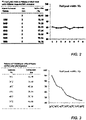
- a series of preparation methods of small-molecule water, or active water have been developed. The typical methods are as follows: (1) an electromagnetic method; test results of which are shown in FIG.
- the small-molecule water theory is a concept proposed by Lin Xiangxiu, MD, who began studying small-molecule water in 1985 and wrote a book in 1990.
- the structure of ordinary natural water is a cluster of large molecules synthesized by association of 100 ⁇ 200 water molecules. Hydrogen in one water molecule attracts oxygen in another water molecule, forming a chain structure of hydrogen bonds. After natural water is subjected to sufficient magnetic treatment, hydrogen bonds are cut to form many small molecular clusters. Because its shell is cut open, many protonated small-molecule water are formed and electrons can be released. Then, according to physical testing, water ion concentration is high, resulting in so-called ionized water rich in small-molecule water, referred to as small molecules of water.
- This structure of a water molecule group is a dynamic combination, and its stable existence time is only about 10-12 x 10 -12 seconds, which means that some water molecules are constantly added to a water molecule group. Some of the water molecules leave the water molecules, and the group size is just an average. At room temperature, the average water molecule size is about 30 to 40 water molecules.
- the structure of small-molecule water is shown in FIG. 1 .
- the invention provides small-molecular water which is different from the traditional small-molecular water, and the preparation method also differs from the existing preparation method.
- the technical scheme of the invention is as follows:
- the small molecule drinking water is characterized in that common water contains one or more of the following small-molecule water; the specific structure being as follows:
- Small molecular cluster water is formed by 2-6 water molecules distributed around an H+, where O is an oxygen atom in a water molecule, H is a hydrogen atom in a water molecule, and H+ is a hydrogen ion with positive charge.
- the small molecular cluster water in the present application differs from the traditional small molecular water structure.
- the traditional small molecule water includes water molecules connected by means of hydrogen bonds; only the number of water molecules is fewer. Due to the presence of hydrogen bonds, the small molecular water cannot be stored at normal temperature for a sufficient time, and the actual usefulness is lost, as shown in FIG. 1 .
- a relatively stable small molecular cluster water is formed by providing water molecules around a positively charged hydrogen ion, instead of a group formed by hydrogen bonds.
- the energy of the hydrogen ions changes the structure of the water molecules, and the hydrogen bond energy of the water molecules is counteracted, thereby ensuring the long service life of the proton-attached small molecular cluster water, and achieving the biological function.
- the ordinary water in the small-molecule drinking water is purified water, and has a better effect.
- the small molecule drinking water contains H+ in a concentration of not less than 10 -6 mol/L.
- the concentration has a more beneficial effect on the human body.
- the preparation method includes the following steps: atomizing ordinary water through an atomization device to generate atomized water vapor, feeding the atomized water vapor into a hydrogen ion generation region through an atomization water channel, placing a needle tip of a hollow launch needle in the hydrogen ion generation region, generating a strong electric field at the needle tip of the hollow emission needle, performing ionization on the atomized water vapor to form a positively charged hydrogen ion, mixing hydrogen ions and water vapor in a hydrogen ion and water vapor mixing area of the mixing device; and conveying the mixed water to an attached protonated water packaging device to obtain small-molecule drinking water with two, three, four, five, or six water molecules attached around a positively charged hydrogen ion.
- the mixing device is divided by a perforated cathode into a hydrogen ion generation region and a hydrogen ion and water vapor mixing area.
- purified water in a water storage tank is fed into the hollow emission needle by means of the miniature infusion pump, and the purified water is charged by the strong electric field at the tip to form hydrogen ions.
- the radius of the hydrogen ions is extremely small, a powerful electric field is formed.
- water molecules of the atomized water are adsorbed, thereby forming 2, 3, 4, 5, and 6 small molecular groups of water attached to respective protons, and the small molecular mass water is attached, so that the small molecular group water has hydrogen ion energy. Due to the existence of the electrostatic energy of the hydrogen ions, the attached proton small molecular group water has a life of more than 4 days.
- the ordinary water in the preparation method of the small-molecule drinking water is purified water
- the purified water is put into a sterile water storage tank
- the purified water enters the atomization device for atomization through the sterile infusion pump.
- the hydrogen ion generation in the preparation method of the small molecule drinking water includes the following steps: feeding raw material for hydrogen ion generation into the hydrogen ion generation region through a pump body, wherein a needle tip of the hollow emission needle is placed in the hydrogen ion generation region, a strong electric field is generated at the emission tip, hydrogen is ionized to form positively charged hydrogen ions, and the other end of the needle tip of the hollow emission needle is connected with the water storage tank.
- a temperature above 80 deg-C is maintained in the atomization device and the internal space of the mixing device.
- the hydrogen ion generation region and the micro infusion pump deliver purified water from the water storage tank to the needle tip of the hollow emission needle.
- the needle tip of the hollow emission needle and the perforated cathode (120) are supplied with voltage by a high-voltage power supply (90), a strong electric field is generated at the needle tip of the hollow emission needle, and water molecules at the needle tip of the hollow emission needle are ionized to form positively charged hydrogen ions.
- Application of small-molecule drinking water includes treatment of metabolic diseases, such as diabetes, blood fat lowering, liver protection, and blood uric acid reduction in the body.
- the small-molecule drinking water has the beneficial effects that the small-molecule drinking water has a stable structure and can be preserved for a long time.
- the preparation method can be performed on a large-scale and has wide practical application. Also, drinking of small-molecule water has a good improvement effect on human health.
- a preparation device includes: firstly, ordinary water stored in a water storage bucket 10.
- the water enters an atomization device 30 through a hydrophobic pump 20 for atomization, and the atomized water is sent to the hydrogen ion generation region 50 through an atomization water channel 60.
- the atomized water is then mixed in the hydrogen ion and water vapor mixing area 150 of the mixing device 40.
- 2, 3, 4, 5, or 6 water molecules around a positively charged hydrogen ion can be obtained.
- the water molecules refer to H 2 O. That is, relatively stable small molecular clusters are formed from groups of water molecules surrounding a positively charged hydrogen ion H+.
- the mixing device 40 is separated into a hydrogen ion generation region 50 and the hydrogen ion and water vapor mixing region 150 by a porous cathode 120.
- purified water in the water storage tank 160 is fed into a hollow launching needle 110 through a miniature infusion pump 140.
- the purified water is ionized by a strong electric field at the tip to form hydrogen ions. Since the radius of the hydrogen ions is extremely small, a strong electric field is formed, and water molecules of atomized water are adsorbed in the hydrogen ions and the water vapor mixing region 150 so as to form 2, 3, 4, 5, and 6 small water clusters.
- the water is attached to a proton, so that the small molecular group water has hydrogen ion energy. And due to the existence of the electrostatic energy of the hydrogen ions, the small molecule water has a lifetime of more than 4 days
- the hydrogen ion generator 50 refers to the hydrogen ion generation raw material hydrogen 100 being fed into the hydrogen ion generation region 50 via the pump body 130.
- the needle tip of the hollow launch needle 110 is placed in the hydrogen ion generation region 50, a strong electric field being generated at the needle tip of the hollow launch needle 110, the hydrogen being ionized to form a positively charged hydrogen ion, and the other end of the needle tip of the hollow launch needle 110 being connected to the water storage tank 160.
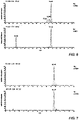
- the small molecule water prepared in the present invention is determined respectively, and, as shown in FIG. 6 and FIG. 7 , different numbers of water molecular groups can be obtained.
- small molecule water is determined, and the comparison diagram of different protonated small water clusters drinking water shown in Fig. 8 can be obtained.
- the results shown in Fig. 9 can be obtained by comparing the commercially available drinking water with the treated water.
- relevant volunteers (fasting insulin bias) are used for drinking small-molecule drinking water for two months.
- Fasting insulin drops from 151.2 to 49.4, and fasting glycosylated hemoglobin drops from 6.2 to 5.3.
- the dosage group decreased from 17.3 to 12.8 decreased by 4.5, while the control group (increased from 19.8 to 2.0) increased by 0.2.
- the triglycerides of the related volunteers have been more than 5 for more than 20 years, and the triglycerides have been reduced from 5.03 to 2.52 after drinking 500CC of protonated small water clusters drinking water every day for 4 weeks.
Landscapes
- Health & Medical Sciences (AREA)
- Life Sciences & Earth Sciences (AREA)
- Chemical & Material Sciences (AREA)
- Engineering & Computer Science (AREA)
- Organic Chemistry (AREA)
- Public Health (AREA)
- Medicinal Chemistry (AREA)
- Pharmacology & Pharmacy (AREA)
- Veterinary Medicine (AREA)
- Animal Behavior & Ethology (AREA)
- General Health & Medical Sciences (AREA)
- Water Supply & Treatment (AREA)
- Environmental & Geological Engineering (AREA)
- Hydrology & Water Resources (AREA)
- Diabetes (AREA)
- General Chemical & Material Sciences (AREA)
- Chemical Kinetics & Catalysis (AREA)
- Nuclear Medicine, Radiotherapy & Molecular Imaging (AREA)
- Bioinformatics & Cheminformatics (AREA)
- Hematology (AREA)
- Obesity (AREA)
- Epidemiology (AREA)
- Gastroenterology & Hepatology (AREA)
- Endocrinology (AREA)
- Emergency Medicine (AREA)
- Food Science & Technology (AREA)
- Nutrition Science (AREA)
- Geology (AREA)
- General Life Sciences & Earth Sciences (AREA)
- Polymers & Plastics (AREA)
- Pharmaceuticals Containing Other Organic And Inorganic Compounds (AREA)
- Non-Alcoholic Beverages (AREA)
- Coloring Foods And Improving Nutritive Qualities (AREA)
Applications Claiming Priority (2)
| Application Number | Priority Date | Filing Date | Title |
|---|---|---|---|
| CN201911005058.4A CN110902785A (zh) | 2019-10-22 | 2019-10-22 | 一种小分子饮用水和制备方法及应用 |
| PCT/CN2020/113125 WO2021077913A1 (zh) | 2019-10-22 | 2020-09-03 | 一种小分子饮用水和制备方法及应用 |
Publications (2)
| Publication Number | Publication Date |
|---|---|
| EP4049979A1 true EP4049979A1 (de) | 2022-08-31 |
| EP4049979A4 EP4049979A4 (de) | 2023-11-15 |
Family
ID=69814969
Family Applications (1)
| Application Number | Title | Priority Date | Filing Date |
|---|---|---|---|
| EP20879181.4A Withdrawn EP4049979A4 (de) | 2019-10-22 | 2020-09-03 | Trinkwasser mit kleinen molekülen, verfahren zur herstellung und anwendung |
Country Status (6)
| Country | Link |
|---|---|
| US (1) | US12371351B2 (de) |
| EP (1) | EP4049979A4 (de) |
| JP (1) | JP7470189B2 (de) |
| KR (1) | KR20220086642A (de) |
| CN (1) | CN110902785A (de) |
| WO (1) | WO2021077913A1 (de) |
Families Citing this family (4)
| Publication number | Priority date | Publication date | Assignee | Title |
|---|---|---|---|---|
| CN110902785A (zh) * | 2019-10-22 | 2020-03-24 | 杭州善上水科技有限公司 | 一种小分子饮用水和制备方法及应用 |
| CN116327648B (zh) * | 2023-02-22 | 2025-08-29 | 莱玛化妆品(湖州)有限公司 | 一种天然化妆品用侧柏叶提取物、制备方法及含有其的洗发香波 |
| CN116287056B (zh) * | 2023-04-04 | 2023-11-07 | 广州源潮生物信息技术有限公司 | 一种植物多糖及其提取方法和应用 |
| CN120058087A (zh) * | 2025-01-10 | 2025-05-30 | 云南云科特色植物提取实验室有限公司 | 一种生产活化水的装置及其应用 |
Family Cites Families (24)
| Publication number | Priority date | Publication date | Assignee | Title |
|---|---|---|---|---|
| CN1300113A (zh) * | 1999-12-16 | 2001-06-20 | 金城集团有限公司 | 富氢燃料改质器 |
| JP2007330844A (ja) * | 2006-06-12 | 2007-12-27 | Takeshi Toba | 水の水質改質方法およびその装置 |
| AT12981U1 (de) * | 2006-11-13 | 2013-03-15 | Josef Peter Dr Guggenbichler | Stoff mit antimikrobieller wirkung |
| KR20100015746A (ko) * | 2007-03-23 | 2010-02-12 | 구키 쇼코 가부시키가이샤 | 환원수 생성장치 |
| CN100482598C (zh) | 2007-06-08 | 2009-04-29 | 清华大学 | 一种低含盐量的小水分子团簇活化水 |
| US8679351B2 (en) * | 2009-12-30 | 2014-03-25 | Hydrover Holding S.A. | Process and apparatus for decontaminating water by producing hydroxyl ions through hydrolysis of water molecules |
| WO2011149031A1 (ja) * | 2010-05-27 | 2011-12-01 | Matsumura Eiji | ガス分子が高密度に溶存した液体クラスレート |
| CN201888009U (zh) | 2010-12-20 | 2011-06-29 | 游技机械工业有限公司 | 软针式静电消除棒 |
| US8674294B2 (en) * | 2011-05-19 | 2014-03-18 | Zhejiang Haochuang Biotech Co., Inc. | System of electrospray ion generator |
| CN202142497U (zh) * | 2011-06-10 | 2012-02-08 | 上海大学 | 产生质子转移反应初始水合氢离子的多尖端放电离子源 |
| US8651015B2 (en) | 2011-08-20 | 2014-02-18 | Zhejiang Haochuang Biotech Co., Inc. | Electronic sterilization device and method |
| CN103145289B (zh) * | 2011-12-07 | 2015-09-09 | 睿福股份有限公司 | 氢离子及氢氧离子混合物的制造方法 |
| CN104230091B (zh) * | 2013-08-29 | 2017-08-08 | 吉林天士力矿泉饮品有限公司 | 一种制备稳定小分子团水的水处理方法及系统 |
| EP3286137A4 (de) * | 2015-04-23 | 2019-01-30 | Lawrence Carlson | Stabiles elektrolytmaterial damit |
| JP6833840B2 (ja) * | 2015-07-03 | 2021-02-24 | ティグラス,リミテッド ライアビリティ カンパニー | 局所又は表面処理組成物の特性を向上するための材料 |
| CN105304451B (zh) | 2015-10-23 | 2017-06-16 | 浙江好创生物技术有限公司 | 一种应用于质谱仪的电喷雾离子源及质谱分析方法 |
| CN105304452B (zh) * | 2015-10-23 | 2017-10-27 | 浙江好创生物技术有限公司 | 激光电喷雾离子源 |
| CN205161795U9 (zh) | 2015-10-23 | 2018-09-04 | 浙江好创生物技术有限公司 | 一种电喷雾灭菌与蛋白质肽键断裂设备 |
| TWI610630B (zh) | 2015-10-30 | 2018-01-11 | New Defrost Technology Inc | 一種食品靜電烹調系統 |
| CN205907054U (zh) * | 2016-03-29 | 2017-01-25 | 韩秉叡 | 可改善人体病源中和自由基和抗氧化的氢分子水生成器 |
| CN206204073U (zh) | 2016-10-21 | 2017-05-31 | 郑秋景 | 一种超小分子团饮用水生成设备 |
| CN106542683A (zh) * | 2016-12-09 | 2017-03-29 | 通威股份有限公司 | 一种利用磁场和电场制备小水分子团水的工艺 |
| CN110902785A (zh) * | 2019-10-22 | 2020-03-24 | 杭州善上水科技有限公司 | 一种小分子饮用水和制备方法及应用 |
| TWM612412U (zh) | 2021-02-22 | 2021-05-21 | 頂程國際股份有限公司 | 濕式處理設備 |
-
2019
- 2019-10-22 CN CN201911005058.4A patent/CN110902785A/zh active Pending
-
2020
- 2020-09-03 US US17/642,421 patent/US12371351B2/en active Active
- 2020-09-03 KR KR1020227017007A patent/KR20220086642A/ko not_active Ceased
- 2020-09-03 WO PCT/CN2020/113125 patent/WO2021077913A1/zh not_active Ceased
- 2020-09-03 JP JP2022523643A patent/JP7470189B2/ja active Active
- 2020-09-03 EP EP20879181.4A patent/EP4049979A4/de not_active Withdrawn
Also Published As
| Publication number | Publication date |
|---|---|
| KR20220086642A (ko) | 2022-06-23 |
| JP7470189B2 (ja) | 2024-04-17 |
| US20220363573A1 (en) | 2022-11-17 |
| CN110902785A (zh) | 2020-03-24 |
| WO2021077913A1 (zh) | 2021-04-29 |
| US12371351B2 (en) | 2025-07-29 |
| EP4049979A4 (de) | 2023-11-15 |
| JP2022553709A (ja) | 2022-12-26 |
Similar Documents
| Publication | Publication Date | Title |
|---|---|---|
| US12371351B2 (en) | Protonated small-molecule drinking water, preparation method and application | |
| US6733434B2 (en) | Method and apparatus for electromagnetically restructuring ingestible substances for organismic consumption | |
| US9511333B2 (en) | Ionic aqueous solutions comprising charge-stabilized oxygen-containing nanobubbles | |
| JP2004154128A (ja) | 抗加齢用栄養補助食品 | |
| Szili et al. | The hormesis effect of plasma-elevated intracellular ROS on HaCaT cells | |
| CN117050164B (zh) | 透皮增强肽及其应用 | |
| CN115252779B (zh) | 一种用于高效诱导肿瘤细胞发生铁死亡的氧化脂质体及其制备方法与应用 | |
| Wang et al. | Cathodal bilateral transcranial direct‐current stimulation regulates selenium to confer neuroprotection after rat cerebral ischaemia–reperfusion injury | |
| JP2016094460A (ja) | 電磁放射酵母を含む神経変性疾患または障害の処置のための組成物、方法および使用 | |
| TWI842030B (zh) | 小分子飲用水及其製備方法及應用 | |
| CN104586877A (zh) | 含壳寡糖的药物组合物及其应用 | |
| CN120227336A (zh) | 一种积雪草酸弹性自适应脂质体及其制备方法和应用 | |
| Liu et al. | Acutely denervated muscle EVs reshape neuronal mitochondrial metabolism via retrograde signaling to rescue peripheral nerve injury | |
| Xia et al. | A remote-controlled nanopump delivers oxygen to boost energy production in osteoarthritis | |
| Bal-Klara et al. | The effects of various antidepressant drugs on the fine-structure of neurons of the cingulate cortex in culture | |
| WO2014138722A1 (en) | Process for the preparation of a non-corrosive base solution and methods of using same | |
| US7858602B2 (en) | Therapeutic and prophylactic uses of cell specific carbonic anhydrase enzymes in treating aging disorders due to oxidative stress and as growth factors of stem cells | |
| DE60129206T2 (de) | Verfahren zur erhöhung der genexpression der transfizierten genen | |
| Patrucco | Patient-personalized magnetic nanovectors for the treatment of glioblastoma multiforme | |
| CN117919177A (zh) | 一种由氨基酸制备的花生四烯酸胶束及其制备方法和应用 | |
| Luo et al. | Biomimetic Nanocatalysts Enhance Oxidative Damage against Cancer Cells | |
| CN121221804A (zh) | 一种pH与超声双响应型溶瘤微生物及其制备方法和应用 | |
| RU2000119757A (ru) | Способ конструирования, проверки и применения ассоциативов макромолекул и комплексных агрегатов с повышенной полезной нагрузкой и контролируемой степенью ассоциации/диссоциации | |
| Yin et al. | Preparation of Snake Neurotoxin Nanocapsules and the Analgesic Mechanism of P38 Mitogen-Activated Protein Kinase Signal Pathway Combining Snake Neurotoxin Nanocapsules with Gabapentin | |
| CN122004371A (zh) | 一种基于l-多巴胺的鱼饲料复合添加剂及其制备方法和应用 |
Legal Events
| Date | Code | Title | Description |
|---|---|---|---|
| STAA | Information on the status of an ep patent application or granted ep patent |
Free format text: STATUS: THE INTERNATIONAL PUBLICATION HAS BEEN MADE |
|
| PUAI | Public reference made under article 153(3) epc to a published international application that has entered the european phase |
Free format text: ORIGINAL CODE: 0009012 |
|
| STAA | Information on the status of an ep patent application or granted ep patent |
Free format text: STATUS: REQUEST FOR EXAMINATION WAS MADE |
|
| 17P | Request for examination filed |
Effective date: 20220331 |
|
| AK | Designated contracting states |
Kind code of ref document: A1 Designated state(s): AL AT BE BG CH CY CZ DE DK EE ES FI FR GB GR HR HU IE IS IT LI LT LU LV MC MK MT NL NO PL PT RO RS SE SI SK SM TR |
|
| DAV | Request for validation of the european patent (deleted) | ||
| DAX | Request for extension of the european patent (deleted) | ||
| A4 | Supplementary search report drawn up and despatched |
Effective date: 20231012 |
|
| RIC1 | Information provided on ipc code assigned before grant |
Ipc: C02F 1/48 20060101AFI20231006BHEP |
|
| STAA | Information on the status of an ep patent application or granted ep patent |
Free format text: STATUS: THE APPLICATION IS DEEMED TO BE WITHDRAWN |
|
| 18D | Application deemed to be withdrawn |
Effective date: 20240511 |