EP4050683A1 - Verfahren zum herstellen von aktivem kathodenmaterial für sekundärbatterien - Google Patents
Verfahren zum herstellen von aktivem kathodenmaterial für sekundärbatterien Download PDFInfo
- Publication number
- EP4050683A1 EP4050683A1 EP21741348.3A EP21741348A EP4050683A1 EP 4050683 A1 EP4050683 A1 EP 4050683A1 EP 21741348 A EP21741348 A EP 21741348A EP 4050683 A1 EP4050683 A1 EP 4050683A1
- Authority
- EP
- European Patent Office
- Prior art keywords
- metal oxide
- ald
- positive electrode
- active material
- transition metal
- Prior art date
- Legal status (The legal status is an assumption and is not a legal conclusion. Google has not performed a legal analysis and makes no representation as to the accuracy of the status listed.)
- Granted
Links
Images


Classifications
-
- C—CHEMISTRY; METALLURGY
- C23—COATING METALLIC MATERIAL; COATING MATERIAL WITH METALLIC MATERIAL; CHEMICAL SURFACE TREATMENT; DIFFUSION TREATMENT OF METALLIC MATERIAL; COATING BY VACUUM EVAPORATION, BY SPUTTERING, BY ION IMPLANTATION OR BY CHEMICAL VAPOUR DEPOSITION, IN GENERAL; INHIBITING CORROSION OF METALLIC MATERIAL OR INCRUSTATION IN GENERAL
- C23C—COATING METALLIC MATERIAL; COATING MATERIAL WITH METALLIC MATERIAL; SURFACE TREATMENT OF METALLIC MATERIAL BY DIFFUSION INTO THE SURFACE, BY CHEMICAL CONVERSION OR SUBSTITUTION; COATING BY VACUUM EVAPORATION, BY SPUTTERING, BY ION IMPLANTATION OR BY CHEMICAL VAPOUR DEPOSITION, IN GENERAL
- C23C16/00—Chemical coating by decomposition of gaseous compounds, without leaving reaction products of surface material in the coating, i.e. chemical vapour deposition [CVD] processes
- C23C16/44—Chemical coating by decomposition of gaseous compounds, without leaving reaction products of surface material in the coating, i.e. chemical vapour deposition [CVD] processes characterised by the method of coating
- C23C16/455—Chemical coating by decomposition of gaseous compounds, without leaving reaction products of surface material in the coating, i.e. chemical vapour deposition [CVD] processes characterised by the method of coating characterised by the method used for introducing gases into reaction chamber or for modifying gas flows in reaction chamber
- C23C16/45523—Pulsed gas flow or change of composition over time
- C23C16/45525—Atomic layer deposition [ALD]
- C23C16/45555—Atomic layer deposition [ALD] applied in non-semiconductor technology
-
- C—CHEMISTRY; METALLURGY
- C23—COATING METALLIC MATERIAL; COATING MATERIAL WITH METALLIC MATERIAL; CHEMICAL SURFACE TREATMENT; DIFFUSION TREATMENT OF METALLIC MATERIAL; COATING BY VACUUM EVAPORATION, BY SPUTTERING, BY ION IMPLANTATION OR BY CHEMICAL VAPOUR DEPOSITION, IN GENERAL; INHIBITING CORROSION OF METALLIC MATERIAL OR INCRUSTATION IN GENERAL
- C23C—COATING METALLIC MATERIAL; COATING MATERIAL WITH METALLIC MATERIAL; SURFACE TREATMENT OF METALLIC MATERIAL BY DIFFUSION INTO THE SURFACE, BY CHEMICAL CONVERSION OR SUBSTITUTION; COATING BY VACUUM EVAPORATION, BY SPUTTERING, BY ION IMPLANTATION OR BY CHEMICAL VAPOUR DEPOSITION, IN GENERAL
- C23C16/00—Chemical coating by decomposition of gaseous compounds, without leaving reaction products of surface material in the coating, i.e. chemical vapour deposition [CVD] processes
- C23C16/44—Chemical coating by decomposition of gaseous compounds, without leaving reaction products of surface material in the coating, i.e. chemical vapour deposition [CVD] processes characterised by the method of coating
- C23C16/4417—Methods specially adapted for coating powder
-
- C—CHEMISTRY; METALLURGY
- C23—COATING METALLIC MATERIAL; COATING MATERIAL WITH METALLIC MATERIAL; CHEMICAL SURFACE TREATMENT; DIFFUSION TREATMENT OF METALLIC MATERIAL; COATING BY VACUUM EVAPORATION, BY SPUTTERING, BY ION IMPLANTATION OR BY CHEMICAL VAPOUR DEPOSITION, IN GENERAL; INHIBITING CORROSION OF METALLIC MATERIAL OR INCRUSTATION IN GENERAL
- C23C—COATING METALLIC MATERIAL; COATING MATERIAL WITH METALLIC MATERIAL; SURFACE TREATMENT OF METALLIC MATERIAL BY DIFFUSION INTO THE SURFACE, BY CHEMICAL CONVERSION OR SUBSTITUTION; COATING BY VACUUM EVAPORATION, BY SPUTTERING, BY ION IMPLANTATION OR BY CHEMICAL VAPOUR DEPOSITION, IN GENERAL
- C23C16/00—Chemical coating by decomposition of gaseous compounds, without leaving reaction products of surface material in the coating, i.e. chemical vapour deposition [CVD] processes
- C23C16/44—Chemical coating by decomposition of gaseous compounds, without leaving reaction products of surface material in the coating, i.e. chemical vapour deposition [CVD] processes characterised by the method of coating
- C23C16/455—Chemical coating by decomposition of gaseous compounds, without leaving reaction products of surface material in the coating, i.e. chemical vapour deposition [CVD] processes characterised by the method of coating characterised by the method used for introducing gases into reaction chamber or for modifying gas flows in reaction chamber
- C23C16/45523—Pulsed gas flow or change of composition over time
- C23C16/45525—Atomic layer deposition [ALD]
- C23C16/45527—Atomic layer deposition [ALD] characterized by the ALD cycle, e.g. different flows or temperatures during half-reactions, unusual pulsing sequence, use of precursor mixtures or auxiliary reactants or activations
- C23C16/45534—Use of auxiliary reactants other than used for contributing to the composition of the main film, e.g. catalysts, activators or scavengers
-
- H—ELECTRICITY
- H01—ELECTRIC ELEMENTS
- H01M—PROCESSES OR MEANS, e.g. BATTERIES, FOR THE DIRECT CONVERSION OF CHEMICAL ENERGY INTO ELECTRICAL ENERGY
- H01M4/00—Electrodes
- H01M4/02—Electrodes composed of, or comprising, active material
- H01M4/04—Processes of manufacture in general
- H01M4/0402—Methods of deposition of the material
- H01M4/0421—Methods of deposition of the material involving vapour deposition
- H01M4/0428—Chemical vapour deposition
-
- H—ELECTRICITY
- H01—ELECTRIC ELEMENTS
- H01M—PROCESSES OR MEANS, e.g. BATTERIES, FOR THE DIRECT CONVERSION OF CHEMICAL ENERGY INTO ELECTRICAL ENERGY
- H01M4/00—Electrodes
- H01M4/02—Electrodes composed of, or comprising, active material
- H01M4/36—Selection of substances as active materials, active masses, active liquids
- H01M4/362—Composites
- H01M4/366—Composites as layered products
-
- H—ELECTRICITY
- H01—ELECTRIC ELEMENTS
- H01M—PROCESSES OR MEANS, e.g. BATTERIES, FOR THE DIRECT CONVERSION OF CHEMICAL ENERGY INTO ELECTRICAL ENERGY
- H01M4/00—Electrodes
- H01M4/02—Electrodes composed of, or comprising, active material
- H01M4/36—Selection of substances as active materials, active masses, active liquids
- H01M4/48—Selection of substances as active materials, active masses, active liquids of inorganic oxides or hydroxides
- H01M4/50—Selection of substances as active materials, active masses, active liquids of inorganic oxides or hydroxides of manganese
- H01M4/505—Selection of substances as active materials, active masses, active liquids of inorganic oxides or hydroxides of manganese of mixed oxides or hydroxides containing manganese for inserting or intercalating light metals, e.g. LiMn2O4 or LiMn2OxFy
-
- H—ELECTRICITY
- H01—ELECTRIC ELEMENTS
- H01M—PROCESSES OR MEANS, e.g. BATTERIES, FOR THE DIRECT CONVERSION OF CHEMICAL ENERGY INTO ELECTRICAL ENERGY
- H01M4/00—Electrodes
- H01M4/02—Electrodes composed of, or comprising, active material
- H01M4/36—Selection of substances as active materials, active masses, active liquids
- H01M4/48—Selection of substances as active materials, active masses, active liquids of inorganic oxides or hydroxides
- H01M4/52—Selection of substances as active materials, active masses, active liquids of inorganic oxides or hydroxides of nickel, cobalt or iron
- H01M4/525—Selection of substances as active materials, active masses, active liquids of inorganic oxides or hydroxides of nickel, cobalt or iron of mixed oxides or hydroxides containing iron, cobalt or nickel for inserting or intercalating light metals, e.g. LiNiO2, LiCoO2 or LiCoOxFy
-
- H—ELECTRICITY
- H01—ELECTRIC ELEMENTS
- H01M—PROCESSES OR MEANS, e.g. BATTERIES, FOR THE DIRECT CONVERSION OF CHEMICAL ENERGY INTO ELECTRICAL ENERGY
- H01M4/00—Electrodes
- H01M4/02—Electrodes composed of, or comprising, active material
- H01M4/62—Selection of inactive substances as ingredients for active masses, e.g. binders, fillers
-
- H—ELECTRICITY
- H01—ELECTRIC ELEMENTS
- H01M—PROCESSES OR MEANS, e.g. BATTERIES, FOR THE DIRECT CONVERSION OF CHEMICAL ENERGY INTO ELECTRICAL ENERGY
- H01M4/00—Electrodes
- H01M4/02—Electrodes composed of, or comprising, active material
- H01M2004/026—Electrodes composed of, or comprising, active material characterised by the polarity
- H01M2004/028—Positive electrodes
-
- Y—GENERAL TAGGING OF NEW TECHNOLOGICAL DEVELOPMENTS; GENERAL TAGGING OF CROSS-SECTIONAL TECHNOLOGIES SPANNING OVER SEVERAL SECTIONS OF THE IPC; TECHNICAL SUBJECTS COVERED BY FORMER USPC CROSS-REFERENCE ART COLLECTIONS [XRACs] AND DIGESTS
- Y02—TECHNOLOGIES OR APPLICATIONS FOR MITIGATION OR ADAPTATION AGAINST CLIMATE CHANGE
- Y02E—REDUCTION OF GREENHOUSE GAS [GHG] EMISSIONS, RELATED TO ENERGY GENERATION, TRANSMISSION OR DISTRIBUTION
- Y02E60/00—Enabling technologies; Technologies with a potential or indirect contribution to GHG emissions mitigation
- Y02E60/10—Energy storage using batteries
Definitions
- the present invention relates to a method of preparing a positive electrode active material for a secondary battery.
- lithium secondary battery is lightweight and has high energy density, the lithium secondary battery is in the spotlight as a driving power source for portable devices. Accordingly, research and development efforts for improving the performance of the lithium secondary battery have been actively conducted.
- Lithium cobalt oxide (LiCoO 2 ), lithium nickel oxide (LiNiO 2 ), lithium manganese oxide (LiMnO 2 or LiMn 2 O 4 , etc.), or a lithium iron phosphate compound (LiFePO 4 ) has been used as a positive electrode active material of the lithium secondary battery.
- the lithium cobalt oxide (LiCoO 2 ) is advantageous in that its operating voltage is high and capacity characteristics are excellent, the lithium cobalt oxide (LiCoO 2 ) has been widely used and has been used as a positive electrode active material for high voltage.
- a nickel cobalt manganese-based lithium composite transition metal oxide (hereinafter, simply referred to as 'NCM-based lithium composite transition metal oxide'), in which a portion of cobalt (Co) is substituted with nickel (Ni) and manganese (Mn), has been developed.
- 'NCM-based lithium composite transition metal oxide' nickel cobalt manganese-based lithium composite transition metal oxide
- Co cobalt
- Ni nickel
- Mn manganese
- Recently, research to increase capacity by increasing an amount of Ni in the NCM-based lithium composite transition metal oxide has been conducted.
- high-nickel (high-Ni) positive electrode active material with a high nickel content high capacity may be realized, but, since side reactions, such as oxygen desorption and electrolyte oxidation, occur at an interface in contact with an electrolyte during charge, there are disadvantages of increasing resistance and causing gas generation and degradation of lifetime.
- An aspect of the present invention provides a method of preparing a positive electrode active material for a secondary battery which may improve surface stability while minimizing film resistance, may effectively suppress a direct contact with an electrolyte solution and an interfacial side reaction, and may improve a reaction yield by forming a thin and uniform coating layer on a surface of a high-Ni positive electrode active material.
- a method of preparing a positive electrode active material for a secondary battery which includes: preparing a lithium composite transition metal oxide which includes nickel, cobalt, and manganese and contains 60 mol% or more of the nickel among all metals except lithium; adding a moisture absorbent and the lithium composite transition metal oxide into an atomic layer deposition (ALD) reactor; and adding a coating metal precursor into the atomic layer deposition (ALD) reactor, and forming a metal oxide coating layer on surfaces of particles of the lithium composite transition metal oxide by atomic layer deposition (ALD).
- ALD atomic layer deposition
- a thin and uniform coating layer may be effectively formed on a surface of a high-Ni positive electrode active material, and a reaction yield may be improved.
- the thin and uniform coating layer is formed on the surface of the high-Ni positive electrode active material according to the present invention, problems of reductions in structural/chemical stability and surface stability caused by an increase in nickel (Ni) may be improved in addition to the realization of high capacity and a direct contact with an electrolyte solution and an interfacial side reaction may be effectively suppressed while minimizing film resistance. Accordingly, resistance characteristics and degradation of lifetime of a lithium secondary battery may be significantly improved.
- the present invention provides a method of preparing a positive electrode active material for a secondary battery which includes the steps of: preparing a lithium composite transition metal oxide which includes nickel, cobalt, and manganese and contains 60 mol% or more of the nickel among all metals except lithium; adding a moisture absorbent and the lithium composite transition metal oxide into an atomic layer deposition (ALD) reactor; and adding a coating metal precursor into the atomic layer deposition (ALD) reactor, and forming a metal oxide coating layer on surfaces of particles of the lithium composite transition metal oxide by atomic layer deposition (ALD).
- ALD atomic layer deposition
- a lithium composite transition metal oxide which includes nickel, cobalt, and manganese and contains 60 mol% or more of the nickel among all metals except lithium.
- the lithium composite transition metal oxide is a NCM-based lithium composite transition metal oxide including nickel (Ni), cobalt (Co), and manganese (Mn).
- the lithium composite transition metal oxide is a high-Ni NCM-based lithium composite transition metal oxide in which an amount of the nickel (Ni) in a total amount of the metals except lithium (Li) is 60 mol% or more.
- the amount of the nickel (Ni) may be 70 mol% or more, for example, 80 mol% or more. Since the amount of the nickel (Ni) in the total amount of the metals except lithium (Li) satisfies 60 mol% or more, higher capacity may be secured.
- the lithium composite transition metal oxide may be represented by the following Formula 1.
- Formula 1 Li a Ni 1-b-c-d Co b Mn c Q d O 2+ ⁇
- Q is at least one element selected from the group consisting of aluminum (Al), magnesium (Mg), vanadium (V), titanium (Ti), and zirconium (Zr), 1.0 ⁇ a ⁇ 1.5, 0 ⁇ b ⁇ 0.5, 0 ⁇ c ⁇ 0.5, 0 ⁇ d ⁇ 0.1, 0 ⁇ b+c+d ⁇ 0.4, and -0.1 ⁇ 1.0.
- Li may be included in an amount corresponding to a, that is, 1.0 ⁇ a ⁇ 1.5. When a is less than 1.0, capacity may be reduced, and, when a is greater than 1.5, since particles are sintered in a sintering process, the preparation of the positive electrode active material may be difficult.
- the Li may more preferably be included in an amount satisfying 1.1 ⁇ a ⁇ 1.2, in consideration of balance between a significant capacity characteristics improvement effect of the positive electrode active material and sinterability during the preparation of the active material due to the control of the amount of the Li.
- Ni may be included in an amount corresponding to 1-(b+c+d), for example, 0.6 ⁇ 1-(b+c+d) ⁇ 1. If the amount of the Ni in the lithium composite transition metal oxide of Formula 1 is 0.6 or more, since the amount of the Ni, which is sufficient to contribute to charge and discharge, is secured, high capacity may be achieved.
- the Ni may more preferably be included in an amount satisfying 0.80 ⁇ 1-(b+c+d) ⁇ 0.99.
- Co may be included in an amount corresponding to b, that is, 0 ⁇ b ⁇ 0.5. In a case in which the amount of the Co in the lithium composite transition metal oxide of Formula 1 is greater than 0.5, there is a concern that cost may increase.
- the Co may specifically be included in an amount satisfying 0.05 ⁇ b ⁇ 0.2 in consideration of a significant capacity characteristics improvement effect due to the inclusion of the Co.
- Mn may be included in an amount corresponding to c, that is, 0 ⁇ c ⁇ 0.5. If c in the lithium composite transition metal oxide of Formula 1 is greater than 0.5, there is a concern that output characteristics and capacity characteristics of the battery may be degraded, and the Mn may specifically be included in an amount satisfying 0.05 ⁇ c ⁇ 0.2.
- Q may be a doping element included in a crystal structure of the lithium composite transition metal oxide, wherein the Q may be included in an amount corresponding to d, that is, 0 ⁇ d ⁇ 0.1.
- the lithium composite transition metal oxide of the present invention is a high-Ni NCM-based lithium composite transition metal oxide containing 60 mol% or more of nickel among the all metals except lithium, wherein it may secure high capacity, but surface stability is reduced due to an increase in nickel content, and, since side reactions, such as oxygen desorption and electrolyte oxidation, occur at an interface in contact with an electrolyte during charge, there are disadvantages of increasing resistance and causing gas generation and degradation of lifetime.
- a thin and uniform metal oxide coating layer is formed on surfaces of particles of the high-Ni NCM-based lithium composite transition metal oxide by atomic layer deposition (ALD)
- ALD atomic layer deposition
- ALD atomic layer deposition
- a reaction yield may not only be improved, but a more uniform coating layer may also be formed by adding a moisture absorbent into the atomic layer deposition (ALD) reactor.
- the moisture absorbent may be at least one selected from the group consisting of P 2 O 5 , K 2 O, CaO, Na 2 O, zeolite, LiO, and MgO, and, more preferably, P 2 O 5 may be used.
- a moisture content of the lithium composite transition metal oxide in the atomic layer deposition (ALD) reactor may be allowed to be 300 ppm or less before performing the atomic layer deposition (ALD) due to the addition of the moisture absorbent, and, more preferably, the moisture content of the lithium composite transition metal oxide in the atomic layer deposition (ALD) reactor may be allowed to be 200 ppm to 250 ppm.
- ALD atomic layer deposition
- the inside of the atomic layer deposition (ALD) reactor may be allowed to be in a vacuum state before performing the atomic layer deposition (ALD).
- the reaction yield may be further improved by making the inside of the reactor in a vacuum state, instead of using a carrier gas, as a conventional inert gas such as N 2 gas or Ar gas.
- the coating metal precursor may include at least one selected from the group consisting of aluminum (Al), titanium (Ti), silicon (Si), zirconium (Zr), vanadium (V), niobium (Nb), magnesium (Mg), tantalum (Ta), boron (B) , zinc (Zn), tin (Sn), hafnium (Hf), erbium (Er), lanthanum (La), indium (In), yttrium (Y), cerium (Ce), scandium (Sc), and tungsten (W), may preferably include at least one selected from the group consisting of Al, Zr, and Si, and may more preferably include Al, and, when the coating metal precursor includes the above-described metal atoms, it is more preferable in terms of preventing an increase in resistance and preventing an electrolyte solution side reaction.
- the metal precursor when the coating metal precursor includes Al, the metal precursor may include at least one selected from the group consisting of trimethyl aluminum (TMA), triethylaluminum (TEA), and tris(diethylamido)aluminum (TBTDET), and may more preferably include trimethylaluminum.
- TMA trimethyl aluminum
- TEA triethylaluminum
- TBTDET tris(diethylamido)aluminum
- the metal oxide coating layer may include at least one selected from the group consisting of Al 2 O 3 , TiO 2 , SiO 2 , ZrO 2 , VO 2 , V 2 O 5 , Nb 2 O 5 , MgO, TaO 2 , Ta 2 O 5 , B 2 O 2 , B 4 O 3 , B 4 O 5 , ZnO, SnO, HfO 2 , Er 2 O 3 , La 2 O 3 , In 2 O 3 , Y 2 O 3 , Ce 2 O 3 , Sc 2 O 3 , and W 2 O 3 , and may more preferably include Al 2 O 3 , in terms of improving an effect of preventing the increase in the resistance of the metal oxide coating layer and preventing the electrolyte solution side reaction.
- the atomic layer deposition may be performed in a temperature range of 80°C to 120°C, for example, 100°C to 120°C, and, when the ALD is performed in the above-described temperature range, it is preferable in terms of smooth reaction and uniform formation of the coating layer.
- the metal oxide coating layer may be formed by performing the atomic layer deposition (ALD) in 1 cycle to 8 cycles, and may more preferably be formed by performing the ALD in 2 cycles to 6 cycles.
- ALD atomic layer deposition
- FIG. 1 is a schematic view illustrating an embodiment of the atomic layer deposition (ALD) reactor.
- a vacuum pump connecting part A is a connecting part configured to connect a vacuum pump and the reactor, wherein the inside of the reactor may be made into a vacuum or the inside of the reactor may be changed to normal pressure before and after the reaction by opening or closing a clamp.
- a precursor inlet B is a place where a precursor material is added, wherein it may be sealed with a silicon septa so as not to affect a degree of vacuum inside the reactor even after injection.
- a lithium composite transition metal oxide positioning part C and a moisture absorbent positioning part D may be places where the lithium composite transition metal oxide and the moisture absorbent are placed, respectively.
- a thickness of the metal oxide coating layer may be formed to be in a range of 1.5 nm or less, preferably 0.8 nm to 1.2 nm, and more preferably 1.0 nm to 1.2 nm. When the thickness is within the above-described thickness range, it is desirable that the electrolyte solution side reaction may be effectively prevented while the increase in the resistance due to the excessive increase in the thickness of the coating layer may be prevented.
- the positive electrode active material on which the metal oxide coating layer is formed may have a moisture content of 300 ppm or less, and, more preferably, the positive active material may have a moisture content of 200 ppm to 250 ppm.
- the positive electrode active material in which the metal oxide coating layer is formed on the surfaces of the lithium composite transition metal oxide particles by the atomic layer deposition (ALD) according to the present invention, is used in a lithium secondary battery, since the interfacial side reaction may be effectively suppressed during charge, generation and accumulation of resistance components including an electrolyte solution by-product and a rock salt phase may be suppressed and the oxygen desorption and gas generation may be reduced, and, as a result, resistance characteristics and life characteristics of the secondary battery may be improved.
- ALD atomic layer deposition
- a positive electrode for a secondary battery and a lithium secondary battery which include the positive electrode active material prepared as described above.
- the positive electrode includes a positive electrode collector and a positive electrode active material layer which is disposed on the positive electrode collector and includes the positive electrode active material.
- the positive electrode collector is not particularly limited as long as it has conductivity without causing adverse chemical changes in the battery, and, for example, stainless steel, aluminum, nickel, titanium, fired carbon, or aluminum or stainless steel that is surface-treated with one of carbon, nickel, titanium, silver, or the like may be used.
- the positive electrode collector may typically have a thickness of 3 pm to 500 ⁇ m, and microscopic irregularities may be formed on the surface of the collector to improve the adhesion of the positive electrode active material.
- the positive electrode collector for example, may be used in various shapes such as that of a film, a sheet, a foil, a net, a porous body, a foam body, a non-woven fabric body, and the like.
- the positive electrode active material layer may include a conductive agent and a binder in addition to the above-described positive electrode active material.
- the conductive agent is used to provide conductivity to the electrode, wherein any conductive agent may be used without particular limitation as long as it has suitable electron conductivity without causing adverse chemical changes in the battery.
- the conductive agent may be graphite such as natural graphite or artificial graphite; carbon based materials such as carbon black, acetylene black, Ketjen black, channel black, furnace black, lamp black, thermal black, and carbon fibers; powder or fibers of metal such as copper, nickel, aluminum, and silver; conductive whiskers such as zinc oxide whiskers and potassium titanate whiskers; conductive metal oxides such as titanium oxide; or conductive polymers such as polyphenylene derivatives, and any one thereof or a mixture of two or more thereof may be used.
- the conductive agent may be typically included in an amount of 1 wt% to 30 wt% based on a total weight of the positive electrode active material layer.
- the binder improves the adhesion between the positive electrode active material particles and the adhesion between the positive electrode active material and the current collector.
- the binder may be polyvinylidene fluoride (PVDF), polyvinylidene fluoride-hexafluoropropylene copolymer (PVDF-co-HFP), polyvinyl alcohol, polyacrylonitrile, carboxymethyl cellulose (CMC), starch, hydroxypropyl cellulose, regenerated cellulose, polyvinylpyrrolidone, polytetrafluoroethylene, polyethylene, polypropylene, an ethylene-propylene-diene monomer rubber (EPDM rubber), a sulfonated EPDM, a styrene-butadiene rubber (SBR), a fluorine rubber, or various copolymers thereof, and any one thereof or a mixture of two or more thereof may be used.
- the binder may be included in an amount of 1 wt% to 30 wt%
- the positive electrode may be prepared according to a typical method of preparing a positive electrode except that the above-described positive electrode active material is used. Specifically, a composition for forming a positive electrode active material layer, which includes the above-described positive electrode active material as well as selectively the binder and the conductive agent, is coated on the positive electrode collector, and the positive electrode may then be prepared by drying and rolling the coated positive electrode collector. In this case, types and amounts of the positive electrode active material, the binder, and the conductive are the same as those previously described.
- the solvent may be a solvent normally used in the art.
- the solvent may include dimethyl sulfoxide (DMSO), isopropyl alcohol, N-methylpyrrolidone (NMP), acetone, or water, and any one thereof or a mixture of two or more thereof may be used.
- An amount of the solvent used may be sufficient if the solvent may dissolve or disperse the positive electrode active material, the conductive agent, and the binder in consideration of a coating thickness of a slurry and manufacturing yield, and may allow to have a viscosity that may provide excellent thickness uniformity during the subsequent coating for the preparation of the positive electrode.
- the positive electrode may be prepared by casting the composition for forming a positive electrode active material layer on a separate support and then laminating a film separated from the support on the positive electrode collector.
- an electrochemical device including the positive electrode is provided.
- the electrochemical device may specifically be a battery or a capacitor, and, for example, may be a lithium secondary battery.
- the lithium secondary battery specifically includes a positive electrode, a negative electrode disposed to face the positive electrode, a separator disposed between the positive electrode and the negative electrode, and an electrolyte, wherein the positive electrode is as described above. Also, the lithium secondary battery may further selectively include a battery container accommodating an electrode assembly of the positive electrode, the negative electrode, and the separator, and a sealing member sealing the battery container.
- the negative electrode includes a negative electrode collector and a negative electrode active material layer disposed on the negative electrode collector.
- the negative electrode collector is not particularly limited as long as it has high conductivity without causing adverse chemical changes in the battery, and, for example, copper, stainless steel, aluminum, nickel, titanium, fired carbon, copper or stainless steel that is surface-treated with one of carbon, nickel, titanium, silver, or the like, and an aluminum-cadmium alloy may be used.
- the negative electrode collector may typically have a thickness of 3 pm to 500 ⁇ m, and, similar to the positive electrode collector, microscopic irregularities may be formed on the surface of the collector to improve the adhesion of a negative electrode active material.
- the negative electrode collector for example, may be used in various shapes such as that of a film, a sheet, a foil, a net, a porous body, a foam body, a non-woven fabric body, and the like.
- the negative electrode active material layer selectively includes a binder and a conductive agent in addition to the negative electrode active material.
- the negative electrode active material layer may be prepared by coating a composition for forming a negative electrode in the form of a slurry, which includes selectively the binder and the conductive agent as well as the negative electrode active material, on the negative electrode collector and drying the coated negative electrode collector, or may be prepared by casting the composition for forming a negative electrode on a separate support and then laminating a film separated from the support on the negative electrode collector.
- a compound capable of reversibly intercalating and deintercalating lithium may be used as the negative electrode active material.
- the negative electrode active material may be a carbonaceous material such as artificial graphite, natural graphite, graphitized carbon fibers, and amorphous carbon; a metallic compound alloyable with lithium such as silicon (Si), aluminum (Al), tin (Sn), lead (Pb), zinc (Zn), bismuth (Bi), indium (In), magnesium (Mg), gallium (Ga), cadmium (Cd), a Si alloy, a Sn alloy, or an Al alloy; a metal oxide which may be doped and undoped with lithium such as SiO ⁇ (0 ⁇ ⁇ ⁇ 2), SnO 2 , vanadium oxide, and lithium vanadium oxide; or a composite including the metallic compound and the carbonaceous material such as a SiC composite or a Sn-C composite, and any one thereof or a mixture of two or more thereof may be used.
- a metallic lithium thin film may be used as the negative electrode active material.
- both low crystalline carbon and high crystalline carbon may be used as the carbon material.
- Typical examples of the low crystalline carbon may be soft carbon and hard carbon
- typical examples of the high crystalline carbon may be irregular, planar, flaky, spherical, or fibrous natural graphite or artificial graphite, Kish graphite, pyrolytic carbon, mesophase pitch-based carbon fibers, meso-carbon microbeads, mesophase pitches, and high-temperature sintered carbon such as petroleum or coal tar pitch derived cokes.
- the binder and the conductive agent may be the same as those previously described in the positive electrode.
- the separator separates the negative electrode and the positive electrode and provides a movement path of lithium ions
- any separator may be used as the separator without particular limitation as long as it is typically used in a lithium secondary battery, and particularly, a separator having high moisture-retention ability for an electrolyte as well as low resistance to the transfer of electrolyte ions may be used.
- a porous polymer film for example, a porous polymer film prepared from a polyolefin-based polymer, such as an ethylene homopolymer, a propylene homopolymer, an ethylene/butene copolymer, an ethylene/hexene copolymer, and an ethylene/methacrylate copolymer, or a laminated structure having two or more layers thereof may be used.
- a typical porous nonwoven fabric for example, a nonwoven fabric formed of high melting point glass fibers or polyethylene terephthalate fibers may be used.
- a coated separator including a ceramic component or a polymer material may be used to secure heat resistance or mechanical strength, and the separator having a single layer or multilayer structure may be selectively used.
- the electrolyte used in the present invention may include an organic liquid electrolyte, an inorganic liquid electrolyte, a solid polymer electrolyte, a gel-type polymer electrolyte, a solid inorganic electrolyte, or a molten-type inorganic electrolyte which may be used in the preparation of the lithium secondary battery, but the present invention is not limited thereto.
- the electrolyte may include an organic solvent and a lithium salt.
- any organic solvent may be used as the organic solvent without particular limitation so long as it may function as a medium through which ions involved in an electrochemical reaction of the battery may move.
- an ester-based solvent such as methyl acetate, ethyl acetate, ⁇ -butyrolactone, and ⁇ -caprolactone
- an ether-based solvent such as dibutyl ether or tetrahydrofuran
- a ketone-based solvent such as cyclohexanone
- an aromatic hydrocarbon-based solvent such as benzene and fluorobenzene
- a carbonate-based solvent such as dimethyl carbonate (DMC), diethyl carbonate (DEC), methylethyl carbonate (MEC), ethylmethyl carbonate (EMC), ethylene carbonate (EC), and propylene carbonate (PC)
- an alcohol-based solvent such as ethyl alcohol and isopropyl alcohol
- nitriles such as R-CN (where R is
- the carbonate-based solvent may be used, and, for example, a mixture of a cyclic carbonate (e.g., ethylene carbonate or propylene carbonate) having high ionic conductivity and high dielectric constant, which may increase charge/discharge performance of the battery, and a low-viscosity linear carbonate-based compound (e.g., ethylmethyl carbonate, dimethyl carbonate, or diethyl carbonate) may be used.
- a cyclic carbonate e.g., ethylene carbonate or propylene carbonate
- a low-viscosity linear carbonate-based compound e.g., ethylmethyl carbonate, dimethyl carbonate, or diethyl carbonate
- the performance of the electrolyte solution may be excellent when the cyclic carbonate and the chain carbonate are mixed in a volume ratio of about 1:1 to about 1:9.
- the lithium salt may be used without particular limitation as long as it is a compound capable of providing lithium ions used in the lithium secondary battery. Specifically, LiPF 6 , LiClO 4 , LiAsF 6 , LiBF 4 , LiSbF 6 , LiAlO 4 , LiAlCl 4 , LiCF 3 SO 3 , LiC 4 F 9 SO 3 , LiN (C 2 F 5 SO 3 ) 2 , LiN (C 2 F 5 SO 2 ) 2 , LiN (CF 3 SO 2 ) 2 , LiCl, LiI, or LiB(C 2 O 4 ) 2 may be used as the lithium salt.
- the lithium salt may be used in a concentration range of 0.1 M to 2.0 M. In a case in which the concentration of the lithium salt is included within the above range, since the electrolyte may have appropriate conductivity and viscosity, excellent performance of the electrolyte may be obtained and lithium ions may effectively move.
- At least one additive for example, a halo-alkylene carbonate-based compound such as difluoroethylene carbonate, pyridine, triethylphosphite, triethanolamine, cyclic ether, ethylenediamine, n-glyme, hexamethylphosphoric triamide, a nitrobenzene derivative, sulfur, a quinone imine dye, N-substituted oxazolidinone, N,N-substituted imidazolidine, ethylene glycol dialkyl ether, an ammonium salt, pyrrole, 2-methoxy ethanol, or aluminum trichloride, may be further added to the electrolyte in addition to the electrolyte components.
- the additive may be included in an amount of 0.1 wt% to 5 wt% based on a total weight of the electrolyte.
- the lithium secondary battery including the positive electrode active material according to the present invention stably exhibits excellent discharge capacity, output characteristics, and capacity retention
- the lithium secondary battery is suitable for portable devices, such as mobile phones, notebook computers, and digital cameras, and electric cars such as hybrid electric vehicles (HEVs).
- portable devices such as mobile phones, notebook computers, and digital cameras
- electric cars such as hybrid electric vehicles (HEVs).
- HEVs hybrid electric vehicles
- a battery module including the lithium secondary battery as a unit cell and a battery pack including the battery module are provided.
- the battery module or the battery pack may be used as a power source of at least one medium and large sized device of a power tool; electric cars including an electric vehicle (EV), a hybrid electric vehicle, and a plug-in hybrid electric vehicle (PHEV); or a power storage system.
- electric cars including an electric vehicle (EV), a hybrid electric vehicle, and a plug-in hybrid electric vehicle (PHEV); or a power storage system.
- EV electric vehicle
- PHEV plug-in hybrid electric vehicle
- a positive electrode active material was prepared in the same manner as in Example 1 except that, as a moisture absorbent, CaO was used instead of P 2 O 5 .
- a positive electrode active material of a LiNi 0.8 Co 0.1 Mn 0.1 O 2 lithium composite transition metal oxide without atomic layer deposition (ALD) coating was prepared.
- a positive electrode active material was prepared in the same manner as in Example 1 except that P 2 O 5 was not added as a moisture absorbent and a total of 5 cycles was performed.
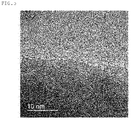
- TEM images of the positive electrode active materials prepared in Examples 1 and 2 and Comparative Examples 1 and 2 are illustrated in FIGS. 2 to 5 .
- Example 1 with respect to Examples 1 and 2 and Comparative Example 2 which were subjected to atomic layer deposition (ALD) coating, it may be confirmed that a coating layer was formed on the surface of the positive electrode active material in comparison to Comparative Example 1 without atomic layer deposition (ALD) coating.
- the coating layer had a thickness of about 1.18 nm and was evenly distributed over the entire surface of the positive electrode active material.
- a thickness of the coating layer was about 0.4 nm to 1.3 nm, wherein the coating layer was evenly distributed over the entire surface, but a degree of uniformity was slightly inferior to that of using the P 2 O 5 moisture absorbent.
- ALD atomic layer deposition
- ICP-OES Inductively coupled plasma-optical emission spectrometry
- Examples 1 and 2 using the moisture absorbent during atomic layer deposition (ALD) had a higher amount of the coating element than Comparative Example 2 without using the moisture absorbent. That is, with respect to Examples 1 and 2, coating yield was increased in comparison to Comparative Example 2. Depending on the type of the moisture absorbent, the coating yield of Example 1 using P 2 O 5 was more significantly increased than that of Example 2 using CaO.
- Each of the positive electrode active materials prepared in Examples 1 and 2 and Comparative Examples 1 and 2, a carbon black conductive agent, and a PVdF binder were mixed in an N-methylpyrrolidone solvent at a weight ratio of 96:2:2 to prepare a positive electrode material mixture, and one surface of an aluminum current collector was coated with the positive electrode material mixture, dried at 100°C, and then rolled to prepare a positive electrode.
- Lithium metal was used as a negative electrode.
- Each lithium secondary battery was prepared by preparing an electrode assembly by disposing a porous polyethylene separator between the positive electrode and negative electrode prepared as described above, disposing the electrode assembly in a case, and then injecting an electrolyte solution into the case.
- Each lithium secondary battery half-cell prepared as described above was charged at 0.7 C to a voltage of 4.2 V in a constant current/constant voltage (CCCV) mode at 45°C (termination current of 1/20 C), and discharged at a constant current of 0.5 C to a voltage of 3.0 V to measure capacity retention when 100 cycles of charge and discharge were performed so that life characteristics evaluation was performed.
- CCCV constant current/constant voltage
- Example 1 Example 2 Comparative Example 1 Comparative Example 2 Capacity retention (%) 97.8 96.9 95.5 93.9
- Electrochemical impedance spectroscopy (EIS) at the first cycle and 100 th cycle were measured for each lithium secondary battery half-cell prepared as in Experimental Example 4, and resistances per unit weight of the positive electrode active material in this case are presented in Table 4 below.
- EIS Electrochemical impedance spectroscopy
- Examples 1 and 2 and Comparative Examples 1 and 2 were similar to one another, but resistances when the coating layer was formed were slightly larger. This was due to film resistance caused by the coating layer formed at an interface.
- EIS was measured after 100 charge and discharge cycles, a resistance value of Comparative Example 1, in which no treatment was performed on the surface, was 9.94 ⁇ g, wherein the resistance value was increased by 5.46 times that of the first cycle.
- Examples 1 and 2 had a significantly less increase in the resistance in comparison to Comparative Example 1.
- Examples 1 and 2 also had a relatively small increase in the resistance in comparison to Comparative Example 2 without using the moisture absorbent.
Landscapes
- Chemical & Material Sciences (AREA)
- Chemical Kinetics & Catalysis (AREA)
- General Chemical & Material Sciences (AREA)
- Electrochemistry (AREA)
- Engineering & Computer Science (AREA)
- Materials Engineering (AREA)
- Mechanical Engineering (AREA)
- Metallurgy (AREA)
- Organic Chemistry (AREA)
- Inorganic Chemistry (AREA)
- Composite Materials (AREA)
- Manufacturing & Machinery (AREA)
- Battery Electrode And Active Subsutance (AREA)
- Inorganic Compounds Of Heavy Metals (AREA)
- Secondary Cells (AREA)
Applications Claiming Priority (2)
| Application Number | Priority Date | Filing Date | Title |
|---|---|---|---|
| KR1020200004990A KR102809158B1 (ko) | 2020-01-14 | 2020-01-14 | 이차전지용 양극 활물질의 제조방법 |
| PCT/KR2021/000406 WO2021145647A1 (ko) | 2020-01-14 | 2021-01-12 | 이차전지용 양극 활물질의 제조방법 |
Publications (3)
| Publication Number | Publication Date |
|---|---|
| EP4050683A1 true EP4050683A1 (de) | 2022-08-31 |
| EP4050683A4 EP4050683A4 (de) | 2023-10-18 |
| EP4050683B1 EP4050683B1 (de) | 2024-08-21 |
Family
ID=76864343
Family Applications (1)
| Application Number | Title | Priority Date | Filing Date |
|---|---|---|---|
| EP21741348.3A Active EP4050683B1 (de) | 2020-01-14 | 2021-01-12 | Verfahren zum herstellen von aktivem material der positiven elektrode für sekundärbatterien |
Country Status (8)
| Country | Link |
|---|---|
| US (1) | US11993846B2 (de) |
| EP (1) | EP4050683B1 (de) |
| JP (1) | JP7317435B2 (de) |
| KR (1) | KR102809158B1 (de) |
| CN (1) | CN114762148B (de) |
| ES (1) | ES2988709T3 (de) |
| HU (1) | HUE068368T2 (de) |
| WO (1) | WO2021145647A1 (de) |
Cited By (2)
| Publication number | Priority date | Publication date | Assignee | Title |
|---|---|---|---|---|
| EP4254552A4 (de) * | 2020-12-07 | 2024-06-12 | LG Energy Solution, Ltd. | Positivelektrodenmaterial für lithiumsekundärbatterie, verfahren zur herstellung davon und lithiumsekundärbatterie damit |
| WO2025257047A1 (en) * | 2024-06-14 | 2025-12-18 | Basf Se | Method for producing coated particles |
Families Citing this family (10)
| Publication number | Priority date | Publication date | Assignee | Title |
|---|---|---|---|---|
| KR102753060B1 (ko) * | 2021-10-18 | 2025-01-14 | 주식회사 엔씨디 | 양극 활물질 |
| CN114023939A (zh) * | 2021-11-08 | 2022-02-08 | 苏州新中能源科技有限公司 | 一种钛和锆掺杂且钒包覆的三元正极材料及其制备方法 |
| KR20230113188A (ko) * | 2022-01-21 | 2023-07-28 | 주식회사 엘지화학 | 양극 및 이를 포함하는 리튬이차전지 |
| KR20250093952A (ko) * | 2023-12-18 | 2025-06-25 | 포스코홀딩스 주식회사 | 리튬 이차 전지용 양극 활물질, 이의 제조방법 및 이를 포함하는 리튬 이차 전지 |
| KR20250094046A (ko) * | 2023-12-18 | 2025-06-25 | 포스코홀딩스 주식회사 | 리튬 이차 전지용 양극 활물질, 이의 제조방법 및 이를 포함하는 리튬 이차 전지 |
| KR20250094045A (ko) * | 2023-12-18 | 2025-06-25 | 포스코홀딩스 주식회사 | 리튬 이차 전지용 양극 활물질, 이의 제조방법 및 이를 포함하는 리튬 이차 전지 |
| KR20250093951A (ko) * | 2023-12-18 | 2025-06-25 | 포스코홀딩스 주식회사 | 리튬 이차 전지용 양극 활물질, 이의 제조방법 및 이를 포함하는 리튬 이차 전지 |
| CN117996085B (zh) * | 2024-04-02 | 2024-08-30 | 荣耀终端有限公司 | 正极材料及其制备方法和应用 |
| CN118943344A (zh) * | 2024-09-25 | 2024-11-12 | 孝感楚能新能源创新科技有限公司 | 一种采用ald技术包覆的氮化锂复合材料及其制备方法和应用 |
| CN119764416B (zh) * | 2024-12-31 | 2026-01-09 | 中创新航科技集团股份有限公司 | 一种正极材料、二次电池 |
Family Cites Families (21)
| Publication number | Priority date | Publication date | Assignee | Title |
|---|---|---|---|---|
| US9196901B2 (en) | 2010-06-14 | 2015-11-24 | Lee Se-Hee | Lithium battery electrodes with ultra-thin alumina coatings |
| KR101274829B1 (ko) | 2011-07-29 | 2013-06-13 | 주식회사 엘지화학 | 수명 특성이 개선된 이차 전지 |
| JP6303260B2 (ja) * | 2012-12-06 | 2018-04-04 | 株式会社村田製作所 | 正極活物質およびその製造方法、正極、電池、電池パック、電子機器、電動車両、蓄電装置ならびに電力システム |
| KR101493932B1 (ko) | 2012-12-27 | 2015-02-16 | 전자부품연구원 | 실리콘 산화물이 코팅된 리튬 이차전지용 양극 활물질 및 그의 제조 방법 |
| DE102014205945B4 (de) | 2014-03-31 | 2025-06-12 | Bayerische Motoren Werke Aktiengesellschaft | Aktives Kathodenmaterial für sekundäre Lithium-Zellen und Batterien |
| CA2987938C (en) | 2015-06-01 | 2023-09-26 | Pneumaticoat Technologies Llc | Nano-engineered coatings for anode active materials, cathode active materials, and solid-state electrolytes and methods of making batteries containing nano-engineered coatings |
| JP2017050204A (ja) * | 2015-09-03 | 2017-03-09 | 日立マクセル株式会社 | 非水電解質二次電池用正極材料、その製造方法および非水電解質二次電池 |
| KR102117618B1 (ko) * | 2015-11-30 | 2020-06-01 | 주식회사 엘지화학 | 표면 처리된 리튬 이차전지용 양극 활물질, 이의 제조방법 및 이를 포함하는 리튬 이차전지 |
| KR101944381B1 (ko) | 2015-11-30 | 2019-01-31 | 주식회사 엘지화학 | 표면 처리된 리튬 이차전지용 양극 활물질, 이의 제조방법 및 이를 포함하는 리튬 이차전지 |
| CN106384838A (zh) * | 2016-11-03 | 2017-02-08 | 上海空间电源研究所 | 一种原子层沉积修饰的锂离子电池及其制备方法 |
| KR102096889B1 (ko) * | 2017-03-08 | 2020-04-03 | 단국대학교 천안캠퍼스 산학협력단 | 니켈계 양극 재료 및 이의 제조방법 |
| KR20190125323A (ko) * | 2017-03-08 | 2019-11-06 | 바스프 에스이 | 옥사이드 재료의 코팅 방법 |
| KR20190042992A (ko) | 2017-10-17 | 2019-04-25 | 인천대학교 산학협력단 | 리튬 이차 전지 |
| CN107910518A (zh) | 2017-11-09 | 2018-04-13 | 东莞深圳清华大学研究院创新中心 | 锂电池夹心式复合正极材料及其制备方法以及一种锂电池正极 |
| CN111712588B (zh) * | 2017-11-13 | 2023-05-30 | 科罗拉多大学董事会,法人团体 | 混合金属氧化物上的薄膜涂层 |
| PL3750204T3 (pl) | 2018-02-09 | 2022-01-24 | Basf Se | Sposób wytwarzania częściowo powlekanego materiału czynnego elektrody i materiał czynny elektrody |
| KR102877885B1 (ko) | 2018-02-09 | 2025-10-28 | 바스프 에스이 | 전극 활물질의 제조 방법, 및 전극 활물질 |
| CN108767212B (zh) * | 2018-05-07 | 2020-12-22 | 欣旺达电子股份有限公司 | 锂离子电池、表面修饰改性三元材料及制备方法 |
| KR20200004990A (ko) | 2018-07-05 | 2020-01-15 | 주식회사 오윈 | 하이패스 단말기 |
| CN109860545A (zh) * | 2019-01-03 | 2019-06-07 | 欣旺达电子股份有限公司 | 一种锂离子电池三元正极材料的原子层沉积包覆改性方法 |
| CN110556531A (zh) | 2019-11-04 | 2019-12-10 | 天目湖先进储能技术研究院有限公司 | 正极材料及其制备方法及包含该正极材料的锂离子电池 |
-
2020
- 2020-01-14 KR KR1020200004990A patent/KR102809158B1/ko active Active
-
2021
- 2021-01-12 ES ES21741348T patent/ES2988709T3/es active Active
- 2021-01-12 US US17/781,925 patent/US11993846B2/en active Active
- 2021-01-12 WO PCT/KR2021/000406 patent/WO2021145647A1/ko not_active Ceased
- 2021-01-12 JP JP2022536609A patent/JP7317435B2/ja active Active
- 2021-01-12 EP EP21741348.3A patent/EP4050683B1/de active Active
- 2021-01-12 CN CN202180006781.3A patent/CN114762148B/zh active Active
- 2021-01-12 HU HUE21741348A patent/HUE068368T2/hu unknown
Cited By (2)
| Publication number | Priority date | Publication date | Assignee | Title |
|---|---|---|---|---|
| EP4254552A4 (de) * | 2020-12-07 | 2024-06-12 | LG Energy Solution, Ltd. | Positivelektrodenmaterial für lithiumsekundärbatterie, verfahren zur herstellung davon und lithiumsekundärbatterie damit |
| WO2025257047A1 (en) * | 2024-06-14 | 2025-12-18 | Basf Se | Method for producing coated particles |
Also Published As
| Publication number | Publication date |
|---|---|
| CN114762148B (zh) | 2024-05-17 |
| US11993846B2 (en) | 2024-05-28 |
| ES2988709T3 (es) | 2024-11-21 |
| JP7317435B2 (ja) | 2023-07-31 |
| JP2023506059A (ja) | 2023-02-14 |
| US20230002899A1 (en) | 2023-01-05 |
| WO2021145647A1 (ko) | 2021-07-22 |
| HUE068368T2 (hu) | 2024-12-28 |
| EP4050683A4 (de) | 2023-10-18 |
| EP4050683B1 (de) | 2024-08-21 |
| KR102809158B1 (ko) | 2025-05-16 |
| CN114762148A (zh) | 2022-07-15 |
| KR20210091605A (ko) | 2021-07-22 |
Similar Documents
| Publication | Publication Date | Title |
|---|---|---|
| EP4050683B1 (de) | Verfahren zum herstellen von aktivem material der positiven elektrode für sekundärbatterien | |
| US12176535B2 (en) | Positive electrode active material for secondary battery, method of preparing the same, and lithium secondary battery including the positive electrode active material | |
| EP3712990B1 (de) | Kathodenaktivmaterial für sekundärbatterie, herstellungsverfahren dafür und lithiumsekundärbatterie damit | |
| EP4012804B1 (de) | Positivelektrodenmaterial für sekundärbatterie und lithiumsekundärbatterie damit | |
| EP3567661B1 (de) | Kathodenaktivmaterial für sekundärbatterie und lithiumsekundärbatterie damit | |
| US11440807B2 (en) | Positive electrode active material for secondary battery, method of preparing the same, and lithium secondary battery including the positive electrode active material | |
| US12040473B2 (en) | Positive electrode for secondary battery, method for manufacturing same, and lithium secondary battery including same | |
| EP3879603A1 (de) | Sekundärbatteriekathode, herstellungsverfahren dafür und lithiumsekundärbatterie damit | |
| EP4174026A1 (de) | Kathodenaktivmaterial und herstellungsverfahren dafür | |
| EP3955344A1 (de) | Positivelektrodenaktivmaterial für eine sekundärbatterie und lithiumsekundärbatterie damit | |
| EP4282829A1 (de) | Verfahren zur herstellung eines positivelektrodenaktivmaterials für lithiumsekundärbatterie, positivelektrodenaktivmaterial für lithiumsekundärbatterie und lithiumsekundärbatterie | |
| EP4166507A1 (de) | Verfahren zur herstellung eines kathodenaktivmaterials | |
| KR20210136877A (ko) | 이차전지용 양극, 그 제조방법 및 이를 포함하는 리튬 이차전지 | |
| US12255317B2 (en) | Positive electrode active material for secondary battery, method of preparing the same, and lithium secondary battery including the positive electrode active material | |
| EP3780189B1 (de) | Kathode für eine lithiumsekundärbatterie, verfahren zur herstellung davon und lithiumsekundärbatterie damit | |
| EP4040537B1 (de) | Verfahren zum herstellen eines positivelektroden-aktivmaterials für lithiumsekundärbatterie und damit hergestelltes positivelektroden-aktivmaterial | |
| EP3584222B1 (de) | Verfahren zur herstellung von positivem elektroden-aktivmaterial für lithiumsekundärbatterie | |
| KR102248105B1 (ko) | 양극 활물질 및 이를 포함하는 리튬 이차전지 | |
| KR20250064618A (ko) | 양극 활물질 및 이의 제조방법 |
Legal Events
| Date | Code | Title | Description |
|---|---|---|---|
| STAA | Information on the status of an ep patent application or granted ep patent |
Free format text: STATUS: THE INTERNATIONAL PUBLICATION HAS BEEN MADE |
|
| PUAI | Public reference made under article 153(3) epc to a published international application that has entered the european phase |
Free format text: ORIGINAL CODE: 0009012 |
|
| STAA | Information on the status of an ep patent application or granted ep patent |
Free format text: STATUS: REQUEST FOR EXAMINATION WAS MADE |
|
| 17P | Request for examination filed |
Effective date: 20220525 |
|
| AK | Designated contracting states |
Kind code of ref document: A1 Designated state(s): AL AT BE BG CH CY CZ DE DK EE ES FI FR GB GR HR HU IE IS IT LI LT LU LV MC MK MT NL NO PL PT RO RS SE SI SK SM TR |
|
| DAV | Request for validation of the european patent (deleted) | ||
| DAX | Request for extension of the european patent (deleted) | ||
| REG | Reference to a national code |
Ref country code: DE Ref legal event code: R079 Free format text: PREVIOUS MAIN CLASS: H01M0004360000 Ipc: C23C0016455000 Ref document number: 602021017575 Country of ref document: DE |
|
| A4 | Supplementary search report drawn up and despatched |
Effective date: 20230914 |
|
| RIC1 | Information provided on ipc code assigned before grant |
Ipc: H01M 4/02 20060101ALN20230908BHEP Ipc: H01M 4/62 20060101ALI20230908BHEP Ipc: H01M 4/525 20100101ALI20230908BHEP Ipc: H01M 4/04 20060101ALI20230908BHEP Ipc: C23C 16/44 20060101ALI20230908BHEP Ipc: C23C 16/455 20060101AFI20230908BHEP |
|
| GRAP | Despatch of communication of intention to grant a patent |
Free format text: ORIGINAL CODE: EPIDOSNIGR1 |
|
| STAA | Information on the status of an ep patent application or granted ep patent |
Free format text: STATUS: GRANT OF PATENT IS INTENDED |
|
| RIC1 | Information provided on ipc code assigned before grant |
Ipc: H01M 4/02 20060101ALN20240417BHEP Ipc: H01M 4/62 20060101ALI20240417BHEP Ipc: H01M 4/525 20100101ALI20240417BHEP Ipc: H01M 4/04 20060101ALI20240417BHEP Ipc: C23C 16/44 20060101ALI20240417BHEP Ipc: C23C 16/455 20060101AFI20240417BHEP |
|
| INTG | Intention to grant announced |
Effective date: 20240507 |
|
| RIC1 | Information provided on ipc code assigned before grant |
Ipc: H01M 4/02 20060101ALN20240425BHEP Ipc: H01M 4/62 20060101ALI20240425BHEP Ipc: H01M 4/525 20100101ALI20240425BHEP Ipc: H01M 4/04 20060101ALI20240425BHEP Ipc: C23C 16/44 20060101ALI20240425BHEP Ipc: C23C 16/455 20060101AFI20240425BHEP |
|
| P01 | Opt-out of the competence of the unified patent court (upc) registered |
Free format text: CASE NUMBER: APP_32729/2024 Effective date: 20240531 |
|
| GRAS | Grant fee paid |
Free format text: ORIGINAL CODE: EPIDOSNIGR3 |
|
| GRAA | (expected) grant |
Free format text: ORIGINAL CODE: 0009210 |
|
| STAA | Information on the status of an ep patent application or granted ep patent |
Free format text: STATUS: THE PATENT HAS BEEN GRANTED |
|
| AK | Designated contracting states |
Kind code of ref document: B1 Designated state(s): AL AT BE BG CH CY CZ DE DK EE ES FI FR GB GR HR HU IE IS IT LI LT LU LV MC MK MT NL NO PL PT RO RS SE SI SK SM TR |
|
| REG | Reference to a national code |
Ref country code: GB Ref legal event code: FG4D |
|
| REG | Reference to a national code |
Ref country code: CH Ref legal event code: EP |
|
| REG | Reference to a national code |
Ref country code: IE Ref legal event code: FG4D |
|
| REG | Reference to a national code |
Ref country code: DE Ref legal event code: R096 Ref document number: 602021017575 Country of ref document: DE |
|
| REG | Reference to a national code |
Ref country code: ES Ref legal event code: FG2A Ref document number: 2988709 Country of ref document: ES Kind code of ref document: T3 Effective date: 20241121 |
|
| REG | Reference to a national code |
Ref country code: LT Ref legal event code: MG9D |
|
| REG | Reference to a national code |
Ref country code: HU Ref legal event code: AG4A Ref document number: E068368 Country of ref document: HU |
|
| REG | Reference to a national code |
Ref country code: NL Ref legal event code: MP Effective date: 20240821 |
|
| PG25 | Lapsed in a contracting state [announced via postgrant information from national office to epo] |
Ref country code: NO Free format text: LAPSE BECAUSE OF FAILURE TO SUBMIT A TRANSLATION OF THE DESCRIPTION OR TO PAY THE FEE WITHIN THE PRESCRIBED TIME-LIMIT Effective date: 20241121 |
|
| REG | Reference to a national code |
Ref country code: AT Ref legal event code: MK05 Ref document number: 1715544 Country of ref document: AT Kind code of ref document: T Effective date: 20240821 |
|
| PG25 | Lapsed in a contracting state [announced via postgrant information from national office to epo] |
Ref country code: NL Free format text: LAPSE BECAUSE OF FAILURE TO SUBMIT A TRANSLATION OF THE DESCRIPTION OR TO PAY THE FEE WITHIN THE PRESCRIBED TIME-LIMIT Effective date: 20240821 Ref country code: FI Free format text: LAPSE BECAUSE OF FAILURE TO SUBMIT A TRANSLATION OF THE DESCRIPTION OR TO PAY THE FEE WITHIN THE PRESCRIBED TIME-LIMIT Effective date: 20240821 Ref country code: PT Free format text: LAPSE BECAUSE OF FAILURE TO SUBMIT A TRANSLATION OF THE DESCRIPTION OR TO PAY THE FEE WITHIN THE PRESCRIBED TIME-LIMIT Effective date: 20241223 Ref country code: PL Free format text: LAPSE BECAUSE OF FAILURE TO SUBMIT A TRANSLATION OF THE DESCRIPTION OR TO PAY THE FEE WITHIN THE PRESCRIBED TIME-LIMIT Effective date: 20240821 Ref country code: GR Free format text: LAPSE BECAUSE OF FAILURE TO SUBMIT A TRANSLATION OF THE DESCRIPTION OR TO PAY THE FEE WITHIN THE PRESCRIBED TIME-LIMIT Effective date: 20241122 |
|
| PG25 | Lapsed in a contracting state [announced via postgrant information from national office to epo] |
Ref country code: BG Free format text: LAPSE BECAUSE OF FAILURE TO SUBMIT A TRANSLATION OF THE DESCRIPTION OR TO PAY THE FEE WITHIN THE PRESCRIBED TIME-LIMIT Effective date: 20240821 |
|
| PG25 | Lapsed in a contracting state [announced via postgrant information from national office to epo] |
Ref country code: LV Free format text: LAPSE BECAUSE OF FAILURE TO SUBMIT A TRANSLATION OF THE DESCRIPTION OR TO PAY THE FEE WITHIN THE PRESCRIBED TIME-LIMIT Effective date: 20240821 |
|
| PG25 | Lapsed in a contracting state [announced via postgrant information from national office to epo] |
Ref country code: AT Free format text: LAPSE BECAUSE OF FAILURE TO SUBMIT A TRANSLATION OF THE DESCRIPTION OR TO PAY THE FEE WITHIN THE PRESCRIBED TIME-LIMIT Effective date: 20240821 Ref country code: IS Free format text: LAPSE BECAUSE OF FAILURE TO SUBMIT A TRANSLATION OF THE DESCRIPTION OR TO PAY THE FEE WITHIN THE PRESCRIBED TIME-LIMIT Effective date: 20241221 |
|
| PG25 | Lapsed in a contracting state [announced via postgrant information from national office to epo] |
Ref country code: HR Free format text: LAPSE BECAUSE OF FAILURE TO SUBMIT A TRANSLATION OF THE DESCRIPTION OR TO PAY THE FEE WITHIN THE PRESCRIBED TIME-LIMIT Effective date: 20240821 |
|
| PG25 | Lapsed in a contracting state [announced via postgrant information from national office to epo] |
Ref country code: RS Free format text: LAPSE BECAUSE OF FAILURE TO SUBMIT A TRANSLATION OF THE DESCRIPTION OR TO PAY THE FEE WITHIN THE PRESCRIBED TIME-LIMIT Effective date: 20241121 |
|
| PG25 | Lapsed in a contracting state [announced via postgrant information from national office to epo] |
Ref country code: RS Free format text: LAPSE BECAUSE OF FAILURE TO SUBMIT A TRANSLATION OF THE DESCRIPTION OR TO PAY THE FEE WITHIN THE PRESCRIBED TIME-LIMIT Effective date: 20241121 Ref country code: PT Free format text: LAPSE BECAUSE OF FAILURE TO SUBMIT A TRANSLATION OF THE DESCRIPTION OR TO PAY THE FEE WITHIN THE PRESCRIBED TIME-LIMIT Effective date: 20241223 Ref country code: PL Free format text: LAPSE BECAUSE OF FAILURE TO SUBMIT A TRANSLATION OF THE DESCRIPTION OR TO PAY THE FEE WITHIN THE PRESCRIBED TIME-LIMIT Effective date: 20240821 Ref country code: NO Free format text: LAPSE BECAUSE OF FAILURE TO SUBMIT A TRANSLATION OF THE DESCRIPTION OR TO PAY THE FEE WITHIN THE PRESCRIBED TIME-LIMIT Effective date: 20241121 Ref country code: NL Free format text: LAPSE BECAUSE OF FAILURE TO SUBMIT A TRANSLATION OF THE DESCRIPTION OR TO PAY THE FEE WITHIN THE PRESCRIBED TIME-LIMIT Effective date: 20240821 Ref country code: LV Free format text: LAPSE BECAUSE OF FAILURE TO SUBMIT A TRANSLATION OF THE DESCRIPTION OR TO PAY THE FEE WITHIN THE PRESCRIBED TIME-LIMIT Effective date: 20240821 Ref country code: IS Free format text: LAPSE BECAUSE OF FAILURE TO SUBMIT A TRANSLATION OF THE DESCRIPTION OR TO PAY THE FEE WITHIN THE PRESCRIBED TIME-LIMIT Effective date: 20241221 Ref country code: HR Free format text: LAPSE BECAUSE OF FAILURE TO SUBMIT A TRANSLATION OF THE DESCRIPTION OR TO PAY THE FEE WITHIN THE PRESCRIBED TIME-LIMIT Effective date: 20240821 Ref country code: GR Free format text: LAPSE BECAUSE OF FAILURE TO SUBMIT A TRANSLATION OF THE DESCRIPTION OR TO PAY THE FEE WITHIN THE PRESCRIBED TIME-LIMIT Effective date: 20241122 Ref country code: FI Free format text: LAPSE BECAUSE OF FAILURE TO SUBMIT A TRANSLATION OF THE DESCRIPTION OR TO PAY THE FEE WITHIN THE PRESCRIBED TIME-LIMIT Effective date: 20240821 Ref country code: BG Free format text: LAPSE BECAUSE OF FAILURE TO SUBMIT A TRANSLATION OF THE DESCRIPTION OR TO PAY THE FEE WITHIN THE PRESCRIBED TIME-LIMIT Effective date: 20240821 Ref country code: AT Free format text: LAPSE BECAUSE OF FAILURE TO SUBMIT A TRANSLATION OF THE DESCRIPTION OR TO PAY THE FEE WITHIN THE PRESCRIBED TIME-LIMIT Effective date: 20240821 |
|
| PG25 | Lapsed in a contracting state [announced via postgrant information from national office to epo] |
Ref country code: SM Free format text: LAPSE BECAUSE OF FAILURE TO SUBMIT A TRANSLATION OF THE DESCRIPTION OR TO PAY THE FEE WITHIN THE PRESCRIBED TIME-LIMIT Effective date: 20240821 Ref country code: RO Free format text: LAPSE BECAUSE OF FAILURE TO SUBMIT A TRANSLATION OF THE DESCRIPTION OR TO PAY THE FEE WITHIN THE PRESCRIBED TIME-LIMIT Effective date: 20240821 Ref country code: DK Free format text: LAPSE BECAUSE OF FAILURE TO SUBMIT A TRANSLATION OF THE DESCRIPTION OR TO PAY THE FEE WITHIN THE PRESCRIBED TIME-LIMIT Effective date: 20240821 |
|
| PG25 | Lapsed in a contracting state [announced via postgrant information from national office to epo] |
Ref country code: EE Free format text: LAPSE BECAUSE OF FAILURE TO SUBMIT A TRANSLATION OF THE DESCRIPTION OR TO PAY THE FEE WITHIN THE PRESCRIBED TIME-LIMIT Effective date: 20240821 |
|
| PG25 | Lapsed in a contracting state [announced via postgrant information from national office to epo] |
Ref country code: CZ Free format text: LAPSE BECAUSE OF FAILURE TO SUBMIT A TRANSLATION OF THE DESCRIPTION OR TO PAY THE FEE WITHIN THE PRESCRIBED TIME-LIMIT Effective date: 20240821 |
|
| PG25 | Lapsed in a contracting state [announced via postgrant information from national office to epo] |
Ref country code: SK Free format text: LAPSE BECAUSE OF FAILURE TO SUBMIT A TRANSLATION OF THE DESCRIPTION OR TO PAY THE FEE WITHIN THE PRESCRIBED TIME-LIMIT Effective date: 20240821 Ref country code: IT Free format text: LAPSE BECAUSE OF FAILURE TO SUBMIT A TRANSLATION OF THE DESCRIPTION OR TO PAY THE FEE WITHIN THE PRESCRIBED TIME-LIMIT Effective date: 20240821 |
|
| REG | Reference to a national code |
Ref country code: DE Ref legal event code: R097 Ref document number: 602021017575 Country of ref document: DE |
|
| PLBE | No opposition filed within time limit |
Free format text: ORIGINAL CODE: 0009261 |
|
| STAA | Information on the status of an ep patent application or granted ep patent |
Free format text: STATUS: NO OPPOSITION FILED WITHIN TIME LIMIT |
|
| 26N | No opposition filed |
Effective date: 20250522 |
|
| REG | Reference to a national code |
Ref country code: CH Ref legal event code: PL |
|
| PG25 | Lapsed in a contracting state [announced via postgrant information from national office to epo] |
Ref country code: SE Free format text: LAPSE BECAUSE OF FAILURE TO SUBMIT A TRANSLATION OF THE DESCRIPTION OR TO PAY THE FEE WITHIN THE PRESCRIBED TIME-LIMIT Effective date: 20240821 |
|
| PG25 | Lapsed in a contracting state [announced via postgrant information from national office to epo] |
Ref country code: LU Free format text: LAPSE BECAUSE OF NON-PAYMENT OF DUE FEES Effective date: 20250112 Ref country code: MC Free format text: LAPSE BECAUSE OF FAILURE TO SUBMIT A TRANSLATION OF THE DESCRIPTION OR TO PAY THE FEE WITHIN THE PRESCRIBED TIME-LIMIT Effective date: 20240821 |
|
| PG25 | Lapsed in a contracting state [announced via postgrant information from national office to epo] |
Ref country code: CH Free format text: LAPSE BECAUSE OF NON-PAYMENT OF DUE FEES Effective date: 20250131 |
|
| PGFP | Annual fee paid to national office [announced via postgrant information from national office to epo] |
Ref country code: GB Payment date: 20251222 Year of fee payment: 6 |
|
| PGFP | Annual fee paid to national office [announced via postgrant information from national office to epo] |
Ref country code: FR Payment date: 20251223 Year of fee payment: 6 |
|
| PGFP | Annual fee paid to national office [announced via postgrant information from national office to epo] |
Ref country code: BE Payment date: 20251229 Year of fee payment: 6 |
|
| PG25 | Lapsed in a contracting state [announced via postgrant information from national office to epo] |
Ref country code: IE Free format text: LAPSE BECAUSE OF NON-PAYMENT OF DUE FEES Effective date: 20250112 |
|
| PGFP | Annual fee paid to national office [announced via postgrant information from national office to epo] |
Ref country code: HU Payment date: 20260129 Year of fee payment: 6 |
|
| PGFP | Annual fee paid to national office [announced via postgrant information from national office to epo] |
Ref country code: ES Payment date: 20260212 Year of fee payment: 6 |
|
| PGFP | Annual fee paid to national office [announced via postgrant information from national office to epo] |
Ref country code: DE Payment date: 20251222 Year of fee payment: 6 |