EP4053467A1 - Dispositif de commande, système de climatisation, et procédé de commande pour système de climatisation - Google Patents
Dispositif de commande, système de climatisation, et procédé de commande pour système de climatisation Download PDFInfo
- Publication number
- EP4053467A1 EP4053467A1 EP19950756.7A EP19950756A EP4053467A1 EP 4053467 A1 EP4053467 A1 EP 4053467A1 EP 19950756 A EP19950756 A EP 19950756A EP 4053467 A1 EP4053467 A1 EP 4053467A1
- Authority
- EP
- European Patent Office
- Prior art keywords
- conditioning machine
- temperature
- humidity
- air
- ability
- Prior art date
- Legal status (The legal status is an assumption and is not a legal conclusion. Google has not performed a legal analysis and makes no representation as to the accuracy of the status listed.)
- Withdrawn
Links
Images





Classifications
-
- F—MECHANICAL ENGINEERING; LIGHTING; HEATING; WEAPONS; BLASTING
- F24—HEATING; RANGES; VENTILATING
- F24F—AIR-CONDITIONING; AIR-HUMIDIFICATION; VENTILATION; USE OF AIR CURRENTS FOR SCREENING
- F24F11/00—Control or safety arrangements
- F24F11/30—Control or safety arrangements for purposes related to the operation of the system, e.g. for safety or monitoring
- F24F11/46—Improving electric energy efficiency or saving
-
- F—MECHANICAL ENGINEERING; LIGHTING; HEATING; WEAPONS; BLASTING
- F24—HEATING; RANGES; VENTILATING
- F24F—AIR-CONDITIONING; AIR-HUMIDIFICATION; VENTILATION; USE OF AIR CURRENTS FOR SCREENING
- F24F11/00—Control or safety arrangements
- F24F11/62—Control or safety arrangements characterised by the type of control or by internal processing, e.g. using fuzzy logic, adaptive control or estimation of values
- F24F11/63—Electronic processing
- F24F11/65—Electronic processing for selecting an operating mode
-
- F—MECHANICAL ENGINEERING; LIGHTING; HEATING; WEAPONS; BLASTING
- F24—HEATING; RANGES; VENTILATING
- F24F—AIR-CONDITIONING; AIR-HUMIDIFICATION; VENTILATION; USE OF AIR CURRENTS FOR SCREENING
- F24F2110/00—Control inputs relating to air properties
- F24F2110/10—Temperature
-
- F—MECHANICAL ENGINEERING; LIGHTING; HEATING; WEAPONS; BLASTING
- F24—HEATING; RANGES; VENTILATING
- F24F—AIR-CONDITIONING; AIR-HUMIDIFICATION; VENTILATION; USE OF AIR CURRENTS FOR SCREENING
- F24F2110/00—Control inputs relating to air properties
- F24F2110/20—Humidity
-
- F—MECHANICAL ENGINEERING; LIGHTING; HEATING; WEAPONS; BLASTING
- F24—HEATING; RANGES; VENTILATING
- F24F—AIR-CONDITIONING; AIR-HUMIDIFICATION; VENTILATION; USE OF AIR CURRENTS FOR SCREENING
- F24F2120/00—Control inputs relating to users or occupants
- F24F2120/20—Feedback from users
-
- F—MECHANICAL ENGINEERING; LIGHTING; HEATING; WEAPONS; BLASTING
- F24—HEATING; RANGES; VENTILATING
- F24F—AIR-CONDITIONING; AIR-HUMIDIFICATION; VENTILATION; USE OF AIR CURRENTS FOR SCREENING
- F24F2140/00—Control inputs relating to system states
- F24F2140/50—Load
-
- F—MECHANICAL ENGINEERING; LIGHTING; HEATING; WEAPONS; BLASTING
- F25—REFRIGERATION OR COOLING; COMBINED HEATING AND REFRIGERATION SYSTEMS; HEAT PUMP SYSTEMS; MANUFACTURE OR STORAGE OF ICE; LIQUEFACTION SOLIDIFICATION OF GASES
- F25B—REFRIGERATION MACHINES, PLANTS OR SYSTEMS; COMBINED HEATING AND REFRIGERATION SYSTEMS; HEAT PUMP SYSTEMS
- F25B2500/00—Problems to be solved
- F25B2500/19—Calculation of parameters
Definitions
- This invention relates to control of an air conditioning system.
- an air conditioning system which has a configuration of including: an internal conditioning machine that takes in indoor air, adjusts temperature of the air, and then outputs the air into a room; and an external conditioning machine that takes in outdoor air, adjusts temperature of the air, and then outputs the air into the room for ventilation (see Patent Literature 1).
- the latent heat and sensible heat separating air conditioning As a method of controlling the air conditioning system which has this configuration, there is latent heat and sensible heat separating air conditioning in which the internal conditioning machine mainly has a role in temperature adjustment and the external conditioning machine mainly has a role in humidity adjustment.
- the latent heat and sensible heat separating air conditioning aims for energy saving operation.
- set temperature which is temperature to be targeted is given to the internal conditioning machine, and set humidity which is humidity to be targeted is given to the external conditioning machine. Then, the air temperature and the air humidity which are desired by a user are realized in such a manner that the internal conditioning machine operates so that the set temperature is realized and the external conditioning machine operates so that the set humidity is realized.
- the air conditioning system is for improving comfortability in an indoor space.
- PMV Predicted Mean Vote
- the PMV is an index calculated from six elements that affect thermal comfort. The six elements are room temperature, average radiation temperature, relative humidity, average wind speed, metabolic amount and the number of put-on clothes.
- Patent Literature 1 JP2019-078501A
- each of the internal conditioning machine and the external conditioning machine has been controlled independently. Therefore, there is a risk that proper control is not performed based on the comfortability.
- This invention aims to enable proper control based on comfortability.
- a control apparatus controlling an air conditioning system including: an internal conditioning machine which takes in air from inside of a target space, adjusts temperature of the air, and then outputs the air to the target space; and an external conditioning machine which takes in air from outside of the target space, adjusts temperature of the air, and then outputs the air to the target space, includes:
- a target value for comfortability is set, and both an internal conditioning machine and an external conditioning machine are controlled based on the target value. Since both the internal conditioning machine and the external conditioning machine are controlled, proper control based on the comfortability is possible.
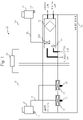
- the air conditioning system 10 includes an internal conditioning machine 20, an external conditioning machine 30, and a control apparatus 40.
- the internal conditioning machine 20 takes in air from the inside of a target space 50, adjusts temperature of the air, and then outputs the air into a target space.
- the external conditioning machine 30 takes in air from the outside of the target space 50, adjusts temperature of the air, and then outputs the air into the target space 50.
- the control apparatus 40 controls the internal conditioning machine 20 and the external conditioning machine 30.
- the internal conditioning machine 20 includes an outdoor unit 21 and one or more indoor units 22.
- the internal conditioning machine 20 includes two indoor units 22.
- the outdoor unit 21 is installed outdoors, and each indoor unit 22 is installed above a ceiling or the like of a room constituting an indoor space which is the target space 50.
- the outdoor unit 21 and each indoor unit 22 are connected via a refrigerant pipe 23.
- a temperature detection device 24 that detects temperature of the outside air is installed in the outdoor unit 21.
- a temperature detection device 25 that detects temperature in the indoor space which is the target space 50 is installed in each indoor unit 22.
- the outdoor unit 21 includes a compressor 211, a four-way valve 212, an outdoor heat-exchanger 213, and an outdoor fan 214.
- the compressor 211, the four-way valve 212, and the outdoor heat-exchanger 213 are connected sequentially via a refrigerant pipe 215.
- Each indoor unit 22 includes an indoor heat-exchanger 221, an expansion valve 222, and an indoor fan 223.
- the indoor heat-exchanger 221 and the expansion valve 222 are connected sequentially via a refrigerant pipe 224. Further, an edge of one side of the refrigerant pipe 215 of the outdoor unit 21 and an edge of one side of the refrigerant pipe 224 of each indoor unit 22 are connected via the refrigerant pipe 23.
- an edge of the other side of the refrigerant pipe 215 of the outdoor unit 21 and an edge of the other side of the refrigerant pipe 224 of each indoor unit 22 are connected via the refrigerant pipe 23.
- an internal conditioning structure is constituted.
- the external conditioning machine 30 includes an outdoor unit 31 and an outside-air supply unit 32.
- the outdoor unit 31 is installed outdoors, and the outside-air supply unit 32 is installed above the ceiling or the like of the room constituting the indoor space which is the target space 50.
- the outdoor unit 31 and the outside-air supply unit 32 are connected via a refrigerant pipe 33.
- a humidity detection device 34 that detects humidity of the outside air is installed in the outdoor unit 31.
- a humidity detection device 35 that detects humidity in the indoor space which is the target space 50 is installed in the outside-air supply unit 32.
- the outdoor unit 31 includes a compressor 311, a four-way valve 312, an outdoor heat-exchanger 313, and an outdoor fan 314.
- the compressor 311, the four-way valve 312, and the outdoor heat-exchanger 313 are connected sequentially via a refrigerant pipe 315.
- the outside-air supply unit 32 includes a heat exchanger 321 and an expansion valve 322.
- the heat exchanger 321 and the expansion valve 322 are connected sequentially via a refrigerant pipe 323. Further, an edge of one side of the refrigerant pipe 315 of the outdoor unit 31 and an edge of one side of the refrigerant pipe 323 of the outside-air supply unit 32 are connected via the refrigerant pipe 33.
- an edge of the other side of the refrigerant pipe 315 of the outdoor unit 31 and an edge of the other side of the refrigerant pipe 323 of the outside-air supply unit 32 are connected via the refrigerant pipe 33.
- an external conditioning structure is constituted.
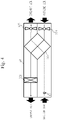
- the outside-air supply unit 32 includes, in addition to the heat exchanger 321 and the expansion valve 322 illustrated in Fig. 3 , an air-supply-purpose blower 324, an air-exhaustion-purpose blower 325, and a heat exchanger 326.
- the air-supply-purpose blower 324 is a blower for supplying the outside air to the inside of the room.
- the air-exhaustion-purpose blower 325 is a blower for exhausting the indoor air to the outside of the room.
- the heat exchanger 326 is a device for heat-exchanging the outside air taken in by the air-supply-purpose blower 324 for the indoor air exhausted by the air-exhaustion-purpose blower 325.
- the control apparatus 40 is a computer.
- the control apparatus 40 includes pieces of hardware such as a processor 41, a memory 42, a storage 43, and a communication interface 44.
- the processor 41 is connected to the other pieces of hardware via signal lines, and controls these other pieces of hardware.
- the processor 41 is an Integrated Circuit (IC) that performs processing.
- the processor 41 is, as a specific example, a Central Processing Unit (CPU).
- the memory 42 is a storing device that stores data temporally.
- the memory 42 is, as a specific example, a Static Random Access Memory (SRAM) or a Dynamic Random Access Memory (DRAM).
- the storage 43 is a storing device that stores data.
- the storage 43 is, as a specific example, a Hard Disk Drive (HDD).
- the communication interface 44 is an interface for communicating with an external device.
- the communication interface 44 is, as a specific example, a port for Ethernet (registered trademark) or a Universal Serial Bus (USB).
- the control apparatus 40 includes a setting unit 411, a specifying unit 412, and a controlling unit 413 as functional configuration elements.
- the specifying unit 412 includes a combination specifying unit 414, a load calculation unit 415, an electric power calculation unit 416, and a target specifying unit 417 as functional configuration elements.
- a function of each functional configuration element of the control apparatus 40 is realized by software.
- the storage 43 stores a program that realizes a function of each functional configuration element of the control apparatus 40.
- This program is read into the memory 42 by the processor 41, and executed by the processor 41. Thereby, the function of each functional configuration element of the control apparatus 40 is realized.
- each functional configuration element of the control apparatus 40 is realized by software. However, each functional configuration element of the control apparatus 40 may be realized by hardware. When each functional configuration element is realized by the hardware, the control apparatus 40 includes an electronic circuit instead of a processor 11, a memory 12, and a storage 13. The electronic circuit is a dedicated circuit that realizes functions of each functional configuration element, the memory 12, and the storage 13.
- a single circuit, a composite circuit, a programmed processor, a parallel-programmed processor, a logic IC, a Gate Array (GA), an Application Specific Integrated Circuit (ASIC), or a Field-Programmable Gate Array (FPGA) is assumed as the electronic circuit.
- Each functional configuration element may be realized by one electronic circuit, or each functional configuration element may be distributed to a plurality of electronic circuits and realized.
- Operation procedure of the control apparatus 40 according to the first embodiment corresponds to a control method of the air conditioning system 10 according to the first embodiment. Further, a program that realizes the operation of the control apparatus 40 according to the first embodiment corresponds to a control program of the air conditioning system 10 according to the first embodiment.
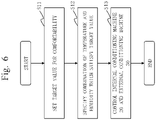
- step S11 setting process
- the setting unit 411 receives input of information regarding the comfortability in the target space 50, and sets the target value regarding the comfortability in the target space 50.
- the comfortability is specified based on at least the temperature and the humidity. In the first embodiment, it is assumed that the PMV is used as an index for the comfortability.
- a controller of the air conditioning system 10 is operated by a user, and the information regarding the comfortability in the target space 50 such as "hot” or “cold” is input. Then, the setting unit 411 sets the target value regarding the comfortability according to the information regarding the input comfortability. For example, when the information which is "hot” is input, the setting unit 411 sets as a value of a target PMV which is the target value, a value lower than the target PMV which is currently set. Further, for example, when the information which is "cold” is input, the setting unit 411 sets as the value of the target PMV which is the target value, a value higher than the target PMV which is currently set.
- step S12 specifying process
- the specifying unit 412 specifies one combination from a plurality of combinations of temperature and humidity which satisfy the target value set in step S11.
- the specifying unit 412 specifies from among the plurality of combinations of temperature and humidity which satisfy the target value set in step S11, a combination where a total electric power, which is a total of an electric power consumption of the internal conditioning machine 20 and an electric power consumption of the external conditioning machine 30 and is required for controlling the temperature and the humidity in the target space 50 to be the temperature and the humidity in the combinations, is small.
- step S13 control process
- the controlling unit 413 controls the internal conditioning machine 20 and the external conditioning machine 30 so that the temperature and the humidity in the target space 50 become the temperature and the humidity in the combination specified in step S12.
- controlling unit 413 controls the internal conditioning machine 20 so that the temperature in the target space 50 becomes temperature in the combination specified in step S12. Further, the controlling unit 413 controls the external conditioning machine 30 so that the humidity in the target space 50 becomes the humidity in the combination specified in step S12.
- step S12 in Fig. 6 the specifying process (step S12 in Fig. 6 ) according to the first embodiment will be described.
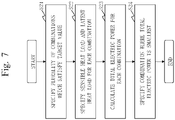
- step S21 combination specifying process
- the combination specifying unit 414 specifies a plurality of combinations of temperature and humidity that satisfy the target PMV which is the target value.
- the target PMV may be widen to some extent.
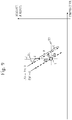
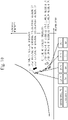
- a dash-dotted line L1 indicates a combination of temperature and humidity where the PMV is - 0.3. That is, with the temperature and the humidity which are indicated by a point on the dash-dotted line L1, the PMV is - 0.3. Then, the dash-dotted line L1 includes a range equivalent to the above-described cases (A), (B), and (C) relative to the temperature and the humidity which are indicated by the point X.
- a dash-dotted line L2 indicates a combination of temperature and humidity where the PMV is + 0.3. That is, with the temperature and the humidity which are indicated by a point on the dash-dotted line L2, the PMV is + 0.3. Then, the dash-dotted line L2 includes a range equivalent to the above-described cases (A), (B'), and (C) relative to the temperature and the humidity which are indicated by the point X.
- the combination specifying unit 414 specifies a plurality of combinations of temperature and humidity which satisfy the target value by extracting a plurality of points on a straight line L3 indicating the target PMV set in step S11.
- the combination specifying unit 414 extracts the plurality of points by extracting points at an arbitrary interval from a line segment of a range of temperature and humidity which can be obtained, among a straight line L3 indicating the target PMV.
- the combination specifying unit 414 specifies, by extracting four points, four combinations which are a combination of temperature 25.0 °C and humidity 70 %, a combination of temperature 25.5 °C and humidity 60 %, a combination of temperature 26.0 °C and humidity 50 %, and a combination of temperature 26.5 °C and humidity 40 %.
- the interval to extract the points from the line segment is arbitrary. Therefore, it is acceptable if not only four points but also more points are extracted.
- a point on a boundary line B 1 between a range in the case of (A) and a range in the case of (B) in Fig. 8 and a point on a boundary line B3 between a range in the case of (B') and a range in the case of (C) in Fig. 9 are a combination in the case where the temperature is changed and the absolute humidity is not changed.
- a point on a boundary line B2 between a range in the case of (B) and a range in the case of (C) in Fig. 8 and a point on a boundary line B4 between a range in the case of (A) and a range in the case of (B') in Fig. 9 are a combination in the case where the absolute humidity is changed and the temperature is not changed.
- step S22 a load calculation process
- the load calculation unit 415 calculates, by targeting each of the plurality of combinations specified in step S21, a sensible heat load and a latent heat load which are for changing the temperature and the humidity in the target space 50 to the temperature and the humidity in the target combinations.
- a method of calculating the sensible heat load and the latent heat load may be any method.
- the load calculation unit 415 calculates the sensible heat load and the latent heat load by plugging into a theoretical formula, pieces of information such as outside-air temperature and outside-air humidity, and the temperature and the humidity in the target combination. Note that, the load calculation unit 415 can acquire the outside-air temperature by the temperature detection device 24 and acquire the outside-air humidity by the humidity detection device 34.
- the load calculation unit 415 generates a first correlation equation between: a difference ⁇ T between the outside-air temperature and the temperature in the target combination; and the sensible heat load. Further, the load calculation unit 415 generates a second correlation equation between: a difference ⁇ x between the outside-air humidity and the humidity in the target combination; and the latent heat load. Then, the load calculation unit 415 calculates the sensible heat load by plugging the difference ⁇ T into the first correlation equation. Further, the load calculation unit 415 calculates the sensible heat load by plugging the difference ⁇ x into the second correlation equation.
- the load calculation unit 415 generates, by using machine learning or the like, a model for calculating the sensible heat load and the latent heat load based on pieces of information such as the outside-air temperature, the outside-air humidity, and the temperature and the humidity in the target combination. Then, the load calculation unit 415 calculates the sensible heat load and the latent heat load by inputting into the model, pieces of information such as the outside-air temperature and the outside-air humidity, and the temperature and the humidity in the target combination.
- step S23 electric power calculation process
- the electric power calculation unit 416 calculates, by targeting each of the plurality of combinations specified in step S21, a total electric power required for controlling the temperature and the humidity in the target space 50 to be the temperature and the humidity in the target combination based on the sensible heat load and the latent heat load which are calculated in step S22 for the target combination.
- the electric power calculation unit 416 simulates an operation state of the internal conditioning machine 20 in a case of processing the sensible heat load calculated for the target combination, and calculates the electric power consumption of the internal conditioning machine 20. Further, the electric power calculation unit 416 simulates an operation state of the external conditioning machine 30 in a case of processing the latent heat load calculated for the target combination, and calculates the electric power consumption of the external conditioning machine 30. Then, the electric power calculation unit 416 calculates a total electric power by totaling the electric power consumption of the internal conditioning machine 20 and the electric power consumption of the external conditioning machine 30.
- the electric power consumptions calculated here are things that are used for comparison between combinations. Consequently, it is important that a magnitude relation between the calculated electric power consumptions is correct, and accuracy of an absolute value of the electric power consumption is unimportant.
- step S24 target specifying process
- the target specifying unit 417 specifies a combination where the calculated total electric power is small among the plurality of combinations specified in step S21.
- the target specifying unit 417 specifies the combination of temperature 26.0 °C and humidity 50 °C where the total electric power is smallest.
- step S13 in Fig. 6 A control process (step S13 in Fig. 6 ) according to the first embodiment will be described.
- the controlling unit 413 raises sensible-heat cooling ability and lowers latent-heat cooling ability by raising ability of the internal conditioning machine 20 and lowering ability of the external conditioning machine 30.
- the controlling unit 413 lowers sensible-heat heating ability and raises latent-heat heating ability by lowering the ability of the internal conditioning machine 20 and raising the ability of the external conditioning machine 30.
- the controlling unit 413 lowers refrigerant evaporating temperature of the internal conditioning machine 20, raises sensible-heat ability, raises the refrigerant evaporating temperature of the external conditioning machine 30, and lowers latent-heat ability.
- the controlling unit 413 raises the sensible-heat cooling ability and the latent-heat cooling ability by raising the ability of the internal conditioning machine 20 and raising the ability of the external conditioning machine 30.
- the controlling unit 413 lowers the sensible-heat heating ability and the latent-heat heating ability by lowering the ability of the internal conditioning machine 20 and lowering the ability of the external conditioning machine 30.
- the controlling unit 413 lowers the refrigerant evaporating temperature of the internal conditioning machine 20 and the external conditioning machine 30, and raises the sensible-heat ability and the latent-heat ability.
- the controlling unit 413 lowers the sensible-heat colling ability and raises the latent-heat cooling ability by lowering the ability of the internal conditioning machine 20 and raising the ability of the external conditioning machine 30.
- the controlling unit 413 raises the sensible-heat heating ability and lowers the latent-heat heating ability by raising the ability of the internal conditioning machine 20 and lowering the ability of the external conditioning machine 30.
- the controlling unit 413 raises the refrigerant evaporating temperature of the internal conditioning machine 20, lowers the sensible-heat ability, lowers the refrigerant evaporating temperature of the external conditioning machine 30, and raises the latent-heat ability.
- the controlling unit 413 lowers the sensible-heat cooling ability and the latent-heat cooling ability by lowering the ability of the internal conditioning machine 20 and lowering the ability of the external conditioning machine 30.
- the controlling unit 413 raises the sensible-heat heating ability and the latent-heat heating ability by raising the ability of the internal conditioning machine 20 and raising the ability of the external conditioning machine 30.
- the controlling unit 413 raises the refrigerant evaporating temperature of the internal conditioning machine 20 and the external conditioning machine 30, and lowers the sensible-heat ability and the latent-heat ability.
- the control apparatus 40 sets the target value for the comfortability, and controls both the internal conditioning machine 20 and the external conditioning machine 30 based on the target value. Both the internal conditioning machine 20 and the external conditioning machine 30 are controlled, proper control based on the comfortability is possible.
- the control apparatus 40 specifies a combination where the total electric power is small, from among a plurality of combinations of temperature and humidity which satisfy the target value for the comfortability. Then, the control apparatus 40 controls the internal conditioning machine 20 and the external conditioning machine 30 so that the temperature and the humidity in the target space 50 become the temperature and the humidity in the specified combination. Therefore, it is possible to realize control of the air conditioning system which lowers the electric power consumption.
- the temperature and the humidity in the indoor space are elements that give influence on the comfortability in the indoor space.
- the PMV is used as an index
- values of the sensible heat load and the latent heat load are changed. For example, at a time of cooling operation, if set temperature is lowered and set humidity is raised, the sensible heat load is raised and the latent heat load is lowered. Further, at a time of cooling operation, if the set temperature is raised and the set humidity is lowered, the sensible heat load is lowered and the latent heat load is raised.
- the specifying unit 412 specifies the plurality of combinations of temperature and humidity which satisfy the target value for the comfortability, calculates the total electric power for each of all combinations, and specifies the combination where the total electric power is small.
- the specifying unit 412 may specify the combination where the target value for the comfortability is satisfied and the total electric power is small. Specifically, the specifying unit 412 specifies a combination where the total electric power is small, by the optimizing method by using as an objective function, a function which minimizes the total electric power, and using as a constraint condition, the combination of temperature and humidity satisfying the target value.
- the PMV is used as the index for the comfortability.
- the index for the comfortability is not limited to the PMV.
- another index may be used as long as the index is calculated from at least the temperature and the humidity.
- the internal conditioning machine 20 and the external conditioning machine 30 are a configuration of a direct expansion form.
- at least one of the internal conditioning machine 20 and the external conditioning machine 30 does not need to be a configuration of the direct expansion form as long as the configuration is a form where the air conditioning ability is adjustable.
- a second embodiment is different from the first embodiment in that: in an electric power calculation process, an operation point for the internal conditioning machine 20 and the external conditioning machine 30 where the electric power consumption is small, is specified; the total electric power is calculated by using an electric power consumption in the specified operation point; and in a control process, the internal conditioning machine 20 and the external conditioning machine 30 are controlled in the specified operation point.
- these different matters will be described, and descriptions of the same matters will be omitted.
- step S12 in Fig. 6 a specifying process according to the second embodiment will be described.
- a process of step S23 is different from the first embodiment.
- step S23 the electric power calculation unit 416 calculates, by targeting each of the plurality of combinations specified in step S21, a total electric power required for controlling the temperature and the humidity in the target space to be the temperature and the humidity in the target combination.
- the electric power calculation unit 416 calculates a total electric power required when an ability setting where the electric power consumption is small is adopted, from among ability settings of each of the internal conditioning machine 20 and the external conditioning machine 30 for controlling the temperature and the humidity in the target space 50 to be the temperature and the humidity in the target combination.
- the internal conditioning machine 20 and the external conditioning machine 30 can change an ability setting such as refrigerant evaporating temperature.
- the electric power calculation unit 416 specifies an operation point of the ability setting such as the refrigerant evaporating temperature of the internal conditioning machine 20 where the electric power consumption is small, when a sensible heat load calculated for the target combination is processed.
- the electric power calculation unit 416 calculates the electric power consumption of the internal conditioning machine 20 required when the specified ability setting of the operation point is adopted.
- the electric power calculation unit 416 specifies an operation point of the ability setting such as the refrigerant evaporating temperature of the external conditioning machine 30 where the electric power consumption is small, when the latent heat load calculated for the target combination is processed.
- the electric power calculation unit 416 calculates a power electric consumption of the external conditioning machine 30 required when the specified ability setting of the operation point is adopted. Then, the electric power calculation unit 416 calculates a total electric power by totaling the electric power consumption of the internal conditioning machine 20 and the electric power consumption of the external conditioning machine 30.
- step S13 in Fig. 6 A control process (step S13 in Fig. 6 ) according to the second embodiment will be described.
- the controlling unit 413 controls the internal conditioning machine 20 in the ability setting adopted when the electric power consumption of the internal conditioning machine 20 is calculated in step S23. Further, the controlling unit 413 controls the external conditioning machine 30 in the ability setting adopted when the electric power consumption of the external conditioning machine 30 is calculated in step S23.
- the control apparatus 40 specifies a combination of the temperature and the humidity based on the electric power consumption in the ability setting where the electric power consumption is small. Then, the control apparatus 40 causes the internal conditioning machine 20 and the external conditioning machine 30 to operate in the ability setting where the electric power consumption is small. Therefore, it is possible to obtain effect of energy saving assumed when the combination of temperature and humidity is specified.
- the controlling unit 413 controls the internal conditioning machine 20 and the external conditioning machine 30 based on: the combination of temperature and humidity; and an environment condition when the internal conditioning machine 20 and the external conditioning machine 30 are controlled.
- the environment condition is different from a time when the combination of temperature and humidity is specified, there is a possibility that the effect of the energy saving assumed when the combination of temperature and humidity is specified, cannot be obtained.
- the internal conditioning machine 20 and the external conditioning machine 30 are controlled in the ability setting, where the electric consumption is small, adopted when the electric power consumption is calculated. Therefore, it is possible to obtain the effect of the energy saving assumed when the combination of temperature and humidity is specified.
- the controlling unit 413 may control and switch the internal conditioning machine 20 and the external conditioning machine 30 according to the temperature and the humidity in the combination as with the first embodiment.
- a third embodiment is different from the first and second embodiments in that conditions regarding the comfortability other than the temperature and the humidity are considered.
- this different matter will be described, and descriptions of the same matters will be omitted.
- the average wind speed may be called an average wind volume.
- the average wind speed is included as a parameter used when the PMV is calculated. Therefore, if the average wind speed is changed, the PMV is also changed.
- Processes of step S12 and step S13 are different from the first embodiment.
- step S12 the specifying unit 412 specifies one combination among a plurality of combinations of temperature, humidity, and wind speed which satisfy the targe value set in step S11.
- the specifying unit 412 specifies from among a plurality of combinations of the temperature, the humidity, and the wind speed which satisfy the target value, a combination where a total electric power, which is a total of the electric power consumption of the internal conditioning machine 20 and the electric power consumption of the external conditioning machine 30 and is required for controlling the temperature, the humidity, and the wind speed in the target space 50 to be the temperature, the humidity, and the wind speed in the combinations, is small.
- the controlling unit 413 controls the internal conditioning machine 20 and the external conditioning machine 30 so that the temperature, the humidity, and the wind speed in the target space 50 become the temperature, the humidity, and the wind speed in the combination specified in step S12.
- the controlling unit 413 specifies, by a method such as actual measurement or simulation, a change in the average wind speed in the target space 50 in a case of changing at least one of conditions of blowing air wind-speed and wind direction of the internal conditioning machine 20 or the external conditioning machine 30. With reference to the change in the average wind speed corresponding to the change in the condition, the controlling unit 413 changes at least one of the blowing air wind-speed and the wind direction of the internal conditioning machine 20 or the external conditioning machine 30 so that the wind speed in the target space 50 becomes the wind speed in the combination specified in step S12.
- step S12 in Fig. 6 a specifying process according to the third embodiment will be described.
- Processes of step S21 and step S23 are different from the first embodiment.
- step S21 the combination specifying unit 414 specifies a plurality of combinations of temperature, humidity, and wind speed which satisfy a target PMV which is the target value.
- step S23 the electric power calculation unit 416 calculates, by targeting each of the plurality of combinations specified in step S21, a total electric power required for controlling the temperature, the humidity, and the wind speed in the target space to be the temperature, the humidity, and the wind speed in the target combination.
- the electric power calculation unit 416 calculates an electric power consumption required when at least one of the blowing air-wind speed and the wind direction is changed, for at least one of the internal conditioning machine 20 and the external conditioning machine 30 so that the wind speed becomes the wind speed in the target combination. Then, the electric power calculation unit 416 calculates the total electric power in consideration of the electric power consumption required when at least one of the blowing air wind-speed and the wind direction is changed.
- the control apparatus 40 considers the conditions regarding the comfortability other than the temperature and the humidity. As a result, the more proper control than control based on the comfortability is possible.
Landscapes
- Engineering & Computer Science (AREA)
- Chemical & Material Sciences (AREA)
- Combustion & Propulsion (AREA)
- Mechanical Engineering (AREA)
- General Engineering & Computer Science (AREA)
- Signal Processing (AREA)
- Physics & Mathematics (AREA)
- Fuzzy Systems (AREA)
- Mathematical Physics (AREA)
- Air Conditioning Control Device (AREA)
Applications Claiming Priority (1)
| Application Number | Priority Date | Filing Date | Title |
|---|---|---|---|
| PCT/JP2019/042106 WO2021084568A1 (fr) | 2019-10-28 | 2019-10-28 | Dispositif de commande, système de climatisation, et procédé de commande pour système de climatisation |
Publications (2)
| Publication Number | Publication Date |
|---|---|
| EP4053467A1 true EP4053467A1 (fr) | 2022-09-07 |
| EP4053467A4 EP4053467A4 (fr) | 2022-10-26 |
Family
ID=75715860
Family Applications (1)
| Application Number | Title | Priority Date | Filing Date |
|---|---|---|---|
| EP19950756.7A Withdrawn EP4053467A4 (fr) | 2019-10-28 | 2019-10-28 | Dispositif de commande, système de climatisation, et procédé de commande pour système de climatisation |
Country Status (4)
| Country | Link |
|---|---|
| US (1) | US20220282880A1 (fr) |
| EP (1) | EP4053467A4 (fr) |
| JP (1) | JP7329613B2 (fr) |
| WO (1) | WO2021084568A1 (fr) |
Families Citing this family (2)
| Publication number | Priority date | Publication date | Assignee | Title |
|---|---|---|---|---|
| JP7458205B2 (ja) * | 2020-02-27 | 2024-03-29 | 株式会社デンソー | 車両用空調装置 |
| CN117685644A (zh) * | 2023-12-14 | 2024-03-12 | 杭州老板电器股份有限公司 | 集成式空调、集成式空调的控制方法、设备和介质 |
Family Cites Families (8)
| Publication number | Priority date | Publication date | Assignee | Title |
|---|---|---|---|---|
| JP2011202916A (ja) * | 2010-03-26 | 2011-10-13 | Daikin Industries Ltd | 空調制御装置 |
| JP5755556B2 (ja) * | 2011-12-14 | 2015-07-29 | 三菱電機ビルテクノサービス株式会社 | 空調制御装置、空調制御システム及び空調制御プログラム |
| KR101256781B1 (ko) * | 2013-01-24 | 2013-04-25 | (주)새한공조 | 간접 부하 제어 모드를 갖는 하이브리드 공조 시스템 |
| JP5951526B2 (ja) * | 2013-03-04 | 2016-07-13 | 株式会社東芝 | 空調制御装置及び制御プログラム |
| JP6479210B2 (ja) * | 2015-11-13 | 2019-03-06 | 三菱電機株式会社 | 空気調和システムおよび空気調和システムの制御方法 |
| WO2018182022A1 (fr) * | 2017-03-31 | 2018-10-04 | ダイキン工業株式会社 | Système de climatisation |
| JP6906865B2 (ja) | 2017-10-26 | 2021-07-21 | 三機工業株式会社 | 空調システム |
| JP7142682B2 (ja) * | 2018-04-02 | 2022-09-27 | 三菱電機株式会社 | 空気調和システム |
-
2019
- 2019-10-28 EP EP19950756.7A patent/EP4053467A4/fr not_active Withdrawn
- 2019-10-28 WO PCT/JP2019/042106 patent/WO2021084568A1/fr not_active Ceased
- 2019-10-28 JP JP2021553893A patent/JP7329613B2/ja active Active
- 2019-10-28 US US17/634,338 patent/US20220282880A1/en not_active Abandoned
Also Published As
| Publication number | Publication date |
|---|---|
| WO2021084568A1 (fr) | 2021-05-06 |
| JP7329613B2 (ja) | 2023-08-18 |
| JPWO2021084568A1 (fr) | 2021-05-06 |
| EP4053467A4 (fr) | 2022-10-26 |
| US20220282880A1 (en) | 2022-09-08 |
Similar Documents
| Publication | Publication Date | Title |
|---|---|---|
| Wang et al. | Air handling unit supply air temperature optimal control during economizer cycles | |
| CN103582786B (zh) | 服务器室管理用的空气调节系统及空气调节控制方法 | |
| EP2729737B1 (fr) | Procédés et appareil de permutation d'un économiseur côté air basé sur l'énergie différentielle | |
| US9420725B2 (en) | Air conditioning apparatus and air conditioning control method | |
| Li et al. | Performance of a heat recovery ventilator coupled with an air-to-air heat pump for residential suites in Canadian cities | |
| US9091454B2 (en) | Air change rate measurement and control | |
| JP2011242011A (ja) | サーバ用空調システム | |
| JP2019163885A (ja) | 空調制御装置、空調制御方法及びコンピュータプログラム | |
| CN108444065B (zh) | 一种空调机组的制冷控制系统、方法、装置及空调机组 | |
| EP4053467A1 (fr) | Dispositif de commande, système de climatisation, et procédé de commande pour système de climatisation | |
| CN107120794A (zh) | 空调器运行工况调节方法及空调器 | |
| CN103673208B (zh) | 一种温度控制方法、装置及系统 | |
| GB2588287A (en) | Air-conditioning control apparatus, air-conditioning control method, and air- conditioning control program | |
| JP7334019B1 (ja) | 空気調和制御装置、空気調和制御方法および空気調和制御プログラム | |
| JP6698959B2 (ja) | コントローラ、輻射空気調和設備、制御方法および制御プログラム | |
| Bao et al. | Applying a novel extra-low temperature dedicated outdoor air system for humidity control and energy efficiency | |
| JP7481724B1 (ja) | 空調装置、及び空調装置の制御方法 | |
| WO2021229687A1 (fr) | Dispositif de commande de chauffage et programme de commande de chauffage | |
| Webster et al. | Influence of supply air temperature on underfloor air distribution (UFAD) system energy performance | |
| JP2024053763A (ja) | 情報処理装置、設備容量算出方法、及びプログラム | |
| JP2025126777A (ja) | 空調システム、及び制御方法 | |
| CN108332366A (zh) | 空气调节机控制装置及空气调节机控制方法 | |
| Deng et al. | Ventilation and (nergy Simulation Analysis of an Occupancy-Based Smart Vent for a Residential House | |
| Kennett et al. | Evaluation of an Extended-Duct Air Delivery System in Tall Spaces Conditioned by Rooftop Units | |
| JP2024053897A (ja) | 情報処理装置、評価方法、及びプログラム |
Legal Events
| Date | Code | Title | Description |
|---|---|---|---|
| STAA | Information on the status of an ep patent application or granted ep patent |
Free format text: STATUS: THE INTERNATIONAL PUBLICATION HAS BEEN MADE |
|
| PUAI | Public reference made under article 153(3) epc to a published international application that has entered the european phase |
Free format text: ORIGINAL CODE: 0009012 |
|
| STAA | Information on the status of an ep patent application or granted ep patent |
Free format text: STATUS: REQUEST FOR EXAMINATION WAS MADE |
|
| 17P | Request for examination filed |
Effective date: 20220422 |
|
| AK | Designated contracting states |
Kind code of ref document: A1 Designated state(s): AL AT BE BG CH CY CZ DE DK EE ES FI FR GB GR HR HU IE IS IT LI LT LU LV MC MK MT NL NO PL PT RO RS SE SI SK SM TR |
|
| A4 | Supplementary search report drawn up and despatched |
Effective date: 20220928 |
|
| RIC1 | Information provided on ipc code assigned before grant |
Ipc: F24F 140/50 20180101ALN20220922BHEP Ipc: F24F 120/20 20180101ALN20220922BHEP Ipc: F24F 11/65 20180101ALI20220922BHEP Ipc: F24F 140/60 20180101ALI20220922BHEP Ipc: F24F 110/20 20180101ALI20220922BHEP Ipc: F24F 110/10 20180101ALI20220922BHEP Ipc: F24F 7/08 20060101ALI20220922BHEP Ipc: F24F 11/46 20180101AFI20220922BHEP |
|
| DAV | Request for validation of the european patent (deleted) | ||
| DAX | Request for extension of the european patent (deleted) | ||
| STAA | Information on the status of an ep patent application or granted ep patent |
Free format text: STATUS: EXAMINATION IS IN PROGRESS |
|
| 17Q | First examination report despatched |
Effective date: 20230907 |
|
| STAA | Information on the status of an ep patent application or granted ep patent |
Free format text: STATUS: THE APPLICATION IS DEEMED TO BE WITHDRAWN |
|
| 18D | Application deemed to be withdrawn |
Effective date: 20241106 |