EP4054246B1 - Procédé et appareil de mesure d'une cellule voisine - Google Patents
Procédé et appareil de mesure d'une cellule voisine Download PDFInfo
- Publication number
- EP4054246B1 EP4054246B1 EP19950735.1A EP19950735A EP4054246B1 EP 4054246 B1 EP4054246 B1 EP 4054246B1 EP 19950735 A EP19950735 A EP 19950735A EP 4054246 B1 EP4054246 B1 EP 4054246B1
- Authority
- EP
- European Patent Office
- Prior art keywords
- information
- smtc
- terminal device
- duration
- cell
- Prior art date
- Legal status (The legal status is an assumption and is not a legal conclusion. Google has not performed a legal analysis and makes no representation as to the accuracy of the status listed.)
- Active
Links
Images

Classifications
-
- H—ELECTRICITY
- H04—ELECTRIC COMMUNICATION TECHNIQUE
- H04W—WIRELESS COMMUNICATION NETWORKS
- H04W48/00—Access restriction; Network selection; Access point selection
- H04W48/08—Access restriction or access information delivery, e.g. discovery data delivery
- H04W48/10—Access restriction or access information delivery, e.g. discovery data delivery using broadcasted information
-
- H—ELECTRICITY
- H04—ELECTRIC COMMUNICATION TECHNIQUE
- H04W—WIRELESS COMMUNICATION NETWORKS
- H04W48/00—Access restriction; Network selection; Access point selection
- H04W48/16—Discovering, processing access restriction or access information
-
- G—PHYSICS
- G01—MEASURING; TESTING
- G01S—RADIO DIRECTION-FINDING; RADIO NAVIGATION; DETERMINING DISTANCE OR VELOCITY BY USE OF RADIO WAVES; LOCATING OR PRESENCE-DETECTING BY USE OF THE REFLECTION OR RERADIATION OF RADIO WAVES; ANALOGOUS ARRANGEMENTS USING OTHER WAVES
- G01S19/00—Satellite radio beacon positioning systems; Determining position, velocity or attitude using signals transmitted by such systems
- G01S19/01—Satellite radio beacon positioning systems transmitting time-stamped messages, e.g. GPS [Global Positioning System], GLONASS [Global Orbiting Navigation Satellite System] or GALILEO
- G01S19/13—Receivers
- G01S19/24—Acquisition or tracking or demodulation of signals transmitted by the system
- G01S19/25—Acquisition or tracking or demodulation of signals transmitted by the system involving aiding data received from a cooperating element, e.g. assisted GPS
- G01S19/256—Acquisition or tracking or demodulation of signals transmitted by the system involving aiding data received from a cooperating element, e.g. assisted GPS relating to timing, e.g. time of week, code phase, timing offset
-
- H—ELECTRICITY
- H04—ELECTRIC COMMUNICATION TECHNIQUE
- H04B—TRANSMISSION
- H04B7/00—Radio transmission systems, i.e. using radiation field
- H04B7/14—Relay systems
- H04B7/15—Active relay systems
- H04B7/185—Space-based or airborne stations; Stations for satellite systems
- H04B7/1853—Satellite systems for providing telephony service to a mobile station, i.e. mobile satellite service
- H04B7/18563—Arrangements for interconnecting multiple systems
-
- H—ELECTRICITY
- H04—ELECTRIC COMMUNICATION TECHNIQUE
- H04W—WIRELESS COMMUNICATION NETWORKS
- H04W24/00—Supervisory, monitoring or testing arrangements
- H04W24/02—Arrangements for optimising operational condition
-
- H—ELECTRICITY
- H04—ELECTRIC COMMUNICATION TECHNIQUE
- H04W—WIRELESS COMMUNICATION NETWORKS
- H04W24/00—Supervisory, monitoring or testing arrangements
- H04W24/10—Scheduling measurement reports ; Arrangements for measurement reports
-
- H—ELECTRICITY
- H04—ELECTRIC COMMUNICATION TECHNIQUE
- H04W—WIRELESS COMMUNICATION NETWORKS
- H04W64/00—Locating users or terminals or network equipment for network management purposes, e.g. mobility management
- H04W64/006—Locating users or terminals or network equipment for network management purposes, e.g. mobility management with additional information processing, e.g. for direction or speed determination
-
- G—PHYSICS
- G01—MEASURING; TESTING
- G01S—RADIO DIRECTION-FINDING; RADIO NAVIGATION; DETERMINING DISTANCE OR VELOCITY BY USE OF RADIO WAVES; LOCATING OR PRESENCE-DETECTING BY USE OF THE REFLECTION OR RERADIATION OF RADIO WAVES; ANALOGOUS ARRANGEMENTS USING OTHER WAVES
- G01S5/00—Position-fixing by co-ordinating two or more direction or position line determinations; Position-fixing by co-ordinating two or more distance determinations
- G01S5/02—Position-fixing by co-ordinating two or more direction or position line determinations; Position-fixing by co-ordinating two or more distance determinations using radio waves
- G01S5/0205—Details
- G01S5/0236—Assistance data, e.g. base station almanac
-
- H—ELECTRICITY
- H04—ELECTRIC COMMUNICATION TECHNIQUE
- H04W—WIRELESS COMMUNICATION NETWORKS
- H04W24/00—Supervisory, monitoring or testing arrangements
- H04W24/08—Testing, supervising or monitoring using real traffic
-
- H—ELECTRICITY
- H04—ELECTRIC COMMUNICATION TECHNIQUE
- H04W—WIRELESS COMMUNICATION NETWORKS
- H04W8/00—Network data management
- H04W8/22—Processing or transfer of terminal data, e.g. status or physical capabilities
-
- H—ELECTRICITY
- H04—ELECTRIC COMMUNICATION TECHNIQUE
- H04W—WIRELESS COMMUNICATION NETWORKS
- H04W84/00—Network topologies
- H04W84/02—Hierarchically pre-organised networks, e.g. paging networks, cellular networks, WLAN [Wireless Local Area Network] or WLL [Wireless Local Loop]
- H04W84/04—Large scale networks; Deep hierarchical networks
- H04W84/06—Airborne or Satellite Networks
Definitions
- the present disclosure relates to the field of communication, and more particularly, to a method and apparatus for measuring a neighbor cell.
- Non-terrestrial networks are a communication scenario of the fifth generation (5G) mobile communication systems.
- NTN fifth generation
- network devices that receive signals sent by terminal devices are no longer base stations fixed on the ground, but network devices located in the air, such as satellites.
- the satellites are moving very fast, causing distances between the satellites and the terminal devices located on the ground to change very quickly.
- distances between low earth orbit (LEO) satellites and the terminal devices can change at a rate of up to 7 kilometers per second (km/s). Therefore, delays of the signals sent by different satellites reaching the terminal devices in the NTNs are quite different.
- LEO low earth orbit
- the terminal devices need to receive and measure signals of a plurality of NTN cells (e.g., satellites) for cell selection or cell reselection, and the network devices can notify the terminal devices of relevant configuration information for cell selection or cell reselection by broadcast.
- the network devices may notify the terminal devices to receive information such as time windows for receiving SS/PBCH blocks (SSBs) of neighbor cells by broadcasting SS/PBCH block measurement timing configuration (SMTC). Since the delays of the signals sent by different satellites reaching the terminal devices in the NTNs are quite different, the terminal devices need to try to receive the SSBs within longer time windows, leading to increasing power consumption of the terminal devices.
- SSBs SS/PBCH blocks
- SMTC SS/PBCH block measurement timing configuration
- the present invention is defined in the independent claims, and preferred implementations of the present invention are defined in the dependent claims.
- the present disclosure provides a method and apparatus for measuring a neighbor cell, which can reduce power consumption of a terminal device.
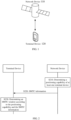
- FIG. 1 is a schematic diagram of a communication system applicable to the present disclosure.
- the communication system 100 includes a network device 110 and a terminal device 120.
- the network device 110 is a network device located in the air, which may be a high altitude platform station (HAPS) with a wireless communication function, and the HAPS may be a hot air balloon, an airplane, a satellite or other aircraft.
- the network device 110 may be a LEO satellite, a medium earth orbit (MEO) satellite, or a geostationary earth orbit (GEO) satellite, where operating periods of the LEO satellite and the MEG satellite are different from a rotation period of the earth and cannot remain relatively stationary with the earth. Therefore, the LEO satellite and the MEG satellite can also be called non-geostationary earth orbit (NGEO) satellites.
- NGEO non-geostationary earth orbit
- the terminal device 120 may be a mobile terminal device or a fixed terminal device.
- the terminal device 120 may be a handheld device with a wireless communication function, a vehicle-mounted device, a wearable device, a computing device or other processing devices connected to wireless modems, such as a user equipment (UE) defined by the 3rd generation partnership project (3GPP), a mobile station (MS), a soft terminal, a home gateway, a set-top box, etc.
- UE user equipment
- 3GPP 3rd generation partnership project
- MS mobile station
- soft terminal a home gateway
- set-top box a set-top box
- a bidirectional arrow line in FIG. 1 represents a signal between the network device 110 and the terminal device 120.
- the satellite can transmit downlink data to the terminal device 120, and the downlink data can be transmitted to the terminal device 120 after channel coding, modulation and mapping.
- the terminal device 120 can also transmit uplink data to the satellite base station, and the uplink data can also be transmitted to the satellite after the channel coding, the modulation and mapping.
- the present disclosure does not limit a communication mode between the network device 110 and the terminal device 120.
- a position where the network device 110 is located may be referred to as a space segment, and a position where the terminal device 120 is located may be referred to as a user segment.
- the communication system 100 may further include a ground segment (not shown in FIG. 1 ), for example, a satellite measurement and control center, a network control center (NCC), various gateways and the like.
- NCC network control center
- the satellite measurement and control center has functions of maintaining, monitoring and controlling an orbital position and attitude of the satellite, managing the ephemeris of the satellite and so on.
- the NCC has functions of handling user registration, identity verification, billing and other network management functions. In some satellite communication systems, the satellite measurement and control center and the NCC are integrated into one.
- the gateway has functions of call processing, switching, interfacing with the terrestrial communication network, and so on.
- the terrestrial communication network is an integral part of the ground segment and is used to send satellite data packets to the terminal device 120 through a core network, that is, the satellite can directly communicate with the terminal device 120 or indirectly communicate with the terminal device 120 through the ground segment.
- the terrestrial communication network can be a public switched telephone network (PSTN), a public land mobile network (PLMN) or other various private networks. Different terrestrial communication networks require the gateway to have different gateway functions.
- the space segment of the satellite communication system may be a multi-layered structure consisting of a management satellite and one or more serving satellites.
- the space segment may include one or more management satellites and serving satellites managed by the managed satellites.
- the satellites mentioned in the present disclosure are not limited to the management satellite or the serving satellite.
- a method for measuring a neighbor cell in an NTN provided by the present disclosure will be introduced in detail in the following.
- the method 200 includes: In S210, a network device determines a positioning capability of at least one terminal device.
- the at least one terminal device belongs to one cell, which cell may be referred to as a current cell (also called a local cell) of the at least one network device.
- Cells other than the current cell may be referred to as neighbor cells.
- the current cell may be an NTN cell or a non-NTN cell
- the neighbor cell refers to the NTN cell.
- the network devices may be a non-terrestrial network device such as the satellite, or may be a terrestrial network device.
- the positioning capability of the terminal device can be understood as a capability of the terminal device to determine its own position.
- the terminal device can determine its position through the BeiDou navigation satellite system or the global positioning system (GPS), or can determine its position through a base station, a wireless fidelity (Wi-Fi) signal, or a Bluetooth signal, or can determine its position by matching a live street view with a street view map.
- GPS global positioning system
- Wi-Fi wireless fidelity
- Bluetooth Bluetooth
- a satellite-based positioning capability is higher than a base station-based positioning capability.
- the terminal device can more accurately calculate a delay of a signal of the neighbor cell reaching the terminal device, and the terminal device can accurately determine a time domain position and a duration of the SMTC window (that is, a time window for measuring the neighbor cell); and when the positioning capability of the terminal device is low, the terminal device cannot accurately calculate the delay of the signal of the neighbor cell reaching the terminal device, and accordingly, the terminal device cannot accurately determine the time domain position and the duration of the SMTC window.
- the network device needs to determine the positioning capability of the terminal device, so as to send different SMTC information based on different situations.
- the terminal device can report its positioning capability during a capability reporting process.
- the terminal device can report whether it supports satellite positioning; when the terminal device supports the satellite positioning, the terminal device can also report a strength of a current satellite signal, so that the network device can determine the current positioning capability of the terminal device.
- the terminal device may also directly report the current positioning accuracy.
- the network device can determine whether the positioning capability of the terminal device meets a requirement according to a preset condition.
- the preset condition may be a positioning manner of the terminal device or the positioning accuracy of the terminal device.
- the preset condition is that the terminal device needs to be positioned based on the satellite positioning system
- the positioning manner of the terminal device is based on the base station for positioning, the positioning capability of the terminal device does not meet the requirement; if the positioning manner of the terminal device is based on the BeiDou navigation satellite system for positioning, the positioning capability of the terminal device meets the requirement.
- the preset condition is that the positioning accuracy of the terminal device needs to be within 10 meters of error
- the positioning accuracy of the terminal device is greater than 10 meters, the positioning capability of the terminal device does not meet the requirement; and if the positioning accuracy of the terminal device is 5 meters, the positioning capability of the terminal device meets the requirement.
- the present disclosure does not limit a manner in which the network device determines whether the capability of the terminal device meets the requirement.
- the network device According to whether the positioning capability of the at least one terminal device belonging to one cell meets the requirement, the network device has the following processing situations.
- the network device may send the SMTC information including first start time offset information and first duration information.
- the first start time offset information is used to indicate an offset of a start time domain position of the SMTC window relative to a start time domain position of a SMTC period where the SMTC window is located, and the start time domain position of the SMTC period is determined based on a transmission time of the SSB.
- the first duration information is used to indicate a duration of the SMTC window.
- the network device configures the SMTC window for a frequency point, and the first start time offset information may be determined based on the minimum difference between signal delays of all neighbor cells of a frequency point to be measured and a signal delay of the current cell.
- a delay of the signal of the current cell corresponding to the frequency point to be measured reaching the terminal device is 4ms
- the frequency point to be measured corresponds to three neighbor cells
- differences between delays of signals of these three neighbor cells reaching the terminal device and the delay of the signal of the current cell reaching the terminal device are respectively 6ms, 11ms and 16ms
- the offset indicated by the first start time offset information can be 6ms, or can be other values less than 6ms, such as 5ms, to avoid the missing detection of the SSB of the neighbor cell by the terminal device due to the factors such as the calculation error.
- the first duration information may be determined based on an interval between the minimum delay and the maximum delay of signals of all neighbor cells corresponding to the frequency point to be measured.
- the frequency point to be measured corresponds to three neighbor cells
- the delays of the signals of these three neighbor cells reaching the terminal device are respectively 10 ms, 15 ms, and 20 ms
- the minimum delay is 10 ms
- the maximum delay is 20 ms.
- the duration indicated by the first duration information may be a difference between the maximum delay and the minimum delay, that is, 10 ms.
- the duration indicated by the first duration information may also be greater than 10 ms, so as to avoid the missing detection of the SSB of the neighbor cell by the terminal device due to the factors such as the calculation error.
- the network device configures the SMTC window for the neighbor cell, and the first start time offset information may be determined based on a delay of a signal of a neighbor cell to be measured.
- the delay of the signal of the current cell reaching the terminal device is 4ms
- there are three neighbor cells to be measured near the current cell and a difference between a delay of a signal of one of the neighbor cells reaching the terminal device and the delay of the signal of the current cell reaching the terminal device is 6ms
- the offset indicated by the first start time offset information can be 6ms, or it can be other values less than 6ms, such as 5ms, so as to avoid the missing detection of the SSB of the neighbor cell by the terminal device due to the factors such as the calculation error.
- the first duration information may be determined based on an interval between the minimum delay and the maximum delay of signals of the neighbor cell to be measured.
- the duration indicated by the first duration information may be a difference between the maximum delay and the minimum delay, that is, 5ms.
- the duration indicated by the first duration information may also be greater than 5 ms, so as to avoid the missing detection of the SSB of the neighbor cell by the terminal device due to the factors such as the calculation error.
- the satellites of a plurality of neighbor cells corresponding to one frequency point usually include satellites that are far away, and a difference between signal delays of the plurality of neighbor cells is usually greater than the difference between the minimum delay and the maximum delay of the signals of one neighbor cell. Therefore, configuring the SMTC window based on the neighbor cell is beneficial to shorten the duration for the terminal device to measure the neighbor cell, thereby reducing the power consumption of the terminal device.
- the network device configures the SMTC window for a neighbor cell group, and the first start time offset information may be determined based on the minimum delay of signals of a neighbor cell group to be measured.
- the delay of the signal of the current cell reaching the terminal device is 4ms
- there are four neighbor cells to be measured near the current cell which are respectively neighbor cell 1, neighbor cell 2, neighbor cell 3, and neighbor cell 4, and differences between delays of signals of these four neighbor cell reaching the terminal device and the delay of the signal of the current cell reaching the terminal device are respectively 6ms (neighbor cell 1), 8ms (neighbor cell 2), 17ms (neighbor cell 3) and 21ms (neighbor cell 4), and then the network device may group neighbor cells with similar delays into one group, that is, group neighbor cells 1 and 2 into one group, and group neighbor cells 3 and 4 into one group.
- the offset indicated by the first start time offset information may be 6 ms or other values less than 6ms, such as 5ms, so as to avoid the missing detection of the SSB of the neighbor cell by the terminal device due to the factors such as the calculation error.
- the first duration information may be determined based on the interval between the minimum delay and the maximum delay of the signals of the neighbor cell group to be measured.
- the network device may group neighbor cells with similar delays into one group, that is, group neighbor cells 1 and 2 into one group, and group neighbor cells 3 and 4 into one group.
- the duration of the SMTC window indicated by the first duration information may be 2ms, that is, a difference between the minimum delay 10ms and the maximum delay 12ms.
- the duration indicated by the first duration information may also be greater than 2 ms, so as to avoid the missing detection of the SSB of the neighbor cell by the terminal device due to the factors such as the calculation error.
- the satellites of a plurality of neighbor cells corresponding to one frequency point usually include satellites that are far away, and a difference between signal delays of the plurality of neighbor cells is usually greater than the difference between the minimum delay and the maximum delay of the signals of one neighbor cell group. Therefore, configuring the SMTC window based on the neighbor cell group is beneficial to shorten the duration for the terminal device to measure the neighbor cell, thereby reducing the power consumption of the terminal device.
- each of the at least one terminal device has the positioning capability that meets the requirement.
- a duration indicated by the second duration information may be a time determined by the network device based on preset information (e.g., a communication standard).
- the terminal device can determine a difference between the signal delay of the neighbor cell and the signal delay of the current cell based on its positioning capability, and adjust the SMTC window indicated by the second start time offset information and the second duration information based on the difference.
- the at least one terminal device includes a terminal device whose positioning capability does not meet the requirement and a terminal device whose positioning capability meets the requirement.
- the terminal device whose positioning capability does not meet the requirement has low positioning accuracy, and the signal delay accuracy of the neighbor cell calculated by the network device based on the position of the terminal device is also low, a longer SMTC window needs to be configured to reduce the risk of the missing detection of SSB; and the terminal device whose positioning capability meets the requirement has high positioning accuracy, and the signal delay accuracy of the neighbor cell calculated by the terminal device based on its position is also high, a shorter SMTC window is configured to meet the needs of detecting the SSB. Therefore, the network device can configure the SMTC windows with different lengths for different terminal devices to meet the requirement of different terminal devices.
- the present disclosure does not limit units of a time length, a time offset and a period of the SMTC window.
- the units of the time length o and the time offset of the SMTC window can be a time domain symbol
- the unit of the period corresponding to the SMTC window can be a time slot.
- the system message may also include at least one frequency point required by the terminal device to measure the neighbor cell, and a neighbor cell list corresponding to each of the at least one frequency point.
- the SMTC information may also contain information indicating the SMTC period.
- the terminal device can perform the following steps.
- terminal device determines the SMTC window according to the positioning capability and the SMTC information.
- the terminal device may receive the SSB of the neighbor cell according to the SMTC window indicated by the first start time offset information and the first duration information in the SMTC information.
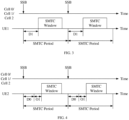
- the terminal device is UE1
- the three NTN cells are cell 0, cell 1, and cell 2, respectively.
- These three cells send the SSB at the same time, and UE1 resides on cell 0.
- Cell 0 sends the SMTC information associated with frequency point 1 or cell 1 or cell group 1, and UE1 performs the neighbor cell measurement after receiving the SMTC information.
- UE1 measures all neighbor cells corresponding to frequency point 1 according to the SMTC information.
- all neighbor cells corresponding to frequency point 1 are cell 1 and cell 2.
- the SMTC information includes the first start time offset information, and the indicated offset is D1; the SMTC information also includes the first duration information, and the indicated duration L1 is a difference between the signal delay of cell 1 and the signal delay of cell 2.
- UE1 receives the SSBs of cell 1 and cell 2 within the corresponding SMTC window according to D1 and L1 configured by the network device.
- the SMTC information includes the first start time offset information, and the indicated offset is D1; the SMTC information also includes the first duration information, and the indicated duration is L1 (this duration is a duration determined by the network device, which is not related to the difference between the signal delay of cell 1 and the signal delay of cell 2).
- UE1 receives the SSB of cell 1 within the corresponding SMTC window according to D1 and L1 configured by the network device.
- the network device may also send the SMTC information associated with cell 2, so that UE1 can measure cell 2.
- the UE1 measures cell group 1 according to the SMTC information.
- all neighbor cells included in cell group 1 are cell 1 and cell 2.
- the SMTC information includes the first start time offset information, and the indicated offset is D1; the SMTC information also includes the first duration information, and the indicated duration L1 is the difference between the signal delay of cell 1 and the signal delay of cell 2.
- UE1 receives the SSBs of cell 1 and cell 2 within the corresponding SMTC window according to D1 and L1 configured by the network device.
- the terminal device For the terminal device whose positioning capability meets the requirement, it can determine the SMTC window after adjusting the offset indicated by the second start time offset information in the SMTC information, and receive the SSB of the neighbor cell within the SMTC window.
- FIG. 4 is a method for measuring a neighbor cell by a terminal device whose positioning capability meets a requirement.
- the terminal device is UE2
- the three NTN cells are cell 0, cell 1 and cell 2, these three cells send the SSB at the same time, and UE2 resides on cell 0.
- Cell 0 sends the SMTC information associated with frequency point 1 or cell 1 or cell group 1, and UE2 performs the neighbor cell measurement after receiving the SMTC information.
- UE2 measures all neighbor cells corresponding to frequency point 1 according to the SMTC information.
- all neighbor cells corresponding to frequency point 1 are cell 1 and cell 2.
- the SMTC information includes the second start time offset information, and the indicated offset is D0; the SMTC information may also include the second duration information, and the indicated duration is L1.
- UE2 determines that the difference between the signal delay of cell 1 and the signal delay of cell 0 is O1 based on its positioning capability, and UE2 determines that the difference between the signal delay of cell 2 and the signal delay of cell 0 is O2 based on its positioning capability, where O1 is less than 02, then UE2 can adjust D0 according to O1, that is, adjust the offset of the start time of the SMTC window to D0+O1.
- the UE2 may also determine that the duration L2 of the SMTC window is the difference between the signal delay of cell 1 and the signal delay of cell 2. Subsequently, UE2 receives the SSBs sent by cell 1 and cell 2 within the corresponding SMTC window based on D0+O1 and L2 determined by itself.
- the SMTC information includes the second start time offset information, and the indicated offset is D0; and the SMTC information may also include the second duration information, and the indicated duration is L1.
- the UE2 determines that the difference between the signal delay of cell 0 and the signal delay of cell 1 is O1 based on its positioning capability, and then UE2 can adjust D0 according to O1, that is, adjust the offset of the start time of the SMTC window to D0+O1. Subsequently, the UE2 receives the SSB sent by the cell 1 within the corresponding SMTC window based on D0+O1 determined by itself and L1 configured by the network device.
- the UE2 measures all neighbor cells included in cell group 1 according to the SMTC information.
- all neighbor cells included in cell group 1 are cell 1 and cell 2.
- the SMTC information includes the second start time offset information, and the indicated offset is D0; the SMTC information may also include the second duration information, and the indicated duration is L1.
- UE2 determines that the difference between the signal delay of cell 1 and the signal delay of cell 0 is O1 based on its positioning capability, and UE2 determines that the difference between the signal delay of cell 2 and the signal delay of cell 0 based on its positioning capability is 02, where O1 is less than O2, then UE2 can adjust D0 according to O1, that is, adjust the offset of the start time of the SMTC window to D0+O1.
- the UE2 may also determine that the duration L2 of the SMTC window is the difference between the signal delay of cell 1 and the signal delay of cell 2. Subsequently, UE2 receives the SSBs sent by cell 1 and cell 2 within the corresponding SMTC window based on D0+O1 and L2 determined by itself.
- the network device may send the SMTC information including the first start time offset information and the first duration information, or the network device may send the SMTC information including the second start time offset information and the second duration information.
- the following describes a scenario in which the terminal device whose positioning capability meets the requirement and the terminal device whose positioning capability does not meet the requirement coexist with reference to FIG. 5 .
- Fig. 5 there are two terminal devices and three NTN cells in this case.
- the two terminal devices are UE1 and UE2, and the three NTN cells are cell 0, cell 1 and cell 2, respectively. These three cells send the SSB at the same time, and both UE1 and UE2 reside on cell 0.
- Cell 0 sends the SMTC information associated with frequency point 1 or cell 1 or cell group 1, and UE1 and UE2 perform the neighbor cell measurement after receiving the SMTC information.
- the network device can send the SMTC information including two kinds of start time offset information and two kinds of duration information.
- the SMTC information may include the first start time offset information, the first duration information, the second start time offset information, and the second duration information, and the duration indicated by the first duration information is greater than the duration indicated by the second duration information.
- UE1 whose positioning capability does not meet the requirement may determine the SMTC window based on the first start time offset information and the first duration information; and UE2 whose positioning capability meets the requirement may determine the SMTC window based on the second start time offset information and the second duration information.
- a specific manner of UE1 determining the SMTC window may refer to the example corresponding to FIG. 3
- a specific manner of UE2 determining the SMTC window may refer to the example corresponding to FIG. 4 .
- an apparatus for measuring a neighbor cell includes corresponding hardware structures and/or software modules for performing each function.
- the present disclosure may be implemented in a form of hardware or a combination of the hardware and computer software. Whether a function is performed in a form of hardware or computer software driving hardware depends on a particular application and a design constraint condition of the technical solution. A skilled person may use various methods to implement the described functions for each particular application, but such implementation should not be considered to be beyond the scope of the present disclosure.
- Division for functional units may be performed on the apparatus for measuring the neighbor cell according to the above method examples in the present disclosure.
- various functions may be divided into various functional units, or two or more functions may be integrated into one processing unit.
- the above integrated unit may be implemented in a form of hardware, or may be implemented in a form of software function unit. It should be noted that, the division of the units in the present disclosure is illustrative, and is merely the division of logical functions. Other division modes may be used in actual implementations.
- FIG. 6 is a schematic structural diagram of an apparatus for measuring a neighbor cell provided by the present disclosure.
- the apparatus 600 includes a processing unit 610 and a receiving unit 620, and the receiving unit 620 can perform a receiving step under the control of the processing unit 610.
- the receiving unit 620 is configured to receive SMTC information; and the processing unit 610 is configured to determine an SMTC window according to a positioning capability of a terminal device and the SMTC information, and the SMTC window is used to measure the neighbor cell.
- a start time of the SMTC window is a time indicated by first start time offset information in the SMTC information.
- a duration of the SMTC window is a duration indicated by first duration information in the SMTC information.
- the SMTC information further includes second duration information, the duration indicated by the first duration information is longer than a duration indicated by the second duration information, and the second duration information is used to indicate a duration of the SMTC window when the positioning capability meets the requirement.
- the SMTC information is used to configure a SMTC window of a frequency point, or a SMTC window of the neighbor cell, or a SMTC window of a neighbor cell group.
- a start time of the SMTC window is a time obtained by adjusting a time indicated by second start time offset information in the SMTC information, and a time interval between the adjusted time and the time indicated by the second start time offset information is less than or equal to: an interval between a minimum delay of signals of all neighbor cells corresponding to a frequency point corresponding to the SMTC information and a signal delay of an current cell; or, an interval between a signal delay of a neighbor cell corresponding to the SMTC information and the signal delay of the current cell; or, an interval between a minimum delay of signals of a neighbor cell group corresponding to the SMTC information and the signal delay of the current cell.
- a duration of the SMTC window is greater than or equal to: an interval between a maximum delay and a minimum delay of signals of all neighbor cells corresponding to a frequency point corresponding to the SMTC information; or, a duration indicated by second duration information in the SMTC information; or, an interval between a minimum delay and a maximum delay of signals of a neighbor cell group corresponding to the SMTC information.
- the apparatus 600 performs the method for measuring the neighbor cell and the beneficial effects produced, reference may be made to the relevant descriptions in the method embodiments.
- FIG. 7 is a schematic structural diagram of an apparatus for measuring a neighbor cell provided by the present disclosure.
- the apparatus 700 includes a processing unit 710 and a sending unit 720, and the sending unit 720 can perform a sending step under the control of the processing unit 710.
- the processing unit 710 is configured to determine a positioning capability of at least one terminal device, and the at least one terminal device belongs to one cell; and the sending unit 720 is configured to send SMTC information according to the positioning capability, and the SMTC information is used to determine a SMTC window required for measuring the neighbor cell.
- the SMTC information includes first start time offset information, and the first start time offset information is determined based on one of the following conditions: a minimum delay of signals of all neighbor cells corresponding to a frequency point to be measured; a signal delay of a neighbor cell to be measured; and a minimum delay of signals of a neighbor cell group to be measured.
- the SMTC information includes first duration information, and the first duration information is determined based on one of the following conditions: an interval between a minimum delay and a maximum delay of signals of all neighbor cells corresponding to a frequency point to be measured; an interval between a minimum delay and a maximum delay of signals of a neighbor cell to be measured; and an interval between a minimum delay and a maximum delay of signals of a neighbor cell group to be measured.
- the SMTC information includes second duration information, and a duration indicated by the first duration information is longer than a duration indicated by the second duration information, and the second duration information is used to indicate a duration of the SMTC window when the positioning capability meets the requirement.
- the SMTC information includes second start time offset information
- the second start time offset information is determined based on the following conditions: a signal delay of the cell to which the at least one terminal device belongs.
- the apparatus 700 performs the method for measuring the neighbor cell and the beneficial effects produced, reference may be made to the relevant descriptions in the method embodiments.
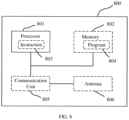
- FIG. 8 shows a schematic structural diagram of a communication device provided by the present disclosure.
- the dashed line in FIG. 8 indicates that the unit or the module is optional.
- a device 800 may be configured to implement the method described in the above method implementations.
- the device 800 may be a terminal device or a network device or a chip.
- the device 800 includes one or more processors 801, the one or more processors 801 may support the device 800 to implement the methods in the method implementations corresponding to FIGS. 2 to 5 .
- the processor 801 may be a general purpose processor or a special purpose processor.
- the processor 801 may be a central processing unit (CPU).
- the CPU may be configured to control the device 800, execute software programs, and process data of the software programs.
- the device 800 may further include a communication unit 805 configured to implement input (reception) and output (transmission) of signals.
- the device 800 may be a chip, and the communication unit 805 may be an input and/or output circuit of the chip, or the communication unit 805 may be a communication interface of the chip, which may be a component of a terminal device or a network device or other wireless communication devices.
- the device 800 may be a terminal device or a network device
- the communication unit 805 may be a transceiver of the terminal device or the network device
- the communication unit 805 may be a transceiving circuit of the terminal device or the network device.
- the device 800 may include one or more memories 802 on which a program 804 is stored, and the program 804 may be executed by the processor 801 to generate an instruction 803, enabling the processor 801 to perform the methods described in the above method implementations according to the instruction 803.
- data may also be stored in the memory 802.
- the processor 801 may also read data stored in the memory 802, and the data may be stored at a same storage address as the program 804, or at a different storage address from the program 804.
- the processor 801 and the memory 802 may be arranged separately or integrated together, for example, they may be integrated on a system on chip (SOC) of a terminal device.
- SOC system on chip
- the device 800 may also include an antenna 806.
- the communication unit 805 is configured to implement the transceiving function of the device 800 by the antenna 806.
- each step of the foregoing method implementations may be implemented by an integrated logic circuit in a form of hardware in the processor 801 or instructions in a form of software.
- the processor 801 may be a CPU, a digital signal processor (DSP), an application specific integrated circuit (ASIC), a field programmable gate array (FPGA), or another programmable logic device, such as a discrete gate, a transistor logic device, or a discrete hardware component.
- DSP digital signal processor
- ASIC application specific integrated circuit
- FPGA field programmable gate array
- the present disclosure further provides a computer program product which, when being executed by the processor 801, carries out the method described in any of the method implementations in the present disclosure.
- the computer program product may be stored in the memory 802, for example, the computer program may be a program 804, which is finally converted into an executable object file that can be executed by the processor 801 after being subjected to processing procedures such as preprocessing, compiling, assembling and linking.
- the present disclosure further provides a computer readable storage medium having stored therein a computer program which, when being executed by a computer, carries out the method described in any method implementation in the present disclosure.
- the computer program may be a high-level language program or an executable object program.
- the computer readable storage medium is, for example, the memory 802.
- the memory 802 may be a volatile memory or non-volatile memory, or the memory 802 may include both the volatile memory and the non-volatile memory.
- the non-volatile memory may be a read-only memory (ROM), a programmable ROM (PROM), an erasable PROM (EPROM), an electrically erasable EPROM (EEPROM), or a flash memory.
- the volatile memory may be a Random Access Memory (RAM) which serves as an external cache.
- a RAM is available in many forms such as a Static RAM (SRAM), a Dynamic RAM (DRAM), a Synchronous DRAM (SDRAM), a Double Data Rate SDRAM (DDR SDRAM), an Enhanced SDRAM (ESDRAM), a Synchlink DRAM (SLDRAM), and a Direct Rambus RAM (DR RAM).
- SRAM Static RAM
- DRAM Dynamic RAM
- SDRAM Synchronous DRAM
- DDR SDRAM Double Data Rate SDRAM
- ESDRAM Enhanced SDRAM
- SLDRAM Synchlink DRAM
- DR RAM Direct Rambus RAM
- the disclosed systems, apparatuses and methods may be implemented in other ways. For example, some features of the method implementations described above may be ignored or not performed.
- the apparatus implementations described above are only illustrative, and the division of the units is only a logical function division, and there may be other division manners in actual implementations. For example, multiple units or components may be combined or integrated into another system.
- the coupling between units or components can be direct coupling or indirect coupling, which includes electrical, mechanical or other forms of connection.
- serial numbers of the foregoing processes do not mean a performing order.
- the performing order of the processes should be determined according to functions and internal logics of the processes, and should not impose any limitation on implementation processes of the embodiments of the present disclosure.
- system and “network” are often used interchangeably herein.
- the term “and/or” used here is merely an association relation describing associated objects, indicating that there may be three relations, for example, A and/or B may indicate three cases where A exists alone, A and B exist concurrently, and B exists alone.
- the character “j” used herein generally indicates that the related objects before and after this character are in an "or" relationship.
Landscapes
- Engineering & Computer Science (AREA)
- Computer Networks & Wireless Communication (AREA)
- Signal Processing (AREA)
- Radar, Positioning & Navigation (AREA)
- Remote Sensing (AREA)
- Physics & Mathematics (AREA)
- General Physics & Mathematics (AREA)
- Computer Security & Cryptography (AREA)
- Astronomy & Astrophysics (AREA)
- Aviation & Aerospace Engineering (AREA)
- Mobile Radio Communication Systems (AREA)
Claims (14)
- Procédé de mesure de cellule voisine effectué par un dispositif terminal, comprenant les étapes consistant à :recevoir (S220), par un dispositif terminal, une information de configuration de synchronisation de mesure de bloc SS/PBCH, SMTC, en provenance d'un dispositif de réseau ; etdéterminer (S230), par le dispositif terminal, une fenêtre SMTC en fonction d'une capacité de positionnement du dispositif terminal et de l'information SMTC, la fenêtre SMTC étant utilisée pour la mesure de cellule voisine,le procédé étant caractérisé en ce qu'il comprend, lorsque la capacité de positionnement satisfait à une exigence concernant une précision de positionnement du dispositif terminal, l'étape consistant à raccourcir la fenêtre SMTC en réglant un instant de début de la fenêtre SMTC en réglant un décalage de l'instant de début de la fenêtre SMTC par rapport à une position d'instant de début d'une période SMTC dans laquelle la fenêtre SMTC est située à une somme d'un intervalle de temps (01), déterminé par le dispositif terminal, et d'un décalage (D0) indiqué par une deuxième information de décalage d'instant de début située dans l'information SMTC, l'intervalle de temps étant inférieur ou égal à :un intervalle entre un retard minimum des signaux de toutes les cellules voisines correspondant à un point de fréquence correspondant à l'information SMTC et un retard de signal d'une cellule actuelle ; ouun intervalle entre un retard de signal d'une cellule voisine correspondant à l'information SMTC et le retard de signal de la cellule actuelle ; ouun intervalle entre un retard minimum des signaux d'un groupe de cellules voisines correspondant à l'information SMTC et le retard de signal de la cellule actuelle.
- Procédé selon la revendication 1, dans lequel, lorsque la capacité de positionnement ne satisfait pas à l'exigence :un instant de début de la fenêtre SMTC est un instant indiqué par une première information de décalage d'instant de début située dans l'information SMTC ; et/ouune durée de la fenêtre SMTC est une durée indiquée par une première information de durée située dans l'information SMTC.
- Procédé selon la revendication 2, dans lequel l'information SMTC comprend également une deuxième information de durée, la durée indiquée par la première information de durée est supérieure à une durée indiquée par la deuxième information de durée, et la deuxième information de durée est utilisée pour indiquer une durée de la fenêtre SMTC lorsque la capacité de positionnement satisfait à l'exigence.
- Procédé selon l'une quelconque des revendications 2 et 3, dans lequel l'information SMTC est utilisée pour configurer les types suivants de fenêtres SMTC :
une fenêtre SMTC correspondant à un point de fréquence, ou une fenêtre SMTC correspondant à une cellule voisine, ou une fenêtre SMTC d'un groupe de cellules voisines. - Procédé selon la revendication 1, dans lequel, lorsque la capacité de positionnement satisfait à l'exigence, une durée de la fenêtre SMTC est supérieure ou égale à :un intervalle entre un retard maximum et un retard minimum des signaux de toutes les cellules voisines correspondant à un point de fréquence correspondant à l'information SMTC ; ouune durée indiquée par une deuxième information de durée située dans l'information SMTC ; ouun intervalle entre un retard minimum et un retard maximum des signaux d'un groupe de cellules voisines correspondant à l'information SMTC.
- Procédé selon l'une quelconque des revendications 1 à 5, dans lequel la cellule voisine est une cellule de réseau de communication non terrestre.
- Procédé de mesure de cellule voisine, appliqué à un système de communication comprenant au moins un dispositif terminal et un dispositif de réseau, le procédé comprenant les étapes consistant à :déterminer (S210), par le dispositif de réseau, une capacité de positionnement de l'au moins un dispositif terminal, l'au moins un dispositif terminal appartenant à une cellule unique ; etenvoyer (S220), par le dispositif de réseau, une information de configuration de synchronisation de mesure de bloc SS/PBCH, SMTC, en fonction de la capacité de positionnement, l'information SMTC étant utilisée pour déterminer une fenêtre SMTC exigée pour la mesure de cellule voisine,caractérisé en ce qu'un dispositif terminal de l'au moins un dispositif terminal est configuré pour mettre en œuvre le procédé selon une des revendications 1 à 6.
- Procédé selon la revendication 7, dans lequel, lorsque l'au moins un dispositif terminal comprend un dispositif terminal dont la capacité de positionnement ne satisfait pas à l'exigence, l'information SMTC comprend une première information de décalage d'instant de début, et la première information de décalage d'instant de début est déterminée sur la base d'une des conditions suivantes :un retard minimum des signaux de toutes les cellules voisines correspondant à un point de fréquence à mesurer ;un retard de signal d'une cellule voisine à mesurer ; etun retard minimum des signaux d'un groupe de cellules voisines à mesurer.
- Procédé selon la revendication 7 ou 8, dans lequel, lorsque l'au moins un dispositif terminal comprend un dispositif terminal dont la capacité de positionnement ne satisfait pas à l'exigence, l'information SMTC comprend une première information de durée, et la première information de durée est déterminée sur la base d'une des conditions suivantes :un intervalle entre un retard minimum et un retard maximum des signaux de toutes les cellules voisines correspondant à un point de fréquence à mesurer ;un intervalle entre un retard minimum et un retard maximum des signaux d'une cellule voisine à mesurer ; etun intervalle entre un retard minimum et un retard maximum des signaux d'un groupe de cellules voisines à mesurer.
- Procédé selon la revendication 9, dans lequel, lorsque l'au moins un dispositif terminal comprend un dispositif terminal dont la capacité de positionnement satisfait à l'exigence, l'information SMTC comprend une deuxième information de durée, et une durée indiquée par la première information de durée est supérieure à une durée indiquée par la deuxième information de durée, et la deuxième information de durée est utilisée pour indiquer une durée de la fenêtre SMTC lorsque la capacité de positionnement satisfait à l'exigence.
- Procédé selon l'une quelconque des revendications 7 à 10, dans lequel, lorsque l'au moins un dispositif terminal comprend un dispositif terminal dont la capacité de positionnement satisfait à l'exigence, l'information SMTC comprend une deuxième information de décalage d'instant de début, et la deuxième information de décalage d'instant de début est utilisée sur la base des conditions suivantes :
un retard de signal de la cellule à laquelle l'au moins un dispositif terminal appartient. - Procédé selon l'une quelconque des revendications 7 à 11, dans lequel la cellule voisine est une cellule de réseau de communication non terrestre.
- Dispositif terminal, comprenant une unité de réception et une unité de traitement adaptées pour effectuer le procédé de mesure de cellule voisine selon l'une quelconque des revendications 1 à 6.
- Système de mesure de cellule voisine, comprenant un dispositif de réseau qui est adapté pour effectuer les étapes du procédé de mesure de cellule voisine qui sont effectuées par le dispositif de réseau selon l'une quelconque des revendications 7 à 12, et un dispositif terminal qui est adapté pour effectuer les étapes de l'une quelconque des revendications 1 à 6.
Applications Claiming Priority (1)
| Application Number | Priority Date | Filing Date | Title |
|---|---|---|---|
| PCT/CN2019/115111 WO2021081994A1 (fr) | 2019-11-01 | 2019-11-01 | Procédé et appareil de mesure d'une cellule voisine |
Publications (3)
| Publication Number | Publication Date |
|---|---|
| EP4054246A1 EP4054246A1 (fr) | 2022-09-07 |
| EP4054246A4 EP4054246A4 (fr) | 2022-11-09 |
| EP4054246B1 true EP4054246B1 (fr) | 2024-10-09 |
Family
ID=75714733
Family Applications (1)
| Application Number | Title | Priority Date | Filing Date |
|---|---|---|---|
| EP19950735.1A Active EP4054246B1 (fr) | 2019-11-01 | 2019-11-01 | Procédé et appareil de mesure d'une cellule voisine |
Country Status (4)
| Country | Link |
|---|---|
| US (1) | US12298413B2 (fr) |
| EP (1) | EP4054246B1 (fr) |
| CN (2) | CN116489744B (fr) |
| WO (1) | WO2021081994A1 (fr) |
Families Citing this family (12)
| Publication number | Priority date | Publication date | Assignee | Title |
|---|---|---|---|---|
| WO2021179181A1 (fr) * | 2020-03-10 | 2021-09-16 | Oppo广东移动通信有限公司 | Procédé et appareil de mesure, et dispositifs associés |
| EP4150970A1 (fr) * | 2020-05-14 | 2023-03-22 | Nokia Technologies Oy | Sélection de cellule |
| US12543089B2 (en) * | 2020-06-16 | 2026-02-03 | Lg Electronics Inc. | Method and apparatus for utilizing a dynamic configuration in a wireless communication system |
| EP4271031A4 (fr) * | 2020-12-25 | 2024-03-06 | Beijing Xiaomi Mobile Software Co., Ltd. | Procédé et appareil de configuration de période, dispositif de communication et support de stockage |
| JP7853409B2 (ja) * | 2021-10-09 | 2026-04-28 | 北京小米移動軟件有限公司 | 測定設定情報を受信または送信する方法、装置、デバイス及び記憶媒体 |
| US20250280315A1 (en) * | 2022-04-12 | 2025-09-04 | Beijing Xiaomi Mobile Software Co., Ltd. | Method and apparatus for transmitting measurement capability, and readable storage medium |
| CN117675144A (zh) * | 2022-08-30 | 2024-03-08 | 华为技术有限公司 | 通信方法及装置 |
| CN116830519A (zh) * | 2023-05-10 | 2023-09-29 | 北京小米移动软件有限公司 | 信息获取方法及装置 |
| US20250048233A1 (en) * | 2023-07-31 | 2025-02-06 | T-Mobile Usa, Inc. | Adaptive selection of communication infrastructure |
| CN119697658A (zh) * | 2023-09-25 | 2025-03-25 | 华为技术有限公司 | 一种通信方法及装置 |
| CN120417043A (zh) * | 2024-01-31 | 2025-08-01 | 华为技术有限公司 | 一种通信方法及其装置 |
| CN121056986B (zh) * | 2025-10-30 | 2026-03-03 | 荣耀终端股份有限公司 | 通信方法、通信装置、存储介质、通信系统及芯片系统 |
Family Cites Families (7)
| Publication number | Priority date | Publication date | Assignee | Title |
|---|---|---|---|---|
| CN100433908C (zh) * | 2005-04-30 | 2008-11-12 | 华为技术有限公司 | 一种到达时间差定位方法 |
| US8913591B2 (en) * | 2011-01-31 | 2014-12-16 | Intel Mobile Communications GmbH | Mobile communication device and method for performing radio link performance measurements |
| US11122497B2 (en) * | 2017-05-04 | 2021-09-14 | Samsung Electronics Co., Ltd. | Method and apparatus for SS block index and timing indication in wireless systems |
| CN109587711B (zh) * | 2017-09-30 | 2019-10-22 | 华为技术有限公司 | 通信方法及装置 |
| US10630404B2 (en) * | 2018-01-12 | 2020-04-21 | Mediatek Inc. | Received signal strength indication measurement with uplink interference handling |
| EP3857736B1 (fr) * | 2018-09-27 | 2022-03-23 | Telefonaktiebolaget Lm Ericsson (Publ) | Détection de satellites voisins dans des systèmes de communication sans fil |
| CN112312451B (zh) * | 2019-07-29 | 2022-10-28 | 大唐移动通信设备有限公司 | 一种测量同步的方法、网络设备及终端设备 |
-
2019
- 2019-11-01 CN CN202310598609.2A patent/CN116489744B/zh active Active
- 2019-11-01 WO PCT/CN2019/115111 patent/WO2021081994A1/fr not_active Ceased
- 2019-11-01 CN CN201980101572.XA patent/CN114586417A/zh active Pending
- 2019-11-01 EP EP19950735.1A patent/EP4054246B1/fr active Active
-
2022
- 2022-04-26 US US17/730,170 patent/US12298413B2/en active Active
Also Published As
| Publication number | Publication date |
|---|---|
| EP4054246A1 (fr) | 2022-09-07 |
| CN116489744B (zh) | 2025-06-06 |
| CN116489744A (zh) | 2023-07-25 |
| WO2021081994A1 (fr) | 2021-05-06 |
| US20220252736A1 (en) | 2022-08-11 |
| CN114586417A (zh) | 2022-06-03 |
| EP4054246A4 (fr) | 2022-11-09 |
| US12298413B2 (en) | 2025-05-13 |
Similar Documents
| Publication | Publication Date | Title |
|---|---|---|
| EP4054246B1 (fr) | Procédé et appareil de mesure d'une cellule voisine | |
| US12158513B2 (en) | Handover method and apparatus in satellite communications | |
| EP4311320A1 (fr) | Procédé de transmission d'informations, dispositif terminal et dispositif réseau | |
| EP4207861B1 (fr) | Procédé de mise à jour de paramètre et appareil associé | |
| US20240292468A1 (en) | Method and apparatus for timing advance compensation | |
| US20220287082A1 (en) | Random access method and apparatus, network device, terminal, and storage medium | |
| US20250247820A1 (en) | Method for positioning, terminal device, and network device | |
| CN113228796A (zh) | 自适应随机接入响应窗口 | |
| EP4693946A1 (fr) | Procédé et appareil de communication par satellite | |
| US20260029549A1 (en) | Satellite communication method and apparatus | |
| WO2023169131A1 (fr) | Procédé de positionnement, appareil et support de stockage lisible par ordinateur | |
| KR20220094162A (ko) | 이동 셀 통신을 위한 측정 관리 방법 및 이를 위한 장치 | |
| US12088399B2 (en) | Communication method and communication apparatus | |
| US20240090037A1 (en) | Random access type selection based on accuracy of satellite positioning information | |
| US12621784B2 (en) | Information transmission method, terminal device, and network device | |
| US20260107308A1 (en) | Satellite communication method and apparatus | |
| WO2024031349A1 (fr) | Mesure pour mobilité de réseau non terrestre et de réseau terrestre | |
| WO2024060297A1 (fr) | Procédé et appareil de détermination de la position d'un équipement d'utilisateur | |
| CN121568237A (zh) | 通信方法及通信装置 | |
| WO2026051537A1 (fr) | Procédé et appareil de communication | |
| WO2025091530A1 (fr) | Procédé de communication sans fil et dispositif de communication |
Legal Events
| Date | Code | Title | Description |
|---|---|---|---|
| STAA | Information on the status of an ep patent application or granted ep patent |
Free format text: STATUS: THE INTERNATIONAL PUBLICATION HAS BEEN MADE |
|
| PUAI | Public reference made under article 153(3) epc to a published international application that has entered the european phase |
Free format text: ORIGINAL CODE: 0009012 |
|
| STAA | Information on the status of an ep patent application or granted ep patent |
Free format text: STATUS: REQUEST FOR EXAMINATION WAS MADE |
|
| 17P | Request for examination filed |
Effective date: 20220309 |
|
| AK | Designated contracting states |
Kind code of ref document: A1 Designated state(s): AL AT BE BG CH CY CZ DE DK EE ES FI FR GB GR HR HU IE IS IT LI LT LU LV MC MK MT NL NO PL PT RO RS SE SI SK SM TR |
|
| A4 | Supplementary search report drawn up and despatched |
Effective date: 20221010 |
|
| RIC1 | Information provided on ipc code assigned before grant |
Ipc: H04W 48/10 20090101AFI20221004BHEP |
|
| DAV | Request for validation of the european patent (deleted) | ||
| DAX | Request for extension of the european patent (deleted) | ||
| STAA | Information on the status of an ep patent application or granted ep patent |
Free format text: STATUS: EXAMINATION IS IN PROGRESS |
|
| 17Q | First examination report despatched |
Effective date: 20230719 |
|
| REG | Reference to a national code |
Ref country code: DE Ref legal event code: R079 Free format text: PREVIOUS MAIN CLASS: H04W0048100000 Ipc: H04W0048160000 Ref country code: DE Ref legal event code: R079 Ref document number: 602019060358 Country of ref document: DE Free format text: PREVIOUS MAIN CLASS: H04W0048100000 Ipc: H04W0048160000 |
|
| GRAP | Despatch of communication of intention to grant a patent |
Free format text: ORIGINAL CODE: EPIDOSNIGR1 |
|
| STAA | Information on the status of an ep patent application or granted ep patent |
Free format text: STATUS: GRANT OF PATENT IS INTENDED |
|
| RIC1 | Information provided on ipc code assigned before grant |
Ipc: H04W 84/06 20090101ALN20240424BHEP Ipc: H04W 24/08 20090101ALN20240424BHEP Ipc: H04W 8/22 20090101ALN20240424BHEP Ipc: H04B 7/185 20060101ALI20240424BHEP Ipc: H04W 24/02 20090101ALI20240424BHEP Ipc: H04W 48/16 20090101AFI20240424BHEP |
|
| INTG | Intention to grant announced |
Effective date: 20240510 |
|
| GRAS | Grant fee paid |
Free format text: ORIGINAL CODE: EPIDOSNIGR3 |
|
| GRAA | (expected) grant |
Free format text: ORIGINAL CODE: 0009210 |
|
| STAA | Information on the status of an ep patent application or granted ep patent |
Free format text: STATUS: THE PATENT HAS BEEN GRANTED |
|
| AK | Designated contracting states |
Kind code of ref document: B1 Designated state(s): AL AT BE BG CH CY CZ DE DK EE ES FI FR GB GR HR HU IE IS IT LI LT LU LV MC MK MT NL NO PL PT RO RS SE SI SK SM TR |
|
| REG | Reference to a national code |
Ref country code: CH Ref legal event code: EP |
|
| REG | Reference to a national code |
Ref country code: DE Ref legal event code: R096 Ref document number: 602019060358 Country of ref document: DE |
|
| REG | Reference to a national code |
Ref country code: IE Ref legal event code: FG4D |
|
| REG | Reference to a national code |
Ref country code: LT Ref legal event code: MG9D |
|
| REG | Reference to a national code |
Ref country code: NL Ref legal event code: MP Effective date: 20241009 |
|
| REG | Reference to a national code |
Ref country code: AT Ref legal event code: MK05 Ref document number: 1731979 Country of ref document: AT Kind code of ref document: T Effective date: 20241009 |
|
| PG25 | Lapsed in a contracting state [announced via postgrant information from national office to epo] |
Ref country code: NL Free format text: LAPSE BECAUSE OF FAILURE TO SUBMIT A TRANSLATION OF THE DESCRIPTION OR TO PAY THE FEE WITHIN THE PRESCRIBED TIME-LIMIT Effective date: 20241009 |
|
| PG25 | Lapsed in a contracting state [announced via postgrant information from national office to epo] |
Ref country code: NL Free format text: LAPSE BECAUSE OF FAILURE TO SUBMIT A TRANSLATION OF THE DESCRIPTION OR TO PAY THE FEE WITHIN THE PRESCRIBED TIME-LIMIT Effective date: 20241009 |
|
| P01 | Opt-out of the competence of the unified patent court (upc) registered |
Free format text: CASE NUMBER: APP_9870/2025 Effective date: 20250226 |
|
| PG25 | Lapsed in a contracting state [announced via postgrant information from national office to epo] |
Ref country code: IS Free format text: LAPSE BECAUSE OF FAILURE TO SUBMIT A TRANSLATION OF THE DESCRIPTION OR TO PAY THE FEE WITHIN THE PRESCRIBED TIME-LIMIT Effective date: 20250209 Ref country code: PT Free format text: LAPSE BECAUSE OF FAILURE TO SUBMIT A TRANSLATION OF THE DESCRIPTION OR TO PAY THE FEE WITHIN THE PRESCRIBED TIME-LIMIT Effective date: 20250210 Ref country code: HR Free format text: LAPSE BECAUSE OF FAILURE TO SUBMIT A TRANSLATION OF THE DESCRIPTION OR TO PAY THE FEE WITHIN THE PRESCRIBED TIME-LIMIT Effective date: 20241009 |
|
| PG25 | Lapsed in a contracting state [announced via postgrant information from national office to epo] |
Ref country code: FI Free format text: LAPSE BECAUSE OF FAILURE TO SUBMIT A TRANSLATION OF THE DESCRIPTION OR TO PAY THE FEE WITHIN THE PRESCRIBED TIME-LIMIT Effective date: 20241009 |
|
| PG25 | Lapsed in a contracting state [announced via postgrant information from national office to epo] |
Ref country code: BG Free format text: LAPSE BECAUSE OF FAILURE TO SUBMIT A TRANSLATION OF THE DESCRIPTION OR TO PAY THE FEE WITHIN THE PRESCRIBED TIME-LIMIT Effective date: 20241009 |
|
| PG25 | Lapsed in a contracting state [announced via postgrant information from national office to epo] |
Ref country code: ES Free format text: LAPSE BECAUSE OF FAILURE TO SUBMIT A TRANSLATION OF THE DESCRIPTION OR TO PAY THE FEE WITHIN THE PRESCRIBED TIME-LIMIT Effective date: 20241009 |
|
| PG25 | Lapsed in a contracting state [announced via postgrant information from national office to epo] |
Ref country code: NO Free format text: LAPSE BECAUSE OF FAILURE TO SUBMIT A TRANSLATION OF THE DESCRIPTION OR TO PAY THE FEE WITHIN THE PRESCRIBED TIME-LIMIT Effective date: 20250109 |
|
| PG25 | Lapsed in a contracting state [announced via postgrant information from national office to epo] |
Ref country code: AT Free format text: LAPSE BECAUSE OF FAILURE TO SUBMIT A TRANSLATION OF THE DESCRIPTION OR TO PAY THE FEE WITHIN THE PRESCRIBED TIME-LIMIT Effective date: 20241009 Ref country code: LV Free format text: LAPSE BECAUSE OF FAILURE TO SUBMIT A TRANSLATION OF THE DESCRIPTION OR TO PAY THE FEE WITHIN THE PRESCRIBED TIME-LIMIT Effective date: 20241009 Ref country code: GR Free format text: LAPSE BECAUSE OF FAILURE TO SUBMIT A TRANSLATION OF THE DESCRIPTION OR TO PAY THE FEE WITHIN THE PRESCRIBED TIME-LIMIT Effective date: 20250110 |
|
| PG25 | Lapsed in a contracting state [announced via postgrant information from national office to epo] |
Ref country code: PL Free format text: LAPSE BECAUSE OF FAILURE TO SUBMIT A TRANSLATION OF THE DESCRIPTION OR TO PAY THE FEE WITHIN THE PRESCRIBED TIME-LIMIT Effective date: 20241009 |
|
| PG25 | Lapsed in a contracting state [announced via postgrant information from national office to epo] |
Ref country code: RS Free format text: LAPSE BECAUSE OF FAILURE TO SUBMIT A TRANSLATION OF THE DESCRIPTION OR TO PAY THE FEE WITHIN THE PRESCRIBED TIME-LIMIT Effective date: 20250109 |
|
| REG | Reference to a national code |
Ref country code: CH Ref legal event code: PL |
|
| PG25 | Lapsed in a contracting state [announced via postgrant information from national office to epo] |
Ref country code: SM Free format text: LAPSE BECAUSE OF FAILURE TO SUBMIT A TRANSLATION OF THE DESCRIPTION OR TO PAY THE FEE WITHIN THE PRESCRIBED TIME-LIMIT Effective date: 20241009 |
|
| PG25 | Lapsed in a contracting state [announced via postgrant information from national office to epo] |
Ref country code: MC Free format text: LAPSE BECAUSE OF FAILURE TO SUBMIT A TRANSLATION OF THE DESCRIPTION OR TO PAY THE FEE WITHIN THE PRESCRIBED TIME-LIMIT Effective date: 20241009 |
|
| PG25 | Lapsed in a contracting state [announced via postgrant information from national office to epo] |
Ref country code: DK Free format text: LAPSE BECAUSE OF FAILURE TO SUBMIT A TRANSLATION OF THE DESCRIPTION OR TO PAY THE FEE WITHIN THE PRESCRIBED TIME-LIMIT Effective date: 20241009 |
|
| REG | Reference to a national code |
Ref country code: DE Ref legal event code: R097 Ref document number: 602019060358 Country of ref document: DE |
|
| PG25 | Lapsed in a contracting state [announced via postgrant information from national office to epo] |
Ref country code: LU Free format text: LAPSE BECAUSE OF NON-PAYMENT OF DUE FEES Effective date: 20241101 |
|
| REG | Reference to a national code |
Ref country code: CH Ref legal event code: PL |
|
| PG25 | Lapsed in a contracting state [announced via postgrant information from national office to epo] |
Ref country code: EE Free format text: LAPSE BECAUSE OF FAILURE TO SUBMIT A TRANSLATION OF THE DESCRIPTION OR TO PAY THE FEE WITHIN THE PRESCRIBED TIME-LIMIT Effective date: 20241009 |
|
| PG25 | Lapsed in a contracting state [announced via postgrant information from national office to epo] |
Ref country code: CH Free format text: LAPSE BECAUSE OF NON-PAYMENT OF DUE FEES Effective date: 20241130 |
|
| PG25 | Lapsed in a contracting state [announced via postgrant information from national office to epo] |
Ref country code: RO Free format text: LAPSE BECAUSE OF FAILURE TO SUBMIT A TRANSLATION OF THE DESCRIPTION OR TO PAY THE FEE WITHIN THE PRESCRIBED TIME-LIMIT Effective date: 20241009 |
|
| PG25 | Lapsed in a contracting state [announced via postgrant information from national office to epo] |
Ref country code: SK Free format text: LAPSE BECAUSE OF FAILURE TO SUBMIT A TRANSLATION OF THE DESCRIPTION OR TO PAY THE FEE WITHIN THE PRESCRIBED TIME-LIMIT Effective date: 20241009 |
|
| PG25 | Lapsed in a contracting state [announced via postgrant information from national office to epo] |
Ref country code: CZ Free format text: LAPSE BECAUSE OF FAILURE TO SUBMIT A TRANSLATION OF THE DESCRIPTION OR TO PAY THE FEE WITHIN THE PRESCRIBED TIME-LIMIT Effective date: 20241009 |
|
| PG25 | Lapsed in a contracting state [announced via postgrant information from national office to epo] |
Ref country code: IT Free format text: LAPSE BECAUSE OF FAILURE TO SUBMIT A TRANSLATION OF THE DESCRIPTION OR TO PAY THE FEE WITHIN THE PRESCRIBED TIME-LIMIT Effective date: 20241009 |
|
| PLBE | No opposition filed within time limit |
Free format text: ORIGINAL CODE: 0009261 |
|
| STAA | Information on the status of an ep patent application or granted ep patent |
Free format text: STATUS: NO OPPOSITION FILED WITHIN TIME LIMIT |
|
| REG | Reference to a national code |
Ref country code: BE Ref legal event code: MM Effective date: 20241130 |
|
| PG25 | Lapsed in a contracting state [announced via postgrant information from national office to epo] |
Ref country code: SE Free format text: LAPSE BECAUSE OF FAILURE TO SUBMIT A TRANSLATION OF THE DESCRIPTION OR TO PAY THE FEE WITHIN THE PRESCRIBED TIME-LIMIT Effective date: 20241009 |
|
| 26N | No opposition filed |
Effective date: 20250710 |
|
| PG25 | Lapsed in a contracting state [announced via postgrant information from national office to epo] |
Ref country code: BE Free format text: LAPSE BECAUSE OF NON-PAYMENT OF DUE FEES Effective date: 20241130 |
|
| PG25 | Lapsed in a contracting state [announced via postgrant information from national office to epo] |
Ref country code: FR Free format text: LAPSE BECAUSE OF NON-PAYMENT OF DUE FEES Effective date: 20241209 |
|
| PG25 | Lapsed in a contracting state [announced via postgrant information from national office to epo] |
Ref country code: IE Free format text: LAPSE BECAUSE OF NON-PAYMENT OF DUE FEES Effective date: 20241101 |
|
| PGFP | Annual fee paid to national office [announced via postgrant information from national office to epo] |
Ref country code: DE Payment date: 20251124 Year of fee payment: 7 |
|
| PGFP | Annual fee paid to national office [announced via postgrant information from national office to epo] |
Ref country code: GB Payment date: 20251126 Year of fee payment: 7 |
|
| PG25 | Lapsed in a contracting state [announced via postgrant information from national office to epo] |
Ref country code: HU Free format text: LAPSE BECAUSE OF FAILURE TO SUBMIT A TRANSLATION OF THE DESCRIPTION OR TO PAY THE FEE WITHIN THE PRESCRIBED TIME-LIMIT; INVALID AB INITIO Effective date: 20191101 |
|
| PG25 | Lapsed in a contracting state [announced via postgrant information from national office to epo] |
Ref country code: CY Free format text: LAPSE BECAUSE OF FAILURE TO SUBMIT A TRANSLATION OF THE DESCRIPTION OR TO PAY THE FEE WITHIN THE PRESCRIBED TIME-LIMIT; INVALID AB INITIO Effective date: 20191101 |