EP4056539A1 - Verbundartikel mit aerogelpartikeln und keramischen fasern - Google Patents
Verbundartikel mit aerogelpartikeln und keramischen fasern Download PDFInfo
- Publication number
- EP4056539A1 EP4056539A1 EP21161398.9A EP21161398A EP4056539A1 EP 4056539 A1 EP4056539 A1 EP 4056539A1 EP 21161398 A EP21161398 A EP 21161398A EP 4056539 A1 EP4056539 A1 EP 4056539A1
- Authority
- EP
- European Patent Office
- Prior art keywords
- composite article
- aerogel
- preparation
- ceramic fibers
- less
- Prior art date
- Legal status (The legal status is an assumption and is not a legal conclusion. Google has not performed a legal analysis and makes no representation as to the accuracy of the status listed.)
- Pending
Links
Images



Classifications
-
- C—CHEMISTRY; METALLURGY
- C04—CEMENTS; CONCRETE; ARTIFICIAL STONE; CERAMICS; REFRACTORIES
- C04B—LIME, MAGNESIA; SLAG; CEMENTS; COMPOSITIONS THEREOF, e.g. MORTARS, CONCRETE OR LIKE BUILDING MATERIALS; ARTIFICIAL STONE; CERAMICS; REFRACTORIES; TREATMENT OF NATURAL STONE
- C04B41/00—After-treatment of mortars, concrete, artificial stone or ceramics; Treatment of natural stone
- C04B41/45—Coating or impregnating, e.g. injection in masonry, partial coating of green or fired ceramics, organic coating compositions for adhering together two concrete elements
- C04B41/4582—Porous coatings, e.g. coating containing porous fillers
-
- C—CHEMISTRY; METALLURGY
- C04—CEMENTS; CONCRETE; ARTIFICIAL STONE; CERAMICS; REFRACTORIES
- C04B—LIME, MAGNESIA; SLAG; CEMENTS; COMPOSITIONS THEREOF, e.g. MORTARS, CONCRETE OR LIKE BUILDING MATERIALS; ARTIFICIAL STONE; CERAMICS; REFRACTORIES; TREATMENT OF NATURAL STONE
- C04B30/00—Compositions for artificial stone, not containing binders
- C04B30/02—Compositions for artificial stone, not containing binders containing fibrous materials
-
- C—CHEMISTRY; METALLURGY
- C01—INORGANIC CHEMISTRY
- C01B—NON-METALLIC ELEMENTS; COMPOUNDS THEREOF; METALLOIDS OR COMPOUNDS THEREOF NOT COVERED BY SUBCLASS C01C
- C01B33/00—Silicon; Compounds thereof
- C01B33/113—Silicon oxides; Hydrates thereof
- C01B33/12—Silica; Hydrates thereof, e.g. lepidoic silicic acid
- C01B33/14—Colloidal silica, e.g. dispersions, gels, sols
- C01B33/157—After-treatment of gels
- C01B33/158—Purification; Drying; Dehydrating
- C01B33/1585—Dehydration into aerogels
-
- C—CHEMISTRY; METALLURGY
- C04—CEMENTS; CONCRETE; ARTIFICIAL STONE; CERAMICS; REFRACTORIES
- C04B—LIME, MAGNESIA; SLAG; CEMENTS; COMPOSITIONS THEREOF, e.g. MORTARS, CONCRETE OR LIKE BUILDING MATERIALS; ARTIFICIAL STONE; CERAMICS; REFRACTORIES; TREATMENT OF NATURAL STONE
- C04B14/00—Use of inorganic materials as fillers, e.g. pigments, for mortars, concrete or artificial stone; Treatment of inorganic materials specially adapted to enhance their filling properties in mortars, concrete or artificial stone
- C04B14/38—Fibrous materials; Whiskers
- C04B14/46—Rock wool ; Ceramic or silicate fibres
- C04B14/4643—Silicates other than zircon
- C04B14/4656—Al-silicates, e.g. clay
-
- C—CHEMISTRY; METALLURGY
- C04—CEMENTS; CONCRETE; ARTIFICIAL STONE; CERAMICS; REFRACTORIES
- C04B—LIME, MAGNESIA; SLAG; CEMENTS; COMPOSITIONS THEREOF, e.g. MORTARS, CONCRETE OR LIKE BUILDING MATERIALS; ARTIFICIAL STONE; CERAMICS; REFRACTORIES; TREATMENT OF NATURAL STONE
- C04B26/00—Compositions of mortars, concrete or artificial stone, containing only organic binders, e.g. polymer or resin concrete
- C04B26/02—Macromolecular compounds
- C04B26/10—Macromolecular compounds obtained otherwise than by reactions only involving carbon-to-carbon unsaturated bonds
- C04B26/12—Condensation polymers of aldehydes or ketones
-
- C—CHEMISTRY; METALLURGY
- C04—CEMENTS; CONCRETE; ARTIFICIAL STONE; CERAMICS; REFRACTORIES
- C04B—LIME, MAGNESIA; SLAG; CEMENTS; COMPOSITIONS THEREOF, e.g. MORTARS, CONCRETE OR LIKE BUILDING MATERIALS; ARTIFICIAL STONE; CERAMICS; REFRACTORIES; TREATMENT OF NATURAL STONE
- C04B26/00—Compositions of mortars, concrete or artificial stone, containing only organic binders, e.g. polymer or resin concrete
- C04B26/30—Compounds having one or more carbon-to-metal or carbon-to-silicon linkages ; Other silicon-containing organic compounds; Boron-organic compounds
- C04B26/32—Compounds having one or more carbon-to-metal or carbon-to-silicon linkages ; Other silicon-containing organic compounds; Boron-organic compounds containing silicon
-
- C—CHEMISTRY; METALLURGY
- C04—CEMENTS; CONCRETE; ARTIFICIAL STONE; CERAMICS; REFRACTORIES
- C04B—LIME, MAGNESIA; SLAG; CEMENTS; COMPOSITIONS THEREOF, e.g. MORTARS, CONCRETE OR LIKE BUILDING MATERIALS; ARTIFICIAL STONE; CERAMICS; REFRACTORIES; TREATMENT OF NATURAL STONE
- C04B28/00—Compositions of mortars, concrete or artificial stone, containing inorganic binders or the reaction product of an inorganic and an organic binder, e.g. polycarboxylate cements
- C04B28/24—Compositions of mortars, concrete or artificial stone, containing inorganic binders or the reaction product of an inorganic and an organic binder, e.g. polycarboxylate cements containing alkyl, ammonium or metal silicates; containing silica sols
-
- C—CHEMISTRY; METALLURGY
- C04—CEMENTS; CONCRETE; ARTIFICIAL STONE; CERAMICS; REFRACTORIES
- C04B—LIME, MAGNESIA; SLAG; CEMENTS; COMPOSITIONS THEREOF, e.g. MORTARS, CONCRETE OR LIKE BUILDING MATERIALS; ARTIFICIAL STONE; CERAMICS; REFRACTORIES; TREATMENT OF NATURAL STONE
- C04B28/00—Compositions of mortars, concrete or artificial stone, containing inorganic binders or the reaction product of an inorganic and an organic binder, e.g. polycarboxylate cements
- C04B28/24—Compositions of mortars, concrete or artificial stone, containing inorganic binders or the reaction product of an inorganic and an organic binder, e.g. polycarboxylate cements containing alkyl, ammonium or metal silicates; containing silica sols
- C04B28/26—Silicates of the alkali metals
-
- C—CHEMISTRY; METALLURGY
- C04—CEMENTS; CONCRETE; ARTIFICIAL STONE; CERAMICS; REFRACTORIES
- C04B—LIME, MAGNESIA; SLAG; CEMENTS; COMPOSITIONS THEREOF, e.g. MORTARS, CONCRETE OR LIKE BUILDING MATERIALS; ARTIFICIAL STONE; CERAMICS; REFRACTORIES; TREATMENT OF NATURAL STONE
- C04B35/00—Shaped ceramic products characterised by their composition; Ceramics compositions; Processing powders of inorganic compounds preparatory to the manufacturing of ceramic products
- C04B35/01—Shaped ceramic products characterised by their composition; Ceramics compositions; Processing powders of inorganic compounds preparatory to the manufacturing of ceramic products based on oxide ceramics
- C04B35/14—Shaped ceramic products characterised by their composition; Ceramics compositions; Processing powders of inorganic compounds preparatory to the manufacturing of ceramic products based on oxide ceramics based on silica
-
- C—CHEMISTRY; METALLURGY
- C04—CEMENTS; CONCRETE; ARTIFICIAL STONE; CERAMICS; REFRACTORIES
- C04B—LIME, MAGNESIA; SLAG; CEMENTS; COMPOSITIONS THEREOF, e.g. MORTARS, CONCRETE OR LIKE BUILDING MATERIALS; ARTIFICIAL STONE; CERAMICS; REFRACTORIES; TREATMENT OF NATURAL STONE
- C04B35/00—Shaped ceramic products characterised by their composition; Ceramics compositions; Processing powders of inorganic compounds preparatory to the manufacturing of ceramic products
- C04B35/622—Forming processes; Processing powders of inorganic compounds preparatory to the manufacturing of ceramic products
- C04B35/62227—Forming processes; Processing powders of inorganic compounds preparatory to the manufacturing of ceramic products obtaining fibres
- C04B35/62231—Forming processes; Processing powders of inorganic compounds preparatory to the manufacturing of ceramic products obtaining fibres based on oxide ceramics
- C04B35/6224—Fibres based on silica
-
- C—CHEMISTRY; METALLURGY
- C04—CEMENTS; CONCRETE; ARTIFICIAL STONE; CERAMICS; REFRACTORIES
- C04B—LIME, MAGNESIA; SLAG; CEMENTS; COMPOSITIONS THEREOF, e.g. MORTARS, CONCRETE OR LIKE BUILDING MATERIALS; ARTIFICIAL STONE; CERAMICS; REFRACTORIES; TREATMENT OF NATURAL STONE
- C04B35/00—Shaped ceramic products characterised by their composition; Ceramics compositions; Processing powders of inorganic compounds preparatory to the manufacturing of ceramic products
- C04B35/622—Forming processes; Processing powders of inorganic compounds preparatory to the manufacturing of ceramic products
- C04B35/626—Preparing or treating the powders individually or as batches ; preparing or treating macroscopic reinforcing agents for ceramic products, e.g. fibres; mechanical aspects section B
- C04B35/62605—Treating the starting powders individually or as mixtures
- C04B35/62625—Wet mixtures
- C04B35/6264—Mixing media, e.g. organic solvents
-
- C—CHEMISTRY; METALLURGY
- C04—CEMENTS; CONCRETE; ARTIFICIAL STONE; CERAMICS; REFRACTORIES
- C04B—LIME, MAGNESIA; SLAG; CEMENTS; COMPOSITIONS THEREOF, e.g. MORTARS, CONCRETE OR LIKE BUILDING MATERIALS; ARTIFICIAL STONE; CERAMICS; REFRACTORIES; TREATMENT OF NATURAL STONE
- C04B38/00—Porous mortars, concrete, artificial stone or ceramic ware; Preparation thereof
- C04B38/0045—Porous mortars, concrete, artificial stone or ceramic ware; Preparation thereof by a process involving the formation of a sol or a gel, e.g. sol-gel or precipitation processes
-
- C—CHEMISTRY; METALLURGY
- C04—CEMENTS; CONCRETE; ARTIFICIAL STONE; CERAMICS; REFRACTORIES
- C04B—LIME, MAGNESIA; SLAG; CEMENTS; COMPOSITIONS THEREOF, e.g. MORTARS, CONCRETE OR LIKE BUILDING MATERIALS; ARTIFICIAL STONE; CERAMICS; REFRACTORIES; TREATMENT OF NATURAL STONE
- C04B38/00—Porous mortars, concrete, artificial stone or ceramic ware; Preparation thereof
- C04B38/08—Porous mortars, concrete, artificial stone or ceramic ware; Preparation thereof by adding porous substances
-
- C—CHEMISTRY; METALLURGY
- C04—CEMENTS; CONCRETE; ARTIFICIAL STONE; CERAMICS; REFRACTORIES
- C04B—LIME, MAGNESIA; SLAG; CEMENTS; COMPOSITIONS THEREOF, e.g. MORTARS, CONCRETE OR LIKE BUILDING MATERIALS; ARTIFICIAL STONE; CERAMICS; REFRACTORIES; TREATMENT OF NATURAL STONE
- C04B41/00—After-treatment of mortars, concrete, artificial stone or ceramics; Treatment of natural stone
- C04B41/45—Coating or impregnating, e.g. injection in masonry, partial coating of green or fired ceramics, organic coating compositions for adhering together two concrete elements
- C04B41/4505—Coating or impregnating, e.g. injection in masonry, partial coating of green or fired ceramics, organic coating compositions for adhering together two concrete elements characterised by the method of application
- C04B41/4535—Coating or impregnating, e.g. injection in masonry, partial coating of green or fired ceramics, organic coating compositions for adhering together two concrete elements characterised by the method of application applied as a solution, emulsion, dispersion or suspension
- C04B41/4539—Coating or impregnating, e.g. injection in masonry, partial coating of green or fired ceramics, organic coating compositions for adhering together two concrete elements characterised by the method of application applied as a solution, emulsion, dispersion or suspension as a emulsion, dispersion or suspension
-
- C—CHEMISTRY; METALLURGY
- C04—CEMENTS; CONCRETE; ARTIFICIAL STONE; CERAMICS; REFRACTORIES
- C04B—LIME, MAGNESIA; SLAG; CEMENTS; COMPOSITIONS THEREOF, e.g. MORTARS, CONCRETE OR LIKE BUILDING MATERIALS; ARTIFICIAL STONE; CERAMICS; REFRACTORIES; TREATMENT OF NATURAL STONE
- C04B41/00—After-treatment of mortars, concrete, artificial stone or ceramics; Treatment of natural stone
- C04B41/45—Coating or impregnating, e.g. injection in masonry, partial coating of green or fired ceramics, organic coating compositions for adhering together two concrete elements
- C04B41/46—Coating or impregnating, e.g. injection in masonry, partial coating of green or fired ceramics, organic coating compositions for adhering together two concrete elements with organic materials
- C04B41/463—Organic solvents
-
- C—CHEMISTRY; METALLURGY
- C04—CEMENTS; CONCRETE; ARTIFICIAL STONE; CERAMICS; REFRACTORIES
- C04B—LIME, MAGNESIA; SLAG; CEMENTS; COMPOSITIONS THEREOF, e.g. MORTARS, CONCRETE OR LIKE BUILDING MATERIALS; ARTIFICIAL STONE; CERAMICS; REFRACTORIES; TREATMENT OF NATURAL STONE
- C04B41/00—After-treatment of mortars, concrete, artificial stone or ceramics; Treatment of natural stone
- C04B41/45—Coating or impregnating, e.g. injection in masonry, partial coating of green or fired ceramics, organic coating compositions for adhering together two concrete elements
- C04B41/50—Coating or impregnating, e.g. injection in masonry, partial coating of green or fired ceramics, organic coating compositions for adhering together two concrete elements with inorganic materials
- C04B41/5001—Coating or impregnating, e.g. injection in masonry, partial coating of green or fired ceramics, organic coating compositions for adhering together two concrete elements with inorganic materials with carbon or carbonisable materials
-
- C—CHEMISTRY; METALLURGY
- C04—CEMENTS; CONCRETE; ARTIFICIAL STONE; CERAMICS; REFRACTORIES
- C04B—LIME, MAGNESIA; SLAG; CEMENTS; COMPOSITIONS THEREOF, e.g. MORTARS, CONCRETE OR LIKE BUILDING MATERIALS; ARTIFICIAL STONE; CERAMICS; REFRACTORIES; TREATMENT OF NATURAL STONE
- C04B41/00—After-treatment of mortars, concrete, artificial stone or ceramics; Treatment of natural stone
- C04B41/45—Coating or impregnating, e.g. injection in masonry, partial coating of green or fired ceramics, organic coating compositions for adhering together two concrete elements
- C04B41/50—Coating or impregnating, e.g. injection in masonry, partial coating of green or fired ceramics, organic coating compositions for adhering together two concrete elements with inorganic materials
- C04B41/5025—Coating or impregnating, e.g. injection in masonry, partial coating of green or fired ceramics, organic coating compositions for adhering together two concrete elements with inorganic materials with ceramic materials
- C04B41/5035—Silica
-
- C—CHEMISTRY; METALLURGY
- C04—CEMENTS; CONCRETE; ARTIFICIAL STONE; CERAMICS; REFRACTORIES
- C04B—LIME, MAGNESIA; SLAG; CEMENTS; COMPOSITIONS THEREOF, e.g. MORTARS, CONCRETE OR LIKE BUILDING MATERIALS; ARTIFICIAL STONE; CERAMICS; REFRACTORIES; TREATMENT OF NATURAL STONE
- C04B41/00—After-treatment of mortars, concrete, artificial stone or ceramics; Treatment of natural stone
- C04B41/80—After-treatment of mortars, concrete, artificial stone or ceramics; Treatment of natural stone of only ceramics
- C04B41/81—Coating or impregnation
- C04B41/85—Coating or impregnation with inorganic materials
-
- C—CHEMISTRY; METALLURGY
- C04—CEMENTS; CONCRETE; ARTIFICIAL STONE; CERAMICS; REFRACTORIES
- C04B—LIME, MAGNESIA; SLAG; CEMENTS; COMPOSITIONS THEREOF, e.g. MORTARS, CONCRETE OR LIKE BUILDING MATERIALS; ARTIFICIAL STONE; CERAMICS; REFRACTORIES; TREATMENT OF NATURAL STONE
- C04B2111/00—Mortars, concrete or artificial stone or mixtures to prepare them, characterised by specific function, property or use
- C04B2111/20—Resistance against chemical, physical or biological attack
- C04B2111/28—Fire resistance, i.e. materials resistant to accidental fires or high temperatures
-
- C—CHEMISTRY; METALLURGY
- C04—CEMENTS; CONCRETE; ARTIFICIAL STONE; CERAMICS; REFRACTORIES
- C04B—LIME, MAGNESIA; SLAG; CEMENTS; COMPOSITIONS THEREOF, e.g. MORTARS, CONCRETE OR LIKE BUILDING MATERIALS; ARTIFICIAL STONE; CERAMICS; REFRACTORIES; TREATMENT OF NATURAL STONE
- C04B2111/00—Mortars, concrete or artificial stone or mixtures to prepare them, characterised by specific function, property or use
- C04B2111/20—Resistance against chemical, physical or biological attack
- C04B2111/28—Fire resistance, i.e. materials resistant to accidental fires or high temperatures
- C04B2111/285—Intumescent materials
-
- C—CHEMISTRY; METALLURGY
- C04—CEMENTS; CONCRETE; ARTIFICIAL STONE; CERAMICS; REFRACTORIES
- C04B—LIME, MAGNESIA; SLAG; CEMENTS; COMPOSITIONS THEREOF, e.g. MORTARS, CONCRETE OR LIKE BUILDING MATERIALS; ARTIFICIAL STONE; CERAMICS; REFRACTORIES; TREATMENT OF NATURAL STONE
- C04B2201/00—Mortars, concrete or artificial stone characterised by specific physical values
-
- C—CHEMISTRY; METALLURGY
- C04—CEMENTS; CONCRETE; ARTIFICIAL STONE; CERAMICS; REFRACTORIES
- C04B—LIME, MAGNESIA; SLAG; CEMENTS; COMPOSITIONS THEREOF, e.g. MORTARS, CONCRETE OR LIKE BUILDING MATERIALS; ARTIFICIAL STONE; CERAMICS; REFRACTORIES; TREATMENT OF NATURAL STONE
- C04B2201/00—Mortars, concrete or artificial stone characterised by specific physical values
- C04B2201/30—Mortars, concrete or artificial stone characterised by specific physical values for heat transfer properties such as thermal insulation values, e.g. R-values
-
- C—CHEMISTRY; METALLURGY
- C04—CEMENTS; CONCRETE; ARTIFICIAL STONE; CERAMICS; REFRACTORIES
- C04B—LIME, MAGNESIA; SLAG; CEMENTS; COMPOSITIONS THEREOF, e.g. MORTARS, CONCRETE OR LIKE BUILDING MATERIALS; ARTIFICIAL STONE; CERAMICS; REFRACTORIES; TREATMENT OF NATURAL STONE
- C04B2235/00—Aspects relating to ceramic starting mixtures or sintered ceramic products
- C04B2235/02—Composition of constituents of the starting material or of secondary phases of the final product
- C04B2235/30—Constituents and secondary phases not being of a fibrous nature
- C04B2235/34—Non-metal oxides, non-metal mixed oxides, or salts thereof that form the non-metal oxides upon heating, e.g. carbonates, nitrates, (oxy)hydroxides, chlorides
- C04B2235/3418—Silicon oxide, silicic acids or oxide forming salts thereof, e.g. silica sol, fused silica, silica fume, cristobalite, quartz or flint
-
- C—CHEMISTRY; METALLURGY
- C04—CEMENTS; CONCRETE; ARTIFICIAL STONE; CERAMICS; REFRACTORIES
- C04B—LIME, MAGNESIA; SLAG; CEMENTS; COMPOSITIONS THEREOF, e.g. MORTARS, CONCRETE OR LIKE BUILDING MATERIALS; ARTIFICIAL STONE; CERAMICS; REFRACTORIES; TREATMENT OF NATURAL STONE
- C04B2235/00—Aspects relating to ceramic starting mixtures or sintered ceramic products
- C04B2235/02—Composition of constituents of the starting material or of secondary phases of the final product
- C04B2235/50—Constituents or additives of the starting mixture chosen for their shape or used because of their shape or their physical appearance
- C04B2235/52—Constituents or additives characterised by their shapes
- C04B2235/5208—Fibers
- C04B2235/5216—Inorganic
- C04B2235/522—Oxidic
-
- C—CHEMISTRY; METALLURGY
- C04—CEMENTS; CONCRETE; ARTIFICIAL STONE; CERAMICS; REFRACTORIES
- C04B—LIME, MAGNESIA; SLAG; CEMENTS; COMPOSITIONS THEREOF, e.g. MORTARS, CONCRETE OR LIKE BUILDING MATERIALS; ARTIFICIAL STONE; CERAMICS; REFRACTORIES; TREATMENT OF NATURAL STONE
- C04B2235/00—Aspects relating to ceramic starting mixtures or sintered ceramic products
- C04B2235/02—Composition of constituents of the starting material or of secondary phases of the final product
- C04B2235/50—Constituents or additives of the starting mixture chosen for their shape or used because of their shape or their physical appearance
- C04B2235/52—Constituents or additives characterised by their shapes
- C04B2235/5208—Fibers
- C04B2235/5216—Inorganic
- C04B2235/522—Oxidic
- C04B2235/5224—Alumina or aluminates
-
- C—CHEMISTRY; METALLURGY
- C04—CEMENTS; CONCRETE; ARTIFICIAL STONE; CERAMICS; REFRACTORIES
- C04B—LIME, MAGNESIA; SLAG; CEMENTS; COMPOSITIONS THEREOF, e.g. MORTARS, CONCRETE OR LIKE BUILDING MATERIALS; ARTIFICIAL STONE; CERAMICS; REFRACTORIES; TREATMENT OF NATURAL STONE
- C04B2235/00—Aspects relating to ceramic starting mixtures or sintered ceramic products
- C04B2235/02—Composition of constituents of the starting material or of secondary phases of the final product
- C04B2235/50—Constituents or additives of the starting mixture chosen for their shape or used because of their shape or their physical appearance
- C04B2235/52—Constituents or additives characterised by their shapes
- C04B2235/5208—Fibers
- C04B2235/5216—Inorganic
- C04B2235/522—Oxidic
- C04B2235/5228—Silica and alumina, including aluminosilicates, e.g. mullite
-
- C—CHEMISTRY; METALLURGY
- C04—CEMENTS; CONCRETE; ARTIFICIAL STONE; CERAMICS; REFRACTORIES
- C04B—LIME, MAGNESIA; SLAG; CEMENTS; COMPOSITIONS THEREOF, e.g. MORTARS, CONCRETE OR LIKE BUILDING MATERIALS; ARTIFICIAL STONE; CERAMICS; REFRACTORIES; TREATMENT OF NATURAL STONE
- C04B2235/00—Aspects relating to ceramic starting mixtures or sintered ceramic products
- C04B2235/02—Composition of constituents of the starting material or of secondary phases of the final product
- C04B2235/50—Constituents or additives of the starting mixture chosen for their shape or used because of their shape or their physical appearance
- C04B2235/52—Constituents or additives characterised by their shapes
- C04B2235/5208—Fibers
- C04B2235/526—Fibers characterised by the length of the fibers
-
- C—CHEMISTRY; METALLURGY
- C04—CEMENTS; CONCRETE; ARTIFICIAL STONE; CERAMICS; REFRACTORIES
- C04B—LIME, MAGNESIA; SLAG; CEMENTS; COMPOSITIONS THEREOF, e.g. MORTARS, CONCRETE OR LIKE BUILDING MATERIALS; ARTIFICIAL STONE; CERAMICS; REFRACTORIES; TREATMENT OF NATURAL STONE
- C04B2235/00—Aspects relating to ceramic starting mixtures or sintered ceramic products
- C04B2235/70—Aspects relating to sintered or melt-casted ceramic products
- C04B2235/96—Properties of ceramic products, e.g. mechanical properties such as strength, toughness, wear resistance
- C04B2235/9607—Thermal properties, e.g. thermal expansion coefficient
-
- Y—GENERAL TAGGING OF NEW TECHNOLOGICAL DEVELOPMENTS; GENERAL TAGGING OF CROSS-SECTIONAL TECHNOLOGIES SPANNING OVER SEVERAL SECTIONS OF THE IPC; TECHNICAL SUBJECTS COVERED BY FORMER USPC CROSS-REFERENCE ART COLLECTIONS [XRACs] AND DIGESTS
- Y02—TECHNOLOGIES OR APPLICATIONS FOR MITIGATION OR ADAPTATION AGAINST CLIMATE CHANGE
- Y02E—REDUCTION OF GREENHOUSE GAS [GHG] EMISSIONS, RELATED TO ENERGY GENERATION, TRANSMISSION OR DISTRIBUTION
- Y02E60/00—Enabling technologies; Technologies with a potential or indirect contribution to GHG emissions mitigation
- Y02E60/10—Energy storage using batteries
Definitions
- the present invention relates to a method for the preparation of a composite article comprising aerogel particles and ceramic fibers as well as to a composite article obtainable by this method.
- the present invention serves to provide ceramic fiber blankets with improved thermal insulation capability and temperature resistance at reduced costs.
- the present inventors surprisingly found that this problem can be solved by incorporating aerogel into ceramic fiber blankets after the fiber blankets have been formed. This can be achieved by preparing an aerogel composition comprising an aerogel powder and an organic solvent and injecting it into the fiber blanket. Due to this approach, the use of binders can be reduced or even entirely avoided, while still obtaining an excellent attachment of the aerogel powder to the fibers of the fiber blanket.
- the present invention relates to a method for the preparation of a composite article comprising aerogel particles and ceramic fibers, the method comprising:
- the present invention furthermore relates to a composite article obtainable by this method.
- the invention relates to a composite article comprising aerogel particles and ceramic fibers, wherein the composite article is obtainable by injecting an aerogel composition comprising an aerogel powder and an organic solvent, and optionally inorganic opacifiers and/or mineral fillers, into a fibrous article comprising ceramic fibers, and partially or completely removing the organic solvent to obtain the composite article.
- the present invention relates to a composite article comprising aerogel particles and ceramic fibers, wherein one or more of the following requirements (i) to (vii) are fulfilled:
- the term "composite article” is to be understood as referring to any article which comprises one or more aerogel particles and one or more ceramic fibers.
- the term “composite” does not imply any limitations other than the presence of aerogel particles and ceramic fibers, which together form the article. It is to be understood that the aerogel particles and the ceramic fibers are not spatially distant. Rather, the aerogel particles are typically between and around the ceramic fibers.
- the one or more fibers form a woven or non-woven structure, in and around which the aerogel particles are present.
- the composite article is typically in the form of batting, nonwovens, mats, felts or blankets, such as needled fiber blankets. It is preferably a nonwoven fiber blanket or a needled fiber blanket, wherein the aerogel particles are present.
- nonwoven is to be understood as also including needled fiber blankets.
- the composite article preferably has a thickness in the range of 3 mm to 500 mm, preferably in the range of 3 to 100 mm, more preferably in the range of 3 to 50 mm, even more preferably in the range of 5 to 30 mm.
- the extension in the other two dimensions is preferably each at least 5 times the thickness. It is to be understood that the term "dimension” as used herein refers to the three known space dimensions which are orthogonal to each other (such as understood in "3-dimensional").
- batting refers to a layer or sheet of fibrous material, the fibrous material typically comprising the ceramic fibers.
- nonwoven refers to any material containing fibers which is neither woven nor knitted.
- nonwoven fiber blanket is to be understood as relating any material containing fibers which is neither woven nor knitted, wherein the material is in the form of a blanket.
- needled fiber blanket is to be understood as relating to any material containing fibers wherein the fibers are needled and wherein the material is in the form of a blanket.
- the term “blanket” typically refers to an article which extends into one dimension less than in the other two dimensions. Preferably, it refers to an article which extends in one dimension only up to 1000 mm, preferably up to 500 mm, more preferably up to 100 mm, while extending at least 5 times as much in each of the other two dimensions. In other words, the term “blanket” typically refers to flat articles, or oblong articles.
- the use of singular or plural forms should be understood as allowing the presence of "one or more" of the nouns being in singular or plural form.
- the term "fibrous article comprising ceramic fibers” refers to a "fibrous article comprising one or more ceramic fibers”.
- the term "aerogel composition comprising an aerogel powder and an organic solvent” is to be understood as also including the case where more than one (type of) aerogel powder and/or more than one (type of) organic solvent are comprised in the aerogel composition. Mixtures of different types of aerogel powders and/or mixtures of different types of organic solvents may be used.
- the term "aerogel” refers to a porous material derived from a gel, in which the liquid component of the gel has been replaced with a gas essentially without collapse of the gel structure.
- the "aerogel” is a silica aerogel.
- Such silica aerogels typically have a density of 0.1 g/cm 3 or less, preferably 0.05 g/cm 3 or less, and can be prepared by the well-known Stöber process.
- the "aerogel” is preferably a silica aerogel which is obtainable according to the process described in EP 2 722 311 A2 , preferably as defined in claim 22 thereof.
- the term "aerogel particle” preferably refers to silica aerogel particles which are obtainable according to the process described in EP 2 722 311 A2 , preferably as defined in claim 22 thereof.
- Aerogel particles suitable for use in the present invention are, e.g., commercially available as "Jios AeroVa", wherein the "D20 Grade” is preferred.
- "Jios AeroVa D20 Grade” is described as having a D95 particle size range of less than 20 ⁇ m, a bulk density of 0.03 to 0.1 g/cm 3 , a thermal conductivity of 0.017 to 0.022 W/m ⁇ k, a surface area of 600 to 800 m 2 /g, and a porosity of more than 90%.
- heterophase reaction preferably refers to any reaction conducted in a system containing more than one phase e.g. in a system composed of two non-mixable phases i.e. an aqueous phase and a phase which is not mixable with the aqueous phase, which is preferably a non-polar solvent phase.
- the reactions i.e. the creation of the first structures start at the interface between the different phases. Accordingly, it does not relate to reactions in which all reactants are dissolved in the same solvent.
- An example of a "heterophase reaction” is an emulsion reaction, suspension reaction or dispersion reaction.
- the term "ceramic” preferably refers to any material which is inorganic, non-metallic and preferably amorphous. It typically relates to one or more inorganic materials selected from oxides, nitrides and carbides, including any mixtures thereof.
- the "ceramic” material contains at least 90 wt.-% (preferably at least 95 wt.-%, more preferably 99 wt.-%) of a total of one or more oxides, nitrides and/or carbides of silicon, aluminium, cerium, zirconium and/or alkaline earth metal(s).
- fiber as used herein preferably refers to an article which extends in a first dimension at least 10 times more than in any of the other two dimensions.
- the first dimension preferably corresponds to the length direction of the fiber.
- the term "fibrous article” refers to any article comprising one or more fibers. Examples therefore include batting, nonwovens, mats, felts and needled fiber blankets. Preferred examples are a nonwoven fiber blanket or a needled fiber blanket.
- the fibrous article preferably has a thickness in the range of 3 mm to 500 mm, preferably in the range of 3 to 100 mm, more preferably in the range of 3 to 50 mm, even more preferably in the range of 5 to 30 mm, while extending at least 5 times as much in each of the other two dimensions.
- the term "aerogel composition” relates to any mixture comprising an aerogel powder and an organic solvent.
- the "aerogel composition” is a mixture comprising the aerogel powder dispersed in an organic solvent.
- the "aerogel composition” is preferably an "aerogel dispersion”.
- dispenser as used herein preferably relates to a mixture wherein solid particles of one material are dispersed in a continuous phase of another material which is liquid.
- solid and liquid as used herein refer to the state of a material at a temperature of 25°C and a pressure of 1 atm. Being “dispersed” preferably describes a state where the particles do not readily settle in the continuous phase of the liquid.
- organic solvent refers to any organic compound which is liquid at a temperature of 20°C and a pressure of 1 atm.
- Preferred examples of organic solvents include hydrocarbon solvents and alcohols including any mixtures thereof.
- Hydrocarbons are understood to be organic compounds consisting of carbon and hydrogen atoms.
- organic compound as used herein relates to any compounds containing at least one carbon-hydrogen bond.
- injecting refers to the action of introducing (typically with force) a fluid (such as the aerogel composition) into a solid material (such as the fibrous article).
- a fluid such as the aerogel composition
- a solid material such as the fibrous article.
- the term "binder” relates to any materials which are intended to provide adhesion between two solid materials.
- the term “binder” relates to any materials which serve to bind aerogel particles to each other and/or to ceramic fibers.
- the binders may be of organic or inorganic nature. Particular examples of binders include, but are not limited, to water glass, silicone-based binders and phenolic resin-based binders.
- the present invention relates to a method for the preparation of a composite article comprising aerogel particles and ceramic fibers as well as to a composite article obtainable by this method.
- the present invention concerns a method for the preparation of a composite article comprising aerogel particles and ceramic fibers, the method comprising:
- the method is not limited to these steps and may include any number of additional steps before, between and after each of these steps.
- the steps mentioned above are thus not necessarily consecutive steps. However, it is preferred that they be conducted in the order specified. Furthermore, it is preferred that the steps be consecutive.
- the steps of the method described herein may each include additional activities.
- the step of providing an aerogel composition comprising an aerogel powder and an organic solvent may include providing the aerogel composition containing additional components other than the aerogel powder and the organic solvent.
- the step of combining the fibrous article and the aerogel composition may include combining not only the fibrous article and the aerogel composition but further articles, compositions etc.
- the fibrous article and the aerogel composition are preferably combined by injecting the aerogel composition into the fibrous article.
- Suitable methods for injecting such a composition are known to the skilled person and, e.g., described in EP 3 023 528 A1 .
- the partially or completely removing the organic solvent to obtain the composite article by drying includes drying at a temperature of 50 to 170°C for 1 to 8 hours, optionally followed by drying at 171°C to 230°C for 1 to 48 hours.
- the composite article obtainable by the method of the present invention preferably contains 15 to 70 wt.-% aerogel based on the total weight of the composite article. More preferred is 25 to 60 wt%, still more preferred is 35 to 50 wt% aerogel based on the total weight of the composite article.
- the thickness of the composite article is typically in the range of 3 mm to 500 mm, preferably in the range of 3 to 100 mm, more preferably in the range of 3 to 50 mm, even more preferably in the range of 5 to 30 mm.
- the composite article typically contains less than 15% by weight organic compounds, preferably less than 10% by weight organic compounds, more preferably less than 5% by weight organic compounds, even more preferably less than 2% by weight organic compounds, still more preferably less than 1% by weight organic compounds, most preferably less than 0.5% by weight organic compounds, based on the total weight of the composite article.
- organic compound typically relates to any compounds containing at least one carbon-hydrogen bond.
- At least 50% of the fibers in the composite article have a length of 5 mm or more.
- at least 50% of the fibers in the composite article have a length of 10 mm or more, more preferably wherein at least 75% of the fibers in the composite article have a length of 5 mm or more, even more preferably wherein at least 75% of the fibers in the composite article have a length of 10 mm or more, still more preferably wherein at least 75% of the fibers in the composite article have a length of 15 mm or more, most preferably wherein at least 75% of the fibers in the composite article have a length of 20 mm or more.
- the composite article typically contains less than 10% by weight binder, preferably less than 5% by weight binder, more preferably less than 2% by weight binder, even more preferably less than 1% by weight binder, still more preferably less than 0.5% by weight binder, most preferably less than 0.1% by weight binder.
- the reduction in the amount of binder may be beneficial for flame resistance, cohesion and insulating properties of the composite article as more fibers and/or aerogel can be incorporated in the composite article.
- the methods used in the prior art generally require the use of a binder to ensure the structural integrity of the composite articles by binding the fibers to each other and to the fillers. As the present invention allows the use of a fibrous article as a starting material, instead of a slurry of fibers and fillers, the amount of binder can be considerably reduced.
- the composite article may exhibit a total weight loss, in thermogravimetric analysis (TGA) when being heated in a nitrogen atmosphere from 30°C to 1100°C with temperature ramp of 10 °C/min, of less than 35% by weight, preferably less than 30% by weight, more preferably less than 25% by weight, even more preferably less than 20% by weight, still more preferably less than 15% by weight, most preferably less than 10% by weight, based on the total weight of the composite article before the thermogravimetric analysis.
- TGA thermogravimetric analysis
- a weight ratio of the one or more aerogels to the one or more fibers (aerogel/fiber) in the composite article is 1:8 or higher, preferably 1:4 or higher, more preferably 1:2 or higher, even more preferably 1:1 or higher.
- the amount and length of fibers which can stably be included in the fiber blankets is severely limited, i.a. due to the required use of a considerable amount of binder.
- the composite article may further comprise inorganic opacifiers and/or mineral fillers. Accordingly, it is preferred that the step of providing an aerogel composition comprising an aerogel powder and an organic solvent, is a step of providing an aerogel composition comprising an aerogel powder and an organic solvent and inorganic opacifiers and/or mineral fillers.
- the fibrous article is made of:
- the fibrous article is preferably selected from batting, nonwovens, mats, felts and needled fiber blankets which are preferably prepared via an air-lay or a carding process, wherein the fibrous article is preferably a nonwoven fiber blanket or a needled fiber blanket.
- the fibrous article preferably contains 90 wt.-% or more, more preferably 95 wt.-% or more, even more preferably 98 wt.-% or more, of ceramic fibers.
- the fibrous article has a density of 20 to 300 g/cm 3 , preferably 50 to 200 g/cm 3 , more preferably 80 to 150 g/cm 3 .
- Preferred examples of fibrous articles to be used in the present invention are (amounts in wt.-%)):
- Fiberfrax Duraback Fiberfrax Durablanket S
- Fiberfrax Durablanket 2600 Fiberfrax Moist Pak-D
- Fibermax Needled Blanket Insulfrax LTX Blanket
- Insulfrax S Blanket Insulfrax S Blanket
- Isofrax 1400 Blanket Saffil Blanket & Mat
- isoTherm S Vlies are preferred: Fiberfrax Duraback, Fiberfrax Durablanket S, Fiberfrax Durablanket 2600, Fiberfrax Moist Pak-D, Fibermax Needled Blanket, Insulfrax LTX Blanket, Insulfrax S Blanket, Isofrax 1400 Blanket, Saffil Blanket & Mat, and isoTherm S Vlies.
- the ceramic fibers may generally be structured into three classes of fibers
- This first type of ceramic fibers typically contains 80 wt.-% or more of alumina, preferably 85 wt.-% or more of alumina, preferably 90 wt.-% or more of alumina, preferably 95 wt.-% or more of alumina, based on the total weight of the ceramic fibers, wherein the content of alumina is preferably 99 wt.-% or less, more preferably 98 wt.-% or less, even more preferably 97 wt.-% or less, based on the total weight of the ceramic fibers.
- the ceramic fibers may further contain 0 to 20 wt.-% of silica, preferably 1 to 20 wt.-% of silica, more preferably 1 to 15 wt.-% of silica, even more preferably 1 to 10 wt.-% of silica, still more preferably 2 to 6 wt.-% of silica, based on the total weight of the ceramic fibers.
- these ceramic fibers contain less than 2 wt.-% of components other than silica and alumina, preferably less than 1 wt.-% of components other than silica and alumina, even more preferably less than 0.5 wt.-% of components other than silica and alumina, based on the total weight of the ceramic fibers.
- This second type of ceramic fibers typically contains 2 to less than 80 wt.-% alumina, preferably 15 to less than 80 wt.-% alumina, more preferably 20 to 75 wt.-% alumina, based on the total weight of the ceramic fibers.
- the ceramic fibers may further contain 10 to 98 wt.-% of silica, preferably 15 to 90 wt.-% of silica, more preferably 20 to 85 wt.-% of silica, even more preferably 25 to 80 wt.-% of silica, based on the total weight of the ceramic fibers.
- the ceramic fibers may contain 30 to 35 wt.-% of alumina, 50 to 55 wt.-% of silica and a total of ZrO 2 , Fe 2 O 3 , TiO 2 , MgO and CaO of 4 to 20 wt.-%, based on the total weight of the ceramic fibers.
- the ceramic fibers may contain 42 to 48 wt.-% of alumina and 52 to 58 wt.-% of silica, based on the total weight of the ceramic fibers.
- the ceramic fibers may contain 28 to 32 wt.-% of alumina, 52 to 56 wt.-% of silica and 14 to 18 wt.-% of ZrO 2 , based on the total weight of the ceramic fibers.
- the ceramic fibers contain 22 to 34 wt.-% of alumina and 66 to 78 wt.-% of silica, based on the total weight of the ceramic fibers.
- the ceramic fibers contain 66 to 78 wt.-% of alumina, 22 to 34 wt.-% of silica, based on the total weight of the ceramic fibers.
- these ceramic fibers contain less than 2 wt.-% of components other than those indicated above, preferably less than 1 wt.-% of components other than those indicated above, even more preferably less than 0.5 wt.-% of components other than those indicated above, based on the total weight of the ceramic fibers.
- Ceramic fibers of this type typically contain less than 2 wt.-% alumina, preferably less than 1 wt.-% alumina, more preferably less than 0.5 wt.-% alumina, based on the total weight of the ceramic fibers. Alumina may even be absent from these ceramic fibers.
- These ceramic fibers typically further contain 50 to 85 wt.-% silica and 15 to 50 wt.-% alkaline earth metal oxide, preferably 55 to 85 wt.-% silica and 15 to 45 wt.-% alkaline earth metal oxide, more preferably 60 to 82 wt.-% silica and 18 to 40 wt.-% alkaline earth metal oxide, based on the total weight of the ceramic fibers.
- ceramic fibers of this type may contain 55 to 72 wt.-% silica and 28 to 45 wt.-% alkaline earth metal oxide, preferably 60 to 70 wt.-% silica and 30 to 40 wt.-% alkaline earth metal oxide, based on the total weight of the ceramic fibers.
- Another type of these ceramic fibers contains 65 to 85 wt.-% silica and 15 to 35 wt.-% alkaline earth metal oxide, preferably 70 to 80 wt.-% silica and 20 to 30 wt.-% alkaline earth metal oxide, based on the total weight of the ceramic fibers.
- the alkaline earth metal oxide is preferably selected from MgO and CaO or a combination thereof, wherein the ratio of the CaO in the alkaline earth metal oxide is preferably 75 wt.-% or more, more preferably 85 wt.-% or more, based on the total amount of alkaline earth metal oxide.
- the content of any components of the ceramic fibers other than those indicated is preferably less than 2 wt.-%, more preferably less than 1 wt.-%, still more preferably less than 0.5 wt.-%, based on the total weight of the ceramic fibers.
- the organic solvent used in the method of the present invention is typically a hydrocarbon solvent, preferably selected from C 3-16 saturated, unsaturated or partially saturated hydrocarbons or mixtures thereof, more preferably selected from C 3-10 saturated straight, branched or cyclic hydrocarbons or mixtures thereof, even more preferably selected from C 3-10 linear or branched alkanes or mixtures thereof, still more preferably selected from C 5-7 linear or branched alkanes or mixtures thereof, still even more preferably selected from hexanes or heptanes or mixtures thereof, most preferably n-hexane.
- a hydrocarbon solvent preferably selected from C 3-16 saturated, unsaturated or partially saturated hydrocarbons or mixtures thereof, more preferably selected from C 3-10 saturated straight, branched or cyclic hydrocarbons or mixtures thereof, even more preferably selected from C 3-10 linear or branched alkanes or mixtures thereof, still more preferably selected from C 5-7 linear or branched alkanes or mixtures thereof, still even more
- the organic solvent used in the present invention is an alcohol solvent, preferably selected from C 2-12 saturated, unsaturated or partially saturated alcohols or mixtures thereof, more preferably selected from C 2-12 saturated straight, branched or cyclic alcohols or mixtures thereof, even more preferably selected from C 2-12 saturated straight, branched or cyclic monohydric alcohols or mixtures thereof, still more preferably selected from C 2-6 saturated straight, branched or cyclic monohydric alcohols (such as ethanol, 1-propanol, 2-propanol, butanols, pentanols (including cyclopentanol) or hexanols (including cyclohexanol)) or mixtures thereof, still even more preferably selected from propanols or mixtures thereof, most preferably 2-propanol.
- an alcohol solvent preferably selected from C 2-12 saturated, unsaturated or partially saturated alcohols or mixtures thereof, more preferably selected from C 2-12 saturated straight, branched or cyclic alcohols or mixtures
- the organic solvent may be a mixture of one or more hydrocarbon solvent(s) and one or more alcohol solvent(s) indicated above.
- the aerogel may be any inorganic aerogel. Preferably, it comprises or consists of one or more selected from silicon oxide, aluminum oxide, zirconium oxide, titanium oxide, hafnium oxide and yttrium oxide. More preferably, the aerogel comprises or consists of silicon oxide. Even more preferably the aerogel is silica aerogel.
- the aerogel typically has a porosity of 85% or higher, more preferably a porosity of 90% or higher, as determined by isotherm adsorption and desorption. More specifically, porosity is determined by measuring pore volume and pore size distribution of aerogel by using the BJH (Barret-Joyner-Halenda) adsorption and desorption isotherm method.
- BJH Barret-Joyner-Halenda
- the specific surface area of the aerogel is typically 300 m 2 /g or higher. Preferably it is 400 m 2 /g or higher, preferably 500 m 2 /g or higher, preferably 600 m 2 /g or higher, and preferably 2000 m 2 /g or less, more preferably 1500 m 2 /g or less, even more preferably 1000 m 2 /g or less, still more preferably 800 m 2 /g or less, as determined by DIN ISO 9277 2003-05 (Determination of the specific surface area of solids by gas adsorption using the BET method).
- the powder of the aerogel has a median particle size (d50) in the range of 1 to 50 ⁇ m, preferably 5 to 40 ⁇ m, more preferably 10 to 30 ⁇ m, even more preferably 15 to 25 ⁇ m, as measured by laser diffraction, preferably using a Malvern Mastersizer.
- d50 median particle size in the range of 1 to 50 ⁇ m, preferably 5 to 40 ⁇ m, more preferably 10 to 30 ⁇ m, even more preferably 15 to 25 ⁇ m, as measured by laser diffraction, preferably using a Malvern Mastersizer.
- the powder of the aerogel may, e.g., be obtained from a heterophase reaction.
- the powder of the aerogel is silica aerogel powder obtained by mixing and reacting de-ionized water, water glass, an organosilane compound, an inorganic acid, and an organic solvent, which is preferably a non-polar organic solvent, to obtain silica hydrogel primary particles.
- the silica hydrogel primary particles are then solvent-substituted and the solvent-substituted gel particles are dried under ambient pressure to obtain silica aerogel powder. It is preferred that no further grinding or sieving treatment is performed.
- a heterophase reaction method is known to the skilled person and, e.g., described in EP 2 722 311 .
- the aerogel powder is preferably prepared in the form of particles instead of a monolith.
- the aerogel powder used in the present invention has been obtained by a process which does not include grinding of the aerogel material.
- the aerogel powder is in the form of primary particles (optionally including secondary particles). Accordingly, no grinding or sieving treatment is needed for generating the aerogel powder.
- the aerogel powder is dried under ambient pressure, e.g. 1 atm, instead of using a supercritical drying process which is sometimes employed in the production of aerogel according to the prior art.
- the aerogel composition comprises the aerogel powder and the organic solvent. It is to be understood that the aerogel composition may contain further components. To achieve efficient distribution of the aerogel powder in the fibrous article, the aerogel composition is preferably a dispersion of the aerogel powder in the organic solvent.
- the aerogel composition typically contains 2 to 20 wt.-% aerogel, preferably 4 to 18 wt.-% aerogel, more preferably 6 to 18 wt.-% aerogel, even more preferably 10 to 18 wt.-% aerogel, based on the total weight of the aerogel composition.
- the remainder is preferably the organic solvent.
- the combined content of aerogel powder and organic solvent in the aerogel composition is 90 wt.-% or more, preferably 95 wt.-% or more, more preferably 97 wt.-% or more, even more preferably 98 wt.-% or more, still more preferably 99 wt.-% or more, most preferably 99.5 wt.-% or more, or even 99.8 wt.-% or more, based on the total weight of the aerogel composition.
- the aerogel composition is preferably a dispersion of the aerogel powder, inorganic opacifiers and/or mineral fillers in the organic solvent.
- Other components may or may not be contained in the aerogel composition.
- the inorganic opacifiers typically comprise or consist of one or more selected from iron oxide, zirconium oxide, titanium oxide, silicon carbide and graphite (graphite preferably being contained in the composite article in an amount of less than 5 wt.%, preferably less than 2 wt.%, more preferably less than 1 wt.% based on the total weight of the composite article).
- the inorganic opacifiers comprise or consist of one or more selected from iron oxide, zirconium oxide and silicon carbide, more preferably wherein the inorganic opacifier is iron oxide or silicon carbide.
- the mineral fillers preferably comprise or consist of one or more selected from metal hydroxides and hydrated carbonates.
- the mineral fillers comprise or consist of one or more selected from aluminum hydroxides, magnesium hydroxides, hydromagnesites and hydrocalcites. More preferably, the mineral fillers are one or both selected from magnesium dihydroxide and aluminum trihydroxide.
- the inorganic opacifiers and the mineral fillers are not in the form of aerogel(s). It is in particular preferred that the bulk density of the inorganic opacifiers, and more preferably also of the mineral fillers, is at least 0.1 g/cm 3 , tested according to DIN EN ISO 787-11 and/or that the specific surface area of the inorganic opacifiers, and more preferably also of the mineral fillers, is 300 m 2 /g or less, tested according to DIN ISO 9277 2003-05 (BET method). Alternatively or in addition, is furthermore preferred that the inorganic opacifiers, and more preferably also the mineral fillers, are chemically different from the material used as the aerogel. It is to be understood that any combination of the inorganic opacifiers, and of the mineral fillers, mentioned herein may be used.
- the aerogel composition preferably contains 2 to 20 wt.-% aerogel, preferably 4 to 18 wt.-% aerogel, more preferably 6 to 18 wt.-% aerogel, even more preferably 10 to 18 wt.-% aerogel, based on the total weight of the aerogel composition, the remainder preferably being organic solvent and inorganic opacifiers and mineral fillers.
- the combined content of aerogel powder and organic solvent in the aerogel composition is typically 50 wt.-% or more, preferably 75 wt.-% or more, more preferably 85 wt.-% or more. Furthermore, the combined content of inorganic opacifiers and mineral fillers in the aerogel composition is typically 50 wt.-% or less, preferably 25 wt.-% or less, more preferably 15 wt.-% or less, based on the total weight of the aerogel composition.
- the present invention furthermore relates to a composite article obtainable by the method according to the present invention. It is to be understood that this composite article exhibits the properties resulting from the method of the present invention. Accordingly, any of the features set out herein with respect to the method of the invention, including any preferred ranges, also apply with respect to the composite article of the present invention.
- the composite article preferably contains 15 to 70 wt.-% aerogel based on the total weight of the composite article.
- the thickness of the composite article is preferably in the range of 3 mm to 500 mm.
- the composite article of the present invention contains preferably less than 15% by weight organic compounds and preferably less than 10% by weight binder.
- the composite article preferably exhibits a total weight loss, in thermogravimetric analysis (TGA) when being heated in a nitrogen atmosphere from 30°C to 1100°C with temperature ramp of 10 °C/min, of less than 35% by weight.
- TGA thermogravimetric analysis
- the fibers in the composite article Preferably at least 50% of the fibers in the composite article have a length of 5 mm or more. It is furthermore preferred that the weight ratio of the one or more aerogels to the one or more fibers (aerogel/fiber) in the composite article is 1:8 or higher.
- the composite article may further comprise inorganic opacifiers and/or mineral fillers as specified herein.
- the composite article may be defined in further ways, either by referring to its method of production or to its properties.
- the composite article of the present invention may be defined as comprising aerogel particles and ceramic fibers, wherein the composite article is obtainable by injecting an aerogel composition comprising an aerogel powder and an organic solvent, and optionally inorganic opacifiers and/or mineral fillers, into a fibrous article comprising ceramic fibers, and partially or completely removing the organic solvent to obtain the composite article.
- the composite article may be defined as comprising aerogel particles and ceramic fibers, wherein one or more of the following requirements (i) to (vii) are fulfilled:
- the composite article may fulfil one or any number of possible combinations of requirements (i) to (vii).
- the composite article preferably fulfils requirement (i), or requirement (ii), or requirement (iii), or requirement (iv), or requirement (v), or requirement (vi), or requirement (vii).
- two requirements be fulfilled, such as (i) and (ii), (ii) and (iii), (iii) and (iv), (iv) and (v), (v) and (vi), (vi) and (vii), (i) and (iii), (ii) and (iv), (iii) and (v), (iv) and (vi), (v) and (vii), (i) and (iv), (ii) and (v), (iii) and (vi), (iv) and (vii), (i) and (v), (ii) and (vi), (iiii) and (vii), (i) and (v), (ii) and (vi), (iiii) and (vii), (i) and (vi), (iii) and (vii), (i) and (vii), (i) and (vii), (i) and (vii), (i) and (vii), (i) and (vii), (i) and (vii), (i) and (vii), (i) and (vii),
- three requirements be fulfilled, such as (i) and (ii) and (iii), (i) and (ii) and (iv), (i) and (ii) and (v), (i) and (ii) and (vi), (i) and (ii) and (vii), (i) and (iii) and (iv), (i) and (iii) and (v), (i) and (iii) and (vi), (i) and (iii) and (vii), (i) and (iv) and (v), (i) and (iv) and (vi), (i) and (iv) and (vii), (i) and (iv) and (vii), (i) and (v) and (vi), (i) and (v) and (vii), (i) and (v) and (vii), (i) and (v) and (vii), (i) and (v) and (vii), (i) and (v) and (vii), (i) and (v) and (vii), (i) and (vi
- the composite article according to these alternative definitions may further comprise inorganic opacifiers and/or mineral fillers.
- the composite article preferably contains 15 to 70 wt.-%, more preferably 25 to 60 wt%, still more preferably 35 to 50 wt% aerogel, based on the total weight of the composite article.
- the composite article has a thickness in the range of 3 mm to 500 mm, more preferably in the range of 3 to 100 mm, still more preferably in the range of 3 to 50 mm, still even more preferably in the range of 5 to 30 mm.
- the width of the composite article is W
- the length of the composite article is L
- the thickness of the composite article is T
- the composite article of the present invention may contain further components, such as inert fillers or pigments, flame retardants, flame and smoke suppressors, binders. These are preferably added by including them in the aerogel composition.
- the composite article of the present invention may furthermore be coated with various other materials and/or combined with other materials, such as wovens or laminates, to form further composites.
- the present invention may be summarized by the following items 1 to 61:
- the aerogel was dispersed using a standard lab mixing equipment, more specifically a propeller mixer (Heidolph overhead stirrer RZR2020) in n-hexane to reach a solid content of 11 wt-%.
- a propeller mixer Heidolph overhead stirrer RZR2020
- Example Blanket type Blanket density [kg/m 3 ] Blanket thickness [mm] Aerogel content in dried prototype [wt.%] 1-1 Ceramic fiber 128 13 40 1-2 Ceramic fiber 128 13 39 1-3 Ceramic fiber 128 13 42 1-4 Ceramic fiber 96 13 46 1-5 Ceramic fiber 96 13 44 1-6 Ceramic fiber 96 13 43
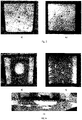
- the aerogel-incorporated ceramic fiber blankets as well as blank ceramic fiber blankets were exposed to a soldering torch flame, as shown in Figure 3 .
- the soldering torches had a flame temperature of around 1400°C.
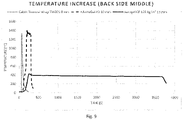
- the temperature increase on the back side (non-flamed side) of the blankets was recorded by thermal couples.
- the blank ceramic fiber blankets are designed for high temperature applications and are nominally resistant to temperature up to 1200°C, the flamed sites on them gradually melted and completely burnt through after 7 min and 30 min for the blank ceramic fiber blanket with a density of 96 and 128 kg/m 3 , respectively, as shown in Figures 4 and 5 .
- the aerogel-incorporated ceramic fiber blankets showed much better resistance to the torch flame. As shown in Figures 6 and 7 , the aerogel-incorporated ceramic fiber blankets remained almost undamaged after being flamed for 60 min. The colour change of the flamed sites is due to the evaporation of the carbon black.
- the blank ceramic fiber blankets with a density of 96 kg/m 3 showed a temperature increase to 900°C after 60s flaming.
- the temperature plateau at 900°C lasted until 420s and was followed by a sharp temperature increase to 1400°C, because the blanket burnt through.
- the aerogel-incorporated ceramic fiber blankets showed much better thermal insulation capability and resistance to high temperature.
- the temperature of the back side middle part was merely 400°C and 370°C for the aerogel-incorporated ceramic fiber blanket with density of 96 and 128 kg/m 3 , respectively.
- Example 2 Comparison of a commercially available aerogel blanket product and the inventive aerogel-incorporated ceramic fiber blanket
- a Cabot Thermal Wrap TW800 blanket with a thickness of 8 mm was used.
- the inventive blanket the above described aerogel-incorporated ceramic fiber blanket with a thickness of 13 mm and an aerogel content of 39 wt.% was used.
- the Cabot Thermal Wrap TW800 blanket has compact facings on both sides.
- the facings were removed carefully by using a sharp scalpel. During the removal of the facing, a significant spalling of aerogel granules was observed, which could be attributed to the poor adhesion of aerogel granules on the fibers.
- the two specimens were observed under an Olympus Stereomicroscope SZX7 equipped with an Olympus DF Plapo 1x-4 objective, both for their surface and cross-section morphology.
- the flexibility of the two specimens was tested by a bending test. During the test, a specimen with a dimension of 30x30 cm was bended to an edge-to-edge distance of 15 cm.
- the comparative blanket showed crinkle formation due to the compact facings.
- the inventive blanket can be bended without any crinkle issue.
- TGA was conducted for both specimens by using a NETZSCH TG 209 F1 Libra device.
- the analysed temperature range was 23°C to 1100°C.
- the TGA was conducted in pure nitrogen (from 23°C to 600°C) and in synthetic air (from 600°C to 1100°C).
- the comparative blanket showed a total weight loss of about 38 %, which is attributed to the significant decomposition transitions due to high level of organic binders.
- the inventive blanket showed a total weight loss of only 5.92.
- a pan test at 300°C was conducted for both specimens to study their thermal oxidation behaviour in the presence of oxygen.
- a porcelain pan was heated to 300°C in air by using a heating element HORO Brenner SVL.
- a specimen with a dimension of 1x2 cm was dropped into the heated porcelain pan.
- the comparative blanket showed auto-ignition after being heated for 4 seconds in the porcelain pan. This could also be attributed to the high level of organic binders.
- the inventive blanket showed a very stable behaviour in the pan test with no issue observed even after 10 minutes.
- a soldering torch test was conducted for both specimens.
- the specimens were cut into a dimension of 30x30 cm and were exposed to a soldering torch (Rotenberger Industrial, Type ROFIRE Piezo 1950, 35429) equipped with a gas cartridge (Rotenberger Industrial, 30% Propane/70% Butane), whose flame temperature was in the range of 1300 - 1400°C.
- thermal couples type K were installed in the middle location to record the temperature increase.
- the comparative blanket was flamed for 10 seconds and kept burning by itself until completely burnt away within 2 min. Burning droplets scattered continuously from the specimen during the test. After ignition, the specimen burnt through within 5 seconds, and the thermal couples reached the flame temperature immediately. This clearly confirms that the Comparative blanket cannot be applied in passive fire protection.
- the inventive blanket showed a very stable behaviour in the fire resistance test.
- the results of the fire resistance test are also shown in Figure 9 .
Landscapes
- Chemical & Material Sciences (AREA)
- Engineering & Computer Science (AREA)
- Ceramic Engineering (AREA)
- Organic Chemistry (AREA)
- Materials Engineering (AREA)
- Structural Engineering (AREA)
- Inorganic Chemistry (AREA)
- Dispersion Chemistry (AREA)
- Manufacturing & Machinery (AREA)
- Chemical Kinetics & Catalysis (AREA)
- Civil Engineering (AREA)
- Inorganic Fibers (AREA)
- Glass Compositions (AREA)
- Nonwoven Fabrics (AREA)
- Manufacture Of Alloys Or Alloy Compounds (AREA)
- Thermal Insulation (AREA)
- Chemical Or Physical Treatment Of Fibers (AREA)
- Solid-Sorbent Or Filter-Aiding Compositions (AREA)
- Producing Shaped Articles From Materials (AREA)
- Preparation Of Clay, And Manufacture Of Mixtures Containing Clay Or Cement (AREA)
Priority Applications (30)
| Application Number | Priority Date | Filing Date | Title |
|---|---|---|---|
| EP21161398.9A EP4056539A1 (de) | 2021-03-09 | 2021-03-09 | Verbundartikel mit aerogelpartikeln und keramischen fasern |
| EP22711234.9A EP4146612A1 (de) | 2021-03-09 | 2022-03-08 | Verbundartikel mit aerogelpartikeln, keramik- und/oder glasfasern und trübungsmitteln |
| JP2023555526A JP2024516496A (ja) | 2021-03-09 | 2022-03-08 | エアロゲル粒子、セラミックおよび/またはガラス繊維、ならびに不透明剤を含む複合物品 |
| KR1020237025849A KR20230154800A (ko) | 2021-03-09 | 2022-03-08 | 에어로겔 입자, 세라믹 및/또는 유리 섬유 및 유백제를포함하는 복합 물품 |
| US18/007,563 US12534409B2 (en) | 2021-03-09 | 2022-03-08 | Composite article comprising aerogel particles and ceramic fibers |
| EP22711232.3A EP4146611A1 (de) | 2021-03-09 | 2022-03-08 | Verbundartikel mit aerogelpartikeln und keramikfasern |
| US18/007,642 US12503400B2 (en) | 2021-03-09 | 2022-03-08 | Composite article comprising aerogel particles and ceramic fiber sheets |
| US18/007,674 US12509399B2 (en) | 2021-03-09 | 2022-03-08 | Composite article comprising aerogel particles, ceramic and/or glass fibers and opacifiers |
| PCT/EP2022/055902 WO2022189436A1 (en) | 2021-03-09 | 2022-03-08 | Composite article comprising aerogel particles, ceramic and/or glass fibers and opacifiers |
| CA3174622A CA3174622A1 (en) | 2021-03-09 | 2022-03-08 | Composite article comprising aerogel particles and ceramic fibers |
| CN202280003904.2A CN115867517A (zh) | 2021-03-09 | 2022-03-08 | 包含气凝胶颗粒和陶瓷纤维的复合制品 |
| BR112023013553A BR112023013553A2 (pt) | 2021-03-09 | 2022-03-08 | Artigo composto compreendendo partículas de aerogel e folhas de fibra cerâmica |
| AU2022233709A AU2022233709A1 (en) | 2021-03-09 | 2022-03-08 | Composite article comprising aerogel particles and ceramic fibers |
| KR1020237025848A KR20230154799A (ko) | 2021-03-09 | 2022-03-08 | 에어로겔 입자 및 세라믹 섬유를 포함하는 복합 물품 |
| AU2022233250A AU2022233250A1 (en) | 2021-03-09 | 2022-03-08 | Composite article comprising aerogel particles, ceramic and/or glass fibers and opacifiers |
| TW111108371A TW202244358A (zh) | 2021-03-09 | 2022-03-08 | 包含氣凝膠顆粒以及陶瓷纖維的複合製品 |
| BR112023013484A BR112023013484A2 (pt) | 2021-03-09 | 2022-03-08 | Artigo composto compreendendo partículas de aerogel e fibras cerâmicas |
| KR1020237025847A KR20230154798A (ko) | 2021-03-09 | 2022-03-08 | 에어로겔 입자 및 세라믹 섬유를 포함하는 복합 물품 |
| PCT/EP2022/055879 WO2022189425A1 (en) | 2021-03-09 | 2022-03-08 | Composite article comprising aerogel particles and ceramic fibers |
| CA3174204A CA3174204A1 (en) | 2021-03-09 | 2022-03-08 | Composite article comprising aerogel particles and ceramic fibers |
| CN202280003897.6A CN115867516A (zh) | 2021-03-09 | 2022-03-08 | 包含气凝胶颗粒、陶瓷纤维和/或玻璃纤维和遮光剂的复合制品 |
| JP2023555523A JP2024516494A (ja) | 2021-03-09 | 2022-03-08 | エアロゲル粒子およびセラミック繊維を含む複合物品 |
| EP22711059.0A EP4146610A1 (de) | 2021-03-09 | 2022-03-08 | Verbundartikel mit aerogelpartikeln und keramikfasern |
| TW111108373A TW202244357A (zh) | 2021-03-09 | 2022-03-08 | 包含氣凝膠顆粒、陶瓷纖維和/或玻璃纖維、以及遮光劑的複合製品 |
| CA3174792A CA3174792A1 (en) | 2021-03-09 | 2022-03-08 | Composite article comprising aerogel particles, ceramic and/or glass fibers and opacifiers |
| AU2022233847A AU2022233847A1 (en) | 2021-03-09 | 2022-03-08 | Composite article comprising aerogel particles and ceramic fibers |
| CN202280003978.6A CN115867518A (zh) | 2021-03-09 | 2022-03-08 | 包含气凝胶颗粒和陶瓷纤维的复合制品 |
| TW111108372A TWI918878B (zh) | 2021-03-09 | 2022-03-08 | 包含氣凝膠顆粒以及陶瓷纖維的複合製品 |
| PCT/EP2022/055895 WO2022189433A1 (en) | 2021-03-09 | 2022-03-08 | Composite article comprising aerogel particles and ceramic fibers |
| JP2023555524A JP2024516495A (ja) | 2021-03-09 | 2022-03-08 | エアロゲル粒子およびセラミック繊維を含む複合物品 |
Applications Claiming Priority (1)
| Application Number | Priority Date | Filing Date | Title |
|---|---|---|---|
| EP21161398.9A EP4056539A1 (de) | 2021-03-09 | 2021-03-09 | Verbundartikel mit aerogelpartikeln und keramischen fasern |
Publications (1)
| Publication Number | Publication Date |
|---|---|
| EP4056539A1 true EP4056539A1 (de) | 2022-09-14 |
Family
ID=74867411
Family Applications (4)
| Application Number | Title | Priority Date | Filing Date |
|---|---|---|---|
| EP21161398.9A Pending EP4056539A1 (de) | 2021-03-09 | 2021-03-09 | Verbundartikel mit aerogelpartikeln und keramischen fasern |
| EP22711232.3A Pending EP4146611A1 (de) | 2021-03-09 | 2022-03-08 | Verbundartikel mit aerogelpartikeln und keramikfasern |
| EP22711234.9A Pending EP4146612A1 (de) | 2021-03-09 | 2022-03-08 | Verbundartikel mit aerogelpartikeln, keramik- und/oder glasfasern und trübungsmitteln |
| EP22711059.0A Pending EP4146610A1 (de) | 2021-03-09 | 2022-03-08 | Verbundartikel mit aerogelpartikeln und keramikfasern |
Family Applications After (3)
| Application Number | Title | Priority Date | Filing Date |
|---|---|---|---|
| EP22711232.3A Pending EP4146611A1 (de) | 2021-03-09 | 2022-03-08 | Verbundartikel mit aerogelpartikeln und keramikfasern |
| EP22711234.9A Pending EP4146612A1 (de) | 2021-03-09 | 2022-03-08 | Verbundartikel mit aerogelpartikeln, keramik- und/oder glasfasern und trübungsmitteln |
| EP22711059.0A Pending EP4146610A1 (de) | 2021-03-09 | 2022-03-08 | Verbundartikel mit aerogelpartikeln und keramikfasern |
Country Status (10)
| Country | Link |
|---|---|
| US (3) | US12534409B2 (de) |
| EP (4) | EP4056539A1 (de) |
| JP (3) | JP2024516494A (de) |
| KR (3) | KR20230154798A (de) |
| CN (3) | CN115867517A (de) |
| AU (3) | AU2022233847A1 (de) |
| BR (2) | BR112023013484A2 (de) |
| CA (3) | CA3174622A1 (de) |
| TW (2) | TW202244357A (de) |
| WO (3) | WO2022189433A1 (de) |
Cited By (7)
| Publication number | Priority date | Publication date | Assignee | Title |
|---|---|---|---|---|
| EP4335830A1 (de) * | 2022-09-07 | 2024-03-13 | Armacell Enterprise GmbH & Co. KG | Verbundartikel mit aerogelpartikeln, einem melaminharz und fasern |
| WO2025048544A1 (ko) * | 2023-08-30 | 2025-03-06 | 주식회사 엘지화학 | 에어로겔 복합체 |
| US12428352B1 (en) | 2024-03-27 | 2025-09-30 | Lg Chem, Ltd. | Aerogel composite |
| WO2025230356A1 (ko) * | 2024-05-02 | 2025-11-06 | 주식회사 엘지화학 | 에어로겔 복합체 |
| US12551859B1 (en) | 2025-01-13 | 2026-02-17 | Lg Chem, Ltd. | Aerogel composite |
| US12606446B2 (en) | 2024-05-16 | 2026-04-21 | Lg Chem, Ltd. | Aerogel composite |
| US12606445B2 (en) | 2024-03-27 | 2026-04-21 | Lg Chem, Ltd. | Aerogel composite |
Families Citing this family (7)
| Publication number | Priority date | Publication date | Assignee | Title |
|---|---|---|---|---|
| EP4056539A1 (de) | 2021-03-09 | 2022-09-14 | Armacell Enterprise GmbH & Co. KG | Verbundartikel mit aerogelpartikeln und keramischen fasern |
| WO2024254032A1 (en) | 2023-06-05 | 2024-12-12 | Cabot Corporation | A flexible insulating member |
| KR20250018254A (ko) * | 2023-07-27 | 2025-02-05 | 삼성에스디아이 주식회사 | 배터리 장치용 단열 조성물, 이의 제조 방법, 이를 이용하여 제조한 시트 및 이를 포함하는 배터리 모듈 |
| CN117484971B (zh) * | 2024-01-02 | 2024-04-30 | 昆山博振电子科技有限公司 | 纳米硅复合隔热材料及其制备方法 |
| US12275230B1 (en) | 2024-01-02 | 2025-04-15 | Jiangsu Yiruida Composite Materials Technology Co., Ltd. | Nano-silica composite thermal insulation material and preparation method therefor |
| US12552674B2 (en) * | 2024-06-21 | 2026-02-17 | Armacell Enterprise Gmbh & Co. Kg | Fiber-reinforced double-network aerogel composite articles and methods of manufacture |
| CN120247400B (zh) * | 2025-05-29 | 2025-08-29 | 山西绅美陶瓷纤维股份有限公司 | 一种低收缩率陶瓷纤维毯的制作方法 |
Citations (9)
| Publication number | Priority date | Publication date | Assignee | Title |
|---|---|---|---|---|
| US6770584B2 (en) * | 2002-08-16 | 2004-08-03 | The Boeing Company | Hybrid aerogel rigid ceramic fiber insulation and method of producing same |
| EP2722311A2 (de) | 2012-10-22 | 2014-04-23 | Jios Aerogel Limited | Siliziumdioxid-Aerogelpulver-Herstellungssystem und Verarbeitungsverfahren |
| EP3023528A1 (de) | 2013-07-15 | 2016-05-25 | Jios Aerogel Corporation | System zum injizieren einer funktionslösung für ein gewebe und verfahren zur herstellung des gewebes damit |
| US20180022059A1 (en) * | 2016-07-20 | 2018-01-25 | Super Insulation, LLC | Hydrophobic Fiberglass Thermal Insulation Materials |
| CN107986744A (zh) * | 2017-12-12 | 2018-05-04 | 山东鲁阳节能材料股份有限公司 | 一种耐高温气凝胶复合绝热毡及其制备方法 |
| CN108046739A (zh) * | 2017-12-06 | 2018-05-18 | 航天材料及工艺研究所 | 一种纤维预制体增强气凝胶隔热复合材料及其制备方法 |
| US10633256B1 (en) * | 2014-08-11 | 2020-04-28 | United States Of America As Represented By The Administrator Of National Aeronautics And Space Administration | High temperature, hydrophobic, flexible aerogel composite and method of making same |
| US20200231834A1 (en) * | 2017-10-04 | 2020-07-23 | Hitachi Chemical Company, Ltd. | Coating solution, method for producing coating film, and coating film |
| CN111848106A (zh) * | 2020-07-30 | 2020-10-30 | 福建省中能泰丰节能环保科技有限公司 | 一种耐高温隔热材料及其制备方法 |
Family Cites Families (47)
| Publication number | Priority date | Publication date | Assignee | Title |
|---|---|---|---|---|
| DE2928695C2 (de) * | 1979-07-16 | 1984-05-30 | Grünzweig + Hartmann und Glasfaser AG, 6700 Ludwigshafen | Wärmeisolierkörper sowie Verfahren zu seiner Herstellung |
| US5569513A (en) * | 1994-08-10 | 1996-10-29 | Armstrong World Industries, Inc. | Aerogel-in-foam thermal insulation and its preparation |
| CN1060749C (zh) | 1994-11-23 | 2001-01-17 | 卡伯特公司 | 一种含有气凝胶的复合材料、其制备方法和用途 |
| US5973015A (en) * | 1998-02-02 | 1999-10-26 | The Regents Of The University Of California | Flexible aerogel composite for mechanical stability and process of fabrication |
| US20050031843A1 (en) * | 2000-09-20 | 2005-02-10 | Robinson John W. | Multi-layer fire barrier systems |
| US7410718B2 (en) | 2003-09-30 | 2008-08-12 | Lawrence Livermore National Security, Llc | Aerogel and xerogel composites for use as carbon anodes |
| CN100575444C (zh) | 2007-03-08 | 2009-12-30 | 中国人民解放军国防科学技术大学 | 一种耐高温氧化铝气凝胶隔热复合材料及其制备方法 |
| JP5077659B2 (ja) * | 2007-07-20 | 2012-11-21 | ニチアス株式会社 | 触媒コンバーター及び触媒コンバーター用保持材 |
| CN100497248C (zh) | 2007-08-08 | 2009-06-10 | 赵钢 | 一种可溶性耐高温陶瓷纤维及其制备方法和应用 |
| JP5662798B2 (ja) * | 2007-08-31 | 2015-02-04 | ユニフラックス ワン リミテッド ライアビリティ カンパニー | 担体取付けシステム |
| JP5615514B2 (ja) * | 2008-05-15 | 2014-10-29 | ニチアス株式会社 | 断熱材、これを用いた断熱構造及び断熱材の製造方法 |
| RU2011148097A (ru) * | 2009-04-27 | 2013-06-10 | Роквул Интернэшнл А/С | Аэрогелевые композиции и способы их изготовления и использования |
| BR112012009368A2 (pt) | 2009-10-02 | 2016-06-07 | Unifrax I Llc | prancha de isolamento de peso ultra baixo |
| JP5499644B2 (ja) | 2009-11-06 | 2014-05-21 | 三菱樹脂株式会社 | 無機繊維成形体及びその製造方法 |
| EP2513444B1 (de) * | 2009-12-17 | 2017-05-03 | Unifrax I LLC | Mehrlagige montagematte für umweltschutz-vorrichtungen |
| PL2345538T3 (pl) * | 2010-01-13 | 2014-10-31 | Armacell Entpr Gmbh & Co Kg | Sposób ochrony przeciwpalnej i modyfikacji właściwości ekspandowanych poliestrów |
| CN102716700B (zh) * | 2012-06-18 | 2014-07-16 | 南京工业大学 | 一种高强度耐高温块状C-AlN复合气凝胶的制备方法 |
| WO2014004366A1 (en) * | 2012-06-26 | 2014-01-03 | Cabot Corporation | Flexible insulating structures and methods of making and using same |
| CN102897778B (zh) * | 2012-07-17 | 2014-12-17 | 成都艾瑞杰科技有限公司 | 纳米二氧化硅气凝胶粉体的制备方法 |
| CN105209248B (zh) | 2013-03-15 | 2018-02-27 | 卡博特公司 | 气凝胶毡和生产方法 |
| FR3030354B1 (fr) | 2014-12-17 | 2019-06-07 | Saint-Gobain Isover | Produits d'isolation thermique hautes performances |
| CN106120439B (zh) | 2016-06-21 | 2018-10-02 | 山东鲁阳节能材料股份有限公司 | 一种气凝胶复合纤维纸及其制备方法 |
| CN106486194B (zh) | 2016-08-12 | 2017-09-05 | 上海新益电力线路器材有限公司 | 一种气凝胶复合电缆及其制备方法 |
| KR20180023788A (ko) | 2016-08-26 | 2018-03-07 | 알이엠텍 주식회사 | 단열 페이스트 조성물, 이를 이용한 단열 재료 및 이의 제조 방법 |
| KR101953800B1 (ko) * | 2016-10-12 | 2019-03-04 | 주식회사 엘지화학 | 초고온용 에어로겔 블랭킷, 이의 제조방법 및 이의 시공방법 |
| CN108146028B (zh) | 2016-12-05 | 2021-10-15 | 松下知识产权经营株式会社 | 绝热材以及使用该绝热材的设备 |
| CN106753437A (zh) | 2016-12-09 | 2017-05-31 | 伊科纳诺(北京)科技发展有限公司 | 一种低热值二氧化硅气凝胶复合材料及其制备方法 |
| JP6355790B1 (ja) * | 2017-04-03 | 2018-07-11 | 井前工業株式会社 | 耐火断熱シート |
| JP7160837B2 (ja) * | 2017-05-17 | 2022-10-25 | エボニック オペレーションズ ゲーエムベーハー | 硬化表面を有するコア疎水性断熱板 |
| KR102347796B1 (ko) * | 2017-05-31 | 2022-01-07 | 엘지디스플레이 주식회사 | 전계 발광 표시장치 |
| JP2018204708A (ja) * | 2017-06-06 | 2018-12-27 | パナソニックIpマネジメント株式会社 | 断熱材とそれを用いた発熱ユニット、および、電池ユニット |
| JP7121595B2 (ja) * | 2017-09-28 | 2022-08-18 | 住友理工株式会社 | 断熱材用塗料および断熱材 |
| KR102231590B1 (ko) * | 2017-11-30 | 2021-03-23 | (주)엘지하우시스 | 에어로겔 블랑켓의 제조방법 및 생산된 에어로겔 블랑켓 |
| CN107954687A (zh) | 2017-12-01 | 2018-04-24 | 四川科宁泰科技有限公司 | 一种具有超低热导率的二氧化硅气凝胶及其制备方法 |
| CN107986743B (zh) * | 2017-12-12 | 2020-12-01 | 山东鲁阳节能材料股份有限公司 | 一种气凝胶复合绝热板及其制备方法 |
| CN108083760A (zh) | 2017-12-19 | 2018-05-29 | 贵州航天乌江机电设备有限责任公司 | 一种陶瓷纤维复合型二氧化硅气凝胶保温毡的制备工艺 |
| US20190309134A1 (en) * | 2018-04-06 | 2019-10-10 | Sasan REZAEI | Class of hybrid aerogels with an ultralight nonparticulate reticulated structure and a method of producing the same |
| KR102145611B1 (ko) * | 2018-06-20 | 2020-08-14 | 알이엠텍 주식회사 | 박막형 시트용 에어로겔 단열 조성물 및 이를 포함하는 박막형 에어로겔 시트 |
| CN108793943B (zh) * | 2018-06-25 | 2021-10-26 | 武汉纺织大学 | 氧化石墨烯改性的亲疏水性可调的二氧化硅气凝胶纤维制品的制备方法 |
| WO2020016036A1 (en) | 2018-07-18 | 2020-01-23 | Evonik Operations Gmbh | Process for hydrophobizing shaped insulation-material bodies based on silica at ambient pressure |
| US10836073B2 (en) * | 2018-09-12 | 2020-11-17 | Johns Manville | Fiber reinforced aerogel insulation and method therefor |
| WO2020084668A1 (ja) * | 2018-10-22 | 2020-04-30 | 日立化成株式会社 | エアロゲル複合材料 |
| CN110845145A (zh) | 2019-07-01 | 2020-02-28 | 重庆文理学院 | 一种汽车发动机隔热罩用复合耐热材料及其制备方法 |
| CN111070819B (zh) | 2019-12-31 | 2022-07-08 | 山东鲁阳浩特高技术纤维有限公司 | 一种纳米绝热毡及其制备方法 |
| JP7163330B2 (ja) * | 2020-01-29 | 2022-10-31 | ニチアス株式会社 | 積層断熱材及びその製造方法 |
| CN112301732B (zh) * | 2020-10-27 | 2022-04-29 | 华电郑州机械设计研究院有限公司 | 一种二次复合制备气凝胶纤维毡的方法 |
| EP4056539A1 (de) | 2021-03-09 | 2022-09-14 | Armacell Enterprise GmbH & Co. KG | Verbundartikel mit aerogelpartikeln und keramischen fasern |
-
2021
- 2021-03-09 EP EP21161398.9A patent/EP4056539A1/de active Pending
-
2022
- 2022-03-08 BR BR112023013484A patent/BR112023013484A2/pt unknown
- 2022-03-08 US US18/007,563 patent/US12534409B2/en active Active
- 2022-03-08 AU AU2022233847A patent/AU2022233847A1/en active Pending
- 2022-03-08 US US18/007,642 patent/US12503400B2/en active Active
- 2022-03-08 EP EP22711232.3A patent/EP4146611A1/de active Pending
- 2022-03-08 BR BR112023013553A patent/BR112023013553A2/pt unknown
- 2022-03-08 CN CN202280003904.2A patent/CN115867517A/zh active Pending
- 2022-03-08 KR KR1020237025847A patent/KR20230154798A/ko active Pending
- 2022-03-08 JP JP2023555523A patent/JP2024516494A/ja active Pending
- 2022-03-08 JP JP2023555526A patent/JP2024516496A/ja active Pending
- 2022-03-08 CA CA3174622A patent/CA3174622A1/en active Pending
- 2022-03-08 CN CN202280003978.6A patent/CN115867518A/zh active Pending
- 2022-03-08 US US18/007,674 patent/US12509399B2/en active Active
- 2022-03-08 WO PCT/EP2022/055895 patent/WO2022189433A1/en not_active Ceased
- 2022-03-08 CA CA3174204A patent/CA3174204A1/en active Pending
- 2022-03-08 WO PCT/EP2022/055879 patent/WO2022189425A1/en not_active Ceased
- 2022-03-08 CA CA3174792A patent/CA3174792A1/en active Pending
- 2022-03-08 EP EP22711234.9A patent/EP4146612A1/de active Pending
- 2022-03-08 AU AU2022233250A patent/AU2022233250A1/en active Pending
- 2022-03-08 JP JP2023555524A patent/JP2024516495A/ja active Pending
- 2022-03-08 EP EP22711059.0A patent/EP4146610A1/de active Pending
- 2022-03-08 WO PCT/EP2022/055902 patent/WO2022189436A1/en not_active Ceased
- 2022-03-08 CN CN202280003897.6A patent/CN115867516A/zh active Pending
- 2022-03-08 TW TW111108373A patent/TW202244357A/zh unknown
- 2022-03-08 TW TW111108371A patent/TW202244358A/zh unknown
- 2022-03-08 KR KR1020237025849A patent/KR20230154800A/ko active Pending
- 2022-03-08 AU AU2022233709A patent/AU2022233709A1/en active Pending
- 2022-03-08 KR KR1020237025848A patent/KR20230154799A/ko active Pending
Patent Citations (9)
| Publication number | Priority date | Publication date | Assignee | Title |
|---|---|---|---|---|
| US6770584B2 (en) * | 2002-08-16 | 2004-08-03 | The Boeing Company | Hybrid aerogel rigid ceramic fiber insulation and method of producing same |
| EP2722311A2 (de) | 2012-10-22 | 2014-04-23 | Jios Aerogel Limited | Siliziumdioxid-Aerogelpulver-Herstellungssystem und Verarbeitungsverfahren |
| EP3023528A1 (de) | 2013-07-15 | 2016-05-25 | Jios Aerogel Corporation | System zum injizieren einer funktionslösung für ein gewebe und verfahren zur herstellung des gewebes damit |
| US10633256B1 (en) * | 2014-08-11 | 2020-04-28 | United States Of America As Represented By The Administrator Of National Aeronautics And Space Administration | High temperature, hydrophobic, flexible aerogel composite and method of making same |
| US20180022059A1 (en) * | 2016-07-20 | 2018-01-25 | Super Insulation, LLC | Hydrophobic Fiberglass Thermal Insulation Materials |
| US20200231834A1 (en) * | 2017-10-04 | 2020-07-23 | Hitachi Chemical Company, Ltd. | Coating solution, method for producing coating film, and coating film |
| CN108046739A (zh) * | 2017-12-06 | 2018-05-18 | 航天材料及工艺研究所 | 一种纤维预制体增强气凝胶隔热复合材料及其制备方法 |
| CN107986744A (zh) * | 2017-12-12 | 2018-05-04 | 山东鲁阳节能材料股份有限公司 | 一种耐高温气凝胶复合绝热毡及其制备方法 |
| CN111848106A (zh) * | 2020-07-30 | 2020-10-30 | 福建省中能泰丰节能环保科技有限公司 | 一种耐高温隔热材料及其制备方法 |
Non-Patent Citations (1)
| Title |
|---|
| LI CHENGDONG ET AL: "A review of silicon-based aerogel thermal insulation materials: Performance optimization through composition and microstructure", JOURNAL OF NON-CRYSTALLINE SOLIDS, NORTH-HOLLAND PHYSICS PUBLISHING. AMSTERDAM, NL, vol. 553, 9 November 2020 (2020-11-09), XP086450428, ISSN: 0022-3093, [retrieved on 20201109], DOI: 10.1016/J.JNONCRYSOL.2020.120517 * |
Cited By (10)
| Publication number | Priority date | Publication date | Assignee | Title |
|---|---|---|---|---|
| EP4335830A1 (de) * | 2022-09-07 | 2024-03-13 | Armacell Enterprise GmbH & Co. KG | Verbundartikel mit aerogelpartikeln, einem melaminharz und fasern |
| WO2024052282A1 (en) * | 2022-09-07 | 2024-03-14 | Armacell Enterprise Gmbh & Co. Kg | Composite article comprising aerogel particles, a melamine resin and fibers |
| WO2025048544A1 (ko) * | 2023-08-30 | 2025-03-06 | 주식회사 엘지화학 | 에어로겔 복합체 |
| US12326214B2 (en) | 2023-08-30 | 2025-06-10 | Lg Chem, Ltd. | Aerogel composite |
| US12428352B1 (en) | 2024-03-27 | 2025-09-30 | Lg Chem, Ltd. | Aerogel composite |
| US12606445B2 (en) | 2024-03-27 | 2026-04-21 | Lg Chem, Ltd. | Aerogel composite |
| WO2025230356A1 (ko) * | 2024-05-02 | 2025-11-06 | 주식회사 엘지화학 | 에어로겔 복합체 |
| US12479734B2 (en) | 2024-05-02 | 2025-11-25 | Lg Chem, Ltd. | Aerogel composite |
| US12606446B2 (en) | 2024-05-16 | 2026-04-21 | Lg Chem, Ltd. | Aerogel composite |
| US12551859B1 (en) | 2025-01-13 | 2026-02-17 | Lg Chem, Ltd. | Aerogel composite |
Also Published As
Similar Documents
| Publication | Publication Date | Title |
|---|---|---|
| US12534409B2 (en) | Composite article comprising aerogel particles and ceramic fibers | |
| US12392445B2 (en) | Composite type heat insulator and method for producing the same | |
| EP1581463B1 (de) | Keramik-faser-verbundwerkstoff und herstellungsverfahren dafür | |
| DE202021004280U1 (de) | Thermomanagement-Element | |
| EP4335830A1 (de) | Verbundartikel mit aerogelpartikeln, einem melaminharz und fasern | |
| TWI918878B (zh) | 包含氣凝膠顆粒以及陶瓷纖維的複合製品 | |
| EP2640878A2 (de) | Anorganische faser | |
| RU2175904C2 (ru) | Способ получения пористого материала и материал, полученный этим способом |
Legal Events
| Date | Code | Title | Description |
|---|---|---|---|
| PUAI | Public reference made under article 153(3) epc to a published international application that has entered the european phase |
Free format text: ORIGINAL CODE: 0009012 |
|
| STAA | Information on the status of an ep patent application or granted ep patent |
Free format text: STATUS: THE APPLICATION HAS BEEN PUBLISHED |
|
| AK | Designated contracting states |
Kind code of ref document: A1 Designated state(s): AL AT BE BG CH CY CZ DE DK EE ES FI FR GB GR HR HU IE IS IT LI LT LU LV MC MK MT NL NO PL PT RO RS SE SI SK SM TR |
|
| STAA | Information on the status of an ep patent application or granted ep patent |
Free format text: STATUS: REQUEST FOR EXAMINATION WAS MADE |
|
| 17P | Request for examination filed |
Effective date: 20221027 |
|
| RBV | Designated contracting states (corrected) |
Designated state(s): AL AT BE BG CH CY CZ DE DK EE ES FI FR GB GR HR HU IE IS IT LI LT LU LV MC MK MT NL NO PL PT RO RS SE SI SK SM TR |