EP4056542A1 - Procédé odda pour la production d'engrais à base d'azote avec formation de sable réduite - Google Patents
Procédé odda pour la production d'engrais à base d'azote avec formation de sable réduite Download PDFInfo
- Publication number
- EP4056542A1 EP4056542A1 EP22156462.8A EP22156462A EP4056542A1 EP 4056542 A1 EP4056542 A1 EP 4056542A1 EP 22156462 A EP22156462 A EP 22156462A EP 4056542 A1 EP4056542 A1 EP 4056542A1
- Authority
- EP
- European Patent Office
- Prior art keywords
- flocculant
- process according
- added
- ppm
- sedimentation vessel
- Prior art date
- Legal status (The legal status is an assumption and is not a legal conclusion. Google has not performed a legal analysis and makes no representation as to the accuracy of the status listed.)
- Pending
Links
Images


Classifications
-
- C—CHEMISTRY; METALLURGY
- C05—FERTILISERS; MANUFACTURE THEREOF
- C05B—PHOSPHATIC FERTILISERS
- C05B1/00—Superphosphates, i.e. fertilisers produced by reacting rock or bone phosphates with sulfuric or phosphoric acid in such amounts and concentrations as to yield solid products directly
- C05B1/06—Ammoniation of superphosphates
-
- C—CHEMISTRY; METALLURGY
- C05—FERTILISERS; MANUFACTURE THEREOF
- C05B—PHOSPHATIC FERTILISERS
- C05B11/00—Fertilisers produced by wet-treating or leaching raw materials either with acids in such amounts and concentrations as to yield solutions followed by neutralisation, or with alkaline lyes
- C05B11/04—Fertilisers produced by wet-treating or leaching raw materials either with acids in such amounts and concentrations as to yield solutions followed by neutralisation, or with alkaline lyes using mineral acid
-
- C—CHEMISTRY; METALLURGY
- C05—FERTILISERS; MANUFACTURE THEREOF
- C05B—PHOSPHATIC FERTILISERS
- C05B11/00—Fertilisers produced by wet-treating or leaching raw materials either with acids in such amounts and concentrations as to yield solutions followed by neutralisation, or with alkaline lyes
- C05B11/04—Fertilisers produced by wet-treating or leaching raw materials either with acids in such amounts and concentrations as to yield solutions followed by neutralisation, or with alkaline lyes using mineral acid
- C05B11/10—Fertilisers produced by wet-treating or leaching raw materials either with acids in such amounts and concentrations as to yield solutions followed by neutralisation, or with alkaline lyes using mineral acid using orthophosphoric acid
-
- C—CHEMISTRY; METALLURGY
- C05—FERTILISERS; MANUFACTURE THEREOF
- C05C—NITROGENOUS FERTILISERS
- C05C5/00—Fertilisers containing other nitrates
- C05C5/04—Fertilisers containing other nitrates containing calcium nitrate
-
- C—CHEMISTRY; METALLURGY
- C05—FERTILISERS; MANUFACTURE THEREOF
- C05D—INORGANIC FERTILISERS NOT COVERED BY SUBCLASSES C05B, C05C; FERTILISERS PRODUCING CARBON DIOXIDE
- C05D3/00—Calcareous fertilisers
-
- C—CHEMISTRY; METALLURGY
- C05—FERTILISERS; MANUFACTURE THEREOF
- C05D—INORGANIC FERTILISERS NOT COVERED BY SUBCLASSES C05B, C05C; FERTILISERS PRODUCING CARBON DIOXIDE
- C05D9/00—Other inorganic fertilisers
- C05D9/02—Other inorganic fertilisers containing trace elements
-
- C—CHEMISTRY; METALLURGY
- C05—FERTILISERS; MANUFACTURE THEREOF
- C05G—MIXTURES OF FERTILISERS COVERED INDIVIDUALLY BY DIFFERENT SUBCLASSES OF CLASS C05; MIXTURES OF ONE OR MORE FERTILISERS WITH MATERIALS NOT HAVING A SPECIFIC FERTILISING ACTIVITY, e.g. PESTICIDES, SOIL-CONDITIONERS, WETTING AGENTS; FERTILISERS CHARACTERISED BY THEIR FORM
- C05G3/00—Mixtures of one or more fertilisers with additives not having a specially fertilising activity
Definitions
- the mineral fertilizers produced by our industry help to feed the fast growing world population. A sufficient and targeted supply of nutrients enables agricultural crops to grow and food to be produced. Approximately 50% of these nutrients come from mineral fertilizers.
- Complex mineral fertilisers can be produced via various processes or production routes.
- An important production step is the conversion of the phosphor from the natural rock phosphate into a plant available form.
- One of the possible processes to do so is the socalled nitrophosphate route or ODDA process.
- the ODDA process uses all nutrient components to produce nitrate containing straight and complex fertilisers. Consequently, the ODDA process is an example of intrinsic circular economic principles.
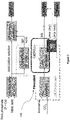
- the ODDA process was invented by Erling Johnson in the municipality of Odda in Norway in 1928. Accordingly, the ODDA process has first been described in patent GB339340 to ODDA Smelteverk . The ODDA process is still applied today to produce high volumes of fertilizers in the order of several millions of tons per year. A process flow chart of the reaction of the ODDA process is shown in Figure 1 .
- the ODDA process involves acidifying phosphate rock with dilute nitric acid to produce a mixture of phosphoric acid and calcium nitrate according to chemical equation 1: Chemical equation 1: Ca5(PO4)3OH + 10 HNO3 ⁇ 3 H3PO4 + 5 Ca(NO3)2 + H2O
- Insoluble residues may be removed by filtration.
- the mixture is then cooled, in general to below 0 °C.
- the calcium nitrate crystallizes according to chemical equation 2 and can be separated from the phosphoric acid by filtration.
- Chemical equation 2 2 H3PO4 + 3 Ca(NO3)2 + 12 H2O ⁇ 2 H3PO4 + 3 Ca(NO3)2 ⁇ 4H2O
- the resulting calcium nitrate produces nitrogen fertilizer.
- the filtrate is composed mainly of phosphoric acid with some nitric acid and traces of calcium nitrate.
- the filtrate is then neutralized with ammonia to produce a compound fertilizer according to chemical equation 3: Chemical equation 3: Ca(NO3)2 + 4 H3PO4 + 8 NH3 ⁇ CaHPO4 + 2 NH4NO3 + 3(NH4)2HPO4
- the calcium nitrate can be used as calcium nitrate fertilizer.
- the calcium nitrate may also be converted into ammonium nitrate and calcium carbonate using carbon dioxide and ammonia according to chemical equation 4: Chemical equation 4: Ca(NO3)2 + 2 NH3 + CO2 + H2O ⁇ 2 NH4NO3 + CaCO3
- the liquid of this last step according to chemical equation 4 is then transported to a sedimentation vessel, commonly referred to as thickener.
- An exemplary embodiment of a thickener is shown in Figure 3 .
- CaCO3 precipitates from the reaction mixture obtained by chemical equation 4 in the thickener. This precipitation of the CaCO3 separates the NH4NO3 from the CaCO3.
- the overflow liquid of the thickener still contains CaCO3 or simply lime. This residual lime in the overflow liquid of the thickener is a technical challenge for following three reasons: Firstly, the pH of the liquid in the thickener is around 7. The liquid in the thickener comprises a small amount dissolved ammonium carbonate which is required in the conversion reactors.
- AN is an acidic salt with a pH of 5. So the AN-solution has to be acidulated to pH 5 with nitric acid. The ammonium carbonate will form AN, water and CO2, all lime present will convert to Ca(NO3)2, water and CO2.
- AN is concentrated from 65% to 94%. If lime is present in the AN, it accumulates in the falling film evaporators. The accumulated lime reduces the heat exchange capability at first and finally leads to entire blockage of the evaporators.
- the objective of this invention is an improved method for CaCO3 removal from the from the ammonium-nitrate containing liquid obtained by chemical equation 4.
- Flocculation also referred to as agglomeration, coagulation or coalescence, is a process of contact and adhesion whereby the particles of a dispersion form clusters.
- Flocculants are known to facilitate precipitation of dissolved or suspended compounds. Accordingly, flocculants are used in a wide variety of chemical processes.
- EP2555846 to BASF discloses an improved process of forming an aqueous suspension of solid particles by gravity sedimentation of a first aqueous suspension of solid particles in a vessel. At least one organic polymeric flocculant is added to the suspension. A free radical or oxidising agent is then added to the flocculated solids in order to form a second aqueous suspension.
- EP1976613 to Ciba discloses a process of concentrating an aqueous suspension of solid particles comprising the steps of adding at least one organic polymeric flocculant to the suspension.
- the flocculated solids form a layer of solids.
- a free radical agent, oxidising agent, or enzyme is applied to the suspension prior to or substantially simultaneously with adding the organic polymeric flocculant.
- the organic polymeric flocculant may be homopolymer of sodium acrylate, the homopolymer of acrylamide and the copolymer of acrylamide and sodium acrylate.
- US4104226 to BASF describes a mixed polyacrylamide composition with improved retention aid and flocculant properties.
- the composition consists essentially of a mixture of cationic and anionic polyacrylamides in the form of a water-in-oil polymer dispersion containing.
- Ciba discloses a process of thickening an aqueous suspension of mineral solids, in particular coal, by sedimentation.
- a water-soluble anionic bridging polymeric flocculant with an intrinsic viscosity of at least 5 dl/g (99%) and a water-soluble cationic polymeric flocculant (1 %) are added to the suspension.
- the total polymer concentration is generally from about 0.001 to about 5 wt%.
- the inventors now have surprisingly found that the addition of less than 5 ppm of an ultrahigh molecular weight anionic polyacrylamide as flocculant leads to an effective and complete removal of CaCO3 from the NH4NO3 obtained according to chemical equation 4 in high volume applications of the ODDA process for fertilizer production.
- a first aspect of the invention is an ODDA process for the production of nitrogen-based fertilizers comprising the steps of
- a substantially complete precipitation of the calcium carbonate means a precipitation of 95 w%, preferably 99 w% even more preferably of 99,9 w% and even more preferably of 99,99 w% of the calcium carbonate in the sedimentation vessel (100).
- the overflow of the sedimentation vessel (100) comprises CaCO3 in an amount of 0,001 to 0,5 w%, preferably from 0,005 to 0,01 and even more preferably from 0,01 to 0,05 w% as compared to the total reference overflow of the sedimentation vessel (100).
- no filtration and in particular no pressure filtration is applied in step e of the present invention.
- the flocculant is an organic flocculant.
- the flocculant is an organic polymeric flocculant.
- the flocculant is an anionic organic polymeric flocculant
- the flocculant is an ultrahigh polymer weight anionic organic polymeric flocculant
- the molecular weight of the flocculant is 2 million Daltons or more.
- the molecular weight of the flocculant is 20 million Daltons or less.
- the flocculant is an polyacrylamide flocculant.
- the polyacrylamide flocculant is an ultrahigh molecular weight polyacrylamide.
- the flocculant is Magnafloc ® commercially available from BASF.
- the flocculant is Magnafloc ® 919 commercially available from BASF.
- the process step e) comprises the addition of an ultrahigh molecular weight anionic polyacrylamide flocculant.
- no other agent as added for purposes for flocculation in process step d) of the present invention is not limited to no other agent as added for purposes for flocculation in process step d) of the present invention.
- the flocculant does not comprise any free radical agents nor oxidizing agents.
- the flocculant does not comprise any cationic polymer.
- the flocculant is added in a concentration of 0.1 ppm to 10 ppm as compared to the volume of the reaction mixture in the sedimentation vessel (100) of step e).
- the flocculant is added in a concentration of 0.5 ppm to 5 ppm as compared to the volume of the reaction mixture in the sedimentation vessel (100) of step e).
- the flocculant is added in a concentration of 1 ppm to 3 ppm as compared to the volume of the reaction mixture in the sedimentation vessel (100) of step e).
- the flocculant is added in a concentration of 1.3 ppm to 2 ppm as compared to the volume of the reaction mixture in the sedimentation vessel (100) of step e).
- the flocculant is added to the sedimentation vessel (100) prior to the reaction mixture of step d) enters the sedimentation vessel (100).
- the flocculant is added to a pre-sedimentation vessel (200) prior to the reaction mixture of step d) enters the sedimentation vessel (100).
- the pre-sedimentations vessels (200) are conically shaped hollow bodies with one or more entrance apertures (210) and one or more exit apertures (220).
- the flocculant is added to two pre-sedimentation vessels (110).
- Another aspect of the present invention is the use of ultrahigh weight anionic organic polymeric flocculant to improve the removal of calcium carbonate in the sedimentation vessel (100) of step e) of the ODDA process from the reaction mixture obtained by chemical equation 4.
- Figure 1 shows a flow chart of the ODDA process for the production of nitrogen-based fertilizers according to the state of the art comprising the steps of
- FIG. 2 shows the process of the invention with improved lime removal comprising the steps of
- FIG 3 shows a preferred embodiment wherein the sedimentation vessel (100) is cylinder shaped.
- the reaction product obtained step d according to chemical equation 4 enters the sedimentation vessel (100) through the pre-sedimentation vessels (200).
- the passing through the pre-sedimentation vessels (200) slows down the speed and thus facilitates gravity sedimentation in the sedimentation vessel (100).
- the pre-sedimentation vessels are conically shaped hollow bodies with one or more entrance apertures (210) and one or more exit apertures (220).
- the flocculant is added to the pre-sedimentation vessels (200).
- the thickened solution that leaves the thickener at the bottom (400) is the feed of a vacuum belt filter.
- the AN-solution is passed through a filter cloth. A lime cake is built on the filtration cloth.
- the thickener reduces the volume that needs to be filtered and provides a thick cake on the vacuum belt filter.
- the overflow of the thickener does not need to be filtrated thanks to the addition of
- the one or more pre-sedimentation vessels (200) contain a sieve to prevent coagulated limestone from entering the thickener (100).
- the one or more pre-sedimentation vessels (200) comprise one or more stirrers.
- the one or more pre-sedimentation vessels (200) comprise one or more baffles.
- the pre-sedimentation vessels (200) comprise one or more stirrers, one or more baffles and one or more sieves (not shown in Figure 3 ).
- the one or more pre-sedimentation vessels (200) prevent the limestone that is constantly building on the walls, baffles and stirrer from entering the sedimentation vessel (100).
- the stirrers (not shown) enable a quick and efficient mixed with the solution leaving the reactors. Consequently, the one or more pre-sedimentation vessels (100) are the preferred place for the addition of the flocculent according to step e).
- the tested anionic and cationic flocculants were added in quantities ranging from 0.1 to 20 ppm as compared to the volume of the reaction mixture obtained according to equation 4 in the sedimentation vessel (100).
- the CaCO3 contained in the overflow of sedimentation vessel (100) was measured.
- a anionic ultrahigh molecular weight polyacrylamide commercially available under the brand Magnafloc ® from BASF and added in very low quantities of 1.6 ppm as compared to the total liquid in the sedimentation vessel (100) produced an overflow essentially free of CaCO3.
Landscapes
- Chemical & Material Sciences (AREA)
- Organic Chemistry (AREA)
- Chemical Kinetics & Catalysis (AREA)
- Inorganic Chemistry (AREA)
- Life Sciences & Earth Sciences (AREA)
- Pest Control & Pesticides (AREA)
- Separation Of Suspended Particles By Flocculating Agents (AREA)
Applications Claiming Priority (1)
| Application Number | Priority Date | Filing Date | Title |
|---|---|---|---|
| BE20215190A BE1028692B1 (nl) | 2021-03-13 | 2021-03-13 | ODDA-Proces voor de productie van stikstofhoudende meststoffen met verbeterde kalkverwijdering |
Publications (1)
| Publication Number | Publication Date |
|---|---|
| EP4056542A1 true EP4056542A1 (fr) | 2022-09-14 |
Family
ID=75396610
Family Applications (1)
| Application Number | Title | Priority Date | Filing Date |
|---|---|---|---|
| EP22156462.8A Pending EP4056542A1 (fr) | 2021-03-13 | 2022-02-13 | Procédé odda pour la production d'engrais à base d'azote avec formation de sable réduite |
Country Status (2)
| Country | Link |
|---|---|
| EP (1) | EP4056542A1 (fr) |
| BE (1) | BE1028692B1 (fr) |
Cited By (1)
| Publication number | Priority date | Publication date | Assignee | Title |
|---|---|---|---|---|
| WO2024086377A1 (fr) * | 2022-10-21 | 2024-04-25 | Nitricity Inc. | Procédé durable de nitrophosphate au plasma pour la production de produits azotés et phosphorés et pour la séquestration de carbone |
Citations (12)
| Publication number | Priority date | Publication date | Assignee | Title |
|---|---|---|---|---|
| GB339340A (en) | 1928-10-27 | 1930-12-04 | Odda Smelteverk As | Improvements in and relating to the treatment of phosphate rock and the like |
| GB355637A (en) * | 1930-01-24 | 1931-08-27 | Ici Ltd | Improvements in or relating to the manufacture and production of fertilizers |
| US1854291A (en) * | 1930-01-24 | 1932-04-19 | Du Pont | Fertilizer manufacture |
| US2753252A (en) * | 1952-03-22 | 1956-07-03 | Monsanto Chemicals | Fertilizer manufacture |
| US3669641A (en) * | 1968-02-01 | 1972-06-13 | Charbonnages Ste Chimique | Production of complex nitrophosphate fertilisers |
| US3785797A (en) * | 1968-10-09 | 1974-01-15 | Chemical Construction Corp | Production of nitrophosphate fertilizer |
| US4104226A (en) | 1975-08-28 | 1978-08-01 | Basf Aktiengesellschaft | Retention aids and flocculants based on polyacrylamides |
| US4952379A (en) * | 1987-10-06 | 1990-08-28 | Norsk Hydro A.S. | Method for purifying calcium nitrate melt/solution which is separated from the mixture obtained by the solution of rock phosphate with nitric acid |
| WO1999037589A1 (fr) | 1998-01-23 | 1999-07-29 | Ciba Specialty Chemicals Water Treatments Limited | Epaississement de suspensions minerales aqueuses |
| EP1976613A1 (fr) | 2006-01-18 | 2008-10-08 | Ciba Specialty Chemicals Holding Inc. | Concentration de suspensions |
| EP2555846A1 (fr) | 2010-04-09 | 2013-02-13 | Basf Se | Concentration de suspensions |
| CN106517293A (zh) * | 2016-11-14 | 2017-03-22 | 重庆华强生态肥业有限公司 | 一种工业钙制品联产化学合成肥料的方法 |
-
2021
- 2021-03-13 BE BE20215190A patent/BE1028692B1/nl active IP Right Grant
-
2022
- 2022-02-13 EP EP22156462.8A patent/EP4056542A1/fr active Pending
Patent Citations (12)
| Publication number | Priority date | Publication date | Assignee | Title |
|---|---|---|---|---|
| GB339340A (en) | 1928-10-27 | 1930-12-04 | Odda Smelteverk As | Improvements in and relating to the treatment of phosphate rock and the like |
| GB355637A (en) * | 1930-01-24 | 1931-08-27 | Ici Ltd | Improvements in or relating to the manufacture and production of fertilizers |
| US1854291A (en) * | 1930-01-24 | 1932-04-19 | Du Pont | Fertilizer manufacture |
| US2753252A (en) * | 1952-03-22 | 1956-07-03 | Monsanto Chemicals | Fertilizer manufacture |
| US3669641A (en) * | 1968-02-01 | 1972-06-13 | Charbonnages Ste Chimique | Production of complex nitrophosphate fertilisers |
| US3785797A (en) * | 1968-10-09 | 1974-01-15 | Chemical Construction Corp | Production of nitrophosphate fertilizer |
| US4104226A (en) | 1975-08-28 | 1978-08-01 | Basf Aktiengesellschaft | Retention aids and flocculants based on polyacrylamides |
| US4952379A (en) * | 1987-10-06 | 1990-08-28 | Norsk Hydro A.S. | Method for purifying calcium nitrate melt/solution which is separated from the mixture obtained by the solution of rock phosphate with nitric acid |
| WO1999037589A1 (fr) | 1998-01-23 | 1999-07-29 | Ciba Specialty Chemicals Water Treatments Limited | Epaississement de suspensions minerales aqueuses |
| EP1976613A1 (fr) | 2006-01-18 | 2008-10-08 | Ciba Specialty Chemicals Holding Inc. | Concentration de suspensions |
| EP2555846A1 (fr) | 2010-04-09 | 2013-02-13 | Basf Se | Concentration de suspensions |
| CN106517293A (zh) * | 2016-11-14 | 2017-03-22 | 重庆华强生态肥业有限公司 | 一种工业钙制品联产化学合成肥料的方法 |
Non-Patent Citations (1)
| Title |
|---|
| GAUDREAULT R ET AL: "Flocculation kinetics of precipitated calcium carbonate", COLLOIDS AND SURFACES A : PHYSIOCHEMICAL AND ENGINEERINGS ASPECTS, ELSEVIER, AMSTERDAM, NL, vol. 340, no. 1-3, 15 May 2009 (2009-05-15), pages 56 - 65, XP026021313, ISSN: 0927-7757, [retrieved on 20090314], DOI: 10.1016/J.COLSURFA.2009.03.008 * |
Cited By (1)
| Publication number | Priority date | Publication date | Assignee | Title |
|---|---|---|---|---|
| WO2024086377A1 (fr) * | 2022-10-21 | 2024-04-25 | Nitricity Inc. | Procédé durable de nitrophosphate au plasma pour la production de produits azotés et phosphorés et pour la séquestration de carbone |
Also Published As
| Publication number | Publication date |
|---|---|
| BE1028692B1 (nl) | 2022-05-04 |
Similar Documents
| Publication | Publication Date | Title |
|---|---|---|
| JP5345382B2 (ja) | 有機性廃棄物からのリン酸塩を除去しおよびカリウム濃度を抑制する、窒素肥料生産方法および装置 | |
| US4332779A (en) | Phosphoric acid filtration process | |
| CA2017101A1 (fr) | Utilisation de polymeres pour modifier les cristaux de gypse dans le processus de production d'acide phosphorique par voie humide | |
| DE3023968A1 (de) | Verfahren fuer die chemische ausscheidung von phosphorverbindungen aus abwasser und verfahren fuer die reinigung von abwasser | |
| US3785797A (en) | Production of nitrophosphate fertilizer | |
| BE1028692B1 (nl) | ODDA-Proces voor de productie van stikstofhoudende meststoffen met verbeterde kalkverwijdering | |
| EP0310868B1 (fr) | Procédé de purification du nitrate de calcium en solution ou fondu qui est séparé d'un mélange obtenu par solubilisation de roche phosphatée à l'aide d'acide nitrique | |
| EA015407B1 (ru) | Способ переработки фосфогипса на сульфат аммония и карбонат кальция | |
| EP3615476B1 (fr) | Procédé et dispositif de traitement de déchets | |
| EA035357B1 (ru) | Способ изготовления аммонийфосфатного удобрения с низким содержанием кадмия | |
| US4007030A (en) | Process for the simultaneous manufacture of phosphoric acid or the salts thereof and a complex multi-component mineral fertilizer | |
| RU2824213C2 (ru) | Процесс нитрования для производства азотных удобрений с улучшенным удалением извести | |
| US4462972A (en) | Method for producing fertilizer-grade phosphoric acid | |
| RU2253639C2 (ru) | Способ получения гранулированного минерального удобрения, содержащего азот и фосфор, и гранулированное минеральное удобрение | |
| US10919774B2 (en) | Method for the management of phosphogypsum | |
| PL200842B1 (pl) | Sposób wytwarzania nawozu zawierającego azotan wapnia | |
| RU2720285C1 (ru) | Способ получения кислых фосфатов кальция | |
| DE1194830B (de) | Verfahren zur Herstellung von chemisch reinem Calciumcarbonat aus Calciumnitrat | |
| RU2530148C2 (ru) | Способ получения гранулированного минерального удобрения | |
| CN106241764B (zh) | 由无水氟化氢生产车间的硫铵废液和磷酸生产车间的污水处理渣为原料制备磷酸一铵方法 | |
| RU2852878C1 (ru) | Способ переработки фосфогипса методом гидродинамической кавитационной конверсии вращающимся магнитным полем | |
| EP0200073A2 (fr) | Procédé de production de phosphates d'ammonium à partir de roches phosphatées | |
| CN117024201A (zh) | 一种以石膏为硫源生产氮磷速效复合肥的方法 | |
| RU2400459C2 (ru) | Способ и устройство для производства серосодержащих азотных удобрений | |
| SU1119998A1 (ru) | Способ получени сложного удобрени из бедных фосфоритов |
Legal Events
| Date | Code | Title | Description |
|---|---|---|---|
| PUAI | Public reference made under article 153(3) epc to a published international application that has entered the european phase |
Free format text: ORIGINAL CODE: 0009012 |
|
| STAA | Information on the status of an ep patent application or granted ep patent |
Free format text: STATUS: REQUEST FOR EXAMINATION WAS MADE |
|
| 17P | Request for examination filed |
Effective date: 20220213 |
|
| AK | Designated contracting states |
Kind code of ref document: A1 Designated state(s): AL AT BE BG CH CY CZ DE DK EE ES FI FR GB GR HR HU IE IS IT LI LT LU LV MC MK MT NL NO PL PT RO RS SE SI SK SM TR |
|
| STAA | Information on the status of an ep patent application or granted ep patent |
Free format text: STATUS: EXAMINATION IS IN PROGRESS |
|
| 17Q | First examination report despatched |
Effective date: 20250417 |