EP4057220B1 - Système de lit de soins infirmiers et dispositif de changement de position de lit de soins infirmiers - Google Patents
Système de lit de soins infirmiers et dispositif de changement de position de lit de soins infirmiers Download PDFInfo
- Publication number
- EP4057220B1 EP4057220B1 EP20885304.4A EP20885304A EP4057220B1 EP 4057220 B1 EP4057220 B1 EP 4057220B1 EP 20885304 A EP20885304 A EP 20885304A EP 4057220 B1 EP4057220 B1 EP 4057220B1
- Authority
- EP
- European Patent Office
- Prior art keywords
- care recipient
- data
- bed
- posture
- demand
- Prior art date
- Legal status (The legal status is an assumption and is not a legal conclusion. Google has not performed a legal analysis and makes no representation as to the accuracy of the status listed.)
- Active
Links
Images


Classifications
-
- G—PHYSICS
- G06—COMPUTING OR CALCULATING; COUNTING
- G06V—IMAGE OR VIDEO RECOGNITION OR UNDERSTANDING
- G06V20/00—Scenes; Scene-specific elements
- G06V20/50—Context or environment of the image
- G06V20/52—Surveillance or monitoring of activities, e.g. for recognising suspicious objects
-
- A—HUMAN NECESSITIES
- A61—MEDICAL OR VETERINARY SCIENCE; HYGIENE
- A61B—DIAGNOSIS; SURGERY; IDENTIFICATION
- A61B5/00—Measuring for diagnostic purposes; Identification of persons
- A61B5/103—Measuring devices for testing the shape, pattern, colour, size or movement of the body or parts thereof, for diagnostic purposes
- A61B5/11—Measuring movement of the entire body or parts thereof, e.g. head or hand tremor or mobility of a limb
- A61B5/1113—Local tracking of patients, e.g. in a hospital or private home
- A61B5/1114—Tracking parts of the body
-
- A—HUMAN NECESSITIES
- A61—MEDICAL OR VETERINARY SCIENCE; HYGIENE
- A61B—DIAGNOSIS; SURGERY; IDENTIFICATION
- A61B5/00—Measuring for diagnostic purposes; Identification of persons
- A61B5/72—Signal processing specially adapted for physiological signals or for diagnostic purposes
- A61B5/7235—Details of waveform analysis
- A61B5/7264—Classification of physiological signals or data, e.g. using neural networks, statistical classifiers, expert systems or fuzzy systems
- A61B5/7267—Classification of physiological signals or data, e.g. using neural networks, statistical classifiers, expert systems or fuzzy systems involving training the classification device
-
- A—HUMAN NECESSITIES
- A61—MEDICAL OR VETERINARY SCIENCE; HYGIENE
- A61B—DIAGNOSIS; SURGERY; IDENTIFICATION
- A61B5/00—Measuring for diagnostic purposes; Identification of persons
- A61B5/74—Details of notification to user or communication with user or patient; User input means
- A61B5/7475—User input or interface means, e.g. keyboard, pointing device, joystick
- A61B5/749—Voice-controlled interfaces
-
- A—HUMAN NECESSITIES
- A61—MEDICAL OR VETERINARY SCIENCE; HYGIENE
- A61G—TRANSPORT, PERSONAL CONVEYANCES, OR ACCOMMODATION SPECIALLY ADAPTED FOR PATIENTS OR DISABLED PERSONS; OPERATING TABLES OR CHAIRS; CHAIRS FOR DENTISTRY; FUNERAL DEVICES
- A61G7/00—Beds specially adapted for nursing; Devices for lifting patients or disabled persons
- A61G7/002—Beds specially adapted for nursing; Devices for lifting patients or disabled persons having adjustable mattress frame
- A61G7/005—Beds specially adapted for nursing; Devices for lifting patients or disabled persons having adjustable mattress frame tiltable around transverse horizontal axis, e.g. for Trendelenburg position
-
- A—HUMAN NECESSITIES
- A61—MEDICAL OR VETERINARY SCIENCE; HYGIENE
- A61G—TRANSPORT, PERSONAL CONVEYANCES, OR ACCOMMODATION SPECIALLY ADAPTED FOR PATIENTS OR DISABLED PERSONS; OPERATING TABLES OR CHAIRS; CHAIRS FOR DENTISTRY; FUNERAL DEVICES
- A61G7/00—Beds specially adapted for nursing; Devices for lifting patients or disabled persons
- A61G7/002—Beds specially adapted for nursing; Devices for lifting patients or disabled persons having adjustable mattress frame
- A61G7/015—Beds specially adapted for nursing; Devices for lifting patients or disabled persons having adjustable mattress frame divided into different adjustable sections, e.g. for Gatch position
-
- A—HUMAN NECESSITIES
- A61—MEDICAL OR VETERINARY SCIENCE; HYGIENE
- A61G—TRANSPORT, PERSONAL CONVEYANCES, OR ACCOMMODATION SPECIALLY ADAPTED FOR PATIENTS OR DISABLED PERSONS; OPERATING TABLES OR CHAIRS; CHAIRS FOR DENTISTRY; FUNERAL DEVICES
- A61G7/00—Beds specially adapted for nursing; Devices for lifting patients or disabled persons
- A61G7/002—Beds specially adapted for nursing; Devices for lifting patients or disabled persons having adjustable mattress frame
- A61G7/018—Control or drive mechanisms
-
- A—HUMAN NECESSITIES
- A61—MEDICAL OR VETERINARY SCIENCE; HYGIENE
- A61G—TRANSPORT, PERSONAL CONVEYANCES, OR ACCOMMODATION SPECIALLY ADAPTED FOR PATIENTS OR DISABLED PERSONS; OPERATING TABLES OR CHAIRS; CHAIRS FOR DENTISTRY; FUNERAL DEVICES
- A61G7/00—Beds specially adapted for nursing; Devices for lifting patients or disabled persons
- A61G7/05—Parts, details or accessories of beds
-
- A—HUMAN NECESSITIES
- A61—MEDICAL OR VETERINARY SCIENCE; HYGIENE
- A61G—TRANSPORT, PERSONAL CONVEYANCES, OR ACCOMMODATION SPECIALLY ADAPTED FOR PATIENTS OR DISABLED PERSONS; OPERATING TABLES OR CHAIRS; CHAIRS FOR DENTISTRY; FUNERAL DEVICES
- A61G7/00—Beds specially adapted for nursing; Devices for lifting patients or disabled persons
- A61G7/05—Parts, details or accessories of beds
- A61G7/057—Arrangements for preventing bed-sores or for supporting patients with burns, e.g. mattresses specially adapted therefor
- A61G7/0573—Arrangements for preventing bed-sores or for supporting patients with burns, e.g. mattresses specially adapted therefor with mattress frames having alternately movable parts
-
- G—PHYSICS
- G06—COMPUTING OR CALCULATING; COUNTING
- G06F—ELECTRIC DIGITAL DATA PROCESSING
- G06F18/00—Pattern recognition
- G06F18/20—Analysing
- G06F18/24—Classification techniques
-
- G—PHYSICS
- G06—COMPUTING OR CALCULATING; COUNTING
- G06N—COMPUTING ARRANGEMENTS BASED ON SPECIFIC COMPUTATIONAL MODELS
- G06N20/00—Machine learning
-
- G—PHYSICS
- G06—COMPUTING OR CALCULATING; COUNTING
- G06V—IMAGE OR VIDEO RECOGNITION OR UNDERSTANDING
- G06V40/00—Recognition of biometric, human-related or animal-related patterns in image or video data
- G06V40/20—Movements or behaviour, e.g. gesture recognition
-
- G—PHYSICS
- G16—INFORMATION AND COMMUNICATION TECHNOLOGY [ICT] SPECIALLY ADAPTED FOR SPECIFIC APPLICATION FIELDS
- G16H—HEALTHCARE INFORMATICS, i.e. INFORMATION AND COMMUNICATION TECHNOLOGY [ICT] SPECIALLY ADAPTED FOR THE HANDLING OR PROCESSING OF MEDICAL OR HEALTHCARE DATA
- G16H40/00—ICT specially adapted for the management or administration of healthcare resources or facilities; ICT specially adapted for the management or operation of medical equipment or devices
- G16H40/60—ICT specially adapted for the management or administration of healthcare resources or facilities; ICT specially adapted for the management or operation of medical equipment or devices for the operation of medical equipment or devices
- G16H40/67—ICT specially adapted for the management or administration of healthcare resources or facilities; ICT specially adapted for the management or operation of medical equipment or devices for the operation of medical equipment or devices for remote operation
-
- G—PHYSICS
- G16—INFORMATION AND COMMUNICATION TECHNOLOGY [ICT] SPECIALLY ADAPTED FOR SPECIFIC APPLICATION FIELDS
- G16H—HEALTHCARE INFORMATICS, i.e. INFORMATION AND COMMUNICATION TECHNOLOGY [ICT] SPECIALLY ADAPTED FOR THE HANDLING OR PROCESSING OF MEDICAL OR HEALTHCARE DATA
- G16H50/00—ICT specially adapted for medical diagnosis, medical simulation or medical data mining; ICT specially adapted for detecting, monitoring or modelling epidemics or pandemics
- G16H50/20—ICT specially adapted for medical diagnosis, medical simulation or medical data mining; ICT specially adapted for detecting, monitoring or modelling epidemics or pandemics for computer-aided diagnosis, e.g. based on medical expert systems
-
- A—HUMAN NECESSITIES
- A61—MEDICAL OR VETERINARY SCIENCE; HYGIENE
- A61B—DIAGNOSIS; SURGERY; IDENTIFICATION
- A61B2560/00—Constructional details of operational features of apparatus; Accessories for medical measuring apparatus
- A61B2560/04—Constructional details of apparatus
- A61B2560/0487—Special user inputs or interfaces
- A61B2560/0493—Special user inputs or interfaces controlled by voice
-
- A—HUMAN NECESSITIES
- A61—MEDICAL OR VETERINARY SCIENCE; HYGIENE
- A61B—DIAGNOSIS; SURGERY; IDENTIFICATION
- A61B5/00—Measuring for diagnostic purposes; Identification of persons
- A61B5/0059—Measuring for diagnostic purposes; Identification of persons using light, e.g. diagnosis by transillumination, diascopy, fluorescence
- A61B5/0077—Devices for viewing the surface of the body, e.g. camera, magnifying lens
-
- A—HUMAN NECESSITIES
- A61—MEDICAL OR VETERINARY SCIENCE; HYGIENE
- A61B—DIAGNOSIS; SURGERY; IDENTIFICATION
- A61B5/00—Measuring for diagnostic purposes; Identification of persons
- A61B5/48—Other medical applications
- A61B5/4803—Speech analysis specially adapted for diagnostic purposes
-
- A—HUMAN NECESSITIES
- A61—MEDICAL OR VETERINARY SCIENCE; HYGIENE
- A61B—DIAGNOSIS; SURGERY; IDENTIFICATION
- A61B5/00—Measuring for diagnostic purposes; Identification of persons
- A61B5/68—Arrangements of detecting, measuring or recording means, e.g. sensors, in relation to patient
- A61B5/6887—Arrangements of detecting, measuring or recording means, e.g. sensors, in relation to patient mounted on external non-worn devices, e.g. non-medical devices
- A61B5/6889—Rooms
-
- G—PHYSICS
- G16—INFORMATION AND COMMUNICATION TECHNOLOGY [ICT] SPECIALLY ADAPTED FOR SPECIFIC APPLICATION FIELDS
- G16H—HEALTHCARE INFORMATICS, i.e. INFORMATION AND COMMUNICATION TECHNOLOGY [ICT] SPECIALLY ADAPTED FOR THE HANDLING OR PROCESSING OF MEDICAL OR HEALTHCARE DATA
- G16H50/00—ICT specially adapted for medical diagnosis, medical simulation or medical data mining; ICT specially adapted for detecting, monitoring or modelling epidemics or pandemics
- G16H50/70—ICT specially adapted for medical diagnosis, medical simulation or medical data mining; ICT specially adapted for detecting, monitoring or modelling epidemics or pandemics for mining of medical data, e.g. analysing previous cases of other patients
Definitions
- the present invention relates to a nursing bed system and a nursing bed posture changing device. Such a device is disclosed in the US2019116986 .
- a care worker changes the posture of a care recipient so that the care recipient who lies on a nursing bed takes the easiest posture for himself/herself.
- Such a care worker's work is hard work because he/she supports the care recipient's weight and it is necessary to carry out all day and night, and the burden is large for the care worker.
- devices which automatically change the posture of the care recipient who lies on the nursing bed are proposed.
- a nursing bed disclosed in Patent Document 1 is provided with an upper surface forming member which forms a bed surface (upper surface) where the care recipient lies, and a drive mechanism which moves at least a part of the upper surface forming member.
- the bed surface includes a curved surface which curves downwardly in the width direction of the nursing bed, and a rotation driving force is transmitted to the drive mechanism from a rotary driver attached to a tip-end part of a robotic arm.
- the robotic arm automatically performs given operation for suppressing bedsore by executing a program incorporated into a control unit beforehand.
- JP6345119B2 US 2017/007480 A1 relates to an ergonomic system for an adjustable bed system, said ergonomic system having a data processing device and an image recording device coupled to the data processing device, said image recording device being arranged and configured in such a way that image data constituting an image of a user of the bed system are transmitted to the data processing device.
- this bedsore operation may give the care recipient displeasure and pain. Therefore, although the conventional nursing bed described above is configured to be changeable of the contents of the program according to the care recipient, this changing work may become the burden for the care worker. Further, although watching the care recipient all day long by the care worker is preferred, the burden is large for the care worker.
- the present invention is made in order to solve the above problems, and one purpose thereof is to provide a nursing bed which can ease the care worker's burden.
- a nursing bed system according to the present invention is defined in claim 6.
- a nursing bed which can ease the care worker's burden can be provided.
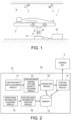
- Fig. 1 is a view of a nursing bed system 1 according to a first example which is not an embodiment of the present invention.
- the nursing bed system 1 includes a nursing bed 2, and a nursing bed posture changing device 10 (hereinafter, may simply be referred to as "the posture changing device").
- the nursing bed 2 is provided with three joints so that the shape of a floor of the bed, and/or the posture related to the angle of the entire bed are changeable.
- the floor of the nursing bed 2 is formed in a flat plate shape.
- the floor of the nursing bed 2 is divided in the longitudinal direction into an upper body area, a waist area, and a leg area.
- the floor (waist area) of the nursing bed 2 is supported by a base part attached at a tip end of a robotic arm 21. Further, the base end of the robotic arm 21 is fixed to a floor of a care room B.
- the robotic arm 21 has one joint (first joint J1), and the angle of the entire bed is changed by being driven by a motor which is established in the first joint J1.
- Two joints (second joint J2, third joint J3) are provided to the floor of the nursing bed 2.
- the second joint J2 is provided to a connecting part between the upper body area and the waist area.
- the third joint J3 is provided to a connecting part between the waist area and the leg area.
- the joints J2 and J3 may be configured to be external shafts of the robotic arm 21.
- a microphone 3 and a camera 4 are installed in the ceiling of the care room B.
- the microphone 3 acquires voice of a care recipient.
- the camera 4 images a situation of the care recipient.
- the microphone 3 and the camera 4 are communicatably connected to the posture changing device 10, and the voice data of the microphone 3 and the image data of the camera 4 are inputted into the posture changing device 10.
- Fig. 2 is a functional block diagram schematically illustrating a configuration of the posture changing device 10.
- the posture changing device 10 includes a care recipient data acquiring module 11, a bed posture information generating module 22 (the bed posture information generating module 22 includes a care recipient demand feature quantity extracting module 12, a memory 13, and a generating module 19), a posture changing module 14, an operational information acquiring module 15, and a bed posture mode information updating module 16.
- the posture changing device 10 is a robot controller provided with a computer, such as a microcontroller, for example.
- the memory 13 stores information on a basic program as a robot controller, various fixed data, etc. By an arithmetic unit executing software, such as the basic program stored in the memory 13, each part of the posture changing device 10 is operated.
- the care recipient data acquiring module 11 acquires care recipient data.
- the care recipient data includes at least one of voice data of the care recipient who lies on the nursing bed 2, the image data obtained by imaging the care recipient, and the time data.
- the care recipient data acquiring module 11 acquires the voice data of the microphone 3 and the time data.
- the care recipient demand feature quantity extracting module 12 extracts a demand feature quantity by which a care recipient's demand is characterized, based on at least one of the care recipient's voice data, the care recipient's image data, and the time data acquired by the care recipient data acquiring module 11.
- the care recipient demand feature quantity extracting module 12 extracts a demand feature quantity by which a care recipient's demand by an utterance "Get me up" is characterized, based on the care recipient's voice data and the time data which are acquired by the care recipient data acquiring module 11.
- the memory 13 stores beforehand bed posture mode information for identifying the posture of the nursing bed 2 associated with a specific demand from the care recipient.
- the memory 13 stores bed posture mode information on the nursing bed 2 associated with the specific demand by the care recipient's utterance "Get me up.”
- the bed posture mode information is information on the joint angles (rotational positions) of the three joints J1-J3 of the nursing bed 2.
- the bed posture mode information is information on the angles of the first joint J1 and the third joint J3 being maintained at 0°, and the angle of the second joint J2 being rotated 30° in the clockwise direction.
- the operational information acquiring module 15 acquires operational information operated by a care worker.
- a remote controller for user interface (not illustrated) installed by the nursing bed 2 is communicatably connected to the posture changing device 10 wirelessly or wiredly, and the operational information on the remote controller for user interface is inputted into the posture changing device 10 (operational information acquiring module 15).
- the bed posture mode information updating module 16 updates the contents of the bed posture mode information stored in the memory 13 according to the operational information acquired by the operational information acquiring module 15. For example, the bed posture mode information updating module 16 updates the contents of the bed posture mode information among the bed posture mode information on the nursing bed 2 associated with the specific demand by the care recipient's utterance "Get me up” according to the operational information acquired by the operational information acquiring module 15 so that a rotational amount of the angle of the second joint J2 is incremented by 1°.
- Fig. 3 is a view illustrating one example of a nursing home 100 to which the nursing bed system 1 of Fig. 1 is applied.
- the nursing home 100 includes a management office A and a plurality of care rooms B.
- a managing device 101 and a speaker 102 are installed in the management office A.
- the managing device 101 is connected to the camera 4 (see Fig. 1 ) of each care room B so that the situation of the care recipient in the care room B is projected on a monitor of the managing device 101.
- the managing device 101 is a personal computer, for example.
- the speaker 102 of the management office A is connected to the microphone 3 (see Fig. 1 ) of each care room B so that an administrator in the management office A is able to have a conversation with the care recipient in the care room B.
- the care recipient When the care recipient is not satisfied with the shape of the floor of the nursing bed 2, or the angle of the bed, he/she contacts the administrator in the management office A.
- the administrator who received the complaint comes into the care room B and operates the remote controller for user interface to change the shape of the floor and the angle of the bed to the care recipient's favorite shape and angle.
- the administrator may change the posture of the nursing bed 2 by remote control from the management office A.
- the nursing bed system 1 updates the bed posture mode information in the memory 13, and whenever the care recipient says "Get me up" thereafter, the updated posture of the nursing bed 2 will be reproduced.
- the nursing bed system 1 of this example includes the nursing bed 2 configured to be changeable of the shape of the floor of the bed, and/or the posture related to the angle of the entire bed, the care recipient data acquiring module 11 which acquires at least one of the voice data of the care recipient who lies on the nursing bed 2, the image data obtained by imaging the care recipient, and the time data, the care recipient demand feature quantity extracting module 12 which extracts the demand feature quantity by which the care recipient's demand is characterized based on at least one of the care recipient's voice data, the care recipient's image data, and the time data acquired by the care recipient data acquiring module 11, the memory 13 which stores beforehand the bed posture mode information for identifying the posture of the nursing bed 2 associated with the specific care recipient's demand, the posture changing module 14 which changes the posture of the nursing bed 2 based on the bed posture mode information associated with the specific demand which matches with the care recipient's demand extracted by the care recipient demand feature quantity extracting module 12, the operational information acquiring module 15 which acquires the operational information operated by the care worker, and the
- the care worker once adjusts the posture of the nursing bed 2 to become suitable for the care recipient, since the care worker will never need to perform the adjustment again, the care worker's burden can be eased.
- the care recipient's demand is the verbal demand, it may be a demand by gesture.
- the care recipient data acquiring module 11 acquires the image data of the camera 4.
- the care recipient demand feature quantity extracting module 12 extracts the demand feature quantity by which a demand by a gesture of "Trying to rise the upper body” is characterized, from the care recipient's image data based on the care recipient's image data acquired by the care recipient data acquiring module 11.
- the memory 13 stores the bed posture mode information on the nursing bed 2 associated with the specific demand by the gesture "Trying to rise the upper body" of the care recipient.
- the demand by the gesture is not limited to a demand which is consciously performed by the care recipient, but it may be a demand which is unconsciously performed by the care recipient, for example, like a body motion during sleep. For example, when the care recipient rises a knee during sleep, the floor of the nursing bed 2 may be deformed so that the care recipient's legs are lifted.
- a plurality of management offices A may be provided to the nursing home 100 and a plurality of managing devices 101 may be connected with the plurality of nursing bed systems 1.
- the posture changing device 10 may be provided with an alarm function which changes the angle of the floor of the nursing bed 2 to raise the care recipient's upper body in response to an utterance demand of the care recipient who says "Wake me up" at a given time (for example, 7 o'clock in the morning).
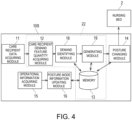
- Fig. 4 is a functional block diagram schematically illustrating a configuration of a posture changing device 10B of the nursing bed 2 according to the first embodiment.
- the nursing bed system 1 according to the first embodiment includes the nursing bed 2 and the posture changing device 10B. Since the configuration of the nursing bed 2 according to the first embodiment is similar to the configuration of the first example (see Fig. 1 ), explanation thereof is omitted.
- the posture changing device 10B includes the care recipient data acquiring module 11, the bed posture information generating module 22, the memory 13, the posture changing module 14, the operational information acquiring module 15, and the bed posture mode information updating module 16.
- the bed posture information generating module 22 includes the care recipient demand feature quantity extracting module 12, a demand identifying module 18, and the generating module 19.
- the posture changing device 10B is a robot controller provided with a computer, such as a microcontroller, for example.
- the memory 13 stores information on the basic program as the robot controller, various fixed data, etc. By an arithmetic unit executing the software, such as the basic program stored in the memory 13, operation of each function part of the posture changing device 10B is performed.
- the care recipient data acquiring module 11 acquires at least one of the voice data of the care recipient who lies on the nursing bed 2, and the image data obtained by imaging the care recipient.
- the voice data is comprised of sound measured by the microphone 3.
- the image data is comprised of image captured by the camera 4.
- the care recipient data acquiring module 11 may be configured to acquire, in addition to the voice data and image data, time data indicative of the time when the data are generated.
- the care recipient demand feature quantity extracting module 12 extracts the demand feature quantity by which the care recipient's demand is characterized based on at least one of the voice data and the image data acquired by the care recipient data acquiring module 11.
- the voice data acquired by the microphone 3 is comprised of sounds which are put in the timeseries order.
- the care recipient demand feature quantity extracting module 12 extracts the care recipient's voice by removing noise such as machinery sound from the voice data, and the extracted voice is converted into text or a signal by using a speech recognition technology to become the demand feature quantity. Further, for example, a part or all of the care recipient's body is projected on the image data acquired by the camera 4.
- the care recipient demand feature quantity extracting module 12 extracts, from this image data, the demand feature quantity for deriving the care recipient's demand from the care recipient's gesture (motion).
- the demand feature quantity in this case may be information indicative of the overall or partial motion and its amount of the care recipient's body, such as a moving amount of the care recipient's hand, a moving amount of the leg, a moving amount of the head, and the motion of the mouth or the eyes, for example.
- the demand identifying module 18 acquires the demand feature quantity generated by the care recipient demand feature quantity extracting module 12, and identifies (estimates) the care recipient's demand based on the demand feature quantity.
- the voice uttered by the care recipient may not be a perfect language, such as "Ah” or "Oh,” or may be only a word. Moreover, the voice uttered by the care recipient may be a foreign language or a dialect.
- the care recipient's gesture is peculiar to the care recipient, and may be different for different care recipients.
- the demand identifying module 18 identifies the care recipient's demand from the demand feature quantity based on a specific rule stored beforehand.
- the specific rule is information for associating the demand feature quantity with the care recipient's demand.
- the specific rule may be created for every care recipient.
- the demand identifying module 18 may additionally use the time data which is obtained when the demand feature quantity is generated. That is, the demand identifying module 18 can identify (estimate) the care recipient's demand based on a combination of the demand feature quantity and the time data. By combining the demand feature quantity and the time data, it can more accurately identify the care recipient's demand.
- the memory 13 stores a plurality of kinds of demands of the care recipient, and bed posture mode information which is associated with each of the plurality of kinds of demands.
- the bed posture mode information is information for identifying the posture of the nursing bed 2.
- the posture of the nursing bed 2 is defined by the angles of the three joints J1-J3
- the bed posture mode information is information on the angles of the three joints J1-J3 of the nursing bed 2.
- the memory 13 stores the bed posture mode information on the nursing bed 2 associated with the care recipient's demand "Get me up.”
- the generating module 19 reads, from the memory 13, the bed posture mode information associated with the specific demand which matches with the care recipient's demand extracted by the care recipient demand feature quantity extracting module 12, and uses it as the bed posture mode information generated by the bed posture information generating module 22.
- the posture changing module 14 changes the posture of the nursing bed 2 based on the generated bed posture mode information. For example, based on the bed posture mode information on the nursing bed 2 associated with the care recipient's demand "Get me up," the posture changing module 14 generates the driving command of the motors of the joints J1-J3, and changes the posture of the nursing bed 2.
- the care recipient contacts the administrator in the management office A, if he/she is neither satisfied with the shape of the floor of the nursing bed 2, nor the angle of the bed.
- the administrator who received the complaint operates the remote controller for user interface in the care room B or in the management office A to change the shape of the floor and the angle of the bed as the care recipient prefers.
- the command is inputted into the posture changing device 10 via the remote controller for user interface, and the posture of the nursing bed 2 is adjusted.
- the nursing bed system 1 acquires a state, such as the posture of the nursing bed 2, which is updated by the care worker, and updates the bed posture mode information stored in the memory 13 corresponding to the specified demand described above.
- the state such as the posture of the nursing bed 2
- the state can be identified based on the rotational positions of the joints J1-J3, the information captured by the camera 4, etc.
- the updated posture of the nursing bed 2 is reproduced when a similar demand is issued next. Therefore, the posture of the nursing bed 2 can be changed not only according to the care recipient's preference but also according to the change in the care recipient's body state.
- the posture changing device 10A includes the care recipient data acquiring module 11, the bed posture information generating module 22 which is mainly comprised of a machine learning classifying module 17, and the posture changing module 14. Since the care recipient data acquiring module 11 and the posture changing module 14 of the posture changing device 10A have the same or similar configuration as/to those of the posture changing device 10 of the first example, explanation thereof is omitted.
- the posture changing device 10A differs from the posture changing device 10 of Fig. 1 in that it is mainly provided with the machine learning classifying module 17 instead of the memory 13, the operational information acquiring module 15, and the bed posture mode information updating module 16.
- the machine learning classifying module 17 is established with a plurality of teaching data in which the demand feature quantity for learning by which the care recipient data or the care recipient's demand is characterized is associated with the bed posture mode information for identifying the posture of the nursing bed 2 (the bed posture mode information as a correct answer).
- the machine learning classifying module 17 is generated by a machine learning device 30 having an AI function as illustrated in a block diagram of Fig. 6 .
- the machine learning device 30 includes a teaching data acquiring module 31 which acquires a plurality of teaching data, a machine learning module 32 which establishes a classifying module of the machine learning by using the teaching data, and a machine learning classifying module outputting module (classifying module information outputting module) 33 which outputs the information on the established machine learning classifying module 17.
- the care recipient data acquired by the care recipient data acquiring module 11 or its processed data is inputted into the machine learning classifying module 17, and the bed posture mode information is outputted from the machine learning classifying module 17.
- the processed data of the care recipient data includes the demand feature quantity generated based on at least one of the care recipient's voice data and the care recipient's image data (refer to the explanation of the first example and the first embodiment).
- the posture changing module 14 changes the posture of the nursing bed 2 based on the bed posture mode information outputted from the machine learning classifying module 17.
- the care worker changes the shape and the angle of the bed according to the care recipient's demand and time.
- the care recipient's demand is the demand by the care recipient's utterance, it may be the demand by the care recipient's gesture, for example.
- the care worker recognizes the care recipient's demand and the time at that time, and then adjusts the shape and the angle of the bed so that the care recipient becomes in a comfortable posture.
- the care recipient's demand is converted into numerical data (demand data). Time at that time is also converted into numerical data (time data).
- time data The adjustment performed by the care worker according to the care recipient's demand data and the time data is also converted into numerical data (adjustment data).
- the care recipient's utterance can be acquired by the microphone 3, and can be converted into the voice data. If the level of the sound inputted into the microphone 3 exceeds a threshold, voice data is then acquired from this timing for a fixed period of time (for example, 2 seconds), and it is converted into the voice data for learning. Further, the care recipient's gesture may be imaged by the camera 4, and may be converted into the image data.
- a change per time in the image captured by the camera 4 exceeds a threshold, it is considered to be a demand by gesture, and the image data is then acquired from this timing for a fixed period of time (for example, 3 seconds), and it is converted into the image data for learning.
- the angle data of the joint J1 of the robotic arm 21, and the angle data of the joints J2 and J3 of the floor of the bed, which are adjusted by the care worker, can be used as adjustment data for learning.
- teaching data for learning of the machine learning in which the time data, the demand data, and the adjustment data corresponding to these data are grouped can be created.
- the teaching data may be data obtained by preprocessing the raw data set.
- the machine learning device 30 acquires a large number of teaching data for learning by the teaching data acquiring module 31, and carries out the machine learning by the machine learning module 32.
- Each of the large number of teaching data includes a combination of input data containing the care recipient data (or its processed data) and output data containing the bed posture mode information according to the care recipient's demand, which is associated with the input data.
- the input data as the teaching data is generated from the time data and the demand data described above.
- the output data as the teaching data is generated from the adjustment data described above.
- the machine learning module 32 identifies the feature which suggests the correlation between the input data and the output data based on the teaching data by using the given learning algorithm to learn a correlation model for estimating output data necessary for new input data. This correlation model becomes the learned model.
- the machine learning classifying module outputting module 33 outputs the thus-obtained learned model to the machine learning classifying module 17.
- the machine learning classifying module 17 derives the bed posture mode information as the output data from the care recipient data (or its processed data) as the input data by using the learned model, and outputs what kind of adjustment should be made according to the care recipient's demand to the posture changing module 14.
- the posture changing module 14 changes the joint angle of the floor and the joint angle of the robotic arm 21 according to the output.
- the care recipient does not need to notify the administrator.
- the image data etc. at that time and the output value of the machine learning classifying module 17 are saved as the next teaching data for learning.
- the care recipient notifies the administrator. Then, the administrator corrects the bed to the correct shape and angle. Then, a set of the image data etc. at that time and the corrected data of the shape and the angle are saved as the next teaching data for learning.
- the nursing bed posture changing device 10A includes the care recipient data acquiring module 11 which acquires at least one of the care recipient's voice data, the care recipient's image data, and the time data, which are generated by measuring the care recipient's voice or image, and the posture changing module 14 which inputs the care recipient demand feature quantity generated based on at least one of the care worker's voice data, the care recipient's image data, and the time data, which are acquired, to the classifying module 17 of the machine learning which is established with a plurality of teaching data in which the care recipient demand feature quantity for learning by which the care recipient's demand is characterized is associated with the bed posture mode information for identifying the posture of the nursing bed 2 which is the bed posture mode information as a correct answer corresponding to the care recipient demand feature quantity, and changes the posture of the nursing bed 2 based on the outputted bed posture mode information.
- the machine learning device 30 which generates the information on the classifying module 17 used in the nursing bed posture changing device 10A includes the teaching data acquiring module 31 which acquires a plurality of teaching data in which the care recipient demand feature quantity for learning is associated with the bed posture mode information as a correct answer corresponding to the care recipient demand feature quantity, and the machine learning module 32 which establishes the classifying module 17 of the machine learning with the teaching data, and the classifying module information outputting module (machine learning classifying module outputting module 33) which outputs the information on the established classifying module 17.
- actual nursing is performed using the machine learning classifying module 17 which becomes "learned" after it once learned.
- the posture change data including the corrected data
- the machine learning classifying module 17 is also saved as the new correct answer data for the next machine learning. It is added to the data set for the machine learning used for the previous machine learning, and a further machine learning can be carried out to strengthen the performance of the machine learning classifying module 17.
- the nursing bed system 1 is provided with the nursing bed 2 configured to be changeable of the shape of the floor of the bed, and/or the posture related to the angle of the entire bed, and the nursing bed posture changing device 10, 10A, or 10B.
- the nursing bed system 1 may be further provided with at least one of the microphone 3 which generates the voice data and the camera 4 which generates the image data.
- the nursing bed posture changing device 10, 10A, or 10B of the nursing bed system 1 is the device which changes the posture of the nursing bed 2 configured to be changeable of the shape of the floor of the bed, and/or the posture related to the angle of the entire bed.
- the device includes the care recipient data acquiring module 11 which acquires the care recipient data containing at least one of the voice data of the care recipient who lies on the nursing bed 2, and the image data obtained by imaging the care recipient, the bed posture information generating module 22 which generates the bed posture mode information according to the care recipient's demand based on the care recipient data, and the posture changing module 14 which changes the posture of the nursing bed 2 based on the bed posture mode information.
- the bed posture mode information according to the care recipient's demand is generated based on the demand (or its sign) issued by the care recipient, and the nursing bed 2 is operated based on the bed posture mode information. Therefore, the bed moves automatically corresponding to the care recipient's demand, and the care recipient's posture may be changed so that it is comfortable for the care recipient. Therefore, it is possible to ease the burden of the care worker for adjusting the care recipient's posture.
- the bed posture information generating module 22 includes the care recipient demand feature quantity extracting module 12 which extracts the demand feature quantity by which the care recipient's demand is characterized from the care recipient data, the memory 13 which stores the plurality of kinds of demands of the care recipient, and the bed posture mode information for identifying the posture of the nursing bed associated with each of the plurality of kinds of demands, and the generating module 19 which reads, from the memory 13, the bed posture mode information associated with the care recipient's demand corresponding to the demand feature quantity extracted by the care recipient demand feature quantity extracting module.
- the bed posture information generating module 22 may be further provided with the demand identifying module 18 which identifies the care recipient's demand based on the given specific rule based on the demand feature quantity. Therefore, the care recipient's demand can be identified for the demand feature quantities of various modes.
- the care recipient data may further include the time data indicative of the time at which at least one data of the voice data and the image data is generated.
- the demand identifying module 18 may identify the care recipient's demand based on the demand feature quantity and the time data corresponding thereto. Therefore, the accuracy of identifying the care recipient's demand by the demand identifying module 18 can be improved.
- the nursing bed system 1 may further include the operational information acquiring module 15 which acquires the operational information when the posture of the nursing bed 2 is operated by the care worker corresponding to the care recipient's demand, and the bed posture mode information updating module 16 which updates the bed posture mode information which is stored in the memory 13 while being associated with the demand, according to the operational information acquired by the operational information acquiring module 15. Therefore, since the bed posture mode information updating module 16 is sequentially updated by the new information, the comfortable bed posture mode can be provided to the care recipient, even if the care recipient's physical situation is changed.
- the bed posture information generating module 22 includes the machine learning classifying module 17 which has the learned model learned with the large number of teaching data in which the input data containing the care recipient data or its processed data is associated with the output data containing the bed posture mode information according to the care recipient's demand, and derives the output data corresponding to the input data to be recognized using the learned model.
- the input data may contain the demand feature quantity by which the care recipient's demand extracted from the care recipient data is characterized.
- the machine learning classifying module 17 which includes the learned model as the bed posture information generating module 22, the bed posture mode information according to the care recipient's demand can be derived from the care recipient data (or its processed data) with high precision.
- the nursing bed posture changing device 10A may further include the teaching data acquiring module 31 which acquires the large number of teaching data, each comprised of a combination of the input data containing the care recipient data or its processed data, and the output data containing the bed posture mode information according to the care recipient's demand as the correct answer to the input data, and the machine learning module 32 which establishes the machine learning classifying module 17 which associates the input data with the output data by using the large number of teaching data. Therefore, the machine learning classifying module 17 is sequentially learned.
- the teaching data acquiring module 31 which acquires the large number of teaching data, each comprised of a combination of the input data containing the care recipient data or its processed data, and the output data containing the bed posture mode information according to the care recipient's demand as the correct answer to the input data
- the machine learning module 32 which establishes the machine learning classifying module 17 which associates the input data with the output data by using the large number of teaching data. Therefore, the machine learning classifying module 17 is sequentially learned.
- the nursing bed 2 is provided with the three joints (see Fig. 1 ), it is not limited to this configuration, as long as the nursing bed 2 is provided with one or more joints, and is configured to be changeable of the shape of the floor of the bed, and/or the posture related to the angle of the entire bed.
- the nursing bed 2 may have the configuration disclosed in Fig. 1 of Patent Document 1, for example.
- the present invention is useful at the nursing site, such as the nursing home.
Landscapes
- Health & Medical Sciences (AREA)
- Engineering & Computer Science (AREA)
- Life Sciences & Earth Sciences (AREA)
- General Health & Medical Sciences (AREA)
- Public Health (AREA)
- Animal Behavior & Ethology (AREA)
- Veterinary Medicine (AREA)
- Physics & Mathematics (AREA)
- Theoretical Computer Science (AREA)
- Medical Informatics (AREA)
- Nursing (AREA)
- Biomedical Technology (AREA)
- Artificial Intelligence (AREA)
- General Physics & Mathematics (AREA)
- Computer Vision & Pattern Recognition (AREA)
- Data Mining & Analysis (AREA)
- Software Systems (AREA)
- Pathology (AREA)
- Evolutionary Computation (AREA)
- General Engineering & Computer Science (AREA)
- Molecular Biology (AREA)
- Heart & Thoracic Surgery (AREA)
- Mathematical Physics (AREA)
- Biophysics (AREA)
- Surgery (AREA)
- Computing Systems (AREA)
- Physiology (AREA)
- Epidemiology (AREA)
- Primary Health Care (AREA)
- Multimedia (AREA)
- Psychiatry (AREA)
- Databases & Information Systems (AREA)
- Social Psychology (AREA)
- General Business, Economics & Management (AREA)
- Signal Processing (AREA)
- Dentistry (AREA)
- Oral & Maxillofacial Surgery (AREA)
- Rehabilitation Therapy (AREA)
- Fuzzy Systems (AREA)
- Human Computer Interaction (AREA)
Claims (7)
- Un dispositif (10 ; 10A) de changement de posture de lit de soins infirmiers, qui change la posture d'un lit de soins infirmiers (2), le lit de soins infirmiers (2) pouvant changer la forme d'une surface du lit (2), et/ou une posture liée à un angle de l'ensemble du lit (2), le dispositif (10 ; 10A) comprenant :un module d'acquisition (11) de données de bénéficiaire des soins qui acquiert des données de bénéficiaire des soins contenant au moins l'une parmi des données vocales d'un bénéficiaire des soins qui est allongé sur le lit de soins infirmiers (2), et des données d'image obtenues par une formation d'images du bénéficiaire des soins ;un module de génération (22) d'informations sur la posture de lit qui génère des informations relatives au mode de posture de lit en fonction d'une demande de bénéficiaire des soins, sur la base des données de bénéficiaire des soins ; etun module de changement (14) de posture qui change la posture du lit de soins infirmiers (2) sur la base des informations de mode de posture de lit,sachant que le module de génération (22) d'informations de posture du lit inclut :un module d'extraction (12) de quantité de caractéristique de demande de bénéficiaire des soins qui extrait à partir des données de bénéficiaire des soins une quantité de caractéristique de demande par laquelle la demande de bénéficiaire des soins est caractérisée ;une mémoire (13) qui stocke une pluralité de types de demandes de bénéficiaire des soins et les informations relatives au mode de posture de lit pour identifier la posture du lit de soins infirmiers (2) associée à chacun de la pluralité de types de demandes ; etun module de génération (19) qui lit dans la mémoire (13) les informations relatives au mode de posture de lit associées à la demande de bénéficiaire des soins correspondant à la quantité de caractéristique de demande extraite par le module d'extraction (12) de quantité de caractéristique de demande de bénéficiaire des soins,sachant que le module de génération (22) d'informations sur la posture de lit inclut en outre un module d'identification (18) de demande qui identifie la demande de bénéficiaire des soins sur la base d'une règle spécifique donnée à partir de la quantité de caractéristique de demande,sachant que les données de bénéficiaire des soins incluent en outre des données temporelles indiquant l'heure à laquelle au moins l'une parmi les données vocales et les données d'image est générée, etsachant que le module d'identification (18) de demande identifie la demande de bénéficiaire de soins sur la base de la quantité de caractéristique de demande et des données temporelles correspondantes.
- Le dispositif (10 ; 10A) de changement de posture de lit de soins infirmiers d'après la revendication 1, comprenant en outre :un module d'acquisition (15) d'informations opérationnelles qui acquiert des informations opérationnelles lorsque la posture du lit de soins infirmiers (2) est actionnée par un soignant en correspondant à la demande du bénéficiaire des soins ; etun module de mise à jour (16) d'informations relatives au mode de posture de lit qui met à jour les informations relatives au mode de posture de lit stockées dans la mémoire (13) de manière à les associer à la demande, en fonction des informations opérationnelles acquises par le module d'acquisition (15) d'informations opérationnelles.
- Le dispositif (10 ; 10A) de changement de posture de lit de soins infirmiers d'après la revendication 1,sachant que le module de génération (22) d'informations de posture de lit présente un modèle entraîné ou encore appris (learned) avec un grand nombre de données d'apprentissage dans lesquelles les données d'entrée présentant les données de bénéficiaire de soins ou des données traitées de celles-ci sont associées à des données de sortie présentant des informations de mode de posture de lit en fonction de la demande de bénéficiaire de soins, etsachant que le module de génération (22) d'informations de posture de lit inclut un module de classification (17) par apprentissage automatique qui dérive les données de sortie correspondant aux données d'entrée à reconnaître à l'aide du modèle appris.
- Le dispositif (10 ; 10A) de changement de posture de lit de soins infirmiers d'après la revendication 3, sachant que les données d'entrée incluent une quantité de caractéristique de demande par laquelle la demande de bénéficiaire de soins extraite des données de bénéficiaire de soins est caractérisée.
- Le dispositif (10 ; 10A) de changement de posture de lit de soins infirmiers d'après la revendication 4, comprenant en outre :un module d'acquisition de données d'enseignement (31) qui acquiert un grand nombre de données d'enseignement, chacune comprenant une combinaison de données d'entrée contenant les données de bénéficiaire de soins ou des données traitées de celles-ci et des données de sortie contenant des informations de mode de posture de lit conformes à la demande de bénéficiaire de soins, les données de sortie étant une réponse correcte aux données d'entrée ; etun module d'apprentissage automatique (32) qui établit le module de classification (17) par apprentissage automatique qui associe les données d'entrée aux données de sortie en utilisant le grand nombre de données d'apprentissage.
- Un système de lit de soins infirmiers (1), comprenant :un lit de soins infirmiers (2) pouvant changer la forme d'une surface du lit (2), et/ou une posture liée à un angle de l'ensemble du lit (2) ; etle dispositif (10 ; 10A) de changement de posture de lit de soins infirmiers d'après l'une quelconque des revendications précédentes.
- Le système de lit de soins infirmiers (1) d'après la revendication 6, comprenant en outre au moins un microphone (3) qui génère les données vocales et une caméra (4) qui génère les données d'image.
Applications Claiming Priority (2)
| Application Number | Priority Date | Filing Date | Title |
|---|---|---|---|
| JP2019202765 | 2019-11-07 | ||
| PCT/JP2020/041592 WO2021090928A1 (fr) | 2019-11-07 | 2020-11-06 | Système de lit de soins infirmiers et dispositif de changement de position de lit de soins infirmiers |
Publications (3)
| Publication Number | Publication Date |
|---|---|
| EP4057220A1 EP4057220A1 (fr) | 2022-09-14 |
| EP4057220A4 EP4057220A4 (fr) | 2023-10-04 |
| EP4057220B1 true EP4057220B1 (fr) | 2025-01-15 |
Family
ID=75849142
Family Applications (1)
| Application Number | Title | Priority Date | Filing Date |
|---|---|---|---|
| EP20885304.4A Active EP4057220B1 (fr) | 2019-11-07 | 2020-11-06 | Système de lit de soins infirmiers et dispositif de changement de position de lit de soins infirmiers |
Country Status (5)
| Country | Link |
|---|---|
| US (1) | US12239590B2 (fr) |
| EP (1) | EP4057220B1 (fr) |
| JP (1) | JP7214887B2 (fr) |
| CN (1) | CN114585340B (fr) |
| WO (1) | WO2021090928A1 (fr) |
Families Citing this family (4)
| Publication number | Priority date | Publication date | Assignee | Title |
|---|---|---|---|---|
| US10905249B1 (en) * | 2020-05-29 | 2021-02-02 | Khalid Saghiri | Multifunctional smart beds and methods of operating thereof |
| JP7349038B1 (ja) | 2022-04-08 | 2023-09-21 | 株式会社イトーキ | 介護ロボット用制御装置及び介護ロボットシステム |
| CN120131322B (zh) * | 2025-02-27 | 2026-01-02 | 南京医科大学第二附属医院 | 一种智能化泌尿外科术后护理设备及系统 |
| CN120713716B (zh) * | 2025-08-27 | 2025-11-07 | 湘潭医卫职业技术学院 | 一种智能护理床控制方法及系统 |
Family Cites Families (20)
| Publication number | Priority date | Publication date | Assignee | Title |
|---|---|---|---|---|
| JPS60254091A (ja) | 1984-05-30 | 1985-12-14 | ヤマハ株式会社 | 音板の製法 |
| CA2408342A1 (fr) * | 2000-05-05 | 2001-11-15 | Hill-Rom Services, Inc. | Commande a distance pour lit d'hopital |
| JP2003310668A (ja) * | 2002-02-22 | 2003-11-05 | Sanyo Electric Co Ltd | 可動ベッド |
| US9070282B2 (en) * | 2009-01-30 | 2015-06-30 | Altorr Corp. | Smartphone control of electrical devices |
| WO2013077288A1 (fr) * | 2011-11-22 | 2013-05-30 | パラマウントベッド株式会社 | Dispositif de lit |
| WO2013123119A1 (fr) * | 2012-02-15 | 2013-08-22 | Stryker Corporation | Appareil de support d'un patient et commandes de celui-ci |
| KR101751625B1 (ko) | 2012-12-21 | 2017-06-27 | 가와사끼 쥬고교 가부시끼 가이샤 | 개호용 베드 및 그 형상 변경 방법 |
| DE102014100548A1 (de) * | 2014-01-20 | 2015-07-23 | Logicdata Electronic & Software Entwicklungs Gmbh | Ergonomiesystem für ein verstellbares Bettensystem |
| JP6734012B2 (ja) * | 2014-06-25 | 2020-08-05 | 川崎重工業株式会社 | 介護用ベッド |
| CN104666008B (zh) * | 2015-02-09 | 2017-06-16 | 江苏怡龙医疗科技有限公司 | 一种能自动翻身的护理床 |
| AU2016270661B2 (en) * | 2015-05-29 | 2021-04-22 | Hill-Rom Services, Inc. | Patient support apparatus |
| CN105030458A (zh) * | 2015-06-18 | 2015-11-11 | 杨胜林 | 一种智能电动护理床控制系统 |
| KR20170035851A (ko) * | 2017-03-13 | 2017-03-31 | 드림비전스주식회사 | 스마트 침대 시스템 및 제어 방법 |
| US11224295B2 (en) * | 2017-05-22 | 2022-01-18 | Werner Media Partners, LLC | Smart adjustable bed system |
| GB2566129B (en) * | 2017-09-04 | 2020-07-01 | Eschmann Holdings Ltd | Surgical tables |
| US10806653B2 (en) * | 2017-12-21 | 2020-10-20 | Stryker Corporation | Patient transport apparatus with electro-mechanical braking system |
| CN109077871A (zh) * | 2018-09-20 | 2018-12-25 | 莫现安 | 一种有分区自动活动床板的护理床及其预防褥疮的方法 |
| CN109646215A (zh) * | 2018-12-25 | 2019-04-19 | 李婧茹 | 一种多功能可调式护理床 |
| CN109758281B (zh) * | 2018-12-25 | 2021-05-11 | 广东三水合肥工业大学研究院 | 一种基于身体位置调节的安全系统 |
| CN109885078A (zh) * | 2019-03-26 | 2019-06-14 | 浙江医院 | 一种电动手术床姿态调整操作仪 |
-
2020
- 2020-11-06 EP EP20885304.4A patent/EP4057220B1/fr active Active
- 2020-11-06 WO PCT/JP2020/041592 patent/WO2021090928A1/fr not_active Ceased
- 2020-11-06 CN CN202080073720.4A patent/CN114585340B/zh active Active
- 2020-11-06 JP JP2021555129A patent/JP7214887B2/ja active Active
-
2022
- 2022-05-09 US US17/739,207 patent/US12239590B2/en active Active
Also Published As
| Publication number | Publication date |
|---|---|
| JPWO2021090928A1 (fr) | 2021-05-14 |
| CN114585340A (zh) | 2022-06-03 |
| EP4057220A4 (fr) | 2023-10-04 |
| CN114585340B (zh) | 2024-04-09 |
| EP4057220A1 (fr) | 2022-09-14 |
| JP7214887B2 (ja) | 2023-01-30 |
| WO2021090928A1 (fr) | 2021-05-14 |
| US12239590B2 (en) | 2025-03-04 |
| US20220257441A1 (en) | 2022-08-18 |
Similar Documents
| Publication | Publication Date | Title |
|---|---|---|
| US12239590B2 (en) | Nursing bed system and nursing bed posture changing device | |
| US9020643B2 (en) | Robot apparatus, control method thereof, and computer program | |
| US11548168B2 (en) | Control device, robot control method, and robot control system | |
| US10836041B2 (en) | More endearing robot, robot control method, and non-transitory recording medium | |
| US11709476B2 (en) | Information processing apparatus, information processing method and program | |
| US20250123622A1 (en) | Information processing apparatus, information processing method, and program | |
| CN114449970B (zh) | 使用器具推断装置、方法以及手术辅助机器人 | |
| JPWO2019087495A1 (ja) | 情報処理装置、情報処理方法、およびプログラム | |
| US11279037B2 (en) | Force-sense visualization apparatus, robot, and force-sense visualization program | |
| US11938625B2 (en) | Information processing apparatus, information processing method, and program | |
| JP5296898B2 (ja) | アンドロイド制御システム | |
| JP7565848B2 (ja) | ロボット遠隔操作制御装置、ロボット遠隔操作制御システム、ロボット遠隔操作制御方法、およびプログラム | |
| CN111730608A (zh) | 控制装置、机器人、控制方法以及存储介质 | |
| JP7323475B2 (ja) | 情報処理装置および行動モード設定方法 | |
| JP5162852B2 (ja) | アンドロイド制御システム | |
| JP2012010856A (ja) | 状態認識装置、傾聴対話持続システム、状態認識プログラムおよび状態認識方法 | |
| AU2021100005A4 (en) | An automated microphone system | |
| JP7027285B2 (ja) | 遠隔制御サーバおよび遠隔制御システム | |
| US20240238983A1 (en) | Control device, control method, and non-transitory recording medium | |
| JP3239216B1 (ja) | 通信により知識情報を更新するロボット、ロボットシステム | |
| JP2026028242A (ja) | 介護関連情報提供装置及び介護関連情報提供方法 | |
| WO2024018793A1 (fr) | Système d'aide pour soignants utilisant un terminal portable monté sur la tête | |
| JP2025065178A (ja) | 制御モデル生成装置、制御システム、制御モデル生成方法およびプログラム | |
| JP2020069006A (ja) | ロボット |
Legal Events
| Date | Code | Title | Description |
|---|---|---|---|
| STAA | Information on the status of an ep patent application or granted ep patent |
Free format text: STATUS: THE INTERNATIONAL PUBLICATION HAS BEEN MADE |
|
| PUAI | Public reference made under article 153(3) epc to a published international application that has entered the european phase |
Free format text: ORIGINAL CODE: 0009012 |
|
| STAA | Information on the status of an ep patent application or granted ep patent |
Free format text: STATUS: REQUEST FOR EXAMINATION WAS MADE |
|
| 17P | Request for examination filed |
Effective date: 20220530 |
|
| AK | Designated contracting states |
Kind code of ref document: A1 Designated state(s): AL AT BE BG CH CY CZ DE DK EE ES FI FR GB GR HR HU IE IS IT LI LT LU LV MC MK MT NL NO PL PT RO RS SE SI SK SM TR |
|
| DAV | Request for validation of the european patent (deleted) | ||
| DAX | Request for extension of the european patent (deleted) | ||
| A4 | Supplementary search report drawn up and despatched |
Effective date: 20230906 |
|
| RIC1 | Information provided on ipc code assigned before grant |
Ipc: A61G 7/057 20060101ALI20230831BHEP Ipc: A61G 7/018 20060101ALI20230831BHEP Ipc: A61G 7/015 20060101ALI20230831BHEP Ipc: G10L 15/00 20130101ALI20230831BHEP Ipc: G06T 7/20 20170101ALI20230831BHEP Ipc: G06T 7/00 20170101AFI20230831BHEP |
|
| GRAP | Despatch of communication of intention to grant a patent |
Free format text: ORIGINAL CODE: EPIDOSNIGR1 |
|
| STAA | Information on the status of an ep patent application or granted ep patent |
Free format text: STATUS: GRANT OF PATENT IS INTENDED |
|
| INTG | Intention to grant announced |
Effective date: 20240920 |
|
| GRAS | Grant fee paid |
Free format text: ORIGINAL CODE: EPIDOSNIGR3 |
|
| GRAA | (expected) grant |
Free format text: ORIGINAL CODE: 0009210 |
|
| STAA | Information on the status of an ep patent application or granted ep patent |
Free format text: STATUS: THE PATENT HAS BEEN GRANTED |
|
| AK | Designated contracting states |
Kind code of ref document: B1 Designated state(s): AL AT BE BG CH CY CZ DE DK EE ES FI FR GB GR HR HU IE IS IT LI LT LU LV MC MK MT NL NO PL PT RO RS SE SI SK SM TR |
|
| REG | Reference to a national code |
Ref country code: CH Ref legal event code: EP Ref country code: GB Ref legal event code: FG4D |
|
| REG | Reference to a national code |
Ref country code: DE Ref legal event code: R096 Ref document number: 602020044982 Country of ref document: DE |
|
| REG | Reference to a national code |
Ref country code: IE Ref legal event code: FG4D |
|
| REG | Reference to a national code |
Ref country code: NL Ref legal event code: MP Effective date: 20250115 |
|
| PG25 | Lapsed in a contracting state [announced via postgrant information from national office to epo] |
Ref country code: NL Free format text: LAPSE BECAUSE OF FAILURE TO SUBMIT A TRANSLATION OF THE DESCRIPTION OR TO PAY THE FEE WITHIN THE PRESCRIBED TIME-LIMIT Effective date: 20250115 |
|
| PG25 | Lapsed in a contracting state [announced via postgrant information from national office to epo] |
Ref country code: RS Free format text: LAPSE BECAUSE OF FAILURE TO SUBMIT A TRANSLATION OF THE DESCRIPTION OR TO PAY THE FEE WITHIN THE PRESCRIBED TIME-LIMIT Effective date: 20250415 |
|
| PG25 | Lapsed in a contracting state [announced via postgrant information from national office to epo] |
Ref country code: FI Free format text: LAPSE BECAUSE OF FAILURE TO SUBMIT A TRANSLATION OF THE DESCRIPTION OR TO PAY THE FEE WITHIN THE PRESCRIBED TIME-LIMIT Effective date: 20250115 |
|
| PG25 | Lapsed in a contracting state [announced via postgrant information from national office to epo] |
Ref country code: PL Free format text: LAPSE BECAUSE OF FAILURE TO SUBMIT A TRANSLATION OF THE DESCRIPTION OR TO PAY THE FEE WITHIN THE PRESCRIBED TIME-LIMIT Effective date: 20250115 |
|
| PG25 | Lapsed in a contracting state [announced via postgrant information from national office to epo] |
Ref country code: ES Free format text: LAPSE BECAUSE OF FAILURE TO SUBMIT A TRANSLATION OF THE DESCRIPTION OR TO PAY THE FEE WITHIN THE PRESCRIBED TIME-LIMIT Effective date: 20250115 |
|
| REG | Reference to a national code |
Ref country code: LT Ref legal event code: MG9D |
|
| PG25 | Lapsed in a contracting state [announced via postgrant information from national office to epo] |
Ref country code: IS Free format text: LAPSE BECAUSE OF FAILURE TO SUBMIT A TRANSLATION OF THE DESCRIPTION OR TO PAY THE FEE WITHIN THE PRESCRIBED TIME-LIMIT Effective date: 20250515 Ref country code: NO Free format text: LAPSE BECAUSE OF FAILURE TO SUBMIT A TRANSLATION OF THE DESCRIPTION OR TO PAY THE FEE WITHIN THE PRESCRIBED TIME-LIMIT Effective date: 20250415 |
|
| REG | Reference to a national code |
Ref country code: AT Ref legal event code: MK05 Ref document number: 1760332 Country of ref document: AT Kind code of ref document: T Effective date: 20250115 |
|
| PG25 | Lapsed in a contracting state [announced via postgrant information from national office to epo] |
Ref country code: HR Free format text: LAPSE BECAUSE OF FAILURE TO SUBMIT A TRANSLATION OF THE DESCRIPTION OR TO PAY THE FEE WITHIN THE PRESCRIBED TIME-LIMIT Effective date: 20250115 |
|
| PG25 | Lapsed in a contracting state [announced via postgrant information from national office to epo] |
Ref country code: LV Free format text: LAPSE BECAUSE OF FAILURE TO SUBMIT A TRANSLATION OF THE DESCRIPTION OR TO PAY THE FEE WITHIN THE PRESCRIBED TIME-LIMIT Effective date: 20250115 Ref country code: PT Free format text: LAPSE BECAUSE OF FAILURE TO SUBMIT A TRANSLATION OF THE DESCRIPTION OR TO PAY THE FEE WITHIN THE PRESCRIBED TIME-LIMIT Effective date: 20250515 |
|
| PG25 | Lapsed in a contracting state [announced via postgrant information from national office to epo] |
Ref country code: GR Free format text: LAPSE BECAUSE OF FAILURE TO SUBMIT A TRANSLATION OF THE DESCRIPTION OR TO PAY THE FEE WITHIN THE PRESCRIBED TIME-LIMIT Effective date: 20250416 Ref country code: BG Free format text: LAPSE BECAUSE OF FAILURE TO SUBMIT A TRANSLATION OF THE DESCRIPTION OR TO PAY THE FEE WITHIN THE PRESCRIBED TIME-LIMIT Effective date: 20250115 |
|
| PG25 | Lapsed in a contracting state [announced via postgrant information from national office to epo] |
Ref country code: AT Free format text: LAPSE BECAUSE OF FAILURE TO SUBMIT A TRANSLATION OF THE DESCRIPTION OR TO PAY THE FEE WITHIN THE PRESCRIBED TIME-LIMIT Effective date: 20250115 |
|
| PG25 | Lapsed in a contracting state [announced via postgrant information from national office to epo] |
Ref country code: SE Free format text: LAPSE BECAUSE OF FAILURE TO SUBMIT A TRANSLATION OF THE DESCRIPTION OR TO PAY THE FEE WITHIN THE PRESCRIBED TIME-LIMIT Effective date: 20250115 |
|
| PG25 | Lapsed in a contracting state [announced via postgrant information from national office to epo] |
Ref country code: SM Free format text: LAPSE BECAUSE OF FAILURE TO SUBMIT A TRANSLATION OF THE DESCRIPTION OR TO PAY THE FEE WITHIN THE PRESCRIBED TIME-LIMIT Effective date: 20250115 |
|
| PG25 | Lapsed in a contracting state [announced via postgrant information from national office to epo] |
Ref country code: DK Free format text: LAPSE BECAUSE OF FAILURE TO SUBMIT A TRANSLATION OF THE DESCRIPTION OR TO PAY THE FEE WITHIN THE PRESCRIBED TIME-LIMIT Effective date: 20250115 |
|
| PG25 | Lapsed in a contracting state [announced via postgrant information from national office to epo] |
Ref country code: IT Free format text: LAPSE BECAUSE OF FAILURE TO SUBMIT A TRANSLATION OF THE DESCRIPTION OR TO PAY THE FEE WITHIN THE PRESCRIBED TIME-LIMIT Effective date: 20250115 |
|
| REG | Reference to a national code |
Ref country code: DE Ref legal event code: R097 Ref document number: 602020044982 Country of ref document: DE |
|
| PG25 | Lapsed in a contracting state [announced via postgrant information from national office to epo] |
Ref country code: CZ Free format text: LAPSE BECAUSE OF FAILURE TO SUBMIT A TRANSLATION OF THE DESCRIPTION OR TO PAY THE FEE WITHIN THE PRESCRIBED TIME-LIMIT Effective date: 20250115 Ref country code: EE Free format text: LAPSE BECAUSE OF FAILURE TO SUBMIT A TRANSLATION OF THE DESCRIPTION OR TO PAY THE FEE WITHIN THE PRESCRIBED TIME-LIMIT Effective date: 20250115 |
|
| PG25 | Lapsed in a contracting state [announced via postgrant information from national office to epo] |
Ref country code: RO Free format text: LAPSE BECAUSE OF FAILURE TO SUBMIT A TRANSLATION OF THE DESCRIPTION OR TO PAY THE FEE WITHIN THE PRESCRIBED TIME-LIMIT Effective date: 20250115 |
|
| PG25 | Lapsed in a contracting state [announced via postgrant information from national office to epo] |
Ref country code: SK Free format text: LAPSE BECAUSE OF FAILURE TO SUBMIT A TRANSLATION OF THE DESCRIPTION OR TO PAY THE FEE WITHIN THE PRESCRIBED TIME-LIMIT Effective date: 20250115 |
|
| PLBE | No opposition filed within time limit |
Free format text: ORIGINAL CODE: 0009261 |
|
| STAA | Information on the status of an ep patent application or granted ep patent |
Free format text: STATUS: NO OPPOSITION FILED WITHIN TIME LIMIT |
|
| 26N | No opposition filed |
Effective date: 20251016 |
|
| PGFP | Annual fee paid to national office [announced via postgrant information from national office to epo] |
Ref country code: DE Payment date: 20251126 Year of fee payment: 6 |