EP4057546B1 - Réglage de temporisateur rtt harq pour une planification multi-tb - Google Patents
Réglage de temporisateur rtt harq pour une planification multi-tb Download PDFInfo
- Publication number
- EP4057546B1 EP4057546B1 EP22168404.6A EP22168404A EP4057546B1 EP 4057546 B1 EP4057546 B1 EP 4057546B1 EP 22168404 A EP22168404 A EP 22168404A EP 4057546 B1 EP4057546 B1 EP 4057546B1
- Authority
- EP
- European Patent Office
- Prior art keywords
- tbs
- dci
- wireless device
- harq
- timer value
- Prior art date
- Legal status (The legal status is an assumption and is not a legal conclusion. Google has not performed a legal analysis and makes no representation as to the accuracy of the status listed.)
- Active
Links
Images



Classifications
-
- H—ELECTRICITY
- H04—ELECTRIC COMMUNICATION TECHNIQUE
- H04W—WIRELESS COMMUNICATION NETWORKS
- H04W72/00—Local resource management
- H04W72/20—Control channels or signalling for resource management
- H04W72/23—Control channels or signalling for resource management in the downlink direction of a wireless link, i.e. towards a terminal
-
- H—ELECTRICITY
- H04—ELECTRIC COMMUNICATION TECHNIQUE
- H04L—TRANSMISSION OF DIGITAL INFORMATION, e.g. TELEGRAPHIC COMMUNICATION
- H04L1/00—Arrangements for detecting or preventing errors in the information received
- H04L1/12—Arrangements for detecting or preventing errors in the information received by using return channel
- H04L1/16—Arrangements for detecting or preventing errors in the information received by using return channel in which the return channel carries supervisory signals, e.g. repetition request signals
- H04L1/18—Automatic repetition systems, e.g. Van Duuren systems
- H04L1/1829—Arrangements specially adapted for the receiver end
- H04L1/1848—Time-out mechanisms
-
- H—ELECTRICITY
- H04—ELECTRIC COMMUNICATION TECHNIQUE
- H04L—TRANSMISSION OF DIGITAL INFORMATION, e.g. TELEGRAPHIC COMMUNICATION
- H04L1/00—Arrangements for detecting or preventing errors in the information received
- H04L1/12—Arrangements for detecting or preventing errors in the information received by using return channel
- H04L1/16—Arrangements for detecting or preventing errors in the information received by using return channel in which the return channel carries supervisory signals, e.g. repetition request signals
- H04L1/18—Automatic repetition systems, e.g. Van Duuren systems
- H04L1/1829—Arrangements specially adapted for the receiver end
- H04L1/1858—Transmission or retransmission of more than one copy of acknowledgement message
-
- H—ELECTRICITY
- H04—ELECTRIC COMMUNICATION TECHNIQUE
- H04L—TRANSMISSION OF DIGITAL INFORMATION, e.g. TELEGRAPHIC COMMUNICATION
- H04L1/00—Arrangements for detecting or preventing errors in the information received
- H04L1/08—Arrangements for detecting or preventing errors in the information received by repeating transmission, e.g. Verdan system
-
- H—ELECTRICITY
- H04—ELECTRIC COMMUNICATION TECHNIQUE
- H04L—TRANSMISSION OF DIGITAL INFORMATION, e.g. TELEGRAPHIC COMMUNICATION
- H04L1/00—Arrangements for detecting or preventing errors in the information received
- H04L1/12—Arrangements for detecting or preventing errors in the information received by using return channel
- H04L1/16—Arrangements for detecting or preventing errors in the information received by using return channel in which the return channel carries supervisory signals, e.g. repetition request signals
- H04L1/18—Automatic repetition systems, e.g. Van Duuren systems
- H04L1/1829—Arrangements specially adapted for the receiver end
- H04L1/1854—Scheduling and prioritising arrangements
-
- H—ELECTRICITY
- H04—ELECTRIC COMMUNICATION TECHNIQUE
- H04L—TRANSMISSION OF DIGITAL INFORMATION, e.g. TELEGRAPHIC COMMUNICATION
- H04L1/00—Arrangements for detecting or preventing errors in the information received
- H04L1/12—Arrangements for detecting or preventing errors in the information received by using return channel
- H04L1/16—Arrangements for detecting or preventing errors in the information received by using return channel in which the return channel carries supervisory signals, e.g. repetition request signals
- H04L1/18—Automatic repetition systems, e.g. Van Duuren systems
- H04L1/1867—Arrangements specially adapted for the transmitter end
- H04L1/1887—Scheduling and prioritising arrangements
Definitions
- the present disclosure relates generally to communications, and more particularly to communication methods and related devices and nodes supporting wireless communications.
- FIG. 1 A simplified wireless communication system is illustrated in Figure 1 .
- the system includes a UE 100 that communicates with one or more access nodes 210, 220 using radio connections 107, 108.
- the access nodes 210, 220 are connected to a core network node 106.
- the access nodes 210-220 are part of a radio access network 105.
- EP 3 301 850 A1 discloses a method of wireless communication using half duplex frequency division duplex (HD-FDD) comprising, at a wireless communications device, receiving downlink data during a plurality of downlink subframes and transmitting a hybrid automatic repeat request acknowledgement (HARQ-ACK) on an uplink.
- the HARQ-ACK relates to downlink data received during at least two of the plurality of downlink subframes and the HARQ-ACK is transmitted during one uplink subframe.
- US 2019/103943 A1 discloses a method for an uplink transmission of a user equipment (UE) in a wireless communication system.
- the method includes receiving, from a base station (BS), control signaling; grouping physical downlink shared channels (PDSCHs) based on the control signaling; determining a hybrid automatic repeat request acknowledgement/negative acknowledgement (HARQ-ACK/NACK) codebook for each grouping of the PDSCHs; and transmitting HARQ-ACK/NACK information corresponding to the HARQ-ACK/NACK codebook.
- BS base station
- PDSCHs physical downlink shared channels
- HARQ-ACK/NACK hybrid automatic repeat request acknowledgement/negative acknowledgement
- EP 3 280 085 A1 discloses a communication device for handling a HARQ RTT Timer, comprising a storage device for storing instructions and a processing circuit coupled to the storage device.
- the processing circuit is configured to execute the instructions stored in the storage device.
- the instructions comprise receiving a first DCI on a DL control channel transmitted by a BS, or being configured a configured DL assignment; and starting a HARQ RTT Timer for the HARQ process, wherein the HARQ RTT Timer counts a time duration from a (n+1)-th TTI to a (n+k+N+3+deltaPDCCH)-th TTI.
- Embodiments are directed to methods of operating a wireless device in a communication network. Such methods include receiving a scheduling message that includes a schedule identifying a plurality of transmission blocks, TBs, determining a quantity of the plurality of TBs that are identified in the scheduling message, determining a quantity of Hybrid Automatic Repeat Request Acknowledgement, HARQ ACKs in an ACK bundle identified in the scheduling message and dynamically generating an acknowledgement timer value that corresponds to the quantity of the plurality of TBs and the quantity of HARQ ACKs in the ACK bundle.
- Dynamically generating the acknowledgement timer value comprises generating an acknowledgment timer value that is a function of the quantity of the plurality of TBs and the quantity of HARQ ACKs in the ACK bundle.
- the scheduling message comprises a downlink control indication, DCI.
- dynamically generating the acknowledgement timer value comprises multiplying a portion of a timer value by the quantity of the plurality of TBs in the scheduling message and by the quantity of HARQ ACKs in the ACK bundle identified in the scheduling message.
- the acknowledgement timer value comprises a Hybrid Automatic Repeat Request Round Trip Time, HARQ RTT, timer value that is generated as 7 + N*m in which N is a Physical Uplink Control Channel, PUCCH, repetition factor, and m is the number of HARQ ACK bundles identified in the scheduling message.
- HARQ RTT Hybrid Automatic Repeat Request Round Trip Time
- the communication network includes a narrow band internet of things network, NBIoT.
- NBIoT narrow band internet of things network
- Some embodiments provide that the communication network includes an enhanced Machine Type Communication, eMTC, network.
- a wireless device includes processing circuitry and memory coupled with the processing circuitry.
- the memory includes instructions that when executed by the processing circuitry causes the wireless device to perform operations disclosed herein.
- Some embodiments are directed to a wireless device that is adapted to perform operations according to any methods disclosed herein.
- Some embodiments are directed to a computer program comprising program code to be executed by processing circuitry of a wireless device. Execution of the program code causes the wireless device to perform any operations disclosed herein.
- Some embodiments are directed to a computer program product comprising a non-transitory storage medium including program code to be executed by processing circuitry of a wireless device. Execution of the program code causes the wireless device to perform any operations disclosed herein.
- the LTE may listen for (LTL grants) for retransmissions in case of multiple scheduled TBs.
- the UE may listen on the machine type communication physical downlink control channel, MPDCCH.
- MPDCCH machine type communication physical downlink control channel
- HARQ feedback signal is not sent, except for BL UEs and UEs in enhanced coverage.
- the UE may follow what the PDCCH, MPDCCH and/or SPDCCH asks the UE to do. Examples include performing a transmission or a retransmission, among others.
- a downlink ACK response to uplink (re)transmissions may be sent in the DCI with C-RNTI or SPS C-RNTI scheduling MPDCCH.
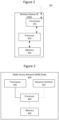
- FIG. 2 is a block diagram illustrating elements of a wireless device 300 (also referred to as a mobile terminal, a mobile communication terminal, a wireless communication device, a wireless terminal, mobile device, a wireless communication terminal, user equipment, LTE, a user equipment node/terminal/device, etc.) configured to provide wireless communication according to embodiments of inventive concepts.
- the LTE may include an antenna 307, and transceiver circuitry 301 (also referred to as a transceiver) including a transmitter and a receiver configured to provide uplink and downlink radio communications with a base station(s) (e.g., also referred to as a RAN node) of a radio access network.
- a base station(s) e.g., also referred to as a RAN node
- Wireless device UE may also include processing circuitry 303 (also referred to as a processor) coupled to the transceiver circuitry, and memory circuitry 305 (also referred to as memory) coupled to the processing circuitry.
- the memory circuitry 305 may include computer readable program code that when executed by the processing circuitry 303 causes the processing circuitry to perform operations according to embodiments disclosed herein. According to other embodiments, processing circuitry 303 may be defined to include memory so that separate memory circuitry is not required.
- Wireless device UE may also include an interface (such as a user interface) coupled with processing circuitry 303, and/or wireless device UE may be incorporated in a vehicle.
- operations of wireless device UE may be performed by processing circuitry 303 and/or transceiver circuitry 301.
- processing circuitry 303 may control transceiver circuitry 301 to transmit communications through transceiver circuitry 301 over a radio interface to a radio access network, RAN, node, (also referred to as a base station) and/or to receive communications through transceiver circuitry 301 from a RAN node over a radio interface.
- modules may be stored in memory circuitry 305, and these modules may provide instructions so that when instructions of a module are executed by processing circuitry 303, processing circuitry 303 performs respective operations (e.g., operations discussed below with respect to Example Embodiments relating to wireless devices).
- FIG. 3 is a block diagram illustrating elements of a RAN node 400 (also referred to as a network node, base station, eNodeB/eNB, gNodeB/gNB, etc.) of a RAN configured to provide cellular communication according to embodiments of inventive concepts.
- RAN node 400 may be provided, for example, as discussed below.
- the RAN node may include transceiver circuitry 401 (also referred to as a transceiver) including a transmitter and a receiver configured to provide uplink and downlink radio communications with mobile terminals.
- the RAN node may include network interface circuitry 407 (also referred to as a network interface 11) configured to provide communications with other nodes (e.g., with other base stations) of the RAN and/or core network, CN.
- the network node may also include processing circuitry 403 (also referred to as a processor) coupled to the transceiver circuitry, and memory circuitry 405 (also referred to as memory) coupled to the processing circuitry.
- the memory circuitry 405 may include computer readable program code that when executed by the processing circuitry 403 causes the processing circuitry to perform operations according to embodiments disclosed herein. According to other embodiments, processing circuitry 403 may be defined to include memory so that a separate memory circuitry is not required.
- operations of the RAN node may be performed by processing circuitry 403, network interface 407, and/or transceiver 401.
- processing circuitry 403 may control transceiver 401 to transmit downlink communications through transceiver 401 over a radio interface to one or more mobile terminals UEs and/or to receive uplink communications through transceiver 401 from one or more mobile terminals UEs over a radio interface.
- processing circuitry 403 may control network interface 407 to transmit communications through network interface 407 to one or more other network nodes and/or to receive communications through network interface from one or more other network nodes.
- modules may be stored in memory 405, and these modules may provide instructions so that when instructions of a module are executed by processing circuitry 403, processing circuitry 403 performs respective operations (e.g., operations discussed below with respect to Example Embodiments relating to RAN nodes).
- a network node may be implemented as a CN node without a transceiver.
- transmission to a wireless device UE may be initiated by the network node so that transmission to the wireless device is provided through a network node including a transceiver (e.g., through a base station or RAN node).
- initiating transmission may include transmitting through the transceiver.
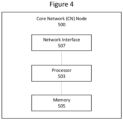
- FIG. 4 is a block diagram illustrating elements of a CN node (e.g., an SMF node, an AMF node, etc.) of a communication network configured to provide cellular communication according to embodiments of inventive concepts.
- the CN node may include network interface circuitry 507 (also referred to as a network interface) configured to provide communications with other nodes of the core network and/or the radio access network RAN.
- the CN node may also include a processing circuitry 503 (also referred to as a processor) coupled to the network interface circuitry, and memory circuitry 505 (also referred to as memory) coupled to the processing circuitry.
- the memory circuitry 505 may include computer readable program code that when executed by the processing circuitry 503 causes the processing circuitry to perform operations according to embodiments disclosed herein. According to other embodiments, processing circuitry 503 may be defined to include memory so that a separate memory circuitry is not required.
- operations of the CN node may be performed by processing circuitry 503 and/or network interface circuitry 507.
- processing circuitry 503 may control network interface circuitry 507 to transmit communications through network interface circuitry 507 to one or more other network nodes and/or to receive communications through network interface circuitry from one or more other network nodes.
- modules may be stored in memory 505, and these modules may provide instructions so that when instructions of a module are executed by processing circuitry 503, processing circuitry 503 performs respective operations (e.g., operations discussed below with respect to Example Embodiments relating to core network nodes).
- the maximum amount of TBs scheduled with a single DCI can be 8 TBs both in uplink and downlink for CE Mode A, and 4 TBs both in uplink and downlink for CE Mode B.
- Some embodiments may configure a HARQ RTT timer according to the maximum number of scheduled TBs. However, successive DCIs may schedule different amounts of TBs. For example, a first DCI may schedule 8 TBs and the following DCI may schedule 4 TBs. Thus, static value for HARQ RTT Timer may be limiting as it may either be too long for the 4 TBs if configured according to the maximum value (8). This may result in the UE wasting time and power while idle for the remaining duration of the timer. In some embodiments, the timer may need to be reconfigured for every DCI separately, which may waste UE power and resources as the UE may need to be reconfigured frequently. As used herein, the term downlink control indication, DCI, may also include, comprise and/or be used interchangeably with the term downlink control information, which is a term that is well known to those having skill in the relevant field.
- HARQ RTT timers may be extended dynamically by multiplying at least a portion of the timer value by the number of scheduled TBs by one DCI.
- the UE may dynamically adapt to the varying number of scheduled TBs by adjusting the HARQ RTT timer dynamically.
- a varying number of TBs may be scheduled with each DCI.
- the UE may apply a multiplier (e.g., denoted as 1) to at least a portion of the (UL) HARQ RTT timer.
- this multiplier may be equivalent to the number of TBs scheduled by the latest DCI.
- the information to UE MAC layer, where the timer is started and used may be defined in the lower layers according to the information conveyed in the DCI. In this manner, the UE may be able to dynamically adjust the HARQ RTT timer according to the number of TBs scheduled by each DCI.
- a different mechanism may be used depending on whether the LTE is full-duplex (FD) or half-duplex (HD) FDD LTE.
- FD full-duplex
- HD half-duplex
- FD it may be possible to start monitoring earlier and the legacy timer values may be sufficient.
- HD an extension of the monitoring according to the multiplier 1 may be specified.
- Some embodiments provide that whether UE should follow FD of HD behavior may be indicated in the DCI, and/or the eNB and UE may act according to the UE capability. For example, the approach may be determined based on whether the UE is FD or HD.
- HARQ RTT Timer may correspond to 7 + N where N is the used PUCCH repetition factor, where only valid (configured) UL subframes as configured by upper layers in fdd-UplinkSubframeBitmapBR are counted.
- HARQ RTT Timer may correspond to 3 + k + N, where k is the interval between the last repetition of downlink transmission and the first repetition of the transmission of associated HARQ feedback, and N is the used PUCCH repetition factor, where only valid UL subframes are counted.
- the UE may apply the multiplier 1 to the HARQ RTT Timer value.
- HARQ RTT Timer may be dynamically adjusted as a function of the number of TBs scheduled in a given DCI.
- the HARQ RTT Timer value may be determined as 7 + 1 ⁇ N where N is the PUCCH repetition factor, where only valid (configured) UL subframes as configured by upper layers in fdd-UplinkSubframeBitmapBR are counted, and where 1 is the number of TBs scheduled by the corresponding DCI.
- N TB is the number of scheduled TBs as indicated in PDCCH
- M is the Multi-TB HARQ-ACK bundling size indicated in the corresponding PDCCH.
- the scheduling delay (i.e. 7 above) may be adjusted according to the delay from UE and eNB processing times. For example, the scheduling delay may be increased if more processing time is needed or reduced if less time is sufficient. Some embodiments provide that a fixed value may be captured in specifications.
- additional delay s on top of 7 + 1 ⁇ N may be accounted for if needed for alignment with future MPDCCH opportunities.
- the total timer length may be 7 + 1 ⁇ N + s.
- modules may be stored in memory 305 of Figure 2 , and these modules may provide instructions so that when the instructions of a module are executed by respective wireless device processing circuitry 303, processing circuitry 303 performs respective operations of the flow chart.
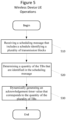
- Methods include receiving (510) a scheduling message that includes a schedule identifying multiple TBs.
- Operations include determining (520) a quantity of the TBs that are identified in the scheduling message and dynamically generating (530) an acknowledgement timer value that corresponds to the quantity of the plurality of TBs.
- dynamically generating the acknowledgement timer value includes generating an acknowledgment timer value that is a function of the quantity of the TBs.
- the scheduling message includes a downlink control indication, DCI.
- dynamically generating the acknowledgement timer value includes multiplying a portion of a timer value by the quantity of the TBs in the scheduling message.
- the acknowledgement timer value includes a Hybrid Automatic Repeat Request Round Trip Time, HARQ RTT, timer value that is generated as 7 + 1 ⁇ N in which N is a Physical Uplink Control Channel, PUCCH, repetition factor and 1 is the quantity of the TBs identified in the scheduling message.
- HARQ RTT Hybrid Automatic Repeat Request Round Trip Time
- the acknowledgement timer value includes a Hybrid Automatic Repeat Request Round Trip Time, HARQ RTT, timer value that is generated as 7 + 1 ⁇ N +s in which N is a Physical Uplink Control Channel, PUCCH, repetition factor, 1 is the quantity of the plurality of TBs identified in the scheduling message and s is a delay factor that provides timer alignment corresponding to machine type communication physical downlink control channel, MPDCCH, operations.
- HARQ RTT Hybrid Automatic Repeat Request Round Trip Time
- the scheduling message includes a first scheduling message
- the TBs comprises first TB's
- the quantity of the TB's is a first quantity of TBs
- the acknowledgement timer value is a first acknowledgement timer value. Since the acknowledgement timer value may be determined dynamically here, another scheduling message with a different number of TBs scheduled therein may cause a different acknowledgement timer value to be generated.
- the communication network includes a narrow band internet of things network, NBIoT.
- the communication network includes an enhanced Machine Type Communication, eMTC, network.
- eMTC Machine Type Communication
- modules may be stored in memory 405 of Figure 3 , and these modules may provide instructions so that when the instructions of a module are executed by respective RAN node processing circuitry 403, processing circuitry 403 performs respective operations of the flow chart.
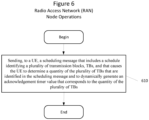
- operations may include sending 610, to a UE, a scheduling message that includes a schedule identifying multiple TBs and that causes the UE to determine a quantity of the TBs that are identified in the scheduling message and to dynamically generate an acknowledgement timer value that corresponds to the quantity of the TBs.
- Network CN node 500 (implemented using the structure of Figure 4 ) will now be discussed with reference to the flow chart of Figure 7 according to some embodiments of inventive concepts.
- modules may be stored in memory 505 of Figure 4 , and these modules may provide instructions so that when the instructions of a module are executed by respective CN node processing circuitry 503, processing circuitry 503 performs respective operations of the flow chart.
- operations may include sending 710, to a LTE, a scheduling message that includes a schedule identifying multiple TBs and that causes the UE to determine a quantity of the TBs that are identified in the scheduling message and to dynamically generate an acknowledgement timer value that corresponds to the quantity of the TBs.
- the LTE may dynamically adapt to a varying number of scheduled TBs by adjusting the HARQ RTT timer dynamically for the case in which the HARQ ACKs are bundled.
- the bundling of ACKs/NACKs implies that the outcome of the decoding of downlink transport blocks from multiple downlink subframes can be come into a single HARQ feedback transmitted in the uplink.
- bundled HARQ ACKs are supported by multiple TB scheduling.
- a multiplier may be included in as part of the HARQ RTT timer to account for the number of bundled HARQ ACKs sent.
- the HARQ RTT timer value may be determined as 7+ m*N in which the multiplier "m" equals the number of HARQ ACK bundles.
- the number of HARQ ACK bundles depends on the number of TBs scheduled and the configuration given in the DCI, which indicates how many ACKs are included in a single bundle.
- m ceil(1/i), where "1" equals the number of TBs scheduled and “i” equals the number of ACKs included in one bundle, as indicated by the DCI.
- i may be a value of 1, 2, 3, or 4, however such embodiments are non-limiting as “i” may be a different number.
- a technical solution provides a dynamically adaptive multiplier to adjust the HARQ RTT timer length according to the number of TBs scheduled by a single DCI and the number of HARQ ACKs to be sent.
- modules may be stored in memory 305 of Figure 2 , and these modules may provide instructions so that when the instructions of a module are executed by respective wireless device processing circuitry 303, processing circuitry 303 performs respective operations of the flow chart.
- Methods according to some embodiments include receiving (810) a scheduling message that includes a schedule identifying multiple TBs.
- Operations include determining (820) a quantity of the TBs that are identified in the scheduling message, determining (825) a quantity of HARQ ACK bundles that are identified in the scheduling message, and dynamically generating (830) an acknowledgement timer value that corresponds to the quantity of the plurality of TBs and the quantity of HARQ ACK bundles.
- dynamically generating the acknowledgement timer value includes generating an acknowledgment timer value that is a function of the quantity of the TBs and the quantity of HARQ ACK bundles.
- the scheduling message includes a downlink control indication, DCI.
- dynamically generating the acknowledgement timer value includes multiplying a portion of a timer value by the quantity of the TBs in the scheduling message and the quantity of HARQ ACK bundles in the scheduling message.
- the acknowledgement timer value includes a Hybrid Automatic Repeat Request Round Trip Time, HARQ RTT, timer value that is generated as 7 + N*m in which N is a Physical Uplink Control Channel, PUCCH, repetition factor, 1 is the quantity of the TBs identified in the scheduling message and m is the number of HARQ ACK bundles identified in the scheduling message.
- HARQ RTT Hybrid Automatic Repeat Request Round Trip Time
- the acknowledgement timer value includes a Hybrid Automatic Repeat Request Round Trip Time, HARQ RTT, timer value that is generated as 7 + N*m +s in which N is a Physical Uplink Control Channel, PUCCH, repetition factor, 1 is the quantity of the plurality of TBs identified in the scheduling message, m is the number of HARQ ACK bundles identified in the scheduling message and s is a delay factor that provides timer alignment corresponding to machine type communication physical downlink control channel, MPDCCH, operations.
- HARQ RTT Hybrid Automatic Repeat Request Round Trip Time
- the scheduling message includes a first scheduling message
- the TBs comprises first TB's
- the quantity of the TB's is a first quantity of TBs
- the quantity of HARQ ACK bundles is a first quantity of HARQ ACK bundles
- the acknowledgement timer value is a first acknowledgement timer value. Since the acknowledgement timer value may be determined dynamically here, another scheduling message with a different number of TBs scheduled and/or a different quantity of HARQ ACK bundles may cause a different acknowledgement timer value to be generated.
- the communication network includes a narrow band internet of things network, NBIoT.
- the communication network includes an enhanced Machine Type Communication, eMTC, network.
- eMTC Machine Type Communication
- modules may be stored in memory 405 of Figure 3 , and these modules may provide instructions so that when the instructions of a module are executed by respective RAN node processing circuitry 403, processing circuitry 403 performs respective operations of the flow chart.
- operations may include sending 910, to a LTE, sending, to a LTE, a scheduling message that includes a schedule identifying a plurality of transmission blocks, TBs, that causes the LTE to determine a quantity of the plurality of TBs that are identified in the scheduling message, and that causes the UE to determine the quantity of HARQ ACK bundles and to dynamically generate an acknowledgement timer value that corresponds to the quantity of the plurality of TBs and the quantity of HARQ ACK bundles.
- Network CN node 500 (implemented using the structure of Figure 4 ) will now be discussed with reference to the flow chart of Figure 10 according to some embodiments of inventive concepts.
- modules may be stored in memory 505 of Figure 4 , and these modules may provide instructions so that when the instructions of a module are executed by respective CN node processing circuitry 503, processing circuitry 503 performs respective operations of the flow chart.
- operations may include sending 1010, to a LTE, a scheduling message that includes a schedule identifying a plurality of transmission blocks, TBs, that causes the UE to determine a quantity of the plurality of TBs that are identified in the scheduling message, and that causes the LTE to determine the quantity of HARQ ACK bundles and to dynamically generate an acknowledgement timer value that corresponds to the quantity of the plurality of TBs and the quantity of HARQ ACK bundles.
- downlink control indication may also include, comprise and/or be used interchangeably with the term downlink control information, which is a term that is well known to those having skill in the relevant field.
- the terms “comprise”, “comprising”, “comprises”, “include”, “including”, “includes”, “have”, “has”, “having”, or variants thereof are open-ended, and include one or more stated features, integers, elements, steps, components or functions but does not preclude the presence or addition of one or more other features, integers, elements, steps, components, functions or groups thereof.
- the common abbreviation “e.g.”, which derives from the Latin phrase “exempli gratia” may be used to introduce or specify a general example or examples of a previously mentioned item, and is not intended to be limiting of such item.
- the common abbreviation “i.e.”, which derives from the Latin phrase “id est,” may be used to specify a particular item from a more general recitation.
- Example embodiments are described herein with reference to block diagrams and/or flowchart illustrations of computer-implemented methods, apparatus (systems and/or devices) and/or computer program products. It is understood that a block of the block diagrams and/or flowchart illustrations, and combinations of blocks in the block diagrams and/or flowchart illustrations, can be implemented by computer program instructions that are performed by one or more computer circuits.
- These computer program instructions may be provided to a processor circuit of a general purpose computer circuit, special purpose computer circuit, and/or other programmable data processing circuit to produce a machine, such that the instructions, which execute via the processor of the computer and/or other programmable data processing apparatus, transform and control transistors, values stored in memory locations, and other hardware components within such circuitry to implement the functions/acts specified in the block diagrams and/or flowchart block or blocks, and thereby create means (functionality) and/or structure for implementing the functions/acts specified in the block diagrams and/or flowchart block(s).
Landscapes
- Engineering & Computer Science (AREA)
- Computer Networks & Wireless Communication (AREA)
- Signal Processing (AREA)
- Mobile Radio Communication Systems (AREA)
Claims (8)
- Procédé de fonctionnement d'un dispositif sans fil (100, 300) dans un réseau de communication, le procédé comprenant :la réception (810) d'un message de planification incluant une indication de commande de liaison descendante, DCI, qui inclut un planning identifiant une pluralité de blocs de transmission, TB ;la détermination (820) d'une quantité de la pluralité de TB qui sont identifiés dans la DCI ;la détermination (825) d'une quantité d'accusés de réception de demande de répétition automatique hybride, ACK HARQ, dans un groupement d'ACK identifié dans la DCI ; etla génération dynamiquement (830) d'une valeur de temporisation d'accusé de réception qui correspond à la quantité de la pluralité de TB et à la quantité d'ACK HARQ dans le groupement d'ACK,caractérisé en ce que la valeur de temporisation d'accusé de réception comprend une valeur de temporisation de temps de trajet aller-retour de demande de répétition automatique hybride, RTT HARQ, qui est générée en tant que 7 + N*m, où N est un facteur de répétition de canal de commande de liaison montante physique, PUCCH, et m est le nombre de groupements d'ACK HARQ identifiés dans le message de planification.
- Procédé selon la revendication 1, dans lequel le réseau de communication comprend un réseau de l'Internet des objets de bande étroite, NBIoT.
- Procédé selon la revendication 1, dans lequel le réseau de communication comprend un réseau de communication de type machine améliorée, eMTC.
- Dispositif sans fil (100, 300) apte à réaliser les étapes suivantes :la réception (810) d'un message de planification incluant une indication de commande de liaison descendante, DCI, qui inclut un planning identifiant une pluralité de blocs de transmission, TB ;la détermination (820) d'une quantité de la pluralité de TB qui sont identifiés dans la DCI ;la détermination (825) d'une quantité d'accusés de réception de demande de répétition automatique hybride, ACK HARQ, dans un groupement d'ACK identifié dans la DCI ; etla génération dynamiquement (830) d'une valeur de temporisation d'accusé de réception qui correspond à la quantité de la pluralité de TB et à la quantité d'ACK HARQ dans le groupement d'ACK,caractérisé en ce que la valeur de temporisation d'accusé de réception comprend une valeur de temporisation de temps de trajet aller-retour de demande de répétition automatique hybride, RTT HARQ, qui est générée en tant que 7 + N*m, où N est un facteur de répétition de canal de commande de liaison montante physique, PUCCH, et m est le nombre de groupements d'ACK HARQ identifiés dans le message de planification.
- Programme informatique comprenant un code de programme à exécuter par une circuiterie de traitement (303) d'un dispositif sans fil (100, 300), de telle manière qu'une exécution du code de programme amène le dispositif sans fil à réaliser des opérations selon l'une quelconque des revendications 1 à 3.
- Produit programme informatique comprenant un support de stockage non transitoire incluant un code de programme à exécuter par une circuiterie de traitement (303) d'un dispositif sans fil (300), de telle manière qu'une exécution du code de programme amène le dispositif sans fil à réaliser des opérations selon l'une quelconque des revendications 1 à 3.
- Procédé dans un système de réseau de communication, comprenant un noeud de réseau d'accès radio, RAN, (400) et un dispositif sans fil (100, 300), le procédé comprenant :l'envoi, par le noeud RAN (400) au dispositif sans fil (100, 300), d'un message de planification incluant une indication de commande de liaison descendante, DCI, qui inclut un planning identifiant une pluralité de blocs de transmission, TB ;la réception (810), par le dispositif sans fil (100, 300) depuis le noeud RAN (400), du message de planification incluant la DCI ;la détermination (820), par le dispositif sans fil (100, 300), d'une quantité de la pluralité de TB qui sont identifiés dans la DCI ;la détermination (825), par le dispositif sans fil (100, 300), d'une quantité d'accusés de réception de demande de répétition automatique hybride, ACK HARQ, dans un groupement d'ACK identifié dans la DCI ; etla génération dynamiquement (830), par le dispositif sans fil (100, 300), d'une valeur de temporisation d'accusé de réception qui correspond à la quantité de la pluralité de TB et à la quantité d'ACK HARQ dans le groupement d'ACK,caractérisé en ce que la valeur de temporisation d'accusé de réception comprend une valeur de temporisation de temps de trajet aller-retour de demande de répétition automatique hybride, RTT HARQ, qui est générée en tant que 7 + N*m, où N est un facteur de répétition de canal de commande de liaison montante physique, PUCCH, et m est le nombre de groupements d'ACK HARQ identifiés dans la DCI.
- Système de réseau de communication, comprenant un noeud de réseau d'accès radio, RAN, (400) et un dispositif sans fil (100, 300),le noeud RAN (400) envoie, au dispositif sans fil (100, 300), un message de planification incluant une indication de commande de liaison descendante, DCI, qui inclut un planning identifiant une pluralité de blocs de transmission, TB ;le dispositif sans fil (100, 300) reçoit (810), depuis le noeud RAN (400), le message de planification incluant la DCI ;le dispositif sans fil (100, 300) détermine une quantité de la pluralité de TB qui sont identifiés dans la DCI et une quantité d'accusés de réception de demande de répétition automatique hybride, ACK HARQ, dans un groupement d'ACK identifié dans la DCI, et génère dynamiquement (830) une valeur de temporisation d'accusé de réception qui correspond à la quantité de la pluralité de TB et à la quantité d'ACK HARQ dans le groupement d'ACK,caractérisé en ce que la valeur de temporisation d'accusé de réception comprend une valeur de temporisation de temps de trajet aller-retour de demande de répétition automatique hybride, RTT HARQ, qui est générée en tant que 7 + N*m, où N est un facteur de répétition de canal de commande de liaison montante physique, PUCCH, et m est le nombre de groupements d'ACK HARQ identifiés dans la DCI.
Applications Claiming Priority (3)
| Application Number | Priority Date | Filing Date | Title |
|---|---|---|---|
| US202062962372P | 2020-01-17 | 2020-01-17 | |
| EP21700161.9A EP3900243B1 (fr) | 2020-01-17 | 2021-01-05 | Réglage de temporisateur rtt harq pour une planification multi-tb |
| PCT/EP2021/050040 WO2021144163A1 (fr) | 2020-01-17 | 2021-01-05 | Réglage de temporisateur rtt harq pour une planification multi-tb |
Related Parent Applications (2)
| Application Number | Title | Priority Date | Filing Date |
|---|---|---|---|
| EP21700161.9A Division EP3900243B1 (fr) | 2020-01-17 | 2021-01-05 | Réglage de temporisateur rtt harq pour une planification multi-tb |
| EP21700161.9A Division-Into EP3900243B1 (fr) | 2020-01-17 | 2021-01-05 | Réglage de temporisateur rtt harq pour une planification multi-tb |
Publications (2)
| Publication Number | Publication Date |
|---|---|
| EP4057546A1 EP4057546A1 (fr) | 2022-09-14 |
| EP4057546B1 true EP4057546B1 (fr) | 2023-08-23 |
Family
ID=74181183
Family Applications (2)
| Application Number | Title | Priority Date | Filing Date |
|---|---|---|---|
| EP21700161.9A Active EP3900243B1 (fr) | 2020-01-17 | 2021-01-05 | Réglage de temporisateur rtt harq pour une planification multi-tb |
| EP22168404.6A Active EP4057546B1 (fr) | 2020-01-17 | 2021-01-05 | Réglage de temporisateur rtt harq pour une planification multi-tb |
Family Applications Before (1)
| Application Number | Title | Priority Date | Filing Date |
|---|---|---|---|
| EP21700161.9A Active EP3900243B1 (fr) | 2020-01-17 | 2021-01-05 | Réglage de temporisateur rtt harq pour une planification multi-tb |
Country Status (4)
| Country | Link |
|---|---|
| US (1) | US12302345B2 (fr) |
| EP (2) | EP3900243B1 (fr) |
| CN (1) | CN114982170B (fr) |
| WO (1) | WO2021144163A1 (fr) |
Families Citing this family (2)
| Publication number | Priority date | Publication date | Assignee | Title |
|---|---|---|---|---|
| US11888622B2 (en) * | 2019-11-07 | 2024-01-30 | Telefonaktiebolaget Lm Ericsson (Publ) | HARQ RTT timer adjustment for multi-TB scheduling |
| WO2022067549A1 (fr) * | 2020-09-29 | 2022-04-07 | Oppo广东移动通信有限公司 | Procédé et dispositif de communication sans fil |
Citations (1)
| Publication number | Priority date | Publication date | Assignee | Title |
|---|---|---|---|---|
| US10320531B2 (en) * | 2016-08-05 | 2019-06-11 | Htc Corporation | Device and method of handling a hybrid automatic repeat request round-trip time timer in a discontinuous reception |
Family Cites Families (13)
| Publication number | Priority date | Publication date | Assignee | Title |
|---|---|---|---|---|
| KR101035677B1 (ko) * | 2008-04-15 | 2011-05-19 | 이노베이티브 소닉 리미티드 | 전송 시간 간격 번들링을 개선하는 방법 및 장치 |
| WO2013125842A1 (fr) * | 2012-02-21 | 2013-08-29 | 엘지전자 주식회사 | Procédé et dispositif de transmission de réponse d'accusé de réception dans un système de communication sans fil |
| US20150085796A1 (en) * | 2013-09-20 | 2015-03-26 | Qualcomm Incorporated | Flexible operation of enhanced tti-bundling modes in lte |
| KR101791644B1 (ko) * | 2013-09-30 | 2017-10-30 | 애플 인크. | 저대역폭 애플리케이션들을 위한 지연 및 번들링된 재송신 |
| US9532388B2 (en) * | 2014-06-24 | 2016-12-27 | Verizon Patent And Licensing Inc. | Activating and deactivating transmission time interval bundling |
| US11057921B2 (en) * | 2014-10-01 | 2021-07-06 | Samsung Electronics Co., Ltd. | System and method for improving spectral efficiency and coverage for user equipments |
| US10440706B2 (en) * | 2016-08-08 | 2019-10-08 | Sharp Kabushiki Kaisha | Systems and methods for PUCCH resource allocation and HARQ-ACK reporting with processing time reduction |
| GB2554649A (en) | 2016-09-30 | 2018-04-11 | Tcl Communication Ltd | Systems and methods for frequency division duplex communication |
| CN108377177B (zh) * | 2016-10-17 | 2021-03-02 | 华硕电脑股份有限公司 | 无线通信系统中处置不连续接收操作的方法和设备 |
| US10673573B2 (en) * | 2017-09-29 | 2020-06-02 | Samsung Electronics Co., Ltd. | Uplink transmission method and corresponding equipment |
| CN114342295B (zh) * | 2019-09-12 | 2024-06-07 | 联想(北京)有限公司 | 用于emtc的调度增强 |
| US11888622B2 (en) * | 2019-11-07 | 2024-01-30 | Telefonaktiebolaget Lm Ericsson (Publ) | HARQ RTT timer adjustment for multi-TB scheduling |
| US11723017B2 (en) * | 2021-08-03 | 2023-08-08 | Qualcomm Incorporated | Uplink (UL) resource allocation for a medium access control (MAC) control element (CE) |
-
2021
- 2021-01-05 US US17/792,752 patent/US12302345B2/en active Active
- 2021-01-05 WO PCT/EP2021/050040 patent/WO2021144163A1/fr not_active Ceased
- 2021-01-05 EP EP21700161.9A patent/EP3900243B1/fr active Active
- 2021-01-05 EP EP22168404.6A patent/EP4057546B1/fr active Active
- 2021-01-05 CN CN202180008823.7A patent/CN114982170B/zh active Active
Patent Citations (1)
| Publication number | Priority date | Publication date | Assignee | Title |
|---|---|---|---|---|
| US10320531B2 (en) * | 2016-08-05 | 2019-06-11 | Htc Corporation | Device and method of handling a hybrid automatic repeat request round-trip time timer in a discontinuous reception |
Also Published As
| Publication number | Publication date |
|---|---|
| EP3900243A1 (fr) | 2021-10-27 |
| CN114982170A (zh) | 2022-08-30 |
| CN114982170B (zh) | 2024-06-04 |
| US20230054066A1 (en) | 2023-02-23 |
| US12302345B2 (en) | 2025-05-13 |
| EP4057546A1 (fr) | 2022-09-14 |
| EP3900243B1 (fr) | 2022-06-22 |
| WO2021144163A1 (fr) | 2021-07-22 |
Similar Documents
| Publication | Publication Date | Title |
|---|---|---|
| US20250317936A1 (en) | Method and apparatus for transmitting information on an uplink channel | |
| EP3949189B1 (fr) | Procédé et appareil d'annulation de transmissions sur la base d'occasions de transmissions se chevauchant | |
| US11451345B2 (en) | Data transmission method, terminal, and RAN device | |
| US10574421B2 (en) | Method and apparatus for scheduling uplink transmissions with reduced latency | |
| US8392784B2 (en) | Method and apparatus of handling TTI bundling retransmission | |
| US10542503B2 (en) | Method and apparatus for scheduling uplink transmissions with reduced latency | |
| US10172156B2 (en) | Method and apparatus for scheduling uplink transmissions with reduced latency | |
| EP1997259B1 (fr) | Approche hybride pour la transmission de données au moyen d'une combinaison de paquets mono-utilisateurs et multi-utilisateurs | |
| EP3304786B1 (fr) | Appareil et procédé permettant de gérer la configuration de tailles de faisceau | |
| CN109600850B (zh) | 用于增强覆盖范围的方法和装置 | |
| KR20170022826A (ko) | 무선 통신 시스템에서 복합 재전송을 수행하는 방법 및 장치 | |
| CN113273290B (zh) | 利用预配置上行链路资源的通信 | |
| CN111431681A (zh) | 传输harq-ack信息的方法、装置、电子设备及存储介质 | |
| WO2017075857A1 (fr) | Procédé de transmission d'informations, terminal et station de base | |
| US20200014496A1 (en) | Method, device and system for data transmission | |
| CN101309522B (zh) | 上行应答消息反馈方法以及移动终端 | |
| EP3900243B1 (fr) | Réglage de temporisateur rtt harq pour une planification multi-tb | |
| JP2023515755A (ja) | 情報フィードバック方法及び関連デバイス | |
| CN108028729A (zh) | 用于控制反馈传输的定时的方法和装置 | |
| EP4233229B1 (fr) | Commande de gigue avec processus de demande de répétition automatique hybride | |
| WO2022150976A1 (fr) | Procédé et appareil de renvoi de programmation semi-persistante, dispositif et support de stockage | |
| CN110944396A (zh) | 竞争窗口大小调节方法和网络设备 |
Legal Events
| Date | Code | Title | Description |
|---|---|---|---|
| PUAI | Public reference made under article 153(3) epc to a published international application that has entered the european phase |
Free format text: ORIGINAL CODE: 0009012 |
|
| STAA | Information on the status of an ep patent application or granted ep patent |
Free format text: STATUS: THE APPLICATION HAS BEEN PUBLISHED |
|
| AC | Divisional application: reference to earlier application |
Ref document number: 3900243 Country of ref document: EP Kind code of ref document: P |
|
| AK | Designated contracting states |
Kind code of ref document: A1 Designated state(s): AL AT BE BG CH CY CZ DE DK EE ES FI FR GB GR HR HU IE IS IT LI LT LU LV MC MK MT NL NO PL PT RO RS SE SI SK SM TR |
|
| STAA | Information on the status of an ep patent application or granted ep patent |
Free format text: STATUS: REQUEST FOR EXAMINATION WAS MADE |
|
| REG | Reference to a national code |
Ref country code: DE Ref legal event code: R079 Free format text: PREVIOUS MAIN CLASS: H04L0001180000 Ipc: H04L0001080000 Ref document number: 602021004558 Country of ref document: DE |
|
| 17P | Request for examination filed |
Effective date: 20230303 |
|
| RBV | Designated contracting states (corrected) |
Designated state(s): AL AT BE BG CH CY CZ DE DK EE ES FI FR GB GR HR HU IE IS IT LI LT LU LV MC MK MT NL NO PL PT RO RS SE SI SK SM TR |
|
| RIC1 | Information provided on ipc code assigned before grant |
Ipc: H04L 1/1867 20230101ALI20230322BHEP Ipc: H04L 1/1829 20230101ALI20230322BHEP Ipc: H04L 1/08 20060101AFI20230322BHEP |
|
| GRAP | Despatch of communication of intention to grant a patent |
Free format text: ORIGINAL CODE: EPIDOSNIGR1 |
|
| STAA | Information on the status of an ep patent application or granted ep patent |
Free format text: STATUS: GRANT OF PATENT IS INTENDED |
|
| INTG | Intention to grant announced |
Effective date: 20230510 |
|
| GRAS | Grant fee paid |
Free format text: ORIGINAL CODE: EPIDOSNIGR3 |
|
| GRAA | (expected) grant |
Free format text: ORIGINAL CODE: 0009210 |
|
| STAA | Information on the status of an ep patent application or granted ep patent |
Free format text: STATUS: THE PATENT HAS BEEN GRANTED |
|
| AC | Divisional application: reference to earlier application |
Ref document number: 3900243 Country of ref document: EP Kind code of ref document: P |
|
| AK | Designated contracting states |
Kind code of ref document: B1 Designated state(s): AL AT BE BG CH CY CZ DE DK EE ES FI FR GB GR HR HU IE IS IT LI LT LU LV MC MK MT NL NO PL PT RO RS SE SI SK SM TR |
|
| REG | Reference to a national code |
Ref country code: GB Ref legal event code: FG4D |
|
| REG | Reference to a national code |
Ref country code: CH Ref legal event code: EP |
|
| REG | Reference to a national code |
Ref country code: IE Ref legal event code: FG4D |
|
| REG | Reference to a national code |
Ref country code: DE Ref legal event code: R096 Ref document number: 602021004558 Country of ref document: DE |
|
| REG | Reference to a national code |
Ref country code: NL Ref legal event code: FP |
|
| REG | Reference to a national code |
Ref country code: LT Ref legal event code: MG9D |
|
| REG | Reference to a national code |
Ref country code: AT Ref legal event code: MK05 Ref document number: 1603806 Country of ref document: AT Kind code of ref document: T Effective date: 20230823 |
|
| PG25 | Lapsed in a contracting state [announced via postgrant information from national office to epo] |
Ref country code: GR Free format text: LAPSE BECAUSE OF FAILURE TO SUBMIT A TRANSLATION OF THE DESCRIPTION OR TO PAY THE FEE WITHIN THE PRESCRIBED TIME-LIMIT Effective date: 20231124 |
|
| PG25 | Lapsed in a contracting state [announced via postgrant information from national office to epo] |
Ref country code: IS Free format text: LAPSE BECAUSE OF FAILURE TO SUBMIT A TRANSLATION OF THE DESCRIPTION OR TO PAY THE FEE WITHIN THE PRESCRIBED TIME-LIMIT Effective date: 20231223 |
|
| PG25 | Lapsed in a contracting state [announced via postgrant information from national office to epo] |
Ref country code: SE Free format text: LAPSE BECAUSE OF FAILURE TO SUBMIT A TRANSLATION OF THE DESCRIPTION OR TO PAY THE FEE WITHIN THE PRESCRIBED TIME-LIMIT Effective date: 20230823 Ref country code: RS Free format text: LAPSE BECAUSE OF FAILURE TO SUBMIT A TRANSLATION OF THE DESCRIPTION OR TO PAY THE FEE WITHIN THE PRESCRIBED TIME-LIMIT Effective date: 20230823 Ref country code: PT Free format text: LAPSE BECAUSE OF FAILURE TO SUBMIT A TRANSLATION OF THE DESCRIPTION OR TO PAY THE FEE WITHIN THE PRESCRIBED TIME-LIMIT Effective date: 20231226 Ref country code: NO Free format text: LAPSE BECAUSE OF FAILURE TO SUBMIT A TRANSLATION OF THE DESCRIPTION OR TO PAY THE FEE WITHIN THE PRESCRIBED TIME-LIMIT Effective date: 20231123 Ref country code: LV Free format text: LAPSE BECAUSE OF FAILURE TO SUBMIT A TRANSLATION OF THE DESCRIPTION OR TO PAY THE FEE WITHIN THE PRESCRIBED TIME-LIMIT Effective date: 20230823 Ref country code: LT Free format text: LAPSE BECAUSE OF FAILURE TO SUBMIT A TRANSLATION OF THE DESCRIPTION OR TO PAY THE FEE WITHIN THE PRESCRIBED TIME-LIMIT Effective date: 20230823 Ref country code: IS Free format text: LAPSE BECAUSE OF FAILURE TO SUBMIT A TRANSLATION OF THE DESCRIPTION OR TO PAY THE FEE WITHIN THE PRESCRIBED TIME-LIMIT Effective date: 20231223 Ref country code: HR Free format text: LAPSE BECAUSE OF FAILURE TO SUBMIT A TRANSLATION OF THE DESCRIPTION OR TO PAY THE FEE WITHIN THE PRESCRIBED TIME-LIMIT Effective date: 20230823 Ref country code: GR Free format text: LAPSE BECAUSE OF FAILURE TO SUBMIT A TRANSLATION OF THE DESCRIPTION OR TO PAY THE FEE WITHIN THE PRESCRIBED TIME-LIMIT Effective date: 20231124 Ref country code: FI Free format text: LAPSE BECAUSE OF FAILURE TO SUBMIT A TRANSLATION OF THE DESCRIPTION OR TO PAY THE FEE WITHIN THE PRESCRIBED TIME-LIMIT Effective date: 20230823 Ref country code: AT Free format text: LAPSE BECAUSE OF FAILURE TO SUBMIT A TRANSLATION OF THE DESCRIPTION OR TO PAY THE FEE WITHIN THE PRESCRIBED TIME-LIMIT Effective date: 20230823 |
|
| PG25 | Lapsed in a contracting state [announced via postgrant information from national office to epo] |
Ref country code: PL Free format text: LAPSE BECAUSE OF FAILURE TO SUBMIT A TRANSLATION OF THE DESCRIPTION OR TO PAY THE FEE WITHIN THE PRESCRIBED TIME-LIMIT Effective date: 20230823 |
|
| PG25 | Lapsed in a contracting state [announced via postgrant information from national office to epo] |
Ref country code: ES Free format text: LAPSE BECAUSE OF FAILURE TO SUBMIT A TRANSLATION OF THE DESCRIPTION OR TO PAY THE FEE WITHIN THE PRESCRIBED TIME-LIMIT Effective date: 20230823 |
|
| PG25 | Lapsed in a contracting state [announced via postgrant information from national office to epo] |
Ref country code: SM Free format text: LAPSE BECAUSE OF FAILURE TO SUBMIT A TRANSLATION OF THE DESCRIPTION OR TO PAY THE FEE WITHIN THE PRESCRIBED TIME-LIMIT Effective date: 20230823 Ref country code: RO Free format text: LAPSE BECAUSE OF FAILURE TO SUBMIT A TRANSLATION OF THE DESCRIPTION OR TO PAY THE FEE WITHIN THE PRESCRIBED TIME-LIMIT Effective date: 20230823 Ref country code: ES Free format text: LAPSE BECAUSE OF FAILURE TO SUBMIT A TRANSLATION OF THE DESCRIPTION OR TO PAY THE FEE WITHIN THE PRESCRIBED TIME-LIMIT Effective date: 20230823 Ref country code: EE Free format text: LAPSE BECAUSE OF FAILURE TO SUBMIT A TRANSLATION OF THE DESCRIPTION OR TO PAY THE FEE WITHIN THE PRESCRIBED TIME-LIMIT Effective date: 20230823 Ref country code: DK Free format text: LAPSE BECAUSE OF FAILURE TO SUBMIT A TRANSLATION OF THE DESCRIPTION OR TO PAY THE FEE WITHIN THE PRESCRIBED TIME-LIMIT Effective date: 20230823 Ref country code: CZ Free format text: LAPSE BECAUSE OF FAILURE TO SUBMIT A TRANSLATION OF THE DESCRIPTION OR TO PAY THE FEE WITHIN THE PRESCRIBED TIME-LIMIT Effective date: 20230823 Ref country code: SK Free format text: LAPSE BECAUSE OF FAILURE TO SUBMIT A TRANSLATION OF THE DESCRIPTION OR TO PAY THE FEE WITHIN THE PRESCRIBED TIME-LIMIT Effective date: 20230823 |
|
| REG | Reference to a national code |
Ref country code: DE Ref legal event code: R097 Ref document number: 602021004558 Country of ref document: DE |
|
| PG25 | Lapsed in a contracting state [announced via postgrant information from national office to epo] |
Ref country code: IT Free format text: LAPSE BECAUSE OF FAILURE TO SUBMIT A TRANSLATION OF THE DESCRIPTION OR TO PAY THE FEE WITHIN THE PRESCRIBED TIME-LIMIT Effective date: 20230823 |
|
| PLBE | No opposition filed within time limit |
Free format text: ORIGINAL CODE: 0009261 |
|
| STAA | Information on the status of an ep patent application or granted ep patent |
Free format text: STATUS: NO OPPOSITION FILED WITHIN TIME LIMIT |
|
| 26N | No opposition filed |
Effective date: 20240524 |
|
| PG25 | Lapsed in a contracting state [announced via postgrant information from national office to epo] |
Ref country code: SI Free format text: LAPSE BECAUSE OF FAILURE TO SUBMIT A TRANSLATION OF THE DESCRIPTION OR TO PAY THE FEE WITHIN THE PRESCRIBED TIME-LIMIT Effective date: 20230823 |
|
| PG25 | Lapsed in a contracting state [announced via postgrant information from national office to epo] |
Ref country code: MC Free format text: LAPSE BECAUSE OF FAILURE TO SUBMIT A TRANSLATION OF THE DESCRIPTION OR TO PAY THE FEE WITHIN THE PRESCRIBED TIME-LIMIT Effective date: 20230823 |
|
| PG25 | Lapsed in a contracting state [announced via postgrant information from national office to epo] |
Ref country code: MC Free format text: LAPSE BECAUSE OF FAILURE TO SUBMIT A TRANSLATION OF THE DESCRIPTION OR TO PAY THE FEE WITHIN THE PRESCRIBED TIME-LIMIT Effective date: 20230823 |
|
| REG | Reference to a national code |
Ref country code: CH Ref legal event code: PL |
|
| PG25 | Lapsed in a contracting state [announced via postgrant information from national office to epo] |
Ref country code: LU Free format text: LAPSE BECAUSE OF NON-PAYMENT OF DUE FEES Effective date: 20240105 |
|
| PG25 | Lapsed in a contracting state [announced via postgrant information from national office to epo] |
Ref country code: LU Free format text: LAPSE BECAUSE OF NON-PAYMENT OF DUE FEES Effective date: 20240105 |
|
| PG25 | Lapsed in a contracting state [announced via postgrant information from national office to epo] |
Ref country code: BE Free format text: LAPSE BECAUSE OF NON-PAYMENT OF DUE FEES Effective date: 20240131 |
|
| PG25 | Lapsed in a contracting state [announced via postgrant information from national office to epo] |
Ref country code: FR Free format text: LAPSE BECAUSE OF NON-PAYMENT OF DUE FEES Effective date: 20240131 |
|
| PG25 | Lapsed in a contracting state [announced via postgrant information from national office to epo] |
Ref country code: CH Free format text: LAPSE BECAUSE OF NON-PAYMENT OF DUE FEES Effective date: 20240131 |
|
| PG25 | Lapsed in a contracting state [announced via postgrant information from national office to epo] |
Ref country code: FR Free format text: LAPSE BECAUSE OF NON-PAYMENT OF DUE FEES Effective date: 20240131 Ref country code: CH Free format text: LAPSE BECAUSE OF NON-PAYMENT OF DUE FEES Effective date: 20240131 Ref country code: BE Free format text: LAPSE BECAUSE OF NON-PAYMENT OF DUE FEES Effective date: 20240131 |
|
| REG | Reference to a national code |
Ref country code: BE Ref legal event code: MM Effective date: 20240131 |
|
| PG25 | Lapsed in a contracting state [announced via postgrant information from national office to epo] |
Ref country code: BG Free format text: LAPSE BECAUSE OF FAILURE TO SUBMIT A TRANSLATION OF THE DESCRIPTION OR TO PAY THE FEE WITHIN THE PRESCRIBED TIME-LIMIT Effective date: 20230823 |
|
| PG25 | Lapsed in a contracting state [announced via postgrant information from national office to epo] |
Ref country code: BG Free format text: LAPSE BECAUSE OF FAILURE TO SUBMIT A TRANSLATION OF THE DESCRIPTION OR TO PAY THE FEE WITHIN THE PRESCRIBED TIME-LIMIT Effective date: 20230823 |
|
| PG25 | Lapsed in a contracting state [announced via postgrant information from national office to epo] |
Ref country code: IE Free format text: LAPSE BECAUSE OF NON-PAYMENT OF DUE FEES Effective date: 20240105 |
|
| PG25 | Lapsed in a contracting state [announced via postgrant information from national office to epo] |
Ref country code: IE Free format text: LAPSE BECAUSE OF NON-PAYMENT OF DUE FEES Effective date: 20240105 |
|
| PG25 | Lapsed in a contracting state [announced via postgrant information from national office to epo] |
Ref country code: CY Free format text: LAPSE BECAUSE OF FAILURE TO SUBMIT A TRANSLATION OF THE DESCRIPTION OR TO PAY THE FEE WITHIN THE PRESCRIBED TIME-LIMIT; INVALID AB INITIO Effective date: 20210105 |
|
| PG25 | Lapsed in a contracting state [announced via postgrant information from national office to epo] |
Ref country code: HU Free format text: LAPSE BECAUSE OF FAILURE TO SUBMIT A TRANSLATION OF THE DESCRIPTION OR TO PAY THE FEE WITHIN THE PRESCRIBED TIME-LIMIT; INVALID AB INITIO Effective date: 20210105 |
|
| PG25 | Lapsed in a contracting state [announced via postgrant information from national office to epo] |
Ref country code: TR Free format text: LAPSE BECAUSE OF FAILURE TO SUBMIT A TRANSLATION OF THE DESCRIPTION OR TO PAY THE FEE WITHIN THE PRESCRIBED TIME-LIMIT Effective date: 20230823 |
|
| PGFP | Annual fee paid to national office [announced via postgrant information from national office to epo] |
Ref country code: NL Payment date: 20260126 Year of fee payment: 6 |
|
| PGFP | Annual fee paid to national office [announced via postgrant information from national office to epo] |
Ref country code: GB Payment date: 20260127 Year of fee payment: 6 |
|
| PGFP | Annual fee paid to national office [announced via postgrant information from national office to epo] |
Ref country code: DE Payment date: 20260128 Year of fee payment: 6 |