EP4057576A1 - Paketverkapselungsverfahren und -vorrichtung, und paketentkapselungsverfahren und -vorrichtung - Google Patents
Paketverkapselungsverfahren und -vorrichtung, und paketentkapselungsverfahren und -vorrichtung Download PDFInfo
- Publication number
- EP4057576A1 EP4057576A1 EP20884959.6A EP20884959A EP4057576A1 EP 4057576 A1 EP4057576 A1 EP 4057576A1 EP 20884959 A EP20884959 A EP 20884959A EP 4057576 A1 EP4057576 A1 EP 4057576A1
- Authority
- EP
- European Patent Office
- Prior art keywords
- message
- field
- header field
- original
- encapsulation format
- Prior art date
- Legal status (The legal status is an assumption and is not a legal conclusion. Google has not performed a legal analysis and makes no representation as to the accuracy of the status listed.)
- Pending
Links
- 238000000034 method Methods 0.000 title claims abstract description 113
- 238000005538 encapsulation Methods 0.000 claims abstract description 320
- 238000012545 processing Methods 0.000 claims description 33
- 238000004590 computer program Methods 0.000 claims description 15
- 230000006870 function Effects 0.000 claims description 15
- 230000008569 process Effects 0.000 claims description 9
- 238000003672 processing method Methods 0.000 claims description 8
- 238000013519 translation Methods 0.000 claims description 2
- 238000010586 diagram Methods 0.000 description 24
- 230000005540 biological transmission Effects 0.000 description 16
- 238000013507 mapping Methods 0.000 description 11
- 230000000694 effects Effects 0.000 description 6
- 230000003287 optical effect Effects 0.000 description 6
- 230000008859 change Effects 0.000 description 3
- 238000003780 insertion Methods 0.000 description 3
- 230000037431 insertion Effects 0.000 description 3
- 238000012986 modification Methods 0.000 description 2
- 230000004048 modification Effects 0.000 description 2
- 238000004891 communication Methods 0.000 description 1
- 238000010276 construction Methods 0.000 description 1
- 125000004122 cyclic group Chemical group 0.000 description 1
- 230000004927 fusion Effects 0.000 description 1
- 238000006467 substitution reaction Methods 0.000 description 1
Images

Classifications
-
- H—ELECTRICITY
- H04—ELECTRIC COMMUNICATION TECHNIQUE
- H04L—TRANSMISSION OF DIGITAL INFORMATION, e.g. TELEGRAPHIC COMMUNICATION
- H04L12/00—Data switching networks
- H04L12/28—Data switching networks characterised by path configuration, e.g. LAN [Local Area Networks] or WAN [Wide Area Networks]
- H04L12/46—Interconnection of networks
- H04L12/4633—Interconnection of networks using encapsulation techniques, e.g. tunneling
-
- H—ELECTRICITY
- H04—ELECTRIC COMMUNICATION TECHNIQUE
- H04L—TRANSMISSION OF DIGITAL INFORMATION, e.g. TELEGRAPHIC COMMUNICATION
- H04L61/00—Network arrangements, protocols or services for addressing or naming
- H04L61/09—Mapping addresses
- H04L61/25—Mapping addresses of the same type
- H04L61/2503—Translation of Internet protocol [IP] addresses
- H04L61/256—NAT traversal
-
- H—ELECTRICITY
- H04—ELECTRIC COMMUNICATION TECHNIQUE
- H04L—TRANSMISSION OF DIGITAL INFORMATION, e.g. TELEGRAPHIC COMMUNICATION
- H04L61/00—Network arrangements, protocols or services for addressing or naming
- H04L61/09—Mapping addresses
- H04L61/25—Mapping addresses of the same type
- H04L61/2503—Translation of Internet protocol [IP] addresses
- H04L61/2592—Translation of Internet protocol [IP] addresses using tunnelling or encapsulation
-
- H—ELECTRICITY
- H04—ELECTRIC COMMUNICATION TECHNIQUE
- H04L—TRANSMISSION OF DIGITAL INFORMATION, e.g. TELEGRAPHIC COMMUNICATION
- H04L69/00—Network arrangements, protocols or services independent of the application payload and not provided for in the other groups of this subclass
- H04L69/22—Parsing or analysis of headers
-
- H—ELECTRICITY
- H04—ELECTRIC COMMUNICATION TECHNIQUE
- H04L—TRANSMISSION OF DIGITAL INFORMATION, e.g. TELEGRAPHIC COMMUNICATION
- H04L2212/00—Encapsulation of packets
-
- H—ELECTRICITY
- H04—ELECTRIC COMMUNICATION TECHNIQUE
- H04L—TRANSMISSION OF DIGITAL INFORMATION, e.g. TELEGRAPHIC COMMUNICATION
- H04L61/00—Network arrangements, protocols or services for addressing or naming
- H04L61/09—Mapping addresses
- H04L61/25—Mapping addresses of the same type
- H04L61/2503—Translation of Internet protocol [IP] addresses
- H04L61/2514—Translation of Internet protocol [IP] addresses between local and global IP addresses
-
- H—ELECTRICITY
- H04—ELECTRIC COMMUNICATION TECHNIQUE
- H04L—TRANSMISSION OF DIGITAL INFORMATION, e.g. TELEGRAPHIC COMMUNICATION
- H04L61/00—Network arrangements, protocols or services for addressing or naming
- H04L61/09—Mapping addresses
- H04L61/25—Mapping addresses of the same type
- H04L61/2503—Translation of Internet protocol [IP] addresses
- H04L61/2517—Translation of Internet protocol [IP] addresses using port numbers
Definitions
- the present disclosure relates to the field of communication, in particular to a message encapsulation method and apparatus, and a message decapsulation method and apparatus.
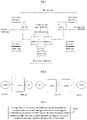
- Fig. 1 is a schematic diagram of stream identity mapping in the related art. As shown in Fig. 1 , the mapping relation in the related art is generally fixed, in other words, the mapping relation in the related art does not change dynamically.
- Fig. 2 is a schematic diagram of a transmission process traversing a NATPT in the related art.
- the traffic stream to be transmitted needs to traverse a plurality of NATPTs to reach the destination.
- the external IP address and the port number may change, and the change caused each time the traffic stream traverses the NATPT does not follow a fixed mapping contrast relation. Therefore, a method based on a fixed mapping relation for tracking a deterministic traffic stream in the related art is invalid in the above case.
- Embodiments of the present disclosure provide a message encapsulation method and apparatus, and a message decapsulation method and apparatus, which can at least solve the problem that the processing for the deterministic traffic stream in the related art is not applicable.
- the message encapsulation method is applied at a sending side and includes encapsulating a first message according to a preset encapsulation format to obtain a second message, where the first message is obtained by encapsulating a traffic stream, the second message carries stream attribute information, and the stream attribute information is used for indicating a feature attribute of the traffic stream.
- a message sending method is applied at a sending side and includes sending a second message to a receiving side, where the second message is obtained according to the message encapsulation method of the above embodiment.
- a message processing method is applied at an intermediate node and includes determining and processing a second message according to stream attribute information, where the second message is obtained according to the message encapsulation method of the above embodiment.
- a message decapsulation method is applied at a receiving side and includes decapsulating a second message, where the second message is obtained by encapsulating a first message by a sending side according to a preset encapsulation format, the first message is obtained by encapsulating a traffic stream by the sending side, the second message carries stream attribute information, and the stream attribute information is used for indicating a feature attribute of the traffic stream.
- a message decapsulation method is applied at a receiving side and includes receiving a second message sent from a sending side, and decapsulating the second message according to the message decapsulation method of the above embodiment.
- a message encapsulation apparatus configured to encapsulating a first message according to a preset encapsulation format to obtain a second message, where the first message is obtained by encapsulating a traffic stream, the second message carries stream attribute information, and the stream attribute information is used for indicating a feature attribute of the traffic stream.
- a message encapsulation apparatus is applied at a sending side and includes a sending module configured to send a second message to a receiving side, where the second message is obtained by means of the message encapsulation apparatus of the above embodiment.
- a message processing apparatus configured to determine and process a second message according to stream attribute information, where the second message is obtained according to the message encapsulation apparatus of the above embodiment.
- a message decapsulation apparatus configured to decapsulate a second message, where the second message is obtained by encapsulating a first message by a sending side according to a preset encapsulation format, the first message is obtained by encapsulating a traffic stream by the sending side, the second message carries stream attribute information, and the stream attribute information is used for indicating a feature attribute of the traffic stream.
- a message reception apparatus is applied at a receiving side and includes a reception module configured to receive a second message sent from a sending side, and to decapsulate the second message according to the message decapsulation method of the above embodiment.
- a computer-readable storage medium stores a computer program, where the computer program is configured to execute the operations of any one of the above mentioned method embodiments at runtime.
- an electronic apparatus includes a memory and a processor, where the memory stores a computer program, and the processor is configured to run the computer program to execute the operation of any one of the method embodiments described above.
- a first message may be encapsulated according to a preset encapsulation format to obtain a second message, where the first message is obtained by encapsulating a traffic stream, the second message carries stream attribute information, and the stream attribute information is used for indicating a feature attribute of the traffic stream. Therefore, the problem that the processing for the deterministic traffic stream in the related art may not be applicable can be solved, so as to achieve an effect that the processing for the deterministic traffic stream can be applicable in different transmission processes.
- Fig. 3 is a flowchart of a message encapsulation method provided in an embodiment of the present disclosure. As shown in Fig. 3 , the method in the embodiment includes the following operation.
- a first message is encapsulated according to a preset encapsulation format to obtain a second message, where the first message is obtained by encapsulating a traffic stream, the second message carries stream attribute information, and the stream attribute information is used for indicating a feature attribute of the traffic stream.
- the first message refers to a message obtained by encapsulating a traffic stream to be sent according to a conventional message format in the related art.
- the first message includes an Internet protocol (IP) header field and an IP content field, and this IP header field and this IP content field are respectively referred to as an original IP header field and an original IP content field in this embodiment.
- IP Internet protocol
- Specific components of the original IP header field and the original IP content field can be known by those having ordinary skill in the art according to common general knowledge in the art and are not repeated here.
- the encapsulation when encapsulating the first message according to the preset encapsulation format to obtain the second message, the encapsulation may be carried out according to the preset encapsulation format on the basis of the first message, or the encapsulation may be carried out according to a combination of the encapsulation formats corresponding to the first message and the second message directly on the basis of the traffic stream to be sent, which is not limited herein.
- the S102 is performed by the sending side, e.g., a deterministic traffic gateway (DTGW) of the sending side.
- DTGW deterministic traffic gateway
- a first message may be encapsulated according to a preset encapsulation format to obtain a second message, where the first message is obtained by encapsulating a traffic stream, the second message carries stream attribute information, and the stream attribute information is used for indicating a feature attribute of the traffic stream. Therefore, the message encapsulation method in the embodiment can solve the problem that the processing for the deterministic traffic stream in the related art may not be applicable, so as to achieve an effect that the processing for the deterministic traffic stream can be applicable in different transmission processes.
- the second message in the embodiment carries the stream attribute information, even if the second message is required to traverse a network address translator (NAT) or a network address translator protocol translator (NATPT) during transmission of the second message and accordingly an external IP address and a port number are made to be changed, a determined mapping relation with the corresponding traffic stream can still be established for the second message according to the stream attribute information, so that tracking processing between the sending side and the receiving side for the traffic stream may still be implemented.
- NAT network address translator
- NATPT network address translator protocol translator
- the operation of encapsulating the first message according to the preset encapsulation format to obtain the second message includes the following operation.
- At least a traffic specification (Tspec) field is inserted at a preset position of the first message according to the preset encapsulation format to obtain the second message, where the Tspec field includes the stream attribute information.
- Tspec traffic specification
- the Tspec field inserted in the first message includes the stream attribute information
- the first message after the Tspec field is inserted that is, the second message, carries the stream attribute information
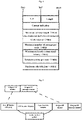
- the stream attribute information includes at least one of: a maximum frame length, a cycle interval, a maximum number of message per cycle, a maximum tolerable accumulated latency, a scheduling delay per node, and a maximum tolerable accumulated jitter.
- the Tspec field includes a next protocol (N-P) field, a length field, a content indication field, and an information field.
- N-P next protocol
- the content indication field is used for indicating, according to a preset bit definition, a type of the stream attribute information and whether the stream attribute information of the corresponding type appears in the information field.
- the information field is used for indicating content of the stream attribute information.
- the N-P field is used for indicating a subsequent protocol type of the N-P field; the length field is used for indicating a total length of the Tspec field; and the content indication field is used for indicating that one or more pieces of stream attribute information in a subsequent information field of the content indication field appear in a preset sequence.
- the content indication field includes a plurality of bits arranged in the preset sequence so as to correspondingly indicate whether to use the stream attribute information in the subsequent information field, for example, "1" may indicate that the corresponding stream attribute information will appear in the subsequent information field, and "0" may indicate that no corresponding stream attribute information will appear in the subsequent information field.
- only bits 0-5 in the content indication field are used, and the remaining bits are temporarily reserved.
- the above stream attribute information includes: a maximum frame length, a cycle interval, a maximum number of message per cycle, a maximum tolerable accumulated latency, a scheduling delay per node, and a maximum tolerable accumulated jitter.
- a maximum frame length a cycle interval
- a maximum number of message per cycle a maximum tolerable accumulated latency
- a scheduling delay per node a scheduling delay per node.
- a maximum tolerable accumulated jitter The specific meaning of the above stream attribute information is described as follows.
- the maximum frame length is used for indicating a maximum message length of the second message after the traffic stream is encapsulated, and is recorded as maxFrameSize.
- the maximum frame length is indicated by bit 0 in the content indication field, where the condition that a value of the bit is 0 indicates that there is no such information encoded, and the condition that the value of the bit is 1 indicates that there is such information.
- the cycle interval is used for indicating an expected scheduling interval, may also indicate a cycle interval of the second message, has a unit of nanosecond (ns), and is recorded as cycleTime.
- the cyclic interval is indicated by bit 1 in the content indication field, where the condition that a value of the bit is 0 indicates that there is no such information encoded, and the condition that the value of the bit is 1 indicates that there is such information.
- the maximum number of message per cycle is used for indicating a maximum possible number of message in a time length indicated by the cycle interval and is recorded as MaxIntervalFrames.
- the maximum number of message per cycle is indicated by bit 2 in the content indication field, where the condition that a value of the bit is 0 indicates that there is no such information encoded, and the condition that the value of the bit is 1 indicates that there is such information.
- the maximum tolerable accumulated latency is used for indicating a maximum accumulated latency on a second message forwarding path, may be used for path computation, has a unit of nanosecond (ns), and is recorded as maxAccumatedLatency.
- the maximum tolerable accumulated latency is indicated by bit 3 in the content indication field, where the condition that a value of the bit is 0 indicates that there is no such information encoded, and the condition that the value of the bit is 1 indicates that there is such information.
- the scheduling delay per node is used for asynchronous scheduling, and in a case where a value corresponding to the scheduling delay per node is smaller than or equal to 7, the scheduling delay per node is used for indicating that scheduling is expected to be performed in which scheduling period after a period of the message is received.
- the scheduling period depends on a time scheduling period in the device and a queue scheduling time slice, for example, a TimeInterval of 802.1 Qbv.
- the scheduling delay per node is used for indicating how long the scheduling is expected, has a unit of nanosecond (ns), and is recorded as perNodeSchDelay.
- the scheduling delay per node is indicated by bit 4 in the content indication field, where the condition that a value of the bit is 0 indicates that there is no such information encoded, and the condition that the value of the bit is 1 indicates that there is such information.
- the maximum tolerable accumulated jitter is used for indicating a maximum accumulated jitter on the message forwarding path.
- the maximum tolerable accumulated jitter indicates a tolerable accumulated jitter time, has a unit of nanosecond (ns), and is recorded as maxAccumatedJitter.
- the maximum tolerable accumulated jitter is indicated by bit 5 in the content indication field, where the condition that a value of the bit is 0 indicates that there is no such information encoded, and the condition that the value of the bit is 1 indicates that there is such information.
- Fig. 4 is a schematic diagram of a Tspec field provided in an embodiment of the present disclosure, and a structure of the Tspec field is shown in Fig. 4 .
- the operation of encapsulating the first message according to the preset encapsulation format to obtain the second message further includes the following operation.
- the Tspec field and a user datagram protocol (UDP) header field are inserted at the preset position of the first message according to the preset encapsulation format to obtain the second message, where the UDP header field is inserted in front of the Tspec field.
- UDP user datagram protocol
- the UDP header field is used for indicating that the Tspec field appears after the UDP header field in the second message; and specifically, the UDP header field may perform indication by means of a destination port number, for example, a 4600 port.
- the operation of encapsulating the first message according to the preset encapsulation format to obtain the second message includes the following operations.
- An encapsulation rule is configured, and the first message is encapsulated according to the encapsulation rule to obtain the second message, where the operation of configuring an encapsulation rule includes: the encapsulation format is configured and a deterministic traffic stream matching rule is configured.
- the deterministic traffic stream matching rule is used for matching the traffic stream with a deterministic traffic stream.
- the above encapsulation rule is used for configuration of the encapsulation format on the one hand and for configuration of the deterministic traffic stream matching rule on the other hand.
- the deterministic traffic stream matching rule may specifically match a traffic stream to be sent so as to determine whether the traffic stream needs to be encapsulated according to the message encapsulation method in the embodiment.
- the encapsulation format includes one of a first encapsulation format, a second encapsulation format, a third encapsulation format, or a fourth encapsulation format.
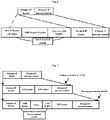
- the first encapsulation format includes an original IP header field, a UDP header field, the Tspec field and an original IP content field.
- the second encapsulation format includes a new IP header field, a UDP header field, the Tspec field, an original IP header field and an original IP content field.
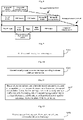
- the third encapsulation format includes an original IP header field, a new UDP header field, the Tspec field, an original UDP header field, an encoding symbol identifier (ESI) header field and an original IP message content field.
- ESI encoding symbol identifier
- the fourth encapsulation format includes a new IP header field, a new UDP header field, the Tspec field, an original UDP header field, an encapsulating security payload (ESP) header field, an original IP header field and an original IP content field.
- ESP encapsulating security payload
- first encapsulation format and the second encapsulation format may be correspondingly selected or determined according to the configured encapsulation format
- third encapsulation format and the fourth encapsulation format may be correspondingly selected or determined according to an encapsulation format used by the first message
- the third encapsulation format and the fourth encapsulation format are encapsulation formats employed in a case where ipsec processing has been performed in the first message.
- the first encapsulation format may also be referred to as a transmission mode
- the second encapsulation format may also be referred to as a tunnel mode
- the third and fourth encapsulation formats may also be referred to as a fusion mode or a hybrid mode.
- the operation of encapsulating the first message according to the encapsulation rule to obtain the second message includes one of the following operations.
- the UDP header field and the Tspec field are inserted between the original IP header field and the original IP content field of the first message according to the first encapsulation format, and a protocol field in the original IP header field is adjusted to obtain the second message.
- the new IP header field, the UDP header field and the Tspec field are inserted in front of the original IP header field of the first message according to the second encapsulation format to obtain the second message.
- the new UDP header field and the Tspec field are inserted between the original IP header field and the original UDP header field of the first message according to the third encapsulation format to obtain the second message.
- the new UDP header field and the Tspec field inserting, between the new IP header field and the original UDP header field of the first message according to the fourth encapsulation format to obtain the second message.
- Fig. 5 is a schematic diagram of the first encapsulation format provided in the embodiment of the present disclosure, and a structure of the first encapsulation format is shown in Fig. 5 .
- Fig. 6 is a schematic diagram of the second encapsulation format provided in the embodiment of the present disclosure, and a structure of the second encapsulation format is shown in Fig. 6.
- Fig. 7 is a schematic diagram of the third encapsulation format provided in the embodiment of the present disclosure, and a structure of the third encapsulation format is shown in Fig. 7 .
- Fig. 8 is a schematic diagram of the third encapsulation format provided in the embodiment of the present disclosure, and a structure of the third encapsulation format is shown in Fig. 8 .
- the first message includes the original UDP header field, which indicates that the first message is a message obtained by ipsec processing on a traffic stream.
- Figs. 7 and 8 illustrate two different ipsec processing modes for the traffic stream, that is, an ESP transmission mode and an ESP tunnel mode respectively.
- the corresponding original UDP header field in the third encapsulation format is inserted between the original IP header field and the original IP content field of the first message, which indicates the ESP transmission mode of ipsec.
- the corresponding original UDP header field in the fourth encapsulation format is inserted in front of the original IP header field of the first message, which indicates the ESP tunnel mode of ipsec.
- a protocol field in the original IP header field is adjusted, which indicates that the original protocol content indicated in the protocol field in the original IP header field is modified to indicate a UDP protocol, so as to indicate that the original IP header field is followed by the UDP field.
- the original protocol content indicated in the protocol field is written into the N-P field in the Tspec field so as to indicate the corresponding protocol content after the Tspec field.
- the method before the operation of encapsulating the first message according to the preset encapsulation format to obtain the second message, the method further includes the following operation.
- Whether a NAT function is configured between the sending side and a receiving side is detected.
- the NAT function is configured between the sending side and the receiving side, specifically, NAT or NATPT or a related apparatus capable of achieving the network address translation function may be arranged between the sending side and the receiving side.
- the message encapsulation method in the embodiment needs to be used in a case where it is detected that the NAT function is configured between the sending side and the receiving side, and the message encapsulation method in the embodiment or other encapsulation methods may be used in a case where it is detected that no NAT function is configured between the sending side and the receiving side, which is not limited herein.
- a DTGW function of a sending side is started, and it is detected that NAT exists in a network between the sending side and a receiving side, that is, the DTGW determines that a message encapsulation method in the above embodiments needs to be used for encapsulating a traffic stream.
- the DTGW configures an encapsulation rule, where the encapsulation rule includes configuring an encapsulation format and configuring a deterministic traffic matching rule.
- the sending side needs to transmit a traffic stream with a source address being 10.0.0.3, a destination address being 10.0.0.4, a traffic type being a transmission control protocol (TCP), a source port number of the TCP being 20000, and a destination port number being 5000.
- TCP transmission control protocol
- the DTGW firstly matches the traffic stream by means of the deterministic traffic matching rule, and determines that the message encapsulation method in the above embodiments needs to be used for encapsulation. Meanwhile, according to the configuration, the DTGW determines that an encapsulation mode of the traffic stream is a transmission mode, that is, the first encapsulation format in the above embodiments; and in such a case, in a case where the DTGW does not detect that the traffic stream is subjected to ipsec processing, the first encapsulation format may be used for encapsulation.
- the DTGW may process the traffic stream or a first message obtained by encapsulating the traffic stream in a conventional encapsulation mode.
- the scheme in which the DTGW processes the first message is described for illustration, and the following exemplary embodiments 2 to 3 also describes the scheme in which the DTGW processes the first message for illustration, which will not be repeated herein.
- the DTGW may detect whether a UDP header field, that is, an original UDP header field, exists in the first message or whether a destination port number of the UDP message is a known port number, for example, 4500, used by ipsec, etc. to detect whether the traffic stream is subjected to ipsec processing.
- the DTGW detects that the traffic stream is not subjected to ipsec processing.
- the DTGW performs insertion operation on the first message according to the first encapsulation format, that is, the UDP header field and a Tspec field are sequentially inserted between an original IP header field and an original IP content field of the first message.
- the Tspec fields are each hexadecimal, where the content indication fields are converted to be binary, that is, corresponding to a plurality of bits in the above embodiments, and the information fields are converted to be decimal, corresponding to specific values of the stream attributes.
- the first message may be encapsulated.
- the protocol field of the original IP header field is modified from 0x06 corresponding to the TCP to 0x11 corresponding to the UDP; and then the UDP header field may be inserted between the original IP header field and the original IP content field, and the above Tspec field may be inserted after the UDP header field, where the UDP header field indicates a destination port number of 4600.
- the length of the message changes, such that a total length field and a checksum field in the original IP content field need to be modified to increase the length of the message by 18 (where the UDP header field corresponds to 8 bytes, and the Tspec field corresponds to 10 bytes), so as to obtain the second message.
- the second message may be sent to a DTGW of the receiving side.
- a DTGW function of a sending side is started, and it is detected that NAT exists in a network between the sending side and a receiving side, that is, the DTGW determines that a message encapsulation method in the above embodiments needs to be used for encapsulating a traffic stream.
- the DTGW configures an encapsulation rule, where the encapsulation rule includes configuring an encapsulation format and configuring a deterministic traffic matching rule.
- the sending side needs to transmit a traffic stream with a source address being 10.0.0.5, a destination address being 10.0.0.6, a traffic type being TCP, a source port number of the TCP being 20000, and a destination port number being 5000.
- the DTGW firstly matches the traffic stream by means of the deterministic traffic matching rule, and determines that the message encapsulation method in the above embodiments needs to be used for encapsulation. Meanwhile, according to the configuration, the DTGW determines that an encapsulation mode of the traffic stream is a tunnel mode, that is, the second encapsulation format in the above embodiments; and in such a case, in a case where the DTGW does not detect that the traffic stream is subjected to ipsec processing, the second encapsulation format may be used for encapsulation.
- the DTGW carries out insertion operation on the first message according to the second encapsulation format, that is, a new IP header field is firstly built, and the new IP header field includes a source address being 10.0.0.5, a destination address being 10.0.0.6 and a protocol type being UDP; and it is further noted that in order to ensure that the set destination address can reach the receiving side, an address in the original IP header field may also be used here.
- the first message may be encapsulated, specifically, the new IP header field, the UDP header field, and the Tspec field are sequentially inserted in front of the original IP header field, where the UDP header field indicates a destination port number of 4600.
- the length of the message changes, such that a total length field and a checksum field in the original IP content field need to be modified to increase the length of the message by 18 (where the UDP header field corresponds to 8 bytes, and the Tspec field corresponds to 10 bytes), so as to obtain the second message.
- the second message may be sent to a DTGW of the receiving side.
- a DTGW function of a sending side is started, and it is detected that NAT exists in a network between the sending side and a receiving side, that is, the DTGW determines that a message encapsulation method in the above embodiments needs to be used for encapsulating a traffic stream.
- the DTGW configures an encapsulation rule, where the encapsulation rule includes configuring an encapsulation format and configuring a deterministic traffic matching rule.
- the sending side needs to transmit a traffic stream with a source address being 10.0.0.3, a destination address being 10.0.0.4, a traffic type being TCP, a source port number of the TCP being 20000, and a destination port number being 5000.
- the DTGW firstly matches the traffic stream by means of the deterministic traffic matching rule, and determines that the message encapsulation method in the above embodiments needs to be used for encapsulation. Meanwhile, according to the configuration, the DTGW determines that an encapsulation mode of the traffic stream is a transmission mode, that is, the first encapsulation format in the above embodiments; and in such a case, the DTGW detects that the first message corresponding to the traffic stream is subjected to ipsec processing, such that an encapsulation format in the configuration is ignored, and encapsulation is carried out by using a hybrid mode according to the ipsec processing mode, that is, encapsulation is carried out by using a third encapsulation format or a fourth encapsulation format.
- the first message may be encapsulated, specifically, the new UDP header field and the Tspec field are sequentially inserted into the first message, an insertion position is selected or determined according to the ipsec processing mode used by the first message.
- the new UDP header field and the Tspec field are inserted between the original IP header field and the original UDP header field by using the third encapsulation format; in a case where the original UDP header field is located in front of the original IP header field in the first message, the new UDP header field and the Tspec field are inserted between the new IP header field and the original UDP header field by using the fourth encapsulation format, where the new UDP header field indicates the destination port number of 4600.
- the length of the message changes, such that a total length field and a checksum field in the original IP content field need to be modified to increase the length of the message by 18 (where the new UDP header field corresponds to 8 bytes, and the Tspec field corresponds to 10 bytes), so as to obtain the second message.
- the second message may be sent to a DTGW of the receiving side.
- the technical solution provided by the present disclosure may be embodied in a form of a software product in essence or a part contributing to the prior art, and the computer software product is stored in a storage medium (for example, a read-only memory (ROM)/random access memory (RAM), a magnetic disk, and an optical disk), and includes several instructions for making a terminal device (may be a mobile phone, a computer, a server or a network device) execute the method of each embodiment of the present disclosure.
- a storage medium for example, a read-only memory (ROM)/random access memory (RAM), a magnetic disk, and an optical disk
- a terminal device may be a mobile phone, a computer, a server or a network device
- Fig. 9 is a flowchart of a message sending method provided in the embodiment of the present disclosure. As shown in Fig. 9 , the message sending method in the embodiment includes the following operation.
- a second message is sent to a receiving side.
- the second message in this embodiment is obtained according to the message encapsulation method in Embodiment 1, such that the related technical features and technical effects of the second message in this embodiment correspond to those in Embodiment 1, which is not repeated herein.
- the methods according to the embodiments described above may be implemented by means of software plus a necessary general-purpose hardware platform, and of course may also be implemented by means of hardware, but in many cases the former is a better implementation mode.
- the technical solution provided by the present disclosure may be embodied in a form of a software product in essence or a part contributing to the prior art, and the computer software product is stored in a storage medium (for example, a ROM/RAM, a magnetic disk, and an optical disk), and includes several instructions for making a terminal device (may be a mobile phone, a computer, a server or a network device) execute the method of each embodiment of the present disclosure.
- Fig. 10 is a flowchart of a message processing method provided in the embodiment of the present disclosure. As shown in Fig. 10 , the message processing method in the embodiment includes the following operation.
- a second message is determined and processed according to stream attribute information.
- the second message in this embodiment is obtained according to the message encapsulation method in Embodiment 1, such that the related technical features and technical effects of the second message in this embodiment correspond to those in Embodiment 1, which will not be repeated herein.
- the operation of determining and processing the second message indicates tracking and determination of a deterministic traffic stream; since a mapping relation between the stream attribute information and the second message is fixed, those having ordinary skill in the field may know, according to a deterministic traffic stream processing mode based on mapping objects of IP addresses, etc. in the related art, how to determine the second message according to the stream attribute information, which will not be repeated herein.
- the methods according to the embodiments described above may be implemented by means of software plus a necessary general-purpose hardware platform, and of course may also be implemented by means of hardware, but in many cases the former is a better implementation modes.
- the technical solution provided by the present disclosure may be embodied in a form of a software product in essence or a part contributing to the prior art, and the computer software product is stored in a storage medium (for example, a ROM/RAM, a magnetic disk, and an optical disk), and includes several instructions for making a terminal device (may be a mobile phone, a computer, a server or a network device) execute the method of each embodiment of the present disclosure.
- Fig. 11 is a flowchart of a message decapsulation method provided in the embodiment of the present disclosure. As shown in Fig. 11 , the message decapsulation method in the embodiment includes the following operation.
- a second message is decapsulated, where the second message is obtained by encapsulating a first message by a sending side according to a preset encapsulation format, the first message is obtained by encapsulating a traffic stream by the sending side, the second message carries stream attribute information, and the stream attribute information is used for indicating a feature attribute of the traffic stream.
- S402 is performed by the receiving side, specifically by a DTGW of the receiving side.
- the decapsulation process performed on the second message corresponds to the encapsulation process of the second message; and the related technical features and technical effects of encapsulating the second message correspond to those in Embodiment 1, which is not repeated herein.
- the second message is obtained by encapsulating the first message by the sending side according to the preset encapsulation format, particularly, the second message is obtained by inserting at least a Tspec field at a preset position of the first message by the sending side according to the preset encapsulation format, where the Tspec field includes the stream attribute information.
- the stream attribute information includes at least one of: a maximum frame length, a cycle interval, a maximum number of message per cycle, a maximum tolerable accumulated latency, a scheduling delay per node, and a maximum tolerable accumulated jitter.
- the Tspec field includes a N-P field, a length field, a content indication field, and an information field.
- the content indication field is used for indicating, according to a preset bit definition, a type of the stream attribute information and whether the stream attribute information of the corresponding type appears in the information field.
- the information field is used for indicating content of the stream attribute information.
- the second message is obtained by encapsulating the first message by the sending side according to the preset encapsulation format, further particularly, the second message is obtained by inserting the Tspec field and a UDP header field at the preset position of the first message by the sending side according to the preset encapsulation format, where the UDP header field is inserted in front of the Tspec field.
- the second message is obtained by encapsulating the first message by the sending side according to the preset encapsulation format, further particularly, the second message is obtained by encapsulating the first message by the sending side according to a configured encapsulation rule, where the configured encapsulation rule includes: the configured encapsulation format and a configured deterministic traffic stream matching rule.
- the deterministic traffic stream matching rule is used for matching the traffic stream with a deterministic traffic stream.
- the encapsulation format includes one of a first encapsulation format, a second encapsulation format, a third encapsulation format, or a fourth encapsulation format.
- the first encapsulation format includes an original IP header field, a UDP header field, the Tspec field and an original IP content field.
- the second encapsulation format includes a new IP header field, a UDP header field, the Tspec field, an original IP header field and an original IP content field.
- the third encapsulation format includes an original IP header field, a new UDP header field, the Tspec field, an original UDP header field, an ESI header field and an original IP message content field.
- the fourth encapsulation format includes a new IP header field, a new UDP header field, the Tspec field, an original UDP header field, an ESP header field, an original IP header field and an original IP content field.
- the second message is obtained by encapsulating the first message by the sending side according to the configured encapsulation rule, further particularly, one of the following manners is adopted.
- the second message is obtained by inserting, in a case where the encapsulation format is configured to be the first encapsulation format and no original UDP header field is included in the first message, the UDP header field and the Tspec field between the original IP header field and the original IP content field of the first message by the sending side according to the first encapsulation format, and adjusting a protocol field in the original IP header field.
- the second message is obtained by inserting, in a case where the encapsulation format is configured to be the second encapsulation format and no original UDP header field is included in the first message, the new IP header field, the UDP header field and the Tspec field in front of the original IP header field of the first message by the sending side according to the second encapsulation format.
- the second message is obtained by inserting, in a case where the original UDP header field is included in the first message and the original UDP header field is inserted between the original IP header field and the original IP content field of the first message, the new UDP header field and the Tspec field between the original IP header field and the original UDP header field of the first message by the sending side according to the third encapsulation format.
- the second message is obtained by inserting, in a case where the original UDP header field is included in the first message and the original UDP header field is inserted before the original IP header field of the first message, the new UDP header field and the Tspec field between the new IP header field and the original UDP header field of the first message by the sending side according to the fourth encapsulation format.
- the operation of decapsulating a second message includes one of the following operations.
- the UDP header field and the Tspec field are removed from the second message in a case where the encapsulation format of the second message is the first encapsulation format, and a protocol field in the original IP header field is adjusted.
- the new IP header field, the UDP header field and the Tspec field are removed from the second message in a case where the encapsulation format of the second message is the second encapsulation format.
- the new UDP header field and the Tspec field are removed from the second message in a case where the encapsulation format of the second message is the third encapsulation format, and a protocol field in the original IP header field is adjusted.
- the new IP header field, the new UDP header field and the Tspec field are removed from the second message in a case where the encapsulation format of the second message is the fourth encapsulation format, and a protocol field in the original IP header field is adjusted.
- the decapsulation operation in S402 corresponds to the encapsulation operation of the second message, specifically, a field inserted in the first message is removed and the content of the corresponding field is adjusted during encapsulation of the second message.
- a DTGW of the receiving side is started, in such a case, the DTGW receives a traffic stream, and the traffic stream is a second message obtained by encapsulation in a transmission mode, that is the first encapsulation format.
- the second message may be determined to be encapsulated by a UDT according to a UDP header field and a destination port number in the second message, and the second message is further determined not to be encapsulated in the tunnel mode according to the UDP header field and the destination port number, such that it is determined that the second message is encapsulated in the transmission mode, that is, the first encapsulation format.
- corresponding protocol information in an N-P field in a Tspec field in the second message may be assigned to an original IP header field.
- the DTGW detects a length field in the Tspec field to determine that the Tspec field is 10, then a total length field and a checksum field in the original IP header field may be modified by subtracting 18 (8 bytes corresponding to the UDP header field and 10 bytes corresponding to the Tspec field) from a message length indicated by the total length field in the original IP header field.
- the message may be forwarded again.
- the methods according to the embodiments described above may be implemented by means of software plus a necessary general-purpose hardware platform, and of course may also be implemented by means of hardware, but in many cases the former is a better implementation modes.
- the technical solution provided by the present disclosure may be embodied in a form of a software product in essence or a part contributing to the prior art, and the computer software product is stored in a storage medium (for example, a ROM/RAM, a magnetic disk, and an optical disk), and includes several instructions for making a terminal device (may be a mobile phone, a computer, a server or a network device) execute the method of each embodiment of the present disclosure.
- Fig. 12 is a flowchart of a message reception method provided in the embodiment of the present disclosure. As shown in Fig. 12 , the message reception method in the embodiment includes the following operation.
- a second message sent from a sending side is received, and the second message is decapsulated.
- the message decapsulation method in Embodiment 4 is used for decapsulating the second message, such that the related technical features and technical effects for decapsulating the second message in this embodiment correspond to those in Embodiment 4, which is not repeated herein.
- the methods according to the embodiments described above may be implemented by means of software plus a necessary general-purpose hardware platform, and of course may also be implemented by means of hardware, but in many cases the former is a better implementation modes.
- the technical solution provided by the present disclosure may be embodied in a form of a software product in essence or a part contributing to the prior art, and the computer software product is stored in a storage medium (for example, a ROM/RAM, a magnetic disk, and an optical disk), and includes several instructions for making a terminal device (may be a mobile phone, a computer, a server or a network device) execute the method of each embodiment of the present disclosure.
- the embodiment further provides a message encapsulation apparatus, applied at a sending side.
- the apparatus is used for achieving the embodiment and the exemplary implementations, and the content has been made will not be repeated.
- the term "module”, as used below, may achieve a combination of software and/or hardware with predetermined functions. While the apparatus described in the following embodiments is preferably implemented in software, achievement of hardware, or a combination of software and hardware, are also possible and conceived.
- Fig. 13 is a structure diagram of a message encapsulation apparatus provided in the embodiment of the present disclosure.
- the message encapsulation apparatus in the embodiment includes: an encapsulation module 602 configured to encapsulating a first message according to a preset encapsulation format to obtain a second message, where the first message is obtained by encapsulating a traffic stream, the second message carries stream attribute information, and the stream attribute information is used for indicating a feature attribute of the traffic stream.
- the operation of encapsulating the first message according to the preset encapsulation format to obtain the second message includes: at least a Tspec field is inserted at a preset position of the first message according to the preset encapsulation format to obtain the second message, where the Tspec field includes the stream attribute information.
- the stream attribute information includes at least one of: a maximum frame length, a cycle interval, a maximum number of message per cycle, a maximum tolerable accumulated latency, a scheduling delay per node, and a maximum tolerable accumulated jitter.
- the Tspec field includes a N-P field, a length field, a content indication field, and an information field.
- the content indication field is used for indicating, according to a preset bit definition, a type of the stream attribute information and whether the stream attribute information of the corresponding type appears in the information field.
- the information field is used for indicating content of the stream attribute information.
- the operation of encapsulating the first message according to the preset encapsulation format to obtain the second message further includes: the Tspec field and a UDP header field are inserted at the preset position of the first message according to the preset encapsulation format to obtain the second message, where the UDP header field is inserted in front of the Tspec field.
- the operation of encapsulating the first message according to the preset encapsulation format to obtain the second message includes: an encapsulation rule is configured, and the first message is encapsulated according to the encapsulation rule to obtain the second message, where the operation of configuring an encapsulation rule includes: the encapsulation format is configured and a deterministic traffic stream matching rule is configured.
- the deterministic traffic stream matching rule is used for matching the traffic stream with a deterministic traffic stream.
- the encapsulation format includes one of a first encapsulation format, a second encapsulation format, a third encapsulation format, or a fourth encapsulation format.
- the first encapsulation format includes an original IP header field, a UDP header field, the Tspec field and an original IP content field.
- the second encapsulation format includes a new IP header field, a UDP header field, the Tspec field, an original IP header field and an original IP content field.
- the third encapsulation format includes an original IP header field, a new UDP header field, the Tspec field, an original UDP header field, an ESI header field and an original IP message content field.
- the fourth encapsulation format includes a new IP header field, a new UDP header field, the Tspec field, an original UDP header field, an ESP header field, an original IP header field and an original IP content field.
- the operation of encapsulating the first message according to the encapsulation rule to obtain the second message includes one of the following operations.
- the UDP header field and the Tspec field are inserted between the original IP header field and the original IP content field of the first message according to the first encapsulation format, and a protocol field in the original IP header field is adjusted to obtain the second message.
- the new IP header field, the UDP header field and the Tspec field are inserted in front of the original IP header field of the first message according to the second encapsulation format to obtain the second message.
- the new UDP header field and the Tspec field are inserted between the original IP header field and the original UDP header field of the first message according to the third encapsulation format to obtain the second message.
- the new UDP header field and the Tspec field inserting, between the new IP header field and the original UDP header field of the first message according to the fourth encapsulation format to obtain the second message.
- the method before the operation of encapsulating the first message according to the preset encapsulation format to obtain the second message, the method further includes: whether a NAT function is configured between the sending side and a receiving side is detected.
- modules mentioned above may be implemented in software or hardware, achievement in hardware may be implemented as follows but are not limited thereto: the modules mentioned above are located in the same processor; or the modules mentioned above are separately located in different processors in any combination form.
- the embodiment further provides a message sending apparatus, applied at a sending side.
- the apparatus is used for implementing the embodiment and the exemplary implementations, and the content has been made will not be repeated.
- the term "module”, as used below, may achieve a combination of software and/or hardware with predetermined functions. While the apparatus described in the following embodiments is preferably implemented in software, achievement of hardware, or a combination of software and hardware, are also possible and conceived.
- Fig. 14 is a structure diagram of a message sending apparatus provided in the embodiment of the present disclosure. As shown in Fig. 14 , the apparatus in the embodiment includes: a sending module 702 configured to send a second message to a receiving side.
- modules mentioned above may be implemented in software or hardware, achievement in hardware may be implemented as follows but are not limited thereto: the modules mentioned above are located in the same processor; or the modules mentioned above are separately located in different processors in any combination form.
- the embodiment further provides a message processing apparatus, applied at an intermediate node.
- the apparatus is used for achieving the embodiment and the exemplary implementations, and the content has been made will not be repeated.
- the term "module”, as used below, may achieve a combination of software and/or hardware with predetermined functions. While the apparatus described in the following embodiments is preferably implemented in software, achievement of hardware, or a combination of software and hardware, are also possible and conceived.
- Fig. 15 is a structure diagram of a message processing apparatus provided in the embodiment of the present disclosure. As shown in Fig. 15 , the apparatus in the embodiment includes: a processing module 802 configured to determine and process a second message according to stream attribute information.
- modules mentioned above may be implemented in software or hardware, achievement in hardware may be implemented as follows but are not limited thereto: the modules mentioned above are located in the same processor; or the modules mentioned above are separately located in different processors in any combination form.
- the embodiment further provides a message decapsulation apparatus, applied at a receiving side.
- the apparatus is used for achieving the embodiment and the exemplary implementations, and the content has been made will not be repeated.
- the term "module”, as used below, may achieve a combination of software and/or hardware with predetermined functions. While the apparatus described in the following embodiments is preferably implemented in software, achievement of hardware, or a combination of software and hardware, are also possible and conceived.
- Fig. 16 is a structure diagram of a message decapsulation apparatus provided in the embodiment of the present disclosure.
- the apparatus in the embodiment includes: a decapsulation module 902 configured to decapsulate a second message, where the second message is obtained by encapsulating a first message by a sending side according to a preset encapsulation format, the first message is obtained by encapsulating a traffic stream by the sending side, the second message carries stream attribute information, and the stream attribute information is used for indicating a feature attribute of the traffic stream.
- the second message is obtained by encapsulating the first message by the sending side according to the preset encapsulation format, particularly, the second message is obtained by inserting at least a Tspec field at a preset position of the first message by the sending side according to the preset encapsulation format, where the Tspec field includes the stream attribute information.
- the stream attribute information includes at least one of: a maximum frame length, a cycle interval, a maximum number of message per cycle, a maximum tolerable accumulated latency, a scheduling delay per node, and a maximum tolerable accumulated jitter.
- the Tspec field includes a N-P field, a length field, a content indication field, and an information field.
- the content indication field is used for indicating, according to a preset bit definition, a type of the stream attribute information and whether the stream attribute information of the corresponding type appears in the information field.
- the information field is used for indicating content of the stream attribute information.
- the second message is obtained by encapsulating the first message by the sending side according to the preset encapsulation format, further particularly, the second message is obtained by inserting the Tspec field and a UDP header field at the preset position of the first message by the sending side according to the preset encapsulation format, where the UDP header field is inserted in front of the Tspec field.
- the second message is obtained by encapsulating the first message by the sending side according to the preset encapsulation format, further particularly, the second message is obtained by encapsulating the first message by the sending side according to a configured encapsulation rule, where the configured encapsulation rule includes: the configured encapsulation format and a configured deterministic traffic stream matching rule.
- the deterministic traffic stream matching rule is used for matching the traffic stream with a deterministic traffic stream.
- the encapsulation format includes one of a first encapsulation format, a second encapsulation format, a third encapsulation format, or a fourth encapsulation format.
- the first encapsulation format includes an original IP header field, a UDP header field, the Tspec field and an original IP content field.
- the second encapsulation format includes a new IP header field, a UDP header field, the Tspec field, an original IP header field and an original IP content field.
- the third encapsulation format includes an original IP header field, a new UDP header field, the Tspec field, an original UDP header field, an ESI header field and an original IP message content field.
- the fourth encapsulation format includes a new IP header field, a new UDP header field, the Tspec field, an original UDP header field, an ESP header field, an original IP header field and an original IP content field.
- the second message is obtained by encapsulating a first message by a sending side according to a configured encapsulation rule, further particularly, one of the following manners is adopted.
- the second message is obtained by inserting, in a case where the encapsulation format is configured to be the first encapsulation format and no original UDP header field is included in the first message, the UDP header field and the Tspec field between the original IP header field and the original IP content field of the first message by the sending side according to the first encapsulation format, and adjusting a protocol field in the original IP header field.
- the second message is obtained by inserting, in a case where the encapsulation format is configured to be the second encapsulation format and no original UDP header field is included in the first message, the new IP header field, the UDP header field and the Tspec field in front of the original IP header field of the first message by the sending side according to the second encapsulation format.
- the second message is obtained by inserting, in a case where the original UDP header field is included in the first message and the original UDP header field is inserted between the original IP header field and the original IP content field of the first message, the new UDP header field and the Tspec field between the original IP header field and the original UDP header field of the first message by the sending side according to the third encapsulation format.
- the second message is obtained by inserting, in a case where the original UDP header field is included in the first message and the original UDP header field is inserted before the original IP header field of the first message, the new UDP header field and the Tspec field between the new IP header field and the original UDP header field of the first message by the sending side according to the fourth encapsulation format.
- the operation of decapsulating a second message includes:
- modules mentioned above may be implemented in software or hardware, achievement in hardware may be implemented as follows but are not limited thereto: the modules mentioned above are located in the same processor; or the modules mentioned above are separately located in different processors in any combination form.
- the embodiment further provides a message reception apparatus, applied at a receiving side.
- the apparatus is used for achieving the embodiment and the exemplary implementations, and the content has been made will not be repeated.
- the term "module”, as used below, may achieve a combination of software and/or hardware with predetermined functions. While the apparatus described in the following embodiments is preferably implemented in software, achievement of hardware, or a combination of software and hardware, are also possible and conceived.
- Fig. 17 is a structure diagram of a message reception apparatus provided in the embodiment of the present disclosure. As shown in Fig. 17 , the apparatus in the embodiment includes: a reception module 1002 configured to receive a second message sent from a sending side.
- modules mentioned above may be implemented in software or hardware, achievement in hardware may be implemented as follows but are not limited thereto: the modules mentioned above are located in the same processor; or the modules mentioned above are separately located in different processors in any combination form.
- the embodiment of the present disclosure further provides a computer-readable storage medium.
- the computer-readable storage medium stores a computer program, where the computer program is configured to execute the operations of any one of the above method embodiments at runtime.
- the computer-readable storage medium may be configured to store a computer program for executing the method operations in Embodiments 1-5.
- the above computer-readable storage medium may include, but is not limited to, a universal serial bus flash disk, a read-only memory (ROM), a random access memory (RAM), a removable hard disk, a magnetic disk, or an optical disk, and various media that may store the computer program.
- the embodiment of the present disclosure further provides an electronic apparatus, including a memory and a processor, where the memory stores a computer program, and the processor is configured to run the computer program to execute the operations of any one of the above method embodiments.
- the electronic apparatus may further include a transmission device and an input/output device, where the transmission device is connected to the above processor, and the input/output device is connected to the above processor.
- the processor may be configured to execute the method operations in Embodiment 1-5 by means of the computer program.
- modules or operations of the present disclosure may be achieved with a general-purpose computation apparatus, and may be centralized on a single computation apparatus or distributed on a network composed of a plurality of computation apparatuses, optionally, they may be achieved with program codes executable by the computation apparatus, such that they may be stored in a storage apparatus to be executed by the computation apparatus, and under some conditions, the operations shown or described may be executed in an order different from that herein, or they may be fabricated separately as individual integrated circuit modules, or multiple modules or operations of them may be fabricated as a single integrated circuit module for achievement.
- the present disclosure is not limited to any particular combination of hardware and software.
Landscapes
- Engineering & Computer Science (AREA)
- Computer Networks & Wireless Communication (AREA)
- Signal Processing (AREA)
- Computer Security & Cryptography (AREA)
- Data Exchanges In Wide-Area Networks (AREA)
Applications Claiming Priority (2)
| Application Number | Priority Date | Filing Date | Title |
|---|---|---|---|
| CN201911089691.6A CN112787902B (zh) | 2019-11-08 | 2019-11-08 | 报文封装方法及装置、报文解封装方法及装置 |
| PCT/CN2020/126209 WO2021088813A1 (zh) | 2019-11-08 | 2020-11-03 | 报文封装方法及装置、报文解封装方法及装置 |
Publications (2)
| Publication Number | Publication Date |
|---|---|
| EP4057576A1 true EP4057576A1 (de) | 2022-09-14 |
| EP4057576A4 EP4057576A4 (de) | 2022-12-28 |
Family
ID=75748514
Family Applications (1)
| Application Number | Title | Priority Date | Filing Date |
|---|---|---|---|
| EP20884959.6A Pending EP4057576A4 (de) | 2019-11-08 | 2020-11-03 | Paketverkapselungsverfahren und -vorrichtung, und paketentkapselungsverfahren und -vorrichtung |
Country Status (4)
| Country | Link |
|---|---|
| US (1) | US12074729B2 (de) |
| EP (1) | EP4057576A4 (de) |
| CN (1) | CN112787902B (de) |
| WO (1) | WO2021088813A1 (de) |
Families Citing this family (6)
| Publication number | Priority date | Publication date | Assignee | Title |
|---|---|---|---|---|
| CN115134309A (zh) * | 2021-03-11 | 2022-09-30 | 华为技术有限公司 | 报文处理方法和装置 |
| CN114386368B (zh) * | 2022-03-23 | 2022-07-19 | 百芯智能制造科技(深圳)有限公司 | 一种封装规格项数据的处理方法以及处理装置 |
| CN117278645A (zh) * | 2022-06-13 | 2023-12-22 | 中兴通讯股份有限公司 | 报文封装方法及装置、存储介质及电子装置 |
| CN114925386B (zh) * | 2022-07-15 | 2022-10-25 | 飞腾信息技术有限公司 | 数据处理方法、计算机设备、数据处理系统及存储介质 |
| CN115988103B (zh) * | 2022-11-25 | 2024-09-03 | 乾讯信息技术(无锡)有限公司 | 重新构造网络ip报文实现ip非分片化方法 |
| DE102024204819A1 (de) * | 2024-05-24 | 2025-11-27 | Siemens Mobility GmbH | Verfahren zum Erweitern eines Headers eines Datenpakets |
Family Cites Families (14)
| Publication number | Priority date | Publication date | Assignee | Title |
|---|---|---|---|---|
| US6519254B1 (en) * | 1999-02-26 | 2003-02-11 | Lucent Technologies Inc. | RSVP-based tunnel protocol providing integrated services |
| CN100387023C (zh) * | 2004-04-26 | 2008-05-07 | 华为技术有限公司 | 流状态建立的方法 |
| US8274894B2 (en) * | 2008-05-07 | 2012-09-25 | Nokia Corporation | Quality of service and power aware forwarding rules for mesh points in wireless mesh networks |
| US8295287B2 (en) * | 2010-01-27 | 2012-10-23 | National Instruments Corporation | Network traffic shaping for reducing bus jitter on a real time controller |
| US8374183B2 (en) * | 2010-06-22 | 2013-02-12 | Microsoft Corporation | Distributed virtual network gateways |
| EP2704362A4 (de) * | 2011-05-30 | 2014-03-26 | Huawei Tech Co Ltd | Verfahren, vorrichtung und system zur analyse von netzwerkübertragungseigenschaften |
| CN104753823B (zh) * | 2013-12-31 | 2018-04-10 | 华为技术有限公司 | 建立服务质量预留的方法及节点 |
| CN105393508B (zh) * | 2014-06-26 | 2019-09-13 | 华为技术有限公司 | 软件定义网络的服务质量控制方法及设备 |
| US10530736B2 (en) * | 2016-01-19 | 2020-01-07 | Cisco Technology, Inc. | Method and apparatus for forwarding generic routing encapsulation packets at a network address translation gateway |
| US10686568B2 (en) * | 2016-12-29 | 2020-06-16 | Microsoft Technology Licensing, Llc | Active flow diagnostics for cloud-hosted networks |
| US10375565B2 (en) | 2017-10-13 | 2019-08-06 | Cisco Technology, Inc. | Dynamic rerouting of wireless traffic based on input from machine learning-based mobility path analysis |
| US10911262B2 (en) * | 2017-10-31 | 2021-02-02 | Cisco Technology, Inc. | Deterministic forwarding across L2 and L3 networks |
| CN110167068A (zh) | 2018-02-14 | 2019-08-23 | 华为技术有限公司 | 一种处理服务质量QoS参数的方法、网元、系统及存储介质 |
| CN110417707B (zh) * | 2018-04-27 | 2021-11-09 | 中兴通讯股份有限公司 | 数据发送保护方法、装置、系统及计算机可读存储介质 |
-
2019
- 2019-11-08 CN CN201911089691.6A patent/CN112787902B/zh active Active
-
2020
- 2020-11-03 EP EP20884959.6A patent/EP4057576A4/de active Pending
- 2020-11-03 US US17/773,860 patent/US12074729B2/en active Active
- 2020-11-03 WO PCT/CN2020/126209 patent/WO2021088813A1/zh not_active Ceased
Also Published As
| Publication number | Publication date |
|---|---|
| US12074729B2 (en) | 2024-08-27 |
| US20220393908A1 (en) | 2022-12-08 |
| CN112787902A (zh) | 2021-05-11 |
| EP4057576A4 (de) | 2022-12-28 |
| WO2021088813A1 (zh) | 2021-05-14 |
| CN112787902B (zh) | 2023-11-21 |
Similar Documents
| Publication | Publication Date | Title |
|---|---|---|
| US12074729B2 (en) | Message encapsulation method and apparatus, and message decapsulation method and apparatus | |
| US11115339B2 (en) | Network congestion control method, device, and system | |
| EP3958521A1 (de) | Verfahren und vorrichtung zur bereitstellung eines dienstes für einen dienstfluss | |
| EP3331205B1 (de) | Datenpaketübertragungsverfahren in einem ipv6-netzwerk und vorrichtung damit | |
| US10148573B2 (en) | Packet processing method, node, and system | |
| EP4024782B1 (de) | Verfahren, durch das anforderungen an die leistungsfähigkeit eines host-netzwerks programmiert werden können und vorrichtung | |
| WO2016086670A1 (zh) | Vxlan报文传输方法及装置、存储介质 | |
| CN107231269B (zh) | 一种集群精确限速方法和装置 | |
| EP4044529A1 (de) | Verfahren und vorrichtung zur verarbeitung von detnet-datenpaketen | |
| CN113746753B (zh) | BIERv6报文转发的方法、设备以及系统 | |
| CN108024291B (zh) | 一种移动网络中共享上网检测的方法及装置 | |
| CN101640635A (zh) | 一种6over4隧道中避免报文重组的方法及系统 | |
| KR20230022251A (ko) | Bier oam 검출 방법, 디바이스, 및 시스템 | |
| CN111371736A (zh) | iOAM信息处理方法、装置及计算机可读存储介质 | |
| EP3913865A1 (de) | Verfahren und vorrichtung zur entkapselung von nachrichten, verfahren und vorrichtung zur kapselung von nachrichten, elektronische vorrichtung und speichermedium | |
| CN108737239B (zh) | 一种报文转发方法及装置 | |
| CN111371909B (zh) | 实现4in6 DS Lite数据流转发方法、系统 | |
| CA2896530A1 (en) | Method and system for using extension headers to support protocol stack migration | |
| CN108848202B (zh) | 电子装置、数据传输方法及相关产品 | |
| EP4415325A1 (de) | Nachrichtenverarbeitungsverfahren, -vorrichtung und -system | |
| CN114071375B (zh) | IPv6报文发送的方法、设备以及系统 | |
| CN105450527B (zh) | 处理报文、发送信息、接收信息的方法及装置 | |
| CN107231309A (zh) | 获取sdn全网视图的方法、控制器及目的交换节点 | |
| US10917502B2 (en) | Method for using metadata in internet protocol packets | |
| CN115065734A (zh) | 一种数据处理方法、装置及芯片 |
Legal Events
| Date | Code | Title | Description |
|---|---|---|---|
| STAA | Information on the status of an ep patent application or granted ep patent |
Free format text: STATUS: THE INTERNATIONAL PUBLICATION HAS BEEN MADE |
|
| PUAI | Public reference made under article 153(3) epc to a published international application that has entered the european phase |
Free format text: ORIGINAL CODE: 0009012 |
|
| STAA | Information on the status of an ep patent application or granted ep patent |
Free format text: STATUS: REQUEST FOR EXAMINATION WAS MADE |
|
| 17P | Request for examination filed |
Effective date: 20220427 |
|
| AK | Designated contracting states |
Kind code of ref document: A1 Designated state(s): AL AT BE BG CH CY CZ DE DK EE ES FI FR GB GR HR HU IE IS IT LI LT LU LV MC MK MT NL NO PL PT RO RS SE SI SK SM TR |
|
| REG | Reference to a national code |
Ref country code: DE Ref legal event code: R079 Free format text: PREVIOUS MAIN CLASS: H04L0012460000 Ipc: H04L0061259200 |
|
| A4 | Supplementary search report drawn up and despatched |
Effective date: 20221128 |
|
| RIC1 | Information provided on ipc code assigned before grant |
Ipc: H04L 61/2517 20220101ALN20221122BHEP Ipc: H04L 61/2514 20220101ALN20221122BHEP Ipc: H04L 61/256 20220101ALI20221122BHEP Ipc: H04L 12/46 20060101ALI20221122BHEP Ipc: H04L 61/2592 20220101AFI20221122BHEP |
|
| DAV | Request for validation of the european patent (deleted) | ||
| DAX | Request for extension of the european patent (deleted) | ||
| STAA | Information on the status of an ep patent application or granted ep patent |
Free format text: STATUS: EXAMINATION IS IN PROGRESS |
|
| 17Q | First examination report despatched |
Effective date: 20250312 |