EP4057586B1 - Procédé et appareil de fonctionnement de session de service de multidiffusion, et dispositif de communication - Google Patents
Procédé et appareil de fonctionnement de session de service de multidiffusion, et dispositif de communication Download PDFInfo
- Publication number
- EP4057586B1 EP4057586B1 EP20910922.2A EP20910922A EP4057586B1 EP 4057586 B1 EP4057586 B1 EP 4057586B1 EP 20910922 A EP20910922 A EP 20910922A EP 4057586 B1 EP4057586 B1 EP 4057586B1
- Authority
- EP
- European Patent Office
- Prior art keywords
- multicast
- information
- network function
- service
- invocation
- Prior art date
- Legal status (The legal status is an assumption and is not a legal conclusion. Google has not performed a legal analysis and makes no representation as to the accuracy of the status listed.)
- Active
Links
Images



Classifications
-
- H—ELECTRICITY
- H04—ELECTRIC COMMUNICATION TECHNIQUE
- H04L—TRANSMISSION OF DIGITAL INFORMATION, e.g. TELEGRAPHIC COMMUNICATION
- H04L65/00—Network arrangements, protocols or services for supporting real-time applications in data packet communication
- H04L65/1066—Session management
- H04L65/1069—Session establishment or de-establishment
-
- H—ELECTRICITY
- H04—ELECTRIC COMMUNICATION TECHNIQUE
- H04L—TRANSMISSION OF DIGITAL INFORMATION, e.g. TELEGRAPHIC COMMUNICATION
- H04L65/00—Network arrangements, protocols or services for supporting real-time applications in data packet communication
- H04L65/60—Network streaming of media packets
- H04L65/61—Network streaming of media packets for supporting one-way streaming services, e.g. Internet radio
- H04L65/611—Network streaming of media packets for supporting one-way streaming services, e.g. Internet radio for multicast or broadcast
-
- H—ELECTRICITY
- H04—ELECTRIC COMMUNICATION TECHNIQUE
- H04L—TRANSMISSION OF DIGITAL INFORMATION, e.g. TELEGRAPHIC COMMUNICATION
- H04L65/00—Network arrangements, protocols or services for supporting real-time applications in data packet communication
- H04L65/1066—Session management
- H04L65/1073—Registration or de-registration
-
- H—ELECTRICITY
- H04—ELECTRIC COMMUNICATION TECHNIQUE
- H04M—TELEPHONIC COMMUNICATION
- H04M15/00—Arrangements for metering, time-control or time indication ; Metering, charging or billing arrangements for voice wireline or wireless communications, e.g. VoIP
- H04M15/61—Arrangements for metering, time-control or time indication ; Metering, charging or billing arrangements for voice wireline or wireless communications, e.g. VoIP based on the service used
-
- H—ELECTRICITY
- H04—ELECTRIC COMMUNICATION TECHNIQUE
- H04M—TELEPHONIC COMMUNICATION
- H04M15/00—Arrangements for metering, time-control or time indication ; Metering, charging or billing arrangements for voice wireline or wireless communications, e.g. VoIP
- H04M15/80—Rating or billing plans; Tariff determination aspects
- H04M15/8016—Rating or billing plans; Tariff determination aspects based on quality of service [QoS]
-
- H—ELECTRICITY
- H04—ELECTRIC COMMUNICATION TECHNIQUE
- H04M—TELEPHONIC COMMUNICATION
- H04M15/00—Arrangements for metering, time-control or time indication ; Metering, charging or billing arrangements for voice wireline or wireless communications, e.g. VoIP
- H04M15/82—Criteria or parameters used for performing billing operations
- H04M15/8228—Session based
-
- H—ELECTRICITY
- H04—ELECTRIC COMMUNICATION TECHNIQUE
- H04W—WIRELESS COMMUNICATION NETWORKS
- H04W4/00—Services specially adapted for wireless communication networks; Facilities therefor
- H04W4/06—Selective distribution of broadcast services, e.g. multimedia broadcast multicast service [MBMS]; Services to user groups; One-way selective calling services
-
- H—ELECTRICITY
- H04—ELECTRIC COMMUNICATION TECHNIQUE
- H04W—WIRELESS COMMUNICATION NETWORKS
- H04W4/00—Services specially adapted for wireless communication networks; Facilities therefor
- H04W4/06—Selective distribution of broadcast services, e.g. multimedia broadcast multicast service [MBMS]; Services to user groups; One-way selective calling services
- H04W4/08—User group management
-
- H—ELECTRICITY
- H04—ELECTRIC COMMUNICATION TECHNIQUE
- H04W—WIRELESS COMMUNICATION NETWORKS
- H04W72/00—Local resource management
- H04W72/30—Resource management for broadcast services
-
- H—ELECTRICITY
- H04—ELECTRIC COMMUNICATION TECHNIQUE
- H04W—WIRELESS COMMUNICATION NETWORKS
- H04W76/00—Connection management
- H04W76/40—Connection management for selective distribution or broadcast
-
- H—ELECTRICITY
- H04—ELECTRIC COMMUNICATION TECHNIQUE
- H04W—WIRELESS COMMUNICATION NETWORKS
- H04W8/00—Network data management
- H04W8/22—Processing or transfer of terminal data, e.g. status or physical capabilities
- H04W8/24—Transfer of terminal data
-
- H—ELECTRICITY
- H04—ELECTRIC COMMUNICATION TECHNIQUE
- H04L—TRANSMISSION OF DIGITAL INFORMATION, e.g. TELEGRAPHIC COMMUNICATION
- H04L12/00—Data switching networks
- H04L12/02—Details
- H04L12/16—Arrangements for providing special services to substations
- H04L12/18—Arrangements for providing special services to substations for broadcast or conference, e.g. multicast
- H04L12/189—Arrangements for providing special services to substations for broadcast or conference, e.g. multicast in combination with wireless systems
Definitions
- the present invention relates to the field of communication technologies, and in particular, to a method and an apparatus for multicast service session operation and a communications device.
- a core network of a fifth-generation mobile communication technology (5th-Generation, 5G) network adopts a service-based architecture (Service Based Architecture) based on network functions, and provides services no longer based on network elements having complete software and hardware, but based on network functions in the form of software. Therefore, multicast services are currently unable to operate on a network using a service-based architecture that is based on network functions.
- 5th-Generation, 5G Fifth-Generation, 5G network adopts a service-based architecture (Service Based Architecture) based on network functions, and provides services no longer based on network elements having complete software and hardware, but based on network functions in the form of software. Therefore, multicast services are currently unable to operate on a network using a service-based architecture that is based on network functions.
- Embodiments of the present invention provide a method and an apparatus for multicast service session operation and a communications device according to the appended set of claims, to solve the problem that multicast services are currently unable to operate on a network using a service-based architecture that is based on network functions.
- the present invention provides a method for multicast service session operation, applied to a first network function of a communications device, including:
- the present invention provides a method for multicast service session operation, applied to a second network function of a communications device, including: sending a multicast service operation result to a termina, wherein before the sending (301) a multicast service operation result to a terminal, the method further comprises: receiving a first invocation parameter sent by a first network function, wherein the first invocation parameter is used for invoking a multicast context service operation of the second network function; and sending a second invocation parameter to a third network function, wherein the second invocation parameter is used for invoking an authorization service operation of the third network function, and receiving a second invocation result sent by the third network function, wherein the first network function is an access management function, AMF, or a session management function, SMF; the second network function is a multicast broadcast session management, MBSF, or a network function integrating the MBSF and a multicast broadcast policy control function, MBPCF; and the third network function is the MBPCF,wherein the first invocation parameter comprises at
- the present invention provides a method for multicast service session operation, applied to a third network function of a communications device, including:
- the present invention provides a communications device, including a memory, a processor, and a computer program stored in the memory and capable of running on the processor, where when the computer program is executed by the processor, the steps of the foregoing method for multicast service session operation can be implemented.
- a communications device may be a terminal or a core network device.
- the terminal may also be referred to as a terminal device or user equipment (User Equipment, UE).
- the terminal may be a terminal side device such as a mobile phone, a tablet personal computer (Tablet Personal Computer), a laptop computer (Laptop Computer), a personal digital assistant (Personal Digital Assistant, PDA), a mobile internet device (Mobile Internet Device, MID), a wearable device (Wearable Device), or an in-vehicle device.
- PDA Personal Digital Assistant
- the core network device includes a network function (Network Function, NF, or referred to as a network function entity).
- the network function may include but is not limited to: an access management function (Access Management Function, AMF), a session management function
- Session Management Function SMF
- UPF User Plane Function
- MBPCF Multicast Broadcast Policy Control Function
- MBSF Multicast Broadcast Session Management
- MBUF Multicast Broadcast User Plane Function
- terminal and user are different concepts.
- a user may be understood as an owner or user of a terminal.
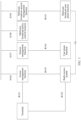
- a multicast function can be decomposed into three NFs: (1) MBSF, which is responsible for multicast session user context management; (2) MBUF, which is responsible for multi-copy forwarding of multicast data; and (3) MBPCF, which is responsible for user and quality of service authorization for multicast.
- MBSF which is responsible for multicast session user context management
- MBUF which is responsible for multi-copy forwarding of multicast data
- MBPCF which is responsible for user and quality of service authorization for multicast.
- interfaces and service invocations corresponding to the network functions may include:
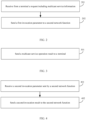
- FIG. 2 is a flowchart of a method for multicast service session operation according to an embodiment of the present invention.
- the method is applied to a first network function of a communications device.
- the first network function may be an AMF or an SMF.
- the method includes the following steps.
- Step 201 Receive from a terminal a request including multicast service information.
- the request may include any one of the following:
- the multicast session establishment request message may include at least one of the following: multicast service information, indication information for indicating establishment of a multicast session, and quality of service capability information supported by the terminal (for example, a supported maximum data reception rate and a supported minimum packet loss rate).
- the multicast session release request message may include at least one of the following: multicast service information, indication information for indicating release of a multicast session, and quality of service capability information supported by the terminal (for example, a supported maximum data reception rate and a supported minimum packet loss rate).
- the first data packet or the second data packet is, for example, an IP packet which takes a format defined by a multicast group protocol, for example, Internet Group Management Protocol (IGMP) or Multicast Listening Discovery Protocol (MLD).
- a destination of the packet is, for example, a multicast service address, for example, Multicast IP.
- Step 202 Send a first invocation parameter to a second network function.
- the first invocation parameter is used for invoking a multicast context service operation of the second network function.
- the second network function is any one of the following: an MBSF, a network function integrating an MBSF and an MBPCF, and the like.
- first invocation parameter may be specifically used for any of the following:
- the first invocation parameter includes at least one of the following:
- the multicast service information may include at least one of the following: a multicast service address, a multicast group identifier, and a uniform resource locator.
- the method may further include: receiving a first invocation result returned by the second network function; and sending a multicast service operation result to the terminal according to the first invocation result, or refusing to send information to the terminal, according to the first invocation result.
- the first invocation result may include at least one of the following: a multicast group identifier, information for notifying a RAN to create or update a radio resource, and a multicast service operation result.
- the multicast service operation result may include any one of the following:
- the AMF may send the first invocation parameter to the MBSF after receiving a multicast session establishment request message from UE, so as to invoke a multicast context user add service operation of the MBSF and receive the first invocation result returned by the MBSF. Further, according to the first invocation result, the AMF (or SMF) may send a multicast session establishment response message to the UE, where the response message is, for example, a multicast session establishment success message or a multicast session establishment failure message; or may refuse to send information to the UE.
- the AMF may send the first invocation parameter to the MBSF after receiving a multicast session release request message from UE, so as to invoke a multicast context user delete service operation of the MBSF and receive the first invocation result returned by the MBSF. Further, according to the first invocation result, the AMF (or SMF) may send a multicast session release response message to the UE, for example, information that leaving a multicast session is allowed; or may refuse to send information to the UE.
- the AMF may send the first invocation parameter to the MBSF after receiving from UE an IP data packet for requesting to join a corresponding multicast group, so as to invoke a multicast context user add service operation of the MBSF and receive the first invocation result returned by the MBSF. Further, according to the first invocation result, the AMF (or SMF) may send multicast service activation information to the UE; or may refuse to send information to the UE.
- the AMF may send the first invocation parameter to the MBSF after receiving from UE an IP data packet for requesting to leave a corresponding multicast group, so as to invoke a multicast context user delete service operation of the MBSF and receive the first invocation result returned by the MBSF. Further, according to the first invocation result, the AMF (or SMF) may send multicast service deactivation information to the UE; or may refuse to send information to the UE.
- FIG. 3 is a flowchart of another method for multicast service session operation according to an embodiment of the present invention.
- the method is applied to a second network function of a communications device.
- the second network function is any one of the following: an MBSF, a network function integrating an MBSF and an MBPCF, a network function integrating an MBSF and an AMF, a network function integrating an MBSF and an SMF, and the like.
- the method may include the following steps.
- Step 301 Send a multicast service operation result to a terminal.
- the multicast service operation result may include any one of the following:
- the method may further include: receiving from the terminal a request including multicast service information.
- the request is, for example, a multicast session establishment request message or a multicast session release request message.
- the second network function is, for example, a network function integrating an MBSF and an AMF, or a network function integrating an MBSF and an SMF.
- the method may further include: receiving a first invocation parameter sent by the first network function.
- the first network function is, for example, an AMF or an SMF.
- the first invocation parameter is used for invoking a multicast context service operation of the second network function.
- the second network function is, for example, an MBSF, or a network function integrating an MBSF and an MBPCF.
- the first invocation parameter may be specifically used for any one of the following: invoking a multicast context user add service operation of the second network function; and invoking a multicast context user delete service operation of the second network function.
- the second network function may further send the multicast service operation result to the terminal via the first network function.
- the first network function is, for example, an AMF or an SMF.
- the second network function is, for example, an MBSF, or a network function integrating an MBSF and an MBPCF.
- the method may further include: sending a second invocation parameter to a third network function, and receiving a second invocation result sent by the third network function.
- the second invocation parameter is used for invoking an authorization service operation of the third network function.
- the third network function is, for example, an MBPCF.
- the second invocation result can be understood as an authorization result, indicating that authorization succeeds or authorization fails.
- the second invocation parameter is specifically used for any of the following:
- the second invocation parameter may include, but is not limited to, at least one of the following: a user identifier, multicast service information, quality of service capability information, and RAN node information.
- the second invocation result may include at least one of the following:
- step 301 may further include: sending the multicast service operation result to the terminal according to the second invocation result.
- the method further includes: subscribing terminal message notifications from an AMF so that the AMF forwards terminal messages to an MBSF.
- the method further includes: sending a radio session request message to a RAN node.
- the radio session request message includes at least one of the following:
- multicast services are able to operate on a network using a service-based architecture that is based on network functions.
- FIG. 4 is a flowchart of another method for multicast service session operation according to an embodiment of the present invention.
- the method is applied to a third network function of a communications device.
- the third network function is optionally an MBPCF.
- the method may include the following steps.
- Step 401 Receive a second invocation parameter sent by a second network function.
- the second invocation parameter is used for invoking an authorization service operation of the third network function.
- the second invocation parameter includes multicast service information.
- the second network function may be an MBSF, a network function integrating an MBSF and an AMF, a network function integrating an MBSF and an SMF, or the like.
- the second invocation parameter is specifically used for any of the following:
- Step 402 Send a second invocation result to the second network function.
- the second invocation result can be understood as an authorization result, indicating that authorization succeeds or authorization fails.
- the content included in the second invocation parameter and the second invocation result in this embodiment reference may be made to the embodiment in FIG. 3 , and details are not described herein again.
- step 402 may include any one of the following:
- the method may further include: receiving configuration information sent by the fourth network function.
- the configuration information includes event operation information.
- the event operation information may include any one of the following: an event type; and an event type and a manner of notifying a content provider of event occurrence.
- the fourth network function may be other network functions (for example, a unified data management UDM function or a network open function NEF) or network elements (for example, a content provider) other than the first network function, second network function, and third network function.
- network functions for example, a unified data management UDM function or a network open function NEF
- network elements for example, a content provider
- multicast services are able to operate on a network using a service-based architecture that is based on network functions.
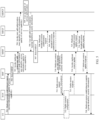
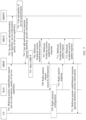
- Application Scenario 1 of the embodiments of the present invention mainly describes a control plane based procedure of a user joining a multicast service group. As shown in FIG. 5 , a corresponding session operation procedure may include the following steps.
- Step 501 UE sends a multicast session establishment request via a RAN and an AMF, for example, sending an MB Session Establishment Request message.
- the multicast session establishment request message includes multicast service information, for example, a multicast address Multicast IP or a multicast group identifier (Temporary Mobile Group Identifier, TMGI); or includes indication information for indicating establishment of a multicast session.
- the multicast session establishment request message may also include quality of service capability information about UE's support of multicast broadcast service, for example, a supported maximum data reception rate and a supported minimum packet loss rate.
- Step 502 An SMF receives the multicast session establishment request message forwarded by the AMF, and selects an MBSF.
- the SMF may select a nearest MBSF based on location information of a user, or select an appropriate MBSF according to user subscription information.
- Step 503 The SMF sends a first invocation parameter to the selected MBSF to invoke a multicast context user add service operation of the MBSF, for example, to invoke an Nmbsf_MBContext _UserAdd service operation (which is a network application programming interface (Application Programming Interface, API)).
- Nmbsf_MBContext _UserAdd service operation which is a network application programming interface (Application Programming Interface, API)
- the first invocation parameter includes a user identifier, received multicast service information, and quality of service capability information.
- the first invocation parameter may also include information about a RAN node serving the UE, for example, an IP address, or an IP address and a port, or an IP address, a port, and a tunnel identifier (the tunnel identifier is carried when an MBUF sends data); and may also include an operation type indication, for example, user add operation, where the indication may alternatively be given by a corresponding service operation.
- Step 504 The MBSF sends a second invocation parameter to the MBPCF to invoke a user add authorization service operation of the MBPCF, for example, invoking an Nmbpcf_PolicyAuthorization_UserAdd service operation.
- the second invocation parameter includes a user identifier, multicast service information, and quality of service capability information that are received.
- Step 505 The MBPCF determines that a user corresponding to the user identifier is allowed to receive a specified multicast service (if the multicast service information includes, for example, a multicast address or a multicast group identifier); or the MBPCF determines that the user has a multicast service (if the multicast service information is indication information).
- the MBPCF may receive configuration information sent by another network function or network element.
- the configuration information may include event operation information, where the event operation information includes an event type, for example, user authorization event; and may also include a manner of notifying a content provider of event occurrence, for example, by a uniform resource identifier (Uniform Resource Identifier, URI), unified resource locator (Uniform Resource Locator, URL) information, or a message address (for example, an IP address, or an IP address and a port).
- the notification manner may correspond to an event type or may be meant for all event types (notification content needs to carry an event type), and default information is used when no notification manner is present.
- the MBPCF may request user authorization verification from another network function or network element, with event type information carried, for example, user add or user delete. The MBPCF does not make local determination.
- Step 506 The MBPCF returns an authorization result (second invocation result) to the MBSF. If authorization succeeds, the returned result may carry security information and/or a multicast group identifier TMGI.
- Step 507 The MBSF selects an MBUF.
- the MBSF may select an MBUF that is closer to a location of the user, and the selected MBUF may be already in a multicast path tree (for example, used to forward data to other users).
- Step 508 If no forwarding path exists between a RAN node and the selected MBUF, the MBSF sends a multicast broadcast session establishment request to the MBUF, for example, sending an MB Session Setup Request message.
- Step 509 The MBUF reserves a resource, associates session paths (that is, association between reception and forwarding with a one-to-many relationship, meaning that one received data packet needs to be copied and forwarded in multiple copies), and sends a multicast broadcast session establishment response to the MBSF, for example, sending an MB Session Setup Response message.
- session paths that is, association between reception and forwarding with a one-to-many relationship, meaning that one received data packet needs to be copied and forwarded in multiple copies
- sends a multicast broadcast session establishment response to the MBSF for example, sending an MB Session Setup Response message.
- Step 510 The MBSF returns to the SMF a first invocation result, which is a result of invoking the multicast context user add service operation.
- the first invocation result may include security information, for example, a key or a key-generating material.
- the first invocation result may also include a multicast group identifier, for example, a TMGI.
- the first invocation result also includes information for notifying the RAN to create or update the radio resource, where the information includes user plane information and may also include multicast service information.
- the user plane information may be, for example, an MBUF identifier, or an IP address, or an IP address and a port, or an IP address, a port, and a multicast service channel identifier, or a multicast service channel identifier (carried when the MBUF sends data). If the UE needs to be notified, the first invocation result also includes information for notifying the UE of a multicast session establishment response.
- Step 511 If the SMF receives the information for creating or updating a radio resource, the SMF sends a radio session request to the RAN node via the AMF, for example, sending an N2 Session Request message, where the message includes the received information for creating or updating a radio resource; or if the SMF receives the information to be notified to the UE, the SMF sends a multicast session establishment response to the UE via the AMF, for example, sending an MB Session Establishment Response message.
- Step 512 the RAN node configures a radio resource based on the information for creating or updating a radio resource.
- the UE in response to the multicast session establishment response message, the UE sends a multicast session establishment acknowledgment to the AMF via the RAN node, for example, sending an MB Session Establishment Ack message.
- Step 514 If the AMF receives a radio session response message returned by the RAN node or the multicast session establishment acknowledgment message sent by the UE, the AMF notifies the SMF that the radio session response message or the multicast session establishment acknowledgment message is received, where the message may include the information about the RAN node.
- the SMF invokes a multicast context update service operation of the MB SF, for example, invoking an Nmbsf_MBContext_Update service operation.
- Step 515 If steps 513 and 514 are executed, the MBSF sends a multicast broadcast session update request to the MBUF, for example, sending an MB Session Update Request message.
- the message may include the information about the RAN node.
- Step 516 The MBUF updates the reserved resource and the association relationship, and sends a multicast broadcast session update response to the MBSF, for example, sending an MB Session Update Response message.
- Step 517 The MBSF returns to the SMF a result of invoking a multicast context update service operation.
- the result may include new security information, for example, a key or a key-generating material, may also include a new multicast group identifier TMGI, and may also include multicast session establishment complete information to be notified to the UE.
- Step 518 The SMF sends a multicast session establishment complete message to the UE via the AMF, for example, sending an MB Session Establishment Complete message, where the message may include a TMGI or security information.
- step 510 may also include multicast session establishment complete information to be notified to the UE, and step 518 is executed after step 510.
- the content provider can broadcast to multiple UEs joining the multicast group, by sending only one piece of data to the MBUF.
- the UEs joining the multicast group can use the security information (if received) to process the received radio broadcast data.
- the MBSF may be selected by the AMF, and the AMF directly interacts with the MBSF without intervention of the SMF.
- Other interaction processes are the same as those in the foregoing embodiment, and therefore are not further described herein.
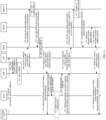
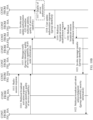
- Application Scenario 2 of the embodiments of the present invention mainly describes a user plane based procedure of a user joining a multicast service group. As shown in FIG. 6 , a corresponding session operation procedure may include the following steps.
- Step 601 UE sends an IP data packet via a RAN and a user plane of a core network.
- the IP packet takes a format defined by a multicast group protocol, for example, Internet Group Management Protocol (IGMP) or Multicast Listening Discovery Protocol (MLD).
- IGMP Internet Group Management Protocol
- MLD Multicast Listening Discovery Protocol
- a destination of the IP data packet is, for example, a multicast service address, for example, Multicast IP.
- the IP data packet is to request to join a corresponding multicast group.
- Step 602 After receiving the IP data packet, the UPF sends intercepted packet information to the SMF, for example, having the intercepted packet information carried in a data notification (Data Notification) message, so as to request to add to the UE to the multicast group.
- a data notification Data Notification
- Step 603 The SMF selects an MBSF.
- the SMF may select a nearest MBSF based on location information of a user, or select an appropriate MBSF according to user subscription information.
- Step 604 The SMF sends a first invocation parameter to the selected MBSF to invoke a multicast context user add service operation of the MBSF, for example, to invoke an Nmbsf_MBContext_UserAdd service operation (which is a network API).
- the first invocation parameter includes a user identifier and a received multicast service address.
- the first invocation parameter may include information about a RAN node serving the UE (for example, an IP address, or an IP address and a port); and may also include an operation type indication, for example, user add operation, where the indication may alternatively be given by a corresponding service operation.
- Step 605 The MBSF sends a second invocation parameter to the MBPCF to invoke a user add authorization service operation of the MBPCF, for example, to invoke an Nmbpcf_PolicyAuthorization _UserAdd service operation.
- the second invocation parameter includes a user identifier, multicast service information (for example, a Multicast IP, or a group identifier TMGI mapped based on a Multicast IP, or indication information mapped by determining, based on a Multicast IP, that the user already has this multicast service), and information about a RAN node that are received.
- multicast service information for example, a Multicast IP, or a group identifier TMGI mapped based on a Multicast IP, or indication information mapped by determining, based on a Multicast IP, that the user already has this multicast service
- Step 606 The MBPCF determines that a user corresponding to the user identifier is allowed to receive a specified multicast service (if the multicast service information includes, for example, a multicast address or a multicast group identifier); or the MBPCF determines that the user has a multicast service (if the multicast service information is indication information).
- the MBPCF may receive configuration information sent by another network function or network element.
- the configuration information may include event operation information, where the event operation information includes an event type, for example, user authorization event; and may also include a manner of notifying a content provider of event occurrence, for example, by a URI, URL information, or a message address (for example, an IP address, or an IP address and a port).
- the notification manner may correspond to an event type or may be meant for all event types (notification content needs to carry an event type), and default information is used when no notification manner is present.
- the MBPCF may request user authorization verification from another network function (for example, a UDM or an NEF) or network element (for example, a content provider), with event type information carried, for example, user add or user delete.
- another network function for example, a UDM or an NEF
- network element for example, a content provider
- event type information carried, for example, user add or user delete.
- the MBPCF does not make local determination.
- Step 607 The MBPCF returns an authorization result (second invocation result) to the MBSF. If authorization succeeds, the returned result may carry security information.
- Step 608 The MBSF selects an MBUF.
- the MBSF may select an MBUF that is closer to a location of the user, and the selected MBUF may be already in a multicast path tree (for example, used to forward data to other users).
- Step 609 The MBSF returns to the SMF a first invocation result, which is a result of invoking the multicast context user add service operation.
- the first invocation result may include security information, for example, a key or a key-generating material.
- the first invocation result may also include a multicast group identifier, for example, a TMGI.
- the first invocation result also includes information for notifying the RAN to create or update the radio resource, where the information includes user plane information and may also include multicast service information.
- the user plane information may be, for example, an MBUF identifier, or an IP address, or an IP address and a port, or an IP address, a port, and a multicast service channel identifier, or a multicast service channel identifier (carried when the MBUF sends data).
- the first invocation result may also include information for notifying the UE of multicast service activation.
- Step 610 The SMF sends a multicast broadcast activation request to the UE via the AMF, for example, sending an N1 MBS Activation Request message.
- the message may include a group identifier, for example, a TMGI.
- Step 611 The SMF sends a radio session request to the RAN node via the AMF, for example, sending an N2 Session Request message, where the message includes the received information for creating or updating a radio resource; and the message may also include security information and/or a group identifier.
- the messages in steps 610 and 611 may be bound in one message and sent to the RAN node.
- Step 612 The RAN node configures a radio resource based on the information for creating or updating a radio resource.
- Step 613 The RAN node returns a radio session response to the SMF via the AMF, for example, returning an N2 Session Response message.
- the RAN node may determine, based on information about the MBUF, whether a channel to the MBUF needs to be created for the multicast service indicated by the multicast service information. If such channel needs to be created, a new channel identifier, for example, a tunnel identifier (carried when the MBUF sends data), is assigned; and if a service forwarding channel indicated by the multicast service information already exists, the existing channel identifier is returned.
- the RAN node may alternatively directly return a channel identifier, or the RAN node may return address information, for example, an IP address or an IP address and a port.
- Step 614 The UE sends a multicast broadcast activation response to the SMF via the AMF, for example, sending an N1 MBS Activation Response message.
- the message may include a group identifier, for example, a TMGI; and may also include quality of service capability information about UE's support of multicast broadcast service, for example, a supported maximum data reception rate and a supported minimum packet loss rate.
- the messages in steps 613 and 614 may be bound in one message and sent to the AMF.
- Step 615 After step 614, the SMF sends the invocation parameter to the MBSF to invoke a multicast context update service operation of the MBSF, for example, to invoke an Nmbsf_MBContext_Update service operation.
- the invocation parameter may include a TMGI.
- Step 616 If the quality of service capability information is received, the MBSF may send an invocation parameter to the MBPCF to invoke an authorization update service operation of the MBPCF.
- the invocation parameter may include the quality of service capability information, UE identifier, and multicast service information that are received.
- Step 617 The MBPCF determines that the terminal with such quality of service capability is capable of receiving multicast services.
- Step 618 The MBPCF returns an authorization update invocation result to the MBSF.
- Step 619 The MBSF sends a multicast broadcast session update request to the MBUF, for example, sending an MB Session Update Request message.
- the message includes the information about the RAN node.
- Step 620 The MBUF updates a reserved resource and an association relationship, and sends a multicast broadcast session update response to the MBSF, for example, sending an MB Session Update Response message.
- Step 621 The MBSF returns to the SMF a result of invoking a multicast context update service operation.
- the result may include a new multicast group identifier TMGI, and may also include information for notifying the UE of multicast broadcast activation acknowledgment.
- Step 622 The SMF sends a multicast broadcast activation acknowledgment to the UE via the AMF, for example, sending an N1 MBS Activation Ack message.
- the message may include a TMGI.
- the content provider can broadcast to multiple UEs joining the multicast group, by sending only one piece of data to the MBUF.
- the UEs joining the multicast group can use the security information (if received) to process the received radio broadcast data.
- Application Scenario 3 of the embodiments of the present invention mainly describes a control plane based procedure of a user joining a multicast service group.
- the SMF and the MBSF are an integrated function.
- a corresponding session operation procedure may include the following steps.
- Step 701 UE sends a multicast session establishment request via a RAN and an AMF, for example, sending an MB Session Establishment Request message.
- the multicast session establishment request message includes multicast service information, for example, a multicast address Multicast IP or a multicast group identifier TMGI; or includes indication information for indicating establishment of a multicast session.
- the multicast session establishment request message may also include quality of service capability information about UE's support of multicast broadcast service, for example, a supported maximum data reception rate and a supported minimum packet loss rate.
- Step 702 The MBSF receives the multicast session establishment request message forwarded by the AMF, and sends a second invocation parameter to the MBPCF to invoke a create authorization service operation of the MBPCF, for example, to invoke an Nmbpcf_PolicyAuthorization_Create service operation.
- the second invocation parameter includes a user identifier, multicast service related information, and received quality of service capability information.
- Step 703 The MBPCF determines that a user corresponding to the user identifier is allowed to receive a specified multicast service (if the multicast service information includes, for example, a multicast address or a multicast group identifier); or the MBPCF determines that the user has a multicast service (if the multicast service information is indication information).
- the MBPCF may receive configuration information sent by another network function or network element.
- the configuration information may include event operation information, where the event operation information includes an event type, for example, user authorization event; and may also include a manner of notifying a content provider of event occurrence, for example, by a URI, URL information, or a message address (for example, an IP address, or an IP address and a port).
- the notification manner may correspond to an event type or may be meant for all event types (notification content needs to carry an event type), and default information is used when no notification manner is present.
- the MBPCF may request user authorization verification from another network function or network element, with event type information carried, for example, user add or user delete. The MBPCF does not make local determination.
- Step 704 The MBPCF returns an authorization result (second invocation result) to the MBSF. If authorization succeeds, the returned result may carry security information and/or a multicast group identifier TMGI.
- Step 705 The MBSF selects an MBUF.
- the MBSF may select an MBUF that is closer to a location of the user, and the selected MBUF may be already in a multicast path tree (for example, used to forward data to other users).
- Step 706 If no forwarding path exists between a RAN node and the selected MBUF, the MBSF sends a multicast broadcast session establishment request to the MBUF, for example, sending an MB Session Setup Request message.
- Step 707 The MBUF reserves a resource, associates session paths (that is, association between reception and forwarding with a one-to-many relationship, meaning that one received data packet needs to be copied and forwarded in multiple copies), and sends a multicast broadcast session establishment response to the MBSF, for example, sending an MB Session Setup Response message.
- session paths that is, association between reception and forwarding with a one-to-many relationship, meaning that one received data packet needs to be copied and forwarded in multiple copies
- sends a multicast broadcast session establishment response to the MBSF for example, sending an MB Session Setup Response message.
- Step 708 If a forwarding channel between the MBUF and the RAN node needs to be established, the MBSF sends a radio session request to the RAN node via the AMF, for example, sending an N2 Session Request message.
- the message may include information for creating or updating a radio resource.
- the message may also include security information, for example, a key or a key-generating material.
- the message may also include a multicast group identifier TMGI.
- the message may also include user plane information and/or multicast service information.
- the user plane information may be, for example, an MBUF identifier, or an IP address, or an IP address and a port, or an IP address, a port, and a multicast service channel identifier, or a multicast service channel identifier (carried when the MBUF sends data). If the UE needs to be notified, the MBSF may further send a multicast session establishment response to the UE via the AMF, for example, sending an MB Session Establishment Response message.
- the messages sent to the RAN node and the UE may be sent to the AMF together, and forwarded together to the RAN node by the AMF, and then forwarded to the UE by the RAN node.
- Step 709 the RAN node configures a radio resource based on the information for creating or updating a radio resource.
- the UE in response to the multicast session establishment response message, the UE sends a multicast session establishment acknowledgment to the AMF via the RAN node, for example, sending an MB Session Establishment Ack message.
- Step 710 The RAN node returns a radio session response to the AMF, for example, returning an N2 Session Response message.
- the message may include information about the RAN node. If the RAN node receives the multicast session establishment acknowledgment message from the UE, the RAN node also forwards the message to the AMF. If the AMF receives the radio session response returned by the RAN node or the multicast session establishment acknowledgment sent by the UE, the AMF notifies the MBSF that the radio session response or the multicast session establishment acknowledgment is received, where the message may carry the information about the RAN node.
- Step 711 If step 710 is executed, the MBSF sends a multicast broadcast session update request to the MBUF, for example, sending an MB Session Update Request message.
- the message may include the information about the RAN node.
- Step 712 The MBUF updates the reserved resource and the association relationship, and sends a multicast broadcast session update response to the MBSF, for example, sending an MB Session Update Response message.
- Step 713 The MBSF sends a multicast session establishment complete message to the UE, for example, sending an MB Session Establishment Complete message.
- the message may include new security information, for example, a key or a key-generating material, and may also include a new multicast group identifier TMGI.
- step 713 may be executed after step 705 or step 707.
- the content provider can broadcast to multiple UEs joining the multicast group, by sending only one piece of data to the MBUF.
- the UEs joining the multicast group can use the security information (if received) to process the received radio broadcast data.
- the AMF and the MBSF may be integrated.
- the interaction between the UE and the MBSF and the interaction between the RAN node and the MBSF do not need to be processed by the AMF.
- Application Scenario 4 of the embodiments of the present invention mainly describes a control plane based procedure of a user leaving a multicast service group. As shown in FIG. 8 , a corresponding session operation procedure may include the following steps.
- Step 801 UE sends a multicast session release request via a RAN and an AMF, for example, sending an MB Session Release Request message.
- the multicast session release request message includes multicast service information, for example, a multicast address Multicast IP or a multicast group identifier TMGI; or includes indication information for indicating leave from a multicast session.
- the multicast session release request message may also include quality of service capability information about UE's support of multicast broadcast service, for example, a supported maximum data reception rate and a supported minimum packet loss rate.
- Step 802 The SMF sends a first invocation parameter to the MBSF to invoke a multicast context user delete service operation of the MBSF, for example, to invoke an Nmbsf_MBContext_UserDelete service operation (which is a network API).
- the first invocation parameter includes a user identifier and received multicast service information.
- the first invocation parameter may also include information about a RAN node serving the UE, for example, an IP address, or an IP address and a port, or an IP address, a port, and a multicast tunnel identifier (which may be carried when an MBUF sends data); and may also include an operation type indication, for example, user delete operation, where the indication may alternatively be given by a corresponding service operation.
- Step 803 The MBSF sends a second invocation parameter to the MBPCF to invoke a user delete authorization service operation of the MBPCF, for example, to invoke an Nmbpcf_PolicyAuthorization _UserDelete service operation.
- the second invocation parameter includes a user identifier and multicast service information that are received.
- Step 804 The MBPCF determines that a user corresponding to the user identifier is allowed to receive a specified multicast service (if the multicast service information includes, for example, a multicast address or a multicast group identifier); or the MBPCF determines that the user has a multicast service (if the multicast service information is indication information).
- the MBPCF may receive configuration information sent by another network function or network element.
- the configuration information may include event operation information, where the event operation information includes an event type, for example, user authorization event; and may also include a manner of notifying a content provider of event occurrence, for example, by a URI, URL information, or a message address (for example, an IP address, or an IP address and a port).
- the notification manner may correspond to an event type or may be meant for all event types (notification content needs to carry an event type), and default information is used when no notification manner is present.
- the MBPCF may request user authorization verification from another network function or network element, with event type information carried, for example, user add or user delete. The MBPCF does not make local determination.
- the MBPCF may notify other network functions or network elements of leave of the user.
- Step 805 The MBPCF returns an authorization result (second invocation result) to the MBSF. If authorization succeeds, the returned result may carry a multicast group identifier TMGI.
- Step 806 The MBSF returns to the SMF a first invocation result, which is a result of invoking the multicast context user delete service operation.
- the first invocation result may also include a multicast group identifier, for example, a TMGI.
- the first invocation result also includes information for notifying the RAN to update the radio resource, where the information includes user plane information and multicast service information.
- the user plane information may be, for example, an MBUF identifier, or an IP address, or an IP address and a port, or an IP address, a port, and a multicast service channel identifier, or a multicast service channel identifier (carried when the MBUF sends data). If the UE needs to be notified, the first invocation result also includes information for notifying the UE of a multicast session release response.
- Step 807 If the SMF receives the information for updating a radio resource, the SMF sends a radio session request to the RAN node via the AMF, for example, sending an N2 Session Request message, where the message includes the received information for updating a radio resource; or if the SMF receives the information to be notified to the UE, the SMF sends a multicast session release response to the UE via the AMF, for example, sending an MB Session Release Response message.
- Step 808 the RAN node configures a radio resource based on the information for updating a radio resource.
- the UE in response to the multicast session release response message, the UE sends a multicast session release acknowledgment to the AMF via the RAN node, for example, sending an MB Session Release Ack message.
- Step 809 the RAN node returns a radio session response to the AMF, for example, returning an N2 Session Response message.
- the message may include information about the number of multicast recipients. If the RAN node receives the multicast session release acknowledgment message from the UE, the RAN node also forwards the message to the AMF.
- Step 810 If the AMF receives the radio session response message returned by the RAN node or the multicast session release acknowledgment message sent by the UE, the AMF notifies the SMF that the radio session response or the multicast session release acknowledgment is received, where the message may include information about the RAN node.
- the SMF invokes a multicast context update service operation of the MBSF, for example, invoking an Nmbsf_MBContext_Update service operation.
- Step 811 If steps 809 and 810 are executed, the MBSF determines that the RAN node has no users to receive multicast data, and therefore sends a multicast broadcast session release request to the MBUF, for example, sending an MB Session Release Request message, where the message includes the information about the RAN node.
- Step 812 The MBUF releases a forwarding resource with the RAN node, and sends a multicast session release response to the MBSF, for example, sending an MB Session Release Response message.
- Step 813 the MBSF returns to the SMF a result of invoking the multicast context update service operation, where the result may include a multicast group identifier TMGI, and may also include multicast session release complete information to be notified to the UE.
- the result may include a multicast group identifier TMGI, and may also include multicast session release complete information to be notified to the UE.
- Step 814 The SMF sends a multicast session release complete message to the UE via the AMF, for example, sending an MB Session Release Complete message, where the message may include a TMGI.
- step 806 may also include multicast session release complete information to be notified to the UE, and step 814 is executed after step 806.
- the MBSF may be selected by the AMF, and the AMF directly interacts with the MBSF without intervention of the SMF.
- Other interaction processes are the same as those in the foregoing embodiment, and therefore are not further described herein.
- Application Scenario 5 of the embodiments of the present invention mainly describes a user plane based procedure of a user leaving a multicast service group. As shown in FIG. 9 , a corresponding session operation procedure may include the following steps.
- Step 901 UE sends an IP data packet via a RAN and a user plane of a core network.
- the IP packet takes a format defined by a multicast group protocol, for example, IGMP or MLD.
- a destination of the IP data packet is a multicast service address, for example, Multicast IP.
- the IP data packet is to request to leave a corresponding multicast group.
- Step 902 After receiving the IP data packet, a UPF sends intercepted packet information to an SMF, for example, having the intercepted packet information carried in a Data Notification message, so as to request to delete the UE from the multicast group.
- Step 903 The SMF sends a first invocation parameter to a selected MBSF to invoke a multicast context user delete service operation of the MBSF, for example, to invoke an Nmbsf_MBContext_UserDelete service operation (which is a network API).
- the first invocation parameter includes a user identifier and a received multicast service address.
- the first invocation parameter may include information about a RAN node serving the UE (for example, an IP address, or an IP address and a port); and may also include an operation type indication, for example, user release operation, where the indication may alternatively be given by a corresponding service operation.
- Step 904 The MBSF sends a second invocation parameter to an MBPCF to invoke a user delete authorization service operation of the MBPCF, for example, to invoke an Nmbpcf_PolicyAuthorization _UserDelete service operation.
- the second invocation parameter includes the user identifier, multicast service information (for example, a Multicast IP, or a group identifier TMGI mapped based on a Multicast IP, or indication information mapped by determining, based on a Multicast IP, that the user already has this multicast service), and information about the RAN node that are received.
- multicast service information for example, a Multicast IP, or a group identifier TMGI mapped based on a Multicast IP, or indication information mapped by determining, based on a Multicast IP, that the user already has this multicast service
- Step 905 The MBPCF determines that a user corresponding to the user identifier is allowed to receive a specified multicast service (if the multicast service information includes, for example, a multicast address or a multicast group identifier); or the MBPCF determines that the user has a multicast service (if the multicast service information is indication information).
- the MBPCF may receive configuration information sent by another network function or network element.
- the configuration information may include event operation information, where the event operation information includes an event type, for example, user authorization event; and may also include a manner of notifying a content provider of event occurrence, for example, by a URI, URL information, or a message address (for example, an IP address, or an IP address and a port).
- the notification manner may correspond to an event type or may be meant for all event types (notification content needs to carry an event type), and default information is used when no notification manner is present.
- the MBPCF may request user authorization verification from another network function (for example, a UDM or an NEF) or network element (for example, a content provider), with event type information carried, for example, user add or user delete.
- another network function for example, a UDM or an NEF
- network element for example, a content provider
- event type information carried, for example, user add or user delete.
- the MBPCF does not make local determination.
- Step 906 The MBPCF returns an authorization result (second invocation result) to the MBSF. If authorization succeeds, the returned result may carry a multicast group identifier, for example, a TMGI.
- Step 907 The MBSF returns to the SMF a first invocation result, which is a result of invoking the multicast context user delete service operation.
- the first invocation result may include security information, for example, a key or a key-generating material.
- the first invocation result may also include a multicast group identifier, for example, a TMGI.
- the first invocation result also includes information for notifying the RAN to update the radio resource, where the information includes user plane information and multicast service information.
- the user plane information may be, for example, an MBUF identifier, or an IP address, or an IP address and a port, or an IP address, a port, and a multicast service channel identifier, or a multicast service channel identifier (carried when the MBUF sends data).
- the first invocation result may also include information for notifying the UE of multicast service deactivation.
- Step 908 The SMF sends a multicast broadcast deactivation request to the UE via the AMF, for example, sending an N1 MBS De-activation Request message.
- the message includes a multicast group identifier, for example, a TMGI.
- Step 909 The SMF sends a radio session request to the RAN node via the AMF, for example, sending an N2 Session Request message, where the message includes the received information for updating a radio resource; and the message may also include a multicast group identifier.
- the messages in steps 908 and 909 may be bound in one message and sent to the RAN node.
- Step 910 the RAN node configures a radio resource based on the information for updating a radio resource.
- Step 911 The RAN node returns a radio session response to the AMF, for example, returning an N2 Session Response message.
- the message may include information about the RAN node, where the information includes information about the number of multicast recipients.
- Step 912 The UE sends a multicast broadcast deactivation response to the SMF via the AMF, for example, sending an N1 MBS De-activation Response message.
- the message may include a multicast group identifier, for example, a TMGI.
- the messages in steps 911 and 912 may be bound in one message and sent to the AMF.
- Step 913 After step 912, the SMF sends the invocation parameter to the MBSF to invoke a multicast context update service operation of the MBSF, for example, to invoke an Nmbsf_MBContext_Update service operation.
- the invocation parameter may include the information about the RAN node and a group identifier that are received.
- Step 914 The MBSF determines that the RAN node has no users to receive multicast data, and therefore sends a multicast broadcast session release request to the MBUF, for example, sending an MB Session Release Request message.
- the message may include the information about the RAN node.
- Step 915 The MBUF releases a forwarding resource with the RAN node, and sends a multicast broadcast session release response to the MBSF, for example, sending an MB Session Release Response message.
- Step 916 the MBSF returns to the SMF a result of invoking the multicast context update service operation, where the result may include a multicast group identifier, for example, a TMGI.
- a multicast group identifier for example, a TMGI.
- Application Scenario 6 of the embodiments of the present invention mainly describes a user plane based procedure of a user joining a multicast service group.
- a corresponding session operation procedure may include the following steps.
- Step 1001 UE sends an IP data packet via a RAN and a user plane of a core network.
- the IP packet takes a format defined by a multicast group protocol, for example, IGMP or MLD.
- a destination of the IP data packet is, for example, a multicast service address, for example, Multicast IP.
- the IP data packet is to request to join a corresponding multicast group.
- Step 1002 After receiving the IP data packet, the UPF sends intercepted packet information to the SMF, for example, having the intercepted packet information carried in a Data Notification message, so as to request to add the UE to the multicast group.
- Step 1003 The SMF selects an MBSF.
- the SMF may select a nearest MBSF based on location information of a user, or select an appropriate MBSF according to user subscription information.
- Step 1004 The SMF sends a first invocation parameter to the selected MBSF to invoke a multicast context user add service operation of the MBSF, for example, to invoke an Nmbsf_MBContext_UserAdd service operation (which is a network API).
- the first invocation parameter includes a user identifier, a received multicast service address, and an identifier of the AMF serving the user.
- the first invocation parameter may also include information about the RAN node serving the terminal (for example, an IP address, or an IP address and a port); and may also include an operation type indication, for example, user add operation, where the indication may alternatively be given by a corresponding service operation.
- Step 1005 The MBSF sends a second invocation parameter to the MBPCF to invoke a user add authorization service operation of the MBPCF, for example, to invoke an Nmbpcf_PolicyAuthorization _UserAdd service operation.
- the second invocation parameter includes the user identifier, multicast service information (for example, a Multicast IP, or a group identifier TMGI mapped based on a Multicast IP, or indication information mapped by determining, based on a Multicast IP, that the user already has this multicast service), and information about the RAN node that are received.
- multicast service information for example, a Multicast IP, or a group identifier TMGI mapped based on a Multicast IP, or indication information mapped by determining, based on a Multicast IP, that the user already has this multicast service
- Step 1006 The MBPCF determines that a user corresponding to the user identifier is allowed to receive a specified multicast service (if the multicast service information includes, for example, a multicast address or a multicast group identifier); or the MBPCF determines that the user has a multicast service (if the multicast service information is indication information).
- the MBPCF may receive configuration information sent by another network function or network element.
- the configuration information may include event operation information, where the event operation information includes an event type, for example, user authorization event; and may also include a manner of notifying a content provider of event occurrence, for example, by a URI, URL information, or a message address (for example, an IP address, or an IP address and a port).
- the notification manner may correspond to an event type or may be meant for all event types (notification content needs to carry an event type), and default information is used when no notification manner is present.
- the MBPCF may request user authorization verification from another network function (for example, a UDM or an NEF) or network element (for example, a content provider), with event type information carried, for example, user add or user delete.
- another network function for example, a UDM or an NEF
- network element for example, a content provider
- event type information carried, for example, user add or user delete.
- the MBPCF does not make local determination.
- Step 1007 The MBPCF returns an authorization result (second invocation result) to the MBSF. If authorization succeeds, the returned result may carry security information.
- Step 1008 The MBSF selects an MBUF.
- the MBSF may select an MBUF that is closer to a location of the user, and the selected MBUF may be already in a multicast path tree (for example, used to forward data to other users).
- Step 1009 The MBSF sends an invocation parameter to the AMF to invoke a message transfer service operation of the AMF, for example, to invoke a Namf_Communication_N1N2MessageTransfer service operation.
- the invocation parameter includes a message addressed to the UE for notifying the UE of multicast service activation. If a radio resource needs to be created or updated, the invocation parameter may also include a message addressed to the RAN, where both the message addressed to the UE and the message addressed to the RAN may include security information, for example, a key or a key-generating material; and may also include a multicast group identifier, for example, a TMGI.
- the message addressed to the RAN includes information for notifying the RAN to create or update a radio resource, where the information includes user plane information, and may include multicast service information.
- the user plane information may be, for example, an MBUF identifier, or an IP address, or an IP address and a port, or an IP address, a port, and a multicast service channel identifier, or a multicast service channel identifier (carried when the MBUF sends data).
- Step 1010 The AMF sends a multicast broadcast activation request to the UE, for example, sending an N1 MBS Activation Request message.
- the message may include a group identifier, for example, a TMGI.
- Step 1011 The AMF sends a radio session request to the RAN node, for example, sending an N2 Session Request message, where the message includes the received information for creating or updating a radio resource; and the message may also include security information and/or a group identifier.
- the messages in steps 1010 and 1011 may be bound in one message and sent to the RAN node.
- Step 1012 The RAN node configures a radio resource based on the information for creating or updating a radio resource.
- Step 1013 The RAN node returns a radio session response to the AMF, for example, returning an N2 Session Response message.
- the RAN node may determine, based on information about the MBUF, whether a channel to the MBUF needs to be created for the multicast service indicated by the multicast service information. If such channel needs to be created, a new channel identifier, for example, a tunnel identifier (carried when the MBUF sends data), is assigned; and if a service forwarding channel indicated by the multicast service information already exists, the existing channel identifier is returned.
- the RAN node may alternatively directly return a channel identifier, or the RAN node may return address information, for example, an IP address or an IP address and a port.
- Step 1014 The UE sends a multicast broadcast activation response to the AMF, for example, sending an N1 MBS Activation Response message.
- the message may include a group identifier, for example, a TMGI; and may also include quality of service capability information about UE's support of multicast broadcast service, for example, a supported maximum data reception rate and a supported minimum packet loss rate.
- the messages in steps 1013 and 1014 may be bound in one message and sent to the AMF.
- Step 1015 After step 1014, the AMF invokes its own message notify service operation, for example, invoking a Namf_Communication_N1MessageNotify service operation, where the invocation parameter may include the message received in step 1014, and may also include the information about the RAN node, for example, an IP address or an IP address and a port of the RAN node, and may also include a multicast group identifier, for example, a TMGI.
- a TMGI multicast group identifier
- the BMSF may invoke a message subscribe service operation of the AMF, for example, invoking a Namf_Communication_N1MessageSubscribe service operation, so that in step 1015, the AMF can invoke the message notify service operation to forward the received message to the MBSF.
- a message subscribe service operation of the AMF for example, invoking a Namf_Communication_N1MessageSubscribe service operation, so that in step 1015, the AMF can invoke the message notify service operation to forward the received message to the MBSF.
- Step 1016 If the quality of service capability information is received, the MBSF may send an invocation parameter to the MBPCF to invoke an authorization update service operation of the MBPCF.
- the invocation parameter may include the quality of service capability information, UE identifier, and multicast service information that are received.
- Step 1017 The MBPCF determines that the terminal with such quality of service capability is capable of receiving multicast services.
- Step 1018 The MBPCF returns an authorization update invocation result to the MBSF.
- Step 1019 The MBSF sends a multicast session update request to the MBUF, for example, sending an MB Session Update Request message.
- the message includes the information about the RAN node.
- Step 1020 The MBUF updates the reserved resource and the association relationship, and sends a multicast session update response to the MBSF, for example, sending an MB Session Update Response message.
- Step 1021 The MBSF invokes a message transfer service operation of the AMF, for example, invoking a Namf_Communication_N1N2MessageTransfer service operation, where the invocation parameter includes a message addressed to the UE to notify the UE of multicast broadcast activation acknowledgment, where the message may include a new multicast group identifier TMGI and may also include security information.
- a message transfer service operation of the AMF for example, invoking a Namf_Communication_N1N2MessageTransfer service operation, where the invocation parameter includes a message addressed to the UE to notify the UE of multicast broadcast activation acknowledgment, where the message may include a new multicast group identifier TMGI and may also include security information.
- Step 1022 The AMF sends a multicast broadcast activation acknowledgment to the UE, for example, sending an N1 MBS Activation Ack message, where the message may include a TMGI or security information.
- the content provider can broadcast to multiple UEs joining the multicast group, by sending only one piece of data to the MBUF.
- the UEs joining the multicast group can use the security information (if received) to process the received radio broadcast data.
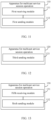
- FIG. 11 is a schematic structural diagram of an apparatus for multicast service session operation according to an embodiment of the present invention.
- the apparatus for multicast service session operation is applied to a first network function of a communications device.
- the first network function is, for example, an AMF or an SMF.
- the apparatus 110 for multicast service session operation includes:
- the apparatus 110 for multicast service session operation may further include:
- the request including multicast service information may include any one of the following:
- the multicast service operation result includes any one of the following:
- the first invocation parameter is specifically used for any of the following:
- the first invocation parameter includes at least one of the following:
- the multicast service information includes at least one of the following:
- the first invocation result includes at least one of the following:
- the apparatus 110 for multicast service session operation in this embodiment can implement the processes implemented in the method embodiment shown in FIG. 2 , with the same beneficial effects achieved. To avoid repetition, details are not described herein again.
- FIG. 12 is a schematic structural diagram of an apparatus for multicast service session operation according to an embodiment of the present invention.
- the apparatus for multicast service session operation is applied to a second network function of a communications device.
- the second network function is, for example, an MBSF, a network function integrating an MBSF and an MBPCF, a network function integrating an MBSF and an AMF, or a network function integrating an MBSF and an SMF.
- the apparatus 120 for multicast service session operation includes: a third sending module 121, configured to send a multicast service operation result to a terminal.
- the apparatus 120 for multicast service session operation may further include:
- the apparatus 120 for multicast service session operation may further include:
- the third sending module 121 is specifically configured to: send the multicast service operation result to the terminal via the first network function.
- the third sending module 121 is specifically configured to: send the multicast service operation result to the terminal according to the second invocation result.
- the first invocation parameter is specifically used for any of the following:
- the request including multicast service information includes any one of the following:
- the apparatus 120 for multicast service session operation may further include: a subscription module, configured to subscribe terminal message notifications from an access management function.
- the apparatus 120 for multicast service session operation may further include: a fifth sending module, configured to send a radio session request message to a RAN node.
- a fifth sending module configured to send a radio session request message to a RAN node.
- the radio session request message includes at least one of the following:
- the second invocation parameter is specifically used for any of the following:
- the second invocation parameter includes at least one of the following:
- the second invocation result includes at least one of the following:
- the apparatus 120 for multicast service session operation in this embodiment can implement the processes implemented in the method embodiment shown in FIG. 3 , with the same beneficial effects achieved. To avoid repetition, details are not described herein again.
- FIG. 13 is a schematic structural diagram of an apparatus for multicast service session operation according to an embodiment of the present invention.
- the apparatus for multicast service session operation is applied to a third network function of a communications device.
- the third network function is an MBPCF.
- the apparatus 130 for multicast service session operation may include:
- the second invocation parameter is specifically used for any of the following:
- the sixth sending module 132 is specifically configured to:
- the apparatus 130 for multicast service session operation may further include:
- apparatus 130 for multicast service session operation in this embodiment can implement the processes implemented in the method embodiment shown in FIG. 4 , with the same beneficial effects achieved. To avoid repetition, details are not described herein again.
- FIG. 14 is a schematic structural diagram of a communications device according to an embodiment of the present invention.
- the communications device 140 includes a processor 141, a memory 142, and a computer program stored in the memory 142 and capable of running on the processor.
- the components of the communications device 140 are coupled together via a bus interface 143, and when the computer program is executed by the processor 141, the processes implemented in the method embodiment shown in FIG. 2 may be implemented, or the processes implemented in the method embodiment shown in FIG. 3 are implemented, or the processes implemented in the method embodiment shown in FIG. 4 are implemented, with the same technical effects achieved. To avoid repetition, details are not described herein again.
- An embodiment of the present invention further provides a computer-readable storage medium.
- a computer program is stored in the computer-readable storage medium, and when the computer program is executed by a processor, the processes implemented in the method embodiment shown in FIG. 2 are implemented, or the processes implemented in the method embodiment shown in FIG. 3 are implemented, or the processes implemented in the method embodiment shown in FIG. 4 are implemented, with the same technical effects achieved. To avoid repetition, details are not described herein again.
- the computer-readable storage medium is a read-only memory (Read-Only Memory, ROM), a random access memory (Random Access Memory, RAM), a magnetic disk, or an optical disc.
- the method in the foregoing embodiments may be implemented by software in addition to a necessary universal hardware platform or by hardware only. In most cases, the former is a preferred implementation.
- the technical solutions of the present invention essentially, or the part contributing to the prior art may be implemented in a form of a software product.
- the software product is stored in a storage medium (for example, ROM/RAM, a magnetic disk, or an optical disc), and includes several instructions for instructing a terminal (which may be a mobile phone, a computer, a server, an air conditioner, a network device, or the like) to perform the method described in the embodiments of the present invention.
Landscapes
- Engineering & Computer Science (AREA)
- Computer Networks & Wireless Communication (AREA)
- Signal Processing (AREA)
- Multimedia (AREA)
- Business, Economics & Management (AREA)
- General Business, Economics & Management (AREA)
- Databases & Information Systems (AREA)
- Quality & Reliability (AREA)
- Mobile Radio Communication Systems (AREA)
- Data Exchanges In Wide-Area Networks (AREA)
- Exchange Systems With Centralized Control (AREA)
- Computer And Data Communications (AREA)
Claims (15)
- Procédé pour une opération de session de service de multidiffusion, exécuté par une première fonction de réseau d'un dispositif de communication, le procédé comprenant les étapes consistant à :recevoir (201) depuis un terminal une requête comprenant des informations de service de multidiffusion ; etenvoyer (202) un premier paramètre d'invocation à une deuxième fonction de réseau, dans lequel le premier paramètre d'invocation est utilisé pour invoquer une opération de service de contexte de multidiffusion de la deuxième fonction de réseau,dans lequel la première fonction de réseau est une fonction de gestion d'accès, AMF, ou une fonction de gestion de session, SMF ; et la deuxième fonction de réseau est une gestion de session de diffusion multidiffusion, MBSF, ou une fonction de réseau intégrant la MBSF et une fonction de commande de politique de diffusion multidiffusion, MBPCF,dans lequel le premier paramètre d'invocation comprend au moins l'un des éléments suivants :des informations d'indication de type d'opération, dans lequel les informations d'indication de type d'opération sont utilisées pour indiquer l'un quelconque des éléments suivants : ajout d'utilisateur, suppression d'utilisateur, établissement de session de multidiffusion, et libération de session de multidiffusion ;des informations de service de multidiffusion, dans lequel les informations de service de multidiffusion sont reçues en provenance du terminal ;des informations de capacité de qualité de service, dans lequel les informations de capacité de qualité de service sont reçues en provenance du terminal ; etdes informations concernant un noeud de réseau d'accès radio, RAN, desservant l'UE.
- Procédé selon la revendication 1, comprenant en outre les étapes consistant à :recevoir un premier résultat d'invocation renvoyé par la deuxième fonction de réseau ; etenvoyer un résultat d'opération de service de multidiffusion au terminal en fonction du premier résultat d'invocation ; ourefuser d'envoyer des informations au terminal, en fonction du premier résultat d'invocation,dans lequel le résultat d'opération de service de multidiffusion comprend un quelconque des éléments suivants :un message de réussite d'établissement de session de multidiffusion ;un message d'échec d'établissement de session de multidiffusion ;des informations d'activation de service de multidiffusion ;des informations de désactivation de service de multidiffusion ; etdes informations indiquant que quitter une session de multidiffusion est autorisé.
- Procédé selon la revendication 1, dans lequel la requête comprenant des informations de service de multidiffusion comprend l'un quelconque des éléments suivants :un message de requête d'établissement de session de multidiffusion ;un premier paquet de données pour formuler une requête de rejoindre un groupe de multidiffusion correspondant ;un message de requête de libération de session de multidiffusion ; etun second paquet de données pour formuler une requête de quitter un groupe de multidiffusion correspondant, et,dans lequel le premier paramètre d'invocation est spécifiquement utilisé pour une quelconque des étapes suivantes :invoquer une opération de service d'ajout d'utilisateur de contexte de multidiffusion de la deuxième fonction de réseau ; etinvoquer une opération de service de suppression d'utilisateur de contexte de multidiffusion de la deuxième fonction de réseau.
- Procédé selon la revendication 1, dans lequel les informations de service de multidiffusion comprennent au moins l'un des éléments suivants :une adresse de service de multidiffusion ;un identifiant de groupe de multidiffusion ; etun localisateur de ressources uniforme.
- Procédé selon la revendication 2, dans lequel le premier résultat d'invocation comprend au moins l'un des éléments suivants :un identifiant de groupe de multidiffusion ;des informations pour notifier à un RAN de créer ou de mettre à jour une ressource radio ; etle résultat d'opération de service de multidiffusion.
- Procédé pour une opération de session de service de multidiffusion, exécuté par une deuxième fonction de réseau d'un dispositif de communication, le procédé comprenant l'étape consistant à :envoyer (301) un résultat d'opération de service de multidiffusion à un terminal,dans lequel avant l'envoi (301) d'un résultat d'opération de service de multidiffusion à un terminal, le procédé comprend en outre les étapes consistant à :recevoir un premier paramètre d'invocation envoyé par une première fonction de réseau, dans lequel le premier paramètre d'invocation est utilisé pour invoquer une opération de service de contexte de multidiffusion de la deuxième fonction de réseau ; etenvoyer un second paramètre d'invocation à une troisième fonction de réseau, dans lequel le second paramètre d'invocation est utilisé pour invoquer une opération de service d'autorisation de la troisième fonction de réseau, et recevoir un second résultat d'invocation envoyé par la troisième fonction de réseau,dans lequel la première fonction de réseau est une fonction de gestion d'accès, AMF, ou une fonction de gestion de session, SMF ; la deuxième fonction de réseau est une gestion de session de diffusion multidiffusion, MBSF, ou une fonction de réseau intégrant la MBSF et une fonction de commande de politique de diffusion multidiffusion, MBPCF ; et la troisième fonction de réseau est la MBPCF,dans lequel le premier paramètre d'invocation comprend au moins l'un des éléments suivants :des informations d'indication de type d'opération, dans lequel les informations d'indication de type d'opération sont utilisées pour indiquer l'un quelconque des éléments suivants : ajout d'utilisateur, suppression d'utilisateur, établissement de session de multidiffusion, et libération de session de multidiffusion ;des informations de service de multidiffusion, dans lequel les informations de service de multidiffusion sont reçues en provenance du terminal ;des informations de capacité de qualité de service, dans lequel les informations de capacité de qualité de service sont reçues en provenance du terminal ; etdes informations concernant un noeud de réseau d'accès radio, RAN, desservant l'UE.
- Procédé selon la revendication 6, dans lequel après la réception d'un premier paramètre d'invocation envoyé par une première fonction de réseau, l'envoi d'un résultat d'opération de service de multidiffusion à un terminal comprend l'étape consistant à :
envoyer le résultat d'opération de service de multidiffusion au terminal via la première fonction de réseau. - Procédé selon la revendication 6, dans lequel l'envoi (301) d'un résultat d'opération de service de multidiffusion à un terminal comprend l'étape consistant à :
envoyer le résultat d'opération de service de multidiffusion au terminal selon le second résultat d'invocation. - Procédé selon la revendication 6, dans lequel le premier paramètre d'invocation est spécifiquement utilisé pour l'une quelconque des étapes suivantes :invoquer une opération de service d'ajout d'utilisateur de contexte de multidiffusion de la deuxième fonction de réseau ; etinvoquer une opération de service de suppression d'utilisateur de contexte de multidiffusion de la deuxième fonction de réseau,
ou,dans lequel la requête comprenant des informations de service de multidiffusion comprend l'un quelconque des éléments suivants :un message de requête d'établissement de session de multidiffusion ; etun message de requête de libération de session de multidiffusion. - Procédé selon la revendication 6, comprenant en outre les étapes consistant à :s'abonner à des notifications de message de terminal à partir d'une fonction de gestion d'accès ; ouenvoyer un message de requête de session radio à un noeud de RAN, dans lequel le message de requête de session radio comprend au moins un des éléments suivants :des informations de sécurité.des informations de service de multidiffusion ;des informations de fonction de plan d'utilisateur ;un identifiant de groupe de multidiffusion ;un identifiant de tunnel de multidiffusion ; etdes informations pour créer ou mettre à jour une ressource radio.
- Procédé selon la revendication 6, dans lequel le second paramètre d'invocation est spécifiquement utilisé pour l'une quelconque des étapes suivantes :invoquer une opération de service d'ajout d'autorisation d'utilisateur de la troisième fonction de réseau ;invoquer une opération de service d'autorisation de suppression d'utilisateur de la troisième fonction de réseau ; etinvoquer une opération de service d'autorisation de création de la troisième fonction de réseau, et,dans lequel le second paramètre d'invocation comprend au moins l'un des éléments suivants :un identifiant d'utilisateur ;des informations de service de multidiffusion ;des informations de capacité de qualité de service ; etdes informations sur un noeud de RAN,
et,dans lequel le second résultat d'invocation comprend au moins l'un des éléments suivants :des informations de sécurité ; etun identifiant de groupe de multidiffusion. - Procédé pour une opération de session de service de multidiffusion, exécuté par une troisième fonction de réseau d'un dispositif de communication, le procédé comprenant les étapes consistant à :recevoir (401) un second paramètre d'invocation envoyé par une deuxième fonction de réseau, dans lequel le second paramètre d'invocation est utilisé pour invoquer une opération de service d'autorisation de la troisième fonction de réseau, et le second paramètre d'invocation comprend des informations de service de multidiffusion ; etenvoyer (402) un second résultat d'invocation à la deuxième fonction de réseau,dans lequel la deuxième fonction de réseau est une gestion de session de diffusion multidiffusion, MBSF, ou une fonction de réseau intégrant la MBSF et une fonction de commande de politique de diffusion multidiffusion, MBPCF ; et la troisième fonction de réseau est la MBPCF, etdans lequel le second paramètre d'invocation est spécifiquement utilisé pour une quelconque des étapes suivantes :invoquer une opération de service d'ajout d'autorisation d'utilisateur de la troisième fonction de réseau ;invoquer une opération de service d'autorisation de suppression d'utilisateur de la troisième fonction de réseau ; etinvoquer une opération de service d'autorisation de création de la troisième fonction de réseau.
- Procédé selon la revendication 12, dans lequel l'envoi (402) d'un second résultat d'invocation à la deuxième fonction de réseau comprend les étapes consistant à :déterminer le second résultat d'invocation sur la base d'un identifiant d'utilisateur et des informations de service de multidiffusion qui sont comprises dans le second paramètre d'invocation, et envoyer le second résultat d'invocation à la deuxième fonction de réseau ;
oudéterminer le second résultat d'invocation sur la base d'informations de capacité de qualité de service prises en charge par un terminal et comprises dans le second paramètre d'invocation, et envoyer le second résultat d'invocation à la deuxième fonction de réseau ;
ouenvoyer un message de requête de décision à une quatrième fonction de réseau, recevoir un résultat de décision renvoyé par la quatrième fonction de réseau sur la base du message de requête de décision, et envoyer le second résultat d'invocation à la deuxième fonction de réseau sur la base du résultat de décision. - Procédé selon la revendication 12, dans lequel avant la réception (401) d'un second paramètre d'invocation envoyé par une deuxième fonction de réseau, le procédé comprend en outre l'étape consistant à :
recevoir des informations de configuration envoyées par la quatrième fonction de réseau ; dans lequel les informations de configuration comprennent des informations d'opération d'événement, et les informations d'opération d'événement comprennent l'un quelconque des éléments suivants :un type d'événement ; etun type d'événement et une manière de notifier un fournisseur de contenu une occurrence d'événement. - Dispositif de communication, comprenant une mémoire, un processeur et un programme informatique stocké dans la mémoire et capable de s'exécuter sur le processeur, dans lequel le programme informatique, lorsqu'il est exécuté par le processeur, amène le processeur à exécuter des étapes du procédé pour une opération de session de service de multidiffusion selon l'une quelconque des revendications 1 à 5, ou étapes du procédé pour une opération de session de service de multidiffusion selon l'une quelconque des revendications 6 à 11, ou des étapes du procédé pour une opération de session de service de multidiffusion selon l'une quelconque des revendications 12 à 14.
Priority Applications (1)
| Application Number | Priority Date | Filing Date | Title |
|---|---|---|---|
| EP24166216.2A EP4373035B1 (fr) | 2020-01-02 | 2020-12-31 | Appareils de fonctionnement de session de service de multidiffusion |
Applications Claiming Priority (2)
| Application Number | Priority Date | Filing Date | Title |
|---|---|---|---|
| CN202010003202.7A CN113068134B (zh) | 2020-01-02 | 2020-01-02 | 多播业务会话操作的方法、装置和通信设备 |
| PCT/CN2020/141891 WO2021136468A1 (fr) | 2020-01-02 | 2020-12-31 | Procédé et appareil de fonctionnement de session de service de multidiffusion, et dispositif de communication |
Related Child Applications (1)
| Application Number | Title | Priority Date | Filing Date |
|---|---|---|---|
| EP24166216.2A Division EP4373035B1 (fr) | 2020-01-02 | 2020-12-31 | Appareils de fonctionnement de session de service de multidiffusion |
Publications (3)
| Publication Number | Publication Date |
|---|---|
| EP4057586A1 EP4057586A1 (fr) | 2022-09-14 |
| EP4057586A4 EP4057586A4 (fr) | 2023-01-04 |
| EP4057586B1 true EP4057586B1 (fr) | 2024-05-01 |
Family
ID=76558403
Family Applications (2)
| Application Number | Title | Priority Date | Filing Date |
|---|---|---|---|
| EP24166216.2A Active EP4373035B1 (fr) | 2020-01-02 | 2020-12-31 | Appareils de fonctionnement de session de service de multidiffusion |
| EP20910922.2A Active EP4057586B1 (fr) | 2020-01-02 | 2020-12-31 | Procédé et appareil de fonctionnement de session de service de multidiffusion, et dispositif de communication |
Family Applications Before (1)
| Application Number | Title | Priority Date | Filing Date |
|---|---|---|---|
| EP24166216.2A Active EP4373035B1 (fr) | 2020-01-02 | 2020-12-31 | Appareils de fonctionnement de session de service de multidiffusion |
Country Status (13)
| Country | Link |
|---|---|
| US (1) | US12407741B2 (fr) |
| EP (2) | EP4373035B1 (fr) |
| JP (1) | JP7520125B2 (fr) |
| KR (1) | KR102942975B1 (fr) |
| CN (1) | CN113068134B (fr) |
| AU (1) | AU2020418285B2 (fr) |
| CA (1) | CA3165241A1 (fr) |
| ES (2) | ES3056713T3 (fr) |
| HU (1) | HUE067402T2 (fr) |
| MX (1) | MX2022008239A (fr) |
| PH (1) | PH12022551427A1 (fr) |
| PT (2) | PT4373035T (fr) |
| WO (1) | WO2021136468A1 (fr) |
Families Citing this family (8)
| Publication number | Priority date | Publication date | Assignee | Title |
|---|---|---|---|---|
| CN115767444A (zh) * | 2020-04-10 | 2023-03-07 | 华为技术有限公司 | 一种组播/广播业务的通信方法和装置 |
| WO2023284676A1 (fr) * | 2021-07-12 | 2023-01-19 | Telefonaktiebolaget Lm Ericsson (Publ) | Procédé et appareil pour service de multidiffusion/diffusion |
| US20250338090A1 (en) * | 2021-07-16 | 2025-10-30 | Telefonaktiebolaget Lm Ericsson (Publ) | New Service and Service Operations for 5MBS |
| CN115696217A (zh) * | 2021-07-23 | 2023-02-03 | 大唐移动通信设备有限公司 | 多播会话处理方法、网络功能实体、装置及存储介质 |
| CN115942400A (zh) * | 2021-09-15 | 2023-04-07 | 维沃软件技术有限公司 | 多播控制、切换配置方法、装置及设备 |
| CN116170754B (zh) * | 2021-11-25 | 2026-01-30 | 维沃移动通信有限公司 | 通信业务的实现方法、装置及网络侧设备 |
| EP4437694A4 (fr) * | 2022-01-27 | 2025-10-01 | Ericsson Telefon Ab L M | Procédé et appareil pour service de multidiffusion et de diffusion |
| US12587405B2 (en) * | 2022-10-12 | 2026-03-24 | Juniper Networks, Inc. | Multicast local breakout for customer premise equipment in a 5G wireless wireline convergence at an access gateway function |
Family Cites Families (12)
| Publication number | Priority date | Publication date | Assignee | Title |
|---|---|---|---|---|
| US7301952B2 (en) | 2000-04-06 | 2007-11-27 | The Distribution Systems Research Institute | Terminal-to-terminal communication connection control method using IP transfer network |
| CN1199393C (zh) * | 2002-04-09 | 2005-04-27 | 华为技术有限公司 | 一种多播业务漫游的实现方法 |
| CN101163260B (zh) * | 2006-10-14 | 2011-04-13 | 华为技术有限公司 | 一种控制承载变化的系统、装置和方法 |
| CN100502570C (zh) * | 2006-11-16 | 2009-06-17 | 中兴通讯股份有限公司 | 移动通信系统中终端加入组播业务组时获取apn的方法 |
| CN108353071B (zh) | 2015-11-05 | 2020-07-07 | 华为技术有限公司 | 小区多播业务处理方法以及设备 |
| CN107396323A (zh) * | 2016-05-16 | 2017-11-24 | 中兴通讯股份有限公司 | 多媒体广播多播业务调度方法、装置及协作实体 |
| US10779163B2 (en) * | 2017-01-05 | 2020-09-15 | Huawei Technologies Co., Ltd. | Network architecture having multicast and broadcast multimedia subsystem capabilities |
| CN110366131B (zh) * | 2018-04-09 | 2021-02-12 | 华为技术有限公司 | 传输数据的方法和装置 |
| WO2019223005A1 (fr) | 2018-05-25 | 2019-11-28 | Qualcomm Incorporated | Architecture de multidiffusion en mode mixte |
| CN110972078A (zh) * | 2018-09-30 | 2020-04-07 | 华为技术有限公司 | 多播/广播业务传输的方法、核心网网元和终端设备 |
| US11601805B2 (en) * | 2019-08-26 | 2023-03-07 | Qualcomm Incorporated | 5G broadcast/multicast security |
| CN114731460B (zh) * | 2019-11-08 | 2023-11-17 | 华为技术有限公司 | 一种多播会话的建立方法及网络设备 |
-
2020
- 2020-01-02 CN CN202010003202.7A patent/CN113068134B/zh active Active
- 2020-12-31 WO PCT/CN2020/141891 patent/WO2021136468A1/fr not_active Ceased
- 2020-12-31 CA CA3165241A patent/CA3165241A1/fr active Pending
- 2020-12-31 KR KR1020227026473A patent/KR102942975B1/ko active Active
- 2020-12-31 EP EP24166216.2A patent/EP4373035B1/fr active Active
- 2020-12-31 JP JP2022540964A patent/JP7520125B2/ja active Active
- 2020-12-31 PT PT241662162T patent/PT4373035T/pt unknown
- 2020-12-31 ES ES24166216T patent/ES3056713T3/es active Active
- 2020-12-31 PT PT209109222T patent/PT4057586T/pt unknown
- 2020-12-31 PH PH1/2022/551427A patent/PH12022551427A1/en unknown
- 2020-12-31 ES ES20910922T patent/ES2984232T3/es active Active
- 2020-12-31 EP EP20910922.2A patent/EP4057586B1/fr active Active
- 2020-12-31 MX MX2022008239A patent/MX2022008239A/es unknown
- 2020-12-31 HU HUE20910922A patent/HUE067402T2/hu unknown
- 2020-12-31 AU AU2020418285A patent/AU2020418285B2/en active Active
-
2022
- 2022-06-15 US US17/841,403 patent/US12407741B2/en active Active
Also Published As
| Publication number | Publication date |
|---|---|
| AU2020418285A1 (en) | 2022-07-07 |
| EP4373035A3 (fr) | 2024-06-12 |
| ES3056713T3 (en) | 2026-02-24 |
| PH12022551427A1 (en) | 2023-11-20 |
| EP4057586A1 (fr) | 2022-09-14 |
| EP4373035B1 (fr) | 2025-11-19 |
| CN113068134A (zh) | 2021-07-02 |
| PT4373035T (pt) | 2025-12-23 |
| JP2023509071A (ja) | 2023-03-06 |
| HUE067402T2 (hu) | 2024-10-28 |
| JP7520125B2 (ja) | 2024-07-22 |
| AU2020418285B2 (en) | 2023-08-24 |
| MX2022008239A (es) | 2022-08-08 |
| PT4057586T (pt) | 2024-05-28 |
| EP4057586A4 (fr) | 2023-01-04 |
| WO2021136468A1 (fr) | 2021-07-08 |
| CA3165241A1 (fr) | 2021-07-08 |
| US12407741B2 (en) | 2025-09-02 |
| US20220312156A1 (en) | 2022-09-29 |
| EP4373035A2 (fr) | 2024-05-22 |
| KR20220123436A (ko) | 2022-09-06 |
| KR102942975B1 (ko) | 2026-03-24 |
| ES2984232T3 (es) | 2024-10-29 |
| CN113068134B (zh) | 2022-06-10 |
Similar Documents
| Publication | Publication Date | Title |
|---|---|---|
| EP4057586B1 (fr) | Procédé et appareil de fonctionnement de session de service de multidiffusion, et dispositif de communication | |
| CN113115480B (zh) | 地址信息发送方法、获取方法、装置、设备及介质 | |
| CN112954617B (zh) | 用于实现多播广播业务切换的方法及相关设备 | |
| EP4087188B1 (fr) | Procédé de mise en oeuvre de service de multidiffusion, dispositif et dispositif de communication | |
| EP1776842A1 (fr) | Transmission de donnees a un groupe de dispositifs de reception | |
| US8014775B2 (en) | Method and system for implementing messaging services and a message application server | |
| CN101088304A (zh) | 用于向客户端提供通信组信息的方法和设备 | |
| US10455294B2 (en) | Video distribution method and device | |
| CN101242569B (zh) | 一种防止或减少多媒体广播组播服务业务中断的方法 | |
| JP2008219893A (ja) | 呼出制御装置および呼出制御方法 | |
| HK40072704B (en) | Multicast service session operation method and apparatus, and communication device | |
| US20250338090A1 (en) | New Service and Service Operations for 5MBS | |
| HK40072704A (en) | Multicast service session operation method and apparatus, and communication device | |
| CN113068132A (zh) | 多播用户操作的通知方法、装置和通信设备 | |
| HK40078060B (en) | Multicast service implementing method, device, and communication device | |
| HK40078060A (en) | Multicast service implementing method, device, and communication device | |
| HK40048395A (en) | Address information sending method, acquiring method, apparatus, device, and medium | |
| WO2009152717A1 (fr) | Procédé, appareil et système permettant la transmission de messages | |
| WO2007028316A1 (fr) | Procede de realisation de service d'individualisation en service de groupe, systeme et serveur d'application de services | |
| HK1115970B (en) | A method and arrangement for providing communication group information to a client |
Legal Events
| Date | Code | Title | Description |
|---|---|---|---|
| STAA | Information on the status of an ep patent application or granted ep patent |
Free format text: STATUS: THE INTERNATIONAL PUBLICATION HAS BEEN MADE |
|
| PUAI | Public reference made under article 153(3) epc to a published international application that has entered the european phase |
Free format text: ORIGINAL CODE: 0009012 |
|
| STAA | Information on the status of an ep patent application or granted ep patent |
Free format text: STATUS: REQUEST FOR EXAMINATION WAS MADE |
|
| 17P | Request for examination filed |
Effective date: 20220610 |
|
| AK | Designated contracting states |
Kind code of ref document: A1 Designated state(s): AL AT BE BG CH CY CZ DE DK EE ES FI FR GB GR HR HU IE IS IT LI LT LU LV MC MK MT NL NO PL PT RO RS SE SI SK SM TR |
|
| REG | Reference to a national code |
Ref country code: DE Ref legal event code: R079 Free format text: PREVIOUS MAIN CLASS: H04L0029060000 Ipc: H04W0004060000 Ref country code: DE Ref legal event code: R079 Ref document number: 602020030437 Country of ref document: DE Free format text: PREVIOUS MAIN CLASS: H04L0029060000 Ipc: H04W0004060000 |
|
| REG | Reference to a national code |
Ref country code: HK Ref legal event code: DE Ref document number: 40072704 Country of ref document: HK |
|
| A4 | Supplementary search report drawn up and despatched |
Effective date: 20221202 |
|
| RIC1 | Information provided on ipc code assigned before grant |
Ipc: H04L 12/14 20060101ALI20221128BHEP Ipc: H04L 65/611 20220101ALI20221128BHEP Ipc: H04W 4/06 20090101AFI20221128BHEP |
|
| DAV | Request for validation of the european patent (deleted) | ||
| DAX | Request for extension of the european patent (deleted) | ||
| GRAP | Despatch of communication of intention to grant a patent |
Free format text: ORIGINAL CODE: EPIDOSNIGR1 |
|
| STAA | Information on the status of an ep patent application or granted ep patent |
Free format text: STATUS: GRANT OF PATENT IS INTENDED |
|
| INTG | Intention to grant announced |
Effective date: 20231127 |
|
| GRAS | Grant fee paid |
Free format text: ORIGINAL CODE: EPIDOSNIGR3 |
|
| GRAA | (expected) grant |
Free format text: ORIGINAL CODE: 0009210 |
|
| STAA | Information on the status of an ep patent application or granted ep patent |
Free format text: STATUS: THE PATENT HAS BEEN GRANTED |
|
| AK | Designated contracting states |
Kind code of ref document: B1 Designated state(s): AL AT BE BG CH CY CZ DE DK EE ES FI FR GB GR HR HU IE IS IT LI LT LU LV MC MK MT NL NO PL PT RO RS SE SI SK SM TR |
|
| REG | Reference to a national code |
Ref country code: GB Ref legal event code: FG4D |
|
| REG | Reference to a national code |
Ref country code: CH Ref legal event code: EP |
|
| REG | Reference to a national code |
Ref country code: IE Ref legal event code: FG4D |
|
| REG | Reference to a national code |
Ref country code: DE Ref legal event code: R096 Ref document number: 602020030437 Country of ref document: DE |
|
| REG | Reference to a national code |
Ref country code: PT Ref legal event code: SC4A Ref document number: 4057586 Country of ref document: PT Date of ref document: 20240528 Kind code of ref document: T Free format text: AVAILABILITY OF NATIONAL TRANSLATION Effective date: 20240522 |
|
| REG | Reference to a national code |
Ref country code: NL Ref legal event code: FP |
|
| REG | Reference to a national code |
Ref country code: SK Ref legal event code: T3 Ref document number: E 44182 Country of ref document: SK |
|
| REG | Reference to a national code |
Ref country code: LT Ref legal event code: MG9D |
|
| PG25 | Lapsed in a contracting state [announced via postgrant information from national office to epo] |
Ref country code: IS Free format text: LAPSE BECAUSE OF FAILURE TO SUBMIT A TRANSLATION OF THE DESCRIPTION OR TO PAY THE FEE WITHIN THE PRESCRIBED TIME-LIMIT Effective date: 20240901 |
|
| PG25 | Lapsed in a contracting state [announced via postgrant information from national office to epo] |
Ref country code: BG Free format text: LAPSE BECAUSE OF FAILURE TO SUBMIT A TRANSLATION OF THE DESCRIPTION OR TO PAY THE FEE WITHIN THE PRESCRIBED TIME-LIMIT Effective date: 20240501 |
|
| PG25 | Lapsed in a contracting state [announced via postgrant information from national office to epo] |
Ref country code: FI Free format text: LAPSE BECAUSE OF FAILURE TO SUBMIT A TRANSLATION OF THE DESCRIPTION OR TO PAY THE FEE WITHIN THE PRESCRIBED TIME-LIMIT Effective date: 20240501 Ref country code: HR Free format text: LAPSE BECAUSE OF FAILURE TO SUBMIT A TRANSLATION OF THE DESCRIPTION OR TO PAY THE FEE WITHIN THE PRESCRIBED TIME-LIMIT Effective date: 20240501 |
|
| PG25 | Lapsed in a contracting state [announced via postgrant information from national office to epo] |
Ref country code: GR Free format text: LAPSE BECAUSE OF FAILURE TO SUBMIT A TRANSLATION OF THE DESCRIPTION OR TO PAY THE FEE WITHIN THE PRESCRIBED TIME-LIMIT Effective date: 20240802 |
|
| REG | Reference to a national code |
Ref country code: AT Ref legal event code: MK05 Ref document number: 1684027 Country of ref document: AT Kind code of ref document: T Effective date: 20240501 |
|
| PG25 | Lapsed in a contracting state [announced via postgrant information from national office to epo] |
Ref country code: AT Free format text: LAPSE BECAUSE OF FAILURE TO SUBMIT A TRANSLATION OF THE DESCRIPTION OR TO PAY THE FEE WITHIN THE PRESCRIBED TIME-LIMIT Effective date: 20240501 |
|
| PG25 | Lapsed in a contracting state [announced via postgrant information from national office to epo] |
Ref country code: PL Free format text: LAPSE BECAUSE OF FAILURE TO SUBMIT A TRANSLATION OF THE DESCRIPTION OR TO PAY THE FEE WITHIN THE PRESCRIBED TIME-LIMIT Effective date: 20240501 |
|
| REG | Reference to a national code |
Ref country code: HU Ref legal event code: AG4A Ref document number: E067402 Country of ref document: HU |
|
| REG | Reference to a national code |
Ref country code: ES Ref legal event code: FG2A Ref document number: 2984232 Country of ref document: ES Kind code of ref document: T3 Effective date: 20241029 |
|
| PG25 | Lapsed in a contracting state [announced via postgrant information from national office to epo] |
Ref country code: LV Free format text: LAPSE BECAUSE OF FAILURE TO SUBMIT A TRANSLATION OF THE DESCRIPTION OR TO PAY THE FEE WITHIN THE PRESCRIBED TIME-LIMIT Effective date: 20240501 |
|
| PG25 | Lapsed in a contracting state [announced via postgrant information from national office to epo] |
Ref country code: PL Free format text: LAPSE BECAUSE OF FAILURE TO SUBMIT A TRANSLATION OF THE DESCRIPTION OR TO PAY THE FEE WITHIN THE PRESCRIBED TIME-LIMIT Effective date: 20240501 Ref country code: NO Free format text: LAPSE BECAUSE OF FAILURE TO SUBMIT A TRANSLATION OF THE DESCRIPTION OR TO PAY THE FEE WITHIN THE PRESCRIBED TIME-LIMIT Effective date: 20240801 Ref country code: LV Free format text: LAPSE BECAUSE OF FAILURE TO SUBMIT A TRANSLATION OF THE DESCRIPTION OR TO PAY THE FEE WITHIN THE PRESCRIBED TIME-LIMIT Effective date: 20240501 Ref country code: IS Free format text: LAPSE BECAUSE OF FAILURE TO SUBMIT A TRANSLATION OF THE DESCRIPTION OR TO PAY THE FEE WITHIN THE PRESCRIBED TIME-LIMIT Effective date: 20240901 Ref country code: HR Free format text: LAPSE BECAUSE OF FAILURE TO SUBMIT A TRANSLATION OF THE DESCRIPTION OR TO PAY THE FEE WITHIN THE PRESCRIBED TIME-LIMIT Effective date: 20240501 Ref country code: GR Free format text: LAPSE BECAUSE OF FAILURE TO SUBMIT A TRANSLATION OF THE DESCRIPTION OR TO PAY THE FEE WITHIN THE PRESCRIBED TIME-LIMIT Effective date: 20240802 Ref country code: FI Free format text: LAPSE BECAUSE OF FAILURE TO SUBMIT A TRANSLATION OF THE DESCRIPTION OR TO PAY THE FEE WITHIN THE PRESCRIBED TIME-LIMIT Effective date: 20240501 Ref country code: BG Free format text: LAPSE BECAUSE OF FAILURE TO SUBMIT A TRANSLATION OF THE DESCRIPTION OR TO PAY THE FEE WITHIN THE PRESCRIBED TIME-LIMIT Effective date: 20240501 Ref country code: AT Free format text: LAPSE BECAUSE OF FAILURE TO SUBMIT A TRANSLATION OF THE DESCRIPTION OR TO PAY THE FEE WITHIN THE PRESCRIBED TIME-LIMIT Effective date: 20240501 Ref country code: RS Free format text: LAPSE BECAUSE OF FAILURE TO SUBMIT A TRANSLATION OF THE DESCRIPTION OR TO PAY THE FEE WITHIN THE PRESCRIBED TIME-LIMIT Effective date: 20240801 |
|
| PG25 | Lapsed in a contracting state [announced via postgrant information from national office to epo] |
Ref country code: DK Free format text: LAPSE BECAUSE OF FAILURE TO SUBMIT A TRANSLATION OF THE DESCRIPTION OR TO PAY THE FEE WITHIN THE PRESCRIBED TIME-LIMIT Effective date: 20240501 |
|
| PG25 | Lapsed in a contracting state [announced via postgrant information from national office to epo] |
Ref country code: EE Free format text: LAPSE BECAUSE OF FAILURE TO SUBMIT A TRANSLATION OF THE DESCRIPTION OR TO PAY THE FEE WITHIN THE PRESCRIBED TIME-LIMIT Effective date: 20240501 |
|
| PG25 | Lapsed in a contracting state [announced via postgrant information from national office to epo] |
Ref country code: CZ Free format text: LAPSE BECAUSE OF FAILURE TO SUBMIT A TRANSLATION OF THE DESCRIPTION OR TO PAY THE FEE WITHIN THE PRESCRIBED TIME-LIMIT Effective date: 20240501 |
|
| PG25 | Lapsed in a contracting state [announced via postgrant information from national office to epo] |
Ref country code: RO Free format text: LAPSE BECAUSE OF FAILURE TO SUBMIT A TRANSLATION OF THE DESCRIPTION OR TO PAY THE FEE WITHIN THE PRESCRIBED TIME-LIMIT Effective date: 20240501 |
|
| PG25 | Lapsed in a contracting state [announced via postgrant information from national office to epo] |
Ref country code: SM Free format text: LAPSE BECAUSE OF FAILURE TO SUBMIT A TRANSLATION OF THE DESCRIPTION OR TO PAY THE FEE WITHIN THE PRESCRIBED TIME-LIMIT Effective date: 20240501 |
|
| PG25 | Lapsed in a contracting state [announced via postgrant information from national office to epo] |
Ref country code: SM Free format text: LAPSE BECAUSE OF FAILURE TO SUBMIT A TRANSLATION OF THE DESCRIPTION OR TO PAY THE FEE WITHIN THE PRESCRIBED TIME-LIMIT Effective date: 20240501 Ref country code: RO Free format text: LAPSE BECAUSE OF FAILURE TO SUBMIT A TRANSLATION OF THE DESCRIPTION OR TO PAY THE FEE WITHIN THE PRESCRIBED TIME-LIMIT Effective date: 20240501 Ref country code: EE Free format text: LAPSE BECAUSE OF FAILURE TO SUBMIT A TRANSLATION OF THE DESCRIPTION OR TO PAY THE FEE WITHIN THE PRESCRIBED TIME-LIMIT Effective date: 20240501 Ref country code: DK Free format text: LAPSE BECAUSE OF FAILURE TO SUBMIT A TRANSLATION OF THE DESCRIPTION OR TO PAY THE FEE WITHIN THE PRESCRIBED TIME-LIMIT Effective date: 20240501 Ref country code: CZ Free format text: LAPSE BECAUSE OF FAILURE TO SUBMIT A TRANSLATION OF THE DESCRIPTION OR TO PAY THE FEE WITHIN THE PRESCRIBED TIME-LIMIT Effective date: 20240501 |
|
| REG | Reference to a national code |
Ref country code: DE Ref legal event code: R097 Ref document number: 602020030437 Country of ref document: DE |
|
| PLBE | No opposition filed within time limit |
Free format text: ORIGINAL CODE: 0009261 |
|
| STAA | Information on the status of an ep patent application or granted ep patent |
Free format text: STATUS: NO OPPOSITION FILED WITHIN TIME LIMIT |
|
| 26N | No opposition filed |
Effective date: 20250204 |
|
| PG25 | Lapsed in a contracting state [announced via postgrant information from national office to epo] |
Ref country code: SI Free format text: LAPSE BECAUSE OF FAILURE TO SUBMIT A TRANSLATION OF THE DESCRIPTION OR TO PAY THE FEE WITHIN THE PRESCRIBED TIME-LIMIT Effective date: 20240501 |
|
| PG25 | Lapsed in a contracting state [announced via postgrant information from national office to epo] |
Ref country code: MC Free format text: LAPSE BECAUSE OF FAILURE TO SUBMIT A TRANSLATION OF THE DESCRIPTION OR TO PAY THE FEE WITHIN THE PRESCRIBED TIME-LIMIT Effective date: 20240501 |
|
| REG | Reference to a national code |
Ref country code: CH Ref legal event code: PL |
|
| PG25 | Lapsed in a contracting state [announced via postgrant information from national office to epo] |
Ref country code: LU Free format text: LAPSE BECAUSE OF NON-PAYMENT OF DUE FEES Effective date: 20241231 |
|
| PG25 | Lapsed in a contracting state [announced via postgrant information from national office to epo] |
Ref country code: SE Free format text: LAPSE BECAUSE OF FAILURE TO SUBMIT A TRANSLATION OF THE DESCRIPTION OR TO PAY THE FEE WITHIN THE PRESCRIBED TIME-LIMIT Effective date: 20240501 |
|
| REG | Reference to a national code |
Ref country code: BE Ref legal event code: MM Effective date: 20241231 |
|
| PG25 | Lapsed in a contracting state [announced via postgrant information from national office to epo] |
Ref country code: BE Free format text: LAPSE BECAUSE OF NON-PAYMENT OF DUE FEES Effective date: 20241231 |
|
| PG25 | Lapsed in a contracting state [announced via postgrant information from national office to epo] |
Ref country code: CH Free format text: LAPSE BECAUSE OF NON-PAYMENT OF DUE FEES Effective date: 20241231 |
|
| PG25 | Lapsed in a contracting state [announced via postgrant information from national office to epo] |
Ref country code: IE Free format text: LAPSE BECAUSE OF NON-PAYMENT OF DUE FEES Effective date: 20241231 |
|
| PGFP | Annual fee paid to national office [announced via postgrant information from national office to epo] |
Ref country code: NL Payment date: 20251112 Year of fee payment: 6 |
|
| PGFP | Annual fee paid to national office [announced via postgrant information from national office to epo] |
Ref country code: DE Payment date: 20251104 Year of fee payment: 6 |
|
| PGFP | Annual fee paid to national office [announced via postgrant information from national office to epo] |
Ref country code: GB Payment date: 20251114 Year of fee payment: 6 |
|
| PGFP | Annual fee paid to national office [announced via postgrant information from national office to epo] |
Ref country code: PT Payment date: 20251216 Year of fee payment: 6 |
|
| PGFP | Annual fee paid to national office [announced via postgrant information from national office to epo] |
Ref country code: IT Payment date: 20251121 Year of fee payment: 6 |
|
| PGFP | Annual fee paid to national office [announced via postgrant information from national office to epo] |
Ref country code: HU Payment date: 20251127 Year of fee payment: 6 Ref country code: FR Payment date: 20251110 Year of fee payment: 6 |
|
| PGFP | Annual fee paid to national office [announced via postgrant information from national office to epo] |
Ref country code: SK Payment date: 20251126 Year of fee payment: 6 |
|
| PGFP | Annual fee paid to national office [announced via postgrant information from national office to epo] |
Ref country code: ES Payment date: 20260115 Year of fee payment: 6 |