EP4057726A1 - Procédé et dispositif de détermination d'un intervalle de temps associé à une occasion de surveillance, terminal et support de stockage - Google Patents
Procédé et dispositif de détermination d'un intervalle de temps associé à une occasion de surveillance, terminal et support de stockage Download PDFInfo
- Publication number
- EP4057726A1 EP4057726A1 EP19951380.5A EP19951380A EP4057726A1 EP 4057726 A1 EP4057726 A1 EP 4057726A1 EP 19951380 A EP19951380 A EP 19951380A EP 4057726 A1 EP4057726 A1 EP 4057726A1
- Authority
- EP
- European Patent Office
- Prior art keywords
- ssb index
- ssb
- indication
- typeo
- terminal
- Prior art date
- Legal status (The legal status is an assumption and is not a legal conclusion. Google has not performed a legal analysis and makes no representation as to the accuracy of the status listed.)
- Withdrawn
Links
- 238000000034 method Methods 0.000 title claims abstract description 55
- 238000012544 monitoring process Methods 0.000 title abstract 3
- 238000001514 detection method Methods 0.000 claims description 149
- 230000015654 memory Effects 0.000 claims description 29
- 238000004590 computer program Methods 0.000 claims description 12
- 238000004891 communication Methods 0.000 description 20
- 238000001228 spectrum Methods 0.000 description 13
- 238000005265 energy consumption Methods 0.000 description 8
- 238000010586 diagram Methods 0.000 description 5
- 230000005291 magnetic effect Effects 0.000 description 5
- 238000012545 processing Methods 0.000 description 5
- 230000008054 signal transmission Effects 0.000 description 4
- 230000001360 synchronised effect Effects 0.000 description 4
- 238000005516 engineering process Methods 0.000 description 3
- 230000003993 interaction Effects 0.000 description 2
- 230000003068 static effect Effects 0.000 description 2
- 101150069124 RAN1 gene Proteins 0.000 description 1
- 101100355633 Salmo salar ran gene Proteins 0.000 description 1
- 238000003491 array Methods 0.000 description 1
- 238000013475 authorization Methods 0.000 description 1
- 235000019800 disodium phosphate Nutrition 0.000 description 1
- 230000005294 ferromagnetic effect Effects 0.000 description 1
- 238000010295 mobile communication Methods 0.000 description 1
- 230000003287 optical effect Effects 0.000 description 1
- 238000006467 substitution reaction Methods 0.000 description 1
- 238000013519 translation Methods 0.000 description 1
Images
Classifications
-
- H—ELECTRICITY
- H04—ELECTRIC COMMUNICATION TECHNIQUE
- H04W—WIRELESS COMMUNICATION NETWORKS
- H04W74/00—Wireless channel access
- H04W74/08—Non-scheduled access, e.g. ALOHA
- H04W74/0808—Non-scheduled access, e.g. ALOHA using carrier sensing, e.g. carrier sense multiple access [CSMA]
- H04W74/0816—Non-scheduled access, e.g. ALOHA using carrier sensing, e.g. carrier sense multiple access [CSMA] with collision avoidance
-
- H—ELECTRICITY
- H04—ELECTRIC COMMUNICATION TECHNIQUE
- H04W—WIRELESS COMMUNICATION NETWORKS
- H04W56/00—Synchronisation arrangements
- H04W56/001—Synchronization between nodes
-
- H—ELECTRICITY
- H04—ELECTRIC COMMUNICATION TECHNIQUE
- H04L—TRANSMISSION OF DIGITAL INFORMATION, e.g. TELEGRAPHIC COMMUNICATION
- H04L27/00—Modulated-carrier systems
- H04L27/26—Systems using multi-frequency codes
- H04L27/2601—Multicarrier modulation systems
- H04L27/2602—Signal structure
- H04L27/26025—Numerology, i.e. varying one or more of symbol duration, subcarrier spacing, Fourier transform size, sampling rate or down-clocking
-
- H—ELECTRICITY
- H04—ELECTRIC COMMUNICATION TECHNIQUE
- H04L—TRANSMISSION OF DIGITAL INFORMATION, e.g. TELEGRAPHIC COMMUNICATION
- H04L5/00—Arrangements affording multiple use of the transmission path
- H04L5/0001—Arrangements for dividing the transmission path
- H04L5/0003—Two-dimensional division
- H04L5/0005—Time-frequency
- H04L5/0007—Time-frequency the frequencies being orthogonal, e.g. OFDM(A) or DMT
-
- H—ELECTRICITY
- H04—ELECTRIC COMMUNICATION TECHNIQUE
- H04L—TRANSMISSION OF DIGITAL INFORMATION, e.g. TELEGRAPHIC COMMUNICATION
- H04L5/00—Arrangements affording multiple use of the transmission path
- H04L5/003—Arrangements for allocating sub-channels of the transmission path
- H04L5/0048—Allocation of pilot signals, i.e. of signals known to the receiver
-
- H—ELECTRICITY
- H04—ELECTRIC COMMUNICATION TECHNIQUE
- H04L—TRANSMISSION OF DIGITAL INFORMATION, e.g. TELEGRAPHIC COMMUNICATION
- H04L5/00—Arrangements affording multiple use of the transmission path
- H04L5/003—Arrangements for allocating sub-channels of the transmission path
- H04L5/0048—Allocation of pilot signals, i.e. of signals known to the receiver
- H04L5/0051—Allocation of pilot signals, i.e. of signals known to the receiver of dedicated pilots, i.e. pilots destined for a single user or terminal
-
- H—ELECTRICITY
- H04—ELECTRIC COMMUNICATION TECHNIQUE
- H04L—TRANSMISSION OF DIGITAL INFORMATION, e.g. TELEGRAPHIC COMMUNICATION
- H04L5/00—Arrangements affording multiple use of the transmission path
- H04L5/003—Arrangements for allocating sub-channels of the transmission path
- H04L5/0053—Allocation of signalling, i.e. of overhead other than pilot signals
-
- H—ELECTRICITY
- H04—ELECTRIC COMMUNICATION TECHNIQUE
- H04W—WIRELESS COMMUNICATION NETWORKS
- H04W72/00—Local resource management
- H04W72/04—Wireless resource allocation
- H04W72/044—Wireless resource allocation based on the type of the allocated resource
- H04W72/0446—Resources in time domain, e.g. slots or frames
-
- H—ELECTRICITY
- H04—ELECTRIC COMMUNICATION TECHNIQUE
- H04W—WIRELESS COMMUNICATION NETWORKS
- H04W74/00—Wireless channel access
- H04W74/08—Non-scheduled access, e.g. ALOHA
- H04W74/0866—Non-scheduled access, e.g. ALOHA using a dedicated channel for access
-
- H—ELECTRICITY
- H04—ELECTRIC COMMUNICATION TECHNIQUE
- H04L—TRANSMISSION OF DIGITAL INFORMATION, e.g. TELEGRAPHIC COMMUNICATION
- H04L27/00—Modulated-carrier systems
- H04L27/26—Systems using multi-frequency codes
- H04L27/2601—Multicarrier modulation systems
- H04L27/2647—Arrangements specific to the receiver only
- H04L27/2655—Synchronisation arrangements
- H04L27/2656—Frame synchronisation, e.g. packet synchronisation, time division duplex [TDD] switching point detection or subframe synchronisation
Definitions
- the present application relates to communication technologies, in particular to a method and apparatus for determining a slot of a detection opportunity, a terminal, and a storage medium.
- a terminal When using an unlicensed spectrum, a terminal adopts a Listen Before Talk (LBT) mechanism to ensure to share unlicensed spectrum resources with other terminals effectively, that is, the terminal can only send a signal when it detects that a channel on the unlicensed spectrum is idle.
- LBT Listen Before Talk
- a terminal detects a TypeO-Physical Downlink Control Channel (TypeO-PDCCH) too many times, which increases energy consumption of the terminal.
- TypeO-PDCCH TypeO-Physical Downlink Control Channel
- embodiments of the present application provide a method and apparatus for determining a slot of a detection opportunity, a terminal, and a storage medium.
- An embodiment of the present application provides a method for determining a slot of a detection opportunity, including: determining, by a terminal, a slot of a detection opportunity of a TypeO-Physical Downlink Control Channel (TypeO-PDCCH) according to a Sub-Carrier Space (SCS), a window length of a Discovery Reference Signal (DRS), and an indication value of a Quasi-Co-Location (QCL) relationship between different Synchronization Signal Block /Physical Broadcast Channel (PBCH) block indexes.
- TypeO-PDCCH TypeO-Physical Downlink Control Channel
- SCS Sub-Carrier Space
- DRS Discovery Reference Signal
- QCL Quasi-Co-Location
- the determining, by the terminal, the slot of the detection opportunity of the TypeO-PDCCH according to the SCS, the window length of the DRS, and the indication value of the QCL relationship between different SSB indexes includes: determining, by the terminal, whether a first condition is met to obtain a determination result; wherein the first condition is that a quantity of SSB candidate positions within a DRS window is less than the indication value; the quantity of SSB candidate positions within the DRS window is determined based on the SCS and the window length; determining, by the terminal, the slot of the detection opportunity of the TypeO-PDCCH based on the determination result and a first SSB index; wherein, the first SSB index is an SSB index detected by the terminal.
- the determining, by the terminal, the slot of the detection opportunity of the TypeO-PDCCH based on the determination result and the first SSB index includes: using, by the terminal, two consecutive slots from a slot corresponding to the first SSB index as slots of detection opportunities of the TypeO-PDCCH in a case that the determination result is that the first condition is met; or, determining, by the terminal, at least one second SSB index having a QCL relationship with the first SSB index and determining the slot of the detection opportunity of the TypeO-PDCCH according to the first SSB index and the at least one second SSB index in a case that the determination result is that the first condition is not met.
- the determining the slot of the detection opportunity of the TypeO-PDCCH according to the first SSB index and the at least one second SSB index includes: using, by the terminal, two consecutive slots from a slot corresponding to the first SSB index and two consecutive slots from a slot corresponding to each second SSB index in the at least one second SSB index as slots of detection opportunities of the TypeO-PDCCH.
- the determining the slot of the detection opportunity of the TypeO-PDCCH according to the first SSB index and the at least one second SSB index includes: using, by the terminal, a slot corresponding to the first SSB index and a slot corresponding to each second SSB index in the at least one second SSB index as slots of detection opportunities of the TypeO-PDCCH.
- the determining the slot of the detection opportunity of the TypeO-PDCCH according to the first SSB index and the at least one second SSB index includes: determining, by the terminal, at least one third SSB index in the at least one second SSB index; wherein an SSB candidate position corresponding to the third SSB index is located within Channel Occupancy Time (COT); the COT is COT established by a base station; using, by the terminal, two consecutive slots from a slot corresponding to the first SSB index and two consecutive slots from a slot corresponding to each third SSB index in the at least one third SSB index as slots of detection opportunities of the TypeO-PDCCH.
- COT Channel Occupancy Time
- the determining the slot of the detection opportunity of the TypeO-PDCCH according to the first SSB index and the at least one second SSB index includes: determining, by the terminal, at least one third SSB index in the at least one second SSB index; wherein an SSB candidate position corresponding to the third SSB index is located within Channel Occupancy Time (COT); the COT is COT established by a base station; using, by the terminal, a slot corresponding to the first SSB index and a slot corresponding to each third SSB index in the at least one third SSB index as slots of detection opportunities of the TypeO-PDCCH.
- COT Channel Occupancy Time
- the method further includes: acquiring, by the terminal, a first indication, wherein the window length is indicated in the first indication; or, determining, by the terminal, the window length to be a first default value in a case that the first indication is not acquired.
- the method further includes: acquiring, by the terminal, a second indication, wherein the indication value is indicated in the second indication; or, determining, by the terminal, the indication value to be a second default value in a case that the second indication is not acquired.
- the method further includes: acquiring, by the terminal, a third indication, wherein the COT is indicated in the third indication; or, determining, by the terminal, the COT to be a third default value in a case that the third indication is not acquired.
- the third default value is a value greater than the window length in a case that the terminal does not acquire the third indication.
- the method further includes: acquiring, by the terminal, a fourth indication, wherein the SCS is indicated in the fourth indication; or, determining, by the terminal, the SCS to be a fourth default value in a case that the fourth indication is not acquired.
- a value of the window length includes any one of following: 1ms; 2ms; 3ms; 4ms; and 5ms.
- a value of the indication value includes any one of following: 1; 2; 4; and 8.
- An embodiment of the present application further provides an apparatus for determining a slot of a detection opportunity, including: a determination unit, configured to determine a slot of a detection opportunity of a TypeO-Physical Downlink Control Channel (TypeO-PDCCH) according to a Sub-Carrier Space (SCS), a window length of a Discovery Reference Signal (DRS), and an indication value of a Quasi Co-Location (QCL) relationship between different Synchronization Signal block (SSB) indexes.
- a determination unit configured to determine a slot of a detection opportunity of a TypeO-Physical Downlink Control Channel (TypeO-PDCCH) according to a Sub-Carrier Space (SCS), a window length of a Discovery Reference Signal (DRS), and an indication value of a Quasi Co-Location (QCL) relationship between different Synchronization Signal block (SSB) indexes.
- SCS Sub-Carrier Space
- DRS Discovery Reference Signal
- QCL Quasi Co
- the determination unit is configured to: determine whether a first condition is met to obtain a determination result, wherein the first condition is that a quantity of SSB candidate positions within a DRS window is less than the indication value, the quantity of SSB candidate positions within the DRS window is determined based on the SCS and the window length; determine a slot of a detection opportunity of a TypeO-PDCCH based on the determination result and a first SSB index, wherein, the first SSB index is an SSB index detected by the terminal.
- the determination unit when determining the slot of the detection opportunity of the TypeO-PDCCH based on the determination result and the first SSB index, is configured to: use two consecutive slots from a slot corresponding to the first SSB index as slots of detection opportunities of the TypeO-PDCCH in a case that the determination result is that the first condition is met; or, determine at least one second SSB index having a QCL relationship with the first SSB index and determine the slot of the detection opportunity of the TypeO-PDCCH according to the first SSB index and the at least one second SSB index in a case that the determination result is that the first condition is not met.
- the determination unit when determining the slot of the detection opportunity of the TypeO-PDCCH according to the first SSB index and the at least one second SSB index, is configured to: use two consecutive slots from a slot corresponding to the first SSB index and two consecutive slots from a slot corresponding to each second SSB index in the at least one second SSB index as slots of detection opportunities of the TypeO-PDCCH.
- the determination unit when determining the slot of the detection opportunity of the TypeO-PDCCH according to the first SSB index and the at least one second SSB index, is configured to: use a slot corresponding to the first SSB index and a slot corresponding to each second SSB index in the at least one second SSB index as slots of detection opportunities of the TypeO-PDCCH.
- the determination unit when it determines the slot of the detection opportunity of the TypeO-PDCCH according to the first SSB index and the at least one second SSB index, it includes: determine at least one third SSB index in the at least one second SSB index, wherein an SSB candidate position corresponding to the third SSB index is located within Channel Occupancy Time (COT), wherein the COT is COT established by a base station; use two consecutive slots from a slot corresponding to the first SSB index and two consecutive slots from a slot corresponding to each third SSB index in the at least one third SSB index as slots of detection opportunities of the TypeO-PDCCH.
- COT Channel Occupancy Time
- the determination unit when determining the slot of the detection opportunity of the TypeO-PDCCH according to the first SSB index and the at least one second SSB index, is configured to: determine at least one third SSB index in the at least one second SSB index, wherein an SSB candidate position corresponding to the third SSB index is located within Channel Occupancy Time (COT), the COT is COT established by a base station; use a slot corresponding to the first SSB index and a slot corresponding to each third SSB index in the at least one third SSB index as slots of detection opportunities of the TypeO-PDCCH.
- COT Channel Occupancy Time
- the apparatus further includes: a first acquisition unit configured to acquire a first indication; wherein the window length is indicated in the first indication; or, the apparatus further includes: a first default value determination unit configured to determine the window length to be a first default value in a case that the first indication is not acquired.
- the apparatus further includes: a second acquisition unit configured to acquire a second indication, wherein the indication value is indicated in the second indication; or, the apparatus further includes: a second default value determination unit configured to determine the indication value to be a second default value in a case that the second indication is not acquired.
- the apparatus further includes: a third acquisition unit configured to acquire a third indication, wherein the COT is indicated in the third indication; or, the apparatus further includes: a third default value determination unit configured to determine the COT to be a third default value in a case that the third indication is not acquired.
- the third default value is a value greater than the window length in a case that the third indication is not acquired.
- the apparatus further includes: a fourth acquisition unit configured to acquire a fourth indication, wherein the SCS is indicated in the fourth indication; or, the apparatus further includes: a fourth default value determination unit configured to determine the SCS to be a fourth default value in a case that the fourth indication is not acquired.
- a value of the window length includes any one of following: 1ms; 2ms; 3ms; 4ms; and 5ms.
- a value of the indication value includes any one of following: 1; 2; 4; and 8.
- An embodiment of the present application further provides a terminal, which includes a first processor; wherein, the first processor is configured to determine a slot of a detection opportunity of a TypeO-Physical Downlink Control Channel (TypeO-PDCCH) according to a Sub-Carrier Space (SCS), a window length of a Discovery Reference Signal (DRS), and an indication value of a Quasi Co-Location (QCL) relationship between different Synchronization Signal block (SSB) indexes.
- SCS Sub-Carrier Space
- DRS Discovery Reference Signal
- QCL Quasi Co-Location
- An embodiment of the present application further provides a terminal, which includes a first processor and a first memory configured to store a computer program that is runnable on a processor, wherein, the first processor is configured to, when the computer program is running, perform acts of any of the aforementioned methods for determining a slot of a detection opportunity.
- An embodiment of the present application further provides a storage medium having stored a computer program thereon, when the computer program is executed by a processor, acts of any of the aforementioned methods for determining a slot of a detection opportunity are implemented.
- the terminal determines the slot of the detection opportunity of a TypeO-PDCCH according to an SCS, a window length of a DRS, and an indication value of a QCL relationship between different SSB indexes, so that a quantity of times for detecting the TypeO-PDCCH by the terminal can be effectively reduced, and energy consumption of the terminal can be effectively reduced.
- An unlicensed spectrum is a shared spectrum. As long as relevant regulations of a country or region on the unlicensed spectrum are met, communication devices in different communication systems may use the unlicensed spectrum without applying for authorization from a government.
- an LBT mechanism is adopted among the communication devices, that is, before a communication device sends a signal on a channel of the unlicensed spectrum, the communication device first performs channel listening, the communication device can send a signal on a corresponding channel only when a result of the channel listening is that the channel is idle, and if the result of the channel listening is that the channel is busy, the communication device cannot perform signal transmission on the corresponding channel.
- a communication device is configured with Maximum Channel Occupancy Time (MCOT). In one signal transmission, a time length of signal transmission performed by the communication device using a channel of an unlicensed spectrum cannot exceed corresponding MCOT.
- MCOT Maximum Channel Occupancy Time
- a relative position of a Synchronization Signal block (SSB) in a slot and a blind detection position (i.e. a detection opportunity) of a TypeO-PDCCH by a User Equipment are consistent with relevant definitions in the NR R15 standard.
- SSB Synchronization Signal block
- a blind detection position i.e. a detection opportunity
- a TypeO-PDCCH by a User Equipment
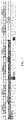
- FIG. 1 a UE has detected two SSB indexes of SSB#0 and SSB#1 respectively.
- the UE needs to perform blind detection of a TypeO-PDCCH in two consecutive slots. That is, as shown in FIG.
- a UE not only needs to perform blind detection of a TypeO-PDCCH in two consecutive slots corresponding to a detected SSB index, but also needs to perform blind detection of the TypeO-PDCCH in two consecutive slots corresponding to another SSB index with a Quasi Co-Location (QCL) relationship with the SSB index, which leads to too many times of blind detection of the TypeO-PDCCH by the UE and increases energy consumption of the UE.
- QCL Quasi Co-Location
- a terminal determines a slot of a detection opportunity of a TypeO-PDCCH according to a Sub-Carrier Space (SCS), a window length of a Discovery Reference Signal (DRS), and an indication value of a QCL relationship between different SSB indexes, which effectively reduces a quantity of times for detecting the TypeO-PDCCH by the terminal and saves energy consumption of the terminal.
- SCS Sub-Carrier Space
- DRS Discovery Reference Signal
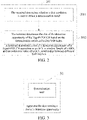
- the present application provides a method for determining a detection opportunity, which is applied to a terminal. As shown in FIG. 2 , a method for determining a detection opportunity according to an embodiment of the present application includes act 201 in FIG. 2 .
- a terminal determines a slot of a detection opportunity of a TypeO-Physical Downlink Control Channel (TypeO-PDCCH) according to a Sub-Carrier Space (SCS), a window length of a Discovery Reference Signal (DRS), and an indication value of a Quasi Co-Location (QCL) relationship between different SSB indexes.
- TypeO-PDCCH TypeO-Physical Downlink Control Channel
- DRS Discovery Reference Signal
- QCL Quasi Co-Location
- a terminal determines a detection opportunity of a corresponding TypeO-PDCCH when the terminal detects an SSB index, according to an SCS, a window length L of a DRS, and an indication value Q of a QCL relationship between different SSB indexes.
- the SCS may be a default SCS, that is, the SCS is a default value; or, the SCS is acquired by the terminal through a Radio Resource Control (RRC) instruction, here a base station sends an SCS through an RRC instruction and the terminal acquires the SCS through the RRC instruction.
- RRC Radio Resource Control
- an SCS is 30 kHz or 15 kHz.
- the terminal determines the slot of the detection opportunity of the TypeO-PDCCH according to the SCS, the window length of the DRS, and the indication value of the QCL relationship between different SSB indexes, including acts 2011 and 2022.
- the terminal determines whether a first condition is met to obtain a determination result; wherein the first condition is that a quantity of SSB candidate positions within a DRS window is less than the indication value, and the quantity of SSB candidate positions within the DRS window is determined based on the SCS and the window length.
- the first condition is that the quantity of SSB candidate positions within the DRS window is less than the indication value Q.
- an SCS is 30 kHz
- an SCS is 15 kHz
- an SCS is 30 kHz
- a window length L of a DRS is 5ms
- an indication value Q is 4
- a quantity of SSB candidate positions in a DRS window is calculated by 4 ⁇ L , that is, the quantity of SSB candidate positions within the DRS window is 20, which is greater than the indication value Q.
- a window length L of a DRS is 10ms
- an indication value Q is 4
- a quantity of SSB candidate positions in a DRS window is calculated by 2 ⁇ L , that is, the quantity of SSB candidate positions within the DRS window is 10, which is greater than the indication value Q.
- a determination result that the first condition is met is obtained; in a case that the quantity of SSB candidate positions within the DRS window is not less than the indication value Q, a determination result that the first condition is not met is obtained.
- the terminal determines the slot of the detection opportunity of the TypeO-PDCCH based on the determination result and a first SSB index; wherein the first SSB index is an SSB index detected by the terminal.
- the terminal uses two consecutive slots from a slot corresponding to the first SSB index as slots of detection opportunities of the TypeO-PDCCH.
- detection of the TypeO-PDCCH needs to be performed in two consecutive slots starting from the slot corresponding to the SSB index detected by the terminal, that is, detection of the TypeO-PDCCH is performed in both the slot corresponding to the SSB index detected by the terminal and a next slot of that slot.
- the terminal determines at least one second SSB index having a QCL relationship with the first SSB index, and determines the slot of the detection opportunity of the TypeO-PDCCH according to the first SSB index and the at least one second SSB index.
- the second SSB index is an SSB index having a QCL relationship with the first SSB index detected by the terminal, and the terminal determines the slot of the detection opportunity of the TypeO-PDCCH according to the detected first SSB index and at least one second SSB index having a QCL relationship with the first SSB index.
- an SCS is 15 kHz, as shown above, there are 10 SSB candidate positions in a DRS window with a window length L of 5ms.
- determining the slot of the detection opportunity of the TypeO-PDCCH according to the first SSB index and the at least one second SSB index includes: the terminal uses two consecutive slots from a slot corresponding to the first SSB index and two consecutive slots from a slot corresponding to each second SSB index in the at least one second SSB index as slots of detection opportunities of the TypeO-PDCCH.
- the terminal needs to start from a slot corresponding to each SSB index and detect the TypeO-PDCCH in two consecutive slots.
- a first SSB index is SSB#0 and second SSB indexes are SSB#4 and SSB#8, a terminal needs to detect a TypeO-PDCCH in two consecutive slots for SSB#0, SSB#4, and SSB#8, and detect the TypeO-PDCCH in slots of six TypeO-PDCCH detection opportunities in total.
- determining the slot of the detection opportunity of the TypeO-PDCCH according to the first SSB index and the at least one second SSB index includes: the terminal uses a slot corresponding to the first SSB index and a slot corresponding to each second SSB index in the at least one second SSB index as slots of detection opportunities of the TypeO-PDCCH.
- a terminal needs to detect a TypeO-PDCCH in a slot corresponding to each SSB index.
- a terminal needs to detect a TypeO-PDCCH in slots corresponding to SSB#0, SSB#4, and SSB#8 respectively, and detect the TypeO-PDCCH in slots of three detection opportunities in total. It may be understood that compared with the previous embodiment, a quantity of times for detecting the TypeO-PDCCH by the terminal is reduced here, and energy consumption of the terminal is effectively reduced.
- determining the slot of the detection opportunity of the TypeO-PDCCH according to the first SSB index and the at least one second SSB index includes: the terminal determines at least one third SSB index in the at least one second SSB index; an SSB candidate position corresponding to the third SSB index is located within Channel Occupancy Time (COT); the COT is COT established by a base station; the terminal uses two consecutive slots from a slot corresponding to the first SSB index and two consecutive slots from a slot corresponding to each third SSB index in the at least one third SSB index as slots of detection opportunities of the TypeO-PDCCH.
- COT Channel Occupancy Time
- the terminal may obtain information about COT, which is established by the base station and is used for indicating Channel Occupation Time allowed by the terminal in each signal transmission.
- the terminal further determines at least one third SSB index in at least one second SSB index which has a QCL relationship with a first SSB index. For the first SSB index and each determined third SSB index, the terminal needs to detect a TypeO-PDCCH in two consecutive slots starting from a slot corresponding to each SSB index.
- a first SSB index is SSB#0 and second SSB indexes are SSB#4 and SSB#8
- the terminal continues to determine whether SSB candidate positions corresponding to these three SSB indexes are all within COT. If they are all within the COT, the terminal needs to detect a TypeO-PDCCH for SSB#0, SSB#4, and SSB#8 in two consecutive slots, that is, the TypeO-PDCCH is detected for 6 times in total.
- the terminal needs to detect the TypeO-PDCCH in two consecutive slots for SSB#0 and SSB#4, that is, the TypeO-PDCCH is detected in slots of four TypeO-PDCCH detection opportunities in total.
- a quantity of second SSB indexes is further limited through COT, and when there is an SSB candidate position corresponding to a second SSB index that is not within the COT, a quantity of times for detecting a TypeO-PDCCH by the terminal may be further reduced, and energy consumption of the terminal may be reduced.
- determining the slot of the detection opportunity of the TypeO-PDCCH according to the first SSB index and the at least one second SSB index includes: the terminal determines at least one third SSB index in the at least one second SSB index; an SSB candidate position corresponding to the third SSB index is located within Channel Occupancy Time (COT); the COT is COT established by a base station; the terminal uses a slot corresponding to the first SSB index and a slot corresponding to each third SSB index in the at least one third SSB index as slots of detection opportunities of the TypeO-PDCCH.
- COT Channel Occupancy Time
- the terminal needs to detect the TypeO-PDCCH in a slot corresponding to each SSB index.
- a terminal continues to determine whether SSB candidate positions corresponding to these three SSB indexes are all within COT. If they are all within the COT, the terminal needs to detect a TypeO-PDCCH in slots corresponding to SSB#0, SSB#4, and SSB#8 respectively, that is, the TypeO-PDCCH is detected in slots of three detection opportunities in total.
- the terminal needs to detect the TypeO-PDCCH in slots corresponding to SSB#0 and SSB#4 respectively, that is, the TypeO-PDCCH is detected in slots of two detection opportunities in total.
- a quantity of second SSB indexes is further limited through COT
- detection of a TypeO-PDCCH is only performed once, which further reduces a quantity of times for detecting the TypeO-PDCCH by the terminal and reduces energy consumption of the terminal.
- the method further includes: the terminal acquires a first indication; the window length is indicated in the first indication; or, the terminal determines the window length to be a first default value in a case that the first indication is not acquired.
- the terminal may determine a value of a window length L through a window length of a DRS indicated in the first indication.
- the terminal determines a default value of the window length of the DRS as the value of the window length L. For example, if the default value of the window length of DRS is 5ms, 5ms is determined as the value of the window length L.
- the window length L of the DRS includes any one of following: 1ms; 2ms; 3ms; 4ms; and 5ms.
- the method further includes: the terminal acquires a second indication; the indication value is indicated in the second indication; or, the terminal determines the indication value to be a second default value in a case that the second indication is not acquired.
- the terminal may determine a value of an indication value Q through an indication value of a QCL relationship between different SSB indexes indicated in the second indication.
- the terminal determines the second default value as the value of the indication value Q. For example, if the second default value is 8, 8 is determined as the value of the indication value Q.
- the value of Q includes any one of following: 1; 2; 4; and 8.
- the method further includes: the terminal acquires a third indication; the COT is indicated in the third indication; or, the terminal determines the COT to be a third default value in a case that the third indication is not acquired.
- the terminal determines the third default value as a value of the COT.
- a third default value may be automatically set to a value greater than a window length L of a DRS, so that an SSB candidate position corresponding to a first SSB index detected by the terminal and candidate positions corresponding to all second SSB indexes having a QCL relationship with the first SSB index are all located within COT; or, the set third default value may enable the SSB candidate position corresponding to the first SSB index only detected by the terminal to be located within the COT.
- the method further includes: the terminal acquires a fourth indication; the SCS is indicated in the fourth indication; or, the terminal determines the SCS to be a fourth default value in a case that the fourth indication is not acquired.
- the terminal may determine a value of an SCS through an SCS indicated in the fourth indication.
- the terminal determines the fourth default value as the value of the SCS, for example, a default SCS is 15 kHz.
- the terminal determines the slot of the detection opportunity of a TypeO-PDCCH according to an SCS, a window length of a DRS, and an indication value of a QCL relationship between different SSB indexes, so that a quantity of times for detecting the TypeO-PDCCH by the terminal can be effectively reduced, and energy consumption of the terminal can be effectively reduced.
- n 0 O ⁇ 2 ⁇ + ⁇ j ⁇ M ⁇ / N slot frame , ⁇
- j is an SSB index of a TypeO-PDCCH detection opportunity determined by the terminal.
- an SCS is 15 kHz
- an indication value Q is 4.
- the UE does not need to detect the TypeO-PDCCH in two consecutive slots starting from slots corresponding to SSB#0, SSB#4, and SSB#8 respectively, which reduces complexity and power consumption of the UE.
- COT information obtained by a UE indicates that an end point of COT is within a DRS window.
- the UE does not need to detect the TypeO-PDCCH in two consecutive slots starting from slots corresponding to SSB#0 and SSB#4 respectively, which reduces complexity and power consumption of the UE.
- the UE detects that an SSB index is SSB#0.
- the UE needs to detect the TypeO-PDCCH in two consecutive slots starting from a slot corresponding to SSB#0.
- FIG. 3 is a schematic diagram of a composition structure of an apparatus for determining a slot of a detection opportunity according to an embodiment of the present application.
- the apparatus for determining the slot of the detection opportunity includes: a determination unit 31, configured to determine a slot of a detection opportunity of a TypeO-PDCCH according to an SCS, a window length of a DRS, and an indication value of a QCL relationship between different SSB indexes.
- the determination unit 31 is configured to: determine whether a first condition is met to obtain a determination result, wherein the first condition is that a quantity of SSB candidate positions within a DRS window is less than the indication value, and the quantity of SSB candidate positions within the DRS window is determined based on the SCS and the window length; and determine a slot of a detection opportunity of a TypeO-PDCCH based on the determination result and a first SSB index, wherein, the first SSB index is an SSB index detected by the terminal.
- the determination unit 31 when the determination unit 31 determines the slot of the detection opportunity of the TypeO-PDCCH based on the determination result and the first SSB index, the determination unit 31 is configured to: use two consecutive slots from a slot corresponding to the first SSB index as slots of detection opportunities of the TypeO-PDCCH in a case that the determination result is that the first condition is met; or, determine at least one second SSB index having a QCL relationship with the first SSB index and determine the slot of the detection opportunity of the TypeO-PDCCH according to the first SSB index and the at least one second SSB index in a case that the determination result is that the first condition is not met.
- the determination unit 31 determines the slot of the detection opportunity of the TypeO-PDCCH according to the first SSB index and the at least one second SSB index
- the determination unit 31 is configured to: use two consecutive slots from a slot corresponding to the first SSB index and two consecutive slots from a slot corresponding to each second SSB index in the at least one second SSB index as slots of detection opportunities of the TypeO-PDCCH.
- the determination unit 31 determines the slot of the detection opportunity of the TypeO-PDCCH according to the first SSB index and the at least one second SSB index
- the determination unit 31 is configured to: use a slot corresponding to the first SSB index and a slot corresponding to each second SSB index in the at least one second SSB index as slots of detection opportunities of the TypeO-PDCCH.
- the determination unit 31 when the determination unit 31 determines the slot of the detection opportunity of the TypeO-PDCCH according to the first SSB index and the at least one second SSB index, the determination unit 31 is configured to: determine at least one third SSB index in the at least one second SSB index, wherein an SSB candidate position corresponding to the third SSB index is located within COT, the COT is COT established by a base station; use two consecutive slots from a slot corresponding to the first SSB index and two consecutive slots from a slot corresponding to each third SSB index in the at least one third SSB index as slots of detection opportunities of the TypeO-PDCCH.
- the determination unit 31 when the determination unit 31 determines the slot of the detection opportunity of the TypeO-PDCCH according to the first SSB index and the at least one second SSB index, the determination unit 31 is configured to: determine at least one third SSB index in the at least one second SSB index, wherein an SSB candidate position corresponding to the third SSB index is located within COT, the COT is COT established by a base station; use a slot corresponding to the first SSB index and a slot corresponding to each third SSB index in the at least one third SSB index as slots of detection opportunities of the TypeO-PDCCH.
- the apparatus further includes: a first acquisition unit configured to acquire a first indication, wherein the window length is indicated in the first indication; or, the apparatus further includes: a first default value determination unit configured to determine the window length to be a first default value in a case that the first indication is not acquired.
- the apparatus further includes: a second acquisition unit configured to acquire a second indication, wherein the indication value is indicated in the second indication; or, the apparatus further includes: a second default value determination unit configured to determine the indication value to be a second default value in a case that the second indication is not acquired.
- the apparatus further includes: a third acquisition unit configured to acquire a third indication, wherein the COT is indicated in the third indication; or, the apparatus further includes: a third default value determination unit configured to determine the COT to be a third default value in a case that the third indication is not acquired.
- the third default value is a value greater than the window length.
- the apparatus further includes: a fourth acquisition unit configured to acquire a fourth indication, wherein the SCS is indicated in the fourth indication; or, the apparatus further includes: a fourth default value determination unit configured to determine the SCS to be a fourth default value in a case that the fourth indication is not acquired.
- a value of the window length includes any one of following: 1ms; 2ms; 3ms; 4ms; and 5ms.
- a value of the indication value includes any one of following: 1; 2; 4; and 8.
- the first acquisition unit, the second acquisition unit, the third acquisition unit, and the fourth acquisition unit may be implemented through a communication interface in the apparatus for determining a slot of a detection opportunity, and the determination unit 31, the first default value determination unit, the first default value determination unit, the third default value determination unit, and the fourth default value determination unit may be implemented through a processor in the apparatus for determining a slot of a detection opportunity, such as a Central Processing Unit (CPU), a Digital Signal Processor (DSP), a Microcontroller Unit (MCU), or a Field-Programmable Gate Array (FPGA).
- CPU Central Processing Unit
- DSP Digital Signal Processor
- MCU Microcontroller Unit
- FPGA Field-Programmable Gate Array
- division of the aforementioned various program modules is merely taken as an example for illustration when the apparatus for determining a slot of a detection opportunity according to the aforementioned embodiment performs translation.
- the aforementioned processing may be allocated to and accomplished by different program modules as required, that is, an internal structure of a terminal may be divided into different program modules to accomplish all or part of the aforementioned processing.
- the apparatus for determining a slot of a detection opportunity according to the aforementioned embodiment and the method embodiment for determining a slot of a detection opportunity belong to a same concept, and a specific implementation process thereof refers to the method embodiment in detail and will not be repeated here.
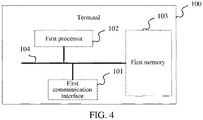
- an embodiment of the present invention also provides a terminal, as shown in FIG. 4 , the terminal 100 includes: a first communication interface 101 capable of performing information interaction with a network device; and a first processor 102, which is connected with the first communication interface 101 to implement information interaction with the network device, and is configured to perform the method provided in one or more of the above technical solutions when running a computer program.
- the computer program is stored in the first memory 103.
- the first processor 102 is configured to determine a slot of a detection opportunity of a TypeO-PDCCH according to an SCS, a window length of a DRS, and an indication value of a QCL relationship between different SSB indexes.
- the first processor 102 when the first processor 102 determines the slot of the detection opportunity of the TypeO-PDCCH according to the SCS, the window length of the DRS, and the indication value of the QCL relationship between different SSB indexes, the first processor 102 is configured to: determine whether a first condition is met to obtain a determination result, wherein the first condition is that a quantity of SSB candidate positions within a DRS window is less than the indication value, the quantity of SSB candidate positions within the DRS window is determined based on the SCS and the window length; determine a slot of a detection opportunity of a TypeO-PDCCH based on the determination result and a first SSB index, wherein, the first SSB index is an SSB index detected by the terminal.
- the first processor 102 when determining the slot of the detection opportunity of the TypeO-PDCCH based on the determination result and the first SSB index, is configured to: use, by the terminal, two consecutive slots from a slot corresponding to the first SSB index as slots of detection opportunities of the TypeO-PDCCH in a case that the determination result is that the first condition is met; or, determine, by the terminal, at least one second SSB index having a QCL relationship with the first SSB index and determines the slot of the detection opportunity of the TypeO-PDCCH according to the first SSB index and the at least one second SSB index in a case that the determination result is that the first condition is not met.
- the first processor 102 when determining the slot of the detection opportunity of the TypeO-PDCCH according to the first SSB index and the at least one second SSB index, is configured to: use, by the terminal, two consecutive slots from a slot corresponding to the first SSB index and two consecutive slots from a slot corresponding to each second SSB index in the at least one second SSB index as slots of detection opportunities of the TypeO-PDCCH.
- the first processor 102 when determining the slot of the detection opportunity of the TypeO-PDCCH according to the first SSB index and the at least one second SSB index, is configured to: use, by the terminal, a slot corresponding to the first SSB index and a slot corresponding to each second SSB index in the at least one second SSB index as slots of detection opportunities of the TypeO-PDCCH.
- the first processor 102 when determining the slot of the detection opportunity of the TypeO-PDCCH according to the first SSB index and the at least one second SSB index, is configured to: determine, by the terminal, at least one third SSB index in the at least one second SSB index, wherein an SSB candidate position corresponding to the third SSB index is located within Channel Occupancy Time (COT), the COT is COT established by a base station; use, by the terminal, two consecutive slots from a slot corresponding to the first SSB index and two consecutive slots from a slot corresponding to each third SSB index in the at least one third SSB index as slots of detection opportunities of the TypeO-PDCCH.
- COT Channel Occupancy Time
- the first processor 102 determines the slot of the detection opportunity of the TypeO-PDCCH according to the first SSB index and the at least one second SSB index
- the first processor 102 is configured to: determine, by the terminal, at least one third SSB index in the at least one second SSB index, wherein an SSB candidate position corresponding to the third SSB index is located within COT, the COT is COT established by a base station; use, by the terminal, a slot corresponding to the first SSB index and a slot corresponding to each third SSB index in the at least one third SSB index as slots of detection opportunities of the TypeO-PDCCH.
- the first communication interface 101 is configured to acquire a first indication, the window length is indicated in the first indication; or, the first processor 102 is configured to determine the window length to be a first default value in a case that the first indication is not acquired.
- the first communication interface 101 is configured to acquire a second indication, the indication value is indicated in the second indication; or, the first processor 102 is configured to determine the indication value to be a second default value in a case that the second indication is not acquired.
- the first communication interface 101 is configured to acquire a third indication, the COT is indicated in the third indication; or, the first processor 102 is configured to determine the COT to be a third default value in a case that the third indication is not acquired.
- the third default value is a value greater than the window length.
- the first communication interface 101 is configured to acquire a fourth indication, the SCS is indicated in the third indication; or, the first processor 102 is configured to determine the SCS to be a fourth default value in a case that the fourth indication is not acquired.
- a value of the window length includes any one of following: 1ms; 2ms; 3ms; 4ms; and 5ms.
- a value of the indication value includes any one of following: 1; 2; 4; and 8.
- bus system 104 is used for implementing connection and communication between these components.
- bus system 104 further includes a power bus, a control bus, and a status signal bus.
- a bus system 104 in FIG. 5 all kinds of buses are uniformly referred to as a bus system 104 in FIG. 5.
- the memory 103 in the embodiments of the present invention is configured to store various types of data to support operations of the terminal 100. Examples of such data include any computer program for operating on the terminal 100.
- the first processor 102 may be an integrated circuit chip having a signal processing capability. In an implementation process, each of the acts of the above methods may be completed through an integrated logic circuit of hardware or instructions in a form of software in the first processor 102.
- the above first processor 102 may be a general purpose processor, a Digital Signal Processor (DSP), or another programmable logic device, a discrete gate or a transistor logic device, or a discrete hardware component, etc.
- the first processor 102 may implement or execute various methods, acts, and logical block diagrams disclosed in the embodiments of the present invention.
- the general purpose processor may be a microprocessor or any conventional processor or the like.
- Acts of the methods disclosed in combination with the embodiments of the present invention may be directly embodied as being executed and accomplished by a hardware decoding processor or by a combination of hardware and software modules in a decoding processor.
- the software modules may be located in a storage medium, and the storage medium is located in the first memory 103.
- the first processor 102 reads information in the first memory 103 and accomplishes the acts of the aforementioned methods in combination with hardware thereof.
- the terminal 100 may be implemented by one or more Application Specific Integrated Circuits (ASICs), DSPs, Programmable Logic Devices (PLDs), Complex Programmable Logic Devices (CPLDs), Field-Programmable Gate Arrays (FPGAs), general-purpose processors, controllers, Micro Controller Units (MCUs), Microprocessors, or other electronic components, for executing the aforementioned methods.
- ASICs Application Specific Integrated Circuits
- DSPs Programmable Logic Devices
- CPLDs Complex Programmable Logic Devices
- FPGAs Field-Programmable Gate Arrays
- general-purpose processors controllers
- controllers Micro Controller Units (MCUs)
- MCUs Micro Controller Units
- Microprocessors or other electronic components, for executing the aforementioned methods.
- the first memory 103 in the embodiments of the present invention may be a volatile memory or a non-volatile memory, or may include both a volatile memory and a non-volatile memory.
- the non-volatile memory may be a Read Only Memory (ROM), a Programmable Read-Only Memory (PROM), an Erasable Programmable Read-Only Memory (EPROM), an Electrically Erasable Programmable Read-Only Memory (EEPROM), a ferromagnetic random access memory (FRAM), a Flash Memory, a magnetic surface memory, a compact disk, or a Compact Disc Read-Only Memory (CD-ROM).
- the magnetic surface memory may be a magnetic disk memory or a magnetic tape memory.
- the transitory memory may be a Random Access Memory (RAM) which serves as an external cache.
- RAM Random Access Memory
- SRAM Static Random Access Memory
- SSRAM Synchronous Static Random Access Memory
- DRAM Dynamic Random Access Memory
- SDRAM Synchronous Dynamic Random Access Memory
- DDRSDRAM Double Data Rate Synchronous Dynamic Random Access Memory
- ESDRAM Enhanced Synchronous Dynamic Random Access Memory
- SLDRAM SyncLink Dynamic Random Access Memory
- DRRAM Direct Rambus Random Access Memory
- a memory described in an embodiment of the present invention is intended to include, but is not limited to, these and any other suitable types of memories.
- an embodiment of the present invention also provides a storage medium, that is, a computer storage medium, specifically a computer-readable storage medium, for example, including a first memory 103 for storing a computer program, which may be executed by the first processor 102 of the terminal 100 to complete the acts of the aforementioned terminal side method.
- the computer-readable storage medium may be a memory such as a FRAM, a ROM, a PROM, an EPROM, an EEPROM, a Flash Memory, a magnetic surface memory, an optical disk, or a CD-ROM.
Landscapes
- Engineering & Computer Science (AREA)
- Signal Processing (AREA)
- Computer Networks & Wireless Communication (AREA)
- Physics & Mathematics (AREA)
- Mathematical Physics (AREA)
- Mobile Radio Communication Systems (AREA)
Applications Claiming Priority (1)
| Application Number | Priority Date | Filing Date | Title |
|---|---|---|---|
| PCT/CN2019/116847 WO2021088050A1 (fr) | 2019-11-08 | 2019-11-08 | Procédé et dispositif de détermination d'un intervalle de temps associé à une occasion de surveillance, terminal et support de stockage |
Publications (2)
| Publication Number | Publication Date |
|---|---|
| EP4057726A1 true EP4057726A1 (fr) | 2022-09-14 |
| EP4057726A4 EP4057726A4 (fr) | 2022-11-16 |
Family
ID=75849436
Family Applications (1)
| Application Number | Title | Priority Date | Filing Date |
|---|---|---|---|
| EP19951380.5A Withdrawn EP4057726A4 (fr) | 2019-11-08 | 2019-11-08 | Procédé et dispositif de détermination d'un intervalle de temps associé à une occasion de surveillance, terminal et support de stockage |
Country Status (4)
| Country | Link |
|---|---|
| US (1) | US12150175B2 (fr) |
| EP (1) | EP4057726A4 (fr) |
| CN (1) | CN114631372A (fr) |
| WO (1) | WO2021088050A1 (fr) |
Families Citing this family (2)
| Publication number | Priority date | Publication date | Assignee | Title |
|---|---|---|---|---|
| WO2021207991A1 (fr) * | 2020-04-16 | 2021-10-21 | Qualcomm Incorporated | Dispositifs et procédés aptes à faciliter des transmissions de signal de référence de découverte |
| US12425129B2 (en) * | 2020-10-29 | 2025-09-23 | Beijing Xiaomi Mobile Software Co., Ltd. | Information transmission method and apparatus, and communication device |
Family Cites Families (4)
| Publication number | Priority date | Publication date | Assignee | Title |
|---|---|---|---|---|
| US11457472B2 (en) * | 2017-12-18 | 2022-09-27 | Samsung Electronics Co., Ltd. | Method and apparatus for initial access block on stand-alone NR unlicensed spectrum |
| CN110351835B (zh) * | 2018-04-03 | 2021-09-07 | 维沃移动通信有限公司 | 一种频段确定方法和装置 |
| WO2021031002A1 (fr) * | 2019-08-16 | 2021-02-25 | 华为技术有限公司 | Procédé et appareil pour l'indication d'informations de commande |
| CN113875280A (zh) * | 2019-09-26 | 2021-12-31 | Oppo广东移动通信有限公司 | 检测、发送pdcch的方法以及设备 |
-
2019
- 2019-11-08 WO PCT/CN2019/116847 patent/WO2021088050A1/fr not_active Ceased
- 2019-11-08 EP EP19951380.5A patent/EP4057726A4/fr not_active Withdrawn
- 2019-11-08 CN CN201980101831.9A patent/CN114631372A/zh active Pending
-
2022
- 2022-04-26 US US17/660,689 patent/US12150175B2/en active Active
Also Published As
| Publication number | Publication date |
|---|---|
| US12150175B2 (en) | 2024-11-19 |
| CN114631372A (zh) | 2022-06-14 |
| US20220256604A1 (en) | 2022-08-11 |
| WO2021088050A1 (fr) | 2021-05-14 |
| EP4057726A4 (fr) | 2022-11-16 |
Similar Documents
| Publication | Publication Date | Title |
|---|---|---|
| CA3099512C (fr) | Methode et appareil d'attribution de ressources fondes sur un signal de liaison montante, dispositif connexe et support de stockage | |
| US12150175B2 (en) | Method and device for determining time slot for monitoring occasion, terminal, and storage medium | |
| EP4020838B1 (fr) | Procédé et appareil de détermination de localisation dans le domaine temporel | |
| CN111867019B (zh) | 信息传输方法、装置、相关设备及存储介质 | |
| WO2021098863A1 (fr) | Procédés de surveillance de pdcch, équipement utilisateur, station de base et support lisible par ordinateur | |
| CN111417213B (zh) | 信号传输方法、装置、相关设备及存储介质 | |
| CN115913487A (zh) | 信息传输方法、装置、相关设备及存储介质 | |
| WO2020168880A1 (fr) | Procédé et appareil de communication d'accès aléatoire, dispositifs apparentés, et support de stockage | |
| US12507242B2 (en) | Information transmission method and apparatus, relevant device, and storage medium | |
| US12150166B2 (en) | Information transmission method, related device, and storage medium | |
| CN116436575A (zh) | 随机接入资源的配置方法、装置、基站、终端及存储介质 | |
| CN117156582A (zh) | 一种通信方法、装置、终端、网络设备和存储介质 | |
| CN111901078B (zh) | 数据处理方法、装置、相关设备及存储介质 | |
| CN112039812B (zh) | 数据处理方法、装置、设备及存储介质 | |
| CN120456212A (zh) | 同步信号传输方法、相关设备、存储介质及计算机程序产品 | |
| CN115915059A (zh) | 资源选择方法、装置、设备及存储介质 | |
| WO2025241876A1 (fr) | Procédé et appareil de traitement d'informations, dispositif, support de stockage et produit-programme informatique | |
| WO2026067123A1 (fr) | Procédé et appareil de détermination de ressources, terminal, support de stockage et produit programme d'ordinateur | |
| CN117560750A (zh) | 参考信号配置方法、装置、设备及存储介质 | |
| EP4274335A1 (fr) | Procédé et appareil de transmission d'informations, dispositif associé et support de stockage | |
| CN120224384A (zh) | 信道资源配置方法、装置、设备及存储介质 | |
| CN118019021A (zh) | 测量方法、装置、相关设备及存储介质 | |
| CN117460029A (zh) | 一种信息传输方法、装置、基站、终端和存储介质 | |
| CN121173439A (zh) | 资源确定方法、装置、终端、基站、存储介质及计算机程序产品 | |
| CN107734565A (zh) | 系统信息的处理方法及装置 |
Legal Events
| Date | Code | Title | Description |
|---|---|---|---|
| STAA | Information on the status of an ep patent application or granted ep patent |
Free format text: STATUS: THE INTERNATIONAL PUBLICATION HAS BEEN MADE |
|
| PUAI | Public reference made under article 153(3) epc to a published international application that has entered the european phase |
Free format text: ORIGINAL CODE: 0009012 |
|
| STAA | Information on the status of an ep patent application or granted ep patent |
Free format text: STATUS: REQUEST FOR EXAMINATION WAS MADE |
|
| 17P | Request for examination filed |
Effective date: 20220316 |
|
| AK | Designated contracting states |
Kind code of ref document: A1 Designated state(s): AL AT BE BG CH CY CZ DE DK EE ES FI FR GB GR HR HU IE IS IT LI LT LU LV MC MK MT NL NO PL PT RO RS SE SI SK SM TR |
|
| A4 | Supplementary search report drawn up and despatched |
Effective date: 20221017 |
|
| RIC1 | Information provided on ipc code assigned before grant |
Ipc: H04L 5/00 20060101ALI20221011BHEP Ipc: H04W 72/04 20090101AFI20221011BHEP |
|
| DAV | Request for validation of the european patent (deleted) | ||
| DAX | Request for extension of the european patent (deleted) | ||
| STAA | Information on the status of an ep patent application or granted ep patent |
Free format text: STATUS: THE APPLICATION HAS BEEN WITHDRAWN |
|
| 18W | Application withdrawn |
Effective date: 20240108 |