EP4059637A1 - Schneidwerkzeug - Google Patents
Schneidwerkzeug Download PDFInfo
- Publication number
- EP4059637A1 EP4059637A1 EP21163142.9A EP21163142A EP4059637A1 EP 4059637 A1 EP4059637 A1 EP 4059637A1 EP 21163142 A EP21163142 A EP 21163142A EP 4059637 A1 EP4059637 A1 EP 4059637A1
- Authority
- EP
- European Patent Office
- Prior art keywords
- cemented carbide
- cutting tool
- tool according
- coating
- content
- Prior art date
- Legal status (The legal status is an assumption and is not a legal conclusion. Google has not performed a legal analysis and makes no representation as to the accuracy of the status listed.)
- Withdrawn
Links
Images

Classifications
-
- B—PERFORMING OPERATIONS; TRANSPORTING
- B22—CASTING; POWDER METALLURGY
- B22F—WORKING METALLIC POWDER; MANUFACTURE OF ARTICLES FROM METALLIC POWDER; MAKING METALLIC POWDER; APPARATUS OR DEVICES SPECIALLY ADAPTED FOR METALLIC POWDER
- B22F5/00—Manufacture of workpieces or articles from metallic powder characterised by the special shape of the product
-
- C—CHEMISTRY; METALLURGY
- C22—METALLURGY; FERROUS OR NON-FERROUS ALLOYS; TREATMENT OF ALLOYS OR NON-FERROUS METALS
- C22C—ALLOYS
- C22C29/00—Alloys based on carbides, oxides, nitrides, borides, or silicides, e.g. cermets, or other metal compounds, e.g. oxynitrides, sulfides
- C22C29/02—Alloys based on carbides, oxides, nitrides, borides, or silicides, e.g. cermets, or other metal compounds, e.g. oxynitrides, sulfides based on carbides or carbonitrides
- C22C29/06—Alloys based on carbides, oxides, nitrides, borides, or silicides, e.g. cermets, or other metal compounds, e.g. oxynitrides, sulfides based on carbides or carbonitrides based on carbides, but not containing other metal compounds
- C22C29/08—Alloys based on carbides, oxides, nitrides, borides, or silicides, e.g. cermets, or other metal compounds, e.g. oxynitrides, sulfides based on carbides or carbonitrides based on carbides, but not containing other metal compounds based on tungsten carbide
-
- B—PERFORMING OPERATIONS; TRANSPORTING
- B22—CASTING; POWDER METALLURGY
- B22F—WORKING METALLIC POWDER; MANUFACTURE OF ARTICLES FROM METALLIC POWDER; MAKING METALLIC POWDER; APPARATUS OR DEVICES SPECIALLY ADAPTED FOR METALLIC POWDER
- B22F1/00—Metallic powder; Treatment of metallic powder, e.g. to facilitate working or to improve properties
- B22F1/05—Metallic powder characterised by the size or surface area of the particles
-
- B—PERFORMING OPERATIONS; TRANSPORTING
- B22—CASTING; POWDER METALLURGY
- B22F—WORKING METALLIC POWDER; MANUFACTURE OF ARTICLES FROM METALLIC POWDER; MAKING METALLIC POWDER; APPARATUS OR DEVICES SPECIALLY ADAPTED FOR METALLIC POWDER
- B22F1/00—Metallic powder; Treatment of metallic powder, e.g. to facilitate working or to improve properties
- B22F1/05—Metallic powder characterised by the size or surface area of the particles
- B22F1/054—Nanosized particles
-
- B—PERFORMING OPERATIONS; TRANSPORTING
- B22—CASTING; POWDER METALLURGY
- B22F—WORKING METALLIC POWDER; MANUFACTURE OF ARTICLES FROM METALLIC POWDER; MAKING METALLIC POWDER; APPARATUS OR DEVICES SPECIALLY ADAPTED FOR METALLIC POWDER
- B22F3/00—Manufacture of workpieces or articles from metallic powder characterised by the manner of compacting or sintering; Apparatus specially adapted therefor ; Presses and furnaces
- B22F3/12—Both compacting and sintering
- B22F3/16—Both compacting and sintering in successive or repeated steps
-
- B—PERFORMING OPERATIONS; TRANSPORTING
- B22—CASTING; POWDER METALLURGY
- B22F—WORKING METALLIC POWDER; MANUFACTURE OF ARTICLES FROM METALLIC POWDER; MAKING METALLIC POWDER; APPARATUS OR DEVICES SPECIALLY ADAPTED FOR METALLIC POWDER
- B22F7/00—Manufacture of composite layers, workpieces, or articles, comprising metallic powder, by sintering the powder, with or without compacting wherein at least one part is obtained by sintering or compression
- B22F7/06—Manufacture of composite layers, workpieces, or articles, comprising metallic powder, by sintering the powder, with or without compacting wherein at least one part is obtained by sintering or compression of composite workpieces or articles from parts, e.g. to form tipped tools
- B22F7/08—Manufacture of composite layers, workpieces, or articles, comprising metallic powder, by sintering the powder, with or without compacting wherein at least one part is obtained by sintering or compression of composite workpieces or articles from parts, e.g. to form tipped tools with one or more parts not made from powder
-
- B—PERFORMING OPERATIONS; TRANSPORTING
- B22—CASTING; POWDER METALLURGY
- B22F—WORKING METALLIC POWDER; MANUFACTURE OF ARTICLES FROM METALLIC POWDER; MAKING METALLIC POWDER; APPARATUS OR DEVICES SPECIALLY ADAPTED FOR METALLIC POWDER
- B22F9/00—Making metallic powder or suspensions thereof
- B22F9/02—Making metallic powder or suspensions thereof using physical processes
- B22F9/026—Spray drying of solutions or suspensions
-
- B—PERFORMING OPERATIONS; TRANSPORTING
- B22—CASTING; POWDER METALLURGY
- B22F—WORKING METALLIC POWDER; MANUFACTURE OF ARTICLES FROM METALLIC POWDER; MAKING METALLIC POWDER; APPARATUS OR DEVICES SPECIALLY ADAPTED FOR METALLIC POWDER
- B22F9/00—Making metallic powder or suspensions thereof
- B22F9/02—Making metallic powder or suspensions thereof using physical processes
- B22F9/04—Making metallic powder or suspensions thereof using physical processes starting from solid material, e.g. by crushing, grinding or milling
-
- B—PERFORMING OPERATIONS; TRANSPORTING
- B23—MACHINE TOOLS; METAL-WORKING NOT OTHERWISE PROVIDED FOR
- B23B—TURNING; BORING
- B23B27/00—Tools for turning or boring machines; Tools of a similar kind in general; Accessories therefor
- B23B27/14—Cutting tools of which the bits or tips or cutting inserts are of special material
- B23B27/148—Composition of the cutting inserts
-
- C—CHEMISTRY; METALLURGY
- C22—METALLURGY; FERROUS OR NON-FERROUS ALLOYS; TREATMENT OF ALLOYS OR NON-FERROUS METALS
- C22C—ALLOYS
- C22C1/00—Making non-ferrous alloys
- C22C1/04—Making non-ferrous alloys by powder metallurgy
- C22C1/05—Mixtures of metal powder with non-metallic powder
- C22C1/051—Making hard metals based on borides, carbides, nitrides, oxides or silicides; Preparation of the powder mixture used as the starting material therefor
-
- C—CHEMISTRY; METALLURGY
- C22—METALLURGY; FERROUS OR NON-FERROUS ALLOYS; TREATMENT OF ALLOYS OR NON-FERROUS METALS
- C22C—ALLOYS
- C22C29/00—Alloys based on carbides, oxides, nitrides, borides, or silicides, e.g. cermets, or other metal compounds, e.g. oxynitrides, sulfides
- C22C29/02—Alloys based on carbides, oxides, nitrides, borides, or silicides, e.g. cermets, or other metal compounds, e.g. oxynitrides, sulfides based on carbides or carbonitrides
- C22C29/06—Alloys based on carbides, oxides, nitrides, borides, or silicides, e.g. cermets, or other metal compounds, e.g. oxynitrides, sulfides based on carbides or carbonitrides based on carbides, but not containing other metal compounds
- C22C29/067—Alloys based on carbides, oxides, nitrides, borides, or silicides, e.g. cermets, or other metal compounds, e.g. oxynitrides, sulfides based on carbides or carbonitrides based on carbides, but not containing other metal compounds comprising a particular metallic binder
-
- C—CHEMISTRY; METALLURGY
- C23—COATING METALLIC MATERIAL; COATING MATERIAL WITH METALLIC MATERIAL; CHEMICAL SURFACE TREATMENT; DIFFUSION TREATMENT OF METALLIC MATERIAL; COATING BY VACUUM EVAPORATION, BY SPUTTERING, BY ION IMPLANTATION OR BY CHEMICAL VAPOUR DEPOSITION, IN GENERAL; INHIBITING CORROSION OF METALLIC MATERIAL OR INCRUSTATION IN GENERAL
- C23C—COATING METALLIC MATERIAL; COATING MATERIAL WITH METALLIC MATERIAL; SURFACE TREATMENT OF METALLIC MATERIAL BY DIFFUSION INTO THE SURFACE, BY CHEMICAL CONVERSION OR SUBSTITUTION; COATING BY VACUUM EVAPORATION, BY SPUTTERING, BY ION IMPLANTATION OR BY CHEMICAL VAPOUR DEPOSITION, IN GENERAL
- C23C14/00—Coating by vacuum evaporation, by sputtering or by ion implantation of the coating forming material
- C23C14/06—Coating by vacuum evaporation, by sputtering or by ion implantation of the coating forming material characterised by the coating material
- C23C14/0641—Nitrides
-
- C—CHEMISTRY; METALLURGY
- C23—COATING METALLIC MATERIAL; COATING MATERIAL WITH METALLIC MATERIAL; CHEMICAL SURFACE TREATMENT; DIFFUSION TREATMENT OF METALLIC MATERIAL; COATING BY VACUUM EVAPORATION, BY SPUTTERING, BY ION IMPLANTATION OR BY CHEMICAL VAPOUR DEPOSITION, IN GENERAL; INHIBITING CORROSION OF METALLIC MATERIAL OR INCRUSTATION IN GENERAL
- C23C—COATING METALLIC MATERIAL; COATING MATERIAL WITH METALLIC MATERIAL; SURFACE TREATMENT OF METALLIC MATERIAL BY DIFFUSION INTO THE SURFACE, BY CHEMICAL CONVERSION OR SUBSTITUTION; COATING BY VACUUM EVAPORATION, BY SPUTTERING, BY ION IMPLANTATION OR BY CHEMICAL VAPOUR DEPOSITION, IN GENERAL
- C23C28/00—Coating for obtaining at least two superposed coatings either by methods not provided for in a single one of groups C23C2/00 - C23C26/00 or by combinations of methods provided for in subclasses C23C and C25C or C25D
- C23C28/04—Coating for obtaining at least two superposed coatings either by methods not provided for in a single one of groups C23C2/00 - C23C26/00 or by combinations of methods provided for in subclasses C23C and C25C or C25D only coatings of inorganic non-metallic material
-
- C—CHEMISTRY; METALLURGY
- C23—COATING METALLIC MATERIAL; COATING MATERIAL WITH METALLIC MATERIAL; CHEMICAL SURFACE TREATMENT; DIFFUSION TREATMENT OF METALLIC MATERIAL; COATING BY VACUUM EVAPORATION, BY SPUTTERING, BY ION IMPLANTATION OR BY CHEMICAL VAPOUR DEPOSITION, IN GENERAL; INHIBITING CORROSION OF METALLIC MATERIAL OR INCRUSTATION IN GENERAL
- C23C—COATING METALLIC MATERIAL; COATING MATERIAL WITH METALLIC MATERIAL; SURFACE TREATMENT OF METALLIC MATERIAL BY DIFFUSION INTO THE SURFACE, BY CHEMICAL CONVERSION OR SUBSTITUTION; COATING BY VACUUM EVAPORATION, BY SPUTTERING, BY ION IMPLANTATION OR BY CHEMICAL VAPOUR DEPOSITION, IN GENERAL
- C23C28/00—Coating for obtaining at least two superposed coatings either by methods not provided for in a single one of groups C23C2/00 - C23C26/00 or by combinations of methods provided for in subclasses C23C and C25C or C25D
- C23C28/04—Coating for obtaining at least two superposed coatings either by methods not provided for in a single one of groups C23C2/00 - C23C26/00 or by combinations of methods provided for in subclasses C23C and C25C or C25D only coatings of inorganic non-metallic material
- C23C28/044—Coating for obtaining at least two superposed coatings either by methods not provided for in a single one of groups C23C2/00 - C23C26/00 or by combinations of methods provided for in subclasses C23C and C25C or C25D only coatings of inorganic non-metallic material coatings specially adapted for cutting tools or wear applications
-
- C—CHEMISTRY; METALLURGY
- C23—COATING METALLIC MATERIAL; COATING MATERIAL WITH METALLIC MATERIAL; CHEMICAL SURFACE TREATMENT; DIFFUSION TREATMENT OF METALLIC MATERIAL; COATING BY VACUUM EVAPORATION, BY SPUTTERING, BY ION IMPLANTATION OR BY CHEMICAL VAPOUR DEPOSITION, IN GENERAL; INHIBITING CORROSION OF METALLIC MATERIAL OR INCRUSTATION IN GENERAL
- C23C—COATING METALLIC MATERIAL; COATING MATERIAL WITH METALLIC MATERIAL; SURFACE TREATMENT OF METALLIC MATERIAL BY DIFFUSION INTO THE SURFACE, BY CHEMICAL CONVERSION OR SUBSTITUTION; COATING BY VACUUM EVAPORATION, BY SPUTTERING, BY ION IMPLANTATION OR BY CHEMICAL VAPOUR DEPOSITION, IN GENERAL
- C23C28/00—Coating for obtaining at least two superposed coatings either by methods not provided for in a single one of groups C23C2/00 - C23C26/00 or by combinations of methods provided for in subclasses C23C and C25C or C25D
- C23C28/40—Coatings including alternating layers following a pattern, a periodic or defined repetition
-
- C—CHEMISTRY; METALLURGY
- C23—COATING METALLIC MATERIAL; COATING MATERIAL WITH METALLIC MATERIAL; CHEMICAL SURFACE TREATMENT; DIFFUSION TREATMENT OF METALLIC MATERIAL; COATING BY VACUUM EVAPORATION, BY SPUTTERING, BY ION IMPLANTATION OR BY CHEMICAL VAPOUR DEPOSITION, IN GENERAL; INHIBITING CORROSION OF METALLIC MATERIAL OR INCRUSTATION IN GENERAL
- C23C—COATING METALLIC MATERIAL; COATING MATERIAL WITH METALLIC MATERIAL; SURFACE TREATMENT OF METALLIC MATERIAL BY DIFFUSION INTO THE SURFACE, BY CHEMICAL CONVERSION OR SUBSTITUTION; COATING BY VACUUM EVAPORATION, BY SPUTTERING, BY ION IMPLANTATION OR BY CHEMICAL VAPOUR DEPOSITION, IN GENERAL
- C23C28/00—Coating for obtaining at least two superposed coatings either by methods not provided for in a single one of groups C23C2/00 - C23C26/00 or by combinations of methods provided for in subclasses C23C and C25C or C25D
- C23C28/40—Coatings including alternating layers following a pattern, a periodic or defined repetition
- C23C28/42—Coatings including alternating layers following a pattern, a periodic or defined repetition characterized by the composition of the alternating layers
-
- C—CHEMISTRY; METALLURGY
- C23—COATING METALLIC MATERIAL; COATING MATERIAL WITH METALLIC MATERIAL; CHEMICAL SURFACE TREATMENT; DIFFUSION TREATMENT OF METALLIC MATERIAL; COATING BY VACUUM EVAPORATION, BY SPUTTERING, BY ION IMPLANTATION OR BY CHEMICAL VAPOUR DEPOSITION, IN GENERAL; INHIBITING CORROSION OF METALLIC MATERIAL OR INCRUSTATION IN GENERAL
- C23C—COATING METALLIC MATERIAL; COATING MATERIAL WITH METALLIC MATERIAL; SURFACE TREATMENT OF METALLIC MATERIAL BY DIFFUSION INTO THE SURFACE, BY CHEMICAL CONVERSION OR SUBSTITUTION; COATING BY VACUUM EVAPORATION, BY SPUTTERING, BY ION IMPLANTATION OR BY CHEMICAL VAPOUR DEPOSITION, IN GENERAL
- C23C30/00—Coating with metallic material characterised only by the composition of the metallic material, i.e. not characterised by the coating process
- C23C30/005—Coating with metallic material characterised only by the composition of the metallic material, i.e. not characterised by the coating process on hard metal substrates
-
- B—PERFORMING OPERATIONS; TRANSPORTING
- B22—CASTING; POWDER METALLURGY
- B22F—WORKING METALLIC POWDER; MANUFACTURE OF ARTICLES FROM METALLIC POWDER; MAKING METALLIC POWDER; APPARATUS OR DEVICES SPECIALLY ADAPTED FOR METALLIC POWDER
- B22F5/00—Manufacture of workpieces or articles from metallic powder characterised by the special shape of the product
- B22F2005/001—Cutting tools, earth boring or grinding tool other than table ware
-
- B—PERFORMING OPERATIONS; TRANSPORTING
- B22—CASTING; POWDER METALLURGY
- B22F—WORKING METALLIC POWDER; MANUFACTURE OF ARTICLES FROM METALLIC POWDER; MAKING METALLIC POWDER; APPARATUS OR DEVICES SPECIALLY ADAPTED FOR METALLIC POWDER
- B22F9/00—Making metallic powder or suspensions thereof
- B22F9/02—Making metallic powder or suspensions thereof using physical processes
- B22F9/04—Making metallic powder or suspensions thereof using physical processes starting from solid material, e.g. by crushing, grinding or milling
- B22F2009/041—Making metallic powder or suspensions thereof using physical processes starting from solid material, e.g. by crushing, grinding or milling by mechanical alloying, e.g. blending, milling
-
- B—PERFORMING OPERATIONS; TRANSPORTING
- B22—CASTING; POWDER METALLURGY
- B22F—WORKING METALLIC POWDER; MANUFACTURE OF ARTICLES FROM METALLIC POWDER; MAKING METALLIC POWDER; APPARATUS OR DEVICES SPECIALLY ADAPTED FOR METALLIC POWDER
- B22F9/00—Making metallic powder or suspensions thereof
- B22F9/02—Making metallic powder or suspensions thereof using physical processes
- B22F9/04—Making metallic powder or suspensions thereof using physical processes starting from solid material, e.g. by crushing, grinding or milling
- B22F2009/042—Making metallic powder or suspensions thereof using physical processes starting from solid material, e.g. by crushing, grinding or milling using a particular milling fluid
-
- B—PERFORMING OPERATIONS; TRANSPORTING
- B22—CASTING; POWDER METALLURGY
- B22F—WORKING METALLIC POWDER; MANUFACTURE OF ARTICLES FROM METALLIC POWDER; MAKING METALLIC POWDER; APPARATUS OR DEVICES SPECIALLY ADAPTED FOR METALLIC POWDER
- B22F2201/00—Treatment under specific atmosphere
- B22F2201/10—Inert gases
- B22F2201/11—Argon
-
- B—PERFORMING OPERATIONS; TRANSPORTING
- B22—CASTING; POWDER METALLURGY
- B22F—WORKING METALLIC POWDER; MANUFACTURE OF ARTICLES FROM METALLIC POWDER; MAKING METALLIC POWDER; APPARATUS OR DEVICES SPECIALLY ADAPTED FOR METALLIC POWDER
- B22F2201/00—Treatment under specific atmosphere
- B22F2201/20—Use of vacuum
-
- B—PERFORMING OPERATIONS; TRANSPORTING
- B22—CASTING; POWDER METALLURGY
- B22F—WORKING METALLIC POWDER; MANUFACTURE OF ARTICLES FROM METALLIC POWDER; MAKING METALLIC POWDER; APPARATUS OR DEVICES SPECIALLY ADAPTED FOR METALLIC POWDER
- B22F2301/00—Metallic composition of the powder or its coating
- B22F2301/20—Refractory metals
-
- B—PERFORMING OPERATIONS; TRANSPORTING
- B22—CASTING; POWDER METALLURGY
- B22F—WORKING METALLIC POWDER; MANUFACTURE OF ARTICLES FROM METALLIC POWDER; MAKING METALLIC POWDER; APPARATUS OR DEVICES SPECIALLY ADAPTED FOR METALLIC POWDER
- B22F2302/00—Metal Compound, non-Metallic compound or non-metal composition of the powder or its coating
- B22F2302/10—Carbide
-
- B—PERFORMING OPERATIONS; TRANSPORTING
- B22—CASTING; POWDER METALLURGY
- B22F—WORKING METALLIC POWDER; MANUFACTURE OF ARTICLES FROM METALLIC POWDER; MAKING METALLIC POWDER; APPARATUS OR DEVICES SPECIALLY ADAPTED FOR METALLIC POWDER
- B22F2998/00—Supplementary information concerning processes or compositions relating to powder metallurgy
-
- B—PERFORMING OPERATIONS; TRANSPORTING
- B22—CASTING; POWDER METALLURGY
- B22F—WORKING METALLIC POWDER; MANUFACTURE OF ARTICLES FROM METALLIC POWDER; MAKING METALLIC POWDER; APPARATUS OR DEVICES SPECIALLY ADAPTED FOR METALLIC POWDER
- B22F2998/00—Supplementary information concerning processes or compositions relating to powder metallurgy
- B22F2998/10—Processes characterised by the sequence of their steps
-
- B—PERFORMING OPERATIONS; TRANSPORTING
- B22—CASTING; POWDER METALLURGY
- B22F—WORKING METALLIC POWDER; MANUFACTURE OF ARTICLES FROM METALLIC POWDER; MAKING METALLIC POWDER; APPARATUS OR DEVICES SPECIALLY ADAPTED FOR METALLIC POWDER
- B22F2999/00—Aspects linked to processes or compositions used in powder metallurgy
Definitions
- the present disclosure relates to a cutting tool particularly useful for machining of hardened steel or super alloys.
- the present disclosure also relates to a method for manufacturing the same.
- Hardened steels cover a broad range of steels and properties and exist in many different conditions depending on purpose of use. As quenched, quenched and tempered, surface hardened (case hardened, nitrided, etc) are common conditions covering a hardness range up to 68 HRC. The purpose with hardening is to increase strength and wear resistance.
- Steels suitable for hardening are medium to high carbon steels often with alloying additions of Cr, Ni, Mn and Mo. Depending on purpose, other alloying elements are added. Many of these alloying elements are carbide formers creating hard abrasive particles in the steels, which beside the high hardness, further decrease machinability and increase the wear on the cutting edge during machining.
- cemented carbide cutting tools When cemented carbide cutting tools are used in the machining of hardened steels, the tool is worn by different mechanisms such as abrasive and chemical wear, chipping and fracturing of the cutting edge.
- the coating For a coated cutting tool normally having thin surface layers of wear resistant carbide, nitride, carbonitride and/or oxide compounds formed by various vapor deposition techniques, the coating contributes to increase the abrasive wear resistance, but it also acts as a thermal barrier for the diffusion of heat from the cutting surface into the underlying cemented carbide substrate. A high temperature within the edge region in combination with high cutting forces result in an increase of the creep deformation within the affected surface region of the substrate and the cutting edge deforms plastically.
- Cutting tools for machining of hardened steel must have good deformation resistance, wear resistance and toughness.
- One object of the invention is to achieve a cutting tool having high hardness, high toughness and therewith improved cutting performance.
- cutting tool is intended to denote cutting tools suitable for cutting by chip removal, such as turning, milling or drilling.
- cutting tools are indexable cutting inserts, solid drills or end mills.
- substrate as used herein should be understood as a body onto which a coating could be deposited.
- pressing as used herein concerns pressing a material powder, such as tungsten carbide (WC) together with cobalt (Co), between a punch and a die such that a green body is formed.
- the pressing may be uniaxial or multiaxial.
- thickness is the average thickness of the discussed layer that is meant.
- grain size when using the term "grain size" to discuss a grain size of a substrate, it is the average grain size of the discussed substrate that is meant.
- the present invention related to cutting tool comprising a substrate of cemented carbide.
- the cemented carbide comprising hard constituents of tungsten carbide (WC) in a metallic binder phase (4) comprising cobalt (Co), where the cemented carbide further comprises chromium (Cr) and at least one additional element from the group consisting of: Vandium (V), Niobium (Nb), Molybdenum (Mo) and Iron (Fe) and where the
- the amount of Co binder phase is between 3.50-4.20 wt% of the cemented carbide. If the Co content is lower than 3.50 wt%, there is a high risk for porosity and the hardness of the substrate will be too high and the substrate will be brittle, whereas if the Co content is higher than 4.20 wt%, the hardness of the substrate will be too low .
- the amount of Cr is between 0.31-0.38 wt % of the cemented carbide. If the Cr content is lower than 0.31 wt%, the inhibiting effect on the grain growth will be too small, whereas if the Cr content is higher than 0.38 wt%, there is a risk of the precipitation of unwanted Cr- carbides in the microstructure.
- the cemented carbide comprises 0.01-0.09 wt % V, preferably 0.01-0.06 wt% V.
- the V+Nb is maximum 0.12 wt% of the cemented carbide. In one embodiment of the present invention the V+Nb+Mo+Fe content is maximum 0.2 wt% of the cemented carbide. In one embodiment of the present invention, the cemented carbide has a hardness of 1960 - 2020 HV30, preferably 1960 - 2010 HV30. In one embodiment of the present invention, the cutting tool has a fracture toughness of 8.6-9.7 MPam -1/2 preferably 9-9.6 MPam -1/2 . In one embodiment of the present invention, the cutting tool has a coercivity of 27-31 kA/m.
- the cutting tool has a Cr-content of the binder phase of 8-10wt%.
- the cutting tool has a coating, preferably a PVD or CVD coating. Most preferably, the coating is a homogenous or nanolayered PVD coating with a thickness of 1.5-5 ⁇ m.
- the coating comprises a 0.2-1 ⁇ m TiAlN inner layer, a 1-4 ⁇ m thick nanolaminate of alternating TiAlN/TiSiN layer, and optionally a 0.2-1 ⁇ m outer layer, of either TiAlN or TiSiN.
- the layers of the nanolaminate are about 10-40 nm thick.
- the composition of the TiAlN-layers of the coating is (Ti x Al 1-x )N, 0.5 ⁇ x ⁇ 0.7
- the composition of the TiSiN-layers is (Ti y Si 1-y )N, 0.05 ⁇ y ⁇ 0.25.
- the present invention also relates to a method of making a cutting tool as described above.
- the method comprising:
- raw material powders comprising at least one of the following elements V, Nb, Mo and Fe is herein meant carbides, nitrides, carbonitrides or the metallic form of those elements.
- Cr is usually added as a carbide powder, Cr 3 C 2 . However, Cr can also be added as a nitride powder.
- the powder composition is mixed with a polymer forming agent, usually PEG (polyethylene glycol) or wax, and a milling liquid to form a slurry.
- a polymer forming agent usually PEG (polyethylene glycol) or wax
- the milling liquid can be any liquid common in the art of making cemented carbides, preferably a mixture of water and an alcohol is used.
- the slurry is wet milled in a mill, e.g. a ball mill or an attritor mill.
- the type of mill and the duration of the milling step is determined by the person skilled in the art.
- the slurry is the subjected to a spray drying step to form granules.
- the granules are then formed into a green body by any of the following techniques: pressing, injection molding and extrusion. Preferably, pressing is used.
- the green bodies are then sintered into a cemented carbide tool.
- Any sintering technique common in the art of sintering cemented carbides can be used, like e.g. vacuum sintering, HIP etc.
- the sintering temperature is typically between 1300 and 1580 °C, preferably between 1360 and 1450°C.
- a wear resistant coating having a thickness above 1.5 ⁇ m is deposited on the substrate, preferably the coating is deposited using PVD or CVD technique.
- the cutting tool is provided with a homogenous or nanolayered PVD coating with a thickness of 1.5-5 ⁇ m.
- the coating deposited onto the substrate is a PVD coating comprising a 0.2-1 ⁇ m TiAlN inner layer, a 1-4 ⁇ m thick nanolaminate of alternating TiAlN/TiSiN layer, and optionally a 0.2-1 ⁇ m outer layer, of either TiAlN or TiSiN.
- the layers of the nanolaminate are about 10-40 nm thick.
- the composition of the TiAlN-layers of the coating is (Ti x Al 1-x )N, 0.5 ⁇ x ⁇ 0.7
- the composition of the TiSiN-layers is (Ti y Si 1-y )N, 0.05 ⁇ y ⁇ 0.25.
- the grain size of the tungsten carbide powder in the raw material was measured according to Fisher sub sieve sizer (FSSS) according to ASTM B330-20.
- the hardness is determined by Vickers hardness and a load of 30 kg, HV30.
- the distance between the indentations is at least 3 times the length of the indentation diagonals.
- the coercivity (Hc) is determined in a Koercimeter by measure of the reversed magnetic field required to fully demagnetize a sample that is magnetized to saturation.
- the coercivity of the sample is related to the volume ratio of Cobalt (Co) in the sample and the grain size of the carbides in the sample.
- the dissolved amount (wt%) of tungsten (W) in the binder phase may be expressed as the S-value.
- S ⁇ 16.1 ⁇ 100 %
- ⁇ is the measured magnetic moment (MM) of the binder phase in ⁇ Tm 3 kg -1 .
- the S-value depends on the content of W in the binder phase and increases with a decreasing tungsten content.
- the dissolution of W in the binder phase i.e. the S-value, depends on the carbon content in the carbides and the degree of carbon saturation in the powder.
- the shrinkage is equal to the shrinkage of the pressed body during the sintering process in percent and is measured in the horizontal plan. For a green body manufactured by pressing the body normally shrinks about 17 % linearly.
- the fracture toughness is determined by using the Palmqvist method, also called the Palmqvist toughness test, according to ISO28079:2009.
- the fracture toughness of the cemented carbide is represented by the critical stress intensity factor, K 1c .
- Vicker indentations are made using a load of 30 kgf and the lengths of the cracks from the corners of the indentations are measured to determine the fracture toughness.
- Cemented carbide substrates of style SNUN12048 were manufactured for samples A-J. Sample C and sample J were also manufactured in style CNMG. The substrates were produced from raw material powders all containing wolfram carbide (WC), cobalt (Co) powder and chromium carbide (Cr 3 C 2 ) powder according to the composition shown in Table 1. Some samples also contained at least one additional powder element from the group consisting of: Vanadium (V), Niobium (Nb), Molybdenum (Mo) and Iron (Fe). The composition ratio for each sample are shown in Table 1. The carbon concentration used in the samples were estimated from the phase diagram of the system 4 wt% Co, 0.36 wt% Cr, and the remaining part WC, and the knowledge that approx. 0.09 wt% C is lost during sintering.
- the type of WC used for samples A-H had an average grain size of 0.85 ⁇ m as measured with FSSS.
- the type of WC had an average grain size of 0.6 ⁇ m as measured with FSSS.
- Table 1 Sample C (wt%) Co (wt%) Cr (wt%) V (wt%) Fe (wt%) Nb (wt%) Mo (wt%) W (wt%)
- D invention 6.00 4.2 0.38 0.02 - 0.08 0.02 Bal.
- E comparative 6.01 3.5 0.31 - - - - Bal.
- the powders for each sample were milled together with a milling liquid and an organic binder being Polyethylene glycol (PEG) in a ball mill.
- the milling liquid consisted of water and ethanol.
- the slurry formed was dried in a spray dryer and thereafter pressed to inserts in a pressing operation at about 172 MPa. All powder batches for samples/variants except samples C and J were milled in 1 kg batches and spray dried in a lab-spray. Samples C and J were milled and spray dried in full-scale production.
- the pressed samples were sintered in vacuum for 30 minutes followed by 30 minutes at an Ar pressure of 30 Bar at a temperature of about 1390°C.
- coated sample C and coated sample J Substrates of sample C and sample J were deposited with a 2.6 ⁇ m thick PVD coating, the samples are hereinafter named coated sample C and coated sample J.
- the PVD coating has an inner layer of 0.3 ⁇ m TiAIN closes to the substrate followed by a 2.3 ⁇ m thick nanolaminate of TiAlN/TiSiN, and a thin outer layer of TiSiN.
- the layers of the nanolaminate is about 20-40 nm
- the composition of the TiAlN-layers of the coating is (Ti 0.33 Al 0.67 )N and the composition of the TiSiN-layers is (Ti 0.90 Si 0.10 )N.
- V c 160 m/min cutting feed
- f 0.20 mm/revolution depth of cut
- ap 1 mm
- the cutting tools used had CNMG120408 insert geometry.
- the tool life of the cutting tools inserts was determined by looking at the flank wear (W) of the inserts after 5, 10 and 15 minutes cutting time, see Table 3 and also Figure 1 . The tests were terminated when the flank wear had passed a maximum value of 0.2 mm or tool breakage.
- the average tool life at a cutting speed of 160 m/min for three cutting edges according to a cutting tool of the present disclosure are at least twice the average tool life of the three cutting edges of the comparative cutting tool.
- Figure 1 also shows that the cutting edge having the shortest tool life of the cutting tool according to the present disclosure sample C, is longer to the longest tool life of the comparative cutting tool, sample J.
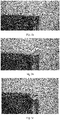
- Figures 3a -3c shows edge C-2 after 5, 10 and 15 minutes of machining. As can be seen the edge was not exceeding flank wear of 0.2 mm before the control at 15 minutes.
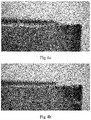
- Figures 4a and 4b show the edge J-4 after 5 and 10 minutes of machining, respectively. As can be seen from Figure 4b the flank face was more than 0.2 mm already at the control after 10 minutes machining..
- the combination of low cobalt content and a coarser WC grain size provide for a cutting insert having both improved cutting performance as well as improved properties when it comes to shrinkage after sintering.
Landscapes
- Chemical & Material Sciences (AREA)
- Engineering & Computer Science (AREA)
- Mechanical Engineering (AREA)
- Materials Engineering (AREA)
- Metallurgy (AREA)
- Organic Chemistry (AREA)
- Chemical Kinetics & Catalysis (AREA)
- Inorganic Chemistry (AREA)
- Manufacturing & Machinery (AREA)
- Composite Materials (AREA)
- Nanotechnology (AREA)
- Cutting Tools, Boring Holders, And Turrets (AREA)
- Powder Metallurgy (AREA)
- Physical Vapour Deposition (AREA)
Priority Applications (7)
| Application Number | Priority Date | Filing Date | Title |
|---|---|---|---|
| EP21163142.9A EP4059637A1 (de) | 2021-03-17 | 2021-03-17 | Schneidwerkzeug |
| EP22714797.2A EP4308327A1 (de) | 2021-03-17 | 2022-03-14 | Schneidwerkzeug |
| US18/281,596 US20240139807A1 (en) | 2021-03-17 | 2022-03-14 | Cutting tool |
| PCT/EP2022/056515 WO2022194767A1 (en) | 2021-03-17 | 2022-03-14 | Cutting tool |
| JP2023557364A JP7824973B2 (ja) | 2021-03-17 | 2022-03-14 | 切削工具 |
| KR1020237031537A KR20230157351A (ko) | 2021-03-17 | 2022-03-14 | 절삭 공구 |
| CN202280021809.5A CN117120183A (zh) | 2021-03-17 | 2022-03-14 | 切削工具 |
Applications Claiming Priority (1)
| Application Number | Priority Date | Filing Date | Title |
|---|---|---|---|
| EP21163142.9A EP4059637A1 (de) | 2021-03-17 | 2021-03-17 | Schneidwerkzeug |
Publications (1)
| Publication Number | Publication Date |
|---|---|
| EP4059637A1 true EP4059637A1 (de) | 2022-09-21 |
Family
ID=74947169
Family Applications (2)
| Application Number | Title | Priority Date | Filing Date |
|---|---|---|---|
| EP21163142.9A Withdrawn EP4059637A1 (de) | 2021-03-17 | 2021-03-17 | Schneidwerkzeug |
| EP22714797.2A Pending EP4308327A1 (de) | 2021-03-17 | 2022-03-14 | Schneidwerkzeug |
Family Applications After (1)
| Application Number | Title | Priority Date | Filing Date |
|---|---|---|---|
| EP22714797.2A Pending EP4308327A1 (de) | 2021-03-17 | 2022-03-14 | Schneidwerkzeug |
Country Status (6)
| Country | Link |
|---|---|
| US (1) | US20240139807A1 (de) |
| EP (2) | EP4059637A1 (de) |
| JP (1) | JP7824973B2 (de) |
| KR (1) | KR20230157351A (de) |
| CN (1) | CN117120183A (de) |
| WO (1) | WO2022194767A1 (de) |
Cited By (1)
| Publication number | Priority date | Publication date | Assignee | Title |
|---|---|---|---|---|
| CN118792622A (zh) * | 2024-06-14 | 2024-10-18 | 中国科学院宁波材料技术与工程研究所 | 一种快速开发大断裂韧性非晶薄膜材料的方法 |
Families Citing this family (4)
| Publication number | Priority date | Publication date | Assignee | Title |
|---|---|---|---|---|
| CN116275167B (zh) * | 2023-03-27 | 2024-06-07 | 哈尔滨理工大学 | 一种基于海胆牙齿自锋利结构的仿生切断刀及其制备方法 |
| CN116770227B (zh) * | 2023-06-25 | 2024-06-28 | 东北大学 | 高强韧低内应力厚TiNi&TiAl(Ni)NX/TiAlN复合硬质涂层及制备方法 |
| US20250034667A1 (en) * | 2023-07-27 | 2025-01-30 | Edward Andrew Laitila | Chemical Comminution - Iron Making Process |
| WO2026114609A1 (en) * | 2024-11-27 | 2026-06-04 | Seco Tools Ab | Cutting tool |
Citations (2)
| Publication number | Priority date | Publication date | Assignee | Title |
|---|---|---|---|---|
| EP2006413A1 (de) * | 2007-06-01 | 2008-12-24 | Sandvik Intellectual Property AB | Beschichtetes Hartmetall für Stanz- und Formanwendungen |
| JP2012143862A (ja) * | 2010-12-24 | 2012-08-02 | Hitachi Tool Engineering Ltd | 高温下での耐塑性変形性に優れる切削工具用wc基超硬合金および被覆切削工具ならびにこれらの製造方法 |
Family Cites Families (7)
| Publication number | Priority date | Publication date | Assignee | Title |
|---|---|---|---|---|
| JP2007044807A (ja) | 2005-08-10 | 2007-02-22 | Hitachi Tool Engineering Ltd | 超硬合金製極小径エンドミル |
| SE533154C2 (sv) * | 2008-12-18 | 2010-07-06 | Seco Tools Ab | Förbättrat belagt skär för grov svarvning |
| CN103160724B (zh) * | 2011-12-15 | 2015-11-04 | 株洲钻石切削刀具股份有限公司 | 一种用于铸铁车削加工的硬质合金及其硬质合金涂层刀片 |
| CN104625078B (zh) * | 2015-02-14 | 2018-01-09 | 江苏和鹰机电科技有限公司 | 用于切削碳纤维或玻璃纤维的硬质合金刀具及其制备方法 |
| AT15139U1 (de) * | 2016-03-11 | 2017-01-15 | Ceratizit Austria Gmbh | Zerspanungswerkzeug |
| JP7235199B2 (ja) | 2019-02-22 | 2023-03-08 | 三菱マテリアル株式会社 | 超硬合金および切削工具 |
| JP6972508B2 (ja) | 2019-12-19 | 2021-11-24 | 株式会社タンガロイ | 超硬合金及び被覆超硬合金、並びにそれらを有する工具 |
-
2021
- 2021-03-17 EP EP21163142.9A patent/EP4059637A1/de not_active Withdrawn
-
2022
- 2022-03-14 JP JP2023557364A patent/JP7824973B2/ja active Active
- 2022-03-14 KR KR1020237031537A patent/KR20230157351A/ko active Pending
- 2022-03-14 EP EP22714797.2A patent/EP4308327A1/de active Pending
- 2022-03-14 US US18/281,596 patent/US20240139807A1/en active Pending
- 2022-03-14 CN CN202280021809.5A patent/CN117120183A/zh active Pending
- 2022-03-14 WO PCT/EP2022/056515 patent/WO2022194767A1/en not_active Ceased
Patent Citations (2)
| Publication number | Priority date | Publication date | Assignee | Title |
|---|---|---|---|---|
| EP2006413A1 (de) * | 2007-06-01 | 2008-12-24 | Sandvik Intellectual Property AB | Beschichtetes Hartmetall für Stanz- und Formanwendungen |
| JP2012143862A (ja) * | 2010-12-24 | 2012-08-02 | Hitachi Tool Engineering Ltd | 高温下での耐塑性変形性に優れる切削工具用wc基超硬合金および被覆切削工具ならびにこれらの製造方法 |
Cited By (1)
| Publication number | Priority date | Publication date | Assignee | Title |
|---|---|---|---|---|
| CN118792622A (zh) * | 2024-06-14 | 2024-10-18 | 中国科学院宁波材料技术与工程研究所 | 一种快速开发大断裂韧性非晶薄膜材料的方法 |
Also Published As
| Publication number | Publication date |
|---|---|
| KR20230157351A (ko) | 2023-11-16 |
| CN117120183A (zh) | 2023-11-24 |
| US20240139807A1 (en) | 2024-05-02 |
| WO2022194767A1 (en) | 2022-09-22 |
| JP7824973B2 (ja) | 2026-03-05 |
| JP2024513729A (ja) | 2024-03-27 |
| EP4308327A1 (de) | 2024-01-24 |
Similar Documents
| Publication | Publication Date | Title |
|---|---|---|
| US20240139807A1 (en) | Cutting tool | |
| EP0914490B1 (de) | Sinterkarbideinsatz zum drehen, fräsen und bohren | |
| EP1867741B1 (de) | Einsatz zum Fräsen eines Gussstückes | |
| EP1346074B1 (de) | Beschichteter schneidwerkzeugeinsatz mit bindemittelphase auf eisen-nickel-basis | |
| US6333100B1 (en) | Cemented carbide insert | |
| EP2036997A1 (de) | Beschichtete Hartmetallwendeplatten für Schneidwerkzeuge | |
| EP3178800B1 (de) | Hartmaterial, sinterkörper, werkzeug mit gesintertem körper, herstellungsverfahren für hartmaterial und herstellungsverfahren für sinterkörper | |
| EP1904660B1 (de) | Gesinterte hartmetalle mit vanadium als gradientenbilder | |
| US20110247465A1 (en) | Coated cutting insert for rough turning | |
| EP0556788A2 (de) | Hartmetallegierung | |
| EP1462534A1 (de) | Sinterlegierung mit abgestufter Zusammensetzung und Verfahren zu dessen Herstellung | |
| EP2039447B1 (de) | Beschichteter Schneideeinsatz für Fräsanwendungen | |
| US8142848B2 (en) | Coated cutting insert for milling | |
| EP1493845B1 (de) | CVD beschichteter Schneidwerkzeugeinsatz | |
| EP1939313A2 (de) | Beschichteter Hartmetalleinsatz, insbesondere für Hochleistungsvorgänge | |
| EP0586352A1 (de) | Verfahren zur Herstellung einer gesinterten Karbonitridenlegierung mit verbesserter Zähigkeit | |
| EP3592880B1 (de) | Beschichtetes schneidwerkzeug | |
| EP3309268B1 (de) | Hartmetall und schneidwerkzeug | |
| KR100778265B1 (ko) | 바인더상 밀집 표면 영역을 갖는 코팅된 초경합금 | |
| EP3899079B1 (de) | Beschichtetes schneidwerkzeug | |
| JP2003129165A (ja) | 表面被覆超硬合金 | |
| Turner | Kusoffsky et a1. | |
| KR20060136328A (ko) | 구배 영역을 포함하는 미세립 소결 초경합금 |
Legal Events
| Date | Code | Title | Description |
|---|---|---|---|
| PUAI | Public reference made under article 153(3) epc to a published international application that has entered the european phase |
Free format text: ORIGINAL CODE: 0009012 |
|
| STAA | Information on the status of an ep patent application or granted ep patent |
Free format text: STATUS: THE APPLICATION HAS BEEN PUBLISHED |
|
| AK | Designated contracting states |
Kind code of ref document: A1 Designated state(s): AL AT BE BG CH CY CZ DE DK EE ES FI FR GB GR HR HU IE IS IT LI LT LU LV MC MK MT NL NO PL PT RO RS SE SI SK SM TR |
|
| STAA | Information on the status of an ep patent application or granted ep patent |
Free format text: STATUS: THE APPLICATION HAS BEEN WITHDRAWN |
|
| 18W | Application withdrawn |
Effective date: 20230310 |