EP4060071A2 - Fil machine pour fibre d'acier à haute résistance, fibre d'acier à haute résistance et son procédé de fabrication - Google Patents
Fil machine pour fibre d'acier à haute résistance, fibre d'acier à haute résistance et son procédé de fabrication Download PDFInfo
- Publication number
- EP4060071A2 EP4060071A2 EP20900918.2A EP20900918A EP4060071A2 EP 4060071 A2 EP4060071 A2 EP 4060071A2 EP 20900918 A EP20900918 A EP 20900918A EP 4060071 A2 EP4060071 A2 EP 4060071A2
- Authority
- EP
- European Patent Office
- Prior art keywords
- wire rod
- less
- steel fiber
- excluding
- strength
- Prior art date
- Legal status (The legal status is an assumption and is not a legal conclusion. Google has not performed a legal analysis and makes no representation as to the accuracy of the status listed.)
- Pending
Links
Images
Classifications
-
- C—CHEMISTRY; METALLURGY
- C22—METALLURGY; FERROUS OR NON-FERROUS ALLOYS; TREATMENT OF ALLOYS OR NON-FERROUS METALS
- C22C—ALLOYS
- C22C38/00—Ferrous alloys, e.g. steel alloys
- C22C38/002—Ferrous alloys, e.g. steel alloys containing In, Mg, or other elements not provided for in one single group C22C38/001 - C22C38/60
-
- C—CHEMISTRY; METALLURGY
- C21—METALLURGY OF IRON
- C21D—MODIFYING THE PHYSICAL STRUCTURE OF FERROUS METALS; GENERAL DEVICES FOR HEAT TREATMENT OF FERROUS OR NON-FERROUS METALS OR ALLOYS; MAKING METAL MALLEABLE, e.g. BY DECARBURISATION OR TEMPERING
- C21D8/00—Modifying the physical properties of ferrous metals or ferrous alloys by deformation combined with, or followed by, heat treatment
- C21D8/06—Modifying the physical properties of ferrous metals or ferrous alloys by deformation combined with, or followed by, heat treatment during manufacturing of rods or wires
-
- B—PERFORMING OPERATIONS; TRANSPORTING
- B21—MECHANICAL METAL-WORKING WITHOUT ESSENTIALLY REMOVING MATERIAL; PUNCHING METAL
- B21B—ROLLING OF METAL
- B21B1/00—Metal-rolling methods or mills for making semi-finished products of solid or profiled cross-section; Sequence of operations in milling trains; Layout of rolling-mill plant, e.g. grouping of stands; Succession of passes or of sectional pass alternations
- B21B1/16—Metal-rolling methods or mills for making semi-finished products of solid or profiled cross-section; Sequence of operations in milling trains; Layout of rolling-mill plant, e.g. grouping of stands; Succession of passes or of sectional pass alternations for rolling wire rods, bars, merchant bars, rounds wire or material of like small cross-section
-
- B—PERFORMING OPERATIONS; TRANSPORTING
- B21—MECHANICAL METAL-WORKING WITHOUT ESSENTIALLY REMOVING MATERIAL; PUNCHING METAL
- B21B—ROLLING OF METAL
- B21B3/00—Rolling materials of special alloys so far as the composition of the alloy requires or permits special rolling methods or sequences ; Rolling of aluminium, copper, zinc or other non-ferrous metals
-
- B—PERFORMING OPERATIONS; TRANSPORTING
- B21—MECHANICAL METAL-WORKING WITHOUT ESSENTIALLY REMOVING MATERIAL; PUNCHING METAL
- B21C—MANUFACTURE OF METAL SHEETS, WIRE, RODS, TUBES, PROFILES OR LIKE SEMI-MANUFACTURED PRODUCTS OTHERWISE THAN BY ROLLING; AUXILIARY OPERATIONS USED IN CONNECTION WITH METAL-WORKING WITHOUT ESSENTIALLY REMOVING MATERIAL
- B21C1/00—Manufacture of metal sheets, wire, rods, tubes or like semi-manufactured products by drawing
- B21C1/02—Drawing metal wire or like flexible metallic material by drawing machines or apparatus in which the drawing action is effected by drums
-
- C—CHEMISTRY; METALLURGY
- C21—METALLURGY OF IRON
- C21D—MODIFYING THE PHYSICAL STRUCTURE OF FERROUS METALS; GENERAL DEVICES FOR HEAT TREATMENT OF FERROUS OR NON-FERROUS METALS OR ALLOYS; MAKING METAL MALLEABLE, e.g. BY DECARBURISATION OR TEMPERING
- C21D1/00—General methods or devices for heat treatment, e.g. annealing, hardening, quenching or tempering
- C21D1/02—Hardening articles or materials formed by forging or rolling, with no further heating beyond that required for the formation
-
- C—CHEMISTRY; METALLURGY
- C21—METALLURGY OF IRON
- C21D—MODIFYING THE PHYSICAL STRUCTURE OF FERROUS METALS; GENERAL DEVICES FOR HEAT TREATMENT OF FERROUS OR NON-FERROUS METALS OR ALLOYS; MAKING METAL MALLEABLE, e.g. BY DECARBURISATION OR TEMPERING
- C21D6/00—Heat treatment of ferrous alloys
- C21D6/005—Heat treatment of ferrous alloys containing Mn
-
- C—CHEMISTRY; METALLURGY
- C21—METALLURGY OF IRON
- C21D—MODIFYING THE PHYSICAL STRUCTURE OF FERROUS METALS; GENERAL DEVICES FOR HEAT TREATMENT OF FERROUS OR NON-FERROUS METALS OR ALLOYS; MAKING METAL MALLEABLE, e.g. BY DECARBURISATION OR TEMPERING
- C21D6/00—Heat treatment of ferrous alloys
- C21D6/02—Hardening by precipitation
-
- C—CHEMISTRY; METALLURGY
- C21—METALLURGY OF IRON
- C21D—MODIFYING THE PHYSICAL STRUCTURE OF FERROUS METALS; GENERAL DEVICES FOR HEAT TREATMENT OF FERROUS OR NON-FERROUS METALS OR ALLOYS; MAKING METAL MALLEABLE, e.g. BY DECARBURISATION OR TEMPERING
- C21D8/00—Modifying the physical properties of ferrous metals or ferrous alloys by deformation combined with, or followed by, heat treatment
- C21D8/06—Modifying the physical properties of ferrous metals or ferrous alloys by deformation combined with, or followed by, heat treatment during manufacturing of rods or wires
- C21D8/08—Modifying the physical properties of ferrous metals or ferrous alloys by deformation combined with, or followed by, heat treatment during manufacturing of rods or wires for concrete reinforcement
-
- C—CHEMISTRY; METALLURGY
- C21—METALLURGY OF IRON
- C21D—MODIFYING THE PHYSICAL STRUCTURE OF FERROUS METALS; GENERAL DEVICES FOR HEAT TREATMENT OF FERROUS OR NON-FERROUS METALS OR ALLOYS; MAKING METAL MALLEABLE, e.g. BY DECARBURISATION OR TEMPERING
- C21D9/00—Heat treatment, e.g. annealing, hardening, quenching or tempering, adapted for particular articles; Furnaces therefor
- C21D9/52—Heat treatment, e.g. annealing, hardening, quenching or tempering, adapted for particular articles; Furnaces therefor for wires; for strips ; for rods of unlimited length
- C21D9/525—Heat treatment, e.g. annealing, hardening, quenching or tempering, adapted for particular articles; Furnaces therefor for wires; for strips ; for rods of unlimited length for wire, for rods
-
- C—CHEMISTRY; METALLURGY
- C22—METALLURGY; FERROUS OR NON-FERROUS ALLOYS; TREATMENT OF ALLOYS OR NON-FERROUS METALS
- C22C—ALLOYS
- C22C38/00—Ferrous alloys, e.g. steel alloys
- C22C38/001—Ferrous alloys, e.g. steel alloys containing N
-
- C—CHEMISTRY; METALLURGY
- C22—METALLURGY; FERROUS OR NON-FERROUS ALLOYS; TREATMENT OF ALLOYS OR NON-FERROUS METALS
- C22C—ALLOYS
- C22C38/00—Ferrous alloys, e.g. steel alloys
- C22C38/008—Ferrous alloys, e.g. steel alloys containing tin
-
- C—CHEMISTRY; METALLURGY
- C22—METALLURGY; FERROUS OR NON-FERROUS ALLOYS; TREATMENT OF ALLOYS OR NON-FERROUS METALS
- C22C—ALLOYS
- C22C38/00—Ferrous alloys, e.g. steel alloys
- C22C38/02—Ferrous alloys, e.g. steel alloys containing silicon
-
- C—CHEMISTRY; METALLURGY
- C22—METALLURGY; FERROUS OR NON-FERROUS ALLOYS; TREATMENT OF ALLOYS OR NON-FERROUS METALS
- C22C—ALLOYS
- C22C38/00—Ferrous alloys, e.g. steel alloys
- C22C38/04—Ferrous alloys, e.g. steel alloys containing manganese
-
- C—CHEMISTRY; METALLURGY
- C22—METALLURGY; FERROUS OR NON-FERROUS ALLOYS; TREATMENT OF ALLOYS OR NON-FERROUS METALS
- C22C—ALLOYS
- C22C38/00—Ferrous alloys, e.g. steel alloys
- C22C38/06—Ferrous alloys, e.g. steel alloys containing aluminium
-
- C—CHEMISTRY; METALLURGY
- C21—METALLURGY OF IRON
- C21D—MODIFYING THE PHYSICAL STRUCTURE OF FERROUS METALS; GENERAL DEVICES FOR HEAT TREATMENT OF FERROUS OR NON-FERROUS METALS OR ALLOYS; MAKING METAL MALLEABLE, e.g. BY DECARBURISATION OR TEMPERING
- C21D2211/00—Microstructure comprising significant phases
- C21D2211/005—Ferrite
Definitions
- the present disclosure relates to a wire rod for a high-strength steel fiber, a high-strength steel fiber, and a method for manufacturing the same, and more particularly, to a wire rod for a steel fiber having a tensile strength of 1,500 MPa or more without performing LP heat treatment during drawing, a steel fiber and, a method for manufacturing the same.
- LP heat treatment which has been conducted before a drawing process to impart ductility materials, is a cause of increasing manufacturing costs because a lot of costs and time are required for the heat treatment. Therefore, steel fiber manufacturers tend to omit the LP heat treatment, if possible, and it is difficult to introduce high carbon steel that forms pearlite causing facture during a drawing process.
- a wire rod for a steel fiber having strength while reducing a C content a steel fiber having strength while reducing a C content
- a steel fiber a method for manufacturing the same.
- a wire rod for a high-strength steel fiber including, in percent by weight (wt%), 0.01 to 0.03% of C, 0.05 to 0.15% of Si, 1.0 to 2.0% of Mn, 0.05 to 0.15% of P, 0.005% or less (excluding 0) of Al, 0.01% or less (excluding 0) of N, 0.03% or less (excluding 0) of S, 0.02 to 0.08% of Sn, and the remainder of Fe and inevitable impurities, wherein a microstructure is single-phase ferrite.
- an area fraction of ferrite having an average grain size greater than 50 ⁇ m and high angle grain boundaries having a misorientation angle of 15° or more may be from 60 to 80%.
- D represents a diameter of the wire rod.
- an area fraction of ferrite having an average grain size greater than 50 ⁇ m and high angle grain boundaries having a misorientation angle of 15° or more may be 25% or less.
- D represents a diameter of the wire rod.
- an area fraction of ferrite may be 99.5% or more.
- a tensile strength may be 450 MPa or more.
- a method for manufacturing a wire rod for a high-strength steel fiber including: preparing a wire rod by maintaining a billet comprising, in percent by weight (wt%), 0.01 to 0.03% of C, 0.05 to 0.15% of Si, 1.0 to 2.0% of Mn, 0.05 to 0.15% of P, 0.005% or less (excluding 0) of Al, 0.01% or less (excluding 0) of N, 0.03% or less (excluding 0) of S, 0.02 to 0.08% of Sn, and the remainder of Fe and inevitable impurities, in a furnace in a temperature range of 1,050 to 1,150°C for 90 to 120 minutes and rolling the billet; coiling the prepared wire rod in a temperature range of 800 to 850°C; and cooling the wire rod to 400°C at a rate of 2 to 5°C/sec and cooling the wire rod to a temperature range of 180 to 220°C at a rate of 20 to 30°C/sec.
- a high-strength steel fiber including, in percent by weight (wt%), 0.01 to 0.03% of C, 0.1 or less (excluding 0) of Si, 1.0 to 2.0% of Mn, 0.05 to 0.15% of P, 0.01% to 0.05% of Al, 0.01% or less (excluding 0) of N, 0.03% or less (excluding 0) of S, 0.02 to 0.08% of Sn, and the remainder of Fe and inevitable impurities, and having a tensile strength of 1,500 MPa or more.
- a number of torsions without delamination may be 60 times or more.
- D represents a diameter of a steel wire.
- an increase in tensile strength after 24 hours of room temperature aging may be 40 MPa or less.
- a reduction in the number of torsions after 24 hours of room temperature aging may be twice or less.
- a method for manufacturing a high-strength steel fiber including: dry-drawing the wire rod for a high-strength steel fiber according to any one of claims 1 to 4; and wet-drawing the wire rod to a diameter of 0.4 to 1.0 mm, wherein a tensile strength of 1,500 MPa or more is obtained without performing LP heat treatment after the dry-drawing and before the wet-drawing.
- a strength of 1,500 MPa or more may be obtained even with a low C content and the LP heat treatment, which is a process of recovering ductility during a drawing process, may be omitted, and thus manufacturing costs may be reduced.
- tunnels may be constructed using the NATM without using the conventional blasting method in the case of using a high-strength steel fiber reinforcing concrete according to the present disclosure, and effects on preventing tunnel collapse and improving lifetime of tunnels may be expected.
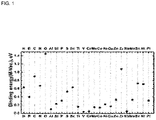
- FIG. 1 is a graph illustrating binding energy of each alloying element with dislocation.
- a wire rod for a high-strength steel fiber includes, in percent by weight (wt%), 0.01 to 0.03% of C, 0.05 to 0.15% of Si, 1.0 to 2.0% of Mn, 0.05 to 0.15% of P, 0.005% or less (excluding 0) of Al, 0.01% or less (excluding 0) of N, 0.03% or less (excluding 0) of S, 0.02 to 0.08% of Sn, and the remainder of Fe and inevitable impurities, wherein a microstructure is single-phase ferrite.
- a final steel wire may have a tensile strength of 1,500 MPa or more by performing a drawing process, in which the C content is controlled to a very low level to inhibit formation of pearlite causing fracture during the drawing process, the P content is increased to obtain strength, and Sn is added to inhibit dynamic and static aging, without performing additional LP heat treatment, thereby completing the present disclosure.
- the C content is controlled to 0.03% or less to inhibit formation of pearlite that causes fracture during a drawing process and to construct ferrite, as a relatively soft phase, as a main structure.
- a strength of about 100 MPa may be improved by increasing the C content and the N content by 0.1%, respectively, and a strength of about 80 MPa may be improved by increasing the P content by 0.1%. Therefore, in the present disclosure, in order to prepare a high-strength steel fiber, attempts have been made to obtain strength by introducing the solid solution strengthening effect using P in a state where the microstructure is fully composed of ferrite.
- a density of dislocation formed in a ferrite structure during a drawing process is 10 15 /nm 2 or more.
- Dislocation binds to interstitial elements, i.e., C and N, to increase strength, thereby deteriorating ductility, which may cause a problem of occurrence of fracture during the drawing process.
- FIG. 1 is a graph illustrating binding energy of each alloying element with dislocation.
- Sn having a binding strength to dislocation as high as that of Hf may prevent binding of N to dislocation.
- a drawing limit is increased without performing the LP heat treatment that is a process of recovering ductility.
- a wire rod for a high-strength steel fiber includes, in percent by weight (wt%), 0.01 to 0.03% of C, 0.05 to 0.15% of Si, 1.0 to 2.0% of Mn, 0.05 to 0.15% of P, 0.005% or less (excluding 0) of Al, 0.01% or less (excluding 0) of N, 0.03% or less (excluding 0) of S, 0.02 to 0.08% of Sn, and the remainder of Fe and inevitable impurities.
- the % for each alloying element refers to wt %.
- the content of C is from 0.01 to 0.03%.
- Carbon (C) is an element forming cementite, which forms pearlite having a layered structure together with ferrite, and C may be added in an amount of 0.01% or more to obtain strength of the wire rod of the present disclosure.
- Steel fibers are finished by wet drawing after dry drawing without performing LP heat treatment which is used to impart ductility by manufacturers. When the C content is excessive, a pearlite fraction exceeds 1%, thereby causing a problem of occurrence of fracture during the drawing process, and therefore an upper limit thereof may be controlled to 0.03%.
- the content of Si is from 0.05 to 0.15%.
- Silicon (Si) is an element hardening ferrite and improving strength.
- Si may be added in an amount of 0.05% or more to remove oxygen from molten steel.
- an excess of Si forms Fe 2 SiO 4 having a high binding strength to a matrix, thereby deteriorating scale peeling property and causes a problem in that the probability of fracture increases during wet drawing due to hardening of ferrite. Therefore, an upper limit thereof is controlled to 0.15%.
- the content of Mn is from 1.0 to 2.0%.
- Manganese (Mn) is an element added to improve quenchability and to control S contained in steel and may be added in an amount of 1.0% or more to obtain strength of a wire rod via grain refinement. However, an excess of Mn may cause Mn segregation to increase the probability of fracture during the drawing process. Therefore, an upper limit thereof is controlled to 2.0%.
- the content of P is from 0.05 to 0.15%.
- Phosphorus (P) is generally segregated in grain boundaries in the case where the C content is high in steel or forms FeP in grain boundaries, thereby causing fracture during a drawing process.
- P is an element controlled as an impurity.
- P having superior solid solution strengthening effect is added for compensation of strength in accordance with designing ultra-low carbon steel having a C content of 0.03wt% or less.
- P is a solid solution strengthening element that improves strength by about 90 MPa when added in an amount of 0.1 wt%.
- a target strength is obtained by adding 0.05 wt% or more of P.
- an excess of P makes it difficult to control segregation, and therefore an upper limit thereof is controlled to 0.15%.
- the content of A1 is 0.005% or less (excluding 0).
- Aluminum (Al) is an element easily reacting with oxygen and added for deoxidation of a steel-making process.
- an excess of Al causes clogging of nozzles during a casting process due to inclusions, and particularly, forms hard inclusions such as Al 2 O 3 , thereby causing processing fracture during a drawing process. Therefore, an upper limit thereof is controlled to 0.005%.
- the content of N is 0.01% or less (excluding 0).
- N Nitrogen
- the content of S is 0.03% or less (excluding 0).
- S Sulfur
- MnS inclusions in grain boundaries to deteriorate workability. Therefore, an upper limit thereof is controlled to 0.03%.
- the content of Sn is from 0.02 to 0.08%.
- Tin (Sn) as an element having a high binding energy with dislocation, prevents binding of dislocation formed in ferrite during the drawing process to N and C, and therefore, an increase in strength of a material caused by dynamic and static aging may be prevented.
- Sn is added in an amount of 0.02% or more in the present disclosure.
- an excess of Sn causes a problem in that manufacturing costs increase. Therefore, an upper limit thereof may be controlled to 0.08%.
- the remaining component of the composition of the present disclosure is iron (Fe).
- the composition may include unintended impurities inevitably incorporated from raw materials or surrounding environments, and thus addition of other alloy components is not excluded. These impurities are known to any person skilled in the art of manufacturing and details thereof are not specifically mentioned in the present disclosure.
- a microstructure of the wire rod for a high-strength steel fiber is single-phase ferrite.
- the wire rod includes ferrite in an area fraction of 99.5% or more.
- formation of the pearlite structure may be inhibited and ferrite is formed as a main structure of a steel, and thus fracture may be prevented during a drawing process.
- grain boundaries are classified into high angle grain boundaries and low angle grain boundaries based misorientation between grain boundaries, and attempts have been made to control the average size of grains having the high angle grain boundaries. Specifically, relationships with neighboring grains are quantified as misorientation angles. Using 15° as a reference, the grain boundaries are classified into high angle grain boundaries and low angle grain boundaries.
- the average size of grains having he high angle grain boundaries with a misorientation angle of 15° or more is controlled at the central region of the wire rod.
- the area fraction of ferrite having an average grain size of 30 to 50 ⁇ m and high angle grain boundaries with a misorientation angle of 15° or more is from 60% to 80%.
- D represents a diameter of the wire rod.
- the surface of the wire rod has a low C content
- the grain sizes vary due to non-uniform structure such as decarburized layer and scale.
- this embodiment is limited to the -D/4 to D/4 range having a relatively uniform structure.
- an area fraction of ferrite having an average grain size greater than 50 ⁇ m and high angle grain boundaries with a misorientation angle of 15° or more may be 25% or less.
- a tensile strength of the wire rod for a high-strength steel fiber may be 450 MPa or more.
- the wire rod of the present disclosure may be manufactured by preparing a billet having the above-described alloy composition, and performing a process of reheating-groove rolling-coiling-cooling.
- the method for manufacturing a wire rod for a high-strength steel fiber include: preparing a wire rod by maintaining a billet including, in percent by weight (wt%), 0.01 to 0.03% of C, 0.05 to 0.15% of Si, 1.0 to 2.0% of Mn, 0.05 to 0.15% of P, 0.005% or less (excluding 0) of Al, 0.01% or less (excluding 0) of N, 0.03% or less (excluding 0) of S, 0.02 to 0.08% of Sn, and the remainder of Fe and inevitable impurities, in a furnace in a temperature range of 1,050 to 1,150°C for 90 to 120 minutes and rolling the billet; coiling the prepared wire rod in a temperature range of 800 to 850°C; and cooling the wire rod to 400°C at a rate of 2 to 5°C/sec and cooling the wire rod to a temperature range of 180 to 220°C at a rate of 20 to 30°C/sec.
- the billet having the above-described composition is prepared and homogenization-heated into single-phase austenite.
- the heating temperature may be controlled in the range of 1,050 to 1,150°C.
- the heating temperature of billet is set to 1,050°C or higher to obtain a temperature range for the subsequent groove rolling and to obtain the single-phase austenite structure as a microstructure of the billet.
- an upper limit of the heating temperature may be controlled to 1,150°C.
- the heating for 90 minutes it is preferable to perform the heating for 90 minutes to 120 minutes.
- the solid solution strengthening element added to obtain strength may sufficiently form a solid solution.
- the heating time exceeds 120 minutes, a depth of a decarburized layer on the surface of the wire rod increases causing a problem in that the decarburized layer remains after the rolling is ended.
- the heated billet is hot-rolled by sequentially performing rough rolling, intermediate rough milling/finish milling, and finish rolling to prepare a wire rod.
- the coiling step of the present disclosure may be performed in a temperature range of 800 to 850°C.
- a cooling method to minimize a residence time at a temperature below 400°C is required to obtain amounts of solute N and solute P and to inhibit formation of FeP in grain boundaries.
- the coiled wire rod may be cooled to 400°C at a rate of 2 to 5°C/sec.
- the cooling rate is less than 2°C/sec in the cooling step, the temperature of the coil is still high while being stacked in a reforming tube and thus a worker may have difficulty in handling after the coil is transported to a test board and a subsequent process is required to cool the coil.
- a cooling rate exceeding 5°C/sec does not significantly contribute to enhancement of tensile strength but causes a problem of extra expenses (e.g., an increase in electricity charges) due to an increase in the amount of cooling.
- the coil may be cooled to a temperature of 180 to 220°C at a cooling rate of 20 to 30°C/sec.
- the cooling rate is less than 20°C/sec, there are problems in that FeP is formed in grain boundaries present in central segregated region of the wire rod.
- the cooling rate exceeds 30°C/sec, there are problems in that a cooling capacity of a facility is limited and thus an air blow exceeding the same is not applied and investment is required for the facility.
- a microstructure of the cooled wire rod may include ferrite in an area fraction of 99.5% or more.
- the wire rod for a high-strength steel fiber prepared in the above-described step may have a tensile strength of 450 MPa or more.
- a high-strength steel fiber according to another embodiment of the present disclosure may be manufactured by drawing the prepared wire rod for a high-strength steel fiber.
- a method for manufacturing a high-strength steel fiber according to another embodiment of the present disclosure includes: dry-drawing the wire rod for a high-strength steel fiber; and wet-drawing the wire rod to a diameter of 0.4 to 1.0 mm.
- the steel wire for a steel fiber may have a tensile strength of 1,500 MPa in a state where a total reduction ratio is 92.4% after the dry drawing and wet drawing.
- the wire rod for a high-strength steel fiber according to the present disclosure includes ferrite as a main structure and fracture of the steel wire occurring during the wet-drawing after the dry-drawing may be prevented even without performing LP heat treatment.
- a tensile strength of 1,500 MPa or more corresponding to a level required for conventional steel wires for steel fibers may be obtained by adjusting the composition ratio of C, N, P, and Sn.
- a number of torsions without delamination is 60 times or more, based on a length of 100 D, and thus excellent torsional properties may be obtained.
- tensile strengths of the prepared wire rods of the examples and comparative examples area fractions of ferrite in a cross-section of each wire rod, specifically, in a -D/4 to D/4 range of a transverse cross-section, based on average grain size, and whether pearlite was formed are shown in Table 2.
- tensile strengths of the dry-drawn wire rods of the examples and comparative examples are show in Table 2.
- Tensile strengths and torsional properties of the wet-drawn wire rods of the examples and comparative examples are shown in Table 3 below.
- x indicates a case in which fracture occurred during wet drawing.
- the tensile strength of each final steel wire was not less than 1,500 MPa even when the LP heat treatment was not performed after the dry drawing and before the wet drawing, and the number of torsions without delamination was not less than 60 based on the length of 100 D (D is a diameter of each steel wire), and thus steel wires may be applied to products manufactured by twisting the steel wires.
- Comparative Example 1 shows a case in which a sufficient tensile strength of the wire rod and the final steel wire was not obtained due to the low C content.
- the C content of 0.035% exceeded the upper limit of 0.03% suggested in the present disclosure, and thus pearlite was formed and fracture occurred during wet drawing.
- Comparative Example 7 The effects of addition of Sn, which is a major element of the present disclosure, may be confirmed in Comparative Example 7 and Comparative Example 8.
- Sn does not affect strength, there is no difference between the strengths of the wire rod and the dry-drawn wire rod.
- the Sn content of 0.01% is far lower than the lower limit of 0.02% suggested by the present disclosure, and thus the tensile strength considerably increased from 1590 MPa to 1710 MPa and the number of torsions considerably decreased from 61 times to 40 times during the room temperature aging after the final wet drawing. Therefore, reliability of mechanical properties in consideration of aging phenomenon could not be obtained.
- Comparative Example 10 the Al content of 0.02% exceeded the upper limit of 0.005% suggested by the present disclosure, and thus hard inclusions were formed and fracture occurred during wet drawing.
- the wire rod according to the present disclosure may have a strength of 1,500 MPa or more even with a low C content, and the LP heat treatment that is a process of recovering ductility during drawing may be omitted, and thus manufacturing costs may be reduced and the wire rod may be used as a material for steel fibers.
Landscapes
- Chemical & Material Sciences (AREA)
- Engineering & Computer Science (AREA)
- Mechanical Engineering (AREA)
- Materials Engineering (AREA)
- Metallurgy (AREA)
- Organic Chemistry (AREA)
- Physics & Mathematics (AREA)
- Thermal Sciences (AREA)
- Crystallography & Structural Chemistry (AREA)
- Manufacturing & Machinery (AREA)
- Heat Treatment Of Steel (AREA)
- Metal Extraction Processes (AREA)
Applications Claiming Priority (2)
| Application Number | Priority Date | Filing Date | Title |
|---|---|---|---|
| KR1020190171698A KR102312327B1 (ko) | 2019-12-20 | 2019-12-20 | 고강도 강섬유용 선재, 고강도 강섬유 및 이들의 제조 방법 |
| PCT/KR2020/015532 WO2021125554A2 (fr) | 2019-12-20 | 2020-11-06 | Fil machine pour fibre d'acier à haute résistance, fibre d'acier à haute résistance et son procédé de fabrication |
Publications (2)
| Publication Number | Publication Date |
|---|---|
| EP4060071A2 true EP4060071A2 (fr) | 2022-09-21 |
| EP4060071A4 EP4060071A4 (fr) | 2024-02-21 |
Family
ID=76478304
Family Applications (1)
| Application Number | Title | Priority Date | Filing Date |
|---|---|---|---|
| EP20900918.2A Pending EP4060071A4 (fr) | 2019-12-20 | 2020-11-06 | Fil machine pour fibre d'acier à haute résistance, fibre d'acier à haute résistance et son procédé de fabrication |
Country Status (5)
| Country | Link |
|---|---|
| US (1) | US12410489B2 (fr) |
| EP (1) | EP4060071A4 (fr) |
| KR (1) | KR102312327B1 (fr) |
| CN (1) | CN114981463B (fr) |
| WO (1) | WO2021125554A2 (fr) |
Families Citing this family (2)
| Publication number | Priority date | Publication date | Assignee | Title |
|---|---|---|---|---|
| CN114622123A (zh) * | 2021-10-31 | 2022-06-14 | 江苏沙钢集团有限公司 | 用于刮长丝的低碳钢棉钢纤维用盘条生产方法和盘条 |
| CN114635082A (zh) * | 2022-02-24 | 2022-06-17 | 包头钢铁(集团)有限责任公司 | 一种钢棉纤维用热轧盘条的生产方法 |
Family Cites Families (33)
| Publication number | Priority date | Publication date | Assignee | Title |
|---|---|---|---|---|
| CN1078912C (zh) * | 1996-09-27 | 2002-02-06 | 川崎制铁株式会社 | 切削性优良的高强度高韧性非调质钢 |
| JPH10306345A (ja) * | 1997-04-28 | 1998-11-17 | Kobe Steel Ltd | 歪時効特性に優れた冷間鍛造用線材・棒鋼およびその製造方法 |
| JP2000008140A (ja) | 1998-04-21 | 2000-01-11 | Kobe Steel Ltd | 線状または棒状鋼、および機械部品 |
| JP3409055B2 (ja) * | 1998-10-16 | 2003-05-19 | 浦項綜合製鐵株式会社 | 伸線加工性が優れた高強度鋼線用線材及び高強度鋼線の製造方法 |
| KR100386210B1 (ko) * | 1999-11-16 | 2003-06-02 | 가부시키가이샤 고베 세이코쇼 | 와이어롯드강 |
| CA2381405C (fr) * | 2000-06-07 | 2008-01-08 | Nippon Steel Corporation | Tuyau d'acier a formabilite excellente et methode de fabrication |
| CN101082105A (zh) * | 2002-03-29 | 2007-12-05 | 新日本制铁株式会社 | 高温强度优异的高强度钢及其制造方法 |
| US7488396B2 (en) | 2002-11-15 | 2009-02-10 | Nippon Steel Corporation | Superior in machinability and method of production of same |
| JP4411191B2 (ja) * | 2004-11-30 | 2010-02-10 | 株式会社神戸製鋼所 | 冷間鍛造用鋼線・棒材およびその製造方法 |
| JP2007284774A (ja) | 2006-04-20 | 2007-11-01 | Jfe Bars & Shapes Corp | 耐遅れ破壊特性および冷間加工性に優れる線材およびその製造方法 |
| JP5142141B2 (ja) * | 2008-01-24 | 2013-02-13 | 新日鐵住金株式会社 | ハイドロフォーム加工用鋼管素材熱延鋼板およびハイドロフォーム加工用鋼管ならびにそれらの製造方法 |
| JP5407178B2 (ja) * | 2008-05-13 | 2014-02-05 | 新日鐵住金株式会社 | 冷間加工性に優れた冷間鍛造用鋼線材およびその製造方法 |
| JP5474616B2 (ja) * | 2010-03-05 | 2014-04-16 | 新日鐵住金ステンレス株式会社 | 鍛造性に優れるフェライト系ステンレス快削鋼棒線 |
| JP5547590B2 (ja) * | 2010-09-14 | 2014-07-16 | 株式会社神戸製鋼所 | 交流磁気特性に優れた軟磁性鋼部品およびその製造方法 |
| JP5488763B2 (ja) | 2011-05-25 | 2014-05-14 | 新日鐵住金株式会社 | 冷延鋼板及びその製造方法 |
| JP6180351B2 (ja) | 2013-03-28 | 2017-08-16 | 株式会社神戸製鋼所 | 生引き性に優れた高強度鋼線用線材および高強度鋼線 |
| JP6262599B2 (ja) * | 2013-11-29 | 2018-01-17 | 株式会社神戸製鋼所 | 軟磁性鋼材及びその製造方法、並びに軟磁性鋼材から得られる軟磁性部品 |
| KR101611724B1 (ko) | 2014-09-04 | 2016-04-14 | 주식회사 포스코 | 고강도 선재 및 강선과 그 제조 방법 |
| KR101657849B1 (ko) * | 2014-12-26 | 2016-09-20 | 주식회사 포스코 | 쾌삭성이 우수한 연자성 강재 및 그 제조방법 |
| KR20160082608A (ko) | 2014-12-26 | 2016-07-08 | 주식회사 포스코 | 연신율이 우수한 고강도 선재, 이를 이용한 강선 및 그들의 제조방법 |
| KR20160083263A (ko) | 2014-12-30 | 2016-07-12 | 주식회사 이랜텍 | 디스플레이부 위치 조절 및 분리 가능 스마트 안경 |
| JP2017039974A (ja) * | 2015-08-19 | 2017-02-23 | 株式会社神戸製鋼所 | 被覆鋼材及びその製造方法 |
| CN105149811B (zh) * | 2015-09-15 | 2018-03-13 | 中国石油天然气集团公司 | 酸性服役环境用管线钢埋弧焊焊丝 |
| JP6587881B2 (ja) * | 2015-09-28 | 2019-10-09 | 日鉄ステンレス株式会社 | 締結部品用フェライト系ステンレス線状鋼材 |
| WO2017094446A1 (fr) * | 2015-12-03 | 2017-06-08 | 株式会社神戸製鋼所 | Acier pour bielle pouvant être scindée par rupture, bielle pouvant être scindée par rupture et procédé de production associé |
| JP2017106099A (ja) | 2015-12-03 | 2017-06-15 | 株式会社神戸製鋼所 | 破断分離型コネクティングロッド用鋼、破断分離型コネクティングロッド、およびこれらの製造方法 |
| KR101819371B1 (ko) | 2016-10-04 | 2018-01-17 | 주식회사 포스코 | 콘크리트 보강 고강도 강섬유용 선재, 강선 및 그 제조 방법 |
| KR101917461B1 (ko) | 2016-12-22 | 2018-11-09 | 주식회사 포스코 | 신선가공성이 우수한 고강도 선재, 열처리 선재 및 이들의 제조방법 |
| WO2018159617A1 (fr) * | 2017-02-28 | 2018-09-07 | Jfeスチール株式会社 | Tige de fil destinée à couper |
| JP6828592B2 (ja) * | 2017-05-24 | 2021-02-10 | 日本製鉄株式会社 | 伸線加工用熱間圧延線材 |
| KR102042062B1 (ko) * | 2017-12-22 | 2019-11-08 | 주식회사 포스코 | 냉간압조용 선재 및 이의 제조방법 |
| KR102047403B1 (ko) | 2017-12-26 | 2019-11-22 | 주식회사 포스코 | 냉간압조용 선재, 이를 이용한 가공품 및 이들의 제조방법 |
| KR20190078210A (ko) | 2017-12-26 | 2019-07-04 | 주식회사 포스코 | 절삭성이 우수한 연자성 강재 및 그 제조방법 |
-
2019
- 2019-12-20 KR KR1020190171698A patent/KR102312327B1/ko active Active
-
2020
- 2020-11-06 WO PCT/KR2020/015532 patent/WO2021125554A2/fr not_active Ceased
- 2020-11-06 CN CN202080093191.4A patent/CN114981463B/zh active Active
- 2020-11-06 EP EP20900918.2A patent/EP4060071A4/fr active Pending
- 2020-11-06 US US17/786,511 patent/US12410489B2/en active Active
Also Published As
| Publication number | Publication date |
|---|---|
| CN114981463B (zh) | 2024-03-15 |
| WO2021125554A3 (fr) | 2021-08-12 |
| WO2021125554A2 (fr) | 2021-06-24 |
| CN114981463A (zh) | 2022-08-30 |
| US20230031552A1 (en) | 2023-02-02 |
| KR102312327B1 (ko) | 2021-10-14 |
| EP4060071A4 (fr) | 2024-02-21 |
| KR20210079673A (ko) | 2021-06-30 |
| US12410489B2 (en) | 2025-09-09 |
Similar Documents
| Publication | Publication Date | Title |
|---|---|---|
| US12410489B2 (en) | Wire rod for high-strength steel fiber, high-strength steel fiber, and method for manufacturing same | |
| JP3572993B2 (ja) | 鋼線材、鋼線及びその製造方法 | |
| US12559809B2 (en) | Wire rod for concrete reinforcing steel fiber, steel fiber, and manufacturing method therefor | |
| KR101304744B1 (ko) | 고강도 pc강연선용 선재, pc강연선 및 그 제조방법 | |
| KR102229284B1 (ko) | 고강도 강섬유용 선재, 고강도 강섬유 및 이들의 제조 방법 | |
| KR101889178B1 (ko) | 고탄소 고강도 선재 및 이의 제조방법 | |
| KR102490054B1 (ko) | 강도 및 가공성이 향상된 강섬유용 선재, 강선 및 그 제조 방법 | |
| KR101819431B1 (ko) | 냉간압조용 고탄소강 선재, 이를 이용한 가공품 및 이들의 제조방법 | |
| KR101819371B1 (ko) | 콘크리트 보강 고강도 강섬유용 선재, 강선 및 그 제조 방법 | |
| KR20110066637A (ko) | 고강도 pc 강선의 제조방법 및 이에 의하여 제조된 고강도 pc 강선 | |
| KR20110010510A (ko) | 재질균일성이 우수한 고강도 열연강판의 제조 방법 | |
| KR102467201B1 (ko) | 고강도 강섬유용 선재, 고강도 강섬유 및 이들의 제조 방법 | |
| KR101917436B1 (ko) | 내식성이 우수한 고강도 강선 및 이의 제조방법 | |
| KR102405038B1 (ko) | 고강도 강 섬유용 선재, 강선 및 이들의 제조방법 | |
| EP4613902A1 (fr) | Fil machine en fibre d'acier d'armature pour béton non soumis à un traitement thermique, fibre d'acier et procédés de fabrication associés | |
| KR101726129B1 (ko) | 연신율이 우수한 선재, 그를 이용한 강선 및 그들의 제조방법 | |
| KR101696095B1 (ko) | 신선성이 우수한 열처리재의 제조방법 | |
| KR101330284B1 (ko) | 내꺽임성 및 표면 특성이 우수한 가공용 열연강판 및 그 제조방법 | |
| KR102448751B1 (ko) | 충격인성 및 성형성이 향상된 선재, 강선 및 이들의 제조방법 | |
| KR102376475B1 (ko) | 콘크리트 보강 내진용 강 선재 및 이의 제조방법 | |
| KR101328338B1 (ko) | 신선용 선재 및 열처리재와 고강도 강선 | |
| KR101674870B1 (ko) | 연신율이 우수한 고강도 선재의 제조방법, 강선 및 그 제조방법 | |
| KR20170110773A (ko) | 냉간압조용 고탄소강 선재, 이를 이용한 가공품 및 이들의 제조방법 | |
| KR20220169248A (ko) | 강도 및 연화저항성이 향상된 선재, 강선 및 그 제조방법 | |
| KR20160082608A (ko) | 연신율이 우수한 고강도 선재, 이를 이용한 강선 및 그들의 제조방법 |
Legal Events
| Date | Code | Title | Description |
|---|---|---|---|
| STAA | Information on the status of an ep patent application or granted ep patent |
Free format text: STATUS: THE INTERNATIONAL PUBLICATION HAS BEEN MADE |
|
| PUAI | Public reference made under article 153(3) epc to a published international application that has entered the european phase |
Free format text: ORIGINAL CODE: 0009012 |
|
| STAA | Information on the status of an ep patent application or granted ep patent |
Free format text: STATUS: REQUEST FOR EXAMINATION WAS MADE |
|
| 17P | Request for examination filed |
Effective date: 20220617 |
|
| AK | Designated contracting states |
Kind code of ref document: A2 Designated state(s): AL AT BE BG CH CY CZ DE DK EE ES FI FR GB GR HR HU IE IS IT LI LT LU LV MC MK MT NL NO PL PT RO RS SE SI SK SM TR |
|
| DAV | Request for validation of the european patent (deleted) | ||
| DAX | Request for extension of the european patent (deleted) | ||
| REG | Reference to a national code |
Ref country code: DE Ref legal event code: R079 Free format text: PREVIOUS MAIN CLASS: C22C0038020000 Ipc: C22C0038040000 |
|
| RIC1 | Information provided on ipc code assigned before grant |
Ipc: C21D 1/02 20060101ALI20231027BHEP Ipc: C21D 6/02 20060101ALI20231027BHEP Ipc: C21D 6/00 20060101ALI20231027BHEP Ipc: C21D 9/52 20060101ALI20231027BHEP Ipc: C21D 8/08 20060101ALI20231027BHEP Ipc: C21D 8/06 20060101ALI20231027BHEP Ipc: C22C 38/06 20060101ALI20231027BHEP Ipc: C22C 38/00 20060101ALI20231027BHEP Ipc: C22C 38/02 20060101ALI20231027BHEP Ipc: C22C 38/04 20060101AFI20231027BHEP |
|
| A4 | Supplementary search report drawn up and despatched |
Effective date: 20240124 |
|
| RIC1 | Information provided on ipc code assigned before grant |
Ipc: C21D 1/02 20060101ALI20240118BHEP Ipc: C21D 6/02 20060101ALI20240118BHEP Ipc: C21D 6/00 20060101ALI20240118BHEP Ipc: C21D 9/52 20060101ALI20240118BHEP Ipc: C21D 8/08 20060101ALI20240118BHEP Ipc: C21D 8/06 20060101ALI20240118BHEP Ipc: C22C 38/06 20060101ALI20240118BHEP Ipc: C22C 38/00 20060101ALI20240118BHEP Ipc: C22C 38/02 20060101ALI20240118BHEP Ipc: C22C 38/04 20060101AFI20240118BHEP |