EP4060533B1 - Détection d'une attaque en cours basée sur la technique de génération de signature dans un environnement informatisé - Google Patents
Détection d'une attaque en cours basée sur la technique de génération de signature dans un environnement informatisé Download PDFInfo
- Publication number
- EP4060533B1 EP4060533B1 EP21305318.4A EP21305318A EP4060533B1 EP 4060533 B1 EP4060533 B1 EP 4060533B1 EP 21305318 A EP21305318 A EP 21305318A EP 4060533 B1 EP4060533 B1 EP 4060533B1
- Authority
- EP
- European Patent Office
- Prior art keywords
- activity
- computerized
- signature
- time frame
- current
- Prior art date
- Legal status (The legal status is an assumption and is not a legal conclusion. Google has not performed a legal analysis and makes no representation as to the accuracy of the status listed.)
- Active
Links
Images



Classifications
-
- G—PHYSICS
- G06—COMPUTING OR CALCULATING; COUNTING
- G06F—ELECTRIC DIGITAL DATA PROCESSING
- G06F21/00—Security arrangements for protecting computers, components thereof, programs or data against unauthorised activity
- G06F21/50—Monitoring users, programs or devices to maintain the integrity of platforms, e.g. of processors, firmware or operating systems
- G06F21/55—Detecting local intrusion or implementing counter-measures
- G06F21/56—Computer malware detection or handling, e.g. anti-virus arrangements
- G06F21/566—Dynamic detection, i.e. detection performed at run-time, e.g. emulation, suspicious activities
-
- G—PHYSICS
- G06—COMPUTING OR CALCULATING; COUNTING
- G06F—ELECTRIC DIGITAL DATA PROCESSING
- G06F21/00—Security arrangements for protecting computers, components thereof, programs or data against unauthorised activity
- G06F21/50—Monitoring users, programs or devices to maintain the integrity of platforms, e.g. of processors, firmware or operating systems
- G06F21/55—Detecting local intrusion or implementing counter-measures
- G06F21/554—Detecting local intrusion or implementing counter-measures involving event detection and direct action
-
- G—PHYSICS
- G06—COMPUTING OR CALCULATING; COUNTING
- G06F—ELECTRIC DIGITAL DATA PROCESSING
- G06F21/00—Security arrangements for protecting computers, components thereof, programs or data against unauthorised activity
- G06F21/50—Monitoring users, programs or devices to maintain the integrity of platforms, e.g. of processors, firmware or operating systems
- G06F21/52—Monitoring users, programs or devices to maintain the integrity of platforms, e.g. of processors, firmware or operating systems during program execution, e.g. stack integrity ; Preventing unwanted data erasure; Buffer overflow
- G06F21/54—Monitoring users, programs or devices to maintain the integrity of platforms, e.g. of processors, firmware or operating systems during program execution, e.g. stack integrity ; Preventing unwanted data erasure; Buffer overflow by adding security routines or objects to programs
-
- G—PHYSICS
- G06—COMPUTING OR CALCULATING; COUNTING
- G06F—ELECTRIC DIGITAL DATA PROCESSING
- G06F21/00—Security arrangements for protecting computers, components thereof, programs or data against unauthorised activity
- G06F21/50—Monitoring users, programs or devices to maintain the integrity of platforms, e.g. of processors, firmware or operating systems
- G06F21/55—Detecting local intrusion or implementing counter-measures
- G06F21/552—Detecting local intrusion or implementing counter-measures involving long-term monitoring or reporting
Definitions
- the present mechanisms generally relate to information technology security, more specifically to detecting a current attack in a computerized environment.
- a method for detecting a current attack in a computerized environment is automatically performed by one or more computerized hosts of the computerized environment.
- the method comprises generating a signature which is specific for a type of activity in the computerized environment based on historic data of the activity, the signature specifying averaged normalized numbers of occurrences of the activity per time frame of a plurality of recurring time frames.
- the method further comprises determining one or more threshold values for the activity based on the historic data of the activity and a statistical measure.
- the method further comprises monitoring current data of the activity in the computerized environment.
- the method still further comprises generating an attack detection alert based on determining that the current data of the activity exceeds one or more of the one or more threshold values for a current time frame.
- Another aspect pertains to a device being configured to perform such a method for detecting a current attack in a computerized environment.
- Another aspect pertains to a computer program configured for detecting a current attack in a computerized environment according to such a method.
- the method for detecting a current attack in a computerized environment is automatically performed by one or more computerized hosts of the computerized environment.
- the method comprises generating a signature which is specific for a type of activity in the computerized environment based on historic data of the activity, the signature specifying averaged normalized numbers of occurrences of the activity per time frame of a plurality of recurring time frames.
- the method further comprises determining one or more threshold values for the activity based on the historic data of the activity and a statistical measure.
- the method further comprises monitoring current data of the activity in the computerized environment.
- the method still further comprises generating an attack detection alert based on determining that the current data of the activity exceeds one or more of the one or more threshold values for a current time frame.
- a signature can be understood as a fingerprint for a specific activity.
- a signature is based on averaged normalized numbers of occurrences of the activity, the signature is a uniform representation and provides for a comparable profile for the specific activity. This enables to share the signature between different entities, e.g. between different computerized hosts, and/or for detecting current attacks in different computerized hosts.
- the threshold value for the activity is based on historic data of the activity. For example, this allows the method to learn automatically from the history. It also allows the method to adjust independently to regular long-term developments, for example if the activity occurs increasingly more often or less frequently when viewed over a large time scale. In that the determining of the threshold value is further based on a statistical measure, the method can detect attacks even if there is a sparse data basis, for example because the monitored activity occurred naturally less frequently in a time frame in the past. This also allows attacks to be detected more reliably if a frequency of the specific activity is subject to fluctuations by itself.
- the method enables detection of an attack based on such activities that occur regularly in the normal operation of the computerized environment. Further, due to a synergistic effect of the features described above of generating a time frame signature based on historic data of the activity and determining a threshold value based on the historic data and a statistical measure, the method enables detection of attacks in progress, particularly when sparse data is available. This helps to reduce the damage caused by the attack, especially compared to conventional methods of detecting attacks that are based, for example, on a retrospective evaluation of log files or are based on certain activities that are typical of attacks but atypical of normal operation of the computerized environment.
- the type of activity is a CPU usage, a memory usage, an application launch, a service request, an interface access, a database transaction, a login attempt, a firewall event and/or a network traffic.
- the type of activity is a sensor input and/or an actuator output, e.g. a water level sensor input, key press input, or a motor start or stop command output.
- monitoring current data of the activity in the computerized environment includes determining a frequency of the respective type of activity.
- the current data is the number of times the type of activity occurred in a monitoring time interval.
- the activity is a measurable and quantifiable activity.
- monitoring current data of the activity includes applying a filter to count for certain instances of the type of activity only. For example, when monitoring the current data of the activity, launches of certain applications are monitored, but launches of other applications are ignored, i.e. filtered out from monitoring. This applies mutatis mutandis to some or all of the other types of activity monitored, e.g. service requests, interface accesses, data base transactions, login attempts, firewall events and/or network traffic in some embodiments.
- the time frame has a length of one day, one week, one month or one year.
- the time frame coincides with a day of the week, a week of the year, a month of the year, a season and/or a weekend. This prevents false alarms by, for example, being able to consider seasonal variations in the frequency of activity in the computing environment.
- Seasonal is understood to mean on a daily basis, weekly basis, monthly basis, yearly basis, seasonal basis or weekend basis.
- the time frame comprises a plurality of sub-frames, wherein generating the signature comprises generating an averaged normalized number per sub-frame.
- the sub-frame can correspond to one hour. This prevents false alarms by, for example, being able to consider seasonal variations in the frequency of activity in the computing environment, where 'seasonal variations' are possible at high temporal resolution, e.g. on an hourly basis. For example, regular variations between morning, noon, afternoon, evening and/or night can be considered.
- the plurality of recurring time frames is chosen neither too large nor too small in order not to inhibit the self-learning property of the method and nevertheless to compensate for historic statistical fluctuations as far as possible.
- the plurality of recurring time frames is formed by the most recent two, three, four, five, six, twelve, twenty-four, thirty, thirty-six, forty-eight, fifty-two, seventy-two or three hundred and fifty-six past time frames.
- the statistical measure is a 3-sigma value of the signature. This allows the threshold value to compensate for the fact that the frequency of the activity is subject to statistical variation from frame to frame. Ultimately, this can reduce false alerts, for example.
- the method further comprises updating the signature and/or the threshold value for each time frame. This means that the signature and/or the threshold value are each updated after a period of a time frame has elapsed.
- the historic data is adjusted for a contribution from the oldest time frame considered in the historic data as soon as a new, current time frame enters the historic data.
- determining that the current data of the activity exceeds the threshold value for a current time frame is based on current data monitored for a monitoring interval, e.g. a sliding window.
- the monitoring interval specifies a duration for which current occurrences of the activity contribute to the current data. If the monitoring interval is chosen too large, attacks can be overlooked; if it is chosen too small, a few clustered activities can trigger a false alert. Therefore, in some embodiments, the monitoring interval corresponds to a duration of the sub-frames and/or is in the range of twice, half or quarter of this duration.
- a minimum monitoring interval is 1 minute, 5 minutes, 10 minutes, 30 minutes and/or 1 hour.
- a maximum monitoring interval is 5 minutes, 10 minutes, 30 minutes, 1 hour, 2 hours, and/or 4 hours.
- generating the attack detection alert comprises sending a message.
- sending a message includes sending a short message (SMS), an E-Mail, a network notification and/or a push notification.
- SMS short message
- E-Mail electronic mail
- the message is sent to a computerized host performing the method to detect a current attack or to a user of that host.
- the message is sent to a computerized host other than the host performing the method to detect a current attack.
- the message is sent to a mobile device, e.g. of an administrator, and/or to a service provider and/or operator of the computerized environment.
- generating the attack detection alert comprises at least one of closing a network connection, terminating a task, disabling a service and blocking a user. This allows an attack to be actively and autonomously averted by the computerized environment. In some other embodiments, no such closing, terminating or blocking is taken. This avoids undesired interference with regular users.
- generating the attack detection alert is further based on whether the activity originates from a single actor, i.e. process, service, host, network device, IP address, regional code (e.g. obtained from an IP address) and/or user account, and/or a single type of activity. For example, if the monitored activities come from different sources, this may coincide with an external event, e.g. school holidays, Christmas, sporting events, nice weather, which motivates many users to access the computerized host and/or use services provided by the computerized host at the same time. In such a situation the fact that the current data of the activity exceeds the threshold value for a current time frame does not mean an attack.
- a single actor i.e. process, service, host, network device, IP address, regional code (e.g. obtained from an IP address) and/or user account, and/or a single type of activity. For example, if the monitored activities come from different sources, this may coincide with an external event, e.g. school holidays, Christmas, sporting events, nice weather, which motivate
- generating an attack detection alert is based on determining that the current data of the activity exceeds the threshold value for more than one host of the computerized environment. For example, this allows for detecting an orchestrated current attack by multiple distributed sources. In some embodiments, generating the attack detection alert is further based on a distribution of the monitored actions among different actors.
- avoiding false alerts is improved by detecting whether the current data of the activity of multiple similar hosts remain covariant.
- the method can include linking together different similar hosts by their signatures and generating an attack detection alert based on determining covariant behavior of these hosts.
- generating the attack detection alert is further based on whether the activity originates from a process, service, host, network device, IP address, regional code (e.g. obtained from an IP address) and/or user account, which had previously shown abnormalities, for example that an attack detection alert has been generated based on determining that the current data of said activity exceeds the threshold value.
- Attacks often trigger different types of activity at the same time, e.g. login attempts, database requests, firewall events, etc.
- generating the attack detection alert is further based on determining that monitored current data of an activity of another type exceeds a threshold value for the current time frame.
- the computerized host is selected from at least one of a firewall device and a data base server.
- a computerized host including at least one processor and program code configured upon execution by the at least one processor to perform any of the aforementioned methods, or a program product comprising a computer readable medium and program code stored on the computer readable medium and configured upon execution by at least one processor to perform the any of the aforementioned methods, may also be provided.
- the above described can be beneficial in computerized environments such as open environments or environments providing electronic marketplaces with many actors interacting. For example, this enables to detect fraudulent access and modifications to airline reservations on a travel platform computerized environment, to detect a robot in an open video game computerized environment, to detect a hacked account on a computerized environment providing an e-commerce web site, and/or to detect a malware on a network.
- FIG. 1 schematically illustrates an example method for detecting a current attack in a computerized environment.
- the method is automatically performed by one or more computerized hosts of the computerized environment.
- the method includes the following according to blocks 1 to 4:
- a signature is generated, which is specific for a type of activity in the computerized environment based on historic data of the activity.
- the signature specifies averaged normalized numbers of occurrences of the activity per time frame of a plurality of recurring time frames.
- a threshold value for the activity is determined based on the historic data of the activity and a statistical measure in block 2.
- current data of the activity is monitored in the computerized environment.
- an attack detection alert is generated based on determining that the current data of the activity exceeds the threshold value for a current time frame.
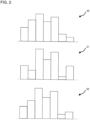
- FIG. 2 shows schematically as histograms historic data 20, 21 and an example signature 22 for an example time frame of one week.
- the signature 22 in this example represents a fingerprint for the occurrence of the activity for time frames with the length of one week.
- the signature 22 is based on two past time frames.
- the signature may be based on a number N of time frames, e.g. a number of time frames covering one year, i.e. fifty-two time frames.
- historic data 20, 21 may comprise a number N of time frames.
- the columns of the histograms coincide with sub-frames of the signature 22 and each represent historic data of a weekday. In some other examples, sub-frames coincide with one hour.
- the signature 22 has been generated based on the historic data 20, 21 and specifies averaged normalized numbers of the historic data of occurrences of an activity in the computerized environment. For example, the occurrence of the action is counted sub-frame wise, summed over the time frame (i.e. all sub-frames of the time frame) and the counts of the individual sub-frames divided by the sum.
- the threshold value is determined as follows: Assuming that the historical data 20, 21 comprises N time frames and each time frame comprises M sub-frames, the historical data 20, 21 can be understood as N*M counts of activities. For example, the N*M counts can be modelled as a Gaussian distribution and a maximum three-sigma value can be determined as the threshold. The three-sigma value represents three standard deviations from a mean of the N*M counts.
- a portion of the historical data comprising sections of the N timeframes corresponding to the respective sub-frame is modelled by a statistical model, and a respective threshold for each sub-frame of the signature is determined based on the portion of the historical data and a statistical measure.
- the signature together with the thresholds (be they on a time scale of the time frame in some examples or on a time scale of the sub-frames of the signature in some other examples), enables early detection of attacks.
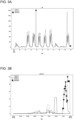
- FIG. 3A schematically illustrates monitored current data of an activity on an hourly basis for several days and a reference which is based on a signature for a one-week time frame with a sub-frame resolution of one hour. Further, in FIG. 3A two anomalies have been highlighted, where the current data of the activity exceeds a threshold value for a current time frame. As the anomaly on the right shows, the method enables the detection of attacks based on an absolutely small number of activities.
- FIG. 3B shows another example of monitored current data of two different types of activity and a reference which is based on a signature with a sub-frame resolution of one hour.
- both monitored activities show anomalies.
- generating an attack detection alert is based on determining that the current data of at least two activities exceeds threshold values for a current time frame.
- the method comprises generating a respective signature for each type of activity, i.e. generating at least two signatures, e.g. in a manner as described before.
- the method comprises determining respective threshold values for each type of activity, i.e. generating at least two threshold values, e.g. in a manner as described before.
- generating a signature is individually carried out for each of multiple computerized hosts of the computerized environment.
- a host can have its own signature.
- generating a signature is carried out for a first host. Such generated signature is then used for detecting attacks on a second host.
- a threshold value determined for a first host is scaled by a certain factor and used for detecting attacks on a second host.
- FIG. 4 shows schematically four different signatures 40, 41, 42, 43 for four different computerized hosts or four different sub-networks of the computerized environment.
- the signatures 40, 41, 42, 43 coincide.
- by creating individual signatures 40, 41, 42, 43 for each host or sub-networks it is possible to consider the particularities of each host / sub-network. For example, activities for some hosts in some sub-frames are significantly lower than for other hosts, or occur in more limited time windows.
- the signature represents a fingerprint of occurrences of a type of activity, attacks can be detected more reliably, especially at an early stage.
- FIG. 5 is a diagrammatic representation of the internal structure of an example computerized host 50 which implements the methods described herein. This structure may also apply to an example client or an example server which are configured to implement the methods described herein.
- the computerized host 50 includes a processor 51, a main memory 52 and a non-volatile memory 53, e.g. a hard drive, non-removable flash, a solid state drive and/or a removable memory card such as a Micro or Mini SD card, which permanently stores the software enabling computerized host 50 to execute its functions, for example an operating system.
- the computerized host 50 includes a display 56, a keyboard 57 and, optionally, a cursor input device 58 (such as a mouse).
- an additional I/O interfaces 59 such as card reader and USB interfaces may be present.
- the computerized host 50 includes a network interface 54 (e.g. a wireless network interface such as a Wi-Fi and/or Bluetooth interface) and/or a 2G/3G/4G mobile network interface device. All of them 51 - 54 and 56 - 59 communicate with each other via a bus 55.
- the computerized host 50 is arranged to execute a program code 61 stored on a computer readable medium 60, to cause it to perform any of the methodologies explained above.
- the program code 61 may at least include the GUI definition document.
- An executable set of instructions i.e. the program code 60 embodying any one, or all, of the methodologies described above, resides completely, or at least partially, permanently on a computer readable medium 61, which can be accessed by the computerized host 50 through the I/O interface 59.
- the program code 61 may be additionally or alternatively stored in the non-volatile memory 53.
- the program code 61 may be copied from the computer readable medium 60 being temporally connected with the computerized host 50 via the I/O interface 59 into the non-volatile memory 53.
- respective process data resides in the main memory 52 and/or the processor 51.
- the program code 61 may further be transmitted or received as a propagated signal through the wired or wireless network interface 54 from/to a software server within a local area network or the Internet.
Landscapes
- Engineering & Computer Science (AREA)
- Computer Security & Cryptography (AREA)
- Software Systems (AREA)
- Theoretical Computer Science (AREA)
- Computer Hardware Design (AREA)
- General Engineering & Computer Science (AREA)
- General Physics & Mathematics (AREA)
- Physics & Mathematics (AREA)
- Virology (AREA)
- Health & Medical Sciences (AREA)
- General Health & Medical Sciences (AREA)
- Data Exchanges In Wide-Area Networks (AREA)
- Computer And Data Communications (AREA)
Claims (15)
- Méthode pour détecter une attaque courante dans un environnement informatisé, la méthode étant réalisée automatiquement par un ou plusieurs hôtes informatisés (50) de l'environnement informatisé et comprenant :- la génération d'une signature (22) qui est spécifique à un type d'activité dans l'environnement informatisé sur la base de données historiques (20, 21) de l'activité, la signature (22) spécifiant des nombres normalisés moyennés d'occurrences de l'activité par cadre temporel d'une pluralité de cadres temporels récurrents,- la détermination d'une valeur de seuil pour l'activité sur la base des données historiques de l'activité et d'une mesure statistique,- la surveillance de données courantes de l'activité dans l'environnement informatisé, et- la génération d'une alerte de détection d'attaque sur la base de la détermination que les données courantes de l'activité dépassent la valeur de seuil pour un cadre temporel courant.
- Méthode selon la revendication 1, dans laquelle le type d'activité est au moins un parmi un lancement d'application, une demande de service, un accès d'interface, une transaction de base de données, une tentative d'ouverture de session, un événement de pare-feu et un trafic de réseau.
- Méthode selon la revendication 1 ou 2, dans laquelle le cadre temporel a une longueur d'un jour, une semaine, un mois ou une année.
- Méthode selon les revendications 1 à 2, dans laquelle le cadre temporel est un parmi un jour de la semaine, une semaine de l'année, un mois de l'année, une saison ou un week-end.
- Méthode selon l'une quelconque des revendications précédentes dans laquelle le cadre temporel comprend une pluralité de cadres secondaires, dans laquelle la génération de la signature (22) comprend la génération d'un nombre normalisé moyenné par cadre secondaire.
- Méthode selon la revendication 5, dans laquelle le cadre secondaire correspond à une heure.
- Méthode selon l'une quelconque des revendications précédentes, dans laquelle la mesure statistique est une valeur 3 sigma de la signature.
- Méthode selon l'une quelconque des revendications précédentes, comprenant en outre la mise à jour de la signature (22) pour chaque cadre temporel.
- Méthode selon l'une quelconque des revendications précédentes, dans laquelle la détermination que les données courantes de l'activité dépassent la valeur de seuil pour un cadre temporel courant est basée sur les données courantes surveillées pour une fenêtre dynamique.
- Méthode selon l'une quelconque des revendications précédentes, dans laquelle la génération de l'alerte de détection d'attaque comprend l'envoi d'un message.
- Méthode selon l'une quelconque des revendications précédentes, dans laquelle la génération de l'alerte de détection d'attaque comprend au moins un parmi la fermeture d'une connexion de réseau, la fin d'une tâche, la désactivation d'un service et le blocage d'un utilisateur.
- Méthode selon l'une quelconque des revendications précédentes, dans laquelle l'hôte informatisé est sélectionné parmi au moins un parmi un dispositif de pare-feu et un serveur de base de données.
- Méthode selon l'une quelconque des revendications précédentes, dans laquelle la génération de l'alerte de détection d'attaque est en outre basée sur la détermination que des données courantes surveillées d'une activité d'un autre type dépassent une valeur de seuil pour le cadre temporel courant.
- Hôte informatisé (50) configuré pour réaliser la méthode pour détecter une attaque courante dans un environnement informatisé selon l'une quelconque des revendications 1 à 13.
- Programme d'ordinateur comprenant des instructions qui, lorsque le programme est exécuté par un ordinateur, amènent l'ordinateur à mener à bien la méthode selon l'une quelconque des revendications 1 à 13.
Priority Applications (5)
| Application Number | Priority Date | Filing Date | Title |
|---|---|---|---|
| EP21305318.4A EP4060533B1 (fr) | 2021-03-15 | 2021-03-15 | Détection d'une attaque en cours basée sur la technique de génération de signature dans un environnement informatisé |
| ES21305318T ES2993220T3 (en) | 2021-03-15 | 2021-03-15 | Detecting a current attack based on signature generation technique in a computerized environment |
| US18/280,029 US12596795B2 (en) | 2021-03-15 | 2022-02-28 | Generation technique in a computerized environment |
| CN202280021689.9A CN116997897A (zh) | 2021-03-15 | 2022-02-28 | 在计算机化环境中基于签名生成技术检测当前攻击 |
| PCT/EP2022/054927 WO2022194522A1 (fr) | 2021-03-15 | 2022-02-28 | Détection d'une attaque actuelle basée sur une technique de génération de signature dans un environnement informatisé |
Applications Claiming Priority (1)
| Application Number | Priority Date | Filing Date | Title |
|---|---|---|---|
| EP21305318.4A EP4060533B1 (fr) | 2021-03-15 | 2021-03-15 | Détection d'une attaque en cours basée sur la technique de génération de signature dans un environnement informatisé |
Publications (2)
| Publication Number | Publication Date |
|---|---|
| EP4060533A1 EP4060533A1 (fr) | 2022-09-21 |
| EP4060533B1 true EP4060533B1 (fr) | 2024-10-09 |
Family
ID=75426544
Family Applications (1)
| Application Number | Title | Priority Date | Filing Date |
|---|---|---|---|
| EP21305318.4A Active EP4060533B1 (fr) | 2021-03-15 | 2021-03-15 | Détection d'une attaque en cours basée sur la technique de génération de signature dans un environnement informatisé |
Country Status (5)
| Country | Link |
|---|---|
| US (1) | US12596795B2 (fr) |
| EP (1) | EP4060533B1 (fr) |
| CN (1) | CN116997897A (fr) |
| ES (1) | ES2993220T3 (fr) |
| WO (1) | WO2022194522A1 (fr) |
Family Cites Families (11)
| Publication number | Priority date | Publication date | Assignee | Title |
|---|---|---|---|---|
| US5566092A (en) * | 1993-12-30 | 1996-10-15 | Caterpillar Inc. | Machine fault diagnostics system and method |
| US6453345B2 (en) * | 1996-11-06 | 2002-09-17 | Datadirect Networks, Inc. | Network security and surveillance system |
| US5991881A (en) * | 1996-11-08 | 1999-11-23 | Harris Corporation | Network surveillance system |
| US6321338B1 (en) * | 1998-11-09 | 2001-11-20 | Sri International | Network surveillance |
| US7707305B2 (en) * | 2000-10-17 | 2010-04-27 | Cisco Technology, Inc. | Methods and apparatus for protecting against overload conditions on nodes of a distributed network |
| US20020133586A1 (en) * | 2001-01-16 | 2002-09-19 | Carter Shanklin | Method and device for monitoring data traffic and preventing unauthorized access to a network |
| US20020107953A1 (en) * | 2001-01-16 | 2002-08-08 | Mark Ontiveros | Method and device for monitoring data traffic and preventing unauthorized access to a network |
| WO2003083660A1 (fr) * | 2002-03-29 | 2003-10-09 | Global Dataguard, Inc. | Systemes et procedes de detection adaptative d'intrusion de comportement |
| US7681235B2 (en) * | 2003-05-19 | 2010-03-16 | Radware Ltd. | Dynamic network protection |
| WO2017060778A2 (fr) * | 2015-09-05 | 2017-04-13 | Nudata Security Inc. | Systèmes et procédés permettant de détecter et de pénaliser des anomalies |
| CN106778260B (zh) * | 2016-12-31 | 2020-03-17 | 阿里巴巴(中国)有限公司 | 攻击检测方法和装置 |
-
2021
- 2021-03-15 EP EP21305318.4A patent/EP4060533B1/fr active Active
- 2021-03-15 ES ES21305318T patent/ES2993220T3/es active Active
-
2022
- 2022-02-28 US US18/280,029 patent/US12596795B2/en active Active
- 2022-02-28 CN CN202280021689.9A patent/CN116997897A/zh active Pending
- 2022-02-28 WO PCT/EP2022/054927 patent/WO2022194522A1/fr not_active Ceased
Also Published As
| Publication number | Publication date |
|---|---|
| ES2993220T3 (en) | 2024-12-26 |
| CN116997897A (zh) | 2023-11-03 |
| EP4060533A1 (fr) | 2022-09-21 |
| US20240070272A1 (en) | 2024-02-29 |
| US12596795B2 (en) | 2026-04-07 |
| WO2022194522A1 (fr) | 2022-09-22 |
Similar Documents
| Publication | Publication Date | Title |
|---|---|---|
| US20240244073A1 (en) | Multi-stage anomaly detection for process chains in multi-host environments | |
| US11258825B1 (en) | Computer network monitoring with event prediction | |
| US11522887B2 (en) | Artificial intelligence controller orchestrating network components for a cyber threat defense | |
| US11695643B1 (en) | Statistical control rules for detecting anomalies in time series data | |
| Stakhanova et al. | A taxonomy of intrusion response systems | |
| Hu et al. | A simple and efficient hidden Markov model scheme for host-based anomaly intrusion detection | |
| CN112073389B (zh) | 云主机安全态势感知系统、方法、设备及存储介质 | |
| Ye et al. | Multivariate statistical analysis of audit trails for host-based intrusion detection | |
| EP3085023B1 (fr) | Sécurité de communications | |
| CN105656693B (zh) | 一种基于回归的信息安全异常检测的方法及系统 | |
| JP7033560B2 (ja) | 分析装置および分析方法 | |
| CN105808368B (zh) | 一种基于随机概率分布的信息安全异常检测的方法及系统 | |
| CN120658529B (zh) | 一种网络攻击场景智能重构与模式演化分析方法 | |
| US10721251B2 (en) | Method and system for detecting remote access during activity on the pages of a web resource | |
| US20240193271A1 (en) | Anomaly detection framework targeting ransomware using low-level hardware information | |
| EP4060533B1 (fr) | Détection d'une attaque en cours basée sur la technique de génération de signature dans un environnement informatisé | |
| CN118378281A (zh) | 信任评估方法、装置、电子设备和存储介质 | |
| CN119094226A (zh) | 一种计算机网络安全态势感知方法及系统 | |
| CN114070608A (zh) | 一种基于流量分析的资产优化方法及装置 | |
| Velpula et al. | Behavior-anomaly-based system for detecting insider attacks and data mining | |
| Gonçalves et al. | Detecting anomalies through sequential performance analysis in virtualized environments | |
| CN120474838B (zh) | 应用于apt攻击行为的检测方法及系统 | |
| Hwangbo et al. | Development of Security Anomaly Detection Algorithms using Machine Learning | |
| CN119051938B (zh) | 安全防护策略的生成方法、装置、设备及存储介质和程序产品 | |
| CN120744914B (zh) | 一种基于大模型驱动的工控网络安全辅助运营方法 |
Legal Events
| Date | Code | Title | Description |
|---|---|---|---|
| PUAI | Public reference made under article 153(3) epc to a published international application that has entered the european phase |
Free format text: ORIGINAL CODE: 0009012 |
|
| STAA | Information on the status of an ep patent application or granted ep patent |
Free format text: STATUS: THE APPLICATION HAS BEEN PUBLISHED |
|
| AK | Designated contracting states |
Kind code of ref document: A1 Designated state(s): AL AT BE BG CH CY CZ DE DK EE ES FI FR GB GR HR HU IE IS IT LI LT LU LV MC MK MT NL NO PL PT RO RS SE SI SK SM TR |
|
| STAA | Information on the status of an ep patent application or granted ep patent |
Free format text: STATUS: REQUEST FOR EXAMINATION WAS MADE |
|
| 17P | Request for examination filed |
Effective date: 20230321 |
|
| RBV | Designated contracting states (corrected) |
Designated state(s): AL AT BE BG CH CY CZ DE DK EE ES FI FR GB GR HR HU IE IS IT LI LT LU LV MC MK MT NL NO PL PT RO RS SE SI SK SM TR |
|
| GRAP | Despatch of communication of intention to grant a patent |
Free format text: ORIGINAL CODE: EPIDOSNIGR1 |
|
| STAA | Information on the status of an ep patent application or granted ep patent |
Free format text: STATUS: GRANT OF PATENT IS INTENDED |
|
| INTG | Intention to grant announced |
Effective date: 20240531 |
|
| GRAS | Grant fee paid |
Free format text: ORIGINAL CODE: EPIDOSNIGR3 |
|
| GRAA | (expected) grant |
Free format text: ORIGINAL CODE: 0009210 |
|
| STAA | Information on the status of an ep patent application or granted ep patent |
Free format text: STATUS: THE PATENT HAS BEEN GRANTED |
|
| AK | Designated contracting states |
Kind code of ref document: B1 Designated state(s): AL AT BE BG CH CY CZ DE DK EE ES FI FR GB GR HR HU IE IS IT LI LT LU LV MC MK MT NL NO PL PT RO RS SE SI SK SM TR |
|
| REG | Reference to a national code |
Ref country code: CH Ref legal event code: EP |
|
| REG | Reference to a national code |
Ref country code: DE Ref legal event code: R096 Ref document number: 602021019907 Country of ref document: DE |
|
| REG | Reference to a national code |
Ref country code: IE Ref legal event code: FG4D |
|
| REG | Reference to a national code |
Ref country code: ES Ref legal event code: FG2A Ref document number: 2993220 Country of ref document: ES Kind code of ref document: T3 Effective date: 20241226 |
|
| REG | Reference to a national code |
Ref country code: LT Ref legal event code: MG9D |
|
| REG | Reference to a national code |
Ref country code: NL Ref legal event code: MP Effective date: 20241009 |
|
| REG | Reference to a national code |
Ref country code: AT Ref legal event code: MK05 Ref document number: 1731360 Country of ref document: AT Kind code of ref document: T Effective date: 20241009 |
|
| PG25 | Lapsed in a contracting state [announced via postgrant information from national office to epo] |
Ref country code: NL Free format text: LAPSE BECAUSE OF FAILURE TO SUBMIT A TRANSLATION OF THE DESCRIPTION OR TO PAY THE FEE WITHIN THE PRESCRIBED TIME-LIMIT Effective date: 20241009 |
|
| PG25 | Lapsed in a contracting state [announced via postgrant information from national office to epo] |
Ref country code: NL Free format text: LAPSE BECAUSE OF FAILURE TO SUBMIT A TRANSLATION OF THE DESCRIPTION OR TO PAY THE FEE WITHIN THE PRESCRIBED TIME-LIMIT Effective date: 20241009 |
|
| PG25 | Lapsed in a contracting state [announced via postgrant information from national office to epo] |
Ref country code: IS Free format text: LAPSE BECAUSE OF FAILURE TO SUBMIT A TRANSLATION OF THE DESCRIPTION OR TO PAY THE FEE WITHIN THE PRESCRIBED TIME-LIMIT Effective date: 20250209 Ref country code: HR Free format text: LAPSE BECAUSE OF FAILURE TO SUBMIT A TRANSLATION OF THE DESCRIPTION OR TO PAY THE FEE WITHIN THE PRESCRIBED TIME-LIMIT Effective date: 20241009 Ref country code: PT Free format text: LAPSE BECAUSE OF FAILURE TO SUBMIT A TRANSLATION OF THE DESCRIPTION OR TO PAY THE FEE WITHIN THE PRESCRIBED TIME-LIMIT Effective date: 20250210 |
|
| PG25 | Lapsed in a contracting state [announced via postgrant information from national office to epo] |
Ref country code: FI Free format text: LAPSE BECAUSE OF FAILURE TO SUBMIT A TRANSLATION OF THE DESCRIPTION OR TO PAY THE FEE WITHIN THE PRESCRIBED TIME-LIMIT Effective date: 20241009 |
|
| PG25 | Lapsed in a contracting state [announced via postgrant information from national office to epo] |
Ref country code: BG Free format text: LAPSE BECAUSE OF FAILURE TO SUBMIT A TRANSLATION OF THE DESCRIPTION OR TO PAY THE FEE WITHIN THE PRESCRIBED TIME-LIMIT Effective date: 20241009 |
|
| PG25 | Lapsed in a contracting state [announced via postgrant information from national office to epo] |
Ref country code: NO Free format text: LAPSE BECAUSE OF FAILURE TO SUBMIT A TRANSLATION OF THE DESCRIPTION OR TO PAY THE FEE WITHIN THE PRESCRIBED TIME-LIMIT Effective date: 20250109 |
|
| PG25 | Lapsed in a contracting state [announced via postgrant information from national office to epo] |
Ref country code: LV Free format text: LAPSE BECAUSE OF FAILURE TO SUBMIT A TRANSLATION OF THE DESCRIPTION OR TO PAY THE FEE WITHIN THE PRESCRIBED TIME-LIMIT Effective date: 20241009 Ref country code: GR Free format text: LAPSE BECAUSE OF FAILURE TO SUBMIT A TRANSLATION OF THE DESCRIPTION OR TO PAY THE FEE WITHIN THE PRESCRIBED TIME-LIMIT Effective date: 20250110 Ref country code: AT Free format text: LAPSE BECAUSE OF FAILURE TO SUBMIT A TRANSLATION OF THE DESCRIPTION OR TO PAY THE FEE WITHIN THE PRESCRIBED TIME-LIMIT Effective date: 20241009 |
|
| PG25 | Lapsed in a contracting state [announced via postgrant information from national office to epo] |
Ref country code: PL Free format text: LAPSE BECAUSE OF FAILURE TO SUBMIT A TRANSLATION OF THE DESCRIPTION OR TO PAY THE FEE WITHIN THE PRESCRIBED TIME-LIMIT Effective date: 20241009 |
|
| PG25 | Lapsed in a contracting state [announced via postgrant information from national office to epo] |
Ref country code: RS Free format text: LAPSE BECAUSE OF FAILURE TO SUBMIT A TRANSLATION OF THE DESCRIPTION OR TO PAY THE FEE WITHIN THE PRESCRIBED TIME-LIMIT Effective date: 20250109 |
|
| PG25 | Lapsed in a contracting state [announced via postgrant information from national office to epo] |
Ref country code: SM Free format text: LAPSE BECAUSE OF FAILURE TO SUBMIT A TRANSLATION OF THE DESCRIPTION OR TO PAY THE FEE WITHIN THE PRESCRIBED TIME-LIMIT Effective date: 20241009 |
|
| PG25 | Lapsed in a contracting state [announced via postgrant information from national office to epo] |
Ref country code: DK Free format text: LAPSE BECAUSE OF FAILURE TO SUBMIT A TRANSLATION OF THE DESCRIPTION OR TO PAY THE FEE WITHIN THE PRESCRIBED TIME-LIMIT Effective date: 20241009 |
|
| PGFP | Annual fee paid to national office [announced via postgrant information from national office to epo] |
Ref country code: ES Payment date: 20250429 Year of fee payment: 5 |
|
| REG | Reference to a national code |
Ref country code: DE Ref legal event code: R097 Ref document number: 602021019907 Country of ref document: DE |
|
| PG25 | Lapsed in a contracting state [announced via postgrant information from national office to epo] |
Ref country code: EE Free format text: LAPSE BECAUSE OF FAILURE TO SUBMIT A TRANSLATION OF THE DESCRIPTION OR TO PAY THE FEE WITHIN THE PRESCRIBED TIME-LIMIT Effective date: 20241009 |
|
| PG25 | Lapsed in a contracting state [announced via postgrant information from national office to epo] |
Ref country code: RO Free format text: LAPSE BECAUSE OF FAILURE TO SUBMIT A TRANSLATION OF THE DESCRIPTION OR TO PAY THE FEE WITHIN THE PRESCRIBED TIME-LIMIT Effective date: 20241009 |
|
| PG25 | Lapsed in a contracting state [announced via postgrant information from national office to epo] |
Ref country code: SK Free format text: LAPSE BECAUSE OF FAILURE TO SUBMIT A TRANSLATION OF THE DESCRIPTION OR TO PAY THE FEE WITHIN THE PRESCRIBED TIME-LIMIT Effective date: 20241009 |
|
| PG25 | Lapsed in a contracting state [announced via postgrant information from national office to epo] |
Ref country code: CZ Free format text: LAPSE BECAUSE OF FAILURE TO SUBMIT A TRANSLATION OF THE DESCRIPTION OR TO PAY THE FEE WITHIN THE PRESCRIBED TIME-LIMIT Effective date: 20241009 |
|
| PG25 | Lapsed in a contracting state [announced via postgrant information from national office to epo] |
Ref country code: IT Free format text: LAPSE BECAUSE OF FAILURE TO SUBMIT A TRANSLATION OF THE DESCRIPTION OR TO PAY THE FEE WITHIN THE PRESCRIBED TIME-LIMIT Effective date: 20241009 |
|
| PLBE | No opposition filed within time limit |
Free format text: ORIGINAL CODE: 0009261 |
|
| STAA | Information on the status of an ep patent application or granted ep patent |
Free format text: STATUS: NO OPPOSITION FILED WITHIN TIME LIMIT |
|
| PG25 | Lapsed in a contracting state [announced via postgrant information from national office to epo] |
Ref country code: SE Free format text: LAPSE BECAUSE OF FAILURE TO SUBMIT A TRANSLATION OF THE DESCRIPTION OR TO PAY THE FEE WITHIN THE PRESCRIBED TIME-LIMIT Effective date: 20241009 |
|
| 26N | No opposition filed |
Effective date: 20250710 |
|
| PG25 | Lapsed in a contracting state [announced via postgrant information from national office to epo] |
Ref country code: MC Free format text: LAPSE BECAUSE OF FAILURE TO SUBMIT A TRANSLATION OF THE DESCRIPTION OR TO PAY THE FEE WITHIN THE PRESCRIBED TIME-LIMIT Effective date: 20241009 |
|
| REG | Reference to a national code |
Ref country code: CH Ref legal event code: H13 Free format text: ST27 STATUS EVENT CODE: U-0-0-H10-H13 (AS PROVIDED BY THE NATIONAL OFFICE) Effective date: 20251023 |
|
| PG25 | Lapsed in a contracting state [announced via postgrant information from national office to epo] |
Ref country code: LU Free format text: LAPSE BECAUSE OF NON-PAYMENT OF DUE FEES Effective date: 20250315 |
|
| REG | Reference to a national code |
Ref country code: BE Ref legal event code: MM Effective date: 20250331 |
|
| PG25 | Lapsed in a contracting state [announced via postgrant information from national office to epo] |
Ref country code: BE Free format text: LAPSE BECAUSE OF NON-PAYMENT OF DUE FEES Effective date: 20250331 |
|
| PG25 | Lapsed in a contracting state [announced via postgrant information from national office to epo] |
Ref country code: CH Free format text: LAPSE BECAUSE OF NON-PAYMENT OF DUE FEES Effective date: 20250331 |
|
| PG25 | Lapsed in a contracting state [announced via postgrant information from national office to epo] |
Ref country code: IE Free format text: LAPSE BECAUSE OF NON-PAYMENT OF DUE FEES Effective date: 20250315 |
|
| PGFP | Annual fee paid to national office [announced via postgrant information from national office to epo] |
Ref country code: GB Payment date: 20260324 Year of fee payment: 6 |
|
| PGFP | Annual fee paid to national office [announced via postgrant information from national office to epo] |
Ref country code: DE Payment date: 20260319 Year of fee payment: 6 |
|
| PGFP | Annual fee paid to national office [announced via postgrant information from national office to epo] |
Ref country code: FR Payment date: 20260323 Year of fee payment: 6 |
|
| PGFP | Annual fee paid to national office [announced via postgrant information from national office to epo] |
Ref country code: TR Payment date: 20260310 Year of fee payment: 6 |