EP4061028A1 - Procédé de commutation de connexion bluetooth, puce bluetooth et dispositif bluetooth - Google Patents
Procédé de commutation de connexion bluetooth, puce bluetooth et dispositif bluetooth Download PDFInfo
- Publication number
- EP4061028A1 EP4061028A1 EP21865319.4A EP21865319A EP4061028A1 EP 4061028 A1 EP4061028 A1 EP 4061028A1 EP 21865319 A EP21865319 A EP 21865319A EP 4061028 A1 EP4061028 A1 EP 4061028A1
- Authority
- EP
- European Patent Office
- Prior art keywords
- bluetooth
- terminal device
- connection
- establishing
- terminal
- Prior art date
- Legal status (The legal status is an assumption and is not a legal conclusion. Google has not performed a legal analysis and makes no representation as to the accuracy of the status listed.)
- Withdrawn
Links
- 238000000034 method Methods 0.000 title claims abstract description 61
- 230000005540 biological transmission Effects 0.000 claims abstract description 54
- 230000004044 response Effects 0.000 claims description 23
- 238000004590 computer program Methods 0.000 claims description 8
- 230000006870 function Effects 0.000 description 20
- 238000010586 diagram Methods 0.000 description 18
- 230000008569 process Effects 0.000 description 8
- 238000013459 approach Methods 0.000 description 6
- 230000008859 change Effects 0.000 description 6
- 238000004891 communication Methods 0.000 description 4
- 238000005516 engineering process Methods 0.000 description 4
- 230000003993 interaction Effects 0.000 description 3
- 238000004904 shortening Methods 0.000 description 3
- 230000011664 signaling Effects 0.000 description 3
- 230000009286 beneficial effect Effects 0.000 description 2
- 238000012986 modification Methods 0.000 description 2
- 230000004048 modification Effects 0.000 description 2
- 238000012545 processing Methods 0.000 description 2
- 239000007787 solid Substances 0.000 description 2
- 230000001174 ascending effect Effects 0.000 description 1
- 238000013500 data storage Methods 0.000 description 1
- 230000003287 optical effect Effects 0.000 description 1
- 239000004065 semiconductor Substances 0.000 description 1
- 230000001360 synchronised effect Effects 0.000 description 1
- 238000012795 verification Methods 0.000 description 1
Images




Classifications
-
- H—ELECTRICITY
- H04—ELECTRIC COMMUNICATION TECHNIQUE
- H04W—WIRELESS COMMUNICATION NETWORKS
- H04W76/00—Connection management
- H04W76/10—Connection setup
- H04W76/15—Setup of multiple wireless link connections
-
- H—ELECTRICITY
- H04—ELECTRIC COMMUNICATION TECHNIQUE
- H04L—TRANSMISSION OF DIGITAL INFORMATION, e.g. TELEGRAPHIC COMMUNICATION
- H04L65/00—Network arrangements, protocols or services for supporting real-time applications in data packet communication
- H04L65/1066—Session management
- H04L65/1069—Session establishment or de-establishment
-
- H—ELECTRICITY
- H04—ELECTRIC COMMUNICATION TECHNIQUE
- H04L—TRANSMISSION OF DIGITAL INFORMATION, e.g. TELEGRAPHIC COMMUNICATION
- H04L65/00—Network arrangements, protocols or services for supporting real-time applications in data packet communication
- H04L65/60—Network streaming of media packets
- H04L65/61—Network streaming of media packets for supporting one-way streaming services, e.g. Internet radio
- H04L65/612—Network streaming of media packets for supporting one-way streaming services, e.g. Internet radio for unicast
-
- H—ELECTRICITY
- H04—ELECTRIC COMMUNICATION TECHNIQUE
- H04L—TRANSMISSION OF DIGITAL INFORMATION, e.g. TELEGRAPHIC COMMUNICATION
- H04L65/00—Network arrangements, protocols or services for supporting real-time applications in data packet communication
- H04L65/60—Network streaming of media packets
- H04L65/75—Media network packet handling
- H04L65/762—Media network packet handling at the source
-
- H—ELECTRICITY
- H04—ELECTRIC COMMUNICATION TECHNIQUE
- H04W—WIRELESS COMMUNICATION NETWORKS
- H04W4/00—Services specially adapted for wireless communication networks; Facilities therefor
- H04W4/20—Services signaling; Auxiliary data signalling, i.e. transmitting data via a non-traffic channel
-
- H—ELECTRICITY
- H04—ELECTRIC COMMUNICATION TECHNIQUE
- H04W—WIRELESS COMMUNICATION NETWORKS
- H04W4/00—Services specially adapted for wireless communication networks; Facilities therefor
- H04W4/80—Services using short range communication, e.g. near-field communication [NFC], radio-frequency identification [RFID] or low energy communication
-
- H—ELECTRICITY
- H04—ELECTRIC COMMUNICATION TECHNIQUE
- H04W—WIRELESS COMMUNICATION NETWORKS
- H04W76/00—Connection management
- H04W76/10—Connection setup
- H04W76/14—Direct-mode setup
-
- H—ELECTRICITY
- H04—ELECTRIC COMMUNICATION TECHNIQUE
- H04W—WIRELESS COMMUNICATION NETWORKS
- H04W76/00—Connection management
- H04W76/30—Connection release
- H04W76/34—Selective release of ongoing connections
-
- H—ELECTRICITY
- H04—ELECTRIC COMMUNICATION TECHNIQUE
- H04W—WIRELESS COMMUNICATION NETWORKS
- H04W84/00—Network topologies
- H04W84/18—Self-organising networks, e.g. ad-hoc networks or sensor networks
-
- H—ELECTRICITY
- H04—ELECTRIC COMMUNICATION TECHNIQUE
- H04W—WIRELESS COMMUNICATION NETWORKS
- H04W88/00—Devices specially adapted for wireless communication networks, e.g. terminals, base stations or access point devices
- H04W88/02—Terminal devices
- H04W88/04—Terminal devices adapted for relaying to or from another terminal or user
Definitions
- the present disclosure relates to the technical field of communication, and in particular to, a method for switching a Bluetooth connection, a Bluetooth chip, and a Bluetooth device.
- a Bluetooth technology is a technology that supports short-distance wireless data transmission between different devices.
- An existing Bluetooth headset usually only supports connection to one terminal device, but with the diversification of forms of terminal devices and the difference of technical performance thereof, a user generally has a plurality of terminal devices, including a mobile phone, a notebook computer, a tablet computer, and the like, to adapt to different usage scenarios.
- a Bluetooth headset to a notebook computer and started to play music
- the user needs to manually disconnect a Bluetooth connection between the Bluetooth headset and the notebook computer, and then connect the Bluetooth headset to the mobile phone, so that the voice call can be made through the Bluetooth headset.
- embodiments of the present disclosure provide a method for switching a Bluetooth connection, a Bluetooth chip, and a Bluetooth device, to make the connection and switching between the Bluetooth device and a plurality of terminal devices simpler and more efficient, thereby reducing the complexity of user operations, and improving the user experience.
- an embodiment of the present disclosure provides a method for switching a Bluetooth connection.
- the method is applied to a Bluetooth device, and includes:
- a user By establishing a Bluetooth connection between the Bluetooth device and each usable terminal device, and always maintaining the Bluetooth connection between the Bluetooth device and each usable terminal device, a user only needs to start a to-be-played content of a to-be-used terminal device when switching a terminal device in use, such that the Bluetooth device automatically suspends data transmission with a terminal device currently in use, and switches to perform data transmission with the to-be-used terminal device, thereby reducing the complexity of user operations, shortening the user's waiting time required in the process of connecting and switching between different terminal devices, and improving the user experience.
- the first terminal device or the second terminal device is a historical connection device for the Bluetooth device; and the historical connection device is a terminal device that has established a Bluetooth connection with the Bluetooth device; and
- the automatically establishing, by the Bluetooth device, the Bluetooth connection with the first terminal device or the second terminal device based on the identifier information of the first terminal device or the identifier information of the second terminal device further includes:
- the automatically establishing, by the Bluetooth device, the Bluetooth connection with the first terminal device or the second terminal device based on the identifier information of the first terminal device or the identifier information of the second terminal device further includes:
- a state of the first AVDTP connection or the second AVDTP connection is switched from an idle state to an on state.
- the state of the first AVDTP connection or the second AVDTP connection is switched from the on state to an audio streaming state.
- the suspending, by the Bluetooth device, data transmission with the first terminal device, and maintaining the Bluetooth connection with the first terminal device further includes: switching the state of the first AVDTP connection from the audio streaming state back to the on state.
- a sequence in which the Bluetooth device establishes the Bluetooth connections with the first terminal device and the second terminal device is determined based on priorities of the first terminal device and the second terminal device; and the priorities of the first terminal device and the second terminal device are determined based on at least one of: a frequency or time sequence of establishing the Bluetooth connection with the Bluetooth device, or a frequency or time sequence of performing data transmission with the Bluetooth device.
- the number of pieces of identifier information of historical connection devices stored in the memory of the Bluetooth device is less than or equal to a maximum number of connections of the Bluetooth device.
- identifier information of a historical connection device with a lowest priority is deleted, and identifier information of the additional terminal device is stored in the memory of the Bluetooth device.
- the method further includes:
- an embodiment of the present disclosure provides a Bluetooth chip, including a memory and a processor, where the memory is coupled to the processor;
- an embodiment of the present disclosure provides a Bluetooth device, including a housing and the Bluetooth chip according to the second aspect arranged within the housing.
- the Bluetooth chip according to the second aspect and the Bluetooth device according to the third aspect provided above are all configured to execute the corresponding method provided above, and therefore, the beneficial effects in the corresponding method provided above may be referred to for achievable beneficial effects thereof. The description will not be repeated here.
- each step may be executed in the specified order, or each step may be executed substantially simultaneously, each step may be executed in a reverse order, or each step may be executed in a different order.
- first and second are only used for distinguishing between similar objects, and cannot be understood as indicating or implying relative importance or implicitly indicating the number of indicated technical features.
- features defined with “first,” “second,” or the like may explicitly or implicitly include one or more of the features.
- the embodiments of the present disclosure provide a method for switching a Bluetooth connection, a Bluetooth chip, and a Bluetooth device; where examples of the Bluetooth device include, but are not limited to, a Bluetooth headset and a Bluetooth speaker.
- the process of establishing a Bluetooth connection between a Bluetooth device and a terminal device generally includes: after enabling a Bluetooth function, the Bluetooth device searches for terminal devices within its connectable range, pairs with the searched terminal devices, and then establishes a Bluetooth connection with a successfully paired terminal device.
- a memory of the Bluetooth device will store identifier information of these terminal devices; and specifically, the identifier information may be address information of the terminal devices, such as MAC (media access control) addresses.
- MAC media access control
- the Bluetooth device may automatically attempt to establish Bluetooth connections with these historical connection devices successively based on the identifier information of these historical connection devices, without searching and pairing again, and without manually establishing the Bluetooth connections. If the Bluetooth device fails to establish a Bluetooth connection with a historical connection device, for example, a historical connection device is not within the connectable range of the Bluetooth device, the Bluetooth device will automatically skip the historical connection device failing to be connected, and automatically attempt to establish a Bluetooth connection with another historical connection device, until having attempted to establish Bluetooth connections with all historical connection devices whose identifier information is stored.
- the Bluetooth device When the memory of the Bluetooth device does not store identifier information of any terminal device, for example, the Bluetooth device is used for a first time, after the Bluetooth function of the Bluetooth device is enabled, the Bluetooth device needs to wait for a request for Bluetooth connection sent from a terminal device to the Bluetooth device, and store identifier information of a terminal device with which a Bluetooth connection is successfully established. Therefore, when re-enabling the Bluetooth function, the Bluetooth device may automatically attempt to establish Bluetooth connections with terminal devices whose identifier information is stored in the memory successively.
- two or more than two historical connection devices may be within the connectable range of the Bluetooth device, and the Bluetooth device may automatically establish Bluetooth connections with the two or more than two historical connection devices based on corresponding identifier information.
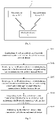
- the Bluetooth system 10 includes: a Bluetooth device 101, a first terminal device 102, and a second terminal device 103.
- the first terminal device 102 and the second terminal device 103 are historical connection devices for the Bluetooth device 101, and both the first terminal device 102 and the second terminal device 103 are within the connectable range of the Bluetooth device 101, identifier information of the first terminal device 102 and the second terminal device 103 is stored in a memory of the Bluetooth device 101, and therefore, the Bluetooth device 101 may automatically establish Bluetooth connections with the first terminal device 102 and the second terminal 103 respectively based on the identifier information of the first terminal device 102 and the second terminal device 103.
- the Bluetooth device 101 may be a TWS (true wireless stereo) earbud, and the first terminal device 102 or the second terminal device 103 may be a notebook computer, such that the Bluetooth device 101 may serve as an audio data output device of the first terminal device 102 or the first terminal device 103, for playing music; and alternatively, the Bluetooth device 101 may be a TWS earbud, and the first terminal device 102 or the second terminal device 103 may be a smart phone, such that the Bluetooth device 101 may serve as an audio data input/output device of the first terminal device 102 or the second terminal device 103, for making a voice call.
- TWS true wireless stereo
- an embodiment of the present disclosure provides a method for switching a Bluetooth connection.
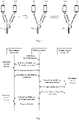
- Fig. 2 a schematic flowchart of a method for switching a Bluetooth connection provided in an embodiment of the present disclosure is shown. The method may be applied to the Bluetooth device 101 in the Bluetooth system 10 shown in Fig. 1 . The method specifically includes the following steps:
- Step S101 establishing, by the Bluetooth device 101, Bluetooth connections with the first terminal device 102 and the second terminal device 103.
- the Bluetooth device 101 may automatically establish the Bluetooth connections with the first terminal device 102 and the second terminal device 103 based on identifier information of the first terminal device 102 and the second terminal device 103. If the first terminal device 102 and the second terminal device 103 establish the Bluetooth connections with the Bluetooth device 101 for a first time, the first terminal device and the second terminal device may establish the Bluetooth connections with the Bluetooth device 101 by searching, pairing, and connection, and after the Bluetooth connections are successfully established, the first terminal device 102 and the second terminal device 103 may become historical connection devices for the Bluetooth device 101.
- Step S102 receiving, by the Bluetooth device 101, a content playing request from the first terminal device 102, and performing data transmission with the first terminal device 102.
- the first terminal device 102 starts to perform content playing through the Bluetooth device 101.
- Step S103 receiving, by the Bluetooth device 101, a content playing request from the second terminal device 103, and sending a notification message for suspending data transmission to the first terminal device 102.
- the second terminal device 103 requests to perform content playing through the Bluetooth device 101, and then the Bluetooth device 101 may notify the first terminal device 102 to suspend content playing.
- Step S104 suspending, by the Bluetooth device 101, data transmission with the first terminal device 102, and maintaining the Bluetooth connection with the first terminal device 102.
- the first terminal device 102 While suspending content playing through the Bluetooth device 101, the first terminal device 102 still maintains the Bluetooth connection with the Bluetooth device 101.
- Step S105 performing, by the Bluetooth device 101, data transmission with the second terminal device 103.
- the second terminal device 103 may perform content playing directly through the Bluetooth device 101.
- the Bluetooth device 101 is a TWS earbud, and both the first terminal device 102 and the second terminal device 103 are smart phones, and have established Bluetooth connections with the Bluetooth device 101.
- the Bluetooth device 101 notifies the first terminal device 102 to suspend music playing, and receives audio data transmitted from the second terminal device 103, such that the second terminal device 103 may play music through the Bluetooth device 101, while the Bluetooth device 101 still maintains the Bluetooth connection with the first terminal device 102.
- Fig. 4 is a schematic flowchart of a method for switching a Bluetooth connection in the prior art
- Fig. 5 is a schematic flowchart of another method for switching a Bluetooth connection provided in an embodiment of the present disclosure.
- the Bluetooth device 101 can automatically establish Bluetooth connections with the first terminal device 102 and the second terminal device 103.
- the Bluetooth device After a user enables a service function of one of to-be-used terminal devices, the Bluetooth device receives a content playing request sent from the terminal device, and may automatically start data transmission with the terminal device, i.e., the user can enable the service function of the to-be-used terminal device and perform data transmission, without the need for first disconnecting a Bluetooth connection between the Bluetooth device and a terminal device currently in use, and then manually establishing a Bluetooth connection between the Bluetooth device and the to-be-used terminal device as shown in Fig. 4 , thereby reducing the user's waiting time in the process of establishing the Bluetooth connection and switching between terminal devices, reducing the complexity of user operations, and improving the user experience, without occupying too many channel resources.
- the service function of the terminal device may be an audio service, i.e., a service or an application capable of providing an audio function (such as audio playing, audio recording, or voice call).
- the audio service may be divided into: e.g., voice, media audio, and background sound based on providable service types; or, the audio service may be divided into: e.g., music, game, recording, video, voice call, voice assistant, navigation prompt tone, and message prompt tone based on different applications.
- the audio service involves audio data transmission.
- the audio data may include: audio data corresponding to an audio content, content control for controlling audio data playing, and the like.
- the audio service may be divided into voice, media audio, and background sound, and accordingly, the audio data corresponding to the audio content may be divided into: voice data, media audio data, and background sound data; where the voice data may include: e.g., sound during a voice call; the media audio data may include: e.g., music, video, and games; and the background sound data may include: e.g., message prompt tone.
- the content control may include: e.g., volume control, call control, and media control; where the volume control may include: control commands such as volume up and volume down; the call control may include: control commands such as voice dialing, answering an incoming call, holding a call, hanging up a call, rejecting a call, and calling back an incoming call; and the media control may include: control commands such as play, pause, backward, and forward.
- volume control may include: control commands such as volume up and volume down
- the call control may include: control commands such as voice dialing, answering an incoming call, holding a call, hanging up a call, rejecting a call, and calling back an incoming call
- the media control may include: control commands such as play, pause, backward, and forward.
- the Bluetooth framework may include: an application layer and a Bluetooth protocol stack; where the Bluetooth protocol stack may include: a host, a host controller interface (HCI), and a controller.
- HCI host controller interface
- the application layer may include a telephony application, a media player application (e.g., an audio player or a video player), and the like.
- a media player application e.g., an audio player or a video player
- the host defines a profile and a core protocol of multiple application programs in the Bluetooth framework.
- Each protocol defines its respective corresponding message format and application rules, such as Advanced Audio Distribution Profile (A2DP), Hands Free Profile (HFP), Audio/Video Remote Control Profile (AVRCP), Audio/Video Distribution Transport Protocol (AVDTP), and Audio/Video Control Transport Protocol (AVCTP).
- A2DP Advanced Audio Distribution Profile
- HFP Hands Free Profile
- AVRCP Audio/Video Remote Control Profile
- AVCTP Audio/Video Distribution Transport Protocol
- AVCTP Audio/Video Control Transport Protocol
- the controller defines an underlying hardware portion, including link manager (LM), radio frequency (RF), baseband (BB), and the like; where the link manager is responsible for managing the communication between Bluetooth devices, to achieve operations such as link establishment, configuration, teardown, and verification, for example, establishing an asynchronous connection-oriented link (ACL) or a synchronous connection-oriented (SCO) link, and enabling a Bluetooth device to enter a working mode of an energy-saving state.
- Radio frequency mainly defines the conditions to be satisfied for normal operation of a Bluetooth transceiver, and may filter and transmit data bit streams through microwaves in an Industrial Scientific Medical (ISM) frequency band at 2.4 GHz.
- the baseband is responsible for frequency hopping and the transmission of Bluetooth data and information frames, and is characterized by short distance and low power consumption.
- the HCI Located between the host and the controller, the HCI provides the host with a uniform interface to the link manager in the controller and a unified approach to the baseband. There are several transport layers between the core protocol layer of the host and the controller. These transport layers are transparent and are used to complete data transmission tasks.
- a schematic flowchart of automatically establishing a Bluetooth connection between a Bluetooth device and a first terminal device provided in an embodiment of the present disclosure is shown, where the first terminal device 102 is a historical connection device for the Bluetooth device 101.
- the present embodiment specifically includes the following steps:
- the Bluetooth device 101 may also establish a Bluetooth connection with the second terminal device 103 based on the method shown in Fig. 7 .
- the Bluetooth device 101, the first terminal device 102, and the second terminal device 103 may all support the A2DP profile.
- the A2DP is an audio transmission profile that may distribute audio streams from an audio source (SRC) to an audio sink (SNK) through a transport layer for point-to-point audio data transmission.
- SRC audio source
- SNK audio sink
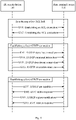
- a schematic flowchart of automatically establishing a Bluetooth connection between another Bluetooth device and the first terminal device provided in an embodiment of the present disclosure is shown, where the first terminal device 102 is a historical connection device for the Bluetooth device 101, and both the Bluetooth device 101 and the first terminal device 102 support the A2DP profile.
- the Bluetooth device 101 needs to execute the following operations successively to establish a Bluetooth connection with the first terminal device 102: establishing a first ACL link, establishing a first AVDTP connection, and establishing a first AVRCP connection.
- the present embodiment specifically includes the following steps:
- step S301 to step S302 may be understood as implementing, by the Bluetooth device 101, an operation of establishing the first ACL link with the first terminal device 102, i.e., establishing a Bluetooth physical link. Since audio data of the A2DP protocol needs to be transmitted on the ACL link, it is first necessary to establish the first ACL link between the Bluetooth device 101 and the first terminal device 102.
- Step S303 sending, by the Bluetooth device 101, a request for an AVDTP signaling connection to the first terminal device 102.
- Step S304 performing, by the Bluetooth device 101, an AVDTP command interaction with the first terminal device 102.
- Step S305 sending, by the Bluetooth device 101, a request for an AVDTP data stream connection to the first terminal device 102.
- Step S306 sending, by the Bluetooth device 101, status information (on state) of a first AVDTP connection to the first terminal device 102.
- step S303 to step S306 may be understood as implementing, by the Bluetooth device 101, an operation of establishing the first AVDTP connection with the first terminal device 102, i.e., establishing a signal channel and a data channel.
- Step S307 sending, by the Bluetooth device 101, a request for an AVRCP get capability to the first terminal device 102.
- the AVRCP get capability may include: e.g., a supporting event (such as a playing status, a playing progress, and a player), and a manufacturer.
- a supporting event such as a playing status, a playing progress, and a player
- Step S308 sending, by the first terminal device 102, an AV/C stable response to the Bluetooth device 101.
- Step S309 sending, by the Bluetooth device 101, an AVRCP register notification of a playing status change to the first terminal device 102.
- the first terminal device After the registration is successful, if the playing status of the first terminal device 102 changes, the first terminal device will automatically notify the Bluetooth device 101, thereby making correct processing.
- Step S310 sending, by the first terminal device 102, an AV/C interim response to the Bluetooth device 101.
- step S307 to step S310 may be understood as implementing, by the Bluetooth device 101, an operation of establishing the first AVRCP connection with the first terminal device 102, i.e., establishing a remote control connection.
- the Bluetooth device 101 may implement control over the playing status of the first terminal device 102, for example, controlling the first terminal device 102 to start playing music or suspend playing music, and controlling volume up or volume down.
- step S301 to step S310 are completed, i.e., after the Bluetooth connection between the Bluetooth device 101 and the first terminal device 102 is established, if a user enables an audio service of the first terminal device 102, audio data transmission between the Bluetooth device 101 and the first terminal device 102 may be started.
- the Bluetooth device 101 needs to execute the following operations successively to automatically establish a Bluetooth connection with the second terminal device 103: establishing a second ACL link, establishing a second AVDTP connection, and establishing a second AVRCP connection; and the specific operation steps may be the same as step S301 to step S310 shown in Fig. 8 . The description will not be repeated here.
- Fig. 9 is an example schematic diagram of a state machine of an AVDTP connection in a method for switching a Bluetooth connection provided in an embodiment of the present disclosure.
- six state machines of the AVDTP connection are: idle, configured, open, audio streaming, close, and aborting, respectively.
- a state of the first AVDTP connection may be switched from an idle state to an on state
- a state of the second AVDTP connection may be switched from an idle state to an on state.
- a sequence in which the Bluetooth device establishes Bluetooth connections with a plurality of historical connection devices may be determined based on priorities of the historical connection devices. As an example, when a priority of the first terminal device 102 is higher than that of the second terminal device 103, the Bluetooth device 101 first establishes a Bluetooth connection with the first terminal device 102 , and then establishes a Bluetooth connection with the second terminal device 103.
- Both the first terminal device 102 and the second terminal device 103 are historical connection devices for the Bluetooth device 101, and a priority of the first terminal device 102 is higher than that of the second terminal device 103.
- the present embodiment specifically includes the following steps:
- Step S400 enabling a Bluetooth function of the Bluetooth device 101.
- the Bluetooth device 101 may be a TWS earbud, and a user may enable the Bluetooth function of the TWS earbud by opening a charging box of the TWS earbud.
- the Bluetooth device may automatically establish Bluetooth connections with historical connection devices within its connectable range based on identifier information of historical connection devices stored in its memory.
- Step S401 sending, by the Bluetooth device 101, a request for establishing an ACL connection to the first terminal device 102.
- Step S402 sending, by the first terminal device 102, a response for completing the ACL connection to the Bluetooth device 101.
- step S401 to step S402 may be understood as implementing, by the Bluetooth device 101, an operation of establishing the first ACL link with the first terminal device 102.
- Step S403 sending, by the Bluetooth device 101, a request for an AVDTP signaling connection to the first terminal device 102.
- Step S404 performing, by the Bluetooth device 101, an AVDTP command interaction with the first terminal device 102.
- Step S405 sending, by the Bluetooth device 101, a request for an AVDTP data stream connection to the first terminal device 102.
- Step S406 sending, by the Bluetooth device 101, status information (on state) of a first AVDTP connection to the first terminal device 102.
- step S403 to step S406 may be understood as implementing, by the Bluetooth device 101, an operation of establishing the first AVDTP connection with the first terminal device 102; and after the first AVDTP connection is established, a state of the first AVDTP connection is switched from an idle state to the on state.
- Step S407 sending, by the Bluetooth device 101, a request for an AVRCP get capability to the first terminal device 102.
- Step S408 sending, by the first terminal device 102, an AV/C stable response to the Bluetooth device 101.
- Step S409 sending, by the Bluetooth device 101, an AVRCP register notification of a playing status change to the first terminal device 102.
- Step S410 sending, by the first terminal device 102, an AV/C interim response to the Bluetooth device 101.
- step S407 to step S410 may be understood as implementing, by the Bluetooth device 101, an operation of establishing a first AVRCP connection with the first terminal device 102.
- step S401 to step S410 may be understood as a process of automatically establishing, by the Bluetooth device 101, a Bluetooth connection with the first terminal device 102.
- Step S411 sending, by the Bluetooth device 101, a request for establishing an ACL connection to the second terminal device 103.
- Step S412 sending, by the second terminal device 103, a response for completing the ACL connection to the Bluetooth device 101.
- step S411 to step S412 may be understood as implementing, by the Bluetooth device 101, an operation of establishing a second ACL link with the second terminal device 103.
- Step S413 sending, by the Bluetooth device 101, a request for an AVDTP signaling connection to the second terminal device 103.
- Step S414 performing, by the Bluetooth device 101, an AVDTP command interaction with the second terminal device 103.
- Step S415 sending, by the Bluetooth device 101, a request for an AVDTP data stream connection to the second terminal device 103.
- Step S416 sending, by the Bluetooth device 101, status information (on state) of a second AVDTP connection to the second terminal device 103.
- step S413 to step S416 may be understood as implementing, by the Bluetooth device 101, an operation of establishing the second AVDTP connection with the second terminal device 103; and after the second AVDTP connection is established, a state of the second AVDTP connection is switched from an idle state to the on state.
- Step S417 sending, by the Bluetooth device 101, a request for an AVRCP get capability to the second terminal device 103.
- Step S418 sending, by the second terminal device 103, an AV/C stable response to the Bluetooth device 101.
- Step S419 sending, by the Bluetooth device 101, an AVRCP register notification of a playing status change to the second terminal device 103.
- Step S420 sending, by the second terminal device 103, an AV/C interim response to the Bluetooth device 101.
- step S417 to step S420 may be understood as implementing, by the Bluetooth device 101, an operation of establishing a second AVRCP connection with the second terminal device 103.
- step S411 to step S420 may be understood as a process of automatically establishing, by the Bluetooth device 101, a Bluetooth connection with the second terminal device 103.
- Step S421 enabling, by the first terminal device 102, an audio service.
- the audio service enabled by the first terminal device 102 may be playing music, answering a call, playing a navigation prompt tone, and the like.
- the description will be given below by taking music playing as an example.
- Step S422 sending, by the first terminal device 102, status information of starting the first AVDTP connection to the Bluetooth device 101.
- Step S423 sending, by the Bluetooth device 101, a response for acknowledging starting the first AVDTP connection to the first terminal device 102.
- step S422 to step S423 may be understood as starting the state of the first AVDTP connection, and switching the state of the first AVDTP connection from the on state to an audio streaming state, which can be used for audio data transmission.
- Step S424 The first terminal device 102 sends a command of changing a playing status to "playing" (AV/C changed: playing) to the Bluetooth device 101 through an AV/C message.
- Step S425 sending, by the Bluetooth device 101, an AVRCP register notification of a playing status change to the first terminal device 102.
- Step S426 sending, by the first terminal device 102, an AV/C interim response to the Bluetooth device 101.
- step S424 to step S426 may be understood as sending, by the first terminal device 102, a music playing request to the Bluetooth device, and changing a state of the first AVRCP connection between the first terminal device 102 and the Bluetooth device 101 to playing.
- Step S427 sending, by the first terminal device 102, audio data to the Bluetooth device 101.
- the above step S427 may be understood as receiving, by the Bluetooth device 101, the audio data transmitted from the first terminal device 102, for music playing.
- Step S428 enabling, by the second terminal device 103, an audio service.
- the audio service enabled by the second terminal device 103 may be playing music, answering a call, playing a navigation prompt tone, and the like.
- the description is given by taking music playing as an example.
- Step S429 sending, by the second terminal device 103, status information of starting the second AVDTP connection to the Bluetooth device 101.
- Step S430 sending, by the Bluetooth device 101, a response for acknowledging starting the second AVDTP connection to the second terminal device 103.
- step S429 to step S430 may be understood as starting the state of the second AVDTP connection, and switching the state of the second AVDTP connection from the on state to an audio streaming state, which can be used for audio data transmission.
- Step S431 The second terminal device 103 sends a command of changing the playing status to "playing" to the Bluetooth device 101 through an AV/C message.
- Step S432 sending, by the Bluetooth device 101, an AVRCP register notification of a playing status change to the second terminal device 103.
- Step S433 sending, by the second terminal device 103, an AV/C interim response to the Bluetooth device 101.
- step S431 to step S433 may be understood as sending, by the second terminal device 103, a music playing request to the Bluetooth device, and changing the state of the second AVRCP connection between the second terminal device 103 and the Bluetooth device 101 to playing.
- Step S434 sending, by the Bluetooth device 101, status information (AVRCP status: suspend) of suspending playing to the first terminal device 102 through an AVRCP message.
- AVRCP status suspend
- the step S434 may be understood as notifying, by the Bluetooth device 101, the first terminal device 102 of suspending playing music.
- Step S435 sending, by the first terminal device 102, a command of changing the playing status to "pausing" (AV/C changed: pause) to the Bluetooth device 101 through an AV/C message.
- Step S436 sending, by the Bluetooth device 101, an AVRCP register notification of a playing status change to the first terminal device 102.
- Step S437 sending, by the first terminal device 102, an AV/C interim response to the Bluetooth device 101.
- step S435 to step S437 may be understood as changing the state of the first AVRCP connection between the first terminal device 102 and the Bluetooth device 101 to pausing; and switching the state of the first AVDTP connection from the audio streaming state back to the on state.
- Step S438 sending, by the second terminal device 103, audio data to the Bluetooth device 101.
- the above step S438 may be understood as receiving, by the Bluetooth device 101, the audio data transmitted from the second terminal device 103, for music playing.
- step S427 and step S438 the first terminal device 102 and the second terminal device 103 serve as audio source terminals, for sending audio data
- the Bluetooth device 101 serves as an audio sink terminal, for receiving the audio data
- the audio service is, e.g., recording or voice call
- the Bluetooth device 101 may serve as the audio source terminal, for sending audio data
- the first terminal device 102 and the second terminal device 103 may serve as the audio sink terminals, for receiving the audio data.
- the Bluetooth device 101 needs to switch back to perform audio data transmission with the first terminal device 102 in accordance with a user's instruction, an approach substantially the same as the method for switching a Bluetooth connection shown in Fig. 10 may be used for implementation.
- the method for switching a Bluetooth connection enables a Bluetooth device to automatically connect with a plurality of historical connection devices, and automatically switch to perform data transmission with a target device based on user needs, to not only reduce the process of manually establishing a Bluetooth connection by a user, but also simplify the operations required by the user when switching between terminal devices, thereby shortening the user's waiting time in the whole process, and improving the user experience.
- the method for switching a Bluetooth connection provided in the embodiments of the present disclosure may also be used to implement connection and switching between a Bluetooth device and three or more than three terminal devices.
- the Bluetooth device may start data transmission with the historical connection device. Therefore, a sequence in which the Bluetooth device automatically establishes Bluetooth connections with historical connection devices will affect the user's waiting time before using the Bluetooth device for communication.
- the sequence in which the Bluetooth device automatically establishes the Bluetooth connections with the historical connection devices may be determined based on priorities of the historical connection devices; and specifically, the priorities of the historical connection devices may be determined based on at least one of: a frequency or time sequence of establishing the Bluetooth connection with the Bluetooth device, or a frequency or time sequence of performing data transmission with the Bluetooth device.
- the Bluetooth device When the Bluetooth device enables the Bluetooth function for a first time, i.e., no historical connection device has established a Bluetooth connection with the Bluetooth device, the memory of the Bluetooth device does not store identifier information of any terminal device. In this case, the Bluetooth device may wait for a terminal device to send a Bluetooth connection request to the Bluetooth device, and may, after successfully establishing the Bluetooth connection with the Bluetooth device, determine a priority of the terminal device based on at least one of the above approaches.
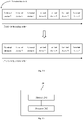
- a schematic priority diagram of historical connection devices provided in an embodiment of the present disclosure is shown.
- priorities of the terminal devices are determined based on a time sequence in which the terminal devices establish Bluetooth connections with a Bluetooth device, a terminal device that finally establishes a Bluetooth connection with the Bluetooth device has a highest priority, and a terminal device that first establishes a Bluetooth connection with the Bluetooth device has a lowest priority.
- the Bluetooth device enables a Bluetooth function for a first time, a terminal device 1 first establishes a Bluetooth connection with the Bluetooth device, and a state of an AVDTP connection between the terminal device 1 and the Bluetooth device is an on state.
- a terminal device 2, a terminal device 3, and a terminal device 4 successively establish a Bluetooth connection with the Bluetooth device, and states of AVDTP connections with the Bluetooth device are all on state.
- a priority of the terminal device 4 that finally establishes the Bluetooth connection with the Bluetooth device is highest, and priorities of the terminal device 3, the terminal device 2, and the terminal device 1 are in descending order.
- the Bluetooth device Since the above four terminal devices have established Bluetooth connections with the Bluetooth device, all of them are historical connection devices for the Bluetooth device, and the memory of the Bluetooth device may store identifier information of the above four terminal devices. When re-enabling the Bluetooth function, the Bluetooth device may automatically attempt to establish Bluetooth connections with the four historical connection devices successively based on the above priority order.
- Fig. 12 another schematic priority diagram of the historical connection devices provided in an embodiment of the present disclosure is shown.
- priorities of the terminal devices are determined based on a time sequence in which the terminal devices establish Bluetooth connections with a Bluetooth device, and a time sequence in which the terminal devices perform data transmission with the Bluetooth device.
- the terminal device 2 enables an audio service and performs audio data transmission with the Bluetooth device, and a state of an AVDTP connection between the terminal device 2 and the Bluetooth device is switched from an on state to an audio streaming state.
- the terminal device 2 may be set as a terminal device with a highest priority, and when re-enabling a Bluetooth function, the Bluetooth device first attempts to establish a Bluetooth connection with the terminal device 2.
- the terminal device 2 suspends audio data transmission with the Bluetooth device; then the terminal device 1 enables an audio service, and performs audio data transmission with the Bluetooth device; a state of an AVDTP connection between the terminal device 2 and the Bluetooth device is switched from an audio streaming state to an on state, and a state of an AVDTP connection between the terminal device 1 and the Bluetooth device is switched from an on state to an audio streaming state.
- the terminal device 1 becomes a terminal device with a highest priority, and when re-enabling a Bluetooth function, the Bluetooth device first attempts to establish a Bluetooth connection with the terminal device 1.
- the additional terminal device when an additional terminal device successfully establishes a Bluetooth connection with the Bluetooth device, the additional terminal device may be set as a terminal device with a highest priority; or, a priority of the additional terminal device may be set as second only to a priority of the terminal device 1 that is performing audio data transmission with the Bluetooth device.
- the priority arrangement approach provided in the embodiments of the present disclosure is to set a terminal device that has been most recently connected by a user or a terminal device that has been most recently used by a user as a device with a highest priority, thereby contributing to enabling the Bluetooth device to establish a Bluetooth connection with a target device within shortest time, shortening the user's waiting time, and further improving the user experience.
- priority arrangement approach provided in the embodiments of the present disclosure is also adapted to two or more than two (other number of) terminal devices.
- a Bluetooth device may have a maximum number of connections, in general, the maximum number of connections of a Bluetooth device is 7, i.e., a Bluetooth device may establish Bluetooth connections with at most 7 terminal devices. Therefore, a memory of the Bluetooth device may be set to be capable of storing identifier information of at most 7 terminal devices.
- identifier information of a terminal device with a lowest priority may be first deleted from the memory of the Bluetooth device, then identifier information of the additional terminal device may be added to the memory of the Bluetooth device, and priorities of all terminal devices whose identifier information is currently stored are rearranged.
- a schematic priority diagram of historical connection devices after an additional terminal device is added provided in an embodiment of the present disclosure is shown.
- the Bluetooth device has established Bluetooth connections with 7 terminal devices (terminal device 1 to terminal device 7), and corresponding priorities of the terminal device 1 to the terminal device 7 are in ascending order.
- the Bluetooth device receives a Bluetooth connection request sent from a terminal device A, since the terminal device 1 has a lowest priority, the Bluetooth device deletes identifier information of the terminal device 1 stored in the memory, then adds identifier information of the terminal device A into the memory, and rearranges priorities of the terminal device A and the terminal device 2 to the terminal device 7.
- the priority of the terminal device A is the highest, and the priorities of the terminal device 7 to the terminal device 2 is in descending order.
- the Bluetooth device may automatically attempt to establish Bluetooth connections with the seven historical connection devices successively based on the above priority order.
- the priorities of the terminal devices may also be arranged based on a frequency of establishing a Bluetooth connection between the terminal devices and the Bluetooth device, or a frequency of performing data transmission between the terminal devices and the Bluetooth device, such that the Bluetooth device establishes Bluetooth connections with commonly used Bluetooth devices within short time, thereby reducing the user's waiting time, and further improving the user experience.
- a combination of the above priority arrangement approaches may also be used.
- a priority of each terminal device may be determined based on a time sequence of establishing a Bluetooth connection between the terminal device and the Bluetooth device and a time sequence of performing data transmission between the terminal device and the Bluetooth device; and when the number of terminal devices that establish Bluetooth connections with the Bluetooth device exceeds the maximum number of connections, a historical connection device with a lowest frequency of establishing a Bluetooth connection with the Bluetooth device or a lowest frequency of performing data transmission with the Bluetooth device may be defined as a terminal device with a lowest priority.
- a Bluetooth chip 20 includes: a memory 201 and a processor 202; where the memory 201 is configured to store computer program instructions, and the processor 202 is configured to invoke the computer program instructions stored in the memory 201, such that the Bluetooth chip 20 may execute the method for switching a Bluetooth connection provided in the first aspect or any one of the possible implementations in the first aspect described above.
- the memory 201 may be a volatile memory (VM) such as a random access memory (RAM), or a non-volatile memory (NVM) such as a hard disk drive (HDD) or a solid state drive (SSD), or a circuit or any other apparatus capable of realizing storage functions.
- VM volatile memory
- RAM random access memory
- NVM non-volatile memory
- HDD hard disk drive
- SSD solid state drive
- the memory 201 is, and is not limited to, any other medium that may store or carry desired program codes in the form of instructions or data structures and can be accessed by a computer.
- the processor 202 may be, and is not limited to, a general purpose processor (such as a microprocessor), a digital signal processor, an application specific integrated circuit, a transistor logic device, a field programmable gate array, or other programmable logic devices, and may implement or execute the methods, steps, and logic block diagrams provided in the embodiments of the present disclosure.
- the methods and steps provided in the embodiments of the present disclosure may be directly embodied as being executed and completed by a hardware processor, or being executed and completed by a combination of hardware and software modules in the processor.
- the methods provided in the embodiments of the present disclosure may be implemented completely or partially by software, hardware, firmware, or any combination thereof, and when implemented by software, may be implemented completely or partially in the form of a computer program product, where the computer program product includes one or more computer instructions.
- the computer instructions When the computer instructions are loaded and executed on a computer, the processes or functions described according to the embodiments of the present disclosure may be generated completely or partially; the computer may be a general purpose computer, a special purpose computer, a computer network, a network device, a user device, or other programmable apparatuses; and the computer instructions may be stored in a computer readable storage medium, or transmitted from one computer readable storage medium to another computer readable storage medium, for example, the computer instructions may be transmitted from a computer, server, website, or data center to another computer, server, website, or data center by wired transmission (such as light, coaxial cable, or digital subscriber line (DSL)) or wireless transmission (such as microwave, millimeter wave, or infrared).
- wired transmission
- the computer readable storage medium may be any available medium accessible to the computer, or may be a data storage device, such as a server or a data center, integrated with one or more available mediums.
- the available medium may be, and is not limited to, a magnetic medium (such as a hard disk drive, a floppy disk, or a magnetic tape), a semiconductor medium (such as a solid state drive), or an optical medium (such as a digital video disk (DVD).
- an embodiment of the present disclosure provides a Bluetooth device, including a housing and the Bluetooth chip provided in the second aspect arranged within the housing.
- the Bluetooth device may be a Bluetooth headset (such as a TWS earbud) or a Bluetooth speaker.
Landscapes
- Engineering & Computer Science (AREA)
- Computer Networks & Wireless Communication (AREA)
- Signal Processing (AREA)
- Multimedia (AREA)
- Business, Economics & Management (AREA)
- General Business, Economics & Management (AREA)
- Mobile Radio Communication Systems (AREA)
Applications Claiming Priority (1)
| Application Number | Priority Date | Filing Date | Title |
|---|---|---|---|
| PCT/CN2021/072770 WO2022155797A1 (fr) | 2021-01-19 | 2021-01-19 | Procédé de commutation de connexion bluetooth, puce bluetooth et dispositif bluetooth |
Publications (2)
| Publication Number | Publication Date |
|---|---|
| EP4061028A1 true EP4061028A1 (fr) | 2022-09-21 |
| EP4061028A4 EP4061028A4 (fr) | 2023-01-04 |
Family
ID=82405501
Family Applications (1)
| Application Number | Title | Priority Date | Filing Date |
|---|---|---|---|
| EP21865319.4A Withdrawn EP4061028A4 (fr) | 2021-01-19 | 2021-01-19 | Procédé de commutation de connexion bluetooth, puce bluetooth et dispositif bluetooth |
Country Status (3)
| Country | Link |
|---|---|
| US (1) | US20220232653A1 (fr) |
| EP (1) | EP4061028A4 (fr) |
| WO (1) | WO2022155797A1 (fr) |
Families Citing this family (4)
| Publication number | Priority date | Publication date | Assignee | Title |
|---|---|---|---|---|
| CN115696283A (zh) * | 2021-07-28 | 2023-02-03 | 华为技术有限公司 | 音频控制方法、电子设备、音频设备和存储介质 |
| CN117641605A (zh) * | 2022-08-09 | 2024-03-01 | 北京小米移动软件有限公司 | 无线智能穿戴设备的连接方法、装置及存储介质 |
| US20240334542A1 (en) * | 2023-03-31 | 2024-10-03 | Lenovo (Singapore) Pte. Ltd. | System and method for prioritization of device connections |
| CN116684856A (zh) * | 2023-06-21 | 2023-09-01 | 上海摩软通讯技术有限公司 | 一种蓝牙连接方法及装置 |
Family Cites Families (17)
| Publication number | Priority date | Publication date | Assignee | Title |
|---|---|---|---|---|
| KR20100068566A (ko) * | 2008-12-15 | 2010-06-24 | 삼성전자주식회사 | 오디오 데이터 서비스 수행 방법 및 시스템 |
| JP5724602B2 (ja) * | 2011-05-10 | 2015-05-27 | オンキヨー株式会社 | 受信装置 |
| US9094424B2 (en) * | 2012-01-18 | 2015-07-28 | Nokia Technologies Oy | Method, apparatus, and computer program product for digital stream swapping between signal sources |
| US9531767B2 (en) * | 2013-06-04 | 2016-12-27 | Google Technology Holdings LLC | Collaborative content streaming |
| WO2014204272A1 (fr) * | 2013-06-20 | 2014-12-24 | 엘지전자(주) | Procédé et appareil pour reproduire des contenus multimédias à l'aide de bluetooth dans un système de communication sans fil |
| CN103391121A (zh) * | 2013-07-31 | 2013-11-13 | 北京爱德发科技有限公司 | 多设备配对和连接蓝牙设备的方法 |
| WO2015034275A1 (fr) * | 2013-09-05 | 2015-03-12 | 엘지전자(주) | Procédé et dispositif pour effectuer une diffusion en flux audio/vidéo dans un système de communication sans fil |
| WO2016017909A1 (fr) * | 2014-07-31 | 2016-02-04 | 엘지전자(주) | Procédé et appareil de commande d'un dispositif électronique dans un système de communication sans fil prenant en charge une communication bluetooth |
| KR102279301B1 (ko) * | 2014-09-29 | 2021-07-20 | 현대모비스 주식회사 | 차량 내 미러링 기기 및 이의 페어링 방법 |
| CN104507001B (zh) * | 2014-11-21 | 2018-05-29 | 宁波翼动通讯科技有限公司 | 蓝牙音箱的音乐播放方法 |
| CN105472773B (zh) * | 2015-01-13 | 2019-03-01 | 深圳Tcl数字技术有限公司 | 多蓝牙设备通信的方法及主机 |
| US10820087B2 (en) * | 2016-06-24 | 2020-10-27 | Dolby Laboratories Licensing Corporation | Wireless audio source switching |
| KR102652811B1 (ko) * | 2018-09-04 | 2024-04-01 | 삼성전자주식회사 | 디스플레이 장치의 제어 방법 및 그에 따른 디스플레이 장치 |
| CN110191450B (zh) * | 2019-04-02 | 2021-02-26 | 华为技术有限公司 | 业务连接建立方法、蓝牙主设备、芯片及蓝牙系统 |
| CN113225693B (zh) * | 2019-04-18 | 2022-04-15 | 华为技术有限公司 | 一种蓝牙连接方法、设备及系统 |
| CN111654845B (zh) * | 2020-05-12 | 2023-07-14 | 南京中感微电子有限公司 | 一种蓝牙多终端链路切换方法、蓝牙音频设备及系统 |
| CN111818503B (zh) * | 2020-09-08 | 2021-03-05 | 深圳市汇顶科技股份有限公司 | 语音通话方法、系统、芯片、电子设备及存储介质 |
-
2021
- 2021-01-19 EP EP21865319.4A patent/EP4061028A4/fr not_active Withdrawn
- 2021-01-19 WO PCT/CN2021/072770 patent/WO2022155797A1/fr not_active Ceased
-
2022
- 2022-03-16 US US17/696,351 patent/US20220232653A1/en not_active Abandoned
Also Published As
| Publication number | Publication date |
|---|---|
| US20220232653A1 (en) | 2022-07-21 |
| WO2022155797A1 (fr) | 2022-07-28 |
| EP4061028A4 (fr) | 2023-01-04 |
Similar Documents
| Publication | Publication Date | Title |
|---|---|---|
| CN112399396B (zh) | 一种蓝牙连接切换方法、蓝牙芯片以及蓝牙设备 | |
| EP4061028A1 (fr) | Procédé de commutation de connexion bluetooth, puce bluetooth et dispositif bluetooth | |
| CN110191450A (zh) | 业务连接建立方法、蓝牙主设备、芯片及蓝牙系统 | |
| JP5621481B2 (ja) | 電子装置および無線通信制御プログラム | |
| CN113038437B (zh) | 数据传输方法、装置、存储介质及终端设备 | |
| CN102331727B (zh) | 一种蓝牙媒体播放控制方法和相关装置 | |
| CN101860626A (zh) | 应用提供方法及移动终端 | |
| CN113810887B (zh) | 蓝牙协议连接方法、装置、存储介质及相关设备 | |
| CN105516897A (zh) | 一种蓝牙设备间一键建立通信连接的方法及装置 | |
| WO2023087793A1 (fr) | Procédé et appareil de traitement de service audio, dispositif électronique et support de stockage | |
| CN112367648B (zh) | 通话管理方法、芯片和音频输出装置 | |
| CN105491135A (zh) | 建立数据连接的方法及装置 | |
| US20250227786A1 (en) | Connection method for audio device, and device | |
| US20100291913A1 (en) | Remote control method between mobile phones | |
| EP3761684B1 (fr) | Procédé de commande de transmission bluetooth, système de commande et support d'enregistrement lisible par ordinateur | |
| WO2022042327A1 (fr) | Procédé et dispositif de configuration de canal pour moteur de pilote audio | |
| WO2025102736A1 (fr) | Procédé de communication et appareil associé | |
| US20240364803A1 (en) | Audio control method, electronic device, audio device, and storage medium | |
| WO2025044447A1 (fr) | Procédé de connexion de dispositif, dispositif électronique, et support de stockage lisible par ordinateur | |
| US20230042997A1 (en) | Method for voice calling, system, chip, electronic device, and storage medium | |
| CN115412984A (zh) | 一种通信装置、小区切换方法以及计算机可读存储介质 | |
| WO2022082948A1 (fr) | Procédé et appareil pour améliorer les performances de transmission d'un service nr embb, et terminal mobile | |
| CN103957461A (zh) | 媒体播放控制的方法、终端及系统 | |
| CN111901897A (zh) | 一种数据下载方法、装置、存储介质及终端 | |
| US20250007977A1 (en) | Wireless communication device, wireless communication method, and storage medium |
Legal Events
| Date | Code | Title | Description |
|---|---|---|---|
| STAA | Information on the status of an ep patent application or granted ep patent |
Free format text: STATUS: UNKNOWN |
|
| STAA | Information on the status of an ep patent application or granted ep patent |
Free format text: STATUS: THE INTERNATIONAL PUBLICATION HAS BEEN MADE |
|
| PUAI | Public reference made under article 153(3) epc to a published international application that has entered the european phase |
Free format text: ORIGINAL CODE: 0009012 |
|
| STAA | Information on the status of an ep patent application or granted ep patent |
Free format text: STATUS: REQUEST FOR EXAMINATION WAS MADE |
|
| 17P | Request for examination filed |
Effective date: 20220315 |
|
| AK | Designated contracting states |
Kind code of ref document: A1 Designated state(s): AL AT BE BG CH CY CZ DE DK EE ES FI FR GB GR HR HU IE IS IT LI LT LU LV MC MK MT NL NO PL PT RO RS SE SI SK SM TR |
|
| RIC1 | Information provided on ipc code assigned before grant |
Ipc: H04W 76/15 20180101ALI20220825BHEP Ipc: H04L 65/60 20220101ALI20220825BHEP Ipc: H04W 4/80 20180101AFI20220825BHEP |
|
| A4 | Supplementary search report drawn up and despatched |
Effective date: 20221202 |
|
| RIC1 | Information provided on ipc code assigned before grant |
Ipc: H04W 76/15 20180101ALI20221128BHEP Ipc: H04L 65/60 20220101ALI20221128BHEP Ipc: H04W 4/80 20180101AFI20221128BHEP |
|
| STAA | Information on the status of an ep patent application or granted ep patent |
Free format text: STATUS: EXAMINATION IS IN PROGRESS |
|
| 17Q | First examination report despatched |
Effective date: 20230817 |
|
| STAA | Information on the status of an ep patent application or granted ep patent |
Free format text: STATUS: THE APPLICATION HAS BEEN WITHDRAWN |
|
| 18W | Application withdrawn |
Effective date: 20231201 |