EP4062971A2 - Umgebungsbeleuchtung zum verbessern von schlafstörungen, kognitiven- und/oder neurologischen erkrankungen - Google Patents
Umgebungsbeleuchtung zum verbessern von schlafstörungen, kognitiven- und/oder neurologischen erkrankungen Download PDFInfo
- Publication number
- EP4062971A2 EP4062971A2 EP22164261.4A EP22164261A EP4062971A2 EP 4062971 A2 EP4062971 A2 EP 4062971A2 EP 22164261 A EP22164261 A EP 22164261A EP 4062971 A2 EP4062971 A2 EP 4062971A2
- Authority
- EP
- European Patent Office
- Prior art keywords
- light
- emitting device
- lux
- subject
- ambient environment
- Prior art date
- Legal status (The legal status is an assumption and is not a legal conclusion. Google has not performed a legal analysis and makes no representation as to the accuracy of the status listed.)
- Withdrawn
Links
Images






Classifications
-
- H—ELECTRICITY
- H05—ELECTRIC TECHNIQUES NOT OTHERWISE PROVIDED FOR
- H05B—ELECTRIC HEATING; ELECTRIC LIGHT SOURCES NOT OTHERWISE PROVIDED FOR; CIRCUIT ARRANGEMENTS FOR ELECTRIC LIGHT SOURCES, IN GENERAL
- H05B47/00—Circuit arrangements for operating light sources in general, i.e. where the type of light source is not relevant
- H05B47/10—Controlling the light source
- H05B47/105—Controlling the light source in response to determined parameters
- H05B47/11—Controlling the light source in response to determined parameters by determining the brightness or colour temperature of ambient light
-
- A—HUMAN NECESSITIES
- A61—MEDICAL OR VETERINARY SCIENCE; HYGIENE
- A61N—ELECTROTHERAPY; MAGNETOTHERAPY; RADIATION THERAPY; ULTRASOUND THERAPY
- A61N5/00—Radiation therapy
- A61N5/06—Radiation therapy using light
- A61N5/0613—Apparatus adapted for a specific treatment
- A61N5/0618—Psychological treatment
-
- H—ELECTRICITY
- H05—ELECTRIC TECHNIQUES NOT OTHERWISE PROVIDED FOR
- H05B—ELECTRIC HEATING; ELECTRIC LIGHT SOURCES NOT OTHERWISE PROVIDED FOR; CIRCUIT ARRANGEMENTS FOR ELECTRIC LIGHT SOURCES, IN GENERAL
- H05B45/00—Circuit arrangements for operating light-emitting diodes [LED]
- H05B45/10—Controlling the intensity of the light
-
- H—ELECTRICITY
- H05—ELECTRIC TECHNIQUES NOT OTHERWISE PROVIDED FOR
- H05B—ELECTRIC HEATING; ELECTRIC LIGHT SOURCES NOT OTHERWISE PROVIDED FOR; CIRCUIT ARRANGEMENTS FOR ELECTRIC LIGHT SOURCES, IN GENERAL
- H05B45/00—Circuit arrangements for operating light-emitting diodes [LED]
- H05B45/20—Controlling the colour of the light
-
- H—ELECTRICITY
- H05—ELECTRIC TECHNIQUES NOT OTHERWISE PROVIDED FOR
- H05B—ELECTRIC HEATING; ELECTRIC LIGHT SOURCES NOT OTHERWISE PROVIDED FOR; CIRCUIT ARRANGEMENTS FOR ELECTRIC LIGHT SOURCES, IN GENERAL
- H05B47/00—Circuit arrangements for operating light sources in general, i.e. where the type of light source is not relevant
- H05B47/10—Controlling the light source
- H05B47/105—Controlling the light source in response to determined parameters
- H05B47/115—Controlling the light source in response to determined parameters by determining the presence or movement of objects or living beings
-
- H—ELECTRICITY
- H05—ELECTRIC TECHNIQUES NOT OTHERWISE PROVIDED FOR
- H05B—ELECTRIC HEATING; ELECTRIC LIGHT SOURCES NOT OTHERWISE PROVIDED FOR; CIRCUIT ARRANGEMENTS FOR ELECTRIC LIGHT SOURCES, IN GENERAL
- H05B47/00—Circuit arrangements for operating light sources in general, i.e. where the type of light source is not relevant
- H05B47/10—Controlling the light source
- H05B47/175—Controlling the light source by remote control
-
- A—HUMAN NECESSITIES
- A61—MEDICAL OR VETERINARY SCIENCE; HYGIENE
- A61N—ELECTROTHERAPY; MAGNETOTHERAPY; RADIATION THERAPY; ULTRASOUND THERAPY
- A61N5/00—Radiation therapy
- A61N5/06—Radiation therapy using light
- A61N2005/0626—Monitoring, verifying, controlling systems and methods
-
- A—HUMAN NECESSITIES
- A61—MEDICAL OR VETERINARY SCIENCE; HYGIENE
- A61N—ELECTROTHERAPY; MAGNETOTHERAPY; RADIATION THERAPY; ULTRASOUND THERAPY
- A61N5/00—Radiation therapy
- A61N5/06—Radiation therapy using light
- A61N2005/0635—Radiation therapy using light characterised by the body area to be irradiated
- A61N2005/0636—Irradiating the whole body
-
- A—HUMAN NECESSITIES
- A61—MEDICAL OR VETERINARY SCIENCE; HYGIENE
- A61N—ELECTROTHERAPY; MAGNETOTHERAPY; RADIATION THERAPY; ULTRASOUND THERAPY
- A61N5/00—Radiation therapy
- A61N5/06—Radiation therapy using light
- A61N2005/065—Light sources therefor
- A61N2005/0651—Diodes
- A61N2005/0652—Arrays of diodes
-
- A—HUMAN NECESSITIES
- A61—MEDICAL OR VETERINARY SCIENCE; HYGIENE
- A61N—ELECTROTHERAPY; MAGNETOTHERAPY; RADIATION THERAPY; ULTRASOUND THERAPY
- A61N5/00—Radiation therapy
- A61N5/06—Radiation therapy using light
- A61N2005/0658—Radiation therapy using light characterised by the wavelength of light used
- A61N2005/0662—Visible light
Definitions
- the present disclosure provides a system and method of providing ambient lighting for improving sleeping quality, circadian rhythms, cognitive function, neurological disorder, depression, emotional status, heart rate variability, sympathetic activity and/or parasympathetic activity.
- Light therapy is a way to treat seasonal affective disorder (SAD) and certain other conditions by exposure to artificial light.
- SAD seasonal affective disorder
- Light therapy is thought to affect brain chemicals linked to mood and sleep while easing SAD symptoms.
- Using a light therapy box may also help with other types of depression, sleep disorders and other conditions.
- Light therapy is also known as bright light therapy or phototherapy.
- Phototherapy technology continues to seek improved phototherapy methods and devices providing desirable illumination characteristics capable of overcoming the challenges associated with conventional phototherapy methods and devices.
- a light system used in an ambient environment comprises an emitting device and a controller coupled to the emitting device.
- the emitting device is configured to provide a light impinging on a subject in the ambient environment.
- the controller is configured to control the emitting device.
- the light provided by the emitting device has at least 30% green.
- a line extending from the emitting device to the subject and a plane at eye level of the subject in the ambient environment forms an angle of about 45 degrees.
- the light has a horizontal illuminance of about 2200 lux to about 2800 lux.
- a light system in an ambient environment comprises an emitting device and a controller connected to the emitting device.
- the emitting device is configured to provide a light into the ambient environment, wherein the light has at least 30% green light spectral component.
- the controller comprises a control module configured to control the emitting device, a sensing module configured to detect an illuminance value of the light provided by the emitting device; and a control interface in communication with the control module.
- a method for providing ambient lighting for improving sleeping quality in a subject comprises: providing a light into an ambient environment, wherein a ratio of a blue-green light spectral component with a wavelength from around 450 nm-580 nm is increased to at least 30%; and exposing the subject to the light.
- subject may be used interchangeably herein and typically refer to a mammal, in certain embodiments a human or a non-human primate.
- lux refers to a unit of light measurement that takes area into account, representing light intensity. Lux is effective for measuring the amount of light output in a given area, where one lux is equal to one lumen per square meter. Lux is a great measurement for determining what we see as the brightness of a beam. Lux also determines the magnitude of light intensity travelling over distances.
- light source and “illumination source” are used interchangeably and refer to a device that provides light typically within the visible spectrum for humans.
- Light therapy has long been a recognized treatment option for depression and insomnia, etc. Although light therapy has been recognized to be efficacious to treat a wide variety of indications, light therapy nonetheless remains underutilized as a therapy.
- the present disclosure surprisingly found that ambient lighting provided by at least 30% or 30% green light or green spectral component of a light can improve sleeping disorders, cognition and/or neurological disorders and at the same time will not affect vision. Accordingly, a light system and method was developed to provide the ambient lighting.
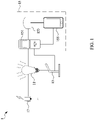
- FIG. 1 is a block diagram schematically illustrating the configuration of a light system 1 in accordance with an embodiment of the instant disclosure.
- the light system may include emitting device 11, an adjusting mechanism 13 connected to the emitting device 1, a controller 15 coupled to the emitting device 11 and the adjusting mechanism 13 and a power portion 17 electrically connected to the emitting device 1.
- the emitting device 11 may include at least one light sources.
- the light sources are objects that provide light, increasing visibility.
- the emitting device 11 comes in many different varieties and supply differing quantities and qualities of light.
- the emitting device 11 may provide a light source providing at least 20% (preferably at least 30%) green light or green spectral component of a light. Ratio of the green light can be calculated by defining the areas of the spectrum of the green regions relative to the entire spectrums.
- the emitting device includes a tungsten lamp, a halogen lamp, a xenon arc lamp, a CP lamp or a light-emitting diode (LED).
- the emitting device 11 comprise at least 20%, 30%, 40%, 50%, or 60% green light or green spectral component of a light.
- the emitting device 11 may comprise about 20% to about 60%, about 30% to about 60% or about 30% to about 50% green light or green spectral component of a light.
- the emitting device 11 includes multiple wavelengths of the green light or a green spectral component of a light.
- the wavelength include, but are not limited to, from about 480 nm up to about 580 nm, or from about 500 nm up to about 535 nm, or from about 500 nm up to about 530 nm, or from about 510 nm up to about 550 nm, or from about 510 nm up to about 540 nm, or from about 510 nm up to about 530 nm, or from about 520 nm up to about 550 nm, or from about 520 nm up to about 540 nm, or from about 530 nm up to about 580 nm.
- the wavelength of the green light or the green spectral component of a light ranges from about 480 nm to 580 nm. In some embodiments of the present disclosure, the emitting device includes a blue-green light with a wavelength from about 450 nm to 580 nm.
- the emitting device may provide several parameters, alone or in combination, to achieve advantageous improvements in light therapy.
- the emitting device 11 may provide at least 20% (preferably 430%) green light or green spectral component of a light. In some embodiments of the present disclosure, the emitting device provides at least 30% green light or green spectral component of a light and the green light spectral component or the green spectral component (or the blue-green light spectral component or the blue-green spectral component) has a wavelength from about 450 nm to about 580 nm. In some embodiments of the present disclosure, the green light spectral component or the green spectral component has a wavelength from about 480 nm to about 580 nm.
- such ratio of the green light or green spectral component of a light may be achieved by increasing the green light or the green spectral component of the light provided by the emitting device 11. In some embodiments of the present disclosure, such ratio of the green light or green spectral component of a light may be achieved by decreasing the blue light or the blue spectral component of the light provided by the emitting device 11. In some embodiments of the present disclosure, a ratio of the blue light or a blue light spectral component with a wavelength from around 415 nm-460 nm is decreased and a ratio of the blue light or a blue light spectral component with a wavelength from around 465 nm-490 nm is maintained. In some embodiments of the present disclosure, the light spectrum of the light provided by the emitting device 11 is the same as, or similar to, the solar spectrum.
- a color fidelity (Rf) of the light provided by the emitting device 11/a gamut (Rg) of the light provided by the emitting device may be greater than 90/95.
- Illuminance is the measure of how much light illuminates a surface. Illuminance is the amount of light falling on a vertical surface or plane. Illuminance is measured in the unit "lux" and on a vertically positioned hypothetical surface. In addition, verticality can have different directions, including vertical to camera and to audience.
- the emitting device 11 may provide light having a total illuminance and/or a illuminance of the green light or the green spectral component of at least about 2,000 lux about 2200 lux, about 2,500 lux, about 2800 lux, about 3,000 lux, about 3600 lux, about 4,000 lux, about 4400 lux or about 4800 lux.
- the illuminance and/or a illuminance of the green light or the green spectral component is measured at the ear, eye, or top-of-the-head height level of the subject.
- the illuminance includes a vertical illuminance which is the amount of light falling on a horizontal surface or plane at the ear, eye, or top-of-the-head height level of the subject and a horizontal illuminance which is the amount of light falling on a vertical surface or plane at the ear, eye, or top-of-the-head height level of the subject.
- the emitting device 11 may provide light having a total vertical illuminance and/or a vertical illuminance of the green light or the green spectral component of at least about 2,000 lux, about 2,500 lux, about 3,000 lux, about 3600 lux, about 4,000 lux, about 4,400 lux or about 4,800 lux.
- the emitting device 11 may provide light having a total horizontal illuminance and/or a horizontal illuminance of the green light or the green spectral component of at least 15 lux, about 300 lux, about 350 lux, about 400 lux, about 500 lux, about 750 lux, about 1000 lux, about 1500 lux, about 2000 lux, about 2200 lux, about 2500 lux or about 2800 lux.
- a color rendering index is a quantitative measure of the ability of a light source to reveal the colors of various objects faithfully in comparison with an ideal or natural light source.
- the color rendering index (%) of the emitting device 11 is higher than about 70, about 75, about 80, about 85, about 90 or about 95.
- the CRI of the emitting device 11 ranges from about 70 to about 98, about 70 to about 95, about 70 to about 90, about 70 to about 85, about 70 to about 80, about 75 to about 98, about 75 to about 95, about 75 to about 90, about 75 to about 85, about 80 to about 98, about 80 to about 95, about 80 to about 90, about 80 to about 85, about 85 to about 98, about 85 to about 95, about 85 to about 90 or about 90 to about 98.
- Color quality scale is a color rendering index (a quantitative measure of the ability of a light source to reproduce colors of illuminated objects).
- the CQS of the emitting device 11 ranges from about 20 to about 90, about 65 to about 95, about 65 to about 90, about 65 to about 85, about 65 to about 80, about 65 to about 75, about 70 to about 98, about 70 to about 95, about 70 to about 90, about 70 to about 85, about 70 to about 80, about 75 to about 98, about 75 to about 90, about 75 to about 85, about 80 to about 98, about 80 to about 90, about 85 to about 98 or about 85 to about 95.
- Color temperature is a way to describe the light appearance provided by a light source. It is measured in degrees of Kelvin (K) on a scale from 1,000 to 10,000.
- the emitting device 11 provides at least 1,850 K, at least 2,500 K, at least 2,800 K, at least 3,000 K, at least 3,500 K, at least 5,000 K, at least 5,500 K, at least 6,500 K, at least 8,000 K or at least 10,000 K of color temperature.
- the color temperature ranges from about 1,850 K, from about 2,500 K, from about 2,800 K, from about 3,000 K, from about 3,500 K, from about 5,000 K, or from about 5,500 K up to about 10,000 K, or up to about 8,000K, or up to about 6,500 K.
- the light source provides about 1,850 K, about 2,500 K, about 2,800 K, about 3,000 K, about 3,500 K, about 5,000 K, about 5,500 K, about 6,500 K, about 8,000 K or about 10,000 K of color temperature.
- the adjusting mechanism 13 is connected to the emitting device 11.
- the adjusting mechanism 13 is configured to move the emitting device 11.
- the adjusting mechanism 13 is configured to change a height of the emitting device 11.
- the adjusting mechanism 13 is configured to change an elevation angle of the emitting device 11.
- the controller 15 coupled to the emitting device 11 and/or coupled to the adjusting mechanism 13.
- the controller 15 may control the overall operation of the emitting device 11.
- the controller 15 includes a control module 151, a sensing module 153 and a control interface 155.
- the control module 151 may be implemented with a processor, a controller, an arithmetic logic unit (ALU), a digital signal processor, a microcomputer, a field programmable gate array (FPGA), a programmable logic unit (PLU), a microprocessor, etc.
- the control module 151 may be coupled to the emitting device 11. That is, the control module 151 may control the light-emitting operation of the emitting device 11.
- the control module 151 may adjust at least one of the color temperature, brightness, and color of the light emitted from the emitting device 11.
- the control module 151 may control the light emission operation of the emitting device 11 according to information or signals sensed by the sensing module 153. In addition, the control module 151 may be implemented to control the light-emitting operation of the emitting device 11 according to the user's switch operation. In some embodiments of the present disclosure, the control module 151 is a dimmer mounted on a wall. In addition, the control module 151 may be implemented to control the light-emitting operation of the emitting device 11 according to a control signal or information input from another device, such as the control interface 155.
- the sensing module 153 may be coupled to and/or in communication with the control module 151 and/or the control interface 155.
- the sensing module 153 may include various types of sensors, such as an infrared sensor, a distance sensor, a gyroscope sensor, a gravity sensor, a position sensor, a proximity sensor, an illuminance sensor, or an RGB sensor (illuminance sensor), a magnetic sensor, an inertial sensor, a touch sensor, and a microphone. Further, the sensing module may detect the posture and position of the emitting device 11, the surrounding environment of the emitting device 11, or a user's motion.
- the sensing module 153 may transfer the data and/or information it obtained to the control module 151, and then the control module 151 may automatically control the light-emitting operation of the emitting device 11 based on the data or information from the sensing module 153.
- the sensing module 153 may transfer the data and/or information it obtained to the control interface 155, and the user may read such data and/or information through the control interface 155.
- the sensing module 153 may directly show the data and/or information it obtained to the user.
- the control interface 155 may be coupled to and/or in communication with the control module 151 and/or the sensing module 153.
- the control interface 155 may be a remote-control unit, such as a mobile device with a control software.
- the control interface 155 may include a Bluetooth communication module, a BLE (Bluetooth Low Energy) communication module, a near field communication unit (Near Field Communication unit), a WLAN (Wi-Fi) communication module, a Zigbee communication module, an infrared (IrDA) data association communication module, WFD (Wi-Fi Direct) communication module, UWB (ultra wideband) communication module, and may include a communication module such as an Ant+ communication module.
- control interface 155 may send a command to the control module 151 so as to control the emitting device 11 and/or the adjusting mechanism 13.
- the control interface 155 may receive the data and/or information from the sensing module 153. That is, the emitting device 11 may receive a control command or various information related to the operation of the emitting device 11 from the control interface 155.
- the state information of the emitting device 11, operation information or information collected by the sensing module 153 may be provided to the control interface 155.
- the controller 15 may be coupled to or in communication with the adjusting mechanism 13.
- the control module 151 of the controller 15 is in communication with the adjusting mechanism. That is, the control module 151 may drive the adjusting mechanism 13 to move the emitting device 11 according to information or signals sensed by the sensing module 153.
- the user may control the adjusting mechanism 13 to move the emitting device 11 through the control interface 155 of the controller 15.
- a power portion 17 may be electrically connect to the emitting device 11.
- the power portion 17 is configured to supply operating power of the emitting device 11.
- the power portion 17 may include a battery.
- the power portion 17 may be connected to the emitting device 11 through a power cable.
- the power portion 17 may include a waterproof adjustable power source.
- FIG. 2 is a schematic view of a light system 1 in an ambient environment 10 in accordance with an embodiment of the instant disclosure.
- the emitting device 11 is arranged in the ambient environment 10 and provides a light into the ambient environment 10.
- the ambient light in the ambient environment 10 includes the light provided by the emitting device 11.
- the ambient light in the ambient environment includes the light provided by the emitting device mixed with the original light in the ambient environment 10.
- a subject 100 is in the ambient environment 10 and exposed to the ambient light. That is, the light emitted from the emitting device 11 may impinge on the subject 100. In some embodiments of the present disclosure, the subject 100 sits and receives such light. In some embodiments of the present disclosure, the subject 100 stands and receives such light. In some embodiments of the present disclosure, the subject lies down and receives such light.
- the emitting device 11 may provide light having a total vertical illuminance L1 and/or a vertical illuminance L1 of the green light or the green spectral component of at least about 2,000 lux, about 2,500 lux, about 3,000 lux, about 3600 lux, about 4,000 lux, about 4,400 lux or about 4,800 lux.
- the subject 100 may be exposed to the ambient light with vertical illuminance L1 of at least about 2,000 lux, about 2,500 lux, about 3,000 lux, about 3600 lux, about 4,000 lux, about 4400 lux or about 4800 lux.
- the emitting device 11 may provide light having a total vertical illuminance L1 and/or a vertical illuminance L1 of the green light or the green spectral component of about 4000 lux to about 4400 lux.
- the subject 100 may be exposed to the ambient light with vertical illuminance L1 of about 4000 lux to about 4400 lux.
- the emitting device 11 may provide light having a total vertical illuminance L1 and/or a vertical illuminance L1 of the green light or the green spectral component of about 3600 lux to about 4800 lux.
- the subject 100 may be exposed to the ambient light with vertical illuminance L1 of about 3600 lux to about 4800 lux.
- the total vertical illuminance L1 and/or the vertical illuminance L1 of the green light or the green spectral component is measured at the ear, eye, or top-of-the-head height level of the subject 100. That is, the total vertical illuminance L1 may be the amount of light falling on a horizontal surface or plane P1 at the ear, eye, or top-of-the-head height level of the subject 100.
- the vertical illuminance L1 of the green light or the green spectral component may be the amount of green light falling on a horizontal surface or plane P1 at the ear, eye, or top-of-the-head height level of the subject 100.
- the emitting device 11 may provide light having a total horizontal illuminance and/or a horizontal illuminance L2 of the green light or the green spectral component of at least about 15 lux, about 300 lux, about 350 lux, about 400 lux, about 500 lux, about 750 lux, about 1000 lux, about 1500 lux, about 2000 lux, about 2200 lux, about 2500 lux or about 2800 lux.
- the subject 100 may be exposed to the ambient light with horizontal illuminance L2 of at least 15 lux, about 300 lux, about 350 lux, about 400 lux, about 500 lux, about 750 lux, about 1000 lux, about 1500 lux, about 2000 lux, about 2200 lux, about 2500 lux or about 2800 lux.
- the emitting device 11 may provide light having a total horizontal illuminance L2 and/or a horizontal illuminance L2 of the green light or the green spectral component of about 2200 lux to about 2800 lux.
- the subject 100 may be exposed to the ambient light with vertical illuminance L2 of about 2200 lux to about 2800 lux.
- the total horizontal illuminance L2 and/or the horizontal illuminance L2 of the green light or the green spectral component is measured at the ear, eye, or top-of-the-head height level of the subject 100. That is, the total horizontal illuminance L2 may be the amount of light falling on a vertical surface or plane P2 at the ear, eye, or top-of-the-head height level of the subject 100.
- the horizontal illuminance L2 of the green light or the green spectral component may be the amount of green light falling on a vertical surface or plane P2 at the ear, eye, or top-of-the-head height level of the subject 100.
- the emitting device 11 is configured at an angle of more than about 30 degrees formed between the emitting device 11 and the subject 100. In some embodiments of the present disclosure, the angle is formed between the emitting device and the ear, eye, or top-of-the-head height level of the subject 100. In some embodiments, the angle ranges from about 30 degrees, or from about 40 degrees, or from about 45 degrees up to about 90 degrees, or up to about 80 degrees, or up to about 60 degrees.
- the light emitted from the emitting device 11 to the subject 100 and a plane P1 at eye level of a subject 100 forms an angle and the angle ranges from about 30 degrees, or from about 40 degrees, or from about 45 degrees up to about 90 degrees, or up to about 80 degrees, or up to about 60 degrees. In some embodiments of the present disclosure, the angle of the light emitted from the emitting device 11 to the subject 100 and a plane P1 at eye level of a subject 100 is about 45 degrees.
- the light from the emitting device 11 to the subject 100 includes an optical axis, and the optical axis and the plane P1 at eye level of a subject 100 forms an angle ⁇ and the angle ⁇ ranges from about 30 degrees, or from about 40 degrees, or from about 45 degrees up to about 90 degrees, or up to about 80 degrees, or up to about 60 degrees.
- the angle ⁇ between the optical axis of the light from the emitting device 11 to the subject 100 and the plane P1 at eye level of a subject 100 is about 45 degrees.
- a line X1 extending from the emitting device 11 to the subject 100 and the plane P1 at eye level of a subject 100 forms an angle ⁇ and the angle ⁇ ranges from about 30 degrees, or from about 40 degrees, or from about 45 degrees up to about 90 degrees, or up to about 80 degrees, or up to about 60 degrees.
- the angle ⁇ between the line X1 extending from the emitting device 11 to the subject 100 and the plane P1 at eye level of a subject 100 is about 45 degrees.
- the line X1 extending from the emitting device 11 to the subject 100 may include the optical axis of the light emitted from the emitting device 11.
- the adjusting mechanism 13 may include a lifting table 131 and a head 132.
- the emitting device 11 may be mounted on the head 132 and the head 132 may be connected to the lifting table 131.
- the head 132 is configured to change an angle of elevation of the emitting device 11.
- the lifting table 131 is configured to change a height of the emitting device. That is, the illuminance of the light provided by the emitting device 11 and/or the optical axis of the light provided by the emitting device 11 may be changed by the adjusting mechanism 13.
- the sensing module 153 may be positioned to be adjacent to the ear, eye or the top of the head of the subject 100.
- the sensing module 153 is configured to detect the total vertical illuminance L1 and/or a horizontal illuminance L2 of the green light or the green spectral component at the ear, eye, or top-of-the-head height level of the subject 100.
- the control module 151 may be connected to or in communication with the adjusting mechanism 13 and the emitting device 11.
- the control module 151 may change the position of the emitting device 11 by driving the adjusting mechanism 13 and control the emitting operation of the emitting device 11.
- the angle between the optical axis of the light and the plane P1 at eye level of a subject 100 and the illuminance of the green light or the green spectral component at the ear, eye, or top-of-the-head height level of the subject 100 may be changed by the control module 151.
- control module 151 is connected to or in communication with sensing module 153, and the control module 151 drives the adjusting mechanism 13 and/or control the emitting device according to the information/data from the sensing module 153.
- control module 151 is connected to or in communication with control interface 155, and the control module 151 drives the adjusting mechanism 13 and/or control the emitting device according to the command from the control interface 155.
- control interface 155 is connected to or in communication with sensing module 153, and the subject 100 may read the information/data collected by the sensing module 153 through the control interface 155.
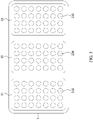
- FIG. 3 is a schematic view of an emitting device 2 in accordance with an embodiment of the instant disclosure.
- the emitting device 2 is the same as, or similar to, the emitting device 11.
- the emitting device 2 may include a red light LED group 21, a green light LED group 22 and a blue light LED group 23.
- the red light LED 21 group may include a plurality of red light LED units 210.
- the green light LED group 22 may include a plurality of green light LED units220.
- the blue light LED group 23 may include a plurality of blue light LED units 230.
- the number of the red light LED units 210 is N.
- the number of the green light LED 220 units is M.
- the number of the blue light LED units 230 is L. Further, N, M and L are positive integers.
- the light emitted by the emitting device may include green light or green spectral component of a light which ranges from 20% to 60 %.
- the size of the emitting device 2 is 300 mm ⁇ 1200mm. In some embodiments of the present disclosure, the size of the emitting device 2 is 600 mm ⁇ 600mm.
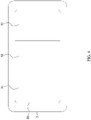
- FIG. 4 is a schematic view of an emitting device 3 in accordance with an embodiment of the instant disclosure.
- the emitting device 3 is the same as, or similar to, the emitting device 11.
- the emitting device 3 may include an optical filter 30 having a red light transition region 31, a green light transition region 32 and a blue light transition region 33.
- the area of the red light transition region 31 is P.
- the area of the green light transition region 32 is Q.
- the area of the blue light transition region is R.
- P, Q and R are positive integers.
- the light emitted by the emitting device may include green light or green spectral component of a light which ranges from 25% to 45 %. In some embodiments of the present disclosure, 0.4 ⁇ Q/(P+Q+R). That is, the light emitted by the emitting device may include at least 40 % green light or green spectral component of a light.
- the size of the emitting device 2 is 300 mm ⁇ 1200mm. In some embodiments of the present disclosure, the size of the emitting device 2 is 600 mm ⁇ 600mm.
- FIG. 4 is a schematic view of an emitting device 4 in accordance with an embodiment of the instant disclosure.
- the emitting device 4 is the same as, or similar to, the emitting device 11.
- the emitting device 4 may include brick lamps 41 and 42.
- the brick lamp 41 may include electrical connections 410.
- the brick lamp 42 may include electrical connections 420.
- the brick lamps 41 and 42 may be electrically connected to each other through the electrical connections 410 and/or 420. That is, the brick lamps 41 and 42 are configured to be tiled with each other.
- the brick lamp 41, 42 can be used with different styles of ambient environments.
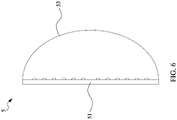
- FIG. 6 is a schematic view of an emitting device 5 in accordance with an embodiment of the instant disclosure.
- the emitting device 5 is the same as, or similar to, the emitting device 11.
- the emitting device 5 may include a light source 51 and a diffusing fitting 53.
- the diffusing fitting 53 is configured to diffuse the light emitted from the light source 51.
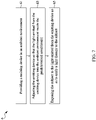
- FIG. 7 is a flow chart representing exemplary operations of the method 6 for providing ambient lighting for improving sleeping disorders, cognition and/or neurological disorders in a subject.
- light therapy is a way to treat seasonal affective disorder (SAD) and certain other conditions by exposure to artificial light.
- SAD seasonal affective disorder
- Light therapy is thought to affect brain chemicals linked to mood and sleep while easing SAD symptoms.
- the method 6 is related to the operations for providing an ambient environment with a light system, in which the light therapy could be performed.
- an emitting device which is the same as, or similar to, the emitting device 11, is provided in an ambient environment.
- the emitting device may provide a light source providing at least 20% (preferably at least 30%) green light or green spectral component of a light. Ratio of the green light can be calculated by defining the areas of the spectrum of the green regions relative to the entire spectrums, and the emitting device provides at least 1,850 K, at least 2,500 K, at least 2,800 K, at least 3,000 K, at least 3,500 K, at least 5,000 K, at least 5,500 K, at least 6,500 K, at least 8,000 K or at least 10,000 K of color temperature.
- the emitting device is controlled and/or adjusted so that an optical axis of the light emitted from the emitting device and/or an illuminance of the light provided from the emitting device meet the predetermined conditions.
- an angle between the optical axis of the light emitted from the emitting device to the subject in the ambient environment and the plane at eye level of the subject 100 ranges from about 30 degrees, or from about 40 degrees, or from about 45 degrees up to about 90 degrees, or up to about 80 degrees, or up to about 60 degrees.
- the emitting device is moved by an adjusting mechanism so that the light of the emitting device meets the above condition.
- the subject controls the adjusting mechanism to change the height of the emitting device and/or change the angle of elevation of the emitting device so that the light of the emitting device meets the above condition.
- the subject in the ambient environment may be exposed to the ambient light with vertical illuminance of about 3600 lux to about 4800 lux and/or horizontal illuminance of about 2200 lux to 2800 lux, and the vertical illuminance and/or a vertical illuminance of the green light or the green spectral component and the horizontal illuminance and/or a horizontal illuminance of the green light or the green spectral component is measured at the ear, eye, or top-of-the-head height level of the subject.
- the brightness of the emitting device is controlled by the controller so that the vertical illuminance of the light on the subject meets the above condition.
- the emitting device is moved by an adjusting mechanism so that the vertical illuminance of the light on the subject meets the above condition.
- the subject may be exposed to the light and the light system may apply a light therapy to the subject.
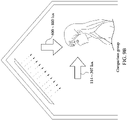
- Diagnosis of dementia requires a history of cognitive decline and impaired daily activities, with corroboration from the primary caregiver and nursing staff in nursing homes. Moreover, it requires mental status examination by a clinician to determine impairments in memory, language, attention, visuospatial cognition such as spatial orientation, executive function, and mood. Participants in the experimental and comparison groups were exposed to ambient bright light (2500 lux) and general lighting, respectively.
- ANOVA analysis of variance
- Participants were excluded if 1) they had adverse reactions to light, such as systemic lupus erythematosus, epilepsy, blindness, retinal detachment, or macular degeneration; 2) when using an accelerometer, the data on sleep disturbances that were collected at baseline showed sleep efficiency >80%, ⁇ 4 nocturnal awakenings, fewer than three nights per week with sleep disturbances, or disruptions lasting less than one month; and 3) had a measured score of ⁇ 3 points on the Mini-Mental State Examination (MMSE) or were unable to express self-intentions verbally.
- MMSE Mini-Mental State Examination
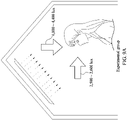
- the experimental group was exposed to ambient bright light with horizontal and vertical illuminations according to the present application of 2500-2600 lux and 4000-4400 lux, respectively, from a panel light (QBX801K99) in a special room. Ambient lights were placed on the ceiling within a 45° visual field with full-spectrum light ( ⁇ 2500 lux) to provide exposure ( FIG. 9A ). Participants were exposed to ambient bright light for at least 60 min/day from 9 AM to 10 AM, Monday through Friday, over eight weeks. In total, the participants were exposed to ambient bright light for 40 h, with group participation. The horizontal illumination started at 500 lux, which was increased daily by 500 lux until it reached and was maintained at 2500 lux.
- NPI Neuropsychiatric Inventory
- Demographic data included gender, age, education level, marital status, sleep pattern, dementia type, dementia severity, dementia source, total physical activity in the day, and medication use (benzodiazepines, antidepressants, antipsychotics, and antidementia drugs).
- DDD defined daily dose
- the DDD only represents a measurement unit, with drug usage (in DDDs) being calculated as the total drug dose by the DDD. Assessments were performed at baseline and in the fifth and ninth week to monitor the impact of drug changes on our findings.
- accelerometer activity is recorded as the acceleration along the x-, y-, and z-axes of three-dimensional space.
- accelerometers have higher and lower sensitivity and specificity, respectively; additionally, they can detect sleep disturbances, circadian rhythms, and total physical activity in the day.
- Accelerometer-monitored sleep disturbance data were recorded using an accelerometer. Compared with sleep logs of older adults with dementia, with the between-measurement error value being ⁇ 30 min, and the accelerometer (XA-5, Taipei, Taiwan) had an 80% accuracy level.
- the accelerometer (XA-5) was worn around the wrist to continuously record actigraphic data for ⁇ 3 days at baseline using the KY laboratory software package (http://xds.ym.edu.tw/sl).
- the device contains a piezoelectric linear accelerometer and associated circuitry for recording movement intensity and movement associated with physical activity, yielding three variables: total physical activity (average of all activity movements per hour), maximum activity (the largest and/or maximum movement per hour), and average activity (average movement per hour).
- sleep and wake times were observed for a week. Additionally, patterns were classified as advanced sleep-wake phase disorder, delayed sleep-wake phase disorder (DSWPD), irregular sleep-wake rhythm disorder, or a sleep-wake rhythm and accelerometer-monitored sleep pattern data were recorded using an accelerometer. Compared with sleep logs of older adults with dementia, the between-measurement error value was ⁇ 30 min.
- the accelerometer (XA-5, Taipei, Taiwan) was worn around the wrist to continuously record actigraphic data for ⁇ 3 days at baseline using the KY laboratory software package.
- the MMSE is categorized into orientation [e.g., orientation questions, five each for time and place (10 points)], registration [e.g., three-word registration and 1-min recall (3 points)], attention and calculation [e.g., assessed either by serial subtraction of 7 from 100 or serial subtraction of 3 from 20 (5 points)], recall [e.g., three-item recall test for memory (3 points)], and language, visuospatial construction [assessed by a three-stage command, repetition, naming, reading comprehension, and writing (8 points) and copying two intersecting pentagons (1 point)] (Graf et al., 2001). Cronbach's a coefficients for older adults with dementia were 0.81 and 0.88 for the pretest and posttest, respectively. The MMSE was used to assess the severity of dementia. Scores of ⁇ 21 indicate the presence of mild dementia, 11-20 indicate moderate dementia, and 0-10 indicate severe dementia.
- the NPI was developed by Cummings et al. (1994) (see also Connor et al., 2008; Lai, 2014) to assess dementia-related psychopathology and neuropsychiatric behaviors.
- the NPI includes four domains: emotional symptoms (e.g., dysphoria, anxiety, apathy, euphoria, and irritability), psychiatric symptoms (e.g., delusions and hallucinations), behavioral problems (e.g., agitation, disinhibition, aberrant motor behavior, appetite, and eating abnormalities), and sleep disturbances (e.g., nighttime behavioral disturbances) (Connor et al., 2008).
- the NPI shows good content validity, concurrent validity, and interrater reliability.
- the caregivers were asked to rate the frequency of the symptoms of each disturbance on a scale of 1 (occasionally or less than once a week) to 4 (very frequently, more than once a day, or continuously).
- the rating of the symptom severity was 1, 2, or 3 for mild, moderate, or severe, respectively.
- the total score ranged from 0 to 144 points, where a higher score reflects a more severe level of BPSD.
- the NPI subdomains were significantly correlated with the domains of behavioral disturbances and the Hamilton Rating Scale for Depression.
- Statistical analyses were performed using SPSS 24.0 statistical software. Regarding demographic characteristics, gender, education level, marital status, sleep pattern, dementia type, and dementia source were considered. The descriptive statistics at baseline and on the fifth and ninth week were calculated to examine whether demographic characteristics were affected by the loss of any participant. Descriptive statistics are presented as the number of cases (n), percentage (%), and mean and standard error, according to the group. The primary pretest-posttest analyses were based on the intention to treat (ITT) sample. For inferential statistics, nonparametric statistics (the chi-square and ManneWhitney U tests) for between- and within-group comparisons of pre- and post-intervention profiles were used.
- the ManneWhitney U test was used to assess within-group differences in age and medication (benzodiazepines, antidepressants, antipsychotics, and antidementia drugs) at baseline.
- An independent samples t-test was used to assess sleep efficiency, sleep time, awakening time, number of nighttime awakenings, circadian rhythms, and total physical activity during the day.
- the DDD was used as the unit of drug usage.
- generalized estimating equations GEE
- Improvements in the outcomes over time in both groups were analyzed using GEE with an exchangeable working correlation matrix. A robust standard error was used to calculate statistical significance.
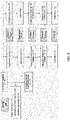
- FIG. 8 presents the study's flowchart.
- 35, 31, and 22 participants completed the baseline, 5-week, and 9-week assessments, respectively.
- the retention rates in the experimental and comparison groups were 64.7% and 61.1%, respectively.
- there was a significant between-group difference in gender with males comprising 5.9% and 33% of patients in the experimental and comparison groups, respectively (P ⁇ 0.05).
- Most participants were females.
- a Sleep effic ciency (total sleep time/time in bed) %.
- b Sleep time calculated as SPT (sleep onset and sleep offset) minus deduct WASO(1 wake after sleep on set).
- c Awakening time wake after sleep onset mins and sleep latency.
- d Number of night time awakenings wake after sleep onset, et, frequenciey of king.
- e Exp Experimenal group.
- p. f Con Comparison group.
- g Diff Difference between the experimental and comparison groups.
- h Wald X 2 Generalized estimating equation (GEE) interaction (group ⁇ time point).
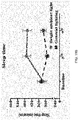
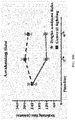
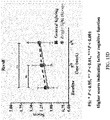
- FIG. 10A shows the group, time, and interaction effects.
- the experimental group showed a mean increase in sleep efficiency of 41.9% and 37.1% in the fifth and ninth week, respectively (calculation method: (posttest-pretest)/pretest).
- the experimental group's improvement was most pronounced for awakening time, followed by sleep time, sleep efficiency, and number of nighttime awakenings. As shown in Table 1, the comparison group showed more severe sleep disturbances in sleep efficiency, sleep time, awakening time, and the number of nighttime awakenings at the fifth and ninth week than at baseline.
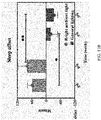
- the sleep offset in the experimental group was delayed by 57 min and 79 min in the fifth and ninth week, respectively. Contrastingly, the comparison group showed earlier sleep offset at fifth (by 19 min) and ninth (by 32 min) week than at baseline, as shown in FIG. 11 and Table 2.
- Table 2 Changes in the circadian rhythms of two groups at different time points.
- ambient bright light is more effective than general lighting in the amelioration of sleep disturbances and improvement of circadian rhythms in older adults with dementia.
- ambient bright light therapy significantly increases sleep efficiency and sleep time, as well as decreased awakening time.
- sleep onset can be advanced by 60 min and 84 min, while sleep offset can be delayed by 57 min and 79 min relative to baseline.
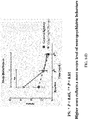
- the NPI was used as the neuropsychiatric behavior outcome indicator of the effects of bright light intervention.
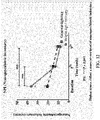
- the main effect on BPSD was evidenced by a significant change in the slope, reflecting improvements in BPSD ( FIG. 12 ).
- the experimental group showed a significant improvement in the NPI, with a mean decrease of 65% (calculation method: pretest-posttest/pretest) and 78% in the 5 th and 9 th weeks, respectively.
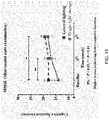
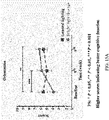
- the MMSE was used as the cognitive function outcome indicator of the effects of the group bright light therapy intervention.
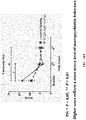
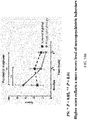
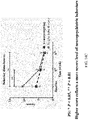
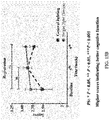
- the NPI is categorized into assessments of the emotional state, psychiatric symptoms, behavioral disturbances, and sleep disturbances ( FIG. 14A-D ). Regarding the specific neuropsychiatric behavioral domains of the emotional state, psychiatric symptoms, and sleep disturbances, continuous, promising improvements were observed in sleep disturbances ( FIG. 14D ).
- the experimental group showed a greater mean improvement than the baseline; the highest value was observed for sleep disturbances, followed by psychiatric symptoms, emotional state, and behavioral disturbances. However, the greatest mean improvement in the comparison group was observed for sleep disturbances, followed by emotional state, behavioral disturbances, and psychiatric symptoms. For both the experimental and comparison groups, the domain with the maximum change was psychiatric symptoms ( FIG. 14B ).
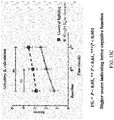
- the MMSE is categorized into orientation, registration, attention and calculation, recall, and language visuospatial construction ( FIG. 15A-E ).
- orientation showed the greatest improvement ( FIG. 15A ).
- the experimental group showed greater improvements in attention and calculation, followed by orientation, recall, language visuospatial construction, and registration compared with the baseline value. However, the greatest improvements in the comparison group were observed for attention and calculation, followed by recall, registration, language visuospatial construction, and orientation. For both the experimental and comparison groups, the domain with the maximum change was orientation ( FIG 15A ).
- the terms “approximately,” “substantially,” “substantial” and “about” are used to describe and account for small variations. When used in conjunction with an event or circumstance, the terms can refer to instances in which the event or circumstance occurs precisely as well as instances in which the event or circumstance occurs to a close approximation.
- the terms can refer to a range of variation of less than or equal to ⁇ 10% of that numerical value, such as less than or equal to ⁇ 5%, less than or equal to ⁇ 4%, less than or equal to ⁇ 3%, less than or equal to ⁇ 2%, less than or equal to ⁇ 1%, less than or equal to ⁇ 0.5%, less than or equal to ⁇ 0.1%, or less than or equal to ⁇ 0.05%.
- two numerical values can be deemed to be "substantially" the same or equal if the difference between the values is less than or equal to ⁇ 10% of an average of the values, such as less than or equal to ⁇ 5%, less than or equal to ⁇ 4%, less than or equal to ⁇ 3%, less than or equal to ⁇ 2%, less than or equal to ⁇ 1%, less than or equal to ⁇ 0.5%, less than or equal to ⁇ 0.1%, or less than or equal to ⁇ 0.05%.
- substantially parallel can refer to a range of angular variation relative to 0° that is less than or equal to ⁇ 10°, such as less than or equal to ⁇ 5°, less than or equal to ⁇ 4°, less than or equal to ⁇ 3°, less than or equal to ⁇ 2°, less than or equal to ⁇ 1°, less than or equal to ⁇ 0.5°, less than or equal to ⁇ 0.1°, or less than or equal to ⁇ 0.05°.
- substantially perpendicular can refer to a range of angular variation relative to 90° that is less than or equal to ⁇ 10°, such as less than or equal to ⁇ 5°, less than or equal to ⁇ 4°, less than or equal to ⁇ 3°, less than or equal to ⁇ 2°, less than or equal to ⁇ 1°, less than or equal to ⁇ 0.5°, less than or equal to ⁇ 0.1°, or less than or equal to ⁇ 0.05°.
Landscapes
- Health & Medical Sciences (AREA)
- Biomedical Technology (AREA)
- Engineering & Computer Science (AREA)
- Psychiatry (AREA)
- Nuclear Medicine, Radiotherapy & Molecular Imaging (AREA)
- Psychology (AREA)
- Social Psychology (AREA)
- Developmental Disabilities (AREA)
- Child & Adolescent Psychology (AREA)
- Pathology (AREA)
- Hospice & Palliative Care (AREA)
- Radiology & Medical Imaging (AREA)
- Life Sciences & Earth Sciences (AREA)
- Animal Behavior & Ethology (AREA)
- General Health & Medical Sciences (AREA)
- Public Health (AREA)
- Veterinary Medicine (AREA)
- Circuit Arrangement For Electric Light Sources In General (AREA)
- Radiation-Therapy Devices (AREA)
Applications Claiming Priority (1)
| Application Number | Priority Date | Filing Date | Title |
|---|---|---|---|
| US202163165917P | 2021-03-25 | 2021-03-25 |
Publications (2)
| Publication Number | Publication Date |
|---|---|
| EP4062971A2 true EP4062971A2 (de) | 2022-09-28 |
| EP4062971A3 EP4062971A3 (de) | 2022-12-21 |
Family
ID=80933429
Family Applications (1)
| Application Number | Title | Priority Date | Filing Date |
|---|---|---|---|
| EP22164261.4A Withdrawn EP4062971A3 (de) | 2021-03-25 | 2022-03-25 | Umgebungsbeleuchtung zum verbessern von schlafstörungen, kognitiven- und/oder neurologischen erkrankungen |
Country Status (4)
| Country | Link |
|---|---|
| US (1) | US11770888B2 (de) |
| EP (1) | EP4062971A3 (de) |
| JP (1) | JP7900814B2 (de) |
| TW (1) | TWI851983B (de) |
Family Cites Families (34)
| Publication number | Priority date | Publication date | Assignee | Title |
|---|---|---|---|---|
| US20050073839A1 (en) | 2003-09-18 | 2005-04-07 | The Litebook Company Ltd | Light therapy device |
| US9955551B2 (en) * | 2002-07-12 | 2018-04-24 | Yechezkal Evan Spero | Detector controlled illuminating system |
| US8852254B2 (en) | 2005-02-18 | 2014-10-07 | Lucian Moscovici | Apparatus and method for providing a multi-stage light treatment |
| EP1935452A1 (de) | 2006-12-19 | 2008-06-25 | Koninklijke Philips Electronics N.V. | Elektrochrome Vorrichtung und Vorrichtung zur photodynamischen Behandlung unter Verwendung einer derartigen elektrochromen Vorrichtung |
| EP2117648B1 (de) | 2007-03-09 | 2015-08-26 | Koninklijke Philips N.V. | Beleuchtungssystem zur energiestimulierung |
| JP2009238652A (ja) | 2008-03-28 | 2009-10-15 | Asahi Kasei Homes Co | 照明制御システム |
| JP2009266482A (ja) | 2008-04-23 | 2009-11-12 | Takenaka Komuten Co Ltd | 生理情報対応型の照明制御システム |
| BRPI1007738A2 (pt) | 2009-04-24 | 2016-12-27 | Koninkl Philips Electronics Nv | sistema configurado para prover terapia luminosa a um indivíduo |
| EP2510970A4 (de) * | 2009-12-11 | 2013-07-31 | Mignon Belle Co Ltd | Vorrichtung und verfahren zur schlafinduktion |
| US8465531B2 (en) | 2011-03-29 | 2013-06-18 | Valkee Oy | Light therapy modality |
| WO2013106653A1 (en) | 2012-01-12 | 2013-07-18 | Goodlux Technology, Llc | Light therapy monitoring |
| US9392651B2 (en) * | 2012-04-11 | 2016-07-12 | Koninklijke Philips N.V. | Lighting methods and apparatus with selectively applied face lighting component |
| WO2014064587A1 (en) * | 2012-10-26 | 2014-05-01 | Koninklijke Philips N.V. | Lighting methods for providing personalized lighting to users positioned proximal to one another |
| WO2014146054A1 (en) | 2013-03-15 | 2014-09-18 | Jones Gary W | Ambient spectrum light conversion device |
| CA2907416A1 (en) | 2013-03-15 | 2014-09-18 | Gary W. Jones | Multispectral light source |
| US9410664B2 (en) * | 2013-08-29 | 2016-08-09 | Soraa, Inc. | Circadian friendly LED light source |
| US11497721B2 (en) * | 2013-11-05 | 2022-11-15 | Antecip Bioventures Ii Llc | Bupropion as a modulator of drug activity |
| CA3017104A1 (en) * | 2015-03-09 | 2016-09-15 | Circadian Zirclight Inc. | Systems and methods for controlling environmental illumination |
| KR20170024983A (ko) | 2015-08-27 | 2017-03-08 | 심규현 | 다색 발광다이오드를 갖는 인공태양광 라이트 세라피 램프 |
| US10212766B2 (en) * | 2015-12-18 | 2019-02-19 | Musco Corporation | Lighting optimized for melanopic vision |
| KR102226170B1 (ko) * | 2016-06-03 | 2021-03-09 | 무스코 코포레이션 | 일정한 인지 밝기 및 컬러로 튜닝가능한 서카디안 조명을 제공하기 위한 장치, 방법 및 시스템 |
| US10767822B2 (en) * | 2016-06-24 | 2020-09-08 | Brian Munari | Automatic light control for illumination of a feature of interest |
| CA3053540A1 (en) | 2017-02-15 | 2018-08-23 | The Regents Of The University Of California | Improved light therapy system and methods of use |
| DK180189B1 (en) * | 2017-04-27 | 2020-07-24 | Chromaviso As | Circadian lamp and method of operating such a lamp |
| EP3626030B1 (de) * | 2017-05-15 | 2022-09-28 | Signify Holding B.V. | Beleuchtungssystem, das die pegel von melanopinischen lux am auge ungeachtet des abstands zum benutzer aufrechterhält |
| GB2563036A (en) * | 2017-05-30 | 2018-12-05 | Sultan & Knight Ltd | Systems and methods for monitoring and modulating circadian rhythms |
| WO2019068665A1 (en) * | 2017-10-05 | 2019-04-11 | Signify Holding B.V. | CIRCADIAN LIGHTING ARRANGEMENT |
| US11184967B2 (en) * | 2018-05-07 | 2021-11-23 | Zane Coleman | Angularly varying light emitting device with an imager |
| WO2019217966A1 (en) * | 2018-05-11 | 2019-11-14 | F.lux Software LLC | Coordinated lighting adjustment for groups |
| EP3928597B1 (de) * | 2019-02-21 | 2024-04-10 | Signify Holding B.V. | Beleuchtungssystem mit konstanter dimmung der beleuchtungsstärke |
| US11578841B2 (en) * | 2019-04-17 | 2023-02-14 | Biological Innovation And Optimization Systems, Llc | Color separation lighting devices |
| JP2020184412A (ja) | 2019-04-26 | 2020-11-12 | 京セラ株式会社 | 照明装置及び照明システム |
| JP7427372B2 (ja) | 2019-05-22 | 2024-02-05 | コイズミ照明株式会社 | 照明システム、照明制御装置、および、照明制御方法 |
| US11503270B1 (en) * | 2021-08-10 | 2022-11-15 | Varjo Technologies Oy | Imaging systems and methods for facilitating local lighting |
-
2022
- 2022-03-25 EP EP22164261.4A patent/EP4062971A3/de not_active Withdrawn
- 2022-03-25 TW TW111111469A patent/TWI851983B/zh active
- 2022-03-25 US US17/704,671 patent/US11770888B2/en active Active
- 2022-03-25 JP JP2022050509A patent/JP7900814B2/ja active Active
Non-Patent Citations (1)
| Title |
|---|
| "Diagnostic and Statistical Manual of Mental Disorders" |
Also Published As
| Publication number | Publication date |
|---|---|
| US20220312571A1 (en) | 2022-09-29 |
| US11770888B2 (en) | 2023-09-26 |
| TW202304545A (zh) | 2023-02-01 |
| JP7900814B2 (ja) | 2026-08-05 |
| TWI851983B (zh) | 2024-08-11 |
| EP4062971A3 (de) | 2022-12-21 |
| JP2022151862A (ja) | 2022-10-07 |
Similar Documents
| Publication | Publication Date | Title |
|---|---|---|
| Schlangen et al. | The lighting environment, its metrology, and non-visual responses | |
| Shishegar et al. | Tuning environmental lighting improves objective and subjective sleep quality in older adults | |
| Ru et al. | Non-image forming effects of illuminance and correlated color temperature of office light on alertness, mood, and performance across cognitive domains | |
| Rahman et al. | The effects of spectral tuning of evening ambient light on melatonin suppression, alertness and sleep | |
| Sletten et al. | Randomised controlled trial of the efficacy of a blue-enriched light intervention to improve alertness and performance in night shift workers | |
| JP2023040080A (ja) | 改善された光療法システムおよび使用方法 | |
| US10746605B2 (en) | Visual efficacy measuring method for objects in different light environments | |
| Askaripoor et al. | Effects of light intervention on alertness and mental performance during the post-lunch dip: a multi-measure study | |
| Liu et al. | Ambient bright lighting in the morning improves sleep disturbances of older adults with dementia | |
| Richey et al. | Visually evoked responses in multiple sclerosis | |
| Blume et al. | Effects of calibrated blue–yellow changes in light on the human circadian clock | |
| US20140277292A1 (en) | Systems and methods for light modulation of autonomic tone or function | |
| Roehrs et al. | Sedating effects of ethanol and time of drinking | |
| Rea et al. | The NICU lighted environment | |
| Choi et al. | The gradual transition from blue-enriched to neutral white light for creating a supportive learning environment | |
| Ritter et al. | Supersensitivity of patients with bipolar I disorder to light-induced phase delay by narrow bandwidth blue light | |
| Rea et al. | Relative light sensitivities of four retinal hemi-fields for suppressing the synthesis of melatonin at night | |
| Huang et al. | The impact of cyanopic illuminance on evening light induced circadian effects | |
| Wu et al. | Non-visual effects of road lighting CCT on driver's mood, alertness, fatigue and reaction time: A comprehensive neuroergonomic evaluation study | |
| Li et al. | Assessing the impact of office artificial lighting on young adults’ reading performance through eye-tracking analysis | |
| US11770888B2 (en) | Ambient lighting for improving sleeping disorders, cognition and/or neurological disorders | |
| Górnicka | Lighting at work: Environmental study of direct effects of lighting level and spectrum on psychophysiological variables | |
| Ji et al. | Comprehensive impact of pre-sleep thermal and light environment on sleep quality in winter | |
| CN120981188A (zh) | 特性信息收集方法 | |
| Chang et al. | Entrainment to gradual vs. immediate 8-hour phase advance shifts with and without short-wavelength enriched polychromatic green light |
Legal Events
| Date | Code | Title | Description |
|---|---|---|---|
| PUAI | Public reference made under article 153(3) epc to a published international application that has entered the european phase |
Free format text: ORIGINAL CODE: 0009012 |
|
| STAA | Information on the status of an ep patent application or granted ep patent |
Free format text: STATUS: THE APPLICATION HAS BEEN PUBLISHED |
|
| AK | Designated contracting states |
Kind code of ref document: A2 Designated state(s): AL AT BE BG CH CY CZ DE DK EE ES FI FR GB GR HR HU IE IS IT LI LT LU LV MC MK MT NL NO PL PT RO RS SE SI SK SM TR |
|
| PUAL | Search report despatched |
Free format text: ORIGINAL CODE: 0009013 |
|
| AK | Designated contracting states |
Kind code of ref document: A3 Designated state(s): AL AT BE BG CH CY CZ DE DK EE ES FI FR GB GR HR HU IE IS IT LI LT LU LV MC MK MT NL NO PL PT RO RS SE SI SK SM TR |
|
| RIC1 | Information provided on ipc code assigned before grant |
Ipc: A61N 5/06 20060101AFI20221117BHEP |
|
| STAA | Information on the status of an ep patent application or granted ep patent |
Free format text: STATUS: THE APPLICATION IS DEEMED TO BE WITHDRAWN |
|
| 18D | Application deemed to be withdrawn |
Effective date: 20230622 |