EP4063754B1 - Steuerung für ein passiv-lüftungssystem eines gebäudes - Google Patents
Steuerung für ein passiv-lüftungssystem eines gebäudes Download PDFInfo
- Publication number
- EP4063754B1 EP4063754B1 EP21164628.6A EP21164628A EP4063754B1 EP 4063754 B1 EP4063754 B1 EP 4063754B1 EP 21164628 A EP21164628 A EP 21164628A EP 4063754 B1 EP4063754 B1 EP 4063754B1
- Authority
- EP
- European Patent Office
- Prior art keywords
- passive
- ventilation
- state
- temperature
- building
- Prior art date
- Legal status (The legal status is an assumption and is not a legal conclusion. Google has not performed a legal analysis and makes no representation as to the accuracy of the status listed.)
- Active
Links
Images
Classifications
-
- F—MECHANICAL ENGINEERING; LIGHTING; HEATING; WEAPONS; BLASTING
- F24—HEATING; RANGES; VENTILATING
- F24F—AIR-CONDITIONING; AIR-HUMIDIFICATION; VENTILATION; USE OF AIR CURRENTS FOR SCREENING
- F24F11/00—Control or safety arrangements
- F24F11/0001—Control or safety arrangements for ventilation
-
- F—MECHANICAL ENGINEERING; LIGHTING; HEATING; WEAPONS; BLASTING
- F24—HEATING; RANGES; VENTILATING
- F24F—AIR-CONDITIONING; AIR-HUMIDIFICATION; VENTILATION; USE OF AIR CURRENTS FOR SCREENING
- F24F11/00—Control or safety arrangements
- F24F11/62—Control or safety arrangements characterised by the type of control or by internal processing, e.g. using fuzzy logic, adaptive control or estimation of values
- F24F11/63—Electronic processing
- F24F11/64—Electronic processing using pre-stored data
-
- E—FIXED CONSTRUCTIONS
- E05—LOCKS; KEYS; WINDOW OR DOOR FITTINGS; SAFES
- E05F—DEVICES FOR MOVING WINGS INTO OPEN OR CLOSED POSITION; CHECKS FOR WINGS; WING FITTINGS NOT OTHERWISE PROVIDED FOR, CONCERNED WITH THE FUNCTIONING OF THE WING
- E05F15/00—Power-operated mechanisms for wings
- E05F15/70—Power-operated mechanisms for wings with automatic actuation
- E05F15/71—Power-operated mechanisms for wings with automatic actuation responsive to temperature changes, rain, wind or noise
-
- F—MECHANICAL ENGINEERING; LIGHTING; HEATING; WEAPONS; BLASTING
- F24—HEATING; RANGES; VENTILATING
- F24F—AIR-CONDITIONING; AIR-HUMIDIFICATION; VENTILATION; USE OF AIR CURRENTS FOR SCREENING
- F24F11/00—Control or safety arrangements
- F24F11/50—Control or safety arrangements characterised by user interfaces or communication
- F24F11/61—Control or safety arrangements characterised by user interfaces or communication using timers
-
- F—MECHANICAL ENGINEERING; LIGHTING; HEATING; WEAPONS; BLASTING
- F24—HEATING; RANGES; VENTILATING
- F24F—AIR-CONDITIONING; AIR-HUMIDIFICATION; VENTILATION; USE OF AIR CURRENTS FOR SCREENING
- F24F11/00—Control or safety arrangements
- F24F11/62—Control or safety arrangements characterised by the type of control or by internal processing, e.g. using fuzzy logic, adaptive control or estimation of values
- F24F11/63—Electronic processing
- F24F11/65—Electronic processing for selecting an operating mode
-
- F—MECHANICAL ENGINEERING; LIGHTING; HEATING; WEAPONS; BLASTING
- F24—HEATING; RANGES; VENTILATING
- F24F—AIR-CONDITIONING; AIR-HUMIDIFICATION; VENTILATION; USE OF AIR CURRENTS FOR SCREENING
- F24F11/00—Control or safety arrangements
- F24F11/70—Control systems characterised by their outputs; Constructional details thereof
- F24F11/72—Control systems characterised by their outputs; Constructional details thereof for controlling the supply of treated air, e.g. its pressure
- F24F11/74—Control systems characterised by their outputs; Constructional details thereof for controlling the supply of treated air, e.g. its pressure for controlling air flow rate or air velocity
-
- F—MECHANICAL ENGINEERING; LIGHTING; HEATING; WEAPONS; BLASTING
- F24—HEATING; RANGES; VENTILATING
- F24F—AIR-CONDITIONING; AIR-HUMIDIFICATION; VENTILATION; USE OF AIR CURRENTS FOR SCREENING
- F24F7/00—Ventilation
-
- E—FIXED CONSTRUCTIONS
- E05—LOCKS; KEYS; WINDOW OR DOOR FITTINGS; SAFES
- E05Y—INDEXING SCHEME ASSOCIATED WITH SUBCLASSES E05D AND E05F, RELATING TO CONSTRUCTION ELEMENTS, ELECTRIC CONTROL, POWER SUPPLY, POWER SIGNAL OR TRANSMISSION, USER INTERFACES, MOUNTING OR COUPLING, DETAILS, ACCESSORIES, AUXILIARY OPERATIONS NOT OTHERWISE PROVIDED FOR, APPLICATION THEREOF
- E05Y2900/00—Application of doors, windows, wings or fittings thereof
- E05Y2900/10—Application of doors, windows, wings or fittings thereof for buildings or parts thereof
- E05Y2900/13—Type of wing
- E05Y2900/148—Windows
-
- F—MECHANICAL ENGINEERING; LIGHTING; HEATING; WEAPONS; BLASTING
- F24—HEATING; RANGES; VENTILATING
- F24F—AIR-CONDITIONING; AIR-HUMIDIFICATION; VENTILATION; USE OF AIR CURRENTS FOR SCREENING
- F24F7/00—Ventilation
- F24F2007/004—Natural ventilation using convection
-
- F—MECHANICAL ENGINEERING; LIGHTING; HEATING; WEAPONS; BLASTING
- F24—HEATING; RANGES; VENTILATING
- F24F—AIR-CONDITIONING; AIR-HUMIDIFICATION; VENTILATION; USE OF AIR CURRENTS FOR SCREENING
- F24F11/00—Control or safety arrangements
- F24F11/0001—Control or safety arrangements for ventilation
- F24F2011/0002—Control or safety arrangements for ventilation for admittance of outside air
-
- F—MECHANICAL ENGINEERING; LIGHTING; HEATING; WEAPONS; BLASTING
- F24—HEATING; RANGES; VENTILATING
- F24F—AIR-CONDITIONING; AIR-HUMIDIFICATION; VENTILATION; USE OF AIR CURRENTS FOR SCREENING
- F24F11/00—Control or safety arrangements
- F24F11/0001—Control or safety arrangements for ventilation
- F24F2011/0006—Control or safety arrangements for ventilation using low temperature external supply air to assist cooling
-
- F—MECHANICAL ENGINEERING; LIGHTING; HEATING; WEAPONS; BLASTING
- F24—HEATING; RANGES; VENTILATING
- F24F—AIR-CONDITIONING; AIR-HUMIDIFICATION; VENTILATION; USE OF AIR CURRENTS FOR SCREENING
- F24F2110/00—Control inputs relating to air properties
- F24F2110/10—Temperature
-
- F—MECHANICAL ENGINEERING; LIGHTING; HEATING; WEAPONS; BLASTING
- F24—HEATING; RANGES; VENTILATING
- F24F—AIR-CONDITIONING; AIR-HUMIDIFICATION; VENTILATION; USE OF AIR CURRENTS FOR SCREENING
- F24F2110/00—Control inputs relating to air properties
- F24F2110/10—Temperature
- F24F2110/12—Temperature of the outside air
-
- F—MECHANICAL ENGINEERING; LIGHTING; HEATING; WEAPONS; BLASTING
- F24—HEATING; RANGES; VENTILATING
- F24F—AIR-CONDITIONING; AIR-HUMIDIFICATION; VENTILATION; USE OF AIR CURRENTS FOR SCREENING
- F24F2110/00—Control inputs relating to air properties
- F24F2110/30—Velocity
-
- F—MECHANICAL ENGINEERING; LIGHTING; HEATING; WEAPONS; BLASTING
- F24—HEATING; RANGES; VENTILATING
- F24F—AIR-CONDITIONING; AIR-HUMIDIFICATION; VENTILATION; USE OF AIR CURRENTS FOR SCREENING
- F24F2110/00—Control inputs relating to air properties
- F24F2110/30—Velocity
- F24F2110/32—Velocity of the outside air
-
- F—MECHANICAL ENGINEERING; LIGHTING; HEATING; WEAPONS; BLASTING
- F24—HEATING; RANGES; VENTILATING
- F24F—AIR-CONDITIONING; AIR-HUMIDIFICATION; VENTILATION; USE OF AIR CURRENTS FOR SCREENING
- F24F2120/00—Control inputs relating to users or occupants
- F24F2120/10—Occupancy
Definitions
- the invention relates to controlling a passive-ventilation system of a building.
- WO 2013/107461 A1 proposes a method and a system for controlling ventilation of an indoor area of a building, with the ventilating the indoor area by means of active mechanical ventilation and a passive natural ventilation according to a ventilation mode selected among a plurality of ventilation modes, with a set of adjustable control parameters and at least one measurement value from a sensor.
- each ventilation mode is associated with the set of adjustable control parameters, each having an adjustable value selected among a group of mode-dependent adjustable values, and/or a set of fixed control parameters each having a mode-dependent fixed value.
- Controlling the mechanical ventilation and the natural ventilation is achieved by comparing the measurement value from the sensor with a corresponding value of the control parameters of the ventilation mode such that a desired indoor climate defined by the ventilation mode is obtained.
- US 6,699,120 B1 discloses another computer-controlled method of controlling internal climate comfort by natural ventilation in a living room of a building occupied by human users.
- US 4,182,487 A proposes to control a venting duct outlet using a simple mechanical apparatus which senses the outdoor temperature, as well as a wind force. This method automatically controls the air exchange to eliminate cold air entering the building.
- the control of natural or passive-ventilation is done by adjusting the opening of corresponding passive-ventilation devices in the facade of the respective building.
- Such openable passive-ventilation devices may be windows, dampers, grids, vents, and alike.
- One aspect relates to a method for controlling a passive-ventilation system of a building, which may also be referred to as natural-ventilation system.
- Said method comprises the method steps of determining an outdoor air temperature of an air in an environment of a building and determining an indoor air temperature of at least one zone, that is, one or several zones inside the building.
- Said zones may be referred to as thermal zones.
- Room, halls, corridors, or staircases of the building may be considered as exemplary thermal zones.
- the respective temperatures may be determined by measurements of temperature sensors of the passive-ventilation system, or determined by accessing a corresponding data base, for instance temperature data of the environment of the building available in the internet.
- Outdoor and/or indoor air temperature may be determined as averaged air temperatures.
- an internal air temperature in particular an average internal air temperature, for each zone may be used to control the passive-ventilation devices of the respective zones.
- the controlling the states of the passive-ventilation devices may be performed individually, i.e. the states of the passive-ventilation devices may be controlled independently from each other.
- a temperature difference is calculated. If said calculated temperature difference is greater than zero, preferably in combination with the outside air temperature being greater than a given ventilation setpoint, a state of at least one passive-ventilation device of the passive-ventilation system which is associated with one or several or all of said at least one zone inside the building is controlled to be in any of a closed state, an open state, or one of one or more intermediate states between the closed and the open state.
- each of the states corresponds to one value of an opening fraction value of the respective at least one zone inside the building which varies between zero and one. Zero corresponds to the closed state, and one to the open state.
- the respective passive-ventilation device being associated with the respective thermal zone means that it is configured for a fluidic coupling of the corresponding zone or zones inside the building with the environment of the building. So, to each zone to be ventilated passively, one or more passive-ventilation devices may be associated.
- the intermediate states may, for instance, relate to a 25% open state, 50% open state, and 75% open state to realize gradual opening control.
- the passive-ventilation function monotonically decreases with increasing calculated temperature difference.
- the state of the controlled passive-ventilation device or devices may be left unchanged or, alternatively, be set to an open or closed state.
- the state of the at least one passive-ventilation device is only controlled via setting the opening fraction value as described above if both determined outdoor air temperature and determined indoor air temperature lie in a range between a lower setpoint, a heating setpoint T LL,HSP , and an upper setpoint, a cooling setpoint T UL,CSP , and is set to a closed state otherwise.
- heating and cooling setpoint may be set as dynamic setpoints according to a formula depending on a comfort temperature, where the comfort temperature may be set according to a formula depending on a running mean outside temperature T rm , such as a seventh day running mean outside temperature.
- the heating and cooling setpoint may be set as dynamic setpoints according to any of the known standards, for instance ISO 17772, EN 16798, EN 15251 B, or ASAHRAE.
- T UL,CSP denotes the cooling setpoint
- T LL,HSP denotes the heating setpoint
- T rm denotes the determined outdoor Temperature T int as outdoor running mean temperature as determined outdoor air temperature.
- the comfort temperature is defined as 0.31 T rm + 17.8°C.
- t ed-1 denotes the mean daily outdoor temperature for the previous day, and so forth.
- the dynamic setpoints ideally vary for every day and thus can be optimized for every climate throughout the year.
- the state of at least one of a window (or a set of windows), a damper (or a set of dampers), a vent (or a set of vents) or a grid (or a set of grids) may be controlled as state of the at least passive-ventilation device.
- the passive-ventilation device may be or comprise at least one of a window (or a set of windows), a damper (or a set of dampers), a vent (or a set of vents) or a grid (or a set of grids). So, the proposed method may be applied to the known passive-ventilation devices easily, as a corresponding state of said passive-ventilation devices or sets of passive-ventilation devices may be defined as closed, open, or intermediate according the above provided definition.
- An intermediate state of a set of passive-ventilation device may correspond to a combination of open and closed states of the devices of the set. For instance, a set of two windows may be set to a 50% open state by opening one of the windows and closing the other one. This gives the advantage that simpler control modes of the individual windows suffice for implementing the described control scheme.
- the state of said at least one passive-ventilation device is only controlled via setting the opening fraction value if the respective zone is occupied and/or to be occupied at a given time within a preset lapse of time, and set to a closed state otherwise.
- the preset lapse of time may be set, for instance, to comprise several hours, such as for instance two hours or one hour or only half an hour or a quarter of an hour. This gives the advantage of increased safety, as it is prevented to open the respective passive-ventilation device or devices when nobody is present.
- the priority for ventilation is relatively low, which is reflected in the control scheme.
- the outdoor air temperature of an air in the environment of the building will be above an upper outdoor temperature limit in the future within a preset lapse of time or not, and, if it is (in particular only if it is), set the state of the at least one passive-ventilation device to a state corresponding to an opening fraction value higher than that of a state of the at least one passive-ventilation device corresponding to the outdoor temperature determined for a present time or lower than that of a state of the at least one passive-ventilation device corresponding to the outdoor temperature for the present time.
- the state of the at least passive-ventilation device can also be set to the higher opening fraction value in a first time period, and to a lower opening fraction value in a second time period, which is subsequent to the first time period.
- the lower fraction limit I is set to a value greater than zero if a preset criterion is met, and to zero if said criterion is not met.
- the criterion preferably comprises that the at least one zone corresponding to the controlled passive-ventilation device is occupied or to be occupied, according to a preset schedule. So, a minimal ventilation can be ensured if the zone is to be used or is to be used by people.
- the passive-ventilation function is a linear function f of the calculated temperature difference ⁇ T.
- the linear function is proportional to the difference obtained by subtracting the upper temperature difference limit m from the calculated temperature difference ⁇ T, preferably proportional to or equal to said difference divided by the difference obtained by subtracting the upper temperature limit m from the lower temperature difference limit k, i.e. f prop. ( ⁇ T-m)/(k-m).
- This specific linear function is particularly advantageous.
- the passive-ventilation function f is a function proportional to the inverse square root of the product of a variable a1 with the calculated temperature difference ⁇ T or proportional to the inverse square root of the sum of another variable a0 with the product of the first variable a1 which is a calculated temperature difference ⁇ T.
- the passive-ventilation function is limited to a maximum value of 1 or equivalent, meaning that values of the passive-ventilation function f are set to 1 if the respective expression would actually result in a value bigger than 1. This gives the advantage to account for further limitations or characteristics of a specific setting and provides advantages as the above described linear function.
- variables a0 and a1 may be derived from a desired total airflow mt through the at least one passive-ventilation device.
- Q g is the total heat gains in watt, which is determined by the machinery running in the ventilated space, the number of persons present therein, solar irradiation and alike.
- C P is the specific heat capacity of air in kJ/(kg*K)
- T int is the determined internal temperature in °C, which may be averaged
- T UL,CSP is the cooling setpoint in °C.
- the airflows m are given in m 3 /sec
- a w is the effective area of the windows in square meters
- h is the vertical distance between centres of openings of different passive-ventilation devices of the respective zone (which is zero if only one passive-ventilation device is present) in m
- g is the acceleration due to gravity in m/s 2
- T av is the average value of the determined outdoor and indoor temperature in °C
- V r is a wind speed in the environment of the building in m/s.
- Q g and/or C d may be preset or calculated according to a specific knowledge or assumption on the respective zone.
- the discharge coefficient C d is a dimensionless number used to account for the constriction of stream lines after flow paths through the orifice, that is, through the thermal zone to be ventilated. Therefore, the discharge coefficient is a function of the shape of the opening of the respective passive-ventilation device. The greatest ratio of cross-sectional area to perimeter length occurs with a circular opening, and hence, as opening shapes become less circular, the discharge coefficient decreases.
- the discharge coefficient of a standard circular sharp-edged orifice C d is frequently given as 0.61. Compare Jones et al.
- the discharge coefficient usually ranges from 0.4 to 0.6, depending on the louvre's geometric properties such as the shape and angle of the metallic louvre. For a typical rainproof louvres with the angle of 45°, the discharge coefficient may range from 0.3 to 0.5. Compare Heiselberg P and Sandberg M, "Evaluation of Discharge Coefficients for Window Openings and Wind Driven Natural Ventilation" in: International Journal of Ventilation, ISSN 5(1), 2006, 1473 to 3315 .
- the passive-ventilation opening fraction value (and thus the state of passive-ventilation device which best realizes the ideal effective area) is given by (Eq. A) divided by A m , which is a preset maximum openable geometrical area of the respective at least one passive-ventilation device of the passive-ventilation system. So the opening fraction value is A w divided by A m for values of A w less than A max , and 1 if A w is greater or equal to A max .
- the wind speed V r may be determined by a measurement of a wind sensor of the passive-ventilation system and/or the heat gain Q g is set or calculated in dependence upon a determination result of whether the at least one zone is occupied or not and/or to be occupied at a given time in the future, in particular by how many persons.
- This may be determined by a corresponding occupancy sensor or by an occupation schedule for the at least one zone.
- natural ventilation in the buildings may be achieved with respect to specific setpoint temperatures and the selection of the (effective) opening area, that is, the state, of respective passive-ventilation devices of the passive-ventilation system based on given environmental conditions such as outdoor and indoor air temperature. But also wind, outdoor and indoor relative humidity, pollen level, and the like may be taken into account. For instance, it may be checked whether natural ventilation is suitable to improve the indoor comfort by checking respective criteria such as wind, outdoor and indoor relative humidity, pollen level, and the like.
- the pollen level in the environment is below a given threshold for well-being and/or the wind level in the environment is below a given threshold for well-being inside the building and/or whether outdoor and/or indoor relative humidity is in a preset acceptability range or not.
- the proposed method may then be adapted such that the passive ventilation is only enabled if passive ventilation fosters the well-being inside the building, i.e. if the criteria lie beneath the respective thresholds and/or in the respective acceptability ranges.
- the acceptability range may be set as 30%-70% relative humidity (compare Berglund, G. (1998) 'Comfort and Humidity', ASHRAE Transactions, pp. 35-41 ; Arens, E.
- the control algorithm can utilize historic weather data to calculate dynamic setpoints for natural ventilation, and uses an analytic formula, which may even be linear, to calculate the optimum position of the passive-ventilation devices based on outdoor and indoor air temperature in particular also pressure differences reflected in airflow due to buoyancy and/or due to wind forces between inside and outside. Also prediction data for a range of optional parameters such as weather, number of occupants, preferred temperature settings and alike, may be included to allow for improved specificity regarding appropriate configurations and control of the passive-ventilation devices.
- the control method may be implemented in any existing building management system. Sensors for the outdoor and indoor environmental conditions could and should be used to provide the required inputs to the controller of the passive-ventilation system, in addition to sensors providing information about the state of the respective passive-ventilation devices, and potentially also an information about an operational mode, for instance if the building is to be cooled by the passive natural ventilation mode or by an active mechanical mode. If the mechanical mode is activated, the controller of the passive-ventilation system may be passive/paused and let the established system control the heating and/or cooling.
- Another aspect relates to a passive-ventilation system with a control device configured to perform the method or any of the embodiments described above.
- a further aspect relates to a building with such a passive-ventilation system.
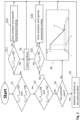
- FIG. 1 shows an exemplary flow chart for one embodiment of a method for controlling a passive-ventilation system of a building.
- a first step S1 it is determined whether heating is unnecessary or not. In the present example, this is achieved by checking if both the indoor air temperature T int , which may be an averaged temperature, and an outdoor air temperature T out , which may be an averaged temperature, is greater than a heating setpoint T LL,HSP (in the present case plus a certain preset dead band temperature DB). If this is not the case, which means that it is cold and heating is required, it is checked whether the indoor air temperature is less than the heating setpoint T LL,HSP (plus said dead band temperature DB) in step S11. If this is the case, in step S12, the windows are closed and conventional mechanical heating is switched on. If step S11 gives "no" as a result, in step Sx, the windows are closed and heating/cooling is not switched on.
- step S2 it is checked if both the indoor air temperature T int and and the outside air temperature T out is below a cooling setpoint T UL,CSP (in the present case minus said preset temperature DB). If the result of step S2 is "no", that is, a cooling is potentially required, in step S21 it is checked whether the indoor air temperature T int is above the cooling setpoint T UL,CSP (plus said dead band temperature DB here). If this is not the case, it is proceeded with step Sx. If this is the case, in step S22, the windows are closed and a conventional mechanical cooling is started.
- step S2 gives "yes” as a result, which means that no mechanical cooling is required, it is checked in a step S3 whether a passive-ventilation device such as a window is open or not. If the result of step S3 is "yes", the passive-ventilation device or devices are, in this example, held in the present state in step Sy, and the process starts again.
- Step S4 a state of at least one passive-ventilation device of the passive-ventilation system is controlled via setting an opening fraction value OF, where the opening fraction value OF varies between 0 and 1, and corresponds to a respective state of the corresponding passive-ventilation device of at least one zone inside the building to be ventilated.
- the state may be any of a closed state, an open state, one of one or more intermediate states between closed and open state, where an opening fraction value of 0 corresponds to the closed state, an opening fraction value of 1 to the open state, and opening fraction values in between 0 and 1 are associated with the one or more intermediate state.
Landscapes
- Engineering & Computer Science (AREA)
- General Engineering & Computer Science (AREA)
- Chemical & Material Sciences (AREA)
- Combustion & Propulsion (AREA)
- Mechanical Engineering (AREA)
- Physics & Mathematics (AREA)
- Signal Processing (AREA)
- Fluid Mechanics (AREA)
- Fuzzy Systems (AREA)
- Mathematical Physics (AREA)
- Human Computer Interaction (AREA)
- Ventilation (AREA)
- Air Conditioning Control Device (AREA)
Claims (13)
- Verfahren zum Steuern eines Passiv-Belüftungssystems eines Gebäudes, umfassend die Verfahrensschritte des:- Bestimmens einer Außenlufttemperatur (Tout) von Luft in einer Umgebung des Gebäudes;- Bestimmens einer Innenlufttemperatur (Tint) in mindestens einer Zone innerhalb des Gebäudes;- Berechnens einer Temperaturdifferenz (ΔT) durch Subtraktion der bestimmten Außenlufttemperatur (Tout) von der bestimmten Innenlufttemperatur (Tint);- falls die berechnete Temperaturdifferenz (ΔT) größer als Null ist:Steuerns eines Zustands von mindestens einer Passiv-Belüftungsvorrichtung des Passiv-Belüftungssystems, um irgendeiner zu sein von: einem geschlossenen Zustand, einem offenen Zustand, einem von einem oder mehreren Zwischenzuständen zwischen dem geschlossenen und dem offenen Zustand, wobei jeder der Zustände einem Wert eines Öffnungsanteilwerts (OF) des mindestens einen Bereichs im Inneren des Gebäudes entspricht, der zwischen 0 und 1 variiert, wobei 0 dem geschlossenen Zustand und 1 dem offenen Zustand entspricht, und wobei die jeweilige passive Belüftungsvorrichtung für eine fluidische Kopplung von mindestens einem jeweiligen Bereich des mindestens einen Bereichs im Inneren des Gebäudes mit der Umgebung des Gebäudes konfiguriert ist; wobeider Zustand der mindestens einen Passiv-Belüftungseinrichtung über Einstellung des Öffnungsanteilwerts (OF) gesteuert wird, wobei der Öffnungsanteilwert (OF) eingestellt wird auf- eine obere Anteilsgrenze gleich 1, falls die berechnete Temperaturdifferenz (ΔT) gleich oder kleiner als eine voreingestellte untere Temperaturdifferenzgrenze (k) ist,- eine untere Anteilsgrenze (I) gleich oder größer als 0 und kleiner als 1, falls die berechnete Temperaturdifferenz (ΔT) gleich oder größer als eine voreingestellte obere Temperaturdifferenzgrenze (m) ist,- einen Wert einer Passivlüftungsfunktion der berechneten Temperaturdifferenz (ΔT) andernfalls, wobei die Passivlüftungsfunktion mit zunehmender berechneter Temperaturdifferenz (ΔT) monoton abnimmt,dadurch gekennzeichnet, dass
bestimmt wird, ob gemäß einer Vorhersage die Außenlufttemperatur (Tout) der Luft in der Umgebung des Gebäudes in der Zukunft innerhalb einer vorgegebenen Zeitspanne über einer oberen Außentemperaturgrenze liegen wird oder nicht, und, falls dies der Fall ist, den Zustand der mindestens einen passiven Belüftungsvorrichtung auf einen Zustand einzustellen, der einem Öffnungsanteilswert (OF) entspricht, der höher ist als derjenige eines Zustands der mindestens einen passiven Belüftungsvorrichtung, der der für einen gegenwärtigen Zeitpunkt ermittelten Außentemperatur entspricht, oder niedriger als derjenige eines Zustands der mindestens einen passiven Belüftungsvorrichtung, der der für den gegenwärtigen Zeitpunkt ermittelten Außentemperatur entspricht. - Verfahren nach dem vorhergehenden Anspruch, dadurch gekennzeichnet, dass
der Zustand des mindestens einen Passivlüftungsgeräts nur dann über die Einstellung des Öffnungsanteilwerts (OF) gesteuert wird, wenn sowohl die ermittelte Außenlufttemperatur (Tout) als auch die ermittelte Innenlufttemperatur (Tint) in einem Bereich zwischen einem unteren Sollwert, einem Heizungssollwert (TLL,HSP), und einem oberen Sollwert, einem Kühlungssollwert (TUL,CSP), liegen und andernfalls auf einen geschlossenen Zustand eingestellt wird, wobei insbesondere der Heiz- und der Kühlsollwert (TLL,HSP, TUL,CSP) als dynamische Sollwerte gemäß einer Formel in Abhängigkeit von einer Komforttemperatur eingestellt werden können, wobei die Komforttemperatur gemäß einer anderen Formel in Abhängigkeit von einer laufenden mittleren Außentemperatur, wie einer laufenden 7-Tage-Mitteltemperatur, eingestellt werden kann. - Verfahren nach einem der vorangehenden Ansprüche, dadurch gekennzeichnet, dass der Zustand von mindestens einem von: einem Fenster, einer Luftklappe, einer Lüftungsöffnung als Zustand der mindestens einen Passiv-Belüftungseinrichtung gesteuert wird.
- Verfahren nach einem der vorangehenden Ansprüche, dadurch gekennzeichnet, dass festgestellt wird, ob die mindestens eine Zone belegt ist oder nicht und/oder zu einem bestimmten Zeitpunkt in der Zukunft belegt werden soll, und der Zustand des mindestens einen Passivlüftungsgeräts über die Einstellung des Öffnungsanteilwerts (OF) nur dann gesteuert wird, wenn die jeweilige Zone belegt ist und/oder zu einem bestimmten Zeitpunkt innerhalb eines vorgegebenen Zeitraums belegt werden soll, und ansonsten in einen geschlossenen Zustand versetzt wird.
- Verfahren nach einem der vorangehenden Ansprüche, dadurch gekennzeichnet, dass die untere Anteilsgrenze (I) auf einen Wert größer als 0 eingestellt wird, falls ein voreingestelltes Kriterium erfüllt ist, und auf 0, falls das Kriterium nicht erfüllt ist, wobei das Kriterium vorzugsweise umfasst, dass die mindestens eine Zone belegt ist.
- Verfahren nach einem der vorangehenden Ansprüche, dadurch gekennzeichnet, dass die Passiv-Belüftungsfunktion eine lineare Funktion der berechneten Temperaturdifferenz (ΔT) ist.
- Verfahren nach dem vorhergehenden Anspruch, dadurch gekennzeichnet, dass die lineare Funktion proportional zu [ΔT-m] ist, wobei ΔT die berechnete Temperaturdifferenz (ΔT) und m die obere Temperaturdifferenzgrenze (m) ist, vorzugsweise proportional oder gleich [AT-m]/[km], wobei k die untere Temperaturdifferenzgrenze (k) ist.
- Verfahren nach einem der Ansprüche 1 bis 5, dadurch gekennzeichnet, dass die Passiv-Belüftungsfunktion eine Funktion ist, die proportional zu {1/sqrt[a1*ΔT]} oder proportional zu {1/sqrt[a0+a1*ΔT]} ist, wobei a0 und a1 Variablen sind, wobei die Passiv-Belüftungsfunktion auf einen Maximalwert von 1 oder gleichwertig begrenzt ist.
- Verfahren nach dem vorhergehenden Anspruch, dadurch gekennzeichnet, dass die Variablen a0 und a1 von einem gewünschten Gesamtluftstrom mt (mt) durch die mindestens eine Passiv-Belüftungseinrichtung abgeleitet sind, wobei insbesondere der Gesamtluftstrom mt durch mt 2= mb 2+ mw 2 gegeben ist, wobei mb der Auftriebsluftstrom (mb) ist, und mw der Windluftstrom (mw) ist.
- Verfahren nach den zwei vorangehenden Ansprüchen, dadurch gekennzeichnet, dass die Funktion der passiven Belüftung durch oder proportional zu [Qg/{CP *[Tint-TUL,CSP]*sqrt[0,052*Vr 2+Cd 2*{[2*ΔT*h*g]/[Tav+273°C]}]}/Am] gegeben ist, wobei Qg ein voreingestellter Gesamtwärmegewinn ist, CP die spezifische Wärmekapazität der Luft, Tint die ermittelte Innentemperatur, TUL,CSP der Kühlungssollwert, Vr eine Windgeschwindigkeit in der Umgebung des Gebäudes , Cd ein voreingestellter Abflusskoeffizient, h ein voreingestellter vertikaler Abstand zwischen den Mittelpunkten von Öffnungen verschiedener passiver Belüftungsvorrichtungen, g die Erdbeschleunigung, Tav der Mittelwert der ermittelten Innen- und Außenlufttemperatur (Tint, Tout) und Am eine voreingestellte maximal zu öffnende geometrische Fläche der mindestens einen passiven Belüftungsvorrichtung des passiven Belüftungssystems.
- Verfahren nach dem vorhergehenden Anspruch, dadurch gekennzeichnet, dass die Windgeschwindigkeit Vr durch eine Messung eines Windsensors des Passiv-Belüftungssystems bestimmt wird und/oder der Wärmegewinn Qg in Abhängigkeit von einem Bestimmungsergebnis, ob die mindestens eine Zone belegt ist oder nicht und/oder zu einem bestimmten Zeitpunkt in der Zukunft belegt sein wird, insbesondere durch wie viele Personen, eingestellt oder berechnet wird.
- Passiv-Belüftungssystem mit einer Steuereinrichtung, welche eingerichtet ist, das Verfahren nach einem der vorangehenden Ansprüche durchzuführen.
- Gebäude mit einem Passiv-Belüftungssystem nach dem vorangehenden Anspruch.
Priority Applications (4)
| Application Number | Priority Date | Filing Date | Title |
|---|---|---|---|
| EP21164628.6A EP4063754B1 (de) | 2021-03-24 | 2021-03-24 | Steuerung für ein passiv-lüftungssystem eines gebäudes |
| US17/691,121 US12066198B2 (en) | 2021-03-24 | 2022-03-10 | Control for a passive-ventilation system of a building |
| CN202210274227.XA CN115127207B (zh) | 2021-03-24 | 2022-03-18 | 控制建筑的被动通风系统的方法、被动通风系统及建筑 |
| JP2022046165A JP7805215B2 (ja) | 2021-03-24 | 2022-03-23 | 建物のパッシブ換気システムの制御、建物のパッシブ換気システム、及びパッシブ換気システムを備えた建物 |
Applications Claiming Priority (1)
| Application Number | Priority Date | Filing Date | Title |
|---|---|---|---|
| EP21164628.6A EP4063754B1 (de) | 2021-03-24 | 2021-03-24 | Steuerung für ein passiv-lüftungssystem eines gebäudes |
Publications (2)
| Publication Number | Publication Date |
|---|---|
| EP4063754A1 EP4063754A1 (de) | 2022-09-28 |
| EP4063754B1 true EP4063754B1 (de) | 2025-04-30 |
Family
ID=75203225
Family Applications (1)
| Application Number | Title | Priority Date | Filing Date |
|---|---|---|---|
| EP21164628.6A Active EP4063754B1 (de) | 2021-03-24 | 2021-03-24 | Steuerung für ein passiv-lüftungssystem eines gebäudes |
Country Status (4)
| Country | Link |
|---|---|
| US (1) | US12066198B2 (de) |
| EP (1) | EP4063754B1 (de) |
| JP (1) | JP7805215B2 (de) |
| CN (1) | CN115127207B (de) |
Families Citing this family (1)
| Publication number | Priority date | Publication date | Assignee | Title |
|---|---|---|---|---|
| CN116733342A (zh) * | 2023-06-14 | 2023-09-12 | 中建科工集团有限公司 | 一种建筑门窗控制装置及方法 |
Family Cites Families (26)
| Publication number | Priority date | Publication date | Assignee | Title |
|---|---|---|---|---|
| US4182487A (en) | 1975-05-26 | 1980-01-08 | Teknoterm Systems Ab | Apparatus having a temperature sensitive element for controlling a damper in a ventilation system |
| CH688900A5 (de) * | 1994-10-26 | 1998-05-15 | Jakob Huber | Verfahren zur Zustandsregelung der klimatischen Verhältnisse in einem Innenraum. |
| JP2000356384A (ja) * | 1999-06-15 | 2000-12-26 | Daiwa House Ind Co Ltd | 屋内常時換気システム |
| ATE282182T1 (de) | 2000-06-23 | 2004-11-15 | Vkr Holding As | Verfahren und system zur ventilationsregelung |
| FR2842588B1 (fr) * | 2002-07-17 | 2006-12-08 | France Telecom | Procede d'evacuation de chaleur degagee a l'interieur d'un local, par ventilation a debit variable, et systeme de mise en oeuvre |
| WO2007038170A1 (en) | 2005-09-23 | 2007-04-05 | Daniels William B | Passive ventilation control system |
| US20090013703A1 (en) * | 2007-07-09 | 2009-01-15 | Werner Ronald F | Natural air enery saving temperature assist system for central air conditioning / heating system |
| KR100908027B1 (ko) * | 2008-07-21 | 2009-07-20 | 그린씨에스(주) | 온실용 복합환경 제어기 |
| CN100570118C (zh) * | 2008-11-19 | 2009-12-16 | 湖南大学 | 自然通风自动推拉窗及其控制方法 |
| WO2012103014A2 (en) * | 2011-01-26 | 2012-08-02 | Commscope, Inc. Of North Carolina | Enclosure and method of cooling same using ambient air |
| AU2013211287B2 (en) | 2012-01-18 | 2017-06-08 | Windowmaster A/S | Method and system for controlling ventilation in a building |
| JP6241708B2 (ja) * | 2013-03-29 | 2017-12-06 | パナソニックIpマネジメント株式会社 | 空調管理装置、空調システムおよびプログラム |
| EP2985539B1 (de) * | 2013-04-12 | 2021-06-30 | Panasonic Intellectual Property Management Co., Ltd. | Klimaanlage |
| JP6187907B2 (ja) * | 2013-11-13 | 2017-08-30 | パナソニックIpマネジメント株式会社 | 環境制御装置、および環境制御システム |
| JP6410435B2 (ja) * | 2014-02-13 | 2018-10-24 | 大和ハウス工業株式会社 | 窓開閉システム |
| JP6298718B2 (ja) * | 2014-06-02 | 2018-03-20 | トヨタホーム株式会社 | 換気システム |
| CN105155969B (zh) * | 2015-08-28 | 2016-09-14 | 南通海鹰木业有限公司 | 智能窗户自动开启平台 |
| JP6763680B2 (ja) | 2016-03-30 | 2020-09-30 | 大和ハウス工業株式会社 | 通風システム |
| US9982903B1 (en) * | 2017-01-20 | 2018-05-29 | Johnson Controls Technology Company | HVAC system with predictive free cooling control based on the cost of transitioning into a free cooling state |
| EP3610203A4 (de) * | 2017-04-14 | 2021-01-06 | Johnson Controls Technology Company | Mehrfunktionsthermostat mit intelligenter lüftungssteuerung für frost-/schimmelschutz und luftqualitätskontrolle |
| US11066865B2 (en) * | 2017-07-03 | 2021-07-20 | Hall Labs Llc | Automated sliding window mechanism with air pressure sensor |
| CN107882465B (zh) * | 2017-10-18 | 2019-04-02 | 广东美的制冷设备有限公司 | 空调器控制方法、装置及计算机可读存储介质 |
| FR3082286B1 (fr) | 2018-06-06 | 2020-08-28 | Delta Dore | Procede de pilotage d'ouvrants pour une ventilation naturelle en periode estivale |
| CN109236105B (zh) * | 2018-08-09 | 2020-02-28 | 深圳市腾信建设股份有限公司 | 一种智能通风电动窗系统及其控制方法 |
| US11231192B1 (en) * | 2020-09-30 | 2022-01-25 | Varun A. Shah | Cooling and heating methodology and systems |
| CN112282612A (zh) * | 2020-10-22 | 2021-01-29 | 徐军明 | 一种基于室内外温度变化实现自开关的百叶窗 |
-
2021
- 2021-03-24 EP EP21164628.6A patent/EP4063754B1/de active Active
-
2022
- 2022-03-10 US US17/691,121 patent/US12066198B2/en active Active
- 2022-03-18 CN CN202210274227.XA patent/CN115127207B/zh active Active
- 2022-03-23 JP JP2022046165A patent/JP7805215B2/ja active Active
Also Published As
| Publication number | Publication date |
|---|---|
| CN115127207A (zh) | 2022-09-30 |
| US12066198B2 (en) | 2024-08-20 |
| JP2022151783A (ja) | 2022-10-07 |
| US20220316729A1 (en) | 2022-10-06 |
| EP4063754A1 (de) | 2022-09-28 |
| JP7805215B2 (ja) | 2026-01-23 |
| CN115127207B (zh) | 2024-10-22 |
Similar Documents
| Publication | Publication Date | Title |
|---|---|---|
| Schiavon et al. | Energy-saving strategies with personalized ventilation in cold climates | |
| Sánchez-García et al. | Towards the quantification of energy demand and consumption through the adaptive comfort approach in mixed mode office buildings considering climate change | |
| Hamdy et al. | Impact of adaptive thermal comfort criteria on building energy use and cooling equipment size using a multi-objective optimization scheme | |
| CN109869866B (zh) | 一种基于室内精确定位和自动模拟的智能环境控制系统 | |
| KR101099424B1 (ko) | 환기 시스템 및 그 제어 방법 | |
| Yang et al. | Evaluation of four control strategies for building VAV air-conditioning systems | |
| EP1309823B1 (de) | Verfahren und system zur ventilationsregelung | |
| KR20200037623A (ko) | 변풍량 시스템의 이산화탄소 통합 제어 방법 | |
| WO2006054586A1 (ja) | 空調システム及び空調システム制御方法 | |
| Kabanshi et al. | Cooling energy simulation and analysis of an intermittent ventilation strategy under different climates | |
| Sekhar et al. | Study of an integrated personalized ventilation and local fan-induced active chilled beam air conditioning system in hot and humid climate | |
| US12066198B2 (en) | Control for a passive-ventilation system of a building | |
| CN113503622A (zh) | 一种中央空调智能控制调控方法、调控系统及计算机存储介质 | |
| WO2021079547A1 (ja) | 制御装置及び制御プログラム | |
| DE102006032858B4 (de) | Verfahren und Vorrichtung zum kontrollierten Lüften | |
| Karava et al. | Investigation of the performance of trickle ventilators | |
| JPH08253017A (ja) | 車両用空調装置の車内温度制御方法 | |
| CN215830405U (zh) | 一种基于光热耦合舒适智能化户外遮阳系统 | |
| JP2006162151A (ja) | 空調設備 | |
| Friedman | Too Hot| Too Cold: Diagnosing Occupant Complaints | |
| CN109140667B (zh) | 一种空调目标智能设置方法 | |
| Shimonosono et al. | Numerical Analyses of Buoyancy Driven Ventilation for the Indoor Temperature and Thermal Load by Opening Ratio Calculation. | |
| Jiang et al. | Development of a rule-based control for hybrid ventilation systems and evaluation by field test | |
| JP7863478B2 (ja) | 空調制御システム | |
| Ai et al. | Short-term mechanical ventilation of air-conditioned residential buildings: case study and general design framework |
Legal Events
| Date | Code | Title | Description |
|---|---|---|---|
| PUAI | Public reference made under article 153(3) epc to a published international application that has entered the european phase |
Free format text: ORIGINAL CODE: 0009012 |
|
| STAA | Information on the status of an ep patent application or granted ep patent |
Free format text: STATUS: THE APPLICATION HAS BEEN PUBLISHED |
|
| AK | Designated contracting states |
Kind code of ref document: A1 Designated state(s): AL AT BE BG CH CY CZ DE DK EE ES FI FR GB GR HR HU IE IS IT LI LT LU LV MC MK MT NL NO PL PT RO RS SE SI SK SM TR |
|
| STAA | Information on the status of an ep patent application or granted ep patent |
Free format text: STATUS: REQUEST FOR EXAMINATION WAS MADE |
|
| 17P | Request for examination filed |
Effective date: 20230111 |
|
| RBV | Designated contracting states (corrected) |
Designated state(s): AL AT BE BG CH CY CZ DE DK EE ES FI FR GB GR HR HU IE IS IT LI LT LU LV MC MK MT NL NO PL PT RO RS SE SI SK SM TR |
|
| P01 | Opt-out of the competence of the unified patent court (upc) registered |
Effective date: 20230330 |
|
| P02 | Opt-out of the competence of the unified patent court (upc) changed |
Effective date: 20230513 |
|
| GRAP | Despatch of communication of intention to grant a patent |
Free format text: ORIGINAL CODE: EPIDOSNIGR1 |
|
| STAA | Information on the status of an ep patent application or granted ep patent |
Free format text: STATUS: GRANT OF PATENT IS INTENDED |
|
| INTG | Intention to grant announced |
Effective date: 20241216 |
|
| GRAS | Grant fee paid |
Free format text: ORIGINAL CODE: EPIDOSNIGR3 |
|
| GRAA | (expected) grant |
Free format text: ORIGINAL CODE: 0009210 |
|
| STAA | Information on the status of an ep patent application or granted ep patent |
Free format text: STATUS: THE PATENT HAS BEEN GRANTED |
|
| AK | Designated contracting states |
Kind code of ref document: B1 Designated state(s): AL AT BE BG CH CY CZ DE DK EE ES FI FR GB GR HR HU IE IS IT LI LT LU LV MC MK MT NL NO PL PT RO RS SE SI SK SM TR |
|
| REG | Reference to a national code |
Ref country code: CH Ref legal event code: EP Ref country code: GB Ref legal event code: FG4D |
|
| REG | Reference to a national code |
Ref country code: IE Ref legal event code: FG4D |
|
| REG | Reference to a national code |
Ref country code: DE Ref legal event code: R096 Ref document number: 602021029866 Country of ref document: DE |
|
| REG | Reference to a national code |
Ref country code: NL Ref legal event code: MP Effective date: 20250430 |
|
| REG | Reference to a national code |
Ref country code: AT Ref legal event code: MK05 Ref document number: 1790332 Country of ref document: AT Kind code of ref document: T Effective date: 20250430 |
|
| PG25 | Lapsed in a contracting state [announced via postgrant information from national office to epo] |
Ref country code: FI Free format text: LAPSE BECAUSE OF FAILURE TO SUBMIT A TRANSLATION OF THE DESCRIPTION OR TO PAY THE FEE WITHIN THE PRESCRIBED TIME-LIMIT Effective date: 20250430 Ref country code: PT Free format text: LAPSE BECAUSE OF FAILURE TO SUBMIT A TRANSLATION OF THE DESCRIPTION OR TO PAY THE FEE WITHIN THE PRESCRIBED TIME-LIMIT Effective date: 20250901 Ref country code: ES Free format text: LAPSE BECAUSE OF FAILURE TO SUBMIT A TRANSLATION OF THE DESCRIPTION OR TO PAY THE FEE WITHIN THE PRESCRIBED TIME-LIMIT Effective date: 20250430 |
|
| REG | Reference to a national code |
Ref country code: LT Ref legal event code: MG9D |
|
| PG25 | Lapsed in a contracting state [announced via postgrant information from national office to epo] |
Ref country code: GR Free format text: LAPSE BECAUSE OF FAILURE TO SUBMIT A TRANSLATION OF THE DESCRIPTION OR TO PAY THE FEE WITHIN THE PRESCRIBED TIME-LIMIT Effective date: 20250731 Ref country code: NO Free format text: LAPSE BECAUSE OF FAILURE TO SUBMIT A TRANSLATION OF THE DESCRIPTION OR TO PAY THE FEE WITHIN THE PRESCRIBED TIME-LIMIT Effective date: 20250730 |
|
| PG25 | Lapsed in a contracting state [announced via postgrant information from national office to epo] |
Ref country code: PL Free format text: LAPSE BECAUSE OF FAILURE TO SUBMIT A TRANSLATION OF THE DESCRIPTION OR TO PAY THE FEE WITHIN THE PRESCRIBED TIME-LIMIT Effective date: 20250430 Ref country code: NL Free format text: LAPSE BECAUSE OF FAILURE TO SUBMIT A TRANSLATION OF THE DESCRIPTION OR TO PAY THE FEE WITHIN THE PRESCRIBED TIME-LIMIT Effective date: 20250430 |
|
| PG25 | Lapsed in a contracting state [announced via postgrant information from national office to epo] |
Ref country code: BG Free format text: LAPSE BECAUSE OF FAILURE TO SUBMIT A TRANSLATION OF THE DESCRIPTION OR TO PAY THE FEE WITHIN THE PRESCRIBED TIME-LIMIT Effective date: 20250430 |
|
| PG25 | Lapsed in a contracting state [announced via postgrant information from national office to epo] |
Ref country code: HR Free format text: LAPSE BECAUSE OF FAILURE TO SUBMIT A TRANSLATION OF THE DESCRIPTION OR TO PAY THE FEE WITHIN THE PRESCRIBED TIME-LIMIT Effective date: 20250430 |
|
| PG25 | Lapsed in a contracting state [announced via postgrant information from national office to epo] |
Ref country code: AT Free format text: LAPSE BECAUSE OF FAILURE TO SUBMIT A TRANSLATION OF THE DESCRIPTION OR TO PAY THE FEE WITHIN THE PRESCRIBED TIME-LIMIT Effective date: 20250430 |
|
| PG25 | Lapsed in a contracting state [announced via postgrant information from national office to epo] |
Ref country code: RS Free format text: LAPSE BECAUSE OF FAILURE TO SUBMIT A TRANSLATION OF THE DESCRIPTION OR TO PAY THE FEE WITHIN THE PRESCRIBED TIME-LIMIT Effective date: 20250731 |
|
| PG25 | Lapsed in a contracting state [announced via postgrant information from national office to epo] |
Ref country code: IS Free format text: LAPSE BECAUSE OF FAILURE TO SUBMIT A TRANSLATION OF THE DESCRIPTION OR TO PAY THE FEE WITHIN THE PRESCRIBED TIME-LIMIT Effective date: 20250830 |
|
| PG25 | Lapsed in a contracting state [announced via postgrant information from national office to epo] |
Ref country code: LV Free format text: LAPSE BECAUSE OF FAILURE TO SUBMIT A TRANSLATION OF THE DESCRIPTION OR TO PAY THE FEE WITHIN THE PRESCRIBED TIME-LIMIT Effective date: 20250430 |
|
| PG25 | Lapsed in a contracting state [announced via postgrant information from national office to epo] |
Ref country code: DK Free format text: LAPSE BECAUSE OF FAILURE TO SUBMIT A TRANSLATION OF THE DESCRIPTION OR TO PAY THE FEE WITHIN THE PRESCRIBED TIME-LIMIT Effective date: 20250430 Ref country code: SM Free format text: LAPSE BECAUSE OF FAILURE TO SUBMIT A TRANSLATION OF THE DESCRIPTION OR TO PAY THE FEE WITHIN THE PRESCRIBED TIME-LIMIT Effective date: 20250430 |
|
| PG25 | Lapsed in a contracting state [announced via postgrant information from national office to epo] |
Ref country code: CZ Free format text: LAPSE BECAUSE OF FAILURE TO SUBMIT A TRANSLATION OF THE DESCRIPTION OR TO PAY THE FEE WITHIN THE PRESCRIBED TIME-LIMIT Effective date: 20250430 |
|
| PG25 | Lapsed in a contracting state [announced via postgrant information from national office to epo] |
Ref country code: EE Free format text: LAPSE BECAUSE OF FAILURE TO SUBMIT A TRANSLATION OF THE DESCRIPTION OR TO PAY THE FEE WITHIN THE PRESCRIBED TIME-LIMIT Effective date: 20250430 |
|
| PG25 | Lapsed in a contracting state [announced via postgrant information from national office to epo] |
Ref country code: SK Free format text: LAPSE BECAUSE OF FAILURE TO SUBMIT A TRANSLATION OF THE DESCRIPTION OR TO PAY THE FEE WITHIN THE PRESCRIBED TIME-LIMIT Effective date: 20250430 |
|
| PG25 | Lapsed in a contracting state [announced via postgrant information from national office to epo] |
Ref country code: IT Free format text: LAPSE BECAUSE OF FAILURE TO SUBMIT A TRANSLATION OF THE DESCRIPTION OR TO PAY THE FEE WITHIN THE PRESCRIBED TIME-LIMIT Effective date: 20250430 |
|
| REG | Reference to a national code |
Ref country code: DE Ref legal event code: R097 Ref document number: 602021029866 Country of ref document: DE |
|
| PLBE | No opposition filed within time limit |
Free format text: ORIGINAL CODE: 0009261 |
|
| STAA | Information on the status of an ep patent application or granted ep patent |
Free format text: STATUS: NO OPPOSITION FILED WITHIN TIME LIMIT |
|
| REG | Reference to a national code |
Ref country code: CH Ref legal event code: L10 Free format text: ST27 STATUS EVENT CODE: U-0-0-L10-L00 (AS PROVIDED BY THE NATIONAL OFFICE) Effective date: 20260311 |
|
| 26N | No opposition filed |
Effective date: 20260202 |
|
| PGFP | Annual fee paid to national office [announced via postgrant information from national office to epo] |
Ref country code: GB Payment date: 20260319 Year of fee payment: 6 |
|
| PGFP | Annual fee paid to national office [announced via postgrant information from national office to epo] |
Ref country code: DE Payment date: 20260320 Year of fee payment: 6 |
|
| PGFP | Annual fee paid to national office [announced via postgrant information from national office to epo] |
Ref country code: FR Payment date: 20260323 Year of fee payment: 6 |
|
| PG25 | Lapsed in a contracting state [announced via postgrant information from national office to epo] |
Ref country code: LT Free format text: LAPSE BECAUSE OF FAILURE TO SUBMIT A TRANSLATION OF THE DESCRIPTION OR TO PAY THE FEE WITHIN THE PRESCRIBED TIME-LIMIT Effective date: 20250430 |
|
| PG25 | Lapsed in a contracting state [announced via postgrant information from national office to epo] |
Ref country code: SE Free format text: LAPSE BECAUSE OF FAILURE TO SUBMIT A TRANSLATION OF THE DESCRIPTION OR TO PAY THE FEE WITHIN THE PRESCRIBED TIME-LIMIT Effective date: 20250430 |