EP4063792A2 - Verfahren und gerät zum erzeugen einer simulationsszene, elektronische vorrichtung und speichermedium - Google Patents
Verfahren und gerät zum erzeugen einer simulationsszene, elektronische vorrichtung und speichermedium Download PDFInfo
- Publication number
- EP4063792A2 EP4063792A2 EP22179075.1A EP22179075A EP4063792A2 EP 4063792 A2 EP4063792 A2 EP 4063792A2 EP 22179075 A EP22179075 A EP 22179075A EP 4063792 A2 EP4063792 A2 EP 4063792A2
- Authority
- EP
- European Patent Office
- Prior art keywords
- information
- trajectory
- lane
- point position
- driving parameter
- Prior art date
- Legal status (The legal status is an assumption and is not a legal conclusion. Google has not performed a legal analysis and makes no representation as to the accuracy of the status listed.)
- Withdrawn
Links
Images


Classifications
-
- B—PERFORMING OPERATIONS; TRANSPORTING
- B60—VEHICLES IN GENERAL
- B60W—CONJOINT CONTROL OF VEHICLE SUB-UNITS OF DIFFERENT TYPE OR DIFFERENT FUNCTION; CONTROL SYSTEMS SPECIALLY ADAPTED FOR HYBRID VEHICLES; ROAD VEHICLE DRIVE CONTROL SYSTEMS FOR PURPOSES NOT RELATED TO THE CONTROL OF A PARTICULAR SUB-UNIT
- B60W60/00—Drive control systems specially adapted for autonomous road vehicles
- B60W60/001—Planning or execution of driving tasks
- B60W60/0027—Planning or execution of driving tasks using trajectory prediction for other traffic participants
-
- G—PHYSICS
- G06—COMPUTING OR CALCULATING; COUNTING
- G06F—ELECTRIC DIGITAL DATA PROCESSING
- G06F30/00—Computer-aided design [CAD]
- G06F30/20—Design optimisation, verification or simulation
-
- G—PHYSICS
- G01—MEASURING; TESTING
- G01C—MEASURING DISTANCES, LEVELS OR BEARINGS; SURVEYING; NAVIGATION; GYROSCOPIC INSTRUMENTS; PHOTOGRAMMETRY OR VIDEOGRAMMETRY
- G01C21/00—Navigation; Navigational instruments not provided for in groups G01C1/00 - G01C19/00
- G01C21/26—Navigation; Navigational instruments not provided for in groups G01C1/00 - G01C19/00 specially adapted for navigation in a road network
- G01C21/34—Route searching; Route guidance
- G01C21/3407—Route searching; Route guidance specially adapted for specific applications
-
- B—PERFORMING OPERATIONS; TRANSPORTING
- B60—VEHICLES IN GENERAL
- B60W—CONJOINT CONTROL OF VEHICLE SUB-UNITS OF DIFFERENT TYPE OR DIFFERENT FUNCTION; CONTROL SYSTEMS SPECIALLY ADAPTED FOR HYBRID VEHICLES; ROAD VEHICLE DRIVE CONTROL SYSTEMS FOR PURPOSES NOT RELATED TO THE CONTROL OF A PARTICULAR SUB-UNIT
- B60W30/00—Purposes of road vehicle drive control systems not related to the control of a particular sub-unit, e.g. of systems using conjoint control of vehicle sub-units
- B60W30/08—Active safety systems predicting or avoiding probable or impending collision or attempting to minimise its consequences
- B60W30/095—Predicting travel path or likelihood of collision
- B60W30/0956—Predicting travel path or likelihood of collision the prediction being responsive to traffic or environmental parameters
-
- B—PERFORMING OPERATIONS; TRANSPORTING
- B60—VEHICLES IN GENERAL
- B60W—CONJOINT CONTROL OF VEHICLE SUB-UNITS OF DIFFERENT TYPE OR DIFFERENT FUNCTION; CONTROL SYSTEMS SPECIALLY ADAPTED FOR HYBRID VEHICLES; ROAD VEHICLE DRIVE CONTROL SYSTEMS FOR PURPOSES NOT RELATED TO THE CONTROL OF A PARTICULAR SUB-UNIT
- B60W30/00—Purposes of road vehicle drive control systems not related to the control of a particular sub-unit, e.g. of systems using conjoint control of vehicle sub-units
- B60W30/18—Propelling the vehicle
- B60W30/18009—Propelling the vehicle related to particular drive situations
- B60W30/18159—Traversing an intersection
-
- B—PERFORMING OPERATIONS; TRANSPORTING
- B60—VEHICLES IN GENERAL
- B60W—CONJOINT CONTROL OF VEHICLE SUB-UNITS OF DIFFERENT TYPE OR DIFFERENT FUNCTION; CONTROL SYSTEMS SPECIALLY ADAPTED FOR HYBRID VEHICLES; ROAD VEHICLE DRIVE CONTROL SYSTEMS FOR PURPOSES NOT RELATED TO THE CONTROL OF A PARTICULAR SUB-UNIT
- B60W40/00—Estimation or calculation of non-directly measurable driving parameters for road vehicle drive control systems not related to the control of a particular sub unit, e.g. by using mathematical models
- B60W40/02—Estimation or calculation of non-directly measurable driving parameters for road vehicle drive control systems not related to the control of a particular sub unit, e.g. by using mathematical models related to ambient conditions
- B60W40/04—Traffic conditions
-
- G—PHYSICS
- G01—MEASURING; TESTING
- G01C—MEASURING DISTANCES, LEVELS OR BEARINGS; SURVEYING; NAVIGATION; GYROSCOPIC INSTRUMENTS; PHOTOGRAMMETRY OR VIDEOGRAMMETRY
- G01C21/00—Navigation; Navigational instruments not provided for in groups G01C1/00 - G01C19/00
- G01C21/38—Electronic maps specially adapted for navigation; Updating thereof
- G01C21/3804—Creation or updating of map data
-
- G—PHYSICS
- G01—MEASURING; TESTING
- G01C—MEASURING DISTANCES, LEVELS OR BEARINGS; SURVEYING; NAVIGATION; GYROSCOPIC INSTRUMENTS; PHOTOGRAMMETRY OR VIDEOGRAMMETRY
- G01C21/00—Navigation; Navigational instruments not provided for in groups G01C1/00 - G01C19/00
- G01C21/38—Electronic maps specially adapted for navigation; Updating thereof
- G01C21/3804—Creation or updating of map data
- G01C21/3833—Creation or updating of map data characterised by the source of data
- G01C21/3841—Data obtained from two or more sources, e.g. probe vehicles
-
- G—PHYSICS
- G06—COMPUTING OR CALCULATING; COUNTING
- G06F—ELECTRIC DIGITAL DATA PROCESSING
- G06F16/00—Information retrieval; Database structures therefor; File system structures therefor
- G06F16/20—Information retrieval; Database structures therefor; File system structures therefor of structured data, e.g. relational data
- G06F16/29—Geographical information databases
-
- B—PERFORMING OPERATIONS; TRANSPORTING
- B60—VEHICLES IN GENERAL
- B60W—CONJOINT CONTROL OF VEHICLE SUB-UNITS OF DIFFERENT TYPE OR DIFFERENT FUNCTION; CONTROL SYSTEMS SPECIALLY ADAPTED FOR HYBRID VEHICLES; ROAD VEHICLE DRIVE CONTROL SYSTEMS FOR PURPOSES NOT RELATED TO THE CONTROL OF A PARTICULAR SUB-UNIT
- B60W2554/00—Input parameters relating to objects
- B60W2554/40—Dynamic objects, e.g. animals, windblown objects
- B60W2554/402—Type
- B60W2554/4029—Pedestrians
-
- B—PERFORMING OPERATIONS; TRANSPORTING
- B60—VEHICLES IN GENERAL
- B60W—CONJOINT CONTROL OF VEHICLE SUB-UNITS OF DIFFERENT TYPE OR DIFFERENT FUNCTION; CONTROL SYSTEMS SPECIALLY ADAPTED FOR HYBRID VEHICLES; ROAD VEHICLE DRIVE CONTROL SYSTEMS FOR PURPOSES NOT RELATED TO THE CONTROL OF A PARTICULAR SUB-UNIT
- B60W2554/00—Input parameters relating to objects
- B60W2554/40—Dynamic objects, e.g. animals, windblown objects
- B60W2554/404—Characteristics
- B60W2554/4041—Position
-
- B—PERFORMING OPERATIONS; TRANSPORTING
- B60—VEHICLES IN GENERAL
- B60W—CONJOINT CONTROL OF VEHICLE SUB-UNITS OF DIFFERENT TYPE OR DIFFERENT FUNCTION; CONTROL SYSTEMS SPECIALLY ADAPTED FOR HYBRID VEHICLES; ROAD VEHICLE DRIVE CONTROL SYSTEMS FOR PURPOSES NOT RELATED TO THE CONTROL OF A PARTICULAR SUB-UNIT
- B60W2554/00—Input parameters relating to objects
- B60W2554/40—Dynamic objects, e.g. animals, windblown objects
- B60W2554/404—Characteristics
- B60W2554/4044—Direction of movement, e.g. backwards
-
- B—PERFORMING OPERATIONS; TRANSPORTING
- B60—VEHICLES IN GENERAL
- B60W—CONJOINT CONTROL OF VEHICLE SUB-UNITS OF DIFFERENT TYPE OR DIFFERENT FUNCTION; CONTROL SYSTEMS SPECIALLY ADAPTED FOR HYBRID VEHICLES; ROAD VEHICLE DRIVE CONTROL SYSTEMS FOR PURPOSES NOT RELATED TO THE CONTROL OF A PARTICULAR SUB-UNIT
- B60W2554/00—Input parameters relating to objects
- B60W2554/40—Dynamic objects, e.g. animals, windblown objects
- B60W2554/404—Characteristics
- B60W2554/4046—Behavior, e.g. aggressive or erratic
-
- B—PERFORMING OPERATIONS; TRANSPORTING
- B60—VEHICLES IN GENERAL
- B60W—CONJOINT CONTROL OF VEHICLE SUB-UNITS OF DIFFERENT TYPE OR DIFFERENT FUNCTION; CONTROL SYSTEMS SPECIALLY ADAPTED FOR HYBRID VEHICLES; ROAD VEHICLE DRIVE CONTROL SYSTEMS FOR PURPOSES NOT RELATED TO THE CONTROL OF A PARTICULAR SUB-UNIT
- B60W2555/00—Input parameters relating to exterior conditions, not covered by groups B60W2552/00, B60W2554/00
- B60W2555/60—Traffic rules, e.g. speed limits or right of way
-
- B—PERFORMING OPERATIONS; TRANSPORTING
- B60—VEHICLES IN GENERAL
- B60W—CONJOINT CONTROL OF VEHICLE SUB-UNITS OF DIFFERENT TYPE OR DIFFERENT FUNCTION; CONTROL SYSTEMS SPECIALLY ADAPTED FOR HYBRID VEHICLES; ROAD VEHICLE DRIVE CONTROL SYSTEMS FOR PURPOSES NOT RELATED TO THE CONTROL OF A PARTICULAR SUB-UNIT
- B60W2556/00—Input parameters relating to data
- B60W2556/40—High definition maps
-
- G—PHYSICS
- G06—COMPUTING OR CALCULATING; COUNTING
- G06F—ELECTRIC DIGITAL DATA PROCESSING
- G06F30/00—Computer-aided design [CAD]
- G06F30/10—Geometric CAD
- G06F30/15—Vehicle, aircraft or watercraft design
-
- Y—GENERAL TAGGING OF NEW TECHNOLOGICAL DEVELOPMENTS; GENERAL TAGGING OF CROSS-SECTIONAL TECHNOLOGIES SPANNING OVER SEVERAL SECTIONS OF THE IPC; TECHNICAL SUBJECTS COVERED BY FORMER USPC CROSS-REFERENCE ART COLLECTIONS [XRACs] AND DIGESTS
- Y02—TECHNOLOGIES OR APPLICATIONS FOR MITIGATION OR ADAPTATION AGAINST CLIMATE CHANGE
- Y02T—CLIMATE CHANGE MITIGATION TECHNOLOGIES RELATED TO TRANSPORTATION
- Y02T10/00—Road transport of goods or passengers
- Y02T10/10—Internal combustion engine [ICE] based vehicles
- Y02T10/40—Engine management systems
Definitions
- the disclosure relates to a field of artificial intelligence technologies, fields of intelligent transportation technologies and automatic driving technologies, and more particularly to a method for generating a simulation scene, an apparatus for generating a simulation scene, an electronic device and a storage medium.
- the road type involved in the simulation scene of intersections is complex, and the types of traffic objects and actions are diverse. How to generate the simulation scene of the intersections conveniently and efficiently is of great significance for the automatic driving simulation scene of the intersections.
- the disclosure provides a method for generating a simulation scene, an apparatus for generating a simulation scene, an electronic device, a storage medium, and a computer program product.
- the disclosure provides a method for generating a simulation scene.
- the method includes:
- the disclosure provides an apparatus for generating a simulation scene.
- the apparatus includes: an obtaining module, a first generating module, a second generating module and a third generating module.
- the obtaining module is configured to obtain traffic element information related to intersections contained in a map to be processed, first driving parameter information of a target vehicle, and second driving parameter information of an obstacle vehicle.
- the first generating module is configured to generate a first trajectory corresponding to the target vehicle based on the first driving parameter information and the traffic element information.
- the second generating module is configured to generate a second trajectory corresponding to the obstacle vehicle based on the second driving parameter information and the traffic element information.
- the third generating module is configured to generate a simulation scene based on the first trajectory, the second trajectory, the first driving parameter information, the second driving parameter information, and the traffic element information.
- the disclosure provides an electronic device.
- the electronic device includes: at least one processor and a memory communicatively coupled to the at least one processor.
- the memory stores instructions executable by the at least one processor, and when the instructions are executed by the at least one processor, the at least one processor is enabled to implement the method for generating a simulation scene as described above.
- the disclosure provides a non-transitory computer-readable storage medium storing computer instructions.
- the computer instructions are configured to cause the computer to implement the method for generating a simulation scene as described above.
- the disclosure provides a computer program product including a computer program.
- the computer program When the computer program is executed by a processor, the method for generating a simulation scene as described above is implemented.
- the autonomous driving process can be simulated through the autonomous driving system. During this process, an autonomous driving simulation scene is established for simulation.
- the disclosure provides a method for generating a simulation scene, an apparatus for generating a simulation scene, an electronic device, a storage medium, and a computer program product.
- traffic element information related to intersections contained in the map to be processed is obtained, first driving parameter information of a target vehicle is obtained, and second driving parameter information of an obstacle vehicle is obtained.
- a first trajectory corresponding to the target vehicle is generated based on the first driving parameter information and traffic element information.
- a second trajectory corresponding to the obstacle vehicle is generated based on the second driving parameter information and the traffic element information.
- a simulation scene is generated based on the first trajectory, the second trajectory, the first driving parameter information, the second driving parameter information, and the traffic element information.
- the simulation scene of intersections can be generated automatically and efficiently based on the traffic element information related to the intersections contained in the map to be processed, the first driving parameter information of the target vehicle and the second driving parameter information of the obstacle vehicle, which saves a lot of labor and saves time cost, and improves the coverage of the scene.
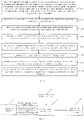
- FIG. 1 is a flowchart illustrating a method for generating a simulation scene according to a first embodiment of the disclosure.
- the execution subject of the method is the apparatus for generating a simulation scene, hereinafter referred to as a generating apparatus.
- the generating apparatus may be an electronic device, or may be arranged in an electronic device to realize automatic and efficient generation of the simulation scene of the intersections, which saves a lot of labor and saves time cost, and improves the coverage of the scene.
- the disclosure is described by taking that the generating apparatus is arranged in an electronic device as an example.
- the electronic device can be any stationary or mobile computing device capable of data processing, such as mobile computing devices, for example notebook computers, smart phones, and wearable devices, or stationary computing devices for example desktop computers, servers, or other types of computing devices, which are not limited in this disclosure.
- mobile computing devices for example notebook computers, smart phones, and wearable devices
- stationary computing devices for example desktop computers, servers, or other types of computing devices, which are not limited in this disclosure.
- the method for generating a simulation scene includes the following.
- traffic element information related to intersections contained in a map to be processed, first driving parameter information of a target vehicle, and second driving parameter information of an obstacle vehicle are obtained.
- the high-precision map can be used as the map to be processed, and the information of the high-precision map can be read in a manner of deserialization, to obtain the traffic element information related to the intersections contained in the map.
- the traffic element information related to the intersections may include various information related to the intersections, such as lane information of the lanes around the intersections, and state information of the traffic lights at the intersections.
- the lane information may include type information, such as T-shaped intersection type, crossroad intersection type or the like, information about the number of lanes around an intersection, such as two lanes, three lanes or the like, information about the allowed traveling directions of a lane around an intersection, such as straight lane, left-turn lane or the like, and any information of the lanes around the intersections.
- the state information of the traffic lights at the intersections may include for example the color of a traffic light corresponding to each traveling direction of an intersection.
- the traffic element information related to all intersections throughout the map to the processed can be obtained. Therefore, the traffic element information related to the intersections contained in the map to be processed obtained in block S101, refers to the traffic element information related to all intersections contained in the whole map to be processed.
- the traffic element information related to the intersections within a preset region of the map to be processed can be obtained. Therefore, the obtained traffic element information refers to the traffic element information related to intersections within a preset region. Which traffic element information is obtained can be determined as needed, and is not limited in the disclosure.
- the first driving parameter information of the target vehicle may be defined by the user as required.
- the second driving parameter information of the obstacle vehicle may be defined by the user as required, or may be acquired based on a real traffic flow, which is not limited in the disclosure.
- the traffic flow includes the flow of vehicles and the flow of pedestrians on the road.
- the first driving parameter information of the target vehicle can include any driving parameter information related to the target vehicle, such as first driving behavior information of the target vehicle, speed information of the target vehicle, start point position information of the first trajectory corresponding to the target vehicle, and end point position information of the first trajectory.
- the first driving behavior information of the target vehicle may include action information of the target vehicle, such as turning left, turning right, going straight ahead and making a U-turn.
- the start point position information of the first trajectory corresponding to the target vehicle can be used to determine the start point position of the first trajectory corresponding to the target vehicle.
- the start point position information may be a distance between the start point position of the first trajectory and a position of a stop line of the lane where the target vehicle is located, where the stop line is prior to the intersection to be passed when the target vehicle is traveling along the lane. Therefore, according to the position of the stop line and the distance, the start point position of the first trajectory can be determined.
- the end point position information of the first trajectory corresponding to the target vehicle may be used to determine the end point position of the first trajectory corresponding to the target vehicle.
- the end point position information may be a distance between the end point position of the first trajectory and a position of a pedestrian crosswalk of the lane where the target vehicle is located, where the pedestrian crosswalk is after the intersection to be passed when the target vehicle is traveling along the lane. Therefore, the end point position of the first trajectory can be determined according to the position of the pedestrian crosswalk and the distance.
- the second driving parameter information of the obstacle vehicle can include second driving behavior information of the obstacle vehicle, speed information of the obstacle vehicle, start point position information or a start point position of the second trajectory corresponding to the obstacle vehicle, end point position information of the second trajectory, a trigger condition or any other driving parameter information related to the obstacle vehicle.
- the second driving behavior information of the obstacle vehicle may include action information of the obstacle vehicle, such as turning left, turning right, going straight ahead and making a U-turn.
- the start point position information of the second trajectory corresponding to the obstacle vehicle can be used to determine the start point position of the second trajectory corresponding to the obstacle vehicle.
- the start point position information can be a distance between the start point position of the second trajectory and a position of a stop line of the lane where the obstacle vehicle is located, where the stop line is before the intersection to be passed when the target vehicle is traveling along the line. Therefore, according to the position of the stop line and the distance, the start point position of the second trajectory can be determined.
- the end point position information of the second trajectory corresponding to the obstacle vehicle can be used to determine an end point position of the second trajectory corresponding to the obstacle vehicle.
- the end point position information may be a distance between the end point position of the second trajectory and a position of a pedestrian crosswalk of the lane where the obstacle vehicle is located, where the pedestrian crosswalk is after the intersection to be passed when the obstacle vehicle is traveling along the lane.
- the trigger condition refers to a condition that triggers the obstacle vehicle to start moving.
- the trigger condition can be that the color of the traffic light corresponding to the allowed traveling direction of the lane where the obstacle vehicle is located is green, such that when the color of the traffic light corresponding to the allowed traveling direction of the lane where the obstacle vehicle is located is green, the obstacle car starts to move.
- the first trajectory corresponding to the target vehicle is generated based on the first driving parameter information and the traffic element information.
- the first trajectory corresponding to the target vehicle is generated according to the first driving parameter information and the traffic element information of the target vehicle.
- the traffic element information refers to the traffic element information related to all intersections contained in the whole map
- the first trajectory corresponding to the target vehicle throughout the map is generated.
- the traffic element information refers to the traffic element information related to a preset region of the map
- the first trajectory corresponding to the target vehicle within the preset region is generated.
- a second trajectory corresponding to the obstacle vehicle is generated based on the second driving parameter information and the traffic element information.
- the second trajectory corresponding to the target vehicle throughout the map is generated.
- the second trajectory corresponding to the target vehicle within the preset region is generated
- the number of obstacle vehicles may be set as required, which is not limited in the disclosure.
- the second trajectory corresponding to the obstacle vehicle may be generated based on the second driving parameter information of the obstacle vehicle and the traffic element information.
- the second trajectories corresponding to these obstacle vehicles may be generated respectively based on the second driving parameter information of respective obstacle vehicles.
- the blocks 102 and 103 may be performed simultaneously, or the block 102 may be performed before the block 103, or the block 103 may be performed before the block 102.
- the execution order of blocks 102 and 103 is not limited in the disclosure.
- a simulation scene is generated based on the first trajectory, the second trajectory, the first driving parameter information, the second driving parameter information, and the traffic element information.
- a scene file format of the simulation scene of the intersections can be determined, and scene information of the simulation scene of the intersections is obtained based on the first trajectory, the second trajectory, the first driving parameter information such as the speed of the target vehicle, the second driving parameter information such as the trigger condition and the speed of the obstacle vehicle, and the traffic element information.
- the simulation scene having the scene file format is generated automatically.
- the traffic element information related to the intersections contained in the map to be processed, the first driving parameter information of the target vehicle, and the second driving parameter information of the obstacle vehicle are obtained.
- the first trajectory corresponding to the target vehicle is generated based on the first driving parameter information and the traffic element information.
- the second trajectory corresponding to the obstacle vehicle is generated based on the second driving parameter information and the traffic element information.
- the simulation scene is generated based on the first trajectory, the second trajectory, the first driving parameter information, the second driving parameter information, and the traffic element information.
- the simulation scene of the intersections can be generated automatically and efficiently according to the traffic element information related to the intersections contained in the map to be processed, the first driving parameter information of the target vehicle and the second driving parameter information of the obstacle vehicle, which saves a lot of labor and saves time cost, and improves the coverage of the scene.
- the first trajectory corresponding to the target vehicle is generated based on the first driving parameter information of the target vehicle and the traffic element information related to the intersections contained in the map to be processed
- the second trajectory corresponding to the obstacle vehicle is generated based on the second driving parameter information of the obstacle vehicle and the traffic element information.
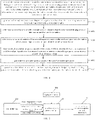
- FIG. 2 is a schematic flowchart illustrating a method for generating a simulation scene according to a second embodiment of the disclosure. As illustrated in FIG. 2 , the method for generating a simulation scene may include the following.
- traffic element information related to intersections contained in a map to be processed, first driving parameter information of a target vehicle, and second driving parameter information of an obstacle vehicle are obtained.
- the first driving parameter information includes first driving behavior information of the target vehicle, start point position information and end point position information of a first trajectory.
- the traffic element information includes lane information of lanes around the intersections.
- the first driving parameter information of the target vehicle and the second driving parameter information of the obstacle vehicle may be defined by the user as required.
- a first lane where the target vehicle is located is determined based on the first driving behavior information and the lane information.
- the first lane in which the target vehicle is located is determined by matching the first driving behavior information of the target vehicle with the lane information.
- the generating apparatus can obtain a lane that allows the vehicle to turn left from the map to be processed by matching the turning left action of the target vehicle with the lane information, and determine the lane as the first lane where the target vehicle is located.
- a start point position of the first trajectory is determined based on the start point position information of the first trajectory and the lane information of the first lane.
- the start point position information of the first trajectory may be a distance between the start point position and a first preset position on the first lane where the target vehicle is located.
- the start point position information of the first trajectory may be a distance between the start point position and a position of a stop line of the first lane where the target vehicle is located, where the target vehicle passes the stop line before the intersection when the target vehicle is traveling along the lane.
- the generating apparatus can obtain the lane information of the first lane based on the traffic element information related to the intersections in the map, and determine the position of the stop line on the first lane based on the lane information of the first lane.
- the start point position of the first trajectory is determined according to the position of the stop line on the first lane and the distance between the start point position of the first trajectory and the position of the stop line of the first lane.
- an end point position of the first trajectory is determined based on the end point position information of the first trajectory and the lane information of the first lane.
- the end point position information of the first trajectory may be a distance between the end point position and a second preset position of the first lane where the target vehicle is located.
- the end point position information of the first trajectory may be the distance between the end point position and a position of a pedestrian crosswalk of the first lane where the target vehicle is located, where the target vehicle passes the pedestrian crosswalk after the intersection when the target vehicle along the first lane.
- the generating apparatus can obtain the lane information of the first lane according to the traffic element information related to the intersections in the map, and determine the position of the pedestrian crosswalk on the first lane according to the lane information of the first lane.
- the end point position of the first trajectory is determined according to the position of the pedestrian crosswalk on the first lane and the distance between the end position of the first trajectory and the position of the pedestrian crosswalk on the first lane where the target vehicle is located.
- a set of first target points between the start point position and the end point position of the first trajectory is obtained.
- Each first target point is a point on a central line of the first lane.
- the first trajectory is generated based on the set of first target points.
- the set of first target points between the start point position and the end point position of the first trajectory can be obtained, where each first target point is a point on the central line of the first lane. Further, the first trajectory is generated based on the set of first target points.
- the first trajectory corresponding to the target vehicle is automatically generated.
- This method for generating the first trajectory corresponding to the target vehicle does not need manual analysis of the details of the intersections one by one, but needs a small amount of semantic-level definition parameters of the target vehicle provided by the user, such that the trajectories of the target vehicle at the intersections that meet the user's intentions can be quickly generated in batches in a short period of time, which improves the efficiency of scene generation and saves labor costs.
- a second trajectory corresponding to the obstacle vehicle is generated based on the second driving parameter information and the traffic element information.
- the second driving parameter information of the obstacle vehicle may be defined by the user as required.
- the second driving parameter information may include the second driving behavior information of the obstacle vehicle, the start point position information and the end point position information of the second trajectory.
- the second trajectory corresponding to the obstacle vehicle can be generated in the following manner.
- a second lane where the obstacle vehicle is located is determined based on the second driving behavior information and the lane information.
- a start point position of the second trajectory is determined based on the start point position information of the second trajectory and the lane information of the second lane.
- An end point position of the second trajectory is determined based on the end point position information of the second trajectory and the lane information of the second lane.
- a set of second target points between the start point position and the end point position of the second trajectory is obtained, where each second target point is a point on a central line of the second lane.
- the second trajectory is generated based on the set of second target points.
- the start point position information of the second trajectory may be the distance between the start point position and a third preset position of the second lane where the obstacle vehicle is located.
- the start point position information of the second trajectory may be a distance between the start point position and a position of a stop line of the second lane where the obstacle vehicle is located, where the obstacle target passes the stop line before the intersection when the obstacle vehicle is traveling along the lane where the obstacle vehicle is located.
- the end position information of the second trajectory may be a distance between the end point position and a fourth preset position of the second lane where the obstacle vehicle is located.
- the end position information of the second trajectory may be the distance between the end point position and the position of a pedestrian crosswalk on the second lane where the obstacle vehicle is located, where the obstacle vehicle passes the pedestrian crosswalk is after the intersection when the obstacle vehicle is traveling along the second lane.
- the start point position information of the second trajectory is the distance between the start point position and the position of the stop line of the second lane where the obstacle vehicle is located
- the end point position information of the second trajectory is the distance between the end position and the position of the pedestrian crosswalk on the second lane where the obstacle vehicle is located
- the generating apparatus obtains the lane information of the second lane according to the traffic element information related to the intersections in the map, determines the position of the stop line and the position of the pedestrian crosswalk on the second lane according to the lane information of the second lane, determines the start point position according to the position of the stop line on the second lane and the distance between the start point position of the second trajectory and the position of the stop line of the second lane, and determine the end point position of the second trajectory according to the position of the pedestrian crosswalk on the second lane and the distance between the end point position
- the set of second target points between the start point position and the end point position of the second trajectory is obtained, where each second target point is a point on the central line of the second lane.
- the second trajectory is generated based on the set of second target points.
- the second trajectory corresponding to the obstacle vehicle is automatically generated.
- This method for generating the second trajectory corresponding to the obstacle vehicle does not need manual analysis of the details of the intersections one by one, but needs a small amount of semantic-level definition parameters of the obstacle vehicle provided by the user.
- the trajectories of the obstacle vehicle at the intersections that meet the user's intention can be quickly generated in batches in a short time, which improves the efficiency of scene generation and saves labor costs.
- a simulation scene is generated based on the first trajectory, the second trajectory, the first driving parameter information, the second driving parameter information, and the traffic element information.
- one lane allows multiple traveling directions. For example, one lane allows both a direction of turning left and a direction of going straight ahead.
- the second lane where the obstacle vehicle is located allows multiple traveling directions, for each traveling direction, a respective second trajectory corresponding to the corresponding traveling direction may be generated.
- the start point position of the second trajectory can be determined according to the start point position information of the second trajectory and the lane information of the second lane; and the end point position of the second trajectory corresponding to each traveling direction is determined respectively according to the end point position information of the second trajectory and the lane information of the second lane.
- the set of second target points between the start point position of the second trajectory and the end point position of the second trajectory corresponding to the traveling direction is obtained.
- the second target point is a point on the central line of the second lane corresponding to the traveling direction
- the second trajectory corresponding to the traveling direction is generated according to the set of second target points between the start point position of the second trajectory and the end point position of the second trajectory corresponding to the traveling direction.
- the start point position information of the second trajectory is the distance a between the start point position and the position of the stop line of the second lane where the obstacle vehicle is located.
- the stop line is the one passed by the obstacle vehicle before the intersection when the obstacle vehicle is traveling along its lane.
- the end point position information of the second trajectory is a distance b between the end point position and the position of the pedestrian crosswalk of the second lane where the obstacle vehicle is located, where the pedestrian crosswalk is the one passed by the obstacle vehicle after the intersection when the obstacle vehicle is traveling along the second lane.
- the second lane where the obstacle vehicle is located is determined according to the second driving behavior information and the lane information, it is determined that the second lane is allowed both the direction of turning left and the direction of going straight ahead.
- the start point position A of the second trajectory is determined.
- the end point position B1 of the second trajectory corresponding to the direction of turning left is determined.
- an end point position B2 of the second trajectory corresponding to the direction of going straight ahead is determined.
- the set of the second target points between the start point position A of the second trajectory and the end point position B1 of the second trajectory corresponding to the direction of turning left is obtained.
- Each second target point is a point on the central line of the second lane corresponding to the direction of turning left.
- the second trajectory in the direction of turning left is generated according to the set of second target points between the start point position A of the second trajectory and the end point position B1 of the second trajectory corresponding to the direction of turning left.
- the set of second target points between the start point position A of the second trajectory and the end point position B2 of the second trajectory corresponding to the direction of going straight ahead is obtained.
- Each second target point is a point on the central line of the second lane corresponding to the direction of going straight ahead.
- the second trajectory corresponding to the direction of going straight ahead is generated according to the set of second target points between the start point position A of the second trajectory and the end point position B2 of the second trajectory corresponding to the direction of going straight ahead.
- the simulation scene corresponding to each traveling direction is generated based on the first trajectory corresponding to the target vehicle, the second trajectory corresponding to each traveling direction, the first driving parameter information, the second driving parameter information and the traffic element information.
- the second lane where the obstacle vehicle is located allows both the direction of turning left and the direction of going straight ahead, and the second trajectory corresponding to the direction of turning left and the second trajectory corresponding to the direction of going straight ahead are generated.
- the simulation scene corresponding to the direction of turning left of the obstacle vehicle is generated according to the first trajectory corresponding to the target vehicle, the second trajectory corresponding to the obstacle vehicle in the direction of turning left, the first driving parameter information, the second driving parameter information and the traffic element information.
- the simulation scene corresponding to the direction of going straight ahead of the obstacle vehicle is generated according to the first trajectory corresponding to the target vehicle, the second trajectory corresponding to the obstacle vehicle in the direction of going straight ahead, the first driving parameter information, the second driving parameter information and the traffic element information.
- the second trajectory corresponding to the traveling direction is generated.
- the first driving parameter information, the second driving parameter information and the traffic element information a respective simulation scene corresponding to each traveling direction is generated, which improves the coverage of the simulation scene of the intersections.
- the traffic element information may include initial state information of the traffic light.
- the user may define the simulation state of the traffic light as required, such that the simulation scene is generated according to the user-defined simulation state of the traffic light.
- the user can define traveling parameter information, such as the speed of pedestrians or the trigger condition, as required, such that the simulation scene is generated according to the user-defined pedestrian traveling parameter information of pedestrians.
- the block 208 can be implemented in the following manner.
- the traveling parameter information of the pedestrians and the control information of the traffic light are obtained.
- the initial state information is adjusted to obtain the simulation state information of the traffic light.
- the simulation scene is generated according to the first trajectory, the second trajectory, the first driving parameter information, the second driving parameter information, the traveling parameter information of the pedestrians, and the simulation state information.
- the fourth configuration information is information about elements such as pedestrians and traffic lights that are configured by the user as required.
- the pedestrian refers to walkers and riders.
- the traveling parameter information of the pedestrians may include the speed of the pedestrians and the trigger condition of the pedestrians.
- the trigger condition of the pedestrians refers to a condition that triggers the pedestrians to start moving.
- the trigger condition can be that the color of the traffic light corresponding to the allowed traveling direction of the lane where one or more pedestrians are located is green. Therefore, when the color of the traffic light corresponding to the allowed traveling direction of the lane where one or more pedestrians are located is green, the one or more pedestrians begin to move.
- the control information of the traffic light may include such as the direction indicated by the traffic light, the color of the traffic light, and the duration of a traffic signal output by the traffic light.
- the initial state information of the traffic light can be adjusted according to the control information, to obtain the simulation state information of the traffic light.
- the simulation scene is generated according to the first trajectory, the second trajectory, the first driving parameter information, the second driving parameter information, the traveling parameter information of the pedestrians and the simulation state information.
- the traveling parameter information of the pedestrians and the control information of the traffic light are obtained according to the fourth configuration information from the user.
- the initial state information is adjusted according to the control information, to obtain the simulation state information of the traffic light.
- the simulation scene is generated according to the first trajectory, the second trajectory, the first driving parameter information, the second driving parameter information, the traveling parameter information of the pedestrians and the simulation state information, realizing the generation of more complex simulation scene of the intersections according to the state of the traffic light and the traveling parameters of the pedestrians, which improves the coverage of the simulation scene of the intersection.
- the generating apparatus may obtain, from a user definition interface 301, the user-defined first driving parameter information of the target vehicle (not illustrated in FIG. 3 ), the second driving parameter information of the obstacle vehicle, the traveling parameter information of the pedestrians such as riders and walkers, the control information of the traffic light, and obtain the traffic element information related to the intersections contained in a high-precision map 302.
- the first trajectory corresponding to the target vehicle and the second trajectory corresponding to the obstacle vehicle are generated according to the first driving parameter information of the target vehicle, the second driving parameter information of the obstacle vehicle, and the traffic element information related to the intersections, based on a traffic flow trajectory generation logic provided in the disclosure.
- the user-defined intersection simulation scene 304 is generated according to the first driving parameter information, the second driving parameter information, the first trajectory, the second trajectory, the pedestrian traveling parameter information of pedestrians such as riders and walkers, and the control information of the traffic light.
- the traffic element information related to the intersections in the map to be processed, the first driving parameter information of the target vehicle and the second driving parameter information of the obstacle vehicle are obtained.
- the first driving parameter information includes first driving behavior information of the target vehicle, the start point position information and the end point position information of the first trajectory.
- the traffic element information includes lane information of lanes around the intersections.
- the first lane where the target vehicle is located is determined based on the first driving behavior information and the lane information.
- the start point position of the first trajectory is determined based on the start point position information of the first trajectory and the lane information of the first lane.
- the end point position of the first trajectory is determined based on the end point position information of the first trajectory and the lane information of the first lane.
- the set of first target points between the start point position and the end point position of the first trajectory is obtained, and each first target point is a point on the central line of the first lane.
- the first trajectory is generated based on the set of first target points.
- the second trajectory corresponding to the obstacle vehicle is generated based on the second driving parameter information and the traffic element information.
- the simulation scene is generated according to the first trajectory, the second trajectory, the first driving parameter information, the second driving parameter information and the traffic element information.
- the automatic and efficient generation of the simulation scene of the intersections based on the user-defined first driving parameter information of the target vehicle and the user-defined second driving parameter information of the obstacle vehicle is realized, which saves a lot of labor and saves time cost, and improves the coverage of the scene.
- the second trajectory corresponding to the obstacle vehicle can be generated according to the second driving parameter information of the obstacle vehicle that is defined by the user.
- the second trajectory corresponding to the obstacle vehicle can be generated based on the real traffic flow. The process of generating the second trajectory corresponding to the obstacle vehicle in the method for generating a simulation scene of the disclosure will be further described below with reference to FIG. 4 .
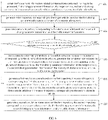
- FIG. 4 is a flowchart illustrating a method for generating a simulation scene according to a third embodiment of the disclosure. As illustrated in FIG. 4 , the method for generating a simulation scene may include the following.
- traffic element information related to intersections contained in a map to be processed, first driving parameter information of a target vehicle, and second driving parameter information of an obstacle vehicle are obtained.
- the second driving parameter information includes second driving behavior information of the obstacle vehicle, start point position information and end point position information of the second trajectory.
- the traffic element information includes lane information of lanes around the intersections.
- a first trajectory corresponding to the target vehicle is generated based on the first driving parameter information and the traffic element information.
- the first driving parameter information of the target vehicle may be defined by the user as required, and the second driving parameter information of the obstacle vehicle may be obtained based on the real traffic flow.
- the first driving parameter information includes first driving behavior information of the target vehicle, the start point position information and the end point position information of the first trajectory.
- the method for generating the first trajectory corresponding to the target vehicle according to the first driving parameter information of the target vehicle and the traffic element information may refer to the above-mentioned embodiments, which will not be repeated here.
- the second driving parameter information of the obstacle vehicle can be obtained based on the real traffic flow by the following method.
- a target scene complexity degree and the end point position information of the second trajectory are determined.
- a target scene state information corresponding to the target scene complexity degree is determined.
- the initial position and the speed of the obstacle vehicle are obtained from the target scene state information.
- the second driving behavior information of the obstacle vehicle is determined according to the initial position, the speed of the obstacle vehicle and the lane information.
- the initial position of the obstacle vehicle is determined as the start point position of the second traj ectory.
- the third configuration information is about the scene complexity degree and the end point position of the second trajectory configured by the user as required. It is to be noted that the end point position information of the second trajectory may be configured by a user or can be a default value generated by the generating apparatus, which is not limited in the disclosure.
- the scene complexity degree is configured to characterize the complexity degree of the traffic flow at the intersections in the scene.
- the complexity degree is related to the type of traffic participants, the number of the traffic participants and an average speed of the traffic participants.
- the scene state information includes the number, the speeds, and the positions of various types of traffic participants in the scene.
- the scene state information is to describe the number, the speeds, and the positions of various types of traffic participants shown in the scene.
- the initial position and the speed of the obstacle vehicle obtained from the scene state information are determined as the initial state of the obstacle vehicle, and the obstacle vehicle is controlled to continue driving based on the initial state in the simulation scene.
- the correspondence between the scene complexity degrees and the scene state information can be preset, such that after the target scene complexity degree is determined according to the third configuration information from the user, the target scene state information corresponding to the target scene complexity degree can be determined according to the correspondence between the scene complexity degrees and the scene state information.
- the initial position and the speed of the obstacle vehicle can be obtained from the target scene state information.
- the correspondence between the scene complexity degrees and the scene state information may be represented by a complexity degree function shown in the following formula (1).
- the weighted values can be set as required. For example,
- the type of traffic participants, the number of traffic participants, and the average speed of traffic participants that match the target scene complexity degree can be determined based on the complexity degree function shown in formula (1), and the target scene state information corresponding to the target scene complexity degree is obtained.
- the initial position and the speed of the obstacle vehicle are obtained from the target scene state information.
- the initial position of the obstacle vehicle may include, for example, a position coordinate of the obstacle vehicle and an identifier of the lane where the obstacle vehicle is located in the real traffic flow.
- the intention of the obstacle vehicle can be determined according to the initial position of the obstacle vehicle, the speed of the obstacle vehicle, and the lane information of lanes around the intersections, to determine the second driving behavior information of the obstacle vehicle.
- the initial position of the obstacle vehicle is determined as the start point position of the second trajectory.
- each lane in the map is provided with a corresponding identifier.
- the identifier of the lane where the obstacle vehicle is located obtained from the target scene state information is C
- the initial position coordinate obtained from the target scene state information is (x, y)
- the speed obtained from the target scene state information is not 0.
- the second driving behavior information of the obstacle vehicle includes the turning left action of the obstacle vehicle
- the coordinate (x, y) is the start point position of the obstacle vehicle.
- a second lane where the obstacle vehicle is located is determined based on the second driving behavior information and the lane information.
- the second driving behavior information of the obstacle vehicle may be matched with the lane information, to determine the second lane in which the obstacle vehicle is located.
- an end point position of the second trajectory is determined based on the end point position information of the second trajectory and the lane information of the second lane.
- the end point position information of the second trajectory may be the distance between the end point position and the fourth preset position of the second lane where the obstacle vehicle is located.
- the end point position information of the second trajectory may be the distance between the end point position and the position of the pedestrian crosswalk of the second lane where the obstacle vehicle is located, where the pedestrian crosswalk is to be passed by the obstacle vehicle after the intersection when the obstacle vehicle is traveling along the second lane.
- the generating apparatus determines the second lane where the obstacle vehicle is located, obtains the lane information of the second lane according to the traffic element information related to the intersections in the map, determines the position of the pedestrian crosswalk of the second lane according to the lane information of the second lane, and determines the end point position of the second trajectory based on the position of the pedestrian crosswalk of the second lane and the distance between the end point position of the second trajectory and the position of the pedestrian crosswalk of the second lane where the obstacle vehicle is located.
- a set of second target points between the start point position and the end point position of the second trajectory is obtained, where each second target point is a point on the central line of the second lane.
- the second trajectory is generated based on the set of second target points.
- the set of second target points between the start point position and the end point position of the second trajectory is obtained, where each second target point is a point on a central line of the second lane.
- the second trajectory is generated based on the set of second target points.
- the second trajectory corresponding to the obstacle vehicle can be automatically generated according to the second driving behavior information, the start point position and the end point position information of the second trajectory, and the lane information of lanes around the intersections in the map to be processed.
- the method for generating the second trajectory corresponding to the obstacle vehicle does not need to manually analyze the details of the intersections one by one.
- the trajectories of the obstacle vehicle at intersections that meet the user's intentions can be quickly generated in batches in a short period of time, which improves the efficiency of scene generation and saves the labor costs.
- the second trajectory corresponding to the obstacle vehicle can be generated according to the second driving parameter information defined by the user as required, or the second trajectory corresponding to the obstacle vehicle can be obtained based on the real traffic flow.
- the user definitions more attention is paid to the action type of the obstacle vehicle, and an infinite number of second trajectories corresponding to the obstacle vehicle can be generated theoretically, which is suitable for the iteration and verification stage of the automatic driving algorithm.
- Based on the real traffic flow more attention is paid on the density and complexity degree of the traffic flow at the intersections, which is suitable for the launching stage of the automatic driving product.
- the method for generating the second trajectory corresponding to the obstacle vehicle can be flexibly selected according to the stage of the automatic driving product.
- the simulation scene is generated based on the first trajectory, the second trajectory, the first driving parameter information, the second driving parameter information, and the traffic element information.
- one lane allows multiple traveling directions. For example, one lane allows both the direction of turning left and the direction of going straight ahead.
- a second trajectory corresponding to the traveling direction may be generated.
- the start point position of the second trajectory can be determined according to the start point position information of the second trajectory and the lane information of the second lane
- the end point position of the second trajectory corresponding to each traveling direction can be determined according to the end point position information of the second trajectory and the lane information of the second lane.
- a set of second target points between the start point position of the second trajectory and the end point position of the second trajectory corresponding to the traveling direction is obtained.
- Each second target point is a point on the central line of the second lane.
- the second trajectory corresponding to the traveling direction is generated according to the set of second target points between the start point position of the second trajectory and the end point position of the second trajectory corresponding to the traveling direction. Further, after the second trajectories corresponding to the plurality of traveling directions are respectively generated for different traveling directions allowed by the second lane, the simulation scene corresponding to each traveling direction can be generated based on the first trajectory corresponding to the target vehicle, the second trajectory corresponding to each traveling direction, the first driving parameter information, the second driving parameter information and the traffic element information.
- one or more third trajectories intersected with the first trajectory can be obtained from at least one second trajectory, and one or more simulation scenes are generated according to the first trajectory corresponding to the target vehicle, the one or more third trajectories intersected with the first trajectory, the first driving parameter information, the second driving parameter information, and the traffic element information.
- the target vehicle corresponds to one first trajectory
- the one or more simulation scenes corresponding to the first trajectory can be generated according to the first trajectory corresponding to the target vehicle, the one or more third trajectories intersected with the first trajectory, the first driving parameter information, the second driving parameter information and the traffic element information.
- the target vehicle corresponds to two or more first trajectories
- one or more simulation scenes corresponding to the first trajectory is generated according to the first trajectory, the one or more third trajectories intersected with the first trajectory, the first driving parameter information, the second driving parameter information and the traffic element information.
- a trajectory D and a trajectory E correspond to the target vehicle m
- trajectories F, G, H, and I correspond to the obstacle vehicle n1
- trajectories J and K correspond to the obstacle vehicle n2.
- the trajectories F and G corresponding to the obstacle vehicle n1 are intersected with the trajectory D corresponding to the target vehicle m, the trajectory H corresponding to the obstacle vehicle n1 is intersected with the trajectory E corresponding to the target vehicle n, the trajectory I corresponding to the obstacle vehicle n1 is not intersected with the trajectory D or the trajectory E corresponding to the target vehicle m, the trajectory J corresponding to the obstacle vehicle n2 is intersected with the trajectory D corresponding to the target vehicle m, and the trajectory K corresponding to the obstacle vehicle n2 is not intersected with the trajectory D or the trajectory E corresponding to the target vehicle m.
- a simulation scene 1 corresponding to the trajectory D is generated based on the trajectory D corresponding to the target vehicle m and the corresponding first driving parameter information, the trajectory F corresponding to the obstacle vehicle n1 and the corresponding second driving parameter information, the trajectory J corresponding to the obstacle vehicle n2 and the corresponding second driving parameter information and the traffic element information.
- a simulation scene 2 corresponding to the trajectory D is generated based on the trajectory D corresponding to the target vehicle m and the corresponding first driving parameter information, the trajectory G corresponding to the obstacle vehicle n1 and the corresponding second driving parameter information, the trajectory J corresponding to the obstacle vehicle n2 and the corresponding second driving parameter information, and the traffic element information.
- a simulation scene 3 corresponding to the trajectory E is generated based on the trajectory E corresponding to the target vehicle m and the corresponding first driving parameter information, the trajectory H corresponding to the obstacle vehicle n1 and the corresponding second driving parameter information, and the traffic element information.
- the generating apparatus may obtain from the user definition interface, the user-defined first driving parameter information (not illustrated in FIG. 5 ) of the target vehicle.
- the generating apparatus may obtain the second driving parameter information of the obstacle vehicle, the driving parameter information of the pedestrians such as riders and walkers, and the control information of the traffic light according to the real traffic flow 501, and obtain the traffic element information related to the intersections in a high-precision map 502.
- the first driving parameter information of the target vehicle, the second driving parameter information of the obstacle vehicle, and the traffic element information related to the intersections and based on the traffic flow trajectory generation logic in the disclosure, the first trajectory corresponding to the target vehicle and the second trajectory corresponding to the obstacle vehicle are generated.
- a virtuality-reality-combined intersection simulation scene 504 is generated according to the first driving parameter information, the second driving parameter information, the first trajectory, the second trajectory, the driving parameter information of the pedestrians such as riders and walkers, and the control information of the traffic light.
- the traffic element information related to the intersections contained in the map to be processed, the first driving parameter information of the target vehicle, and the second driving parameter information of the obstacle vehicle are obtained.
- the second driving parameter information includes the second driving behavior information of the obstacle vehicle, the start point position and the end point position information of the second trajectory.
- the traffic element information includes lane information of lanes around the intersections.
- the first trajectory corresponding to the target vehicle is generated according to the first driving parameter information and the traffic element information.
- the second lane where the obstacle vehicle is located is determined according to the second driving behavior information and the lane information.
- the end point position of the second trajectory is determined according to the end point position information of the second trajectory and the lane information of the second lane.
- the set of second target points between the start point position of the second trajectory and the end point position of the second trajectory is obtained.
- Each second target point is a point on the central line of the second lane.
- a second trajectory is generated according to the set of second target points.
- a simulation scene is generated according to the first trajectory, the second trajectory, the first driving parameter information, the second driving parameter information, and the traffic element information. Therefore, according to the traffic element information related to the intersections in the map to be processed, the first driving parameter information of the target vehicle defined by the user, and the second driving parameter information of the obstacle vehicle obtained based on the real traffic flow, the simulation scene of the intersections is generated automatically, conveniently and efficiently, which saves labor costs and saves time costs, and improves coverage of the scene.
- the simulation scene can be generated according to the first trajectory corresponding to the target vehicle, the second trajectory corresponding to the obstacle vehicle, the first driving parameter information, the second driving parameter information and the traffic element information.
- the second trajectories corresponding to the multiple obstacle vehicles may conflict with each other.
- the method for generating a simulation scene according to the disclosure will be further described below with reference to FIG. 6 .
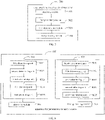
- FIG. 6 is a schematic flowchart illustrating a method for generating a simulation scene according to a fourth embodiment of the disclosure. As illustrated in FIG. 6 , the generation method for generating a simulation scene may include the following.
- traffic element information related to intersections contained in a map to be processed, first driving parameter information of a target vehicle, and second driving parameter information of an obstacle vehicle are obtained. There may be multiple obstacle vehicles.
- a first trajectory corresponding to the target vehicle is generated based on the first driving parameter information and the traffic element information.
- the second trajectories corresponding to the plurality of obstacle vehicles are generated.
- the second trajectory corresponding to the obstacle vehicle may be generated according to the second driving parameter information of the obstacle vehicle and traffic element information.
- the second trajectory corresponding to the obstacle vehicle For a specific manner of generating the second trajectory corresponding to the obstacle vehicle, reference may be made to the description of the above-mentioned embodiments, which will not be repeated here.
- block 604 it is determined whether there is a conflict among the second trajectories corresponding to the plurality of obstacle vehicles. In response to determining that there is no conflict among the second trajectories corresponding to the plurality of obstacle vehicles, the block 605 is executed. In response to determining that there is a conflict between the second trajectory corresponding to a first obstacle vehicle and a second trajectory corresponding to the second obstacle vehicle, the block 606 is executed.
- the preset threshold is 0.5s
- the obstacle vehicle n1 turns left at the speed of v 1
- the obstacle vehicle n2 goes straight ahead at the speed of v 2
- the second trajectory corresponding to the obstacle vehicle n1 and the second trajectory corresponding to the obstacle vehicle n2 both pass a point o
- a following expression is satisfied: MO ⁇ 1 ⁇ NO ⁇ 2 ⁇ 0.5 s , where, M is the initial point position of the second trajectory corresponding to the obstacle vehicle n1 , and N is the initial point position of the second trajectory corresponding to the obstacle vehicle n2.
- the time difference between the time when the obstacle vehicle n1 and the obstacle vehicle n2 pass the intersection point is less than or equal to the preset threshold 0.5s, it can be determined that there is no conflict between the second trajectory corresponding to the obstacle vehicle n1 and the second trajectory corresponding to the obstacle vehicle n2.
- the simulation scene is generated according to the first trajectory corresponding to the target vehicle, the second trajectories respectively corresponding to the plurality of obstacle vehicles, the first driving parameter information of the target vehicle, the second driving parameter information of the plurality of obstacle vehicles and the traffic element information.
- the simulation scene is generated based on the first trajectory corresponding to the target vehicle, the second trajectories corresponding to the plurality of obstacle vehicles, and the first driving parameter information of the target vehicle, the second driving parameter information of the obstacle vehicles, and the traffic element information.
- one or more third trajectories intersected with the first trajectory can be obtained from the second trajectories corresponding to the plurality of obstacle vehicles. Therefore, the one or more simulation scenes are generated according to the first trajectory corresponding to the target vehicle, the one or more third trajectories intersected with the first trajectory and corresponding to the plurality of obstacle vehicles, the first driving parameter, the second driving parameter information of the plurality of obstacle vehicles and the traffic element information.
- a first simulation scene is generated based on the first trajectory, the second trajectory corresponding to a first obstacle vehicle, the first driving parameter information, the second driving parameter information, and the traffic element information.
- a second simulation scene is generated based on the first trajectory, the second trajectory corresponding to a second obstacle vehicle, the first driving parameter information, the second driving parameter information, and the traffic element information.
- a first simulation scene and a second simulation scene are generated respectively based on the second trajectory corresponding to the first obstacle vehicle and the second trajectory corresponding to the second obstacle vehicle.
- a third trajectory intersected with the first trajectory are obtained from at least one second trajectory corresponding to the first obstacle vehicle.
- the first simulation scene is generated based on the first trajectory corresponding to the target vehicle, the third trajectory intersected with the first trajectory corresponding to the first obstacle vehicle, the first driving parameter, the second driving parameter information of the first obstacle vehicle and the traffic element information.
- a third trajectory intersected with the first trajectory is obtained from the at least one second trajectory corresponding to the second obstacle vehicle.
- the second simulation scene is generated according to the first trajectory corresponding to the target vehicle, the third trajectory intersected with the first trajectory corresponding to the second obstacle vehicle, the first driving parameter, the second driving parameter information of the second obstacle vehicle, and the traffic element information.
- the target vehicle m corresponds to the trajectory D
- the obstacle vehicle n1 corresponds to the trajectories E and F
- the obstacle vehicle n2 corresponds to the trajectory G
- the obstacle vehicle n3 corresponds to the trajectory H.
- the trajectory D is intersected with the trajectory E corresponding to the obstacle vehicle n1 , the trajectory G corresponding to the obstacle vehicle n2 and the trajectory H corresponding to the obstacle vehicle n3.
- the trajectory E corresponding to the obstacle vehicle n1 and the trajectory G corresponding to the obstacle vehicle n2 There is a conflict between the trajectory E corresponding to the obstacle vehicle n1 and the trajectory G corresponding to the obstacle vehicle n2, and there is a conflict between the trajectory F corresponding to the obstacle vehicle n1 and the trajectory G corresponding to the obstacle vehicle n2.
- a simulation scene 4 is generated according to the trajectory D corresponding to the target vehicle m and the corresponding first driving parameter information, the trajectory E corresponding to the obstacle vehicle n1 and the corresponding second driving parameter information, the trajectory H corresponding to the obstacle vehicle n3 and the corresponding second driving parameter information, and the traffic element information.
- a simulation scene 5 is generated according to the trajectory D corresponding to the target vehicle m and the corresponding first driving parameter information, the corresponding trajectory G of the obstacle vehicle n2 and the corresponding second driving parameter information, the corresponding trajectory H of the obstacle vehicle n3 and the corresponding second driving parameter information, and the traffic element information.
- the first simulation scene and the second simulation scene are generated respectively based on the second trajectory corresponding to the first obstacle vehicle and the second trajectory corresponding to the second obstacle vehicle, such that the situation where multiple obstacles collide in the generated simulation scene is avoided.
- the traffic element information related to the intersections contained in the map to be processed, the first driving parameter information of the target vehicle, and the second driving parameter information of the obstacle vehicle are obtained.
- the first trajectory corresponding to the target vehicle is generated based on the first driving parameter information and the traffic element information.
- the second trajectory corresponding to the obstacle vehicle is generated based on the second driving parameter information and the traffic element information. It is determined whether there is a conflict between the second trajectories corresponding to the plurality of obstacle vehicles.
- the simulation scene is generated based on the first trajectory corresponding to the target vehicle, the second trajectories corresponding to the plurality of obstacle vehicles, the first driving parameter information corresponding to the target vehicle, the second driving parameter information corresponding to the plurality of obstacle vehicles, and the traffic element information.
- the first simulation scene is generated based on the first trajectory, the second trajectory corresponding to the first obstacle vehicle, the first driving parameter information, the second driving parameter information, and the traffic element information
- a second simulation scene is generated based on the first trajectory, the second trajectory corresponding to the second obstacle vehicle, the first driving parameter information, the second driving parameter information, and the traffic element information.
- the simulation scene of the intersections can be generated automatically, conveniently and efficiently according to the traffic element information related to the intersections contained in the map to be processed, the first driving parameter information of the target vehicle and the second driving parameter information of the obstacle vehicle, which saves a lot of labor and saves time cost, and improves the coverage of the scene.
- FIG. 7 is a schematic diagram illustrating an apparatus for generating a simulation scene according to a fifth embodiment of the disclosure.
- the apparatus 700 for generating a simulation scene of the disclosure includes: an obtaining module 701, a first generating module 702, a second generating module 703, and a third generating module 704.
- the obtaining module 701 is configured to obtain traffic element information related to intersections contained in a map to be processed, first driving parameter information of a target vehicle, and second driving parameter information of an obstacle vehicle.
- the first generating module 702 is configured to generate a first trajectory corresponding to the target vehicle based on the first driving parameter information and the traffic element information.
- the second generating module 703 is configured to generate a second trajectory corresponding to the obstacle vehicle based on the second driving parameter information and the traffic element information.
- the third generating module 704 is configured to generate a simulation scene based on the first trajectory, the second trajectory, the first driving parameter information, the second driving parameter information, and the traffic element information.
- the apparatus for generating a simulation scene provided in the embodiment can execute the method for generating a simulation scene in the foregoing embodiments.
- the apparatus for generating the simulation scene can be an electronic device, or can be integrated in the electronic device, so as to realize the automatic and efficient generation of the simulation scene of the intersections, which saves a lot of labor and saves time cost, and improves the coverage of the scene.
- the electronic device can be any stationary or mobile computing device capable of data processing, such as mobile computing devices such as notebook computers, smart phones, and wearable devices, or stationary computing devices such as desktop computers, or servers, or other types of computing devices, which are not limited in the disclosure.
- mobile computing devices such as notebook computers, smart phones, and wearable devices
- stationary computing devices such as desktop computers, or servers, or other types of computing devices, which are not limited in the disclosure.
- the traffic element information related to the intersections contained in the map to be processed, the first driving parameter information of the target vehicle, and the second driving parameter information of the obstacle vehicle are obtained.
- the first trajectory corresponding to the target vehicle is generated based on the first driving parameter information and the traffic element information.
- the second trajectory corresponding to the obstacle vehicle is generated based on the second driving parameter information and the traffic element information.
- the simulation scene is generated based on the first trajectory, the second trajectory, the first driving parameter information, the second driving parameter information, and the traffic element information.
- the simulation scene of the intersections can be generated automatically and efficiently according to the traffic element information related to the intersections contained in the map to be processed, the first driving parameter information of the target vehicle and the second driving parameter information of the obstacle vehicle, which saves a lot of labor and saves time cost, and improves the coverage of the scene.
- the apparatus for generating a simulation scene of the disclosure will be described below with reference to FIG. 8 .
- FIG. 8 is a schematic diagram of an apparatus for generating a simulation scene according to a sixth embodiment of the disclosure.
- an apparatus 800 for generating a simulation scene may include: an obtaining module 801, a first generating module 802, a second generating module 803, and a third generating module 804.
- the obtaining module 801, the first generating module 802, the second generating module 803 and the third generating module 804 in FIG. 8 have the same function and structure as the obtaining module 701, the first generating module 702, the second generating module 703 and the third generating module in FIG. 7 respectively.
- the first driving parameter information includes the first driving behavior information of the target vehicle, start point position information and end point position information of the first trajectory, and the traffic element information includes lane information of lanes around the intersections.
- the first generating module 802 includes: a first determining unit 8021, a second determining unit 8022, a third determining unit 8023, a first obtaining unit 8024 and a first generating unit 8025.
- the first determining unit 8021 is configured to determine a first lane where the target vehicle is located based on the first driving behavior information and the lane information.
- the second determining unit 8022 is configured to determine a start point position of the first trajectory based on the start point position information of the first trajectory and the lane information of the first lane.
- the third determining unit 8023 is configured to determine an end point position of the first trajectory based on the end point position information of the first trajectory and the lane information of the first lane.
- the first obtaining unit 8024 is configured to obtain a set of first target points between the start point position and the end point position of the first trajectory, where each first target point is a point on a central line of the first lane.
- the first generating unit 8025 is configured to generate the first trajectory based on the set of first target points.
- the second driving parameter information includes second driving behavior information of the obstacle vehicle, start point position information and end point position information of the second trajectory, and the traffic element information includes lane information of lanes around the intersection.
- the second generating module 803 includes: a fourth determining unit 8031, a fifth determining unit 8032, a sixth determining unit 8033, a second obtaining unit 8034 and a second generating unit 8035.
- the fourth determining unit 8031 is configured to determine a second lane where the obstacle vehicle is located based on the second driving behavior information and the lane information.
- the fifth determining unit 8032 is configured to determine a start point position of the second trajectory based on the start point position information of the second trajectory and the lane information of the second lane.
- the sixth determining unit 8033 is configured to determine an end point position of the second trajectory based on the end point position information of the second trajectory and the lane information of the second lane.
- the second obtaining unit 8034 is configured to obtain a set of second target points between the start point position and the end point position of the second trajectory, where each second target point is a point on a central line of the second lane.
- the second generating unit 8035 is configured to generate the second trajectory based on the set of second target points.
- the second driving parameter information includes second driving behavior information of the obstacle vehicle, a start point position and end point position information of the second trajectory, and the traffic element information includes lane information of lanes around the intersections.
- the second generating module 803 includes: a seventh determining unit, an eighth determining unit, a third obtaining unit and a third generating unit.
- the seventh determining unit is configured to determine a second lane where the obstacle vehicle is located based on the second driving behavior information and the lane information.
- the eighth determining unit is configured to determine an end point position of the second trajectory based on the end position information of the second trajectory and the lane information of the second lane.
- the third obtaining unit is configured to obtain a set of second target points between the start point position and the end point position of the second trajectory, where each second target point is a point on a central line of the second lane.
- the third generating unit is configured to generate the second trajectory based on the set of second target points.
- the obtaining module 801 includes: a ninth determining unit, a tenth determining unit, a fourth obtaining unit, an eleventh determining module and a twelfth determining module.
- the ninth determining unit is configured to determine a target scene complexity degree and the end point position information of the second trajectory based on third configuration information from a user.
- the tenth determining unit is configured to determine target scene state information corresponding to the target scene complexity degree based on a correspondence between scene complexity degrees and scene state information.
- the fourth obtaining unit is configured to obtain, from the target scene state information, an initial position and a speed of the obstacle vehicle.
- the eleventh determining module is configured to determine the second driving behavior information of the obstacle vehicle based on the initial position of the obstacle vehicle, the speed of the obstacle vehicle, and the lane information.
- the twelfth determining module is configured to determine the initial position of the obstacle vehicle as the start point position of the second trajectory.
- the second lane allows multiple travelling directions
- the sixth determining unit or the eighth determining unit includes: a determining sub-unit, configured to determine the end point position of the second trajectory corresponding to each travelling direction based on the end position information of the second trajectory and the lane information of the second lane.
- the second obtaining unit or the third obtaining unit includes: an obtaining sub-unit, configured to obtain the set of second target points between the start point position of the second trajectory and the end point position of the second trajectory in each travelling direction, where each second target point is a point on the central line of the second lane in a corresponding travelling direction.
- the third generating module 804 includes: a fifth obtaining unit and a fourth generating unit.
- the fifth obtaining unit is configured to obtain, from at least one second trajectory, a third trajectory intersected with the first trajectory.
- the fourth generating unit is configured to generate the simulation scene corresponding to the first trajectory based on the first trajectory, the third trajectory intersected with the first trajectory, the first driving parameter information, the second driving parameter information, and the traffic element information.
- the apparatus 800 includes: a judging module, configured to determine whether there is a conflict between the second trajectories corresponding to the plurality of obstacle vehicles.
- the third generating module 804 includes: a fifth generating unit, configured to generate a first simulation scene based on the first trajectory, the second trajectory corresponding to a first obstacle vehicle, the first driving parameter information, the second driving parameter information, and the traffic element information, and generate a second simulation scene based on the first trajectory, the second trajectory corresponding to a second obstacle vehicle, the first driving parameter information, the second driving parameter information, and the traffic element information, in response to a conflict existing between the second trajectory corresponding to the first obstacle vehicle and the second trajectory corresponding to the second obstacle vehicle.
- a fifth generating unit configured to generate a first simulation scene based on the first trajectory, the second trajectory corresponding to a first obstacle vehicle, the first driving parameter information, the second driving parameter information, and the traffic element information, and generate a second simulation scene based on the first trajectory, the second trajectory corresponding to a second obstacle vehicle, the first driving parameter information, the second driving parameter information, and the traffic element information, in response to a conflict existing between the second trajectory corresponding to the first obstacle vehicle and the second trajectory
- the traffic element information includes initial state information of traffic lights.
- the third generating module 804 includes: a sixth obtaining unit, an adjusting unit and a sixth generating unit.
- the sixth obtaining unit is configured to obtain pedestrian traveling parameter information and control information of the traffic light based on fourth configuration information from the user.
- the adjusting unit is configured to obtain simulation state information of the traffic light by adjusting the initial state information based on the control information.
- the sixth generating unit is configured to generate the simulation scene based on the first trajectory, the second trajectory, the first driving parameter information, the second driving parameter information, the pedestrian traveling parameter information, and the simulation state information.
- the traffic element information related to the intersections contained in the map to be processed, the first driving parameter information of the target vehicle, and the second driving parameter information of the obstacle vehicle are obtained.
- the first trajectory corresponding to the target vehicle is generated based on the first driving parameter information and the traffic element information.
- the second trajectory corresponding to the obstacle vehicle is generated based on the second driving parameter information and the traffic element information.
- the simulation scene is generated based on the first trajectory, the second trajectory, the first driving parameter information, the second driving parameter information, and the traffic element information.
- the simulation scene of the intersection can be generated automatically and efficiently according to the traffic element information related to the intersections contained in the map to be processed, the first driving parameter information of the target vehicle and the second driving parameter information of the obstacle vehicle, which saves a lot of labor and saves time cost, and improves the coverage of the scene.
- the disclosure also provides an electronic device, a readable storage medium and a computer program product.
- FIG. 9 is a block diagram of an electronic device 900 according to embodiments of the disclosure.
- Electronic devices are intended to represent various forms of digital computers, such as laptop computers, desktop computers, workbenches, personal digital assistants, servers, blade servers, mainframe computers, and other suitable computers.
- Electronic devices may also represent various forms of mobile devices, such as personal digital processing, cellular phones, smart phones, wearable devices, and other similar computing devices.
- the components shown here, their connections and relations, and their functions are merely examples, and are not intended to limit the implementation of the disclosure described and/or required herein.
- the device 900 includes a computing unit 901 performing various appropriate actions and processes based on computer programs stored in a read-only memory (ROM) 902 or computer programs loaded from the storage unit 908 to a random access memory (RAM) 903.
- ROM read-only memory
- RAM random access memory
- various programs and data required for the operation of the device 900 are stored.
- the computing unit 901, the ROM 902, and the RAM 903 are connected to each other through a bus 904.
- An input/output (I/O) interface 905 is also connected to the bus 904.
- Components in the device 900 are connected to the I/O interface 905, including: an inputting unit 906, such as a keyboard, a mouse; an outputting unit 907, such as various types of displays, speakers; a storage unit 908, such as a disk, an optical disk; and a communication unit 909, such as network cards, modems, and wireless communication transceivers.
- the communication unit 909 allows the device 900 to exchange information/data with other devices through a computer network such as the Internet and/or various telecommunication networks.
- the computing unit 901 may be various general-purpose and/or dedicated processing components with processing and computing capabilities. Some examples of computing unit 901 include, but are not limited to, a central processing unit (CPU), a graphics processing unit (GPU), various dedicated AI computing chips, various computing units that run machine learning model algorithms, and a digital signal processor (DSP), and any appropriate processor, controller and microcontroller.
- the computing unit 901 executes the various methods and processes described above, such as the method for reporting asynchronous data.
- the method may be implemented as a computer software program, which is tangibly contained in a machine-readable medium, such as the storage unit 908.
- part or all of the computer program may be loaded and/or installed on the device 900 via the ROM 902 and/or the communication unit 909.
- the computer program When the computer program is loaded on the RAM 903 and executed by the computing unit 901, one or more steps of the method described above may be executed.
- the computing unit 901 may be configured to perform the method in any other suitable manner (for example, by means of firmware).
- Various implementations of the systems and techniques described above may be implemented by a digital electronic circuit system, an integrated circuit system, Field Programmable Gate Arrays (FPGAs), Application Specific Integrated Circuits (ASICs), Application Specific Standard Products (ASSPs), System on Chip (SOCs), Load programmable logic devices (CPLDs), computer hardware, firmware, software, and/or a combination thereof.
- FPGAs Field Programmable Gate Arrays
- ASICs Application Specific Integrated Circuits
- ASSPs Application Specific Standard Products
- SOCs System on Chip
- CPLDs Load programmable logic devices
- programmable system including at least one programmable processor, which may be a dedicated or general programmable processor for receiving data and instructions from the storage system, at least one input device and at least one output device, and transmitting the data and instructions to the storage system, the at least one input device and the at least one output device.
- programmable processor which may be a dedicated or general programmable processor for receiving data and instructions from the storage system, at least one input device and at least one output device, and transmitting the data and instructions to the storage system, the at least one input device and the at least one output device.
- the program code configured to implement the method of the disclosure may be written in any combination of one or more programming languages. These program codes may be provided to the processors or controllers of general-purpose computers, dedicated computers, or other programmable data processing devices, so that the program codes, when executed by the processors or controllers, enable the functions/operations specified in the flowchart and/or block diagram to be implemented.
- the program code may be executed entirely on the machine, partly executed on the machine, partly executed on the machine and partly executed on the remote machine as an independent software package, or entirely executed on the remote machine or server.
- a machine-readable medium may be a tangible medium that may contain or store a program for use by or in connection with an instruction execution system, apparatus, or device.
- the machine-readable medium may be a machine-readable signal medium or a machine-readable storage medium.
- a machine-readable medium may include, but is not limited to, an electronic, magnetic, optical, electromagnetic, infrared, or semiconductor system, apparatus, or device, or any suitable combination of the foregoing.
- machine-readable storage media include electrical connections based on one or more wires, portable computer disks, hard disks, random access memories (RAM), read-only memories (ROM), electrically programmable read-only-memory (EPROM), flash memory, fiber optics, compact disc read-only memories (CD-ROM), optical storage devices, magnetic storage devices, or any suitable combination of the foregoing.
- RAM random access memories
- ROM read-only memories
- EPROM electrically programmable read-only-memory
- flash memory fiber optics
- CD-ROM compact disc read-only memories
- optical storage devices magnetic storage devices, or any suitable combination of the foregoing.
- the systems and techniques described herein may be implemented on a computer having a display device (e.g., a Cathode Ray Tube (CRT) or a Liquid Crystal Display (LCD) monitor for displaying information to a user); and a keyboard and pointing device (such as a mouse or trackball) through which the user can provide input to the computer.
- a display device e.g., a Cathode Ray Tube (CRT) or a Liquid Crystal Display (LCD) monitor for displaying information to a user
- LCD Liquid Crystal Display
- keyboard and pointing device such as a mouse or trackball
- Other kinds of devices may also be used to provide interaction with the user.
- the feedback provided to the user may be any form of sensory feedback (e.g., visual feedback, auditory feedback, or haptic feedback), and the input from the user may be received in any form (including acoustic input, voice input, or tactile input).
- the systems and technologies described herein can be implemented in a computing system that includes background components (for example, a data server), or a computing system that includes middleware components (for example, an application server), or a computing system that includes front-end components (for example, a user computer with a graphical user interface or a web browser, through which the user can interact with the implementation of the systems and technologies described herein), or include such background components, intermediate computing components, or any combination of front-end components.
- the components of the system may be interconnected by any form or medium of digital data communication (e.g., a communication network). Examples of communication networks include: local area network (LAN), wide area network (WAN), the Internet and Block-chain network.
- the computer system may include a client and a server.
- the client and server are generally remote from each other and interacting through a communication network.
- the client-server relation is generated by computer programs running on the respective computers and having a client-server relation with each other.
- the server may be a cloud server, also known as a cloud computing server or a cloud host, which is a host product in the cloud computing service system to solve the problem that there are the defects of difficult management and weak business expansion in the traditional physical hosts and (Virtual Private Server) VPS services.
- the server may be a server of a distributed system, or a server combined with a block-chain.
- the disclosure relates to the technical field of artificial intelligence, in particular to the technical fields of intelligent transportation and autonomous driving.
- artificial intelligence is a discipline that studies certain thinking processes and intelligent behaviors (such as learning, reasoning, thinking and planning) that allow computers to simulate life, which has both hardware-level technologies and software-level technologies.
- Artificial intelligence hardware technology generally includes technologies such as sensors, dedicated artificial intelligence chips, cloud computing, distributed storage, and big data processing.
- Artificial intelligence software technology generally includes computer vision technology, speech recognition technology, natural language processing technology, and its learning/deep learning, big data processing technology, knowledge map technology and other aspects.
- the simulation scene is generated in an automatic, convenient and efficient manner, which saves a lot of labor and saves time cost, and improves the coverage of the scene.
Landscapes
- Engineering & Computer Science (AREA)
- Remote Sensing (AREA)
- Physics & Mathematics (AREA)
- Radar, Positioning & Navigation (AREA)
- Automation & Control Theory (AREA)
- Theoretical Computer Science (AREA)
- General Physics & Mathematics (AREA)
- Transportation (AREA)
- Mechanical Engineering (AREA)
- General Engineering & Computer Science (AREA)
- Databases & Information Systems (AREA)
- Computer Hardware Design (AREA)
- Evolutionary Computation (AREA)
- Geometry (AREA)
- Mathematical Physics (AREA)
- Human Computer Interaction (AREA)
- Data Mining & Analysis (AREA)
- Traffic Control Systems (AREA)
Applications Claiming Priority (1)
| Application Number | Priority Date | Filing Date | Title |
|---|---|---|---|
| CN202110666628.5A CN113569378B (zh) | 2021-06-16 | 2021-06-16 | 仿真场景的生成方法、装置、电子设备以及存储介质 |
Publications (2)
| Publication Number | Publication Date |
|---|---|
| EP4063792A2 true EP4063792A2 (de) | 2022-09-28 |
| EP4063792A3 EP4063792A3 (de) | 2022-12-21 |
Family
ID=78162093
Family Applications (1)
| Application Number | Title | Priority Date | Filing Date |
|---|---|---|---|
| EP22179075.1A Withdrawn EP4063792A3 (de) | 2021-06-16 | 2022-06-15 | Verfahren und gerät zum erzeugen einer simulationsszene, elektronische vorrichtung und speichermedium |
Country Status (5)
| Country | Link |
|---|---|
| US (1) | US12311980B2 (de) |
| EP (1) | EP4063792A3 (de) |
| JP (1) | JP2022110069A (de) |
| KR (1) | KR20220091440A (de) |
| CN (1) | CN113569378B (de) |
Cited By (2)
| Publication number | Priority date | Publication date | Assignee | Title |
|---|---|---|---|---|
| CN115544817A (zh) * | 2022-12-02 | 2022-12-30 | 广汽埃安新能源汽车股份有限公司 | 驾驶场景生成方法、装置、电子设备和计算机可读介质 |
| WO2024093884A1 (zh) * | 2022-10-31 | 2024-05-10 | 华为技术有限公司 | 虚拟车道生成方法及相关装置 |
Families Citing this family (12)
| Publication number | Priority date | Publication date | Assignee | Title |
|---|---|---|---|---|
| CN115158354B (zh) * | 2017-03-02 | 2025-04-18 | 松下汽车电子系统株式会社 | 驾驶辅助方法、驾驶辅助装置以及驾驶辅助系统 |
| CN113887726A (zh) * | 2021-10-30 | 2022-01-04 | 上海商汤临港智能科技有限公司 | 数据生成、驾驶策略验证、强化学习网络训练方法及装置 |
| CN114372410B (zh) * | 2021-12-17 | 2025-09-05 | 东风汽车集团股份有限公司 | 路口碰撞事故仿真场景构建方法及装置、设备、存储介质 |
| CN114969228B (zh) * | 2022-04-25 | 2025-04-08 | 襄阳达安汽车检测中心有限公司 | 一种场景库数据生成方法 |
| CN115294764B (zh) * | 2022-07-28 | 2024-04-16 | 阿波罗智联(北京)科技有限公司 | 人行横道区域确定方法、装置、设备及自动驾驶车辆 |
| CN116046004B (zh) * | 2022-12-08 | 2025-09-19 | 嬴彻星创智能科技(上海)有限公司 | 自动驾驶仿真测试方法、装置、电子设备及存储介质 |
| CN115952670A (zh) * | 2022-12-29 | 2023-04-11 | 北京百度网讯科技有限公司 | 自动驾驶场景仿真方法和装置 |
| CN116009420B (zh) * | 2022-12-29 | 2026-04-10 | 北京百度网讯科技有限公司 | 对抗性仿真场景的生成方法、装置、电子设备和存储介质 |
| CN115876493B (zh) * | 2023-01-18 | 2023-05-23 | 禾多科技(北京)有限公司 | 用于自动驾驶的测试场景生成方法、装置、设备和介质 |
| CN116465394B (zh) * | 2023-06-19 | 2023-11-03 | 西安深信科创信息技术有限公司 | 基于车辆轨迹数据的路网结构生成方法及装置 |
| CN120372877A (zh) * | 2024-01-17 | 2025-07-25 | 深圳引望智能技术有限公司 | 数据处理方法及相关装置 |
| CN121095690A (zh) * | 2024-07-25 | 2025-12-09 | 深圳引望智能技术有限公司 | 智能驾驶数据生成方法和装置 |
Family Cites Families (18)
| Publication number | Priority date | Publication date | Assignee | Title |
|---|---|---|---|---|
| JP4412261B2 (ja) * | 2005-09-07 | 2010-02-10 | 株式会社豊田中央研究所 | 交通シミュレーション装置、方法及びプログラム |
| US10423892B2 (en) * | 2016-04-05 | 2019-09-24 | Omni Ai, Inc. | Trajectory cluster model for learning trajectory patterns in video data |
| CN110799804A (zh) * | 2017-06-30 | 2020-02-14 | 深圳市大疆创新科技有限公司 | 地图生成系统和方法 |
| JP2019032708A (ja) * | 2017-08-08 | 2019-02-28 | パイオニア株式会社 | 判定装置、判定方法、及び、プログラム |
| JP7063043B2 (ja) * | 2018-03-26 | 2022-05-09 | 株式会社デンソー | 車両制御装置、および、決定方法 |
| CN108931927B (zh) * | 2018-07-24 | 2019-07-30 | 百度在线网络技术(北京)有限公司 | 无人驾驶仿真场景的创建方法及装置 |
| CN111091739B (zh) * | 2018-10-24 | 2022-08-02 | 百度在线网络技术(北京)有限公司 | 自动驾驶场景的生成方法、装置和存储介质 |
| CN109760675B (zh) * | 2019-03-12 | 2021-05-25 | 百度在线网络技术(北京)有限公司 | 预测车辆轨迹的方法、装置、存储介质和终端设备 |
| CN110118661B (zh) * | 2019-05-09 | 2024-03-26 | 腾讯科技(深圳)有限公司 | 驾驶仿真场景的处理方法、装置及存储介质 |
| CN112069643B (zh) * | 2019-05-24 | 2023-10-10 | 北京车和家信息技术有限公司 | 一种自动驾驶仿真场景生成方法及装置 |
| CN110793784B (zh) * | 2019-09-16 | 2021-10-26 | 腾讯科技(深圳)有限公司 | 自动驾驶车辆的测试方法、装置、存储介质及电子装置 |
| CN110751847B (zh) * | 2019-10-15 | 2021-03-30 | 清华大学 | 一种自动驾驶车辆行为决策方法及系统 |
| CN111694287B (zh) * | 2020-05-14 | 2023-06-23 | 阿波罗智能技术(北京)有限公司 | 无人驾驶仿真场景中的障碍物模拟方法和装置 |
| CN111625950B (zh) * | 2020-05-20 | 2023-09-05 | 北京百度网讯科技有限公司 | 自动驾驶仿真场景重建方法、装置、设备和介质 |
| CN111680362B (zh) * | 2020-05-29 | 2023-08-11 | 北京百度网讯科技有限公司 | 一种自动驾驶仿真场景获取方法、装置、设备及存储介质 |
| CN112668153B (zh) * | 2020-12-11 | 2024-03-22 | 国汽(北京)智能网联汽车研究院有限公司 | 一种自动驾驶仿真场景生成的方法、装置及设备 |
| CN112650224A (zh) * | 2020-12-11 | 2021-04-13 | 国汽(北京)智能网联汽车研究院有限公司 | 自动驾驶仿真的方法、装置、设备及存储介质 |
| CN112926135B (zh) * | 2021-03-02 | 2024-01-23 | 北京百度网讯科技有限公司 | 场景信息确定方法、装置、设备、存储介质和程序产品 |
-
2021
- 2021-06-16 CN CN202110666628.5A patent/CN113569378B/zh active Active
-
2022
- 2022-05-12 JP JP2022078772A patent/JP2022110069A/ja active Pending
- 2022-06-13 KR KR1020220071369A patent/KR20220091440A/ko not_active Withdrawn
- 2022-06-15 EP EP22179075.1A patent/EP4063792A3/de not_active Withdrawn
- 2022-06-16 US US17/841,890 patent/US12311980B2/en active Active
Cited By (3)
| Publication number | Priority date | Publication date | Assignee | Title |
|---|---|---|---|---|
| WO2024093884A1 (zh) * | 2022-10-31 | 2024-05-10 | 华为技术有限公司 | 虚拟车道生成方法及相关装置 |
| CN115544817A (zh) * | 2022-12-02 | 2022-12-30 | 广汽埃安新能源汽车股份有限公司 | 驾驶场景生成方法、装置、电子设备和计算机可读介质 |
| CN115544817B (zh) * | 2022-12-02 | 2023-03-28 | 广汽埃安新能源汽车股份有限公司 | 驾驶场景生成方法、装置、电子设备和计算机可读介质 |
Also Published As
| Publication number | Publication date |
|---|---|
| KR20220091440A (ko) | 2022-06-30 |
| US12311980B2 (en) | 2025-05-27 |
| JP2022110069A (ja) | 2022-07-28 |
| CN113569378A (zh) | 2021-10-29 |
| US20230415787A1 (en) | 2023-12-28 |
| EP4063792A3 (de) | 2022-12-21 |
| CN113569378B (zh) | 2024-01-05 |
Similar Documents
| Publication | Publication Date | Title |
|---|---|---|
| EP4063792A2 (de) | Verfahren und gerät zum erzeugen einer simulationsszene, elektronische vorrichtung und speichermedium | |
| CN111680362B (zh) | 一种自动驾驶仿真场景获取方法、装置、设备及存储介质 | |
| KR20230008002A (ko) | 자율주행 테스트 방법 및 장치, 전자 기기 및 저장 매체 | |
| US12435991B2 (en) | Method and apparatus for generating high-precision map, and storage medium | |
| CN113408141A (zh) | 一种自动驾驶测试方法、装置及电子设备 | |
| CN110765661A (zh) | 自动驾驶仿真场景生成方法及装置、电子设备、存储介质 | |
| CN112579464A (zh) | 自动驾驶算法的校验方法、装置、设备以及存储介质 | |
| CN113570727B (zh) | 场景文件的生成方法、装置、电子设备及存储介质 | |
| CN115795808A (zh) | 一种自动驾驶决策危险场景生成方法、系统、设备及介质 | |
| KR20220035343A (ko) | 자율 운전 특징의 확정 방법, 장치, 기기, 매체 및 컴퓨터 프로그램 | |
| CN117407694B (zh) | 多模态信息的处理方法、装置、设备及存储介质 | |
| CN115016318A (zh) | 自动驾驶仿真测试场景描述语言的融合方法及系统 | |
| WO2022037085A1 (zh) | 车辆的仿真测试场景的构建方法和装置 | |
| CN115221722A (zh) | 自动驾驶车辆的仿真测试方法、模型训练方法和设备 | |
| CN116013108A (zh) | 基于v2x的车辆轨迹预测方法、装置、设备及自动驾驶车辆 | |
| WO2022143057A1 (zh) | 自动驾驶算法测试方法及相关设备 | |
| JP2023036797A (ja) | 車両走行軌跡の特定方法、装置、車両、電子機器、記憶媒体及びコンピュータプログラム | |
| CN112904843B (zh) | 一种自动驾驶场景确定方法、装置、电子设备及存储介质 | |
| CN115292816A (zh) | 自动驾驶测试方法、装置、设备及存储介质 | |
| JP7628607B2 (ja) | 安価な監督機能を用いたエンドツーエンドのパラメトリックな道路レイアウト予測 | |
| CN113553255A (zh) | 路线场景文件的生成方法、装置、电子设备及存储介质 | |
| CN117146797A (zh) | 高精地图路口虚拟车道线的调整方法、装置、设备及介质 | |
| CN115534944A (zh) | 基于高精地图的车辆控制方法、装置和电子设备 | |
| CN116596051B (zh) | 场景表征模型训练方法、障碍物标记方法及自动驾驶车辆 | |
| US11772681B2 (en) | Method and apparatus for processing autonomous driving simulation data, and electronic device |
Legal Events
| Date | Code | Title | Description |
|---|---|---|---|
| PUAI | Public reference made under article 153(3) epc to a published international application that has entered the european phase |
Free format text: ORIGINAL CODE: 0009012 |
|
| STAA | Information on the status of an ep patent application or granted ep patent |
Free format text: STATUS: THE APPLICATION HAS BEEN PUBLISHED |
|
| AK | Designated contracting states |
Kind code of ref document: A2 Designated state(s): AL AT BE BG CH CY CZ DE DK EE ES FI FR GB GR HR HU IE IS IT LI LT LU LV MC MK MT NL NO PL PT RO RS SE SI SK SM TR |
|
| PUAL | Search report despatched |
Free format text: ORIGINAL CODE: 0009013 |
|
| AK | Designated contracting states |
Kind code of ref document: A3 Designated state(s): AL AT BE BG CH CY CZ DE DK EE ES FI FR GB GR HR HU IE IS IT LI LT LU LV MC MK MT NL NO PL PT RO RS SE SI SK SM TR |
|
| RIC1 | Information provided on ipc code assigned before grant |
Ipc: G08G 1/16 20060101ALI20221115BHEP Ipc: G05D 1/02 20200101ALI20221115BHEP Ipc: G01C 21/00 20060101ALI20221115BHEP Ipc: B60W 30/095 20120101ALI20221115BHEP Ipc: B60W 30/09 20120101ALI20221115BHEP Ipc: G01C 21/34 20060101AFI20221115BHEP |
|
| STAA | Information on the status of an ep patent application or granted ep patent |
Free format text: STATUS: THE APPLICATION IS DEEMED TO BE WITHDRAWN |
|
| 18D | Application deemed to be withdrawn |
Effective date: 20230622 |