EP4064076A1 - Système et procédé de récupération de connaissances à l'aide d'une correspondance de contexte basée sur l'ontologie - Google Patents
Système et procédé de récupération de connaissances à l'aide d'une correspondance de contexte basée sur l'ontologie Download PDFInfo
- Publication number
- EP4064076A1 EP4064076A1 EP22163263.1A EP22163263A EP4064076A1 EP 4064076 A1 EP4064076 A1 EP 4064076A1 EP 22163263 A EP22163263 A EP 22163263A EP 4064076 A1 EP4064076 A1 EP 4064076A1
- Authority
- EP
- European Patent Office
- Prior art keywords
- context
- graph
- node
- query graph
- knowledge
- Prior art date
- Legal status (The legal status is an assumption and is not a legal conclusion. Google has not performed a legal analysis and makes no representation as to the accuracy of the status listed.)
- Withdrawn
Links
Images





Classifications
-
- G—PHYSICS
- G06—COMPUTING OR CALCULATING; COUNTING
- G06F—ELECTRIC DIGITAL DATA PROCESSING
- G06F16/00—Information retrieval; Database structures therefor; File system structures therefor
- G06F16/90—Details of database functions independent of the retrieved data types
- G06F16/901—Indexing; Data structures therefor; Storage structures
- G06F16/9024—Graphs; Linked lists
-
- G—PHYSICS
- G06—COMPUTING OR CALCULATING; COUNTING
- G06F—ELECTRIC DIGITAL DATA PROCESSING
- G06F16/00—Information retrieval; Database structures therefor; File system structures therefor
- G06F16/20—Information retrieval; Database structures therefor; File system structures therefor of structured data, e.g. relational data
- G06F16/24—Querying
- G06F16/245—Query processing
- G06F16/2457—Query processing with adaptation to user needs
- G06F16/24573—Query processing with adaptation to user needs using data annotations, e.g. user-defined metadata
-
- G—PHYSICS
- G06—COMPUTING OR CALCULATING; COUNTING
- G06F—ELECTRIC DIGITAL DATA PROCESSING
- G06F16/00—Information retrieval; Database structures therefor; File system structures therefor
- G06F16/20—Information retrieval; Database structures therefor; File system structures therefor of structured data, e.g. relational data
- G06F16/28—Databases characterised by their database models, e.g. relational or object models
- G06F16/284—Relational databases
- G06F16/285—Clustering or classification
-
- G—PHYSICS
- G06—COMPUTING OR CALCULATING; COUNTING
- G06F—ELECTRIC DIGITAL DATA PROCESSING
- G06F16/00—Information retrieval; Database structures therefor; File system structures therefor
- G06F16/90—Details of database functions independent of the retrieved data types
- G06F16/903—Querying
- G06F16/90335—Query processing
Definitions
- the disclosure herein generally relates to the field of knowledge engineering and knowledge, and, more particularly, to system and method for knowledge retrieval using ontology-based context matching.
- Knowledge is usually generated in a specific context. This context forms the implicit background for the knowledge, and the latter cannot be interpreted correctly without the former. At the same time, one of the goal of knowledge retrieval is to maximize the reuse of knowledge in as many problem contexts as possible.
- a method for knowledge retrieval using ontology-based context matching includes receiving a query associated with a task, via one or more hardware processors. Further, the method includes deriving a query graph associated with the query from a domain ontology associated with the task, via the one or more hardware processors, the query graph comprising a first plurality of elements indicative of an intent and a context associated with the task, wherein the domain ontology comprises a classification of concepts associated with the task about which knowledge is to be determined.
- the method includes enhancing information in the query graph by re-classifying one or more elements of the query graph using ontology reasoning and annotating results of re-classifying in the query graph to obtain an enhanced query graph, via the one or more hardware processors. Also, the method includes iteratively matching the enhanced query graph with each of a plurality of context graphs of knowledge for the intent associated with the task and computing a match score, via the one or more hardware processors, the plurality of context graphs derived from the domain ontology and stored along with knowledge in a knowledge repository.
- matching the enhanced query graph with a context graph from amongst the plurality of context graphs comprises computing the match score indicative of a degree of similarity between an ontological context of the task with the ontological context of the knowledge.
- computing a match score between the enhanced query graph and a context graph from amongst the plurality of context graphs comprises using a combination of semantic similarity score and a structural similarity score between each node of the enhanced query graph and corresponding node of the context graph, wherein the semantic similarity score is indicative of conceptual similarity between the node of the query graph and the node of the context graph with respect to the domain ontology, and the structural similarity is indicative of a match between relational contexts of the node of the enhanced query graph and the node of the context graph.
- a method for knowledge retrieval using ontology-based context matching includes a memory storing instructions, one or more communication interfaces and one or more hardware processors coupled to the memory via the one or more communication interfaces (503), wherein the one or more hardware processors are configured by the instructions to receive a query associated with a task.
- the one or more hardware processors are further configured by the instructions to derive a query graph associated with the query from a domain ontology associated with the task, the query graph comprising a first plurality of elements indicative of an intent and a context associated with the task, wherein the domain ontology comprises a classification of concepts associated with the task about which knowledge is to be determined.
- the one or more hardware processors are configured by the instructions to enhance information in the query graph by re-classifying one or more elements of the query graph using ontology reasoning and annotating results of re-classifying in the query graph to obtain an enhanced query graph. Furthermore, the one or more hardware processors are configured by the instructions to iteratively match the enhanced query graph with each of a plurality of context graphs of knowledge for the intent associated with the task and computing a match score, the plurality of context graphs derived from the domain ontology and stored along with knowledge in a knowledge repository.
- the one or more hardware processors are configured by the instructions to compute the match score indicative of a degree of similarity between an ontological context of the task with the ontological context of the knowledge.
- the one or more hardware processors are configured by the instructions to use a combination of semantic similarity score and a structural similarity score between each node of the enhanced query graph and corresponding node of the context graph, wherein the semantic similarity score is indicative of conceptual similarity between the node of the query graph and the node of the context graph with respect to the domain ontology, and the structural similarity is indicative of a match between relational contexts of the node of the enhanced query graph and the node of the context graph.
- a non-transitory computer readable medium for a method for knowledge retrieval using ontology-based context matching includes receiving a query associated with a task, via one or more hardware processors. Further, the method includes deriving a query graph associated with the query from a domain ontology associated with the task, via the one or more hardware processors, the query graph comprising a first plurality of elements indicative of an intent and a context associated with the task, wherein the domain ontology comprises a classification of concepts associated with the task about which knowledge is to be determined.
- the method includes enhancing information in the query graph by re-classifying one or more elements of the query graph using ontology reasoning and annotating results of re-classifying in the query graph to obtain an enhanced query graph, via the one or more hardware processors. Also, the method includes iteratively matching the enhanced query graph with each of a plurality of context graphs of knowledge for the intent associated with the task and computing a match score, via the one or more hardware processors, the plurality of context graphs derived from the domain ontology and stored along with knowledge in a knowledge repository.
- matching the enhanced query graph with a context graph from amongst the plurality of context graphs comprises computing the match score indicative of a degree of similarity between an ontological context of the task with the ontological context of the knowledge.
- computing a match score between the enhanced query graph and a context graph from amongst the plurality of context graphs comprises using a combination of semantic similarity score and a structural similarity score between each node of the enhanced query graph and corresponding node of the context graph, wherein the semantic similarity score is indicative of conceptual similarity between the node of the query graph and the node of the context graph with respect to the domain ontology, and the structural similarity is indicative of a match between relational contexts of the node of the enhanced query graph and the node of the context graph.
- Typical knowledge engineering systems have many challenges with respect to knowledge retrieval.
- Knowledge is usually generated in a specific context. This context forms an implicit background for the knowledge, and the latter cannot be interpreted correctly without the former.
- the goal of knowledge retrieval is to maximize the reuse of knowledge in as many problem contexts as possible.
- two things are needed: 1) explicitly modeling the context in which knowledge is generated, and 2) a means to match the problem context with the generative context of knowledge to assess the degree of similarity between the two, which then provides the basis for ranking the suitability of different knowledge elements for the problem context.
- the disclosed method and systems facilitates knowledge retrieval using ontology-based context matching.
- the disclosed system provides sufficient semantic basis for meaningful context matching and address strict matching problem for supporting the reuse aspect.
- the system combines semantic and structural similarity, with the help of ontology reasoning, class hierarchy and object similarity for improved knowledge retrieval.
- FIG. 1 through 6F where similar reference characters denote corresponding features consistently throughout the figures, there are shown preferred embodiments and these embodiments are described in the context of the following exemplary system and/or method.
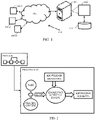
- FIG. 1 illustrates a network implementation 100 of a system 102 for knowledge retrieval using ontology-based context matching, in accordance with an example embodiment.
- the system 102 may be embodied in a knowledge engine to retrieve most suitable knowledge available in a knowledge repository, based on current problem task and context.
- the knowledge repository may include knowledge in the form of models, workflows, design templates, design rules, design cases, and so on. Additionally, the knowledge may exist in multiple forms such as models, rules, cases, design templates, documents and so on.
- the knowledge is intended to serve a certain purpose. It is essential to model this intent space, so as to be able to capture right kind of knowledge for the right purpose. Knowledge is applicable in a certain context. It is essential to capture this context. In various embodiments described herein, the system 102 is able to capture the knowledge in an applicable context.
- the system 102 may also be implemented in a variety of computing systems 104, such as a laptop computer, a desktop computer, a notebook, a workstation, a cloud-based computing environment and the like. It will be understood that the system 102 may be accessed through one or more devices 106-1, 106-2... 106-N, collectively referred to as devices 106 hereinafter, or applications residing on the devices 106. Examples of the devices 106 may include, but are not limited to, a portable computer, a personal digital assistant, a handheld device, a smartphone, a tablet computer, a workstation and the like. The devices 106 are communicatively coupled to the system 102 through a network 108.
- the network 108 may be a wireless or a wired network, or a combination thereof.
- the network 108 can be implemented as a computer network, as one of the different types of networks, such as virtual private network (VPN), intranet, local area network (LAN), wide area network (WAN), the internet, and such.
- the network 106 may either be a dedicated network or a shared network, which represents an association of the different types of networks that use a variety of protocols, for example, Hypertext Transfer Protocol (HTTP), Transmission Control Protocol/Internet Protocol (TCP/IP), and Wireless Application Protocol (WAP), to communicate with each other.
- the network 108 may include a variety of network devices, including routers, bridges, servers, computing devices, storage devices. The network devices within the network 108 may interact with the system 102 through communication links.
- the system 102 may be implemented in a computing device 104, such as a hand-held device, a laptop or other portable computer, a tablet computer, a mobile phone, a PDA, a smartphone, and a desktop computer.
- the system 102 may also be implemented in a workstation, a mainframe computer, a server, and a network server.
- the system 102 may be coupled to a data repository, for example, a repository 112.
- the repository 112 may store data processed, received, and generated by the system 102.
- the system 102 may include the data repository 112.
- the network environment 100 supports various connectivity options such as BLUETOOTH ® , USB, ZigBee and other cellular services.
- the network environment enables connection of devices 106 such as Smartphone with the server 104, and accordingly with the database 112 using any communication link including Internet, WAN, MAN, and so on.
- the system 102 is implemented to operate as a stand-alone device. In another embodiment, the system 102 may be implemented to work as a loosely coupled device to a smart computing environment.
- the system may retrieve most suitable (relevant) knowledge associated with a problem (or a task) from a knowledge repository (associated with a domain), as shown in FIG. 2 .
- the disclosed system 102 matches an ontological context of a problem or a task with the ontological contexts of knowledge elements to compute a similarity score.
- the similarity score indicates a degree of similarity between the problem context and the knowledge element context.
- An important contribution of the disclosed embodiments is that the disclosed system 102 scores similarity on two dimensions, namely, semantic similarity and structural similarity.
- the semantic similarity computes the conceptual similarity of the elements being matched.
- Structural similarity matches the relational contexts of the elements being matched.
- the final similarity score is a product of the semantic similarity score and the structural similarity score.
- said similarity scor e may be normalized to [0, 1] range.
- the similarity score may be '1' when the contexts matches exactly, and the similarity score is '0' when they have nothing in common, and the scores in between indicate the degree of similarity based on which an informed choice can be made on which knowledge elements to retrieve.
- the process involves ontological reasoning, considers ontology elements at multiple levels of abstraction and uses ontology class hierarchy matching and object similarity techniques, as will be described further with reference to the description below with reference to FIGS. 3-5 .
- FIG. 3 illustrates a flow chart of a method for knowledge retrieval using ontology-based context matching, in accordance with an example embodiment.
- Operations of the flowchart, and combinations of operation in the flowchart may be implemented by various means, such as hardware, firmware, processor, circuitry and/or other device associated with execution of software including one or more computer program instructions.
- one or more of the procedures described in various embodiments may be embodied by computer program instructions.
- the computer program instructions, which embody the procedures, described in various embodiments may be stored by at least one memory device of a system and executed by at least one processor in the system.
- Any such computer program instructions may be loaded onto a computer or other programmable system (for example, hardware) to produce a machine, such that the resulting computer or other programmable system embody means for implementing the operations specified in the flowchart. It will be noted herein that the operations of the method 300 are described with help of system 100. However, the operations of the method 300 can be described and/or practiced by using any other system.
- knowledge retrieval engine is supposed to retrieve most suitable knowledge available in a knowledge repository, based on current problem task and context thereof.
- the method 300 includes receiving a query associated with a task.
- the context of the task (or the current problem) may be expressed in terms of an ontology graph, hereinafter referred to as a query graph.
- the query graph is limited to the knowledge requirements of the current task being carried out.
- the query may be associated with a specific domain, for instance, manufacturing domain, financial domain, and so on.
- the knowledge associated with the domain may be captured in a domain ontology.
- the domain ontology includes a classification of concepts associated with the task about which knowledge is to be determined/retrieved.
- the knowledge may be modeled with a context information associated with the knowledge in the domain ontology. For instance, knowledge associated with a domain may be sought in multiple contexts (or situations). Such knowledge may be modeled with context information (i.e. information of multiple contexts) and stored in a knowledge repository. The knowledge modeled with different contexts may be expressed in terms of corresponding ontology graphs, hereinafter referred to as context graphs.
- Both the context graphs and the query graph are fragments of the same domain ontology.
- the elements in both these graphs map to the common domain ontology elements, such as classes, meta-classes, properties and associations/relations.
- the knowledge is also tagged with tasks it is supposed to serve. An example of the same is described in a paper publication titled "A Knowledge Modeling Framework for Computational Materials Engineering", Raghavendra Reddy Yeddula et. al.
- the query graph and each of the plurality of context graphs includes a plurality of elements at a plurality of distinct levels of abstraction. Said plurality of levels of abstraction associated with the plurality of elements of the query graph and the context graphs may include, but are not limited to, meta-classes, classes, properties, and property values.
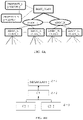
- FIG. 4B An example of the levels of abstraction of the elements of query graph and context graphs is illustrated in FIG. 4B .
- the knowledge retrieval includes matching of two ontology-based graphs, i.e. the query graph and the context graph of each of the potential knowledge available for the current task.
- the method 300 includes deriving a query graph associated with the query from the domain ontology associated with the task.
- the query graph may include a first plurality of elements indicative of an intent and a context associated with the task. These elements of the query graph include ontology class/instance nodes. Based on the class definitions of the ontology and an ontological reasoner, a given class or instance in the ontology can be re-classified into one of the other existing ontology classes. The name of this class can also be tagged to the graph node.
- information in the query graph is enhanced by re-classifying one or more elements of the query graph using ontology reasoning and annotating results of re-classifying in the query graph to obtain an enhanced query graph.
- the query graph is then iteratively matched with each context graph of the potential knowledge available for the current task.
- the method 300 includes iteratively matching the enhanced query graph with each of a plurality of context graphs of the knowledge tagged with the intent associated with the task and computing a match score in each iteration of a plurality of iterations.
- matching the enhanced query graph with a context graph from amongst the plurality of context graphs includes computing the match score which is indicative of a degree of similarity between an ontological context of the task with the ontological context of the knowledge.
- the matching starts with pre-identified root nodes in the two graphs.
- the query graph drives the matching process.
- a match score is computed for a node using a combination of semantic similarity score (simSemantic [0-1]) and structural similarity score (simStructure [0-1]).
- the semantic similarity score is indicative of conceptual similarity between the node of the query graph and the node of the context graph with respect to the domain ontology.
- the structural similarity is indicative of a match between relational contexts of the node of the enhanced query graph and the node of the context graph.
- the Semantic similarity score is computed using ontology concept/class hierarchy.
- the semantic similarity score is computed using ontology concept/class hierarchy.
- Computing the semantic similarity score includes comparing depth of the classes represented by the nodes of the enhanced query graph and the context graph in a class hierarchy obtained after merging two or more levels from amongst the plurality of levels of the domain ontology.
- the merged domain ontology comprises a hierarchy precomputed for a plurality of classes by considering meta-class as the root class and the plurality of instance classes as subclasses of the meta-class. This hierarchy is precomputed for all the classes in the ontology, by considering meta-classes as the root classes and all classes as subclasses of the meta-classes.
- Each class is assigned a depth number in this class hierarchy tree - based on its depth in the class hierarchy tree, starting with depth 1 for the root, as illustrated in FIG. 4B .
- the context graphs can have meta-classes associated with the graph nodes, whereas the query graphs always have class nodes.
- the Structural similarity score is computed by considering the structure of the current ontology graph node. Computation of the structural similarity score includes matching of ontology properties/property values associated with the node and matching of other associated nodes (representing other ontology classes/meta-classes) for the current node. And, then a weighted aggregation of these match scores to get the final score for the current node is computed.
- the node in the query graph is considered the current node, for which a match is searched for in the corresponding knowledge context graph.
- the property nodes are matched by considering property matching and value matching - depending on the level of detail available for matching.
- the simProperty score reduces if no matching property is found in context graph.
- Property value matching considers value (in query graph) - value/range (in context graph) matching.
- simPropertyValue 1, is considered when the value in query graph matches exactly with the value in context graph or the value in query graph lies in the range specified in the context graph.
- the system finds how far it is from the range as below:
- simPropertyValue score is reduced by a fuzzy match factor.
- the rest of the ontology graph nodes associated with the current node are matched recursively using the same technique above.
- the match score of these nodes considers their semantic and structural similarities. Matching ontology associations are traversed identifying candidate associated nodes for matching. If any of the associated nodes does not match exactly, node with highest match score for the current query graph node is assumed to have matched (fuzzy matching) with a reduced score by a fuzzy_match_factor.
- the individual associated node match scores are aggregated using a weighted aggregation method.
- the weights come from the query graph, which in turn are specified as part of intent definition (Ref: Paper publication titled “A Knowledge Modeling Framework for Computational Materials Engineering", Raghavendra Reddy Yeddula et. al.).
- simStructure cls1 , cls2 ( ⁇ w i * matchScore cls1_assoc i _class , cls2_matching_assoc_class * fuzzyMatching ?
- fuzzy_match_factor 1 + simPropertyValue cls1_property j value , cls2_matching_property_value_or_range * fuzzyMatching ? fuzzy_match_fact or : 1 ) ) ) / ⁇ w i + 2 * ⁇ w j ⁇ ( w j * ( simProperty cls1_property j , cls2_matching_property +
- matchScore cls1 cls2 simSemantic cls 1 , cls 2 * simStructure cls 1 , cls 2
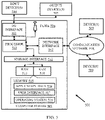
- FIG. 5 is a block diagram of an exemplary computer system 501 for implementing embodiments consistent with the present disclosure.
- the computer system 501 may be implemented in alone or in combination of components of the system 102 ( FIG. 1 ). Variations of computer system 501 may be used for implementing the devices included in this disclosure.
- Computer system 501 may comprise a central processing unit (“CPU” or "hardware processor") 502.
- the hardware processor 502 may comprise at least one data processor for executing program components for executing user- or system-generated requests.
- the processor may include specialized processing units such as integrated system (bus) controllers, memory management control units, floating point units, graphics processing units, digital signal processing units, etc.
- the processor may include a microprocessor, such as AMD AthlonTM, DuronTM or OpteronTM, ARM's application, embedded or secure processors, IBM PowerPCTM, Intel's Core, ItaniumTM, XeonTM, CeleronTM or other line of processors, etc.
- the processor 502 may be implemented using mainframe, distributed processor, multi-core, parallel, grid, or other architectures. Some embodiments may utilize embedded technologies like application specific integrated circuits (ASICs), digital signal processors (DSPs), Field Programmable Gate Arrays (FPGAs), etc.
- the processor 502 may be a multi-core multi-threaded processor.
- I/O Processor 502 may be disposed in communication with one or more input/output (I/O) devices via I/O interface 503.
- the I/O interface 503 may employ communication protocols/methods such as, without limitation, audio, analog, digital, monoaural, RCA, stereo, IEEE-1394, serial bus, universal serial bus (USB), infrared, PS/2, BNC, coaxial, component, composite, digital visual interface (DVI), high-definition multimedia interface (HDMI), RF antennas, S-Video, VGA, IEEE 802.11 a/b/g/n/x, Bluetooth, cellular (e.g., code-division multiple access (CDMA), high-speed packet access (HSPA+), global system for mobile communications (GSM), long-term evolution (LTE), WiMax, or the like), etc.
- CDMA code-division multiple access
- HSPA+ high-speed packet access
- GSM global system for mobile communications
- LTE long-term evolution
- WiMax wireless wide area network
- the computer system 501 may communicate with one or more I/O devices.
- the input device 504 may be an antenna, keyboard, mouse, joystick, (infrared) remote control, camera, card reader, fax machine, dongle, biometric reader, microphone, touch screen, touchpad, trackball, sensor (e.g., accelerometer, light sensor, GPS, gyroscope, proximity sensor, or the like), stylus, scanner, storage device, transceiver, video device/source, visors, etc.
- Output device 505 may be a printer, fax machine, video display (e.g., cathode ray tube (CRT), liquid crystal display (LCD), light-emitting diode (LED), plasma, or the like), audio speaker, etc.
- video display e.g., cathode ray tube (CRT), liquid crystal display (LCD), light-emitting diode (LED), plasma, or the like
- audio speaker etc.
- a transceiver 306 may be disposed in connection with the processor 502. The transceiver may facilitate various types of wireless transmission or reception.
- the transceiver may include an antenna operatively connected to a transceiver chip (e.g., Texas Instruments WiLink WL1283, Broadcom BCM4750IUB8, Infineon Technologies X-Gold 618-PMB9800, or the like), providing IEEE 802.11a/b/g/n, Bluetooth, FM, global positioning system (GPS), 2G/3G HSDPA/HSUPA communications, etc.
- a transceiver chip e.g., Texas Instruments WiLink WL1283, Broadcom BCM4750IUB8, Infineon Technologies X-Gold 618-PMB9800, or the like
- IEEE 802.11a/b/g/n e.g., Texas Instruments WiLink WL1283, Broadcom BCM4750IUB8, Infineon Technologies X-Gold 618-PMB9800, or the like
- IEEE 802.11a/b/g/n e.g., Bluetooth, FM, global positioning system (GPS), 2G/3G HSDPA/HS
- the processor 502 may be disposed in communication with a communication network 508 via a network interface 507.
- the network interface 507 may communicate with the communication network 508.
- the network interface may employ connection protocols including, without limitation, direct connect, Ethernet (e.g., twisted pair 10/100/1000 Base T), transmission control protocol/internet protocol (TCP/IP), token ring, IEEE 802.11a/b/g/n/x, etc.
- the communication network 308 may include, without limitation, a direct interconnection, local area network (LAN), wide area network (WAN), wireless network (e.g., using Wireless Application Protocol), the Internet, etc.
- LAN local area network
- WAN wide area network
- wireless network e.g., using Wireless Application Protocol
- the computer system 501 may communicate with devices 509 and 510.
- These devices may include, without limitation, personal computer(s), server(s), fax machines, printers, scanners, various mobile devices such as cellular telephones, smartphones (e.g., Apple iPhone, Blackberry, Android-based phones, etc.), tablet computers, eBook readers (Amazon Kindle, Nook, etc.), laptop computers, notebooks, gaming consoles (Microsoft Xbox, Nintendo DS, Sony PlayStation, etc.), or the like.
- the computer system 501 may itself embody one or more of these devices.
- the processor 502 may be disposed in communication with one or more memory devices (e.g., RAM 513, ROM 514, etc.) via a storage interface 512.
- the storage interface may connect to memory devices including, without limitation, memory drives, removable disc drives, etc., employing connection protocols such as serial advanced technology attachment (SATA), integrated drive electronics (IDE), IEEE-1394, universal serial bus (USB), fiber channel, small computer systems interface (SCSI), etc.
- the memory drives may further include a drum, magnetic disc drive, magneto-optical drive, optical drive, redundant array of independent discs (RAID), solid-state memory devices, solid-state drives, etc. Variations of memory devices may be used for implementing, for example, any databases utilized in this disclosure.
- the memory devices may store a collection of programs or database components, including, without limitation, an operating system 516, user interface application 517, user/application data 518 (e.g., any data variables or data records discussed in this disclosure), etc.
- the operating system 516 may facilitate resource management and operation of the computer system 501.
- Examples of operating systems include, without limitation, Apple Macintosh OS X, Unix, Unix-like system distributions (e.g., Berkeley Software Distribution (BSD), FreeBSD, NetBSD, OpenBSD, etc.), Linux distributions (e.g., Red Hat, Ubuntu, Kubuntu, etc.), IBM OS/2, Microsoft Windows (XP, Vista/7/8, etc.), Apple iOS, Google Android, Blackberry OS, or the like.
- User interface 517 may facilitate display, execution, interaction, manipulation, or operation of program components through textual or graphical facilities.
- user interfaces may provide computer interaction interface elements on a display system operatively connected to the computer system 501, such as cursors, icons, check boxes, menus, scrollers, windows, widgets, etc.
- Graphical user interfaces may be employed, including, without limitation, Apple Macintosh operating systems' Aqua, IBM OS/2, Microsoft Windows (e.g., Aero, Metro, etc.), Unix X-Windows, web interface libraries (e.g., ActiveX, Java, Javascript, AJAX, HTML, Adobe Flash, etc.), or the like.
- computer system 501 may store user/application data 318, such as the data, variables, records, etc. as described in this disclosure.
- databases may be implemented as fault-tolerant, relational, scalable, secure databases such as Oracle or Sybase.
- databases may be implemented using standardized data structures, such as an array, hash, linked list, structured text file (e.g., XML), table, or as hand-oriented databases (e.g., using HandStore, Poet, Zope, etc.).
- hand-oriented databases e.g., using HandStore, Poet, Zope, etc.
- Such databases may be consolidated or distributed, sometimes among various computer systems discussed above. It is to be understood that the structure and operation of any computer or database component may be combined, consolidated, or distributed in any working combination.
- the server, messaging and instructions transmitted or received may emanate from hardware, including operating system, and program code (i.e., application code) residing in a cloud implementation.
- program code i.e., application code
- one or more of the systems and methods provided herein may be suitable for cloud-based implementation.
- some or all of the data used in the disclosed methods may be sourced from or stored on any cloud computing platform.
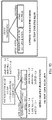
- FIG. 6A shows part of domain ontology for beams used in construction of various types of structures. It will be noted that FIG. 6A shows only an instance (subject ontology) of a meta-model that describes the abstract concepts in the domain, such as 'Component', 'Requirement', 'Feature', along with their inter-relationships. The domain ontology is organized using such multiple levels of abstractions.
- a base Beam class is shown here, along with its requirements, sub-requirements, features and their respective parameters.
- a new class can be created, with Beam as the base class, as shown here ("Construction Beam”).
- FIG. 6B shows well known classes in this domain, along with their ontological class definitions.
- a "Rectangular Beam” is a special type of beam having a specific type of feature “RectangualSection" associated with it.
- Such definitions help in re-classification of instances or classes into other existing classes with the help of ontology reasoners.
- FIG. 6C shows how the ontology of FIG. 6A is used for representing a process context as well as intent definition.
- process context gets built.
- the instance of "Construction Beam” also is an instance of "Cantilever Beam” - with the help of ontology reasoning based on the class definition of "Cantilever Beam” and current instance configuration. This information is used to enhance the generated query graph as explained later.
- the process task "Select Cross Section”, has an intent associated with it, "Beam cross section type selection”.
- the process context along with the intent definition, which includes intent context graph, is used to create a query graph as shown in FIG. 6C .
- the intent context graph is created with reference to the domain ontology at multiple levels - class "Beam”, meta-classes "Material” and “Application” are used. Similarly, properties can also be used.
- the nodes and the associations may also have weights attached - those are transferred to the query graph.
- the query graph essentially instantiates the intent context graph with process context data. Thus, as shown in FIG.
- This query graph is compared to the context graphs of knowledge elements available for the task intent "Beam cross section type selection", in the knowledge repository. As shown in FIGS. 6D and 6F .
- this comparison involves computing two scores, viz. semantic similarity and structural similarity, for every node of query graph.
- a recursive node to node comparison starting from the root of both the trees is carried out.
- a match score for a node is combination of the both the scores.
- Final match score is the match score for the root node of query graph.
- the semantic similarity for two nodes is computed based on the ontology entities that the nodes map to.
- a single class hierarchy is created by combining the meta-class and classes together.
- "Component" meta-class is considered a base class for all instances of "Component”.
- the semantic similarity is then based on where the two classes, to be compared, are placed in this class hierarchy.
- the structural similarity is essentially a weighted average of match scores of related/associated nodes to the current node.
- the weights are transferred from the intent definition (default 1). This involves recursive computation of match scores for the related nodes. Nodes with no related nodes are considered to have structural similarity score as 1.
- match cls1 , cls2 simSem*simStr
- the score for each node is shown in FIG. 6D and FIG. 6F .
- the match score for the root node is the final match score for the query graph and context graph.
- the context graph in FIG. 6D matches better with the query graph (final match score 0.8) than the context graph in FIG. 6F (final match score 0.4).
- final match score 0.8 the context graph in FIG. 6F
- a low semantic similarity score for related nodes drags down the final score for the root node, despite having decent structural similarity scores.
- the knowledge associated with the context graph in FIG. 6D is ranked higher and is deemed to be more suitable for the current process context.
- FIG. 6G shows another example of a different query graph and context graph.
- the query graph shown here, includes only one node, as the necessary information required to select knowledge for determining cross section area is generally only limited to the type of beam (as per the corresponding intent definition).
- the node in the query graph maps to "Construction Beam” as well as the alternative "Cantilever Beam” class.
- the context graph node shown in the figure, on the other hand, is mapped to "Cantilever Beam”. Note that if the query graph node is not enhanced with the additional inferred class information, as explained earlier, only "Construction Beam” would be compared with "Cantilever Beam”. This would have reduced the match score to 0.67.
- Various embodiments disclose methods and systems for knowledge retrieval using ontology-based context matching.
- the disclosed method and system are capable of explicitly modeling the context in which knowledge is generated, and match the problem context with the generative context of knowledge to assess the degree of similarity between the two, which then provides the basis for ranking the suitability of different knowledge elements for the problem context.
- the hardware device can be any kind of device which can be programmed including e.g. any kind of computer like a server or a personal computer, or the like, or any combination thereof.
- the device may also include means which could be e.g. hardware means like e.g. an application-specific integrated circuit (ASIC), a field-programmable gate array (FPGA), or a combination of hardware and software means, e.g.
- ASIC application-specific integrated circuit
- FPGA field-programmable gate array
- the means can include both hardware means and software means.
- the method embodiments described herein could be implemented in hardware and software.
- the device may also include software means.
- the embodiments may be implemented on different hardware devices, e.g. using a plurality of CPUs.
- the embodiments herein can comprise hardware and software elements.
- the embodiments that are implemented in software include but are not limited to, firmware, resident software, microcode, etc.
- the functions performed by various components described herein may be implemented in other components or combinations of other components.
- a computer-usable or computer readable medium can be any apparatus that can comprise, store, communicate, propagate, or transport the program for use by or in connection with the instruction execution system, apparatus, or device.
- a computer-readable storage medium refers to any type of physical memory on which information or data readable by a processor may be stored.
- a computer-readable storage medium may store instructions for execution by one or more processors, including instructions for causing the processor(s) to perform steps or stages consistent with the embodiments described herein.
- the term "computer-readable medium” should be understood to include tangible items and exclude carrier waves and transient signals, i.e., be non-transitory. Examples include random access memory (RAM), read-only memory (ROM), volatile memory, nonvolatile memory, hard drives, CD ROMs, DVDs, flash drives, disks, and any other known physical storage media.
Landscapes
- Engineering & Computer Science (AREA)
- Databases & Information Systems (AREA)
- Theoretical Computer Science (AREA)
- Data Mining & Analysis (AREA)
- Physics & Mathematics (AREA)
- General Engineering & Computer Science (AREA)
- General Physics & Mathematics (AREA)
- Computational Linguistics (AREA)
- Library & Information Science (AREA)
- Software Systems (AREA)
- Information Retrieval, Db Structures And Fs Structures Therefor (AREA)
Applications Claiming Priority (1)
| Application Number | Priority Date | Filing Date | Title |
|---|---|---|---|
| IN202121012276 | 2021-03-22 |
Publications (1)
| Publication Number | Publication Date |
|---|---|
| EP4064076A1 true EP4064076A1 (fr) | 2022-09-28 |
Family
ID=80928691
Family Applications (1)
| Application Number | Title | Priority Date | Filing Date |
|---|---|---|---|
| EP22163263.1A Withdrawn EP4064076A1 (fr) | 2021-03-22 | 2022-03-21 | Système et procédé de récupération de connaissances à l'aide d'une correspondance de contexte basée sur l'ontologie |
Country Status (2)
| Country | Link |
|---|---|
| US (1) | US11847123B2 (fr) |
| EP (1) | EP4064076A1 (fr) |
Cited By (1)
| Publication number | Priority date | Publication date | Assignee | Title |
|---|---|---|---|---|
| CN118333173A (zh) * | 2024-06-14 | 2024-07-12 | 中国特种设备检测研究院 | 基于知识本体的hazop语义推理检索方法及系统 |
Families Citing this family (4)
| Publication number | Priority date | Publication date | Assignee | Title |
|---|---|---|---|---|
| US12277278B1 (en) * | 2021-08-23 | 2025-04-15 | Blue Yonder Group, Inc. | System and method of action-based navigation visualization for supply chain planners and specially-abled users |
| US20240330480A1 (en) * | 2023-03-31 | 2024-10-03 | Cisco Technology, Inc. | System and method for triaging vulnerabilities by applying bug reports to a large language model (llm) |
| KR20250101639A (ko) * | 2023-12-27 | 2025-07-04 | 성균관대학교산학협력단 | 지식 그래프를 이용하여 질의를 표현하는 방법 및 장치 |
| CN119293204B (zh) * | 2024-09-14 | 2025-10-31 | 山东浪潮科学研究院有限公司 | 一种改进的上下文感知自适应对比解码方法 |
Citations (1)
| Publication number | Priority date | Publication date | Assignee | Title |
|---|---|---|---|---|
| WO2016051338A1 (fr) * | 2014-04-04 | 2016-04-07 | Tata Consultancy Services Limited | Cadre d'ingénierie de connaissances guidé par modèle pour ingénierie de calcul |
Family Cites Families (5)
| Publication number | Priority date | Publication date | Assignee | Title |
|---|---|---|---|---|
| US20070260595A1 (en) * | 2006-05-02 | 2007-11-08 | Microsoft Corporation | Fuzzy string matching using tree data structure |
| US10019516B2 (en) * | 2014-04-04 | 2018-07-10 | University Of Southern California | System and method for fuzzy ontology matching and search across ontologies |
| US9977817B2 (en) * | 2014-10-20 | 2018-05-22 | Conduent Business Services, Llc | Matching co-referring entities from serialized data for schema inference |
| KR101646754B1 (ko) * | 2015-03-18 | 2016-08-12 | 연세대학교 산학협력단 | 모바일 시멘틱 검색 장치 및 그 방법 |
| CN108959613B (zh) | 2018-07-17 | 2021-09-03 | 杭州电子科技大学 | 一种面向rdf知识图谱的语义近似查询方法 |
-
2022
- 2022-03-21 EP EP22163263.1A patent/EP4064076A1/fr not_active Withdrawn
- 2022-03-21 US US17/655,721 patent/US11847123B2/en active Active
Patent Citations (1)
| Publication number | Priority date | Publication date | Assignee | Title |
|---|---|---|---|---|
| WO2016051338A1 (fr) * | 2014-04-04 | 2016-04-07 | Tata Consultancy Services Limited | Cadre d'ingénierie de connaissances guidé par modèle pour ingénierie de calcul |
Non-Patent Citations (2)
| Title |
|---|
| MARTIN SCHAAF ET AL: "Structural Case-Based Reasoning and Ontology-Based Knowledge Management: A Perfect Match?", 1 January 2003 (2003-01-01), pages 608 - 626, XP055950257, Retrieved from the Internet <URL:https://www.jucs.org/jucs_9_7/structural_case_based_reasoning/Bergmann_R.pdf> [retrieved on 20220809], DOI: 10.3217/jucs-009-07-0608 * |
| YEDDULA RAGHAVENDRA REDDY ET AL: "A Knowledge Modeling Framework for Computational Materials Engineering", PROCEEDINGS OF THE 30TH INTERNATIONAL CONFERENCE ON SOFTWARE ENGINEERING AND KNOWLEDGE ENGINEERING, vol. 2016, 1 July 2016 (2016-07-01), pages 197 - 202, XP055950228, ISSN: 2325-9000, ISBN: 978-1-891706-44-8, Retrieved from the Internet <URL:https://ksiresearch.org/seke/seke16paper/seke16paper_124.pdf> DOI: 10.18293/SEKE2016-124 * |
Cited By (1)
| Publication number | Priority date | Publication date | Assignee | Title |
|---|---|---|---|---|
| CN118333173A (zh) * | 2024-06-14 | 2024-07-12 | 中国特种设备检测研究院 | 基于知识本体的hazop语义推理检索方法及系统 |
Also Published As
| Publication number | Publication date |
|---|---|
| US20220342891A1 (en) | 2022-10-27 |
| US11847123B2 (en) | 2023-12-19 |
Similar Documents
| Publication | Publication Date | Title |
|---|---|---|
| EP4064076A1 (fr) | Système et procédé de récupération de connaissances à l'aide d'une correspondance de contexte basée sur l'ontologie | |
| US11409642B2 (en) | Automatic parameter value resolution for API evaluation | |
| US20200320370A1 (en) | Snippet extractor: recurrent neural networks for text summarization at industry scale | |
| US20190311811A1 (en) | Graph convolution based gene prioritization on heterogeneous networks | |
| US9977656B1 (en) | Systems and methods for providing software components for developing software applications | |
| US20220405603A1 (en) | Systems and methods for determining explainability of machine predicted decisions | |
| US20150356174A1 (en) | System and methods for capturing and analyzing documents to identify ideas in the documents | |
| US9251245B2 (en) | Generating mappings between a plurality of taxonomies | |
| US10262030B1 (en) | Automatic dynamic reusable data recipes | |
| US20150310344A1 (en) | System and method for predicting personality traits using disc profiling and big five personality techniques | |
| US11232114B1 (en) | System and method for automated classification of structured property description extracted from data source using numeric representation and keyword search | |
| US20180032971A1 (en) | System and method for predicting relevant resolution for an incident ticket | |
| US11481602B2 (en) | System and method for hierarchical category classification of products | |
| US12229669B2 (en) | Techniques for improving standardized data accuracy | |
| US20190370396A1 (en) | Method and Device for Identifying Relevant Keywords from Documents | |
| US12393406B2 (en) | Entity search engine powered by copy-detection | |
| US20210200515A1 (en) | System and method to extract software development requirements from natural language | |
| US11983278B2 (en) | System and method for data anonymization using optimization techniques | |
| US10210193B2 (en) | Ingestion plan based on table uniqueness | |
| US20190362014A1 (en) | Method and device for managing big-data in cloud environment | |
| WO2024019832A1 (fr) | Configuration et déploiement d'infrastructure à base d'image | |
| US12210589B2 (en) | System and method for label generation for timeseries classification | |
| US20220207614A1 (en) | Grants Lifecycle Management System and Method | |
| US10073838B2 (en) | Method and system for enabling verifiable semantic rule building for semantic data | |
| US11106689B2 (en) | System and method for self-service data analytics |
Legal Events
| Date | Code | Title | Description |
|---|---|---|---|
| PUAI | Public reference made under article 153(3) epc to a published international application that has entered the european phase |
Free format text: ORIGINAL CODE: 0009012 |
|
| STAA | Information on the status of an ep patent application or granted ep patent |
Free format text: STATUS: THE APPLICATION HAS BEEN PUBLISHED |
|
| AK | Designated contracting states |
Kind code of ref document: A1 Designated state(s): AL AT BE BG CH CY CZ DE DK EE ES FI FR GB GR HR HU IE IS IT LI LT LU LV MC MK MT NL NO PL PT RO RS SE SI SK SM TR |
|
| STAA | Information on the status of an ep patent application or granted ep patent |
Free format text: STATUS: REQUEST FOR EXAMINATION WAS MADE |
|
| 17P | Request for examination filed |
Effective date: 20221014 |
|
| RBV | Designated contracting states (corrected) |
Designated state(s): AL AT BE BG CH CY CZ DE DK EE ES FI FR GB GR HR HU IE IS IT LI LT LU LV MC MK MT NL NO PL PT RO RS SE SI SK SM TR |
|
| STAA | Information on the status of an ep patent application or granted ep patent |
Free format text: STATUS: EXAMINATION IS IN PROGRESS |
|
| 17Q | First examination report despatched |
Effective date: 20231206 |
|
| STAA | Information on the status of an ep patent application or granted ep patent |
Free format text: STATUS: THE APPLICATION HAS BEEN WITHDRAWN |
|
| 18W | Application withdrawn |
Effective date: 20251010 |