EP4064158A1 - Procédé et système pour optimiser dynamiquement les opérations d'un système de gestion de logistique - Google Patents
Procédé et système pour optimiser dynamiquement les opérations d'un système de gestion de logistique Download PDFInfo
- Publication number
- EP4064158A1 EP4064158A1 EP22163140.1A EP22163140A EP4064158A1 EP 4064158 A1 EP4064158 A1 EP 4064158A1 EP 22163140 A EP22163140 A EP 22163140A EP 4064158 A1 EP4064158 A1 EP 4064158A1
- Authority
- EP
- European Patent Office
- Prior art keywords
- entities
- data related
- parcels
- staff
- logistics management
- Prior art date
- Legal status (The legal status is an assumption and is not a legal conclusion. Google has not performed a legal analysis and makes no representation as to the accuracy of the status listed.)
- Pending
Links
Images



Classifications
-
- G—PHYSICS
- G06—COMPUTING OR CALCULATING; COUNTING
- G06Q—INFORMATION AND COMMUNICATION TECHNOLOGY [ICT] SPECIALLY ADAPTED FOR ADMINISTRATIVE, COMMERCIAL, FINANCIAL, MANAGERIAL OR SUPERVISORY PURPOSES; SYSTEMS OR METHODS SPECIALLY ADAPTED FOR ADMINISTRATIVE, COMMERCIAL, FINANCIAL, MANAGERIAL OR SUPERVISORY PURPOSES, NOT OTHERWISE PROVIDED FOR
- G06Q10/00—Administration; Management
- G06Q10/08—Logistics, e.g. warehousing, loading or distribution; Inventory or stock management
- G06Q10/083—Shipping
-
- G—PHYSICS
- G06—COMPUTING OR CALCULATING; COUNTING
- G06Q—INFORMATION AND COMMUNICATION TECHNOLOGY [ICT] SPECIALLY ADAPTED FOR ADMINISTRATIVE, COMMERCIAL, FINANCIAL, MANAGERIAL OR SUPERVISORY PURPOSES; SYSTEMS OR METHODS SPECIALLY ADAPTED FOR ADMINISTRATIVE, COMMERCIAL, FINANCIAL, MANAGERIAL OR SUPERVISORY PURPOSES, NOT OTHERWISE PROVIDED FOR
- G06Q10/00—Administration; Management
- G06Q10/06—Resources, workflows, human or project management; Enterprise or organisation planning; Enterprise or organisation modelling
- G06Q10/063—Operations research, analysis or management
- G06Q10/0631—Resource planning, allocation, distributing or scheduling for enterprises or organisations
- G06Q10/06311—Scheduling, planning or task assignment for a person or group
- G06Q10/063118—Staff planning in a project environment
-
- G—PHYSICS
- G06—COMPUTING OR CALCULATING; COUNTING
- G06Q—INFORMATION AND COMMUNICATION TECHNOLOGY [ICT] SPECIALLY ADAPTED FOR ADMINISTRATIVE, COMMERCIAL, FINANCIAL, MANAGERIAL OR SUPERVISORY PURPOSES; SYSTEMS OR METHODS SPECIALLY ADAPTED FOR ADMINISTRATIVE, COMMERCIAL, FINANCIAL, MANAGERIAL OR SUPERVISORY PURPOSES, NOT OTHERWISE PROVIDED FOR
- G06Q10/00—Administration; Management
- G06Q10/06—Resources, workflows, human or project management; Enterprise or organisation planning; Enterprise or organisation modelling
- G06Q10/063—Operations research, analysis or management
- G06Q10/0639—Performance analysis of employees; Performance analysis of enterprise or organisation operations
- G06Q10/06393—Score-carding, benchmarking or key performance indicator [KPI] analysis
-
- G—PHYSICS
- G06—COMPUTING OR CALCULATING; COUNTING
- G06Q—INFORMATION AND COMMUNICATION TECHNOLOGY [ICT] SPECIALLY ADAPTED FOR ADMINISTRATIVE, COMMERCIAL, FINANCIAL, MANAGERIAL OR SUPERVISORY PURPOSES; SYSTEMS OR METHODS SPECIALLY ADAPTED FOR ADMINISTRATIVE, COMMERCIAL, FINANCIAL, MANAGERIAL OR SUPERVISORY PURPOSES, NOT OTHERWISE PROVIDED FOR
- G06Q10/00—Administration; Management
- G06Q10/08—Logistics, e.g. warehousing, loading or distribution; Inventory or stock management
Definitions
- the disclosure herein generally relates to the field of logistics, and, more particularly, to a method and system for transforming, optimizing and adapting operational processes in a logistics management system.
- a sorting terminal of advanced postal and shipment companies is a sophisticated cyber physical system comprising of plurality of automated in feeds (to onboard parcels to be sorted), a sorting belt, a plurality of scanners (to scan the package), different kinds of chutes (to collect the sorted parcels), suitably skilled workforce (to empty the chutes and to move the packages to outfeed stations), and a set of outfeeds (to load the packages on trucks for dispatch).
- the package should spend as less time on the sorting belt as possible, the chutes should be emptied as fast as possible, and there should be as few rejections (i.e., the cyber physical system could not perform the sorting task thus making it necessary for a human expert to complete the sorting process) as possible.
- Some of the key operational challenges for the sorting terminal for a given (typically estimated) payload includes defining suitable configuration of sorting terminal (i.e., number and position of infeed, scanner, chutes, etc.), defining the sorting logic, assigning workforce to the chutes, in feeds and outfeeds and so on.
- suitable configuration of sorting terminal i.e., number and position of infeed, scanner, chutes, etc.
- the sorting logic assigning workforce to the chutes, in feeds and outfeeds and so on.
- the sorting terminal operations is largely static, and prediction driven. For instance, payload of a shift is estimated based on predicted payloads of the shift and the payload estimation is used to decide upon other parameters which includes historical occurrences, seasonality and experience. Further, the estimated payload needs to be accurate not only in terms of the quantum (i.e., number of packages) but also in terms of their sizes and destinations for the subsequent decisions to effective.
- sorting terminals end up operating at sub-optimal levels which introduces further sub-optimality's in the network.
- the sorting terminal manager may want to try out the possible interventions for an exceptional situation which needs to be done through a set of carefully designed experiments in real time including a time, effort, cost and an intellectual intensive endeavor.
- these interventions should not compromise with the robustness of the sorting terminal operations.
- the sorting terminal manager would like to arrive at a set of policies from these set of tactics (i.e., interventions) to impart local optimality and global robustness.
- a system for dynamically optimizing the operations of logistics management system comprises: a memory storing instructions; one or more communication interfaces; and one or more hardware processors coupled to the memory via the one or more communication interfaces, wherein the one or more hardware processors are configured by the instructions to: receive, via the one or more hardware processor, a plurality of data computed based on: historical data related to one or more parcels, data related to one or more sorting terminals, data related to one or more staff, and a plurality of parameters related to the one or more parcels from distributed sources with heterogeneous technology platforms, wherein the one or more parcels, the one or more sorting terminals, the one or more staff and the plurality of parameters are associated with the logistics management system.
- the system further comprises forecasting, via the one or more hardware processor, the plurality of data related to the one or more parcels based on the received plurality of data.
- one or more non-transitory machine-readable information storage mediums comprising one or more instructions which when executed by one or more hardware processors cause receiving, via one or more hardware processor, a plurality of data computed based on: historical data related to one or more parcels, data related to one or more sorting terminals, data related to one or more staff, and a plurality of parameters related to the one or more parcels from distributed sources with heterogeneous technology platforms, wherein the one or more parcels, the one or more sorting terminals, the one or more staff and the plurality of parameters are associated with the logistics management system; forecasting, via the one or more hardware processors, the plurality of data related to the one or more parcels based on the received plurality of data; configuring the plurality of forecasted data related to the one or more parcels as a first set of entities; configuring, via the one or more hardware processors, each of the one or more sorting terminals as a second set of entities; configuring, via the one or more hardware processors
- the embodiments herein provide the method and system for dynamically optimizing the operations in the logistics management system.
- the proposed method and system describe an actor-based representation of simulatable digital twin of the sorting terminal that enables in-silico quantitative exploration to understand the efficacy/utility of various adaptation and design alternatives toward optimizing logistics management system.
- the proposed method and system initially construct a high-fidelity simulatable digital twin of the sorting terminal, validate it, set it up with real data, and simulate various (hypothetical) adaptation and design alternatives to understand their impacts on the key performance indicator values (KPIs).
- KPIs key performance indicator values
- the proposed method and system approach rests includes four important concepts which includes the digital twin to enable in-silico quantitative analysis, an actor-based modelling paradigm to represent individual characteristics of the logistics management as a system of systems as close to the reality as possible, a bottom-up simulation to quantitatively understand emergence behavior of the overall behavior of logistics management system that comprises multiple autonomous and interactive (sub) systems.
- FIG. 1 shows a block diagram of a system 100 for dynamically optimizing the operations of the logistics managements system, according to an embodiment of the present disclosure.
- the system 100 includes the logistics management optimization unit 102 for adaption and dynamic optimization of the operations of the logistics management system, in accordance with some embodiments of the present disclosure.
- the logistics management optimization unit 102 includes or is otherwise in communication with a memory 104, a communication interface 106, and a processor 108.
- the memory 104, communication interface 106, and the processor 108 may be coupled by a system bus 110 or a similar mechanism.
- FIG. 1 shows example components of the logistics management optimization unit 102, in other implementations, system 100 may contain fewer components, additional components, different components, or differently arranged components than depicted in FIG. 1 .
- the processor 108 may be implemented as one or more microprocessors, microcomputers, microcontrollers, digital signal processors, central processing units, state machines, logic circuitries, and/or any devices that facilitates in designing polymeric carrier for controlled release of molecules. Further, the processor 108 may comprise a multi-core architecture. Among other capabilities, the processor 108 is configured to fetch and execute computer-readable instructions or modules stored in the memory 104. The processor 108 may include circuitry implementing, among others, audio and logic functions associated with the communication.
- the memory 104 may store any number of pieces of information, and data, used by the system 100 to implement the functions of the system 100.
- the memory 104 may include any computer-readable medium known in the art including, for example, volatile memory, such as static random access memory (SRAM) and dynamic random access memory (DRAM), and/or non-volatile memory, such as read only memory (ROM), erasable programmable ROM, flash memories, hard disks, optical disks, and magnetic tapes. Examples of volatile memory may include but are not limited to volatile random-access memory (RAM).
- the non-volatile memory may additionally or alternatively comprise an electrically erasable programmable read only memory (EEPROM), flash memory, hard drive, or the like.
- EEPROM electrically erasable programmable read only memory
- the memory 104 may be configured to store information, data, applications, instructions or the like for enabling the system 100 to carry out various functions in accordance with various example embodiments. Additionally, or alternatively, the memory 104 may be configured to store instructions which when executed by the processor 108 causes the system 100 to behave in a manner as described in various embodiments.
- the communication interface(s) 106 can facilitate multiple communications within a wide variety of networks and protocol types, including wired networks, for example, local area network (LAN), cable, etc., and wireless networks, such as Wireless LAN (WLAN), cellular, or satellite.
- the communication interface (s) 106 may include one or more ports.
- One or more functionalities of the system 100 and components thereof, is further explained in detail with respect to block diagram described in FIG.2 .
- FIG.2 is a functional block diagram of various modules stored in the logistics management optimization unit 102 of the system 100 of FIG.1 in accordance with some embodiments of the present disclosure.
- the logistics management optimization unit 102 comprises of various modules that include a parcel arrivals historical data unit 112, a parcel arrival forecasting and heuristic unit 114, a conversion unit 116, a sorting terminal data unit 118, a human resources historical data unit 120, a learning agent 122, a sorting terminal digital twin 124, a human resources digital twin 126, a digital twin of the logistics management system 130, an instantiation unit 136, a simulation unit 138, a data comparison unit 140 and an optimization unit 142.
- learning agent 122 includes a system parameters unit 128, a sorting logic planning unit 132 and a resource planning unit 134.
- the sorting terminal data unit 118 and the human resources historical data unit 120 of the logistics management optimization unit 102 assist to construct the sorting terminal digital twin 124 and the human resources digital twin 126 respectively. Further, the sorting terminal digital twin 124, the human resources digital twin 126 along with the system parameters unit 128 which is derived from the learning agent 122 of the logistics management optimization unit 102 assist to construct the digital twin of the logistics management system 130. Further the current constructed set up is instantiated, simulated and observed through the digital twin unit of the logistics management system 130, instantiation unit 136 and the simulation unit 138 of the logistics management optimization unit 102 respectively and the observed simulation result (data) should be stored in the data comparison unit 140 of the logistics management optimization unit 102.
- the parcel arrivals historical data unit 112 of the logistics management optimization unit 102 of the system of FIG.1 is configured to receive a plurality of historical data related to one or more digital form of parcels from distributed sources with heterogeneous technology platforms wherein the one or more parcels are associated with the logistics organization.
- the heterogenous technology platforms may include database, distributed computing machines which may further include a machine learning agent, a reinforcement learning agent and an optimizer.
- a plurality of forecasting data is computed based on the plurality of historical data related to one or more parcels received from the parcel arrivals historical data unit 112.
- the plurality of forecasted data related to one or more digital form of parcels is configured/constructed as a first set of entities.
- the human resources historical data unit 120 of the logistics management optimization unit 102 of the system of FIG.1 is configured to receive a plurality of historical data related to a one or more staffs from distributed sources with heterogeneous technology platforms wherein the one or more staffs are associated with the logistics management system.
- the data related to the one or more staff i.e., digital form/representation
- the learning agent 122 of the logistics management optimization unit 102 is configured to capture a plurality of learnings obtained through the simulation of the constructed digital twin of the logistics management system 130 wherein the results of the simulation unit 138 is stored in the data comparison unit 140. The learning agent 122 learns continuously from the historical data and real data of the configured entities (i.e., first set of entities and second set of entities).
- the sorting logic planning unit 132 which is derived from the learning agent 122 of the logistics management optimization unit 102 includes the sorting logic required for the optimization of the logistics management system and the resource planning unit 134 which is also derived from the learning agent 122 of the logistics management optimization unit 102 includes the characteristics and the real time data related to the staff.
- the instantiation unit 136 of the logistics management optimization unit 102 of the system 100 of FIG. 1 is configured to instantiate the constructed digital twin of the logistics management system 130 with real data from the past i.e., inputs and events in order to produce output that matches the past output.
- the real time data related to the configured first, second and the third set of entities is provided as input to the constructed digital twin of the logistics management system 130 to record the behavior of the configured first, second and the third set of entities.
- the real time data to the constructed digital twin of the logistics management system 130 includes providing data related to the staff and the sorting logic which may further include a massively distributed heterogeneous IoT (Internet of things) devices and sensors.
- IoT Internet of things
- the simulation unit 138 of the logistics management optimization unit 102 of the system 100 is configured to simulate the behavior of the configured entities (i.e., first set of entities, second set of entities and third set of entities) for a plurality of scenarios by virtually introducing specific time 'tick' or time unit, such as minutes, hours and day.
- the plurality of scenarios may include a scenario specific to a change in the behavior of the configured entities (i.e., first set of entities, second set of entities and third set of entities), a scenario wherein the quantity of parcels serviced is more compared to the normal parcel processing, a scenario specific to a change/variation in the staff availability (For e.g., can be read from an attendance database or the sensing devices) and a scenario specific to a change in the chute availability and working (For e.g., collected from the sensing devices) over forward looking virtual time such as next hours, days or months.
- a scenario specific to a change in the behavior of the configured entities i.e., first set of entities, second set of entities and third set of entities
- a scenario wherein the quantity of parcels serviced is more compared to the normal parcel processing
- a scenario specific to a change/variation in the staff availability For e.g., can be read from an attendance database or the sensing devices
- the data comparison unit 140 of the logistics management optimization unit 102 of the system 100 of FIG. 1 is configured to compare the simulated behavior and the recorded behavior of the configured first, second and the third set of entities by comparing a set of key performance indicators collected from different scenario simulations.
- the set of key performance indicators may include productivity of the staff, turn-around time of the one or more parcels and capacity which is represented in terms of one or more parcels serviced, wherein the turn-around time represents time period taken by the parcels during in-feed and out-feed.
- the optimization unit 142 of the logistics management optimization unit 102 of the system 100 is configured to optimize the operation of the one or more sorting terminals by providing a set of requirements for the logistics management system based on the comparison performed by the data comparison unit 140.
- the set of requirements for the logistics management system may include increasing throughput, increasing staff utilization, increasing utilization of all configured entities (i.e., the first, second and the third set of entities) which are related to the one or more sorting terminal.
- the proposed method and system propose a hi-fidelity representation of the sorting terminal in terms of a simulatable model i.e., the digital twin wherein, the digital twin is validated for correctness using past data.
- the digital twin of sorting terminal helps in identifying the desired set of localized interventions (e.g., the plurality of scenarios) for exception situations. It is important to note that an exception situation may have multiple candidate interventions. Further, a right intervention needs to be introduced with respect to the current state of the sorting terminal, to meet the desired goal in an appropriate manner.
- the present disclosure use reinforcement learning technique to achieve desired results from the set of possible interventions. In other words, the reinforcement learning agent imparts continual adaptiveness to the sorting terminal.
- this learning is obtained "in silico" using hi-fidelity representation of the sorting terminal and real data.
- the present disclosure had developed an architecture to integrate the digital twin and reinforcement learning agent to impart continuous dynamic adaptation to the sorting terminal even in the face of partial knowledge due to inherent uncertainty.
- the proposed approach and associated technology infrastructure provide adequate support for analysis (i.e. why sorting terminal is operating the way it is and devise suitable interventions to overcome point problems), control (i.e. apply appropriate intervention in response to the change in environment), adaptation (i.e. learn a policy comprising of situation specific point interventions to meet (possibly) new goals, and design (i.e. what's the right sorting terminal configuration that best meets given operational needs of a sorting terminal).
- the present disclosure has developed an actor-based language called ESL (Enterprise Specification Language - known in the art) to specify digital twin of a complex system (e.g., logistics management system) wherein the one or more parcels (114), the one or more sorting terminals (124), the one or more staff (126), and the learning agent (122) are represented as "actor".
- ESL Enterprise Specification Language
- the actor-based language helps to capture system as a set of intentional (i.e., there is a well-defined goal to be achieved) autonomous (i.e., capability to achieve the goal in a pro-active manner) composable (i.e., an actor can be realized in terms of a set of fine-grained interacting actors) actors.
- the word "actors” refers to the first, second and third set of entities.
- an actor e.g., first set of entities
- an actor behavior is stochastic i.e., there could be a probability distribution of actions associated with an event (e.g., arrival time of the parcels, parcel size & weights, and productivity of the staffs).
- the present disclosure constitutes the necessary and required technology infrastructure to enable continuous data-driven justification-backed dynamically adaptive sorting terminal.
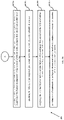
- FIGS. 3A and 3B shows a flowchart 200 illustrating the steps involved in a method for dynamically optimizing the operations of the logistics management system using the system 100 of FIG. 1 according to an embodiment of the present disclosure.
- the system 100 comprises one or more data storage devices or the memory 104 operatively coupled to the one or more processors 108 and is configured to store instructions for execution of steps of the method by the logistics management optimization unit 102.
- the steps of the method of the present disclosure will now be explained with reference to the components of the system 100 and the modules 202-220 as depicted in FIGS. 1-2 , and the flow diagram as depicted in FIGS.3A and 3B .
- the one or more hardware processors 108 receive a plurality of data based on historical data related to one or more parcels, data related to one or more sorting terminals, data related to one or more staffs, and a plurality of parameters related to the one or more parcel, wherein the one or more parcels, the one or more sorting terminals, the one or more staff and the plurality of parameters are associated with the logistics management system.
- the one or more hardware processors 108 forecast the plurality of data related to the one or more parcels based on the received plurality of data.
- the one or more hardware processors 108 configure each of the one or more sorting terminals as a second set of entities.
- the one or more hardware processors 108 configure the data related to the one or more staff as a third set of entities.
- the one or more hardware processors 108 construct a digital twin of the logistics management system using the second set of entities, the third set of entities and the plurality of parameters.
- the one or more hardware processors 108 provide a real time data related to the configured first, second and the third set of entities, as input to the constructed digital twin of the logistics management system to record a behavior of the configured first, second and the third set of entities.
- the one or more hardware processors 108 simulate the behavior of the configured first, second and the third set of entities for a plurality of scenarios.
- the one or more hardware processors 108 compare the simulated behavior and the recorded behavior of the configured first, second and the third set of entities in terms of a set of key performance indicators. Finally, at step 220 of the method 200, the one or more hardware processors 108, provide a set of requirements to the logistics management system based on the comparison to optimize the operation of the one or more sorting terminals.
- the table 7 and table 8 depicts a use case illustrating the sorting logic for re-circulation of total number of parcels (system parameter - box 126) and sorting time when the location of more utilized chute is replaced with less utilized chute placed near OCR (i.e., Optical Character Reader, for e.g., scanner).
- OCR Optical Character Reader
- An average sorting time which is represented in minutes (in terms of simulation 'tick') before replacing the more utilized chute with less utilized chute is depicted in table 7 and the average sorting time after replacing the more utilized chute with less utilized chute is depicted in table 8. It is observed from the table 7 and table 8 that, there is a reduction in the average sorting time after replacing the more utilized chute with less utilized chute, thereby illustrating the dynamic optimization of the operations of the logistics management system (e.g., the sorting terminal).
- the table 9 depicts a use case illustrating the effect of change in a circulation count when the re-circulation count is increased from 3 to 5. Referring to the table 7 and table 9, it is observed that there is a significant change in the average sorting time and the average number of circulations after the circulation count is increased from 3 to 5.
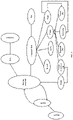
- FIG. 4 illustrates a use case example of dynamically optimizing the operations of the logistics management system, according to an embodiment of the present disclosure.
- FIG. 4 shows an illustrative actor topology with set of actors (i.e., entities 114 and 130 of FIG. 2 ) and their interactions.
- the sorting terminal statically includes one or more conveyor belts. Each conveyor belt comprises one or more slots, wherein each slot can hold a parcel at a specific time.
- the in-feeds, the OCRs (Optical Character Reader), the chutes and the cages are placed on each conveyor belt.
- the infeed introduces the one or more parcels into the conveyor belt, wherein the OCRs (Optical Character Reader) of the sorting terminal scans the data related to the one or more parcels to decide a destination chute, and the chutes collects the one or more parcels.
- the chutes are of four types which includes -
- the sorting terminal is typically divided into multiple zones wherein each zone may have a set of staffs to load the one or more parcels from the chute to the cage, and transfer cages from the sorting terminal to the destination trucks.
- the proposed sorting terminal digital twin considers a feeder (shown in FIG. 4 ) to introduce digital version of the parcels (virtual parcels) into the infeed to enable various what-if scenario which are depicted from table 1 to table 9.
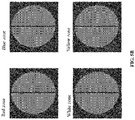
- FIGS. 5A and 5B illustrates a use case example of a resource allocation involved in dynamically optimizing the operations of the logistics management system, according to an embodiment of the present disclosure.
- 4 zones which includes red zone, blue zone, white zone and yellow zone are considered.
- the zone wise distribution is reduced from [3,3,3 4] to [2,2,2, 3] respectively.
- a method and a system for dynamically optimizing the operations of the logistics management system is provided.
- the proposed method and system for the optimization of processes in the logistics management system explain the use of the multi-modelling based simulatable digital twin for in-silico quantitative exploration of control, adaptation and transformation alternatives of the sorting terminals to help business experts to arrive at the right interventions at right time and with right sequence with precision.
- the hardware device can be any kind of device which can be programmed including e.g. any kind of computer like a server or a personal computer, or the like, or any combination thereof.
- the device may also include means which could be e.g. hardware means like e.g. an application-specific integrated circuit (ASIC), a field-programmable gate array (FPGA), or a combination of hardware and software means, e.g.
- ASIC application-specific integrated circuit
- FPGA field-programmable gate array
- the means can include both hardware means and software means.
- the method embodiments described herein could be implemented in hardware and software.
- the device may also include software means.
- the embodiments may be implemented on different hardware devices, e.g. using a plurality of CPUs.
- the embodiments herein can comprise hardware and software elements.
- the embodiments that are implemented in software include but are not limited to, firmware, resident software, microcode, etc.
- the functions performed by various components described herein may be implemented in other components or combinations of other components.
- a computer-usable or computer readable medium can be any apparatus that can comprise, store, communicate, propagate, or transport the program for use by or in connection with the instruction execution system, apparatus, or device.
- a computer-readable storage medium refers to any type of physical memory on which information or data readable by a processor may be stored.
- a computer-readable storage medium may store instructions for execution by one or more processors, including instructions for causing the processor(s) to perform steps or stages consistent with the embodiments described herein.
- the term "computer-readable medium” should be understood to include tangible items and exclude carrier waves and transient signals, i.e., be non-transitory. Examples include random access memory (RAM), read-only memory (ROM), volatile memory, nonvolatile memory, hard drives, CD ROMs, DVDs, flash drives, disks, and any other known physical storage media.
Landscapes
- Business, Economics & Management (AREA)
- Human Resources & Organizations (AREA)
- Engineering & Computer Science (AREA)
- Economics (AREA)
- Entrepreneurship & Innovation (AREA)
- Strategic Management (AREA)
- Development Economics (AREA)
- Quality & Reliability (AREA)
- Operations Research (AREA)
- Marketing (AREA)
- Tourism & Hospitality (AREA)
- Physics & Mathematics (AREA)
- General Business, Economics & Management (AREA)
- General Physics & Mathematics (AREA)
- Theoretical Computer Science (AREA)
- Educational Administration (AREA)
- Game Theory and Decision Science (AREA)
- Management, Administration, Business Operations System, And Electronic Commerce (AREA)
Applications Claiming Priority (1)
| Application Number | Priority Date | Filing Date | Title |
|---|---|---|---|
| IN202121012300 | 2021-03-22 |
Publications (1)
| Publication Number | Publication Date |
|---|---|
| EP4064158A1 true EP4064158A1 (fr) | 2022-09-28 |
Family
ID=80928983
Family Applications (1)
| Application Number | Title | Priority Date | Filing Date |
|---|---|---|---|
| EP22163140.1A Pending EP4064158A1 (fr) | 2021-03-22 | 2022-03-21 | Procédé et système pour optimiser dynamiquement les opérations d'un système de gestion de logistique |
Country Status (2)
| Country | Link |
|---|---|
| US (1) | US12511597B2 (fr) |
| EP (1) | EP4064158A1 (fr) |
Cited By (1)
| Publication number | Priority date | Publication date | Assignee | Title |
|---|---|---|---|---|
| CN118966723A (zh) * | 2024-10-16 | 2024-11-15 | 杭州默鑫智能科技有限公司 | 基于模糊控制的物流归类分拣控制方法及系统 |
Families Citing this family (8)
| Publication number | Priority date | Publication date | Assignee | Title |
|---|---|---|---|---|
| CN118013676A (zh) * | 2022-11-03 | 2024-05-10 | 顺丰科技有限公司 | 物流设备参数调优方法、装置、计算机设备及存储介质 |
| CN118536883A (zh) * | 2023-02-22 | 2024-08-23 | 顺丰科技有限公司 | 数据处理方法、装置、设备及存储介质 |
| CN118690525A (zh) * | 2023-03-24 | 2024-09-24 | 顺丰科技有限公司 | 数字孪生仿真模型及其构建方法、存储介质 |
| CN118798404A (zh) * | 2023-04-12 | 2024-10-18 | 顺丰科技有限公司 | 分拣计划的对比验证方法、装置、电子设备及存储介质 |
| JP2025031406A (ja) | 2023-08-25 | 2025-03-07 | 富士通株式会社 | デジタルツイン生成方法、デジタルツイン生成プログラムおよびデジタルツイン検索方法 |
| CN117077455B (zh) * | 2023-10-17 | 2023-12-22 | 北京博多国际货运代理有限公司 | 一种基于数字孪生技术的大件物流仿真方法与系统 |
| CN118710175B (zh) * | 2024-06-06 | 2025-06-13 | 北自所(北京)科技发展股份有限公司 | 基于数字孪生的仓储物流仿真优化平台及仿真优化方法 |
| CN121504398A (zh) * | 2024-08-07 | 2026-02-10 | 顺丰科技有限公司 | 设备信息确定方法、计算机设备和存储介质 |
Citations (2)
| Publication number | Priority date | Publication date | Assignee | Title |
|---|---|---|---|---|
| CN108043734A (zh) * | 2017-12-07 | 2018-05-18 | 深圳市欣视景科技股份有限公司 | 一种交叉带分拣系统的模拟方法及可读存储介质 |
| CN111625919A (zh) * | 2019-02-28 | 2020-09-04 | 顺丰科技有限公司 | 物流仿真系统的设计方法和装置 |
Family Cites Families (8)
| Publication number | Priority date | Publication date | Assignee | Title |
|---|---|---|---|---|
| US6889814B2 (en) * | 2001-05-30 | 2005-05-10 | Rapistan Systems Advertising Corp. | Article sortation system |
| EP2195123B1 (fr) * | 2007-09-13 | 2018-05-16 | Lockheed Martin Corporation | Système de tri et/ou de rangement de courrier mixte à l'échelle d'un site |
| CN108430894B (zh) * | 2015-12-22 | 2020-11-03 | 伯曼集团股份公司 | 具有能调节的轨道长度的线分拣机 |
| JP7034919B2 (ja) * | 2016-01-11 | 2022-03-14 | オペックス コーポレーション | 運搬車両を有する材料取り扱い装置 |
| MX2018013807A (es) * | 2016-05-13 | 2019-08-14 | Walmart Apollo Llc | Sistemas y metodos para ordenacion de productos utilizando un ensamble transportador. |
| EP3492185B1 (fr) | 2017-11-29 | 2021-06-30 | Siemens Aktiengesellschaft | Procédé de distribution et de triage de produits à trier anticipés dans un réseau logistique |
| US11119882B2 (en) * | 2019-10-09 | 2021-09-14 | International Business Machines Corporation | Digital twin workflow simulation |
| US11318616B2 (en) * | 2019-11-11 | 2022-05-03 | Rockwell Automation Technologies, Inc. | Robotic digital twin control with industrial context simulation |
-
2022
- 2022-03-21 US US17/699,259 patent/US12511597B2/en active Active
- 2022-03-21 EP EP22163140.1A patent/EP4064158A1/fr active Pending
Patent Citations (2)
| Publication number | Priority date | Publication date | Assignee | Title |
|---|---|---|---|---|
| CN108043734A (zh) * | 2017-12-07 | 2018-05-18 | 深圳市欣视景科技股份有限公司 | 一种交叉带分拣系统的模拟方法及可读存储介质 |
| CN111625919A (zh) * | 2019-02-28 | 2020-09-04 | 顺丰科技有限公司 | 物流仿真系统的设计方法和装置 |
Non-Patent Citations (3)
| Title |
|---|
| "Artificial Intelligence: A Modern Approach, Third Edition. Chapter 18: Learning from Examples", 1 January 2010, PRENTICE HALL, ISBN: 978-0-13-604259-4, article STUART RUSSELL ET AL: "Artificial Intelligence: A Modern Approach, Third Edition. Chapter 18: Learning from Examples", XP055428238 * |
| ANONYMOUS: "Reinforcement learning - Wikipedia", 1 January 2020 (2020-01-01), XP055809689, Retrieved from the Internet <URL:https://en.wikipedia.org/w/index.php?title=Reinforcement_learning&oldid=933542720> [retrieved on 20210601] * |
| CHEN TZU-LI ET AL: "Solving the layout design problem by simulation-optimization approach-A case study on a sortation conveyor system", SIMULATION MODELLING PRACTICE AND THEORY, ELSEVIER, AMSTERDAM, NL, vol. 106, 17 September 2020 (2020-09-17), XP086352086, ISSN: 1569-190X, [retrieved on 20200917], DOI: 10.1016/J.SIMPAT.2020.102192 * |
Cited By (1)
| Publication number | Priority date | Publication date | Assignee | Title |
|---|---|---|---|---|
| CN118966723A (zh) * | 2024-10-16 | 2024-11-15 | 杭州默鑫智能科技有限公司 | 基于模糊控制的物流归类分拣控制方法及系统 |
Also Published As
| Publication number | Publication date |
|---|---|
| US12511597B2 (en) | 2025-12-30 |
| US20220343260A1 (en) | 2022-10-27 |
Similar Documents
| Publication | Publication Date | Title |
|---|---|---|
| US12511597B2 (en) | Method and system for dynamically optimizing the operations of logistics management system | |
| Drexl et al. | Multicriteria airport gate assignment and Pareto simulated annealing | |
| US20090292566A1 (en) | Yield Management of Configurable Restaurants | |
| Ye et al. | Cross-docking truck scheduling with product unloading/loading constraints based on an improved particle swarm optimisation algorithm | |
| Zhou et al. | A data-driven business intelligence system for large-scale semi-automated logistics facilities | |
| CN113435998A (zh) | 贷款逾期预测方法、装置、电子设备及存储介质 | |
| Barat et al. | Digital twin as risk-free experimentation aid for techno-socio-economic systems | |
| Zenker et al. | Dock sharing in cross-docking facilities of the postal service industry | |
| Khir et al. | Two-stage sort planning for express parcel delivery | |
| Bozer et al. | Throughput performance analysis and machine layout for discrete-space closed-loop conveyors | |
| Huang et al. | Robust model for the assignment of outgoing flights on airport baggage unloading areas | |
| Pasandideh et al. | A bi-objective hub maximal covering location problem considering time-dependent reliability and the second type of coverage | |
| CN119784005A (zh) | 一种智能工单管理方法、系统、设备及介质 | |
| Barth et al. | Optimization of transfer baggage handling in a major transit airport | |
| Zuting et al. | A synchronized strategy to minimize vehicle dispatching time: a real example of steel industry | |
| Yuan et al. | Multi-objective optimization of the auto-carrier loading and routing problem in an automotive logistics company | |
| Vargas et al. | Improving the tactical planning of solid waste collection with prescriptive analytics: a case study | |
| Jia et al. | A performance analysis of dispatch rules for semiconductor assembly & test operations | |
| Ghosh et al. | A simulation driven optimization algorithm for scheduling sorting center operations | |
| Clausen et al. | Operating parcel transshipment terminals: a combined simulation and optimization approach | |
| Yan et al. | A customer selection and vehicle scheduling model for moving companies | |
| CN120806881A (zh) | 一种基于人工智能的自动化政务审批系统以及方法 | |
| Taghizadeh et al. | A Multiobjective Mathematical Model for Truck Scheduling Problem in Multidoor Cross‐Docking System | |
| Sahba et al. | Spare parts provisioning for multiple k-out-of-n: G systems | |
| Liu et al. | Modelling of semiconductor wafer fabrication systems by extended object-oriented Petri nets |
Legal Events
| Date | Code | Title | Description |
|---|---|---|---|
| PUAI | Public reference made under article 153(3) epc to a published international application that has entered the european phase |
Free format text: ORIGINAL CODE: 0009012 |
|
| STAA | Information on the status of an ep patent application or granted ep patent |
Free format text: STATUS: THE APPLICATION HAS BEEN PUBLISHED |
|
| AK | Designated contracting states |
Kind code of ref document: A1 Designated state(s): AL AT BE BG CH CY CZ DE DK EE ES FI FR GB GR HR HU IE IS IT LI LT LU LV MC MK MT NL NO PL PT RO RS SE SI SK SM TR |
|
| STAA | Information on the status of an ep patent application or granted ep patent |
Free format text: STATUS: REQUEST FOR EXAMINATION WAS MADE |
|
| 17P | Request for examination filed |
Effective date: 20221209 |
|
| RBV | Designated contracting states (corrected) |
Designated state(s): AL AT BE BG CH CY CZ DE DK EE ES FI FR GB GR HR HU IE IS IT LI LT LU LV MC MK MT NL NO PL PT RO RS SE SI SK SM TR |
|
| STAA | Information on the status of an ep patent application or granted ep patent |
Free format text: STATUS: EXAMINATION IS IN PROGRESS |
|
| 17Q | First examination report despatched |
Effective date: 20240502 |