EP4064280A1 - Procédé d'interaction et dispositif électronique - Google Patents
Procédé d'interaction et dispositif électronique Download PDFInfo
- Publication number
- EP4064280A1 EP4064280A1 EP20889160.6A EP20889160A EP4064280A1 EP 4064280 A1 EP4064280 A1 EP 4064280A1 EP 20889160 A EP20889160 A EP 20889160A EP 4064280 A1 EP4064280 A1 EP 4064280A1
- Authority
- EP
- European Patent Office
- Prior art keywords
- phoneme
- conference group
- phoneme sequence
- user
- conference
- Prior art date
- Legal status (The legal status is an assumption and is not a legal conclusion. Google has not performed a legal analysis and makes no representation as to the accuracy of the status listed.)
- Pending
Links
Images



Classifications
-
- G—PHYSICS
- G10—MUSICAL INSTRUMENTS; ACOUSTICS
- G10L—SPEECH ANALYSIS TECHNIQUES OR SPEECH SYNTHESIS; SPEECH RECOGNITION; SPEECH OR VOICE PROCESSING TECHNIQUES; SPEECH OR AUDIO CODING OR DECODING
- G10L15/00—Speech recognition
- G10L15/02—Feature extraction for speech recognition; Selection of recognition unit
-
- H—ELECTRICITY
- H04—ELECTRIC COMMUNICATION TECHNIQUE
- H04L—TRANSMISSION OF DIGITAL INFORMATION, e.g. TELEGRAPHIC COMMUNICATION
- H04L65/00—Network arrangements, protocols or services for supporting real-time applications in data packet communication
- H04L65/40—Support for services or applications
- H04L65/401—Support for services or applications wherein the services involve a main real-time session and one or more additional parallel real-time or time sensitive sessions, e.g. white board sharing or spawning of a subconference
- H04L65/4015—Support for services or applications wherein the services involve a main real-time session and one or more additional parallel real-time or time sensitive sessions, e.g. white board sharing or spawning of a subconference where at least one of the additional parallel sessions is real time or time sensitive, e.g. white board sharing, collaboration or spawning of a subconference
-
- G—PHYSICS
- G10—MUSICAL INSTRUMENTS; ACOUSTICS
- G10L—SPEECH ANALYSIS TECHNIQUES OR SPEECH SYNTHESIS; SPEECH RECOGNITION; SPEECH OR VOICE PROCESSING TECHNIQUES; SPEECH OR AUDIO CODING OR DECODING
- G10L15/00—Speech recognition
- G10L15/26—Speech to text systems
-
- G—PHYSICS
- G10—MUSICAL INSTRUMENTS; ACOUSTICS
- G10L—SPEECH ANALYSIS TECHNIQUES OR SPEECH SYNTHESIS; SPEECH RECOGNITION; SPEECH OR VOICE PROCESSING TECHNIQUES; SPEECH OR AUDIO CODING OR DECODING
- G10L19/00—Speech or audio signals analysis-synthesis techniques for redundancy reduction, e.g. in vocoders; Coding or decoding of speech or audio signals, using source filter models or psychoacoustic analysis
- G10L19/0018—Speech coding using phonetic or linguistical decoding of the source; Reconstruction using text-to-speech synthesis
-
- H—ELECTRICITY
- H04—ELECTRIC COMMUNICATION TECHNIQUE
- H04L—TRANSMISSION OF DIGITAL INFORMATION, e.g. TELEGRAPHIC COMMUNICATION
- H04L65/00—Network arrangements, protocols or services for supporting real-time applications in data packet communication
- H04L65/40—Support for services or applications
- H04L65/403—Arrangements for multi-party communication, e.g. for conferences
-
- H—ELECTRICITY
- H04—ELECTRIC COMMUNICATION TECHNIQUE
- H04L—TRANSMISSION OF DIGITAL INFORMATION, e.g. TELEGRAPHIC COMMUNICATION
- H04L65/00—Network arrangements, protocols or services for supporting real-time applications in data packet communication
- H04L65/60—Network streaming of media packets
- H04L65/75—Media network packet handling
- H04L65/762—Media network packet handling at the source
-
- H—ELECTRICITY
- H04—ELECTRIC COMMUNICATION TECHNIQUE
- H04L—TRANSMISSION OF DIGITAL INFORMATION, e.g. TELEGRAPHIC COMMUNICATION
- H04L65/00—Network arrangements, protocols or services for supporting real-time applications in data packet communication
- H04L65/60—Network streaming of media packets
- H04L65/75—Media network packet handling
- H04L65/764—Media network packet handling at the destination
-
- H—ELECTRICITY
- H04—ELECTRIC COMMUNICATION TECHNIQUE
- H04M—TELEPHONIC COMMUNICATION
- H04M3/00—Automatic or semi-automatic exchanges
- H04M3/42—Systems providing special services or facilities to subscribers
- H04M3/56—Arrangements for connecting several subscribers to a common circuit, i.e. affording conference facilities
- H04M3/568—Arrangements for connecting several subscribers to a common circuit, i.e. affording conference facilities audio processing specific to telephonic conferencing, e.g. spatial distribution, mixing of participants
-
- H—ELECTRICITY
- H04—ELECTRIC COMMUNICATION TECHNIQUE
- H04N—PICTORIAL COMMUNICATION, e.g. TELEVISION
- H04N7/00—Television systems
- H04N7/14—Systems for two-way working
- H04N7/15—Conference systems
-
- G—PHYSICS
- G10—MUSICAL INSTRUMENTS; ACOUSTICS
- G10L—SPEECH ANALYSIS TECHNIQUES OR SPEECH SYNTHESIS; SPEECH RECOGNITION; SPEECH OR VOICE PROCESSING TECHNIQUES; SPEECH OR AUDIO CODING OR DECODING
- G10L15/00—Speech recognition
- G10L15/02—Feature extraction for speech recognition; Selection of recognition unit
- G10L2015/025—Phonemes, fenemes or fenones being the recognition units
-
- H—ELECTRICITY
- H04—ELECTRIC COMMUNICATION TECHNIQUE
- H04M—TELEPHONIC COMMUNICATION
- H04M2201/00—Electronic components, circuits, software, systems or apparatus used in telephone systems
- H04M2201/39—Electronic components, circuits, software, systems or apparatus used in telephone systems using speech synthesis
-
- H—ELECTRICITY
- H04—ELECTRIC COMMUNICATION TECHNIQUE
- H04M—TELEPHONIC COMMUNICATION
- H04M2201/00—Electronic components, circuits, software, systems or apparatus used in telephone systems
- H04M2201/40—Electronic components, circuits, software, systems or apparatus used in telephone systems using speech recognition
Definitions
- the present invention relates to the technical field of communications, and in particular, to an interaction method and an electronic device.
- the remote video conference usually sends audios, videos and electronic documents directly to the participating parties. In this way, only one remote video conference can be participated at a time. Therefore, in the prior art, when the remote video conference is participated through the electronic device, there is a problem that the number of participating parties is limited.
- Embodiments of the present invention provide an interaction method and an electronic device, so as to solve the problem that the number of participating parties is limited when the video conference is participated through the electronic device.
- the embodiments of the present invention provide an interaction method, applied to a first sending terminal of a teleconference.
- the method includes:
- the embodiments of the present invention further provide an interaction method, applied to a first receiving terminal of a teleconference.
- the method includes:
- the embodiments of the present invention further provide an electronic device, applied to a first sending terminal of a teleconference.
- the electronic device includes:
- the embodiments of the present invention further provide an electronic device, applied to a first receiving terminal of a teleconference.
- the electronic device includes:
- the embodiments of the present invention further provide an electronic device, including a processor, a memory, and a computer program stored in the memory and capable of running on the processor, wherein when the computer program is executed by the processor, the steps of the above interaction method are implemented.
- the embodiments of the present invention further provide a computer readable storage medium, storing a computer program, wherein when the computer program is executed by a processor, the steps of the above interaction method are implemented.
- the target conversation message input by a user is received; the target conversation message is converted into the first phoneme sequence; the first phoneme sequence is subjected to phoneme coding according to the first phoneme conversion rule corresponding to the first conference group to obtain the second phoneme sequence; and the second phoneme sequence is sent to the first receiving terminal of the first conversation group, so that the conversation message can be sent. Since the conversation message of the teleconference is transmitted through the phoneme sequence, so that limitation to the voice transmission form is avoided, and a user can attend a plurality of teleconferences at the same time. Meanwhile, the transmitted phoneme sequence is subjected to encryption coding by the phoneme conversion rule, so that the transmission safety of the conversation message is improved.
- FIG. 1 is a flowchart of an interaction method according to an embodiment of the present Invention. As shown in FIG. 1 , the method includes the following steps: Step 101: receiving a target conversation message input by a user.
- the interaction method provided by the embodiments of the present invention is mainly applied to a teleconference and used for controlling transmission of a voice message.
- the interaction method of this embodiment is applied to a first sending terminal of a teleconference.
- the party sending the target conversation message in the teleconference is a first sending terminal, and the first sending terminal may also receive the conversation messages sent by other parties participating in the teleconference.
- the target conversation message is a voice message or a text message.
- a user of the first sending terminal may input the target conversation message through voice under the state of convenient voice sending, and may input the target conversation message through a text under the state of inconvenient voice sending.
- the teleconference may be a video conference, or may also be a voice conference, which will not be further limited herein.
- a voice input mode and a text input mode may be set for users to select. It should be understood that when participating in a plurality of teleconferences, a user - selects a certain teleconference as a voice input mode and other teleconferences as text input modes. All the teleconferences may also be set as the text input modes.
- the voice input mode refers to transmitting voice data acquired locally to other participating parties in the teleconference in real time.
- a voice input control may also be provided. When an operation control is pressed, voice input may be performed. In this way, one communication interface may be provided for each teleconference. Voice-converted text messages sent by other participating parties are displayed on the communication interface, and the voice input control and a text input control are displayed at the same time. A user may selectively perform text or voice input. It should be understood that one or a plurality of communication interfaces may be displayed at the same time. For example, when one communication interface is displayed, communication interfaces corresponding to different teleconferences may be switched and displayed through switching operation.
- Step 102 converting the target conversation message into a first phoneme sequence.
- the phoneme may include initial consonants of a Chinese syllable, simple or compound vowels of a Chinese syllable, and syllables read as a whole.
- the target conversation message is a voice message
- the target conversation message input by a user may be subjected to voice recognition based on a voice recognition technology to obtain a first phoneme sequence.
- the target conversation message is a text message
- the target conversation message may be subjected to phonetic notation by a phonetic notation tool so as to obtain a first phoneme sequence.
- Step 103 performing phoneme coding on the first phoneme sequence according to a first phoneme conversion rule corresponding to a first conference group to obtain a second phoneme sequence.
- the first phoneme conversion rule is an encryption rule or may be understood as a phoneme mapping rule, and each phoneme in the first phoneme sequence is converted into another mapping according to the first phoneme conversion rule.
- the first phoneme sequence to the second phoneme sequence may be a one-to-one mapping relationship, or may also be a one-to-many mapping relationship, which is not further limited herein.
- phoneme conversion rules corresponding to different conference groups may be the same, or may also be different, which is not further limited herein. It should be understood that the phoneme conversion roles in the same conference group are the same, so that it can be ensured that each participating party can correctly perform phoneme decoding.
- the first phoneme sequence is subjected to encryption coding by the phoneme conversion rule, so that it can be ensured that only the participating parties can perform correct decoding and learn conference contents. Therefore, the message sending safety can be improved, and the conference content can be prevented from being intercepted by others.
- the conference group refers to all participating parties participating in the same teleconference.
- syllables read as a whole: zhi, chi, shi, ri, zi, ci, si, yuan, ya, yao, yan, yang, yuan, yo, yong, wa, wai, wan, wang, wo, weng.
- y and w are not used as initial constants, but the simple or compound vowels which can be combined with y and w can be used as the syllables read as a whole, regarded as a phoneme.
- Pinyin of a word can be formed by combining the initial consonant and the simple or compound vowel, which is also a simple or compound vowel or a syllable read as a whole.
- Each syllable read as a whole has four tones, so there are totally 84 syllables read as a whole.
- the initial consonant alone cannot represent a word. Therefore, during phoneme coding, the initial consonant only can be coded as an initial consonant, the simple or compound vowel only can be coded as a simple or compound vowel, and the syllable read as a whole only can be coded as a syllable read as a whole.
- the initial consonants have 21 21 coding forms
- the simple or compound vowels have 96 96 coding forms
- the syllables read as a whole have 84 84 coding forms.
- (21 21 +96 96 +84 84 ) coding tables may be formed, so that it is very difficult to crack the coding tables. That is, the first phoneme conversion rule is one of (21 21 +96 96 +84 84 ) phoneme conversion rules. Therefore, in the embodiments of the present invention, the phoneme sequence is subjected to encryption coding by the phoneme coding rule, so that the safety of message transmission can be improved.
- the target conversation message input by a user is that "my password is hidden here" is subjected to voice recognition to obtain the first phoneme sequence "w o3 d el m i4 m a3 y ing3 c ang2 z ai4 zh e4 1 il".
- the second phoneme sequence is "w o3 sh uol j inl t ianl d el t ianl q il zh enl h ao3".
- Step 104 sending the second phoneme sequence to a first receiving terminal of the first conference group.
- the first receiving terminal may be all participating parties in the first conference group other than the first sending terminal. That is, in this embodiment, the target conversation message input by a user may be sent to all the participating parties after being subjected to phoneme coding.
- one teleconference includes a participating party located in a main venue, and other participating parties located outside the main venue.
- the first sending party may be a participating party in the main venue in the teleconference corresponding to the first conference group, may also be a participating party in the main venue in the teleconferences corresponding to other conference groups, or may also be a participating party not in the main venue in any one teleconference.
- the target conversation message input by a user is received; the target conversation message is converted into the first phoneme sequence; the first phoneme sequence is subjected to phoneme coding according to the first phoneme conversion rule corresponding to the first conference group to obtain the second phoneme sequence; and the second phoneme sequence is sent to the first receiving terminal of the first conversation group, so that the conversation message can be sent. Since the conversation message of the teleconference is transmitted through the phoneme sequence, so that limitation to the voice transmission form is avoided, and a user can attend a plurality of teleconferences at the same time. Meanwhile, the transmitted phoneme sequence is subjected to encryption coding by the phoneme conversion rule, so that the transmission safety of the conversation message is improved.
- the first phoneme conversion rule may be agreed in advance and each participating party directly selects the first phoneme conversion rule locally, or a specific participating party (such as a participating party in the main venue or other participating parties) randomly selects one phoneme conversion rule and then sends the phoneme conversion rule to other participating parties.
- a specific participating party such as a participating party in the main venue or other participating parties
- the new participating party may request a phoneme conversion rule to the specific participating party.
- the specific participating party sends the phoneme conversion rule to the new participating party.
- the first sending terminal is inconvenient to send voice in the first conference group.
- the first sending terminal performs voice communication in other conference groups (for example, located in the main venue of the teleconference corresponding to other conference groups), or the current environment of the first sending terminal is not suitable for sending voice (communicating with others, and the conference content is inconvenient for others to learn).
- the first sending terminal sends the conversation message to other participating parties in the first conference group through a phoneme.
- the target conversation message is a voice message
- the first sending terminal is convenient to send voice in the first conference group.
- the first sending terminal may send the conversation message to participating parties in convenient to answer voice in the first conference group through a phoneme, or may also send the conversation message to the participating parties convenient to answer voice in the first conference group through a phoneme or audio frequency.
- the method further includes: sending the target conversation message to a second receiving terminal of the first conference group through an audio frequency.
- the first receiving terminal is a participating party inconvenient to answer in participating parties specified by a user to send (or all participating parties); and the second receiving terminal is a participating party convenient to answer in participating parties specified by a user to send (or all participating parties).
- the target conversation message is sent by the participating party convenient to answer directly through an audio frequency, so that the sending effectiveness of the conversation message can be improved.
- the participating party specified to send may be a participating party of the main venue or other participating parties.
- the first sending terminal may be used to send the conversation message, and may also be used to receive the conversation message.
- the conversation message may be received through an audio frequency or through a phoneme.
- the method further includes:
- the first sending terminal usually, the first sending terminal only can send or receive audio data in one conference group according to an audio frequency at the same time, and the first sending terminal may switch to different conference groups for voice communication at different times; therefore, the first conference group and the second conference group may the same conference group or different conference groups.
- the first sending terminal cannot switch to different conference groups for voice communication and the first sending terminal sends the target conference message to the second receiving terminal of the first conference group through an audio frequency, the first conference group and the second conference group are the same conference group at this time.
- first audio data may be played according to default voice or the voice of a sending user (for example, voiceprint information may be sent together, and synthesis may be performed according to the voiceprint of the sending user).
- voiceprint information of each participating party may also be saved, and a user identity is added when the conversation message is sent, so that the receiving party directly determines the voiceprint information used in phoneme synthesis according to the user identity, and the transmission of the voiceprint information can be reduced.
- the voiceprint may be recognized in the voice recognition process, so that the user identity can be determined.
- the method further includes:
- the text content corresponding to the fourth phoneme sequence can be displayed.
- second audio data synthesized by the fourth phoneme sequence can be played.
- the mode of synthesizing the fourth phoneme sequence into the second audio data may be referenced to related art, which is not further limited herein.
- the first sending terminal usually, the first sending terminal only can send or receive audio data in one conference group according to an audio frequency at the same time, and the first sending terminal may switch to different conference groups for voice communication at different times; therefore, the first conference group and the third conference group may the same conference group or different conference groups.
- the first sending terminal cannot switch to different conference groups for voice communication and the first sending terminal sends the target conference message to the second receiving terminal of the first conference group through an audio frequency
- the first conference group and the third conference group are the same conference group at this time.
- user information of a sending user corresponding to the fourth phoneme sequence may also be displayed when the text content corresponding to the fourth phoneme sequence may be displayed.
- an operating control 201 may also be displayed. When a user clicks the operating control 201, the text content corresponding to the fourth phoneme sequence may be played in the form of voice.
- the display form of the teleconference may be set according to actual requirements.
- the electronic device of the folding screen and the display mode of the teleconference are described below in detail.
- the method before receiving the target conversation message input by a user, the method further includes:
- the display of the conference chat window in the same conference group may be set according to actual requirements.
- the conference chat window in the conference group may be display through a social chat group.
- the conversation message displayed in the conference chat window specifically refers to a conversation message transmitted through a phoneme.
- the electronic presentation document may be multimedia documents which can be displayed, such as PPT (PowerPoint), word and the like.
- PPT PowerPoint
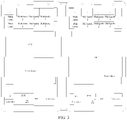
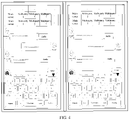
- FIG. 2 to FIG. 5 an interactive interface of the teleconference is described below in detail with reference to specific examples.
- each participating party may be manually selected by each participating party, or may also be automatically detected by an electronic device of the participating party, which is not further limited herein.
- the state may be sent to each participating party, or the state whether it is convenient for each participating party to transmit the conversation message through the audio frequency may be sent to a specified participating party (such as a participating party of the main venue), and then the main participating party sends the state to each participating party.
- a single-venue video window may be displayed in a first display area, and a single-venue conference chat window may be displayed in a second display area.
- the display form of the video window may be set in the single-venue video window, PPT of the single venue may only be displayed, the live video of the single venue may only be displayed, and the PPT and live video of the single venue may be displayed at the same time.
- the conference participating parties are displayed above the single-venue video window and above the single-venue conference chat window.
- the conference participating parties are displayed in the form of a list. In this list, each row represents all participating parties of one teleconference. A user may perform operation on the corresponding list to switch the content displayed by the single-venue video window or the single-venue conference chat window.
- the user may select the participating party sent by one conversation message based on the list above the single-venue conference chat window.
- the state whether it is convenient for each participating party to transmit the conversation message through an audio frequency may be marked and displayed in the list.
- the single-venue video window and the single-venue conference chat window may belong to the same teleconference, or may also belong to different teleconferences, which is not further limited herein.
- a single-venue video window may be displayed in the first display area, and a single-venue video window may be displayed in the second display area.
- the display form of the video window may be set in the single-venue video window, PPT of the single venue may only be displayed, the live video of the single venue may only be displayed, or the PPT and live video of the single venue may be displayed at the same time.
- the display forms of the single-venue video window in the first display area and the single-venue video window in the second display area may be the same or different.
- the single-venue conference chat window may be displayed in the first display area, and the single-venue conference chat window may be displayed in the second display area.
- a double-venue video window may be displayed in the first display area, and a single-venue conference chat window may be displayed in the second display area.
- the display form of the video window may be set in the double-venue video window, PPT of the double venue may only be displayed, the live video of the double venue may only be displayed, or the PPT and live video of the double venue may be displayed at the same time.
- the phoneme conversion rules adopted by devices corresponding to each user in the group are the same. Specifically, the mode of determining the phoneme conversion rule in a certain group by each device may be set according to actual requirements.
- the method before receiving the target conversation message input by a user, the method further includes:
- the first sending terminal serves as a deciding party or a sending party of a first phoneme conversion rule
- the first phoneme conversion rule may be sent by the first sending terminal to other users in a first conference group.
- the first sending terminal may be a device corresponding to a certain participating party in a main venue corresponding to the first conference group.
- the phoneme conversion rule may be determined by participating parties in the main venue and then is forwarded to other participating parties.
- the first sending party may randomly generate a group of phoneme conversion rules to serve as a first phoneme conversion rule.
- the first phoneme conversion rule may be generated by a certain participating party outside the main venue and then is sent to each participating party.
- the first phoneme conversion rule may also be generated by a certain participating party outside the main venue, and the first phoneme conversion rule is sent to a main venue participating party and then is sent to other participating parties by the main venue participating party.
- the first sending terminal may send the first phoneme conversion rule and may be sent to some or all users in the first conference group.
- the first device may further be a device selected by the first sending terminal or a device corresponding to a user who meets a preset condition.
- the preset condition may be a user whose user level is higher than a preset level. Therefore, the sending pertinence of the first phoneme conversion rule and the safety of the conference are improved.
- the method before receiving the target conversation message input by a user, the method further includes:
- the difference from the above embodiment lies in that the first sending terminal serves as a receiving party of the first phoneme conversion rule, the first sending terminal may be a certain participating party in the main venue corresponding to the first conference group, or a participating party outside the main venue, which will not be further limited herein.
- the first sending terminal may request the first terminal to send the first phoneme conversion rule, or the first sending terminal may passively receive the first phoneme conversion rule sent by the first device.
- the first sending terminal may be a device corresponding to a user who meets a preset condition.
- the preset condition may be a user whose user level is higher than a preset level. Therefore, the sending pertinence of the first phoneme conversion rule and the safety of the conference are improved.
- the electronic device may be connected to augmented reality (Augmented Reality, AR) glasses.
- augmented reality Augmented Reality, AR
- the live PPT and the PPT of the teleconference may be watched by the AR glasses at the same time, and the text converted from the audio of a speaker of the teleconference may be seen.
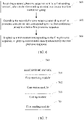
- the embodiments of the present invention further provide another interaction method. As shown in FIG. 6 , the method includes:
- the method further includes:
- the method further includes:
- the method before receiving the second phoneme sequence sent by the first sending terminal, the method further includes:
- the method before receiving the second phoneme sequence sent by the first sending terminal, the method further includes:
- the interaction method provided by the embodiments of the present invention is applied to a first receiving terminal of the teleconference
- the first receiving terminal is a receiving terminal corresponding to the first sending terminal provided by the above embodiment
- the specific implementation may be referenced to the description of the process of receiving the third phoneme sequence by the first sending terminal provided by the above embodiment, which will not be elaborated herein.
- the conversation message of the teleconference is transmitted through the phoneme sequence, so that limitation to the voice transmission form is avoided, and a user can attend a plurality of teleconferences at the same time.
- the transmitted phoneme sequence is subjected to encryption coding by the phoneme conversion rule, so that the transmission safety of the conversation message is improved.
- FIG. 7 is a structural diagram of an electronic device according to an embodiment of the present invention.
- the electronic device is applied to a first sending terminal of a teleconference.
- the electronic device 700 includes:
- the electronic device further includes: a second sending module, configured to send the target conversation message to a second receiving terminal of the first conference group through an audio frequency.
- the electronic device 700 further includes:
- the electronic device 700 further includes:
- the electronic device 700 further includes:
- the electronic device 700 further includes:
- the electronic device 700 further includes:
- the electronic device provided in this embodiment of the present invention can implement the processes implemented by the electronic device in the method embodiment in FIG. 1 to FIG. 5 . To avoid repetition, details are not described herein again.
- FIG. 8 is a structural diagram of an electronic device according to an embodiment of the present invention.
- the electronic device is applied to a first receiving terminal of a teleconference.
- the electronic device 800 includes:
- the electronic device 800 further includes:
- the electronic device 800 further includes:
- the electronic device 800 further includes:
- the electronic device provided by the embodiments of the present invention can implement the processes implemented by the electronic device in the method embodiment in FIG. 6 . To avoid repetition, details are not described herein again.
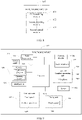
- FIG. 9 is a schematic diagram of a hardware structure of an electronic device according to embodiments of the present invention.
- the electronic device 900 includes but is not limited to components such as a radio frequency unit 901, a network module 902, an audio output unit 903, an input unit 904, a sensor 905, a display unit 906, a user input unit 907, an interface unit 908, a memory 909, a processor 910, and a power supply 911.
- a radio frequency unit 901 such as a radio frequency unit 901, a network module 902, an audio output unit 903, an input unit 904, a sensor 905, a display unit 906, a user input unit 907, an interface unit 908, a memory 909, a processor 910, and a power supply 911.
- a person skilled in the art may understand that the structure of the electronic device shown in FIG. 9 constitutes no limitation on the electronic device.
- the electronic device may include more or fewer components than those shown in the figure, or a combination of some components, or an arrangement of different components.
- the electronic device includes but is not limited to a mobile phone, a tablet computer, a notebook computer, a palmtop
- a radio frequency unit 901 is configured to receive a target conversation message input by a user
- a radio frequency unit 901 is configured to receive a second phoneme sequence sent by a first sending terminal, wherein the first sending terminal is a device in a first conference group; and a processor 910 is configured to decode the second phoneme sequence according to a first phoneme conversion rule corresponding to the first conference group to obtain a first phoneme sequence, and display a text content corresponding to the first phoneme sequence or play second audio data synthesized by the first phoneme sequence.
- the electronic device provided by the embodiments of the present invention can implement the processes implemented by the electronic device in the method embodiment in FIG. 1 and FIG. 6 . To avoid repetition, details are not described herein again.
- the conversation message of the teleconference is transmitted through the phoneme sequence, so that limitation to the voice transmission form is avoided, and a user can attend a plurality of teleconferences at the same time.
- the transmitted phoneme sequence is subjected to encryption coding by the phoneme conversion rule, so that the transmission safety of the conversation message is improved.
- the radio frequency unit 901 may be configured to receive and transmit information, or receive and transmit signals during a call. Specifically, the radio frequency unit receives downlink data from a base station, and transmits the downlink data to the processor 910 for processing; and transmits uplink data to the base station.
- the radio frequency unit 901 includes, but is not limited to, an antenna, at least one amplifier, a transceiver, a coupler, a low noise amplifier, and a duplexer.
- the radio frequency unit 901 may also communicate with a network and other devices through a wireless communication system.
- the electronic device provides users with wireless broadband Internet access through the network module 902, for example, helps users receive and send e-mails, browse web pages, and access streaming media.
- the audio output unit 903 may convert audio data received by the radio frequency unit 901 or the network module 902 or stored in the memory 909 into an audio signal and output the audio signal as a sound. Moreover, the audio output unit 903 can further provide audio output related to a specific function performed the electronic device 900 (for example, call signal receiving sound and message receiving sound).
- the audio output unit 903 includes a speaker, a buzzer, a telephone receiver, and the like.
- the input unit 904 is configured to receive audio or radio frequency signals.
- the input unit 904 may include a graphics processing unit (Graphics Processing Unit, GPU) 9041 and a microphone 9042.
- the graphics processing unit 9041 is used to process image data of a static picture or a video obtained by an image capturing device (for example, a camera) in a video capturing mode or an image capturing mode.
- a processed image frame may be displayed on the display unit 906.
- the image frame processed by the graphics processing unit 9041 may be stored in the memory 909 (or another storage medium) or sent by using the radio frequency unit 901 or the network module 902.
- the microphone 9042 may receive sound and can process such sound into audio data.
- the audio data obtained through processing may be converted, in a telephone call mode, into a format that may be sent to a mobile communication base station via the radio frequency unit 901 for output.
- the electronic device 900 further includes at least one sensor 905, for example, a light sensor, a motion sensor, and another sensor.
- the light sensor includes an ambient light sensor and a proximity sensor.
- the ambient light sensor may adjust brightness of a display panel 9061 according to ambient light brightness.
- the proximity sensor may switch off the display panel 9061 and/or backlight when the electronic device 900 moves close to an ear.
- an accelerometer sensor may detect magnitude of acceleration in various directions (usually three axes), may detect magnitude and the direction of gravity when stationary, may be configured to identify electronic device postures (such as switching between a landscape mode and a portrait mode, related games, and magnetometer posture calibration), may perform functions related to vibration identification (such as a pedometer and a knock), and the like.
- the sensor 905 may further include a fingerprint sensor, a pressure sensor, an iris sensor, a molecular sensor, a gyroscope, a barometer, a hygrometer, a thermometer, an infrared sensor, or the like. Details are not described herein again.
- the display unit 906 is configured to display information entered by the user or information provided for the user.
- the display unit 906 may include the display panel 9061, and the display panel 9061 may be configured in a form of a liquid crystal display (Liquid Crystal Display, LCD), an organic light-emitting diode (Organic Light-Emitting Diode, OLED), or the like.
- LCD Liquid Crystal Display
- OLED Organic Light-Emitting Diode
- the user input unit 907 may be configured to receive entered number or character information, and generate key signal input related to user settings and function control of the electronic device.
- the user input unit 907 includes a touch panel 9071 and another input device 9072.
- the touch panel 9071 also called a touch screen, may collect touch operation on or near the touch panel by users (for example, operation on the touch panel 9071 or near the touch panel 9071 by fingers or any suitable objects or accessories such as a touch pen by the users).
- the touch panel 9071 may include two parts: a touch detection apparatus and a touch controller.
- the touch detection apparatus detects a touch position of the user, detects a signal brought by the touch operation, and transmits the signal to the touch controller.
- the touch controller receives touch information from the touch detection apparatus, converts the touch information into contact coordinates, sends the contact coordinates to the processor 910, and can receive and execute a command sent by the processor 910.
- the touch panel 9071 may be implemented by various types such as a resistive type, a capacitive type, an infrared ray type or a surface acoustic wave type.
- the user input unit 907 may further include other input devices 9072.
- the other input devices 9072 may include but are not limited to: a physical keyboard, a function key (such as a volume control key, a switch key), a trackball, a mouse, and a joystick, which is no longer repeated here.
- the touch panel 9071 can cover the display panel 9061.
- the touch panel 9071 transmits the touch operation to the processor 910 to determine a type of a touch event. Then the processor 910 provides corresponding visual output on the display panel 9061 based on the type of the touch event.
- the touch panel 9071 and the display panel 9061 are configured as two independent components to implement input and output functions of the electronic device, in some embodiments, the touch panel 9071 and the display panel 9061 can be integrated to implement the input and output functions of the electronic device. Details are not limited herein.
- the interface unit 908 is an interface for connecting an external apparatus and the electronic device 900.
- the external apparatus may include a wired or wireless headset port, an external power supply (or battery charger) port, a wired or wireless data port, a storage card port, a port configured to connect to an apparatus having an identification module, an audio input/output (I/O) port, a video I/O port, a headset port, and the like.
- the interface unit 908 can be configured to receive input from an external apparatus (for example, data information and power) and transmit the received input to one or more elements in the electronic device 900, or can be configured to transmit data between the electronic device 900 and the external apparatus.
- the memory 909 may be configured to store a software program and various data.
- the memory 909 may mainly include a program storage area and a data storage area.
- the program storage area may store an operating system, an application required by at least one function (for example, a sound play function or an image display function), and the like.
- the data storage area may store data (for example, audio data or an address book) or the like created based on use of the mobile phone.
- the memory 909 may include a high-speed random access memory or a nonvolatile memory, for example, at least one disk storage device, a flash memory, or other volatile solid-state storage devices.
- the processor 910 is a control center of the electronic device and connects all parts of the electronic device using various interfaces and circuits. By running or executing software programs and/or modules stored in the memory 909 and by calling data stored in the memory 909, the processor 910 implements various functions of the electronic device and processes data, thus performing overall monitoring on the electronic device.
- the processor 910 may include one or more processing units.
- the processor 910 may integrate an application processor and a modem processor.
- the application processor mainly deals with an operating system, a user interface, an application, and the like.
- the modem processor mainly deals with wireless communication. It may be understood that the modem processor may not be integrated into the processor 910.
- the electronic device 900 may further include a power supply 911 (such as a battery) supplying power to each component.
- a power supply 911 (such as a battery) supplying power to each component.
- the power supply 911 may be logically connected to the processor 910 by using a power management system, so as to implement functions such as charging management, discharging management and power consumption management by using the power management system.
- the electronic device 900 includes some functional modules not shown. Details are not described herein again.
- the embodiments of the present invention further provide an electronic device, including a processor 910, a memory 909, and a computer program that stored in the memory 909 and capable of running on the processor 910.
- an electronic device including a processor 910, a memory 909, and a computer program that stored in the memory 909 and capable of running on the processor 910.
- the computer program is executed by the processor 910, the foregoing processes of the interaction method embodiment are implemented, and a same technical effect can be achieved. To avoid repetition, details are not described herein again.
- the embodiments of the present interaction further provide a computer readable storage medium.
- the computer readable storage medium stores a computer program.
- the processes of the interaction method embodiment are implemented; and a same technical effect can be achieved. To avoid repetition, details are not described herein again.
- the computer-readable storage medium is, for example, a read-only memory (ROM), a random access memory (RAM), a magnetic disk, or an optical disc.
- the disclosed apparatus and method may be implemented in other manners.
- the apparatus embodiment described above is only an example.
- division into the units is only logical function division.
- There may be other division manners in actual implementation for example, a plurality of units or components may be combined or integrated into another system, or some features may be ignored or not implemented.
- the displayed or discussed mutual couplings or direct couplings or communication connections may be implemented by using some interfaces.
- the indirect couplings or communication connections between the devices or units may be implemented in electronic, mechanical, or other forms.
- the units described as separate parts may or may not be physically separate, and parts displayed as units may or may not be physical units, that is, may be located in one location, or may be distributed on a plurality of network units. Some or all of the units may be selected according to actual needs to achieve the objectives of the solutions of the examples.
- the functions may be stored in a computer-readable storage medium.
- the computer software products are stored in one storage medium and includes several instructions for enabling one computer device (which may be a personal computer, a sever or a network device) to perform all or some of the steps of the method according to the embodiments of the present invention.
- the storage medium includes various media that can store a program code such as a USB flash disk, a mobile hard disk, a ROM, a RAM, a magnetic disk, an optical disc, or the like.
Landscapes
- Engineering & Computer Science (AREA)
- Multimedia (AREA)
- Signal Processing (AREA)
- Computer Networks & Wireless Communication (AREA)
- Audiology, Speech & Language Pathology (AREA)
- Physics & Mathematics (AREA)
- Acoustics & Sound (AREA)
- Human Computer Interaction (AREA)
- Health & Medical Sciences (AREA)
- Computational Linguistics (AREA)
- Computer Vision & Pattern Recognition (AREA)
- Two-Way Televisions, Distribution Of Moving Picture Or The Like (AREA)
- Telephonic Communication Services (AREA)
Applications Claiming Priority (2)
| Application Number | Priority Date | Filing Date | Title |
|---|---|---|---|
| CN201911140650.5A CN111147444B (zh) | 2019-11-20 | 2019-11-20 | 一种交互方法及电子设备 |
| PCT/CN2020/129320 WO2021098675A1 (fr) | 2019-11-20 | 2020-11-17 | Procédé d'interaction et dispositif électronique |
Publications (2)
| Publication Number | Publication Date |
|---|---|
| EP4064280A1 true EP4064280A1 (fr) | 2022-09-28 |
| EP4064280A4 EP4064280A4 (fr) | 2023-01-11 |
Family
ID=70517185
Family Applications (1)
| Application Number | Title | Priority Date | Filing Date |
|---|---|---|---|
| EP20889160.6A Pending EP4064280A4 (fr) | 2019-11-20 | 2020-11-17 | Procédé d'interaction et dispositif électronique |
Country Status (6)
| Country | Link |
|---|---|
| US (1) | US20220277730A1 (fr) |
| EP (1) | EP4064280A4 (fr) |
| JP (1) | JP7507859B2 (fr) |
| KR (1) | KR102877001B1 (fr) |
| CN (1) | CN111147444B (fr) |
| WO (1) | WO2021098675A1 (fr) |
Families Citing this family (9)
| Publication number | Priority date | Publication date | Assignee | Title |
|---|---|---|---|---|
| CN111147444B (zh) * | 2019-11-20 | 2021-08-06 | 维沃移动通信有限公司 | 一种交互方法及电子设备 |
| CN114157991B (zh) * | 2020-08-18 | 2023-04-25 | 成都鼎桥通信技术有限公司 | 群组呼叫的录音记录播放方法及设备 |
| CN112069816A (zh) * | 2020-09-14 | 2020-12-11 | 深圳市北科瑞声科技股份有限公司 | 中文标点符号添加方法和系统及设备 |
| EP4201045B1 (fr) * | 2020-10-02 | 2024-05-15 | Google LLC | Traitement de données audio en temps réel et basé sur un fichier |
| CN112532912A (zh) * | 2020-11-20 | 2021-03-19 | 北京搜狗科技发展有限公司 | 一种视频处理方法、装置和电子设备 |
| CN114792523B (zh) * | 2021-01-26 | 2025-01-21 | 北京达佳互联信息技术有限公司 | 语音数据处理方法和装置 |
| CN113178187B (zh) * | 2021-04-26 | 2025-02-07 | 北京有竹居网络技术有限公司 | 一种语音处理方法、装置、设备及介质、程序产品 |
| CN114442502B (zh) * | 2022-01-27 | 2024-02-06 | 北京声智科技有限公司 | 信息交互方法、系统及电子设备 |
| CN116189682B (zh) * | 2022-12-09 | 2026-02-27 | 深圳市声扬科技有限公司 | 文本信息显示方法、装置、电子设备及存储介质 |
Family Cites Families (54)
| Publication number | Priority date | Publication date | Assignee | Title |
|---|---|---|---|---|
| DE3277095D1 (en) * | 1981-08-03 | 1987-10-01 | Texas Instruments Inc | Allophone vocoder |
| JP2834260B2 (ja) * | 1990-03-07 | 1998-12-09 | 三菱電機株式会社 | 音声のスペクトル包絡パラメータ符号化装置 |
| CN1120469C (zh) * | 1998-02-03 | 2003-09-03 | 西门子公司 | 传输语音数据的方法 |
| US6076060A (en) * | 1998-05-01 | 2000-06-13 | Compaq Computer Corporation | Computer method and apparatus for translating text to sound |
| US6073094A (en) * | 1998-06-02 | 2000-06-06 | Motorola | Voice compression by phoneme recognition and communication of phoneme indexes and voice features |
| JP3644579B2 (ja) * | 1998-10-29 | 2005-04-27 | 富士通株式会社 | セキュリティ強化方法及び装置 |
| US6882970B1 (en) * | 1999-10-28 | 2005-04-19 | Canon Kabushiki Kaisha | Language recognition using sequence frequency |
| EP1215659A1 (fr) * | 2000-12-14 | 2002-06-19 | Nokia Corporation | Système de reconnaissance de la parole réparti localement et son procédé de fonctionnement |
| US6789066B2 (en) * | 2001-09-25 | 2004-09-07 | Intel Corporation | Phoneme-delta based speech compression |
| JP2003280684A (ja) * | 2002-03-25 | 2003-10-02 | Electronic Navigation Research Institute | カオス論的診断感度増感装置 |
| US7136811B2 (en) * | 2002-04-24 | 2006-11-14 | Motorola, Inc. | Low bandwidth speech communication using default and personal phoneme tables |
| US7742970B2 (en) * | 2002-12-20 | 2010-06-22 | Sap Aktiengesellschaft | Restricted party screening |
| US20050273327A1 (en) * | 2004-06-02 | 2005-12-08 | Nokia Corporation | Mobile station and method for transmitting and receiving messages |
| US7640159B2 (en) * | 2004-07-22 | 2009-12-29 | Nuance Communications, Inc. | System and method of speech recognition for non-native speakers of a language |
| US7657033B2 (en) * | 2004-12-10 | 2010-02-02 | Fiske Software Llc | Cryptography related to keys |
| US8204748B2 (en) * | 2006-05-02 | 2012-06-19 | Xerox Corporation | System and method for providing a textual representation of an audio message to a mobile device |
| US20080126093A1 (en) * | 2006-11-28 | 2008-05-29 | Nokia Corporation | Method, Apparatus and Computer Program Product for Providing a Language Based Interactive Multimedia System |
| US20100070263A1 (en) * | 2006-11-30 | 2010-03-18 | National Institute Of Advanced Industrial Science And Technology | Speech data retrieving web site system |
| GB0623915D0 (en) | 2006-11-30 | 2007-01-10 | Ibm | Phonetic decoding and concatentive speech synthesis |
| KR101300839B1 (ko) * | 2007-12-18 | 2013-09-10 | 삼성전자주식회사 | 음성 검색어 확장 방법 및 시스템 |
| JP5381988B2 (ja) * | 2008-07-28 | 2014-01-08 | 日本電気株式会社 | 対話音声認識システム、対話音声認識方法および対話音声認識用プログラム |
| WO2010018796A1 (fr) * | 2008-08-11 | 2010-02-18 | 旭化成株式会社 | Dispositif, procédé et programme de création d'un dictionnaire des exceptions ainsi que dispositif et procédé de reconnaissance vocale |
| US8886663B2 (en) * | 2008-09-20 | 2014-11-11 | Securus Technologies, Inc. | Multi-party conversation analyzer and logger |
| US8301447B2 (en) * | 2008-10-10 | 2012-10-30 | Avaya Inc. | Associating source information with phonetic indices |
| US8548812B2 (en) * | 2008-12-22 | 2013-10-01 | Avaya Inc. | Method and system for detecting a relevant utterance in a voice session |
| US8423363B2 (en) * | 2009-01-13 | 2013-04-16 | CRIM (Centre de Recherche Informatique de Montréal) | Identifying keyword occurrences in audio data |
| CN101789871B (zh) * | 2009-01-23 | 2012-10-03 | 国际商业机器公司 | 支持多个同时在线会议的方法、服务器端及客户端设备 |
| JP5633042B2 (ja) * | 2010-01-28 | 2014-12-03 | 本田技研工業株式会社 | 音声認識装置、音声認識方法、及び音声認識ロボット |
| US9053095B2 (en) * | 2010-10-31 | 2015-06-09 | Speech Morphing, Inc. | Speech morphing communication system |
| US9418152B2 (en) * | 2011-02-09 | 2016-08-16 | Nice-Systems Ltd. | System and method for flexible speech to text search mechanism |
| JP2013098869A (ja) | 2011-11-02 | 2013-05-20 | Chiba Inst Of Technology | 音声システム |
| CN103796181A (zh) * | 2012-11-05 | 2014-05-14 | 华为技术有限公司 | 一种发送消息的播放方法、系统及相关设备 |
| US9609272B2 (en) * | 2013-05-02 | 2017-03-28 | Avaya Inc. | Optimized video snapshot |
| CN103474075B (zh) * | 2013-08-19 | 2016-12-28 | 科大讯飞股份有限公司 | 语音信号发送方法及系统、接收方法及系统 |
| US20150058006A1 (en) * | 2013-08-23 | 2015-02-26 | Xerox Corporation | Phonetic alignment for user-agent dialogue recognition |
| US9837070B2 (en) * | 2013-12-09 | 2017-12-05 | Google Inc. | Verification of mappings between phoneme sequences and words |
| US9697201B2 (en) * | 2014-11-24 | 2017-07-04 | Microsoft Technology Licensing, Llc | Adapting machine translation data using damaging channel model |
| DE112014007287B4 (de) | 2014-12-24 | 2019-10-31 | Mitsubishi Electric Corporation | Spracherkennungsvorrichtung und Spracherkennungsverfahren |
| GB201517331D0 (en) * | 2015-10-01 | 2015-11-18 | Chase Information Technology Services Ltd And Cannings Nigel H | System and method for preserving privacy of data in a cloud |
| CN105430208A (zh) * | 2015-10-23 | 2016-03-23 | 小米科技有限责任公司 | 语音会话方法、装置及终端设备 |
| CN105679306B (zh) * | 2016-02-19 | 2019-07-09 | 云知声(上海)智能科技有限公司 | 语音合成中预测基频帧的方法及系统 |
| CN107767205A (zh) * | 2016-08-23 | 2018-03-06 | 阿里巴巴集团控股有限公司 | 评价信息的展示系统、方法、客户端及处理方法、服务器 |
| US11195513B2 (en) * | 2017-09-27 | 2021-12-07 | International Business Machines Corporation | Generating phonemes of loan words using two converters |
| CN107945786B (zh) * | 2017-11-27 | 2021-05-25 | 北京百度网讯科技有限公司 | 语音合成方法和装置 |
| CN109903758B (zh) * | 2017-12-08 | 2023-06-23 | 阿里巴巴集团控股有限公司 | 音频处理方法、装置及终端设备 |
| US10210861B1 (en) * | 2018-09-28 | 2019-02-19 | Apprente, Inc. | Conversational agent pipeline trained on synthetic data |
| CN108986790A (zh) * | 2018-09-29 | 2018-12-11 | 百度在线网络技术(北京)有限公司 | 语音识别联系人的方法和装置 |
| US10930274B2 (en) * | 2018-11-30 | 2021-02-23 | International Business Machines Corporation | Personalized pronunciation hints based on user speech |
| CN109558853B (zh) * | 2018-12-05 | 2021-05-25 | 维沃移动通信有限公司 | 一种音频合成方法及终端设备 |
| US11043213B2 (en) * | 2018-12-07 | 2021-06-22 | Soundhound, Inc. | System and method for detection and correction of incorrectly pronounced words |
| CN109859737A (zh) * | 2019-03-28 | 2019-06-07 | 深圳市升弘创新科技有限公司 | 通讯加密方法、系统及计算机可读存储介质 |
| CN110113316B (zh) * | 2019-04-12 | 2022-10-14 | 深圳壹账通智能科技有限公司 | 会议接入方法、装置、设备及计算机可读存储介质 |
| US11087094B2 (en) * | 2019-09-30 | 2021-08-10 | Accenture Global Solutions Limited | System and method for generation of conversation graphs |
| CN111147444B (zh) * | 2019-11-20 | 2021-08-06 | 维沃移动通信有限公司 | 一种交互方法及电子设备 |
-
2019
- 2019-11-20 CN CN201911140650.5A patent/CN111147444B/zh active Active
-
2020
- 2020-11-17 EP EP20889160.6A patent/EP4064280A4/fr active Pending
- 2020-11-17 WO PCT/CN2020/129320 patent/WO2021098675A1/fr not_active Ceased
- 2020-11-17 KR KR1020227020861A patent/KR102877001B1/ko active Active
- 2020-11-17 JP JP2022528722A patent/JP7507859B2/ja active Active
-
2022
- 2022-05-18 US US17/748,001 patent/US20220277730A1/en not_active Abandoned
Also Published As
| Publication number | Publication date |
|---|---|
| CN111147444A (zh) | 2020-05-12 |
| JP7507859B2 (ja) | 2024-06-28 |
| CN111147444B (zh) | 2021-08-06 |
| JP2023502386A (ja) | 2023-01-24 |
| KR20220104772A (ko) | 2022-07-26 |
| WO2021098675A1 (fr) | 2021-05-27 |
| KR102877001B1 (ko) | 2025-10-27 |
| EP4064280A4 (fr) | 2023-01-11 |
| US20220277730A1 (en) | 2022-09-01 |
Similar Documents
| Publication | Publication Date | Title |
|---|---|---|
| US20220277730A1 (en) | Interaction method and electronic device | |
| CN108540655B (zh) | 一种来电显示处理方法及移动终端 | |
| CN109874038B (zh) | 一种终端的显示方法及终端 | |
| WO2021036566A1 (fr) | Procédé et appareil de traitement d'informations, dispositif électronique et support | |
| CN111130989B (zh) | 一种信息显示、发送方法及电子设备 | |
| EP3691235A1 (fr) | Procédé d'affichage et terminal mobile | |
| CN109960813A (zh) | 一种翻译方法、移动终端及计算机可读存储介质 | |
| US11340712B2 (en) | Text input method and terminal | |
| CN108600089B (zh) | 一种表情图像的显示方法及终端设备 | |
| CN110457716B (zh) | 一种语音输出方法及移动终端 | |
| CN109412932B (zh) | 一种截屏方法和终端 | |
| CN111782115A (zh) | 应用程序控制方法、装置及电子设备 | |
| CN109993821B (zh) | 一种表情播放方法及移动终端 | |
| CN110012172A (zh) | 一种来电处理方法及终端设备 | |
| CN107908705A (zh) | 一种信息推送方法、信息推送装置及移动终端 | |
| US20230093481A1 (en) | Screen control method and apparatus | |
| CN109166164B (zh) | 一种表情图片的生成方法及终端 | |
| CN108600079B (zh) | 一种聊天记录展示方法及移动终端 | |
| CN108270928B (zh) | 一种语音识别的方法及移动终端 | |
| CN109639738B (zh) | 语音数据传输的方法及终端设备 | |
| CN107678633B (zh) | 一种信息显示方法及终端 | |
| CN110248269A (zh) | 一种信息识别方法、耳机及终端设备 | |
| CN108628464A (zh) | 一种动态表情的显示方法及移动终端 | |
| CN108513015B (zh) | 一种通话方法及移动终端 | |
| CN108182100B (zh) | 一种消息显示方法及移动终端 |
Legal Events
| Date | Code | Title | Description |
|---|---|---|---|
| STAA | Information on the status of an ep patent application or granted ep patent |
Free format text: STATUS: THE INTERNATIONAL PUBLICATION HAS BEEN MADE |
|
| PUAI | Public reference made under article 153(3) epc to a published international application that has entered the european phase |
Free format text: ORIGINAL CODE: 0009012 |
|
| STAA | Information on the status of an ep patent application or granted ep patent |
Free format text: STATUS: REQUEST FOR EXAMINATION WAS MADE |
|
| 17P | Request for examination filed |
Effective date: 20220615 |
|
| AK | Designated contracting states |
Kind code of ref document: A1 Designated state(s): AL AT BE BG CH CY CZ DE DK EE ES FI FR GB GR HR HU IE IS IT LI LT LU LV MC MK MT NL NO PL PT RO RS SE SI SK SM TR |
|
| REG | Reference to a national code |
Ref country code: DE Ref legal event code: R079 Free format text: PREVIOUS MAIN CLASS: G10L0015260000 Ipc: G10L0019000000 |
|
| A4 | Supplementary search report drawn up and despatched |
Effective date: 20221214 |
|
| RIC1 | Information provided on ipc code assigned before grant |
Ipc: H04M 3/56 20060101ALI20221208BHEP Ipc: H04L 65/75 20220101ALI20221208BHEP Ipc: H04L 65/403 20220101ALI20221208BHEP Ipc: H04L 65/401 20220101ALI20221208BHEP Ipc: G10L 15/26 20060101ALI20221208BHEP Ipc: G10L 15/02 20060101ALI20221208BHEP Ipc: G10L 19/00 20130101AFI20221208BHEP |
|
| DAV | Request for validation of the european patent (deleted) | ||
| DAX | Request for extension of the european patent (deleted) | ||
| STAA | Information on the status of an ep patent application or granted ep patent |
Free format text: STATUS: EXAMINATION IS IN PROGRESS |
|
| 17Q | First examination report despatched |
Effective date: 20240628 |