EP4065509B1 - Generischer hochkapazitätsproteineinfang und abstimmbare elektrochemische freisetzung - Google Patents
Generischer hochkapazitätsproteineinfang und abstimmbare elektrochemische freisetzung Download PDFInfo
- Publication number
- EP4065509B1 EP4065509B1 EP20812153.3A EP20812153A EP4065509B1 EP 4065509 B1 EP4065509 B1 EP 4065509B1 EP 20812153 A EP20812153 A EP 20812153A EP 4065509 B1 EP4065509 B1 EP 4065509B1
- Authority
- EP
- European Patent Office
- Prior art keywords
- electrochemical
- catch
- polyelectrolyte
- arrangement
- protein
- Prior art date
- Legal status (The legal status is an assumption and is not a legal conclusion. Google has not performed a legal analysis and makes no representation as to the accuracy of the status listed.)
- Active
Links
Images






Classifications
-
- A—HUMAN NECESSITIES
- A61—MEDICAL OR VETERINARY SCIENCE; HYGIENE
- A61K—PREPARATIONS FOR MEDICAL, DENTAL OR TOILETRY PURPOSES
- A61K9/00—Medicinal preparations characterised by special physical form
- A61K9/0002—Galenical forms characterised by the drug release technique; Application systems commanded by energy
- A61K9/0009—Galenical forms characterised by the drug release technique; Application systems commanded by energy involving or responsive to electricity, magnetism or acoustic waves; Galenical aspects of sonophoresis, iontophoresis, electroporation or electroosmosis
-
- B—PERFORMING OPERATIONS; TRANSPORTING
- B81—MICROSTRUCTURAL TECHNOLOGY
- B81C—PROCESSES OR APPARATUS SPECIALLY ADAPTED FOR THE MANUFACTURE OR TREATMENT OF MICROSTRUCTURAL DEVICES OR SYSTEMS
- B81C1/00—Manufacture or treatment of devices or systems in or on a substrate
- B81C1/00015—Manufacture or treatment of devices or systems in or on a substrate for manufacturing microsystems
- B81C1/00206—Processes for functionalising a surface, e.g. provide the surface with specific mechanical, chemical or biological properties
-
- C—CHEMISTRY; METALLURGY
- C07—ORGANIC CHEMISTRY
- C07K—PEPTIDES
- C07K16/00—Immunoglobulins [IG], e.g. monoclonal or polyclonal antibodies
-
- C—CHEMISTRY; METALLURGY
- C08—ORGANIC MACROMOLECULAR COMPOUNDS; THEIR PREPARATION OR CHEMICAL WORKING-UP; COMPOSITIONS BASED THEREON
- C08F—MACROMOLECULAR COMPOUNDS OBTAINED BY REACTIONS ONLY INVOLVING CARBON-TO-CARBON UNSATURATED BONDS
- C08F292/00—Macromolecular compounds obtained by polymerising monomers on to inorganic materials
-
- C—CHEMISTRY; METALLURGY
- C08—ORGANIC MACROMOLECULAR COMPOUNDS; THEIR PREPARATION OR CHEMICAL WORKING-UP; COMPOSITIONS BASED THEREON
- C08F—MACROMOLECULAR COMPOUNDS OBTAINED BY REACTIONS ONLY INVOLVING CARBON-TO-CARBON UNSATURATED BONDS
- C08F2438/00—Living radical polymerisation
- C08F2438/01—Atom Transfer Radical Polymerization [ATRP] or reverse ATRP
-
- G—PHYSICS
- G01—MEASURING; TESTING
- G01N—INVESTIGATING OR ANALYSING MATERIALS BY DETERMINING THEIR CHEMICAL OR PHYSICAL PROPERTIES
- G01N33/00—Investigating or analysing materials by specific methods not covered by groups G01N1/00 - G01N31/00
- G01N33/48—Biological material, e.g. blood, urine; Haemocytometers
- G01N33/50—Chemical analysis of biological material, e.g. blood, urine; Testing involving biospecific ligand binding methods; Immunological testing
- G01N33/68—Chemical analysis of biological material, e.g. blood, urine; Testing involving biospecific ligand binding methods; Immunological testing involving proteins, peptides or amino acids
- G01N33/6803—General methods of protein analysis not limited to specific proteins or families of proteins
Definitions
- the present invention relates to an electrochemical catch-release system comprising pH-responsive polymers covalently linked to a structure via a monolayer of eletrochemically insensitive aryl bonds forming a polyelectrolyte arrangement, and being arranged to catch and release an entity being a protein, a vesicle or a compound modified with poly(ethylene glycol) by applying an electrochemical potential to the polyelectrolyte arrangement in the presence of redox active species.
- Interfaces that can capture large amounts of proteins without causing denaturation are of general interest in many areas such as purification, bioanalytics or enzymatic catalysis.
- the possibility to controllably release the captured proteins further opens up for new lab-on-a-chip ( D. L. Huber, R. P. Manginell, M. A. Samara, B. I. Kim, B. C. Bunker, Programmed adsorption and release of proteins in a microfluidic device. Science 301, 352-354 (2003 )) or drug-delivery ( A. C. Anselmo, Y. Gokarn, S. Mitragotri, Non-invasive delivery strategies for biologics. Nat Rev Drug Discov 18, 19-40 (2019 ); E.
- Gamella et al. DNA computing systems activated by electrochemically-triggered DNA release from a polymer-brush-modified electrode array. Electroanal 29, 398-408 (2017 )) insulin, ( E. Honarvarfard et al., Electrochemically stimulated insulin release from a modified graphene-functionalized carbon fiber electrode. Electroanal 29, 1543-1553 (2017 )) interleukins, ( S. M. Gutowski et al., Protease-degradable PEG-maleimide coating with on-demand release of IL-1Ra to improve tissue response to neural electrodes. Biomaterials 44, 55-70 (2015 )) or even whole cells ( H. Zhu, J. Yan, A.
- Revzin, Catch and release cell sorting Electrochemical desorption of T-cells from antibody-modified microelectrodes. Colloids and Surfaces B: Biointerfaces 64, 260-268 (2008 )) by various chemical interactions.
- proteins in particular antibodies
- proteins now constitute most therapeutic drugs, ( A. C. Anselmo, Y. Gokarn, S. Mitragotri, Non-invasive delivery strategies for biologics. Nat Rev Drug Discov 18, 19-40 (2019 ); and S. Mitragotri, P. A. Burke, R. Langer, Overcoming the challenges in administering biopharmaceuticals: formulation and delivery strategies. Nat Rev Drug Discov 13, 655-672 (2014 )) which calls for new methods to achieve efficient immobilization and controlled release.
- ELHAM HONARVARFARD ET AL "Electrochemically Stimulated Insulin Release from a Modified Graphene-functionalized Carbon Fiber Electrode", ELECTROANALYSIS, vol. 29, no. 6, 3 March 2017 (2017-03-03), pages 1543-1553, US, ISSN: 1040-0397, DOI: 10.1002/elan.201700095 teaches how a graphene-functionalized carbon fiber electrode is modified with adsorbed polyethylenimine to introduce amino functionalities and then with trigonelline and 4-carboxyphenylboronic acid covalently bound to the amino groups.
- the trigonelline species containing pyridine groups produce positive charge on the electrode surface regardless of the pH value, while the phenylboronic acid species are neutral below pH 8 and negatively charged above pH 9.
- Negatively charged fluorescent dyelabeled insulin (insulin-FITC) is loaded on the modified electrode surface at pH 7.0 due to its electrostatic attraction to the positively charged interface. Increasing the local pH in close vicinity to the electrode surface results in recharging of the electrode surface to the negative value due to the formation of the negative charge on the phenylboronic acid groups, thus resulting in the electrostatic repulsion of insulin-FITC and stimulating its release from the electrode surface.
- an electrochemical catch-release system for repeated use comprising: pH-responsive polymers, which polymers respond to pH changes by switching between a neutral and a charged state, covalently linked to a structure via a monolayer of aryl bonds, forming a polyelectrolyte arrangement,the polyelectrolyte arrangement being arranged to,when the covalently bounded polymers are in a neutral state, catch an entity being a protein, a vesicle, or a compound modified with poly(ethylene glycol), and when the polymers are in a charged state, release by electrostatic repulsion an entity captured by the polyelectrolyte arrangement, a device for applying an electrochemical potential to the polyelectrolyte arrangement thereby generating a pH change inducing a switch of the polyelectrolyte arrangement from the neutral state to the charged state or the reverse in the presence of redox active species.
- the electrochemical catch-release system hence, includes systems able to perform immobilization and controlled release of the entity, as described herein, wherein the entity includes e.g. a protein, such as a water-soluble protein, a vesicle, such as a water-soluble liposome, or a compound modified with poly(ethylene glycol).
- entity includes e.g. a protein, such as a water-soluble protein, a vesicle, such as a water-soluble liposome, or a compound modified with poly(ethylene glycol).
- electrochemical catch-release system may be implemented in purification, bioanalytics, enzymatic catalysis and also in separation technologies and analytical devices, as well as, in technologies, and implanted devices, for controlled release of proteins such as therapeutic antibodies from implanted devices, bioelectrodes, in lab-on-a-chip, organ-on-a-chip and drug-delivery technologies.
- the entity includes intact liposomes, compounds modified with poly(ethylene glycol) biomolecular drugs, proteins useful for bioanalytical and biomedical applications, as well as, protein drugs e.g. antibodies, insulin and enzymes.
- the electrochemical catch-release system comprises said pH-responsive polymers, wherein the pH-responsive polymers may be, e.g., pH-responsive polymers comprising carboxylic acid groups which have ability to dissociate protons, or to uptake protons, increasing or decreasing the pH at the interface of the electrode, respectively, the pH-responsive polymers being, for example, a poly(acrylic acid) (PAA) or a poly(methacrylic acid) (PMAA).
- PAA poly(acrylic acid)
- PMAA poly(methacrylic acid)
- the electrochemical catch-release system comprises said pH-responsive polymers being covalently bounded to a structure forming a polyelectrolyte arrangement.
- the electrochemical catch-release system of the present invention encompasses any pH-responsive polyelectrolyte arrangement, wherein the polyelectrolyte arrangement comprises, for example, a polyelectrolyte brush, film, gel or layer which is linked covalently to an electrode surface by an electrochemically insensitive aryl bond such as for instance the diazonium salt surface functionalization.
- the polyelectrolyte arrangement comprises a polyelectrolyte brush, film, gel or layer which is linked covalently to an electrode surface via the monolayer of eletrochemically insensitive aryl bonds, formed for instance through diazonium salt surface functionalization.
- polyelectrolyte arrangement comprises, or is, a polyelectrolyte brush.
- Said structure of the electrochemical catch-release system may be, for example, a surface, for example, a planar surfaces, or the structure is a nanohole array, or the structure, e.g. a surface, is microporous or mesoporous in size allowing a multi-scale hierarchical porous structure which would allow higher surface area and thus higher protein loading capacity.
- said structure may be any structure that can bind a diazonium salt, i.e. the structure may be of carbon, silicon or metals, e.g. noble metals such as Au (gold) and Pt (platinum), where the surface reacts with a diazonium salt that leads to the formation of an aromatic organic layer covalently bonded to the surface.
- a diazonium salt i.e. the structure may be of carbon, silicon or metals, e.g. noble metals such as Au (gold) and Pt (platinum), where the surface reacts with a diazonium salt that leads to the formation of an aromatic organic layer covalently bonded to the surface.
- the pH-repsonsive polymers are bounded via an electrochemically insensitive bond, i.e. via an electrochemically insensitive bond comprising an aryl, to said structure.
- the electrochemical catch-release system enables high-capacity (several ⁇ g/cm 2 ) immobilization of water-soluble proteins with their secondary structure preserved. Further, with the electrochemical catch-release system, as described herein, immobilization is mediated by non-electrostatic, multivalent hydrogen bonds from carboxylic acid groups when the polyelectrolyte brush is in its neutral, protonated state.
- the electrochemical catch-release system as described herein, further enables proteins to bind in their native state.
- electrochemical catch-release system as described herein, enables proteins to remain inside its polyelectrolyte arrangement even when the electrochemical catch-release system is exposed to physiological fluids.
- the interfacial pH of the electrochemical catch-release system, of the present invention can be controlled so that tunable capture and release is possible.
- electrochemical catch-release system as described herein, it is also possible to use microscale electrodes, localized delivery and patterning.
- intact liposomes and compounds modified with poly(ethylene glycol) can be captured and released in the same manner with the electrochemical catch-release system, of the present invention.
- the electrochemical catch-release system, as described herein is useful in analytical devices and drug delivery systems. Further, with the electrochemical catch-release system an electrode interface is disclosed being capable of non-invasive and highly efficient protein immobilization with tunable electrochemical release in biological fluids.
- the electrochemical catch-release system can be used to spontaneously immobilize high amounts (multilayers) of proteins in their native state by immobilization by non-electrostatic intramolecular attractive interactions e.g. hydrogen bonding, to the polymer brush when the polymer brush is in its neutral protonated state.
- the electrochemical catch-release system as described herein, enables that the proteins to be irreversibly bound granted that the polymer brush stays in its neutral state with preserved structure and catalytic function.
- electrochemical control and if an electrochemically stable chemical anchor i.e. via an electrochemically insensitive bond comprising an aryl, enabled with the electrochemical catch-release system, as described herein tunable release of the captured proteins is possible.
- the electrochemical catch-release system also works for liposomes and compounds modified with poly(ethylene glycol). Furthermore, the electrode interface of the electrochemical catch-release system, as described herein, can release all bound proteins by a pH change that originates from the electrochemical signal to be completely re-generated, and can be reused directly after content release without any regeneration step, even for another protein if desired.
- the electrochemical catch-release system enables that the proteins remain bound in physiological fluids and their structure is preserved. It is also possible to decrease the interfacial pH to switch a surface of polyelectrolyte arrangement of the electrochemical catch-release system, as described herein, from repelling to protein binding.
- the key to successful electrochemical switching lies in the chemistry used to graft the polymers, i.e. pH-responsive polymers of the electrochemical catch-release system, as described herein, to the surface, i.e. the structure of the electrochemical catch-release system, as described herein.
- the switch of the polyelectrolyte brush is defined to be any pH change that changes the degree of charging of the brush. The degree of charging is determined by the brush p K a ( Fig.
- the p K a of the brush changes to achieve advantageous interactions with proteins that further increases protein uptake. It was shown that by tuning of the solution composition e.g. low salt composition, it was possible to achieve high-capacity immobilization of proteins even at pH 7.4.This is because the polyacidic brush is sufficiently protonated, even at pH 7.4, due to low salt concentration, to attract protein by non-electrostatic intramolecular interactions e.g. hydrogen bonding.
- Gold surfaces i.e. the structure of the electrochemical catch-release system, as described herein, have been modified, but the method, i.e. also the electrochemical catch-release system, as described herein, is applicable to any surface, i.e. structure, as described herein, that can bind the diazonium salt.
- planar surfaces or nanohole arrays i.e. both being structure, as described herein, but storage capacity can naturally be increased even more by structures with higher effective surface area, i.e. nanoporous structures, as described herein or by functionalization of porous electrically conducting materials such as but not limited to carbon, noble metal electrodes, conducting oxides.
- the pH-responsive polymers may be bounded by means of a diazonium salt to said structure and the electrochemically insensitive bond comprises an aryl.
- the pH-responsive polymer may be a polyacidic polymer comprising carboxylic acid groups, acting as carboxylic acid donors.
- An even further embodiment relates to an electrochemical catch-release system, as described herein, wherein the pH-responsive polymers are, e.g. a poly(acrylic acid) (PAA) or a poly(methacrylic acid) (PMAA).
- PAA poly(acrylic acid)
- PMAA poly(methacrylic acid)
- the pH-responsive polymer may be of some other type of polyelectrolyte such as but not limited to polybasic polyelectrolyte e.g. poly(diethylamino)methyl methacrylate or poly(2-vinyl pyridine). Or any other pH-responsive polyelectrolyte capable of binding an entity e.g. proteins in the neutral state by non-electrostatic intramolecular protein polyelectrolyte interactions e.g. hydrogen bonding, followed by subsequent release by electrostatic repulsion where the switch in attraction and repulsion is triggered by the application of an electrochemical signal that establishes a local pH gradient. Similarly, the switch to releasing proteins by electrostatic repulsion can also be triggered by increasing the pH of the solution to which the electrode is exposed.
- polybasic polyelectrolyte e.g. poly(diethylamino)methyl methacrylate or poly(2-vinyl pyridine
- any other pH-responsive polyelectrolyte capable
- the entity may be a protein, such as a water-soluble protein, a vesicle, such as a water-soluble liposome, or a compound modified with poly(ethylene glycol), and/or the entity is a drug.
- the structure may be a surface, for example, a planar surface or an electrode surface, or the structure may be a porous material or a nanohole array.
- the structure may comprise or be made of carbon, a noble metal, e.g. gold or platinum, a conducting oxide, stainless steel or a conducting polymer.
- the conducting polymer may be e.g. polythiophene, polyethyleneimine, poly(pyrrole), poly(3,4-ethylene dioxythiophene) or poly(aniline).
- the electrode surface is of gold.
- the electrode surface is of platinum.
- the electrode surface is made of carbon.
- the electrochemical catch-release system is an entity capturing system, e.g. a protein capturing system.
- a further embodiment of the present invention relates to an electrochemical catch-release system, as described herein, wherein the electrochemical catch-release system is an entity releasing system, e.g. a drug releasing system.
- a further embodiment of the present invention relates to an electrochemical catch-release system, as described herein, wherein the electrochemical catch-release system is an entity releasing system, e.g. a cell releasing system, i.e. cell releasing via protein releasing.
- entity releasing system e.g. a cell releasing system, i.e. cell releasing via protein releasing.
- An even further embodiment of the present invention relates to an electrochemical catch-release system, as described herein, wherein the electrochemical catch-release system is miniatyrized, e.g. the dimensions of the electrochemical catch-release system or device is nanoscale, microscale or mesoscale in size.
- the redox active species used to induce a switch in the polyelectrolyte arrangement from the charged state of the polymers to a neutral state of the polymers may be selected from hydroquinone, hydrogen peroxide, dopamine hydrochloride (DOPA), ascorbic acid, 4-aminophenethyl alcohol (tyrosol), 3,4-dihydroxyphenetylacetic acid (DOPAC), ⁇ -nicotinamide adenine dinucleotide, oxygen and reduced disodium salt hydrate (NADH).
- hydroquinone hydrogen peroxide
- DOPA dopamine hydrochloride
- tyrosol 4-aminophenethyl alcohol
- DOPAC 3,4-dihydroxyphenetylacetic acid
- NADH oxygen and reduced disodium salt hydrate
- the electrochemical catch-release system may further comprise enzymes bound to the polyelectrolyte arrangement in which case a non redox active species may be used to produce a redox active species by the presence of a biocatalytic reaction such as but not limited to glucose which together with dissolved oxygen produces redox active hydrogen peroxide by a biocatalytic chemical transformation in the presence of the enzyme glucose oxidase.
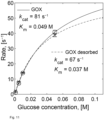
- the enzymes may be e.g. glucose oxidase which performs bioelectrocatalysis where non-redox active biological metabolites such as, but not limited to, carbohydrates e.g. glucose are locally consumed at the electrode interface resulting in local acidification. Local consumption of non-redox active species using surface bound enzymes would be used to either tune the rate of protein release or prevent release from the surface from the electrochemical catch-and-release system.
- the combined thickness of the polyelectrolyte arrangement e.g. the polyelectrolyte brush, diazonium salt and electrode may be a few hundred nanometer thick to micrometer thick.
- the dimensions of the electrochemical release system could be decreased further in addition to the lateral dimension which is the thickness of the electrode.
- further miniatyrisation is in principle not limited for devices based on the eletrochemcial catch-and-release system described herein, wherein the electrochemical catch-release system is an entity capturing system, e.g. a protein capturing system.
- the electrochemical catch-and-release system is subject to miniatyrisation for the benefit of lower invasiveness or improved functionality if the electrochemical catch-release system is an entity releasing system, e.g. a drug releasing system or if it is a protein capturing system.
- An even further embodiment relates to the local consumption of biologically occurring redox active species e.g. dopamine or serotonin by applying an electrochemical potential with the electrochemical catch-and-release system to maintain local acidification of the electrode surface in-vivo or in-vitro in a living biological system.
- Local consumption of naturally occurring redox species in a biological system would be used to either tune the rate of protein release or prevent release from the surface until specified on-demand from the electrochemical catch-and-release system.
- the local pH acidification of the electrode that maintains proteins bound to the electrode can be achieved using also non-redox active species such as but not limited to glucose.
- a protein capturing system for sensing protein presence, for harvesting protein samples, or for some other bioanalytical purpose, comprising the electrochemical catch-release system described above.
- a drug releasing system i.e. drug delivery system of a protein pharmaceutical comprising the electrochemical catch-release system described above.
- a method of continuous protein repulsion by continuous application of an cyclic electrochemical signal which produces a local very high pH gradient that renders the polyelectrolyte brush highly protein repellent i.e. anti-fouling, where by removal of the continuous electrochemical signal, the polyelectrolyte brush electrode rapidly captures a sample of protein on-demand.
- a method of catching and releasing an entity being a protein, a vesicle, a compound modified with poly(ethylene glycol), and/or a drug, in a catch-release system comprising binding pH-responsive polymers, which polymers respond to pH changes by switching between a neutral and a charged state, covalently to a structure via a monolayer of aryl bonds, forming a polyelectrolyte arrangement, bringing a solution comprising said entity in contact with the polyelectrolytic arrangement when the covalently bound polymers are in a neutral state, allowing the polyelectrolytic arrangement to catch said entity by non-electrostatic interactions, e.g.
- the non-electrostatic interaction may be e.g. hydrogen bonds.
- Fig. 8a Illustrated in Fig. 8a is an electrochemical catch-release system 1 for repeated use.
- the system 1 comprises pH-responsive polymers 2 covalently bounded to a structure 3 via a monolayer 4 of eletrochemically insensitive aryl bonds, forming a polyelectrolyte arrangement 5.
- the polyelectrolyte arrangement 5 is arranged to, when the covalently bounded polymers 2 are in a neutral state, catch an entity 6 being a protein, a vesicle, or a compound modified with poly(ethylene glycol) by non-electrostatic intra-molecular binding e.g.
- a device 7 is arranged for applying an electrochemical potential to the polyelectrolyte arrangement 5 to induce a switch of the polyelectrolyte arrangement 5 from the neutral state to the charged state or the reverse in the presence of redox active species.
- dichloromethane triethylamine, and ⁇ -bromoisobutyryl bromide were used.
- the chemicals employed in polymerization were tert-butyl acrylate, tert-butyl methacrylate, dimethylsulfoxide, dichloromethane, methane sulfonic acid, N,N,N',N"-pentamethyldiethylenetriamine (PMDTA), CuBr 2 and L-ascorbic acid.
- Buffers used in this work were based on phosphate buffered saline (PBS) tablets (0.01 M phosphate, 0.13 M NaCl, pH 7.4) or disodium hydrogen phosphate and NaCl titrated to a specific pH with HCl (1 M aqueous solution) or NaOH (1 M aqueous solution).
- PEG-succinimidyl Valerate PEG-SVA, 10,000 g/mol was used for conjugation to BSA (Laysan Bio Inc.)
- BSA Laysan Bio Inc.
- the lipids phosphatidylcholine and dipalmitoylphosphatidylcholine, used to prepare liposomes were obtained from Avanti Polar Lipids.
- DNA samples (single-stranded and double-stranded) were available from collaborators in house.
- ABTS 2,2'-azino-bis(3-ethylbenzothiazoline-6-sulphonic acid)
- D-glucose were used.
- the proteins used in this study were avidin (AVI, ThermoFisher), bovine serum albumin (BSA), BSA-fluorescein isothiocyanate conjugate, fibrinogen (FIB) from bovine plasma, glucose oxidase (GOX) Type VII G2133 from Aspergillus Niger, horse radish peroxidase (HRP, ThermoFisher), insulin (INS), INS glargine, IgG antibodies from human serum, myoglobin (MYO) from horse skeletal muscle, lysozyme (LYS), NeutrAvidin (NAVI, Pierce), and ubiquitin (UBI) from bovine erythrocytes.
- Human serum from human male AB plasma was filtered through a 40 ⁇ m hydrophilic filter and diluted ten times in PBS prior to use.
- Alexa Fluor TM 488 and 555 labeling kits (ThermoFisher) were used produce different color BSA to demonstrate protein pattering.
- the carbohydrates used to study interactions with PMAA brushes were dextran (100,000 g/mol) from Leuconostoc spp., hyaluronic acid sodium salt from Streptococcus equi (15,000-30,000 g/mol). Oxytocin acetate salt hydrate was also tested.
- the redox active species used to induce a switch in the polyelectrolyte arrangement from the charged state of the polymers to a neutral state of the polymers tested were hydroquinone, hydrogen peroxide, dopamine hydrochloride (DOPA), ascorbic acid, 4-aminophenethyl alcohol (tyrosol), 3,4-dihydroxyphenetylacetic acid (DOPAC), and ⁇ -nicotinamide adenine dinucleotide, reduced disodium salt hydrate (NADH).
- diazonium salt ( Fig. 14 ) involved a modified literature procedure ( S. Gam-Derouich et al., Aryl diazonium salt surface chemistry and ATRP for the preparation of molecularly imprinted polymer grafts on gold substrates. Surface and Interface Analysis 42, 1050-1056 (2010 )). Under an inert atmosphere, 4-aminophenethyl alcohol (2.94 g, 20 mmol) and tetrafluoroboric acid (9.94 g, 113 mmol) were dissolved in acetonitrile (20 mL).
- tert-butyl nitrate (2.269 g, 22 mmol) was dissolved in acetonitrile (12 mL). Both solutions were degassed and cooled to -20 °C alongside 200 mL of diethyl ether. After 20 min the solutions were warmed to 0 °C, before the tert-butyl nitrate solution was added to the 4-aminophenethyl alcohol solution dropwise with stirring. The reaction was then stirred for a further 1 h. The reaction was terminated by dropwise addition of the dark yellow solution to rapidly stirring diethyl ether (200 mL). After additional stirring for 1 h the supernatant was decanted off.
- QCM sensor crystals standard Au, purchased from Biolin Scientific
- SPR sensor surfaces standard Au, purchased from BioNavis
- piranha wash H 2 SO 4 :H 2 O 2 , 3:1 v/v
- RCA1 wash H 2 O:H 2 O 2 :NH 4 OH 5:1:1 v/v at 75 °C for 20 min
- sonication in ethanol and drying with N 2 .
- the piranha wash step was omitted to prevent destruction of the surface due to delamination of the porous gold film.
- Gold surfaces were placed in a glass jar with a septum seal containing diazonium salt 1 (0.301 g, 1.28 mmol) and the jar was purged with N 2 .
- ascorbic acid 0.028 g, 0.16 mmol
- water 40 mL
- the ascorbic acid solution was transferred into the sealed glass jar causing dissolution of the diazonium salt.
- the gold surfaces were stirred in the solution for 1 h by use of a platform shaker (nitrogen bubbles that appear on the surface after 15 min indicate successful diazonium salt monolayer formation), after which they were thoroughly rinsed in water then ethanol, and dried.
- a platform shaker nitrogen bubbles that appear on the surface after 15 min indicate successful diazonium salt monolayer formation
- the gold surfaces were exposed to ⁇ -bromoisobutyryl bromide (0.222 mL, 1.80 mmol) and triethylamine (0.302 mL, 2.17 mmol) in dichloromethane (20 mL) for 10 minutes, after which surfaces were rinsed in ethanol and dried under N 2 .
- a reticulated glassy carbon electrode (Redox.Me) was used as a porous electrode for evaluating possible protein purification capacity of the electrochemical catch and release system.
- the electrode had a bulk density of 0.05 g/cm 3 , a porosity of 96,5 % and the number of pores were 24 pores/cm with a diameter of 20 mm and 25 mm in height (7.85 cm 3 ).
- Surface activation and ATRP synthesis of PMAA within a porous carbon electrode was employed by scaling up the recipe by a factor 2, with equal concentrations and a total reaction volume of 80 mL. Protein immobilization tests were conducted by immersion into a BSA protein solution, 40 mg/mL set to pH 5.0, for 1 hour.
- the electrode was then rinsed and immersed into a beaker of PBS set to pH 8,0 to trigger release of bound protein.
- the static binding capacity of the electrode was evaluated by measuring the concentration of protein in the original BSA solution after electrode immersion, and the concentration of protein in the beaker to which the protein was released, The quantification of captured and released protein was measured using a NanoDrop (ThermoFisher Scientific).
- the deposited diazonium layer was assumed to have refractive index 1.5 (typical for organic coatings).
- the refractive index of the dry polymer brushes was assumed to be equal for PAA and PMAA and set to 1.522.
- the refractive index of dry proteins bound in polyelectrolyte brushes was assumed to be equal to that of the polymer. This methodology of analyzing SPR spectra and its validity has been described and demonstrated in previous work ( G. Ferrand-Drake del Castillo et al., Enzyme immobilization in polyelectrolyte brushes: High loading and enhanced activity compared to monolayers. Langmuir 35, 3479-3489 (2019 )). To obtain surface coverage, the densities of the dry polymers and proteins were set to 1.22 g/cm 3 and 1.35 g/cm 3 , respectively.
- Microscale extinction spectroscopy was performed as described previously ( A. B. Dahlin et al., High-resolution microspectroscopy of plasmonic nanostructures for miniaturized biosensing. Analytical Chemistry 81, 6572-6580 (2009 )).
- the surface is imaged in transmission mode and a fraction of the light is directed to the opening of an optical fiber in the focal plane.
- the detection spot typically 50 ⁇ m
- the resolution is almost as high as in SPR (down to 0.1 ng/cm 2 ). Note that all data presented as resonance shifts in nm are from plasmonic nanohole arrays, while resonance shifts in degrees are from conventional angular SPR.
- a laser writer Heidelberg Instruments DWL 2000 was used.
- the photoresist (LOR3A) was spin coated at 4000 rpm and baked on a hotplate at 180 °C for 5 min.
- a second layer of S1813 was spin coated at 4000 rpm and baked on a hotplate at 120 °C for 2 min.
- the pattern was written by a 60 mW laser beam after which the sample was developed in developer MF-318 for 50 s.
- the nanohole array was then prepared by colloidal lithography. ( K. Xiong, G. Emilsson, A. B. Dahlin, Biosensing using plasmonic nanohole arrays with small, homogenous and tunable aperture diameters. Analyst 141, 3803-3810 (2016 )). Finally, lift-off was performed in remover RM-Rem400.
- the polyelectrolyte brush surface was repeatedly loaded and unloaded with protein. The procedure was repeated until a sufficiently high concentration of protein was found in the collection solution.
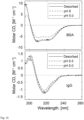
- the quantification of desorbed protein was performed using a NanoDrop (ThermoFisher Scientific). When detectable quantities of protein were obtained, the sample was filtered through a 40 ⁇ m cellulose acetate filter and placed in a centrifuge column with a molecular size cut-off of 40 kDa (Sartorius). The sample was centrifuged for 10 min at 5000 rpm resulting in approximately 100-300 ⁇ L solution with a concentration around 0.3 g/L. CD was measured with a Chirascan spectrometer (Applied Photophysics). Each spectrum is an average of 10 scans. A quartz cuvette with path length of 0.05 cm was used. Spectra of desorbed proteins were compared to corresponding protein solutions with concentration of 0.3 g/L in PBS at pH 5.0 and 8.0.
- the activity of GOX in bulk solution was measured using an ABTS and HRP assay.
- the reaction was initiated by the addition of GOX solution (diluted stock solution or desorbed from PMAA brush) to a mixture of ABTS, glucose and HRP in PBS pH 7.4.
- the final composition of the assay was 2 mM ABTS, 1 mM glucose, 20 nM HRP, and 2 nM GOX and the total volume for each measurement was 800 ⁇ L.
- a standard curve was produced where hydrogen peroxide was added instead of GOX. Absorbance was recorded at 420 nm and the initial rate was determined by determining the slope of absorbance increase during the first 30 s of the reaction.
- PEG conjugation of BSA was performed by mixing PEG-SVA (100 mg) with BSA (5 mg) in PBS pH 8.0 for 16 h. Purification of PEG conjugated BSA from nonconjugated BSA and hydrolyzed PEG-SVA was performed by passing the reaction solution through a size exclusion column, 16/600 Superdex 200 pg, connected to an ⁇ KTA Start protein purification system (GE Healthcare). Analysis of protein fractions by gel electrophoresis showed a molecular weight above 250,000 kg/mol.
- Alexa Fluor 488 and 555 Two different fluorophores were used in the cojugation of fluorescent dyes to the amines of BSA: Alexa Fluor 488 and 555 (with tetrafluorophenyl or N-hydroxysuccinimide ester groups).
- a BSA solution 100 ⁇ L, 10 mg/mL, pH 8.5
- Alexa Fluor dye 100 ⁇ g
- the reaction was terminated by the addition of PBS pH 5.0, which reduced the pH to 5.0 and diluted the sample to a protein concentration of 0.2 mg/mL.
- the fluorescent proteins were immobilized in PMAA brushes in the same manner as the native proteins. GOX conjugation to PMAA brushes was performed using an EDC/NHS protocol.
- Vesicles were prepared by established methods ( A. Graneli, M. Edvardsson, F. Hook, DNA-based formation of a supported, three-dimensional lipid vesicle matrix probed by QCM-D and SPR. Chemphyschem 5, 729-733 (2004 )).
- the lipids were dried onto the interior of a glass vial by letting the solvent evaporate, followed by rehydration in buffer and extrusion through polycarbonate track-etched membranes with diameter of 100 nm.
- PAA poly(acrylic acid)
- PMAA poly(methacrylic acid) brushes
- a diazonium salt S. Gam-Derouich et al., Aryl diazonium salt surface chemistry and ATRP for the preparation of molecularly imprinted polymer grafts on gold substrates.
- Surf Interface Anal 42, 1050-1056 (2010 ) was synthesized ( Fig.
- the weak polyacidic brushes i.e. an electrochemical catch-release system, according to the present invention, had dry thicknesses in the range of tens of nm as determined by surface plasmon resonance (SPR) ( G. Ferrand-Drake del Castillo, G. Emilsson, A. Dahlin, Quantitative analysis of thickness and pH actuation of weak polyelectrolyte brushes. J Phys Chem C 122, 27516-27527 (2018 )).
- SPR surface plasmon resonance
- the effective p K a of the brushes i.e. an electrochemical catch-release system, according to the present invention, was analyzed by titration in SPR ( Fig. 2 ).
- SPR Fig. 2
- G. Ferrand-Drake del Castillo G. Emilsson, A. Dahlin, Quantitative analysis of thickness and pH actuation of weak polyelectrolyte brushes. J Phys Chem C 122, 27516-27527 (2018 )
- this yields results identical to those obtained from analysis by infrared spectroscopy G. Ferrand-Drake del Castillo, G. Emilsson, A. Dahlin, Quantitative analysis of thickness and pH actuation of weak polyelectrolyte brushes.
- Electrochemical quartz crystal microbalance O. V. Borisova, L. Billon, R. P. Richter, E. Reimhult, O. V. Borisov, pH- and electro-responsive properties of poly(acrylic acid) and poly(acrylic acid)-block-poly(acrylic acid-grad-styrene) brushes studied by quartz crystal microbalance with dissipation monitoring.
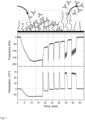
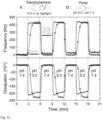
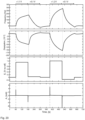
- Langmuir 31, 7684-7694 (2015 )) (QCM) data showed that the brushes, i.e. an electrochemical catch-release system, according to the present invention, could be fully switched to their charged state by potential control, i.e. the response was the same as when flowing buffers that had pH well above and below the brush p K a ( Fig.
- a biological environment typically does not contain a high enough concentration of quinones or redox active neurotransmitting substances to be useful in switching the brush electrochemically in vivo.
- To expand the usefulness of the catch and release system also in buffered neutral pH environments we investigated alternative routes for obtaining electrochemical switches of the PMAA brush that utilized abundant naturally occurring substances. Furthermore, we also investigated the possibility of using other electrode supports than gold, which may expand the range of electrochemical reactions which can occur on the surface and possibly also reduce the potential window needed to achieve electrochemical switching.
- Platinum and hydrogen peroxide for generating pH gradients allows for an extension of substrates beyond redox active molecules.
- Biocatalytic transformations readily produce highly redox active reaction products from less redox active substrates.
- GOX consumes glucose to produce hydrogen peroxide.
- PMAA brushes were switched in undiluted PBS and a 10 mM glucose solution ( Fig. 20 ).
- GOX conjugation to platinum PMAA brush electrodes allows for electrochemical brush switching in highly buffered solutions that contains a physiologically relevant concentration millimolar concentrations of glucose, strongly suggesting an electrochemically operated polyelectrolyte brush surfaces that can operate in biologically relevant fluids.
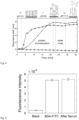
- Fig. 4 shows an example of label-free nanoplasmonic detection ( A. B. Dahlin, Sensing applications based on plasmonic nanopores: The hole story. Analyst 140, 4748-4759 (2015 )) of a highly positively charged protein (avidin, pl 10) binding to PMAA brushes, i.e. the electrochemical catch-release system according to the present invention.
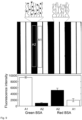
- Fig. 5 shows fluorescence from labelled BSA in PMAA brushes, i.e. in the electrochemical catch-release system according to the present invention, before and after exposure to complete serum set to pH 5, showing no reduction in intensity. This also confirms that immobilized proteins cannot be replaced by other proteins, although additional serum proteins also become immobilized if the brush has not reached its full loading capacity.
- the immobilized protein amount was quantified by fitting Fresnel models to SPR spectra recorded in the dry state ( Fig. 5 ). This method gives high accuracy since the protein refractivity is very similar to that of the polymers ( G. Ferrand-Drake del Castillo et al., Enzyme immobilization in polyelectrolyte brushes: High loading and enhanced activity compared to monolayers. Langmuir 35, 3479-3489 (2019 )). A wide range of proteins with different molecular weight (M) and pI were tested, resulting in high surface coverage in all cases ( Fig. 6 ).
- the brushes i.e. polyelectrolyte arrangement of the present invention, can be made thicker to store even more proteins.
- this work we kept the hydrated thickness comparable to the evanescent field in SPR to enable height probing ( G. Ferrand-Drake del Castillo, G. Emilsson, A. Dahlin, Quantitative analysis of thickness and pH actuation of weak polyelectrolyte brushes. J Phys Chem C 122, 27516-27527 (2018 )).
- the BSA protein uptake of the PMAA functionalized electrode at pH 5 was determined to be 50 mg/cm 3 (static binding capacity).
- the binding capacity can increase even further by optimization of (1) the polymer brush synthesis within high internal surface area materials and (2) maximizing the porosity and available surface area for polymerization.
- high internal porosity lowers the internal surface area.
- PEG-modification of a protein did not result in its exclusion from the brush. Instead, we observed binding of an amount comparable to that of the same protein in its native state. This is expected due to hydrogen bonds with the ether oxygen in PEG ( Y. Osada, M. Sato, Thermal equilibrium of intermacromolecular complexes of polycarboxylic acids realized by cooperative hydrogen-bonding. Journal of Polymer Science Part C - Polymer Letters 14, 129-134 (1976 )). Furthermore, liposomes could be bound in multilayers ( Fig. 16 ) without the need for tethers ( C. M. Agrawal, K. A. Athanasiou, Technique to control pH in vicinity of biodegrading PLA-PGA implants. J Biomed Mater Res 38, 105-114 (1997 )).
- the average power consumption of the system while scanning the surface between (-0.5 V to 0 V) was 9 ⁇ W/cm 2 .
- the reason for extremely low power consumption is that the only power required is that which generates a nanoscale chemical pH gradient.
- the power consumption is compatible with state of the art biocatalytic biofuel cells and implant technology with low power demands ( Song Y, Min J, Gao W. Wearable and Implantable Electronics: Moving toward Precision Therapy. ACS Nano. 13,12280-12286, (2019 )).
- an electrochemical catch and release system that consists of a platinum electrode support in combination with functionalization of GOX, can utilize natural concentrations of glucose instead of hydroquinone to switch the brush.
- the electrochemical catch and release system could operate to capture or release proteins on-demand in biological environments without any additional supplements.
Landscapes
- Engineering & Computer Science (AREA)
- Health & Medical Sciences (AREA)
- Chemical & Material Sciences (AREA)
- Manufacturing & Machinery (AREA)
- Life Sciences & Earth Sciences (AREA)
- General Health & Medical Sciences (AREA)
- Medicinal Chemistry (AREA)
- Organic Chemistry (AREA)
- Molecular Biology (AREA)
- Microelectronics & Electronic Packaging (AREA)
- Polymers & Plastics (AREA)
- Chemical Kinetics & Catalysis (AREA)
- Materials Engineering (AREA)
- Inorganic Chemistry (AREA)
- Epidemiology (AREA)
- Animal Behavior & Ethology (AREA)
- Veterinary Medicine (AREA)
- Public Health (AREA)
- Bioinformatics & Cheminformatics (AREA)
- Pharmacology & Pharmacy (AREA)
- Proteomics, Peptides & Aminoacids (AREA)
- Biochemistry (AREA)
- Immunology (AREA)
- Genetics & Genomics (AREA)
- Biophysics (AREA)
- Peptides Or Proteins (AREA)
- Medicinal Preparation (AREA)
- Sampling And Sample Adjustment (AREA)
Claims (11)
- Elektrochemisches Auffang-Freisetzungssystem (1) zur wiederholten Verwendung, umfassend:pH-empfindliche Polymere (2), wobei die Polymere auf pH-Änderungen reagieren, indem sie zwischen einem neutralen und einem geladenen Zustand wechseln, und kovalent mit einer Struktur (3) über eine Monoschicht (4) aus Arylbindungen verbunden sind, wodurch eine Polyelektrolytanordnung (5) gebildet wird,wobei die Polyelektrolytanordnung (5) zu Folgendem angeordnet ist,wenn sich die kovalent gebundenen Polymere (2) in einem neutralen Zustand befinden, Auffangen einer Entität (6), bei der es sich um ein Protein, ein Vesikel oder eine Verbindung, die mit Poly(ethylenglykol) modifiziert ist, handelt, undwenn sich die Polymere (2) in einem geladenen Zustand befinden, Freisetzen durch elektrostatische Abstoßung einer Entität (6), die durch die Polyelektrolytanordnung (5) aufgefangen wird,eine Vorrichtung (7) zum Anlegen eines elektrochemischen Potentials an die Polyelektrolytanordnung (5), wodurch eine pH-Änderung erzeugt wird, die einen Wechsel der Polyelektrolytanordnung (5) von dem neutralen Zustand zu dem geladenen Zustand oder umgekehrt in Gegenwart von redoxaktiven Spezies herbeiführt.
- Elektrochemisches Auffang-Freisetzungssystem (1) nach Anspruch 1, wobei es sich bei dem pH-empfindlichen Polymer (2) um ein polysaures Polymer handelt, das eine Carbonsäuregruppe umfasst.
- Elektrochemisches Auffang-Freisetzungssystem (1) nach einem der Ansprüche 1-2, wobei es sich bei der Struktur (3) um eine Oberfläche, zum Beispiel eine ebene Oberfläche oder eine Elektrodenoberfläche, ein poröses Material oder ein Nanoloch-Array handelt.
- Elektrochemisches Auffang-Freisetzungssystem (1) nach einem der Ansprüche 1-3, wobei die Struktur (3) Kohlenstoff, ein Edelmetall, ein leitendes Oxid, Edelstahl oder ein leitendes Polymer umfasst oder daraus hergestellt ist.
- Elektrochemisches Auffang-Freisetzungssystem (1) nach einem der Ansprüche 1-4, wobei die Polyelektrolytanordnung (5) eine Bürste, einen Film, ein Gel oder eine Schicht aus Polyelektrolyt umfasst.
- Elektrochemisches Auffang-Freisetzungssystem (1) nach einem der Ansprüche 1-5, wobei das System so miniaturisiert ist, dass die Abmessungen des Systems im Nano-, Mikro- oder Mesomaßstab liegen.
- Elektrochemisches Auffang-Freisetzungssystem (5) nach einem der Ansprüche 1-6, wobei die redoxaktive Spezies, die verwendet wird, um einen Wechsel in der Polyelektrolytanordnung (5) von dem geladenen Zustand der Polymere (2) zu einem neutralen Zustand der Polymere herbeizuführen, aus Hydrochinon, Wasserstoffperoxid, Dopaminhydrochlorid (DOPA), Ascorbinsäure, 4-Aminophenethylalkohol (Tyrosol), 3,4-Dihydroxyphenylessigsäure (DOPAC), β-Nicotinamid-Adenin-Dinukleotid, Sauerstoff und reduziertem Dinatriumsalzhydrat (NADH) ausgewählt ist.
- Elektrochemisches Auffang-Freisetzungssystem (1) nach einem der Ansprüche 1-7, ferner umfassend Enzyme, die an die Polyelektrolytanordnung gebunden sind.
- Proteinaufnahmesystem, umfassend das elektrochemische Auffang-Freisetzungssystem (1) nach einem der Ansprüche 1-8.
- System zur Freisetzung von Arzneimitteln, umfassend das elektrochemische Auffang-Freisetzungssystem (1) nach einem der Ansprüche 1-8.
- Verfahren zum Auffangen und Freisetzen einer Entität (6), bei der es sich um ein Protein, ein Vesikel, eine Verbindung, die mit Poly(ethylenglykol) modifiziert ist, und/oder ein Arzneimittel handelt, in einem Auffang-Freisetzungssystem (1), umfassendKovalentes Binden von pH-empfindlichen Polymeren (2), wobei die Polymere auf pH-Änderungen reagieren, indem sie zwischen einem neutralen und einem geladenen Zustand wechseln, an eine Struktur (3) über eine Monoschicht (4) von Arylbindungen, wodurch eine Polyelektrolytanordnung (5) gebildet wird,Inkontaktbringen einer Lösung, welche die Entität (6) umfasst, mit der Polyelektrolytanordnung (5), wenn sich die kovalent gebundenen Polymere (2) in einem neutralen Zustand befinden, wodurch es der Polyelektrolytanordnung ermöglicht wird, die Entität durch nicht-elektrostatische Wechselwirkungen, z. B. Wasserstoffbrückenbindungen (6), aufzufangen,Anlegen eines elektrochemischen Potentials an die Polyelektrolytanordnung (5) in Gegenwart von redoxaktiven Spezies, wodurch eine pH-Änderung erzeugt wird, die einen Wechsel in der Polyelektrolytanordnung von dem neutralen Zustand der Polymere (2) zu einem geladenen Zustand der Polymere herbeiführt, wodurch die Entität (6) aus der Polyelektrolytanordnung durch elektrostatische Abstoßung freigesetzt wird, undgegebenenfalls Anlegen eines elektrochemischen Potentials an die Polyelektrolytanordnung (5) in Gegenwart von redoxaktiven Spezies, wodurch eine pH-Änderung erzeugt wird, die einen Wechsel in der Polyelektrolytanordnung (5) von dem geladenen Zustand der Polymere (2) zu einem neutralen Zustand der Polymere herbeiführt, wodurch es der Polyelektrolytanordnung ermöglicht wird, eine Entität durch nicht-elektrostatische Wechselwirkungen, z. B. Wasserstoffbrückenbindungen (6), aufzufangen.
Applications Claiming Priority (2)
| Application Number | Priority Date | Filing Date | Title |
|---|---|---|---|
| SE1951349 | 2019-11-26 | ||
| PCT/SE2020/051106 WO2021107836A1 (en) | 2019-11-26 | 2020-11-19 | Generic high-capacity protein capture and tunable electrochemical release |
Publications (3)
| Publication Number | Publication Date |
|---|---|
| EP4065509A1 EP4065509A1 (de) | 2022-10-05 |
| EP4065509C0 EP4065509C0 (de) | 2025-04-16 |
| EP4065509B1 true EP4065509B1 (de) | 2025-04-16 |
Family
ID=73554484
Family Applications (1)
| Application Number | Title | Priority Date | Filing Date |
|---|---|---|---|
| EP20812153.3A Active EP4065509B1 (de) | 2019-11-26 | 2020-11-19 | Generischer hochkapazitätsproteineinfang und abstimmbare elektrochemische freisetzung |
Country Status (6)
| Country | Link |
|---|---|
| US (1) | US12383490B2 (de) |
| EP (1) | EP4065509B1 (de) |
| JP (1) | JP7735266B2 (de) |
| KR (1) | KR20220106993A (de) |
| CN (1) | CN114761353B (de) |
| WO (1) | WO2021107836A1 (de) |
Families Citing this family (2)
| Publication number | Priority date | Publication date | Assignee | Title |
|---|---|---|---|---|
| WO2023068999A1 (en) * | 2021-10-21 | 2023-04-27 | Nyctea Technology Ab | Device for separating an analyte from other components in an electrolytic solution |
| EP4698896A1 (de) | 2023-04-18 | 2026-02-25 | Nyctea Technologies AB | Echtzeitüberwachung der chromatographischen reinigung biologischer substanzen |
Family Cites Families (13)
| Publication number | Priority date | Publication date | Assignee | Title |
|---|---|---|---|---|
| GB9702277D0 (en) * | 1997-02-04 | 1997-03-26 | Innes John Centre | Modified electrodes and their use |
| EP1026192A1 (de) | 1999-02-01 | 2000-08-09 | Forskningscenter Riso | Neuer Verbundwerkstoff, der fähig ist zur schnellen Volumenänderung |
| US7883615B2 (en) | 2003-02-12 | 2011-02-08 | University Of Maryland, College Park | Controlled electrochemical deposition of polysaccharide films and hydrogels, and materials formed therefrom |
| JP2007534961A (ja) * | 2004-04-29 | 2007-11-29 | エイジェンシー・フォー・サイエンス,テクノロジー・アンド・リサーチ | 核酸および/またはポリペプチドを検出するための方法および装置 |
| EP1962870A4 (de) | 2005-11-14 | 2010-08-11 | Univ Delaware Technology Corp | Neuartige hydrogele und ihre verwendung |
| US8497137B2 (en) | 2006-09-27 | 2013-07-30 | Alessandra Luchini | Smart hydrogel particles for biomarker harvesting |
| CN101813701B (zh) * | 2010-04-13 | 2012-12-26 | 无锡中美亿芯生物科技有限公司 | 一种用原位合成制备蛋白质芯片的方法 |
| CN102295720B (zh) * | 2011-06-23 | 2012-10-10 | 北京科技大学 | 荧光基团芘接枝的聚(甲基)丙烯酸二甲氨基乙酯的阳离子聚电解质的制备方法 |
| EP2726870B1 (de) * | 2011-06-29 | 2018-10-03 | Academia Sinica | Erfassung, reinigung und freisetzung eines biologischen stoffes anahnd einer oberflächenbeschichtung |
| US9708455B2 (en) | 2012-08-02 | 2017-07-18 | President And Fellows Of Harvard College | Porous electrolytic polymer cryogels for enhanced electrical collapsibility |
| JP2018153097A (ja) | 2015-07-06 | 2018-10-04 | 株式会社日立製作所 | 細胞培養容器、装置、及び分離回収方法 |
| CN109239159B (zh) * | 2018-10-15 | 2020-07-14 | 西北工业大学深圳研究院 | 一种pH值刺激响应柔性葡萄糖氧化酶电极及构筑方法 |
| CN110243899A (zh) | 2019-07-15 | 2019-09-17 | 辽宁大学 | 一种pH敏感石墨烯纳米复合材料及其制备方法和应用 |
-
2020
- 2020-11-19 EP EP20812153.3A patent/EP4065509B1/de active Active
- 2020-11-19 US US17/756,253 patent/US12383490B2/en active Active
- 2020-11-19 KR KR1020227019971A patent/KR20220106993A/ko active Pending
- 2020-11-19 WO PCT/SE2020/051106 patent/WO2021107836A1/en not_active Ceased
- 2020-11-19 CN CN202080081507.8A patent/CN114761353B/zh active Active
- 2020-11-19 JP JP2022528033A patent/JP7735266B2/ja active Active
Also Published As
| Publication number | Publication date |
|---|---|
| EP4065509C0 (de) | 2025-04-16 |
| US12383490B2 (en) | 2025-08-12 |
| JP2023502629A (ja) | 2023-01-25 |
| EP4065509A1 (de) | 2022-10-05 |
| KR20220106993A (ko) | 2022-08-01 |
| JP7735266B2 (ja) | 2025-09-08 |
| US20220409726A1 (en) | 2022-12-29 |
| CN114761353A (zh) | 2022-07-15 |
| WO2021107836A1 (en) | 2021-06-03 |
| CN114761353B (zh) | 2024-10-29 |
Similar Documents
| Publication | Publication Date | Title |
|---|---|---|
| Shaver et al. | Alkanethiol monolayer end groups affect the long-term operational stability and signaling of electrochemical, aptamer-based sensors in biological fluids | |
| Koev et al. | Chitosan: an integrative biomaterial for lab-on-a-chip devices | |
| Wu et al. | Photoelectrochemical imaging system for the mapping of cell surface charges | |
| Li et al. | N-heterocyclic carbene self-assembled monolayers on gold as surface plasmon resonance biosensors | |
| Andersson et al. | Tethered membrane architectures—design and applications | |
| Nguyen et al. | Bioconjugation of protein-repellent zwitterionic polymer brushes grafted from silicon nitride | |
| del Castillo et al. | Electrically switchable polymer brushes for protein capture and release in biological environments | |
| Seo et al. | Stimuli-responsive matrix-assisted colorimetric water indicator of polydiacetylene nanofibers | |
| US20050208469A1 (en) | Stimuli-responsive hydrogel microdomes integrated with genetically engineered proteins for high-throughput screening of pharmaceuticals | |
| Hasanzadeh et al. | Nanosized hydrophobic gels: Advanced supramolecules for use in electrochemical bio-and immunosensing | |
| EP4065509B1 (de) | Generischer hochkapazitätsproteineinfang und abstimmbare elektrochemische freisetzung | |
| Wang et al. | Construction of compact polyelectrolyte multilayers inspired by marine mussel: effects of salt concentration and pH as observed by QCM-D and AFM | |
| Perez-Madrigal et al. | Polypyrrole-supported membrane proteins for bio-inspired ion channels | |
| Li et al. | Coupling self-assembly mechanisms to fabricate molecularly and electrically responsive films | |
| Wu et al. | Copper contamination of self-assembled organic monolayer modified silicon surfaces following a “Click” reaction characterized with LAPS and SPIM | |
| Dochter et al. | Film self-assembly of oppositely charged macromolecules triggered by electrochemistry through a morphogenic approach | |
| Kotlarek et al. | Thin-film polyisocyanide-based hydrogels for affinity biosensors | |
| Li et al. | A nonfouling electrochemical biosensor for protein analysis in complex body fluids based on multifunctional peptide conjugated with PEGlyated phospholipid | |
| Awawdeh et al. | Porous silicon biosensors meet zwitterionic peptides: tackling biofouling from proteins to cells | |
| Knoll et al. | Polymer-tethered bimolecular lipid membranes | |
| Faridbod et al. | Molecularly imprinted conductive polymers | |
| Fonseka et al. | Nanodomain formation in planar supported lipid bilayers composed of fluid and polymerized dienoyl lipids | |
| Ge et al. | Poly (aniline) nanowires in sol–gel coated ITO: A pH-responsive substrate for planar supported lipid bilayers | |
| Ferrand-Drake del Castillo et al. | Generic High-Capacity Electrochemical Capture and Release of Proteins by Polyelectrolyte Brushes | |
| Mech-Dorosz et al. | Stationary photocurrent generation from bacteriorhodopsin-loaded lipo-polymersomes in polyelectrolyte multilayer assembly on polyethersulfone membrane |
Legal Events
| Date | Code | Title | Description |
|---|---|---|---|
| STAA | Information on the status of an ep patent application or granted ep patent |
Free format text: STATUS: UNKNOWN |
|
| STAA | Information on the status of an ep patent application or granted ep patent |
Free format text: STATUS: THE INTERNATIONAL PUBLICATION HAS BEEN MADE |
|
| PUAI | Public reference made under article 153(3) epc to a published international application that has entered the european phase |
Free format text: ORIGINAL CODE: 0009012 |
|
| STAA | Information on the status of an ep patent application or granted ep patent |
Free format text: STATUS: REQUEST FOR EXAMINATION WAS MADE |
|
| 17P | Request for examination filed |
Effective date: 20220608 |
|
| AK | Designated contracting states |
Kind code of ref document: A1 Designated state(s): AL AT BE BG CH CY CZ DE DK EE ES FI FR GB GR HR HU IE IS IT LI LT LU LV MC MK MT NL NO PL PT RO RS SE SI SK SM TR |
|
| DAV | Request for validation of the european patent (deleted) | ||
| DAX | Request for extension of the european patent (deleted) | ||
| GRAP | Despatch of communication of intention to grant a patent |
Free format text: ORIGINAL CODE: EPIDOSNIGR1 |
|
| STAA | Information on the status of an ep patent application or granted ep patent |
Free format text: STATUS: GRANT OF PATENT IS INTENDED |
|
| INTG | Intention to grant announced |
Effective date: 20241223 |
|
| GRAS | Grant fee paid |
Free format text: ORIGINAL CODE: EPIDOSNIGR3 |
|
| GRAA | (expected) grant |
Free format text: ORIGINAL CODE: 0009210 |
|
| STAA | Information on the status of an ep patent application or granted ep patent |
Free format text: STATUS: THE PATENT HAS BEEN GRANTED |
|
| AK | Designated contracting states |
Kind code of ref document: B1 Designated state(s): AL AT BE BG CH CY CZ DE DK EE ES FI FR GB GR HR HU IE IS IT LI LT LU LV MC MK MT NL NO PL PT RO RS SE SI SK SM TR |
|
| REG | Reference to a national code |
Ref country code: GB Ref legal event code: FG4D |
|
| REG | Reference to a national code |
Ref country code: CH Ref legal event code: EP |
|
| REG | Reference to a national code |
Ref country code: IE Ref legal event code: FG4D |
|
| REG | Reference to a national code |
Ref country code: DE Ref legal event code: R096 Ref document number: 602020049634 Country of ref document: DE |
|
| RAP4 | Party data changed (patent owner data changed or rights of a patent transferred) |
Owner name: NYCTEA TECHNOLOGIES AB |
|
| U01 | Request for unitary effect filed |
Effective date: 20250516 |
|
| U07 | Unitary effect registered |
Designated state(s): AT BE BG DE DK EE FI FR IT LT LU LV MT NL PT RO SE SI Effective date: 20250526 |
|
| PG25 | Lapsed in a contracting state [announced via postgrant information from national office to epo] |
Ref country code: ES Free format text: LAPSE BECAUSE OF FAILURE TO SUBMIT A TRANSLATION OF THE DESCRIPTION OR TO PAY THE FEE WITHIN THE PRESCRIBED TIME-LIMIT Effective date: 20250416 |
|
| PG25 | Lapsed in a contracting state [announced via postgrant information from national office to epo] |
Ref country code: NO Free format text: LAPSE BECAUSE OF FAILURE TO SUBMIT A TRANSLATION OF THE DESCRIPTION OR TO PAY THE FEE WITHIN THE PRESCRIBED TIME-LIMIT Effective date: 20250716 Ref country code: GR Free format text: LAPSE BECAUSE OF FAILURE TO SUBMIT A TRANSLATION OF THE DESCRIPTION OR TO PAY THE FEE WITHIN THE PRESCRIBED TIME-LIMIT Effective date: 20250717 |
|
| PG25 | Lapsed in a contracting state [announced via postgrant information from national office to epo] |
Ref country code: PL Free format text: LAPSE BECAUSE OF FAILURE TO SUBMIT A TRANSLATION OF THE DESCRIPTION OR TO PAY THE FEE WITHIN THE PRESCRIBED TIME-LIMIT Effective date: 20250416 |
|
| PGFP | Annual fee paid to national office [announced via postgrant information from national office to epo] |
Ref country code: GB Payment date: 20250916 Year of fee payment: 6 |
|
| PG25 | Lapsed in a contracting state [announced via postgrant information from national office to epo] |
Ref country code: HR Free format text: LAPSE BECAUSE OF FAILURE TO SUBMIT A TRANSLATION OF THE DESCRIPTION OR TO PAY THE FEE WITHIN THE PRESCRIBED TIME-LIMIT Effective date: 20250416 |
|
| PG25 | Lapsed in a contracting state [announced via postgrant information from national office to epo] |
Ref country code: RS Free format text: LAPSE BECAUSE OF FAILURE TO SUBMIT A TRANSLATION OF THE DESCRIPTION OR TO PAY THE FEE WITHIN THE PRESCRIBED TIME-LIMIT Effective date: 20250716 |
|
| PG25 | Lapsed in a contracting state [announced via postgrant information from national office to epo] |
Ref country code: IS Free format text: LAPSE BECAUSE OF FAILURE TO SUBMIT A TRANSLATION OF THE DESCRIPTION OR TO PAY THE FEE WITHIN THE PRESCRIBED TIME-LIMIT Effective date: 20250816 |
|
| U20 | Renewal fee for the european patent with unitary effect paid |
Year of fee payment: 6 Effective date: 20250923 |
|
| REG | Reference to a national code |
Ref country code: CH Ref legal event code: U11 Free format text: ST27 STATUS EVENT CODE: U-0-0-U10-U11 (AS PROVIDED BY THE NATIONAL OFFICE) Effective date: 20251201 |
|
| PG25 | Lapsed in a contracting state [announced via postgrant information from national office to epo] |
Ref country code: SM Free format text: LAPSE BECAUSE OF FAILURE TO SUBMIT A TRANSLATION OF THE DESCRIPTION OR TO PAY THE FEE WITHIN THE PRESCRIBED TIME-LIMIT Effective date: 20250416 |
|
| PGFP | Annual fee paid to national office [announced via postgrant information from national office to epo] |
Ref country code: CH Payment date: 20251201 Year of fee payment: 6 |
|
| PG25 | Lapsed in a contracting state [announced via postgrant information from national office to epo] |
Ref country code: CZ Free format text: LAPSE BECAUSE OF FAILURE TO SUBMIT A TRANSLATION OF THE DESCRIPTION OR TO PAY THE FEE WITHIN THE PRESCRIBED TIME-LIMIT Effective date: 20250416 |
|
| PGFP | Annual fee paid to national office [announced via postgrant information from national office to epo] |
Ref country code: IE Payment date: 20251016 Year of fee payment: 6 |
|
| PG25 | Lapsed in a contracting state [announced via postgrant information from national office to epo] |
Ref country code: SK Free format text: LAPSE BECAUSE OF FAILURE TO SUBMIT A TRANSLATION OF THE DESCRIPTION OR TO PAY THE FEE WITHIN THE PRESCRIBED TIME-LIMIT Effective date: 20250416 |
|
| PLBE | No opposition filed within time limit |
Free format text: ORIGINAL CODE: 0009261 |
|
| STAA | Information on the status of an ep patent application or granted ep patent |
Free format text: STATUS: NO OPPOSITION FILED WITHIN TIME LIMIT |
|
| REG | Reference to a national code |
Ref country code: CH Ref legal event code: L10 Free format text: ST27 STATUS EVENT CODE: U-0-0-L10-L00 (AS PROVIDED BY THE NATIONAL OFFICE) Effective date: 20260225 |
|
| 26N | No opposition filed |
Effective date: 20260119 |