EP4066868A1 - Procédé de préparation d'échafaudage de collagène et échafaudage de collagène - Google Patents
Procédé de préparation d'échafaudage de collagène et échafaudage de collagène Download PDFInfo
- Publication number
- EP4066868A1 EP4066868A1 EP20909754.2A EP20909754A EP4066868A1 EP 4066868 A1 EP4066868 A1 EP 4066868A1 EP 20909754 A EP20909754 A EP 20909754A EP 4066868 A1 EP4066868 A1 EP 4066868A1
- Authority
- EP
- European Patent Office
- Prior art keywords
- washing
- mmol
- collagen scaffold
- preparing
- ethanol
- Prior art date
- Legal status (The legal status is an assumption and is not a legal conclusion. Google has not performed a legal analysis and makes no representation as to the accuracy of the status listed.)
- Withdrawn
Links
Images
Classifications
-
- A—HUMAN NECESSITIES
- A61—MEDICAL OR VETERINARY SCIENCE; HYGIENE
- A61L—METHODS OR APPARATUS FOR STERILISING MATERIALS OR OBJECTS IN GENERAL; DISINFECTION, STERILISATION OR DEODORISATION OF AIR; CHEMICAL ASPECTS OF BANDAGES, DRESSINGS, ABSORBENT PADS OR SURGICAL ARTICLES; MATERIALS FOR BANDAGES, DRESSINGS, ABSORBENT PADS OR SURGICAL ARTICLES
- A61L27/00—Materials for grafts or prostheses or for coating grafts or prostheses
- A61L27/36—Materials for grafts or prostheses or for coating grafts or prostheses containing ingredients of undetermined constitution or reaction products thereof, e.g. transplant tissue, natural bone, extracellular matrix
- A61L27/3604—Materials for grafts or prostheses or for coating grafts or prostheses containing ingredients of undetermined constitution or reaction products thereof, e.g. transplant tissue, natural bone, extracellular matrix characterised by the human or animal origin of the biological material, e.g. hair, fascia, fish scales, silk, shellac, pericardium, pleura, renal tissue, amniotic membrane, parenchymal tissue, fetal tissue, muscle tissue, fat tissue, enamel
- A61L27/3633—Extracellular matrix [ECM]
-
- A—HUMAN NECESSITIES
- A61—MEDICAL OR VETERINARY SCIENCE; HYGIENE
- A61L—METHODS OR APPARATUS FOR STERILISING MATERIALS OR OBJECTS IN GENERAL; DISINFECTION, STERILISATION OR DEODORISATION OF AIR; CHEMICAL ASPECTS OF BANDAGES, DRESSINGS, ABSORBENT PADS OR SURGICAL ARTICLES; MATERIALS FOR BANDAGES, DRESSINGS, ABSORBENT PADS OR SURGICAL ARTICLES
- A61L27/00—Materials for grafts or prostheses or for coating grafts or prostheses
- A61L27/14—Macromolecular materials
- A61L27/22—Polypeptides or derivatives thereof, e.g. degradation products
- A61L27/24—Collagen
-
- A—HUMAN NECESSITIES
- A61—MEDICAL OR VETERINARY SCIENCE; HYGIENE
- A61L—METHODS OR APPARATUS FOR STERILISING MATERIALS OR OBJECTS IN GENERAL; DISINFECTION, STERILISATION OR DEODORISATION OF AIR; CHEMICAL ASPECTS OF BANDAGES, DRESSINGS, ABSORBENT PADS OR SURGICAL ARTICLES; MATERIALS FOR BANDAGES, DRESSINGS, ABSORBENT PADS OR SURGICAL ARTICLES
- A61L27/00—Materials for grafts or prostheses or for coating grafts or prostheses
- A61L27/36—Materials for grafts or prostheses or for coating grafts or prostheses containing ingredients of undetermined constitution or reaction products thereof, e.g. transplant tissue, natural bone, extracellular matrix
- A61L27/3683—Materials for grafts or prostheses or for coating grafts or prostheses containing ingredients of undetermined constitution or reaction products thereof, e.g. transplant tissue, natural bone, extracellular matrix subjected to a specific treatment prior to implantation, e.g. decellularising, demineralising, grinding, cellular disruption/non-collagenous protein removal, anti-calcification, crosslinking, supercritical fluid extraction, enzyme treatment
- A61L27/3687—Materials for grafts or prostheses or for coating grafts or prostheses containing ingredients of undetermined constitution or reaction products thereof, e.g. transplant tissue, natural bone, extracellular matrix subjected to a specific treatment prior to implantation, e.g. decellularising, demineralising, grinding, cellular disruption/non-collagenous protein removal, anti-calcification, crosslinking, supercritical fluid extraction, enzyme treatment characterised by the use of chemical agents in the treatment, e.g. specific enzymes, detergents, capping agents, crosslinkers, anticalcification agents
-
- A—HUMAN NECESSITIES
- A61—MEDICAL OR VETERINARY SCIENCE; HYGIENE
- A61L—METHODS OR APPARATUS FOR STERILISING MATERIALS OR OBJECTS IN GENERAL; DISINFECTION, STERILISATION OR DEODORISATION OF AIR; CHEMICAL ASPECTS OF BANDAGES, DRESSINGS, ABSORBENT PADS OR SURGICAL ARTICLES; MATERIALS FOR BANDAGES, DRESSINGS, ABSORBENT PADS OR SURGICAL ARTICLES
- A61L27/00—Materials for grafts or prostheses or for coating grafts or prostheses
- A61L27/36—Materials for grafts or prostheses or for coating grafts or prostheses containing ingredients of undetermined constitution or reaction products thereof, e.g. transplant tissue, natural bone, extracellular matrix
- A61L27/3683—Materials for grafts or prostheses or for coating grafts or prostheses containing ingredients of undetermined constitution or reaction products thereof, e.g. transplant tissue, natural bone, extracellular matrix subjected to a specific treatment prior to implantation, e.g. decellularising, demineralising, grinding, cellular disruption/non-collagenous protein removal, anti-calcification, crosslinking, supercritical fluid extraction, enzyme treatment
- A61L27/3691—Materials for grafts or prostheses or for coating grafts or prostheses containing ingredients of undetermined constitution or reaction products thereof, e.g. transplant tissue, natural bone, extracellular matrix subjected to a specific treatment prior to implantation, e.g. decellularising, demineralising, grinding, cellular disruption/non-collagenous protein removal, anti-calcification, crosslinking, supercritical fluid extraction, enzyme treatment characterised by physical conditions of the treatment, e.g. applying a compressive force to the composition, pressure cycles, ultrasonic/sonication or microwave treatment, lyophilisation
-
- A—HUMAN NECESSITIES
- A61—MEDICAL OR VETERINARY SCIENCE; HYGIENE
- A61L—METHODS OR APPARATUS FOR STERILISING MATERIALS OR OBJECTS IN GENERAL; DISINFECTION, STERILISATION OR DEODORISATION OF AIR; CHEMICAL ASPECTS OF BANDAGES, DRESSINGS, ABSORBENT PADS OR SURGICAL ARTICLES; MATERIALS FOR BANDAGES, DRESSINGS, ABSORBENT PADS OR SURGICAL ARTICLES
- A61L27/00—Materials for grafts or prostheses or for coating grafts or prostheses
- A61L27/50—Materials characterised by their function or physical properties, e.g. injectable or lubricating compositions, shape-memory materials, surface modified materials
- A61L27/58—Materials at least partially resorbable by the body
-
- A—HUMAN NECESSITIES
- A61—MEDICAL OR VETERINARY SCIENCE; HYGIENE
- A61L—METHODS OR APPARATUS FOR STERILISING MATERIALS OR OBJECTS IN GENERAL; DISINFECTION, STERILISATION OR DEODORISATION OF AIR; CHEMICAL ASPECTS OF BANDAGES, DRESSINGS, ABSORBENT PADS OR SURGICAL ARTICLES; MATERIALS FOR BANDAGES, DRESSINGS, ABSORBENT PADS OR SURGICAL ARTICLES
- A61L2430/00—Materials or treatment for tissue regeneration
- A61L2430/40—Preparation and treatment of biological tissue for implantation, e.g. decellularisation, cross-linking
Definitions
- the present invention relates to the technical field of tissue engineering, and in particular to a method for preparing a collagen scaffold and the collagen scaffold.
- Tissue engineering is an emerging interdisciplinary science that involves cell biology and material science and constructs tissues or organs in vitro or in vivo.
- a basic principle of the tissue engineering is as follows: a small amount of living tissue is obtained from the body, cells (also called seed cells) are separated from the tissue using a special enzyme or other methods, the separated cells are cultured and expanded in vitro, the expanded cells are mixed with a biodegradable and absorbable biomaterial (scaffold) with a good biocompatibility in a certain proportion, such that the cells are adhered to the biomaterial (scaffold) to form a cell-material complex; and the complex is implanted into a lesion part of a tissue or an organ of the body, the biomaterial is gradually degraded and absorbed in the body, the implanted cells continuously proliferate in the body, secrete extracellular matrix and form the corresponding tissue or organ. Therefore, the purposes of repairing wound and reconstructing functions are achieved.
- a three-dimensional structure formed by the biomaterial scaffold provides a good environment
- the biomaterial scaffold namely a collagen scaffold, prepared by an existing method has a small total surface area and poor structural reliability.
- the existing method can only process and prepare single raw material tissues, and thus has a small application range.
- the present invention mainly aims to provide a method for preparing a collagen scaffold to solve the above problems in the existing preparation method.
- a first aspect of the present invention provides a method for preparing a collagen scaffold, including the following steps:
- the raw material tissue is subjected to freeze-thaw cycle treatment, ice is formed in a freeze-thaw cycle treatment process and a concentration of a salt solution is changed through the freeze-thaw cycle treatment (a solubility of salt in unfrozen water will change as a temperature drops during the freeze-thaw cycle treatment, and the concentration of the salt gradually increases, generating a concentration difference between an inside and an outside of a cell membrane), thus cells are ruptured, the cell rupture effect is improved, a larger total surface area is obtained, and regeneration of tissues is facilitated.
- the raw material tissues may be a tissue or an organ of mammals such as pigs, cattle, and sheep suitable as a raw material, such as heart, liver, kidneys, bladder, diaphragm, omentum majus, mesentery.
- the cleaned raw material tissue is added to a buffer containing tris(hydroxymethyl)aminomethane and phenylmethylsulfonyl fluoride at pH 7.8 to 8.2, such as 7.8, 7.9, 8, 8.1 and 8.2, to perform the freeze-thaw cycle treatment.
- a buffer containing tris(hydroxymethyl)aminomethane and phenylmethylsulfonyl fluoride at pH 7.8 to 8.2, such as 7.8, 7.9, 8, 8.1 and 8.2, to perform the freeze-thaw cycle treatment.
- the buffer can improve the cell rupture effect and the phenylmethylsulfonyl fluoride can provide a stable environment for the tissue to prevent a protease released in cells from affecting other protein structures (constituting the structure of a matrix material) of the raw material tissue, thus a three-dimensional space of the generated collagen scaffold is more stable.
- the tris(hydroxymethyl)aminomethane has a molar concentration of 1 mmol/L to 20 mmol/L, such as 1 mmol/L, 2 mmol/L, 3 mmol/L, 4 mmol/L, 5 mmol/L, 6 mmol/L, 7 mmol/L, 8 mmol/L, 9 mmol/L, 10 mmol/L, 11 mmol/L, 12 mmol/L, 13 mmol/L, 14 mmol/L, 15 mmol/L, 16 mmol/L, 17 mmol/L, 18 mmol/L, 19 mmol/L and 20 mmol/L, more preferably 8 mmol/L to 12 mmol/L, still more preferably 10 mmol/ L; and the phenylmethylsulfonyl fluoride has a mass percentage of 0.1% to 1%, such as 0.1%, 0.2%, 0.3%, 0.4%, 0.
- the buffer may also contain ethylenediaminetetraacetic acid and the ethylenediaminetetraacetic acid has a molar concentration of 1 mmol/L to 10 mmol/L, such as 1 mmol/L, 2 mmol/L, 3 mmol/L, 4 mmol/L /L, 5 mmol/L, 6 mmol/L, 7 mmol/L, 8 mmol/L, 9 mmol/L and 10 mmol/L, more preferably 8 mmol/L to 10 mmol/L, still more preferably 10 mmol/L.
- 1 mmol/L such as 1 mmol/L, 2 mmol/L, 3 mmol/L, 4 mmol/L /L, 5 mmol/L, 6 mmol/L, 7 mmol/L, 8 mmol/L, 9 mmol/L and 10 mmol/L, more preferably 8 mmol/L to 10 mmol/L,
- the ethylenediaminetetraacetic acid is used to adjust a pH value of the buffer to be within a range of 7.8 to 8.2.
- the ethylenediaminetetraacetic acid has an inhibitory effect, when being used to adjust the pH value, it can avoid damaging other protein structures (constituting the structure of the collagen scaffold) of the raw material tissue and thus further ensures that the three-dimensional space of the generated collagen scaffold is more stable.
- a first freeze-thaw cycle treatment includes freezing at a temperature of -80°C to -20°C, such as -80°C, -75°C, -70°C, -65°C, -60°C, -55°C, -50°C, -45°C, -40°C, -35°C, -30°C, -25°C and -20°C, for 1h to 8 h, such as 1 h, 2 h, 3 h, 4 h, 5 h, 6 h, 7 h and 8 h; and thawing at a temperature of 30°C to 40°C, such as 30°C, 31°C, 32°C, 33°C, 34°C, 35°C, 36°C, 37°C, 38°C, 39°C and 40°C, for 0.5 h to 1 h, such as 0.5 h, 0.6 h, 0.7 h, 0.8 h,
- the freeze-thaw cycle treatment may be performed 2-3 times, more preferably 3 times.
- freeze-thaw cycle treatment is an existing processing technology, for the collagen scaffold having a relatively strict demand, an excessive high thaw temperature will lead to protein denaturation and an excessive low thaw temperature will lead to incomplete thawing.
- the half-life of the phenylmethylsulfonyl fluoride as a protease inhibitor is too short, if thawing time is too long, an intracellular protease after the cell rupture will enzymatically hydrolyze an extracellular matrix. Therefore, the technology is not used in a preparation process of the existing collagen scaffold. In the present application, the temperatures and time are limited, thus the freeze-thaw cycle treatment can well rupture the cells without damaging the extracellular matrix.
- the step S300 includes the following steps:
- the tissue can be dehydrated, the washing with ethanol in the low-to-high concentration gradient can avoid that a direct use of high-concentration ethanol makes the cells rapidly lose water to form a dense layer and affect the dehydration effect.
- the degreased tissue can be hydrated to restore an original state of the matrix and protect original properties of the matrix.
- the step S310 includes the following steps:
- the first intermediate is washed once for 0.5 h to 1 h, such as, 0.5 h, 0.6 h, 0.7 h, 0.8 h, 0.9 h and 1 h.
- the intermediate I is washed 2 to 3 times for 0.5 h to 1 h, such as, 0.5 h, 0.6 h, 0.7 h, 0.8 h, 0.9 h and 1 h, each time.
- step S31 dehydration is achieved.
- water in the tissue can be taken away as much as possible by washing with high-concentration ethanol, thus incomplete degreasing caused by formation of water-in-oil (that is, a solvent surrounds a water-containing tissue) during a subsequent degreasing process is prevented.
- the step S320 includes the following steps:
- the intermediate II is washed using the acetone at a concentration of 99% to 100%, 1 to 3 times for 0.5 h to 1 h, such as, 0.5 h, 0.6 h, 0.7 h, 0.8 h, 0.9 h and 1 h, each time.
- the intermediate III may be washed 1 to 3 times with a mixture of hexane and acetone for 4 h to 16 h, such as 4 h, 5 h, 6 h, 7 h, 8 h, 9 h, 10 h, 11 h, 12 h, 13 h, 14 h, 15 h and 16 h, each time.
- the hexane and the acetone have a mass ratio of (1-4):(1-3), such as 1:1, 1:2, 1:3, 2:1, 2:3, 3:1, 3:2, 4:1 and 4:3.
- a combination of the hexane and the acetone at the ratio range can rapidly and efficiently extract the non-polar fats.
- the step S330 includes the following steps:
- the hexane and the acetone can be washed away using the high-concentration ethanol so as to facilitate a hydration process of the tissue using the low-concentration ethanol in the step S332.
- the intermediate IV is washed once for 0.5 h to 1 h.
- the intermediate V is washed once at a temperature of 2°C to 40°C for 8 h to 24 h, such as 8 h, 10 h, 12 h, 14 h, 16 h, 18 h, 20 h, 22 h and 24 h. Since the ethanol has a penetrating power stronger than water, the dehydration process is faster than the hydration process and the duration of the step S332 is longer.
- the step S400 includes the following steps:
- the second intermediate is washed 1 to 4 times for 0.5 h to 1 h, such as 0.5 h, 0.6 h, 0.7 h, 0.8 h, 0.9 h and 1 h, each time.
- the tris(hydroxymethyl)aminomethane has a content of 1 mmol/L to 20 mmol/L, such as 1 mmol/L, 3 mmol/L, 5 mmol/L, 7 mmol/L, 9 mmol/L, 11 mmol/L, 13 mmol/L, 15 mmol/L, 17 mmol/L, 19 mmol/L and 20 mmol/L;
- the ethylenediaminetetraacetic acid has a content of 1 mmol/L to 10 mmol/L, such as 1 mmol/L, 2 mmol/L, 3 mmol/L, 4 mmol/L, 5 mmol/L, 6 mmol/L, 7 mmol/L, 8 mmol/L, 9 mmol/L and 10 mmol /L; and the washing is performed for 0.5 h to 4 h, such as 0.5 h, 1 h, 1.5 h, 2
- the sodium lauryl sulfate has a mass percentage of 0.5% to 1.5%, such as 0.5%, 0.6%, 0.7%, 0.8%, 0.9%, 1%, 1.1%, 1.2%, 1.3%, 1.4% and 1.5%, and washing is performed 2 to 3 times for 8 h to 24 h, such as 8 h, 10 h, 12 h, 14 h, 16 h, 18 h, 20 h, 22 h and 24 h, each time.
- the sodium deoxycholate has a content of 1 mmol/L to 10 mmol/L, such as 1 mmol/L, 2 mmol/L, 3 mmol/L, 4 mmol/L, 5 mmol/L, 6 mmol/L, 7 mmol/L, 8 mmol/L, 9 mmol/L and 10 mmol/L; and the washing is performed 1 to 3 times for 0.5 h to 2 h, such as 0.5 h, 0.6 h, 0.7 h, 0.8 h, 0.9 h, 1 h, 1.1 h, 1.2 h, 1.3 h, 1.4 h, 1.5 h, 1.6 h, 1.7 h, 1.8 h, 1.9 h and 2 h, each time.
- the sodium lauryl sulfate and the sodium deoxycholate can lyse cells and nuclear membranes, and the combination of the two can effectively remove cytoplasmic proteins in dense tissues.
- the washing is performed 2 to 3 times for 0.5 h to 2 h, such as 0.5 h, 0.6 h, 0.7 h, 0.8 h, 0.9 h, 1 h, 1.1 h, 1.2 h, 1.3 h, 1.4 h, 1.5 h, 1.6 h, 1.7 h, 1.8 h, 1.9 h and 2 h, each time.
- the phosphate-buffered saline is used to wash away the residual sodium lauryl sulfate and sodium deoxycholate.
- the step S500 includes the following steps:
- the tris(hydroxymethyl)aminomethane has a content of 30 mmol/L to 60 mmol/L, such as 30 mmol/L, 35 mmol/L, 40 mmol/L, 45 mmol/L, 50 mmol/L mmol/L, 55 mmol/L and 60 mmol/L;
- the magnesium salt has a content of divalent magnesium ion of 1 mmol/L to 10 mmol/L, such as 1 mmol/L, 2 mmol/L, 3 mmol/L, 4 mmol/L, 5 mmol/L, 6 mmol/L, 7 mmol/L, 8 mmol/L, 9 mmol/L and 10 mmol/L; and the washing is performed for 0.5 h to 2 h.
- the tris(hydroxymethyl)aminomethane has a content of 30 mmol/L to 60 mmol/L, such as 30 mmol/L, 35 mmol/L, 40 mmol/L, 45 mmol/L, 50 mmol/L, 55 mmol/L and 60 mmol/L;
- the magnesium salt has a content of divalent magnesium ion of 1 mmol/L to 10 mmol/L, such as 1 mmol/L, 2 mmol/L, 3 mmol/L, 4 mmol/L, 5 mmol/L, 6 mmol/L, 7 mmol/L, 8 mmol/L, 9 mmol/L and 10 mmol/L;
- the bovine serum albumin has a mass percentage of 0.01% to 1%, such as 0.01%, 0.05%, 0.1%, 0.15%, 0.2%, 0.25%, 0.3%, 0.35%, 0.4%, 0.45%, 0.5%, 0.55%, 0.
- a cell material is concentrated in the nucleus and thus has a very high concentration therein. Therefore, a hypertonic Tris solution is used.
- the Omnipotent nuclease can degrade all forms of DNA and RNA.
- the bovine serum albumin (BSA) can improve the enzyme activity and enable digestion to be more complete. Meanwhile, the activity of the nuclease depends on the presence of Mg 2+ .
- the step S600 includes the following steps:
- the washing in the step S610 is performed 1 to 3 times for 0.5 to 2 h, such as 0.5 h, 0.6 h, 0.7 h, 0.8 h, 0.9 h, 1 h, 1.1 h, 1.2 h, 1.3 h, 1.4 h, 1.5 h, 1.6 h, 1.7 h, 1.8 h, 1.9 h and 2 h, each time.
- 0.5 to 2 h such as 0.5 h, 0.6 h, 0.7 h, 0.8 h, 0.9 h, 1 h, 1.1 h, 1.2 h, 1.3 h, 1.4 h, 1.5 h, 1.6 h, 1.7 h, 1.8 h, 1.9 h and 2 h, each time.
- the washing in the step S620 is performed 1 to 3 times for 0.5 to 2 h, such as 0.5 h, 0.6 h, 0.7 h, 0.8 h, 0.9 h, 1 h, 1.1 h, 1.2 h, 1.3 h, 1.4 h, 1.5 h, 1.6 h, 1.7 h, 1.8 h, 1.9 h and 2 h, each time.
- 0.5 to 2 h such as 0.5 h, 0.6 h, 0.7 h, 0.8 h, 0.9 h, 1 h, 1.1 h, 1.2 h, 1.3 h, 1.4 h, 1.5 h, 1.6 h, 1.7 h, 1.8 h, 1.9 h and 2 h, each time.
- the washing in the step S630 is performed 1 to 3 times for 0.5 to 2 h, such as 0.5 h, 0.6 h, 0.7 h, 0.8 h, 0.9 h, 1 h, 1.1 h, 1.2 h, 1.3 h, 1.4 h, 1.5 h, 1.6 h, 1.7 h, 1.8 h, 1.9 h and 2 h, each time.
- 0.5 to 2 h such as 0.5 h, 0.6 h, 0.7 h, 0.8 h, 0.9 h, 1 h, 1.1 h, 1.2 h, 1.3 h, 1.4 h, 1.5 h, 1.6 h, 1.7 h, 1.8 h, 1.9 h and 2 h, each time.
- the phosphate-buffered saline (PBS) has a pH of 7 to 8.2, such as 7, 7.2, 7.4, 7.6, 7.8, 8 and 8.2, and the washing process is performed at a temperature of 0-40°C in a shaking box or an orbital shaker at 50-200 rpm.
- the collagen scaffold prepared by the preparation method provided in the present application can promote the proliferation and migration of seed cells, improve the stability of expressions of the seed cells according to an original phenotype, and promote the secretion of a cell matrix to increase the firmness of the scaffold.
- the collagen scaffold also has good biocompatibility, good degradation performance and strong integration ability to hosts.
- a second aspect of the present invention provides a collagen scaffold prepared by the preparation method.
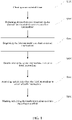
- FIG. 1 shows a flow chart of a method for preparing the collagen scaffold provided by the present invention.
- the present invention provides a method for preparing a collagen scaffold and the collagen scaffold prepared by the preparation method. As shown in FIG. 1 , the preparation method includes the following steps:
- Fresh pig omentum majus was washed 3 times with normal saline.
- the washed omentum majus was added to a buffer containing 10 mmol/L tris(hydroxymethyl)aminomethane (Tris), 10 mmol/L ethylenediaminetetraacetic acid (EDTA), and phenylmethylsulfonyl fluoride (PMSF) at a mass percentage of 1% at pH 8.0 for 3 freeze-thaw cycle treatments.
- Tris tris(hydroxymethyl)aminomethane
- EDTA ethylenediaminetetraacetic acid
- PMSF phenylmethylsulfonyl fluoride
- the tissue treated by the freeze-thaw cycle treatment was degreased:
- the degreased tissue was decellularized:
- a fresh pig heart tissue was washed 3 times with normal saline.
- the washed heart tissue was added to a buffer containing 1 mmol/L tris(hydroxymethyl)aminomethane (Tris), 1 mmol/L ethylenediaminetetraacetic acid (EDTA), and phenylmethylsulfonyl fluoride (PMSF) at a mass percentage of 0.1% at pH 7.8 for 3 freeze-thaw cycle treatments.
- Tris tris(hydroxymethyl)aminomethane
- EDTA ethylenediaminetetraacetic acid
- PMSF phenylmethylsulfonyl fluoride
- the tissue treated by the freeze-thaw cycle treatment was degreased:
- the degreased tissue was decellularized:
- the washed bladder tissue was added to a buffer containing 20 mmol/L tris(hydroxymethyl)aminomethane (Tris), 8 mmol/L ethylenediaminetetraacetic acid (EDTA), and phenylmethylsulfonyl fluoride (PMSF) at a mass percentage of 0.8% at pH 8.2 for 3 freeze-thaw cycle treatments.
- Tris tris(hydroxymethyl)aminomethane
- EDTA ethylenediaminetetraacetic acid
- PMSF phenylmethylsulfonyl fluoride
- the tissue treated by the freeze-thaw cycle treatment was degreased:
- the degreased tissue was decellularized:
Landscapes
- Health & Medical Sciences (AREA)
- Life Sciences & Earth Sciences (AREA)
- Chemical & Material Sciences (AREA)
- Animal Behavior & Ethology (AREA)
- General Health & Medical Sciences (AREA)
- Veterinary Medicine (AREA)
- Public Health (AREA)
- Epidemiology (AREA)
- Transplantation (AREA)
- Oral & Maxillofacial Surgery (AREA)
- Dermatology (AREA)
- Medicinal Chemistry (AREA)
- Biomedical Technology (AREA)
- Engineering & Computer Science (AREA)
- Chemical Kinetics & Catalysis (AREA)
- Botany (AREA)
- Molecular Biology (AREA)
- Zoology (AREA)
- Urology & Nephrology (AREA)
- Biophysics (AREA)
- General Chemical & Material Sciences (AREA)
- Micro-Organisms Or Cultivation Processes Thereof (AREA)
- Peptides Or Proteins (AREA)
Applications Claiming Priority (2)
| Application Number | Priority Date | Filing Date | Title |
|---|---|---|---|
| CN201911394705.5A CN111434358B (zh) | 2019-12-30 | 2019-12-30 | 胶原支架的制备方法及胶原支架 |
| PCT/CN2020/123741 WO2021135563A1 (fr) | 2019-12-30 | 2020-10-26 | Procédé de préparation d'échafaudage de collagène et échafaudage de collagène |
Publications (2)
| Publication Number | Publication Date |
|---|---|
| EP4066868A1 true EP4066868A1 (fr) | 2022-10-05 |
| EP4066868A4 EP4066868A4 (fr) | 2023-12-06 |
Family
ID=71580987
Family Applications (1)
| Application Number | Title | Priority Date | Filing Date |
|---|---|---|---|
| EP20909754.2A Withdrawn EP4066868A4 (fr) | 2019-12-30 | 2020-10-26 | Procédé de préparation d'échafaudage de collagène et échafaudage de collagène |
Country Status (3)
| Country | Link |
|---|---|
| EP (1) | EP4066868A4 (fr) |
| CN (1) | CN111434358B (fr) |
| WO (1) | WO2021135563A1 (fr) |
Families Citing this family (3)
| Publication number | Priority date | Publication date | Assignee | Title |
|---|---|---|---|---|
| CN111434358B (zh) * | 2019-12-30 | 2021-09-21 | 广东泓志生物科技有限公司 | 胶原支架的制备方法及胶原支架 |
| CN114209886B (zh) * | 2021-11-09 | 2022-12-02 | 江苏臻亿医疗科技有限公司 | 一种生物组织材料及其制备方法 |
| CN120860323A (zh) * | 2025-09-08 | 2025-10-31 | 江苏省中医药研究院(江苏省中西医结合医院) | 一种全椎间盘脱细胞组织工程支架及其制备方法和应用 |
Family Cites Families (11)
| Publication number | Priority date | Publication date | Assignee | Title |
|---|---|---|---|---|
| US20080306610A1 (en) * | 2007-06-07 | 2008-12-11 | Zimmer Orthobiologics, Inc. | Tissue processing for nonimmunogenic implants |
| EP3095469B1 (fr) * | 2015-05-22 | 2019-09-11 | Ilyas Inci | Procédé de décellularisation de tissu osseux |
| CN106310384A (zh) * | 2015-07-01 | 2017-01-11 | 江西瑞诺健医学科技有限公司 | 一种脱细胞异种真皮及其制取方法 |
| CN107376022B (zh) * | 2017-06-27 | 2020-11-06 | 浙江大学 | 一种天然组织来源的卵巢脱细胞材料及其制备方法 |
| US20190125930A1 (en) * | 2017-10-26 | 2019-05-02 | National Cheng Kung University | Bioscaffold, method for producing the same, and uses thereof |
| WO2019180568A1 (fr) * | 2018-03-17 | 2019-09-26 | Indian Institute Of Technology Hyderabad | Hydrogel à base de matrice cornéenne décellularisée, formulation de bioencre et procédés associés |
| CN108310465B (zh) * | 2018-03-21 | 2021-05-11 | 温州生物材料与工程研究所 | 一种3d打印用骨修复材料及其制备骨修复支架的方法 |
| CN109078226A (zh) * | 2018-08-07 | 2018-12-25 | 中国人民解放军第二军医大学 | 一种微孔隙脱细胞猪主动脉基质 |
| CN110193096A (zh) * | 2019-05-29 | 2019-09-03 | 上海市第六人民医院 | 一种海洋源性仿生型软骨材料及其制备方法 |
| CN110384826B (zh) * | 2019-07-24 | 2022-02-15 | 中国医科大学 | 一种由羊骨膜脱细胞基质制备的口腔引导骨再生膜及其制备方法 |
| CN111434358B (zh) * | 2019-12-30 | 2021-09-21 | 广东泓志生物科技有限公司 | 胶原支架的制备方法及胶原支架 |
-
2019
- 2019-12-30 CN CN201911394705.5A patent/CN111434358B/zh active Active
-
2020
- 2020-10-26 EP EP20909754.2A patent/EP4066868A4/fr not_active Withdrawn
- 2020-10-26 WO PCT/CN2020/123741 patent/WO2021135563A1/fr not_active Ceased
Also Published As
| Publication number | Publication date |
|---|---|
| WO2021135563A1 (fr) | 2021-07-08 |
| CN111434358A (zh) | 2020-07-21 |
| EP4066868A4 (fr) | 2023-12-06 |
| CN111434358B (zh) | 2021-09-21 |
Similar Documents
| Publication | Publication Date | Title |
|---|---|---|
| Pan et al. | An efficient method for decellularization of the rat liver | |
| JP6636956B2 (ja) | ヒト肝臓スキャフォールド | |
| AU2013289661B2 (en) | Decellularization method for preparing extracellular matrix support material | |
| US10709813B2 (en) | Solubilization of antigen components for removal from tissues | |
| CN113368313B (zh) | 一种生物膜的制备方法及其产品和应用 | |
| CN105188787A (zh) | 用于组织移植物去细胞化的方法 | |
| KR20160025502A (ko) | 입자상 탈세포화 조직을 포함하는 하이브리드 겔 | |
| CN111434358B (zh) | 胶原支架的制备方法及胶原支架 | |
| CN104288838A (zh) | 用于获取多器官和组织细胞外基质的试剂盒及其使用方法 | |
| EP4114476B1 (fr) | Procédé de production d'un échafaudage tissulaire décellularisé | |
| KR20170142211A (ko) | 임플란트 및 음압 하 관류에 의한 조직의 탈세포화를 통한 임플란트의 제조 방법 | |
| CN107376022B (zh) | 一种天然组织来源的卵巢脱细胞材料及其制备方法 | |
| US20080260853A1 (en) | Extracellular matrix as surgical adjunct in a lumpectomy procedure | |
| CN105682697A (zh) | 去除α-半乳糖的方法 | |
| JP3658385B2 (ja) | 皮膚の無細胞化方法、該方法による無細胞化真皮マトリックス及びその製造方法並びに該マトリックスを用いた複合培養皮膚 | |
| CN114848893A (zh) | 一种结合丝素蛋白的猪去细胞化小肠黏膜下层细胞外基质水凝胶及制备方法与应用 | |
| CN119524207B (zh) | 水生动物源脱细胞基质及其制备方法和应用 | |
| CN109529120A (zh) | 一种小肠黏膜下层基质修复凝胶的制备方法 | |
| WO2014077934A1 (fr) | Solubilisation de constituants antigènes pour l'élimination à partir de tissus | |
| KR102073690B1 (ko) | 소장점막하조직의 탈세포화 방법 및 이로부터 제조된 무세포 소장점막조직 | |
| CN104826165A (zh) | 脱细胞生物网膜的制备方法及由其制得的脱细胞生物网膜 | |
| Chai et al. | Applications of decellularized extracellular matrix for regenerative medicine | |
| CN113425915A (zh) | 一种抗凝材料及其制备方法和应用 | |
| CN113398317A (zh) | 一种止血材料及其制备方法 | |
| AU2022380901A1 (en) | Methods and compositions for production of cultured meat |
Legal Events
| Date | Code | Title | Description |
|---|---|---|---|
| STAA | Information on the status of an ep patent application or granted ep patent |
Free format text: STATUS: THE INTERNATIONAL PUBLICATION HAS BEEN MADE |
|
| PUAI | Public reference made under article 153(3) epc to a published international application that has entered the european phase |
Free format text: ORIGINAL CODE: 0009012 |
|
| STAA | Information on the status of an ep patent application or granted ep patent |
Free format text: STATUS: REQUEST FOR EXAMINATION WAS MADE |
|
| 17P | Request for examination filed |
Effective date: 20220628 |
|
| AK | Designated contracting states |
Kind code of ref document: A1 Designated state(s): AL AT BE BG CH CY CZ DE DK EE ES FI FR GB GR HR HU IE IS IT LI LT LU LV MC MK MT NL NO PL PT RO RS SE SI SK SM TR |
|
| DAV | Request for validation of the european patent (deleted) | ||
| DAX | Request for extension of the european patent (deleted) | ||
| A4 | Supplementary search report drawn up and despatched |
Effective date: 20231108 |
|
| RIC1 | Information provided on ipc code assigned before grant |
Ipc: A61L 27/58 20060101ALI20231102BHEP Ipc: A61L 27/50 20060101ALI20231102BHEP Ipc: A61L 27/36 20060101AFI20231102BHEP |
|
| GRAP | Despatch of communication of intention to grant a patent |
Free format text: ORIGINAL CODE: EPIDOSNIGR1 |
|
| STAA | Information on the status of an ep patent application or granted ep patent |
Free format text: STATUS: GRANT OF PATENT IS INTENDED |
|
| INTG | Intention to grant announced |
Effective date: 20241211 |
|
| STAA | Information on the status of an ep patent application or granted ep patent |
Free format text: STATUS: THE APPLICATION IS DEEMED TO BE WITHDRAWN |
|
| 18D | Application deemed to be withdrawn |
Effective date: 20250412 |