EP4066902A1 - Zwitterion-verbindung und herstellungsverfahren und verwendung dafür - Google Patents
Zwitterion-verbindung und herstellungsverfahren und verwendung dafür Download PDFInfo
- Publication number
- EP4066902A1 EP4066902A1 EP20892120.5A EP20892120A EP4066902A1 EP 4066902 A1 EP4066902 A1 EP 4066902A1 EP 20892120 A EP20892120 A EP 20892120A EP 4066902 A1 EP4066902 A1 EP 4066902A1
- Authority
- EP
- European Patent Office
- Prior art keywords
- hydrogen atom
- integer
- polymer
- alkyl group
- compound
- Prior art date
- Legal status (The legal status is an assumption and is not a legal conclusion. Google has not performed a legal analysis and makes no representation as to the accuracy of the status listed.)
- Granted
Links
Images






Classifications
-
- C—CHEMISTRY; METALLURGY
- C08—ORGANIC MACROMOLECULAR COMPOUNDS; THEIR PREPARATION OR CHEMICAL WORKING-UP; COMPOSITIONS BASED THEREON
- C08F—MACROMOLECULAR COMPOUNDS OBTAINED BY REACTIONS ONLY INVOLVING CARBON-TO-CARBON UNSATURATED BONDS
- C08F20/00—Homopolymers and copolymers of compounds having one or more unsaturated aliphatic radicals, each having only one carbon-to-carbon double bond, and only one being terminated by only one carboxyl radical or a salt, anhydride, ester, amide, imide or nitrile thereof
- C08F20/02—Monocarboxylic acids having less than ten carbon atoms, Derivatives thereof
- C08F20/10—Esters
- C08F20/34—Esters containing nitrogen, e.g. N,N-dimethylaminoethyl (meth)acrylate
- C08F20/36—Esters containing nitrogen, e.g. N,N-dimethylaminoethyl (meth)acrylate containing oxygen in addition to the carboxy oxygen, e.g. 2-N-morpholinoethyl (meth)acrylate or 2-isocyanatoethyl (meth)acrylate
-
- C—CHEMISTRY; METALLURGY
- C07—ORGANIC CHEMISTRY
- C07F—ACYCLIC, CARBOCYCLIC OR HETEROCYCLIC COMPOUNDS CONTAINING ELEMENTS OTHER THAN CARBON, HYDROGEN, HALOGEN, OXYGEN, NITROGEN, SULFUR, SELENIUM OR TELLURIUM
- C07F9/00—Compounds containing elements of Groups 5 or 15 of the Periodic Table
- C07F9/02—Phosphorus compounds
- C07F9/06—Phosphorus compounds without P—C bonds
- C07F9/08—Esters of oxyacids of phosphorus
- C07F9/09—Esters of phosphoric acids
- C07F9/091—Esters of phosphoric acids with hydroxyalkyl compounds with further substituents on alkyl
-
- A—HUMAN NECESSITIES
- A61—MEDICAL OR VETERINARY SCIENCE; HYGIENE
- A61L—METHODS OR APPARATUS FOR STERILISING MATERIALS OR OBJECTS IN GENERAL; DISINFECTION, STERILISATION OR DEODORISATION OF AIR; CHEMICAL ASPECTS OF BANDAGES, DRESSINGS, ABSORBENT PADS OR SURGICAL ARTICLES; MATERIALS FOR BANDAGES, DRESSINGS, ABSORBENT PADS OR SURGICAL ARTICLES
- A61L27/00—Materials for grafts or prostheses or for coating grafts or prostheses
- A61L27/14—Macromolecular materials
- A61L27/16—Macromolecular materials obtained by reactions only involving carbon-to-carbon unsaturated bonds
-
- A—HUMAN NECESSITIES
- A61—MEDICAL OR VETERINARY SCIENCE; HYGIENE
- A61L—METHODS OR APPARATUS FOR STERILISING MATERIALS OR OBJECTS IN GENERAL; DISINFECTION, STERILISATION OR DEODORISATION OF AIR; CHEMICAL ASPECTS OF BANDAGES, DRESSINGS, ABSORBENT PADS OR SURGICAL ARTICLES; MATERIALS FOR BANDAGES, DRESSINGS, ABSORBENT PADS OR SURGICAL ARTICLES
- A61L27/00—Materials for grafts or prostheses or for coating grafts or prostheses
- A61L27/28—Materials for coating prostheses
- A61L27/34—Macromolecular materials
-
- A—HUMAN NECESSITIES
- A61—MEDICAL OR VETERINARY SCIENCE; HYGIENE
- A61L—METHODS OR APPARATUS FOR STERILISING MATERIALS OR OBJECTS IN GENERAL; DISINFECTION, STERILISATION OR DEODORISATION OF AIR; CHEMICAL ASPECTS OF BANDAGES, DRESSINGS, ABSORBENT PADS OR SURGICAL ARTICLES; MATERIALS FOR BANDAGES, DRESSINGS, ABSORBENT PADS OR SURGICAL ARTICLES
- A61L29/00—Materials for catheters, medical tubing, cannulae, or endoscopes or for coating catheters
- A61L29/08—Materials for coatings
- A61L29/085—Macromolecular materials
-
- A—HUMAN NECESSITIES
- A61—MEDICAL OR VETERINARY SCIENCE; HYGIENE
- A61L—METHODS OR APPARATUS FOR STERILISING MATERIALS OR OBJECTS IN GENERAL; DISINFECTION, STERILISATION OR DEODORISATION OF AIR; CHEMICAL ASPECTS OF BANDAGES, DRESSINGS, ABSORBENT PADS OR SURGICAL ARTICLES; MATERIALS FOR BANDAGES, DRESSINGS, ABSORBENT PADS OR SURGICAL ARTICLES
- A61L31/00—Materials for other surgical articles, e.g. stents, stent-grafts, shunts, surgical drapes, guide wires, materials for adhesion prevention, occluding devices, surgical gloves, tissue fixation devices
- A61L31/08—Materials for coatings
- A61L31/10—Macromolecular materials
-
- C—CHEMISTRY; METALLURGY
- C08—ORGANIC MACROMOLECULAR COMPOUNDS; THEIR PREPARATION OR CHEMICAL WORKING-UP; COMPOSITIONS BASED THEREON
- C08F—MACROMOLECULAR COMPOUNDS OBTAINED BY REACTIONS ONLY INVOLVING CARBON-TO-CARBON UNSATURATED BONDS
- C08F20/00—Homopolymers and copolymers of compounds having one or more unsaturated aliphatic radicals, each having only one carbon-to-carbon double bond, and only one being terminated by only one carboxyl radical or a salt, anhydride, ester, amide, imide or nitrile thereof
- C08F20/02—Monocarboxylic acids having less than ten carbon atoms, Derivatives thereof
- C08F20/10—Esters
- C08F20/12—Esters of monohydric alcohols or phenols
- C08F20/16—Esters of monohydric alcohols or phenols of phenols or of alcohols containing two or more carbon atoms
- C08F20/18—Esters of monohydric alcohols or phenols of phenols or of alcohols containing two or more carbon atoms with acrylic or methacrylic acids
-
- C—CHEMISTRY; METALLURGY
- C08—ORGANIC MACROMOLECULAR COMPOUNDS; THEIR PREPARATION OR CHEMICAL WORKING-UP; COMPOSITIONS BASED THEREON
- C08F—MACROMOLECULAR COMPOUNDS OBTAINED BY REACTIONS ONLY INVOLVING CARBON-TO-CARBON UNSATURATED BONDS
- C08F220/00—Copolymers of compounds having one or more unsaturated aliphatic radicals, each having only one carbon-to-carbon double bond, and only one being terminated by only one carboxyl radical or a salt, anhydride ester, amide, imide or nitrile thereof
- C08F220/02—Monocarboxylic acids having less than ten carbon atoms; Derivatives thereof
- C08F220/10—Esters
- C08F220/12—Esters of monohydric alcohols or phenols
- C08F220/16—Esters of monohydric alcohols or phenols of phenols or of alcohols containing two or more carbon atoms
- C08F220/18—Esters of monohydric alcohols or phenols of phenols or of alcohols containing two or more carbon atoms with acrylic or methacrylic acids
- C08F220/1804—C4-(meth)acrylate, e.g. butyl (meth)acrylate, isobutyl (meth)acrylate or tert-butyl (meth)acrylate
-
- C—CHEMISTRY; METALLURGY
- C08—ORGANIC MACROMOLECULAR COMPOUNDS; THEIR PREPARATION OR CHEMICAL WORKING-UP; COMPOSITIONS BASED THEREON
- C08F—MACROMOLECULAR COMPOUNDS OBTAINED BY REACTIONS ONLY INVOLVING CARBON-TO-CARBON UNSATURATED BONDS
- C08F222/00—Copolymers of compounds having one or more unsaturated aliphatic radicals, each having only one carbon-to-carbon double bond, and at least one being terminated by a carboxyl radical and containing at least one other carboxyl radical in the molecule; Salts, anhydrides, esters, amides, imides, or nitriles thereof
- C08F222/10—Esters
- C08F222/12—Esters of phenols or saturated alcohols
- C08F222/14—Esters having no free carboxylic acid groups, e.g. dialkyl maleates or fumarates
-
- C—CHEMISTRY; METALLURGY
- C08—ORGANIC MACROMOLECULAR COMPOUNDS; THEIR PREPARATION OR CHEMICAL WORKING-UP; COMPOSITIONS BASED THEREON
- C08F—MACROMOLECULAR COMPOUNDS OBTAINED BY REACTIONS ONLY INVOLVING CARBON-TO-CARBON UNSATURATED BONDS
- C08F30/00—Homopolymers or copolymers of compounds having one or more unsaturated aliphatic radicals, each having only one carbon-to-carbon double bond, and containing phosphorus, selenium, tellurium or a metal
- C08F30/02—Homopolymers or copolymers of compounds having one or more unsaturated aliphatic radicals, each having only one carbon-to-carbon double bond, and containing phosphorus, selenium, tellurium or a metal containing phosphorus
-
- C—CHEMISTRY; METALLURGY
- C08—ORGANIC MACROMOLECULAR COMPOUNDS; THEIR PREPARATION OR CHEMICAL WORKING-UP; COMPOSITIONS BASED THEREON
- C08J—WORKING-UP; GENERAL PROCESSES OF COMPOUNDING; AFTER-TREATMENT NOT COVERED BY SUBCLASSES C08B, C08C, C08F, C08G or C08H
- C08J5/00—Manufacture of articles or shaped materials containing macromolecular substances
- C08J5/18—Manufacture of films or sheets
-
- A—HUMAN NECESSITIES
- A61—MEDICAL OR VETERINARY SCIENCE; HYGIENE
- A61L—METHODS OR APPARATUS FOR STERILISING MATERIALS OR OBJECTS IN GENERAL; DISINFECTION, STERILISATION OR DEODORISATION OF AIR; CHEMICAL ASPECTS OF BANDAGES, DRESSINGS, ABSORBENT PADS OR SURGICAL ARTICLES; MATERIALS FOR BANDAGES, DRESSINGS, ABSORBENT PADS OR SURGICAL ARTICLES
- A61L2400/00—Materials characterised by their function or physical properties
- A61L2400/18—Modification of implant surfaces in order to improve biocompatibility, cell growth, fixation of biomolecules, e.g. plasma treatment
-
- A—HUMAN NECESSITIES
- A61—MEDICAL OR VETERINARY SCIENCE; HYGIENE
- A61L—METHODS OR APPARATUS FOR STERILISING MATERIALS OR OBJECTS IN GENERAL; DISINFECTION, STERILISATION OR DEODORISATION OF AIR; CHEMICAL ASPECTS OF BANDAGES, DRESSINGS, ABSORBENT PADS OR SURGICAL ARTICLES; MATERIALS FOR BANDAGES, DRESSINGS, ABSORBENT PADS OR SURGICAL ARTICLES
- A61L27/00—Materials for grafts or prostheses or for coating grafts or prostheses
- A61L27/50—Materials characterised by their function or physical properties, e.g. injectable or lubricating compositions, shape-memory materials, surface modified materials
-
- A—HUMAN NECESSITIES
- A61—MEDICAL OR VETERINARY SCIENCE; HYGIENE
- A61L—METHODS OR APPARATUS FOR STERILISING MATERIALS OR OBJECTS IN GENERAL; DISINFECTION, STERILISATION OR DEODORISATION OF AIR; CHEMICAL ASPECTS OF BANDAGES, DRESSINGS, ABSORBENT PADS OR SURGICAL ARTICLES; MATERIALS FOR BANDAGES, DRESSINGS, ABSORBENT PADS OR SURGICAL ARTICLES
- A61L29/00—Materials for catheters, medical tubing, cannulae, or endoscopes or for coating catheters
- A61L29/14—Materials characterised by their function or physical properties, e.g. lubricating compositions
-
- A—HUMAN NECESSITIES
- A61—MEDICAL OR VETERINARY SCIENCE; HYGIENE
- A61L—METHODS OR APPARATUS FOR STERILISING MATERIALS OR OBJECTS IN GENERAL; DISINFECTION, STERILISATION OR DEODORISATION OF AIR; CHEMICAL ASPECTS OF BANDAGES, DRESSINGS, ABSORBENT PADS OR SURGICAL ARTICLES; MATERIALS FOR BANDAGES, DRESSINGS, ABSORBENT PADS OR SURGICAL ARTICLES
- A61L31/00—Materials for other surgical articles, e.g. stents, stent-grafts, shunts, surgical drapes, guide wires, materials for adhesion prevention, occluding devices, surgical gloves, tissue fixation devices
- A61L31/14—Materials characterised by their function or physical properties, e.g. injectable or lubricating compositions, shape-memory materials, surface modified materials
-
- C—CHEMISTRY; METALLURGY
- C08—ORGANIC MACROMOLECULAR COMPOUNDS; THEIR PREPARATION OR CHEMICAL WORKING-UP; COMPOSITIONS BASED THEREON
- C08J—WORKING-UP; GENERAL PROCESSES OF COMPOUNDING; AFTER-TREATMENT NOT COVERED BY SUBCLASSES C08B, C08C, C08F, C08G or C08H
- C08J2333/00—Characterised by the use of homopolymers or copolymers of compounds having one or more unsaturated aliphatic radicals, each having only one carbon-to-carbon double bond, and only one being terminated by only one carboxyl radical, or of salts, anhydrides, esters, amides, imides, or nitriles thereof; Derivatives of such polymers
- C08J2333/04—Characterised by the use of homopolymers or copolymers of compounds having one or more unsaturated aliphatic radicals, each having only one carbon-to-carbon double bond, and only one being terminated by only one carboxyl radical, or of salts, anhydrides, esters, amides, imides, or nitriles thereof; Derivatives of such polymers esters
- C08J2333/06—Characterised by the use of homopolymers or copolymers of compounds having one or more unsaturated aliphatic radicals, each having only one carbon-to-carbon double bond, and only one being terminated by only one carboxyl radical, or of salts, anhydrides, esters, amides, imides, or nitriles thereof; Derivatives of such polymers esters of esters containing only carbon, hydrogen, and oxygen, the oxygen atom being present only as part of the carboxyl radical
- C08J2333/10—Homopolymers or copolymers of methacrylic acid esters
-
- C—CHEMISTRY; METALLURGY
- C08—ORGANIC MACROMOLECULAR COMPOUNDS; THEIR PREPARATION OR CHEMICAL WORKING-UP; COMPOSITIONS BASED THEREON
- C08J—WORKING-UP; GENERAL PROCESSES OF COMPOUNDING; AFTER-TREATMENT NOT COVERED BY SUBCLASSES C08B, C08C, C08F, C08G or C08H
- C08J2333/00—Characterised by the use of homopolymers or copolymers of compounds having one or more unsaturated aliphatic radicals, each having only one carbon-to-carbon double bond, and only one being terminated by only one carboxyl radical, or of salts, anhydrides, esters, amides, imides, or nitriles thereof; Derivatives of such polymers
- C08J2333/04—Characterised by the use of homopolymers or copolymers of compounds having one or more unsaturated aliphatic radicals, each having only one carbon-to-carbon double bond, and only one being terminated by only one carboxyl radical, or of salts, anhydrides, esters, amides, imides, or nitriles thereof; Derivatives of such polymers esters
- C08J2333/14—Characterised by the use of homopolymers or copolymers of compounds having one or more unsaturated aliphatic radicals, each having only one carbon-to-carbon double bond, and only one being terminated by only one carboxyl radical, or of salts, anhydrides, esters, amides, imides, or nitriles thereof; Derivatives of such polymers esters of esters containing halogen, nitrogen, sulfur, or oxygen atoms in addition to the carboxy oxygen
-
- C—CHEMISTRY; METALLURGY
- C08—ORGANIC MACROMOLECULAR COMPOUNDS; THEIR PREPARATION OR CHEMICAL WORKING-UP; COMPOSITIONS BASED THEREON
- C08L—COMPOSITIONS OF MACROMOLECULAR COMPOUNDS
- C08L43/00—Compositions of homopolymers or copolymers of compounds having one or more unsaturated aliphatic radicals, each having only one carbon-to-carbon double bond, and containing boron, silicon, phosphorus, selenium, tellurium or a metal; Compositions of derivatives of such polymers
- C08L43/02—Homopolymers or copolymers of monomers containing phosphorus
Definitions
- the present invention relates to a zwitterionic compound, a method for producing the zwitterionic compound, and use of the zwitterionic compound.
- Organisms have a self-defense response system for recognizing and responding to foreign matter. For example, when blood vessels are damaged, and blood comes into contact with exposed subendothelial tissue, a blood-clotting reaction proceeds immediately. Such a foreign matter recognition response of blood is also triggered when the blood comes into contact with an artificial medical material; proteins adsorb to the surface of the artificial medical material to form a layer, and cells, such as platelets, adsorb to this layer and undergo extension and denaturation, resulting in the formation of a blood clot. For this reason, the surface of artificial medical materials used in vivo must have properties for inhibiting protein adsorption.
- Non-patent Literature (NPL) 1 Materials having a protein adsorption inhibitory effect must have four surface characteristics, i.e., (1) being hydrophilic, (2) being electrically neutral, (3) being a hydrogen bond receptor, and (4) not being a hydrogen bond donor (Non-patent Literature (NPL) 1).
- material surfaces having the four characteristics described above can reduce the energetic interactions that occur when proteins approach the interface, and are thus believed to have a protein adsorption inhibitory effect.
- Polymers are useful materials for inhibiting protein adsorption; in particular, polyethylene glycol (PEG) has been used for a long time.
- PEG polyethylene glycol
- Materials with a surface onto which watersoluble PEG chains are grafted can suppress protein adsorption on the surface by repelling approaching proteins with hydrated PEG chains.
- PEG chains are easily degraded by oxidation and are not suitable for long-term stable use in vivo (NPL 1) . Therefore, materials that are not easily degraded in vivo and that have a high protein adsorption inhibitory effect are required.
- MPC 2-Methacryloyloxyethyl phosphorylcholine
- Polymers obtained by polymerization of MPC as a monomer have the four characteristics described above due to a zwitterionic group, i.e., a phosphorylcholine (PC) group, and have a protein adsorption inhibitory effect.
- a zwitterionic group i.e., a phosphorylcholine (PC) group
- a material with an even better protein adsorption inhibitory effect than that of polymers obtained by polymerization of MPC as a monomer is required. Further, the present inventors found that polymers obtained by polymerization of MPC as a monomer have a problem; specifically, a decrease in the pH causes a reduction in the hydrophilicity, adversely affecting the protein adsorption inhibitory effect.
- an object of the present invention is to provide a zwitterionic compound having an excellent protein adsorption inhibitory effect, in particular, an excellent protein adsorption inhibitory effect in a broad pH range, including the acidic pH range.
- the present inventors conducted extensive research to solve the above problems, and found that the use of a monomer having a structure in which the quaternary ammonium cation group and the phosphodiester group are replaced by each other in the PC group in MPC improves the protein adsorption inhibitory effect of the resulting polymer.
- the inventors also found that polymers obtained using a monomer having the above structure have high hydrophilicity even when the pH decreases, and have an excellent protein adsorption inhibitory effect over a wide pH range, including the acidic range.
- the inventors further found that polymers obtained using a monomer having the above structure have excellent compatibility with body sites that become locally acidic (e.g., inflammatory sites and cancer-developing sites). Based on these findings, the inventors conducted further research to complete the present invention.
- the present invention encompasses the following embodiments.
- the zwitterionic compound of the present invention has an excellent protein adsorption inhibitory effect.
- the zwitterionic compound of the invention can exhibit an effect of suppressing protein adsorption over a wide pH range, including the acidic range.
- the zwitterionic compound is a polymer comprising a unit represented by the following formula (1) : wherein R 1 , R 2 , X 1 , m, and n are as defined above (this polymer is referred to below as "the zwitterionic polymer A").
- the zwitterionic compound may form a salt.
- examples of C 1-6 alkyl groups represented by Q 1 include methyl, ethyl, propyl (n-propyl or i-propyl), and butyl (n-butyl, i-butyl, s-butyl, and t-butyl).
- Q 1 is preferably a hydrogen atom or a C 1-4 alkyl group, and more preferably a hydrogen atom or a C 1-3 alkyl group.
- X 1 is preferably -O- or -N(H)-.
- bond cleavage is less likely to occur, compared to when it is -O-, and the polymer is stable under harsh conditions, such as high temperatures.
- n can be appropriately selected according to, for example, the solubility in solvents.
- m is preferably an integer of 4 to 12 from the standpoint of improving solubility in organic solvents, and preferably an integer of 1 to 3 from the standpoint of improving water solubility.
- n is preferably an integer of 1 to 3, and more preferably 1 or 2.
- the percentage of the unit represented by formula (1) is, for example, 10 mol% or more, preferably 20 mol% or more, more preferably 30 mol% or more, still more preferably 40 mol% or more, even more preferably 50 mol% or more, particularly preferably 60 mol% or more, and particularly more preferably 70 mol% or more, based on the total monomer units.
- the percentage of the unit represented by formula (1) is preferably 80 mol% or more, more preferably 90 mol% or more, still more preferably more than 90 mol%, even more preferably 95 mol% or more, particularly preferably 99 mol% or more, and particularly more preferably 100 mol% (a homopolymer), based on the total monomer units.
- the zwitterionic polymer A may be a copolymer and may further comprise an additional monomer unit in addition to the unit represented by formula (1).
- the additional monomer is usually a monomer containing an ethylenically unsaturated double bond.
- the number of ethylenically unsaturated double bonds is, for example, 1 to 3, preferably 1 or 2, and more preferably 1.
- Examples of monomers containing an ethylenically unsaturated double bond include unsaturated carboxylic acids or salts, esters, or amides thereof; vinyl ethers; vinyl esters; and styrenesulfonic acid or salts thereof.
- unsaturated carboxylic acids examples include (meth)acrylic acid, crotonic acid, maleic acid, maleic anhydride, fumaric acid, and itaconic acid.
- salts of unsaturated carboxylic acids include alkali metal salts. Specific examples include sodium salts and potassium salts.
- esters of unsaturated carboxylic acids include alkyl esters and hydroxyalkyl esters.
- alkyl esters include C 1-6 alkyl esters, such as methyl ester, ethyl ester, propyl ester, and butyl ester.
- hydroxyalkyl esters include hydroxy C 2-6 alkyl esters, such as a hydroxyethyl ester.
- Examples of amides of unsaturated carboxylic acids include N-substituted and N,N-disubstituted amides.
- Examples of N-substituted amides include alkyl amides. Specific examples include C 1-6 alkyl amides, such as methyl amide and ethyl amide.
- Examples of N,N-disubstituted amides include dialkylamides. Specific examples include di-C 1-6 alkylamides, such as dimethylamide, diethylamide, and ethylmethylamide.
- vinyl ethers examples include ethyl vinyl ether, ethylene glycol monovinyl ether, diethylene glycol monovinyl ether, propyl vinyl ether, and cyclohexyl vinyl ether.
- vinyl esters examples include vinyl acetate, vinyl propionate, and vinyl butyrate.
- the additional monomers may be used alone or in a combination of two or more.
- the additional monomer is preferably (meth)acrylic acid, maleic acid, fumaric acid, itaconic acid, or a salt, ester, or amide thereof; and is, for example, at least one member selected from the group consisting of alkyl (meth)acrylates and alkyl (meth)acrylamides.
- alkyl (meth)acrylates include C 1-10 alkyl (meth)acrylates, such as methyl (meth)acrylate, ethyl (meth)acrylate, propyl (meth)acrylate, butyl (meth)acrylate, pentyl (meth)acrylate, hexyl (meth)acrylate, heptyl (meth)acrylate, and octyl (meth)acrylate.
- Alkyl (meth)acrylamides include N-alkyl (meth)acrylamides and N,N-dialkyl (meth)acrylamides.
- N-alkyl (meth)acrylamides include N-C 1-4 alkyl (meth)acrylamides, such as N-methyl (meth)acrylamide, N-ethyl (meth)acrylamide, and N-isopropyl (meth)acrylamide.
- N,N-dialkyl (meth)acrylamides include N,N-di-C 1-4 alkyl (meth)acrylamides, such as N,N-dimethyl (meth)acrylamide and N,N-diethyl (meth)acrylamide.
- the additional monomer unit is preferably a unit represented by the following formula (2): wherein R 3 , R 4 , and X 2 are as defined above.
- R 3 is preferably methyl
- R 4 is preferably a C 3-6 alkyl group, such as propyl, butyl, pentyl, or hexyl.
- R 3 is preferably -CO-X 2 -R 4 or -CH 2 -CO-X 2 -R 4
- R 4 is preferably a C 1-6 alkyl group, such as methyl, ethyl, propyl, butyl, pentyl, or hexyl.
- examples of C 1-6 alkyl groups represented by Q 2 include methyl, ethyl, propyl, and butyl.
- the percentage of a methyl methacrylate unit in the copolymer is preferably 10 mol% or less or 5 mol% or less, based on the total monomer units, and the copolymer preferably does not contain the methyl methacrylate unit.
- the percentage of an ethyl methacrylate unit is preferably 10 mol% or less or 5 mol% or less, based on the total monomer units, and the copolymer preferably does not contain the ethyl methacrylate unit.
- the molar ratio of the unit represented by formula (1) and the additional monomer unit is preferably 10:90 to 40:60, more preferably 10:90 to 35:65, and still more preferably 10:90 to 30:70.
- the zwitterionic polymer A may be, for example, a random copolymer, an alternating copolymer, a block copolymer, or a grafted copolymer, depending on the polymerization mode.
- the zwitterionic polymer A may be, for example, linear-shaped, combshaped, star-shaped, or ladder-shaped.
- the zwitterionic polymer A has an excellent protein adsorption inhibitory effect over a wide pH range, for example, in the range of pH 1 to 10.
- the zwitterionic polymer A can achieve an excellent protein adsorption inhibitory effect even at the acidic range (e.g. pH 1 to 3), which is not suitable for polymers obtained by polymerization of MPC as a monomer.
- the method for producing the zwitterionic polymer A is not particularly limited and may be, for example, a method comprising polymerizing a compound represented by the following formula (3): wherein R 1 , R 2 , X 1 , m, and n are as defined above (a zwitterionic monomer).
- Compound (3) is obtained, for example, by the following reaction scheme: wherein L 1 and L 2 are the same or different, and are each independently a halogen atom, and R 1 , R 2 , R 5 to R 9 , X 1 , Z, m, and n are as defined above.
- the reaction scheme above can produce compound (3) of high purity.
- the purity of compound (3) is, for example, 90% or higher, preferably 95% or higher, and more preferably 99% or higher.
- the purity is determined by 1 H-NMR and 31 P-NMR.
- Step (A1) is a step of reacting compound (9) with compound (8) to obtain compound (7).
- examples of halogen atoms represented by L 1 and L 2 include chlorine, bromine, and iodine.
- the amount of compound (8) for use is usually 0.8 to 2.0 mol, and preferably 1.0 to 1.2 mol, per mole of compound (9).
- the reaction in step (A1) is preferably performed in the presence of a base.
- bases include chain amines (e.g., di or tri-C 1-4 alkylamines, such as triethylamine and N,N-diisopropylethylamine), and cyclic amines (e.g., 1,4-diazabicyclo[2.2.2]octane, pyridine, N,N-dimethyl-4-aminopyridine, and 2,6-lutidine, 2,6-di-tert-butylpyridine). These bases may be used alone or in a combination of two or more.
- the amount of base for use is usually 1.1 to 2.0 mol, and preferably 1.2 to 1.5 mol, per mole of compound (9).
- the reaction in step (A1) is preferably performed in a solvent.
- solvents include polar aprotic solvents. Specific examples include haloalkanes, such as dichloromethane and dichloroethane; and diethyl ether, tetrahydrofuran, acetonitrile, dimethyl sulfoxide, dimethyl formamide, and hexamethylphosphoric triamide. These solvents may be used alone or in a combination of two or more.
- the reaction temperature and reaction time in step (A1) are not particularly limited as long as the reaction proceeds.
- the reaction temperature is, for example, 0 to 100°C, and preferably 5 to 40°C.
- the reaction time is, for example, 1 to 24 hours, and preferably 2 to 12 hours.
- Step (B1) is a step of reacting compound (7) with compound (6) to obtain compound (4).
- the amount of compound (6) for use is, for example, 0.5 to 2.0 mol, preferably 0.9 to 1.1 mol, and usually about 1 mol, per mole of compound (7).
- the reaction in step (B1) is preferably performed in a solvent.
- solvents include aprotic solvents. Specific examples include nitriles, such as acetonitrile; ethers, such as diethyl ether and tetrahydrofuran; and ethyl acetate, dimethyl sulfoxide, dimethyl formamide, hexamethylphosphoric triamide, hexane, benzene, toluene, and xylene. These solvents may be used alone or in a combination of two or more.
- the reaction temperature and reaction time in step (B1) are not limited as long as the reaction proceeds.
- the reaction temperature is, for example, 0 to 100°C, and preferably 5 to 40°C.
- the reaction time is, for example, 1 to 100 hours, and preferably 2 to 80 hours.
- Step (C1) is a step of reacting compound (4) with compound (5), followed by reaction with water and/or an alcohol, to obtain compound (3).
- examples of alkyl groups represented by R 7 to R 9 include C 1-4 alkyl groups, such as methyl, ethyl, propyl, and butyl.
- halogen atoms represented by Z include chlorine, bromine, and iodine.
- the amount of compound (5) for use is usually 2 to 40 mol, preferably 12 to 20 mol, per mole of compound (4).
- the reaction with compound (5) is preferably performed in a solvent.
- solvents include aprotic solvents. Specific examples include acetonitrile, hexane, benzene, toluene, and xylene. These solvents may be used alone or in a combination of two or more.
- the reaction temperature and reaction time in the reaction with compound (5) are not particularly limited as long as the reaction proceeds.
- the reaction temperature is, for example, -10 to 40°C, and preferably -5 to 30°C.
- the reaction time is preferably 5 hours or more, more preferably 6 hours or more, still more preferably 7 hours or more, even more preferably 8 hours or more, and particularly preferably 9 hours or more, and is usually 20 hours or less, and preferably 15 hours or less.
- alcohols examples include C 1-4 alcohols, such as methanol and ethanol. These alcohols may be used alone or in a combination of two or more.
- reaction temperature and reaction time are not particularly limited as long as the reaction proceeds.
- the reaction temperature is, for example, 0 to 100°C, and preferably 5 to 40°C.
- the reaction time is, for example, 1 to 24 hours, and preferably 2 to 12 hours.
- Step (A2) is a step of reacting compound (9) with compound (6) to obtain compound (10).
- the amount of compound (6) for use is, for example, 0.5 to 2.0 mol, preferably 0.9 to 1.1 mol, and usually about 1 mol, per mole of compound (9).
- step (A2) the reaction in step (A2) is preferably performed in a solvent.
- the reaction temperature and reaction time in step (A2) are not particularly limited as long as the reaction proceeds.
- the reaction temperature is, for example, 10 to 150°C, and preferably 20 to 120°C.
- the reaction time is, for example, 1 to 48 hours, and preferably 2 to 36 hours.
- step (B2) is a step of reacting compound (10) with POCl 3 , followed by hydrolyzation, to obtain compound (3).
- the amount of POCl 3 for use is usually 1 to 100 mol, and preferably 8 to 10 mol, per mole of compound (10).
- the reaction with POCl 3 may be performed in the presence of a base.
- bases include chain amines (e.g., tri-C 1-4 alkylamines, such as triethylamine) and cyclic amines (e.g., pyridine and imidazole). These bases may be used alone or in a combination of two or more.
- the amount of base for use is usually 1.2 to 120 mol, and preferably 9 to 12 mol, per mole of compound (10).
- the reaction with POCl 3 is preferably performed in a solvent.
- solvents include aprotic solvents. Specific examples include acetonitrile, diethyl ether, tetrahydrofuran, ethyl acetate, dimethyl sulfoxide, dimethyl formamide, hexamethylphosphoric triamide, hexane, benzene, toluene, and xylene. These solvents may be used alone or in a combination of two or more.
- the reaction temperature is, for example, -40 to 5°C, and preferably -30 to 0°C.
- the reaction time is, for example, 0.5 to 24 hours, and preferably 1 to 12 hours.
- step (B2) is a step of reacting compound (10) with P 2 O 5 , followed by hydrolyzation, to obtain compound (3).
- the amount of P 2 O 5 for use is usually 0.5 to 10 mol, and preferably 1 to 5 mol, per mole of compound (10).
- the reaction with P 2 O 5 is preferably performed in a solvent.
- solvents include aprotic solvents. Specific examples include acetonitrile, diethyl ether, tetrahydrofuran, ethyl acetate, dimethyl sulfoxide, dimethyl formamide, hexamethylphosphoric triamide, hexane, benzene, toluene, and xylene. These solvents may be used alone or in a combination of two or more.
- the reaction temperature is, for example, 10 to 150°C, and preferably 30 to 100°C.
- the reaction time is, for example, 1 to 12 hours, and preferably 2 to 10 hours.
- Compound (3) and its intermediates may be purified by common methods (e.g., filtration, chromatography, reprecipitation, concentration, two or three or more repetitions of each of these operations, or combinations of each of these operations).
- the zwitterionic polymer A can be produced by polymerizing compound (3) obtained in step (C1), step (B2), or the like.
- Compound (3) may be polymerized alone or copolymerized with an additional monomer.
- the additional monomer for use may be, for example, the same as those listed as additional monomers in the "Zwitterionic Compound" section.
- the molar ratio of compound (3) and the additional monomer is preferably 1:99 to 99:1, more preferably 5:95 to 95:5, still more preferably 10:90 to 90:10, even more preferably 15:85 to 85:15, and particularly preferably 20:80 to 80:20.
- Polymerization of compound (3) may be performed in the presence of a catalyst, a crosslinking agent, a polymerization initiator, and the like.
- polymerization initiators include thermal polymerization initiators and photopolymerization initiators.
- thermal polymerization initiators examples include peroxides and azo compounds.
- peroxides examples include dialkyl peroxides (e.g., di-t-butyl peroxide and dicumyl peroxide), diacyl peroxides (e.g., lauroyl peroxide and benzoyl peroxide), and peroxy acids or peracid esters (e.g., t-butyl hydroperoxide and cumene hydroperoxide).
- dialkyl peroxides e.g., di-t-butyl peroxide and dicumyl peroxide
- diacyl peroxides e.g., lauroyl peroxide and benzoyl peroxide
- peroxy acids or peracid esters e.g., t-butyl hydroperoxide and cumene hydroperoxide
- azo compounds examples include azobisisobutyronitrile (AIBN), 2,2'-azobis(2-methylbutyronitrile), and 2,2'-azobis(2,4-dimethylvaleronitrile).
- the thermal polymerization initiators may be used alone or in a combination of two or more.
- photopolymerization initiators examples include benzoins (e.g., benzoin, benzoin methyl ether, benzoin ethyl ether, benzoin isopropyl ether), acetophenone, benzophenone, benzoyl benzoate, 1,4-dibenzoyl benzene, dibenzoyl, and combinations thereof.
- benzoins e.g., benzoin, benzoin methyl ether, benzoin ethyl ether, benzoin isopropyl ether
- acetophenone benzophenone
- benzoyl benzoate 1,4-dibenzoyl benzene
- dibenzoyl and combinations thereof.
- the photopolymerization initiators may be used in combination with photosensitizers.
- photosensitizers include trialkylamines, trialkanolamines (e.g., triethanolamine), dialkylaminobenzoic acid alkyl esters (e.g., ethyl dimethylaminobenzoate and amyl dimethylaminobenzoate), dialkylaminobenzophenones (e.g., 4-(dimethylamino)benzophenone and 4,4-bis(diethylamino)benzophenone), and combinations thereof.
- trialkylamines e.g., trialkanolamines (e.g., triethanolamine)
- dialkylaminobenzoic acid alkyl esters e.g., ethyl dimethylaminobenzoate and amyl dimethylaminobenzoate
- dialkylaminobenzophenones e.g., 4-(dimethylamino)benzoph
- the polymerization of compound (3) may be performed in the presence of a solvent.
- solvents include protic solvents (e.g., water, methanol, ethanol, propanol, and butanol), and aprotic solvents (e.g., ethyl acetate, dimethyl sulfoxide, dimethyl formamide, hexamethylphosphoric triamide, hexane, benzene, toluene, and xylene). These solvents may be used alone or in a combination of two or more.
- the polymerization of compound (3) is not particularly limited as long as polymerization proceeds.
- the polymerization temperature is, for example, 30 to 150°C, and preferably 50 to 100°C.
- the polymerization time is, for example, 5 to 20 hours, and preferably 10 to 15 hours.
- active energy rays e.g., ultraviolet rays
- the irradiation amount is not particularly limited, and is, for example, 50 to 10000 mJ/cm 2 .
- the polymerized product obtained by polymerization of compound (3) may be purified by common methods (e.g., dialysis).
- the polymerized product may be in a solid or gel form.
- the polymerized product in a solid form may be, for example, in a one-dimensional form (e.g., a chain-like form), a two-dimensional form (e.g., a film-like or sheet-like form), or a three-dimensional form (e.g., a tubular-like form).
- a polymerized product in a film-like or sheet-like form is obtained, for example, by a method comprising the steps of applying a polymerizable composition containing compound (3) and a solvent to a base material, and polymerizing the polymerizable composition applied to the base material.
- base materials examples include glass, metals (e.g., chromium, cobalt, nickel, titanium, and alloys containing these), ceramics (e.g., hydroxyapatite), and resins (e.g., fluorine resins, polyolefin resins, (meth)acrylic resins, polystyrene resins, polyester resins, polycarbonate resins, cellulose resins, and polyamide resins).
- the base material may be a mold-release base material.
- Examples of the method for application to a base material include a coating method (e.g., spin coating, bar coating, and gravure coating), a dipping method, and a spraying method.
- a coating method e.g., spin coating, bar coating, and gravure coating
- a dipping method e.g., a dipping method
- a spraying method e.g., a spraying method.
- a molded body contains the zwitterionic polymer A.
- the molded body is preferably a film or sheet.
- the molded body may further contain an additive.
- additives include stabilizers (e.g., heat stabilizers, antioxidants, and UV absorbers), fillers, antistatic agents, flame retardants, surfactants, plasticizers, and antifouling agents. These additives may be used alone or in a combination of two or more.
- the thickness of the molded body depends on the shape.
- the thickness is, for example, 0.5 to 500 ⁇ m, and preferably 1 to 200 ⁇ m.
- the thickness is, for example, 0.5 to 5 mm, and preferably 1 to 3 mm.
- the molded body can be obtained by molding the zwitterionic polymer A according to a known molding method, such as extrusion molding, injection molding, blow molding, cast molding, calendar molding, and inflation molding.
- a molded body in the form of a film or sheet can be produced by using a film-formation method based on melting (e.g., T-die, calendaring, or inflation) or a film-formation method based on a solution (e.g., casting).
- a polymer brush contains a base material and a polymer layer formed of multiple polymer chains each of whose one end is fixed to the base material and the other end is a free end, wherein the multiple polymer chains contain the zwitterionic polymer A.
- the base material for use may be, for example, the same as those listed as base materials in the "Step of Polymerizing Compound (3)" in the "Production Method for Zwitterionic Compound” section.
- the base material may be those that have been subjected to a surface treatment (e.g., cleaning, etching).
- the polymer brush can be produced, for example, by a method comprising the steps of (a) fixing a functional group that serves as the starting point of a polymerization reaction on the surface of a base material, and (b) polymerizing a monomer from the starting point.
- Step (a) is preferably performed by using a method in which an initiator containing a functional group that serves as the starting point of polymerization reaction (referred to below as an "initiator for brushes") is fixed to the surface of a base material.
- This method is preferably a method in which a composition containing the initiator for brushes and a solvent is applied to a base material.
- the method for application to a base material may be, for example, the same as those listed as the method for application to a base material in the description above in terms of the method for producing a polymerized product in a film-like form in the "Production Method for Zwitterionic Compound" section.
- the initiator for brushes for use is preferably a compound containing a bonding group capable of bonding to a base material and a polymerization initiating group that serves as a polymerization starting point.
- bonding group examples include reactive silyl groups, such as trimethoxysilyl and triethoxysilyl; thiol groups; disulfide groups; and phosphate groups. Of these, reactive silyl groups are preferred.
- Examples of the polymerization initiating group include alkyl halide groups, such as 1-bromoethyl, 1-methyl-1-bromoethyl, and chloroethyl; nitroxy group-containing functional groups, such as 2,2,6,6-tetramethylpiperidinyl-1-oxy, N-(t-butyl)-1-phenyl-2-methylpropylnitroxy, and N-(t-butyl)-1-diethylphosphono-2,2-dimethylpropylnitroxy; and SO 2 Cl.
- alkyl halide groups are preferred.
- initiators for brushes include trialkoxysilyl alkyl haloalkanoate. Specific examples include a compound represented by the following formula:
- R 10 to R 12 are each independently an alkoxy group, R 13 is a haloalkyl group, and k is an integer of 2 or more.
- alkoxy groups represented by R 10 to R 12 include C 1-6 alkoxy groups, such as methoxy, ethoxy, propoxy, and butoxy. Of these, C 1-4 alkoxy groups are preferred, and methoxy or ethoxy is more preferred.
- haloalkyl groups represented by R 13 include halo C 1-6 alkyl groups, such as 1-bromoethyl and 1-methyl-1-bromoethyl.
- R 13 is preferably a halo C 1-4 alkyl group.
- the initiators for brushes may be used alone or in a combination of two or more.
- solvents examples include protic solvents (e.g., water, methanol, ethanol, propanol, and butanol), and aprotic solvents (e.g., ethyl acetate, acetone, dimethyl sulfoxide, dimethyl formamide, hexamethylphosphoric triamide, hexane, benzene, toluene, and xylene). These solvents may be used alone or in a combination of two or more.
- protic solvents e.g., water, methanol, ethanol, propanol, and butanol
- aprotic solvents e.g., ethyl acetate, acetone, dimethyl sulfoxide, dimethyl formamide, hexamethylphosphoric triamide, hexane, benzene, toluene, and xylene.
- reaction temperature and reaction time are not particularly limited as long as the surface initiator is fixed to a base material.
- the reaction temperature is, for example, 10 to 40°C, and preferably 15 to 30°C; and the reaction time is, for example, 1 to 36 hours, and preferably 5 to 30 hours.
- the monomer for use is not particularly limited as long as it contains compound (3), and may be compound (3) alone or a combination of compound (3) and an additional monomer.
- the additional monomer for use may be, for example, the same as those listed as additional monomers in the "Zwitterionic Compound" section.
- the polymerization method in step (b) is preferably a radical polymerization method, and more preferably a living radical polymerization method.
- living radical polymerization methods include atom transfer radical polymerization (ATRP), reversible addition-fragmentation chain transfer polymerization (RAFT), and nitroxide-mediated polymerization (NMP). Of these, ATRP and NMP are preferred, and in terms of reaction stability, ATRP is preferred.
- the polymerization is preferably performed in the presence of a catalyst.
- the catalyst is usually a metal catalyst. Specific examples include metal halide catalysts and metal complex catalysts.
- metal halide catalysts include copper halide catalysts, such as copper(I) chloride, copper(II) chloride, copper(I) bromide, and copper(II) bromide; titanium halide catalysts, such as titanium(II) chloride, titanium(III) chloride, titanium(IV) chloride, and titanium(IV) bromide; iron halide catalysts, such as iron(II) chloride, iron(III) chloride, iron(II) bromide, and iron(III) bromide; cobalt halide catalysts, such as cobalt(II) chloride and cobalt(II) bromide; nickel halide catalysts, such as nickel(II) chloride and nickel(II) bromide; molybdenum halide catalysts, such as molybdenum(III) chloride and molybdenum(V) chloride; and ruthenium halide catalysts, such as ruthenium(III) chloride.
- metal complex catalysts examples include ruthenium complex catalysts, iron complex catalysts, nickel complex catalysts, palladium complex catalysts, rhodium complex catalysts, copper complex catalysts, rhenium complex catalysts, and molybdenum complex catalysts.
- the catalysts may be used alone or in a combination of two or more.
- the catalyst is preferably a metal halide catalyst, and more preferably a copper halide catalyst.
- the catalysts may be combined with ligands.
- the ligands are preferably electron-donating ligands.
- Examples include polydentate amines, such as tris[2-(dimethylamino)ethyl]amine, 1,4,8,11-tetraazacyclotetradecane, 1,4,8,11-tetramethyl-1,4,8,11-tetraazacyclotetradecane, 1,1,4,7,10,10-hexamethyltriethylenetetramine, and N,N,N',N",N"-pentamethyldiethylenetriamine; pyridine compounds, such as tris[2-pyridylmethyl]amine, N-butyl-2-pyridylmethaneimine, N-dodecyl-N-(2-pyridylmethylene)amine, N-octadecyl-N-(2-pyridylmethylene)amine, N-octyl-2-pyridylmethaneimine
- the polymerization may be performed in the presence of a solvent.
- solvents include protic solvents (e.g., water, methanol, ethanol, propanol, and butanol), and aprotic solvents (e.g., ethyl acetate, dimethyl sulfoxide, dimethyl formamide, hexamethylphosphoric triamide, hexane, benzene, toluene, and xylene). These solvents may be used alone or in a combination of two or more.
- protic solvents e.g., water, methanol, ethanol, propanol, and butanol
- aprotic solvents e.g., ethyl acetate, dimethyl sulfoxide, dimethyl formamide, hexamethylphosphoric triamide, hexane, benzene, toluene, and xylene.
- the polymerization is preferably performed in the presence of an initiator.
- initiators include brominebased initiators (e.g., ethyl bromoacetate, methyl bromoacetate, (1-bromoethyl)benzene, and ethyl 2-bromoisobutyrate)), and chlorine-based initiators (e.g., methyl chloroacetate, methyl 2-chloropropionate, and 2,2-dichloroacetophenone). These initiators may be used alone or in a combination of two or more.
- the zwitterionic polymer A has excellent biocompatibility and can be applied to the surface of a material to impart biocompatibility to the material or enhance biocompatibility of the material, allowing the material to be usable as a biocompatible material.
- a biocompatible material contains the zwitterionic polymer A.
- Biocompatible material refers to a material with the properties of not being easily adhered by proteins, cells, etc.
- biocompatible materials include surface-covering materials (or surface-coating materials) of medical materials, such as artificial blood vessels, catheters, artificial organs, artificial joints, artificial dialysis membranes, artificial skin, artificial bones (joints etc.), contact lenses, adhesive plasters, and bandages; liquids for preserving contact lenses; surface-modifying materials for diagnostic medical devices, such as biochips and microarray chips; cell culture sheets; materials for preserving blood, proteins, or cells; materials for protein anticoagulation; moisturizers; and materials for facial masks (cosmetics).
- medical materials such as artificial blood vessels, catheters, artificial organs, artificial joints, artificial dialysis membranes, artificial skin, artificial bones (joints etc.), contact lenses, adhesive plasters, and bandages
- liquids for preserving contact lenses such as biochips and microarray chips
- cell culture sheets materials for preserving blood, proteins, or cells
- materials for protein anticoagulation such as moisturizers; and materials for facial masks (cosmetics).
- N,N-dimethyl-4-aminopyridine (0.18 g, 1.5 mmol) was placed in a side-arm flask under nitrogen atmosphere.
- To the flask were added dry dichloromethane (27 mL), dry triethylamine (3.0 mL, 22 mmol), and 2-bromoethanol (1.0 mL, 15 mmol).
- Diethyl chlorophosphate (2.9 mL, 20 mmol) was added dropwise to the solution, and the mixture was stirred for 1 h at 0°C. The resulting reaction mixture was warmed to room temperature and stirred overnight. Thereafter, the triethylamine hydrochloride formed was filtered off.
- the filtrate was transferred to a separatory funnel and washed with a saturated solution of sodium bicarbonate.
- the resulting organic layers were washed with water, brine, and then 2N HCl.
- the resulting organic layers were further washed with water and brine, dried over anhydrous magnesium sulfate, filtered, and concentrated to give the title compound as a colorless liquid (3.16 g, 81%).
- Step B1 Synthesis of (2-(methacryloyloxy)ethyl dimethylammonio)ethyl diethyl phosphate
- step A1 The diethyl 2-bromoethylphosphate (1.04 g, 4 mmol) obtained in step A1, 2-(dimethylamino)ethyl methacrylate (0.76 mL, 4.5 mmol), and acetonitrile (7 mL) were stirred at room temperature for 3 days. The solution was concentrated to give a crude product as a colorless liquid. The crude product was reprecipitated from ethyl acetate and washed with ethyl acetate to give the title compound as a viscous colorless liquid (1.43 g, 64%) .
- Step C1 Synthesis of MCHP
- step B1 The (2-(methacryloyloxy)ethyl dimethylammonio)ethyl diethyl phosphate (0.61 g, 1.5 mmol) obtained in step B1 was placed in a side-arm flask under nitrogen atmosphere. To the flask was added dry acetonitrile (15 mL). Bromotrimethylsilane (1.2 mL, 9.0 mmol) was added dropwise to the solution, and the mixture was stirred for 9 h at 0°C. The solution was concentrated to give a crude product as a viscous liquid (yield: 61%). Methanol was added to the crude product, and the mixture was stirred for 9 h.
- Step B2 Synthesis of MCHP
- the 2-cholinium bromide methacrylate obtained in step A2 was dissolved in water, adsorbed on a strongly acidic cation exchange resin (H-type, DOWEX 50W ⁇ 8, 50 to 100 mesh), and eluted with 0.1M hydrochloric acid. The resulting product was lyophilized to give the title compound.
- a strongly acidic cation exchange resin H-type, DOWEX 50W ⁇ 8, 50 to 100 mesh
- Step B4 Synthesis of MCHP
- Step A5 Synthesis of N-[3-(dimethylamino)propyl]methacrylamide
- Step B5 Synthesis of 2- ⁇ (3-methacrylamidopropyl)dimethylammonio ⁇ ethyl diethyl phosphate
- Step C5 Synthesis of MACHP
- step B5 The 2- ⁇ (3-methacrylamidopropyl)dimethylammonio ⁇ ethyl diethyl phosphate (2.71 g, 6.2 mmol) obtained in step B5 was placed in a side-arm flask under nitrogen atmosphere. Dry acetonitrile (70 mL) was added to the flask. Bromotrimethylsilane (10 mL, 65 mmol) was added dropwise to the solution, and the mixture was stirred at 0°C for 9 h. The solution was concentrated to give a crude product as a viscous liquid. The crude product was dissolved in a small amount of dry methanol, and the resulting product was added dropwise to dry acetone under nitrogen atmosphere to give the title compound (2.11 g).
- Example 1-1 MCHP Homopolymer
- MCHP (0.191 g, 0.68 mmol) and AIBN(1.1 mg, 0.0068 mmol) were dissolved in a DMSO solution (0.68 mL) in a tube-shaped reactor. The mixture was degassed by bubbling nitrogen through for 30 min. The oxygen in the system was removed in the freezedeaeration and nitrogen purge. Polymerization was carried out at 70°C for 16 h. The resulting product was purified by cellulose dialysis tubing (3500 MWCO) against methanol for 1 day and deionized water for another 1 day, and lyophilized to give an MCHP polymer (0.0028 g, 15%).
- Example 1-2 MCHP-BMA (butyl methacrylate) copolymer
- An MCHP-BMA copolymer (p(MCHP-co-BMA)) was obtained in the same manner as in Example 1-1, except that a monomer mixture of MCHP and BMA in a molar ratio of 40:60 was used instead of MCHP.
- the molar ratio of the MCHP unit and the BMA unit was 13:87.
- Example 1-3 MCHP-BMA copolymer and MCHP-DI (dimethyl itaconate) copolymer
- An MCHP-BMA copolymer with an MCHP unit and BMA unit in a molar ratio of 22:78 or 29:71, and an MCHP-DI copolymer (p(MCHP-co-DI)) with an MCHP unit and DI unit in a molar ratio of 18:82 were produced in the same manner as in Example 1-2.
- MCHP 0.6 mmol
- AIBN 0.06 mmol
- BMA 2.4 mmol
- the resulting copolymer was dissolved in methanol, purified by cellulose dialysis tubing (3500 MWCO), dissolved in ethanol, and precipitated in hexane to give an MCHP-BMA copolymer with an MCHP unit and BMA unit in a molar ratio of 22:78.
- the MCHP-BMA copolymer with an MCHP unit and BMA unit in a molar ratio of 29:71 was produced in the same manner as above, except that MCHP (0.9 mmol) and BMA (2.1 mmol) were used.
- BMA BMA homopolymer
- MPC-BMA copolymer p(MPC-co-BMA)
- DI homopolymer p(DI)
- a 0.1 g/mL of a polymer solution (solvent: ethanol) was prepared using the polymer obtained in Example 1-1 or 1-2, and the polymer solution was cast onto a glass substrate and dried at room temperature for 1 day to form a film. Further, a 40 mg/mL of a polymer solution (solvent: ethanol) was prepared using the polymer obtained in Example 1-3, and the polymer solution was cast onto a glass substrate and dried at room temperature for 1 day to form a film.
- Glass wafers were cut into 1.0 cm ⁇ 2.0 cm pieces, cleaned by sonication with ethanol, water, acetone, and ethanol in this order for 5 minutes each, and etched with oxygen plasma for 10 min.
- TSBM (3-Trimethoxysilyl)propyl 2-bromo-2-methylpropionate
- a modifier (MPC (trade name: 2-methacryloyloxyethyl phosphorylcholine, produced by Tokyo Chemical Industry Co., Ltd.), MCHP, or MACHP) (3 mmol), a glass wafer with a TSBM monolayer, copper(I) bromide (0.12 mmol, 0.017 g), and 2,2'-bipyridyl (0.3 mmol, 0.047 g) were placed in a 200-mL side-arm flask, and the atmosphere was replaced by a nitrogen atmosphere.
- MPC trade name: 2-methacryloyloxyethyl phosphorylcholine, produced by Tokyo Chemical Industry Co., Ltd.
- MCHP methyl methacryloyloxyethyl phosphorylcholine
- MACHP MACHP
- the contact angle of water or buffer solution droplet on the slide glass (SG), TSBM, Si-p(MPC), Si-p(MCHP), and Sip(MACHP) were measured using an automatic contact angle meter (DMe-201, produced by Kyowa Interface Science Co., Ltd.) as follows.
- the contact angle of water was measured at room temperature using Milli-Q water droplet (droplet amount: 5 ⁇ L).
- Buffers were prepared according to the following table, and the contact angle of buffers was measured at room temperature using the buffers solution droplet (droplet amount: 5 ⁇ L).
- Table 1 pH Buffer Formulation 1.0 KCl-HCl buffer 0.1M KCl (5 mL)+0.1M HCl (9.70 mL) 1.4 0.1M KCl (5 mL)+0.1M HCl (4.15 mL) 1.8 0.1M KCl (5 mL)+0.1M HCl (1.66 mL) 2.2
- Mcllvaine buffer 0.2M Na 2 HPO 4 (0.40 mL)+0.1M citric acid (19.60 mL) 2.6 0.2M Na 2 HPO 4 (2.18 mL)+0.1M citric acid (17.82 mL) 3.8 0.2M Na 2 HPO 4 (7.10 mL)+0.1M citric acid (12.9 mL) 5.0 0.2M Na 2 HPO 4 (10.30 mL)+0.1M citric acid (9
- Fig. 2 shows the measurement results of contact angle against water
- Fig. 3 shows the measurement results of contact angle against buffers.
- the static water contact angle of the slide glass was about 46.3°
- the static water contact angle of the Sip(MPC) and Si-p(MCHP) were about 37.8° and 22.7°, respectively, and the Si-p(MPC) and Si-p(MCHP) were thus more hydrophilic than the slide glass.
- the measurement results of the contact angle against buffers indicate that the Si-p(MCHP) and Si-p(MACHP) were more hydrophilic and constant at various pH values than the slide glass, Si-p(TSBM), and Si-p(MPC).
- the contact angle of the Si-p(MPC) significantly changed (increased) as the pH decreased from 3.8 to 1.0, whereas the contact angle of the Sip(MCHP) and Si-p(MACHP) showed almost no change.
- a solution containing 2 mg/ml of protein (fibrinogen) in 0.1M sodium carbonate buffer at pH 9.0 was prepared. Separately from this, FITC (fluorescein isothiocyanate) was dissolved in DMSO such that the concentration was 1 mg/mL. While the protein solution was gently stirred, 50 ⁇ L of the FITC solution was added per 1 mL of the protein solution to obtain a 5 mL aliquot. After the required amount of the FITC solution was added, the reaction was incubated in the dark at 4°C for 8 h.
- FITC fluorescein isothiocyanate
- Dialysis was performed twice overnight at 0 to 5°C using PBS at pH 7.4 and dialysis membranes (Dialysis Membrane, size 27, produced by FUJIFILM Wako Pure Chemical Corporation) to obtain an FITC-labeled fibrinogen PBS solution. Further, an FITC-labeled fibrinogen McIlvaine buffer solution was obtained in the same manner as above using McIlvaine buffer at pH 2.8 instead of PBS at pH 7.4.
- the slide glass, Si-p(MPC), and Si-p(MCHP) were sonicated with PBS at pH 7.4 and incubated overnight in 5% CO 2 at 37°C.
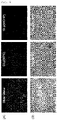
- the resulting products were incubated for 60 min in the FITC-labeled fibrinogen PBS solution obtained above, washed with PBS, and observed under fluorescence microscope.
- the images observed under fluorescence microscope are shown in Fig. 4(A)
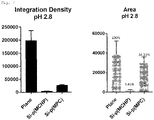
- the fluorescence intensity (corresponding to the protein adsorption amount) is shown in Fig. 5 .
- the adsorbed protein was modified using 75% alcohol and observed under scanning electron microscopy (SEM).
- SEM scanning electron microscopy
- the SEM images are shown in Fig. 4(B)
- the protein adsorption area is shown in Fig. 5 .
- the protein adsorption amount on the slide glass was significantly greater than the protein adsorption amount on the Si-p(MCHP) or Si-p(MPC).
- the protein adsorption area on the slide glass was also significantly greater than the protein adsorption area on the Si-p(MCHP) or Si-p(MPC).
- the results indicate that the Si-p(MCHP) had the smallest protein adsorption amount and had an adsorption area as low as about 5%, and thus had excellent biocompatibility.
- the p(MCHP-co-BMA) film had a significantly smaller protein adsorption amount and a smaller protein adsorption area than those of the p(BMA) film, and thus had excellent biocompatibility.
- the fluorescence intensity and protein adsorption area are shown in Fig. 10 .
- the results indicate that the p(MCHP-co-BMA) film had a reduced protein adsorption amount and a reduced adsorption area, compared with the p(MPC-co-BMA) film, and thus had excellent biocompatibility.
- the results also indicate that the use of DI as the additional monomer for copolymerization instead of BMA could also reduce the protein adsorption amount and adsorption area, demonstrating excellent biocompatibility.
Landscapes
- Chemical & Material Sciences (AREA)
- Health & Medical Sciences (AREA)
- Medicinal Chemistry (AREA)
- Organic Chemistry (AREA)
- Chemical Kinetics & Catalysis (AREA)
- Polymers & Plastics (AREA)
- Life Sciences & Earth Sciences (AREA)
- General Health & Medical Sciences (AREA)
- Epidemiology (AREA)
- Veterinary Medicine (AREA)
- Public Health (AREA)
- Animal Behavior & Ethology (AREA)
- Oral & Maxillofacial Surgery (AREA)
- Dermatology (AREA)
- Transplantation (AREA)
- Engineering & Computer Science (AREA)
- Manufacturing & Machinery (AREA)
- Materials Engineering (AREA)
- Vascular Medicine (AREA)
- Surgery (AREA)
- Heart & Thoracic Surgery (AREA)
- Molecular Biology (AREA)
- Biochemistry (AREA)
- Addition Polymer Or Copolymer, Post-Treatments, Or Chemical Modifications (AREA)
Applications Claiming Priority (2)
| Application Number | Priority Date | Filing Date | Title |
|---|---|---|---|
| JP2019215921 | 2019-11-29 | ||
| PCT/JP2020/044365 WO2021107141A1 (ja) | 2019-11-29 | 2020-11-27 | 双性イオン化合物、その製造方法及び用途 |
Publications (3)
| Publication Number | Publication Date |
|---|---|
| EP4066902A1 true EP4066902A1 (de) | 2022-10-05 |
| EP4066902A4 EP4066902A4 (de) | 2023-12-20 |
| EP4066902B1 EP4066902B1 (de) | 2026-03-18 |
Family
ID=76129675
Family Applications (1)
| Application Number | Title | Priority Date | Filing Date |
|---|---|---|---|
| EP20892120.5A Active EP4066902B1 (de) | 2019-11-29 | 2020-11-27 | Zwitterionische verbindung und herstellungsverfahren und verwendung dafür |
Country Status (4)
| Country | Link |
|---|---|
| US (1) | US12522678B2 (de) |
| EP (1) | EP4066902B1 (de) |
| JP (1) | JP7644498B2 (de) |
| WO (1) | WO2021107141A1 (de) |
Families Citing this family (1)
| Publication number | Priority date | Publication date | Assignee | Title |
|---|---|---|---|---|
| JP7723413B2 (ja) * | 2021-12-14 | 2025-08-14 | 国立大学法人徳島大学 | 双性イオン化合物の製造方法 |
Family Cites Families (11)
| Publication number | Priority date | Publication date | Assignee | Title |
|---|---|---|---|---|
| DE3010185A1 (de) | 1980-03-17 | 1981-09-24 | Max-Planck-Gesellschaft zur Förderung der Wissenschaften e.V., 3400 Göttingen | Polymerisierbare phospholipide, verfahren zu ihrer herstellung und ihre verwendung zur herstellung polymerer phospholipide |
| JPS59199696A (ja) * | 1983-04-28 | 1984-11-12 | Oki Electric Ind Co Ltd | リン脂質類似構造を有する化合物及びポリマ−並びにその製造方法 |
| JPS6386704A (ja) | 1987-05-21 | 1988-04-18 | Oki Electric Ind Co Ltd | リン脂質類似構造を有する化合物ポリマ− |
| CN103140357B (zh) * | 2010-09-29 | 2016-06-01 | 富士胶片株式会社 | 平版印刷版原版和使用其的制版方法 |
| US9567357B2 (en) | 2011-06-24 | 2017-02-14 | Biointeractions Ltd. | Biocompatible, biomimetic ampholyte materials |
| JP2014193951A (ja) * | 2013-03-28 | 2014-10-09 | Fujifilm Corp | 着色粒子及びその製造方法、着色粒子分散液、表示媒体、並びに、表示装置 |
| EP2957563A1 (de) * | 2014-06-19 | 2015-12-23 | Pentracor GmbH | Trennmaterial mit Phosphorylcholinderivaten |
| CA3027200A1 (en) * | 2016-06-13 | 2017-12-21 | Massachusetts Institute Of Technology | Biocompatible zwitterionic polymer coatings and hydrogels for reducing foreign body response and fibrosis |
| JP7293890B2 (ja) | 2019-06-11 | 2023-06-20 | ブラザー工業株式会社 | 液体吐出ヘッド |
| JP2025086704A (ja) | 2023-11-28 | 2025-06-09 | アンリツ株式会社 | 物品検査装置 |
| JP2025152816A (ja) | 2024-03-28 | 2025-10-10 | パナソニックIpマネジメント株式会社 | 認証システム、プログラム |
-
2020
- 2020-11-27 JP JP2021561574A patent/JP7644498B2/ja active Active
- 2020-11-27 EP EP20892120.5A patent/EP4066902B1/de active Active
- 2020-11-27 WO PCT/JP2020/044365 patent/WO2021107141A1/ja not_active Ceased
- 2020-11-27 US US17/780,315 patent/US12522678B2/en active Active
Also Published As
| Publication number | Publication date |
|---|---|
| US20230022585A1 (en) | 2023-01-26 |
| EP4066902A4 (de) | 2023-12-20 |
| JP7644498B2 (ja) | 2025-03-12 |
| US12522678B2 (en) | 2026-01-13 |
| EP4066902B1 (de) | 2026-03-18 |
| JPWO2021107141A1 (de) | 2021-06-03 |
| WO2021107141A1 (ja) | 2021-06-03 |
Similar Documents
| Publication | Publication Date | Title |
|---|---|---|
| JP5439551B2 (ja) | ブロック共重合体の塗膜 | |
| US10385151B2 (en) | Material non-adhesive to biological substance, curable composition, and artificial organ and medical instrument using same | |
| EP4066902B1 (de) | Zwitterionische verbindung und herstellungsverfahren und verwendung dafür | |
| KR101539804B1 (ko) | 폴리실록산, 아크릴계 화합물 및 비닐계 화합물 | |
| JP7731109B2 (ja) | ベタインモノマー、ポリマー、該ポリマーを含む組成物及び成形体 | |
| JPWO2018003821A1 (ja) | 共重合体およびその用途 | |
| US11130831B2 (en) | Curable composition, film, cured product, and medical member | |
| US6919409B2 (en) | Removal of the thiocarbonylthio or thiophosphorylthio end group of polymers and further functionalization thereof | |
| JP4123648B2 (ja) | ポリマーおよびそれを用いた眼用レンズ | |
| JP5992145B2 (ja) | 水性媒体中の界面活性剤フリーのpH非感受性ポリマー粒子分散液を製造する方法 | |
| JP3834824B2 (ja) | フマル酸誘導体およびその重合体 | |
| Steinbauer et al. | Biomimetic adhesion motifs based on RAFT polymers with phosphonate groups | |
| CN115135732A (zh) | 生物材料附着抑制剂 | |
| JPWO1997008177A1 (ja) | フマル酸誘導体およびその重合体 | |
| JPH10139789A (ja) | 重合性有機リン化合物、中間体、製造方法、重合体および生体適合性材料 | |
| CN1765880B (zh) | 含尿烷键的二醇(甲基)丙烯酸酯化合物、其制备方法及其聚合物 | |
| JPH07247355A (ja) | オリゴオキシアルキレン誘導体および生体適合性材料 | |
| JP7501374B2 (ja) | 生体物質への適合性を有するポリマーの製造方法 | |
| US11396568B2 (en) | Curable composition, film, cured product, and medical member | |
| JP7282651B2 (ja) | 重合性ホスホン酸系化合物及び接着性組成物 | |
| JP2023104345A (ja) | 異物付着抑制剤 | |
| JP2004331637A (ja) | 二官能性架橋剤モノマーとその製造法及びポリマー架橋体 | |
| JP2021187875A (ja) | 摩擦低減用コーティング組成物 | |
| JP7723413B2 (ja) | 双性イオン化合物の製造方法 | |
| JP2010065202A (ja) | 両親媒性イタコン酸エステル及びその重合体 |
Legal Events
| Date | Code | Title | Description |
|---|---|---|---|
| STAA | Information on the status of an ep patent application or granted ep patent |
Free format text: STATUS: THE INTERNATIONAL PUBLICATION HAS BEEN MADE |
|
| PUAI | Public reference made under article 153(3) epc to a published international application that has entered the european phase |
Free format text: ORIGINAL CODE: 0009012 |
|
| STAA | Information on the status of an ep patent application or granted ep patent |
Free format text: STATUS: REQUEST FOR EXAMINATION WAS MADE |
|
| 17P | Request for examination filed |
Effective date: 20220624 |
|
| AK | Designated contracting states |
Kind code of ref document: A1 Designated state(s): AL AT BE BG CH CY CZ DE DK EE ES FI FR GB GR HR HU IE IS IT LI LT LU LV MC MK MT NL NO PL PT RO RS SE SI SK SM TR |
|
| DAV | Request for validation of the european patent (deleted) | ||
| DAX | Request for extension of the european patent (deleted) | ||
| A4 | Supplementary search report drawn up and despatched |
Effective date: 20231121 |
|
| RIC1 | Information provided on ipc code assigned before grant |
Ipc: A61L 31/14 20060101ALN20231115BHEP Ipc: A61L 29/14 20060101ALN20231115BHEP Ipc: A61L 27/50 20060101ALN20231115BHEP Ipc: A61L 27/34 20060101ALN20231115BHEP Ipc: C08F 30/02 20060101ALI20231115BHEP Ipc: C08F 220/18 20060101ALI20231115BHEP Ipc: C08F 222/14 20060101ALI20231115BHEP Ipc: C07F 9/09 20060101ALI20231115BHEP Ipc: A61L 31/10 20060101ALI20231115BHEP Ipc: A61K 8/81 20060101ALI20231115BHEP Ipc: A61L 33/06 20060101ALI20231115BHEP Ipc: A61L 29/08 20060101ALI20231115BHEP Ipc: C08F 230/02 20060101ALI20231115BHEP Ipc: A61Q 19/00 20060101AFI20231115BHEP |
|
| STAA | Information on the status of an ep patent application or granted ep patent |
Free format text: STATUS: EXAMINATION IS IN PROGRESS |
|
| 17Q | First examination report despatched |
Effective date: 20250602 |
|
| GRAP | Despatch of communication of intention to grant a patent |
Free format text: ORIGINAL CODE: EPIDOSNIGR1 |
|
| STAA | Information on the status of an ep patent application or granted ep patent |
Free format text: STATUS: GRANT OF PATENT IS INTENDED |
|
| RIC1 | Information provided on ipc code assigned before grant |
Ipc: A61Q 19/00 20060101AFI20251002BHEP Ipc: C08F 230/02 20060101ALI20251002BHEP Ipc: A61L 29/08 20060101ALI20251002BHEP Ipc: A61L 33/06 20060101ALI20251002BHEP Ipc: A61K 8/81 20060101ALI20251002BHEP Ipc: A61L 31/10 20060101ALI20251002BHEP Ipc: C07F 9/09 20060101ALI20251002BHEP Ipc: C08F 222/14 20060101ALI20251002BHEP Ipc: C08F 220/18 20060101ALI20251002BHEP Ipc: C08F 30/02 20060101ALI20251002BHEP Ipc: A61L 27/34 20060101ALN20251002BHEP Ipc: A61L 27/50 20060101ALN20251002BHEP Ipc: A61L 29/14 20060101ALN20251002BHEP Ipc: A61L 31/14 20060101ALN20251002BHEP |
|
| INTG | Intention to grant announced |
Effective date: 20251021 |
|
| GRAS | Grant fee paid |
Free format text: ORIGINAL CODE: EPIDOSNIGR3 |
|
| GRAA | (expected) grant |
Free format text: ORIGINAL CODE: 0009210 |
|
| STAA | Information on the status of an ep patent application or granted ep patent |
Free format text: STATUS: THE PATENT HAS BEEN GRANTED |
|
| AK | Designated contracting states |
Kind code of ref document: B1 Designated state(s): AL AT BE BG CH CY CZ DE DK EE ES FI FR GB GR HR HU IE IS IT LI LT LU LV MC MK MT NL NO PL PT RO RS SE SI SK SM TR |
|
| REG | Reference to a national code |
Ref country code: CH Ref legal event code: F10 Free format text: ST27 STATUS EVENT CODE: U-0-0-F10-F00 (AS PROVIDED BY THE NATIONAL OFFICE) Effective date: 20260318 Ref country code: GB Ref legal event code: FG4D |
|
| REG | Reference to a national code |
Ref country code: DE Ref legal event code: R096 Ref document number: 602020068998 Country of ref document: DE |
|
| REG | Reference to a national code |
Ref country code: IE Ref legal event code: FG4D |
|
| P01 | Opt-out of the competence of the unified patent court (upc) registered |
Free format text: CASE NUMBER: UPC_APP_0010058_4066902/2026 Effective date: 20260316 |