EP4069700B1 - Macrocycles destinés à être utilisés dans le traitement d'une maladie - Google Patents
Macrocycles destinés à être utilisés dans le traitement d'une maladie Download PDFInfo
- Publication number
- EP4069700B1 EP4069700B1 EP20897539.1A EP20897539A EP4069700B1 EP 4069700 B1 EP4069700 B1 EP 4069700B1 EP 20897539 A EP20897539 A EP 20897539A EP 4069700 B1 EP4069700 B1 EP 4069700B1
- Authority
- EP
- European Patent Office
- Prior art keywords
- compound
- alk
- pharmaceutically acceptable
- acceptable salt
- bid
- Prior art date
- Legal status (The legal status is an assumption and is not a legal conclusion. Google has not performed a legal analysis and makes no representation as to the accuracy of the status listed.)
- Active
Links
Images


Classifications
-
- A—HUMAN NECESSITIES
- A61—MEDICAL OR VETERINARY SCIENCE; HYGIENE
- A61K—PREPARATIONS FOR MEDICAL, DENTAL OR TOILETRY PURPOSES
- A61K31/00—Medicinal preparations containing organic active ingredients
- A61K31/33—Heterocyclic compounds
- A61K31/395—Heterocyclic compounds having nitrogen as a ring hetero atom, e.g. guanethidine or rifamycins
- A61K31/535—Heterocyclic compounds having nitrogen as a ring hetero atom, e.g. guanethidine or rifamycins having six-membered rings with at least one nitrogen and one oxygen as the ring hetero atoms, e.g. 1,2-oxazines
- A61K31/5375—1,4-Oxazines, e.g. morpholine
- A61K31/5383—1,4-Oxazines, e.g. morpholine ortho- or peri-condensed with heterocyclic ring systems
-
- A—HUMAN NECESSITIES
- A61—MEDICAL OR VETERINARY SCIENCE; HYGIENE
- A61P—SPECIFIC THERAPEUTIC ACTIVITY OF CHEMICAL COMPOUNDS OR MEDICINAL PREPARATIONS
- A61P35/00—Antineoplastic agents
-
- C—CHEMISTRY; METALLURGY
- C07—ORGANIC CHEMISTRY
- C07D—HETEROCYCLIC COMPOUNDS
- C07D498/00—Heterocyclic compounds containing in the condensed system at least one hetero ring having nitrogen and oxygen atoms as the only ring hetero atoms
- C07D498/22—Heterocyclic compounds containing in the condensed system at least one hetero ring having nitrogen and oxygen atoms as the only ring hetero atoms in which the condensed system contains four or more hetero rings
Definitions
- Protein kinases are key regulators for cell growth, proliferation and survival. Genetic and epigenetic alterations accumulate in cancer cells leading to abnormal activation of signal transduction pathways which drive malignant processes. Manning, G. et al., Science 2002, 298, 1912-1934 . Pharmacological inhibition of these signaling pathways presents promising intervention opportunities for targeted cancer therapies. Sawyers, C., Nature 2004, 432, 294-297 .
- ALK translocation partners include ALCL (60-90% incidence), inflammatory myofibroblastic tumors (IMT, 50-60%), non-small cell lung carcinomas (NSCLC, 3-7%), colorectal cancers (CRC, 0-2.4%), breast cancers (0-2.4%), and other carcinomas. Grande, E. et al., Mol. Cancer Ther. 2011, 10, 569-579 .
- the ALK-fusion proteins are located in the cytoplasm, and the fusion partners with ALK play a role in dimerization or oligomerization of the fusion proteins through a coil-coil interaction to generate constitutive activation of ALK kinase function.
- EML4-ALK which comprises portions of the echinoderm microtubule associated protein-like 4 ( EML4 ) gene and the ALK gene, was first discovered in NSCLC, is highly oncogenic, and was shown to cause lung adenocarcinoma in transgenic mice. Soda, M. et al., Nature 2007, 448, 561-566 .
- ALK Oncogenic point mutations of ALK occur in both familial and sporadic cases of neuroblastoma. Mossé, Y. P. et al., Nature 2008, 455, 930-935 . ALK is an attractive molecular target for cancer therapeutic intervention because of the important roles in haematopoietic, solid, and mesenchymal tumors. Grande, supra.
- each ALK inhibitor is associated with a distinct spectrum of ALK resistance mutations and ALK G1202R is a common resistance mutation to the first and second generations of ALK inhibitors ( Gainor JF, et al Cancer Discov. 2016 Oct;6(10): 1118-1133 ).
- Endochondral ossification is a process that results in both the replacement of the embryonic cartilaginous skeleton during organogenesis and the growth of long bones until adult height is achieved.
- Fibroblast growth factor (FGF)/FGF receptor (FGFR) signaling plays a vital role in the development and maintenance of growth plates in endochondral ossification process (Xie Y 2014).
- Missense mutations in FGFs and FGFRs can cause multiple genetic skeletal diseases with disordered endochondral ossification.
- Activating mutations in FGFR3 cause achondroplasia, the most common form of dwarfism among live births (Samsa WE 2017).
- FGFR1 and FGFR2 play many essential and mostly redundant roles during development, including growth plate formation.
- FGFR2-deficient embryos fail to form limb buds (Omitz DM 2015).
- Overexpression of FGFR1 in chondrocytes causes joint fusion.
- Deletion of both FGFR1 and FGFR2 in mice caused a decreased length of the growth plate with a reduced number of proliferating chondrocytes (Karuppaiah K 2016). Therefore, the selectivity over FGFRs is an important parameter for better safety profile, especially for pediatric population.
- ALK inhibitors that show potent activity against a broad spectrum of resistant mutations, especially solvent front mutations, such as ALK G1202R, and compounds mutations, such as ALK L1196M/G1202R. Furthermore, there is a demand for such ALK inhibitors to show selectivity over FGFRs. Certain chiral diaryl macrocyclic compounds have been found in the context of this disclosure to have this advantageous activity profile.
- the disclosure relates to a compound of the formula II or formula III wherein
- the disclosure relates to a compound of the formula IIa or a pharmaceutically acceptable salt thereof.
- the disclosure relates to a compound of the formula III or a pharmaceutically acceptable salt thereof.
- the disclosure provides a pharmaceutical composition
- a pharmaceutical composition comprising a compound of any one of the disclosed aspects, or a pharmaceutically acceptable salt thereof, and optionally at least one diluent, carrier or excipient.
- the disclosure provides a method of inhibiting ALK receptor tyrosine kinase, comprising contacting a cell comprising one or more of such kinases with an effective amount of at least one compound of any one of the disclosed aspects, or a pharmaceutically acceptable salt thereof, and/or with at least one pharmaceutical composition of the disclosure, wherein the contacting is in vitro, ex vivo, or in vivo.
- Alkyl may be substituted or unsubstituted.
- alkyl may be combined with other groups, such as those provided above, to form a functionalized alkyl.
- the combination of an "alkyl” group, as described herein, with a “carboxy” group may be referred to as a “carboxyalkyl” group.
- Other non-limiting examples include hydroxyalkyl, aminoalkyl, and the like.
- alkynyl includes a chain of carbon atoms, which is optionally branched, and contains from 2 to 6 carbon atoms, and also includes at least one carbon-carbon triple bond (i.e., C ⁇ C). It will be understood that in certain embodiments, alkynyl may each be advantageously of limited length, including C 2 -C 6 , and C 2 -C 4 . Illustratively, such particularly limited length alkynyl groups, including C 2 -C 6 , and C 2 -C 4 may be referred to as lower alkynyl. Alkynyl may be unsubstituted, or substituted as described for alkyl or as described in the various embodiments provided herein. Illustrative alkynyl groups include, but are not limited to, ethynyl, 1-propynyl, 2-propynyl, 1-, 2-, or 3-butynyl, and the like.
- aryl refers to an all-carbon monocyclic or fused-ring polycyclic groups of 6 to 10 carbon atoms having a completely conjugated pi-electron system. It will be understood that in certain embodiments, aryl may be advantageously of limited size such as C 6 -C 10 aryl. Illustrative aryl groups include, but are not limited to, phenyl and naphthylenyl. The aryl group may be unsubstituted, or substituted as described for alkyl or as described in the various embodiments provided herein.
- cycloalkyl refers to a 3 to 6 member all-carbon monocyclic ring, where one or more of the rings may contain one or more double bonds but the cycloalkyl does not contain a completely conjugated pi-electron system. It will be understood that in certain embodiments, cycloalkyl may be advantageously of limited size such C 3 -C 6 and C 4 -C 6 . Cycloalkyl may be unsubstituted, or substituted as described for alkyl or as described in the various embodiments provided herein.
- Illustrative cycloalkyl groups include, but are not limited to, cyclopropyl, cyclobutyl, cyclopentyl, cyclopentenyl, cyclopentadienyl, cyclohexyl, cyclohexenyl, and the like.
- Illustrative examples of cycloalkyl groups shown in graphical representations include the following entities, in the form of properly bonded moieties:
- heterocycloalkyl may be advantageously of limited size such as 3- to 7-membered heterocycloalkyl, 5- to 7-membered heterocycloalkyl, 3-, 4-, 5-or 6-membered heterocycloalkyl, and the like.
- Heterocycloalkyl may be unsubstituted, or substituted as described for alkyl or as described in the various embodiments provided herein.
- heterocycloalkyl groups include, but are not limited to, oxiranyl, thianaryl, azetidinyl, oxetanyl, tetrahydrofuranyl, pyrrolidinyl, tetrahydropyranyl, piperidinyl, 1,4-dioxanyl, morpholinyl, 1,4-dithianyl, piperazinyl, oxepanyl, 3,4-dihydro-2H-pyranyl, 5,6-dihydro-2H-pyranyl, 2H-pyranyl, 1, 2, 3, 4-tetrahydropyridinyl, and the like.
- Illustrative examples of heterocycloalkyl groups shown in graphical representations include the following entities, in the form of properly bonded moieties:
- heteroaryl refers to a monocyclic or fused ring group of 5 to 7 ring atoms containing one, two, three or four ring heteroatoms selected from nitrogen, oxygen and sulfur, the remaining ring atoms being carbon atoms, and also having a completely conjugated pi-electron system. It will be understood that in certain embodiments, heteroaryl may be advantageously of limited size such as 3- to 7-membered heteroaryl, 5- to 7-membered heteroaryl, and the like. Heteroaryl may be unsubstituted, or substituted as described for alkyl or as described in the various embodiments provided herein.
- heteroaryl groups include, but are not limited to, pyrrolyl, furanyl, thiophenyl, imidazolyl, oxazolyl, thiazolyl, pyrazolyl, pyridinyl, pyrimidinyl, quinolinyl, isoquinolinyl, purinyl, tetrazolyl, triazinyl, pyrazinyl, tetrazinyl, quinazolinyl, quinoxalinyl, thienyl, isoxazolyl, isothiazolyl, oxadiazolyl, thiadiazolyl, triazolyl, and the like.
- Illustrative examples of heteroaryl groups shown in graphical representations include the following entities, in the form of properly bonded moieties:
- hydroxy or “hydroxyl” refers to an -OH group.
- alkoxy refers to both an -O-(alkyl) or an -O-(unsubstituted cycloalkyl) group. Representative examples include, but are not limited to, methoxy, ethoxy, propoxy, butoxy, cyclopropyloxy, cyclobutyloxy, cyclopentyloxy, cyclohexyloxy, and the like.
- aryloxy refers to an -O-aryl or an -O-heteroaryl group. Representative examples include, but are not limited to, phenoxy, pyridinyloxy, furanyloxy, thienyloxy, pyrimidinyloxy, pyrazinyloxy, and the like, and the like.
- alkylthio refers to an -S-(alkyl) or an -S-(unsubstituted cycloalkyl) group. Representative examples include, but are not limited to, methylthio, ethylthio, propylthio, butylthio, cyclopropylthio, cyclobutylthio, cyclopentylthio, cyclohexylthio, and the like.
- arylthio refers to an -S-aryl or an -S-heteroaryl group. Representative examples include, but are not limited to, phenylthio, pyridinylthio, furanylthio, thienylthio, pyrimidinylthio, and the like.
- cyano refers to a -CN group.
- bond refers to a covalent bond
- substituted means that the specified group or moiety bears one or more substituents.
- unsubstituted means that the specified group bears no substituents.
- substitution is meant to occur at any valency-allowed position on the system.
- substituted means that the specified group or moiety bears one, two, or three substituents.
- substituted means that the specified group or moiety bears one or two substituents.
- substituted means the specified group or moiety bears one substituent.
- independently means that the subsequently described event or circumstance is to be read on its own relative to other similar events or circumstances.
- the use of "independently optionally” means that each instance of a hydrogen atom on the group may be substituted by another group, where the groups replacing each of the hydrogen atoms may be the same or different.
- the use of "independently” means that each of the groups can be selected from the set of possibilities separate from any other group, and the groups selected in the circumstance may be the same or different.
- the phrase “taken together with the carbon atom to which they are attached” or “taken together with the carbon atom to which they are attached” means that two substituents (e.g., R 1 and R 2 ) attached to the same carbon atom form the groups that are defined by the claim, such as C 3 -C 6 cycloalkyl.
- the phrase “taken together with the carbon atom to which they are attached” means that when, for example, R 1 and R 2 , and the carbon atom to which they are attached form a C 3 -C 6 cycloalkyl, then the formed ring will be attached at the same carbon atom.
- R 1 and R 2 taken together with the carbon atom to which they are attached form a C 3 -C 6 cycloalkyl used in connection with the embodiments described herein includes the compounds represented as follows: where the above spirocyclic rings can be optionally substituted as defined in the given embodiment.
- mutation sites include, but are not limited to L1196, L1198, G1202, D1203, S1206, T1151, L1152, E1210, F1174, C1156, 11171, V1180, F1245, G1269, R1275, and the like, and combinations thereof.
- each R a , R b , R c , and R d is independently selected from the group consisting of H, deuterium, C 1 -C 6 alkyl, C 2 -C 6 alkenyl, C 2 -C 6 alkynyl, C 3 -C 6 cycloalkyl, 3- to 7-membered heterocycloalkyl, C 6 -C 10 aryl, and 5- to 7- membered heteroaryl.
- compositions comprising the compounds described herein may further comprise one or more pharmaceutically-acceptable excipients.
- a pharmaceutically-acceptable excipient is a substance that is non-toxic and otherwise biologically suitable for administration to a subject. Such excipients facilitate administration of the compounds described herein and are compatible with the active ingredient. Examples of pharmaceutically-acceptable excipients include stabilizers, lubricants, surfactants, diluents, antioxidants, binders, coloring agents, bulking agents, emulsifiers, or taste-modifying agents.
- pharmaceutical compositions according to the invention are sterile compositions. Pharmaceutical compositions may be prepared using compounding techniques known or that become available to those skilled in the art.
- Liquids for oral administration may be in the form of suspensions, solutions, emulsions, or syrups, or may be lyophilized or presented as a dry product for reconstitution with water or other suitable vehicle before use.
- Such liquid compositions may optionally contain: pharmaceutically-acceptable excipients such as suspending agents (for example, sorbitol, methyl cellulose, sodium alginate, gelatin, hydroxyethylcellulose, carboxymethylcellulose, aluminum stearate gel and the like); non-aqueous vehicles, e.g., oil (for example, almond oil or fractionated coconut oil), propylene glycol, ethyl alcohol, or water; preservatives (for example, methyl or propyl p-hydroxybenzoate or sorbic acid); wetting agents such as lecithin; and, if desired, flavoring or coloring agents.
- suspending agents for example, sorbitol, methyl cellulose, sodium alginate, gelatin, hydroxyethylcellulose, carboxymethyl
- the compounds of the present invention are preferably formulated as creams or ointments or a similar vehicle suitable for topical administration.
- the inventive compounds may be mixed with a pharmaceutical carrier at a concentration of about 0.1% to about 10% of drug to vehicle.
- Another mode of administering the agents of the invention may utilize a patch formulation to effect transdermal delivery.
- treat or “treatment” encompass both “preventative” and “curative” treatment.
- Preventative treatment is meant to indicate a postponement of development of a disease, a symptom of a disease, or medical condition, suppressing symptoms that may appear, or reducing the risk of developing or recurrence of a disease or symptom.
- “Curative” treatment includes reducing the severity of or suppressing the worsening of an existing disease, symptom, or condition.
- treatment includes ameliorating or preventing the worsening of existing disease symptoms, preventing additional symptoms from occurring, ameliorating or preventing the underlying systemic causes of symptoms, inhibiting the disorder or disease, e.g., arresting the development of the disorder or disease, relieving the disorder or disease, causing regression of the disorder or disease, relieving a condition caused by the disease or disorder, or stopping the symptoms of the disease or disorder.
- Exemplary diseases include cancer, pain, neurological diseases, autoimmune diseases, and inflammation.
- Cancer includes, for example, lung cancer, colon cancer, breast cancer, prostate cancer, hepatocellular carcinoma, renal cell carcinoma, gastric and esophago-gastric cancers, glioblastoma, head and neck cancers, inflammatory myofibroblastic tumors, and anaplastic large cell lymphoma.
- Pain includes, for example, pain from any source or etiology, including cancer pain, pain from chemotherapeutic treatment, nerve pain, pain from injury, or other sources.
- Autoimmune diseases include, for example, rheumatoid arthritis, Sjogren syndrome, Type I diabetes, and lupus.
- Exemplary neurological diseases include Alzheimer's Disease, Parkinson's Disease, Amyotrophic lateral sclerosis, and Huntington's disease.
- Exemplary inflammatory diseases include atherosclerosis, allergy, and inflammation from infection or injury.
- the compounds and pharmaceutical compositions of the invention specifically target tyrosine receptor kinases, in particular ALK, more particularly ALK having one or more mutations as described herein.
- these compounds and pharmaceutical compositions can be used to prevent, reverse, slow, or inhibit the activity of ALK.
- the compounds of the invention are for use in methods of treatment targeting cancer.
- the compounds of the invention are for use in methods for treating lung cancer, partiicularly non-small cell lung cancer.
- an "effective amount” means an amount sufficient to inhibit the target protein. Measuring such target modulation may be performed by routine analytical methods such as those described below. Such modulation is useful in a variety of settings, including in vitro assays.
- the cell is preferably a cancer cell with abnormal signaling due to upregulation of ALK, in particular particularly ALK having one or more mutations as described herein.
- the uses and methods described herein for any compound for the Formula I-IIIa can be for treating cancer mediated by ALK or mediated by a rearrangement or fusion of ALK with another gene or gene product, including but not limited to NPM, EML4, TPR, TFG, ATIC, CLTC1, TPM4, MSN, ALO17, MYH9, and the like.
- the uses and methods described herein for any compound for the Formula I-IIIa can be for treating cancer mediated by ALK or mediated by a rearrangement or fusion of ALK with another gene or gene product, including but not limited to NPM, EML4, TPR, TFG, ATIC, CLTC1, TPM4, MSN, ALO17, MYH9, and the like, and having at least one mutation, such as a missense mutation, an insertion, or a deletion that occurs in the ALK portion of the ALK rearrangement or fusion protein, wherein the mutation site includes, but is not limited to L1196, L1198, G1202, D1203, S1206, T1151, L1152, E1210, F1174, C1156, I1171, V1180, F1245, G1269, R1275, and the like, and combinations thereof.
- the compound of Formula II-IIIa can be for use in treating cancer mediated by ALK or mediated by a rearrangement or fusion of ALK with another gene or gene product, including but not limited to NPM, EML4, TPR, TFG, ATIC, CLTC1, TPM4, MSN, ALO17, MYH9, and the like, and having at least one mutation, such as a missense mutation, an insertion, or a deletion that occurs in the ALK portion of the ALK rearrangement or fusion protein, wherein the ALK mutation is L1196M, G1202R, C1156Y, D1203N, G1202 deletion, E1210K, S1206C, F1174C, F1174L, F1174S, F1174V, F1245C, G1269A, G1269S, I1171N, L1152P, L1152R, L1198F, R1275Q, S1206R, T1151-L1152insT, T1151M, V
- the compound of the Formula II-IIIa can be for use in treating cancer mediated by ALK or mediated by a rearrangement or fusion of ALK with another gene or gene product, including but not limited to NPM, EML4, TPR, TFG, ATIC, CLTC1, TPM4, MSN, ALO17, MYH9, and the like, and having at least one mutation, such as a missense mutation, an insertion, or a deletion that occurs in the ALK portion of the ALK rearrangement or fusion protein, wherein the mutation is a multiple ALK mutation selected from E1210K/D1203N, E1210K/S1206C, L1198F/C1156Y, L1198F/G1202R, L1198F/L1196M, L1196M/G1202R, L1198F/C1156Y, G1202R/G1269A, and G1202R/G1269A/L1204V.
- another gene or gene product including but not limited to NPM, EML4,
- an "effective amount” means an amount or dose sufficient to generally bring about the desired therapeutic benefit in subjects needing such treatment.
- Effective amounts or doses of the compounds of the invention may be ascertained by routine methods, such as modeling, dose escalation, or clinical trials, taking into account routine factors, e.g., the mode or route of administration or drug delivery, the pharmacokinetics of the agent, the severity and course of the infection, the subject's health status, condition, and weight, and the judgment of the treating physician.
- An exemplary dose is in the range of about from about 0.1 mg to 1 g daily, or about 1 mg to 50 mg daily, or about 50 to 250 mg daily, or about 250 mg to 1 g daily.
- the total dosage may be given in single or divided dosage units (e.g., BID, TID, QID).
- Combination agents include additional active ingredients are those that are known or discovered to be effective in treating the diseases and disorders described herein, including those active against another target associated with the disease.
- compositions and formulations of the invention, as well as methods of treatment can further comprise other drugs or pharmaceuticals, e.g., other active agents useful for treating or palliative for the target diseases or related symptoms or conditions.
- additional such agents include, but are not limited to, kinase inhibitors, such as EGFR inhibitors (e.g., erlotinib, gefitinib), Raf inhibitors (e.g., vemurafenib), VEGFR inhibitors (e.g., sunitinib), ALK inhibitors (e.g., crizotinib) standard chemotherapy agents such as alkylating agents, antimetabolites, anti-tumor antibiotics, topoisomerase inhibitors, platinum drugs, mitotic inhibitors, antibodies, hormone therapies, or corticosteroids.
- suitable combination agents include anti-inflammatories such as NSAIDs.
- the pharmaceutical compositions of the invention may additionally comprise one or more of such active agents, and methods of treatment may additionally comprise administering an effective amount of one or more of such active agents.
- Step 1 To A-1-1 (259 mg, 1.52 mmol) in anhydrous DMF (7.35 mL) was added NaH (60% in mineral oil, 91.3 mg, 2.28 mmol) under argon at 0 °C. The reaction was allowed to stir and warm over 1 hr. The reaction was cooled to 0 °C and A-1-2 was added. The reaction was stirred and the temperature was increased to 50 °C and stirred for 18 hr. The reaction was quenched with saturated NH 4 Cl (aq. 5 mL) at 0 °C and stirred vigorously. Water (25 mL) was added and extracted with DCM (3 ⁇ 25 mL). The combined organic layer was washed with brine and dried over sodium sulfate. Flash column chromatography (12 g silica, ISCO, 0-50 % EA in Hexanes) provided A-1-3 (267 mg, 51% yield).
- Step 2 to A-1-3 (267 mg, 0.782 mmol) in anhydrous THF (3.9 mL) was added LiBH 4 (34 mg, 1.56 mmol) at 0 °C. The reaction was stirred for 18 hr as temperature increased to ambient. The reaction was quenched with water (5 mL) and 2 M NaOH (1 mL), then extracted with DCM (3 ⁇ 10 mL). The combined organic layer was washed with brine and dried over sodium sulfate. Flash column chromatography (12 g silica, ISCO, 0-50 % EA in Hexanes with ELSD detection) provided A-1-4 (29.3 mg, 12 % yield).
- SCID/Beige mice bearing Ba/F3 cell-derived tumors with the EML4-ALK G1202R fusion were randomized to seven groups with 8 mice per group on day 8 post inoculation and treated with vehicle BID, Compound 1 BID at 2 mg/kg, Compound 1 BID at 5 mg/kg, Compound 1 BID at 10 mg/kg, Compound 2 BID at 3 mg/kg, Compound 2 BID at 10 mg/kg and lorlatinib BID at 5 mg/kg, respectively.
- the tumor volume vs time data are shown as mean ⁇ sem in FIG. 1A .
- the body weight vs time data are shown as mean ⁇ sem in FIG. 1B .
- the statistical evaluation of Compound 1's effect on body weight included vehicle the treated group, Compound 1 treated groups at 2, 5, 10 mg/kg BID and the lorlatinib treated group, using mixed-effects model followed by post hoc Tukey's multiple comparisons test.
- Compound 1 treatment resulted in TGIs of 19%, 44%, 83% and 200% at dose levels of 0.6, 2, 5, and 10 mg/kg BID, respectively; whereas lorlatinib inhibited tumor growth with a TGI of 18% at 5 mg/kg BID after 7 days of treatment.
- the statistical evaluation of Compound 1's effect on tumor volume was performed using mixed-effects model followed by post hoc Tukey's multiple comparisons test.
- the tumor growth in the groups treated with Compound 1 at 0.6 mg/kg BID or lorlatinib at 5 mg/kg BID was not significantly different from vehicle treated group after 7 days of treatment (p>0.05 for vehicle vs lorlatinib or Compound 1 0.6 mg/kg on day 14).
- the body weight vs time data are shown as mean ⁇ sem in FIG. 3B .
- the statistical evaluation of Compound 1's effect on body weight was performed using mixed-effects model followed by post hoc Tukey's multiple comparisons test.
- the body weight in the group treated with Compound 1 at 10 mg/kg BID was not significantly different from that of the group treated with vehicle (p>0.05 on day 10, 12, 13 and 14).
- the pharmacodynamic effect of Compound 1 was evaluated in the Ba/F3 cell-derived xenograft tumors with the EML4-ALK L1196M/G1202R fusion following a single oral dose of Compound 1 at 10 mg/kg.
- tumor samples were collected from mice treated with either vehicle or Compound 1 with three mice for each treatment. Samples were processed and analyzed by immunoblotting and the result is shown in FIG. 4 .
- the levels of phosphorylation of ALK fusions at Y1282/1283 and at Y1604 were both reduced in samples from the Compound 1 treated mice compared to those from vehicle treated mice.
- the level of ALK fusion expression was also reduced in the samples from Compound 1 treated mice compared to those from vehicle treated mice.
- the expression level of actin was not affected by Compound 1 treatment.
Landscapes
- Chemical & Material Sciences (AREA)
- Organic Chemistry (AREA)
- Health & Medical Sciences (AREA)
- General Health & Medical Sciences (AREA)
- Pharmacology & Pharmacy (AREA)
- Life Sciences & Earth Sciences (AREA)
- Animal Behavior & Ethology (AREA)
- Medicinal Chemistry (AREA)
- Public Health (AREA)
- Veterinary Medicine (AREA)
- Chemical Kinetics & Catalysis (AREA)
- General Chemical & Material Sciences (AREA)
- Nuclear Medicine, Radiotherapy & Molecular Imaging (AREA)
- Epidemiology (AREA)
- Pharmaceuticals Containing Other Organic And Inorganic Compounds (AREA)
- Nitrogen And Oxygen Or Sulfur-Condensed Heterocyclic Ring Systems (AREA)
Claims (15)
- Composé de formule II ou formule III :

 chacun de R1 et R2 est indépendamment H, un deutérium, un C1-C6 alkyle, un C2-C6 alcényle, un C2-C6 alcynyle, un C3-C6 cycloalkyle, un hétérocycloalkyle à 3 à 7 chaînons, un C6-C10 aryle, un hétéroaryle mono- ou bicyclique ; ou R1 et R2 pris ensemble avec l'atome de carbone auquel ils sont liés se combinent pour former un C3-C6 cycloalkyle ;chacun de R3 et R3' est indépendamment H, un deutérium, un C1-C6 alkyle, un C2-C6 alcényle, un C2-C6 alcynyle, un C3-C6 cycloalkyle, un hétérocycloalkyle à 3 à 7 chaînons, un C6-C10 aryle, un hétéroaryle mono- ou bicyclique ; ou R3 et R3' pris ensemble avec l'atome de carbone auquel ils sont liés se combinent pour former un C3-C6 cycloalkyle ;chacun de R4 et R5 est indépendamment un hydrogène, un deutérium, un halogène, -ORc, -OC(O)Rc, -OC(O)NRcRd, -OC(=N)NRcRd, -OS(O)Rc, -OS(O)2Rc, -OS(O)NRcRd, -OS(O)2NRcRd, -SRc, -S(O)Rc, -S(O)2Rc, -S(O)NRcRd, -S(O)2NRcRd, -NRcRd, -NRcC(O)Rd, -NRcC(O)ORd, -NRcC(O)NRcRd, -NRcC(=N)NRcRd, -NRcS(O)Rd, -NRcS(O)2Rd, -NRcS(O)NRcRd, -NRcS(O)2NRcRd, -C(O)Rc, -C(O)ORc, -C(O)NRcRd, -C(=N)NRcRd, -PRcRd, -P(O)RcRd, -P(O)2RcRd, -P(O)NRcRd, -P(O)2NRcRd, -P(O)ORc, -P(O)2ORc, -CN, -NO2, un C1-C6 alkyle, un C2-C6 alcényle, un C2-C6 alcynyle, un C3-C6 cycloalkyle, un hétérocycloalkyle à 3 à 7 chaînons, un C6-C10 aryle ou un hétéroaryle mono- ou bicyclique ;R6 est H ;chaque R7 est indépendamment un hydrogène ou un deutérium ; etchacun de Ra, Rb, Rc et Rd est indépendamment choisi dans le groupe constitué de : H, deutérium, C1-C6 alkyle, C2-C6 alcényle, C2-C6 alcynyle, C3-C6 cycloalkyle, hétérocycloalkyle à 3 à 7 chaînons, C6-C10 aryle et hétéroaryle à 5 à 7 chaînons ;ou un sel pharmaceutiquement acceptable de celui-ci.
 - Composé selon la revendication 1, présentant la formule II :

- Composé selon l'une quelconque des revendications 1 à 2, présentant la formule IIa :

- Composé selon la revendication 1, présentant la formule III :

- Composé selon la revendication 1, présentant la formule IIIa :

- Composé selon l'une quelconque des revendications précédentes, ou un sel pharmaceutiquement acceptable de celui-ci, dans lequel chaque R1 et R2, lorsqu'ils sont présents, est indépendamment H, un deutérium, un C1-C6 alkyle, ou R1 et R2 pris ensemble avec l'atome de carbone auquel ils sont liés se combinent pour former un C3-C6 cycloalkyle.
- Composé selon l'une quelconque des revendications précédentes, ou un sel pharmaceutiquement acceptable de celui-ci, dans lequel chaque R3 et R3' est indépendamment H, un deutérium, un C1-C6 alkyle, ou R3 et R3' pris ensemble avec l'atome de carbone auquel ils sont liés se combinent pour former un C3-C6 cycloalkyle, optionnellement dans lequel chaque R3' est H ou un deutérium.
- Composé selon l'une quelconque des revendications précédentes, ou un sel pharmaceutiquement acceptable de celui-ci, dans lequel chaque R4 est H ou un deutérium.
- Composé selon l'une quelconque des revendications précédentes, ou un sel pharmaceutiquement acceptable de celui-ci, dans lequel R5 est un fluoro.
- Composé selon l'une quelconque des revendications précédentes, ou un sel pharmaceutiquement acceptable de celui-ci, dans lequel chaque R7 est H.
- Composé selon la revendication 1, choisi dans le groupe constitué de :


- Composé selon la revendication 1 présentant la structure :

- Composé selon la revendication 1 présentant la structure :
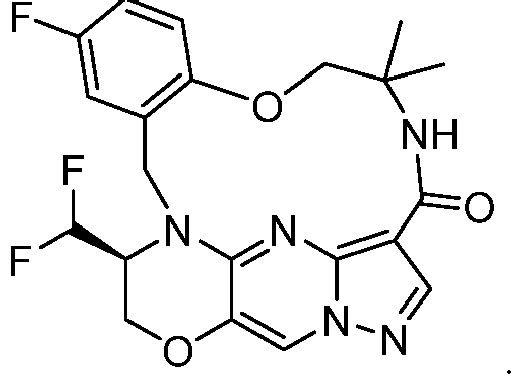
- Composition pharmaceutique comprenant un composé selon l'une quelconque des revendications précédentes, ou un sel pharmaceutiquement acceptable de celui-ci, et optionnellement au moins un diluant, véhicule ou excipient.
- Composé selon l'une quelconque des revendications 1 à 13, ou un sel pharmaceutiquement acceptable de celui-ci, pour utilisation dans une méthode de traitement d'un cancer chez un humain.
Applications Claiming Priority (3)
| Application Number | Priority Date | Filing Date | Title |
|---|---|---|---|
| US201962943098P | 2019-12-03 | 2019-12-03 | |
| US202063015937P | 2020-04-27 | 2020-04-27 | |
| PCT/US2020/062859 WO2021113339A1 (fr) | 2019-12-03 | 2020-12-02 | Macrocycles destinés à être utilisés dans le traitement d'une maladie |
Publications (3)
| Publication Number | Publication Date |
|---|---|
| EP4069700A1 EP4069700A1 (fr) | 2022-10-12 |
| EP4069700A4 EP4069700A4 (fr) | 2023-05-17 |
| EP4069700B1 true EP4069700B1 (fr) | 2024-07-03 |
Family
ID=76091584
Family Applications (1)
| Application Number | Title | Priority Date | Filing Date |
|---|---|---|---|
| EP20897539.1A Active EP4069700B1 (fr) | 2019-12-03 | 2020-12-02 | Macrocycles destinés à être utilisés dans le traitement d'une maladie |
Country Status (16)
| Country | Link |
|---|---|
| US (3) | US11634433B2 (fr) |
| EP (1) | EP4069700B1 (fr) |
| JP (1) | JP7641965B2 (fr) |
| KR (1) | KR20220133869A (fr) |
| CN (1) | CN114929710B (fr) |
| AU (1) | AU2020395136A1 (fr) |
| BR (1) | BR112022010702A2 (fr) |
| CA (1) | CA3163735A1 (fr) |
| CO (1) | CO2022008817A2 (fr) |
| ES (1) | ES2987981T3 (fr) |
| IL (1) | IL293458A (fr) |
| MX (1) | MX2022006853A (fr) |
| PE (1) | PE20221485A1 (fr) |
| PH (1) | PH12022551371A1 (fr) |
| TW (1) | TW202134249A (fr) |
| WO (1) | WO2021113339A1 (fr) |
Families Citing this family (4)
| Publication number | Priority date | Publication date | Assignee | Title |
|---|---|---|---|---|
| EP4069700B1 (fr) * | 2019-12-03 | 2024-07-03 | Turning Point Therapeutics, Inc. | Macrocycles destinés à être utilisés dans le traitement d'une maladie |
| CN113336774B (zh) * | 2021-06-25 | 2023-05-23 | 江南大学 | 作为trk抑制剂的取代的手性二芳基大环化合物 |
| CN119630675A (zh) * | 2022-07-22 | 2025-03-14 | 南京明德新药研发有限公司 | 含三并环的大环类化合物及其应用 |
| WO2024235260A1 (fr) * | 2023-05-16 | 2024-11-21 | 南京明德新药研发有限公司 | Composé hétérocyclique azoté contenant un anneau tricyclique et son utilisation |
Family Cites Families (10)
| Publication number | Priority date | Publication date | Assignee | Title |
|---|---|---|---|---|
| ES2294047T3 (es) * | 2000-12-28 | 2008-04-01 | Ono Pharmaceutical Co., Ltd. | Un compuesto de ciclopenta (d) pirazolo(1,5-a) pirimidina como antagonista del receptor de crf. |
| WO2009134987A1 (fr) | 2008-04-30 | 2009-11-05 | Enanta Pharmaceuticals, Inc. | Composés macrocycliques contenant du difluorométhyle comme inhibiteurs du virus de l’hépatite c |
| BR112014007622A2 (pt) | 2011-09-30 | 2017-04-04 | Oncodesign Sa | inibidores de flt3 cinase macrocíclicos |
| CN104513253A (zh) * | 2013-10-01 | 2015-04-15 | 南京波尔泰药业科技有限公司 | 用于治疗增殖性疾病的大环化合物 |
| AU2015209239C1 (en) * | 2014-01-24 | 2026-05-07 | Turning Point Therapeutics, Inc. | Diaryl macrocycles as modulators of protein kinases |
| MX2017017097A (es) | 2015-07-02 | 2018-05-23 | Tp Therapeutics Inc | Macrociclos diarílicos quirales como moduladores de proteínas quinasas. |
| US20210087206A1 (en) * | 2017-12-19 | 2021-03-25 | Turning Point Therapeutics, Inc. | Macrocyclic kinase inhibitors and their use |
| HUE060711T2 (hu) * | 2017-12-19 | 2023-04-28 | Turning Point Therapeutics Inc | Makrociklusos vegyületek betegségek kezelésére |
| CN111511749B (zh) * | 2018-01-30 | 2022-02-08 | 上海吉倍生物技术有限公司 | 具有大环分子结构的化合物及其用途 |
| EP4069700B1 (fr) | 2019-12-03 | 2024-07-03 | Turning Point Therapeutics, Inc. | Macrocycles destinés à être utilisés dans le traitement d'une maladie |
-
2020
- 2020-12-02 EP EP20897539.1A patent/EP4069700B1/fr active Active
- 2020-12-02 KR KR1020227022836A patent/KR20220133869A/ko not_active Ceased
- 2020-12-02 JP JP2022533150A patent/JP7641965B2/ja active Active
- 2020-12-02 ES ES20897539T patent/ES2987981T3/es active Active
- 2020-12-02 MX MX2022006853A patent/MX2022006853A/es unknown
- 2020-12-02 CA CA3163735A patent/CA3163735A1/fr active Pending
- 2020-12-02 PH PH1/2022/551371A patent/PH12022551371A1/en unknown
- 2020-12-02 PE PE2022001016A patent/PE20221485A1/es unknown
- 2020-12-02 BR BR112022010702A patent/BR112022010702A2/pt not_active Application Discontinuation
- 2020-12-02 US US17/110,051 patent/US11634433B2/en active Active
- 2020-12-02 AU AU2020395136A patent/AU2020395136A1/en not_active Abandoned
- 2020-12-02 WO PCT/US2020/062859 patent/WO2021113339A1/fr not_active Ceased
- 2020-12-02 IL IL293458A patent/IL293458A/en unknown
- 2020-12-02 CN CN202080092056.8A patent/CN114929710B/zh active Active
- 2020-12-02 TW TW109142431A patent/TW202134249A/zh unknown
-
2021
- 2021-03-26 US US17/214,096 patent/US11142533B2/en active Active
-
2022
- 2022-06-24 CO CONC2022/0008817A patent/CO2022008817A2/es unknown
-
2023
- 2023-03-17 US US18/123,080 patent/US20230322806A1/en active Pending
Also Published As
| Publication number | Publication date |
|---|---|
| TW202134249A (zh) | 2021-09-16 |
| PE20221485A1 (es) | 2022-09-26 |
| CN114929710A (zh) | 2022-08-19 |
| KR20220133869A (ko) | 2022-10-05 |
| CO2022008817A2 (es) | 2022-09-20 |
| JP2023504523A (ja) | 2023-02-03 |
| BR112022010702A2 (pt) | 2022-10-04 |
| EP4069700A4 (fr) | 2023-05-17 |
| IL293458A (en) | 2022-07-01 |
| US20230322806A1 (en) | 2023-10-12 |
| WO2021113339A1 (fr) | 2021-06-10 |
| ES2987981T3 (es) | 2024-11-19 |
| US11142533B2 (en) | 2021-10-12 |
| MX2022006853A (es) | 2022-09-19 |
| US11634433B2 (en) | 2023-04-25 |
| EP4069700A1 (fr) | 2022-10-12 |
| US20210246145A1 (en) | 2021-08-12 |
| PH12022551371A1 (en) | 2023-05-08 |
| US20210163499A1 (en) | 2021-06-03 |
| CA3163735A1 (fr) | 2021-06-10 |
| CN114929710B (zh) | 2024-03-29 |
| JP7641965B2 (ja) | 2025-03-07 |
| AU2020395136A1 (en) | 2022-07-07 |
Similar Documents
| Publication | Publication Date | Title |
|---|---|---|
| US20220306652A1 (en) | Macrocyclic compounds for treating disease | |
| US12310968B2 (en) | Chiral diaryl macrocycles and uses thereof | |
| US11142533B2 (en) | Macrocycles for use in treating disease | |
| EP2604610B1 (fr) | Dérivé de phtalazinone cétone, son procédé de préparation et utilisation pharmaceutique | |
| EP3636649B1 (fr) | Macrocycles de diaryle en tant que modulateurs de kinases de protéines | |
| EP3728270A1 (fr) | Inhibiteurs macrocycliques de kinase et leur utilisation | |
| WO2020257165A1 (fr) | Macrocycles destinés à être utilisés dans le traitement d'une maladie | |
| EP4613752A1 (fr) | Inhibiteur sélectif de poly(adp-ribose) polymérase polycyclique | |
| WO2020257189A1 (fr) | Macrocycles pour le traitement d'une maladie | |
| CN116102545B (zh) | 一种二芳基脲类PI3K/mTOR/HDAC多靶点抑制剂及其药物组合物和应用 | |
| HK40126810A (en) | Polycyclic poly(adp-ribose) polymerase selective inhibitor | |
| HK40028407B (en) | Diaryl macrocycles as modulators of protein kinases | |
| WO2021047646A1 (fr) | Composés d'imidazoquinoxaline substitués et leurs utilisations | |
| HK40046084A (en) | Erbb receptor inhibitors |
Legal Events
| Date | Code | Title | Description |
|---|---|---|---|
| STAA | Information on the status of an ep patent application or granted ep patent |
Free format text: STATUS: THE INTERNATIONAL PUBLICATION HAS BEEN MADE |
|
| PUAI | Public reference made under article 153(3) epc to a published international application that has entered the european phase |
Free format text: ORIGINAL CODE: 0009012 |
|
| STAA | Information on the status of an ep patent application or granted ep patent |
Free format text: STATUS: REQUEST FOR EXAMINATION WAS MADE |
|
| 17P | Request for examination filed |
Effective date: 20220620 |
|
| AK | Designated contracting states |
Kind code of ref document: A1 Designated state(s): AL AT BE BG CH CY CZ DE DK EE ES FI FR GB GR HR HU IE IS IT LI LT LU LV MC MK MT NL NO PL PT RO RS SE SI SK SM TR |
|
| DAV | Request for validation of the european patent (deleted) | ||
| DAX | Request for extension of the european patent (deleted) | ||
| REG | Reference to a national code |
Ref country code: DE Ref legal event code: R079 Free format text: PREVIOUS MAIN CLASS: C07D0491180000 Ipc: C07D0498220000 Ref country code: DE Ref legal event code: R079 Ref document number: 602020033554 Country of ref document: DE Free format text: PREVIOUS MAIN CLASS: C07D0491180000 Ipc: C07D0498220000 |
|
| A4 | Supplementary search report drawn up and despatched |
Effective date: 20230418 |
|
| RIC1 | Information provided on ipc code assigned before grant |
Ipc: C07D 498/22 20060101AFI20230412BHEP |
|
| GRAP | Despatch of communication of intention to grant a patent |
Free format text: ORIGINAL CODE: EPIDOSNIGR1 |
|
| STAA | Information on the status of an ep patent application or granted ep patent |
Free format text: STATUS: GRANT OF PATENT IS INTENDED |
|
| INTG | Intention to grant announced |
Effective date: 20240131 |
|
| GRAS | Grant fee paid |
Free format text: ORIGINAL CODE: EPIDOSNIGR3 |
|
| GRAA | (expected) grant |
Free format text: ORIGINAL CODE: 0009210 |
|
| STAA | Information on the status of an ep patent application or granted ep patent |
Free format text: STATUS: THE PATENT HAS BEEN GRANTED |
|
| RAP3 | Party data changed (applicant data changed or rights of an application transferred) |
Owner name: TURNING POINT THERAPEUTICS, INC. |
|
| P01 | Opt-out of the competence of the unified patent court (upc) registered |
Effective date: 20240521 |
|
| AK | Designated contracting states |
Kind code of ref document: B1 Designated state(s): AL AT BE BG CH CY CZ DE DK EE ES FI FR GB GR HR HU IE IS IT LI LT LU LV MC MK MT NL NO PL PT RO RS SE SI SK SM TR |
|
| REG | Reference to a national code |
Ref country code: CH Ref legal event code: EP |
|
| REG | Reference to a national code |
Ref country code: DE Ref legal event code: R096 Ref document number: 602020033554 Country of ref document: DE |
|
| REG | Reference to a national code |
Ref country code: LT Ref legal event code: MG9D |
|
| REG | Reference to a national code |
Ref country code: NL Ref legal event code: MP Effective date: 20240703 |
|
| REG | Reference to a national code |
Ref country code: ES Ref legal event code: FG2A Ref document number: 2987981 Country of ref document: ES Kind code of ref document: T3 Effective date: 20241119 |
|
| PG25 | Lapsed in a contracting state [announced via postgrant information from national office to epo] |
Ref country code: PT Free format text: LAPSE BECAUSE OF FAILURE TO SUBMIT A TRANSLATION OF THE DESCRIPTION OR TO PAY THE FEE WITHIN THE PRESCRIBED TIME-LIMIT Effective date: 20241104 |
|
| REG | Reference to a national code |
Ref country code: AT Ref legal event code: MK05 Ref document number: 1699737 Country of ref document: AT Kind code of ref document: T Effective date: 20240703 |
|
| PG25 | Lapsed in a contracting state [announced via postgrant information from national office to epo] |
Ref country code: NL Free format text: LAPSE BECAUSE OF FAILURE TO SUBMIT A TRANSLATION OF THE DESCRIPTION OR TO PAY THE FEE WITHIN THE PRESCRIBED TIME-LIMIT Effective date: 20240703 |
|
| PG25 | Lapsed in a contracting state [announced via postgrant information from national office to epo] |
Ref country code: PT Free format text: LAPSE BECAUSE OF FAILURE TO SUBMIT A TRANSLATION OF THE DESCRIPTION OR TO PAY THE FEE WITHIN THE PRESCRIBED TIME-LIMIT Effective date: 20241104 Ref country code: NL Free format text: LAPSE BECAUSE OF FAILURE TO SUBMIT A TRANSLATION OF THE DESCRIPTION OR TO PAY THE FEE WITHIN THE PRESCRIBED TIME-LIMIT Effective date: 20240703 |
|
| PG25 | Lapsed in a contracting state [announced via postgrant information from national office to epo] |
Ref country code: NO Free format text: LAPSE BECAUSE OF FAILURE TO SUBMIT A TRANSLATION OF THE DESCRIPTION OR TO PAY THE FEE WITHIN THE PRESCRIBED TIME-LIMIT Effective date: 20241003 |
|
| PG25 | Lapsed in a contracting state [announced via postgrant information from national office to epo] |
Ref country code: FI Free format text: LAPSE BECAUSE OF FAILURE TO SUBMIT A TRANSLATION OF THE DESCRIPTION OR TO PAY THE FEE WITHIN THE PRESCRIBED TIME-LIMIT Effective date: 20240703 Ref country code: PL Free format text: LAPSE BECAUSE OF FAILURE TO SUBMIT A TRANSLATION OF THE DESCRIPTION OR TO PAY THE FEE WITHIN THE PRESCRIBED TIME-LIMIT Effective date: 20240703 Ref country code: GR Free format text: LAPSE BECAUSE OF FAILURE TO SUBMIT A TRANSLATION OF THE DESCRIPTION OR TO PAY THE FEE WITHIN THE PRESCRIBED TIME-LIMIT Effective date: 20241004 |
|
| PG25 | Lapsed in a contracting state [announced via postgrant information from national office to epo] |
Ref country code: BG Free format text: LAPSE BECAUSE OF FAILURE TO SUBMIT A TRANSLATION OF THE DESCRIPTION OR TO PAY THE FEE WITHIN THE PRESCRIBED TIME-LIMIT Effective date: 20240703 |
|
| PG25 | Lapsed in a contracting state [announced via postgrant information from national office to epo] |
Ref country code: LV Free format text: LAPSE BECAUSE OF FAILURE TO SUBMIT A TRANSLATION OF THE DESCRIPTION OR TO PAY THE FEE WITHIN THE PRESCRIBED TIME-LIMIT Effective date: 20240703 |
|
| PG25 | Lapsed in a contracting state [announced via postgrant information from national office to epo] |
Ref country code: IS Free format text: LAPSE BECAUSE OF FAILURE TO SUBMIT A TRANSLATION OF THE DESCRIPTION OR TO PAY THE FEE WITHIN THE PRESCRIBED TIME-LIMIT Effective date: 20241103 Ref country code: AT Free format text: LAPSE BECAUSE OF FAILURE TO SUBMIT A TRANSLATION OF THE DESCRIPTION OR TO PAY THE FEE WITHIN THE PRESCRIBED TIME-LIMIT Effective date: 20240703 |
|
| PG25 | Lapsed in a contracting state [announced via postgrant information from national office to epo] |
Ref country code: CZ Free format text: LAPSE BECAUSE OF FAILURE TO SUBMIT A TRANSLATION OF THE DESCRIPTION OR TO PAY THE FEE WITHIN THE PRESCRIBED TIME-LIMIT Effective date: 20240703 Ref country code: HR Free format text: LAPSE BECAUSE OF FAILURE TO SUBMIT A TRANSLATION OF THE DESCRIPTION OR TO PAY THE FEE WITHIN THE PRESCRIBED TIME-LIMIT Effective date: 20240703 |
|
| PG25 | Lapsed in a contracting state [announced via postgrant information from national office to epo] |
Ref country code: RS Free format text: LAPSE BECAUSE OF FAILURE TO SUBMIT A TRANSLATION OF THE DESCRIPTION OR TO PAY THE FEE WITHIN THE PRESCRIBED TIME-LIMIT Effective date: 20241003 |
|
| PG25 | Lapsed in a contracting state [announced via postgrant information from national office to epo] |
Ref country code: RS Free format text: LAPSE BECAUSE OF FAILURE TO SUBMIT A TRANSLATION OF THE DESCRIPTION OR TO PAY THE FEE WITHIN THE PRESCRIBED TIME-LIMIT Effective date: 20241003 Ref country code: PL Free format text: LAPSE BECAUSE OF FAILURE TO SUBMIT A TRANSLATION OF THE DESCRIPTION OR TO PAY THE FEE WITHIN THE PRESCRIBED TIME-LIMIT Effective date: 20240703 Ref country code: NO Free format text: LAPSE BECAUSE OF FAILURE TO SUBMIT A TRANSLATION OF THE DESCRIPTION OR TO PAY THE FEE WITHIN THE PRESCRIBED TIME-LIMIT Effective date: 20241003 Ref country code: LV Free format text: LAPSE BECAUSE OF FAILURE TO SUBMIT A TRANSLATION OF THE DESCRIPTION OR TO PAY THE FEE WITHIN THE PRESCRIBED TIME-LIMIT Effective date: 20240703 Ref country code: IS Free format text: LAPSE BECAUSE OF FAILURE TO SUBMIT A TRANSLATION OF THE DESCRIPTION OR TO PAY THE FEE WITHIN THE PRESCRIBED TIME-LIMIT Effective date: 20241103 Ref country code: HR Free format text: LAPSE BECAUSE OF FAILURE TO SUBMIT A TRANSLATION OF THE DESCRIPTION OR TO PAY THE FEE WITHIN THE PRESCRIBED TIME-LIMIT Effective date: 20240703 Ref country code: GR Free format text: LAPSE BECAUSE OF FAILURE TO SUBMIT A TRANSLATION OF THE DESCRIPTION OR TO PAY THE FEE WITHIN THE PRESCRIBED TIME-LIMIT Effective date: 20241004 Ref country code: FI Free format text: LAPSE BECAUSE OF FAILURE TO SUBMIT A TRANSLATION OF THE DESCRIPTION OR TO PAY THE FEE WITHIN THE PRESCRIBED TIME-LIMIT Effective date: 20240703 Ref country code: CZ Free format text: LAPSE BECAUSE OF FAILURE TO SUBMIT A TRANSLATION OF THE DESCRIPTION OR TO PAY THE FEE WITHIN THE PRESCRIBED TIME-LIMIT Effective date: 20240703 Ref country code: BG Free format text: LAPSE BECAUSE OF FAILURE TO SUBMIT A TRANSLATION OF THE DESCRIPTION OR TO PAY THE FEE WITHIN THE PRESCRIBED TIME-LIMIT Effective date: 20240703 Ref country code: AT Free format text: LAPSE BECAUSE OF FAILURE TO SUBMIT A TRANSLATION OF THE DESCRIPTION OR TO PAY THE FEE WITHIN THE PRESCRIBED TIME-LIMIT Effective date: 20240703 |
|
| REG | Reference to a national code |
Ref country code: DE Ref legal event code: R097 Ref document number: 602020033554 Country of ref document: DE |
|
| PG25 | Lapsed in a contracting state [announced via postgrant information from national office to epo] |
Ref country code: RO Free format text: LAPSE BECAUSE OF FAILURE TO SUBMIT A TRANSLATION OF THE DESCRIPTION OR TO PAY THE FEE WITHIN THE PRESCRIBED TIME-LIMIT Effective date: 20240703 Ref country code: DK Free format text: LAPSE BECAUSE OF FAILURE TO SUBMIT A TRANSLATION OF THE DESCRIPTION OR TO PAY THE FEE WITHIN THE PRESCRIBED TIME-LIMIT Effective date: 20240703 Ref country code: SM Free format text: LAPSE BECAUSE OF FAILURE TO SUBMIT A TRANSLATION OF THE DESCRIPTION OR TO PAY THE FEE WITHIN THE PRESCRIBED TIME-LIMIT Effective date: 20240703 |
|
| PG25 | Lapsed in a contracting state [announced via postgrant information from national office to epo] |
Ref country code: EE Free format text: LAPSE BECAUSE OF FAILURE TO SUBMIT A TRANSLATION OF THE DESCRIPTION OR TO PAY THE FEE WITHIN THE PRESCRIBED TIME-LIMIT Effective date: 20240703 |
|
| PG25 | Lapsed in a contracting state [announced via postgrant information from national office to epo] |
Ref country code: SK Free format text: LAPSE BECAUSE OF FAILURE TO SUBMIT A TRANSLATION OF THE DESCRIPTION OR TO PAY THE FEE WITHIN THE PRESCRIBED TIME-LIMIT Effective date: 20240703 |
|
| PLBE | No opposition filed within time limit |
Free format text: ORIGINAL CODE: 0009261 |
|
| STAA | Information on the status of an ep patent application or granted ep patent |
Free format text: STATUS: NO OPPOSITION FILED WITHIN TIME LIMIT |
|
| 26N | No opposition filed |
Effective date: 20250404 |
|
| PG25 | Lapsed in a contracting state [announced via postgrant information from national office to epo] |
Ref country code: MC Free format text: LAPSE BECAUSE OF FAILURE TO SUBMIT A TRANSLATION OF THE DESCRIPTION OR TO PAY THE FEE WITHIN THE PRESCRIBED TIME-LIMIT Effective date: 20240703 |
|
| REG | Reference to a national code |
Ref country code: CH Ref legal event code: PL |
|
| PG25 | Lapsed in a contracting state [announced via postgrant information from national office to epo] |
Ref country code: LU Free format text: LAPSE BECAUSE OF NON-PAYMENT OF DUE FEES Effective date: 20241202 |
|
| PG25 | Lapsed in a contracting state [announced via postgrant information from national office to epo] |
Ref country code: SE Free format text: LAPSE BECAUSE OF FAILURE TO SUBMIT A TRANSLATION OF THE DESCRIPTION OR TO PAY THE FEE WITHIN THE PRESCRIBED TIME-LIMIT Effective date: 20240703 |
|
| REG | Reference to a national code |
Ref country code: BE Ref legal event code: MM Effective date: 20241231 |
|
| PG25 | Lapsed in a contracting state [announced via postgrant information from national office to epo] |
Ref country code: BE Free format text: LAPSE BECAUSE OF NON-PAYMENT OF DUE FEES Effective date: 20241231 |
|
| PG25 | Lapsed in a contracting state [announced via postgrant information from national office to epo] |
Ref country code: CH Free format text: LAPSE BECAUSE OF NON-PAYMENT OF DUE FEES Effective date: 20241231 |
|
| PG25 | Lapsed in a contracting state [announced via postgrant information from national office to epo] |
Ref country code: IE Free format text: LAPSE BECAUSE OF NON-PAYMENT OF DUE FEES Effective date: 20241202 |
|
| PGFP | Annual fee paid to national office [announced via postgrant information from national office to epo] |
Ref country code: DE Payment date: 20251028 Year of fee payment: 6 |
|
| PGFP | Annual fee paid to national office [announced via postgrant information from national office to epo] |
Ref country code: GB Payment date: 20251030 Year of fee payment: 6 |
|
| PGFP | Annual fee paid to national office [announced via postgrant information from national office to epo] |
Ref country code: IT Payment date: 20251121 Year of fee payment: 6 |
|
| PGFP | Annual fee paid to national office [announced via postgrant information from national office to epo] |
Ref country code: FR Payment date: 20251110 Year of fee payment: 6 |
|
| PG25 | Lapsed in a contracting state [announced via postgrant information from national office to epo] |
Ref country code: CY Free format text: LAPSE BECAUSE OF FAILURE TO SUBMIT A TRANSLATION OF THE DESCRIPTION OR TO PAY THE FEE WITHIN THE PRESCRIBED TIME-LIMIT; INVALID AB INITIO Effective date: 20201202 |
|
| PGFP | Annual fee paid to national office [announced via postgrant information from national office to epo] |
Ref country code: ES Payment date: 20260112 Year of fee payment: 6 |