EP4071692A1 - Procédé de gestion d'objet cible, contrat intelligent et dispositif de gestion - Google Patents
Procédé de gestion d'objet cible, contrat intelligent et dispositif de gestion Download PDFInfo
- Publication number
- EP4071692A1 EP4071692A1 EP20896135.9A EP20896135A EP4071692A1 EP 4071692 A1 EP4071692 A1 EP 4071692A1 EP 20896135 A EP20896135 A EP 20896135A EP 4071692 A1 EP4071692 A1 EP 4071692A1
- Authority
- EP
- European Patent Office
- Prior art keywords
- smart contract
- nft
- fungible token
- user
- card
- Prior art date
- Legal status (The legal status is an assumption and is not a legal conclusion. Google has not performed a legal analysis and makes no representation as to the accuracy of the status listed.)
- Pending
Links
Images



Classifications
-
- G—PHYSICS
- G06—COMPUTING OR CALCULATING; COUNTING
- G06Q—INFORMATION AND COMMUNICATION TECHNOLOGY [ICT] SPECIALLY ADAPTED FOR ADMINISTRATIVE, COMMERCIAL, FINANCIAL, MANAGERIAL OR SUPERVISORY PURPOSES; SYSTEMS OR METHODS SPECIALLY ADAPTED FOR ADMINISTRATIVE, COMMERCIAL, FINANCIAL, MANAGERIAL OR SUPERVISORY PURPOSES, NOT OTHERWISE PROVIDED FOR
- G06Q20/00—Payment architectures, schemes or protocols
- G06Q20/02—Payment architectures, schemes or protocols involving a neutral party, e.g. certification authority, notary or trusted third party [TTP]
-
- G—PHYSICS
- G06—COMPUTING OR CALCULATING; COUNTING
- G06F—ELECTRIC DIGITAL DATA PROCESSING
- G06F16/00—Information retrieval; Database structures therefor; File system structures therefor
- G06F16/90—Details of database functions independent of the retrieved data types
- G06F16/95—Retrieval from the web
- G06F16/955—Retrieval from the web using information identifiers, e.g. uniform resource locators [URL]
- G06F16/9554—Retrieval from the web using information identifiers, e.g. uniform resource locators [URL] by using bar codes
-
- G—PHYSICS
- G06—COMPUTING OR CALCULATING; COUNTING
- G06Q—INFORMATION AND COMMUNICATION TECHNOLOGY [ICT] SPECIALLY ADAPTED FOR ADMINISTRATIVE, COMMERCIAL, FINANCIAL, MANAGERIAL OR SUPERVISORY PURPOSES; SYSTEMS OR METHODS SPECIALLY ADAPTED FOR ADMINISTRATIVE, COMMERCIAL, FINANCIAL, MANAGERIAL OR SUPERVISORY PURPOSES, NOT OTHERWISE PROVIDED FOR
- G06Q20/00—Payment architectures, schemes or protocols
- G06Q20/38—Payment protocols; Details thereof
- G06Q20/382—Payment protocols; Details thereof insuring higher security of transaction
- G06Q20/3825—Use of electronic signatures
-
- G—PHYSICS
- G06—COMPUTING OR CALCULATING; COUNTING
- G06F—ELECTRIC DIGITAL DATA PROCESSING
- G06F21/00—Security arrangements for protecting computers, components thereof, programs or data against unauthorised activity
- G06F21/60—Protecting data
- G06F21/602—Providing cryptographic facilities or services
-
- G—PHYSICS
- G06—COMPUTING OR CALCULATING; COUNTING
- G06F—ELECTRIC DIGITAL DATA PROCESSING
- G06F21/00—Security arrangements for protecting computers, components thereof, programs or data against unauthorised activity
- G06F21/60—Protecting data
- G06F21/62—Protecting access to data via a platform, e.g. using keys or access control rules
- G06F21/6218—Protecting access to data via a platform, e.g. using keys or access control rules to a system of files or objects, e.g. local or distributed file system or database
-
- G—PHYSICS
- G06—COMPUTING OR CALCULATING; COUNTING
- G06F—ELECTRIC DIGITAL DATA PROCESSING
- G06F21/00—Security arrangements for protecting computers, components thereof, programs or data against unauthorised activity
- G06F21/60—Protecting data
- G06F21/64—Protecting data integrity, e.g. using checksums, certificates or signatures
-
- G—PHYSICS
- G06—COMPUTING OR CALCULATING; COUNTING
- G06Q—INFORMATION AND COMMUNICATION TECHNOLOGY [ICT] SPECIALLY ADAPTED FOR ADMINISTRATIVE, COMMERCIAL, FINANCIAL, MANAGERIAL OR SUPERVISORY PURPOSES; SYSTEMS OR METHODS SPECIALLY ADAPTED FOR ADMINISTRATIVE, COMMERCIAL, FINANCIAL, MANAGERIAL OR SUPERVISORY PURPOSES, NOT OTHERWISE PROVIDED FOR
- G06Q20/00—Payment architectures, schemes or protocols
- G06Q20/04—Payment circuits
- G06Q20/06—Private payment circuits, e.g. involving electronic currency used among participants of a common payment scheme
- G06Q20/065—Private payment circuits, e.g. involving electronic currency used among participants of a common payment scheme using e-cash
-
- G—PHYSICS
- G06—COMPUTING OR CALCULATING; COUNTING
- G06Q—INFORMATION AND COMMUNICATION TECHNOLOGY [ICT] SPECIALLY ADAPTED FOR ADMINISTRATIVE, COMMERCIAL, FINANCIAL, MANAGERIAL OR SUPERVISORY PURPOSES; SYSTEMS OR METHODS SPECIALLY ADAPTED FOR ADMINISTRATIVE, COMMERCIAL, FINANCIAL, MANAGERIAL OR SUPERVISORY PURPOSES, NOT OTHERWISE PROVIDED FOR
- G06Q20/00—Payment architectures, schemes or protocols
- G06Q20/08—Payment architectures
- G06Q20/12—Payment architectures specially adapted for electronic shopping systems
- G06Q20/123—Shopping for digital content
- G06Q20/1235—Shopping for digital content with control of digital rights management [DRM]
-
- G—PHYSICS
- G06—COMPUTING OR CALCULATING; COUNTING
- G06Q—INFORMATION AND COMMUNICATION TECHNOLOGY [ICT] SPECIALLY ADAPTED FOR ADMINISTRATIVE, COMMERCIAL, FINANCIAL, MANAGERIAL OR SUPERVISORY PURPOSES; SYSTEMS OR METHODS SPECIALLY ADAPTED FOR ADMINISTRATIVE, COMMERCIAL, FINANCIAL, MANAGERIAL OR SUPERVISORY PURPOSES, NOT OTHERWISE PROVIDED FOR
- G06Q20/00—Payment architectures, schemes or protocols
- G06Q20/22—Payment schemes or models
- G06Q20/223—Payment schemes or models based on the use of peer-to-peer networks
-
- G—PHYSICS
- G06—COMPUTING OR CALCULATING; COUNTING
- G06Q—INFORMATION AND COMMUNICATION TECHNOLOGY [ICT] SPECIALLY ADAPTED FOR ADMINISTRATIVE, COMMERCIAL, FINANCIAL, MANAGERIAL OR SUPERVISORY PURPOSES; SYSTEMS OR METHODS SPECIALLY ADAPTED FOR ADMINISTRATIVE, COMMERCIAL, FINANCIAL, MANAGERIAL OR SUPERVISORY PURPOSES, NOT OTHERWISE PROVIDED FOR
- G06Q20/00—Payment architectures, schemes or protocols
- G06Q20/30—Payment architectures, schemes or protocols characterised by the use of specific devices or networks
- G06Q20/32—Payment architectures, schemes or protocols characterised by the use of specific devices or networks using wireless devices
- G06Q20/327—Short range or proximity payments by means of M-devices
- G06Q20/3276—Short range or proximity payments by means of M-devices using a pictured code, e.g. barcode or QR-code, being read by the M-device
-
- G—PHYSICS
- G06—COMPUTING OR CALCULATING; COUNTING
- G06Q—INFORMATION AND COMMUNICATION TECHNOLOGY [ICT] SPECIALLY ADAPTED FOR ADMINISTRATIVE, COMMERCIAL, FINANCIAL, MANAGERIAL OR SUPERVISORY PURPOSES; SYSTEMS OR METHODS SPECIALLY ADAPTED FOR ADMINISTRATIVE, COMMERCIAL, FINANCIAL, MANAGERIAL OR SUPERVISORY PURPOSES, NOT OTHERWISE PROVIDED FOR
- G06Q20/00—Payment architectures, schemes or protocols
- G06Q20/30—Payment architectures, schemes or protocols characterised by the use of specific devices or networks
- G06Q20/34—Payment architectures, schemes or protocols characterised by the use of specific devices or networks using cards, e.g. integrated circuit [IC] cards or magnetic cards
- G06Q20/341—Active cards, i.e. cards including their own processing means, e.g. including an IC or chip
-
- G—PHYSICS
- G06—COMPUTING OR CALCULATING; COUNTING
- G06Q—INFORMATION AND COMMUNICATION TECHNOLOGY [ICT] SPECIALLY ADAPTED FOR ADMINISTRATIVE, COMMERCIAL, FINANCIAL, MANAGERIAL OR SUPERVISORY PURPOSES; SYSTEMS OR METHODS SPECIALLY ADAPTED FOR ADMINISTRATIVE, COMMERCIAL, FINANCIAL, MANAGERIAL OR SUPERVISORY PURPOSES, NOT OTHERWISE PROVIDED FOR
- G06Q20/00—Payment architectures, schemes or protocols
- G06Q20/38—Payment protocols; Details thereof
- G06Q20/382—Payment protocols; Details thereof insuring higher security of transaction
- G06Q20/3827—Use of message hashing
-
- G—PHYSICS
- G06—COMPUTING OR CALCULATING; COUNTING
- G06Q—INFORMATION AND COMMUNICATION TECHNOLOGY [ICT] SPECIALLY ADAPTED FOR ADMINISTRATIVE, COMMERCIAL, FINANCIAL, MANAGERIAL OR SUPERVISORY PURPOSES; SYSTEMS OR METHODS SPECIALLY ADAPTED FOR ADMINISTRATIVE, COMMERCIAL, FINANCIAL, MANAGERIAL OR SUPERVISORY PURPOSES, NOT OTHERWISE PROVIDED FOR
- G06Q20/00—Payment architectures, schemes or protocols
- G06Q20/38—Payment protocols; Details thereof
- G06Q20/389—Keeping log of transactions for guaranteeing non-repudiation of a transaction
-
- G—PHYSICS
- G06—COMPUTING OR CALCULATING; COUNTING
- G06Q—INFORMATION AND COMMUNICATION TECHNOLOGY [ICT] SPECIALLY ADAPTED FOR ADMINISTRATIVE, COMMERCIAL, FINANCIAL, MANAGERIAL OR SUPERVISORY PURPOSES; SYSTEMS OR METHODS SPECIALLY ADAPTED FOR ADMINISTRATIVE, COMMERCIAL, FINANCIAL, MANAGERIAL OR SUPERVISORY PURPOSES, NOT OTHERWISE PROVIDED FOR
- G06Q20/00—Payment architectures, schemes or protocols
- G06Q20/38—Payment protocols; Details thereof
- G06Q20/40—Authorisation, e.g. identification of payer or payee, verification of customer or shop credentials; Review and approval of payers, e.g. check credit lines or negative lists
-
- G—PHYSICS
- G06—COMPUTING OR CALCULATING; COUNTING
- G06Q—INFORMATION AND COMMUNICATION TECHNOLOGY [ICT] SPECIALLY ADAPTED FOR ADMINISTRATIVE, COMMERCIAL, FINANCIAL, MANAGERIAL OR SUPERVISORY PURPOSES; SYSTEMS OR METHODS SPECIALLY ADAPTED FOR ADMINISTRATIVE, COMMERCIAL, FINANCIAL, MANAGERIAL OR SUPERVISORY PURPOSES, NOT OTHERWISE PROVIDED FOR
- G06Q20/00—Payment architectures, schemes or protocols
- G06Q20/38—Payment protocols; Details thereof
- G06Q20/40—Authorisation, e.g. identification of payer or payee, verification of customer or shop credentials; Review and approval of payers, e.g. check credit lines or negative lists
- G06Q20/401—Transaction verification
- G06Q20/4014—Identity check for transactions
-
- G—PHYSICS
- G06—COMPUTING OR CALCULATING; COUNTING
- G06Q—INFORMATION AND COMMUNICATION TECHNOLOGY [ICT] SPECIALLY ADAPTED FOR ADMINISTRATIVE, COMMERCIAL, FINANCIAL, MANAGERIAL OR SUPERVISORY PURPOSES; SYSTEMS OR METHODS SPECIALLY ADAPTED FOR ADMINISTRATIVE, COMMERCIAL, FINANCIAL, MANAGERIAL OR SUPERVISORY PURPOSES, NOT OTHERWISE PROVIDED FOR
- G06Q30/00—Commerce
- G06Q30/06—Buying, selling or leasing transactions
- G06Q30/0601—Electronic shopping [e-shopping]
-
- G—PHYSICS
- G06—COMPUTING OR CALCULATING; COUNTING
- G06Q—INFORMATION AND COMMUNICATION TECHNOLOGY [ICT] SPECIALLY ADAPTED FOR ADMINISTRATIVE, COMMERCIAL, FINANCIAL, MANAGERIAL OR SUPERVISORY PURPOSES; SYSTEMS OR METHODS SPECIALLY ADAPTED FOR ADMINISTRATIVE, COMMERCIAL, FINANCIAL, MANAGERIAL OR SUPERVISORY PURPOSES, NOT OTHERWISE PROVIDED FOR
- G06Q40/00—Finance; Insurance; Tax strategies; Processing of corporate or income taxes
- G06Q40/04—Trading; Exchange, e.g. stocks, commodities, derivatives or currency exchange
-
- G—PHYSICS
- G06—COMPUTING OR CALCULATING; COUNTING
- G06Q—INFORMATION AND COMMUNICATION TECHNOLOGY [ICT] SPECIALLY ADAPTED FOR ADMINISTRATIVE, COMMERCIAL, FINANCIAL, MANAGERIAL OR SUPERVISORY PURPOSES; SYSTEMS OR METHODS SPECIALLY ADAPTED FOR ADMINISTRATIVE, COMMERCIAL, FINANCIAL, MANAGERIAL OR SUPERVISORY PURPOSES, NOT OTHERWISE PROVIDED FOR
- G06Q2220/00—Business processing using cryptography
Definitions
- the present disclosure relates to a method of managing an object, a smart contract, and a management device
- PATENT LITERATURE 1 discloses calling a ticket ownership registration site according to a URL included in a two-dimensional code.
- PATENT LITERATURE 2 discloses a two-dimensional code including information on a contract and a contract address.
- PATENT LITERATURE 2 discloses a terminal device 220 accessing a smart contract by using the contract address included in the two-dimensional code.
- the present inventor has come up with an idea that a non-fungible token (NFT) and an object other than a non-fungible token are managed in association with each other. Neither PATENT LITERATURE 1 nor PATENT LITERATURE 2 has disclosed such an idea.
- the present disclosure provides a new technical method for managing a non-fungible token and an object other than a non-fungible token in association with each other.
- One aspect of the present disclosure is a method of managing an object.
- the method of the present disclosure includes executing, by a smart contract implemented on a blockchain, an operation on a non-fungible token that is identified by an identifier included in a code assigned to the object.
- the smart contract of the present disclosure is configured to acquire an identifier included in a code assigned to an object, and execute an operation on a non-fungible token that is identified by the identifier.
- Still another aspect of the present disclosure is a device for managing an object.
- the management device of the present disclosure is configured to execute a process including: acquiring an identifier included in a code assigned to the object; and calling a smart contract implemented on a blockchain, via a network, in order to cause the smart contract to execute an operation on a non-fungible token that is identified by the identifier.
- a method of managing an object includes executing, by a smart contract implemented on a blockchain, an operation on a non-fungible token.
- the non-fungible token is identified by an identifier included in a code assigned to the object.
- the object only needs to be an object other than a non-fungible token, and is not particularly limited.
- the object is a tangible object or an intangible object such as digital data, for example.
- a blockchain is constituted by a P2P computer network, and is Ethereum, for example. Ethereum functions as a platform for building decentralized applications and smart contracts.
- a crypto-asset (virtual currency) used for Ethereum is called Ether.
- Ether can be used for payments and the like, and is exchangeable with legal currency.
- Ether has the property of currency.
- Ether has fungibility like legal currency, and therefore is also called a fungible token.
- Tokens that can be transacted on the blockchain include a non-fungible token (NFT) as described above in addition to a fungible token.
- NFT non-fungible token
- the NFT has no fungibility.
- An NFT may be different in value from other NFTs.
- the NFT is issued as a digital asset to be transacted in a computer game.
- An NFT may have a unique value distinguishable from other NFTs. Therefore, the NFT has a unique identifier (NFT-ID) that makes the NFT distinguishable from other NFTs.
- the fungible token such as Ether is the same in value as other fungible tokens and is not required to be distinguishable, and therefore does not have an identifier such as an NFT-ID.
- the NFT can be transacted on the blockchain.
- a transaction history of the NFT is recorded on the blockchain.
- the owner of the NFT and the owner history are also recorded on the blockchain.
- the NFT is a token issued according to Ethereum Request for Comments (ERC) 721, for example.
- the NFT based on the ERC-721 is called an NFT-721 token.
- the smart contract is implemented on the blockchain, and automatically executes a protocol for contract or the like.
- An execution history of the smart contract is recorded on the blockchain constituted by the P2P network. Therefore, using the smart contract ensures transparency of the contract.
- Management of an object is, for example, management of change, of the owner of a non-fungible token, due to buying and selling (transaction) of the object.
- Management of an object is not limited to management of an owner change, and may include various managements executable by operating non-fungible tokens according to the smart contract.
- a main target of transaction may be the object, or may be a non-fungible token.
- the main target of the transaction may be the object while a secondary target of the transaction may be the non-fungible token.
- the non-fungible token is operated to make the transaction of the object reliable.
- the main target of the transaction may be the non-fungible token while the secondary target of the transaction may be the object.
- the object is transacted in order to make the transaction of the non-fungible token smooth. Then, the non-fungible token is operated in association with the transaction of the object.
- the non-fungible token to be operated by the smart contract is identified by the identifier included in the code assigned to the object. Since the identifier is included in the code assigned to the object, association between the object and the non-fungible token is realized.
- the identifier is used for calling the smart contract, for example. Specifically, the identifier is given to the smart contract when the smart contract is called.
- the code is in a machine readable form, and is a one-dimensional code or a two-dimensional code, for example.
- the code may be formed of symbols or graphics that are also human readable.
- the code may include data other than the identifier. An example of the other data is a domain for accessing a management server described later.
- Assignment of the code to the object is physically attaching the code to the object, for example.
- Examples of the physical attachment include printing, pasting, and engraving.
- the code may not necessarily be physically integrated with the object, as long as it is objectively obvious that the code is assigned to the object.
- the code may be displayed in a digital image that is the object.
- the operation on the non-fungible token may include an operation for changing the owner of the non-fungible token.
- the smart contract can change the owner of the non-fungible token associated with the object.
- the operation on the non-fungible token may include keeping, by the smart contract, the non-fungible token for the owner of the non-fungible token.
- the owner of the non-fungible token can deposit the non-fungible token to the smart contract.
- the operation on the non-fungible token may further include storing, in the smart contract, a password that is set for the non-fungible token being kept in the smart contract.
- the password is set for the non-fungible token being kept in the smart contract.
- the operation on the non-fungible token may further include setting, by the smart contract, a user who has inputted the password as a new owner of the non-fungible token being kept in the smart contract.
- the user who has inputted the password can be the new owner of the non-fungible token.
- the method according to the embodiment may further include, when the operation on the non-fungible token has been executed, executing, by the smart contract, an operation of paying a crypto-asset on the blockchain to a right holder associated with the non-fungible token.
- the right holder can receive a benefit.
- the right holder is, for example, a copyright holder related to the object or the non-fungible token, and the benefit is, for example, copyright royalty.
- the method according to the embodiment may further include: acquiring, by the management device, the identifier included in the code assigned to the object; and calling, by the management device, the smart contract via a network in order to cause the smart contract to execute the operation on the non-fungible token that is identified by the identifier.
- a smart contract according to the embodiment is implemented on a blockchain.
- the smart contract is configured to acquire an identifier included in a code assigned to an object, and execute an operation on a non-fungible token that is identified by the identifier.
- the operation on the non-fungible token may include an operation for changing the owner of the non-fungible token.
- the operation on the non-fungible token may include keeping the non-fungible token for the owner of the non-fungible token.
- the operation on the non-fungible token may further include storing a password that is set for the non-fungible token being kept in the smart contract.
- the operation on the non-fungible token may further include setting, by the smart contract, a user who has inputted the password, as a new owner of the non-fungible token being kept in the smart contract.
- the smart contract may be configured to, when the operation on the non-fungible token has been executed, execute an operation of paying a crypto-asset on the blockchain to a right holder associated with the non-fungible token.
- a device for managing an object is configured to execute a process including: acquiring an identifier included in a code assigned to the object; and calling a smart contract implemented on a blockchain, via a network, in order to cause the smart contract to execute an operation on a non-fungible token that is identified by the identifier.
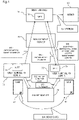
- FIG. 1 shows the outline of processing of a management server 10 accompanying buying and selling of an object 40.
- the management server 10 is provided on the Internet.
- the management server 10 is constituted by a computer including a memory and a processor connected to the memory.
- the management server 10 includes an interface for network access.
- the memory stores therein a computer program that causes the computer to function as the management server 10 of the embodiment.
- the processor executes the computer program stored in the memory.
- the management server 10 controls displays on user terminals 31, 32, and can receive user operations performed to the terminals 31, 32.
- the terminals 31, 32 can access the management server 10 and a smart contract described later via the network.
- the management server 10 is a management device used for managing an object. If each of the terminals 31, 32 has functions of the management server 10 (e.g., smart contract calling function described later), each of the terminals 31, 32 can function as a management device. If the terminals 31, 32 have the functions of the management server 10, the management server 10 may be dispensed with.
- an example of the object 40 is a trading card (hereinafter referred to as "card 40") that is a tangible object.
- the card 40 is an actual item, and can be easily transacted.
- the card 40 is transacted on an online market 50.
- the online market 50 is, for example, a flea market for customer-to-customer (C-to-C) transactions.
- the online market 50 is available through an online market application installed on the user terminals 31, 32.
- the card 40 is a commodity that is put up on the online market 50 by a user as a seller, and another user as a buyer can purchase the card 40.
- Payment for the purchase can be made in legal currency using a credit card or the like, for example.
- the card 40 is sent from the user as the seller to the user as the buyer. Since the card 40 is a tangible object, transfer of the card 40 to the buyer is performed as transfer of possession of the card 40 in the real world. Since the object 40 need not be transacted on a blockchain, even a person who is unfamiliar with the blockchain can easily perform the transaction.
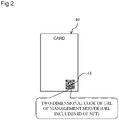
- a code 41 is assigned to the card 40 of the embodiment.
- An example of the code 41 is a two-dimensional code 41.
- the two-dimensional code 41 is configured to express a URL for network access to the management server 10.
- the two-dimensional code 41 is scanned by a two-dimensional code scanning function of the user terminals 31, 32.
- Each of the terminals 31, 32 is a smartphone with a camera, for example.
- An application installed on the terminals 31, 32 has the two-dimensional code scanning function.
- a non-fungible token 70 is used for managing the card 40 as an object.
- NFT 70 has a unique identifier (NFT_ID).
- NFT_ID unique identifier
- the NFT 70 is an NFT-721 token, for example. The following description will be made on a case where the NFT 70 is an NFT-721 token.
- An NFT can be transacted on an Ethereum network, similar to Ether which is a crypto-asset to be transacted on the Ethereum network.
- Ethereum is a blockchain network on a Peer-to-Peer (P2P) network.
- An operation on the NFT 70 is executed by a smart contract 20 that is built on a blockchain such as an Ethereum network.
- the smart contract 20 is a computer program written on the blockchain.
- the smart contract 20 is built when the computer program is implemented on a computer network constituting the blockchain.
- the smart contract is operated when the computer program is executed on the computer network constituting the blockchain.
- the smart contract 20 has an address (contract address) on the blockchain.
- the smart contract 20 is stored at the contract address.
- the smart contract 20 is called and executed by the management server 10 via a network such as the Internet.
- a smart contract execution history is recorded on the blockchain of Ethereum or the like.
- the smart contract 20 may be called by the terminals 31, 32.
- the card 40 is associated with the NFT 70. Since the card 40 is associated with the NFT 70 in a one-to-one correspondence, the identifier (NFT_ID) of the NFT 70 is included in data (URL) expressed by the two-dimensional code 41 assigned to the card 40. The identifier (NFT_ID) of the NFT 70 is included in the URL expressed by the two-dimensional code 41 assigned to the card 40 associated with the NFT 70. That is, the URL assigned to the card 40 includes a domain of the management server 10 and the identifier (NFT_ID) of the NFT 70. That is, the URL includes the data to be used by the management server 10 to call the smart contract 20 for the operation on the NFT 70.
- the domain of the management server 10 may be omitted from the data expressed by the two-dimensional code 41. Even when the management server 10 is used, if the terminals 31, 32 that read the two-dimensional code 41 grasp in advance the domain of the management server 10, the domain of the management server 10 may be omitted from the data expressed by the two-dimensional code 41.
- the URL may include, in addition to the NFT_ID, an address of the NFT 70 on the Ethereum, an ID of the NFT, and a secret key of an Ethereum address to be a payment source for a fee (Gas on the Ethereum) for calling the smart contract 20.
- the management server 10 can identify the NFT 70 corresponding to the card 40 that has caused the network access, from the identifier (NFT_ID), of the NFT 70, included in the URL.
- the URL includes the data necessary for calling the smart contract 20 for the operation on the NFT 70.
- the management server 10 is configured to call the smart contract 20 for operating the NFT 70 associated with the card 40, by using the data included in the URL.
- the card 40 and the NFT 70 are associated with each other via the URL assigned to the card 40.
- the URL may not necessarily include the NTF_ID itself, and may include other data that allow the management server 10 or the like to identify the NFT_ID associated with the card 40.
- the owner of the NFT 70 is changed on the Ethereum with change, of the owner (possessor) of the card 40, caused by buying and selling of the card 40.
- the management server 10 executes a process necessary for, on the Ethereum, changing the owner of the NFT 70 with the change of the owner of the card 40.
- the card 40 may be bought and sold in order to change the owner of the NFT 70 (in order to buy and sell the NFT 70).
- the owner of the NFT 70 that is a digital asset is the owner of the card 40 that is a tangible object. Since the owner and the owner history of the NFT 70 are recorded on the blockchain, the owner and the owner history of the card 40 as the tangible object are practically recorded on the blockchain. Moreover, in this embodiment, since the card 40 and the NFT 70 are associated with each other, transaction of the card 40 in the real world can be linked to transaction of the NFT 70 on the blockchain.
- the outline of a procedure for changing the owner of the NFT 70 with change of the owner of the card 40 is as follows.
- a user A is the current owner of the card 40 and the NFT 70 associated with the card 40.
- the user A accesses the management server 10 via the terminal 31, and performs an operation of abandoning the ownership of the NFT 70.
- Abandoning the ownership of the NFT 70 is performed by the user A depositing the NFT 70 in the smart contract 20 (step S1 in FIG. 1 ).
- the NFT 70 is transmitted from an address (Ethereum address) of the user A to the contract address of the smart contract 20.
- the smart contract 20 receives the NFT 70 abandoned by the user A.
- the smart contract 20 enters the state of keeping the NFT 70.
- an application having a function of accessing the management server 10 and a function of retaining and transacting Ethereum tokens such as the NFT 70, has been installed in advance.
- the user A After abandoning the ownership of the NFT 70, i.e., after depositing the ownership of the NFT 70 in the smart contract 20, the user A puts up the card 40 for sale on the online market 50 (step S2 in FIG. 1 ).
- a user B purchases the card 40 (step S3 in FIG. 1 ).
- the user B pays the user A for the card 40 using legal currency.
- payment by the buyer is performed with legal currency while management is performed using the blockchain such as the Ethereum. Therefore, the buyer can purchase the card 40 even without a crypto-asset.
- How to buy and sell the card 40 is not particularly limited.
- the user B as the buyer only needs to have an application for using the online market 50.
- the user B need not have the application having the function of accessing the management server 10 and the function of transacting Ethereum tokens such as the NFT 70. That is, at the time of purchasing the card 40, the user B need not be a user of the Ethereum. Therefore, many users of the online market 50 can be candidates as the buyer, which facilitates sale of the card 40.
- the card 40 sold by the user A is sent to the user B as the buyer through a delivery service or the like (step S4 in FIG. 1 ).
- the user B acquires the card 40 that is an actual item.
- the user B After having acquired the card 40, the user B, with the terminal 32, scans the two-dimensional code 41 assigned to the card 40, and accesses the management server 10 via the terminal 32 (step S5 in FIG. 1 ). The user B performs an operation of acquiring the ownership of the NFT 70 via the terminal 32.
- the NFT 70 having been deposited by the user A is transmitted from the smart contract 20 to the address (Ethereum address) of the user B (step S6 in FIG. 1 ).
- the user B can refer to the transmitted NFT 70 using the terminal 32.
- the smart contract 20 executes a transaction of paying a crypto-asset (Ether) to a right holder predetermined with respect to the NFT 70 (step S7 in FIG. 1 ).
- the predetermined right holder is, for example, a copyright holder (author) 60 of the card 40.
- a trigger of executing the transaction of payment only needs to be an event related to change in the ownership of the NFT 70.
- the trigger may be step S1 in FIG. 1 or step S6 in FIG. 1 .
- Ether to be paid to the right holder is transmitted from the terminal 31 of the user A as the seller or the terminal 32 of the user B as the buyer to the smart contract 20.
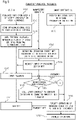
- FIG. 3 shows an ownership registration procedure when the user A purchases the card 40 (i.e., primary sale of the card 40 by a dealer of the card 40).
- the smart contract 20 At the time of sale of the card 40, the smart contract 20 possesses the NFT 70 associated with the card 40 (step S101). In other words, the smart contract 20 keeps the deposited NFT 70. Although an Ethereum fee (Gas) is charged upon calling of the smart contract 20 and transmission of the NFT 70, this fee is set to be paid by the seller. That is, the card 40 is sold at a price including Ether for the fee (Gas). Therefore, the user A need not pay for the fee (Gas) at the time of ownership registration. As a result, even if the user A does not have the Ether at the time of ownership registration, this does not hinder the registration operation.
- Gas Ethereum fee
- the Ether (crypto-asset) equivalent to the fee (Gas) is stored at an Ethereum address provided in association with the NFT 70.
- the fee (Gas) required for the operation of the NFT 70 is paid from the Ether accumulated in the Ethereum address corresponding to the NFT 70.
- the user A purchases the card 40 from the dealer through payment of legal currency, and acquires the card 40 that is an actual item (step S102).
- the user A with the terminal 31, scans the two-dimensional code 41 assigned to the card 40 (step S103). Through the scanning of the two-dimensional code 41, the terminal 31 reads the URL assigned to the card 40.
- the terminal 31 executes network access according to the URL (step S104). This allows the terminal 31 to access the management server 10.
- the management server 10 determines the NFT 70 to be an operation target, according to the NFT_ID included in the URL used for the access (step S105). That is, when receiving the network access, the management server 10 acquires the NFT_ID included in the URL, and identifies the NFT 70 as the operation target, according to the acquired NFT_ID.
- the management server 10 accesses the Ethereum network, and refers to the owner of the NFT 70 determined as the operation target.
- the owner of the NFT 70 determined as the operation target is the smart contract 20, that is, when the smart contract 20 keeps the deposited NFT 70
- the management server 10 urges the user A having accessed the management server 10 (step S104) to register the ownership of the NFT 70.
- the user A performs, on the terminal 31, an operation of selecting registration of the ownership of the NFT 70 (step S106), whereby a registration request is transmitted from the terminal 31 to the management server 10.
- the management server 10 Upon receiving the registration request, the management server 10 calls the smart contract 20 to cause the smart contract 20 to execute an operation of changing the owner of the NFT 70 as the operation target from the smart contract 20 to the user A (step S107).
- the management server 10 gives the NFT_ID (identifier of the NFT 70) to the smart contract 20.
- the smart contract 20 acquires the NFT_ID (identifier of the NFT 70).
- the smart contract 20 acquires the NFT_ID from the transmission source (management server 10 or the like) of the NFT_ID via the network.
- the smart contract 20 identifies the NFT 70 as the operation target, according to the NFT_ID.
- the called smart contract 20 changes the owner of the NFT 70 as the operation target, from the smart contract 20 to the user A. That is, the smart contract 20 transmits the NFT 70 to the address (Ethereum address) of the user A who is a new owner (step S108). Thus, the user A enters the state of owning the NFT 70 associated with the card 40. It is recorded on the Ethereum network that the owner of the NFT 70 has been changed to the user A.
- the user A who has purchased the card 40 with legal currency, can own the NFT 70 that is an asset on the Ethereum.
- the user A, having the ownership of the NFT 70 can use the NFT 70 and a network service or a digital content associated with the NFT 70.
- the network service associated with the NFT 70 is a game, for example.
- the content associated with the NFT 70 is E-book, music, or video, for example.
- the network service or the digital content is associated with the card 40 via the NFT 70. Therefore, with the transfer of the ownership of the card 40, the usage right of the network service or the digital content can also be transferred.
- FIG. 4 shows a procedure of resale (secondary sale) of the card 40 by the user A.
- the user A owns the card 40 and the NFT 70 associated with the card 40 (step S201).
- the user A with the terminal 31, scans the two-dimensional code 41 assigned to the card 40 (step S202). Through the scanning of the two-dimensional code 41, the terminal 31 reads the URL assigned to the card 40.
- the management server 10 determines the NFT 70 to be an operation target, according to the NFT_ID included in the URL used for the access (step S204).
- the management server 10 accesses the Ethereum network, and refers to the owner of the NFT 70 determined as the operation target.
- the management server 10 causes the terminal 31 of the user A as the person who has made the access to display a screen for selecting whether or not to abandon the ownership of the NFT 70.
- an application e.g., wallet application
- the user A can refer to the NFT 70 he/she owns, using the application installed in the terminal 31, without scanning the card 40.
- the application installed in the terminal 31 can cause the terminal 31 to display the screen for selecting whether or not to abandon the ownership of the NFT 70.
- steps from S201 to S203 in FIG. 4 can be omitted.
- an abandonment request is transmitted from the terminal 31 to the management server 10.
- the management server 10 Upon receiving the abandonment request, the management server 10 requests the user A to input a password (step S206).
- the password is set for the NFT 70.
- the management server 10 calls the smart contract 20 to cause the smart contract 20 to execute an operation (abandonment of the NFT 70) of changing the owner of the NFT 70 as the operation target from the user A to the smart contract 20 (step S208).
- the password and the NFT 70 are transmitted from the user A to the smart contract 20.
- the NFT 70 enters the state of being deposited in the smart contract 20 (see step S1 in FIG. 1 ).
- the NFT_ID may also be transmitted to the smart contract 20.
- a fee (Gas) for calling the smart contract 20 and transmitting the NFT 70 is transmitted together with the NFT 70 and the like from the user A to the smart contract 20.
- the smart contract 20 stores the received fee (Gas) in the Ethereum address associated with the NFT 70. Therefore, the new owner of the NFT 70 need not pay the fee (Gas).
- the fee (Gas) may be directly transmitted from the user A to the Ethereum address associated with the NFT 70.
- the called smart contract 20 changes the owner of the NFT 70 from the user A to the smart contract 20, and stores therein the received password (step S209). That is, the smart contract 20 stores therein the password that is set for the deposited NFT 70. The stored password is used for authentication of the new owner of the deposited NFT 70.
- the user A sells the card 40 to the user B (see step S210, and steps S2, S3 in FIG. 1 ).
- the password set on the NFT 70 is transmitted from the user A to the user B.
- the user B uses the transmitted password for authentication that he/she is the new owner of the NFT 70.
- the user A can change and refer to the password. Moreover, while the smart contract 20 keeps the NFT 70, the user A can retrieve the NFT 70 deposited in the smart contract 20, on condition that he/she inputs the correct password.
- FIG. 5 shows an ownership registration (transfer) procedure when the user B purchases the card 40.
- the smart contract 20 possesses the NFT 70 associated with the card 40, and the password for the NFT 70 (step S301).
- the user B purchases the card 40 at the online market 50 through payment of legal currency, and acquires the card 40 that is an actual item (step S302).
- the user B with the terminal 32, scans the two-dimensional code 41 assigned to the card 40 (step S303). Through the scanning of the two-dimensional code 41, the terminal 32 reads the URL assigned to the card 40.
- the terminal 32 executes network access according to the URL (step S304). This allows the terminal 32 to access the management server 10.
- the management server 10 determines the NFT 70 to be an operation target, according to the NFT_ID included in the URL used for the access (step S305). That is, when receiving the network access, the management server 10 acquires the NFT_ID included in the URL, and identifies the NFT 70 as the operation target, according to the acquired NFT_ID.
- the management server 10 accesses the Ethereum network, and refers to the owner of the NFT 70 determined as the operation target.
- the owner of the NFT 70 determined as the operation target is the smart contract 20, that is, when the smart contract 20 keeps the deposited NFT 70
- the management server 10 requests the user B who has accessed the management server 10 (step S304) to input the password (step S306).
- the management server 10 calls the smart contract 20 to cause the smart contract 20 to execute an operation of changing the owner of the NFT 70 as the operation target from the smart contract 20 to the user B (step S309).
- the management server 10 gives the NFT_ID (identifier of the NFT 70) to the smart contract 20.
- the smart contract 20 acquires the NFT_ID (identifier of the NFT 70).
- the smart contract 20 identifies the NFT 70 as the operation target, according to the NFT_ID.
- the password authentication may be performed by the smart contract 20. That is, after step S305, the management server 10 calls the smart contract 20 (for password authentication). At the time of this calling, the management server 10 gives the NFT_ID (identifier of the NFT 70) of the NFT 70 as the operation target to the smart contract 20. Thus, the smart contract 20 acquires the NFT_ID (identifier of the NFT 70). The smart contract 20 identifies the NFT 70 as the operation target, according to the NFT_ID.
- the smart contract 20 executes a password authentication process.
- the smart contract 20 acquires the password from the user B.
- the password may be acquired from the user B directly or via the management server 10.
- the smart contract 20 executes an operation of changing the owner of the NFT 70 as the operation target.
- the smart contract 20 changes the owner of the NFT 70 from the smart contract 20 to the user B. That is, the smart contract 20 transmits the NFT 70 that the smart contract 20 possesses, to the address (Ethereum address) of the user B who is the new owner (step S310). Thus, the user B who has inputted the password enters the state of owning the NFT 70 associated with the card 40.
- the owner of the NFT 70 having been changed to the user B is recorded on the Ethereum network.
- the password is reset. This reset is performed by the smart contract 20.
- a fee (Gas) for calling the smart contract 20 and transmitting the NFT 70 is paid from the Ether that the user A has paid in advance.
- the user B can own the NFT 70 (step S311).
- the user B can also use a network service or content associated with the NFT 70.
- the user A who has lost the ownership of the NFT 70, cannot use the network service or content associated with the NFT 70 anymore.
- the smart contract 20 transmits a predetermined amount of Ether to the copyright holder (author) 60 (step S312).
- the Ether to be transmitted to the author 60 has already been paid by the user A.
- the copyright holder 60 who is a third party, can get a benefit from the transaction performed between the user A and the user B.
- the procedure shown in FIG. 5 may be used for ownership registration when the user A purchases the card 40 ( FIG. 3 ).
- the password is set by an administrator of the management server 10 or a dealer in advance of the sale of the card 40, and is transmitted to the user A.
- the password may be assigned to the card 40 through printing or the like.
- FIG. 6 shows an ownership history reference procedure.
- the owner history reference procedure in the case where a user (non-owner user) who is not the owner of the card 40 can scan the two-dimensional code, will be described.
- step S401 It is assumed that the card 40 and the NFT 70 are owned by another user (step S401).
- the owner history of the NFT 70 is recorded on the Ethereum network.
- the non-owner user scans the two-dimensional code 41 assigned to the card 40 by using a terminal (step S402).
- the terminal reads the URL assigned to the card 40.
- the terminal having read the URL, executes network access according to the URL (step S403).
- This allows the terminal to access the management server 10.
- the management server 10 determines the NFT 70 to be a target, according to the NFT_ID included in the URL used for the access (step S404). That is, when receiving the network access, the management server 10 acquires the NFT_ID included in the URL, and identifies the NFT 70 as an operation target, according to the acquired NFT_ID.
- the management server 10 accesses the Ethereum network, and refers to the owner of the NFT 70 determined as the target. If the owner of the NFT 70 determined as the operation target is the other user, the management server 10 acquires, from the Ethereum network, the owner history of the NFT 70 as the target, and causes the terminal of the non-owner user to display the owner history (step S405). The owner history is also displayed on the terminal 32 of the user B whose password authentication has failed in step S308 in FIG. 5 .
- the management server 10 may acquire the owner history from the smart contract 20.
- the management server 10 calls the smart contract 20.
- the management server 10 gives the NFT_ID (identifier of the NFT 70) to the smart contract 20.
- the smart contract 20 acquires the NFT_ID (identifier of the NFT 70).
- the smart contract 20 identifies the NFT 70 whose owner history is required, according to the NFT_ID.
- the present disclosure includes the following aspects.
- a method is a method of operating a non-fungible token (NFT) in order to manage an object.
- the non-fungible token is issued by a blockchain capable of executing a smart contract.
- the non-fungible token is associated with the object.
- the method according to the embodiment includes preparing the object to which data is assigned.
- the data is used for calling the smart contract.
- the data used for calling the smart contract may include, for example, data for identifying the non-fungible token (NFT) to be operated by the smart contract.
- the data for identifying the NFT is, for example, at least one of an address of the NFT on the blockchain, and an ID of the NFT.
- the data used for calling the smart contract may be another data that is given to the smart contract when the smart contract is called.
- the data given to the smart contract may include, for example, a secret key of an Ethereum address to be a source of payment of a fee (e.g., Gas in Ethereum) for calling the smart contract.
- the method according to the embodiment includes receiving, by the management server, network access using the data assigned to the object.
- the method according to the embodiment includes calling, according to the data, the smart contract by the management server having received the network access, in order to cause the smart contract to execute the operation on the non-fungible token.
- the called smart contract executes the operation on the non-fungible token.
- the smart contract for operating the non-fungible token can be executed based on the data assigned to the object, whereby the NFT can be used for management of the object.
- the data is included in a uniform resource locator (URL) assigned to the object.
- the URL may include a domain for network access to the management server.
- the URL assigned to the object is used for the network access to the management server, and the data included in the URL is used for calling the smart contract.
- the network access may be Internet access.
- the uniform resource locator (URL) assigned to the object is expressed in a two-dimensional code.
- the two-dimensional code can be scanned with a two-dimensional code scanner, and is advantageous in mechanical URL reading.
- the object is a tangible object.
- the operation on the non-fungible token by the smart contract preferably includes transmitting the non-fungible token from the first user to the smart contract.
- the first user can deposit the non-fungible token in the smart contract (see step S1 in FIG. 1 ).
- the operation on the non-fungible token by the smart contract preferably includes transmitting the non-fungible token from the smart contract to the second user.
- the second user can acquire the non-fungible token from the smart contract (see step S6 in FIG. 1 ).
- the management server If the management server receives the network access from the terminal of the second user who is not the owner of the non-fungible token while the smart contract keeps the non-fungible token, the management server preferably requests input of a password to the terminal of the second user.
- the password is required for acquisition of the non-fungible token, thereby preventing the non-fungible token from being acquired by a user who does not know the password.
- the smart contract is configured to, when executing the operation on the non-fungible token, execute an operation of paying a crypto-asset on the blockchain to a right holder associated with the non-fungible token.
- the right holder can get a benefit when the operation on the non-fungible token is performed.
- the management server If the management server receives the network access from the terminal of the second user who is not the owner of the non-fungible token, the management server preferably causes the terminal of the second user to display owner history data of the non-fungible token.
- the owner history of the non-fungible token i.e., the owner history of the object, can be grasped.
- the value of the object or the non-fungible token may vary depending on who was the owner in the past. The owner history being referable allows easy confirmation of the owners in the past.
- a management server is a management server for an object associated with a non-fungible token issued by a blockchain capable of executing a smart contract.
- the management server is provided with a processor configured to execute a process including: receiving network access using data that is assigned to the object and is used for calling the smart contract; and, upon receiving the access, calling the smart contract by using the data in order to cause the smart contract to execute an operation on the non-fungible token.
- a computer program for the above process is stored in a computer-readable non-transitory storage medium.
Landscapes
- Business, Economics & Management (AREA)
- Engineering & Computer Science (AREA)
- Accounting & Taxation (AREA)
- Theoretical Computer Science (AREA)
- Physics & Mathematics (AREA)
- General Physics & Mathematics (AREA)
- Strategic Management (AREA)
- General Business, Economics & Management (AREA)
- Finance (AREA)
- Computer Security & Cryptography (AREA)
- General Engineering & Computer Science (AREA)
- Computer Hardware Design (AREA)
- Databases & Information Systems (AREA)
- Computer Networks & Wireless Communication (AREA)
- Software Systems (AREA)
- Health & Medical Sciences (AREA)
- Bioethics (AREA)
- General Health & Medical Sciences (AREA)
- Development Economics (AREA)
- Marketing (AREA)
- Economics (AREA)
- Technology Law (AREA)
- Data Mining & Analysis (AREA)
- Microelectronics & Electronic Packaging (AREA)
- Management, Administration, Business Operations System, And Electronic Commerce (AREA)
- Financial Or Insurance-Related Operations Such As Payment And Settlement (AREA)
Applications Claiming Priority (2)
| Application Number | Priority Date | Filing Date | Title |
|---|---|---|---|
| JP2019220303A JP6710401B1 (ja) | 2019-12-05 | 2019-12-05 | 対象物を管理する方法及び管理サーバ |
| PCT/JP2020/016051 WO2021111653A1 (fr) | 2019-12-05 | 2020-04-09 | Procédé de gestion d'objet cible, contrat intelligent et dispositif de gestion |
Publications (2)
| Publication Number | Publication Date |
|---|---|
| EP4071692A1 true EP4071692A1 (fr) | 2022-10-12 |
| EP4071692A4 EP4071692A4 (fr) | 2023-11-22 |
Family
ID=71079321
Family Applications (1)
| Application Number | Title | Priority Date | Filing Date |
|---|---|---|---|
| EP20896135.9A Pending EP4071692A4 (fr) | 2019-12-05 | 2020-04-09 | Procédé de gestion d'objet cible, contrat intelligent et dispositif de gestion |
Country Status (5)
| Country | Link |
|---|---|
| US (1) | US20220198447A1 (fr) |
| EP (1) | EP4071692A4 (fr) |
| JP (3) | JP6710401B1 (fr) |
| CN (1) | CN113853627A (fr) |
| WO (1) | WO2021111653A1 (fr) |
Cited By (1)
| Publication number | Priority date | Publication date | Assignee | Title |
|---|---|---|---|---|
| ES2978580A1 (es) * | 2023-02-09 | 2024-09-16 | Beckett Collectibles Holdings Llc | Verificación de símbolo no fungible |
Families Citing this family (94)
| Publication number | Priority date | Publication date | Assignee | Title |
|---|---|---|---|---|
| US11606291B2 (en) | 2018-10-16 | 2023-03-14 | Eluvio, Inc. | Access control and ownership transfer of digital content using a decentralized content fabric and ledger |
| JP2021149506A (ja) * | 2020-03-19 | 2021-09-27 | 株式会社エヌ・ティ・ティ・データ | 情報処理装置、情報処理方法およびプログラム |
| JP6829927B1 (ja) * | 2020-09-09 | 2021-02-17 | 株式会社レシカ | 樽単位酒の保存状態データ管理及び所有証明管理システム |
| US11985252B1 (en) * | 2020-09-28 | 2024-05-14 | Unstoppable Domains Inc. | Resolving and managing blockchain domains |
| WO2022101980A1 (fr) * | 2020-11-10 | 2022-05-19 | double jump.tokyo株式会社 | Système d'aide au paiement et procédé d'aide au paiement |
| JP2022079884A (ja) * | 2020-11-17 | 2022-05-27 | Xクリエーション株式会社 | コンピュータの制御方法及びプログラム |
| US11886425B2 (en) * | 2021-01-13 | 2024-01-30 | Unstoppable Domains Inc. | Blockchain registry scaling |
| WO2022197976A1 (fr) * | 2021-03-17 | 2022-09-22 | Eluvio, Inc. | Contrôle d'accès et transfert de propriété de contenu numérique au moyen d'une structure de contenu décentralisé et d'un registre |
| JP7134514B1 (ja) | 2021-03-31 | 2022-09-12 | 公彦 金澤 | 出版管理システム及びプログラム |
| JP2022160319A (ja) * | 2021-04-06 | 2022-10-19 | クリアーション株式会社 | デジタルデザインコンテンツの提供方法 |
| CN117203657A (zh) * | 2021-04-22 | 2023-12-08 | 株式会社普雷新科 | 卡所有权管理系统、卡所有权管理方法以及程序 |
| KR102713520B1 (ko) * | 2021-06-02 | 2024-10-07 | 주식회사 뮤직카우 | Nft 기반 디지털 콘텐츠 관리 시스템 및 방법 |
| CN113327165A (zh) | 2021-06-07 | 2021-08-31 | 支付宝(杭州)信息技术有限公司 | 一种基于区块链的交易方法 |
| JP7720052B2 (ja) * | 2021-06-16 | 2025-08-07 | bacoor dApps株式会社 | 静止画に対応する動画を表示するための方法及びシステム |
| KR102355550B1 (ko) * | 2021-06-22 | 2022-02-08 | 주식회사 매스어답션 | 블록체인을 기반으로 한 실물 자산의 디지털 자산화 방법, 장치 및 시스템 |
| US11797274B2 (en) * | 2021-06-22 | 2023-10-24 | Altered State Machine Limited | Interoperable composite data units for use in distributed computing execution environments |
| WO2022270610A1 (fr) * | 2021-06-23 | 2022-12-29 | エンゲート株式会社 | Dispositif, procédé et programme pour permettre à une pluralité d'utilisateurs de faire un cadeau |
| US20230004720A1 (en) * | 2021-07-02 | 2023-01-05 | Walter Pelton | Logos Communication Platform |
| KR102437601B1 (ko) * | 2021-07-09 | 2022-08-30 | 남윤서 | 고유 코드와 매칭된 nft를 기반으로 한 제품 거래 시스템 및 이를 이용한 제품 거래 방법 |
| JPWO2023286773A1 (fr) * | 2021-07-12 | 2023-01-19 | ||
| KR102322511B1 (ko) | 2021-07-19 | 2021-11-08 | 주식회사 와이콘즈 | Nft와 연관된 객체의 코드를 관리하는 방법 및 장치 |
| JP7245936B2 (ja) * | 2021-07-26 | 2023-03-24 | 克弥 西沢 | 認証装置および認証システム、認証処理方法 |
| US12219062B2 (en) | 2021-08-03 | 2025-02-04 | Samsung Electronics Co., Ltd. | Method and apparatus for managing non-fungible token for digital content |
| JP7397534B2 (ja) * | 2021-08-06 | 2023-12-13 | 株式会社プレイシンク | 販売済み商品管理システム、販売済み商品管理方法、及びプログラム |
| EP4207045A4 (fr) * | 2021-09-02 | 2024-04-10 | Han Jo Kim | Procédé de fourniture de service réalisé par un serveur de plateforme de source sonore au moyen d'un nft basé sur une chaîne de blocs |
| JP7716064B2 (ja) * | 2021-09-06 | 2025-07-31 | bacoor dApps株式会社 | コンピュータ実装方法及びコンピュータシステム |
| KR102554973B1 (ko) * | 2021-09-07 | 2023-07-12 | 배지호 | NFT(Non-fungible Token)와 물리적 대상인 원본을 일체화하는 시스템 및 그 방법 |
| JP7011365B1 (ja) | 2021-09-08 | 2022-01-26 | 充宏 前田 | 取引システム、取引方法及びプログラム |
| JP7277812B2 (ja) * | 2021-09-08 | 2023-05-19 | 株式会社カプコン | プログラム、情報処理装置およびコンピュータシステム |
| US12229761B1 (en) * | 2021-09-10 | 2025-02-18 | American Express Travel Related Services Company, Inc. | Non-fungible tokens for payment instruments |
| JP7292351B2 (ja) * | 2021-09-13 | 2023-06-16 | ヤフー株式会社 | 情報処理装置、情報処理方法、及び情報処理プログラム |
| US20230079195A1 (en) * | 2021-09-14 | 2023-03-16 | Shopify Inc. | Non-fungible-token-based commerce attribute |
| US20240265375A1 (en) * | 2021-09-28 | 2024-08-08 | Wraptag Inc. | Production method and production system for non-fungible token, registration method and system for unique identifier, and production method for combination product |
| JP7333505B2 (ja) * | 2021-09-28 | 2023-08-25 | 株式会社カプコン | コンピュータシステム、情報処理装置およびプログラム |
| JP7246600B1 (ja) | 2021-09-28 | 2023-03-28 | WrapTag株式会社 | ノンファンジブルトークンの生産方法及び生産システム、固有識別子の登録方法及びシステム、並びに組み合わせ製品の生産方法 |
| JP7712731B2 (ja) * | 2021-10-06 | 2025-07-24 | Dts株式会社 | Nft用ブロックチェーンの運用方法及び運用システム |
| US11972415B1 (en) | 2021-10-18 | 2024-04-30 | Hpvc, Llc | Non-fungible token system for randomized event sessions |
| JP7414245B2 (ja) * | 2021-10-27 | 2024-01-16 | bacoor dApps株式会社 | ブロックチェーンのノンファンジブルトークンに関連付けられた権利を行使するためのコンピュータ実装方法、コンピュータシステム |
| JP7029212B1 (ja) | 2021-10-29 | 2022-03-03 | 充宏 前田 | 取引支援システム、取引支援方法及びプログラム |
| JP7020739B1 (ja) * | 2021-10-29 | 2022-02-16 | 充宏 前田 | 取引システム、取引方法及びプログラム |
| JP7223462B1 (ja) * | 2021-11-09 | 2023-02-16 | 充宏 前田 | 取引支援システム、取引支援方法及びプログラム |
| JP7158073B1 (ja) * | 2021-11-09 | 2022-10-21 | 充宏 前田 | 取引支援システム、取引支援方法及びプログラム |
| US20250022293A1 (en) * | 2021-11-09 | 2025-01-16 | Industry-Academic Cooperation Foundation, Yonsei University | Management system for generating and distributing cell image-based nft |
| JP7175046B1 (ja) * | 2021-11-09 | 2022-11-18 | 充宏 前田 | 取引支援システム、取引支援方法及びプログラム |
| JP7058898B1 (ja) | 2021-11-09 | 2022-04-25 | 充宏 前田 | 取引支援システム、取引支援方法及びプログラム |
| CN114024687B (zh) * | 2021-11-11 | 2022-10-28 | 上海证章信息科技有限公司 | 一种通过锁定再发行实现nft可拆分可互换的方法 |
| JP2023075841A (ja) * | 2021-11-19 | 2023-05-31 | 日本テクノロジーソリューション株式会社 | 包装材によって包装された商品の製造方法及び製造システム |
| KR102431144B1 (ko) * | 2021-11-26 | 2022-08-10 | 주식회사 와이콘즈 | 블록체인 기반의 nft를 이용한 객체의 등기 서비스를 위한 서비스 제공 방법 및 장치 |
| JP7551069B2 (ja) * | 2021-12-01 | 2024-09-17 | 一也 西本 | Nft取引サービス提供システム |
| US20230196344A1 (en) * | 2021-12-16 | 2023-06-22 | Charles RAFFAY | System and method for providing webpages as unique asset tokens |
| JP7383000B2 (ja) * | 2021-12-27 | 2023-11-17 | 株式会社電通 | アイテム流通制御装置、アイテム流通制御プログラム、アイテム流通制御方法、vr端末、vr端末用プログラムおよびvr端末の制御方法 |
| TWI801091B (zh) * | 2022-01-11 | 2023-05-01 | 天宿智能科技股份有限公司 | 虛實耦合產品的非同質化通證及實體之初次發行與次級交付系統及其方法 |
| CN114065269B (zh) * | 2022-01-14 | 2022-04-12 | 北京大学深圳研究生院 | 无绑定型非同质化代币的生成方法和解析方法和存储介质 |
| CN119110955A (zh) * | 2022-01-19 | 2024-12-10 | 三星电子株式会社 | 资产管理设备和资产管理方法 |
| KR20230111924A (ko) * | 2022-01-19 | 2023-07-26 | 삼성전자주식회사 | 자산 관리 장치 및 자산 관리 방법 |
| US20230237454A1 (en) * | 2022-01-21 | 2023-07-27 | 28c Partners LLC | System and method for nft patronage with monitoring, electronic display, and reversionary funding |
| KR102634635B1 (ko) * | 2022-01-24 | 2024-02-07 | (주)비즈니스매니지먼트코퍼레이션 | Nft를 활용한 사용자 서비스 제공 장치, 서버 및 방법 |
| JP7823401B2 (ja) * | 2022-01-24 | 2026-03-04 | 大日本印刷株式会社 | 非代替性トークン管理装置、非代替性トークン管理方法、及びプログラム |
| KR20250018461A (ko) * | 2022-01-25 | 2025-02-06 | 21 엔터테인먼트 엘엘씨 | 전자 퍼블리싱 플랫폼 |
| US20240144217A1 (en) | 2022-02-03 | 2024-05-02 | Super Massive Global Inc. | Content providing apparatus, content providing method, content providing program, and content providing system |
| US12299010B2 (en) * | 2022-02-15 | 2025-05-13 | Bank Of America Corporation | Resource distribution instruments comprising logical digital resource components linked with processing of distribution requests |
| JP7236774B1 (ja) | 2022-02-23 | 2023-03-10 | 充宏 前田 | 情報処理システム、情報処理方法及びプログラム |
| JP7195673B1 (ja) * | 2022-02-23 | 2022-12-26 | 充宏 前田 | 情報処理システム、情報処理方法及びプログラム |
| JP7638235B2 (ja) * | 2022-02-24 | 2025-03-03 | 楽天グループ株式会社 | 情報処理システム、方法及びプログラム |
| WO2023167241A1 (fr) * | 2022-03-02 | 2023-09-07 | Sushi Top Marketing株式会社 | Dispositif, programme et procédé de traitement d'informations |
| JP2023070679A (ja) * | 2022-04-12 | 2023-05-19 | 充宏 前田 | 取引支援システム、取引支援方法及びプログラム |
| KR20250006824A (ko) * | 2022-04-13 | 2025-01-13 | 마스터카드 인터내셔날, 인코포레이티드 | 보증 토큰을 사용한 거래 결제 및 스마트 계약 액세스의 방법 및 시스템 |
| WO2023214596A1 (fr) * | 2022-05-03 | 2023-11-09 | 한국과학기술원 | Procédé et système de production de carte nft |
| JP7413442B2 (ja) * | 2022-06-02 | 2024-01-15 | 株式会社メディアドゥ | 付録管理システム、付録管理プログラムおよび付録管理方法 |
| JP7229410B1 (ja) | 2022-06-06 | 2023-02-27 | 株式会社野村総合研究所 | 商品取引支援装置および商品取引支援方法 |
| WO2023249619A1 (fr) * | 2022-06-22 | 2023-12-28 | Hewlett-Packard Development Company, L.P. | Affichage de données d'image protégées par nft |
| WO2024009982A1 (fr) * | 2022-07-07 | 2024-01-11 | Sushi Top Marketing株式会社 | Dispositif de traitement d'informations, système de traitement d'informations et procédé de traitement d'informations |
| JP7266227B1 (ja) | 2022-07-08 | 2023-04-28 | 株式会社博報堂プロダクツ | トークン管理システム、コンピュータプログラム、及びトークン管理方法 |
| US20240070662A1 (en) * | 2022-08-24 | 2024-02-29 | Jeffrey Binder | Non-fungible token document platform |
| JP2024032216A (ja) | 2022-08-29 | 2024-03-12 | セイコーエプソン株式会社 | 情報管理方法、表示装置、及びプログラム |
| JP7339406B1 (ja) | 2022-08-31 | 2023-09-05 | 太郎 西村 | 情報処理装置、情報処理方法及びプログラム |
| JP7239233B1 (ja) | 2022-09-28 | 2023-03-14 | 株式会社HARTi | マーケティング施策の実行方法 |
| CN115603963B (zh) * | 2022-09-29 | 2026-03-03 | 三星电子(中国)研发中心 | 用户授权方法和装置 |
| WO2024077485A1 (fr) * | 2022-10-11 | 2024-04-18 | Supersymmetry Pte. Ltd. | Procédé de mise en œuvre d'un nft dérivé, appareil associé et support de stockage lisible par ordinateur |
| JP7784665B2 (ja) * | 2022-10-13 | 2025-12-12 | 株式会社Decoo | 処理装置、処理プログラム及び処理方法 |
| JP7689940B2 (ja) * | 2022-10-27 | 2025-06-09 | 株式会社ポケモン | プログラム、方法、情報処理装置、システム |
| JP7816075B2 (ja) * | 2022-10-28 | 2026-02-18 | トヨタ自動車株式会社 | サーバおよび方法 |
| JP7816076B2 (ja) * | 2022-10-28 | 2026-02-18 | トヨタ自動車株式会社 | サーバおよび方法 |
| WO2024096863A1 (fr) * | 2022-10-31 | 2024-05-10 | Hewlett-Packard Development Company, L.P. | Contenu affiché par jeton non fongible |
| KR102836079B1 (ko) * | 2022-12-26 | 2025-07-18 | 맨인블록 주식회사 | Nft 기반 멤버십 서비스 플랫폼 및 그 방법 |
| KR20240111210A (ko) * | 2023-01-09 | 2024-07-16 | 라인스튜디오 주식회사 | 캐릭터와 nft를 연동하는 방법 및 시스템 |
| JP2024126631A (ja) * | 2023-03-08 | 2024-09-20 | シンシズモ株式会社 | 二次元コードを利用したnft所有認証システム |
| JP7448264B1 (ja) | 2023-03-24 | 2024-03-12 | 株式会社PocketRD | チケット流通管理システム、チケット流通管理方法及びチケット流通管理プログラム |
| JP7464950B1 (ja) * | 2023-06-09 | 2024-04-10 | 株式会社ガイアホールディングス | コンピュータが実行する工程を含む方法及びシステム |
| EP4736102A1 (fr) * | 2023-06-28 | 2026-05-06 | Cube Security Inc. | Extraction de caractéristiques pour des transactions de chaîne de blocs et des protocoles de programme |
| JP7435890B1 (ja) | 2023-07-24 | 2024-02-21 | Toppanホールディングス株式会社 | ユーザ認証システム、ユーザ認証装置、ユーザ認証方法、およびプログラム |
| WO2025053293A1 (fr) * | 2023-09-04 | 2025-03-13 | 엘지전자 주식회사 | Procédé basé sur un réseau de chaîne de blocs destiné à fournir un service de transaction de dispositif secondaire et un appareil serveur de service de transaction secondaire |
| WO2025058105A1 (fr) * | 2023-09-14 | 2025-03-20 | 엘지전자 주식회사 | Procédé de commande d'un système utilisant un nft et dispositif commandé par celui-ci |
| JP7671905B1 (ja) | 2024-08-07 | 2025-05-02 | Kddi株式会社 | 情報処理装置及び情報処理方法 |
Family Cites Families (17)
| Publication number | Priority date | Publication date | Assignee | Title |
|---|---|---|---|---|
| JP4679048B2 (ja) * | 2003-09-26 | 2011-04-27 | 日本電気株式会社 | 電子チケット管理・流通システム及び電子チケット流通サーバ |
| JP2017098800A (ja) * | 2015-11-26 | 2017-06-01 | インフォニック株式会社 | 合成動画提供システム |
| JP6703918B2 (ja) * | 2016-08-31 | 2020-06-03 | ヤフー株式会社 | 生成プログラム、生成装置及び生成方法 |
| TWI632507B (zh) * | 2017-06-03 | 2018-08-11 | 蔡政育 | 實物履歷識別碼之輸出系統 |
| JP6963218B2 (ja) * | 2017-12-14 | 2021-11-05 | 日本電気株式会社 | チケット有効性確認装置、方法およびプログラム |
| US11334883B1 (en) * | 2018-03-05 | 2022-05-17 | Gemini Ip, Llc | Systems, methods, and program products for modifying the supply, depositing, holding and/or distributing collateral as a stable value token in the form of digital assets |
| US20190287107A1 (en) | 2018-03-15 | 2019-09-19 | International Business Machines Corporation | Resource equity for blockchain |
| EP3540662A1 (fr) * | 2018-03-15 | 2019-09-18 | Deutsche Telekom AG | Procédé mis en uvre par ordinateur pour la gestion et la provenance de chaîne d'approvisionnement dans un réseau de traitement de données |
| JP7026351B2 (ja) * | 2018-04-13 | 2022-02-28 | ビリングシステム株式会社 | チケット管理システム、チケット管理装置、チケット管理方法、および、チケット管理プログラム |
| US20190340623A1 (en) * | 2018-05-03 | 2019-11-07 | SigmaLedger, Inc. | System and method for verifying authenticity of the products based on proof of ownership and transfer of ownership |
| WO2019213700A1 (fr) * | 2018-05-07 | 2019-11-14 | Dream Channel Pty. Ltd. | Films sur une chaîne de blocs |
| JP6469920B1 (ja) * | 2018-05-11 | 2019-02-13 | 株式会社 ディー・エヌ・エー | 対象物の利用を管理するためのシステム、方法、及びプログラム |
| WO2020010023A1 (fr) * | 2018-07-01 | 2020-01-09 | Madhu Vijayan | Systèmes et procédés permettant de mettre en œuvre des plateformes d'engagement de contenu à base de chaîne de blocs à l'aide de portefeuilles multimédia |
| US20200005293A1 (en) * | 2018-07-01 | 2020-01-02 | Babajide Emmanuel Opeola | Cryptocurrency greeting cards |
| US10997251B2 (en) * | 2018-10-15 | 2021-05-04 | Bao Tran | Smart device |
| US10505726B1 (en) * | 2018-12-07 | 2019-12-10 | Nike, Inc. | System and method for providing cryptographically secured digital assets |
| PH12021553118A1 (en) * | 2019-06-13 | 2022-08-01 | Gutierrez Sheris Luis Eduardo | System and method using a fitness-gradient blockchain consensus and providing advanced distributed ledger capabilities via specialized data records |
-
2019
- 2019-12-05 JP JP2019220303A patent/JP6710401B1/ja active Active
-
2020
- 2020-04-09 EP EP20896135.9A patent/EP4071692A4/fr active Pending
- 2020-04-09 CN CN202080035504.0A patent/CN113853627A/zh active Pending
- 2020-04-09 WO PCT/JP2020/016051 patent/WO2021111653A1/fr not_active Ceased
- 2020-04-09 US US17/599,390 patent/US20220198447A1/en active Pending
-
2023
- 2023-03-29 JP JP2023052991A patent/JP2023073391A/ja active Pending
-
2024
- 2024-02-16 JP JP2024022441A patent/JP2024040523A/ja active Pending
Cited By (1)
| Publication number | Priority date | Publication date | Assignee | Title |
|---|---|---|---|---|
| ES2978580A1 (es) * | 2023-02-09 | 2024-09-16 | Beckett Collectibles Holdings Llc | Verificación de símbolo no fungible |
Also Published As
| Publication number | Publication date |
|---|---|
| JP2023073391A (ja) | 2023-05-25 |
| WO2021111653A1 (fr) | 2021-06-10 |
| CN113853627A (zh) | 2021-12-28 |
| US20220198447A1 (en) | 2022-06-23 |
| EP4071692A4 (fr) | 2023-11-22 |
| JP6710401B1 (ja) | 2020-06-17 |
| JP2024040523A (ja) | 2024-03-25 |
| JP2021089640A (ja) | 2021-06-10 |
| JPWO2021111653A1 (fr) | 2021-06-10 |
Similar Documents
| Publication | Publication Date | Title |
|---|---|---|
| EP4071692A1 (fr) | Procédé de gestion d'objet cible, contrat intelligent et dispositif de gestion | |
| US20220230175A1 (en) | Method to be executed by computer system, and computer system | |
| KR102343615B1 (ko) | 예술 작품 거래와 정보 관리를 위한 블록체인 시스템 및 이의 제어방법 | |
| KR20160037175A (ko) | 소매상들을 이용하여 서브스크립션들을 신디케이팅하기 위한 시스템 | |
| JP5925375B1 (ja) | 電子チケット管理装置及び電子チケット管理方法 | |
| KR102136976B1 (ko) | 토큰화된 모바일 상품권 서비스 방법 및 이를 이용한 서비스 제공 장치 | |
| CN106022861B (zh) | 一种电子票的线上转让方法与装置 | |
| US20210082029A1 (en) | Intermediary Method, Intermediary Device, and Recording Medium/Program | |
| JP6592054B2 (ja) | 情報処理装置、情報処理方法、情報処理プログラム、端末装置、端末制御方法および端末制御プログラム | |
| US20140379510A1 (en) | Auction apparatus, auction method, storage medium, and auction system | |
| JP2005250899A (ja) | プリペイド決済装置、プリペイド決済システム、プリペイド決済方法、及びプログラム | |
| CN114424233A (zh) | 收藏品销售平台 | |
| JP4679048B2 (ja) | 電子チケット管理・流通システム及び電子チケット流通サーバ | |
| JP7224772B2 (ja) | 試用システム、試用方法、試用処理装置及びそのプログラム | |
| JP2025088796A (ja) | 商品交換支援プログラム、商品交換支援装置、商品交換支援端末、及び商品交換支援システム | |
| JP7440109B2 (ja) | 業務管理システム | |
| JP6260674B2 (ja) | 情報処理装置、譲渡システム及びプログラム | |
| JP7241285B1 (ja) | 情報処理装置、情報処理方法及びプログラム | |
| JP7671905B1 (ja) | 情報処理装置及び情報処理方法 | |
| JP7475528B1 (ja) | 情報処理装置、情報処理方法及びプログラム | |
| US11790338B2 (en) | Transaction system and method | |
| JP2005115818A (ja) | 電子チケット資金化システム、及び電子チケット資金化管理サーバ | |
| JP2005234670A (ja) | 物品購入システムおよびその方法 | |
| KR102269083B1 (ko) | 암호 화폐를 이용한 실시간 거래 방법 | |
| KR102100617B1 (ko) | 소비 연동 리워드 관리 시스템 |
Legal Events
| Date | Code | Title | Description |
|---|---|---|---|
| STAA | Information on the status of an ep patent application or granted ep patent |
Free format text: STATUS: THE INTERNATIONAL PUBLICATION HAS BEEN MADE |
|
| PUAI | Public reference made under article 153(3) epc to a published international application that has entered the european phase |
Free format text: ORIGINAL CODE: 0009012 |
|
| STAA | Information on the status of an ep patent application or granted ep patent |
Free format text: STATUS: REQUEST FOR EXAMINATION WAS MADE |
|
| 17P | Request for examination filed |
Effective date: 20220524 |
|
| AK | Designated contracting states |
Kind code of ref document: A1 Designated state(s): AL AT BE BG CH CY CZ DE DK EE ES FI FR GB GR HR HU IE IS IT LI LT LU LV MC MK MT NL NO PL PT RO RS SE SI SK SM TR |
|
| DAV | Request for validation of the european patent (deleted) | ||
| DAX | Request for extension of the european patent (deleted) | ||
| A4 | Supplementary search report drawn up and despatched |
Effective date: 20231019 |
|
| RIC1 | Information provided on ipc code assigned before grant |
Ipc: G06Q 20/40 20120101ALI20231013BHEP Ipc: G06Q 20/12 20120101ALI20231013BHEP Ipc: G06Q 20/32 20120101ALI20231013BHEP Ipc: G06Q 20/06 20120101ALI20231013BHEP Ipc: G06Q 20/02 20120101ALI20231013BHEP Ipc: G06Q 50/10 20120101ALI20231013BHEP Ipc: G06Q 20/38 20120101AFI20231013BHEP |
|
| STAA | Information on the status of an ep patent application or granted ep patent |
Free format text: STATUS: EXAMINATION IS IN PROGRESS |
|
| 17Q | First examination report despatched |
Effective date: 20250924 |