EP4071729A2 - Procede et appareil d'entrainement d'un modele de reconnaissance d'image basee sur l'amélioration semantique - Google Patents
Procede et appareil d'entrainement d'un modele de reconnaissance d'image basee sur l'amélioration semantique Download PDFInfo
- Publication number
- EP4071729A2 EP4071729A2 EP22191209.0A EP22191209A EP4071729A2 EP 4071729 A2 EP4071729 A2 EP 4071729A2 EP 22191209 A EP22191209 A EP 22191209A EP 4071729 A2 EP4071729 A2 EP 4071729A2
- Authority
- EP
- European Patent Office
- Prior art keywords
- image
- loss function
- recognition model
- training
- textual description
- Prior art date
- Legal status (The legal status is an assumption and is not a legal conclusion. Google has not performed a legal analysis and makes no representation as to the accuracy of the status listed.)
- Withdrawn
Links
Images



Classifications
-
- G—PHYSICS
- G06—COMPUTING OR CALCULATING; COUNTING
- G06F—ELECTRIC DIGITAL DATA PROCESSING
- G06F18/00—Pattern recognition
- G06F18/20—Analysing
- G06F18/25—Fusion techniques
- G06F18/253—Fusion techniques of extracted features
-
- G—PHYSICS
- G06—COMPUTING OR CALCULATING; COUNTING
- G06V—IMAGE OR VIDEO RECOGNITION OR UNDERSTANDING
- G06V20/00—Scenes; Scene-specific elements
- G06V20/70—Labelling scene content, e.g. deriving syntactic or semantic representations
-
- G—PHYSICS
- G06—COMPUTING OR CALCULATING; COUNTING
- G06V—IMAGE OR VIDEO RECOGNITION OR UNDERSTANDING
- G06V10/00—Arrangements for image or video recognition or understanding
- G06V10/70—Arrangements for image or video recognition or understanding using pattern recognition or machine learning
- G06V10/77—Processing image or video features in feature spaces; using data integration or data reduction, e.g. principal component analysis [PCA] or independent component analysis [ICA] or self-organising maps [SOM]; Blind source separation
- G06V10/80—Fusion, i.e. combining data from various sources at the sensor level, preprocessing level, feature extraction level or classification level
- G06V10/806—Fusion, i.e. combining data from various sources at the sensor level, preprocessing level, feature extraction level or classification level of extracted features
-
- G—PHYSICS
- G06—COMPUTING OR CALCULATING; COUNTING
- G06F—ELECTRIC DIGITAL DATA PROCESSING
- G06F18/00—Pattern recognition
- G06F18/20—Analysing
- G06F18/22—Matching criteria, e.g. proximity measures
-
- G—PHYSICS
- G06—COMPUTING OR CALCULATING; COUNTING
- G06F—ELECTRIC DIGITAL DATA PROCESSING
- G06F18/00—Pattern recognition
- G06F18/20—Analysing
- G06F18/24—Classification techniques
- G06F18/241—Classification techniques relating to the classification model, e.g. parametric or non-parametric approaches
- G06F18/2415—Classification techniques relating to the classification model, e.g. parametric or non-parametric approaches based on parametric or probabilistic models, e.g. based on likelihood ratio or false acceptance rate versus a false rejection rate
-
- G—PHYSICS
- G06—COMPUTING OR CALCULATING; COUNTING
- G06F—ELECTRIC DIGITAL DATA PROCESSING
- G06F40/00—Handling natural language data
- G06F40/30—Semantic analysis
-
- G—PHYSICS
- G06—COMPUTING OR CALCULATING; COUNTING
- G06N—COMPUTING ARRANGEMENTS BASED ON SPECIFIC COMPUTATIONAL MODELS
- G06N3/00—Computing arrangements based on biological models
- G06N3/02—Neural networks
- G06N3/04—Architecture, e.g. interconnection topology
- G06N3/044—Recurrent networks, e.g. Hopfield networks
-
- G—PHYSICS
- G06—COMPUTING OR CALCULATING; COUNTING
- G06N—COMPUTING ARRANGEMENTS BASED ON SPECIFIC COMPUTATIONAL MODELS
- G06N3/00—Computing arrangements based on biological models
- G06N3/02—Neural networks
- G06N3/04—Architecture, e.g. interconnection topology
- G06N3/044—Recurrent networks, e.g. Hopfield networks
- G06N3/0442—Recurrent networks, e.g. Hopfield networks characterised by memory or gating, e.g. long short-term memory [LSTM] or gated recurrent units [GRU]
-
- G—PHYSICS
- G06—COMPUTING OR CALCULATING; COUNTING
- G06N—COMPUTING ARRANGEMENTS BASED ON SPECIFIC COMPUTATIONAL MODELS
- G06N3/00—Computing arrangements based on biological models
- G06N3/02—Neural networks
- G06N3/04—Architecture, e.g. interconnection topology
- G06N3/045—Combinations of networks
-
- G—PHYSICS
- G06—COMPUTING OR CALCULATING; COUNTING
- G06N—COMPUTING ARRANGEMENTS BASED ON SPECIFIC COMPUTATIONAL MODELS
- G06N3/00—Computing arrangements based on biological models
- G06N3/02—Neural networks
- G06N3/04—Architecture, e.g. interconnection topology
- G06N3/0464—Convolutional networks [CNN, ConvNet]
-
- G—PHYSICS
- G06—COMPUTING OR CALCULATING; COUNTING
- G06N—COMPUTING ARRANGEMENTS BASED ON SPECIFIC COMPUTATIONAL MODELS
- G06N3/00—Computing arrangements based on biological models
- G06N3/02—Neural networks
- G06N3/08—Learning methods
-
- G—PHYSICS
- G06—COMPUTING OR CALCULATING; COUNTING
- G06N—COMPUTING ARRANGEMENTS BASED ON SPECIFIC COMPUTATIONAL MODELS
- G06N3/00—Computing arrangements based on biological models
- G06N3/02—Neural networks
- G06N3/08—Learning methods
- G06N3/0895—Weakly supervised learning, e.g. semi-supervised or self-supervised learning
-
- G—PHYSICS
- G06—COMPUTING OR CALCULATING; COUNTING
- G06N—COMPUTING ARRANGEMENTS BASED ON SPECIFIC COMPUTATIONAL MODELS
- G06N3/00—Computing arrangements based on biological models
- G06N3/02—Neural networks
- G06N3/08—Learning methods
- G06N3/09—Supervised learning
-
- G—PHYSICS
- G06—COMPUTING OR CALCULATING; COUNTING
- G06V—IMAGE OR VIDEO RECOGNITION OR UNDERSTANDING
- G06V10/00—Arrangements for image or video recognition or understanding
- G06V10/70—Arrangements for image or video recognition or understanding using pattern recognition or machine learning
- G06V10/77—Processing image or video features in feature spaces; using data integration or data reduction, e.g. principal component analysis [PCA] or independent component analysis [ICA] or self-organising maps [SOM]; Blind source separation
- G06V10/7715—Feature extraction, e.g. by transforming the feature space, e.g. multi-dimensional scaling [MDS]; Mappings, e.g. subspace methods
-
- G—PHYSICS
- G06—COMPUTING OR CALCULATING; COUNTING
- G06V—IMAGE OR VIDEO RECOGNITION OR UNDERSTANDING
- G06V10/00—Arrangements for image or video recognition or understanding
- G06V10/70—Arrangements for image or video recognition or understanding using pattern recognition or machine learning
- G06V10/77—Processing image or video features in feature spaces; using data integration or data reduction, e.g. principal component analysis [PCA] or independent component analysis [ICA] or self-organising maps [SOM]; Blind source separation
- G06V10/774—Generating sets of training patterns; Bootstrap methods, e.g. bagging or boosting
- G06V10/7747—Organisation of the process, e.g. bagging or boosting
-
- G—PHYSICS
- G06—COMPUTING OR CALCULATING; COUNTING
- G06V—IMAGE OR VIDEO RECOGNITION OR UNDERSTANDING
- G06V10/00—Arrangements for image or video recognition or understanding
- G06V10/70—Arrangements for image or video recognition or understanding using pattern recognition or machine learning
- G06V10/77—Processing image or video features in feature spaces; using data integration or data reduction, e.g. principal component analysis [PCA] or independent component analysis [ICA] or self-organising maps [SOM]; Blind source separation
- G06V10/778—Active pattern-learning, e.g. online learning of image or video features
-
- Y—GENERAL TAGGING OF NEW TECHNOLOGICAL DEVELOPMENTS; GENERAL TAGGING OF CROSS-SECTIONAL TECHNOLOGIES SPANNING OVER SEVERAL SECTIONS OF THE IPC; TECHNICAL SUBJECTS COVERED BY FORMER USPC CROSS-REFERENCE ART COLLECTIONS [XRACs] AND DIGESTS
- Y02—TECHNOLOGIES OR APPLICATIONS FOR MITIGATION OR ADAPTATION AGAINST CLIMATE CHANGE
- Y02T—CLIMATE CHANGE MITIGATION TECHNOLOGIES RELATED TO TRANSPORTATION
- Y02T10/00—Road transport of goods or passengers
- Y02T10/10—Internal combustion engine [ICE] based vehicles
- Y02T10/40—Engine management systems
Definitions
- Embodiments of the present disclosure mainly relate to the field of artificial intelligence technology, and specifically to the fields of computer vision and deep learning technologies, and the embodiments of the present disclosure can be applied to scenarios such as an image processing scenario and an image recognition scenario. More specifically, the embodiments of the present disclosure relate to a method and apparatus for training an image recognition model based on a semantic enhancement, a method and apparatus for recognizing an image, an electronic device, and a computer readable storage medium.
- a scheme of training an image recognition model based on a semantic enhancement is provided.
- a method for training an image recognition model based on a semantic enhancement includes: extracting, from an inputted first image being unannotated and having no textual description, a first feature representation of the first image; calculating a first loss function based on the first feature representation; extracting, from an inputted second image being unannotated and having an original textual description, a second feature representation of the second image; calculating a second loss function based on the second feature representation; and training an image recognition model based on a fusion of the first loss function and the second loss function.
- a method for recognizing an image includes: acquiring a to-be-recognized image; and recognizing the to-be-recognized image based on an image recognition model, where the image recognition model is obtained based on the method for training an image recognition model based on a semantic enhancement according to the first aspect of the present disclosure.
- an apparatus for training an image recognition model based on a semantic enhancement includes: a first feature extracting module configured to extract, from an inputted first image being unannotated and having no textual description, a first feature representation of the first image; a first calculating module configured to calculate a first loss function based on the first feature representation; a second feature extracting module configured to extract, from an inputted second image being unannotated and having an original textual description, a second feature representation of the second image; a second calculating module configured to calculate a second loss function based on the second feature representation; and a fusion training module configured to train an image recognition model based on a fusion of the first loss function and the second loss function.
- an apparatus for recognizing an image includes: an image acquiring module configured to acquire a to-be-recognized image; and an image recognizing module configured to recognize the to-be-recognized image based on an image recognition model, where the image recognition model is obtained based on the apparatus for training an image recognition model based on a semantic enhancement according to the third aspect of the present disclosure.
- an electronic device in a fifth aspect of the present disclosure, includes one or more processors; and a storage apparatus configured to store one or more programs, where the one or more programs, when executed by the one or more processors, cause the one or more processors to implement the methods according to the first and second aspects of the present disclosure.
- a computer readable storage medium stores a computer program, where the program, when executed by a processor, implements the methods according to the first and second aspects of the present disclosure.
- a computer program product includes a computer program, where the computer program, when executed by a processor, implements the methods according to the first and second aspects of the present disclosure.
- the term “include” and similar terms should be understood as open-ended inclusion, i.e., “including but not limited to.”
- the term “based on” should be understood as “based at least in part on.”
- the term “an embodiment” or “this embodiment” should be understood as “at least one embodiment.”
- the terms “first,” “second,” etc. may refer to different or the same objects. Other explicit and implicit definitions may further be included below.
- a feasible scheme is a supervised training approach utilizing sample images having annotation information, in which feature representations in a large number of images are extracted and generalized and associations between the feature representations and the annotation information are established.
- the supervised training approach relies on a large amount of annotated data, and the image annotation requires a lot of time, which makes these data expensive and difficult to obtain.
- Another feasible scheme is an unsupervised training approach utilizing unannotated sample images, which can obtain a relatively satisfactory result at a relatively low marking cost.
- enhanced image pairs are generated through a simple enhancement on the unannotated sample images, and the training is performed by comparing and generalizing the enhanced image pairs.
- the feature representations obtained by training in this way are lack of relevant semantic information, resulting in a poor effect in processing a task such as an image classification or an object detection.
- a scheme of training an image recognition model based on a semantic enhancement is proposed. Specifically, from an inputted first image that is unannotated and has no textual description, a first feature representation of the first image is extracted, to calculate a first loss function. From an inputted second image that is unannotated and has an original textual description, a second feature representation of the second image is extracted, to calculate a second loss function. Then, based on a fusion of the first loss function and the second loss function, an image recognition model is trained.
- the model is trained using both unannotated sample images and sample images with a textual description, thereby achieving a semantic enhancement with respect to the way in which the training is performed using only the unannotated sample images.
- an unannotated image and a corresponding textual description are associated with each other, thereby obtaining a feature representation with semantic information.
- Such feature representation with the semantic information has better effects in processing a downstream task (e.g., an image classification or an object detection).
- the requirements for the annotation on the image are reduced, thereby overcoming the problems of high costs and difficulty in obtaining the annotation data.
- Fig. 1 illustrates a schematic diagram of a system 100 for training an image recognition model based on a semantic enhancement, in which a plurality of embodiments of the present disclosure can be implemented.
- a computing device 110 is configured to train an image recognition model 140 using a large number of images, to obtain a trained image recognition model.
- the image recognition model 140 may be constructed, for example, to classify an image or to detect an object, etc.
- the images for the training includes two types, i.e., an unannotated image and an image with a textual description.
- the unannotated image is referred to as a first image 120
- the image with the textual description is referred to as a second image 130.
- the computing device 110 may be configured with appropriate software and hardware to implement image recognition.
- the computing device 110 maybe any type of server device, mobile device, fixed device, or portable device, which include a server, a mainframe, a computing node, an edge node, a mobile phone, an Internet node, a communicator, a desktop computer, a laptop computer, a notebook computer, a netbook computer, a tablet computer, a personal communication system (PCS) device, a multimedia computer, a multimedia tablet or any combination thereof, including accessories and peripherals of these devices or any combination thereof.
- PCS personal communication system
- Different images 120 and 130 may include different objects.
- an "object” may refer to any person or item.
- the first image 120 includes a pedestrian 122 and a vehicle 124
- the second image 130 includes a pedestrian 132, a vehicle 134, and an associated textual description 136.
- a "textual description” may be a word or a combination of words, or may be a sentence or sentences.
- the "textual description” is not limited by language.
- the "textual description” may be in Chinese or English, or may include a letter or symbol.
- the image recognition model 140 maybe constructed based on a machine learning algorithm, e.g., may be constructed to include one or more types of neural networks or other deep learning networks.
- the specific configuration of the image recognition model 140 and the employed machine learning algorithm are not limited in the present disclosure.
- it is required to perform a training process using the training images 120 and 130, to determine the values of a parameter set of the image recognition model 140.
- the image recognition model 140 whose values of the parameter set are determined is referred to as the trained image recognition model 140.
- the performance of the image recognition model 140 obtained through the training depends largely on a set of training data. Only if the training data covers a variety of possible changing conditions, the image recognition model is more likely to learn the capability to extract feature representations under these conditions when being trained, and the values of the parameter set are more accurate. Thus, it is noted in the present disclosure that, in order to balance the training effects and the sample acquisition costs, it would be advantageous to train a model using both the unannotated images and the images with the textual description.
- Fig. 2 illustrates a flowchart of a method 200 for training an image recognition model based on a semantic enhancement according to some embodiments of the present disclosure.
- the method 200 may be implemented by the computing device 110 in Fig. 1 .
- the computing device 110 extracts, from an inputted first image that is unannotated and has no textual description, a first feature representation of the first image.
- the first feature representation may be, for example, the pedestrian 122 and the vehicle 124 that are included in the image 120. However, since the image 120 is not annotated, the pedestrian 122 and the vehicle 124 do not have a corresponding textual description.
- extracting the first feature representation of the first image may include: first, generating an enhanced image pair of the first image through an image enhancement, and then extracting feature representations from the enhanced images in the enhanced image pair, respectively.
- the "enhanced image pair" represents two enhanced images generated in different enhancement approaches based on one original image.
- the enhancement approaches include, for example, processing and smoothing an attribute of the image such as a gray scale, brightness, and a contrast, thereby improving the definition of the image.
- the computing device 110 calculates a first loss function based on the extracted first feature representation.
- calculating the first loss function may include: calculating the first loss function based on the feature representations extracted from the enhanced image pair.
- the computing device 110 extracts, from an inputted second image that is unannotated and has an original textual description, a second feature representation of the second image.
- a second feature representation of the second image Such an image that is unannotated and has an original textual description can be obtained, for example, by data mining, and thus, there is no need for a manual annotation.
- the second feature representation may be the pedestrian 132 and the vehicle 134 in the image 130
- the original textual description may be the description 136 corresponding to the image 130, that is, "the pedestrian passing by the vehicle parked on the roadside.”
- the computing device 110 calculates a second loss function based on the extracted second feature representation.
- calculating the second loss function may include: first, generating a predicted textual description from the second feature representation of the second image, and then calculating the second loss function based on the predicted textual description and the original textual description.
- the predicted textual description may be obtained using an image-language translator. In the situation as shown in Fig.
- such a "predicted textual description” may be a term such as “person”, “pedestrian”, “passer-by”, “car”, “vehicle”, “motor vehicle” and a combination thereof, or the predicted textual description may be a short sentence such as “a person and a vehicle”, “a person is beside a vehicle” and “a person passes by a vehicle”, or the predicted textual description may be an expression having a modifier such as "a walking person and a stopped vehicle.”
- the similarity between the predicted textual description and the original textual description maybe evaluated based on various algorithms, to calculate the second loss function.
- the computing device 110 trains an image recognition model based on a fusion of the first loss function and the second loss function.
- the "fusion" may be, for example, a linear combination of the two functions.
- the fusion of the first loss function and the second loss function may be superimposing the first loss function and the second loss function with a specified weight.
- the weights of the two loss functions may be the same or different.
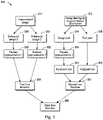
- Fig. 3 illustrates an architecture 300 of training an image recognition model based on a semantic enhancement, in which a plurality of embodiments of the present disclosure can be implemented.
- the architecture 300 includes a self-supervised training branch based on unannotated images and a language-supervised training branch based on images having a textual description.
- heterogeneous visual training is implemented through the fusion of the self-supervised training branch and the language-supervised training branch, and finally, a visual feature representation with high-level semantic information can be obtained.
- a data set composed of a large number of unannotated images 310 is inputted.
- two enhanced images 320 and 322 are generated through an image enhancement.
- the enhanced images 320 and 322 are then inputted into a feature extractor, and visual feature representations 330 and 332 are respectively extracted.
- the feature representations from a given unannotated image in a plurality of unannotated images 310 are defined as a positive sample pair, and the feature representations from different unannotated images in the plurality of unannotated images 310 are defined as a negative sample pair.
- the feature extraction of the image may be implemented using a model based on a convolutional neural network (CNN).
- CNN-based model a hidden layer generally includes one or more convolutional layers for performing a convolutional operation on an input.
- the hidden layer in the CNN-based model may further include one or more activation layers for performing non-linear mapping on the input using an activation function.
- Common activation functions include, for example, a rectified linear unit (ReLu), and a tanh function.
- ReLu rectified linear unit
- tanh function there is a connected activation layer after the one or more convolutional layers.
- the hidden layer in the CNN-based model may further include a pooling layer for compressing the amount of data and the number of parameters to reduce over-fitting.
- the pooling layer may include a max pooling layer, an average pooling layer, and the like.
- the pooling layer may be connected between successive convolutional layers.
- the CNN-based model may further include a fully connected layer, and the fully connected layer may generally be disposed upstream of the output layer.
- the CNN-based model is well known in the field of deep learning, and thus will not be repeatedly described here.
- the numbers of convolutional layers, activation layers, and/or pooling layers, the number and configuration of processing units in each layer, and the interconnection relationship between the layers may vary.
- the feature extraction of the image may be implemented using a CNN structure such as ResNet-50, inception_v3 and GoogleNet.
- ResNet-50, inception_v3 and GoogleNet may be used to extract the feature representation of the image.
- various CNN structures that have been used or will be developed in the future may be used to extract the feature representation of the image.
- the scope of the embodiments of the present disclosure is not limited in this respect.
- the image recognition model may be implemented using a recurrent neural network (RNN)-based model.
- RNN recurrent neural network
- the output of a hidden layer is related not only to the input but also to a previous output of the hidden layer.
- the RNN-based model has a memory function, and thus is capable of remembering the previous output of the model (at a previous moment), and performing a feedback for generating an output at the current moment together with a current input.
- the intermediate output of the hidden layer is sometimes alternatively referred to as an intermediate state or intermediate processing result. Accordingly, the final output of the hidden layer can be considered as a processing result of the sum of the current input and the past memories.
- the processing unit that may be employed in the RNN-based model includes, for example, a long-short term memory (LSTM) unit, and a gate recurrent unit (GRU).
- LSTM long-short term memory
- GRU gate recurrent unit
- the RNN-based model is well known in the field of deep learning, and thus will not be repeatedly described here. By selecting different recurrent algorithms, the RNN-based model may have different deformations. It should be appreciated that various RNN structures that have been used or will be developed in the future can be used in the embodiments of the present disclosure.
- a first loss function (also referred to as a contrastive loss function) of the self-supervised training branch may be calculated.
- I[k ⁇ i] represents an evaluation index function, which is 1 when k is not equal to i and which is o when k is equal to I;
- K represents the total number of unannotated images in a training data set;
- I i 1 and I i 2 represent two enhanced images obtained by performing an image enhancement on any unannotated image I i in the training data set;
- f i 1 and f i 2 represent feature representations extracted from I i 1 and I i 2 respectively, which are defined as a positive sample pair;
- I k 1 and I k 2 represent two enhanced images obtained by performing an image enhancement on an other unannotated image I k in the training data set;
- f k 1 and f k 2 represent feature representations extracted from I k 1 and I k 2 respectively, and feature representations f i x and f k y from different images are defined as a negative sample pair;
- ⁇ represents a temperature parameter, and when ⁇ decreases, an original difference value is amp
- a data set composed of a large number of images 312 having an original textual description is inputted, an image 312 including an image part 324 and a textual description part 326.
- the textual description of the image 312 does not need to be manually annotated, but can be acquired from the network through data mining. Such textual description may provide more abundant semantic information associated with the image, and are easier to collect than the category tag and bounding box annotation of the image.
- the feature extractor extracts a feature representation 334 from the image part 324 of the image 312.
- the feature representation 334 is inputted into an image-language translator to obtain a predicted textual description 340.
- the translator may utilize an attention-based mechanism to aggregate spatially weighted context vectors in each time step, and utilize an RNN decoder to calculate an attention weight between a previous decoder state and a visual feature of each spatial location.
- a newest context vector is obtained by summing weighted two-dimensional features to generate a newest decoder state and predicted word.
- the probability of a predicted word is outputted through the soft-max of each step.
- y t and T are the lengths of an embedded word and a sentence y respectively.
- a hidden state h t is updated using attention mechanism and the RNN decoder, and a word y t is predicted by giving y t-1 as an input.
- c t represents a context vector in a time step t, which is calculated by the attention mechanism;
- g i represents a visual feature representation extracted from the image part 224 of the image 212;
- y t represents the length of an embedded word;
- T represents the length of a sentence y;
- h t represents a hidden state in the decoding process of the time step t.
- the word y t associated with the image part 224 is predicted in the situation where y t-1 is given as an input.
- the loss functions of the two training branches are fused.
- ⁇ represents a parameter used to fuse the contrastive loss Lc of the self-supervised training branch and the supervised loss Ls of the language-supervised training branch.
- the training is performed using both the unannotated images and the images having the textual description, to obtain a feature representation with semantic information, thus achieving a semantic enhancement with respect to the way in which the training is performed using only the unannotated images.
- the trained image recognition model Due to the diversity of types of training images, the trained image recognition model has higher robustness and better performance.
- Such model may also associate feature representations with specific semantic information to more accurately perform image processing tasks in various scenarios.
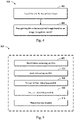
- Fig. 4 is a flowchart of a method 400 for recognizing an image according to some embodiments of the present disclosure.
- the method 400 may also be implemented by the computing device 110 in Fig. 1 .
- the computing device 110 acquires a to-be-recognized image.
- the computing device 110 recognizes the to-be-recognized image based on an image recognition model.
- the image recognition model is obtained based on the training method 200.
- Fig. 5 is a block diagram of an apparatus 500 for training an image recognition model based on a semantic enhancement according to some embodiments of the present disclosure.
- the apparatus 500 maybe included in or implemented as the computing device 110 in Fig. 1 .
- the apparatus 500 includes: a first feature extracting module 502, configured to extract, from an inputted first image being unannotated and having no textual description, a first feature representation of the first image.
- the apparatus 500 further includes: a first calculating module 504, configured to calculate a first loss function based on the first feature representation.
- the apparatus 500 further includes: a second feature extracting module 506, configured to extract, from an inputted second image being unannotated and having an original textual description, a second feature representation of the second image.
- the apparatus 500 further includes: a second calculating module 508, configured to calculate a second loss function based on the second feature representation.
- the apparatus 500 further includes: a fusion training module, configured to train an image recognition model based on a fusion of the first loss function and the second loss function.
- the fusion training module may be further configured to: superimpose the first loss function and the second loss function with a specified weight.
- the first feature extracting module may be further configured to: generate an enhanced image pair of the first image through an image enhancement, and extract feature representations from the enhanced image pair respectively.
- the first calculating module may be further configured to: calculate the first loss function based on the feature representations extracted from the enhanced image pair.
- the second calculating module may be further configured to: generate a predicted textual description from the second feature representation of the second image; and calculate the second loss function based on the predicted textual description and the original textual description.
- Fig. 6 is a block diagram of an apparatus 600 for recognizing an image according to some embodiments of the present disclosure.
- the apparatus 600 may be included in or implemented as the computing device 110 in Fig. 1 .
- the apparatus 600 includes: an image acquiring module 602, configured to acquire a to-be-recognized image.
- the apparatus 600 may further include: an image recognizing module 604, configured to recognize the to-be-recognized image based on an image recognition model.
- the image recognition model is obtained based on the apparatus 500.
- Fig. 7 shows a schematic block diagram of an example device 700 that may be configured to implement embodiments of the present disclosure.
- the device 700 may be used to implement the computing device 110 in Fig. 1 .
- the device 700 includes a computing unit 701, which may execute various appropriate actions and processes in accordance with computer program instructions stored in a read-only memory (ROM) 702 or computer program instructions loaded into a random access memory (RAM) 703 from a storage unit 708.
- the RAM 703 may further store various programs and data required by operations of the device 700.
- the computing unit 701, the ROM 702, and the RAM 703 are connected to each other through a bus 704.
- An input/output (I/O) interface 705 is also connected to the bus 704.
- a plurality of components in the device 700 is connected to the I/O interface 705, including: an input unit 706, such as a keyboard and a mouse; an output unit 707, such as various types of displays and speakers; a storage unit 708, such as a magnetic disk and an optical disk; and a communication unit 709, such as a network card, a modem, and a wireless communication transceiver.
- the communication unit 709 allows the device 700 to exchange information/data with other devices through a computer network such as the Internet and/or various telecommunication networks.
- the computing unit 701 may be various general purpose and/or specific purpose processing components having a processing capability and a computing capability. Some examples of the computing unit 701 include, but are not limited to, a central processing unit (CPU), a graphics processing unit (GPU), various specific purpose artificial intelligence (AI) computing chips, various computing units running a machine learning model algorithm, a digital signal processor (DSP), and any appropriate processor, controller, micro-controller, and the like.
- the computing unit 701 executes various methods and processes described above, such as the method 500.
- the method 500 may be implemented as a computer software program that is tangibly included in a machine readable medium, such as the storage unit 708.
- some or all of the computer programs may be loaded and/or installed onto the device 700 via the ROM 702 and/or the communication unit 709.
- the computer program When the computer program is loaded into the RAM 703 and executed by the computing unit 701, one or more steps of the method 500 described above may be executed.
- the computing unit 701 may be configured to execute the method 500 by any other appropriate approach (e.g., by means of firmware).
- exemplary types of hardware logic components include: a field programmable gate array (FPGA), an application specific integrated circuit (ASIC), an application specific standard product (ASSP), a system on a chip (SOC), a complex programmable logic device (CPLD) and the like.
- FPGA field programmable gate array
- ASIC application specific integrated circuit
- ASSP application specific standard product
- SOC system on a chip
- CPLD complex programmable logic device
- Program codes for implementing the method of the present disclosure may be compiled using any combination of one or more programming languages.
- the program codes may be provided to a processor or controller of a general purpose computer, a specific purpose computer, or other programmable data processing apparatuses, such that the program codes, when executed by the processor or controller, cause the functions/operations specified in the flowcharts and/or block diagrams to be implemented.
- the program codes may be completely executed on a machine, partially executed on a machine, partially executed on a machine and partially executed on a remote machine as a separate software package, or completely executed on a remote machine or server.
- a machine readable medium may be a tangible medium which may contain or store a program for use by, or used in combination with, an instruction execution system, apparatus or device.
- the machine readable medium may be a machine readable signal medium or a machine readable storage medium.
- the computer readable medium may include, but is not limited to, electronic, magnetic, optical, electromagnetic, infrared, or semiconductor systems, apparatuses, or devices, or any appropriate combination of the above.
- a more specific example of the machine readable storage medium will include an electrical connection based on one or more pieces of wire, a portable computer disk, a hard disk, a random access memory (RAM), a read only memory (ROM), an erasable programmable read only memory (EPROM or flash memory), an optical fiber, a portable compact disk read only memory (CD-ROM), an optical storage device, a magnetic storage device, or any appropriate combination of the above.
- a portable computer disk a hard disk, a random access memory (RAM), a read only memory (ROM), an erasable programmable read only memory (EPROM or flash memory), an optical fiber, a portable compact disk read only memory (CD-ROM), an optical storage device, a magnetic storage device, or any appropriate combination of the above.
Landscapes
- Engineering & Computer Science (AREA)
- Theoretical Computer Science (AREA)
- Physics & Mathematics (AREA)
- General Physics & Mathematics (AREA)
- Artificial Intelligence (AREA)
- Evolutionary Computation (AREA)
- General Health & Medical Sciences (AREA)
- Health & Medical Sciences (AREA)
- Data Mining & Analysis (AREA)
- Software Systems (AREA)
- Computing Systems (AREA)
- General Engineering & Computer Science (AREA)
- Computer Vision & Pattern Recognition (AREA)
- Computational Linguistics (AREA)
- Life Sciences & Earth Sciences (AREA)
- Biomedical Technology (AREA)
- Biophysics (AREA)
- Molecular Biology (AREA)
- Mathematical Physics (AREA)
- Databases & Information Systems (AREA)
- Multimedia (AREA)
- Medical Informatics (AREA)
- Bioinformatics & Cheminformatics (AREA)
- Bioinformatics & Computational Biology (AREA)
- Evolutionary Biology (AREA)
- Audiology, Speech & Language Pathology (AREA)
- Probability & Statistics with Applications (AREA)
- Image Analysis (AREA)
Applications Claiming Priority (1)
| Application Number | Priority Date | Filing Date | Title |
|---|---|---|---|
| CN202111306870.8A CN114120074B (zh) | 2021-11-05 | 2021-11-05 | 基于语义增强的图像识别模型的训练方法和训练装置 |
Publications (2)
| Publication Number | Publication Date |
|---|---|
| EP4071729A2 true EP4071729A2 (fr) | 2022-10-12 |
| EP4071729A3 EP4071729A3 (fr) | 2023-03-15 |
Family
ID=80380888
Family Applications (1)
| Application Number | Title | Priority Date | Filing Date |
|---|---|---|---|
| EP22191209.0A Withdrawn EP4071729A3 (fr) | 2021-11-05 | 2022-08-19 | Procédé et appareil d'apprentissage de modèle de reconnaissance d'image sur la base d'amélioration sémantique |
Country Status (4)
| Country | Link |
|---|---|
| US (1) | US20220392205A1 (fr) |
| EP (1) | EP4071729A3 (fr) |
| JP (1) | JP2023017759A (fr) |
| CN (1) | CN114120074B (fr) |
Cited By (1)
| Publication number | Priority date | Publication date | Assignee | Title |
|---|---|---|---|---|
| CN120580166A (zh) * | 2024-02-23 | 2025-09-02 | 荣耀终端股份有限公司 | 一种图像增强处理方法、网络训练方法及电子设备 |
Families Citing this family (5)
| Publication number | Priority date | Publication date | Assignee | Title |
|---|---|---|---|---|
| CN114693995B (zh) * | 2022-04-14 | 2023-07-07 | 北京百度网讯科技有限公司 | 应用于图像处理的模型训练方法、图像处理方法和设备 |
| EP4664418A1 (fr) * | 2023-03-09 | 2025-12-17 | LG Management Development Institute Co., Ltd. | Procédé de préentraînement de transformateur langage-vision, et système d'intelligence artificielle comprenant un transformateur langage-vision préentraîné au moyen dudit procédé |
| CN116524261B (zh) * | 2023-04-26 | 2026-04-07 | 清华大学 | 一种基于多模态小样本持续学习的图像分类方法及产品 |
| CN117236404A (zh) * | 2023-09-18 | 2023-12-15 | 北京百度网讯科技有限公司 | 任务处理及其模型的训练方法、图像处理方法及装置 |
| CN117456307A (zh) * | 2023-11-20 | 2024-01-26 | 浙江大学 | 一种视觉基础模型自监督的图像表征提取模型增强方法 |
Family Cites Families (12)
| Publication number | Priority date | Publication date | Assignee | Title |
|---|---|---|---|---|
| JP6151404B1 (ja) * | 2016-04-26 | 2017-06-21 | ヤフー株式会社 | 学習装置、学習方法および学習プログラム |
| EP3557476B1 (fr) * | 2018-04-17 | 2023-08-09 | Continental Autonomous Mobility Germany GmbH | Dispositif de détermination d'une légende pour un panneau de signalisation inconnu |
| CN108647350A (zh) * | 2018-05-16 | 2018-10-12 | 中国人民解放军陆军工程大学 | 一种基于双通道网络的图文关联检索方法 |
| JP2019207561A (ja) * | 2018-05-29 | 2019-12-05 | 日鉄ソリューションズ株式会社 | 情報処理装置、情報処理方法及びプログラム |
| JP7020312B2 (ja) * | 2018-06-15 | 2022-02-16 | 日本電信電話株式会社 | 画像特徴学習装置、画像特徴学習方法、画像特徴抽出装置、画像特徴抽出方法、及びプログラム |
| CN113767420B (zh) * | 2019-04-24 | 2024-12-06 | 富士胶片株式会社 | 学习方法及装置、记录介质、学习完毕模型以及文本生成装置 |
| US11257493B2 (en) * | 2019-07-11 | 2022-02-22 | Soundhound, Inc. | Vision-assisted speech processing |
| CN110647904B (zh) * | 2019-08-01 | 2022-09-23 | 中国科学院信息工程研究所 | 一种基于无标记数据迁移的跨模态检索方法及系统 |
| CN111783870B (zh) * | 2020-06-29 | 2023-09-01 | 北京百度网讯科技有限公司 | 人体属性的识别方法、装置、设备及存储介质 |
| CN112633276B (zh) * | 2020-12-25 | 2024-06-21 | 北京百度网讯科技有限公司 | 训练方法、识别方法、装置、设备、介质 |
| CN113033566B (zh) * | 2021-03-19 | 2022-07-08 | 北京百度网讯科技有限公司 | 模型训练方法、识别方法、设备、存储介质及程序产品 |
| CN113378833B (zh) * | 2021-06-25 | 2023-09-01 | 北京百度网讯科技有限公司 | 图像识别模型训练方法、图像识别方法、装置及电子设备 |
-
2021
- 2021-11-05 CN CN202111306870.8A patent/CN114120074B/zh active Active
-
2022
- 2022-08-19 EP EP22191209.0A patent/EP4071729A3/fr not_active Withdrawn
- 2022-08-22 US US17/892,669 patent/US20220392205A1/en not_active Abandoned
- 2022-09-09 JP JP2022143457A patent/JP2023017759A/ja active Pending
Cited By (1)
| Publication number | Priority date | Publication date | Assignee | Title |
|---|---|---|---|---|
| CN120580166A (zh) * | 2024-02-23 | 2025-09-02 | 荣耀终端股份有限公司 | 一种图像增强处理方法、网络训练方法及电子设备 |
Also Published As
| Publication number | Publication date |
|---|---|
| CN114120074B (zh) | 2023-12-12 |
| CN114120074A (zh) | 2022-03-01 |
| US20220392205A1 (en) | 2022-12-08 |
| JP2023017759A (ja) | 2023-02-07 |
| EP4071729A3 (fr) | 2023-03-15 |
Similar Documents
| Publication | Publication Date | Title |
|---|---|---|
| EP4071729A2 (fr) | Procede et appareil d'entrainement d'un modele de reconnaissance d'image basee sur l'amélioration semantique | |
| EP4592866B1 (fr) | Procédé et appareil de traitement de données | |
| CN109165563B (zh) | 行人再识别方法和装置、电子设备、存储介质、程序产品 | |
| KR20220047228A (ko) | 이미지 분류 모델 생성 방법 및 장치, 전자 기기, 저장 매체, 컴퓨터 프로그램, 노변 장치 및 클라우드 제어 플랫폼 | |
| US11250299B2 (en) | Learning representations of generalized cross-modal entailment tasks | |
| CN110033018A (zh) | 图形相似度判断方法、装置及计算机可读存储介质 | |
| Al-Azzoa et al. | Human related-health actions detection using Android Camera based on TensorFlow Object Detection API | |
| CN114495113B (zh) | 文本分类方法和文本分类模型的训练方法、装置 | |
| CN114925693B (zh) | 一种基于多模型融合的多元关系抽取方法和抽取系统 | |
| CN110222184A (zh) | 一种文本的情感信息识别方法及相关装置 | |
| CN116309580A (zh) | 基于磁应力的油气管道腐蚀检测方法 | |
| CN113673225A (zh) | 中文句子相似性判别方法、装置、计算机设备和存储介质 | |
| CN119202934B (zh) | 一种基于深度学习的多模态标注方法 | |
| CN116266259A (zh) | 图像文字结构化输出方法、装置、电子设备和存储介质 | |
| CN116386099A (zh) | 人脸多属性识别方法及其模型获取方法、装置 | |
| CN117034133A (zh) | 一种数据处理方法、装置、设备和介质 | |
| CN115563976A (zh) | 文本预测方法、用于文本预测的模型建立方法及装置 | |
| CN114925700A (zh) | 用于文本检测的模型训练方法、装置、计算机设备及介质 | |
| CN111523301B (zh) | 合同文档合规性检查方法及装置 | |
| CN117875322A (zh) | 一种文本数据的实体提取方法、系统、设备和介质 | |
| CN116912846A (zh) | 图像分类方法、图像分类装置、计算机设备及存储介质 | |
| CN116110005A (zh) | 一种人群行为属性的计数方法、系统及产品 | |
| Dinesh Reddy et al. | Deep neural transfer network technique for lung cancer detection | |
| CN114372458A (zh) | 一种基于政务工单的突发事件检测方法 | |
| CN116432628A (zh) | 业务数据的多标签标注方法、装置及计算机设备 |
Legal Events
| Date | Code | Title | Description |
|---|---|---|---|
| PUAI | Public reference made under article 153(3) epc to a published international application that has entered the european phase |
Free format text: ORIGINAL CODE: 0009012 |
|
| STAA | Information on the status of an ep patent application or granted ep patent |
Free format text: STATUS: REQUEST FOR EXAMINATION WAS MADE |
|
| 17P | Request for examination filed |
Effective date: 20220819 |
|
| AK | Designated contracting states |
Kind code of ref document: A2 Designated state(s): AL AT BE BG CH CY CZ DE DK EE ES FI FR GB GR HR HU IE IS IT LI LT LU LV MC MK MT NL NO PL PT RO RS SE SI SK SM TR |
|
| PUAL | Search report despatched |
Free format text: ORIGINAL CODE: 0009013 |
|
| AK | Designated contracting states |
Kind code of ref document: A3 Designated state(s): AL AT BE BG CH CY CZ DE DK EE ES FI FR GB GR HR HU IE IS IT LI LT LU LV MC MK MT NL NO PL PT RO RS SE SI SK SM TR |
|
| RIC1 | Information provided on ipc code assigned before grant |
Ipc: G06V 20/70 20220101AFI20230207BHEP |
|
| STAA | Information on the status of an ep patent application or granted ep patent |
Free format text: STATUS: EXAMINATION IS IN PROGRESS |
|
| 17Q | First examination report despatched |
Effective date: 20231108 |
|
| STAA | Information on the status of an ep patent application or granted ep patent |
Free format text: STATUS: THE APPLICATION IS DEEMED TO BE WITHDRAWN |
|
| 18D | Application deemed to be withdrawn |
Effective date: 20240312 |