EP4074263A1 - Aspiration de corps vitreux destiné à l'utilisation dans le diagnostic - Google Patents
Aspiration de corps vitreux destiné à l'utilisation dans le diagnostic Download PDFInfo
- Publication number
- EP4074263A1 EP4074263A1 EP21168365.1A EP21168365A EP4074263A1 EP 4074263 A1 EP4074263 A1 EP 4074263A1 EP 21168365 A EP21168365 A EP 21168365A EP 4074263 A1 EP4074263 A1 EP 4074263A1
- Authority
- EP
- European Patent Office
- Prior art keywords
- invasive device
- aspirate
- treatment
- blood
- suction chamber
- Prior art date
- Legal status (The legal status is an assumption and is not a legal conclusion. Google has not performed a legal analysis and makes no representation as to the accuracy of the status listed.)
- Withdrawn
Links
Images


Classifications
-
- A—HUMAN NECESSITIES
- A61—MEDICAL OR VETERINARY SCIENCE; HYGIENE
- A61B—DIAGNOSIS; SURGERY; IDENTIFICATION
- A61B10/00—Instruments for taking body samples for diagnostic purposes; Other methods or instruments for diagnosis, e.g. for vaccination diagnosis, sex determination or ovulation-period determination; Throat striking implements
- A61B10/0045—Devices for taking samples of body liquids
- A61B10/0064—Devices for taking samples of body liquids for taking sweat or sebum samples
-
- A—HUMAN NECESSITIES
- A61—MEDICAL OR VETERINARY SCIENCE; HYGIENE
- A61B—DIAGNOSIS; SURGERY; IDENTIFICATION
- A61B10/00—Instruments for taking body samples for diagnostic purposes; Other methods or instruments for diagnosis, e.g. for vaccination diagnosis, sex determination or ovulation-period determination; Throat striking implements
- A61B10/0096—Casings for storing test samples
-
- A—HUMAN NECESSITIES
- A61—MEDICAL OR VETERINARY SCIENCE; HYGIENE
- A61B—DIAGNOSIS; SURGERY; IDENTIFICATION
- A61B5/00—Measuring for diagnostic purposes; Identification of persons
- A61B5/15—Devices for taking samples of blood
- A61B5/150007—Details
- A61B5/150015—Source of blood
- A61B5/150022—Source of blood for capillary blood or interstitial fluid
-
- A—HUMAN NECESSITIES
- A61—MEDICAL OR VETERINARY SCIENCE; HYGIENE
- A61B—DIAGNOSIS; SURGERY; IDENTIFICATION
- A61B5/00—Measuring for diagnostic purposes; Identification of persons
- A61B5/15—Devices for taking samples of blood
- A61B5/150007—Details
- A61B5/150053—Details for enhanced collection of blood or interstitial fluid at the sample site, e.g. by applying compression, heat, vibration, ultrasound, suction or vacuum to tissue; for reduction of pain or discomfort; Skin piercing elements, e.g. blades, needles, lancets or canulas, with adjustable piercing speed
- A61B5/150061—Means for enhancing collection
- A61B5/150099—Means for enhancing collection by negative pressure, other than vacuum extraction into a syringe by pulling on the piston rod or into pre-evacuated tubes
-
- A—HUMAN NECESSITIES
- A61—MEDICAL OR VETERINARY SCIENCE; HYGIENE
- A61B—DIAGNOSIS; SURGERY; IDENTIFICATION
- A61B5/00—Measuring for diagnostic purposes; Identification of persons
- A61B5/15—Devices for taking samples of blood
- A61B5/150007—Details
- A61B5/150343—Collection vessels for collecting blood samples from the skin surface, e.g. test tubes, cuvettes
-
- A—HUMAN NECESSITIES
- A61—MEDICAL OR VETERINARY SCIENCE; HYGIENE
- A61B—DIAGNOSIS; SURGERY; IDENTIFICATION
- A61B5/00—Measuring for diagnostic purposes; Identification of persons
- A61B5/15—Devices for taking samples of blood
- A61B5/150007—Details
- A61B5/150351—Caps, stoppers or lids for sealing or closing a blood collection vessel or container, e.g. a test-tube or syringe barrel
-
- A—HUMAN NECESSITIES
- A61—MEDICAL OR VETERINARY SCIENCE; HYGIENE
- A61B—DIAGNOSIS; SURGERY; IDENTIFICATION
- A61B10/00—Instruments for taking body samples for diagnostic purposes; Other methods or instruments for diagnosis, e.g. for vaccination diagnosis, sex determination or ovulation-period determination; Throat striking implements
- A61B10/0045—Devices for taking samples of body liquids
- A61B2010/008—Interstitial fluid
Definitions
- the subject matter of the present application is a non-invasive device for removing body aspirate, the use of this non-invasive device for providing body aspirate and the use of the correspondingly provided body aspirate for diagnostic purposes.
- the capillary blood provided in bloody cupping is blood drawn from the capillaries (i.e., capillaries) of the body. It is used in a large number of laboratory tests and especially in rapid diagnostics with test strips to determine blood sugar levels in diabetes mellitus. As "quasi-arterial blood” that has not yet passed through the entire tissue, readings for certain substances such as glucose, amino acids, proteins, etc. can differ from readings for whole blood.
- the capillary blood provided by bloody cupping is therefore not suitable for determining all the measured values that can be determined in whole blood and in particular not for determining tumor markers.
- Tumor markers are usually substances in the blood that occur in increased concentrations in tumor diseases. They can come from the body in response to cancer or from Cancer cells themselves are formed. These markers are often suitable for assessing the course but also the success of cancer therapy.
- tumor markers are usually determined in whole blood, only those values or markers that circulate systemically, i.e. throughout the body, are conspicuous in the analysis. However, the targeted diagnosis of changes in regionally restricted areas of the body cannot be detected or recorded by such whole blood analyses.
- the object of the present invention was therefore to provide a device which, on the one hand, enables targeted diagnostics of regional body area changes, but at the same time does not suffer from the limitations of methods for providing capillary blood, such as cupping.
- a non-invasive device (100) for removing body aspirates comprising: a suction chamber (110) with an opening (120) on the treatment side around skin tissue in a Expose existing treatment pressure, and a connection for a negative pressure source (130) for generating the treatment pressure, characterized in that the non-invasive device (100) has at least one further connection for removing body aspirate (140).
- Device within the meaning of the present invention refers to the "non-invasive device” (100) according to the invention as defined herein.
- Body aspirate within the meaning of the present invention refers to the endogenous substance that is provided by using the device according to the invention.
- Body aspirate differs in viscosity and color from capillary blood and can be clearly distinguished from it. While capillary blood can only be taken from parts of the body that are very well supplied with blood, such as fingertips or earlobes, body aspirate can in principle be taken from any part of the body. Furthermore, close the capillary blood collection from the capillary bed during the Remove the blood vessels so quickly that usually only small amounts of up to 0.5 ml of capillary blood can be provided per removal.
- Body aspirate according to the invention can be provided with volumes of at least 20 ml per removal process or removal point.
- the non-invasive device (100) according to the invention can be made of any material that is suitable for withstanding the treatment pressure applied.
- the non-invasive device is formed of plastic, such as polyethylene or acrylic plastic, or glass.
- the device according to the invention can be designed to be transparent or opaque.
- transparent material When using transparent material, the user can visually assess how the applied treatment pressure or negative pressure affects the body part or body region.
- An opaque design can be advantageous in particular for the removal of body aspirates from locations which are visible to the person to be treated. Experience has shown that a not inconsiderable number of people react with circulatory weakness at the sight of blood or the removal of body aspirates.
- the device according to the invention can be designed to be largely opaque, but it can have a transparent area as a control window for the user.
- Treatment pressure in the sense of the present application is a negative pressure. To keep and/or regulate the treatment pressure in the range -0.1 to -1.0 bar, for example.
- a vacuum pump and in particular a medically approved vacuum pump is used as the negative pressure source. This pump preferably has an infinitely variable vacuum generator. In another embodiment, a hand pump is used.
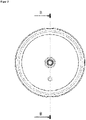
- the device according to the invention preferably has a connection for a vacuum source (130) which is centered and opposite to one of the treatment-side opening defined base is positioned.
- the connection for the vacuum source (130) is designed as a one-way valve. The necessary valve can be permanently installed in the connection for the vacuum source.
- a valve is introduced into the connection for the vacuum source before the device according to the invention is used.
- the connection for the vacuum source (130) is preferably conical, in particular tapering away from the suction chamber.
- the inner diameter of the connection for the vacuum source (130) located outside the suction chamber is preferably about 5 mm.
- the side wall S of the suction chamber can be reinforced and/or thickened in the area of the connection for the vacuum source (130).
- the side wall S may have, in the area of the port (130), an insert for a vacuum valve and/or a guide, the orientation of which is perpendicular to the surface defined by the treatment-side opening (120).
- the guide is preferably integral with the side wall S and is formed from the same material.
- the radius of the treatment-side opening (120) can vary, for example, depending on the body site or body region to be treated.
- the treatment-side opening preferably has an inside diameter (ID) between 50 mm and 90 mm, more preferably between 60 mm and 80 mm, and most preferably between 65 mm and 75 mm. An inner diameter of 72 mm is particularly preferred.
- the outer diameter (OD) is preferably between 65 and 105 mm, preferably 89 mm.
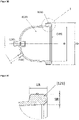
- the treatment-side opening (120) has a rounded edge. Such a configuration is less painful for the person being treated when it is used.
- the opening (120) on the treatment side has a widened border (121).
- the widened border (121) can also be rounded.
- the broadened border (121) allows for easier engagement of a closure means, such as a rubber seal or a screw cap. allow for the treatment-side opening (120).
- the edge termination (121) is preferably designed as a plastic thread (122).
- the widened edge termination (121) or the plastic thread (122) preferably has a thickness SR of between 6 mm and 8 mm, preferably 7 mm and 8 mm, in particular approx. 7.5 mm.
- Its length LR is preferably between 11 mm and 14 mm, preferably between 12 mm and 13 mm and in particular approximately 12.7 mm.
- the side wall S of the suction chamber (110) can have any thickness S that is stable under applied negative pressure.
- the volume of the suction chamber (110) may vary depending on the body site or body region to be treated.
- the suction chamber (110) has a volume between 100 cc and 300 cc , more preferably between 150 cc and 250 cc , and most preferably between 200 cc and 230 cc .
- a volume of about 215 cm 3 is particularly preferred. It is of course possible to use several smaller volume devices instead of one large volume non-invasive device (100) - if the body part to be treated allows it, such as the back.
- the overall length L (measured vertically from the base area defined by the treatment-side opening to the extreme end of the connection for the vacuum source (130)) of the device is between 60 mm and 90 mm. In a preferred embodiment, the overall length L including the sealing surface (e.g. screw-on cover) is approximately 82 mm.
- the side wall of the suction chamber is preferably formed with elements for closing the treatment-side opening (120), ie a removable sealing surface.
- the opening can be closed or sealed, for example, by means of a suitable rubber seal or by means of a cover with a screw cap, for example a screwable cover (150).
- the screw cap (150) is made of the same material as the suction chamber according to the invention. The closure of the opening closes Body aspirate in the suction chamber preferably airtight and thus avoids or reduces oxidation processes in the body aspirate.
- the device according to the invention has at least one further connection (140) which is designed for removing body aspirate.
- the connection for removing the body aspirate (140) preferably has an inner diameter of 4 mm to 5 mm, in particular approx. 4.5 mm.
- the connection for removing the body aspirate (140) is designed as a Luer system.
- the further connection for removing the body aspirate (140) to the connection for the negative pressure source (130) on the surface of the device or suction chamber according to the invention is at an angle between 25° and 40°, more preferably between 30° and 35° and most preferably disposed at about 32.5°.
- a further aspect of the present invention relates to a body aspirate which is provided by using the non-invasive device according to the invention.
- the body aspirate provided by the method described below is obtained regionally from the body site or body region where the non-invasive device according to the invention is used. This makes it possible to detect local changes in the body before a disease or at least parameters characterizing this disease spread to the entire organism. Locally taken body aspirate can thus have a significantly higher concentration of locally specific analytes to be detected than whole blood or blood taken intravenously.
- body aspirates taken from a body site specific for colon carcinoma e.g. thoracic vertebra Th 10 to Th 12 on the left
- SCC semous cell carinoma antigen
- the body aspirate provided according to the invention thus enables both more sensitive and locally targeted or organ-specific diagnostics in terms of early detection.
- the diagnostics can here both the change of Blood components, inflammatory markers (cytokines), cell-free nucleic acids such as DNA and/or RNA fragments and/or tumor markers.
- cytokines inflammatory markers
- cell-free nucleic acids such as DNA and/or RNA fragments and/or tumor markers.
- CTC circulating tumor cells
- CETC circulating epithelial tumor cells
- the location of the body parts or body regions for body aspirate removal can be determined, for example, by palpation and/or allocation of the organs to be examined using head zones.
- the head zone is defined as a part of the body or skin area in which, due to the articulated body structure, there is a cross-connection between the somatic and autonomic nervous system via the associated spinal cord segment.
- Specific internal organs are assigned to specific parts of the body or skin area.
- the Head's zone which is associated with a specific organ, can extend over several dermatomes, but has a reflexively significant maximum point.
- dermatome describes the segmental skin area sensitively innervated by the spinal cord nerves (spinal nerves) or the corresponding part of the body.
- body aspirate is removed at least at this maximum point.
- body aspirate is removed from all dermatomes assigned to the organ to be examined.
- the activation of the skin area allows body aspirate to escape when negative pressure is applied and can preferably be done by scratching and/or lancetting.
- a sterile lancet can be used for this, for example. How often the lancet is pushed vertically through the superficial skin depends on the size of the skin area. If drops of blood appear during activation of the skin area, these should be removed before step (e), for example with the help of a gauze swab.
- the body aspirate may be removed from the treated skin tissue area through the body aspirate removal port prior to removal of the suction chamber.
- the non-invasive device containing the removed body aspirate is closed directly after deactivating the negative pressure, equalizing the pressure and removing it from the treated part of the body.
- the body aspirate can then be removed through the connection (140) at a later point in time.
- an anticoagulant may be introduced into the suction chamber, e.g. B. by connecting the body aspirate collection.
- coagulant is located in the receptacle into which the body aspirate from the suction chamber is placed.
- body aspirate can be removed through the treatment-side opening directly from the suction chamber, ie not from the connection for removing body aspirate.
- Disinfection steps follow the hygiene measures known to those skilled in the art.
- the area where the body aspirate is taken is then carefully disinfected and can be covered or bandaged with a sterile wound dressing.
- a further aspect of the present application relates to the use of a body aspirate, which was made available through the use of the non-invasive device according to the invention, for diagnostic purposes.
- the body aspirate provided according to the invention enables the determination of all measured values that can also be determined in whole blood, e.g.
- the body aspirate can be used in particular to determine erythrocytes, leukocytes, thrombocytes, blood lipids, blood salts, blood sugar, proteins, enzymes, metabolic products, inflammatory markers (cytokines), CTCs (circulating tumor cells), hormone coagulation factors, cell-free nucleic acids such as DNA and/or RNA fragments, and/or tumor markers are used.
- cytokines cytokines
- CTCs circulating tumor cells
- hormone coagulation factors cell-free nucleic acids such as DNA and/or RNA fragments, and/or tumor markers are used.
- the tumor markers SCC, AFP, CA 15-3, CA 19-9, CA 72-4, CA 125, calcitonin, CEA, hCG, NSE, PSA and/or TG can be determined.
- the diagnostics according to the invention can be used both in a targeted manner for early detection and for monitoring the course of tumor diseases. The determination of SCC is most preferred.
- the tumor marker SCC (Squamous cell carinoma antigen) is an immunological parameter that indicates the existence of a squamous cell carcinoma in the body. Squamous epithelium is widespread, it is found on the organs of the gastrointestinal tract, the respiratory tract, on those of the urogenital tract and on the skin. If the SCC in venous blood (iv) is increased, there is a suspicion of squamous cell carcinoma.
- SCC can be increased in colon cancer, cervical cancer, anal cancer, penile cancer, esophageal cancer, certain forms of lung cancer and/or tumors in the ear, nose and throat area.
- Alpha-fetoprotein is a tumor marker that can be elevated in ovarian and testicular germ cell tumors and liver tumors, among other things.
- the CA 15-3 marker can be indicative of cirrhosis of the liver, inflammation of the body or breast cancer.
- CA 19-9 is a marker for tumors of the rectum, colon, stomach, liver, bile ducts or pancreas.
- the cancer antigen CA 125 can be indicative of tumors of the ovaries, ovarian carcinoma. Elevated levels of the protein calcitonin and/or TG can be an indication of thyroid tumors
- NSE Neuron-specific enolase
- PSA prostate-specific antigen
- CEA carcinoembryonic antigen
- hCG Human chorionic gonadotropin
- the CA 72-4 marker can indicate ovarian cancer or an inflamed pancreas. The marker specificities mentioned are exemplary and not to be understood as exhaustive.
- body aspirate is used to determine the SCC value, or if several blood values and/or tumor markers are determined, at least to determine the SCC value.
- Body aspirate according to the invention can be used in particular for diagnosing the condition or diseases of the thyroid, lungs, esophagus, bile ducts, liver, pancreas, urinary bladder, prostate, testicles, stomach, female breast, duodenum, small intestine , colon/rectum, ovary, cervix, uterus, kidney, skin and/or brain.
- Blood was taken intravenously (blood iv) and body aspirate within the meaning of the present invention from a 63-year-old patient with colon carcinoma.
- tumor markers Blood collection IV body aspirate CEA 1.0 1.8 ng/ml SCC 1.4 123.0 ng/ml Ca 19-9 8.3 11.6 U/ml
- CEA and Ca 19-9 are normal for both IV blood and body aspirate, a significantly higher value (factor greater than 100) for SCC can be detected in body aspirate, which is indicative of colon carcinoma. A corresponding detection is not possible with blood IV; here the SCC value remains below the usual limit of 1.5 ng/ml.
- Blood was taken intravenously (blood iV) and body aspirate within the meaning of the present invention from a 51-year-old patient with ovarian carcinoma.
- tumor markers Blood collection IV body aspirate About 125 38.8 55.9 U/ml Approx 15-3 17.9 25.0 U/ml TPA 26 34 U/l
- Blood was taken intravenously (blood iv) and body aspirate within the meaning of the present invention from a 59-year-old patient with prostate carcinoma.
- tumor markers Blood collection IV body aspirate Ca 19-9 16.4 23:1 U/ml CEA 6.9 10.6 ng/ml PPE total 8.46 11:31 ng/ml
- Blood was taken intravenously (blood IV) and body aspirate within the meaning of the present invention from a 54-year-old and a 43-year-old patient with rectal carcinoma.
- tumor markers IV blood collection 54 y./43 y.
- Body aspirate 54 y.
- Body aspirate 43 y.
- CEA 2.8/85.5 11.3 94.0 ng/ml SCC --/1.0 -- 22:1 ng/ml Ca 19-9 11.7/12.0 12.3 13.3 U/ml
Landscapes
- Health & Medical Sciences (AREA)
- Life Sciences & Earth Sciences (AREA)
- Animal Behavior & Ethology (AREA)
- Surgery (AREA)
- Veterinary Medicine (AREA)
- Pathology (AREA)
- Engineering & Computer Science (AREA)
- Biomedical Technology (AREA)
- Heart & Thoracic Surgery (AREA)
- Medical Informatics (AREA)
- Molecular Biology (AREA)
- Public Health (AREA)
- General Health & Medical Sciences (AREA)
- Hematology (AREA)
- Physics & Mathematics (AREA)
- Biophysics (AREA)
- Dermatology (AREA)
- Pain & Pain Management (AREA)
- External Artificial Organs (AREA)
Priority Applications (3)
| Application Number | Priority Date | Filing Date | Title |
|---|---|---|---|
| EP21168365.1A EP4074263A1 (fr) | 2021-04-14 | 2021-04-14 | Aspiration de corps vitreux destiné à l'utilisation dans le diagnostic |
| PCT/EP2022/059588 WO2022218902A1 (fr) | 2021-04-14 | 2022-04-11 | Aspirat corporel utilisé à des fins diagnostiques |
| EP22722201.5A EP4322860A1 (fr) | 2021-04-14 | 2022-04-11 | Aspirat corporel utilisé à des fins diagnostiques |
Applications Claiming Priority (1)
| Application Number | Priority Date | Filing Date | Title |
|---|---|---|---|
| EP21168365.1A EP4074263A1 (fr) | 2021-04-14 | 2021-04-14 | Aspiration de corps vitreux destiné à l'utilisation dans le diagnostic |
Publications (1)
| Publication Number | Publication Date |
|---|---|
| EP4074263A1 true EP4074263A1 (fr) | 2022-10-19 |
Family
ID=75529871
Family Applications (2)
| Application Number | Title | Priority Date | Filing Date |
|---|---|---|---|
| EP21168365.1A Withdrawn EP4074263A1 (fr) | 2021-04-14 | 2021-04-14 | Aspiration de corps vitreux destiné à l'utilisation dans le diagnostic |
| EP22722201.5A Pending EP4322860A1 (fr) | 2021-04-14 | 2022-04-11 | Aspirat corporel utilisé à des fins diagnostiques |
Family Applications After (1)
| Application Number | Title | Priority Date | Filing Date |
|---|---|---|---|
| EP22722201.5A Pending EP4322860A1 (fr) | 2021-04-14 | 2022-04-11 | Aspirat corporel utilisé à des fins diagnostiques |
Country Status (2)
| Country | Link |
|---|---|
| EP (2) | EP4074263A1 (fr) |
| WO (1) | WO2022218902A1 (fr) |
Citations (4)
| Publication number | Priority date | Publication date | Assignee | Title |
|---|---|---|---|---|
| DE10219924A1 (de) * | 2002-01-24 | 2003-07-31 | Pierre Foss | Vakuumentnahme II |
| US20060178599A1 (en) * | 2002-05-22 | 2006-08-10 | Mark Faupel | Sytem and method for the extraction and monitoring of a biological fluid |
| US20120041288A1 (en) * | 2009-02-20 | 2012-02-16 | Invafree Hms, Inc. | Non-invasive biomedical detection and monitoring systems |
| CN112386289A (zh) * | 2020-11-19 | 2021-02-23 | 中国科学院空天信息创新研究院 | 汗液促排装置、汗液收集系统及汗液收集方法 |
Family Cites Families (1)
| Publication number | Priority date | Publication date | Assignee | Title |
|---|---|---|---|---|
| CN112638252B (zh) * | 2018-09-05 | 2024-05-03 | 光云大学校产学协力团 | 血糖测量仪和使用该血糖测量仪的血糖测量系统 |
-
2021
- 2021-04-14 EP EP21168365.1A patent/EP4074263A1/fr not_active Withdrawn
-
2022
- 2022-04-11 EP EP22722201.5A patent/EP4322860A1/fr active Pending
- 2022-04-11 WO PCT/EP2022/059588 patent/WO2022218902A1/fr not_active Ceased
Patent Citations (4)
| Publication number | Priority date | Publication date | Assignee | Title |
|---|---|---|---|---|
| DE10219924A1 (de) * | 2002-01-24 | 2003-07-31 | Pierre Foss | Vakuumentnahme II |
| US20060178599A1 (en) * | 2002-05-22 | 2006-08-10 | Mark Faupel | Sytem and method for the extraction and monitoring of a biological fluid |
| US20120041288A1 (en) * | 2009-02-20 | 2012-02-16 | Invafree Hms, Inc. | Non-invasive biomedical detection and monitoring systems |
| CN112386289A (zh) * | 2020-11-19 | 2021-02-23 | 中国科学院空天信息创新研究院 | 汗液促排装置、汗液收集系统及汗液收集方法 |
Also Published As
| Publication number | Publication date |
|---|---|
| WO2022218902A1 (fr) | 2022-10-20 |
| EP4322860A1 (fr) | 2024-02-21 |
Similar Documents
| Publication | Publication Date | Title |
|---|---|---|
| AT393213B (de) | Vorrichtung zur bestimmung zumindest einer medizinischen messgroesse | |
| DE69728525T2 (de) | Mittels vakuum verbesserter transdermaler flüssigkeitstransport | |
| DE69829399T2 (de) | Katheter mit neben dem distalen ende angeordnetem druckgeber | |
| EP1404217B1 (fr) | Mesurage de la concentration de substances dans des organismes vivants par microdialyse | |
| DE60211142T2 (de) | Probenentnahmevorrichtung und verfahren zur entnahme von proben von körpersubstanzen sowie verfahren zur herstellung einer probenentnahmevorrichtung | |
| EP1073476B1 (fr) | Catheter permettant de prelever des materiaux cellulaires a partir des canaux mammaires | |
| DE60209488T2 (de) | Detektion einer verlagerung der nadel | |
| DE69909830T2 (de) | Vorrichtung zur halterung für mindestens eine medizinische drain | |
| DE2611721B2 (de) | Vakuum-Sauggerät zum Absaugen von Gewebeserum | |
| DE3806008A1 (de) | Kapillarfiltrations- und sammelvorrichtung und verfahren zur langzeitueberwachung von blutbestandteilen | |
| DE2235337B2 (de) | Sauggerät für die Entnahme von Zellenproben | |
| DE112011103054T5 (de) | Verfahren zur Bewertung der Schluckmotorikfunktion | |
| CN107260226B (zh) | 一种循环肿瘤细胞的体内富集装置 | |
| WO1995020981A1 (fr) | Moyen de marquage visuel de tissus corporels | |
| DE60117470T2 (de) | Gerät zur auslösung einer immunantwort in der krebstherapie | |
| EP4074263A1 (fr) | Aspiration de corps vitreux destiné à l'utilisation dans le diagnostic | |
| Trivedi et al. | Salivary sialic acid as marker of oral cancer | |
| DE19963034A1 (de) | System zur verbesserten Bestimmung des Glukosespiegels anhand von Messungen in interstitieller Flüssigkeit | |
| CN110536654A (zh) | 眼部装置及其运用方法 | |
| EP0958780B1 (fr) | Système à capteur avec accès permanemment implanté | |
| Cho et al. | Case report: Unilateral papilledema in a dog with a large suprasellar mass and suspected intracranial hypertension: insights from funduscopy, optical coherence tomography, and magnetic resonance imaging | |
| CN217219861U (zh) | 一种治疗脊髓损伤或感染的硬膜内冲洗引流管 | |
| AT501013B1 (de) | Vorrichtung und verfahren zur messung der indikatorkonzentration und apparateclearance bei extrakorporalen blutbehandlungsverfahren | |
| DE102018122024A1 (de) | System zur Analyse von aus dem Körper stammenden Flüssigkeiten oder mit ihnen in Kontakt stehenden Flüssigkeiten | |
| DE19858426C2 (de) | Vorrichtung zur Messung des menschlichen Blutzuckerspiegels |
Legal Events
| Date | Code | Title | Description |
|---|---|---|---|
| PUAI | Public reference made under article 153(3) epc to a published international application that has entered the european phase |
Free format text: ORIGINAL CODE: 0009012 |
|
| STAA | Information on the status of an ep patent application or granted ep patent |
Free format text: STATUS: THE APPLICATION HAS BEEN PUBLISHED |
|
| AK | Designated contracting states |
Kind code of ref document: A1 Designated state(s): AL AT BE BG CH CY CZ DE DK EE ES FI FR GB GR HR HU IE IS IT LI LT LU LV MC MK MT NL NO PL PT RO RS SE SI SK SM TR |
|
| STAA | Information on the status of an ep patent application or granted ep patent |
Free format text: STATUS: THE APPLICATION IS DEEMED TO BE WITHDRAWN |
|
| 18D | Application deemed to be withdrawn |
Effective date: 20230420 |