EP4075191A1 - Lichtanpassendes glas und intelligentes fahrzeugfenster - Google Patents
Lichtanpassendes glas und intelligentes fahrzeugfenster Download PDFInfo
- Publication number
- EP4075191A1 EP4075191A1 EP20864335.3A EP20864335A EP4075191A1 EP 4075191 A1 EP4075191 A1 EP 4075191A1 EP 20864335 A EP20864335 A EP 20864335A EP 4075191 A1 EP4075191 A1 EP 4075191A1
- Authority
- EP
- European Patent Office
- Prior art keywords
- electrode layer
- voltage transmission
- light
- substrate
- pads
- Prior art date
- Legal status (The legal status is an assumption and is not a legal conclusion. Google has not performed a legal analysis and makes no representation as to the accuracy of the status listed.)
- Granted
Links
Images


Classifications
-
- G—PHYSICS
- G02—OPTICS
- G02F—OPTICAL DEVICES OR ARRANGEMENTS FOR THE CONTROL OF LIGHT BY MODIFICATION OF THE OPTICAL PROPERTIES OF THE MEDIA OF THE ELEMENTS INVOLVED THEREIN; NON-LINEAR OPTICS; FREQUENCY-CHANGING OF LIGHT; OPTICAL LOGIC ELEMENTS; OPTICAL ANALOGUE/DIGITAL CONVERTERS
- G02F1/00—Devices or arrangements for the control of the intensity, colour, phase, polarisation or direction of light arriving from an independent light source, e.g. switching, gating or modulating; Non-linear optics
- G02F1/01—Devices or arrangements for the control of the intensity, colour, phase, polarisation or direction of light arriving from an independent light source, e.g. switching, gating or modulating; Non-linear optics for the control of the intensity, phase, polarisation or colour
- G02F1/13—Devices or arrangements for the control of the intensity, colour, phase, polarisation or direction of light arriving from an independent light source, e.g. switching, gating or modulating; Non-linear optics for the control of the intensity, phase, polarisation or colour based on liquid crystals, e.g. single liquid crystal display cells
- G02F1/133—Constructional arrangements; Operation of liquid crystal cells; Circuit arrangements
- G02F1/1333—Constructional arrangements; Manufacturing methods
- G02F1/1345—Conductors connecting electrodes to cell terminals
- G02F1/13452—Conductors connecting driver circuitry and terminals of panels
-
- G—PHYSICS
- G02—OPTICS
- G02F—OPTICAL DEVICES OR ARRANGEMENTS FOR THE CONTROL OF LIGHT BY MODIFICATION OF THE OPTICAL PROPERTIES OF THE MEDIA OF THE ELEMENTS INVOLVED THEREIN; NON-LINEAR OPTICS; FREQUENCY-CHANGING OF LIGHT; OPTICAL LOGIC ELEMENTS; OPTICAL ANALOGUE/DIGITAL CONVERTERS
- G02F1/00—Devices or arrangements for the control of the intensity, colour, phase, polarisation or direction of light arriving from an independent light source, e.g. switching, gating or modulating; Non-linear optics
- G02F1/01—Devices or arrangements for the control of the intensity, colour, phase, polarisation or direction of light arriving from an independent light source, e.g. switching, gating or modulating; Non-linear optics for the control of the intensity, phase, polarisation or colour
- G02F1/13—Devices or arrangements for the control of the intensity, colour, phase, polarisation or direction of light arriving from an independent light source, e.g. switching, gating or modulating; Non-linear optics for the control of the intensity, phase, polarisation or colour based on liquid crystals, e.g. single liquid crystal display cells
- G02F1/133—Constructional arrangements; Operation of liquid crystal cells; Circuit arrangements
- G02F1/1333—Constructional arrangements; Manufacturing methods
- G02F1/1345—Conductors connecting electrodes to cell terminals
- G02F1/13456—Cell terminals located on one side of the display only
-
- B—PERFORMING OPERATIONS; TRANSPORTING
- B60—VEHICLES IN GENERAL
- B60J—WINDOWS, WINDSCREENS, NON-FIXED ROOFS, DOORS, OR SIMILAR DEVICES FOR VEHICLES; REMOVABLE EXTERNAL PROTECTIVE COVERINGS SPECIALLY ADAPTED FOR VEHICLES
- B60J1/00—Windows; Windscreens; Accessories therefor
-
- B—PERFORMING OPERATIONS; TRANSPORTING
- B60—VEHICLES IN GENERAL
- B60J—WINDOWS, WINDSCREENS, NON-FIXED ROOFS, DOORS, OR SIMILAR DEVICES FOR VEHICLES; REMOVABLE EXTERNAL PROTECTIVE COVERINGS SPECIALLY ADAPTED FOR VEHICLES
- B60J3/00—Antiglare equipment associated with windows or windscreens; Sun visors for vehicles
- B60J3/04—Antiglare equipment associated with windows or windscreens; Sun visors for vehicles adjustable in transparency
-
- G—PHYSICS
- G02—OPTICS
- G02F—OPTICAL DEVICES OR ARRANGEMENTS FOR THE CONTROL OF LIGHT BY MODIFICATION OF THE OPTICAL PROPERTIES OF THE MEDIA OF THE ELEMENTS INVOLVED THEREIN; NON-LINEAR OPTICS; FREQUENCY-CHANGING OF LIGHT; OPTICAL LOGIC ELEMENTS; OPTICAL ANALOGUE/DIGITAL CONVERTERS
- G02F1/00—Devices or arrangements for the control of the intensity, colour, phase, polarisation or direction of light arriving from an independent light source, e.g. switching, gating or modulating; Non-linear optics
- G02F1/01—Devices or arrangements for the control of the intensity, colour, phase, polarisation or direction of light arriving from an independent light source, e.g. switching, gating or modulating; Non-linear optics for the control of the intensity, phase, polarisation or colour
- G02F1/13—Devices or arrangements for the control of the intensity, colour, phase, polarisation or direction of light arriving from an independent light source, e.g. switching, gating or modulating; Non-linear optics for the control of the intensity, phase, polarisation or colour based on liquid crystals, e.g. single liquid crystal display cells
- G02F1/133—Constructional arrangements; Operation of liquid crystal cells; Circuit arrangements
- G02F1/1333—Constructional arrangements; Manufacturing methods
- G02F1/133345—Insulating layers
-
- G—PHYSICS
- G02—OPTICS
- G02F—OPTICAL DEVICES OR ARRANGEMENTS FOR THE CONTROL OF LIGHT BY MODIFICATION OF THE OPTICAL PROPERTIES OF THE MEDIA OF THE ELEMENTS INVOLVED THEREIN; NON-LINEAR OPTICS; FREQUENCY-CHANGING OF LIGHT; OPTICAL LOGIC ELEMENTS; OPTICAL ANALOGUE/DIGITAL CONVERTERS
- G02F1/00—Devices or arrangements for the control of the intensity, colour, phase, polarisation or direction of light arriving from an independent light source, e.g. switching, gating or modulating; Non-linear optics
- G02F1/01—Devices or arrangements for the control of the intensity, colour, phase, polarisation or direction of light arriving from an independent light source, e.g. switching, gating or modulating; Non-linear optics for the control of the intensity, phase, polarisation or colour
- G02F1/13—Devices or arrangements for the control of the intensity, colour, phase, polarisation or direction of light arriving from an independent light source, e.g. switching, gating or modulating; Non-linear optics for the control of the intensity, phase, polarisation or colour based on liquid crystals, e.g. single liquid crystal display cells
- G02F1/133—Constructional arrangements; Operation of liquid crystal cells; Circuit arrangements
- G02F1/1333—Constructional arrangements; Manufacturing methods
- G02F1/133354—Arrangements for aligning or assembling substrates
-
- G—PHYSICS
- G02—OPTICS
- G02F—OPTICAL DEVICES OR ARRANGEMENTS FOR THE CONTROL OF LIGHT BY MODIFICATION OF THE OPTICAL PROPERTIES OF THE MEDIA OF THE ELEMENTS INVOLVED THEREIN; NON-LINEAR OPTICS; FREQUENCY-CHANGING OF LIGHT; OPTICAL LOGIC ELEMENTS; OPTICAL ANALOGUE/DIGITAL CONVERTERS
- G02F1/00—Devices or arrangements for the control of the intensity, colour, phase, polarisation or direction of light arriving from an independent light source, e.g. switching, gating or modulating; Non-linear optics
- G02F1/01—Devices or arrangements for the control of the intensity, colour, phase, polarisation or direction of light arriving from an independent light source, e.g. switching, gating or modulating; Non-linear optics for the control of the intensity, phase, polarisation or colour
- G02F1/13—Devices or arrangements for the control of the intensity, colour, phase, polarisation or direction of light arriving from an independent light source, e.g. switching, gating or modulating; Non-linear optics for the control of the intensity, phase, polarisation or colour based on liquid crystals, e.g. single liquid crystal display cells
- G02F1/133—Constructional arrangements; Operation of liquid crystal cells; Circuit arrangements
- G02F1/1333—Constructional arrangements; Manufacturing methods
- G02F1/1343—Electrodes
- G02F1/134309—Electrodes characterised by their geometrical arrangement
-
- G—PHYSICS
- G02—OPTICS
- G02F—OPTICAL DEVICES OR ARRANGEMENTS FOR THE CONTROL OF LIGHT BY MODIFICATION OF THE OPTICAL PROPERTIES OF THE MEDIA OF THE ELEMENTS INVOLVED THEREIN; NON-LINEAR OPTICS; FREQUENCY-CHANGING OF LIGHT; OPTICAL LOGIC ELEMENTS; OPTICAL ANALOGUE/DIGITAL CONVERTERS
- G02F1/00—Devices or arrangements for the control of the intensity, colour, phase, polarisation or direction of light arriving from an independent light source, e.g. switching, gating or modulating; Non-linear optics
- G02F1/01—Devices or arrangements for the control of the intensity, colour, phase, polarisation or direction of light arriving from an independent light source, e.g. switching, gating or modulating; Non-linear optics for the control of the intensity, phase, polarisation or colour
- G02F1/13—Devices or arrangements for the control of the intensity, colour, phase, polarisation or direction of light arriving from an independent light source, e.g. switching, gating or modulating; Non-linear optics for the control of the intensity, phase, polarisation or colour based on liquid crystals, e.g. single liquid crystal display cells
- G02F1/133—Constructional arrangements; Operation of liquid crystal cells; Circuit arrangements
- G02F1/1333—Constructional arrangements; Manufacturing methods
- G02F1/1343—Electrodes
- G02F1/13439—Electrodes characterised by their electrical, optical, physical properties; materials therefor; method of making
-
- G—PHYSICS
- G02—OPTICS
- G02F—OPTICAL DEVICES OR ARRANGEMENTS FOR THE CONTROL OF LIGHT BY MODIFICATION OF THE OPTICAL PROPERTIES OF THE MEDIA OF THE ELEMENTS INVOLVED THEREIN; NON-LINEAR OPTICS; FREQUENCY-CHANGING OF LIGHT; OPTICAL LOGIC ELEMENTS; OPTICAL ANALOGUE/DIGITAL CONVERTERS
- G02F1/00—Devices or arrangements for the control of the intensity, colour, phase, polarisation or direction of light arriving from an independent light source, e.g. switching, gating or modulating; Non-linear optics
- G02F1/01—Devices or arrangements for the control of the intensity, colour, phase, polarisation or direction of light arriving from an independent light source, e.g. switching, gating or modulating; Non-linear optics for the control of the intensity, phase, polarisation or colour
- G02F1/13—Devices or arrangements for the control of the intensity, colour, phase, polarisation or direction of light arriving from an independent light source, e.g. switching, gating or modulating; Non-linear optics for the control of the intensity, phase, polarisation or colour based on liquid crystals, e.g. single liquid crystal display cells
- G02F1/133—Constructional arrangements; Operation of liquid crystal cells; Circuit arrangements
- G02F1/1333—Constructional arrangements; Manufacturing methods
- G02F1/1345—Conductors connecting electrodes to cell terminals
-
- G—PHYSICS
- G02—OPTICS
- G02F—OPTICAL DEVICES OR ARRANGEMENTS FOR THE CONTROL OF LIGHT BY MODIFICATION OF THE OPTICAL PROPERTIES OF THE MEDIA OF THE ELEMENTS INVOLVED THEREIN; NON-LINEAR OPTICS; FREQUENCY-CHANGING OF LIGHT; OPTICAL LOGIC ELEMENTS; OPTICAL ANALOGUE/DIGITAL CONVERTERS
- G02F1/00—Devices or arrangements for the control of the intensity, colour, phase, polarisation or direction of light arriving from an independent light source, e.g. switching, gating or modulating; Non-linear optics
- G02F1/01—Devices or arrangements for the control of the intensity, colour, phase, polarisation or direction of light arriving from an independent light source, e.g. switching, gating or modulating; Non-linear optics for the control of the intensity, phase, polarisation or colour
- G02F1/13—Devices or arrangements for the control of the intensity, colour, phase, polarisation or direction of light arriving from an independent light source, e.g. switching, gating or modulating; Non-linear optics for the control of the intensity, phase, polarisation or colour based on liquid crystals, e.g. single liquid crystal display cells
- G02F1/133—Constructional arrangements; Operation of liquid crystal cells; Circuit arrangements
- G02F1/1333—Constructional arrangements; Manufacturing methods
- G02F1/1345—Conductors connecting electrodes to cell terminals
- G02F1/13458—Terminal pads
-
- G—PHYSICS
- G02—OPTICS
- G02F—OPTICAL DEVICES OR ARRANGEMENTS FOR THE CONTROL OF LIGHT BY MODIFICATION OF THE OPTICAL PROPERTIES OF THE MEDIA OF THE ELEMENTS INVOLVED THEREIN; NON-LINEAR OPTICS; FREQUENCY-CHANGING OF LIGHT; OPTICAL LOGIC ELEMENTS; OPTICAL ANALOGUE/DIGITAL CONVERTERS
- G02F1/00—Devices or arrangements for the control of the intensity, colour, phase, polarisation or direction of light arriving from an independent light source, e.g. switching, gating or modulating; Non-linear optics
- G02F1/01—Devices or arrangements for the control of the intensity, colour, phase, polarisation or direction of light arriving from an independent light source, e.g. switching, gating or modulating; Non-linear optics for the control of the intensity, phase, polarisation or colour
- G02F1/13—Devices or arrangements for the control of the intensity, colour, phase, polarisation or direction of light arriving from an independent light source, e.g. switching, gating or modulating; Non-linear optics for the control of the intensity, phase, polarisation or colour based on liquid crystals, e.g. single liquid crystal display cells
- G02F1/133—Constructional arrangements; Operation of liquid crystal cells; Circuit arrangements
- G02F1/1333—Constructional arrangements; Manufacturing methods
- G02F1/1339—Gaskets; Spacers; Sealing of cells
-
- G—PHYSICS
- G02—OPTICS
- G02F—OPTICAL DEVICES OR ARRANGEMENTS FOR THE CONTROL OF LIGHT BY MODIFICATION OF THE OPTICAL PROPERTIES OF THE MEDIA OF THE ELEMENTS INVOLVED THEREIN; NON-LINEAR OPTICS; FREQUENCY-CHANGING OF LIGHT; OPTICAL LOGIC ELEMENTS; OPTICAL ANALOGUE/DIGITAL CONVERTERS
- G02F1/00—Devices or arrangements for the control of the intensity, colour, phase, polarisation or direction of light arriving from an independent light source, e.g. switching, gating or modulating; Non-linear optics
- G02F1/01—Devices or arrangements for the control of the intensity, colour, phase, polarisation or direction of light arriving from an independent light source, e.g. switching, gating or modulating; Non-linear optics for the control of the intensity, phase, polarisation or colour
- G02F1/13—Devices or arrangements for the control of the intensity, colour, phase, polarisation or direction of light arriving from an independent light source, e.g. switching, gating or modulating; Non-linear optics for the control of the intensity, phase, polarisation or colour based on liquid crystals, e.g. single liquid crystal display cells
- G02F1/137—Devices or arrangements for the control of the intensity, colour, phase, polarisation or direction of light arriving from an independent light source, e.g. switching, gating or modulating; Non-linear optics for the control of the intensity, phase, polarisation or colour based on liquid crystals, e.g. single liquid crystal display cells characterised by the electro-optical or magneto-optical effect, e.g. field-induced phase transition, orientation effect, guest-host interaction or dynamic scattering
- G02F1/13725—Devices or arrangements for the control of the intensity, colour, phase, polarisation or direction of light arriving from an independent light source, e.g. switching, gating or modulating; Non-linear optics for the control of the intensity, phase, polarisation or colour based on liquid crystals, e.g. single liquid crystal display cells characterised by the electro-optical or magneto-optical effect, e.g. field-induced phase transition, orientation effect, guest-host interaction or dynamic scattering based on guest-host interaction
-
- G—PHYSICS
- G02—OPTICS
- G02F—OPTICAL DEVICES OR ARRANGEMENTS FOR THE CONTROL OF LIGHT BY MODIFICATION OF THE OPTICAL PROPERTIES OF THE MEDIA OF THE ELEMENTS INVOLVED THEREIN; NON-LINEAR OPTICS; FREQUENCY-CHANGING OF LIGHT; OPTICAL LOGIC ELEMENTS; OPTICAL ANALOGUE/DIGITAL CONVERTERS
- G02F2202/00—Materials and properties
- G02F2202/04—Materials and properties dye
-
- G—PHYSICS
- G02—OPTICS
- G02F—OPTICAL DEVICES OR ARRANGEMENTS FOR THE CONTROL OF LIGHT BY MODIFICATION OF THE OPTICAL PROPERTIES OF THE MEDIA OF THE ELEMENTS INVOLVED THEREIN; NON-LINEAR OPTICS; FREQUENCY-CHANGING OF LIGHT; OPTICAL LOGIC ELEMENTS; OPTICAL ANALOGUE/DIGITAL CONVERTERS
- G02F2203/00—Function characteristic
- G02F2203/48—Variable attenuator
Definitions
- the present disclosure relates to the field of display vehicle window technology, and in particular to a light-adjusting glass and a smart vehicle window.
- the light-adjusting glass is used more and more extensively in the fields of building and traffic, and existing customers of automobiles, high-speed rails, passenger planes and the like are interested in a dye liquid crystal light-adjusting glass.
- Products such as Polymer Dispersed Liquid Crystal (PDLC) smart glass, electrochromic smart glass and the like exist in an existing smart glass market.
- the PDLC smart glass may only realize a switching between transparency and haze, and does not shade light or insulate heat;
- the electrochromic smart glass has the problems of a complex film forming process, a long response time (8 to 20s), bluish light in a dark state and the like.
- the dye liquid crystal light-adjusting glass realizes a switching between a bright state and a dark state by utilizing a selective absorption of dichroic dye molecules in liquid crystals to light, and greatly improves optical properties such as black state purity, response time and the like compared with the existing PDLC smart glass and the electrochromic smart glass.
- the present disclosure provides a light-adjusting glass and a smart vehicle window.
- an embodiment of the present disclosure provides a light-adjusting glass, which has a transmittance adjustment region and an encapsulation region at least partially surrounding the transmittance adjustment region;
- the light-adjusting glass includes: a first substrate and a second substrate opposite to each other, and a dye liquid crystal layer between the first substrate and the second substrate in the transmittance adjustment region, and a frame sealant in the encapsulation region;
- the first substrate includes a first base and a first electrode layer on a side of the first base proximal to the dye liquid crystal layer;
- the second substrate includes a second base and a second electrode layer on a side of the second base proximal to the dye liquid crystal layer;
- a conductive structure is in the frame sealant; a first voltage transmission structure and a second voltage transmission structure electrically insulated from each other are on the first base; the first voltage transmission structure is electrically connected to the first electrode layer; and the frame sealant at least covers a part of the second voltage transmission structure, so that the second voltage transmission structure is
- the second voltage transmission structure is in a peripheral region of the first electrode layer by at least partially surrounding the first electrode layer.
- the first electrode layer and the second electrode layer are both plate-shaped electrodes.
- the first voltage transmission structure and the first electrode layer are formed as a single piece.
- the first electrode layer includes a plurality of strip-shaped electrodes; the second electrode layer includes a plate-shaped electrode.
- the first voltage transmission structure includes a plurality of first pads and a plurality of second pads; first ends of the plurality of first pads proximal to the first electrode layer are connected to the plurality of strip-shaped electrodes, respectively; second ends of the plurality of first pads distal to the first electrode layer are electrically connected to first ends of the plurality of second pads proximal to the first electrode layer through a plurality of fan-out traces, respectively.
- the plurality of second pads are located outside the encapsulation region on the first base.
- the plurality of first pads and the second plurality of pads are in a same layer and are made of the same material as the second voltage transmission structure.
- a transition layer is at a second end of each of the plurality of second pads distal to the first electrode layer, and the transition layer is in a same layer and is made of the same material as the strip-shaped electrodes.
- the second voltage transmission structure includes: a first transmission sub-structure and a second transmission sub-structure; the first transmission sub-structure and the first voltage transmission structure are on a same side of the encapsulation region; and the second transmission sub-structure is on the other sides of the encapsulation region except the side with the first transmission sub-structure, and the first transmission sub-structure is electrically connected to the second transmission sub-structure.
- the first transmission sub-structure includes a third pad electrically connected to the second transmission sub-structure via a connection trace; the third pad and the plurality of second pads are arranged side by side; and the connection trace and the fan-out traces are arranged side by side.
- an orthographic projection of the second electrode layer on the first base covers an orthographic projection of the first transmission sub-structure on the first base.
- the light-adjusting glass further includes an interlayer insulating layer, wherein the interlayer insulating layer covers at least the first electrode layer, and exposes the first transmission sub-structure and the second transmission sub-structure.
- the present disclosure further provides a smart vehicle window including the above light-adjusting glass.
- the present disclosure further provides a method of manufacturing a light-adjusting glass, including: forming a first substrate including: manufacturing a first base and forming a first electrode layer, a first voltage transmission structure and a second voltage transmission structure on the first substrate, wherein the first voltage transmission structure and the second voltage transmission structure are electrically insulated from each other; the first electrode layer is provided in a transmittance adjustment region, and at least a part of the second voltage transmission structure is provided in an encapsulation region at least partially surrounding the transmittance adjustment region; forming a frame sealant in the encapsulation region, so that the frame sealant includes a conductive structure and a first portion which at least partially covers the second voltage transmission structure; forming a second substrate such that the second substrate includes a second base and a second electrode layer formed on the second base; and aligning and assembling the first substrate and the second substrate, so that the frame sealant is arranged between the first substrate and the second substrate and is bonded to the second electrode layer.
- the method of manufacturing a light-adjusting glass further includes forming an interlayer insulating layer on the first electrode layer to cover the first electrode layer and expose the second voltage transmission structure, before forming the frame sealant in the encapsulation region.
- forming the first electrode layer and the first voltage transmission structure includes forming the first electrode layer and the first voltage transmission structure as a single piece by a single patterning process with a same material.
- forming the first electrode layer and the first voltage transmission structure includes forming the first electrode layer including a plurality of strip-shaped electrodes and the first voltage transmission structure including a plurality of first pads and a plurality of second pads, such that first ends of the plurality of first pads proximal to the first electrode layer are connected to the plurality of strip-shaped electrodes, respectively; second ends of the plurality of first pads distal to the first electrode layer are electrically connected to first ends of the plurality of second pads proximal to the first electrode layer through a plurality of fan-out traces, respectively.
- forming the first and second voltage transmission structures includes forming the plurality of first pads, the plurality of second pads, and the second voltage transmission structure by using a same material and a same patterning process.
- forming the first and second voltage transmission structures includes forming a transition layer and the plurality of strip-shaped electrodes by using a same material and a same patterning process, wherein the transition layer is disposed at a second end of each of the plurality of second pads distal to the first electrode layer.
- connection or “coupled” and the like is not limited to physical or mechanical connections, but may include electrical connections, regardless of direct or indirect.
- the words “upper”, “lower”, “left”, “right” and the like are used only to indicate relative positional relationships among objects, and when an absolute position of a described object is changed, the relative positional relationships may be changed accordingly.
- a first layer is located on a second layer, which means that the first layer is not macroscopically above the second layer, but that the order for forming the layers is one by one. That is, a later formed film layer is on an earlier formed film layer.
- an exemplary light-adjusting glass which includes a first substrate, a second substrate and a dye liquid crystal layer 30, wherein the first substrate and the second substrate are oppositely arranged, and the dye liquid crystal layer is arranged between the first substrate and the second substrate;
- the first substrate includes a first base 10, and a first electrode layer 11 and a first alignment layer 12 which are sequentially arranged on a side of the first base 10 proximal to the liquid crystal layer;
- the second substrate includes: a second base 20, and a second electrode layer 21 and a second alignment layer 22 which are sequentially arranged on a side of the second base 20 proximal to the liquid crystal layer;
- a material of the liquid crystal layer 30 includes liquid crystal molecules and dichroic dye molecules. Depending on dichroic properties of the dichroic dye molecules, only light in an incident light that is parallel to a long axis of the dye molecules may be absorbed.
- the light-adjusting glass is a TN-type liquid crystal cell, that is, a display mode thereof is a normally white mode.
- a display mode thereof is a normally white mode.
- the light-adjusting glass is in a bright state, as shown in FIG. 1 ; when a voltage is applied to the first electrode layer 11 and the second electrode layer 21, the light-adjusting glass is in a dark state, as shown in FIG. 2 .
- applying a voltage to the first electrode layer 11 and the second electrode layer 21 of the light-adjusting glass mainly includes two ways of: providing pads in peripheral regions of the first base 10 and the second base 20, exposing the pads, and welding the pads with leads, respectively, so that a size of the light-adjusting glass is inevitably increased by providing the pad regions in the peripheral regions of the first base and the second base; providing pads at a location corresponding to half of the peripheral region of the first base 10, and cutting off the other half of the peripheral region; providing the pads at the positions of the peripheral region of the second base 20 corresponding to the positions where the first base 10 is cut, cutting the other half of the peripheral region, and then welding the pads with leads, respectively.
- a size of the light-adjusting glass may be reduced compared to the first way, the second way needs an additional cutting process.
- a light-adjusting glass is provided in the following embodiments of the present disclosure.
- embodiments of the present disclosure provide a light-adjusting glass having an encapsulation region and a transmittance adjustment region defined by the encapsulation region; this light-adjusting glass includes: a first substrate, a second substrate, a dye liquid crystal layer 30 and a frame sealant 16, wherein the first substrate and the second substrate are provided oppositely, the dye liquid crystal layer is provided between the first substrate and the second substrate and is positioned in the transmittance adjustment region, and the frame sealant 16 is positioned in the encapsulation region; wherein, the first substrate includes: a first base 10, the first electrode layer 11 is arranged on a side of the first base 10 proximal to a dye liquid crystal layer; the second substrate includes: a second base 20, and a second electrode layer 21 disposed on a side of the second base 20 proximal to the dye liquid crystal layer.
- a conductive structure is disposed in the frame sealant 16; a first voltage transmission structure 14 and a second voltage transmission structure 13 electrically insulated from each other are further provided on the first base 10; the first voltage transmission structure 14 is connected to the first electrode layer 11; the second voltage transmission structure 13 is electrically connected to the second electrode layer 21 through the conductive structure in the frame sealant 16.
- a voltage may be applied to the first electrode layer 11 through the first voltage transmission structure 14, and a voltage may be applied to the second electrode layer 21 through the second voltage transmission structure 13, so that the liquid crystal molecules and the dye molecules in the dye liquid crystal layer sandwiched between the first electrode layer 11 and the second electrode layer 21 are rotated to adjust the transmittance of the light irradiated to the light-adjusting glass.
- the frame sealant 16 at least covers a portion of the second voltage transmission structure so that the conductive structure in the frame sealant 16 serves as a conductive medium between the second voltage transmission structure and the second electrode layer 21, and the second electrode layer 21 is powered by the second voltage transmission structure.
- the conductive structure in the frame sealant 16 includes, but is not limited to, a conductive gold ball formed in the frame sealant 16 in a doped manner. Conductive gold balls may be doped at each position of the frame sealant 16, or only the position corresponding to the second voltage transmission structure 13. It should be understood that, in order to prevent the first electrode layer 11 and the second electrode layer 21 from being electrically connected, the frame sealant 16 is disposed in an insulating manner from the first electrode layer 11.
- the light-adjusting glass includes: a first substrate, a second substrate, a dye liquid crystal layer and a frame sealant 16, wherein the first substrate and the second substrate are provided oppositely; the dye liquid crystal layer and the frame sealant 16 are provided between the first substrate and the second substrate; wherein the first substrate includes a first base 10, and a second voltage transmission structure 13, a first electrode layer 11 and a first voltage transmission structure 14 in a same layer, and an interlayer insulating layer 15 sequentially arranged on a side of the first base 10 distal to the dye liquid crystal layer.
- the second substrate includes a second base 20, and a second electrode layer 21 disposed on a side of the second base 20 proximal to the dye liquid crystal layer.
- the first electrode layer 11 and the second electrode layer 21 each include a plate-shaped electrode.
- the frame sealant 16 is disposed in the encapsulation region, specifically, may be disposed on the first base 10, or may be disposed on the second base 20. In this embodiment, the frame sealant 16 is disposed on the first base 10, the second voltage transmission structure 13 at least contacts with a position where a conductive structure is provided in the frame sealant 16.
- the first voltage transmission structure 14 and the first electrode layer 11 are formed as a single piece. That is, as shown in FIG. 1 , the first voltage transmission structure 14 and the first electrode layer 11 are integrally formed as a single piece, so that the first voltage transmission structure 14 and the first electrode layer 11 may be formed by a single patterning process.
- a material of the first electrode layer 11 includes, but is not limited to, Indium Tin Oxide (ITO).
- the second voltage transmission structure 13 may be made of a metal conductive material, such as copper (Cu).
- the second electrode layer 21 is a plate-shaped electrode, in order to ensure that the voltage applied on the second electrode layer 21 is uniform, at this time, the second voltage transmission structure 13 may be designed as a structure composed of a first transmission sub-structure 131 and a second transmission sub-structure 132, as shown in FIG. 4 ; wherein, the first transmission sub-structure 131 and the first voltage transmission structure 14 are located at the same side of the encapsulation region, as shown in FIG.
- the second transmission sub-structure 132 is located at the other sides of the encapsulation region except the side where the first transmission sub-structure 131 is located, that is, the second transmission sub-structure 132 is a U-shaped structure shown in FIG. 4 , and the first transmission sub-structure 131 is electrically connected to the second transmission sub-structure 132.
- the interlayer insulating layer 15 is hollowed at the positions where the first transmission sub-structure and the second transmission sub-structure are located, the first transmission sub-structure and the second transmission sub-structure are exposed, and the frame sealant 16 is provided in the encapsulation region and covers the first transmission sub-structure and the second transmission sub-structure.
- the second electrode layer 21 may be electrically connected to the first transmission sub-structure and the second transmission sub-structure through the conductive structure in the frame sealant 16.
- the embodiment of the present disclosure provides a method for manufacturing the light-adjusting glass.
- the encapsulation region is a rectangular closed loop structure having a first side and a second side which are oppositely disposed (opposite to each other in the left-right direction in FIG. 3 ), and a third side and a fourth side which are oppositely disposed (opposite to each other in the up-down direction in FIG. 3 ).
- the method includes steps of forming a first substrate, a second substrate, and a dye liquid crystal layer filled between the first substrate and the second substrate.
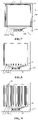
- the step of forming the first substrate includes the following steps: Step 1, as shown in FIG. 4 , the second voltage transmission structure 13 is formed on the first base 10 through a patterning process; wherein, the second voltage transmission structure 13 includes the first transmission sub-structure and the second transmission sub-structure; the first transmission sub-structure is positioned on the fourth side of the encapsulation region, and the second transmission sub-structure is a U-shaped structure and is positioned on the first side, the second side and the third side of the encapsulation region; an end of the first transmission sub-structure is a block-shaped structure, and the other end of the first transmission sub-structure and the second transmission sub-structure are formed as single piece.
- the first transmission sub-structure except the position of the block-shaped structure and the second transmission sub-structure are strip-shaped with a width of about 2 mm; the block-shaped structure of the first transmission sub-structure is used for being welded with an external lead, and a size of the block-shaped structure may be set according to a size of the light-adjusting glass.
- Step 2 as shown in FIG. 5 , a pattern including the first electrode layer 11 and the first voltage transmission structure 14 is formed through a single patterning process.
- the first electrode layer 11 is located in the transmittance adjustment region;
- the first voltage transmission structure 14 is a block-shaped structure, integrated with the first electrode layer 11, and extends from the transmittance adjustment region to a side of the fourth side of the encapsulation region distal to the transmittance adjustment region.
- the materials of the first electrode layer 11 and the first voltage transmission structure 14 include, but are not limited to, ITO; a width of the first voltage transmission structure 14 is around 15 mm.
- Step 3 as shown in FIGS. 6A and 6B , an interlayer insulating layer 15 is formed over the layer where the first electrode layer 11 and the first voltage transmission structure 14 are located, wherein the interlayer insulating layer 15 covers the first electrode layer 11 and the first voltage transmission structure 14, and exposes the second voltage transmission structure 13.
- the interlayer insulating layer 15 exposes the first transmission sub-structure 131.
- a width of the frame sealant 16 may be determined according to the size of the light-adjusting glass. For a 5 inch light-adjusting glass, the width of the frame sealant 16 is between 2nm and 2.6mm. For a larger size light-adjusting glass, the width of the frame sealant 16 may be designed to be between 3mm and 5mm in consideration of a puncturing risk of the frame sealant 16.
- the first substrate has been manufactured.
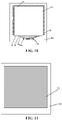
- the step of forming the second substrate includes the following steps: Step 1, as shown in FIG. 11 , a pattern including the second electrode layer 21 is formed on the second base 20 through a patterning process; the second electrode layer 21 is sized to cover the transmittance adjustment region and the encapsulation region (corresponding to the region where the frame sealant 16 is located) when the second electrode layer 21 is assembled with the first substrate to form the light-adjusting glass, and at least a portion of the block-shaped structures of the first voltage transmission structures 14 and the second voltage transmission structures 13 is exposed by an orthographic projection of the second electrode layer 21 on the first base 10, so as to solder the leads onto the block-shaped structures of the first voltage transmission structures 14 and the second voltage transmission structures 13, so as to apply an external voltage to the first electrode layer 11 and the second electrode layer 21.
- the material of the second electrode layer 21 includes, but is not limited to, ITO.
- an insulating layer may be formed on the second base 20 to prevent the second base 20 from being damaged when the second electrode layer 21 is etched.
- the frame sealant 16 may also be formed on the second substrate, as long as the frame sealant 16 bonds the first and second substrates together. Thus, the second substrate has been manufactured.
- the structure of the light-adjusting glass is similar to that of the light-adjusting glass described above, except that the first electrode layer 11 includes a plurality of strip-shaped electrodes. In this way, different voltages are applied to the strip-shaped electrodes, such that rotation angles of liquid crystal molecules in the dye liquid crystal layer corresponding to different positions of the light-adjusting glass are different, thereby implementing a louver function.
- the first voltage transmission structure 14 includes a plurality of first pads 141 and a plurality of second pads 142 that are disposed in one-to-one correspondence with the plurality of strip-shaped electrodes; the plurality of first pads 141 may be arranged side by side, a first end of each first pad 141 is connected to the corresponding strip-shaped electrode, a second end of each first pad 141 is connected to a first end of the corresponding second pad 142 through a fan-out trace 143 located in a fan-out region, and a second end of each second pad 142 is used for bonding to a chip IC to provide a voltage to the strip-shaped electrode.
- the second voltage transmission structure 13 may adopt the same structure as described above.
- the first transmission sub-structure of the second voltage transmission structure 13 may also adopt a third pad 133 disposed side by side with the second pads 142, where the third pad 133 is connected with the second transmission sub-structure through the fan-out trace 143.
- the first voltage transmission structure 14 and the second voltage transmission structure 13 are disposed in a same layer and have the same material. That is, the first pads 141 and the second pads 142 in the first voltage transmission structure 14 and the first transmission sub-structure and the second transmission sub-structure in the second voltage transmission structure 13 are manufactured by a single patterning process, and the material includes, but is not limited to, a conductive metal.
- a transition layer may also be disposed on the second ends of the second pads 142 for better bonding of the second pads 142 with the chip IC.
- the material of the transition layer includes, but is not limited to, ITO.
- the transition layer may be disposed in a same layer as the strip-shaped electrodes, that is, manufactured by a single patterning process.
- the embodiment of the present disclosure provides a method for manufacturing the light-adjusting glass.
- the light-adjusting glass is a rectangular glass
- the encapsulation region is a rectangular closed loop structure having a first side a and a second side b which are oppositely disposed (opposite to each other in the left-right direction in FIG. 7 ), and a third side c and a fourth side d which are oppositely disposed (opposite to each other in the up-down direction in FIG. 7 ).
- the method includes steps of forming a first substrate, a second substrate, and a dye liquid crystal layer filled between the first substrate and the second substrate.
- the formation of the second substrate and the dye liquid crystal layer is the same as the above steps and will not be described again.
- the step of forming the first substrate includes the following steps: Step 1, as shown in FIG. 8 , the first voltage transmission structure 14 and the second voltage transmission structure 13 are formed on the first base 10 through a patterning process; wherein the first voltage transmission structure 14 includes the plurality of first pads 141 arranged side by side and the plurality of second pads 142 arranged side by side; the plurality of first pads 141 and the plurality of second pads 142 are disposed in a one-to-one correspondence, and a second end of each first pad 141 is connected to a first end of the corresponding second pad 142 through the fan-out trace 143; the second voltage transmission structure 13 includes the first transmission sub-structure (e.g., the third pad 133) and the second transmission sub-structure; the first transmission sub-structure is positioned at the fourth side d of the encapsulation region, and the second transmission sub-structure is a U-shaped structure and is positioned at the first side a, the second side b and the third side c of the encapsulation region; the first transmission
- the first electrode layer 11 is formed in the transmittance adjustment region through a patterning process, wherein the first electrode layer 11 includes a plurality of strip-shaped electrodes; the plurality of strip-shaped electrodes are disposed in one-to-one correspondence with the plurality of first pads 141, and each strip-shaped electrode is connected to a first end of the first pad 141.
- the materials of the first electrode layer 11 and the first voltage transmission structure 14 include, but are not limited to, ITO; a width of the first voltage transmission structure 14 (i.e., a size of the plurality of first pads 141 and the plurality of second pads 142 in a direction perpendicular to an extending direction of the strip-shaped electrodes) is about 15 mm.
- a transition layer is formed at the second ends of the second pads 142 while the strip-shaped electrodes are formed in this step, and a size of the transition layer is about 800 ⁇ m ⁇ 500 ⁇ m.
- Step 3 as shown in FIG. 10 , the interlayer insulating layer 15 is formed above the layer where the first electrode layer 11 is located, wherein the interlayer insulating layer 15 covers the first electrode layer 11 and a portion of the first voltage transmission structure 14.
- the interlayer insulating layer 15 covers the plurality of first pads 141 arranged side by side in the first voltage transmission structure 14, exposes the plurality of second pads 142 arranged side by side, and exposes the second voltage transmission structure 13.
- Step 4 as shown in FIG. 7 , the frame sealant 16 is formed in the encapsulation region, wherein the frame sealant 16 is doped with conductive gold balls.
- the frame sealant 16 completely covers the first transmission sub-structure of the second voltage transmission structure 13 at the first side a, the second side b and the third side c; and covers the plurality of first pads 141 arranged side by side in the first voltage transmission structure 14, which is covered by the interlayer insulating layer 15 at the fourth side d; but exposes the second transmission sub-structure (i.e., the third pad 133).
- the exposed plurality of second pads 142 and the third pad 133 are used for an external power supply.
- the present disclosure provides a smart vehicle window, which includes the above light-adjusting glass.
- the smart vehicle window may be applied to an airplane, a building, and the like.
Landscapes
- Physics & Mathematics (AREA)
- Nonlinear Science (AREA)
- Mathematical Physics (AREA)
- Chemical & Material Sciences (AREA)
- Crystallography & Structural Chemistry (AREA)
- General Physics & Mathematics (AREA)
- Optics & Photonics (AREA)
- Geometry (AREA)
- Engineering & Computer Science (AREA)
- Mechanical Engineering (AREA)
- Liquid Crystal (AREA)
Applications Claiming Priority (2)
| Application Number | Priority Date | Filing Date | Title |
|---|---|---|---|
| CN201911271293.6A CN112987417B (zh) | 2019-12-12 | 2019-12-12 | 调光玻璃及智能车窗 |
| PCT/CN2020/134516 WO2021115253A1 (zh) | 2019-12-12 | 2020-12-08 | 调光玻璃及智能车窗 |
Publications (3)
| Publication Number | Publication Date |
|---|---|
| EP4075191A1 true EP4075191A1 (de) | 2022-10-19 |
| EP4075191A4 EP4075191A4 (de) | 2023-01-18 |
| EP4075191B1 EP4075191B1 (de) | 2025-06-18 |
Family
ID=76329559
Family Applications (1)
| Application Number | Title | Priority Date | Filing Date |
|---|---|---|---|
| EP20864335.3A Active EP4075191B1 (de) | 2019-12-12 | 2020-12-08 | Lichtanpassendes glas und intelligentes fahrzeugfenster |
Country Status (4)
| Country | Link |
|---|---|
| US (1) | US11598996B2 (de) |
| EP (1) | EP4075191B1 (de) |
| CN (1) | CN112987417B (de) |
| WO (1) | WO2021115253A1 (de) |
Families Citing this family (4)
| Publication number | Priority date | Publication date | Assignee | Title |
|---|---|---|---|---|
| CN114002871B (zh) * | 2020-07-27 | 2023-01-31 | 京东方科技集团股份有限公司 | 调光玻璃窗总成 |
| TWI793977B (zh) * | 2022-01-17 | 2023-02-21 | 絢麗光電股份有限公司 | 調光玻璃切換方法 |
| DE102023111079B4 (de) * | 2023-04-28 | 2025-02-13 | Webasto SE | Funktionsschicht-Rohling und Verfahren zum Kontaktieren eines Funktionsschicht-Rohlings |
| CN118244530B (zh) * | 2024-05-23 | 2024-09-10 | 惠科股份有限公司 | 显示装置及其制作方法 |
Family Cites Families (11)
| Publication number | Priority date | Publication date | Assignee | Title |
|---|---|---|---|---|
| JP2006106077A (ja) * | 2004-09-30 | 2006-04-20 | Seiko Epson Corp | 電気光学装置及び電子機器 |
| US20120044445A1 (en) | 2010-08-17 | 2012-02-23 | Semiconductor Energy Laboratory Co., Ltd. | Liquid Crystal Device and Manufacturing Method Thereof |
| CN103135291B (zh) * | 2011-12-05 | 2015-09-16 | 上海天马微电子有限公司 | 一种3d液晶光栅装置及3d液晶显示装置 |
| WO2015141740A1 (ja) * | 2014-03-18 | 2015-09-24 | Nltテクノロジー株式会社 | 調光素子及びスマートガラス |
| WO2017082403A1 (ja) * | 2015-11-13 | 2017-05-18 | 大日本印刷株式会社 | 調光フィルム及び合わせガラス |
| JP6716323B2 (ja) * | 2016-04-01 | 2020-07-01 | 株式会社ジャパンディスプレイ | 表示装置 |
| JP7103217B2 (ja) * | 2016-04-05 | 2022-07-20 | 凸版印刷株式会社 | 調光モジュール |
| CN107703663A (zh) | 2017-09-26 | 2018-02-16 | 张家港康得新光电材料有限公司 | 2d/3d可切换面板及显示装置 |
| JP7062912B2 (ja) * | 2017-10-11 | 2022-05-09 | 大日本印刷株式会社 | 調光フィルム、調光部材、車両、調光システム及び調光フィルムの駆動方法 |
| CN209674156U (zh) * | 2019-05-24 | 2019-11-22 | 京东方科技集团股份有限公司 | 调光玻璃 |
| CN210803935U (zh) * | 2019-12-12 | 2020-06-19 | 京东方科技集团股份有限公司 | 调光玻璃及智能车窗 |
-
2019
- 2019-12-12 CN CN201911271293.6A patent/CN112987417B/zh active Active
-
2020
- 2020-12-08 WO PCT/CN2020/134516 patent/WO2021115253A1/zh not_active Ceased
- 2020-12-08 US US17/280,901 patent/US11598996B2/en active Active
- 2020-12-08 EP EP20864335.3A patent/EP4075191B1/de active Active
Also Published As
| Publication number | Publication date |
|---|---|
| EP4075191B1 (de) | 2025-06-18 |
| CN112987417A (zh) | 2021-06-18 |
| WO2021115253A1 (zh) | 2021-06-17 |
| US11598996B2 (en) | 2023-03-07 |
| CN112987417B (zh) | 2025-07-11 |
| US20220100021A1 (en) | 2022-03-31 |
| EP4075191A4 (de) | 2023-01-18 |
Similar Documents
| Publication | Publication Date | Title |
|---|---|---|
| US11598996B2 (en) | Light-adjusting glass and smart vehicle window | |
| US11543719B2 (en) | Light control unit | |
| US7202930B2 (en) | Liquid crystal display panel and method for fabricating the same | |
| CN210803935U (zh) | 调光玻璃及智能车窗 | |
| KR20150087012A (ko) | 전기변색 디바이스 | |
| US10816862B2 (en) | Device for controlling transmission of radiation | |
| US6970225B2 (en) | Electrooptic device, method for manufacturing the same, and electronic apparatus | |
| JP7119305B2 (ja) | 調光体 | |
| JP7151137B2 (ja) | 調光ユニット | |
| US12550512B2 (en) | Display device with connecting film electrically connecting pad part with flexible film, and tiled display device including the same | |
| US7372534B2 (en) | Light adjuster with electrically conductive tape stuck on electrically conductive cylindrical housing in which is accommodated part of wiring | |
| CN112885236A (zh) | 导电走线、显示面板及其制备方法、拼接屏 | |
| US20230121640A1 (en) | Laminated glazing with electrically connected layer and method of preparing a laminated glazing | |
| JP7254436B2 (ja) | 調光装置及び構造体 | |
| KR20080040828A (ko) | 고분자 분산형 액정표시장치의 전극 단자부 제조방법 | |
| KR101153299B1 (ko) | 액정표시소자 및 그 제조방법 | |
| JP2021076640A (ja) | 調光シートおよびその製造方法 | |
| CN117015735A (zh) | 调光装置 | |
| CN121079632A (zh) | 调光片及调光片的制造方法 | |
| JPS63158528A (ja) | エレクトロクロミツク素子 | |
| CN213520386U (zh) | 用于功能玻璃的柔性电路连接器和功能玻璃 | |
| JPH0452732Y2 (de) | ||
| CN118011693A (zh) | 一种光电器件及应用其的可切换窗口、玻璃窗 | |
| JPH10221708A (ja) | 反射型液晶表示素子 | |
| KR20050059646A (ko) | 액정 표시 장치 |
Legal Events
| Date | Code | Title | Description |
|---|---|---|---|
| STAA | Information on the status of an ep patent application or granted ep patent |
Free format text: STATUS: UNKNOWN |
|
| STAA | Information on the status of an ep patent application or granted ep patent |
Free format text: STATUS: THE INTERNATIONAL PUBLICATION HAS BEEN MADE |
|
| PUAI | Public reference made under article 153(3) epc to a published international application that has entered the european phase |
Free format text: ORIGINAL CODE: 0009012 |
|
| STAA | Information on the status of an ep patent application or granted ep patent |
Free format text: STATUS: REQUEST FOR EXAMINATION WAS MADE |
|
| 17P | Request for examination filed |
Effective date: 20210326 |
|
| AK | Designated contracting states |
Kind code of ref document: A1 Designated state(s): AL AT BE BG CH CY CZ DE DK EE ES FI FR GB GR HR HU IE IS IT LI LT LU LV MC MK MT NL NO PL PT RO RS SE SI SK SM TR |
|
| A4 | Supplementary search report drawn up and despatched |
Effective date: 20221216 |
|
| RIC1 | Information provided on ipc code assigned before grant |
Ipc: G02F 1/137 20060101ALI20221212BHEP Ipc: G02F 1/1343 20060101ALI20221212BHEP Ipc: G02F 1/1345 20060101AFI20221212BHEP |
|
| DAV | Request for validation of the european patent (deleted) | ||
| DAX | Request for extension of the european patent (deleted) | ||
| STAA | Information on the status of an ep patent application or granted ep patent |
Free format text: STATUS: EXAMINATION IS IN PROGRESS |
|
| 17Q | First examination report despatched |
Effective date: 20240223 |
|
| GRAP | Despatch of communication of intention to grant a patent |
Free format text: ORIGINAL CODE: EPIDOSNIGR1 |
|
| STAA | Information on the status of an ep patent application or granted ep patent |
Free format text: STATUS: GRANT OF PATENT IS INTENDED |
|
| RIC1 | Information provided on ipc code assigned before grant |
Ipc: B60J 3/04 20060101ALN20250115BHEP Ipc: G02F 1/1339 20060101ALN20250115BHEP Ipc: G02F 1/137 20060101ALI20250115BHEP Ipc: G02F 1/1343 20060101ALI20250115BHEP Ipc: G02F 1/1345 20060101AFI20250115BHEP |
|
| INTG | Intention to grant announced |
Effective date: 20250207 |
|
| GRAS | Grant fee paid |
Free format text: ORIGINAL CODE: EPIDOSNIGR3 |
|
| GRAA | (expected) grant |
Free format text: ORIGINAL CODE: 0009210 |
|
| STAA | Information on the status of an ep patent application or granted ep patent |
Free format text: STATUS: THE PATENT HAS BEEN GRANTED |
|
| AK | Designated contracting states |
Kind code of ref document: B1 Designated state(s): AL AT BE BG CH CY CZ DE DK EE ES FI FR GB GR HR HU IE IS IT LI LT LU LV MC MK MT NL NO PL PT RO RS SE SI SK SM TR |
|
| REG | Reference to a national code |
Ref country code: GB Ref legal event code: FG4D |
|
| REG | Reference to a national code |
Ref country code: CH Ref legal event code: EP |
|
| REG | Reference to a national code |
Ref country code: DE Ref legal event code: R096 Ref document number: 602020053054 Country of ref document: DE |
|
| REG | Reference to a national code |
Ref country code: CH Ref legal event code: EP |
|
| REG | Reference to a national code |
Ref country code: IE Ref legal event code: FG4D |
|
| PG25 | Lapsed in a contracting state [announced via postgrant information from national office to epo] |
Ref country code: FI Free format text: LAPSE BECAUSE OF FAILURE TO SUBMIT A TRANSLATION OF THE DESCRIPTION OR TO PAY THE FEE WITHIN THE PRESCRIBED TIME-LIMIT Effective date: 20250618 |
|
| REG | Reference to a national code |
Ref country code: LT Ref legal event code: MG9D |
|
| PG25 | Lapsed in a contracting state [announced via postgrant information from national office to epo] |
Ref country code: NO Free format text: LAPSE BECAUSE OF FAILURE TO SUBMIT A TRANSLATION OF THE DESCRIPTION OR TO PAY THE FEE WITHIN THE PRESCRIBED TIME-LIMIT Effective date: 20250918 Ref country code: GR Free format text: LAPSE BECAUSE OF FAILURE TO SUBMIT A TRANSLATION OF THE DESCRIPTION OR TO PAY THE FEE WITHIN THE PRESCRIBED TIME-LIMIT Effective date: 20250919 |
|
| PG25 | Lapsed in a contracting state [announced via postgrant information from national office to epo] |
Ref country code: BG Free format text: LAPSE BECAUSE OF FAILURE TO SUBMIT A TRANSLATION OF THE DESCRIPTION OR TO PAY THE FEE WITHIN THE PRESCRIBED TIME-LIMIT Effective date: 20250618 |
|
| PG25 | Lapsed in a contracting state [announced via postgrant information from national office to epo] |
Ref country code: HR Free format text: LAPSE BECAUSE OF FAILURE TO SUBMIT A TRANSLATION OF THE DESCRIPTION OR TO PAY THE FEE WITHIN THE PRESCRIBED TIME-LIMIT Effective date: 20250618 |
|
| PG25 | Lapsed in a contracting state [announced via postgrant information from national office to epo] |
Ref country code: RS Free format text: LAPSE BECAUSE OF FAILURE TO SUBMIT A TRANSLATION OF THE DESCRIPTION OR TO PAY THE FEE WITHIN THE PRESCRIBED TIME-LIMIT Effective date: 20250918 |
|
| REG | Reference to a national code |
Ref country code: NL Ref legal event code: MP Effective date: 20250618 |
|
| PG25 | Lapsed in a contracting state [announced via postgrant information from national office to epo] |
Ref country code: LV Free format text: LAPSE BECAUSE OF FAILURE TO SUBMIT A TRANSLATION OF THE DESCRIPTION OR TO PAY THE FEE WITHIN THE PRESCRIBED TIME-LIMIT Effective date: 20250618 |
|
| PG25 | Lapsed in a contracting state [announced via postgrant information from national office to epo] |
Ref country code: NL Free format text: LAPSE BECAUSE OF FAILURE TO SUBMIT A TRANSLATION OF THE DESCRIPTION OR TO PAY THE FEE WITHIN THE PRESCRIBED TIME-LIMIT Effective date: 20250618 |
|
| PG25 | Lapsed in a contracting state [announced via postgrant information from national office to epo] |
Ref country code: PT Free format text: LAPSE BECAUSE OF FAILURE TO SUBMIT A TRANSLATION OF THE DESCRIPTION OR TO PAY THE FEE WITHIN THE PRESCRIBED TIME-LIMIT Effective date: 20251020 |
|
| REG | Reference to a national code |
Ref country code: AT Ref legal event code: MK05 Ref document number: 1804731 Country of ref document: AT Kind code of ref document: T Effective date: 20250618 |
|
| PG25 | Lapsed in a contracting state [announced via postgrant information from national office to epo] |
Ref country code: IS Free format text: LAPSE BECAUSE OF FAILURE TO SUBMIT A TRANSLATION OF THE DESCRIPTION OR TO PAY THE FEE WITHIN THE PRESCRIBED TIME-LIMIT Effective date: 20251018 |
|
| PGFP | Annual fee paid to national office [announced via postgrant information from national office to epo] |
Ref country code: DE Payment date: 20251211 Year of fee payment: 6 |
|
| PGFP | Annual fee paid to national office [announced via postgrant information from national office to epo] |
Ref country code: GB Payment date: 20251219 Year of fee payment: 6 |
|
| PG25 | Lapsed in a contracting state [announced via postgrant information from national office to epo] |
Ref country code: AT Free format text: LAPSE BECAUSE OF FAILURE TO SUBMIT A TRANSLATION OF THE DESCRIPTION OR TO PAY THE FEE WITHIN THE PRESCRIBED TIME-LIMIT Effective date: 20250618 Ref country code: SM Free format text: LAPSE BECAUSE OF FAILURE TO SUBMIT A TRANSLATION OF THE DESCRIPTION OR TO PAY THE FEE WITHIN THE PRESCRIBED TIME-LIMIT Effective date: 20250618 |
|
| PG25 | Lapsed in a contracting state [announced via postgrant information from national office to epo] |
Ref country code: CZ Free format text: LAPSE BECAUSE OF FAILURE TO SUBMIT A TRANSLATION OF THE DESCRIPTION OR TO PAY THE FEE WITHIN THE PRESCRIBED TIME-LIMIT Effective date: 20250618 |
|
| PG25 | Lapsed in a contracting state [announced via postgrant information from national office to epo] |
Ref country code: PL Free format text: LAPSE BECAUSE OF FAILURE TO SUBMIT A TRANSLATION OF THE DESCRIPTION OR TO PAY THE FEE WITHIN THE PRESCRIBED TIME-LIMIT Effective date: 20250618 |
|
| PG25 | Lapsed in a contracting state [announced via postgrant information from national office to epo] |
Ref country code: EE Free format text: LAPSE BECAUSE OF FAILURE TO SUBMIT A TRANSLATION OF THE DESCRIPTION OR TO PAY THE FEE WITHIN THE PRESCRIBED TIME-LIMIT Effective date: 20250618 |
|
| PG25 | Lapsed in a contracting state [announced via postgrant information from national office to epo] |
Ref country code: SK Free format text: LAPSE BECAUSE OF FAILURE TO SUBMIT A TRANSLATION OF THE DESCRIPTION OR TO PAY THE FEE WITHIN THE PRESCRIBED TIME-LIMIT Effective date: 20250618 |
|
| PG25 | Lapsed in a contracting state [announced via postgrant information from national office to epo] |
Ref country code: ES Free format text: LAPSE BECAUSE OF FAILURE TO SUBMIT A TRANSLATION OF THE DESCRIPTION OR TO PAY THE FEE WITHIN THE PRESCRIBED TIME-LIMIT Effective date: 20250618 |
|
| PG25 | Lapsed in a contracting state [announced via postgrant information from national office to epo] |
Ref country code: RO Free format text: LAPSE BECAUSE OF FAILURE TO SUBMIT A TRANSLATION OF THE DESCRIPTION OR TO PAY THE FEE WITHIN THE PRESCRIBED TIME-LIMIT Effective date: 20250618 |
|
| PG25 | Lapsed in a contracting state [announced via postgrant information from national office to epo] |
Ref country code: DK Free format text: LAPSE BECAUSE OF FAILURE TO SUBMIT A TRANSLATION OF THE DESCRIPTION OR TO PAY THE FEE WITHIN THE PRESCRIBED TIME-LIMIT Effective date: 20250618 |
|
| PG25 | Lapsed in a contracting state [announced via postgrant information from national office to epo] |
Ref country code: IT Free format text: LAPSE BECAUSE OF FAILURE TO SUBMIT A TRANSLATION OF THE DESCRIPTION OR TO PAY THE FEE WITHIN THE PRESCRIBED TIME-LIMIT Effective date: 20250618 |
|
| PLBE | No opposition filed within time limit |
Free format text: ORIGINAL CODE: 0009261 |
|
| STAA | Information on the status of an ep patent application or granted ep patent |
Free format text: STATUS: NO OPPOSITION FILED WITHIN TIME LIMIT |
|
| REG | Reference to a national code |
Ref country code: CH Ref legal event code: L10 Free format text: ST27 STATUS EVENT CODE: U-0-0-L10-L00 (AS PROVIDED BY THE NATIONAL OFFICE) Effective date: 20260430 |