EP4075480A1 - Procédé de fabrication de dispositif à semi-conducteurs, dispositif de traitement de substrat et programme - Google Patents
Procédé de fabrication de dispositif à semi-conducteurs, dispositif de traitement de substrat et programme Download PDFInfo
- Publication number
- EP4075480A1 EP4075480A1 EP20899233.9A EP20899233A EP4075480A1 EP 4075480 A1 EP4075480 A1 EP 4075480A1 EP 20899233 A EP20899233 A EP 20899233A EP 4075480 A1 EP4075480 A1 EP 4075480A1
- Authority
- EP
- European Patent Office
- Prior art keywords
- gas
- film
- execution
- process chamber
- cleaning
- Prior art date
- Legal status (The legal status is an assumption and is not a legal conclusion. Google has not performed a legal analysis and makes no representation as to the accuracy of the status listed.)
- Pending
Links
Images


Classifications
-
- C—CHEMISTRY; METALLURGY
- C23—COATING METALLIC MATERIAL; COATING MATERIAL WITH METALLIC MATERIAL; CHEMICAL SURFACE TREATMENT; DIFFUSION TREATMENT OF METALLIC MATERIAL; COATING BY VACUUM EVAPORATION, BY SPUTTERING, BY ION IMPLANTATION OR BY CHEMICAL VAPOUR DEPOSITION, IN GENERAL; INHIBITING CORROSION OF METALLIC MATERIAL OR INCRUSTATION IN GENERAL
- C23C—COATING METALLIC MATERIAL; COATING MATERIAL WITH METALLIC MATERIAL; SURFACE TREATMENT OF METALLIC MATERIAL BY DIFFUSION INTO THE SURFACE, BY CHEMICAL CONVERSION OR SUBSTITUTION; COATING BY VACUUM EVAPORATION, BY SPUTTERING, BY ION IMPLANTATION OR BY CHEMICAL VAPOUR DEPOSITION, IN GENERAL
- C23C16/00—Chemical coating by decomposition of gaseous compounds, without leaving reaction products of surface material in the coating, i.e. chemical vapour deposition [CVD] processes
- C23C16/44—Chemical coating by decomposition of gaseous compounds, without leaving reaction products of surface material in the coating, i.e. chemical vapour deposition [CVD] processes characterised by the method of coating
- C23C16/4401—Means for minimising impurities, e.g. dust, moisture or residual gas, in the reaction chamber
- C23C16/4405—Cleaning of reactor or parts inside the reactor by using reactive gases
-
- C—CHEMISTRY; METALLURGY
- C23—COATING METALLIC MATERIAL; COATING MATERIAL WITH METALLIC MATERIAL; CHEMICAL SURFACE TREATMENT; DIFFUSION TREATMENT OF METALLIC MATERIAL; COATING BY VACUUM EVAPORATION, BY SPUTTERING, BY ION IMPLANTATION OR BY CHEMICAL VAPOUR DEPOSITION, IN GENERAL; INHIBITING CORROSION OF METALLIC MATERIAL OR INCRUSTATION IN GENERAL
- C23C—COATING METALLIC MATERIAL; COATING MATERIAL WITH METALLIC MATERIAL; SURFACE TREATMENT OF METALLIC MATERIAL BY DIFFUSION INTO THE SURFACE, BY CHEMICAL CONVERSION OR SUBSTITUTION; COATING BY VACUUM EVAPORATION, BY SPUTTERING, BY ION IMPLANTATION OR BY CHEMICAL VAPOUR DEPOSITION, IN GENERAL
- C23C16/00—Chemical coating by decomposition of gaseous compounds, without leaving reaction products of surface material in the coating, i.e. chemical vapour deposition [CVD] processes
- C23C16/44—Chemical coating by decomposition of gaseous compounds, without leaving reaction products of surface material in the coating, i.e. chemical vapour deposition [CVD] processes characterised by the method of coating
- C23C16/4401—Means for minimising impurities, e.g. dust, moisture or residual gas, in the reaction chamber
-
- C—CHEMISTRY; METALLURGY
- C23—COATING METALLIC MATERIAL; COATING MATERIAL WITH METALLIC MATERIAL; CHEMICAL SURFACE TREATMENT; DIFFUSION TREATMENT OF METALLIC MATERIAL; COATING BY VACUUM EVAPORATION, BY SPUTTERING, BY ION IMPLANTATION OR BY CHEMICAL VAPOUR DEPOSITION, IN GENERAL; INHIBITING CORROSION OF METALLIC MATERIAL OR INCRUSTATION IN GENERAL
- C23C—COATING METALLIC MATERIAL; COATING MATERIAL WITH METALLIC MATERIAL; SURFACE TREATMENT OF METALLIC MATERIAL BY DIFFUSION INTO THE SURFACE, BY CHEMICAL CONVERSION OR SUBSTITUTION; COATING BY VACUUM EVAPORATION, BY SPUTTERING, BY ION IMPLANTATION OR BY CHEMICAL VAPOUR DEPOSITION, IN GENERAL
- C23C16/00—Chemical coating by decomposition of gaseous compounds, without leaving reaction products of surface material in the coating, i.e. chemical vapour deposition [CVD] processes
- C23C16/44—Chemical coating by decomposition of gaseous compounds, without leaving reaction products of surface material in the coating, i.e. chemical vapour deposition [CVD] processes characterised by the method of coating
- C23C16/455—Chemical coating by decomposition of gaseous compounds, without leaving reaction products of surface material in the coating, i.e. chemical vapour deposition [CVD] processes characterised by the method of coating characterised by the method used for introducing gases into reaction chamber or for modifying gas flows in reaction chamber
- C23C16/45523—Pulsed gas flow or change of composition over time
- C23C16/45525—Atomic layer deposition [ALD]
- C23C16/45544—Atomic layer deposition [ALD] characterized by the apparatus
- C23C16/45546—Atomic layer deposition [ALD] characterized by the apparatus specially adapted for a substrate stack in the ALD reactor
-
- C—CHEMISTRY; METALLURGY
- C23—COATING METALLIC MATERIAL; COATING MATERIAL WITH METALLIC MATERIAL; CHEMICAL SURFACE TREATMENT; DIFFUSION TREATMENT OF METALLIC MATERIAL; COATING BY VACUUM EVAPORATION, BY SPUTTERING, BY ION IMPLANTATION OR BY CHEMICAL VAPOUR DEPOSITION, IN GENERAL; INHIBITING CORROSION OF METALLIC MATERIAL OR INCRUSTATION IN GENERAL
- C23C—COATING METALLIC MATERIAL; COATING MATERIAL WITH METALLIC MATERIAL; SURFACE TREATMENT OF METALLIC MATERIAL BY DIFFUSION INTO THE SURFACE, BY CHEMICAL CONVERSION OR SUBSTITUTION; COATING BY VACUUM EVAPORATION, BY SPUTTERING, BY ION IMPLANTATION OR BY CHEMICAL VAPOUR DEPOSITION, IN GENERAL
- C23C16/00—Chemical coating by decomposition of gaseous compounds, without leaving reaction products of surface material in the coating, i.e. chemical vapour deposition [CVD] processes
- C23C16/44—Chemical coating by decomposition of gaseous compounds, without leaving reaction products of surface material in the coating, i.e. chemical vapour deposition [CVD] processes characterised by the method of coating
- C23C16/52—Controlling or regulating the coating process
-
- H—ELECTRICITY
- H10—SEMICONDUCTOR DEVICES; ELECTRIC SOLID-STATE DEVICES NOT OTHERWISE PROVIDED FOR
- H10P—GENERIC PROCESSES OR APPARATUS FOR THE MANUFACTURE OR TREATMENT OF DEVICES COVERED BY CLASS H10
- H10P14/00—Formation of materials, e.g. in the shape of layers or pillars
- H10P14/20—Formation of materials, e.g. in the shape of layers or pillars of semiconductor materials
- H10P14/24—Formation of materials, e.g. in the shape of layers or pillars of semiconductor materials using chemical vapour deposition [CVD]
-
- H—ELECTRICITY
- H10—SEMICONDUCTOR DEVICES; ELECTRIC SOLID-STATE DEVICES NOT OTHERWISE PROVIDED FOR
- H10P—GENERIC PROCESSES OR APPARATUS FOR THE MANUFACTURE OR TREATMENT OF DEVICES COVERED BY CLASS H10
- H10P14/00—Formation of materials, e.g. in the shape of layers or pillars
- H10P14/20—Formation of materials, e.g. in the shape of layers or pillars of semiconductor materials
- H10P14/34—Deposited materials, e.g. layers
- H10P14/3402—Deposited materials, e.g. layers characterised by the chemical composition
- H10P14/3404—Deposited materials, e.g. layers characterised by the chemical composition being Group IVA materials
- H10P14/3411—Silicon, silicon germanium or germanium
-
- H—ELECTRICITY
- H10—SEMICONDUCTOR DEVICES; ELECTRIC SOLID-STATE DEVICES NOT OTHERWISE PROVIDED FOR
- H10P—GENERIC PROCESSES OR APPARATUS FOR THE MANUFACTURE OR TREATMENT OF DEVICES COVERED BY CLASS H10
- H10P14/00—Formation of materials, e.g. in the shape of layers or pillars
- H10P14/60—Formation of materials, e.g. in the shape of layers or pillars of insulating materials
-
- H—ELECTRICITY
- H10—SEMICONDUCTOR DEVICES; ELECTRIC SOLID-STATE DEVICES NOT OTHERWISE PROVIDED FOR
- H10P—GENERIC PROCESSES OR APPARATUS FOR THE MANUFACTURE OR TREATMENT OF DEVICES COVERED BY CLASS H10
- H10P14/00—Formation of materials, e.g. in the shape of layers or pillars
- H10P14/60—Formation of materials, e.g. in the shape of layers or pillars of insulating materials
- H10P14/63—Formation of materials, e.g. in the shape of layers or pillars of insulating materials characterised by the formation processes
- H10P14/6326—Deposition processes
- H10P14/6328—Deposition from the gas or vapour phase
-
- H—ELECTRICITY
- H10—SEMICONDUCTOR DEVICES; ELECTRIC SOLID-STATE DEVICES NOT OTHERWISE PROVIDED FOR
- H10P—GENERIC PROCESSES OR APPARATUS FOR THE MANUFACTURE OR TREATMENT OF DEVICES COVERED BY CLASS H10
- H10P14/00—Formation of materials, e.g. in the shape of layers or pillars
- H10P14/60—Formation of materials, e.g. in the shape of layers or pillars of insulating materials
- H10P14/69—Inorganic materials
- H10P14/692—Inorganic materials composed of oxides, glassy oxides or oxide-based glasses
- H10P14/6921—Inorganic materials composed of oxides, glassy oxides or oxide-based glasses containing silicon
- H10P14/6922—Inorganic materials composed of oxides, glassy oxides or oxide-based glasses containing silicon the material containing Si, O and at least one of H, N, C, F or other non-metal elements, e.g. SiOC, SiOC:H or SiONC
-
- H—ELECTRICITY
- H10—SEMICONDUCTOR DEVICES; ELECTRIC SOLID-STATE DEVICES NOT OTHERWISE PROVIDED FOR
- H10P—GENERIC PROCESSES OR APPARATUS FOR THE MANUFACTURE OR TREATMENT OF DEVICES COVERED BY CLASS H10
- H10P70/00—Cleaning of wafers, substrates or parts of devices
- H10P70/20—Cleaning during device manufacture
-
- H—ELECTRICITY
- H10—SEMICONDUCTOR DEVICES; ELECTRIC SOLID-STATE DEVICES NOT OTHERWISE PROVIDED FOR
- H10P—GENERIC PROCESSES OR APPARATUS FOR THE MANUFACTURE OR TREATMENT OF DEVICES COVERED BY CLASS H10
- H10P72/00—Handling or holding of wafers, substrates or devices during manufacture or treatment thereof
- H10P72/04—Apparatus for manufacture or treatment
- H10P72/0431—Apparatus for thermal treatment
- H10P72/0432—Apparatus for thermal treatment mainly by conduction
-
- H—ELECTRICITY
- H10—SEMICONDUCTOR DEVICES; ELECTRIC SOLID-STATE DEVICES NOT OTHERWISE PROVIDED FOR
- H10P—GENERIC PROCESSES OR APPARATUS FOR THE MANUFACTURE OR TREATMENT OF DEVICES COVERED BY CLASS H10
- H10P72/00—Handling or holding of wafers, substrates or devices during manufacture or treatment thereof
- H10P72/06—Apparatus for monitoring, sorting, marking, testing or measuring
- H10P72/0602—Temperature monitoring
Definitions
- the present disclosure relates to a method of manufacturing a semiconductor device, a substrate processing apparatus and a program.
- a processing of processing a substrate by supplying a process gas to the substrate arranged in a process chamber may be performed.
- a cleaning may be performed at a predetermined timing (for example, see Patent Document 1).
- Patent Document 1 Japanese Patent Application Laid-Open No. 2011-243677
- a technique including: (a) processing a substrate accommodated in a process chamber by supplying a process gas to the substrate; and (b) removing deposits adhering to a structure in the process chamber by supplying a cleaning gas to the process chamber, wherein a period T2 from a completion of (b) to a start of an (n + 1) th execution of (a) is set to be shorter than a period T1 from a completion of an n th execution of (a) to a start of (b), and wherein n is an integer equal to or greater than 1.
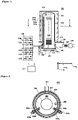
- FIGS. 1 through 5(a) an embodiment according to the present disclosure will be described mainly with reference to FIGS. 1 through 5(a) .
- a process furnace 202 is provided with a heater 207 serving as a heating structure (or a temperature regulator).
- the heater 207 is of a cylindrical shape, and is vertically installed while being supported by a support plate.
- the heater 207 also functions as an activator (exciter) capable of activating (or exciting) a gas by a heat.
- a reaction tube 203 is provided in an inner side of the heater 207 to be aligned in a manner concentric with the heater 207.
- the reaction tube 203 is made of a heat resistant material such as quartz (SiO 2 ) and silicon carbide (SiC).
- the reaction tube 203 is of a cylindrical shape with a closed upper end and an open lower end.
- a manifold 209 is provided under the reaction tube 203 to be aligned in a manner concentric with the reaction tube 203.
- the manifold 209 is made of a metal material such as stainless steel (SUS).
- the manifold 209 is of a cylindrical shape with open upper and lower ends.
- a process vessel (also referred to as a "reaction vessel") is constituted mainly by the reaction tube 203 and the manifold 209.
- a process chamber 201 is provided in a hollow cylindrical portion of the process vessel.
- the process chamber 201 is configured to accommodate a wafer 200 serving as a substrate.
- the wafer 200 is processed in the process chamber 201.
- Nozzles 249a and 249b are provided in the process chamber 201 so as to penetrate a side wall of the manifold 209.
- the nozzles 249a and 249b serve as a first supplier and a second supplier, respectively.
- the nozzles 249a and 249b may also be referred to as a first nozzle and a second nozzle, respectively.
- each of the nozzles 249a and 249b is made of a heat resistant non-metal material such as quartz and SiC.
- Each of the nozzles 249a and 249b is configured as a shared nozzle through which a plurality of kinds of gas are supplied.
- a gas supply pipe 232a serving as a first pipe and a gas supply pipe 232b serving as a second pipe are connected to the nozzles 249a and 249b, respectively.
- Each of the gas supply pipes 232a and 232b is configured as a shared pipe through which the plurality of kinds of gas are supplied.
- Mass flow controllers also simply referred to as "MFCs”
- 241a and 241b serving as flow rate controllers (flow rate control structures)
- valves 243a and 243b serving as opening/closing valves are sequentially installed at the gas supply pipes 232a and 232b, respectively, in this order from upstream sides to downstream sides of the gas supply pipes 232a and 232b in a gas flow direction.
- Gas supply pipes 232c and 232d are connected to the gas supply pipe 232a at a downstream side of the valve 243a of the gas supply pipe 232a.
- MFCs 241c and 241d and valves 243c and 243d are sequentially installed at the gas supply pipes 232c and 232d, respectively, in this order from upstream sides to downstream sides of the gas supply pipes 232c and 232d in the gas flow direction.
- a gas supply pipe 232e is connected to the gas supply pipe 232b at a downstream side of the valve 243b of the gas supply pipe 232b.
- each of the gas supply pipes 232a through 232e is made of a metal material such as SUS.
- each of the nozzles 249a and 249b is installed in an annular space provided between an inner wall of the reaction tube 203 and the wafers 200 when viewed from above, and extends upward from a lower portion toward an upper portion of the reaction tube 203 along the inner wall of the reaction tube 203 (that is, extends upward along a wafer arrangement direction of the wafers 200). That is, each of the nozzles 249a and 249b is installed in a region that is located beside and horizontally surrounds a wafer arrangement region in which the wafers 200 are arranged (stacked) to extend along the wafer arrangement region.
- a plurality of gas supply holes 250a and a plurality of gas supply holes 250b are provided at side surfaces of the nozzles 249a and 249b, respectively. Gases are supplied through the gas supply holes 250a and the gas supply holes 250b.
- the gas supply holes 250a and the gas supply holes 250b are open toward centers of the wafers 200, when viewed from above, and are configured such that the gases are supplied toward the wafers 200 through the gas supply holes 250a and the gas supply holes 250b.
- the gas supply holes 250a and the gas supply holes 250b are provided from the lower portion toward the upper portion of the reaction tube 203.
- the process gas also referred to as a "source gas”
- a silane-based gas containing silicon (Si) serving as a main element constituting a film to be formed on the wafer 200 is supplied into the process chamber 201 through the gas supply pipe 232a provided with the MFC 241a and the valve 243a and the nozzle 249a.
- the source gas refers to a source material in a gaseous state under a normal temperature and a normal pressure or a gas obtained by vaporizing a source material in a liquid state under the normal temperature and the normal pressure.
- a fluorine-based gas is supplied into the process chamber 201 through the gas supply pipe 232b provided with the MFC 241b and the valve 243b and the nozzle 249b.
- a nitrogen oxide-based gas is supplied into the process chamber 201 through the gas supply pipe 232c provided with the MFC 241c and the valve 243c , the gas supply pipe 232a and the nozzle 249a.
- the nitrogen oxide-based gas cannot perform a cleaning action by itself.
- the nitrogen oxide-based gas serves to improve the cleaning action of the fluorine-based gas by generating active species such as halogenated nitrosyl compounds when it reacts with the fluorine-based gas.
- nitrogen (N 2 ) gas is supplied into the process chamber 201 through the gas supply pipes 232d and 232e provided with the MFCs 241d and 241e and the valves 243d and 243e, respectively, the gas supply pipes 232a and 232b and the nozzles 249a and 249b.
- the N 2 gas acts as a purge gas, a carrier gas or a dilution gas.
- a process gas supply system (source gas supply system) is constituted mainly by the gas supply pipe 232a, the MFC 241a and the valve 243a.
- a cleaning gas supply system is constituted mainly by the gas supply pipe 232b, the MFC 241b and the valve 243b.
- An additive gas supply system is constituted mainly by the gas supply pipe 232c, the MFC 241c and the valve 243c.
- An inert gas supply system is constituted mainly by the gas supply pipes 232d and 232e, the MFCs 241d and 241e and the valves 243d and 243e.
- any one or an entirety of the gas supply systems described above may be embodied as an integrated gas supply system 248 in which the components such as the valves 243a through 243e and the MFCs 241a through 241e are integrated.
- the integrated gas supply system 248 is connected to the respective gas supply pipes 232a through 232e.
- An operation of the integrated gas supply system 248 to supply various gases to the gas supply pipes 232a through 232e, for example, operations such as an operation of opening and closing the valves 243a through 243e and an operation of adjusting flow rates of the gases through the MFCs 241a through 241e may be controlled by a controller 121 which will be described later.
- the integrated gas supply system 248 may be embodied as an integrated structure of an all-in-one type or a divided type.
- the integrated gas supply system 248 may be attached to or detached from the components such as the gas supply pipes 232a through 232e on a basis of the integrated structure. Operations such as maintenance, replacement and addition of the integrated gas supply system 248 may be performed on the basis of the integrated structure.
- An exhaust port 231a through which an inner atmosphere of the process chamber 201 is exhausted is provided at a lower side wall of the reaction tube 203.
- the exhaust port 231a may be provided so as to extend upward from the lower portion toward the upper portion of the reaction tube 203 along a side wall of the reaction tube 203 (that is, along the wafer arrangement region).
- An exhaust pipe 231 is connected to the exhaust port 231a.
- the exhaust pipe 231 is made of a metal material such as SUS.
- a vacuum pump 246 serving as a vacuum exhaust apparatus is connected to the exhaust pipe 231 through a pressure sensor 245 and an APC (Automatic Pressure Controller) valve 244.
- APC Automatic Pressure Controller
- the pressure sensor 245 serves as a pressure detector (pressure detection structure) to detect an inner pressure of the process chamber 201
- the APC valve 244 serves as a pressure regulator (pressure adjusting structure).
- the APC valve 244 may be opened or closed to vacuum-exhaust the process chamber 201 or stop the vacuum exhaust.
- the inner pressure of the process chamber 201 may be adjusted by adjusting an opening degree of the APC valve 244 based on pressure information detected by the pressure sensor 245.
- An exhaust system is constituted mainly by the exhaust pipe 231, the APC valve 244 and the pressure sensor 245.
- the exhaust system may further include the vacuum pump 246.
- a seal cap 219 serving as a furnace opening lid capable of airtightly sealing (or closing) a lower end opening of the manifold 209 is provided under the manifold 209.
- the seal cap 219 is made of a metal material such as SUS, and is of a disk shape.
- An O-ring 220b serving as a seal is provided on an upper surface of the seal cap 219 so as to be in contact with the lower end of the manifold 209.
- a rotator 267 configured to rotate a boat 217 described later is provided under the seal cap 219.
- a rotating shaft 255 of the rotator 267 is made of a metal material such as SUS. The rotating shaft 255 of the rotator 267 is connected to the boat 217 through the seal cap 219.
- the seal cap 219 is configured to be elevated or lowered in a vertical direction by a boat elevator 115 serving as an elevator provided outside the reaction tube 203.
- the boat elevator 115 serves as a transfer system (which is a transfer structure) that loads the wafers 200 into the process chamber 201 or unloads wafers 200 out of the process chamber 201 by elevating or lowering the seal cap 219.
- a shutter 219s serving as a furnace opening lid capable of airtightly sealing (or closing) the lower end opening of the manifold 209 is provided under the manifold 209.
- the shutter 219s is configured to close the lower end opening of the manifold 209 when the seal cap 219 is lowered and the boat 217 is unloaded out of the process chamber 201.
- the shutter 219s is made of a metal material such as SUS, and is of a disk shape.
- An O-ring 220c serving as a seal is provided on an upper surface of the shutter 219s so as to be in contact with the lower end of the manifold 209.
- An opening and closing operation of the shutter 219s such as an elevation operation and a rotation operation is controlled by a shutter opening/closing structure 115s.
- the boat 217 serving as a substrate retainer is configured such that the wafers 200 (for example, 25 wafers to 200 wafers) are accommodated (or supported) in the vertical direction in the boat 217 while the wafers 200 are horizontally oriented with their centers aligned with one another with a predetermined interval therebetween in a multistage manner.
- the boat 217 is made of a heat resistant material such as quartz and SiC.
- a plurality of heat insulation plates 218 made of a heat resistant material such as quartz and SiC are provided below the boat 217 to be supported in a multistage manner.
- a temperature sensor 263 serving as a temperature detector is installed in the reaction tube 203.
- a state of electric conduction to the heater 207 is adjusted based on temperature information detected by the temperature sensor 263 such that a desired temperature distribution of a temperature of the process chamber 201 can be obtained.
- the temperature sensor 263 is provided along the inner wall of the reaction tube 203.
- the controller 121 serving as a control device is constituted by a computer including a CPU (Central Processing Unit) 121a, a RAM (Random Access Memory) 121b, a memory 121c and an I/O port 121d.
- the RAM 121b, the memory 121c and the I/O port 121d may exchange data with the CPU 121a through an internal bus 121e.
- an input/output device 122 constituted by a component such as a touch panel is connected to the controller 121.
- the memory 121c is configured by a component such as a flash memory and a hard disk drive (HDD).
- a control program configured to control the operation of the substrate processing apparatus, a process recipe containing information on sequences and conditions of a film-forming process described later, or a cleaning recipe containing information on sequences and conditions of a cleaning process described later may be readably stored in the memory 121c.
- the process recipe is obtained by combining sequences of the film-forming process described later such that the controller 121 can execute the sequences to acquire a predetermined result, and functions as a program.
- the cleaning recipe is obtained by combining sequences of the cleaning process described later such that the controller 121 can execute the sequences to acquire a predetermined result, and functions as a program.
- the process recipe, the cleaning recipe and the control program may be collectively or individually referred to as a "program”.
- each of the process recipe and the cleaning recipe may also be simply referred to as a "recipe".
- the term "program” may refer to the recipe alone, may refer to the control program alone, or may refer to both of the recipe and the control program.
- the RAM 121b functions as a memory area (work area) where a program or data read by the CPU 121a is temporarily stored.
- the I/O port 121d is connected to the above-described components such as the MFCs 241a through 241e, the valves 243a through 243e, the pressure sensor 245, the APC valve 244, the vacuum pump 246, the temperature sensor 263, the heater 207, the rotator 267, the boat elevator 115 and the shutter opening/closing structure 115s.
- the CPU 121a is configured to read the control program from the memory 121c and execute the read control program.
- the CPU 121a is configured to read the recipe from the memory 121c in accordance with an operation command inputted from the input/output device 122.
- the CPU 121a may be configured to be capable of controlling various operations such as flow rate adjusting operations for various gases by the MFCs 241a through 241e, opening and closing operations of the valves 243a through 243e, an opening and closing operation of the APC valve 244, a pressure adjusting operation by the APC valve 244 based on the pressure sensor 245, a start and stop of the vacuum pump 246, a temperature adjusting operation by the heater 207 based on the temperature sensor 263, an operation of adjusting the rotation and the rotation speed of the boat 217 by the rotator 267, an elevating and lowering operation of the boat 217 by the boat elevator 115 and an opening and closing operation of the shutter 219s by the shutter opening/closing structure 115s.
- various operations such as flow rate adjusting operations for various gases by the MFCs 241a through 241e, opening and closing operations of the valves 243a through 243e, an opening and closing operation of the APC valve 244, a pressure adjusting operation by the APC valve 244 based
- the controller 121 may be embodied by installing the above-described program stored in an external memory 123 into the computer.
- the external memory 123 may include a magnetic disk such as a hard disk drive (HDD), an optical disk such as a CD, a magneto-optical disk such as an MO and a semiconductor memory such as a USB memory.
- the memory 121c or the external memory 123 may be embodied by a non-transitory computer readable recording medium.
- the memory 121c and the external memory 123 may be collectively or individually referred to as a "recording medium".
- the term "recording medium” may refer to the memory 121c alone, may refer to the external memory 123 alone, or may refer to both of the memory 121c and the external memory 123.
- a communication structure such as the Internet and a dedicated line may be used for providing the program to the computer.
- the substrate processing is performed by using the substrate processing apparatus described above.
- the substrate processing is performed as a part of a manufacturing process of a semiconductor device.
- the operations of the components constituting the substrate processing apparatus are controlled by the controller 121.
- the term “wafer” may refer to "a wafer itself', or may refer to “a wafer and a stacked structure (aggregated structure) of a predetermined layer (or layers) or a film (or films) formed on a surface of the wafer”.
- a surface of a wafer may refer to "a surface of a wafer itself', or may refer to "a surface of a predetermined layer (or a predetermined film) formed on a wafer”.
- forming a predetermined layer (or film) on a wafer may refer to “forming a predetermined layer (or film) on a surface of a wafer itself', or may refer to “forming a predetermined layer (or film) on a surface of another layer (or another film) formed on a wafer”.
- substrate and “wafer” may be used as substantially the same meaning.
- the film-forming process of supplying the source gas for a film formation (which serves as the process gas) to the wafer 200 so as to form a film on the wafer 200 will be described.
- the shutter 219s is moved by the shutter opening/closing structure 115s to open the lower end opening of the manifold 209 (shutter opening). Then, as shown in FIG. 1 , the boat 217 charged with the wafers 200 is elevated by the boat elevator 115 and loaded (transferred) into the process chamber 201 (boat loading). With the boat 217 loaded, the seal cap 219 seals the lower end of the manifold 209 via the O-ring 220b.
- the vacuum pump 246 vacuum-exhausts (decompresses and exhausts) the process chamber 201 (that is, a space in which the wafers 200 are accommodated) such that the inner pressure of the process chamber 201 reaches and is maintained at a desired pressure (vacuum degree).
- the inner pressure of the process chamber 201 is measured by the pressure sensor 245, and the APC valve 244 is feedback-controlled based on the pressure information measured by the pressure sensor 245 (pressure adjusting).
- the heater 207 heats the process chamber 201 such that a temperature of the wafer 200 accommodated in the process chamber 201 reaches and is maintained at a desired temperature.
- a state of electric conduction to the heater 207 is feedback-controlled based on the temperature information detected by the temperature sensor 263 such that the desired temperature distribution of the temperature of the process chamber 201 is obtained (temperature adjusting step).
- the rotator 267 starts rotating the boat 217 and the wafers 200.
- the vacuum pump 246 continuously vacuum-exhausts the process chamber 201, the heater 207 continuously heats the process chamber 201, and the rotator 267 continuously rotates the wafers 200 until at least a processing of the wafer 200 is completed.
- the source gas is supplied to the wafers 200 in the process chamber 201.
- valve 243a is opened to supply the source gas into the gas supply pipe 232a.
- a flow rate of the source gas is adjusted by the MFC 241a, and then the source gas is supplied into the process chamber 201 through the nozzle 249a, and is exhausted through the exhaust port 231a. Thereby, the source gas is supplied to the wafer 200.
- the N 2 gas may be supplied into the process chamber 201 through each of the nozzles 249a and 249b by opening the valves 243d and 243e.
- process conditions of the present step are as follows:
- a notation of a numerical range such as "400 °C to 650 °C” means that a lower limit and an upper limit are included in the numerical range. Therefore, for example, the numerical range "400 °C to 650 °C” means a range equal to or higher than 400 °C and equal to or lower than 650 °C. The same also applies to other numerical ranges described herein.
- a silicon hydride gas such as monosilane (SiH 4 , abbreviated as MS) gas, disilane (Si 2 H 6 ) gas, trisilane (Si 3 H 8 ) gas, tetrasilane (Si 4 H 10 ) gas, pentasilane (Si 5 H 12 ) gas and hexasilane (Si 6 H 14 ) gas may be used as the source gas.
- MS monosilane
- disilane Si 2 H 6
- trisilane Si 3 H 8
- tetrasilane Si 4 H 10
- pentasilane Si 5 H 12
- Si 6 H 14 hexasilane
- a rare gas such as argon (Ar) gas, helium (He) gas, neon (Ne) gas and xenon (Xe) gas may be used as the inert gas.
- Ar argon
- He helium
- Ne neon
- Xe xenon
- the valve 243a is closed to stop a supply of the source gas into the process chamber 201. Then, by vacuum-exhausting the process chamber 201, a substance such as a residual gas in the process chamber 201 is removed from the process chamber 201. At this time, by opening the valves 243d and 243e, the N 2 gas serving as the purge gas is supplied into the process chamber 201 through each of the nozzles 249a and 249b, and then is exhausted through the exhaust port 231a.
- the process chamber 201 is purged with the N 2 gas such that the substance such as the residual gas and reaction by-products remaining in the process chamber 201 is removed from the process chamber 201 (after-purge). Thereafter, the inner atmosphere of the process chamber 201 is replaced with the inert gas (inert gas substitution), and the inner pressure of the process chamber 201 is returned to the atmospheric pressure (returning to atmospheric pressure).
- the seal cap 219 is lowered by the boat elevator 115 and the lower end of the manifold 209 is opened. Then, the boat 217 with the processed wafers 200 supported therein is unloaded (transferred) out of the reaction tube 203 through the lower end of the manifold 209 (boat unloading). After the boat 217 is unloaded, the shutter 219s is moved such that the lower end opening of the manifold 209 is sealed by the shutter 219s through the O-ring 220c (shutter closing). The processed wafers 200 are discharged (transferred) from the boat 217 after the boat 217 is unloaded out of the reaction tube 203 (wafer discharging).
- deposits containing the film are accumulated on an inner structure of the process vessel, for example, on the inner wall of the reaction tube 203, surfaces of the nozzles 249a and 249b, a surface of the boat 217 and the like. That is, the deposits containing the film may adhere to a surface of the inner structure provided in the process chamber 201 heated to the film-forming temperature.
- the cleaning process of removing the deposits is performed when an amount of the deposits accumulated in the process vessel (that is, an accumulated thickness of the film on the inner structure) reaches a predetermined amount (thickness) before the deposits are peeled off or fall off.
- the cleaning gas is supplied into the process vessel to remove the deposits adhering to the inner structure in the process vessel.
- the step of removing the deposits may be performed as a part of the manufacturing process of the semiconductor device described above, and in the following descriptions, the operations of the components constituting the substrate processing apparatus are controlled by the controller 121.
- the shutter 219s is moved by the shutter opening/closing structure 115s to open the lower end opening of the manifold 209 (shutter opening). Then, the boat 217 which is empty (that is, the boat 217 in which the wafers 200 are not accommodated) is elevated by the boat elevator 115 and loaded (transferred) into the process chamber 201. With the boat 217 loaded, the seal cap 219 seals the lower end of the manifold 209 via the O-ring 220b.
- the vacuum pump 246 vacuum-exhausts the process chamber 201 such that the inner pressure of the process chamber 201 reaches and is maintained at a desired pressure (pressure adjusting).
- the heater 207 heats the process chamber 201 such that the temperature of the process chamber 201 reaches and is maintained at a desired temperature (which is a first temperature) (temperature adjusting).
- the inner structure of the process chamber 201 that is, the inner wall of the reaction tube 203, the surfaces of the nozzles 249a and 249b, the surface of the boat 217 and the like
- the rotator 267 starts rotating the boat 217 and the wafers 200.
- the vacuum pump 246 continuously vacuum-exhausts the process chamber 201, the heater 207 continuously heats the process chamber 201, and the rotator 267 continuously rotates the boat 217 until at least a cleaning step described later is completed. Alternatively, the boat 217 may not be rotated.
- the cleaning gas is supplied to the heated process chamber 201 in which the wafers 200 are not accommodated.
- the valve 243b is opened to supply the cleaning gas into the gas supply pipe 232b.
- a flow rate of the cleaning gas is adjusted by the MFC 241b, and then the cleaning gas is supplied into the process chamber 201 through the gas supply pipe 232b and the nozzle 249b, and is exhausted through the exhaust port 231a.
- the N 2 gas may be supplied into the process chamber 201 through each of the nozzles 249a and 249b by opening the valves 243d and 243e.
- process conditions of the present step are as follows:
- the cleaning gas By supplying the cleaning gas to the process chamber 201 under the process conditions described above, for example, it is possible to generate the active species such as radicals in the process chamber 201.
- the cleaning gas comes into contact with the inner structure of the process chamber 201 (for example, the inner wall of the reaction tube 203, the surfaces of the nozzles 249a and 249b, the surface of the boat 217 and the like). Thereby, it is possible to remove the deposits on the surface of the inner structure of the process chamber 201 by a thermochemical reaction (etching reaction).
- the valve 243b is closed to stop a supply of the cleaning gas to the process chamber 201. Then, the process chamber 201 is purged (after-purge) in the same manners as in the after-purge step of the film-forming process. At this time, the process chamber 201 may be purged intermittently by repeatedly performing an opening and closing operation of the valve 243b (that is, a cyclic purge may be performed). Thereafter, the inner atmosphere of the process chamber 201 is replaced with the N 2 gas (inert gas substitution), and the inner pressure of the process chamber 201 is returned to the atmospheric pressure (returning to atmospheric pressure).
- the seal cap 219 is lowered by the boat elevator 115 and the lower end of the manifold 209 is opened. Then, the empty boat 217 is unloaded (transferred) out of the reaction tube 203 through the lower end of the manifold 209 (boat unloading). After the boat 217 is unloaded, the shutter 219s is moved such that the lower end opening of the manifold 209 is sealed by the shutter 219s through the O-ring 220c. When the steps of the cleaning process described above are completed, the film-forming process described above may be resumed (see FIG. 4 ).
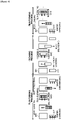
- a timing at which the cleaning process is started according to the present embodiment will be described below in comparison with a comparative example.
- the comparative example shown in FIG. 5(b) is provided as an operation example of a conventional substrate processing apparatus.
- n is an integer of 1 or more
- the cleaning process is automatically started immediately after the n th execution of the film-forming process is completed.
- a state of the substrate processing apparatus is transitioned (changed) to an "idle state" in which the substrate processing apparatus waits until the situation indicating that the (n + 1) th execution of the film-forming process should be started is reached.
- the substrate processing apparatus may be configured to control the heater 207 as described above.
- the idle state may continue for a long time. Therefore, when the (n + 1) th execution of the film-forming process is started after the idle state continues for a long time, the temperature of the process chamber may significantly lowered as compared with a case where the film-forming process is continuously performed without going through the idle state for a long time. Thus, it takes a long time to elevate the temperature of the process chamber 201, which has been greatly lowered as described above, to a temperature suitable for the film-forming process, as compared with the case where the film-forming process is continuously performed without going through the idle state.
- a thermal history of the wafer 200 tends to be greater than the thermal history of the wafer 200 in a case where the film-forming process is continuously performed without going through the idle state, that is, where the cleaning process is not performed.
- the cleaning process is performed not immediately after the n th execution of the film-forming process but immediately before a start of the (n + 1) th execution of the film-forming process.
- the temperature at which the cleaning process is performed and the temperature at which the film-forming process is performed are the same.
- the temperature at the start of the film-forming process is stabilized at the same temperature. That is, the temperature at which the cleaning process is performed and the temperature at which the film-forming process is performed may not be the same. It is important to maintain an inner temperature of the process furnace 202 constant at the start of the film-forming process.
- the state of the substrate processing apparatus is transitioned to a "new idle state" in which the substrate processing apparatus waits until the situation indicating that the (n + 1) th execution of the film-forming process should be started is reached.
- the idle state (that is, the new idle state described above) according to the present embodiment is completely different from the idle state of the comparative example shown in FIG. 5(b) in that the cleaning process is not started even though the state indicating that the cleaning process should be performed has been reached. That is, according to the present embodiment, even though there is a process to be performed, the process is not started and the substrate processing apparatus waits until a start command of the (n + 1) th execution of the film-forming process is received while the heater 207 is not in operation or the heater output is reduced.
- the cleaning process is performed before performing the film-forming process. Therefore, according to the comparative example shown in FIG. 5(b) , it is considered that the temperature at the start of the film-forming process is completely different depending on a time duration of the idle state (or a time duration between adjacent executions of the film-forming process). However, according to the present embodiment shown in FIG. 5(a) , the temperature at the start of the film-forming process can be stabilized regardless of the time duration of the idle state (that is, the new idle state described above).
- the situation indicating that the film-forming process should be started is described above as a timing at which the execution command of the film-forming process is received.
- the situation indicating that the film-forming process should be started may refer to a timing at which an entirety of substrates to be processed next are transferred (loaded) into the apparatus.
- a period T2 from a completion of the cleaning process to the start of the (n + 1) th execution of the film-forming process is controlled to be shorter than a period T1 from a completion of the n th execution of the film-forming process to a start of the cleaning process.
- an operation of limiting a manipulation of the cleaning process is autonomously and automatically controlled by the controller 121 rather than by an operating personnel until the execution command of the (n + 1) th execution of the film-forming process is received.
- an interlock is automatically activated until the execution command of the (n + 1) th execution of the film-forming process is received so as to restrict the start of the cleaning process.
- the cleaning process is not automatically started after the n th execution of the substrate processing is completed. Rather, after the n th execution of the substrate processing is completed, the cleaning process waits until an instruction of an (n + 1) th execution of the substrate processing (that is, the execution command of the (n + 1) th execution of the film-forming process) is received. Then, the cleaning process is started after the instruction is received. Further, after the cleaning is completed, since the instruction of the (n + 1) th execution of the substrate processing is already received, the (n + 1) th execution of the substrate processing can be started immediately. As described above, by performing the cleaning immediately before the (n + 1) th execution of the substrate processing, it is possible to suppress a decrease in the temperature of the process chamber at a start of the substrate processing.
- the present disclosure may also be preferably applied when, as the predetermined film formed on the wafer 200, a silicon-based film such as a silicon film (Si film), a silicon oxide film (SiO film), a silicon nitride film (SiN film) and a silicon carbide film (SiC film) is formed on the wafer 200.
- a silicon-based film such as a silicon film (Si film), a silicon oxide film (SiO film), a silicon nitride film (SiN film) and a silicon carbide film (SiC film
- the present disclosure may also be preferably applied when a titanium nitride film (TiN film) is formed on the wafer 200.
- a high dielectric constant insulating film also referred to as a "High - k film”
- AlO film aluminum oxide film
- a fluorine-based gas such as fluorine (F 2 ) gas, hydrogen fluoride (HF) gas and nitrogen trifluoride (NF 3 ) or a mixed gas thereof may also be preferably used.
- a chlorine-based gas such as hydrogen chloride (HCl) may also be preferably used as the cleaning gas.
- recipes used in the processes of the embodiment described above may be preferably prepared individually according to the process contents and may be preferably stored in the memory 121c via an electric communication line or the external memory 123. Then, when starting each process, preferably, the CPU 121a is configured to select an appropriate recipe among the recipes stored in the memory 121c according to the process contents.
- the CPU 121a is configured to select an appropriate recipe among the recipes stored in the memory 121c according to the process contents.
- the process recipe and the cleaning recipe in advance and store them in the memory 121c so that the cleaning gas can be appropriately selected according to a type of the film.
- the recipe described above is not limited to creating a new recipe.
- the recipe may be prepared by changing an existing recipe stored in the substrate processing apparatus in advance.
- the new recipe may be installed in the substrate processing apparatus via the electric communication line or the recording medium in which the new recipe is stored.
- the existing recipe already stored in the substrate processing apparatus may be directly changed to the new recipe by operating the input/output device 122 of the substrate processing apparatus.
- whether or not the state indicating that the cleaning process should be performed has been reached is determined based on whether or not the accumulated thickness of the film in the process furnace 202 has reached the predetermined thickness
- the present disclosure is not limited thereto.
- whether or not the state indicating that the cleaning process should be performed has been reached may be determined based on whether or not the film-forming process has been performed a predetermined number of times.
- whether or not the state indicating that the cleaning process should be performed has been reached may be determined based on the presence or absence of the operating personnel's instruction.
- whether or not the state indicating that the cleaning process should be performed has been reached may be determined based on the number of times or the usage time of the structure to be cleaned. As described above, it is possible to appropriately set determination criteria (determination requirements) as to whether or not the state indicating that the cleaning process should be performed has been reached.
- the substrate processing apparatus is configured to perform the film-forming process.
- the film-forming process may be a CVD, a PVD, a process of forming an oxide film, a process of forming a nitride film, or a process of forming a film containing a metal.
- the specific content of the substrate processing is not limited.
- a process such as an annealing process, an oxidation process, a nitridation process and a diffusion process may be performed as the substrate processing.
- the present disclosure may also be applied to other substrate processing apparatuses such as an exposure apparatus, a lithography apparatus, a coating apparatus and a CVD apparatus using the plasma.
- a semiconductor manufacturing apparatus is described as an example of the substrate processing apparatus, the present disclosure is not limited to the semiconductor manufacturing apparatus, and may also be applied to a glass substrate processing apparatus such as an LCD apparatus.
- the above-described embodiment is described by way of an example in which a batch type substrate processing apparatus configured to simultaneously process a plurality of substrates is used to form the film.
- the present disclosure is not limited thereto.
- the present disclosure may be preferably applied when a single wafer type substrate processing apparatus configured to process one or several substrates at a time is used to form the film.
- the above-described embodiment is described by way of an example in which a substrate processing apparatus including a hot wall type process furnace is used to form the film.
- the present disclosure is not limited thereto.
- the present disclosure may be preferably applied when a substrate processing apparatus including a cold wall type process furnace is used to form the film.
Landscapes
- Chemical & Material Sciences (AREA)
- General Chemical & Material Sciences (AREA)
- Chemical Kinetics & Catalysis (AREA)
- Engineering & Computer Science (AREA)
- Materials Engineering (AREA)
- Mechanical Engineering (AREA)
- Metallurgy (AREA)
- Organic Chemistry (AREA)
- Chemical Vapour Deposition (AREA)
- Drying Of Semiconductors (AREA)
- Design And Manufacture Of Integrated Circuits (AREA)
Applications Claiming Priority (2)
| Application Number | Priority Date | Filing Date | Title |
|---|---|---|---|
| JP2019222235 | 2019-12-09 | ||
| PCT/JP2020/045698 WO2021117728A1 (fr) | 2019-12-09 | 2020-12-08 | Procédé de fabrication de dispositif à semi-conducteurs, dispositif de traitement de substrat et programme |
Publications (2)
| Publication Number | Publication Date |
|---|---|
| EP4075480A1 true EP4075480A1 (fr) | 2022-10-19 |
| EP4075480A4 EP4075480A4 (fr) | 2024-01-10 |
Family
ID=76329852
Family Applications (1)
| Application Number | Title | Priority Date | Filing Date |
|---|---|---|---|
| EP20899233.9A Pending EP4075480A4 (fr) | 2019-12-09 | 2020-12-08 | Procédé de fabrication de dispositif à semi-conducteurs, dispositif de traitement de substrat et programme |
Country Status (6)
| Country | Link |
|---|---|
| US (1) | US20220262630A1 (fr) |
| EP (1) | EP4075480A4 (fr) |
| JP (1) | JP7377892B2 (fr) |
| CN (1) | CN114556530B (fr) |
| TW (1) | TWI783318B (fr) |
| WO (1) | WO2021117728A1 (fr) |
Families Citing this family (2)
| Publication number | Priority date | Publication date | Assignee | Title |
|---|---|---|---|---|
| JP2022145250A (ja) * | 2021-03-19 | 2022-10-03 | 株式会社Kokusai Electric | 半導体装置の製造方法、ノズルのクリーニング方法、基板処理装置、及びプログラム |
| CN120591754A (zh) * | 2025-05-30 | 2025-09-05 | 北京集成电路装备创新中心有限公司 | 一种半导体工艺设备的清洁方法 |
Family Cites Families (23)
| Publication number | Priority date | Publication date | Assignee | Title |
|---|---|---|---|---|
| US5871811A (en) * | 1986-12-19 | 1999-02-16 | Applied Materials, Inc. | Method for protecting against deposition on a selected region of a substrate |
| US5587014A (en) * | 1993-12-22 | 1996-12-24 | Sumitomo Chemical Company, Limited | Method for manufacturing group III-V compound semiconductor crystals |
| JP3673541B2 (ja) * | 1993-12-22 | 2005-07-20 | 住友化学株式会社 | 3−5族化合物半導体結晶の製造方法 |
| WO2004070079A1 (fr) * | 2003-02-07 | 2004-08-19 | Tokyo Electron Limited | Procede de traitement de semiconducteurs pour le traitement d'un substrat a traiter et appareil connexe |
| JP2005079123A (ja) * | 2003-08-29 | 2005-03-24 | Toshiba Corp | 成膜装置のクリーニング方法 |
| US7494943B2 (en) * | 2005-10-20 | 2009-02-24 | Tokyo Electron Limited | Method for using film formation apparatus |
| JP2006313934A (ja) * | 2006-07-24 | 2006-11-16 | Hitachi Kokusai Electric Inc | 半導体製造装置および半導体製造装置の成膜処理方法 |
| JP4974815B2 (ja) * | 2006-10-04 | 2012-07-11 | 東京エレクトロン株式会社 | 薄膜形成装置の洗浄方法、薄膜形成方法及び薄膜形成装置 |
| EP2231898A2 (fr) * | 2007-12-20 | 2010-09-29 | S.O.I.Tec Silicon on Insulator Technologies | Procédés pour traitement de nettoyage en chambre in-situ pour la fabrication en gros volume de matériaux semi-conducteurs |
| JP2010153508A (ja) * | 2008-12-24 | 2010-07-08 | Hitachi High-Technologies Corp | 試料のエッチング処理方法 |
| JP4917660B2 (ja) * | 2009-10-05 | 2012-04-18 | 株式会社日立国際電気 | 基板処理装置、基板処理装置の制御方法、半導体デバイスの製造方法、装置状態遷移方法、基板処理装置の保守方法及び状態遷移プログラム |
| WO2011141986A1 (fr) * | 2010-05-10 | 2011-11-17 | 株式会社アルバック | Dispositif de formation de film au plasma et procédé de formation de film |
| JP2011243677A (ja) | 2010-05-17 | 2011-12-01 | Hitachi Kokusai Electric Inc | 基板処理装置 |
| CN102877041B (zh) * | 2011-07-14 | 2014-11-19 | 中国科学院微电子研究所 | 薄膜沉积方法以及半导体器件制造方法 |
| US8586479B2 (en) * | 2012-01-23 | 2013-11-19 | Applied Materials, Inc. | Methods for forming a contact metal layer in semiconductor devices |
| JP2013187366A (ja) * | 2012-03-08 | 2013-09-19 | Hitachi Cable Ltd | 窒化物半導体の製造方法 |
| JP6242095B2 (ja) * | 2013-06-28 | 2017-12-06 | 株式会社日立国際電気 | クリーニング方法、半導体装置の製造方法、基板処理装置及びプログラム |
| JP6342670B2 (ja) * | 2014-02-17 | 2018-06-13 | 株式会社日立国際電気 | クリーニング方法、半導体装置の製造方法、基板処理装置及びプログラム |
| JP6457101B2 (ja) * | 2015-09-17 | 2019-01-23 | 株式会社Kokusai Electric | 半導体装置の製造方法、基板処理装置およびプログラム |
| JP6484601B2 (ja) * | 2016-11-24 | 2019-03-13 | 株式会社Kokusai Electric | 処理装置及び半導体装置の製造方法 |
| JP6602332B2 (ja) * | 2017-03-28 | 2019-11-06 | 株式会社Kokusai Electric | 半導体装置の製造方法、基板処理装置およびプログラム |
| JP6778166B2 (ja) * | 2017-09-08 | 2020-10-28 | 株式会社Kokusai Electric | 半導体装置の製造方法 |
| CN109560010B (zh) * | 2017-09-26 | 2022-12-16 | 株式会社国际电气 | 基板处理装置、半导体装置的制造方法以及存储介质 |
-
2020
- 2020-12-08 CN CN202080072930.1A patent/CN114556530B/zh active Active
- 2020-12-08 EP EP20899233.9A patent/EP4075480A4/fr active Pending
- 2020-12-08 WO PCT/JP2020/045698 patent/WO2021117728A1/fr not_active Ceased
- 2020-12-08 JP JP2021563974A patent/JP7377892B2/ja active Active
- 2020-12-08 TW TW109143194A patent/TWI783318B/zh active
-
2022
- 2022-05-03 US US17/735,543 patent/US20220262630A1/en active Pending
Also Published As
| Publication number | Publication date |
|---|---|
| WO2021117728A1 (fr) | 2021-06-17 |
| US20220262630A1 (en) | 2022-08-18 |
| EP4075480A4 (fr) | 2024-01-10 |
| TW202132015A (zh) | 2021-09-01 |
| JPWO2021117728A1 (fr) | 2021-06-17 |
| TWI783318B (zh) | 2022-11-11 |
| CN114556530B (zh) | 2026-03-24 |
| CN114556530A (zh) | 2022-05-27 |
| JP7377892B2 (ja) | 2023-11-10 |
Similar Documents
| Publication | Publication Date | Title |
|---|---|---|
| US20120015525A1 (en) | Method of cleaning a thin film forming apparatus, thin film forming method, and thin film forming apparatus | |
| KR102165710B1 (ko) | 클리닝 방법, 반도체 장치의 제조 방법, 기판 처리 장치, 및 프로그램 | |
| JP2019050246A (ja) | 半導体装置の製造方法、基板処理装置およびプログラム | |
| SG10202102837UA (en) | Method of manufacturing semiconductor device, substrate processing apparatus, and program | |
| US20220262630A1 (en) | Method of manufacturing semiconductor device, substrate processing apparatus and non-transitory computer-readable recording medium | |
| US20250218784A1 (en) | Substrate processing method, method of manufacturing semiconductor device, non-transitory computer-readable recording medium and substrate processing apparatus | |
| EP4343821A1 (fr) | Procédé de traitement de substrat, procédé de fabrication de dispositif à semi-conducteur, programme et appareil de traitement de substrat | |
| US20190127848A1 (en) | Processing Method, Method of Manufacturing Semiconductor Device and Non-transitory Computer-readable Recording Medium | |
| US20250230542A1 (en) | Substrate processing apparatus, method of manufacturing semiconductor device, and recording medium | |
| US12503762B2 (en) | Method of processing substrate, method of manufacturing semiconductor device, substrate processing apparatus, and recording medium | |
| EP4693371A1 (fr) | Procédé de traitement de substrat, procédé de production d'un dispositif à semi-conducteur, programme et appareil de traitement de substrat | |
| US20240178008A1 (en) | Coating method, processing apparatus, non-transitory computer-readable recording medium, substrate processing method and method of manufacturing semiconductor device | |
| EP4625475A1 (fr) | Procédé de traitement, procédé de fabrication de dispositif à semi-conducteur, programme et appareil de traitement | |
| US20260018419A1 (en) | Processing Method, Method of Manufacturing Semiconductor Device, Non-transitory Computer-readable Recording Medium and Processing Apparatus | |
| EP4685841A1 (fr) | Procédé de gravure, procédé de production de dispositif à semi-conducteur, programme et dispositif de traitement | |
| EP4738429A1 (fr) | Procédé de traitement, dispositif de traitement, procédé de production de dispositif à semi-conducteur et programme | |
| US20250223691A1 (en) | Method of processing substrate, method of manufacturing semiconductor device, recording medium, and substrate processing apparatus | |
| EP4585714A2 (fr) | Procédé de traitement de substrat, procédé de fabrication de dispositif à semi-conducteur, programme et appareil de traitement de substrat | |
| EP4624624A2 (fr) | Procédé de traitement de substrat, procédé de fabrication de dispositif à semi-conducteur, programme et appareil de traitement de substrat | |
| US20240105446A1 (en) | Substrate processing method, method of manufacturing semiconductor device, non-transitory computer-readable recording medium and substrate processing apparatus | |
| US20250243580A1 (en) | Substrate processing apparatus, exhaust system and method of manufacturing semiconductor device | |
| TW202544922A (zh) | 基板處理方法、半導體裝置之製造方法、程式、基板處理裝置及氣體供給系統 |
Legal Events
| Date | Code | Title | Description |
|---|---|---|---|
| STAA | Information on the status of an ep patent application or granted ep patent |
Free format text: STATUS: THE INTERNATIONAL PUBLICATION HAS BEEN MADE |
|
| PUAI | Public reference made under article 153(3) epc to a published international application that has entered the european phase |
Free format text: ORIGINAL CODE: 0009012 |
|
| STAA | Information on the status of an ep patent application or granted ep patent |
Free format text: STATUS: REQUEST FOR EXAMINATION WAS MADE |
|
| 17P | Request for examination filed |
Effective date: 20220711 |
|
| AK | Designated contracting states |
Kind code of ref document: A1 Designated state(s): AL AT BE BG CH CY CZ DE DK EE ES FI FR GB GR HR HU IE IS IT LI LT LU LV MC MK MT NL NO PL PT RO RS SE SI SK SM TR |
|
| DAV | Request for validation of the european patent (deleted) | ||
| DAX | Request for extension of the european patent (deleted) | ||
| P01 | Opt-out of the competence of the unified patent court (upc) registered |
Effective date: 20230817 |
|
| A4 | Supplementary search report drawn up and despatched |
Effective date: 20231213 |
|
| RIC1 | Information provided on ipc code assigned before grant |
Ipc: C23C 16/52 20060101ALI20231207BHEP Ipc: C23C 16/44 20060101ALI20231207BHEP Ipc: H01L 21/31 20060101ALI20231207BHEP Ipc: H01L 21/205 20060101AFI20231207BHEP |