EP4079084B1 - Sitzungsaufbau sowie übergabeverfahren und vorrichtung dafür - Google Patents
Sitzungsaufbau sowie übergabeverfahren und vorrichtung dafür Download PDFInfo
- Publication number
- EP4079084B1 EP4079084B1 EP21743763.1A EP21743763A EP4079084B1 EP 4079084 B1 EP4079084 B1 EP 4079084B1 EP 21743763 A EP21743763 A EP 21743763A EP 4079084 B1 EP4079084 B1 EP 4079084B1
- Authority
- EP
- European Patent Office
- Prior art keywords
- nssai
- pdu session
- base station
- message
- resources
- Prior art date
- Legal status (The legal status is an assumption and is not a legal conclusion. Google has not performed a legal analysis and makes no representation as to the accuracy of the status listed.)
- Active
Links
Images



Classifications
-
- H—ELECTRICITY
- H04—ELECTRIC COMMUNICATION TECHNIQUE
- H04W—WIRELESS COMMUNICATION NETWORKS
- H04W36/00—Hand-off or reselection arrangements
- H04W36/0005—Control or signalling for completing the hand-off
- H04W36/0011—Control or signalling for completing the hand-off for data sessions of end-to-end connection
- H04W36/0033—Control or signalling for completing the hand-off for data sessions of end-to-end connection with transfer of context information
-
- H—ELECTRICITY
- H04—ELECTRIC COMMUNICATION TECHNIQUE
- H04W—WIRELESS COMMUNICATION NETWORKS
- H04W28/00—Network traffic management; Network resource management
- H04W28/16—Central resource management; Negotiation of resources or communication parameters, e.g. negotiating bandwidth or QoS [Quality of Service]
- H04W28/26—Resource reservation
-
- H—ELECTRICITY
- H04—ELECTRIC COMMUNICATION TECHNIQUE
- H04W—WIRELESS COMMUNICATION NETWORKS
- H04W36/00—Hand-off or reselection arrangements
- H04W36/0005—Control or signalling for completing the hand-off
-
- H—ELECTRICITY
- H04—ELECTRIC COMMUNICATION TECHNIQUE
- H04W—WIRELESS COMMUNICATION NETWORKS
- H04W36/00—Hand-off or reselection arrangements
- H04W36/16—Performing reselection for specific purposes
- H04W36/22—Performing reselection for specific purposes for handling the traffic
-
- H—ELECTRICITY
- H04—ELECTRIC COMMUNICATION TECHNIQUE
- H04W—WIRELESS COMMUNICATION NETWORKS
- H04W72/00—Local resource management
- H04W72/50—Allocation or scheduling criteria for wireless resources
- H04W72/54—Allocation or scheduling criteria for wireless resources based on quality criteria
- H04W72/543—Allocation or scheduling criteria for wireless resources based on quality criteria based on requested quality, e.g. QoS
-
- H—ELECTRICITY
- H04—ELECTRIC COMMUNICATION TECHNIQUE
- H04W—WIRELESS COMMUNICATION NETWORKS
- H04W76/00—Connection management
- H04W76/10—Connection setup
-
- H—ELECTRICITY
- H04—ELECTRIC COMMUNICATION TECHNIQUE
- H04W—WIRELESS COMMUNICATION NETWORKS
- H04W76/00—Connection management
- H04W76/10—Connection setup
- H04W76/12—Setup of transport tunnels
-
- H—ELECTRICITY
- H04—ELECTRIC COMMUNICATION TECHNIQUE
- H04W—WIRELESS COMMUNICATION NETWORKS
- H04W76/00—Connection management
- H04W76/20—Manipulation of established connections
- H04W76/27—Transitions between radio resource control [RRC] states
-
- H—ELECTRICITY
- H04—ELECTRIC COMMUNICATION TECHNIQUE
- H04W—WIRELESS COMMUNICATION NETWORKS
- H04W36/00—Hand-off or reselection arrangements
- H04W36/0005—Control or signalling for completing the hand-off
- H04W36/0011—Control or signalling for completing the hand-off for data sessions of end-to-end connection
-
- H—ELECTRICITY
- H04—ELECTRIC COMMUNICATION TECHNIQUE
- H04W—WIRELESS COMMUNICATION NETWORKS
- H04W80/00—Wireless network protocols or protocol adaptations to wireless operation
- H04W80/08—Upper layer protocols
- H04W80/10—Upper layer protocols adapted for application session management, e.g. SIP [Session Initiation Protocol]
Definitions
- the disclosure relates to a method and a device for session setup and handover in a wireless communication system.
- the 5G or pre-5G communication system is also called “beyond 4G network” or "post LTE system”.
- Wireless communication is one of the most successful innovations in modern history. Recently, the number of subscribers of wireless communication services has exceeded 5 billion, and it continues growing rapidly. With the increasing popularity of smart phones and other mobile data devices (such as tablet computers, notebook computers, netbooks, e-book readers and machine-type devices) in consumers and enterprises, the demand for wireless data traffic is growing rapidly. In order to meet the rapid growth of mobile data traffic and support new applications and deployments, it is critical to improve the efficiency and coverage of wireless interfaces.
- the disclosure provides an improved session setup method, a session handover method and device thereof aiming at the problem of service interruption caused by a session handover failure when a user equipment (UE) moves or hands over between different base stations or the problem of a session setup failure in a process of session setup.
- UE user equipment
- EP 3 595 358 A1 discloses a communication method, wherein a UE requests an RRC connection from a first base station, BS.
- the first BS if not supporting a network slice of the terminal, sends a handover request to a second BS which provides support for said network slice.
- the second BS then sends a handover response to the first BS, and the first BS sends a request response comprising configuration information of the second BS to the terminal.
- WO 2018/134483 A1 concerns a method where, when a UE has moved outside of a first network slice instance of a first RAN node, the UE is handed over to a second RAN node.
- WO 201 9/001 204 A1 concerns a first AMF entity receiving from a terminal a registration request message comprising a requested NSSAI, wherein the requested NSSAI comprises a first S-NSSAI not supported by the first AMF entity.
- the AMF then obtaining attribute information of the first S-NSSAI, and using, according to the attribute information, a slice corresponding to a second S-NSSAI to provide a service corresponding to the first S-NSSAI for the terminal device.
- the present disclosure provides a method for session setup and session handover and method thereof in a wireless communication system.
- the disclosure provides the improved method and device for session setup, session handover. It can avoid or reduce the problem of service interruption caused by a session handover failure when a user equipment (UE) moves or hands over between different base stations or the problem of a session setup failure in a process of session setup.
- UE user equipment
- the network can always preferentially configure an ongoing session to the most suitable resources. When the most suitable resources are unavailable, it can do its best to serve the UE.
- first, second, etc. can be used to describe various components, but the components are not limited by the terms. The terms are only used to distinguish one component from other components.
- each block of processing flowcharts and the combination of the flowcharts can be implemented by computer program instructions. Because these computer program instructions can be installed in the processor of a general purpose computer, a special purpose computer or other programmable data processing apparatus, these instructions for execution by the processor of the computer or other programmable data processing apparatuses create means for implementing the functions described in the block(s) of the flowcharts.
- these computer program instructions may also be stored in a computer-usable or computer-readable memory of the computer or other programmable data processing apparatuses to implement functions in a specific scheme
- the computer program instructions stored in the computer-usable or computer-readable memory may also generate an article of manufacture including instruction means for performing functions described in the block(s) of the flowcharts.
- the computer program instructions can also be installed on the computer or other programmable data processing apparatuses, the instructions for performing a series of operation steps on the computer or other programmable data processing apparatuses to create a computer-executed process to run the computer or other programmable data processing apparatuses can also provide steps for implementing the functions described in the block(s) of the flowcharts.
- modules, fragments, or codes represented by each block include one or more executable instructions for performing particular logical function(s).
- the functions provided in the blocks may occur regardless of the order. For example, two blocks shown in succession may actually be executed at the same time, or sometimes in the opposite order depending on corresponding functions.
- the expression “configured” as used in various embodiments of the present disclosure may be used interchangeably with, for example, “adapted to”, “capable of”, “designed to”, “adapted to”, “enabled”, or “capable of” in terms of hardware or software.
- the expression “a device configured to” may mean that the device is “capable” together with other devices or components.
- a processor is adapted (or configured) to perform A, B, and C
- a special-purpose processor e.g., an embedded processor
- a general-purpose processor e.g., a central processing unit (CPU) or an application processor (AP)
- CPU central processing unit
- AP application processor
- S-NSSAIs there are three kinds of S-NSSAIs involved in the present disclosure, one is the S-NSSAI of the PDU session, the S-NSSAI of the PDU session being the S-NSSAI associated with a PDU session identifier contained in the N2 SM information transmitted from a core network to a base station during a PDU session setup process in the current 3GPP specification 23.502, or the S-NSSAI of the PDU session being the S-NSSAI associated with a PDU session identifier transmitted from a UE to a core network during the PDU session setup process in the current 3GPP specification 23.502; the second one is the S-NSSAI which can be configured to the PDU session when the S-NSSAI of the above-mentioned PDU session is not supported, overloaded, or unavailable, hereinafter referred to as assisting S-NSSAI(s).
- the third one is the S-NSSAI actually configured by the base station to the PDU session according to the supported slice information
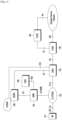
- FIG 1 is the system architecture diagram of system architecture evolution (SAE).
- SAE system architecture evolution
- UE 101 is a terminal device for receiving data.
- An evolved universal terrestrial radio access network (E-UTRAN) 102 is a radio access network, which includes a macro base station (eNodeB/NodeB) that provides UE with an interface for accessing the radio network.
- a mobility management entity (MME) 103 is responsible for managing the mobility context, session context and security information of the UE.
- a serving gateway (SGW) 104 mainly provides function of user plane, and the MME 103 and the SGW 104 may be in a same physical entity.
- a packet data network gateway (PGW) 105 is responsible for charging, lawful interception, etc., and may be in the same physical entity as SGW 104.
- a policy and charging rules function entity (PCRF) 106 provides quality of service (QoS) policies and charging rules.
- a general packet radio service support node (SGSN) 108 is a network node device that provides routing for data transmission in universal mobile telecommunications system (UMTS).
- UMTS universal mobile telecommunications system
- a home subscriber server (HSS) 109 is a home subsystem of the UE, and is responsible for protecting user information including the current location of the user equipment, address of a serving node, user security information, and packet data context of the user equipment.
- FIG. 2 A system architecture diagram of a next generation network or the fifth generation 5G network is illustrated in FIG. 2 , wherein:
- a user equipment (UE) 201 is a terminal device for receiving data.
- the next generation radio access network (NG-RAN) 202 is a radio access network, which includes a base station (gNB or an eNB connected to a 5G Core network (5GC) which is also called ng-gNB) that provides UE with an interface for accessing the radio network.
- An access control and mobility management functional entity (AMF) 203 is responsible for managing the mobility context and security information of the UE.
- a user plane function entity (UPF) 204 mainly provides functions of a user plane.
- a session management function entity (SMF) 205 is responsible for session management.
- DN data network
- DN data network
- 206 includes services of operators, Internet access and services of third parties.
- the disclosure provides an improved method and device for session setup and handover.
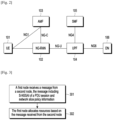
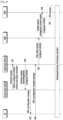
- FIG. 3 An exemplary method of session setup and handover according to the present disclosure is illustrated in FIG. 3 . A detailed description of steps unrelated to the present disclosure is omitted here. The method comprises the following steps:
- a first node receives a message for requesting PDU session setup from a second node.
- the message includes single network slice selection assistance information (S-NSSAI) for a PDU session to be configured, and also includes network slice policy information.
- S-NSSAI single network slice selection assistance information
- the first node allocates resources for the PDU session.
- the network slice policy information may be an assisting S-NSSAI(s), and the assisting S-NSSAI(s) may be one or more S-NSSAI(s).
- the assisting S-NSSAI(s) may be one or more S-NSSAI(s).
- the plurality of assisting S-NSSAIs may have different priorities. For example, the S-NSSAI placing ahead may have a higher priority than the S-NSSAI placing behind.
- the first node prioritizes the resources of an assisting S-NSSAI with a higher priority when allocating resources.
- the first node may be a base station or a core network node.
- the second node may be a core network node or a base station.
- the core network node may be a SMF or an AMF.
- the message received by the first node from the second node may be transmitted from the core network node as the second node to the base station as the first node, from a first base station as the second node to a second base station as the first node (for example, from a source base station to a target base station), from a first core network node as the second node to a second core network node as the first node (for example, from a source core network node to a target core network node), or from the base station as the first node to the core network node as the second node.
- the message may be, for example, an initial UE context setup request message (when the first node is a base station and the second node is a core network node), a PDU session resource setup request message (when the first node is a base station and the second node is a core network node), a handover request message (when the first node is a target base station and the second node is a core network node or the first node is a target base station and the second node is a source base station), a handover required message (when the first node is a source core network node and the second node is a source base station), a path switch request acknowledgement message (when the first node is a target base station and the second node is a core network node), or a create UE context request message (when the first node is a target core network node and the second node is a source core network node), etc.
- an initial UE context setup request message when the first node is a base station and the second no
- the network slice policy information may be decided by considering a network slice selection policy (NSSP), subscription information of the UE, quality of service (QoS) information of a traffic, and the S-NSSAI supported by the AMF, and/or the S-NSSAI supported by the SMF, etc.
- NSSP network slice selection policy
- QoS quality of service
- the entity that determines the network slice policy information may be a core network node.
- the first node receives a message for a session setup request.
- the first node stores the received PDU session information, including the S-NSSAI for the PDU session and network slice policy information.
- the first node considers the S-NSSAI in the message when allocating resources for the PDU session requested to be set up or resources need to be reallocated if the slice is overloaded.
- the first node or a cell of the first node does not support the S-NSSAI or slice resources of the S-NSSAI are overloaded or unavailable, the first node allocates resources for the PDU session considering the network slice policy information. For example, the first node considers allocating resources of the assisting S-NSSAI. If the message received by the first node includes a plurality of assisting S-NSSAIs, the first node prioritizes the slice resources of a S-NSSAI with a higher priority.
- the method may further comprise the following steps:
- the first node transmits an actually configured S-NSSAI for the PDU session to the core network.
- the core network may reselect the session management function entity and/or the user plane function entity of the PDU session for the UE.
- the base station transmits the actually configured S-NSSAI for the PDU session to the AMF, and the AMF reselects the SMF and/or the UPF for the PDU session of the UE.
- the base station transmits the actually configured S-NSSAI for the PDU session to the SMF, and the SMF reselects the UPF for the PDU session of the UE. This step is applicable to the case where the first node is a base station.
- the second base station (the target base station) does not support the S-NSSAI of a PDU session, another network slice resources are configured for the PDU session according to the network slice policy information.
- the handover request message includes the S-NSSAI of the PDU session and the network slice policy information. If the third base station supports the S-NSSAI, the third base station configures the PDU session on resources of the S-NSSAI for the PDU session. This method can ensure that the most suitable resources are always configured for the PDU session of the UE.
- the message is a handover request message, which includes the S-NSSAI of the PDU session and the network slice policy information; if the resources actually configured by the source base station for the PDU session are the resources of the configured S-NSSAI of the PDU session selected based on the network slice policy information, the handover request message may include the configured S-NSSAI. If the target base station supports the S-NSSAI of the PDU session, the PDU session is configured on resources of the S-NSSAI for the PDU session.
- the target base station If the target base station does not support the S-NSSAI of a PDU session or the S-NSSAI of the PDU session is overloaded or unavailable, it configures other network slice resources for the PDU session according to the network slice policy information.
- This method can ensure that the most suitable resources are always configured for the PDU session of the UE.
- the description of an exemplary PDU session setup method and an exemplary handover method of the present disclosure is completed. The method can avoid or reduce the problem of service interruption caused by a session handover failure when the UE moves or hands over between different base stations or the problem of a session setup failure in a process of session setup.
- the network can always preferentially allocate an ongoing session on the most suitable resources.
- the most suitable resources are unavailable, it can do its best to serve the UE. And after multiple handovers, it can ensure that the most suitable resources are always configured for the PDU session of the UE.
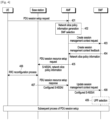
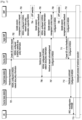
- a UE initiates a non-access stratum (NAS) PDU session setup request message to an AMF, the message including a PDU session identifier, one or more S-NSSAI(s), a UE and core network interface (N1) session management (SM) container.
- NAS non-access stratum
- S-NSSAI(s) is in the allowed NSSAI of the current access type.
- AMF generates network slice policy information.
- the AMF may determine the network slice policy information for each PDU session according to a network slice policy (NSSP), subscription information of the UE, the allowed NSSAI of the UE, the supported S-NSSAI by a base station serving the UE and/or the AMF and/or a SMF, etc.
- the network slice policy information may be an assisting S-NSSAI(s), and the assisting S-NSSAI(s) may be one or more.
- the assisting S-NSSAI(s) may be one or more.
- the plurality of assisting S-NSSAIs may have different priorities. For example, the S-NSSAI placing ahead may have a higher priority than the S-NSSAI placing behind.
- network slice policy information may be carried in a network slice selection acquisition process between the AMF and the NSSF and in a network function discovery request process between the AMF and the NSSF, so that a more suitable SMF is selected.
- NSSF network slice selection function
- NRF network repository function
- network slice policy information may be carried in a network slice selection acquisition process between the AMF and the NSSF and in a network function discovery request process between the AMF and the NSSF, so that a more suitable SMF is selected.
- the SMF supporting the most number of assisting S-NSSAIs in the network slice policy information is selected among the plurality of SMFs.
- the AMF stores the S-NSSAI for the PDU session and the network slice policy information.
- the AMF transmits, to the selected SMF, a create session management context request message, which may carry the network slice policy information of each PDU session requested to the SMF. If the SMF does not support the S-NSSAI in the network slice policy, the SMF will update the network slice policy information to ensure that the S-NSSAIs in the network slice policy are all supported by the SMF.
- the SMF transmits, to the AMF, a create session management context response message, which includes updated network slice policy information of each PDU session managed by SMF.
- the AMF stores the updated network slice policy information.
- the AMF initiates an initial context setup request message or PDU session resource setup request message to the base station, the message carrying the S-NSSAI and network slice policy information that are necessary to set up the PDU session.
- S-NSSAIs there are three kinds of S-NSSAIs involved in the present disclosure, one is the S-NSSAI of the PDU session, the S-NSSAI of the PDU session being the S-NSSAI associated with a PDU session identifier contained in the N2 SM information transmitted from a core network to a base station during a PDU session setup process in the current 3GPP specification 23.502, or the S-NSSAI of the PDU session is the S-NSSAI associated with a PDU session identifier transmitted from a UE to a core network during the PDU session setup process in the current 3GPP specification 23.502; the second one is the S-NSSAI which can be configured to the PDU session, when the S-NSSAI of the PDU session is unsupported or unavailable, hereinafter referred to as assisting S-NSSAI(s).
- the third one is the S-NSSAI actually configured by the base station to the PDU session according to the supported slice information, resource conditions and/or slice policy information
- the base station For the PDU session needed to be set up, the base station preferentially configures the resources of the S-NSSAI of the PDU session for the PDU session requested to be set up. If the base station does not support the S-NSSAI of the PDU session or the slice resources of the S-NSSAI of the PDU session are overloaded or unavailable, the base station may select a S-NSSAI serving the PDU session according to the network slice policy information, and the base station may select a S-NSSAI with a high priority from those supported by the base station in the network slice policy information.
- the S-NSSAI selected by the base station from the network slice policy information is the configured S-NSSAI, which is a conditional information element and exists only when the network slice resource corresponding to the S-NSSAI of the PDU session is unsupported, overloaded or unavailable.
- the network slice policy information is an assisting S-NSSAI(s)
- the base station selects the configured S-NSSAI from the assisting S-NSSAI(s).
- the base station stores the S-NSSAI, the configured S-NSSAI and the network slice policy information for all PDU sessions.
- the base station transmits a radio resource control (RRC) reconfiguration message to the UE.
- the message includes a NAS message of PDU session setup complete, which carries the S-NSSAI and the configured S-NSSAI of each PDU session. If the configured S-NSSAI appears, it means that the network slice resource used by the corresponding PDU session is not the slice resource corresponding to the S-NSSAI of the PDU session, but the slice resource corresponding to the assisting S-NSSAI.
- RRC radio resource control
- the UE Upon receiving the message, the UE stores information of the S-NSSAI and the configured S-NSSAI for all PDU sessions.
- the base station transmits an initial context setup response message or PDU session resource setup response message to the AMF, and the message may carry the configured S-NSSAI of the PDU session.
- the configured S-NSSAI can be carried in an update session management context request transmitted from the AMF to the SMF.
- the SMF may reselect the UPF for the PDU session according to the configured S-NSSAI, and perform a UPF selection process.
- the method can avoid or reduce the problem of service interruption caused by a session handover failure when the UE moves or hands over between different base stations.
- the network can always preferentially configure an ongoing session to the most suitable resources. When the most suitable resources are unavailable, it can do its best to serve the UE. And after multiple handovers, it can ensure that the most suitable resources are always configured for the PDU session of the UE.
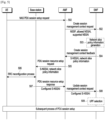
- a UE initiates a NAS PDU session setup request message to an AMF, the message including a PDU session identifier, one or more S-NSSAIs, and a N1 session management (SM) container.
- the S-NSSAI is in the allowed NSSAI of the current access type.
- a NSSP may be carried in a network slice selection acquisition process between the AMF and the NSSF and in a network function discovery request process between the AMF and the NRF, so that a more suitable SMF is selected.
- the AMF initiates a create session management context request message to the SMF, and the message may carry the NSSP, subscription information of the UE, Qos information, the allowed NSSAI, and/or the supported S-NSSAI by a network node serving the UE, etc.
- the network node includes a core network entity and a base station.
- SMF may determine the network slice policy information for each PDU session according to the NSSP, the subscription information of the UE, the Qos information, the allowed NSSAI, and/or the supported S-NSSAI by a network entity serving the UE, etc.
- the network slice policy information may be an assisting S-NSSAI(s), and the assisting S-NSSAI(s) may be one or more.
- the assisting S-NSSAI(s) may be one or more.
- the plurality of assisting S-NSSAIs may have different priorities. For example, the S-NSSAI placing ahead may have a higher priority than the S-NSSAI placing behind.
- the SMF stores S-NSSAI of PDU session and the network slice policy information.
- the SMF transmits, to the AMF, a create session management context response message, which includes the S-NSSAI and network slice policy information of each PDU session managed by SMF.
- the AMF stores the network slice policy information.
- the AMF initiates an initial context setup request message or PDU session resource setup request message to the base station, and the message carries the S-NSSAI and network slice policy information that is necessary to set up the PDU session.
- the base station For a PDU session that need to be set up, the base station preferentially configures the resources of the S-NSSAI of the PDU session for the PDU session requested to be set up. If the base station does not support the S-NSSAI of the PDU session or the slice resources of the S-NSSAI of the PDU session are overloaded or unavailable, the base station may select a S-NSSAI serving the PDU session according to the network slice policy information, and the base station may select a S-NSSAI with a high priority from those supported by the base station in the network slice policy information.
- the S-NSSAI selected by the base station from the network slice policy information is referred to as the configured S-NSSAI, which is a conditional information element and exists only when the network slice resource corresponding to the S-NSSAI of the PDU session is unsupported, overloaded or unavailable.
- the network slice policy information is an assisting S-NSSAI(s)
- the base station selects the configured S-NSSAI from the assisting S-NSSAI(s).
- the base station stores the S-NSSAI, the configured S-NSSAI and the network slice policy information of all PDU sessions.
- the base station transmits a RRC reconfiguration message to the UE.
- the message includes a NAS message of PDU session setup complete, which carries the S-NSSAI and the configured S-NSSAI of each PDU session. If the configured S-NSSAI appears, it means that the network slice resource used by the corresponding PDU session is not the slice resources of the S-NSSAI of the PDU session, but the slice resource corresponding to the assisting S-NSSAI.
- the UE Upon receiving the message, the UE stores the information of S-NSSAI and configured S-NSSAI of all PDU sessions.
- the base station transmits an initial context setup response message or PDU session resource setup response message to the AMF, and the message may carry the configured S-NSSAI of the PDU session.
- the configured S-NSSAI can be carried in an update session management context request transmitted from the AMF to the SMF.
- the SMF may reselect a UPF for the PDU session according to the configured S-NSSAI, and perform a UPF selection process. And if the SMF does not receive the information of configured S-NSSAI in the message, the SMF knows that the corresponding PDU session uses slice resources of the S-NSSAI of the PDU session.
- the method can avoid or reduce the problem of service interruption caused by a session handover failure when the UE moves or hands over between different base stations.
- the network can always preferentially configure an ongoing session to the most suitable resources. When the most suitable resources are unavailable, it can do its best to serve the UE. And after multiple handovers, it can ensure that the most suitable resources are always configured for the PDU session of the UE.
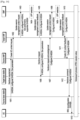
- FIG. 6 Another embodiment of a method of session setup and handover of the present disclosure is illustrated in FIG. 6 . A detailed description of steps unrelated to the present disclosure is omitted here. The method includes the following steps:
- a source base station transmits a handover request message to a target base station, the message carrying an S-NSSAI, a configured S-NSSAI and/or network slice policy information for each PDU session requested to be set up.
- the configured S-NSSAI is a conditional information element, which appears only when the slice resource actually used by the PDU session at the source base station is the resource corresponding to a assisting S-NSSAI.
- the target base station preferentially configures the resources of the S-NSSAI of the PDU session for the PDU session requested to be set up. If the target base station does not support the S-NSSAI of the PDU session or the slice resources of the S-NSSAI are overloaded or unavailable, the target base station may select the slice resources serving the PDU session according to the network slice policy information. If the network slice policy information includes a plurality of assisting S-NSSAIs and/or priority information of the assisting S-NSSAIs, the target base station selects resources of a S-NSSAI with a high priority. For example, the target base station may select a S-NSSAI with the highest priority supported by the target base station in the network slice policy information. After a successful selection, the newly selected S-NSSAI is indicated by the configured S-NSSAI.
- the target base station If the target base station receives the configured S-NSSAI but it supports the S-NSSAI of the PDU session, the target base station selects back the slice resources of the S-NSSAI of the PDU session for the PDU session to ensure that the PDU session always uses the optimal slice resources supported by the network. After a successful selection, the target base station will delete the information of configured S-NSSAI in the PDU session context.
- the target base station stores the network slice information actually configured for PDU session.
- the target base station transmits a handover request acknowledgement message to the source base station.
- the message includes a target to source transparent container. If the network slice resources serving the PDU session are the slice resources of the configured S-NSSAI, the message carries information about the configured S-NSSAI for the PDU session.
- the source base station transmits a handover execution command to the UE through an RRC reconfiguration message, which carries the configured S-NSSAI of the PDU session.
- the UE stores the information of configured S-NSSAI of all PDU sessions. And if the UE does not receive the information of configured S-NSSAI in the message, the UE knows that the corresponding PDU session uses slice resources of the S-NSSAI of the PDU session.
- the UE transmits an RRC reconfiguration complete message to the target base station to indicate that the handover is completed.
- the target base station initiates a path switch request to the AMF, which carries the configured S-NSSAI for the PDU session.
- the AMF transmits the configured S-NSSAI for the PDU session to the SMF through an update session management context request message. If the SMF does not receive the information of configured S-NSSAI in the message, the SMF knows that the corresponding PDU session uses slice resources of the S-NSSAI of the PDU session.
- the slice resources actually used by the PDU session may change, for example, the slice resources actually used by the PDU session change from the resources of the S-NSSAI of the PDU session to the resources of the configured S-NSSAI, or from the resources of the configured S-NSSAI to the resources of the S-NSSAI of the PDU session.
- the SMF may reselect the UPF for the PDU session and perform a UPF selection process.
- the method can avoid or reduce the problem of service interruption caused by a session handover failure when the UE moves or hands over between different base stations.
- the network can always preferentially configure an ongoing session to the most suitable resources. When the most suitable resources are unavailable, it can do its best to serve the UE. And after multiple handovers, it can ensure that the most suitable resources are always configured for the PDU session of the UE.
- a source base station initiates a handover required message to a source AMF.
- the message carries an S-NSSAI, a configured S-NSSAI and/or network slice policy information of each PDU session requested.
- the configured S-NSSAI is a conditional information element, which appears only when the slice resource actually used by the PDU session at the source base station is the resource corresponding to the assisting S-NSSAI.
- the source AMF transmits a create UE context request message to a target AMF, the message including a handover required transfer container from the source base station.
- the message includes a SM N2 information list, a PDU session identification list and UE context information.
- the UE context information includes a PDU session identification list, SMF information corresponding to a PDU session, S-NSSAI for the PDU session, and configured S-NSSAI for the PDU session.
- the target AMF transmits an update session management context request message to the SMF, the message including an S-NSSAI, a configured S-NSSAI and/or network slice policy information of each PDU session requested to be set up during a handover process, and a supported S-NSSAI of the target AMF and the target base station.
- the SMF preferentially configures the resources of the S-NSSAI of the PDU session for the PDU session requested to be set up. If the target network does not support the S-NSSAI of the PDU session or the slice resources of the S-NSSAI are overloaded or unavailable, the SMF may select the slice resources serving the PDU session according to the network slice policy information. If the network slice policy information includes a plurality of assisting S-NSSAIs and/or priority information of the assisting S-NSSAIs, the SMF selects resources of the S-NSSAI with a high priority. For example, the SMF may select the S-NSSAI with the highest priority supported by the target network in the network slice policy information. After a successful selection, the newly selected S-NSSAI is indicated by the configured S-NSSAI.
- the target network includes a target base station and a target core network.
- the SMF selects back the slice resources of the S-NSSAI of the PDU session for the PDU session to ensure that the PDU session always uses the optimal slice resources supported by the network. After a successful selection, the SMF deletes the information of configured S-NSSAI in the PDU session context.
- the SMF stores the network slice information actually configured for PDU session.
- the SMF can reconfigure the network slice policy information. If the SMF reconfigures the network slice policy information of PDU session, the SMF selects the configured S-NSSAI for PDU session according to updated network slice policy information when the S-NSSAI of the PDU session is not supported.
- the SMF may reselect the UPF for the PDU session according to the changed S-NSSAI information, and perform a UPF selection process.
- the SMF transmits an update session management context response message to the target AMF, the message carrying the updated S-NSSAI, configured S-NSSAI and/or network slice policy information of each PDU session.
- the target AMF transmits a handover request message to a target base station, the message carrying an S-NSSAI, a configured S-NSSAI and/or network slice policy information of each PDU session requested to be set up.
- the configured S-NSSAI is a conditional information element, which appears only when the slice resource actually used by the PDU session at the source base station is the resource corresponding to the assisting S-NSSAI.
- the target base station preferentially configures the resources of the S-NSSAI of the PDU session for the PDU session requested to be set up. If the target base station does not support the S-NSSAI of the PDU session or the slice resources of the S-NSSAI are overloaded or unavailable, the target base station may select the slice resources serving the PDU session according to the network slice policy information. If the network slice policy information includes a plurality of assisting S-NSSAIs and/or priority information of the assisting S-NSSAIs, the target base station selects resources of a S-NSSAI with a high priority. For example, the target base station may select a S-NSSAI with the highest priority supported by the target base station in the network slice policy information. After a successful selection, the newly selected S-NSSAI is indicated by the configured S-NSSAI.
- the target base station If the target base station receives the configured S-NSSAI but it supports the S-NSSAI of the PDU session, the target base station selects back the slice resources of the S-NSSAI of the PDU session for the PDU session to ensure that the PDU session always uses the optimal slice resources supported by the network. After a successful selection, the target base station deletes the information of configured S-NSSAI in the PDU session context.
- the target base station stores the network slice information actually configured for PDU session.
- the target base station transmits a handover request acknowledgement message to the target AMF, if the network slice resources serving the PDU session are the network slice resources of the configured S-NSSAI, the message carries information of the configured S-NSSAI of the PDU session.
- the AMF transmits the configured S-NSSAI of the PDU session to the SMF through an update session management context request message. If the SMF does not receive the information of configured S-NSSAI in the message, the SMF knows that the corresponding PDU session uses slice resources of the S-NSSAI of the PDU session.
- the SMF may reselect the UPF for the PDU session according to the changed S-NSSAI information, and perform a UPF selection process.
- the SMF transmits an update session management context response message to the target AMF.
- the target AMF can inform the source AMF of this through a create UE context response message (step 711), the source AMF can inform the source base station of this through a handover command message (step 712), and then the source base station informs the UE of this through an RRC reconfiguration message (step 713), wherein, the messages all carry the configured S-NSSAI to PDU session successfully set up after handover.
- the UE stores the information of configured S-NSSAI of all PDU sessions.
- the UE knows that the corresponding PDU session uses slice resources of the S-NSSAI of the PDU session.
- the method can avoid or reduce the problem of service interruption caused by a session handover failure when the UE moves or hands over between different base stations.
- the network can always preferentially configure an ongoing session to the most suitable resources. When the most suitable resources are unavailable, it can do its best to serve the UE. And after multiple handovers, it can ensure that the most suitable resources are always configured for the PDU session of the UE.
- a UE transmits a message to a first node requesting PDU session setup.
- the message includes single network slice selection assisting information (S-NSSAI) of the PDU session, and also includes network slice policy information.
- S-NSSAI single network slice selection assisting information
- the network allocates resources for the PDU session considering the network slice policy information.
- the network slice policy information may be an assisting S-NSSAI(s), and the assisting S-NSSAI(s) may be one or more.
- the assisting S-NSSAI(s) may be one or more.
- the plurality of assisting S-NSSAIs may have different priorities. For example, the S-NSSAI placing ahead may have a higher priority than the S-NSSAI placing behind.
- the network prioritizes the resources of an assisting S-NSSAI with a high priority when allocating resources.
- the UE determines the network slice policy information according to subscription information of the UE, the service type, the S-NSSAI supported by the UE, and the like.
- the first node may be a core network node or a base station.
- the second node may be a base station or a core network node.
- the core network node may be a SMF or an AMF.
- the first node transmits a message to a second node requesting PDU session setup.
- the first node may transmit the network slice policy information received from the UE to the second node, or the first node may determine the network slice policy information, considering the network slice policy information received from the UE, a network slice selection policy (NSSP), subscription information of the UE, quality of service (QoS) information of a service, and the S-NSSAI supported by the AMF, and/or the S-NSSAI supported by the SMF, etc.
- NSP network slice selection policy
- QoS quality of service
- Step 803 is the same as step 302, and will not be repeatedly described here.
- the method may further comprise the following steps:
- the second node transmits the S-NSSAI actually configured for the PDU session to the core network.
- the core network may reselect the session management function entity and/or the user plane function entity of the PDU session for the UE.
- the base station transmits the actually configured S-NSSAI for the PDU session to the AMF, and the AMF reselects the SMF and/or the UPF for the PDU session of the UE.
- the base station transmits the actually configured S-NSSAI for the PDU session to the SMF, and the SMF reselects the UPF for the PDU session of the UE.
- step 801 is unnecessary.
- the second base station (the target base station) does not support the S-NSSAI of a PDU session, and resources of another network slice are configured for the PDU session according to the network slice policy information.
- the handover request message includes the S-NSSAI of the PDU session and the network slice policy information. If the third base station supports the S-NSSAI of the PDU session, the third base station configures the PDU session on resources of the S-NSSAI. This method can ensure that the most suitable resources are always configured for the PDU session of the UE.
- the message as described in step 802 is a handover request message, which includes the S-NSSAI of the PDU session and the network slice policy information; if the resources actually configured by the source base station for the PDU session are the resources of the configured S-NSSAI of the PDU session selected based on the network slice policy information, the handover request message may include the configured S-NSSAI. If the target base station supports the S-NSSAI of the PDU session, the PDU session is configured on resources of the S-NSSAI of the PDU session.
- the target base station If the target base station does not support the S-NSSAI of a PDU session or the S-NSSAI of the PDU session is overloaded or unavailable, it configures other network slice resources for the PDU session according to the network slice policy information. This method can ensure that the most suitable resources are always configured for the PDU session of the UE.
- the method can avoid or reduce the problem of service interruption caused by a session handover failure when the UE moves or hands over between different base stations.
- the network can always preferentially configure an ongoing session to the most suitable resources. When the most suitable resources are unavailable, it can do its best to serve the UE. And after multiple handovers, it can ensure that the most suitable resources are always configured for the PDU session of the UE.
- An embodiment of a method of session setup and handover of the present disclosure is illustrated in FIG. 9 . A detailed description of steps unrelated to the present disclosure is omitted here. The following steps are included:
- a UE determines network slice policy information according to a NSSP, subscription information of the UE, service types and/or allowed NSSAI of the UE, and the like.
- the network slice policy information may be an assisting S-NSSAI(s), and the assisting S-NSSAI(s) may be one or more.
- the assisting S-NSSAI(s) may be one or more.
- the plurality of assisting S-NSSAIs may have different priorities. For example, S-NSSAI placing ahead may have a higher priority than the S-NSSAI placing behind.
- a UE initiates a PDU session setup request message to an AMF, the message including a PDU session identifier, one or more S-NSSAIs, the network slice policy information, a N1 session management (SM) container.
- the S-NSSAI is in the allowed NSSAI of the current access type.
- the AMF may update the network slice policy information according to the S-NSSAI situation supported by a base station serving the UE and/or the AMF and/or a SMF and local configuration and so on, for example, the assisting S-NSSAI information therein may be updated to ensure that the S-NSSAI in the network slice policy information is supported by the AMF and the base station.
- the network slice policy information may be carried in a network slice selection acquisition process between the AMF and the NSSF and in a network function discovery request process between the AMF and the NRF, so that a more suitable SMF is selected.
- the SMF supporting the most number of assisting S-NSSAIs in the network slice policy information is selected among the plurality of SMFs.
- the AMF stores the S-NSSAI for the PDU session and the network slice policy information.
- the AMF transmits, to the selected SMF, a create session management context request message, which may carry the network slice policy information of each PDU session requested to the SMF. If the SMF does not support the S-NSSAI in the network slice policy, the SMF will update the network slice policy information to ensure that the S-NSSAIs in the network slice policy information are all supported by the SMF.
- the SMF transmits, to the AMF, a create session management context response message, which includes updated network slice policy information of each PDU session managed by SMF.
- the AMF stores the updated network slice policy information.
- the AMF initiates an initial context setup request message or PDU session resource setup request message to the base station, and the message carries the S-NSSAI and network slice policy information that is necessary to set up the PDU session.
- the base station For the PDU session needed to be set up, the base station preferentially configures the resources of the S-NSSAI of the PDU session for the PDU session requested to be set up. If the base station does not support the S-NSSAI of the PDU session or the slice resources of the S-NSSAI of the PDU session are overloaded or unavailable, the base station may select the S-NSSAI serving the PDU session according to the network slice policy information, and the base station may select the S-NSSAI with a high priority from those supported by the base station in the network slice policy information.
- the S-NSSAI selected by the base station from the network slice policy information is the configured S-NSSAI, which is a conditional information element and exists only when the network slice resource corresponding to the S-NSSAI of the PDU session is unsupported, overloaded or unavailable.
- the network slice policy information is an assisting S-NSSAI(s)
- the base station selects the configured S-NSSAI from the assisting S-NSSAI(s).
- the base station stores the S-NSSAI, the configured S-NSSAI and the network slice policy information of all PDU sessions.
- the base station transmits a RRC reconfiguration message to the UE.
- the message includes a NAS message of PDU session setup complete, which carries the S-NSSAI and the configured S-NSSAI of each PDU session. If the configured S-NSSAI appears, it means that the network slice resource used by the corresponding PDU session is not the slice resources of the S-NSSAI of the PDU session, but the slice resource corresponding to the assisting S-NSSAI.
- the UE Upon receiving the message, the UE stores the information of S-NSSAI and the configured S-NSSAI for all PDU sessions.
- the base station transmits an initial context setup response message or PDU session resource setup response message to the AMF, and the message may carry the configured S-NSSAI of the PDU session.
- the configured S-NSSAI can be carried in an update session management context request transmitted from the AMF to the SMF.
- the SMF may reselect a UPF for the PDU session according to the configured S-NSSAI, and perform a UPF selection process.
- the method can avoid or reduce the problem of service interruption caused by a session handover failure when the UE moves or hands over between different base stations.
- the network can always preferentially configure an ongoing session to the most suitable resources. When the most suitable resources are unavailable, it can do its best to serve the UE. And after multiple handovers, it can ensure that the most suitable resources are always configured for the PDU session of the UE.
- a UE initiates a PDU session setup request message to an AMF, the message including a PDU session identifier, one or more S-NSSAIs, the network slice policy information, a N1 session management (SM) container.
- the S-NSSAI is in the allowed NSSAI of the current access type.
- a UE determines the network slice policy information according to a NSSP, subscription information of the UE, service types and/or allowed NSSAI of the UE, and the like.
- the network slice policy information may be an assisting S-NSSAI(s), and the assisting S-NSSAI(s) may be one or more.
- the assisting S-NSSAI(s) may be one or more.
- the plurality of assisting S-NSSAIs may have different priorities. For example, the S-NSSAI placing ahead may have a higher priority than the S-NSSAI placing behind.
- the AMF initiates a create session management context request message to the SMF, and the message may carry the NSSP, subscription information of the UE, the allowed NSSAI, and/or the supported S-NSSAI by a network serving the UE, etc.
- the network comprises a core network and a base station.
- the SMF may update the network slice policy information of each PDU session requested according to the NSSP, the subscription information of the UE, the QoS information, the allowed NSSAI, the supported S-NSSAI by a network node serving the UE, and/or local configuration, etc., to ensure that the S-NSSAI in the network slice policy information is supported by the network.
- the SMF stores S-NSSAI of PDU session and the network slice policy information.
- the SMF transmits, to the AMF, a create session management context response message, which includes the S-NSSAI and network slice policy information of each PDU session managed by SMF.
- the network slice information is network slice policy information received from the UE or updated by the SMF.
- the AMF stores the received network slice policy information.
- the AMF initiates an initial context setup request message or PDU session resource setup request message to the base station, and the message carries the S-NSSAI and network slice policy information that is necessary to set up the PDU session.
- the base station For the PDU session needed to be set up, the base station preferentially configures the resources of the S-NSSAI of the PDU session for the PDU session requested to be set up. If the base station does not support the S-NSSAI of the PDU session or the slice resources of the S-NSSAI of the PDU session are overloaded or unavailable, the base station may select the S-NSSAI serving the PDU session according to the network slice policy information, and the base station may select the S-NSSAI with a high priority from those supported by the base station in the network slice policy information.
- the S-NSSAI selected by the base station from the network slice policy information is the configured S-NSSAI, which is a conditional information element and exists only when the network slice resource corresponding to the S-NSSAI of the PDU session is unsupported, or overloaded or unavailable.
- the network slice policy information is an assisting S-NSSAI(s)
- the base station selects the configured S-NSSAI from the assisting S-NSSAI(s).
- the base station stores the S-NSSAI, the configured S-NSSAI and the network slice policy information of all PDU sessions.
- the base station transmits a RRC reconfiguration message to the UE.
- the message includes a NAS message of PDU session setup complete, which carries the S-NSSAI, the configured S-NSSAI and the network slice policy information of each PDU session. If the configured S-NSSAI appears, it means that the network slice resource used by the corresponding PDU session is not the slice resources of the S-NSSAI of the PDU session, but the slice resource corresponding to the assisting S-NSSAI.
- the UE Upon receiving the message, the UE stores the information of S-NSSAI and configured S-NSSAI of all PDU sessions.
- the base station transmits an initial context setup response message or PDU session resource setup response message to the AMF, and the message may carry the configured S-NSSAI of the PDU session. If the configured S-NSSAI is carried in the message, the configured S-NSSAI can be carried in an update session management context request transmitted from the AMF to the SMF (at step 1008), and the SMF may reselect a UPF for the PDU session according to the configured S-NSSAI, and perform a UPF selection process (at step 1009).
- the method can avoid or reduce the problem of service interruption caused by a session handover failure when the UE moves or hands over between different base stations.
- the network can always preferentially configure an ongoing session to the most suitable resources. When the most suitable resources are unavailable, it can do its best to serve the UE. And after multiple handovers, it can ensure that the most suitable resources are always configured for the PDU session of the UE.
- FIG. 11 Another exemplary method of session setup and handover according to the present disclosure is illustrated in FIG. 11 . A detailed description of steps unrelated to the present disclosure is omitted here. The method comprises the following steps.
- a first node receives a message for requesting PDU session setup from a second node.
- the message includes the S-NSSAI of the PDU session to be configured.
- the first node may be a base station or a core network node.
- the second node may be a core network node or a base station.
- the core network node may be a SMF or an AMF.
- the message received by the first node from the second node may be transmitted from the core network node as the second node to the base station as the first node, from a first base station as the second node to a second base station as the first node (for example, from a source base station to a target base station), from a first core network node as the second node to a second core network node as the first node (for example, from a source core network node to a target core network node), or from the base station as the first node to the core network node as the second node.
- the message may be, for example, an initial UE context setup request message (when the first node is a base station and the second node is a core network node), a PDU session resource setup request message(when the first node is a base station and the second node is a core network node), a handover request message (when the first node is a target base station and the second node is a core network node or the first node is a target base station and the second node is a source base station), a handover required message (when the first node is a source core network node and the second node is a source base station), a path switch request acknowledgement message (when the first node is a target base station and the second node is a core network node), or a create UE context request message (when the first node is a target core network node and the second node is a source core network node), etc.
- an initial UE context setup request message when the first node is a base station and the second no
- the message for requesting PDU session setup also includes the S-NSSAI actually configured for the PDU session.
- the first node considers the S-NSSAI in the message when allocating resources for the PDU session requested to be set up.
- the first node configures other available network slice resources for the PDU session.
- the first node selects appropriate network slice resources according to QoS parameters of QoS flow in the PDU session, network slices supported by a base station and/or the AMF and/or the SMF serving UE, and/or configuration of network operation and maintenance (O&M), etc.
- the first node transmits an actually configured S-NSSAI for the PDU session to the core network.
- the core network may reselect the session management function entity and/or the user plane function entity of the PDU session for the UE.
- the base station transmits the actually configured S-NSSAI for the PDU session to the AMF, and the AMF reselects the SMF and/or the UPF for the PDU session of the UE.
- the base station transmits the actually configured S-NSSAI for the PDU session to the SMF, and the SMF reselects the UPF for the PDU session of the UE.
- the second base station (the target base station) does not support the S-NSSAI of a PDU session, resources of another network slice are configured for the PDU session.
- the message includes the S-NSSAI of the PDU session and the S-NSSAI actually configured for the PDU session. If the third base station supports the S-NSSAI of the PDU session, the third base station configures the PDU session on resources of the S-NSSAI of the PDU session. This method can ensure that the most suitable resources are always configured for the PDU session of the UE.
- the message as described in step 1101 is a handover request message, which may include the S-NSSAI of the PDU session; if the resources actually configured by the source base station for the PDU session are resources of the configured S-NSSAI for the PDU session, the handover request message may include the configured S-NSSAI. If the target base station supports the S-NSSAI of the PDU session, the PDU session is configured on resources of the S-NSSAI of the PDU session.
- the target base station does not support the S-NSSAI of a PDU session or the S-NSSAI of the PDU session is overloaded or unavailable, it selects other network slice resources for the PDU session.
- This method can ensure that the most suitable resources are always configured for the PDU session of the UE.
- the description of another exemplary PDU session setup method and an exemplary handover method of the present disclosure is completed.
- the method can avoid or reduce the problem of service interruption caused by a session handover failure when the UE moves or hands over between different base stations.
- the network can always preferentially configure an ongoing session to the most suitable resources. When the most suitable resources are unavailable, it can do its best to serve the UE. And after multiple handovers, it can ensure that the most suitable resources are always configured for the PDU session of the UE.
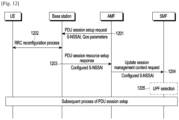
- FIG. 12 An embodiment of a method of session setup and handover of the present disclosure is illustrated in FIG. 12 . A detailed description of steps unrelated to the present disclosure is omitted here. The following steps are included:
- the AMF initiates an initial context setup request message or PDU session resource setup request message to the base station, and the message carries a S-NSSAI of a PDU session to be setup and QoS parameters of a QoS flow that is necessary to set up a PDU session.
- S-NSSAIs there are two kinds of S-NSSAIs involved in the present disclosure, one is the S-NSSAI of the PDU session, the S-NSSAI of the PDU session being the S-NSSAI associated with a PDU session identifier contained in the N2 SM information transmitted from a core network to a base station during a PDU session setup process in the current 3GPP specification 23.502, or the S-NSSAI of the PDU session being the S-NSSAI associated with a PDU session identifier transmitted from a UE to a core network during the PDU session setup process in the current 3GPP specification 23.502; the second one is the S-NSSAI actually configured by the base station for the PDU session according to supported slice information, resource conditions and/or configuration of network operation and maintenance (O&M), etc., hereinafter referred to as configured S-NSSAI.
- configured S-NSSAI hereinafter referred to as configured S-NSSAI.
- the base station For the PDU session needed to be set up, the base station preferentially configures the resources of the S-NSSAI of the PDU session for the PDU session requested to be set up. If the base station does not support the S-NSSAI of the PDU session or the slice resources of the S-NSSAI of the PDU session are overloaded or unavailable, the base station may select a S-NSSAI serving the PDU session. The base station selects a S-NSSAI serving the PDU session according to QoS parameters of a QoS flow in the PDU session, S-NSSAI(s) supported by the base station and/or the AMF and/or the SMF serving UE, and/or configuration of network operation and maintenance (O&M), etc.
- OFDM network operation and maintenance
- the selected S-NSSAI is the configured S-NSSAI, which is a conditional information element, and is used only when the slice resources configured for PDU session are not the slice resources of the S-NSSAI of the PDU session, but the slice resources of the configured S-NSSAI.
- the base station stores the information of S-NSSAI and the configured S-NSSAI of all PDU sessions.
- the base station transmits a radio resource management (RRC) reconfiguration message to the UE.
- the message includes a NAS message of PDU session setup complete, which carries the S-NSSAI and the configured S-NSSAI of each PDU session. If the configured S-NSSAI appears, it means that the network slice resource used by the PDU session is not the slice resource corresponding to the S-NSSAI of the PDU session, but the slice resource corresponding to the configured S-NSSAI.
- RRC radio resource management
- the UE Upon receiving the message, the UE stores the information of S-NSSAI and the configured S-NSSAI of all PDU sessions.
- the base station transmits an initial context setup response message or PDU session resource setup response message to the AMF, and the message may carry the configured S-NSSAI of the PDU session.
- the configured S-NSSAI can be carried in an update session management context request transmitted from the AMF to the SMF (at step 1204), and the SMF may reselect a UPF for the PDU session according to the configured S-NSSAI, and perform a UPF selection process (at step 1205). If the SMF does not receive the information of configured S-NSSAI in the message, the SMF knows that the corresponding PDU session uses slice resources of the S-NSSAI of the PDU session.
- the method can avoid or reduce the problem of service interruption caused by a session handover failure when the UE moves or hands over between different base stations.
- the network can always preferentially configure an ongoing session to the most suitable resources. When the most suitable resources are unavailable, it can do its best to serve the UE. And after multiple handovers, it can ensure that the most suitable resources are always configured for the PDU session of the UE.
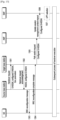
- FIG. 13 Another embodiment of a method of session setup and handover of the present disclosure is illustrated in FIG. 13 . A detailed description of steps unrelated to the present disclosure is omitted here. The following steps are included:
- a source base station transmits a handover request message to a target base station, where the message carries an S-NSSAI, configured S-NSSAI, and QoS parameters of a QoS flow, etc. of each PDU session requested.
- the configured S-NSSAI is a conditional information element, which will be used only when the slice resource actually used by the PDU session at the source base station is not the slice resource corresponding to the S-NSSAI of the PDU session, but the slice resource corresponding to the configured S-NSSAI.
- the target base station preferentially configures the resources of the S-NSSAI of the PDU session for the PDU session requested to be set up. If the target base station does not support the S-NSSAI of the PDU session or the slice resources of the S-NSSAI are overloaded or unavailable, the target base station selects the network slice resources of appropriate S-NSSAI.
- the target base station can select network slice resources of appropriate S-NSSAI according to QoS parameters of QoS flows in PDU sessions, S-NSSAI(s) supported by the target base station and the target AMF, and/or configuration of network operation and maintenance (O&M), etc. After a successful selection, the newly selected S-NSSAI is indicated by the configured S-NSSAI.
- the target base station If the target base station receives the configured S-NSSAI but it supports the S-NSSAI of the PDU session, the target base station selects back the slice resources of the S-NSSAI of the PDU session for the PDU session to ensure that the PDU session always uses the optimal slice resources supported by the network. After a successful selection, the target base station deletes the information of configured S-NSSAI in the PDU session context.
- the target base station stores the network slice information actually configured for PDU session.
- the target transmits a handover request acknowledgement message.
- the message includes a target to source transparent container.
- the source base station transmits a handover execution command to the UE through an RRC reconfiguration message, which carries the configured S-NSSAI of the PDU session.
- the UE stores the information of configured S-NSSAI of all PDU sessions. And if the UE does not receive the information of configured S-NSSAI in the message, the UE knows that the corresponding PDU session uses slice resources of the S-NSSAI of the PDU session.
- the UE transmits an RRC reconfiguration complete message to the target base station to indicate that the handover is completed.
- the target base station initiates a path switch request to the AMF, which carries the configured S-NSSAI of the PDU session.
- the AMF transmits the configured S-NSSAI of the PDU session to the SMF through an update session management context request message. If the SMF does not receive the information of configured S-NSSAI in the message, the SMF knows that the corresponding PDU session uses slice resources of the S-NSSAI of the PDU session.
- the slice resources actually used by the PDU session may change, for example, the slice resources actually used by the PDU session change from the resources of the S-NSSAI of the PDU session to the resources of the configured S-NSSAI, or from the resources of the configured S-NSSAI to the resources of the S-NSSAI of the PDU session.
- the SMF may reselect the UPF for the PDU session and perform a UPF selection process according to the changed S-NSSAI information.
- the method can avoid or reduce the problem of service interruption caused by a session handover failure when the UE moves or hands over between different base stations.
- the network can always preferentially configure an ongoing session to the most suitable resources. When the most suitable resources are unavailable, it can do its best to serve the UE. And after multiple handovers, it can ensure that the most suitable resources are always configured for the PDU session of the UE.
- a source base station initiates a handover required message to a source AMF.
- the message carries an S-NSSAI, a configured S-NSSAI, QoS parameters of QoS flows, etc., of each PDU session.
- the configured S-NSSAI is a conditional information element, which appears only when the slice resource actually used by the PDU session at the source base station is not the resource corresponding to the S-NSSAI of the PDU session, but the configured S-NSSAI.
- the source AMF transmits a create UE context request message to a target AMF, the message including a handover required transfer container from the source base station.
- the message includes a SM N2 information list, a PDU session identification list and UE context information.
- the UE context information includes a PDU session identification list, SMF information corresponding to a PDU session, S-NSSAI for the PDU session, and configured S-NSSAI for the PDU session.
- the target AMF transmits an update session management context request message to the SMF, which includes the S-NSSAI, the configured S-NSSAI and/or the QoS parameters of QoS flows of each PDU session requested to be set up during handover, and the supported S-NSSAI by the target network.
- the target network includes a target core network and a target base station.
- the SMF preferentially configures the resources of the S-NSSAI of the PDU session for the PDU session requested to be set up. If the target network does not support the S-NSSAI of the PDU session or the slice resources of the S-NSSAI are overloaded or unavailable, the SMF can reselect the network slice resources of appropriate S-NSSAI according to the QoS parameters of QoS flows in the PDU session, network slices supported by the base station and/or the AMF and/or the SMF serving UE, and/or configuration of network operation and maintenance (O&M), etc. After a successful selection, the newly selected S-NSSAI is indicated by the configured S-NSSAI.
- the target network is a target core network and a target base station.
- the SMF stores the network slice information actually configured for PDU session.
- the SMF may reselect the UPF for the PDU session according to the changed S-NSSAI information, and perform a UPF selection process.
- the SMF transmits an update session management context response message to the target AMF, the message carrying updated S-NSSAI and ⁇ configured S-NSSAI of each PDU session.
- the target AMF transmits a handover request message to a target base station, the message carrying an S-NSSAI, a configured S-NSSAI, and QoS parameters of each PDU session requested to be set up.
- the configured S-NSSAI is a conditional information element, which appears only when the slice resource actually used by the PDU session at the source base station is the resource corresponding to a configured S-NSSAI.
- the target base station preferentially configures the resources of the S-NSSAI of the PDU session for the PDU session requested to be set up. If the target base station does not support the S-NSSAI of the PDU session or the slice resources of the S-NSSAI are overloaded or unavailable, the target base station can select the network slice resources of appropriate S-NSSAI according to the QoS parameters of QoS flows in the PDU session, S-NSSAI(s) supported by the target base station and the target AMF, and/or configuration of network operation and maintenance (O&M), etc. After a successful selection, the newly selected S-NSSAI is indicated by the configured S-NSSAI.
- the target base station If the target base station receives the configured S-NSSAI but it supports the S-NSSAI of the PDU session, the target base station selects back the slice resources of the S-NSSAI of the PDU session for the PDU session to ensure that the PDU session always uses the optimal slice resources supported by the network. After a successful selection, the target base station deletes the information of configured S-NSSAI in the PDU session context.
- the target base station stores the network slice information actually configured for PDU session.
- the target base station transmits a handover request acknowledgement message to the target AMF, if the network slice resources serving the PDU session are the slice resources of the configured S-NSSAI, the message carries information of the configured S-NSSAI of the PDU session.
- the AMF transmits the configured S-NSSAI of the PDU session to the SMF through an update session management context request message. If the SMF does not receive the information of configured S-NSSAI in the message, the SMF knows that the corresponding PDU session uses slice resources of the S-NSSAI of the PDU session.
- the SMF may reselect the UPF for the PDU session according to the changed S-NSSAI information, and perform a UPF selection process.
- the SMF transmits an update session management context response information to the target AMF.
- the target AMF can inform the source AMF of this through a create UE context response message
- the source AMF can inform the source base station of this through a handover command message (step 1412)
- the source base station informs the UE of this through an RRC reconfiguration message (step 1413), wherein, the messages all carry the configured S-NSSAI to PDU session successfully set up after handover.
- the UE stores the information of configured S-NSSAI of all PDU sessions.
- the UE knows that the corresponding PDU session uses slice resources of the S-NSSAI of the PDU session.
- the method can avoid or reduce the problem of service interruption caused by a session handover failure when the UE moves or hands over between different base stations.
- the network can always preferentially configure an ongoing session to the most suitable resources. When the most suitable resources are unavailable, it can do its best to serve the UE. And after multiple handovers, it can ensure that the most suitable resources are always configured for the PDU session of the UE.
- FIG. 15 illustrates another exemplary method for a PDU session setup and handover according to an embodiment of the present disclosure. The following steps are included:
- a first entity transmits one or more slice information of each frequency or frequency band it supports to a second entity.
- the first entity may also transmits one or more slice information of a cell it serves to the second entity.
- the first entity may also transmit one or more slice information of each frequency or frequency band of the cell it serves to the second entity.
- the first entity may be a base station or a base station distribution unit (gNB-DU).
- gNB-DU base station distribution unit
- the slice information may be S-NSSAI.
- the first entity may transmit the information to the second entity through an Xn setup request, an X2 setup request, a base station configuration update request or a F1 setup request message.
- the second entity knows the network slices supported by the cell or frequency or frequency band of the first entity, so that it can determine whether to allocate resources for the UE to the first entity, for example, by handing over the UE to the first entity or configuring the first entity as a secondary base station serving the UE or configuring the UE to a cell on the first entity.
- the second entity transmits a response message to the first entity.
- the second entity can transmit one or more slice information of each frequency or frequency band it supports to the first entity through the response message.
- the second entity may also transmits one or more slice information of a cell it serves to the first entity.
- the second entity may also transmit one or more slice information of each frequency or frequency band of the cell it serves to the first entity.
- the second entity may be another base station or a base station central unit (gNB-CU).
- gNB-CU base station central unit
- the slice information may be S-NSSAI.
- the response message may be an Xn setup response, an X2 setup response, a base station configuration update acknowledgement or an F1 setup response message.
- the first entity knows the network slices supported by the cell or frequency or frequency band of the second entity, so that it can decide whether to allocate resources for the UE to the second entity, for example, by handing over the UE to the second entity or configuring the second entity as a secondary base station serving the UE.
- the method can know the network slices supported by each frequency or frequency band or each cell of a neighbor base station or a gNB-DU, thereby better configuring appropriate resources for UE, avoiding resource configuration or handover failure, and avoiding or reducing the problem of service interruption caused by a session handover failure when the UE moves or hands over between different base stations.
- the network can always preferentially configure an ongoing session to the most suitable resources.
- the method can avoid or reduce the problem of service interruption caused by a session handover failure when the UE moves or hands over between different base stations.
- the network can always preferentially configure an ongoing session to the most suitable resources. When the most suitable resources are unavailable, it can do its best to serve the UE. And after multiple handovers, it can ensure that the most suitable resources are always configured for the PDU session of the UE.
- a first node may include a transmitter, a controller, a receiver, and a storage unit.
- the transmitter and the receiver may be implemented as a transceiver.
- the controller controls the overall operation of the first node. More particularly, the controller controls the first node to perform various operations as described with reference to FIGS. 1 to 15 , and a description thereof will be omitted herein.
- the transmitter transmits various signals, various messages, and the like to another entity, e.g., a second node under a control of the controller.
- the various signals, the various messages, and the like transmitted in the transmitter have been described in FIGS. 1 to 15 , and a description thereof will be omitted herein.
- the receiver receives various signals, various messages, and the like from another entity, e.g., the second node, and the like under a control of the controller.
- the various signals, the various messages and the like received in the receiver have been described in FIGS. 1 to 15 , and a description thereof will be omitted herein.
- the storage unit stores a program and various data necessary for the operation of the first node.
- the storage unit stores the various signals, the various messages, and the like received in the receiver. While the transmitter, the controller, the receiver, and the storage unit are described as separate processors, it is to be understood that this is merely for convenience of description. In other words, two or more of the transmitter, the controller, the receiver, and the storage unit may be incorporated into a single processor.
- a second node may include a transmitter, a controller, a receiver, and a storage unit.
- the transmitter and the receiver may be implemented as a transceiver.
- the controller controls the overall operation of the second node. More particularly, the controller controls the second node to perform various operations as described with reference to FIGS. 1 to 15 , and a description thereof will be omitted herein.
- the transmitter transmits various signals, various messages, and the like to another entity, e.g., a first node under a control of the controller.
- the various signals, the various messages, and the like transmitted in the transmitter have been described in FIGS. 1 to 15 , and a description thereof will be omitted herein.
- the receiver receives various signals, various messages, and the like from another entity, e.g., the first node, and the like under a control of the controller.
- the various signals, the various messages and the like received in the receiver have been described in FIGS. 1 to 15 , and a description thereof will be omitted herein.
- the storage unit stores a program and various data necessary for the operation of the second node.
- the storage unit stores the various signals, the various messages, and the like received in the receiver. While the transmitter, the controller, the receiver, and the storage unit are described as separate processors, it is to be understood that this is merely for convenience of description. In other words, two or more of the transmitter, the controller, the receiver, and the storage unit may be incorporated into a single processor.
- a UE may include a transmitter, a controller, a receiver, and a storage unit.
- the transmitter and the receiver may be implemented as a transceiver.
- the controller controls the overall operation of the UE. More particularly, the controller controls the UE to perform various operations as described with reference to FIGS. 1 to 15 , and a description thereof will be omitted herein.
- the transmitter transmits various signals, various messages, and the like to another entity, e.g., a BS under a control of the controller.
- the various signals, the various messages, and the like transmitted in the transmitter have been described in FIGS. 1 to 15 , and a description thereof will be omitted herein.
- the receiver receives various signals, various messages, and the like from another entity, e.g., the BS, and the like under a control of the controller.
- the various signals, the various messages and the like received in the receiver have been described in FIGS. 1 to 15 , and a description thereof will be omitted herein.
- the storage unit stores a program and various data necessary for the operation of the UE.
- the storage unit stores the various signals, the various messages, and the like received in the receiver. While the transmitter, the controller, the receiver, and the storage unit are described as separate processors, it is to be understood that this is merely for convenience of description. In other words, two or more of the transmitter, the controller, the receiver, and the storage unit may be incorporated into a single processor.
- a BS may include a transmitter, a controller, a receiver, and a storage unit.
- the transmitter and the receiver may be implemented as a transceiver.
- the controller controls the overall operation of the BS. More particularly, the controller controls the BS to perform various operations as described with reference to FIGS. 1 to 15 , and a description thereof will be omitted herein.
- the transmitter transmits various signals, various messages, and the like to another entity, e.g., a UE under a control of the controller.
- the various signals, the various messages, and the like transmitted in the transmitter have been described in FIGS. 1 to 15 , and a description thereof will be omitted herein.
- the receiver receives various signals, various messages, and the like from another entity, e.g., the UE, and the like under a control of the controller.
- the various signals, the various messages and the like received in the receiver have been described in FIGS. 1 to 15 , and a description thereof will be omitted herein.
- the storage unit stores a program and various data necessary for the operation of the BS.
- the storage unit stores the various signals, the various messages, and the like received in the receiver. While the transmitter, the controller, the receiver, and the storage unit are described as separate processors, it is to be understood that this is merely for convenience of description. In other words, two or more of the transmitter, the controller, the receiver, and the storage unit may be incorporated into a single processor.
- a method and apparatus for session setup and handover in a wireless communication system comprises: receiving, by the first node, a message from a second node, the message comprising a Single Network Slice Selection Assistance Information S-NSSAI of a PDU session; and allocating, by the first node, the resources for the PDU session based on the message received from the second node, wherein, when the first node supports the S-NSSAI of the PDU session, it allocates resources of the S-NSSAI of the PDU session for the PDU session, while when the first node does not support the S-NSSAI or the resources of the S-NSSAI are unavailable or overloaded, the first node allocates other available resources for the PDU session.
- a base station in a wireless communication system comprises: a transceiver configured to receive or transmit signals; and at least one processor configured to receive a message from a second node, the message comprising a Single Network Slice Selection Assistance Information (S-NSSAI) of a PDU session; and allocate the resources for the PDU session based on the message received from the second node, wherein, when the base station supports the S-NSSAI of the PDU session, it allocates resources of the S-NSSAI of the PDU session for the PDU session, while when the base station does not support the S-NSSAI or the resources of the S-NSSAI are unavailable or overloaded, the base station allocates other available resources for the PDU session.
- S-NSSAI Single Network Slice Selection Assistance Information
- a core network node in a wireless communication system comprises: a transceiver configured to receive or transmit signals; and at least one processor configured to receive a message from a second node, the message comprising an initially allocated Single Network Slice Selection Assistance Information (S-NSSAI) of a PDU session; and allocate the resources for the PDU session based at least in part on the message received from the second node, wherein, when the core network node supports the S-NSSAI of the PDU session, it allocates network slice resources of the S-NSSAI of the PDU session for the PDU session, while when the core network node does not support the S-NSSAI or the network slice resources of the S-NSSAI are unavailable or overloaded, the core network node allocates other available network slice resources for the PDU session.
- S-NSSAI Single Network Slice Selection Assistance Information
- the message received by the first node from the second node comprises at least one of an initial UE context setup request message received by a base station from a core network node, a PDU session resource setup request message received by the base station from the core network node, a handover request message received by a target base station from a core network node, a path switch request acknowledgement message received by the target base station from the core network node, a handover request message received by a target base station from the source base station, a handover required message received by a source core network node from the source base station, and a create UE context request message received by a target core network node from the source core network node.
- the first node further allocates other available network slice resources for the PDU session based on QoS parameters of QoS flows in the PDU session, network slice resources supported by a base station serving the UE, and/or an configuration of network operation and maintenance O&M.
- the first node is a base station or a core network node
- the second node is a core network node or a base station.
- the core network node comprises a session management function entity SMF or an access control and mobility management function entity AMF.
- the message received by the first node from the second node comprises a network slice policy information, and the first node allocates the other available resources for the PDU session based on the network slice policy information.
- the network slice policy information comprises one or more assisting S-NSSAI(s).
- the network slice policy information comprises a plurality of assisting S-NSSAIs with different priorities, and the first node prioritizes the resources of an assisting S-NSSAI with a high priority when allocating resources.
- the network slice policy information is generated or updated by the AMF or the SMF.
- the network slice policy information is based on a network slice policy information received from a user equipment UE.
- the network slice policy information is generated or updated based on a network slice selection policy NSSP, subscription information of a UE, quality of service Qos information of a service, and S-NSSAI(s) supported by a base station serving UE.
- the actually configured S-NSSAI corresponding to the other available resources is transmitted to a core network node.
- the SMF and/or a user plane function entity UPF for the PDU session of the UE are reselected according to the actually configured S-NSSAI.
- the SMF supporting the most number of assisting S-NSSAIs in the network slice policy information is selected among the plurality of SMFs.
- the network slice policy information is updated to ensure that the S-NSSAIs in the network slice policy information are all supported by the SMF.
- the actually configured S-NSSAI corresponding to the other available resources is included in the message received at the first node from the second node.
- the first node when the method is used for the handover, if the first node supports the S-NSSAI of the PDU session, it selects resources of the S-NSSAI of the PDU session for the PDU session and deletes the actually configured S-NSSAI in the PDU session context.
- a computer-readable storage medium for storing one or more programs (software modules) may be provided.
- the one or more programs stored in the computer-readable storage medium may be configured to be executed by one or more processors within an electronic device.
- At least one program may include instructions that cause an electronic device to perform a method according to various embodiments of the present disclosure as defined by the appended claims and/or disclosed herein.
- the programs can be stored in a nonvolatile memory, including a random access memory (RAM) and a flash memory, a read-only memory (ROM), an electrically erasable programmable ROM (EEPROM), a magnetic disk storage device, a compact disk-ROM (CD-ROM), a digital versatile disk (DVD) or other types of an optical storage device or a magnetic tape cassette.
- RAM random access memory
- flash memory a read-only memory
- ROM read-only memory
- EEPROM electrically erasable programmable ROM
- magnetic disk storage device a compact disk-ROM (CD-ROM), a digital versatile disk (DVD) or other types of an optical storage device or a magnetic tape cassette.
- CD-ROM compact disk-ROM
- DVD digital versatile disk
- any combination of some or all of them may form a memory storing programs.
- a plurality of such memories may be included in the electronic device.
- the programs can be stored in an attachable storage device that can access the electronic device through a communication network such as the Internet, an intranet, a local area network (LAN), a wide LAN (WLAN), and a storage area network (SAN) or a combination thereof.
- a storage device can access the electronic device executing various embodiments of the present disclosure via an external port.
- a separate storage device on the communication network can access the portable electronic device.
- the components included in the disclosure are expressed in singular or plural.
- the singular form or the plural form is selected for convenience of description, which is suitable for the presented situation, and various embodiments of the present disclosure are not limited to a single element or multiple elements thereof.
- a plurality of elements expressed in the description may be configured into a single element, or a single element in the description may be configured into a plurality of elements.
Landscapes
- Engineering & Computer Science (AREA)
- Computer Networks & Wireless Communication (AREA)
- Signal Processing (AREA)
- Quality & Reliability (AREA)
- Mobile Radio Communication Systems (AREA)
- Computer Security & Cryptography (AREA)
Claims (15)
- Verfahren, das von einer ersten Basisstation in einem drahtlosen Kommunikationssystem durchgeführt wird, wobei das Verfahren Folgendes umfasst:
Empfangen, von einer zweiten Basisstation, einer ersten Nachricht, die mindestens eine erste einzelne Netz-Slice-Auswahlunterstützungsinformation, S-NSSAI, umfasst, die mit einer Protokolldateneinheits-, PDU-,Sitzung verbunden ist, und mindestens eine zweite S-NSSAI, die sich auf eine Ressourcenneuauswahl für die PDU-Sitzung bezieht; und für den Fall, dass eine mit der mindestens einen ersten S-NSSAI verbundene Ressource überlastet ist, Zuweisen einer Ressource für die PDU-Sitzung basierend auf der mindestens einen zweiten S-NSSAI. - Verfahren nach Anspruch 1, ferner umfassend:als Reaktion auf die erste Nachricht, Übertragen einer zweiten Nachricht an die zweite Basisstation,wobei die zweite Nachricht Informationen enthält, die sich auf mindestens eine andere mit der PDU-Sitzung verbundene S-NSSAI beziehen.
- Verfahren nach Anspruch 2, ferner umfassend:
Übertragen einer dritten Nachricht an eine Zugriffs- und Mobilitätsverwaltungsfunktion, AMF, die die Informationen in Bezug auf die mindestens eine andere, mit der PDU-Sitzung verbundene S-NSSAI umfasst. - Verfahren nach Anspruch 2, wobei die zweite Nachricht eine Bestätigungsnachricht für eine Übergabeanforderung ist.
- Verfahren nach Anspruch 1, wobei die Ressource für die PDU-Sitzung basierend auf mindestens einem von Dienstgüte-, QoS-,Parametern von QoS-Flüssen in der PDU-Sitzung, von Netz-Slice-Ressourcen, die von einer Basisstation unterstützt werden, die ein Benutzergerät, UE, bedient, oder einer Konfiguration von Netzbetrieb und -wartung zugewiesen wird.
- Verfahren nach Anspruch 1, wobei die mindestens eine zweite S-NSSAI eine Vielzahl von unterstützenden S-NSSAI mit unterschiedlichen Prioritäten umfasst, und
wobei Ressourcen, die sich auf eine unterstützende S-NSSAI mit einer spezifischen Priorität unter der Vielzahl von unterstützenden S-NSSAI beziehen, priorisiert werden. - Verfahren nach Anspruch 1, wobei die Informationen über die Netz-Slice-Richtlinie von einer Zugriffssteuerungs- und Mobilitätsverwaltungsfunktions-, AMF-,Einheit oder einer Sitzungsverwaltungsfunktions-, SMF-,Einheit erzeugt oder aktualisiert werden.
- Verfahren nach Anspruch 1, wobei die erste Nachricht eine Nachricht für eine Übergabeanforderung ist.
- Erste Basisstation in einem drahtlosen Kommunikationssystem, wobei die erste Basisstation Folgendes umfasst:einen Transceiver; undeine Steuerung, die mit dem Transceiver verbunden ist, wobei die Steuerung konfiguriert ist zum:Empfangen, von einer zweiten Basisstation über den Transceiver, einer ersten Nachricht, die mindestens eine erste einzelne Netz-Slice-Auswahlunterstützungsinformation, S-NSSAI, umfasst, die mit einer Protokolldateneinheits-, PDU-,Sitzung verbunden ist, und mindestens eine zweite S-NSSAI, die sich auf eine Ressourcenneuauswahl für die PDU-Sitzung bezieht, undfür den Fall, dass eine mit der mindestens einen S-NSSAI verbundene Ressource überlastet ist, Zuweisen einer Ressource für die PDU-Sitzung basierend auf der mindestens einen zweiten S-NSSAI.
- Erste Basisstation nach Anspruch 9, wobei die Steuerung ferner konfiguriert ist zum:als Reaktion auf die erste Nachricht, Übertragen einer zweiten Nachricht an die zweite Basisstation über den Transceiver, undwobei die zweite Nachricht Informationen enthält, die sich auf mindestens eine andere mit der PDU-Sitzung verbundene S-NSSAI beziehen.
- Erste Basisstation nach Anspruch 10, wobei die Steuerung ferner konfiguriert ist zum:
Übertragen einer dritten Nachricht an eine Zugriffs- und Mobilitätsverwaltungsfunktion, AMF, über den Transceiver, die die Informationen in Bezug auf die mindestens eine andere, mit der PDU-Sitzung verbundene S-NSSAI umfasst. - Basisstation nach Anspruch 10, wobei die zweite Nachricht eine Bestätigungsnachricht für eine Übergabeanforderung ist.
- Erste Basisstation nach Anspruch 9, wobei die Ressource für die PDU-Sitzung basierend auf mindestens einem von Dienstgüte-, QoS-,Parametern von QoS-Flüssen in der PDU-Sitzung, von Netz-Slice-Ressourcen, die von einer Basisstation unterstützt werden, die ein Benutzergerät, UE, bedient, oder einer Konfiguration von Netzbetrieb und -wartung zugewiesen wird.
- Erste Basisstation nach Anspruch 9, wobei die mindestens eine zweite S-NSSAI eine Vielzahl von unterstützenden S-NSSAI mit unterschiedlichen Prioritäten umfasst, und
wobei Ressourcen, die sich auf eine unterstützende S-NSSAI mit einer spezifischen Priorität unter der Vielzahl von unterstützenden S-NSSAI beziehen, priorisiert werden. - Basisstation nach Anspruch 9, wobei die erste Nachricht eine Nachricht für eine Übergabeanforderung ist.
Priority Applications (1)
| Application Number | Priority Date | Filing Date | Title |
|---|---|---|---|
| EP25173319.2A EP4604619A3 (de) | 2020-01-22 | 2021-01-12 | Sitzungsaufbau- und übergabeverfahren und vorrichtung dafür |
Applications Claiming Priority (3)
| Application Number | Priority Date | Filing Date | Title |
|---|---|---|---|
| CN202010075502 | 2020-01-22 | ||
| CN202010266652.5A CN113163457B (zh) | 2020-01-22 | 2020-04-07 | 一种会话建立方法及切换方法和设备 |
| PCT/KR2021/000394 WO2021149958A1 (en) | 2020-01-22 | 2021-01-12 | Session setup and handover method and device thereof |
Related Child Applications (1)
| Application Number | Title | Priority Date | Filing Date |
|---|---|---|---|
| EP25173319.2A Division EP4604619A3 (de) | 2020-01-22 | 2021-01-12 | Sitzungsaufbau- und übergabeverfahren und vorrichtung dafür |
Publications (3)
| Publication Number | Publication Date |
|---|---|
| EP4079084A1 EP4079084A1 (de) | 2022-10-26 |
| EP4079084A4 EP4079084A4 (de) | 2023-06-21 |
| EP4079084B1 true EP4079084B1 (de) | 2025-04-30 |
Family
ID=76882081
Family Applications (2)
| Application Number | Title | Priority Date | Filing Date |
|---|---|---|---|
| EP25173319.2A Pending EP4604619A3 (de) | 2020-01-22 | 2021-01-12 | Sitzungsaufbau- und übergabeverfahren und vorrichtung dafür |
| EP21743763.1A Active EP4079084B1 (de) | 2020-01-22 | 2021-01-12 | Sitzungsaufbau sowie übergabeverfahren und vorrichtung dafür |
Family Applications Before (1)
| Application Number | Title | Priority Date | Filing Date |
|---|---|---|---|
| EP25173319.2A Pending EP4604619A3 (de) | 2020-01-22 | 2021-01-12 | Sitzungsaufbau- und übergabeverfahren und vorrichtung dafür |
Country Status (6)
| Country | Link |
|---|---|
| US (2) | US12495334B2 (de) |
| EP (2) | EP4604619A3 (de) |
| JP (1) | JP7704762B2 (de) |
| KR (1) | KR20220131243A (de) |
| CN (2) | CN120711462A (de) |
| WO (1) | WO2021149958A1 (de) |
Families Citing this family (12)
| Publication number | Priority date | Publication date | Assignee | Title |
|---|---|---|---|---|
| EP4136889A1 (de) * | 2020-04-16 | 2023-02-22 | Lenovo (Singapore) Pte. Ltd. | Zielnetzwerkschichtinformationen für zielnetzwerkschichten |
| WO2022086307A1 (ko) * | 2020-10-23 | 2022-04-28 | 엘지전자 주식회사 | 네트워크 슬라이스 리매핑 관리 방법 |
| KR20240040808A (ko) * | 2021-08-04 | 2024-03-28 | 삼성전자주식회사 | 세션 설정 및 제어를 위한 방법 및 디바이스 |
| CN113727398B (zh) * | 2021-08-26 | 2022-08-12 | 中国联合网络通信集团有限公司 | 一种异频切换方法及装置 |
| US11943306B2 (en) * | 2021-10-26 | 2024-03-26 | Samsung Electronics Co., Ltd. | Method and device for supporting alternative network slice in wireless communication system |
| US12035350B2 (en) * | 2021-10-27 | 2024-07-09 | At&T Intellectual Property I, L.P. | Service differentiation at an access point device |
| CN116133111B (zh) * | 2021-11-15 | 2024-11-08 | 中国移动通信有限公司研究院 | 一种切片处理方法及装置、通信设备 |
| WO2023137750A1 (en) * | 2022-01-24 | 2023-07-27 | Zte Corporation | Method for slice resource release |
| CN118355694A (zh) * | 2022-01-24 | 2024-07-16 | 中兴通讯股份有限公司 | 用于切片资源释放的方法 |
| CN117081639A (zh) * | 2022-05-09 | 2023-11-17 | 中国移动通信有限公司研究院 | 通信方法、装置、相关设备及存储介质 |
| WO2023227445A1 (en) * | 2022-05-27 | 2023-11-30 | Nokia Technologies Oy | Low layer mobility using slice information |
| CN119485346A (zh) * | 2023-08-08 | 2025-02-18 | 华为技术有限公司 | 通信方法和通信装置 |
Family Cites Families (10)
| Publication number | Priority date | Publication date | Assignee | Title |
|---|---|---|---|---|
| US12063559B2 (en) * | 2017-01-23 | 2024-08-13 | Nokia Technologies Oy | Method and apparatus for complementary and equivalent network slice deployment in a network environment |
| BR112019016017A2 (pt) | 2017-02-03 | 2020-03-31 | Telefonaktiebolaget Lm Ericsson (Publ) | Acesso a um sistema de comunicação que emprega fatiamento de rede com base em categoria de acesso pré-configurada |
| CN113163459B (zh) | 2017-04-04 | 2024-04-09 | 华为技术有限公司 | 通信方法及通信设备 |
| CN109219111B (zh) | 2017-06-29 | 2020-09-04 | 华为技术有限公司 | 切片选择方法和装置 |
| CN111491345B (zh) * | 2017-08-11 | 2021-04-20 | 华为技术有限公司 | 通信方法、接入网设备及计算机可读存储介质 |
| CN109392043B (zh) | 2017-08-11 | 2023-04-14 | 北京三星通信技术研究有限公司 | 支持切换的方法及相应设备 |
| US11026128B2 (en) * | 2017-10-19 | 2021-06-01 | Qualcomm Incorporated | Mechanism to enable interworking between network slicing and evolved packet core connectivity |
| JP6930666B2 (ja) * | 2018-02-16 | 2021-09-01 | 日本電気株式会社 | Ng−ranノード、ue、ng−ranノードの方法、及びueの方法 |
| CN112188574A (zh) | 2018-05-21 | 2021-01-05 | 华为技术有限公司 | 切换方法、设备及系统 |
| US12219353B2 (en) * | 2019-10-09 | 2025-02-04 | Lenovo (Singapore) Pte. Ltd. | Accessing a mobile communication network using a user identifier |
-
2020
- 2020-04-07 CN CN202510718101.0A patent/CN120711462A/zh active Pending
- 2020-04-07 CN CN202010266652.5A patent/CN113163457B/zh active Active
-
2021
- 2021-01-12 US US17/759,283 patent/US12495334B2/en active Active
- 2021-01-12 EP EP25173319.2A patent/EP4604619A3/de active Pending
- 2021-01-12 KR KR1020227025321A patent/KR20220131243A/ko active Pending
- 2021-01-12 JP JP2022544825A patent/JP7704762B2/ja active Active
- 2021-01-12 EP EP21743763.1A patent/EP4079084B1/de active Active
- 2021-01-12 WO PCT/KR2021/000394 patent/WO2021149958A1/en not_active Ceased
-
2025
- 2025-12-05 US US19/410,364 patent/US20260095817A1/en active Pending
Also Published As
| Publication number | Publication date |
|---|---|
| EP4604619A2 (de) | 2025-08-20 |
| KR20220131243A (ko) | 2022-09-27 |
| US20260095817A1 (en) | 2026-04-02 |
| US20230040440A1 (en) | 2023-02-09 |
| JP7704762B2 (ja) | 2025-07-08 |
| EP4604619A3 (de) | 2025-10-01 |
| CN113163457A (zh) | 2021-07-23 |
| EP4079084A4 (de) | 2023-06-21 |
| EP4079084A1 (de) | 2022-10-26 |
| JP2023511577A (ja) | 2023-03-20 |
| CN113163457B (zh) | 2025-06-20 |
| CN120711462A (zh) | 2025-09-26 |
| US12495334B2 (en) | 2025-12-09 |
| WO2021149958A1 (en) | 2021-07-29 |
Similar Documents
| Publication | Publication Date | Title |
|---|---|---|
| EP4079084B1 (de) | Sitzungsaufbau sowie übergabeverfahren und vorrichtung dafür | |
| JP7724816B2 (ja) | 通信方法、アクセスネットワークデバイス、コアネットワークデバイス及びユーザ装置 | |
| JP5324702B2 (ja) | 無線アクセス技術を識別する移動局のためのシステムおよび方法 | |
| US11838958B2 (en) | UE access method and apparatus | |
| CN112929936B (zh) | 小区切换方法及装置、存储介质、用户设备、基站设备 | |
| CA2760902C (en) | Identifying radio access technology characteristics to mobile stations system and method | |
| CA2761066C (en) | Indicating radio access technology information to mobile stations system and method | |
| EP2428066B1 (de) | System zum übermitteln von funkzugangstechnologieinformationen zu mobilstationen | |
| EP4055919A1 (de) | Handhabung von slice-begrenzungen | |
| CN111901839A (zh) | 小区管理方法、装置、设备和存储介质 | |
| WO2021017924A1 (zh) | Cho资源处理方法、装置和系统 | |
| EP3048748A1 (de) | Kommunikationsverfahren für mobiles endgerät, vorrichtung und zugehörige ausrüstung | |
| EP3886500B1 (de) | Verfahren und vorrichtung zur mobilitätsverwaltung | |
| CN105407511B (zh) | 一种用户设备接入载波聚合网络的方法及装置 | |
| US20160037402A1 (en) | Mechanism for a Fast Handover Using Resource Pools and Random Access Procedure | |
| WO2024032502A1 (zh) | 会话迁移控制方法、装置、网络侧设备及介质 |
Legal Events
| Date | Code | Title | Description |
|---|---|---|---|
| STAA | Information on the status of an ep patent application or granted ep patent |
Free format text: STATUS: THE INTERNATIONAL PUBLICATION HAS BEEN MADE |
|
| PUAI | Public reference made under article 153(3) epc to a published international application that has entered the european phase |
Free format text: ORIGINAL CODE: 0009012 |
|
| STAA | Information on the status of an ep patent application or granted ep patent |
Free format text: STATUS: REQUEST FOR EXAMINATION WAS MADE |
|
| 17P | Request for examination filed |
Effective date: 20220722 |
|
| AK | Designated contracting states |
Kind code of ref document: A1 Designated state(s): AL AT BE BG CH CY CZ DE DK EE ES FI FR GB GR HR HU IE IS IT LI LT LU LV MC MK MT NL NO PL PT RO RS SE SI SK SM TR |
|
| DAV | Request for validation of the european patent (deleted) | ||
| DAX | Request for extension of the european patent (deleted) | ||
| REG | Reference to a national code |
Ref country code: DE Ref legal event code: R079 Free format text: PREVIOUS MAIN CLASS: H04W0076100000 Ipc: H04W0076120000 Ref country code: DE Ref legal event code: R079 Ref document number: 602021030027 Country of ref document: DE Free format text: PREVIOUS MAIN CLASS: H04W0076100000 Ipc: H04W0076120000 |
|
| A4 | Supplementary search report drawn up and despatched |
Effective date: 20230523 |
|
| RIC1 | Information provided on ipc code assigned before grant |
Ipc: H04W 36/22 20090101ALI20230516BHEP Ipc: H04W 72/54 20230101ALI20230516BHEP Ipc: H04W 80/10 20090101ALI20230516BHEP Ipc: H04W 36/00 20090101ALI20230516BHEP Ipc: H04W 76/12 20180101AFI20230516BHEP |
|
| GRAP | Despatch of communication of intention to grant a patent |
Free format text: ORIGINAL CODE: EPIDOSNIGR1 |
|
| STAA | Information on the status of an ep patent application or granted ep patent |
Free format text: STATUS: GRANT OF PATENT IS INTENDED |
|
| INTG | Intention to grant announced |
Effective date: 20241203 |
|
| GRAS | Grant fee paid |
Free format text: ORIGINAL CODE: EPIDOSNIGR3 |
|
| GRAA | (expected) grant |
Free format text: ORIGINAL CODE: 0009210 |
|
| STAA | Information on the status of an ep patent application or granted ep patent |
Free format text: STATUS: THE PATENT HAS BEEN GRANTED |
|
| AK | Designated contracting states |
Kind code of ref document: B1 Designated state(s): AL AT BE BG CH CY CZ DE DK EE ES FI FR GB GR HR HU IE IS IT LI LT LU LV MC MK MT NL NO PL PT RO RS SE SI SK SM TR |
|
| REG | Reference to a national code |
Ref country code: CH Ref legal event code: EP Ref country code: GB Ref legal event code: FG4D |
|
| REG | Reference to a national code |
Ref country code: IE Ref legal event code: FG4D |
|
| REG | Reference to a national code |
Ref country code: DE Ref legal event code: R096 Ref document number: 602021030027 Country of ref document: DE |
|
| REG | Reference to a national code |
Ref country code: NL Ref legal event code: MP Effective date: 20250430 |
|
| REG | Reference to a national code |
Ref country code: AT Ref legal event code: MK05 Ref document number: 1791296 Country of ref document: AT Kind code of ref document: T Effective date: 20250430 |
|
| PG25 | Lapsed in a contracting state [announced via postgrant information from national office to epo] |
Ref country code: FI Free format text: LAPSE BECAUSE OF FAILURE TO SUBMIT A TRANSLATION OF THE DESCRIPTION OR TO PAY THE FEE WITHIN THE PRESCRIBED TIME-LIMIT Effective date: 20250430 Ref country code: ES Free format text: LAPSE BECAUSE OF FAILURE TO SUBMIT A TRANSLATION OF THE DESCRIPTION OR TO PAY THE FEE WITHIN THE PRESCRIBED TIME-LIMIT Effective date: 20250430 Ref country code: PT Free format text: LAPSE BECAUSE OF FAILURE TO SUBMIT A TRANSLATION OF THE DESCRIPTION OR TO PAY THE FEE WITHIN THE PRESCRIBED TIME-LIMIT Effective date: 20250901 |
|
| REG | Reference to a national code |
Ref country code: LT Ref legal event code: MG9D |
|
| PG25 | Lapsed in a contracting state [announced via postgrant information from national office to epo] |
Ref country code: NO Free format text: LAPSE BECAUSE OF FAILURE TO SUBMIT A TRANSLATION OF THE DESCRIPTION OR TO PAY THE FEE WITHIN THE PRESCRIBED TIME-LIMIT Effective date: 20250730 Ref country code: GR Free format text: LAPSE BECAUSE OF FAILURE TO SUBMIT A TRANSLATION OF THE DESCRIPTION OR TO PAY THE FEE WITHIN THE PRESCRIBED TIME-LIMIT Effective date: 20250731 |
|
| PG25 | Lapsed in a contracting state [announced via postgrant information from national office to epo] |
Ref country code: NL Free format text: LAPSE BECAUSE OF FAILURE TO SUBMIT A TRANSLATION OF THE DESCRIPTION OR TO PAY THE FEE WITHIN THE PRESCRIBED TIME-LIMIT Effective date: 20250430 Ref country code: PL Free format text: LAPSE BECAUSE OF FAILURE TO SUBMIT A TRANSLATION OF THE DESCRIPTION OR TO PAY THE FEE WITHIN THE PRESCRIBED TIME-LIMIT Effective date: 20250430 |
|
| PG25 | Lapsed in a contracting state [announced via postgrant information from national office to epo] |
Ref country code: BG Free format text: LAPSE BECAUSE OF FAILURE TO SUBMIT A TRANSLATION OF THE DESCRIPTION OR TO PAY THE FEE WITHIN THE PRESCRIBED TIME-LIMIT Effective date: 20250430 |
|
| PG25 | Lapsed in a contracting state [announced via postgrant information from national office to epo] |
Ref country code: HR Free format text: LAPSE BECAUSE OF FAILURE TO SUBMIT A TRANSLATION OF THE DESCRIPTION OR TO PAY THE FEE WITHIN THE PRESCRIBED TIME-LIMIT Effective date: 20250430 |
|
| PG25 | Lapsed in a contracting state [announced via postgrant information from national office to epo] |
Ref country code: AT Free format text: LAPSE BECAUSE OF FAILURE TO SUBMIT A TRANSLATION OF THE DESCRIPTION OR TO PAY THE FEE WITHIN THE PRESCRIBED TIME-LIMIT Effective date: 20250430 |
|
| PG25 | Lapsed in a contracting state [announced via postgrant information from national office to epo] |
Ref country code: RS Free format text: LAPSE BECAUSE OF FAILURE TO SUBMIT A TRANSLATION OF THE DESCRIPTION OR TO PAY THE FEE WITHIN THE PRESCRIBED TIME-LIMIT Effective date: 20250731 |
|
| PG25 | Lapsed in a contracting state [announced via postgrant information from national office to epo] |
Ref country code: IS Free format text: LAPSE BECAUSE OF FAILURE TO SUBMIT A TRANSLATION OF THE DESCRIPTION OR TO PAY THE FEE WITHIN THE PRESCRIBED TIME-LIMIT Effective date: 20250830 |
|
| PG25 | Lapsed in a contracting state [announced via postgrant information from national office to epo] |
Ref country code: LV Free format text: LAPSE BECAUSE OF FAILURE TO SUBMIT A TRANSLATION OF THE DESCRIPTION OR TO PAY THE FEE WITHIN THE PRESCRIBED TIME-LIMIT Effective date: 20250430 |
|
| PGFP | Annual fee paid to national office [announced via postgrant information from national office to epo] |
Ref country code: GB Payment date: 20251222 Year of fee payment: 6 |
|
| PG25 | Lapsed in a contracting state [announced via postgrant information from national office to epo] |
Ref country code: DK Free format text: LAPSE BECAUSE OF FAILURE TO SUBMIT A TRANSLATION OF THE DESCRIPTION OR TO PAY THE FEE WITHIN THE PRESCRIBED TIME-LIMIT Effective date: 20250430 Ref country code: SM Free format text: LAPSE BECAUSE OF FAILURE TO SUBMIT A TRANSLATION OF THE DESCRIPTION OR TO PAY THE FEE WITHIN THE PRESCRIBED TIME-LIMIT Effective date: 20250430 |
|
| PGFP | Annual fee paid to national office [announced via postgrant information from national office to epo] |
Ref country code: FR Payment date: 20251223 Year of fee payment: 6 |
|
| PG25 | Lapsed in a contracting state [announced via postgrant information from national office to epo] |
Ref country code: CZ Free format text: LAPSE BECAUSE OF FAILURE TO SUBMIT A TRANSLATION OF THE DESCRIPTION OR TO PAY THE FEE WITHIN THE PRESCRIBED TIME-LIMIT Effective date: 20250430 |
|
| PG25 | Lapsed in a contracting state [announced via postgrant information from national office to epo] |
Ref country code: EE Free format text: LAPSE BECAUSE OF FAILURE TO SUBMIT A TRANSLATION OF THE DESCRIPTION OR TO PAY THE FEE WITHIN THE PRESCRIBED TIME-LIMIT Effective date: 20250430 |
|
| PG25 | Lapsed in a contracting state [announced via postgrant information from national office to epo] |
Ref country code: SK Free format text: LAPSE BECAUSE OF FAILURE TO SUBMIT A TRANSLATION OF THE DESCRIPTION OR TO PAY THE FEE WITHIN THE PRESCRIBED TIME-LIMIT Effective date: 20250430 |
|
| PG25 | Lapsed in a contracting state [announced via postgrant information from national office to epo] |
Ref country code: IT Free format text: LAPSE BECAUSE OF FAILURE TO SUBMIT A TRANSLATION OF THE DESCRIPTION OR TO PAY THE FEE WITHIN THE PRESCRIBED TIME-LIMIT Effective date: 20250430 |
|
| REG | Reference to a national code |
Ref country code: DE Ref legal event code: R097 Ref document number: 602021030027 Country of ref document: DE |
|
| PLBE | No opposition filed within time limit |
Free format text: ORIGINAL CODE: 0009261 |
|
| STAA | Information on the status of an ep patent application or granted ep patent |
Free format text: STATUS: NO OPPOSITION FILED WITHIN TIME LIMIT |
|
| REG | Reference to a national code |
Ref country code: CH Ref legal event code: L10 Free format text: ST27 STATUS EVENT CODE: U-0-0-L10-L00 (AS PROVIDED BY THE NATIONAL OFFICE) Effective date: 20260311 |
|
| 26N | No opposition filed |
Effective date: 20260202 |
|
| PGFP | Annual fee paid to national office [announced via postgrant information from national office to epo] |
Ref country code: DE Payment date: 20251222 Year of fee payment: 6 |