EP4080451B1 - Verfahren und system zur identifizierung von agrophänologischen zonen und zur aktualisierung von agrophänologischen zonen - Google Patents
Verfahren und system zur identifizierung von agrophänologischen zonen und zur aktualisierung von agrophänologischen zonen Download PDFInfo
- Publication number
- EP4080451B1 EP4080451B1 EP21203485.4A EP21203485A EP4080451B1 EP 4080451 B1 EP4080451 B1 EP 4080451B1 EP 21203485 A EP21203485 A EP 21203485A EP 4080451 B1 EP4080451 B1 EP 4080451B1
- Authority
- EP
- European Patent Office
- Prior art keywords
- pixels
- crop
- phenological
- pixel
- time series
- Prior art date
- Legal status (The legal status is an assumption and is not a legal conclusion. Google has not performed a legal analysis and makes no representation as to the accuracy of the status listed.)
- Active
Links
Images




Classifications
-
- G—PHYSICS
- G06—COMPUTING OR CALCULATING; COUNTING
- G06T—IMAGE DATA PROCESSING OR GENERATION, IN GENERAL
- G06T7/00—Image analysis
- G06T7/10—Segmentation; Edge detection
- G06T7/11—Region-based segmentation
-
- G—PHYSICS
- G06—COMPUTING OR CALCULATING; COUNTING
- G06T—IMAGE DATA PROCESSING OR GENERATION, IN GENERAL
- G06T7/00—Image analysis
- G06T7/70—Determining position or orientation of objects or cameras
-
- G—PHYSICS
- G06—COMPUTING OR CALCULATING; COUNTING
- G06V—IMAGE OR VIDEO RECOGNITION OR UNDERSTANDING
- G06V10/00—Arrangements for image or video recognition or understanding
- G06V10/70—Arrangements for image or video recognition or understanding using pattern recognition or machine learning
- G06V10/74—Image or video pattern matching; Proximity measures in feature spaces
- G06V10/761—Proximity, similarity or dissimilarity measures
-
- G—PHYSICS
- G06—COMPUTING OR CALCULATING; COUNTING
- G06V—IMAGE OR VIDEO RECOGNITION OR UNDERSTANDING
- G06V10/00—Arrangements for image or video recognition or understanding
- G06V10/70—Arrangements for image or video recognition or understanding using pattern recognition or machine learning
- G06V10/762—Arrangements for image or video recognition or understanding using pattern recognition or machine learning using clustering, e.g. of similar faces in social networks
-
- G—PHYSICS
- G06—COMPUTING OR CALCULATING; COUNTING
- G06V—IMAGE OR VIDEO RECOGNITION OR UNDERSTANDING
- G06V10/00—Arrangements for image or video recognition or understanding
- G06V10/70—Arrangements for image or video recognition or understanding using pattern recognition or machine learning
- G06V10/82—Arrangements for image or video recognition or understanding using pattern recognition or machine learning using neural networks
-
- G—PHYSICS
- G06—COMPUTING OR CALCULATING; COUNTING
- G06V—IMAGE OR VIDEO RECOGNITION OR UNDERSTANDING
- G06V20/00—Scenes; Scene-specific elements
- G06V20/10—Terrestrial scenes
- G06V20/13—Satellite images
-
- G—PHYSICS
- G06—COMPUTING OR CALCULATING; COUNTING
- G06V—IMAGE OR VIDEO RECOGNITION OR UNDERSTANDING
- G06V20/00—Scenes; Scene-specific elements
- G06V20/10—Terrestrial scenes
- G06V20/188—Vegetation
-
- G—PHYSICS
- G06—COMPUTING OR CALCULATING; COUNTING
- G06T—IMAGE DATA PROCESSING OR GENERATION, IN GENERAL
- G06T2207/00—Indexing scheme for image analysis or image enhancement
- G06T2207/20—Special algorithmic details
- G06T2207/20081—Training; Learning
-
- G—PHYSICS
- G06—COMPUTING OR CALCULATING; COUNTING
- G06T—IMAGE DATA PROCESSING OR GENERATION, IN GENERAL
- G06T2207/00—Indexing scheme for image analysis or image enhancement
- G06T2207/30—Subject of image; Context of image processing
- G06T2207/30181—Earth observation
- G06T2207/30188—Vegetation; Agriculture
Definitions
- the disclosure herein generally relates to agro-phenological zones, and, more particularly, to method and system for identification of agro-phenological zones. Further the disclosed method and system also shares techniques for updating of the identified agro-phenological zones.
- An Argo-ecological zone is the land unit carved out of an Argo-climatic zone superimposed on a landform, that acts as modifier to climate and length of growing period, wherein the "Agro-climatic zone" is a land unit in terms of major climates, suitable for a certain range of crops and cultivars.
- the Agro-climatic conditions mainly refer to soil types, rainfall, temperature and water availability which influence the type of vegetations.
- Agro-ecological zoning is a common tool to identify homologous environments and prioritize research.
- This study demonstrates here a pragmatic approach to describe spatial changes in agro-climatic zones suitable for coffee under current and future climates.
- This study defined agro-ecological zones suitable to produce arabica coffee by clustering geo-referenced coffee occurrence locations based on bio-climatic variables.
- This study used random forest classification of climate data layers to model the spatial distribution of these agro-ecological zones, and to identify spatially explicit impact scenarios and to choose locations for the long-term evaluation of adaptation measures as climate changes.
- This study found that in zones currently classified as hot and dry, climate change will impact arabica more than those that are better suited to it. Research in these zones should therefore focus on expanding arabica's environmental limits.
- Zones that currently have climates better suited for arabica will migrate upwards by about 500m in elevation. In these zones the up-slope migration will be gradual but will likely have negative ecosystem impacts. Additionally, this study identified locations that with high probability will not change their climatic characteristics and are suitable to evaluate arabica germplasm in the face of climate change. These locations should be used to investigate long term adaptation strategies to production systems. Additionally, Foerster Saskia et al., in "Crop type mapping using spectral-temporal profiles and phenological information " discloses that spatially explicit multi-year crop information is required for many environmental applications.
- This study proposes a hierarchical classification approach for per-plot crop type identification that is based on spectral-temporal profiles and accounts for deviations from the average growth stage timings by incorporating agro-meteorological information in the classification process. It is based on the fact that each crop type has a distinct seasonal spectral behavior and that the weather may accelerate or delay crop development.
- the classification approach was applied to map 12 crop types in a 14,000 km catchment area in Northeast Germany for several consecutive years. An accuracy assessment was performed and compared to those of a maximum likelihood classification. The 7.1% lower overall classification accuracy of the spectral-temporal profiles approach may be justified by its independence of ground truth data. The results suggest that the number and timing of image acquisition is crucial to distinguish crop types.
- a method for identification of agro-phenological zones and updating of agro-phenological zones includes receiving a plurality of inputs associated with crop details, wherein the plurality of inputs comprises a plurality of satellite image, a plurality of weather data, a plurality of soil data, a plurality of cloud free historical satellite data, wherein each satellite image of the plurality of satellite image comprises a plurality of pixels, and wherein each pixel from amongst the plurality of pixels is associated with a location and a spatial resolution.
- the method further includes preprocessing the plurality of satellite images, a plurality of weather data, a plurality of soil data based on a set of pre-processing techniques to obtain a time-series representations comprising of a time series satellite images, a time series weather data and a time series soil data.
- the method further includes identifying at least one crop that is grown in for each pixel from the plurality of pixels for each season for a year using the time series satellite images based on a machine learning technique.
- the method further includes determining a majority crop at each pixel from the plurality of pixels using the identified crop, wherein the majority crop is crop that is grown more often in the pixel and the majority crop is estimated based on computing a mode of the crop for a season from a pre-defined number of years for the pixel.
- the method further includes determining a phenology of the majority crop at each pixel from the plurality of pixels in each season for a year based on a time series analysis of the time series satellite images.
- the method further includes determining a cropping intensity at each of the pixel from the plurality of pixels for a plurality of years using the time series satellite images and the phenology of the majority crop based on a heuristic time series analysis technique.
- the method further includes re-arranging the majority crop, the phenology, the cropping intensity, a time series weather data and a time series soil data of each pixel within the plurality of pixels in the satellite image based on the spatial resolution of the pixels to obtain a plurality of re-arranged pixels.
- the method further includes estimating a degree of similarity between the plurality of re-arranged pixels, wherein all the pixels are compared to their neighboring pixels iteratively based on a similarity estimation technique.
- the method further includes clustering each pixels of the plurality of re-arranged pixels to identify an agro-phenological zone for each pixel of the plurality of re-arranged pixels based on a clustering technique.
- the method further includes updating the identified agro-phenological zone for each pixel of the plurality of re-arranged pixels based on a agro-phenological zone updating technique.
- the one or more hardware processors are further configured by the instructions to preprocess the plurality of satellite images, a plurality of weather data, a plurality of soil data based on a set of pre-processing techniques to obtain a time-series representations comprising of a time series satellite images, a time series weather data and a time series soil data.
- the one or more hardware processors are further configured by the instructions to identify at least one crop that is grown in for each pixel from the plurality of pixels for each season for a year using the time series satellite images based on a machine learning technique.
- the one or more hardware processors are further configured by the instructions to determine a majority crop at each pixel from the plurality of pixels using the identified crop, wherein the majority crop is crop that is grown more often in the pixel and the majority crop is estimated based on computing a mode of the crop for a season from a pre-defined number of years for the pixel.
- the one or more hardware processors are further configured by the instructions to determine a phenology of the majority crop at each pixel from the plurality of pixels in each season for a year based on a time series analysis of the time series satellite images.
- the one or more hardware processors are further configured by the instructions to determine a cropping intensity at the each pixel from the plurality of pixels for a plurality of years using the time series satellite images and the phenology of the majority crop based on a heuristic time series analysis technique.
- the one or more hardware processors are further configured by the instructions to re-arrange the majority crop, the phenology, the cropping intensity, a time series weather data and a time series soil data of each pixel within the plurality of pixels in the satellite image based on the spatial resolution of the pixels to obtain a plurality of re-arranged pixels.
- the one or more hardware processors are further configured by the instructions to estimate a degree of similarity between the plurality of re-arranged pixels wherein all the pixels are compared to their neighboring pixels iteratively based on a similarity estimation technique.
- the one or more hardware processors are further configured by the instructions to cluster each pixels of the plurality of re-arranged pixels to identify an agro-phenological zone for each pixel of the plurality of re-arranged pixels based on a clustering technique.
- the one or more hardware processors are further configured by the instructions to update the identified agro-phenological zone for each pixel of the plurality of re-arranged pixels based on a zone updating technique.
- a non-transitory computer readable medium for identification of agro-phenological zones and updating of agro-phenological zones.
- the program includes receiving a plurality of inputs associated with crop details, wherein the plurality of inputs comprises a plurality of satellite image, a plurality of weather data, a plurality of soil data, a plurality of cloud free historical satellite data, wherein each satellite image of the plurality of satellite image comprises a plurality of pixels, and wherein each pixel from amongst the plurality of pixels is associated with a location and a spatial resolution.
- the program further includes preprocessing the plurality of satellite images, a plurality of weather data, a plurality of soil data based on a set of pre-processing techniques to obtain a time-series representations comprising of a time series satellite images, a time series weather data and a time series soil data.
- the program further includes identifying at least one crop that is grown in for each pixel from the plurality of pixels for each season for a year using the time series satellite images based on a machine learning technique.
- the program further includes determining a majority crop at each pixel from the plurality of pixels using the identified crop, wherein the majority crop is crop that is grown more often in the pixel and the majority crop is estimated based on computing a mode of the crop for a season from a pre-defined number of years for the pixel.
- the program further includes determining a phenology of the majority crop at each pixel from the plurality of pixels in each season for a year based on a time series analysis of the time series satellite images.
- the program further includes determining a cropping intensity at each of the pixel from the plurality of pixels for a plurality of years using the time series satellite images and the phenology of the majority crop based on a heuristic time series analysis technique.
- the program further includes re-arranging the majority crop, the phenology, the cropping intensity, a time series weather data and a time series soil data of each pixel within the plurality of pixels in the satellite image based on the spatial resolution of the pixels to obtain a plurality of re-arranged pixels.
- the program further includes estimating a degree of similarity between the plurality of re-arranged pixels, wherein all the pixels are compared to their neighboring pixels iteratively based on a similarity estimation technique.
- the program further includes clustering each pixels of the plurality of re-arranged pixels to identify an agro-phenological zone for each pixel of the plurality of re-arranged pixels based on a clustering technique.
- the program further includes updating the identified agro-phenological zone for each pixel of the plurality of re-arranged pixels based on a agro-phenological zone updating technique.
- the agro-phenological zone is a cluster of locations that exhibits similar characteristics in terms of agricultural-phenological characteristics associated with farming.
- the agricultural-phenological characteristics includes parameters such as a crop, a phenological pattern, a cropping intensity, a rainfall trend and a soil composition.
- Phenology or crop phenology can be defined as a study of the timing of biological events in the crop across cultivation cycles governed by biotic, abiotic and crop management factors.
- the agriculture phenology includes identification of time of start of the season, peak of the growing season and end of the growing season over a region. Further, a length of a season can be estimated from start and end of the season. Phenological analysis over the entire year (which covers multiple seasons) helps in estimating cropping intensity over a pixel in a satellite image.
- FIG.1 through FIG.4 where similar reference characters denote corresponding features consistently throughout the figures, there are shown preferred embodiments and these embodiments are described in the context of the following exemplary system and/or method.
- FIG.1 is a functional block diagram of a system 100 for identification of agro-phenological zones and updating of agro-phenological zones in accordance with some embodiments of the present disclosure.
- the system 100 includes a processor(s) 104, communication interface device(s), alternatively referred as input/output (I/O) interface(s) 106, and one or more data storage devices or a memory 102 operatively coupled to the processor(s) 104.
- the system 100 with one or more hardware processors is configured to execute functions of one or more functional blocks of the system 100.
- the processor(s) 104 can be one or more hardware processors 104.
- the one or more hardware processors 104 can be implemented as one or more microprocessors, microcomputers, microcontrollers, digital signal processors, central processing units, state machines, logic circuitries, and/or any devices that manipulate signals based on operational instructions.
- the one or more hardware processors 104 is configured to fetch and execute computer-readable instructions stored in the memory 102.
- the system 100 can be implemented in a variety of computing systems including laptop computers, notebooks, hand-held devices such as mobile phones, workstations, mainframe computers, servers, a network cloud and the like.
- the I/O interface(s) 106 can include a variety of software and hardware interfaces, for example, a web interface, a graphical user interface, a touch user interface (TUI) and the like and can facilitate multiple communications within a wide variety of networks N/W and protocol types, including wired networks, for example, LAN, cable, etc., and wireless networks, such as WLAN, cellular, or satellite.
- the I/O interface (s) 106 can include one or more ports for connecting a number of devices (nodes) of the system 100 to one another or to another server.
- the memory 102 may include any computer-readable medium known in the art including, for example, volatile memory, such as static random access memory (SRAM) and dynamic random access memory (DRAM), and/or non-volatile memory, such as read only memory (ROM), erasable programmable ROM, flash memories, hard disks, optical disks, and magnetic tapes.
- volatile memory such as static random access memory (SRAM) and dynamic random access memory (DRAM)
- DRAM dynamic random access memory
- non-volatile memory such as read only memory (ROM), erasable programmable ROM, flash memories, hard disks, optical disks, and magnetic tapes.
- the memory 102 may include a database 108, which may store data related to agricultural domain, crops, satellite data and so on. Thus, the memory 102 may comprise information pertaining to input(s)/output(s) of each step performed by the processor(s) 104 of the system 100 and methods of the present disclosure.
- the database 108 may be external (not shown) to the system 100 and coupled to the system via the I/O interface 106. Functions of the components of system 100 are explained in conjunction with functional overview of the system 100 in FIG.2 and flow diagram of FIGS.3A , 3B and 3C for identification of agro-phenological zones and updating of agro-phenological zones.
- the system 100 supports various connectivity options such as BLUETOOTH ® , USB, ZigBee and other cellular services.
- the network environment enables connection of various components of the system 100 using any communication link including Internet, WAN, MAN, and so on.
- the system 100 is implemented to operate as a stand-alone device.
- the system 100 may be implemented to work as a loosely coupled device to a smart computing environment. The components and functionalities of the system 100 are described further in detail.
- FIG.2 is a functional block diagram of the system of FIG.1 , in accordance with some embodiments of the present disclosure. As depicted in the system 200 of the FIG.2 , the functions of the components of the system 100 are illustrated that includes for identification of agro-phenological zones and updating of agro-phenological zones.
- the system 200 for identification of agro-phenological zones and updating of agro-phenological zones is configured for receiving a plurality of inputs associated with crop details, via a one or more input module 202.
- the plurality of inputs comprises a plurality of satellite image, a plurality of weather data, a plurality of soil data, a plurality of cloud free historical satellite data.
- Each satellite image of the plurality of satellite image comprises a plurality of pixels, and wherein each pixel from amongst the plurality of pixels is associated with a location and a spatial resolution
- the system 200 further comprises a pre-processor 204 configured for preprocessing the plurality of inputs based on a set of pre-processing techniques.
- the plurality of satellite images, a plurality of weather data, a plurality of soil data are pre-processed to obtain a time-series representations comprising of a time series satellite images, a time series weather data and a time series soil data.
- the system 200 further comprises a crop identifier 206 configured for identifying at least one crop that is grown in for each pixel from the plurality of pixels for each season for a year.
- the at least one crop is identified using the time series satellite images based on a machine learning technique.
- the system 200 further comprises a majority crop identifier 208 configured for determining a majority crop at each pixel from the plurality of pixels.
- the majority crop is determined using the identified crop, wherein the majority crop is crop that is grown more often in the pixel.
- the majority crop is estimated based on computing a mode of the crop for a season from a pre-defined number of years for the pixel.
- the system 200 further comprises a phenology determiner 210 configured for determining a phenology of the majority crop at each pixel from the plurality of pixels in each season for a year.
- the phenology of the majority crop is determined based on a time series analysis of the time series satellite images.
- the system 200 further comprises a cropping intensity determiner 212 configured for determining a cropping intensity at each pixel from the plurality of pixels for a plurality of years.
- the cropping intensity is determined using the time series satellite images and the phenology of the majority crop based on a heuristic time series analysis technique.
- the system 200 further comprises a re-arranger 214 configured for re-arranging the majority crop, the phenology, the cropping intensity, a time series weather data and a time series soil data of each pixel within the plurality of pixels in the satellite image.
- the re-arranging is implemented based on the spatial resolution of the pixels to obtain a plurality of re-arranged pixels.
- the system 200 further comprises a similarity estimator 216 configured for estimating a degree of similarity between the plurality of re-arranged pixels. All the pixels are compared to their neighboring pixels iteratively based on a similarity estimation technique.
- the system 200 further comprises an agro-phenological zone identification module 218 configured for clustering each pixels of the plurality of re-arranged pixels to identify an agro-phenological zone for each pixel of the plurality of re-arranged pixels.
- the agro-phenological zone is identified based on a clustering technique.
- the system 200 further comprises an agro-phenological zone updating module 220 configured for updating the identified agro-phenological zone for each pixel of the plurality of re-arranged pixels based on a agro-phenological zone updating technique.
- the various modules of the system 100 for identification of agro-phenological zones and updating of agro-phenological zones are implemented as at least one of a logically self-contained part of a software program, a self-contained hardware component, and/or, a self-contained hardware component with a logically self-contained part of a software program embedded into each of the hardware component that when executed perform the above method described herein.
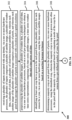
- FIG.3A , FIG.3B and FIG.3C are an exemplary flow diagram illustrating a method 300 for using the system 100 of FIG.1 according to an embodiment of the present disclosure.
- a plurality of inputs is received at the one or more input module 202.
- the plurality of inputs is associated with crop details and comprises a plurality of satellite image, a plurality of weather data, a plurality of soil data, a plurality of cloud free historical satellite data.
- Each satellite image of the plurality of satellite image comprises a plurality of pixels, wherein each pixel from amongst the plurality of pixels is associated with a location and a spatial resolution.
- the plurality of weather data includes parameters associated with climatic details of the location such as such as temperature, humidity, rainfall, and so on.
- the historical and current satellite data consists of information in multiple spectral wavelengths such as blue, green, red, , red edge, near infrared, shortwave infrared, etc.
- the plurality of soil data includes parameters associated with soil details of the location such as soil texture, soil depth, and so on.
- the method (300) includes preprocessing the plurality of inputs based on a set of pre-processing techniques.
- a plurality of weather data, a plurality of soil data are pre-processed to obtain a time-series representations comprising of a time series satellite images, a time series weather data and a time series soil data.
- the set of pre-processing techniques comprises of several steps based on a format of the plurality of inputs, wherein the several steps includes imputation of missing values, estimation of some derived inputs using the set of pre-processing techniques that includes a moving average technique, a temporal maxima, a cloud flag layer data from a satellite image provider.
- the plurality of satellite images is preprocessed based on Satellite image preprocessing mainly involves atmospheric correction i.e. conversion of Digital Number (DN) values to Surface reflectance.
- DN Digital Number
- the cloud is masked clouds to remove noisy data.
- Further preprocessing the plurality of weather data mainly involves filling of missing values using technique such as moving average, and the preprocessing also involves estimation of parameters such as accumulated rainfall, average temperature etc.
- Further preprocessing of plurality of soil data involves filling of missing values using spatial interpolation technique such as Inverse Distance Weighting (IDW), Krigging etc.,
- IDW Inverse Distance Weighting
- the method (300) includes identifying at least one crop that is grown in for each pixel from the plurality of pixels for each season for a year in the crop identifier 206.
- the crop is identified using the time series satellite images based on a machine learning technique.
- the machine learning technique comprises one of a support vector machine (SVM), a deep neural network, and a Random forest.
- SVM support vector machine
- a deep neural network e.g., a neural network
- a Random forest e.g., a Bayer Network
- the method (300) includes determining a majority crop at each pixel from the plurality of pixels at the majority crop identifier 208.
- the majority crop is determined using the identified crop.
- the majority crop is defined as the crop that is grown more often in the pixel. Further the majority crop is estimated based on computing a mode of the crop for a season from a pre-defined number of years for the pixel.
- the majority crop is estimated based on computing a mode of the crop for a season from a pre-defined number of years for the pixel.
- the determination of the majority crop is can be expressed as shown below:
- Majority Crop f Cs 1 , Cs 2 , Cs 3 ... . Csn Wherein,
- the method (300) includes determining a phenology of the majority crop at each pixel from the plurality of pixels in each season for a year in the phenology determiner 210.
- the phenology of the majority crop based on a time series analysis of the time series satellite images
- the time series analysis comprises one of identification of a local minima and an accumulated slope parameter value slope.
- time series analysis is performed in steps that includes plotting the timeseries based on a plurality of pixel values (available at different times during a cropping season),applying time-series smoothing and outlier removal techniques and identifying a local minima and an accumulated slope parameter value slope from the smoothed and noise-free time series.
- the method (300) includes determining a cropping intensity at each pixel from the plurality of pixels for a plurality of years, via the cropping intensity determiner 212.
- the cropping intensity is determined using the time series satellite images and the phenology of the majority crop based on a heuristic time series analysis technique.
- the heuristic time series analysis technique comprises identification of peaks from the phenology.
- the heuristic time series analysis technique is implemented in several steps that include plotting the data for a pixel from the time series satellite images during a cropping season based on the pixel values available at different times during a cropping season. Further time-series smoothing techniques, outlier removal techniques and noise-free time series techniques is applied to identify the local minima and an accumulated slope parameter value slope to finally determine the cropping intensity.
- the method (300) includes re-arranging, via the re-arranger 214, wherein the parameters re-arranged include the majority crop, the phenology, the cropping intensity, a time series weather data and a time series soil data of each pixel within the plurality of pixels in the satellite image.
- the re-arranging is implemented based on the spatial resolution of the pixels to obtain a plurality of re-arranged pixels.
- the parameters (the majority crop, the phenology, the cropping intensity, a time series weather data and a time series soil data) have a different spatial resolution associated in each pixel within the plurality of pixels in the satellite image. Hence to the parameters are stacked in layers to obtain a similar spatial resolution.
- techniques such as raster resampling is used to defined spatial resolution and re-arrange to obtain a plurality of re-arranged pixels.
- the method (300) includes estimating a degree of similarity between the plurality of re-arranged pixels, via the similarity estimator 216.
- the pixels are compared to their neighboring pixels iteratively based on a similarity estimation technique.
- the similarity estimation technique comprises one of a Euclidean or a Manhattan distance, a Pairwise pixel similarity technique.
- the method (300) includes clustering each pixels of the plurality of re-arranged pixels, via the agro-phenological zone identification module 218.
- the pixels are clustered to identify an agro-phenological zone for each pixel of the plurality of re-arranged pixels based on a clustering technique.
- the clustering technique comprises one of a K-means and a hierarchical clustering technique.
- the plurality of re-arranged pixels is a stacked layer containing majority crop, phenology, cropping intensity, rainfall data etc.
- the clustering is initiated with a pre-defined value for k, wherein considering an example where k is defined as 7 clusters and then iteratively optimized on the number of clusters to identify the agro-phenological zones.
- the identified agro-phenological zone can be displayed to a user as an output. Further the disclosure also discloses method to update the identified agro-phenological zone which is shared in detail in the further sections. The method disclosed for updating the identified agro-phenological zone can be used for even existing state of art agro-phenological zones identified by other organizations too, hence the terms identified agro-phenological zone and the agro-phenological zone are used inter-changeable in the next sections.
- the method (300) includes updating the identified agro-phenological zone for each pixel of the plurality of re-arranged pixels, via the agro-phenological zone updating module 220.
- the identified agro-phenological zone is updated based on an agro-phenological zone updating technique.
- a plurality of historic data of agro-phenological zone for the satellite image is received at the agro-phenological zone updating module 220.
- the historic data of agro-phenological zone includes one of the identified agro-phenological zones or an existing agro-phenological zone.
- the method 400 includes estimating a degree of change of pixels between a pre-defined historic data of agro-phenological zone and the agro-phenological zone.
- the degree of change of pixels is estimated based on a comparison technique.
- the comparison technique includes differencing - thresholding, image ratioing and thresholding and so on, wherein a difference term is identified between the pixels from a base zone and an updated available information.
- the base zone ( or baseline zone) is the identified agro-phenological zone/existing agro-phenological zone that should be updated.
- the thresholding can be further used to see change happened due to the added information from current cropping season.
- the method includes updating the agro-phenological zone using the degree of change based on a pre-defined threshold parameter representing the number of pixels within the agro-phenological.
- the pre-defined threshold parameter is dynamically determined based on the satellite image is received ( in step 402 ) and the pixels from the base zone.
- the pre-defined threshold parameter is defined as numerical value "5".
- the updated agro-phenological zone can be displayed to a user as an output along with the identified agro-phenological zone or an existing agro-phenological zone.
- the hardware device can be any kind of device which can be programmed including e.g. any kind of computer like a server or a personal computer, or the like, or any combination thereof.
- the device may also include means which could be e.g. hardware means like e.g. an application-specific integrated circuit (ASIC), a field-programmable gate array (FPGA), or a combination of hardware and software means, e.g.
- ASIC application-specific integrated circuit
- FPGA field-programmable gate array
- the means can include both hardware means and software means.
- the method embodiments described herein could be implemented in hardware and software.
- the device may also include software means.
- the embodiments may be implemented on different hardware devices, e.g. using a plurality of CPUs.
- the embodiments herein can comprise hardware and software elements.
- the embodiments that are implemented in software include but are not limited to, firmware, resident software, microcode, etc.
- the functions performed by various components described herein may be implemented in other components or combinations of other components.
- a computer-usable or computer readable medium can be any apparatus that can comprise, store, communicate, propagate, or transport the program for use by or in connection with the instruction execution system, apparatus, or device.
- a computer-readable storage medium refers to any type of physical memory on which information or data readable by a processor may be stored.
- a computer-readable storage medium may store instructions for execution by one or more processors, including instructions for causing the processor(s) to perform steps or stages consistent with the embodiments described herein.
- the term "computer-readable medium” should be understood to include tangible items and exclude carrier waves and transient signals, i.e., be non-transitory. Examples include random access memory (RAM), read-only memory (ROM), volatile memory, nonvolatile memory, hard drives, CD ROMs, DVDs, flash drives, disks, and any other known physical storage media.
Landscapes
- Engineering & Computer Science (AREA)
- Theoretical Computer Science (AREA)
- Physics & Mathematics (AREA)
- General Physics & Mathematics (AREA)
- Computer Vision & Pattern Recognition (AREA)
- Multimedia (AREA)
- Health & Medical Sciences (AREA)
- General Health & Medical Sciences (AREA)
- Evolutionary Computation (AREA)
- Databases & Information Systems (AREA)
- Computing Systems (AREA)
- Medical Informatics (AREA)
- Software Systems (AREA)
- Artificial Intelligence (AREA)
- Astronomy & Astrophysics (AREA)
- Remote Sensing (AREA)
- Image Processing (AREA)
- Management, Administration, Business Operations System, And Electronic Commerce (AREA)
- Image Analysis (AREA)
Claims (12)
- Prozessorimplementiertes Verfahren (300), umfassend:Empfangen einer Mehrzahl von Eingaben, die Erntegutdetails zugeordnet sind, über einen oder mehrere Hardwareprozessoren, wobei die Mehrzahl von Eingaben eine Mehrzahl von Satellitenbildern, eine Mehrzahl von Wetterdaten, eine Mehrzahl von Bodendaten, eine Mehrzahl von wolkenlosen historischen Satellitendaten umfasst, wobei jedes Satellitenbild der Mehrzahl von Satellitenbildern eine Mehrzahl von Pixeln umfasst, und wobei jedes Pixel aus der Mehrzahl von Pixeln einem Ort und einer räumlichen Auflösung zugeordnet ist, (302)dadurch gekennzeichnet, dass:Vorverarbeiten der Mehrzahl von Satellitenbildern, einer Mehrzahl von Wetterdaten, einer Mehrzahl von Bodendaten, über den einen oder die mehreren Hardwareprozessoren, basierend auf einem Satz von Vorverarbeitungstechniken, um eine Zeitreihendarstellung zu erhalten, die aus einer Zeitreihe von Satellitenbildern, einer Zeitreihe von Wetterdaten und einer Zeitreihe von Bodendaten besteht; (304)Identifizieren mindestens eines Ernteguts, das für jedes Pixel aus der Mehrzahl von Pixeln für jede Jahreszeit für ein Jahr angebaut wird, über den einen oder die mehreren Hardwareprozessoren, unter Verwendung der Zeitreihe von Satellitenbildern basierend auf einer Maschinenlerntechnik; (306)Bestimmen eines Mehrheitsernteguts an jedem Pixel aus der Mehrzahl von Pixeln, über den einen oder die mehreren Hardwareprozessoren, unter Verwendung des identifizierten Ernteguts, wobei das Mehrheitserntegut ein Erntegut ist, das in dem Pixel häufiger angebaut wird; (308)Bestimmen einer Phenologie des Mehrheitsernteguts an jedem Pixel aus der Mehrzahl von Pixeln in jeder Jahreszeit für ein Jahr, über den einen oder die mehreren Hardwareprozessoren, basierend auf einer Zeitreihenanalyse der Zeitreihe von Satellitenbildern; (310)Bestimmen einer Erntegutintensität an jedem Pixel aus der Mehrzahl von Pixeln für eine Mehrzahl von Jahren, über den einen oder die mehreren Hardwareprozessoren, unter Verwendung der Zeitreihe von Satellitenbildern und der Phenologie des Mehrheitsernteguts basierend auf einer heuristischen Zeitreihenanalysetechnik; (312)Neuanordnen, über den einen oder die mehreren Hardwareprozessoren, von Parametern, die das Mehrheitserntegut, die Phenologie, die Erntegutintensität, eine Zeitreihe von Wetterdaten und eine Zeitreihe von Bodendaten jedes Pixels innerhalb der Mehrzahl von Pixeln in dem Satellitenbild umfassen, basierend auf der räumlichen Auflösung der Pixel, um eine Mehrzahl von neu angeordneten Pixeln zu erhalten, wobei die Parameter eine unterschiedliche räumliche Auflösung aufweisen, die jedem Pixel innerhalb der Mehrzahl von Pixeln in dem Satellitenbild zugeordnet ist, und wobei die Parameter unter Verwendung von Rasterneuabtastung in Schichten gestapelt werden, um die Mehrzahl von neu angeordneten Pixeln zu erhalten; (314)Schätzen eines Ähnlichkeitsgrads zwischen der Mehrzahl von neu angeordneten Pixeln, über den einen oder die mehreren Hardwareprozessoren, wobei alle Pixel mit ihren benachbarten Pixeln iterativ basierend auf einer Ähnlichkeitsschätzungstechnik verglichen werden; (316)Clustern der Mehrzahl von neu angeordneten Pixeln, über den einen oder die mehreren Hardwareprozessoren, um eine agrophenologische Zone für jedes Pixel der Mehrzahl von neu angeordneten Pixeln basierend auf einer Clusteringtechnik zu identifizieren, wobei die agrophenologische Zone ein Cluster von Orten ist, das ähnliche Eigenschaften in Bezug auf agrarphenologische Eigenschaften aufweist, die der Landwirtschaft zugeordnet sind, und Parameter wie ein Erntegut, ein phenologisches Muster, eine Erntegutintensität, einen Niederschlagstrend und eine Bodenzusammensetzung beinhaltet; (318) undAktualisieren der identifizierten agrophenologischen Zone für jedes Pixel der Mehrzahl von neu angeordneten Pixeln, über den einen oder die mehreren Hardwareprozessoren, basierend auf einer agrophenologischen Zonenaktualisierungstechnik. (320)
- Verfahren nach Anspruch 1, wobei die agrophenologische Zonenaktualisierungstechnik (400) umfasst:Empfangen einer Mehrzahl von historischen Daten der agrophenologischen Zone für das Satellitenbild; (402)Schätzen eines Änderungsgrads von Pixeln zwischen vordefinierten historischen Daten der agrophenologischen Zone und der agrophenologischen Zone basierend auf einer Vergleichstechnik; (404) undAktualisieren der agrophenologischen Zone unter Verwendung des Änderungsgrads basierend auf einem vordefinierten Schwellenwertparameter, der die Anzahl von Pixeln innerhalb der agrophenologischen Zone darstellt. (406)
- Verfahren nach Anspruch 1, wobei der Satz von Vorverarbeitungstechniken mehrere Schritte umfasst, die auf einem Format der Mehrzahl von Eingaben basieren, wobei die mehreren Schritte eine Zurechnung von fehlenden Werten, eine Schätzung einiger abgeleiteter Eingaben unter Verwendung des Satzes von Vorverarbeitungstechniken, der eine gleitende Durchschnittstechnik umfasst, ein zeitliches Maximum, Cloud-Flag-Schichtdaten von einem Satellitenbildanbieter umfassen.
- Verfahren nach Anspruch 1, wobei die Maschinenlerntechnik eines von einer Support Vector Machine (SVM), einem tiefen neuronalen Netzwerk und einem Random Forest umfasst.
- Verfahren nach Anspruch 1, wobei die Ähnlichkeitsschätzungstechnik eines von einer euklidischen oder einer Manhattan-Distanz, einer paarweisen Pixelähnlichkeitstechnik usw. umfasst.
- Verfahren nach Anspruch 1, wobei die Clustering-Technik eines von einer K-Means- und einer hierarchischen Clustering-Technik umfasst.
- System (100), umfassend:eine Eingabe-/Ausgabeschnittstelle (106);einen oder mehrere Speicher (102); undeinen oder mehrere Hardwareprozessoren (104), wobei der eine oder die mehreren Speicher (102) mit dem einen oder den mehreren Hardwareprozessoren (104) gekoppelt sind, wobei der eine oder die mehreren Hardwareprozessoren (104) konfiguriert sind, um programmierte Anweisungen auszuführen, die in dem einen oder den mehreren Speichern (102) gespeichert sind, um:dadurch gekennzeichnet, dass:
eine Mehrzahl von Eingaben zu empfangen, die Erntegutdetails zugeordnet sind, über den einen oder die mehreren Hardwareprozessoren, wobei die Mehrzahl von Eingaben eine Mehrzahl von Satellitenbildern, eine Mehrzahl von Wetterdaten, eine Mehrzahl von Bodendaten, eine Mehrzahl von wolkenlosen historischen Satellitendaten umfasst, wobei jedes Satellitenbild der Mehrzahl von Satellitenbildern eine Mehrzahl von Pixeln umfasst, und wobei jedes Pixel aus der Mehrzahl von Pixeln einem Ort und einer räumlichen Auflösung zugeordnet ist,Vorverarbeiten der Mehrzahl von Satellitenbildern, einer Mehrzahl von Wetterdaten, einer Mehrzahl von Bodendaten, über den einen oder die mehreren Hardwareprozessoren, basierend auf einem Satz von Vorverarbeitungstechniken, um eine Zeitreihendarstellung zu erhalten, die aus einer Zeitreihe von Satellitenbildern, einer Zeitreihe von Wetterdaten und einer Zeitreihe von Bodendaten besteht;Identifizieren mindestens eines Ernteguts, das für jedes Pixel aus der Mehrzahl von Pixeln für jede Jahreszeit für ein Jahr angebaut wird, über den einen oder die mehreren Hardwareprozessoren, unter Verwendung der Zeitreihe von Satellitenbildern basierend auf einer Maschinenlerntechnik;Bestimmen eines Mehrheitsernteguts an jedem Pixel aus der Mehrzahl von Pixeln, über den einen oder die mehreren Hardwareprozessoren, unter Verwendung des identifizierten Ernteguts, wobei das Mehrheitserntegut ein Erntegut ist, das in dem Pixel häufiger angebaut wird;Bestimmen einer Phenologie des Mehrheitsernteguts an jedem Pixel aus der Mehrzahl von Pixeln in jeder Jahreszeit für ein Jahr, über den einen oder die mehreren Hardwareprozessoren, basierend auf einer Zeitreihenanalyse der Zeitreihe von Satellitenbildern;Bestimmen einer Erntegutintensität an jedem Pixel aus der Mehrzahl von Pixeln für eine Mehrzahl von Jahren, über den einen oder die mehreren Hardwareprozessoren, unter Verwendung der Zeitreihe von Satellitenbildern und der Phenologie des Mehrheitsernteguts basierend auf einer heuristischen Zeitreihenanalysetechnik;Neuanordnen, über den einen oder die mehreren Hardwareprozessoren, von Parametern, die das Mehrheitserntegut, die Phenologie, die Erntegutintensität, eine Zeitreihe von Wetterdaten und eine Zeitreihe von Bodendaten jedes Pixels innerhalb der Mehrzahl von Pixeln in dem Satellitenbild umfassen, basierend auf der räumlichen Auflösung der Pixel, um eine Mehrzahl von neu angeordneten Pixeln zu erhalten, wobei die Parameter eine unterschiedliche räumliche Auflösung aufweisen, die jedem Pixel innerhalb der Mehrzahl von Pixeln in dem Satellitenbild zugeordnet ist, und wobei die Parameter unter Verwendung von Rasterneuabtastung in Schichten gestapelt werden, um die Mehrzahl von neu angeordneten Pixeln zu erhalten;Schätzen eines Ähnlichkeitsgrads zwischen der Mehrzahl von neu angeordneten Pixeln, über den einen oder die mehreren Hardwareprozessoren, wobei alle Pixel mit ihren benachbarten Pixeln iterativ basierend auf einer Ähnlichkeitsschätzungstechnik verglichen werden;Clustern der Mehrzahl von neu angeordneten Pixeln, über den einen oder die mehreren Hardwareprozessoren, um eine agrophenologische Zone für jedes Pixel der Mehrzahl von neu angeordneten Pixeln basierend auf einer Clusteringtechnik zu identifizieren, wobei die agrophenologische Zone ein Cluster von Orten ist, das ähnliche Eigenschaften in Bezug auf agrarphenologische Eigenschaften aufweist, die der Landwirtschaft zugeordnet sind, und Parameter wie ein Erntegut, ein phenologisches Muster, eine Erntegutintensität, einen Niederschlagstrend und eine Bodenzusammensetzung beinhaltet; undAktualisieren der identifizierten agrophenologischen Zone für jedes Pixel der Mehrzahl von neu angeordneten Pixeln, über den einen oder die mehreren Hardwareprozessoren, basierend auf einer Zonenaktualisierungstechnik. - System nach Anspruch 7, wobei der eine oder die mehreren Hardwareprozessoren durch die Anweisungen konfiguriert sind, um die Zonenaktualisierungstechnik durchzuführen, umfassend:Empfangen einer Mehrzahl von historischen Daten der agrophenologischen Zone für das Satellitenbild;Schätzen eines Änderungsgrads von Pixeln zwischen vordefinierten historischen Daten der agrophenologischen Zone und der agrophenologischen Zone basierend auf einer Vergleichstechnik; undAktualisieren der agrophenologischen Zone unter Verwendung des Änderungsgrads basierend auf einem vordefinierten Schwellenwertparameter, der die Anzahl von Pixeln innerhalb einer Zone darstellt.
- System nach Anspruch 7, wobei der eine oder die mehreren Hardwareprozessoren durch die Anweisungen konfiguriert sind, um den Satz von Vorverarbeitungstechniken durchzuführen, der mehrere Schritte umfasst, die auf einem Format der Mehrzahl von Eingaben basieren, wobei die mehreren Schritte eine Zurechnung von fehlenden Werten, eine Schätzung einiger abgeleiteter Eingaben unter Verwendung des Satzes von Vorverarbeitungstechniken, der eine gleitende Durchschnittstechnik umfasst, ein zeitliches Maximum, Cloud-Flag-Schichtdaten von einem Satellitenbildanbieter umfassen.
- System nach Anspruch 7, wobei der eine oder die mehreren Hardwareprozessoren durch die Anweisungen konfiguriert sind, um die Maschinenlerntechnik durchzuführen, die eines von einer Support Vector Machine (SVM), einem tiefen neuronalen Netzwerk und einem Random Forest umfasst.
- System nach Anspruch 7, wobei der eine oder die mehreren Hardwareprozessoren durch die Anweisungen konfiguriert sind, um die Ähnlichkeitsschätzungstechnik durchzuführen, die eines von einer euklidischen oder einer Manhattan-Distanz, einer paarweisen Pixelähnlichkeitstechnik umfasst, und die Clustering-Technik eines von einer K-Means- und einer hierarchischen Clustering-Technik umfasst.
- Computerprogrammprodukt, umfassend ein nichtflüchtiges computerlesbares Medium mit einem darin verkörperten computerlesbaren Programm, wobei das computerlesbare Programm, wenn es auf einer Rechenvorrichtung ausgeführt wird, die Rechenvorrichtung veranlasst zum:Empfangen einer Mehrzahl von Eingaben, die Erntegutdetails zugeordnet sind, über einen oder mehrere Hardwareprozessoren, wobei die Mehrzahl von Eingaben eine Mehrzahl von Satellitenbildern, eine Mehrzahl von Wetterdaten, eine Mehrzahl von Bodendaten, eine Mehrzahl von wolkenlosen historischen Satellitendaten umfasst, wobei jedes Satellitenbild der Mehrzahl von Satellitenbildern eine Mehrzahl von Pixeln umfasst, und wobei jedes Pixel aus der Mehrzahl von Pixeln einem Ort und einer räumlichen Auflösung zugeordnet ist,dadurch gekennzeichnet, dass:Vorverarbeiten der Mehrzahl von Satellitenbildern, einer Mehrzahl von Wetterdaten, einer Mehrzahl von Bodendaten, über den einen oder die mehreren Hardwareprozessoren, basierend auf einem Satz von Vorverarbeitungstechniken, um eine Zeitreihendarstellung zu erhalten, die aus einer Zeitreihe von Satellitenbildern, einer Zeitreihe von Wetterdaten und einer Zeitreihe von Bodendaten besteht;Identifizieren mindestens eines Ernteguts, das für jedes Pixel aus der Mehrzahl von Pixeln für jede Jahreszeit für ein Jahr angebaut wird, über den einen oder die mehreren Hardwareprozessoren, unter Verwendung der Zeitreihe von Satellitenbildern basierend auf einer Maschinenlerntechnik;Bestimmen eines Mehrheitsernteguts an jedem Pixel aus der Mehrzahl von Pixeln, über den einen oder die mehreren Hardwareprozessoren, unter Verwendung des identifizierten Ernteguts, wobei das Mehrheitserntegut ein Erntegut ist, das in dem Pixel häufiger angebaut wird;Bestimmen einer Phenologie des Mehrheitsernteguts an jedem Pixel aus der Mehrzahl von Pixeln in jeder Jahreszeit für ein Jahr, über den einen oder die mehreren Hardwareprozessoren, basierend auf einer Zeitreihenanalyse der Zeitreihe von Satellitenbildern;Bestimmen einer Erntegutintensität an jedem Pixel aus der Mehrzahl von Pixeln für eine Mehrzahl von Jahren, über den einen oder die mehreren Hardwareprozessoren, unter Verwendung der Zeitreihe von Satellitenbildern und der Phenologie des Mehrheitsernteguts basierend auf einer heuristischen Zeitreihenanalysetechnik;Neuanordnen, über den einen oder die mehreren Hardwareprozessoren, von Parametern, die das Mehrheitserntegut, die Phenologie, die Erntegutintensität, eine Zeitreihe von Wetterdaten und eine Zeitreihe von Bodendaten jedes Pixels innerhalb der Mehrzahl von Pixeln in dem Satellitenbild umfassen, basierend auf der räumlichen Auflösung der Pixel, um eine Mehrzahl von neu angeordneten Pixeln zu erhalten, wobei die Parameter eine unterschiedliche räumliche Auflösung aufweisen, die jedem Pixel innerhalb der Mehrzahl von Pixeln in dem Satellitenbild zugeordnet ist, und wobei die Parameter unter Verwendung von Rasterneuabtastung in Schichten gestapelt werden, um die Mehrzahl von neu angeordneten Pixeln zu erhalten;Schätzen eines Ähnlichkeitsgrads zwischen der Mehrzahl von neu angeordneten Pixeln, über den einen oder die mehreren Hardwareprozessoren, wobei alle Pixel mit ihren benachbarten Pixeln iterativ basierend auf einer Ähnlichkeitsschätzungstechnik verglichen werden;Clustern der Mehrzahl von neu angeordneten Pixeln, über den einen oder die mehreren Hardwareprozessoren, um eine agrophenologische Zone für jedes Pixel der Mehrzahl von neu angeordneten Pixeln basierend auf einer Clusteringtechnik zu identifizieren, wobei die agrophenologische Zone ein Cluster von Orten ist, das ähnliche Eigenschaften in Bezug auf agrarphenologische Eigenschaften aufweist, die der Landwirtschaft zugeordnet sind, und Parameter wie ein Erntegut, ein phenologisches Muster, eine Erntegutintensität, einen Niederschlagstrend und eine Bodenzusammensetzung beinhaltet; undAktualisieren der identifizierten agrophenologischen Zone für jedes Pixel der Mehrzahl von neu angeordneten Pixeln, über den einen oder die mehreren Hardwareprozessoren, basierend auf einer agrophenologischen Zonenaktualisierungstechnik.
Applications Claiming Priority (1)
| Application Number | Priority Date | Filing Date | Title |
|---|---|---|---|
| IN202121018449 | 2021-04-21 |
Publications (3)
| Publication Number | Publication Date |
|---|---|
| EP4080451A1 EP4080451A1 (de) | 2022-10-26 |
| EP4080451B1 true EP4080451B1 (de) | 2025-06-04 |
| EP4080451C0 EP4080451C0 (de) | 2025-06-04 |
Family
ID=78725207
Family Applications (1)
| Application Number | Title | Priority Date | Filing Date |
|---|---|---|---|
| EP21203485.4A Active EP4080451B1 (de) | 2021-04-21 | 2021-10-19 | Verfahren und system zur identifizierung von agrophänologischen zonen und zur aktualisierung von agrophänologischen zonen |
Country Status (3)
| Country | Link |
|---|---|
| US (1) | US12159456B2 (de) |
| EP (1) | EP4080451B1 (de) |
| BR (1) | BR102021023690A2 (de) |
Families Citing this family (1)
| Publication number | Priority date | Publication date | Assignee | Title |
|---|---|---|---|---|
| EP4080451B1 (de) * | 2021-04-21 | 2025-06-04 | Tata Consultancy Services Limited | Verfahren und system zur identifizierung von agrophänologischen zonen und zur aktualisierung von agrophänologischen zonen |
Family Cites Families (11)
| Publication number | Priority date | Publication date | Assignee | Title |
|---|---|---|---|---|
| US8055465B2 (en) * | 2007-07-09 | 2011-11-08 | International Business Machines Corporation | Method, data processing program and computer program product for determining a periodic cycle of time series data |
| WO2011128922A1 (en) * | 2010-04-15 | 2011-10-20 | Neptuny S.R.L. | Automated upgrading method for capacity of it system resources |
| US10025983B2 (en) * | 2015-09-21 | 2018-07-17 | The Climate Corporation | Ponding water detection on satellite imagery |
| US10726354B2 (en) * | 2016-01-29 | 2020-07-28 | Splunk Inc. | Concurrently forecasting multiple time series |
| US10664702B2 (en) * | 2016-12-30 | 2020-05-26 | International Business Machines Corporation | Method and system for crop recognition and boundary delineation |
| US11263707B2 (en) * | 2017-08-08 | 2022-03-01 | Indigo Ag, Inc. | Machine learning in agricultural planting, growing, and harvesting contexts |
| US11715181B2 (en) * | 2018-02-09 | 2023-08-01 | The Board Of Trustees Of The University Of Illinois | System and method to fuse multiple sources of optical data to generate a high-resolution, frequent and cloud-/gap-free surface reflectance product |
| US11037343B2 (en) * | 2018-05-11 | 2021-06-15 | The Climate Corporation | Digital visualization of periodically updated in-season agricultural fertility prescriptions |
| CA3120370C (en) * | 2018-12-11 | 2025-05-27 | Climate Llc | MAPPING LAND PROPERTIES WITH SATELLITE DATA USING MACHINE LEARNING APPROACHES |
| EP4080451B1 (de) * | 2021-04-21 | 2025-06-04 | Tata Consultancy Services Limited | Verfahren und system zur identifizierung von agrophänologischen zonen und zur aktualisierung von agrophänologischen zonen |
| US20230076104A1 (en) * | 2021-08-26 | 2023-03-09 | Semiosbio Technologies Inc. | Crop phenology characterization method, and system using same |
-
2021
- 2021-10-19 EP EP21203485.4A patent/EP4080451B1/de active Active
- 2021-10-21 US US17/451,664 patent/US12159456B2/en active Active
- 2021-11-24 BR BR102021023690-6A patent/BR102021023690A2/pt unknown
Also Published As
| Publication number | Publication date |
|---|---|
| US20220343099A1 (en) | 2022-10-27 |
| US12159456B2 (en) | 2024-12-03 |
| BR102021023690A2 (pt) | 2023-02-14 |
| EP4080451C0 (de) | 2025-06-04 |
| EP4080451A1 (de) | 2022-10-26 |
Similar Documents
| Publication | Publication Date | Title |
|---|---|---|
| US11527062B2 (en) | Method and system for crop recognition and boundary delineation | |
| US11164310B2 (en) | Method and system for crop recognition and boundary delineation | |
| US8542923B2 (en) | Live coherent image selection | |
| US10555461B2 (en) | Systems and methods for estimating effective pest severity index | |
| CN114419367B (zh) | 一种农作物高精度制图方法及系统 | |
| Gavankar et al. | Object based building footprint detection from high resolution multispectral satellite image using K-means clustering algorithm and shape parameters | |
| Htitiou et al. | Deep learning-based spatiotemporal fusion approach for producing high-resolution NDVI time-series datasets | |
| US11393194B2 (en) | Selective analysis for field boundary detection | |
| EP4080451B1 (de) | Verfahren und system zur identifizierung von agrophänologischen zonen und zur aktualisierung von agrophänologischen zonen | |
| CN117612031A (zh) | 一种基于语义分割的撂荒地遥感识别方法 | |
| EP4435733B1 (de) | Verfahren und system zur schätzung der anbaudauer von deckfrüchten und des integrierten deckfruchtindex (icci) | |
| Jia et al. | Multiple-feature-driven co-training method for crop mapping based on remote sensing time series imagery | |
| US20230005259A1 (en) | Method and system for crop loss estimation | |
| KR20220055807A (ko) | 식물의 생육 상태 판단 장치 및 방법 | |
| Zhou et al. | Superpixel-based time-series reconstruction for optical images incorporating SAR data using autoencoder networks | |
| Batista et al. | On the classification of remote sensing high spatial resolution image data | |
| KR20220055806A (ko) | 스마트 팜 관리 시스템 및 방법 | |
| Kalpana | Analysis of rain fall and the temperature of Coimbatore District using land use and land cover change detection by image segmentation | |
| CN114511724B (zh) | 一种大规模遥感影像土壤变化伪标签制作及变化检测方法 | |
| Bakos et al. | A novel framework for urban mapping from multispectral and hyperspectral data | |
| Radhamani et al. | Performance evaluation towards automatic building and road detection technique for high-resolution remote sensing images | |
| Zhao et al. | Non-overlapping classification of hyperspectral imagery | |
| KR102735798B1 (ko) | 소셜 네트워크 서비스 기반의 식물 정보 관리 서비스 제공 방법 및 장치 | |
| EP4138026B1 (de) | Systeme und verfahren zum detektieren verdeckter notleidender aktiva (npas) und zum vorhersagen potenzieller npas in der landwirtschaft | |
| Shilaskar et al. | Vegetation Segmentation of Satellite Images Using U-Net Architecture |
Legal Events
| Date | Code | Title | Description |
|---|---|---|---|
| PUAI | Public reference made under article 153(3) epc to a published international application that has entered the european phase |
Free format text: ORIGINAL CODE: 0009012 |
|
| STAA | Information on the status of an ep patent application or granted ep patent |
Free format text: STATUS: REQUEST FOR EXAMINATION WAS MADE |
|
| 17P | Request for examination filed |
Effective date: 20220907 |
|
| AK | Designated contracting states |
Kind code of ref document: A1 Designated state(s): AL AT BE BG CH CY CZ DE DK EE ES FI FR GB GR HR HU IE IS IT LI LT LU LV MC MK MT NL NO PL PT RO RS SE SI SK SM TR |
|
| GRAP | Despatch of communication of intention to grant a patent |
Free format text: ORIGINAL CODE: EPIDOSNIGR1 |
|
| STAA | Information on the status of an ep patent application or granted ep patent |
Free format text: STATUS: GRANT OF PATENT IS INTENDED |
|
| INTG | Intention to grant announced |
Effective date: 20250207 |
|
| GRAS | Grant fee paid |
Free format text: ORIGINAL CODE: EPIDOSNIGR3 |
|
| GRAA | (expected) grant |
Free format text: ORIGINAL CODE: 0009210 |
|
| STAA | Information on the status of an ep patent application or granted ep patent |
Free format text: STATUS: THE PATENT HAS BEEN GRANTED |
|
| AK | Designated contracting states |
Kind code of ref document: B1 Designated state(s): AL AT BE BG CH CY CZ DE DK EE ES FI FR GB GR HR HU IE IS IT LI LT LU LV MC MK MT NL NO PL PT RO RS SE SI SK SM TR |
|
| REG | Reference to a national code |
Ref country code: GB Ref legal event code: FG4D |
|
| REG | Reference to a national code |
Ref country code: CH Ref legal event code: EP |
|
| REG | Reference to a national code |
Ref country code: IE Ref legal event code: FG4D |
|
| U01 | Request for unitary effect filed |
Effective date: 20250604 |
|
| U07 | Unitary effect registered |
Designated state(s): AT BE BG DE DK EE FI FR IT LT LU LV MT NL PT RO SE SI Effective date: 20250611 |
|
| PG25 | Lapsed in a contracting state [announced via postgrant information from national office to epo] |
Ref country code: ES Free format text: LAPSE BECAUSE OF FAILURE TO SUBMIT A TRANSLATION OF THE DESCRIPTION OR TO PAY THE FEE WITHIN THE PRESCRIBED TIME-LIMIT Effective date: 20250604 |
|
| PG25 | Lapsed in a contracting state [announced via postgrant information from national office to epo] |
Ref country code: NO Free format text: LAPSE BECAUSE OF FAILURE TO SUBMIT A TRANSLATION OF THE DESCRIPTION OR TO PAY THE FEE WITHIN THE PRESCRIBED TIME-LIMIT Effective date: 20250904 Ref country code: GR Free format text: LAPSE BECAUSE OF FAILURE TO SUBMIT A TRANSLATION OF THE DESCRIPTION OR TO PAY THE FEE WITHIN THE PRESCRIBED TIME-LIMIT Effective date: 20250905 |
|
| PG25 | Lapsed in a contracting state [announced via postgrant information from national office to epo] |
Ref country code: PL Free format text: LAPSE BECAUSE OF FAILURE TO SUBMIT A TRANSLATION OF THE DESCRIPTION OR TO PAY THE FEE WITHIN THE PRESCRIBED TIME-LIMIT Effective date: 20250604 |
|
| PG25 | Lapsed in a contracting state [announced via postgrant information from national office to epo] |
Ref country code: HR Free format text: LAPSE BECAUSE OF FAILURE TO SUBMIT A TRANSLATION OF THE DESCRIPTION OR TO PAY THE FEE WITHIN THE PRESCRIBED TIME-LIMIT Effective date: 20250604 |
|
| PG25 | Lapsed in a contracting state [announced via postgrant information from national office to epo] |
Ref country code: RS Free format text: LAPSE BECAUSE OF FAILURE TO SUBMIT A TRANSLATION OF THE DESCRIPTION OR TO PAY THE FEE WITHIN THE PRESCRIBED TIME-LIMIT Effective date: 20250904 |
|
| REG | Reference to a national code |
Ref country code: CH Ref legal event code: U11 Free format text: ST27 STATUS EVENT CODE: U-0-0-U10-U11 (AS PROVIDED BY THE NATIONAL OFFICE) Effective date: 20251101 |
|
| U20 | Renewal fee for the european patent with unitary effect paid |
Year of fee payment: 5 Effective date: 20251027 |
|
| PG25 | Lapsed in a contracting state [announced via postgrant information from national office to epo] |
Ref country code: IS Free format text: LAPSE BECAUSE OF FAILURE TO SUBMIT A TRANSLATION OF THE DESCRIPTION OR TO PAY THE FEE WITHIN THE PRESCRIBED TIME-LIMIT Effective date: 20251004 |
|
| PGFP | Annual fee paid to national office [announced via postgrant information from national office to epo] |
Ref country code: GB Payment date: 20251023 Year of fee payment: 5 |
|
| PG25 | Lapsed in a contracting state [announced via postgrant information from national office to epo] |
Ref country code: SM Free format text: LAPSE BECAUSE OF FAILURE TO SUBMIT A TRANSLATION OF THE DESCRIPTION OR TO PAY THE FEE WITHIN THE PRESCRIBED TIME-LIMIT Effective date: 20250604 |
|
| PGFP | Annual fee paid to national office [announced via postgrant information from national office to epo] |
Ref country code: CH Payment date: 20251101 Year of fee payment: 5 |
|
| PG25 | Lapsed in a contracting state [announced via postgrant information from national office to epo] |
Ref country code: CZ Free format text: LAPSE BECAUSE OF FAILURE TO SUBMIT A TRANSLATION OF THE DESCRIPTION OR TO PAY THE FEE WITHIN THE PRESCRIBED TIME-LIMIT Effective date: 20250604 |
|
| PG25 | Lapsed in a contracting state [announced via postgrant information from national office to epo] |
Ref country code: SK Free format text: LAPSE BECAUSE OF FAILURE TO SUBMIT A TRANSLATION OF THE DESCRIPTION OR TO PAY THE FEE WITHIN THE PRESCRIBED TIME-LIMIT Effective date: 20250604 |
|
| PLBE | No opposition filed within time limit |
Free format text: ORIGINAL CODE: 0009261 |
|
| STAA | Information on the status of an ep patent application or granted ep patent |
Free format text: STATUS: NO OPPOSITION FILED WITHIN TIME LIMIT |
|
| REG | Reference to a national code |
Ref country code: CH Ref legal event code: L10 Free format text: ST27 STATUS EVENT CODE: U-0-0-L10-L00 (AS PROVIDED BY THE NATIONAL OFFICE) Effective date: 20260416 |