EP4080862B1 - Intelligentes erinnerungsverfahren und -vorrichtung - Google Patents
Intelligentes erinnerungsverfahren und -vorrichtung Download PDFInfo
- Publication number
- EP4080862B1 EP4080862B1 EP21799956.4A EP21799956A EP4080862B1 EP 4080862 B1 EP4080862 B1 EP 4080862B1 EP 21799956 A EP21799956 A EP 21799956A EP 4080862 B1 EP4080862 B1 EP 4080862B1
- Authority
- EP
- European Patent Office
- Prior art keywords
- electronic device
- message
- task
- user
- reminding
- Prior art date
- Legal status (The legal status is an assumption and is not a legal conclusion. Google has not performed a legal analysis and makes no representation as to the accuracy of the status listed.)
- Active
Links
Images





Classifications
-
- G—PHYSICS
- G06—COMPUTING OR CALCULATING; COUNTING
- G06F—ELECTRIC DIGITAL DATA PROCESSING
- G06F40/00—Handling natural language data
- G06F40/30—Semantic analysis
-
- G—PHYSICS
- G06—COMPUTING OR CALCULATING; COUNTING
- G06Q—INFORMATION AND COMMUNICATION TECHNOLOGY [ICT] SPECIALLY ADAPTED FOR ADMINISTRATIVE, COMMERCIAL, FINANCIAL, MANAGERIAL OR SUPERVISORY PURPOSES; SYSTEMS OR METHODS SPECIALLY ADAPTED FOR ADMINISTRATIVE, COMMERCIAL, FINANCIAL, MANAGERIAL OR SUPERVISORY PURPOSES, NOT OTHERWISE PROVIDED FOR
- G06Q10/00—Administration; Management
- G06Q10/10—Office automation; Time management
- G06Q10/109—Time management, e.g. calendars, reminders, meetings or time accounting
- G06Q10/1097—Time management, e.g. calendars, reminders, meetings or time accounting using calendar-based scheduling for task assignment
-
- G—PHYSICS
- G08—SIGNALLING
- G08B—SIGNALLING SYSTEMS, e.g. PERSONAL CALLING SYSTEMS; ORDER TELEGRAPHS; ALARM SYSTEMS
- G08B21/00—Alarms responsive to a single specified undesired or abnormal condition and not otherwise provided for
- G08B21/18—Status alarms
- G08B21/24—Reminder alarms, e.g. anti-loss alarms
-
- H—ELECTRICITY
- H04—ELECTRIC COMMUNICATION TECHNIQUE
- H04M—TELEPHONIC COMMUNICATION
- H04M1/00—Substation equipment, e.g. for use by subscribers
- H04M1/72—Mobile telephones; Cordless telephones, i.e. devices for establishing wireless links to base stations without route selection
- H04M1/724—User interfaces specially adapted for cordless or mobile telephones
- H04M1/72448—User interfaces specially adapted for cordless or mobile telephones with means for adapting the functionality of the device according to specific conditions
- H04M1/72451—User interfaces specially adapted for cordless or mobile telephones with means for adapting the functionality of the device according to specific conditions according to schedules, e.g. using calendar applications
-
- H—ELECTRICITY
- H04—ELECTRIC COMMUNICATION TECHNIQUE
- H04M—TELEPHONIC COMMUNICATION
- H04M1/00—Substation equipment, e.g. for use by subscribers
- H04M1/72—Mobile telephones; Cordless telephones, i.e. devices for establishing wireless links to base stations without route selection
- H04M1/724—User interfaces specially adapted for cordless or mobile telephones
- H04M1/72448—User interfaces specially adapted for cordless or mobile telephones with means for adapting the functionality of the device according to specific conditions
- H04M1/72454—User interfaces specially adapted for cordless or mobile telephones with means for adapting the functionality of the device according to specific conditions according to context-related or environment-related conditions
-
- G—PHYSICS
- G06—COMPUTING OR CALCULATING; COUNTING
- G06F—ELECTRIC DIGITAL DATA PROCESSING
- G06F40/00—Handling natural language data
- G06F40/20—Natural language analysis
- G06F40/205—Parsing
- G06F40/211—Syntactic parsing, e.g. based on context-free grammar [CFG] or unification grammars
-
- G—PHYSICS
- G06—COMPUTING OR CALCULATING; COUNTING
- G06F—ELECTRIC DIGITAL DATA PROCESSING
- G06F40/00—Handling natural language data
- G06F40/20—Natural language analysis
- G06F40/237—Lexical tools
- G06F40/242—Dictionaries
-
- G—PHYSICS
- G06—COMPUTING OR CALCULATING; COUNTING
- G06F—ELECTRIC DIGITAL DATA PROCESSING
- G06F40/00—Handling natural language data
- G06F40/20—Natural language analysis
- G06F40/279—Recognition of textual entities
- G06F40/284—Lexical analysis, e.g. tokenisation or collocates
-
- H—ELECTRICITY
- H04—ELECTRIC COMMUNICATION TECHNIQUE
- H04M—TELEPHONIC COMMUNICATION
- H04M2250/00—Details of telephonic subscriber devices
- H04M2250/12—Details of telephonic subscriber devices including a sensor for measuring a physical value, e.g. temperature or motion
Definitions
- This application relates to the field of artificial intelligence technologies, and in particular, to an intelligent reminding method and device based on semantic analysis.
- US 2016/0248865 A1 describes providing personalized notifications to a user.
- the notifications correspond to events, which can include information items, unaddressed or unnoticed by a user.
- the unaddressed events may be determined based on sensor data provided by a user device associated with the user including user activity pattern information.
- the method comprises the steps of when a communication message is received, judging whether the communication message is a first reminding message or not, wherein the first reminding message is the message which comprises a preset first keyword and is used for reminding the backlog; if the communication message is the first reminding message, obtaining information of a preset item related to the backlog from the communication message; sending a first message to a second server; in an appointed time period before the deadline of the backlog reaches, judging whether a second reminding message for reminding that the backlog is finished is received or not; and if the second reminding message is not received, reminding the backlog at preset time according to the first reminding message.
- the method further includes: further determining whether the first interaction information includes a first keyword related to the task in a case that there is the first interaction information in the first electronic device; and presenting the reminding information in a case that the first interaction information does not include the first keyword.
- the method before the determining whether there is first interaction information in the first electronic device, the method further includes:
- the method further includes: displaying a second message in an input candidate box of the first application in a case that there is the first interaction information in the first electronic device, where the second message is a message that the first user is recommended to send to the second user, and the second message indicates that the task has been completed.
- a sentence sent by automatic recommendation may further help the user give quick feedback, so that the user's time is saved and working efficiency is improved.
- keywords of the task are automatically extracted by using a semantic analysis method, which helps the user more accurately discover and manage the task.
- the message that has been read but not been replied to lacks a message identifier and is prone to be forgotten.
- Performing the interaction determining on such messages effectively resolves the problem of performing task reminding for the user who has many tasks and is prone to forget the tasks.
- the method further includes receiving a third message by the first application, where the third message is an unread message, and the third message includes a first identifier; and the reminding information includes a second identifier displayed on the first message, and the second identifier is different from the first identifier.
- a reminder of the first message including the task is set to be different from an identifier of an unread message, so that the identification of a reminding message of an uncompleted task can be improved and the first message including the task is not prone to be confused with the unread message.
- the method further includes receiving a third message by the first application, where the third message is an unread message, and the third message includes a first identifier; and the reminding information includes a second identifier displayed on the first message, and the second identifier is the same as the first identifier.
- the reminder of the first message including the task is set to be the same as the identifier of the unread message, the user can also be reminded that the task is not completed.
- this application provides a computer storage medium, including computer instructions.
- the computer instructions When the computer instructions are run on an electronic device, the electronic device is caused to perform the reminding method in any possible design of any one of the foregoing aspects.
- a task to be processed by the user is determined by semantic analysis of the message, and task detection is performed on the task to be processed by the user within a device (for example, each application) and across devices. In this way, it is determined whether the task has been processed by the user, and if not, the user is reminded.
- effective secondary reminding can be performed for a task that is not processed by the user, and repeated reminding for a task that has been processed by the user can be avoided. Therefore, the intelligence of the electronic device for the task reminding is effectively improved.
- Embodiments of this application provide an intelligent reminding method and device, which can determine whether to remind a user according to an actual condition of processing a task by the user, thereby improving the intelligence of the reminding.
- the reminding method provided in the embodiments of this application is applicable to an electronic device such as a mobile phone, a tablet computer, a wearable device, an in-vehicle device, an augmented reality (augmented reality, AR) device/virtual reality (virtual reality, VR) device, a notebook computer, an ultra-mobile personal computer (ultra-mobile personal computer, UMPC), a netbook, or a personal digital assistant (personal digital assistant, PDA), which is not limited in the embodiments of this application.
- a mobile phone a tablet computer, a wearable device, an in-vehicle device, an augmented reality (augmented reality, AR) device/virtual reality (virtual reality, VR) device, a notebook computer, an ultra-mobile personal computer (ultra-mobile personal computer, UMPC), a net
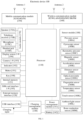
- the processor 110 may include one or more interfaces.
- the interface may include an integrated circuit (inter-integrated circuit, I2C) interface, an integrated circuit sound (inter-integrated circuit sound, I2S) interface, a pulse code modulation (pulse code modulation, PCM) interface, a universal asynchronous receiver/transmitter (universal asynchronous receiver/transmitter, UART) interface, a mobile industry processor interface (mobile industry processor interface, MIPI), a general-purpose input/output (general-purpose input/output, GPIO) interface, a subscriber identity module (subscriber identity module, SIM) interface, a universal serial bus (universal serial bus, USB) interface, and/or the like.
- I2C integrated circuit
- I2S integrated circuit sound
- PCM pulse code modulation
- PCM pulse code modulation
- UART universal asynchronous receiver/transmitter
- MIPI mobile industry processor interface
- GPIO general-purpose input/output
- SIM subscriber identity module
- USB universal serial bus
- the antenna 1 and the antenna 2 are configured to transmit and receive an electromagnetic wave signal.
- Each antenna of the electronic device 100 may be configured to cover one or more communication frequency bands. Different antennas may also be multiplexed to improve utilization of the antennas.
- an antenna 1 may be multiplexed as a diversity antenna of a wireless local area network.
- the antenna may be used in combination with a tuning switch.
- the mobile communication module 150 may provide a solution to wireless communication such as 2G/3G/4G/5G applicable to the electronic device 100.
- the mobile communication module 150 may include one or more filters, switches, power amplifiers, low noise amplifiers (low noise amplifier, LNA), and the like.
- the mobile communication module 150 may receive an electromagnetic wave through the antenna 1, perform processing such as filtering and amplification on the received electromagnetic wave, and transmit a processed electromagnetic wave to the modem processor for demodulation.
- the mobile communication module 150 may further amplify a signal modulated by the modem processor, and convert the signal into an electromagnetic wave for radiation through the antenna 1.
- at least some function modules of the mobile communication module 150 may be disposed in the processor 110.
- at least some function modules of the mobile communication module 150 and at least some modules of the processor 110 may be disposed in a same component.
- the wireless communication module 160 may provide a solution to wireless communication applicable to the electronic device 100, for example, a wireless local area network (wireless local area networks, WLAN) (for example, a wireless fidelity (wireless fidelity, Wi-Fi) network), Bluetooth (Bluetooth, BT), a global navigation satellite system (global navigation satellite system, GNSS), frequency modulation (frequency modulation, FM), near field communication (near field communication, NFC), and an infrared (infrared, IR) technology.
- the wireless communication module 160 may be one or more components into which one or more communication processing modules are integrated.
- the wireless communication module 160 receives an electromagnetic wave through the antenna 2, performs frequency modulation and filtering processing on an electromagnetic wave signal, and sends a processed signal to the processor 110.
- the wireless communication module 160 may alternatively receive a to-be-sent signal from the processor 110, perform frequency modulation and amplification on the to-be-sent signal, and convert the signal into an electromagnetic wave for radiation by using the antenna 2.
- the antenna 1 and the mobile communication module 150 of the electronic device 100 are coupled, and the antenna 2 and the wireless communication module 160 of the electronic device 100 are coupled, so that the electronic device 100 can communicate with a network and another device by using a wireless communication technology.
- the wireless communication technology may include a global system for mobile communications (global system for mobile communications, GSM), a general packet radio service (general packet radio service, GPRS), code division multiple access (code division multiple access, CDMA), wideband code division multiple access (wideband code division multiple access, WCDMA), time-division code division multiple access (time-division code division multiple access, TD-SCDMA), long term evolution (long term evolution, LTE), BT, a GNSS, a WLAN, NFC, FM, an IR technology, and/or the like.
- GSM global system for mobile communications
- GPRS general packet radio service
- code division multiple access code division multiple access
- CDMA wideband code division multiple access
- WCDMA wideband code division multiple access
- the GNSS may include a global positioning system (global positioning system, GPS), a global navigation satellite system (global navigation satellite system, GLONASS), and a Beidou navigation satellite system (Beidou navigation satellite system, BDS), a quasi-zenith satellite system (quasi-zenith satellite system, QZSS) and/or a satellite based augmentation system (satellite based augmentation system, SBAS).
- GPS global positioning system
- GLONASS global navigation satellite system
- Beidou navigation satellite system Beidou navigation satellite system
- BDS Beidou navigation satellite system
- QZSS quasi-zenith satellite system
- SBAS satellite based augmentation system
- the ISP is configured to process data fed back by the camera 193. For example, during photographing, a shutter is enabled. Light is transferred to a photosensitive element of the camera through a camera, and an optical signal is converted into an electrical signal. The photosensitive element of the camera transfers the electrical signal to the ISP for processing, and therefore, the electrical signal is converted into an image visible to a naked eye.
- the ISP may further optimize noise point, brightness, and skin tone algorithms.
- the ISP may further optimize parameters such as exposure and color temperature of a shooting scene.
- the ISP may be disposed in the camera 193.
- An image or a video captured by the camera 193 may be outputted on a mobile phone 100 by the display screen 194, and the digital image can alternatively be stored in the internal memory 121 (or the external memory 120), which is not limited in this embodiment of this application.
- the digital signal processor is configured to process a digital signal, and in addition to a digital image signal, may further process another digital signal.
- the digital signal processor is configured to perform Fourier transform and the like on frequency energy.
- the audio module 170 is configured to convert digital audio information into an analog audio signal output, and is further configured to convert an analog audio input into a digital audio signal.
- the audio module 170 may be further configured to encode and decode an audio signal.
- the audio module 170 may be disposed in the processor 110, or some function modules of the audio module 170 are disposed in the processor 110.
- the gyroscope sensor 180B detects an angle at which the electronic device 100 jitters, and calculates, based on the angle, a distance for which a camera module needs to compensate, and allows the camera to cancel the jitter of the electronic device 100 through reverse motion, thereby implementing image stabilization.
- the gyroscope sensor 180B may also be used in navigation and a motion sensing game scene.
- the ambient light sensor 180L is configured to sense luminance of ambient light.
- the electronic device 100 may adaptively adjust a luminance of the display screen 194 according to perceived brightness of the ambient light.
- the ambient light sensor 180L may be further configured to automatically adjust white balance during photo taking.
- the ambient light sensor 180L may further cooperate with the optical proximity sensor 180G to detect whether the electronic device 100 is in a pocket, so as to prevent an accidental touch.
- the motor 191 may generate a vibration prompt.
- the motor 191 may be configured to provide a vibration prompt for an incoming call, and may be further configured to provide a touch vibration feedback.
- touch operations performed on different applications may correspond to different vibration feedback effects.
- touch operations performed on different regions of the display screen 194 may also correspond to different vibration feedback effects.
- Different application scenarios for example, a time prompt, information receiving, an alarm clock, and a game
- a touch vibration feedback effect may be further customized.
- the SIM card interface 195 is configured to connect to a SIM card.
- the SIM card may be inserted into the SIM card interface 195 or unplugged from the SIM card interface 195, to come into contact with or be separated from the electronic device 100.
- the electronic device 100 may support one or N SIM card interfaces, and N is a positive integer greater than 1.
- the SIM card interface 195 may support a Nano SIM card, a Micro SIM card, a SIM card, and the like. A plurality of cards may be simultaneously inserted into the same SIM card interface 195. Types of the plurality of cards may be the same or different.
- the SIM card interface 195 may also be compatible with different types of SIM cards.
- the SIM card interface 195 may also be compatible with an external storage card.
- a software system of the electronic device 100 may use a layered architecture, an event-driven architecture, a microkernel architecture, a micro service architecture, or a cloud architecture.
- the software structure of the electronic device 100 is illustrated by using an Android system with a layered architecture as an example.
- the application layer may include a series of application packages.
- the application framework layer provides an application programming interface (application programming interface, API) and a programming framework for the applications at the application layer.
- the application framework layer includes some predefined functions.
- the window manager is configured to manage a window application.
- the window manager may obtain a size of a display screen, determine whether there is a status bar, lock the screen, capture the screen, and the like.
- the view system includes a visual control such as a control for text display or a control for picture display.
- the view system may be configured to construct an application.
- a display interface may be formed by one or more views.
- a display interface including an SMS notification icon may include a view for displaying text and a view for displaying a picture.
- the application layer and the application framework layer run on the virtual machine.
- the virtual machine executes Java files of the application layer and the application framework layer as binary files.
- the virtual machine is used to execute functions such as object lifecycle management, stack management, thread management, security and exception management, and garbage collection.
- the system library may include a plurality of function modules, such as a surface manager (surface manager), a media library (Media Libraries), a three-dimensional graphics processing library (for example, OpenGL ES), and a 2D graphics engine (for example, SGL).
- a surface manager surface manager
- Media Libraries media libraries
- a three-dimensional graphics processing library for example, OpenGL ES
- 2D graphics engine for example, SGL
- the 2D graphics engine is a drawing engine for 2D drawings.
- the following illustrates working processes of software and hardware of the electronic device 100 with reference to an image capturing or photographing scenario.
- a corresponding hardware interrupt is sent to the kernel layer.
- the kernel layer processes the touch operation into an original input event (including information such as coordinates of a touch and a time stamp of the touch operation).
- the original input event is stored at the kernel layer.
- the application framework layer obtains the original input event from the kernel layer, and recognizes a control corresponding to the input event.
- a control corresponding to the click operation is a control of a camera application icon.
- the camera application invokes an interface of the application framework layer to start a camera application, then starts a camera driver by invoking the kernel layer, and captures a static image or a video by using the camera 193.
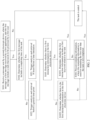
- an intelligent reminding method provided in an embodiment of this application is applicable to a first electronic device, and a schematic flowchart is shown in FIG. 3 .
- the method includes:
- Step 101 Receive a message sent by a second electronic device, where the message is a first message received by a first application, and the first message includes a task that needs to be processed by a first user.
- the first electronic device used by the first user receives the first message by the first application, where the first message is a message sent by the second electronic device used by a second user.
- the first application is an application that can receive messages such as SMS, WeChat, QQ, or Email.
- the first message may be a message sent by SMS or an instant messaging application such as WeChat or QQ.
- the message is a new message received by the electronic device, and the user does not reply after clicking and viewing the message.
- the first message includes a task, and the task needs to be processed by the first user. For example, the first user receives an SMS message or an email reading "Attend a conference in the conference room at 9 o'clock today", and the user needs to process the message after receiving the message.
- the first electronic device being a mobile phone is used as an example.
- the message is that the first user receives a new message from a contact (that is, a second user).
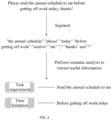
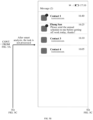
- a new message is sent by a mobile contact Zhang San at 16:25.
- Text content of the new message is "Please send the annual schedule to me before getting off work today, thanks.”.
- the first user does not reply, but a mark of the message has changed from unread to read.
- the message includes a task of "sending the annual schedule to Zhang San", which needs to be processed by the first user after the first user receives the message.
- the step 1031 is further performed.
- the step 1031 is to determine whether the first interaction information includes a first keyword related to the task, that is, determine whether the interaction between the first user and the second user is related to the content and/or task mentioned in the message received by the first user. If a determination result in the step 1031 is that the first interaction information includes a first keyword related to the task, that is, the interaction is related to the content and/or task mentioned in the message received by the user, then the task is ended.
- FIG. 6A and FIG. 6B show an interaction detection method within a device.
- the first electronic device sends an instruction to the server, and sends personal information of the contact Nick Zhang San to the server to obtain the detailed information of the contact Nick Zhang San, including a phone number, a name, an email address, and the like.
- the first electronic device may also obtain the foregoing or more information by notes about Zhang San.
- the distributed devices use the user account as determining basis, and devices logging in to the same account are all considered as the electronic devices of the same user.
- the interaction detection method on these associated electronic devices is the same as the interaction detection method within a device shown in FIG. 6A and FIG. 6B , which is to retrieve IM software such as the phone, SMS, Email, WeChat, QQ, or the like, and details are not repeated herein.
- the distributed devices further include a tablet computer, a computer, a watch, and other devices, and all the distributed devices log in to an account lisi@huawei.com.
- function modules of the electronic device may be divided based on the foregoing method example.
- each function module may be divided according to each function, or two or more functions may be integrated into one processing module.
- the integrated module is implemented in the form of hardware, or is implemented in the form of a software functional module. It should be noted that module division in this embodiment of this application is an example and is merely logical function division. During actual implementation, there may be another division manner.
- This embodiment of this application further provides a computer program product.
- the computer program product When the computer program product is run on a computer, the computer is caused to perform the related method steps, to implement the photographing method in the foregoing embodiment.
- the integrated unit When the integrated unit is implemented in the form of a software functional unit and sold or used as an independent product, the integrated unit may be stored in a readable storage medium.
- the software product is stored in a storage medium and includes several instructions for instructing a device (which may be a single-chip microcomputer, a chip, or the like) or a processor (processor) to perform all or some of the steps of the methods described in the embodiments of this application.
- the foregoing storage medium includes: any medium that can store program code, such as a USB flash drive, a removable hard disk, a ROM (read only memory, ROM), a RAM (random access memory, RAM), a magnetic disk, or an optical disc.
Landscapes
- Engineering & Computer Science (AREA)
- Business, Economics & Management (AREA)
- Physics & Mathematics (AREA)
- General Physics & Mathematics (AREA)
- Theoretical Computer Science (AREA)
- Human Resources & Organizations (AREA)
- Emergency Management (AREA)
- Strategic Management (AREA)
- Entrepreneurship & Innovation (AREA)
- Artificial Intelligence (AREA)
- Human Computer Interaction (AREA)
- Signal Processing (AREA)
- Computer Networks & Wireless Communication (AREA)
- General Engineering & Computer Science (AREA)
- General Health & Medical Sciences (AREA)
- Computational Linguistics (AREA)
- Audiology, Speech & Language Pathology (AREA)
- Health & Medical Sciences (AREA)
- Marketing (AREA)
- General Business, Economics & Management (AREA)
- Tourism & Hospitality (AREA)
- Quality & Reliability (AREA)
- Operations Research (AREA)
- Data Mining & Analysis (AREA)
- Economics (AREA)
- Environmental & Geological Engineering (AREA)
- Telephone Function (AREA)
- User Interface Of Digital Computer (AREA)
Claims (14)
- Intelligentes Erinnerungsverfahren, das auf eine erste elektronische Vorrichtung anwendbar ist und Folgendes umfasst:Empfangen (S101) einer durch eine zweite elektronische Vorrichtung gesendeten Nachricht, wobei die Nachricht eine durch eine erste Anwendung empfangene erste Nachricht ist, und die erste Nachricht eine Aufgabe umfasst, die durch einen ersten Benutzer bearbeitet werden muss, wobei die Aufgabe durch eine semantische Analyse der ersten Nachricht bestimmt wird;Suchen, ob erste Interaktionsinformationen in einer zweiten Anwendung vorhanden sind, wobei eine Auftrittszeit der ersten Interaktionsinformationen später als ein Zeitpunkt ist, zu dem die erste Nachricht empfangen wird, und wobei ein Interaktionsgegenstand der ersten Interaktionsinformationen ein Bedienen der zweiten elektronischen Vorrichtung durch einen zweiten Benutzer ist; undDarstellen von Erinnerungsinformationen, falls die ersten Interaktionsinformationen nicht in der ersten elektronischen Vorrichtung vorhanden sind, wobei die Erinnerungsinformationen zum Erinnern des ersten Benutzers, dass die Aufgabe nicht abgeschlossen ist, verwendet werden;wobei das Verfahren ferner Folgendes umfasst:ferner Bestimmen (S1031), ob die ersten Interaktionsinformationen ein erstes Schlüsselwort in Bezug auf die Aufgabe umfassen, falls die ersten Interaktionsinformationen in der ersten elektronischen Vorrichtung vorhanden sind, das heißt, Bestimmen, ob eine Interaktion zwischen dem ersten Benutzer und dem zweiten Benutzer in Bezug zu einem Inhalt und/oder einer Aufgabe, der bzw. die in der ersten Nachricht erwähnt wird, steht; undDarstellen der Erinnerungsinformationen, falls die ersten Interaktionsinformationen nicht das erste Schlüsselwort umfassen.
- Verfahren nach Anspruch 1, wobei die erste Nachricht ferner eine Abschlusszeit der Aufgabe umfasst, und das Darstellen von Erinnerungsinformationen, falls die ersten Interaktionsinformationen nicht in der ersten elektronischen Vorrichtung vorhanden sind, Folgendes umfasst:
Darstellen der Erinnerungsinformationen vor der Abschlusszeit, falls die ersten Interaktionsinformationen nicht in der ersten elektronischen Vorrichtung vorhanden sind. - Verfahren nach Anspruch 1, wobei das Bestimmen, ob erste Interaktionsinformationen in der ersten elektronischen Vorrichtung vorhanden sind, Folgendes umfasst:
Suchen, ob die ersten Interaktionsinformationen in der ersten Anwendung vorhanden sind. - Verfahren nach Anspruch 1, wobei, falls die ersten Interaktionsinformationen mit dem zweiten Benutzer nicht in der ersten elektronischen Vorrichtung vorhanden sind, das Verfahren ferner Folgendes umfasst:Bestimmen, ob die ersten Interaktionsinformationen in einer dritten elektronischen Vorrichtung vorhanden sind; undDarstellen der Erinnerungsinformationen, falls die ersten Interaktionsinformationen auch nicht in der dritten elektronischen Vorrichtung vorhanden sind, wobei die Erinnerungsinformationen zum Erinnern des ersten Benutzers, dass die Aufgabe nicht abgeschlossen ist, verwendet werden.
- Verfahren nach Anspruch 4, wobei die erste elektronische Vorrichtung und die dritte elektronische Vorrichtung elektronische Vorrichtungen sind, die in einem gleichen Benutzerkonto angemeldet sind.
- Verfahren nach Anspruch 1, wobei die erste Nachricht keine Abschlusszeit der Aufgabe umfasst, und bestimmt wird, ob die ersten Interaktionsinformationen in der ersten elektronischen Vorrichtung zu einem voreingestellten Zeitpunkt, nachdem die erste Nachricht empfangen wird, vorhanden sind.
- Verfahren nach Anspruch 1, wobei vor dem Bestimmen, ob erste Interaktionsinformationen in der ersten elektronischen Vorrichtung vorhanden sind, das Verfahren ferner Folgendes umfasst:Bestimmen, ob eine Planungserinnerung über die Aufgabe in der ersten elektronischen Vorrichtung vorhanden ist; undBestimmen, ob die ersten Interaktionsinformationen in der ersten elektronischen Vorrichtung vorhanden sind, falls die Planungserinnerung über die Aufgabe nicht in der ersten elektronischen Vorrichtung vorhanden ist.
- Verfahren nach Anspruch 1, wobei nach dem Bestimmen, ob erste Interaktionsinformationen in der ersten elektronischen Vorrichtung vorhanden sind, das Verfahren ferner Folgendes umfasst:Bestimmen, ob eine Planungserinnerung über die Aufgabe in der ersten elektronischen Vorrichtung vorhanden ist, falls die ersten Interaktionsinformationen nicht in der ersten elektronischen Vorrichtung vorhanden sind; undDarstellen der Erinnerungsinformationen, falls die Planungserinnerung über die Aufgabe nicht in der ersten elektronischen Vorrichtung vorhanden ist, wobei die Erinnerungsinformationen zum Erinnern des ersten Benutzers, dass die Aufgabe nicht abgeschlossen ist, verwendet werden.
- Verfahren nach Anspruch 1, wobei nach dem Darstellen von Erinnerungsinformationen, falls die ersten Interaktionsinformationen nicht in der ersten elektronischen Vorrichtung vorhanden sind, das Verfahren ferner Folgendes umfasst:Bestimmen, ob eine Planungserinnerung über die Aufgabe in der ersten elektronischen Vorrichtung vorhanden ist; undÜberspringen eines Darstellens der Erinnerungsinformationen, die zum Erinnern des ersten Benutzers, dass die Aufgabe nicht abgeschlossen ist, verwendet werden, falls die Planungserinnerung über die Aufgabe in der ersten elektronischen Vorrichtung vorhanden ist.
- Verfahren nach einem der Ansprüche 1 bis 9, wobei das Verfahren ferner Folgendes umfasst:
Anzeigen einer zweiten Nachricht in einem Eingabekandidatenfeld der ersten Anwendung, falls die ersten Interaktionsinformationen in der ersten elektronischen Vorrichtung vorhanden sind, wobei die zweite Nachricht eine Nachricht ist, von der empfohlen wird, dass der erste Benutzer sie an den zweiten Benutzer sendet, und die zweite Nachricht anzeigt, dass die Aufgabe abgeschlossen wurde. - Verfahren nach einem der Ansprüche 1 bis 9, wobei die erste Nachricht eine Nachricht ist, die gelesen, jedoch nicht beantwortet wurde.
- Verfahren nach Anspruch 1, ferner umfassend Empfangen einer dritten Nachricht durch die erste Anwendung, wobei die dritte Nachricht eine ungelesene Nachricht ist, und die dritte Nachricht eine erste Kennung umfasst; und wobei die Erinnerungsinformationen eine zweite Kennung umfassen, die auf der ersten Nachricht angezeigt wird, und sich die zweite Kennung von der ersten Kennung unterscheidet.
- Verfahren nach Anspruch 1, ferner umfassend Empfangen einer dritten Nachricht durch die erste Anwendung, wobei die dritte Nachricht eine ungelesene Nachricht ist, und die dritte Nachricht eine erste Kennung umfasst; und wobei die Erinnerungsinformationen eine zweite Kennung umfassen, die auf der ersten Nachricht angezeigt wird, und die zweite Kennung dieselbe wie die erste Kennung ist.
- Elektronische Vorrichtung (100), umfassend: einen oder mehrere Prozessoren; (110) und einen Speicher, wobei der Speicher Code speichert; und wobei, falls der Code durch die elektronische Vorrichtung ausgeführt wird, die elektronische Vorrichtung (100) veranlasst wird, das Verfahren nach einem der Ansprüche 1 bis 13 durchzuführen.
Applications Claiming Priority (2)
| Application Number | Priority Date | Filing Date | Title |
|---|---|---|---|
| CN202010380842.XA CN113709304B (zh) | 2020-05-06 | 2020-05-06 | 一种智能提醒方法及设备 |
| PCT/CN2021/091544 WO2021223681A1 (zh) | 2020-05-06 | 2021-04-30 | 一种智能提醒方法及设备 |
Publications (3)
| Publication Number | Publication Date |
|---|---|
| EP4080862A1 EP4080862A1 (de) | 2022-10-26 |
| EP4080862A4 EP4080862A4 (de) | 2023-01-25 |
| EP4080862B1 true EP4080862B1 (de) | 2024-07-10 |
Family
ID=78467815
Family Applications (1)
| Application Number | Title | Priority Date | Filing Date |
|---|---|---|---|
| EP21799956.4A Active EP4080862B1 (de) | 2020-05-06 | 2021-04-30 | Intelligentes erinnerungsverfahren und -vorrichtung |
Country Status (4)
| Country | Link |
|---|---|
| US (1) | US20230041690A1 (de) |
| EP (1) | EP4080862B1 (de) |
| CN (1) | CN113709304B (de) |
| WO (1) | WO2021223681A1 (de) |
Families Citing this family (5)
| Publication number | Priority date | Publication date | Assignee | Title |
|---|---|---|---|---|
| EP4367897A1 (de) * | 2021-07-06 | 2024-05-15 | Starkey Laboratories, Inc. | Kontextbasierte benutzerverfügbarkeit für benachrichtigungen |
| US11816609B2 (en) * | 2021-07-14 | 2023-11-14 | Microsoft Technology Licensing, Llc | Intelligent task completion detection at a computing device |
| CN114254008B (zh) * | 2022-03-01 | 2022-05-24 | 广东电网有限责任公司惠州供电局 | 一种信息生成方法、装置及电子设备 |
| US12483843B2 (en) | 2022-06-07 | 2025-11-25 | Starkey Laboratories, Inc. | Context-based situational awareness for hearing instruments |
| CN117675495B (zh) * | 2022-08-22 | 2025-01-07 | 荣耀终端有限公司 | 一种数据同步方法、电子设备及介质 |
Family Cites Families (16)
| Publication number | Priority date | Publication date | Assignee | Title |
|---|---|---|---|---|
| US7895277B2 (en) * | 2007-10-17 | 2011-02-22 | International Business Machines Corporation | Conditional reminders for conveyed electronic messages |
| KR101524313B1 (ko) * | 2008-12-11 | 2015-05-29 | 삼성전자주식회사 | 통합 메시징 서비스에서 인스턴트 메시징 처리 통지 요청과 응답 방법 및 그 시스템 |
| US9762523B1 (en) * | 2010-05-03 | 2017-09-12 | Egain Communications | Enhanced communication of electronic reminders |
| US9696886B2 (en) * | 2013-12-12 | 2017-07-04 | Google Technology Holdings LLC | Systems and methods for communicating task reminders on portable electronic devices |
| CN105721662B (zh) * | 2014-12-01 | 2023-02-17 | 北京超思电子技术有限责任公司 | 一种消息提醒方法及消息提醒装置 |
| US10135937B2 (en) * | 2015-02-19 | 2018-11-20 | Microsoft Technology Licensing, Llc | Personalized notifications |
| US20160335572A1 (en) * | 2015-05-15 | 2016-11-17 | Microsoft Technology Licensing, Llc | Management of commitments and requests extracted from communications and content |
| CN105554253A (zh) * | 2015-12-09 | 2016-05-04 | 小米科技有限责任公司 | 事件提醒方法、装置及终端 |
| CN107368995A (zh) * | 2016-05-13 | 2017-11-21 | 阿里巴巴集团控股有限公司 | 任务处理方法及装置 |
| CN106203947A (zh) * | 2016-06-28 | 2016-12-07 | 维沃移动通信有限公司 | 一种信息处理提醒方法及移动终端 |
| CN106411708A (zh) * | 2016-09-29 | 2017-02-15 | 北京三快在线科技有限公司 | 一种基于即时通信应用的时间提醒方法、装置及电子设备 |
| CN106791068A (zh) * | 2016-12-14 | 2017-05-31 | 深圳市金立通信设备有限公司 | 一种待办事项的提醒方法和终端 |
| CN106919649B (zh) * | 2017-01-19 | 2020-06-26 | 北京奇艺世纪科技有限公司 | 一种词条权重计算的方法及装置 |
| CN106815356B (zh) * | 2017-01-20 | 2019-04-26 | 泰华智慧产业集团股份有限公司 | 基于语义分析的精确目标用户消息推送方法及系统 |
| CN107483747A (zh) * | 2017-09-26 | 2017-12-15 | 维沃移动通信有限公司 | 一种事件提醒方法及移动终端 |
| CN109889653B (zh) * | 2018-12-03 | 2021-01-01 | 珠海格力电器股份有限公司 | 一种提醒信息重复设置的处理方法及装置 |
-
2020
- 2020-05-06 CN CN202010380842.XA patent/CN113709304B/zh active Active
-
2021
- 2021-04-30 EP EP21799956.4A patent/EP4080862B1/de active Active
- 2021-04-30 WO PCT/CN2021/091544 patent/WO2021223681A1/zh not_active Ceased
- 2021-04-30 US US17/792,858 patent/US20230041690A1/en not_active Abandoned
Also Published As
| Publication number | Publication date |
|---|---|
| WO2021223681A1 (zh) | 2021-11-11 |
| EP4080862A1 (de) | 2022-10-26 |
| EP4080862A4 (de) | 2023-01-25 |
| US20230041690A1 (en) | 2023-02-09 |
| CN113709304B (zh) | 2022-08-12 |
| CN113709304A (zh) | 2021-11-26 |
Similar Documents
| Publication | Publication Date | Title |
|---|---|---|
| EP3872807B1 (de) | Sprachsteuerungsverfahren und elektronische vorrichtung | |
| EP4080862B1 (de) | Intelligentes erinnerungsverfahren und -vorrichtung | |
| US20220350564A1 (en) | Screen sharing method based on video call and mobile device | |
| EP3964954A1 (de) | Verarbeitungsverfahren und vorrichtung für warteszenario in anwendung | |
| CN117014567A (zh) | 一种应用于电子设备的视频通话的显示方法及相关装置 | |
| EP4273687B1 (de) | Bildteilungsverfahren und elektronische vorrichtung | |
| CN116564304A (zh) | 语音交互方法及装置 | |
| US20220358089A1 (en) | Learning-Based Keyword Search Method and Electronic Device | |
| US20230070358A1 (en) | File Sharing Method, System, and Related Device | |
| CN113747374B (zh) | 一种消息推送方法及装置 | |
| CN111835904A (zh) | 一种基于情景感知和用户画像开启应用的方法及电子设备 | |
| CN111475363A (zh) | 卡死识别方法及电子设备 | |
| CN114945176B (zh) | 剪切板访问管控方法、电子设备及存储介质 | |
| US12314531B2 (en) | Application classification method, electronic device, and chip system | |
| HK40073863B (en) | Intelligent reminding method and device | |
| CN114205318B (zh) | 头像显示方法及电子设备 | |
| CN113970965B (zh) | 消息显示方法和电子设备 | |
| HK40073863A (en) | Intelligent reminding method and device | |
| CN117273687B (zh) | 一种打卡推荐方法及电子设备 | |
| CN116662150B (zh) | 应用启动耗时检测方法及相关装置 | |
| CN114690924A (zh) | 防误触锁定方法、终端设备及计算机可读存储介质 | |
| CN115706753B (zh) | 应用程序的管理方法、装置、电子设备以及存储介质 | |
| CN116757284B (zh) | 模型推理方法、设备、存储介质和程序产品 | |
| WO2024114493A1 (zh) | 一种人机交互的方法和装置 | |
| CN115883710A (zh) | 来电号码的标识方法和装置 |
Legal Events
| Date | Code | Title | Description |
|---|---|---|---|
| STAA | Information on the status of an ep patent application or granted ep patent |
Free format text: STATUS: THE INTERNATIONAL PUBLICATION HAS BEEN MADE |
|
| PUAI | Public reference made under article 153(3) epc to a published international application that has entered the european phase |
Free format text: ORIGINAL CODE: 0009012 |
|
| STAA | Information on the status of an ep patent application or granted ep patent |
Free format text: STATUS: REQUEST FOR EXAMINATION WAS MADE |
|
| 17P | Request for examination filed |
Effective date: 20220719 |
|
| AK | Designated contracting states |
Kind code of ref document: A1 Designated state(s): AL AT BE BG CH CY CZ DE DK EE ES FI FR GB GR HR HU IE IS IT LI LT LU LV MC MK MT NL NO PL PT RO RS SE SI SK SM TR |
|
| REG | Reference to a national code |
Ref country code: DE Ref legal event code: R079 Free format text: PREVIOUS MAIN CLASS: H04M0001725000 Ref country code: DE Ref legal event code: R079 Ref document number: 602021015599 Country of ref document: DE Free format text: PREVIOUS MAIN CLASS: H04M0001725000 Ipc: H04M0001724510 |
|
| REG | Reference to a national code |
Ref country code: HK Ref legal event code: DE Ref document number: 40073863 Country of ref document: HK |
|
| A4 | Supplementary search report drawn up and despatched |
Effective date: 20230104 |
|
| RIC1 | Information provided on ipc code assigned before grant |
Ipc: H04M 1/72454 20210101ALI20221222BHEP Ipc: G06F 40/30 20200101ALI20221222BHEP Ipc: G08B 21/24 20060101ALI20221222BHEP Ipc: H04M 1/72451 20210101AFI20221222BHEP |
|
| DAV | Request for validation of the european patent (deleted) | ||
| DAX | Request for extension of the european patent (deleted) | ||
| STAA | Information on the status of an ep patent application or granted ep patent |
Free format text: STATUS: EXAMINATION IS IN PROGRESS |
|
| 17Q | First examination report despatched |
Effective date: 20230904 |
|
| GRAP | Despatch of communication of intention to grant a patent |
Free format text: ORIGINAL CODE: EPIDOSNIGR1 |
|
| STAA | Information on the status of an ep patent application or granted ep patent |
Free format text: STATUS: GRANT OF PATENT IS INTENDED |
|
| INTG | Intention to grant announced |
Effective date: 20240207 |
|
| GRAS | Grant fee paid |
Free format text: ORIGINAL CODE: EPIDOSNIGR3 |
|
| GRAA | (expected) grant |
Free format text: ORIGINAL CODE: 0009210 |
|
| STAA | Information on the status of an ep patent application or granted ep patent |
Free format text: STATUS: THE PATENT HAS BEEN GRANTED |
|
| AK | Designated contracting states |
Kind code of ref document: B1 Designated state(s): AL AT BE BG CH CY CZ DE DK EE ES FI FR GB GR HR HU IE IS IT LI LT LU LV MC MK MT NL NO PL PT RO RS SE SI SK SM TR |
|
| REG | Reference to a national code |
Ref country code: CH Ref legal event code: EP |
|
| REG | Reference to a national code |
Ref country code: DE Ref legal event code: R096 Ref document number: 602021015599 Country of ref document: DE |
|
| REG | Reference to a national code |
Ref country code: NL Ref legal event code: FP |
|
| REG | Reference to a national code |
Ref country code: LT Ref legal event code: MG9D |
|
| PG25 | Lapsed in a contracting state [announced via postgrant information from national office to epo] |
Ref country code: PT Free format text: LAPSE BECAUSE OF FAILURE TO SUBMIT A TRANSLATION OF THE DESCRIPTION OR TO PAY THE FEE WITHIN THE PRESCRIBED TIME-LIMIT Effective date: 20241111 |
|
| REG | Reference to a national code |
Ref country code: AT Ref legal event code: MK05 Ref document number: 1703047 Country of ref document: AT Kind code of ref document: T Effective date: 20240710 |
|
| PG25 | Lapsed in a contracting state [announced via postgrant information from national office to epo] |
Ref country code: PT Free format text: LAPSE BECAUSE OF FAILURE TO SUBMIT A TRANSLATION OF THE DESCRIPTION OR TO PAY THE FEE WITHIN THE PRESCRIBED TIME-LIMIT Effective date: 20241111 |
|
| PG25 | Lapsed in a contracting state [announced via postgrant information from national office to epo] |
Ref country code: NO Free format text: LAPSE BECAUSE OF FAILURE TO SUBMIT A TRANSLATION OF THE DESCRIPTION OR TO PAY THE FEE WITHIN THE PRESCRIBED TIME-LIMIT Effective date: 20241010 |
|
| PG25 | Lapsed in a contracting state [announced via postgrant information from national office to epo] |
Ref country code: FI Free format text: LAPSE BECAUSE OF FAILURE TO SUBMIT A TRANSLATION OF THE DESCRIPTION OR TO PAY THE FEE WITHIN THE PRESCRIBED TIME-LIMIT Effective date: 20240710 Ref country code: PL Free format text: LAPSE BECAUSE OF FAILURE TO SUBMIT A TRANSLATION OF THE DESCRIPTION OR TO PAY THE FEE WITHIN THE PRESCRIBED TIME-LIMIT Effective date: 20240710 Ref country code: GR Free format text: LAPSE BECAUSE OF FAILURE TO SUBMIT A TRANSLATION OF THE DESCRIPTION OR TO PAY THE FEE WITHIN THE PRESCRIBED TIME-LIMIT Effective date: 20241011 |
|
| PG25 | Lapsed in a contracting state [announced via postgrant information from national office to epo] |
Ref country code: BG Free format text: LAPSE BECAUSE OF FAILURE TO SUBMIT A TRANSLATION OF THE DESCRIPTION OR TO PAY THE FEE WITHIN THE PRESCRIBED TIME-LIMIT Effective date: 20240710 |
|
| PG25 | Lapsed in a contracting state [announced via postgrant information from national office to epo] |
Ref country code: LV Free format text: LAPSE BECAUSE OF FAILURE TO SUBMIT A TRANSLATION OF THE DESCRIPTION OR TO PAY THE FEE WITHIN THE PRESCRIBED TIME-LIMIT Effective date: 20240710 |
|
| PG25 | Lapsed in a contracting state [announced via postgrant information from national office to epo] |
Ref country code: IS Free format text: LAPSE BECAUSE OF FAILURE TO SUBMIT A TRANSLATION OF THE DESCRIPTION OR TO PAY THE FEE WITHIN THE PRESCRIBED TIME-LIMIT Effective date: 20241110 Ref country code: AT Free format text: LAPSE BECAUSE OF FAILURE TO SUBMIT A TRANSLATION OF THE DESCRIPTION OR TO PAY THE FEE WITHIN THE PRESCRIBED TIME-LIMIT Effective date: 20240710 |
|
| PG25 | Lapsed in a contracting state [announced via postgrant information from national office to epo] |
Ref country code: HR Free format text: LAPSE BECAUSE OF FAILURE TO SUBMIT A TRANSLATION OF THE DESCRIPTION OR TO PAY THE FEE WITHIN THE PRESCRIBED TIME-LIMIT Effective date: 20240710 |
|
| PG25 | Lapsed in a contracting state [announced via postgrant information from national office to epo] |
Ref country code: RS Free format text: LAPSE BECAUSE OF FAILURE TO SUBMIT A TRANSLATION OF THE DESCRIPTION OR TO PAY THE FEE WITHIN THE PRESCRIBED TIME-LIMIT Effective date: 20241010 Ref country code: ES Free format text: LAPSE BECAUSE OF FAILURE TO SUBMIT A TRANSLATION OF THE DESCRIPTION OR TO PAY THE FEE WITHIN THE PRESCRIBED TIME-LIMIT Effective date: 20240710 |
|
| PG25 | Lapsed in a contracting state [announced via postgrant information from national office to epo] |
Ref country code: RS Free format text: LAPSE BECAUSE OF FAILURE TO SUBMIT A TRANSLATION OF THE DESCRIPTION OR TO PAY THE FEE WITHIN THE PRESCRIBED TIME-LIMIT Effective date: 20241010 Ref country code: PL Free format text: LAPSE BECAUSE OF FAILURE TO SUBMIT A TRANSLATION OF THE DESCRIPTION OR TO PAY THE FEE WITHIN THE PRESCRIBED TIME-LIMIT Effective date: 20240710 Ref country code: NO Free format text: LAPSE BECAUSE OF FAILURE TO SUBMIT A TRANSLATION OF THE DESCRIPTION OR TO PAY THE FEE WITHIN THE PRESCRIBED TIME-LIMIT Effective date: 20241010 Ref country code: LV Free format text: LAPSE BECAUSE OF FAILURE TO SUBMIT A TRANSLATION OF THE DESCRIPTION OR TO PAY THE FEE WITHIN THE PRESCRIBED TIME-LIMIT Effective date: 20240710 Ref country code: IS Free format text: LAPSE BECAUSE OF FAILURE TO SUBMIT A TRANSLATION OF THE DESCRIPTION OR TO PAY THE FEE WITHIN THE PRESCRIBED TIME-LIMIT Effective date: 20241110 Ref country code: HR Free format text: LAPSE BECAUSE OF FAILURE TO SUBMIT A TRANSLATION OF THE DESCRIPTION OR TO PAY THE FEE WITHIN THE PRESCRIBED TIME-LIMIT Effective date: 20240710 Ref country code: GR Free format text: LAPSE BECAUSE OF FAILURE TO SUBMIT A TRANSLATION OF THE DESCRIPTION OR TO PAY THE FEE WITHIN THE PRESCRIBED TIME-LIMIT Effective date: 20241011 Ref country code: FI Free format text: LAPSE BECAUSE OF FAILURE TO SUBMIT A TRANSLATION OF THE DESCRIPTION OR TO PAY THE FEE WITHIN THE PRESCRIBED TIME-LIMIT Effective date: 20240710 Ref country code: ES Free format text: LAPSE BECAUSE OF FAILURE TO SUBMIT A TRANSLATION OF THE DESCRIPTION OR TO PAY THE FEE WITHIN THE PRESCRIBED TIME-LIMIT Effective date: 20240710 Ref country code: BG Free format text: LAPSE BECAUSE OF FAILURE TO SUBMIT A TRANSLATION OF THE DESCRIPTION OR TO PAY THE FEE WITHIN THE PRESCRIBED TIME-LIMIT Effective date: 20240710 Ref country code: AT Free format text: LAPSE BECAUSE OF FAILURE TO SUBMIT A TRANSLATION OF THE DESCRIPTION OR TO PAY THE FEE WITHIN THE PRESCRIBED TIME-LIMIT Effective date: 20240710 |
|
| REG | Reference to a national code |
Ref country code: DE Ref legal event code: R097 Ref document number: 602021015599 Country of ref document: DE |
|
| PG25 | Lapsed in a contracting state [announced via postgrant information from national office to epo] |
Ref country code: RO Free format text: LAPSE BECAUSE OF FAILURE TO SUBMIT A TRANSLATION OF THE DESCRIPTION OR TO PAY THE FEE WITHIN THE PRESCRIBED TIME-LIMIT Effective date: 20240710 Ref country code: DK Free format text: LAPSE BECAUSE OF FAILURE TO SUBMIT A TRANSLATION OF THE DESCRIPTION OR TO PAY THE FEE WITHIN THE PRESCRIBED TIME-LIMIT Effective date: 20240710 Ref country code: SM Free format text: LAPSE BECAUSE OF FAILURE TO SUBMIT A TRANSLATION OF THE DESCRIPTION OR TO PAY THE FEE WITHIN THE PRESCRIBED TIME-LIMIT Effective date: 20240710 |
|
| PG25 | Lapsed in a contracting state [announced via postgrant information from national office to epo] |
Ref country code: EE Free format text: LAPSE BECAUSE OF FAILURE TO SUBMIT A TRANSLATION OF THE DESCRIPTION OR TO PAY THE FEE WITHIN THE PRESCRIBED TIME-LIMIT Effective date: 20240710 |
|
| PG25 | Lapsed in a contracting state [announced via postgrant information from national office to epo] |
Ref country code: CZ Free format text: LAPSE BECAUSE OF FAILURE TO SUBMIT A TRANSLATION OF THE DESCRIPTION OR TO PAY THE FEE WITHIN THE PRESCRIBED TIME-LIMIT Effective date: 20240710 |
|
| PG25 | Lapsed in a contracting state [announced via postgrant information from national office to epo] |
Ref country code: IT Free format text: LAPSE BECAUSE OF FAILURE TO SUBMIT A TRANSLATION OF THE DESCRIPTION OR TO PAY THE FEE WITHIN THE PRESCRIBED TIME-LIMIT Effective date: 20240710 Ref country code: SK Free format text: LAPSE BECAUSE OF FAILURE TO SUBMIT A TRANSLATION OF THE DESCRIPTION OR TO PAY THE FEE WITHIN THE PRESCRIBED TIME-LIMIT Effective date: 20240710 |
|
| PLBE | No opposition filed within time limit |
Free format text: ORIGINAL CODE: 0009261 |
|
| STAA | Information on the status of an ep patent application or granted ep patent |
Free format text: STATUS: NO OPPOSITION FILED WITHIN TIME LIMIT |
|
| 26N | No opposition filed |
Effective date: 20250411 |
|
| PGFP | Annual fee paid to national office [announced via postgrant information from national office to epo] |
Ref country code: DE Payment date: 20250305 Year of fee payment: 5 |
|
| PG25 | Lapsed in a contracting state [announced via postgrant information from national office to epo] |
Ref country code: SE Free format text: LAPSE BECAUSE OF FAILURE TO SUBMIT A TRANSLATION OF THE DESCRIPTION OR TO PAY THE FEE WITHIN THE PRESCRIBED TIME-LIMIT Effective date: 20240710 |
|
| REG | Reference to a national code |
Ref country code: CH Ref legal event code: H13 Free format text: ST27 STATUS EVENT CODE: U-0-0-H10-H13 (AS PROVIDED BY THE NATIONAL OFFICE) Effective date: 20251125 |
|
| PG25 | Lapsed in a contracting state [announced via postgrant information from national office to epo] |
Ref country code: LU Free format text: LAPSE BECAUSE OF NON-PAYMENT OF DUE FEES Effective date: 20250430 |
|
| PG25 | Lapsed in a contracting state [announced via postgrant information from national office to epo] |
Ref country code: MC Free format text: LAPSE BECAUSE OF FAILURE TO SUBMIT A TRANSLATION OF THE DESCRIPTION OR TO PAY THE FEE WITHIN THE PRESCRIBED TIME-LIMIT Effective date: 20240710 |
|
| REG | Reference to a national code |
Ref country code: BE Ref legal event code: MM Effective date: 20250430 |
|
| PG25 | Lapsed in a contracting state [announced via postgrant information from national office to epo] |
Ref country code: FR Free format text: LAPSE BECAUSE OF NON-PAYMENT OF DUE FEES Effective date: 20250430 |
|
| PG25 | Lapsed in a contracting state [announced via postgrant information from national office to epo] |
Ref country code: BE Free format text: LAPSE BECAUSE OF NON-PAYMENT OF DUE FEES Effective date: 20250430 |
|
| PG25 | Lapsed in a contracting state [announced via postgrant information from national office to epo] |
Ref country code: CH Free format text: LAPSE BECAUSE OF NON-PAYMENT OF DUE FEES Effective date: 20250430 |
|
| PGFP | Annual fee paid to national office [announced via postgrant information from national office to epo] |
Ref country code: GB Payment date: 20260312 Year of fee payment: 6 |
|
| PG25 | Lapsed in a contracting state [announced via postgrant information from national office to epo] |
Ref country code: IE Free format text: LAPSE BECAUSE OF NON-PAYMENT OF DUE FEES Effective date: 20250430 |
|
| PGFP | Annual fee paid to national office [announced via postgrant information from national office to epo] |
Ref country code: NL Payment date: 20260317 Year of fee payment: 6 |