EP4080896A1 - Appareil de réception, procédé de commande d'appareil de réception, et système d'émission-réception - Google Patents
Appareil de réception, procédé de commande d'appareil de réception, et système d'émission-réception Download PDFInfo
- Publication number
- EP4080896A1 EP4080896A1 EP20903476.8A EP20903476A EP4080896A1 EP 4080896 A1 EP4080896 A1 EP 4080896A1 EP 20903476 A EP20903476 A EP 20903476A EP 4080896 A1 EP4080896 A1 EP 4080896A1
- Authority
- EP
- European Patent Office
- Prior art keywords
- information
- hdmi
- edid
- reception
- device information
- Prior art date
- Legal status (The legal status is an assumption and is not a legal conclusion. Google has not performed a legal analysis and makes no representation as to the accuracy of the status listed.)
- Pending
Links
- 238000000034 method Methods 0.000 title claims description 34
- 230000006854 communication Effects 0.000 claims abstract description 16
- 238000004891 communication Methods 0.000 claims abstract description 16
- 230000005540 biological transmission Effects 0.000 claims description 62
- 238000012549 training Methods 0.000 claims description 35
- 230000008569 process Effects 0.000 claims description 23
- 230000006870 function Effects 0.000 claims description 11
- 238000002360 preparation method Methods 0.000 claims description 3
- 238000005516 engineering process Methods 0.000 abstract description 14
- GJWAPAVRQYYSTK-UHFFFAOYSA-N [(dimethyl-$l^{3}-silanyl)amino]-dimethylsilicon Chemical compound C[Si](C)N[Si](C)C GJWAPAVRQYYSTK-UHFFFAOYSA-N 0.000 description 11
- 238000010586 diagram Methods 0.000 description 4
- 238000012986 modification Methods 0.000 description 4
- 230000004048 modification Effects 0.000 description 4
- 230000000694 effects Effects 0.000 description 3
- 238000006243 chemical reaction Methods 0.000 description 2
- 238000012545 processing Methods 0.000 description 2
- 102100035353 Cyclin-dependent kinase 2-associated protein 1 Human genes 0.000 description 1
- 102100029860 Suppressor of tumorigenicity 20 protein Human genes 0.000 description 1
- 230000002411 adverse Effects 0.000 description 1
- 230000007175 bidirectional communication Effects 0.000 description 1
- 230000008878 coupling Effects 0.000 description 1
- 238000010168 coupling process Methods 0.000 description 1
- 238000005859 coupling reaction Methods 0.000 description 1
- 238000000605 extraction Methods 0.000 description 1
- 230000001151 other effect Effects 0.000 description 1
- 230000005855 radiation Effects 0.000 description 1
- 230000004044 response Effects 0.000 description 1
- 230000001360 synchronised effect Effects 0.000 description 1
- 230000007704 transition Effects 0.000 description 1
Images




Classifications
-
- H—ELECTRICITY
- H04—ELECTRIC COMMUNICATION TECHNIQUE
- H04N—PICTORIAL COMMUNICATION, e.g. TELEVISION
- H04N21/00—Selective content distribution, e.g. interactive television or video on demand [VOD]
- H04N21/40—Client devices specifically adapted for the reception of or interaction with content, e.g. set-top-box [STB]; Operations thereof
- H04N21/43—Processing of content or additional data, e.g. demultiplexing additional data from a digital video stream; Elementary client operations, e.g. monitoring of home network or synchronising decoder's clock; Client middleware
- H04N21/436—Interfacing a local distribution network, e.g. communicating with another STB or one or more peripheral devices inside the home
- H04N21/4363—Adapting the video stream to a specific local network, e.g. a Bluetooth® network
- H04N21/43632—Adapting the video stream to a specific local network, e.g. a Bluetooth® network involving a wired protocol, e.g. IEEE 1394
- H04N21/43635—HDMI
-
- H—ELECTRICITY
- H04—ELECTRIC COMMUNICATION TECHNIQUE
- H04N—PICTORIAL COMMUNICATION, e.g. TELEVISION
- H04N7/00—Television systems
- H04N7/01—Conversion of standards, e.g. involving analogue television standards or digital television standards processed at pixel level
- H04N7/0125—Conversion of standards, e.g. involving analogue television standards or digital television standards processed at pixel level one of the standards being a high definition standard
-
- G—PHYSICS
- G09—EDUCATION; CRYPTOGRAPHY; DISPLAY; ADVERTISING; SEALS
- G09G—ARRANGEMENTS OR CIRCUITS FOR CONTROL OF INDICATING DEVICES USING STATIC MEANS TO PRESENT VARIABLE INFORMATION
- G09G5/00—Control arrangements or circuits for visual indicators common to cathode-ray tube indicators and other visual indicators
- G09G5/003—Details of a display terminal, the details relating to the control arrangement of the display terminal and to the interfaces thereto
- G09G5/005—Adapting incoming signals to the display format of the display terminal
-
- G—PHYSICS
- G09—EDUCATION; CRYPTOGRAPHY; DISPLAY; ADVERTISING; SEALS
- G09G—ARRANGEMENTS OR CIRCUITS FOR CONTROL OF INDICATING DEVICES USING STATIC MEANS TO PRESENT VARIABLE INFORMATION
- G09G5/00—Control arrangements or circuits for visual indicators common to cathode-ray tube indicators and other visual indicators
- G09G5/003—Details of a display terminal, the details relating to the control arrangement of the display terminal and to the interfaces thereto
- G09G5/006—Details of the interface to the display terminal
-
- H—ELECTRICITY
- H04—ELECTRIC COMMUNICATION TECHNIQUE
- H04N—PICTORIAL COMMUNICATION, e.g. TELEVISION
- H04N21/00—Selective content distribution, e.g. interactive television or video on demand [VOD]
- H04N21/40—Client devices specifically adapted for the reception of or interaction with content, e.g. set-top-box [STB]; Operations thereof
- H04N21/43—Processing of content or additional data, e.g. demultiplexing additional data from a digital video stream; Elementary client operations, e.g. monitoring of home network or synchronising decoder's clock; Client middleware
- H04N21/436—Interfacing a local distribution network, e.g. communicating with another STB or one or more peripheral devices inside the home
- H04N21/43615—Interfacing a Home Network, e.g. for connecting the client to a plurality of peripherals
-
- H—ELECTRICITY
- H04—ELECTRIC COMMUNICATION TECHNIQUE
- H04N—PICTORIAL COMMUNICATION, e.g. TELEVISION
- H04N21/00—Selective content distribution, e.g. interactive television or video on demand [VOD]
- H04N21/40—Client devices specifically adapted for the reception of or interaction with content, e.g. set-top-box [STB]; Operations thereof
- H04N21/43—Processing of content or additional data, e.g. demultiplexing additional data from a digital video stream; Elementary client operations, e.g. monitoring of home network or synchronising decoder's clock; Client middleware
- H04N21/442—Monitoring of processes or resources, e.g. detecting the failure of a recording device, monitoring the downstream bandwidth, the number of times a movie has been viewed, the storage space available from the internal hard disk
-
- H—ELECTRICITY
- H04—ELECTRIC COMMUNICATION TECHNIQUE
- H04N—PICTORIAL COMMUNICATION, e.g. TELEVISION
- H04N21/00—Selective content distribution, e.g. interactive television or video on demand [VOD]
- H04N21/40—Client devices specifically adapted for the reception of or interaction with content, e.g. set-top-box [STB]; Operations thereof
- H04N21/45—Management operations performed by the client for facilitating the reception of or the interaction with the content or administrating data related to the end-user or to the client device itself, e.g. learning user preferences for recommending movies, resolving scheduling conflicts
- H04N21/4508—Management of client data or end-user data
- H04N21/4516—Management of client data or end-user data involving client characteristics, e.g. Set-Top-Box type, software version or amount of memory available
-
- H—ELECTRICITY
- H04—ELECTRIC COMMUNICATION TECHNIQUE
- H04N—PICTORIAL COMMUNICATION, e.g. TELEVISION
- H04N7/00—Television systems
- H04N7/015—High-definition television systems
-
- H—ELECTRICITY
- H04—ELECTRIC COMMUNICATION TECHNIQUE
- H04N—PICTORIAL COMMUNICATION, e.g. TELEVISION
- H04N7/00—Television systems
- H04N7/10—Adaptations for transmission by electrical cable
-
- G—PHYSICS
- G09—EDUCATION; CRYPTOGRAPHY; DISPLAY; ADVERTISING; SEALS
- G09G—ARRANGEMENTS OR CIRCUITS FOR CONTROL OF INDICATING DEVICES USING STATIC MEANS TO PRESENT VARIABLE INFORMATION
- G09G2370/00—Aspects of data communication
- G09G2370/04—Exchange of auxiliary data, i.e. other than image data, between monitor and graphics controller
- G09G2370/042—Exchange of auxiliary data, i.e. other than image data, between monitor and graphics controller for monitor identification
-
- G—PHYSICS
- G09—EDUCATION; CRYPTOGRAPHY; DISPLAY; ADVERTISING; SEALS
- G09G—ARRANGEMENTS OR CIRCUITS FOR CONTROL OF INDICATING DEVICES USING STATIC MEANS TO PRESENT VARIABLE INFORMATION
- G09G2370/00—Aspects of data communication
- G09G2370/12—Use of DVI or HDMI protocol in interfaces along the display data pipeline
Definitions
- the present technology relates to a reception device, a method for controlling a reception device, and a transmission/reception system, and more particularly, to a reception device and the like with increased user-friendliness.
- HDMI 2.0 also includes HDMI 2.0a and HDMI 2.0b herein.
- HDMI 1.4 also includes HDMI 1.4a.
- Patent Document 1 describes HDMI 2.1.
- HDMI 2.1 transmission by a fixed rate link (FRL) is specified.
- FRL link training is performed before the image data and audio data are transmitted, and a transmission rate (a clock rate) suitable for the capability of the transmission path including an HDMI cable between the transmitter device and the receiver device is set.
- Patent Document 1 WO 2017/151925 A
- HDMI 2.0 content protection is conducted by high-bandwidth digital content protection (HDCP) 2.2. Therefore, even if an operation performed by HDCP 2.2 is monitored, any determination condition for selecting between the EDID for "transmitter devices compatible with HDMI 2.0" and the EDID for "transmitter devices compatible with HDMI 2.1" cannot be set.
- HDCP high-bandwidth digital content protection
- an operation called FRL link training is performed.
- communication is conducted between the transmitter device and the receiver device via a display data channel (DDC) line. Therefore, if communication through the DDC line is monitored, it can be detected that HDMI transmission is about to be performed between the transmitter device and the receiver device by HDMI 2.1, and this can be set as a condition for selecting the EDID for "transmitter devices compatible with HDMI 2.1".
- DDC display data channel
- An object of the present technology is to enable a transmitter device to read appropriate device information (EDID) from a receiver device with a reduced burden on the user.
- EDID device information
- the concept of the present technology lies in a reception device that includes:
- the reception device of the present technology may be a display device, for example. Further, the reception device of the present technology includes the memory unit that stores first device information and second device information, and the communication unit that communicates with the external device.
- the first device information may be information included in a status and control data channel structure (SCDCS).
- the first device information may be FRL_Rate, which is information regarding a link rate selected by the external device, for example.
- the communication unit may communicate with the external device through a digital interface cable, for example.
- the digital interface cable may be a high-definition multimedia interface (HDMI) cable, for example.
- HDMI high-definition multimedia interface
- the control unit determines to cause the external device to read the second device information, on the basis of reception of the rewrite signal for the first device information from the external device.
- the rewrite signal may be determined depending on the second device information.
- the rewrite signal may be Max_FRL_Rate, which is information regarding the link rates supported by the device, Max_FRL_Rate being written in the second device information, for example.
- reading of the second device information by the external device is determined on the basis of reception of the rewrite signal for the first device information from the external device. Accordingly, It is possible to cause the external device (a transmitter device) to automatically read appropriate device information (EDID) from a receiver device (the reception device), and thus, user-friendliness can be increased.
- EDID device information
- the rewrite signal may be transmitted in accordance with the value of FLT_ready, which is information indicating the preparation status of a link training process, FLT_ready being written in the first device information.
- the memory unit may further store third device information, for example, and, in a case where the rewrite signal is not received, the control unit may determine to cause the external device to read the third device information.
- the second device information may be information compliant with version 2.1 of high-definition multimedia interface (HDMI)
- the third device information may be information compliant with version 2.0 of HDMI, for example.
- each of the second device information and the third device information may be extended display identification data (EDID) including an HDMI forum vendor specific data block (HF-VSDB) that is information regarding the functions supported by the device.
- EDID extended display identification data
- HF-VSDB HDMI forum vendor specific data block
- the second device information may be 512-byte EDID obtained by combining (merging) EDID for 4K high frame rate (HFR) and EDID for 8K.
- the memory unit may further store fourth device information, for example, and, in a case where the external device is compatible with neither the second device information nor the third device information, the control unit may determine to cause the external device to read the fourth device information.
- the control unit may determine that the external device is compatible with neither the second device information nor the third device information.
- the predetermined signal may be AKE_Init, which is a start signal for an authentication process with the external device.
- the fourth device information may be information compliant with version 1.4 or older of high-definition multimedia interface (HDMI), for example.
- the fourth device information may be extended display identification data (EDID) including a vendor specific data block (VSDB) that is information regarding the functions supported by the device.
- EDID extended display identification data
- VSDB vendor specific data block
- Fig. 1 shows an example configuration of a transmission/reception system 10 as an embodiment.
- This transmission/reception system 10 includes a source device (transmission device) 100 and a sink device (reception device) 200 that are connected to each other.
- the source device 100 is a game machine, a disk player, a set-top box, a digital camera, a mobile telephone, a personal computer, or the like, for example.
- the sink device 200 is a display device such as a television receiver, a PC monitor, or a projector, for example.
- the source device 100 and the sink device 200 are connected via an HDMI cable 300 that is a digital interface cable.
- the source device 100 includes a receptacle 101 that forms a connector and has a data transmission unit 102 connected thereto.
- the sink device 200 includes a receptacle 201 that forms a connector and has a data reception unit 202 connected thereto.
- a plug 301 forming a connector is provided at one end of the cable 300
- a plug 302 forming a connector is provided at the other end.
- the plug 301 at the one end of the cable 300 is connected to the receptacle 101 of the source device 100, and the plug 302 at the other end of the cable 300 is connected to the receptacle 201 of the sink device 200.
- the source device 100 includes a control unit 103. This control unit 103 controls the entire source device 100.
- the data transmission unit 102 is compatible with HDMI 1.4 or older, HDMI 2.0, or HDMI 2.1.
- the sink device 200 includes a control unit 203. This control unit 203 controls the entire sink device 200. This control unit 203 controls the data reception unit 202 to cause the source device 100 to read the EDID compatible with the version of the HDMI.
- the control unit 203 determines to cause the data transmission unit 102 to read the EDID for HDMI 2.1. In this case, the data transmission unit 102 reads the EDID for HDMI 2.1 set in an EDID ROM in the data reception unit 202.
- the control unit 203 determines to cause the data transmission unit 102 to read the EDID for HDMI 2.0. In this case, the data transmission unit 102 reads the EDID for HDMI 2.0 set in the EDID ROM in the data reception unit 202.
- the control unit 203 determines to cause the data transmission unit 102 to read the EDID for HDMI 1.4 or older. In this case, the data transmission unit 102 reads the EDID for HDMI 1.4 or older set in the EDID ROM in the data reception unit 202.
- EDID "Enhanced” includes device information corresponding to a 4K resolution video image and a high dynamic range (HDR) video image with frame rates up to 60 Hz
- EDID "Enhanced (4K HFR)” and EDID "Enhanced (8K)” include device information corresponding to a 4K (3840 ⁇ 2160) resolution video image and a 8K (7680 ⁇ 4320) resolution video image each having a high frame rate (HFR) that is higher than 60 Hz.
- HFR high frame rate
- E-EDID Enhanced-EDID
- another embodiment handles 256-byte EDID "Standard” as the EDID for HDMI 1.4 or older, 256-byte EDID “Enhanced” as the EDID for HDMI 2.0, and 512-byte EDID "Enhanced (4K HFR/8K)" as the EDID for HDMI 2.1, as shown in Fig. 2(b) .
- This 512-byte EDID "Enhanced (4K HFR/8K)” is obtained by combining (merging) 256-byte EDID "Enhanced (4K HFR)” and 256-byte EDID "Enhanced (8K)".
- the EDID for HDMI 1.4 or older includes Vendor Specific Data Block (VSDB) that is vendor-specific information that includes information regarding the functions supported by the sink device.
- VSDB Vendor Specific Data Block
- the EDIDs for HDMI 2.0 and HDMI 2.1 include HDMI Forum VSDB (HF-VSDB), which is an extended VSDB.
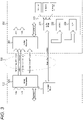
- Fig. 3 shows an example configuration of the data transmission unit (HDMI transmission unit) 102 of the source device 100, and the data reception unit (HDMI reception unit) 202 of the sink device 200 in the transmission/reception system 10 in Fig. 1 .
- the data transmission unit 102 unidirectionally transmits a differential signal corresponding to uncompressed pixel data of an image of one screen to the data reception unit 202 through a plurality of channels.
- the data transmission unit 102 also unidirectionally transmits a differential signal corresponding to at least the audio data and the control data accompanying the image, other auxiliary data, and the like, to the data reception unit 202 through the plurality of channels.
- the data transmission unit 102 includes an HDMI transmitter 121.
- the HDMI transmitter 121 converts uncompressed pixel data of an image into the corresponding differential signal, for example, and unidirectionally and serially transmits the differential signal to the data reception unit 202 connected thereto via the HDMI cable 300, through a plurality of channels that are three TMDS channels #0, #1, and #2.
- the HDMI transmitter 121 also converts the uncompressed audio data accompanying the image, as well as necessary control data, other auxiliary data, and the like, into the corresponding differential signal, and unidirectionally and serially transmits the differential signal to the data reception unit 202 connected thereto via the HDMI cable 300, through the three TMDS channels #0, #1, and #2.
- the HDMI transmitter 121 transmits pixel clocks synchronized with the pixel data being transmitted through the three TMDS channels #0, #1, and #2, to the data reception unit 202 connected thereto via the HDMI cable 300, through a TMDS clock channel.
- TMDS channel #i 0, 1, 2
- 10-bit pixel data is transmitted in one clock of the pixel clocks.
- TMDS coding is 8-bit/10-bit conversion coding for converting 8-bit data into 10-bit data, and is coding for maintaining DC balance while restricting adverse effects such as unnecessary radiation by reducing transition points from comparison with previous data. Because of that, the run-length of coding cannot be theoretically guaranteed, and therefore, DC coupling and separate transmission of a clock are necessary.
- the data reception unit 202 receives the differential signal corresponding to the pixel data transmitted unidirectionally from the data transmission unit 102 through the plurality of channels. In the horizontal blanking interval or the vertical blanking interval, the data reception unit 202 also receives the differential signal corresponding to the audio data and the control data transmitted unidirectionally from the data transmission unit 102 through the plurality of channels.
- the data reception unit 202 includes an HDMI receiver 221.
- the HDMI receiver 221 receives the differential signal corresponding to the pixel data and the differential signal corresponding to the audio data and the control data, which are transmitted unidirectionally from the data transmission unit 102 connected thereto via the HDMI cable 300, in synchronization with the pixel clocks also transmitted from the data transmission unit 102 through the TMDS clock channel.
- image data, audio data, and control data are transmitted through the TMDS channels #0, #1, and #2, and pixel clocks are transmitted through the TMDS clock channel.
- this is compatible with HDMI 1.4 or older, and HDMI 2.0.
- transmission using the FRL lanes #0, #1, #2, and #3 is performed.
- the TMDS clock channel in Fig. 3 is the FRL lane #3.
- FRL character coding is 16-bit/18-bit conversion coding for converting 16-bit data into 18-bit data, is coding for maintaining DC balance, and is coding capable of clock extraction.
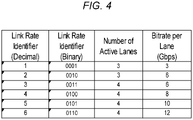
- Fig. 4 shows an example of link rates and the numbers of lanes corresponding to the respective links.
- the link rate identified by "1" (0001 in binary) and "2" (0010 in binary) three lanes #0 to #2 among the four lanes #0 to #3 are used.
- the lane #3 is an inactive lane.
- an active lane means a lane for transmitting data.
- all the four lanes #0 to #3 are used at the link rates identified by "3" (0011 in binary), "4" (0100 in binary), "5" (0101 in binary), and "6" (0110 in binary).
- the bitrate per lane is 3 Gbps.
- the bitrate per lane is 6 Gbps.
- the bitrate per lane is 8 Gbps.
- the bitrate per lane is 10 Gbps.
- the bitrate per lane is 12 Gbps.
- the transmission channels of the HDMI system including the data transmission unit 102 and the data reception unit 202 include a transmission channel called a display data channel (DDC).
- the DDC includes two signal lines (not shown) included in the HDMI cable 300, and conducts inter-integrated circuit (IIC) communication between the data transmission unit 102 and the data reception unit 202.
- IIC inter-integrated circuit
- the data transmission unit 102 includes an IIC master block 122.
- the data reception unit 202 also includes a memory unit 222.
- the memory unit 222 includes an extended display identification data ROM (EDID ROM) 231, a status and control data channel (SCDC) register unit 232, and a high-bandwidth digital content protection (HDCP) register unit 233.
- EDID ROM extended display identification data ROM
- SCDC status and control data channel
- HDCP high-bandwidth digital content protection
- the EDID ROM 231 the EDID that is information regarding the configuration and the executable functions (configuration/capability) of the sink device 200 is set, and is read into the side of the source device 100 by the IIC master block 122 through the DDC. As a result, the source device 100 recognizes the configuration and the executable functions of the sink device 200.
- the EDID ROM 231 is formed with a rewritable memory such as an electrically erasable programmable read-only memory (EEPROM) or a flash memory, for example, but may be formed with a random access memory (RAM) or any other storage medium.
- EEPROM electrically erasable programmable read-only memory
- RAM random access memory
- the EDID for HDMI 2.1, the EDID for HDMI 2.0, and the EDID for HDMI 1.4 or older are set in the EDID ROM 231, and the set EDIDs are read into the side of the source device 100.
- the status and control data channel corresponds to the point-to-point communication protocol by which the source device 100 and the sink device 200 exchange data. Note that this SCDC is defined in HDMI 2.0 and later.
- the SCDC register unit 232 includes registers that store SCDC structures (SCDCS).
- the source device 100 (the data transmission unit 102) can read and write the SCDCS data stored in the SCDC register unit 232 with the IIC master block 122 through the DDC.
- the SCDCS data includes data regarding the current link state, data for controlling the operation of the source device, and the like.
- High-bandwidth digital content protection is an encryption technology for preventing unauthorized duplication of video content protected by copyright while the video content is being transmitted to a display device.
- the HDCP register unit 233 includes registers that store data related to HDCP. Examples of the data related to HDCP include an encryption key for encrypting image data.
- the source device 100 (the data transmission unit 102) can read and write the HDCP-related data stored in the HDCP register unit 233 with the IIC master block 122 through the DDC.
- the HDMI cable 300 includes a consumer electronics control (CEC) line, a hot plug detect (HPD) line, a reserve line, a power-supply line, and the like.
- the CEC line is used for conducting bidirectional communication of control data between the source device 100 and the sink device 200.
- the HPD line is used by the source device 100 to detect connection to the sink device 200, or the like.
- step ST1 the control unit 203 sets the EDID (Enhanced (4K HFR/8K)) for HDMI 2.1 in the EDID ROM 231, and causes the source device 100 to read this EDID.
- the control unit 203 sets the hot plug detect (HPD) line (not shown) to high level, to cause the source device 100 to read the EDID for HDMI 2.1 set in the EDID ROM 231.
- HPD hot plug detect
- Fig. 6 schematically shows the EDID for HDMI 2.1.
- This EDID for HDMI 2.1 includes data "Max_FRL_Rate”.
- the EDID includes an HDMI forum vendor specific data block (HF-VSDB).
- the data "Max_FRL_Rate” is data in the HF-VSDB.
- This data "Max_FRL_Rate” is a data item that designates the maximum link rate that can be supported by the sink device 200.
- This data Max_FRL_Rate” is 4-bit field data that designates the link rate identifier (see Fig. 4 ) of the maximum link rate that can be supported by the sink device 200.
- Max_FRL_Rate also indicates whether the sink device 200 supports link training. For example, in a case where a multimedia link is the HDMI, there is a possibility that a value of "Max_FRL_Rate” is "0". In that case, it indicates that the sink device 200 supports HDMI operations compliant with HDMI 1.4 or older or HDMI 2.0. That is, in a case where the value of "Max_FRL_Rate” is "0", it indicates that the sink device 200 does not support any of the link rates shown in Fig. 4 .
- step ST2 the control unit 203 sets "FLT_ready" included in SCDC data existing in the SCDC register unit 232 to "1".
- Fig. 7 schematically shows the SCDC data stored in the SCDC register unit 232.
- the SCDC data includes three categories of data items: update flags, configuration parameters, and status flags.
- the status flags are values indicating the current status of the sink device 200.
- the update flags are values (such as 1-bit binary values) associated with instructions of the source device 100.
- a source link training circuit (not shown) polls an update flag periodically, such as every two milliseconds, for example.
- an update flag provides a method for controlling the link training circuit of the source device 100.
- the status flags include "FLT_ready”.
- a link training control circuit (not shown) of the sink device 200 writes “1" into "FLT_ready” as described above, to indicate to the source device 100 that the sink device 200 is ready to start a link training process.
- the configuration parameters are the current data transmission parameters of the HDMI link.
- the configuration parameters include "FRL_Rate”.
- "FRL_Rate” is the link rate identifier of the current link rate.
- “FRL_Rate” is 4-bit field data, and stores the link rate identifier (Binary) of the link rate at which the HDMI link is currently operating.
- the source link training circuit reads the EDID for the HDMI 2.1 (see Fig. 6 ) set in the EDID ROM, via the DDC as described above. Specifically, the source link training circuit reads "Max_FRL_Rate", and determines whether the sink device 200 supports link training.
- the sink device 200 In a case where the sink device 200 is compatible with HDMI 1.4 or older or HDMI 2.0, the sink device 200 does not support link training. In that case, the value of "Max_FRL_Rate” is "0". In this embodiment, the sink device 200 is compatible with HDMI 2.1, and the source link training circuit reads the EDID for HDMI 2.1 (see Fig. 6 ) . Accordingly, the value of "Max_FRL _Rate” is a value other than "0".
- the source link training circuit of the source device 100 and the link training control circuit of the sink device 200 perform some actions to prepare the HDMI link for a link training process.
- the link training control circuit writes the value 1 into "FLT_ready", to indicate that the sink device 200 is ready to start a link training process.
- the source link training circuit reads "FLT_ready” periodically, such as every two milliseconds, for example. In a case where the source link training circuit reads "1" as the value of "FLT_ready", the source link training circuit selects a link rate, and writes the identifier of the selected link rate into the register of "FRL_Rate". The source link training circuit selects a link rate that is equal to or lower than the value of the maximum link rate designed in "Max_FRL_Rate", and is high enough to support transmission of content.
- step ST3 the control unit 203 determines whether or not the register of "FRL _Rate" has been rewritten, or whether or not the identifier of a link rate has been written into the register of "FRL_Rate". If it is determined that the identifier of a link rate has been written into the register of "FRL_Rate", the control unit 203 determines to cause the source device 100 to read the EDID for HDMI 2.1, because the source device 100 supports link training when such writing is performed as described above. In step ST4, the EDID for HDMI 2.1 is held in the EDID ROM 231.
- the EDID for HDMI 2.1 has already been read into the source device 100 (as described in the explanation of step ST1). Therefore, at this point, it is not necessary to cause the source device 100 to read the EDID for HDMI 2.1 held in the EDID ROM 231, but the EDID may be read again.
- step ST3 If it is determined in step ST3 that the identifier of a link rate has not been written into the register of "FRL _Rate", on the other hand, the control unit 203 moves on to the process in step ST5.
- the reading of "FLT_ready” is performed periodically, such as every two milliseconds, for example. Therefore, this determination is performed after a time that is at least equal to or longer than the time interval of reading of "FLT_ready" has elapsed since the value 1 was written into "FLT_ready", for example.
- step ST5 the control unit 203 determines whether "AKE_Init" has been written.
- the image data to be transmitted from the source device 100 to the sink device 200 via the HDMI cable 300 is encrypted by high-bandwidth digital content protection (HDCP).
- HDMI 2.0 and HDMI 2.1, HDCP 2.2 is adopted.
- the source device 100 performs an authentication process to determine whether the sink device 200 has a proper HDCP processing function, with the sink device 200 via the DDC.
- an authentication and key exchange (AKE) process for exchanging encryption keys is performed as the first step of the authentication protocol.
- "AKE_Init" is the authentication start message that is transmitted from the source device (HDCP transmitter) 100 to the sink device (HDCP receiver) 200 at the beginning of this AKE process.
- the sink device 200 receives "AKE_Init” transmitted from the source device 100, and writes it at the corresponding address in the HDCP register unit 233.
- Fig. 8 schematically shows HDCP data stored in the HDCP register unit 233.
- the HDCP data includes data of "AKE_Init”.
- Fig. 9(a) shows an example structure (syntax) of "AKE_Init”, and Fig. 9(a) shows the contents (semantics) of relevant information in the example structure.
- the 8-byte field of "rTX [63., 0]” is a pseudorandom value.
- the 3-byte field of "TxCaps” is a fixed value (0x02 0x00 0x00) including version information.
- step ST5 if it is determined in step ST5 that "AKE_Init” has been written, the control unit 203 determines to cause the source device 100 to read the EDID for HDMI 2.0. This is because "AKE_Init” is written in a case where the source device 100 adopts HDCP 2.2 as described above, and HDMI 2.0 adopts HDCP 2.2.
- step ST6 the EDID held in the EDID ROM 231 is rewritten to be the EDID (Enhanced) for HDMI 2.0.
- the control unit 203 sets the HPD line at high level, to cause the source device 100 to read the EDID for HDMI 2.0 set in the EDID ROM 231.
- step ST5 If it is determined in step ST5 that "AKE_Init" has not been written, on the other hand, the control unit 203 determines to cause the source device 100 to read the EDID (Standard) for HDMI 1.4 or older, and, in step ST7, rewrites the EDID held in the EDID ROM 231 to be the EDID for HDMI 1.4 or older. After this rewriting, the control unit 203 then sets the HPD line at high level, to cause the source device 100 to read the EDID for HDMI 1.4 or older set in the EDID ROM 231. This determination is performed after at least a predetermined time, such as a time that is equal to or longer than several 100 milliseconds, has elapsed since the value 1 was written into "FLT_ready", for example.
- a predetermined time such as a time that is equal to or longer than several 100 milliseconds
- the sink device 200 determines whether the source device 100 is compatible with HDMI 2.1, HDMI 2.0, or HDMI 1.4 or older, sets the EDID of the version corresponding to the determination result in the EDID ROM 231, and causes the source device 100 to read the EDID. Accordingly, the user does not need to set the EDID of the version compatible with the source device 100 in the EDID ROM 231 in the sink device 200. Thus, user-friendliness can be increased.
- the sink device 200 handles 256-byte EDID "Standard” as the EDID for HDMI 1.4 or older, 256-byte EDID “Enhanced” as the EDID for HDMI 2.0, and 512-byte EDID "Enhanced (4K HFR/8K)" as the EDID for HDMI 2.1, which are shown in Fig. 2(b) .
- the sink device 200 handles 256-byte EDID "Standard” as the EDID for HDMI 1.4 or older, 256-byte EDID “Enhanced” as the EDID for HDMI 2.0, 256-byte EDID “Enhanced (4K HFR)” as the EDID for HDMI 2.1, and 256-byte EDID “Enhanced (8K)” as the EDID for HDMI 2.1, which are shown in Fig. 2(a) .
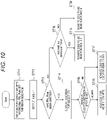
- FIG. 10 shows an example of the procedures of an EDID automatic switching control process in the control unit 203 of the sink device 200 in that case.
- step ST11 the control unit 203 sets the EDID for HDMI 2.1 (4K HFR) in the EDID ROM 231, and causes the source device 100 to read this EDID.
- the control unit 203 sets the hot plug detect (HPD) line (not shown) to high level, to cause the source device 100 to read the EDID for HDMI 2.1 (4K HFR) set in the EDID ROM 231.
- This EDID for HDMI 2.1 (4K HFR) also includes data of "Max_FRL_Rate" (see Fig. 6 ).
- step ST12 the control unit 203 sets "FLT_ready” included in the SCDC data existing in the SCDC register unit 232 to "1".
- the source link training circuit of the source device 100 reads "FLT_ready” periodically, such as every two milliseconds, for example. In a case where the source link training circuit reads "1" as the value of "FLT_ready", the source link training circuit selects a link rate, and writes the identifier of the selected link rate into the register of "FRL_Rate".
- step ST13 the control unit 203 determines whether or not the register of "FRL_Rate" has been rewritten, or whether or not the identifier of a link rate has been written into the register of "FRL _Rate".
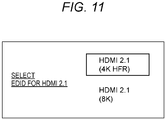
- the control unit 203 in step ST14 displays a user interface (UI) screen for allowing the user to select either the EDID for HDMI 2.1 (4K HFR) or the EDID for HDMI 2.1 (8K) on a display unit (not shown), because this writing is performed in the case of HDMI 2.1 by which the source device 100 supports link training.
- UI user interface
- Fig. 11 shows an example of the UI screen.
- the user refers to this UI screen, to select either "4K HFR" or "8K", for example.
- the example shown in the drawing illustrates a state in which the EDID for HDMI 2.1 (4 K HFR) is selected.
- step ST15 the control unit 203 determines whether "4 K HFR" is selected, or whether "8 K” is selected. If it is determined that "4K HFR" is selected, the control unit 203 determines to cause the source device 100 to read the EDID for HDMI 2.1 (4K HFR), and, in step ST16, keeps the EDID for HDMI 2.1 (4K HFR) held in the EDID ROM 231.
- the EDID for HDMI 2.1 (4K HFR) has already been read into the source device 100 (as described in the explanation of step ST11). Therefore, at this point, it is not necessary to cause the source device 100 to read the EDID for HDMI 2.1 (4K HFR) held in the EDID ROM 231, but the EDID may be read again.
- step ST15 If it is determined in step ST15 that "8K" is selected, on the other hand, the control unit 203 determines to cause the source device 100 to read the EDID for HDMI 2.1 (8K), and, in step ST17, rewrites the EDID held in the EDID ROM 231 to be the EDID for HDMI 2.1 (8K). After this rewriting, the control unit 203 then sets the HPD line at high level, to cause the source device 100 to read the EDID for HDMI 2.1 (8K) set in the EDID ROM 231.
- step ST13 If it is determined in step ST13 that the identifier of a link rate has not been written into the register of "FRL_Rate", on the other hand, the control unit 203 moves on to the process in step ST18.
- the reading of "FLT_ready” is performed periodically, such as every two milliseconds, for example. Therefore, this determination is performed after a time that is at least equal to or longer than the time interval of reading of "FLT_ready" has elapsed since the value 1 was written into "FLT_ready", for example.
- step ST18 the control unit 203 determines whether "AKE_Init" has been written.
- the image data to be transmitted from the source device 100 to the sink device 200 via the HDMI cable 300 is encrypted by high-bandwidth digital content protection (HDCP).
- HDMI 2.0 and HDMI 2.1, HDCP 2.2 is adopted.
- the source device 100 performs an authentication process to determine whether the sink device 200 has a proper HDCP processing function, with the sink device 200 via the DDC.
- an authentication and key exchange (AKE) process for exchanging encryption keys is performed as the first step of the authentication protocol.
- "AKE_Init" is the authentication start message that is transmitted from the source device (HDCP transmitter) 100 to the sink device (HDCP receiver) 200 at the beginning of this AKE process.
- step ST18 If it is determined in step ST18 that "AKE_Init” has been written, the control unit 203 determines to cause the source device 100 to read the EDID for HDMI 2.0. This is because "AKE_Init” is written in a case where the source device 100 adopts HDCP 2.2 as described above, and HDMI 2.0 adopts HDCP 2.2.
- step ST19 the control unit 203 then rewrites the EDID held in the EDID ROM 231 to be the EDID for HDMI 2.0. After this rewriting, the control unit 203 then sets the HPD line at high level, to cause the source device 100 to read the EDID for HDMI 2.0 set in the EDID ROM 231.
- control unit 203 determines to cause the source device 100 to read the EDID for HDMI 1.4 or older. This determination is performed after at least a predetermined time, such as a time that is equal to or longer than several 100 milliseconds, has elapsed since the value 1 was written into "FLT_ready", for example.
- step ST20 the control unit 203 then rewrites the EDID held in the EDID ROM 231 to be the EDID for HDMI 1.4 or older. After this rewriting, the control unit 203 then sets the HPD line at high level, to cause the source device 100 to read the EDID for HDMI 1.4 or older set in the EDID ROM 231.
- step ST11 the EDID for HDMI 2.1 (4K HFR) is set in the EDID ROM 231, and the source device 100 is made to read this EDID.
- the EDID for HDMI 2.1 (8K) may be set in the EDID ROM 231, and the source device 100 may be made to read this EDID.
- the interface is HDMI.
- the present technology can also be applied to other interfaces that handle similar EDIDs in a manner similar to the above.
- Examples of other interfaces include a display port (DP) interface and a mobile high-definition link (MHL).
- the version of the HDMI is HDMI 2.1, HDMI 2.0, or HDMI 1.4 or older.
- the present technology is not limited to such an example, and may be applied to a future version of HDMI.
- HDCP 2.2 is used.
- the present technology may be embodied with a version of HDCP older than HDCP 2.2 or a version of HDCP newer than HDCP 2.2.
- the EDID for HDMI 2.1 is stored at the beginning in step ST1 or step ST11.
- the EDID for HDMI 1.4 or older, or the EDID for HDMI 2.0 may be stored at the beginning, and be switched to the EDID for HDMI 2.1 in response to writing of "FRL_Rate".
Landscapes
- Engineering & Computer Science (AREA)
- Multimedia (AREA)
- Signal Processing (AREA)
- Computer Networks & Wireless Communication (AREA)
- Physics & Mathematics (AREA)
- Computer Hardware Design (AREA)
- General Physics & Mathematics (AREA)
- Theoretical Computer Science (AREA)
- Databases & Information Systems (AREA)
- Two-Way Televisions, Distribution Of Moving Picture Or The Like (AREA)
- Circuits Of Receivers In General (AREA)
Applications Claiming Priority (2)
| Application Number | Priority Date | Filing Date | Title |
|---|---|---|---|
| JP2019226931 | 2019-12-17 | ||
| PCT/JP2020/046140 WO2021125055A1 (fr) | 2019-12-17 | 2020-12-10 | Appareil de réception, procédé de commande d'appareil de réception, et système d'émission-réception |
Publications (2)
| Publication Number | Publication Date |
|---|---|
| EP4080896A1 true EP4080896A1 (fr) | 2022-10-26 |
| EP4080896A4 EP4080896A4 (fr) | 2023-05-24 |
Family
ID=76478767
Family Applications (1)
| Application Number | Title | Priority Date | Filing Date |
|---|---|---|---|
| EP20903476.8A Pending EP4080896A4 (fr) | 2019-12-17 | 2020-12-10 | Appareil de réception, procédé de commande d'appareil de réception, et système d'émission-réception |
Country Status (6)
| Country | Link |
|---|---|
| US (3) | US11818499B2 (fr) |
| EP (1) | EP4080896A4 (fr) |
| JP (2) | JP7657732B2 (fr) |
| KR (1) | KR20220115931A (fr) |
| CN (2) | CN118921520A (fr) |
| WO (1) | WO2021125055A1 (fr) |
Families Citing this family (8)
| Publication number | Priority date | Publication date | Assignee | Title |
|---|---|---|---|---|
| CN118921520A (zh) * | 2019-12-17 | 2024-11-08 | 索尼集团公司 | 接收装置、用于控制接收装置的方法和发送/接收系统 |
| US12464086B2 (en) * | 2021-05-20 | 2025-11-04 | Lg Electronics Inc. | Method for transmitting/receiving video data and device therefor |
| TWI783695B (zh) * | 2021-09-24 | 2022-11-11 | 瑞昱半導體股份有限公司 | 切換影音接收介面的方法與電路系統 |
| CN113965713B (zh) * | 2021-12-22 | 2022-04-12 | 长芯盛(武汉)科技有限公司 | 一种支持高速信号链路训练的hdmi有源线缆 |
| US11995025B2 (en) | 2021-12-22 | 2024-05-28 | Everpro Technologies Company Ltd | Active cable supporting high-speed signal link training |
| KR20240006930A (ko) * | 2022-07-07 | 2024-01-16 | 삼성전자주식회사 | 다중 edid 읽기 동작을 지원하기 위한 전자 장치, 및 그의 동작 방법 |
| WO2024135871A1 (fr) * | 2022-12-20 | 2024-06-27 | 엘지전자 주식회사 | Dispositif d'affichage et procédé de commande associé |
| WO2025206418A1 (fr) * | 2024-03-26 | 2025-10-02 | 엘지전자 주식회사 | Dispositif récepteur et son procédé de fonctionnement |
Family Cites Families (17)
| Publication number | Priority date | Publication date | Assignee | Title |
|---|---|---|---|---|
| JP2008278209A (ja) * | 2007-04-27 | 2008-11-13 | Toshiba Corp | 放送受信装置及び放送受信装置の信号処理方法 |
| JP2009071587A (ja) * | 2007-09-13 | 2009-04-02 | Panasonic Corp | 映像音声送信装置及び映像音声送信方法 |
| JP5506260B2 (ja) * | 2009-07-03 | 2014-05-28 | 日立コンシューマエレクトロニクス株式会社 | 映像送信装置及び映像受信装置 |
| TWI415449B (zh) * | 2011-03-10 | 2013-11-11 | Sunplus Technology Co Ltd | 電視系統的控制方法 |
| KR20130051160A (ko) * | 2011-11-09 | 2013-05-20 | 삼성전자주식회사 | 전자장치 및 그 제어방법 |
| US9179117B2 (en) * | 2012-07-02 | 2015-11-03 | Kabushiki Kaisha Toshiba | Image processing apparatus |
| EP3119100A4 (fr) | 2014-03-13 | 2018-01-17 | LG Electronics Inc. | Dispositif et procédé de transmission/réception de données via une hdmi |
| JP2015188204A (ja) * | 2014-03-14 | 2015-10-29 | 株式会社リコー | 情報処理装置、情報処理方法、およびそのプログラム |
| KR102272983B1 (ko) * | 2014-03-24 | 2021-07-06 | 엘지전자 주식회사 | Hdmi를 사용한 데이터 송수신 기기 및 방법 |
| EP3217677B1 (fr) * | 2014-11-05 | 2020-04-29 | Panasonic Intellectual Property Management Co., Ltd. | Système d'émission-réception de signal av, dispositif collecteur, procédé d'émission-réception de signal av, et procédé de réception de signal av |
| JP2016163238A (ja) | 2015-03-04 | 2016-09-05 | シャープ株式会社 | 表示装置及び情報書換方法 |
| CN105072491A (zh) * | 2015-07-27 | 2015-11-18 | 四川长虹电器股份有限公司 | 电视机edid文件的切换方法及装置 |
| WO2017151925A1 (fr) | 2016-03-02 | 2017-09-08 | Lattice Semiconductor Corporation | Apprentissage de liaison dans des interfaces multimédia |
| TWI610289B (zh) * | 2016-08-12 | 2018-01-01 | 晨星半導體股份有限公司 | 顯示控制器以及其操作方法 |
| JP2019199024A (ja) * | 2018-05-16 | 2019-11-21 | 株式会社リコー | 電子黒板、動作保証判断方法、プログラム、表示システム |
| JP7003079B2 (ja) * | 2019-03-14 | 2022-01-20 | 株式会社東芝 | 電子機器 |
| CN118921520A (zh) * | 2019-12-17 | 2024-11-08 | 索尼集团公司 | 接收装置、用于控制接收装置的方法和发送/接收系统 |
-
2020
- 2020-12-10 CN CN202411072725.1A patent/CN118921520A/zh active Pending
- 2020-12-10 US US17/778,959 patent/US11818499B2/en active Active
- 2020-12-10 KR KR1020227018466A patent/KR20220115931A/ko active Pending
- 2020-12-10 WO PCT/JP2020/046140 patent/WO2021125055A1/fr not_active Ceased
- 2020-12-10 EP EP20903476.8A patent/EP4080896A4/fr active Pending
- 2020-12-10 JP JP2021565539A patent/JP7657732B2/ja active Active
- 2020-12-10 CN CN202080085923.5A patent/CN114830677B/zh active Active
-
2023
- 2023-10-13 US US18/379,899 patent/US12425536B2/en active Active
-
2025
- 2025-03-26 JP JP2025051170A patent/JP2025106328A/ja active Pending
- 2025-09-02 US US19/316,193 patent/US20260052223A1/en active Pending
Also Published As
| Publication number | Publication date |
|---|---|
| US20260052223A1 (en) | 2026-02-19 |
| JP7657732B2 (ja) | 2025-04-07 |
| US20240040079A1 (en) | 2024-02-01 |
| EP4080896A4 (fr) | 2023-05-24 |
| US11818499B2 (en) | 2023-11-14 |
| US12425536B2 (en) | 2025-09-23 |
| CN114830677B (zh) | 2024-08-16 |
| CN118921520A (zh) | 2024-11-08 |
| KR20220115931A (ko) | 2022-08-19 |
| WO2021125055A1 (fr) | 2021-06-24 |
| JPWO2021125055A1 (fr) | 2021-06-24 |
| US20220417468A1 (en) | 2022-12-29 |
| CN114830677A (zh) | 2022-07-29 |
| JP2025106328A (ja) | 2025-07-15 |
Similar Documents
| Publication | Publication Date | Title |
|---|---|---|
| US12425536B2 (en) | Reception device, method for controlling reception device, and transmission/reception system | |
| US8780270B2 (en) | Video display apparatus, video output apparatus, control methods thereof, and video display sysyem | |
| KR102397289B1 (ko) | Hdmi를 사용하여 데이터를 송수신하기 위한 방법 및 장치 | |
| EP2162823B1 (fr) | Dispositif et procede de reception de donnees | |
| US10038871B2 (en) | Method and device for transmitting and receiving power using HDMI | |
| US10085058B2 (en) | Device and method for transmitting and receiving data using HDMI | |
| EP2908310A1 (fr) | Procédé de lecture de données, transmetteur vidéo et récepteur vidéo utilisant celui-ci | |
| US10474241B2 (en) | Method and device for transmitting/receiving data using HDMI | |
| US20170238051A1 (en) | Device and method for data transmission and reception using hdmi | |
| KR20160132900A (ko) | Hdmi를 사용한 데이터 송수신 기기 및 방법 | |
| US11882331B2 (en) | Electronic device and operating method thereof | |
| US10162769B2 (en) | Method and apparatus for transmitting and receiving data using HDMI | |
| US10511798B2 (en) | Method for transmitting and receiving power using HDMI and apparatus therefor | |
| JP2011041204A (ja) | 通信機器 | |
| JP2019029800A (ja) | 映像表示装置およびその制御方法、プログラム並びに記憶媒体 | |
| KR20220146166A (ko) | 전자 장치 및 그 동작 방법 | |
| US20110109807A1 (en) | Video data processing device and video data processing method |
Legal Events
| Date | Code | Title | Description |
|---|---|---|---|
| STAA | Information on the status of an ep patent application or granted ep patent |
Free format text: STATUS: THE INTERNATIONAL PUBLICATION HAS BEEN MADE |
|
| PUAI | Public reference made under article 153(3) epc to a published international application that has entered the european phase |
Free format text: ORIGINAL CODE: 0009012 |
|
| STAA | Information on the status of an ep patent application or granted ep patent |
Free format text: STATUS: REQUEST FOR EXAMINATION WAS MADE |
|
| 17P | Request for examination filed |
Effective date: 20220718 |
|
| AK | Designated contracting states |
Kind code of ref document: A1 Designated state(s): AL AT BE BG CH CY CZ DE DK EE ES FI FR GB GR HR HU IE IS IT LI LT LU LV MC MK MT NL NO PL PT RO RS SE SI SK SM TR |
|
| DAV | Request for validation of the european patent (deleted) | ||
| DAX | Request for extension of the european patent (deleted) | ||
| A4 | Supplementary search report drawn up and despatched |
Effective date: 20230426 |
|
| RIC1 | Information provided on ipc code assigned before grant |
Ipc: G09G 5/00 20060101ALI20230420BHEP Ipc: H04N 21/45 20110101ALI20230420BHEP Ipc: H04N 21/4363 20110101ALI20230420BHEP Ipc: H04N 21/442 20110101ALI20230420BHEP Ipc: H04N 21/436 20110101AFI20230420BHEP |
|
| RAP1 | Party data changed (applicant data changed or rights of an application transferred) |
Owner name: SATURN LICENSING LLC |
|
| STAA | Information on the status of an ep patent application or granted ep patent |
Free format text: STATUS: EXAMINATION IS IN PROGRESS |
|
| 17Q | First examination report despatched |
Effective date: 20250304 |