EP4083048A2 - Herstellungsverfahren für organisches halogenid zur herstellung von perowskit, dadurch hergestellter perowskit und solarzelle - Google Patents
Herstellungsverfahren für organisches halogenid zur herstellung von perowskit, dadurch hergestellter perowskit und solarzelle Download PDFInfo
- Publication number
- EP4083048A2 EP4083048A2 EP20906729.7A EP20906729A EP4083048A2 EP 4083048 A2 EP4083048 A2 EP 4083048A2 EP 20906729 A EP20906729 A EP 20906729A EP 4083048 A2 EP4083048 A2 EP 4083048A2
- Authority
- EP
- European Patent Office
- Prior art keywords
- perovskite
- prepared
- organic halide
- solar cell
- electrode
- Prior art date
- Legal status (The legal status is an assumption and is not a legal conclusion. Google has not performed a legal analysis and makes no representation as to the accuracy of the status listed.)
- Pending
Links
Images


Classifications
-
- C—CHEMISTRY; METALLURGY
- C07—ORGANIC CHEMISTRY
- C07F—ACYCLIC, CARBOCYCLIC OR HETEROCYCLIC COMPOUNDS CONTAINING ELEMENTS OTHER THAN CARBON, HYDROGEN, HALOGEN, OXYGEN, NITROGEN, SULFUR, SELENIUM OR TELLURIUM
- C07F13/00—Compounds containing elements of Groups 7 or 17 of the Periodic Table
- C07F13/005—Compounds without a metal-carbon linkage
-
- C—CHEMISTRY; METALLURGY
- C07—ORGANIC CHEMISTRY
- C07F—ACYCLIC, CARBOCYCLIC OR HETEROCYCLIC COMPOUNDS CONTAINING ELEMENTS OTHER THAN CARBON, HYDROGEN, HALOGEN, OXYGEN, NITROGEN, SULFUR, SELENIUM OR TELLURIUM
- C07F7/00—Compounds containing elements of Groups 4 or 14 of the Periodic Table
- C07F7/24—Lead compounds
-
- H—ELECTRICITY
- H10—SEMICONDUCTOR DEVICES; ELECTRIC SOLID-STATE DEVICES NOT OTHERWISE PROVIDED FOR
- H10K—ORGANIC ELECTRIC SOLID-STATE DEVICES
- H10K30/00—Organic devices sensitive to infrared radiation, light, electromagnetic radiation of shorter wavelength or corpuscular radiation
- H10K30/10—Organic devices sensitive to infrared radiation, light, electromagnetic radiation of shorter wavelength or corpuscular radiation comprising heterojunctions between organic semiconductors and inorganic semiconductors
-
- H—ELECTRICITY
- H10—SEMICONDUCTOR DEVICES; ELECTRIC SOLID-STATE DEVICES NOT OTHERWISE PROVIDED FOR
- H10K—ORGANIC ELECTRIC SOLID-STATE DEVICES
- H10K30/00—Organic devices sensitive to infrared radiation, light, electromagnetic radiation of shorter wavelength or corpuscular radiation
- H10K30/10—Organic devices sensitive to infrared radiation, light, electromagnetic radiation of shorter wavelength or corpuscular radiation comprising heterojunctions between organic semiconductors and inorganic semiconductors
- H10K30/15—Sensitised wide-bandgap semiconductor devices, e.g. dye-sensitised TiO2
- H10K30/151—Sensitised wide-bandgap semiconductor devices, e.g. dye-sensitised TiO2 the wide bandgap semiconductor comprising titanium oxide, e.g. TiO2
-
- H—ELECTRICITY
- H10—SEMICONDUCTOR DEVICES; ELECTRIC SOLID-STATE DEVICES NOT OTHERWISE PROVIDED FOR
- H10K—ORGANIC ELECTRIC SOLID-STATE DEVICES
- H10K85/00—Organic materials used in the body or electrodes of devices covered by this subclass
- H10K85/50—Organic perovskites; Hybrid organic-inorganic perovskites [HOIP], e.g. CH3NH3PbI3
-
- H—ELECTRICITY
- H10—SEMICONDUCTOR DEVICES; ELECTRIC SOLID-STATE DEVICES NOT OTHERWISE PROVIDED FOR
- H10K—ORGANIC ELECTRIC SOLID-STATE DEVICES
- H10K30/00—Organic devices sensitive to infrared radiation, light, electromagnetic radiation of shorter wavelength or corpuscular radiation
- H10K30/50—Photovoltaic [PV] devices
-
- Y—GENERAL TAGGING OF NEW TECHNOLOGICAL DEVELOPMENTS; GENERAL TAGGING OF CROSS-SECTIONAL TECHNOLOGIES SPANNING OVER SEVERAL SECTIONS OF THE IPC; TECHNICAL SUBJECTS COVERED BY FORMER USPC CROSS-REFERENCE ART COLLECTIONS [XRACs] AND DIGESTS
- Y02—TECHNOLOGIES OR APPLICATIONS FOR MITIGATION OR ADAPTATION AGAINST CLIMATE CHANGE
- Y02E—REDUCTION OF GREENHOUSE GAS [GHG] EMISSIONS, RELATED TO ENERGY GENERATION, TRANSMISSION OR DISTRIBUTION
- Y02E10/00—Energy generation through renewable energy sources
- Y02E10/50—Photovoltaic [PV] energy
- Y02E10/549—Organic PV cells
-
- Y—GENERAL TAGGING OF NEW TECHNOLOGICAL DEVELOPMENTS; GENERAL TAGGING OF CROSS-SECTIONAL TECHNOLOGIES SPANNING OVER SEVERAL SECTIONS OF THE IPC; TECHNICAL SUBJECTS COVERED BY FORMER USPC CROSS-REFERENCE ART COLLECTIONS [XRACs] AND DIGESTS
- Y02—TECHNOLOGIES OR APPLICATIONS FOR MITIGATION OR ADAPTATION AGAINST CLIMATE CHANGE
- Y02P—CLIMATE CHANGE MITIGATION TECHNOLOGIES IN THE PRODUCTION OR PROCESSING OF GOODS
- Y02P70/00—Climate change mitigation technologies in the production process for final industrial or consumer products
- Y02P70/50—Manufacturing or production processes characterised by the final manufactured product
Definitions
- the present disclosure relates to a method for preparing an organic halide used for preparing a perovskite, a perovskite prepared thereby, and a solar cell. Specifically, the present disclosure relates to the above preparation method characterized by using an alkali metal iodide or bromide, a perovskite prepared thereby, and a solar cell.
- a perovskite solar cell acts as a potential alternative to a crystalline silicon solar cell which currently accounts for 93% of a global solar cell market and thus has developed very rapidly over the past few years.
- the perovskite solar cell has excellent optical and electrical properties due to high light absorption efficiency, long charge carrier lifetime, and a long diffusion distance of charge carriers. Thus, power conversion efficiency of the perovskite solar cell has achieved significant improvement from 3.8% to 25.2% for recent several years.
- a conventional thin film solar cell e.g., based on Cu(In,Ga)(S,Se) and CdTe
- a perovskite photoactive layer is formed by a simple spin coating method using PbX 2 precursor and organic halide in a solution state. Due to characteristics of the solution process, an organometallic trihalide-based perovskite solar cell is more economical and competitive than a thin-film solar cell that relies on vacuum technology.
- a MAPbI 3 -based perovskite solar cell prepared using the methylammonium iodide has excellent photo-electric properties, and power conversion efficiency of about 21.2%. Therefore, the methylammonium iodide is an important precursor.
- a MA portion thereof is replaced with FA
- a light absorption wavelength of the solar cell using FAX may extend to a larger wavelength region, and thus an absorption range of a solar spectrum thereof may be wider, so that a power output of the solar cell is improved.
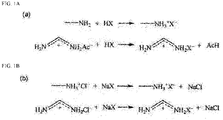
- most of synthetic procedures of MAX and FAX involve use of toxic and expensive hydrogen halide precursor.
- MAI is synthesized via acid-base reaction between aqueous methylamine and HI.
- FAI is prepared via reaction between formamidinium acetate (FAAc) and HI.
- FAAc formamidinium acetate
- concentrations below 0.1 ppm and 0.2 ppm of HI and HBr, respectively are recommended according to 2006 air pollution standards set by UK experts.
- the perovskite solar cell has a low production cost.
- excessive use of HI to increase a reaction yield in the reaction of MA or FA with HI increases a production cost, thereby lowering economic feasibility of the perovskite solar cell.
- One purpose of the present disclosure is to provide a method for preparing an organic halide used for preparing a perovskite, without using conventional HI or HBr which is toxic.
- Another purpose of the present disclosure is to provide a perovskite prepared using the organic halide prepared using the above preparation method as a precursor.
- Another purpose of the present disclosure is to provide a solar cell including the perovskite.
- a first aspect of the present disclosure provides a method for preparing an organic halide used for preparing a perovskite, the method comprising: a step (a) of reacting methylammonium chloride or formamidinium chloride with alkali metal iodide or alkali metal bromide.
- a second aspect of the present disclosure provides a perovskite prepared using the organic halide prepared by the above method as a precursor.
- a third aspect of the present disclosure provides a solar cell comprising: a first electrode; a second electrode opposite to the first electrode; and a photoactive layer disposed at least partially between the first electrode and the second electrode, wherein the photoactive layer includes a perovskite prepared using the organic halide prepared by the above method as a precursor.
- alkali metal iodide or alkali metal bromide instead of conventional toxic HI or HBr is used as a halide source, thereby preparing a perovskite precursor in an easy and environmentally friendly way.
- strong acids such as HI or HBr
- they are oxidized via reacting with oxygen when stored in air for a long time.
- a special storage condition thereof is required. This is not suitable for mass production.
- HI or HBr may be used in drug preparation and may belong to a List I compound of the United States Drug Enforcement Administration (DEA) and thus is subject to surveillance.
- DEA Drug Enforcement Administration
- an additional cooling system is required due to the strong exothermic nature of the acid-base reaction.
- the preparation equipment may be simplified, a cost of a raw material may be lower and waste disposal may be easy, thereby allowing design of safer and simpler mass production.
- the preparation method according to the present disclosure has a high production yield. Accordingly, the method for preparing the organic halide according to the present disclosure has significantly higher economic feasibility than that of the method of the prior art.
- a “perovskite” refers to an organic/inorganic halide material in which cations (R and M) and an anion (X) constitute a chemical formula of RMX 3 , and which has the same crystal structure as that of CaTiO 3 as a first perovskite-type material.
- a “perovskite solar cell” refers to a solar cell including an organic/inorganic halide material having a perovskite crystal structure.
- a method for preparing an organic halide used for preparing a perovskite in accordance with the present disclosure a step (a) of reacting methylammonium chloride or formamidinium chloride with alkali metal iodide or alkali metal bromide.
- the alkali metal is not particularly limited as long as it reacts with the methylammonium chloride or formamidinium chloride, and may specifically be lithium, sodium, potassium, or the like.
- the alkali metal iodide or alkali metal bromide may be sodium iodide (NaI) or sodium bromide (NaBr).
- NaI and NaBr may be useful in that they have high solubility in solvents such as water and alcohol.
- the organic halide in the preparation method according to the present disclosure may be methylammonium iodide (MAI), methylammonium bromide (MABr), formamidinium iodide (FAI), or formamidinium bromide (FABr).
- MAI methylammonium iodide
- MABr methylammonium bromide
- FAI formamidinium iodide
- FABr formamidinium bromide
- the reaction step (a) may be performed based on an ion exchange reaction in a solvent.
- the solvent may be water or alcohol, wherein the alcohol may be a monohydric or dihydric alcohol having 1 to 5 carbon atoms, specifically, a monohydric alcohol having 1 to 5 carbon atoms, more specifically, ethanol.
- the reaction step (a) may be performed in a solvent at room temperature or under reflux.
- a temperature suitable for the reflux may be appropriately determined depending on a type of the solvent as used.
- the temperature may be 100°C when water is used as a solvent, or may be 78°C when ethanol is used as a solvent.
- a reaction time may be determined based on a reaction rate and a target yield.
- the reaction may be performed for a duration from 1 minute to 24 hours under stirring.
- the present disclosure is not limited thereto.
- the reaction may be performed for a time duration of 24 hours or larger.
- the method may further include, after the reaction step (a), a step (b) of filtering a product of the reaction step (a), and a step (c) of removing the solvent therefrom.
- NaCl as a reaction by-product may be removed therefrom in the filtration step (b).
- the solvent removal step (c) when the solvent is water, the water may be first removed in the step (c), then the product may be dissolved in alcohol and then the filtration step (b) may be performed.
- the filtration step (b) may be performed first, and then the step (c) may be performed wherein the step (c) may be performed by evaporating the alcohol.
- the method may further include a step (d) of performing recrystallization of the organic halide produced in the reaction step (a) and removing alkali metal chloride therefrom.
- the organic halide produced in the step (a) inevitably contains ionic salt impurities (e.g., alkali metal chloride, alkali metal iodide, methylammonium chloride, or formamidinium chloride) due to the execution of the ion exchange method. Therefore, after performing the step (a), when necessary, the steps (b) and/or (c) may be further executed, and then the product may be subjected to recrystallization to further remove the ionic salt impurities, specifically, alkali metal chloride, etc.
- ionic salt impurities e.g., alkali metal chloride, alkali metal iodide, methylammonium chloride, or formamidinium chloride
- a perovskite prepared using the organic halide prepared by the method for preparing the organic halide as described above as a precursor is provided.
- the perovskite has an RMX 3 structure.
- R may be a methylammonium cation or formamidinium cation
- X may be an iodide anion or a bromide anion
- M may be a divalent metal cation selected from a group consisting of Pb 2+ , Sn 2+ , Ge 2+ , and combinations thereof.
- a solar cell which includes first and second electrodes opposite to each other, and a photoactive layer disposed at least partially between the first electrode and the second electrode, wherein the photoactive layer includes the perovskite obtained using the organic halide prepared by the preparation method of the organic halide as a precursor.
- the perovskite may be obtained by reacting the organic halide as described above with a compound of a chemical formula MX 2 .
- X may be an iodide anion or a bromide anion
- M may be a divalent metal cation selected from the group consisting of Pb 2+ , Sn 2+ , Ge 2+ , and combinations thereof.
- the photoactive layer including the perovskite may be prepared simply via, for example, spin coating using the compound of the chemical formula MX 2 and the organic halide in a solution state.
- the first electrode may be one of an anode and a cathode
- the second electrode may be the other of the anode and the cathode.
- either or both of the first electrode and the second electrode may be coated on a substrate.
- the solar cell may further include an electron transport layer and a hole transport layer between the first electrode and the second electrode.
- the photoactive layer of the solar cell may further include a photoactive material, for example, a semiconductor material other than the perovskite material.
- the photoactive layer may include both a perovskite layer and a layer including a photoactive material other than the perovskite, for example a semiconductor layer.
- the formamidinium chloride (FACl) was prepared using a conventional method, that is, based on a reaction of FAAc and HCl solution (See [ I. Levchuk, A. Osvet, X. Tang, M. Brandl, J.D. Perea, F. Hoegl, G.J.Matt, R. Hock, M. Batentschuk andCJ.Brabec, Nano Lett. 2017, 17, 2765-2770 ])
- a reaction of the mixed aqueous solution was carried out for 3 hours under reflux (or at room temperature) while vigorously stirring the mixed aqueous solution under the reflux condition of 100°C or higher (about 78°C when EtOH was used). After completion of the reaction, water was removed from a reaction mixture under vacuum. Thus, yellowish white powders were produced, which were dispersed in EtOH (or isopropanol) and then NaCl was removed therefrom via filtration (when isopropanol was used, a larger amount thereof than an amount of EtOH was required, but an amount of impurity NaCl was greatly reduced). EtOH (or isopropanol) was evaporated under vacuum.
- MAI was synthesized under the same conditions as those used for the synthesis of MAI of 1-(1)-1 except that 7.36 g of MACl and 16.34 g of NaI were dissolved in 100 mL of EtOH.
- a solar cell was manufactured using MAI (abbreviated as IE-MAI in the solar cell characterization) prepared using the ion exchange method according to 1-(1)-1, and a solar cell was manufactured using a commercially available MAI ( ⁇ 99.5 %, Xi'an Polymer Light Technology Corp. product) (abbreviated as CO-MAI in the solar cell characterization). Both IE-MAI and CO-MAI used for the solar cells were obtained based on recrystallization from a mixed solvent of Et 2 O and EtOH.
- IE-MAI and CO-MAI used for the solar cells were obtained based on recrystallization from a mixed solvent of Et 2 O and EtOH.
- All solar cells were manufactured according to a conventional method.
- a fluorine-doped tin oxide (FTO) substrate of 2 ⁇ 2 cm 2 (Pilkington TEC8) was cleaned in an ultrasonic bath for 15 minutes using sequentially acetone, deionized water and isopropyl alcohol. The cleaned substrate was dried under a N 2 gas stream.
- a 1-butanol solution in which 0.15 M titanium diisopropoxide bis(acetylacetonate) was dissolved was spin-coated on the substate at 3000 rpm for 20 seconds to form a TiO 2 dense layer (c-TiO 2 ) on the substate.
- c-TiO 2 /FTO was baked at 125°C for 5 minutes, then immersed in a 0.05 M TiCl 4 solution at 70°C for 30 minutes and rinsed with deionized water and isopropyl alcohol. Then, diluted TiO 2 paste (SC-HT040, SCHARECHEM Co. product) composed of TiO 2 nanoparticles (about 50 nm average diameter) was spin-coated thereon to form a mesoporous TiO 2 (mp-TiO 2 ) layer thereon. The TiO 2 paste was diluted in a mixed solvent (1-propanol to terpineol in a 3.5:1 ratio) at a paste to solvent ratio of 1:3.5. The mp-TiO 2 layer was then baked at 125°C for 5 minutes and annealed at 500°C for 30 minutes.
- the MAPbI 3 film was formed via a conventional solvent engineering method.
- a precursor solution was spin-coated at 4000 rpm for 20 seconds such that a MAPbI 3 film was coated on the obtained mp-TiO 2 /c-TiO 2 /FTO/glass substrate.
- the precursor solution was prepared by dissolving 52 wt% of the precursor, that is, PbI 2 and target MAI (IE-MAI or CO-MAI) in a mixed solvent of anhydrous DMF and DMSO at a volume ratio of 7.33:1. Then, 0.5 mL of Et 2 O was injected onto the substrate during the spin coating. Next, the substrate was sequentially annealed at 65°C (1 min) and 130°C (10 min).
- a hole transport layer was spin coated on the perovskite layer at 3000 rpm for 30 seconds.
- a hole transport material precursor solution was prepared by sequentially adding 18 ⁇ L of Li-TFSI solution and 14.7 mg of Co-TFSI into 1 mL of spiro-MeOTAD solution.
- the Li-TFSI solution was prepared by dissolving 566 mg of Li-TSFI in 1 mL of acetonitrile.
- the spiro-MeOTAD solution was prepared by sequentially dissolving 80 mg of spiro-MeOTAD and 32 ⁇ L of 4-tert-butylpyridine in 1 mL of chlorobenzene.
- an Au electrode was deposited on the hole transport layer via a thermal evaporation method at a deposition rate of 1 ⁇ s -1 .
- the solar simulator was calibrated to irradiate AM 1.5G (100 mAcm-2) using a standard Si reference cell (Newport, 91150V).
- a current density-voltage (J-V) curve was recorded at a forward bias (0V to 1.2V) and a reverse bias (1.2V to 0V) at a scan rate of 30 mVs -1 or 100 mVs -1 .
- An active area of each solar cell was 0.107 cm 2 .
- FIG. 2 shows a yield of each of four organic halides (MAI, MABr, FAI, and FABr) prepared under the reflux condition according to 1-(1)-1 and 1-(1)-1 as described above. Further, although not shown in FIG.
- the yields of the MAI prepared according to 1-(1)-3 and the FAI prepared according to 1-(1)-4 are 98% and 94.2%, respectively. It may be identified that, in all cases 1-(1)-1 to 1-(1)-4, excellent yields are achieved using a simple ion exchange reaction (the yields are similar to that achieved using a conventional procedure using hydrogen halide).
- the ion exchange method allows design of safer and simpler mass production.
- a HX path of an organic halide synthesis according to the prior art requires an additional cooling system due to strong exothermic nature of an acid-base reaction. In contrast, only a very slight increase in temperature is observed in the ion exchange reaction. This result indicates that the ion exchange method is very applicable to the mass production of the organic halide precursor.
- corrosivity of solid-state MACl and NaX is negligible. Thus, a special storage condition for these reactants is not required. This may act as a significant advantage in the mass production, compared to the HI path of the prior art.
- the reaction rates of MAI and FAI were much higher than those of MABr and FABr, and the final yields of MAI and FAI at room temperature were about 70%, whereas the final yields of MABr and FABr at room temperature were about 50%.
- the synthesis temperature strongly affects the reaction kinetics when EtOH is used as a solvent. When EtOH as a solvent is replaced with water, almost 100% reaction yield is achieved at room temperature regardless of the characteristics of the halide anion (See FIG. 3 ).
- FIG. 5 X-ray diffraction patterns of MAI, MABr, FAI, and FABr synthesized according to 1-(1)-1 and 1-(1)-2 as described above were obtained ( FIG. 5 ).
- all of diffraction peaks of the samples as prepared according to the present disclosure were in good agreement with diffraction peaks of reference MAX and FAX.
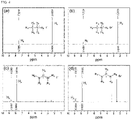
- ionic salt impurities such as NaCl and NaI was inevitably produced. Therefore, elemental analysis of the sample prepared using the ion exchange reaction was performed using XRF and based on impurity ions not detected in 1 H NMR analysis. Results are shown in FIG. 6 .
- small amounts of Na and Cl were detected in the as-prepared samples, while Na and Cl were not detected in all of MAI, MABr, FAI, and FABr after recrystallization thereof using methanol.
- a methylammonium lead triiodide (CH 3 NH 3 PbI 3 , MAPbI 3 ) perovskite thin film was prepared using the IE-MAI synthesized according to 1-(1)-1 of the present disclosure, and optical, structural, and morphological properties thereof were investigated.
- a MAPbI 3 film using commercial MAI instead of IE-MAI according to the present disclosure was also prepared using the same preparation method.
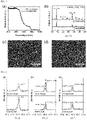
- FIG. 7A shows the UV-Vis absorption spectrum of the perovskite film.
- FIG. 7B shows the XRD pattern of the MAPbI 3 film.
- a diffraction pattern of tetragonal perovskite (I4/mcm) of each of both films is clearly observed. This indicates that a matrix of each of both films is MAPbI 3 .
- a small peak at 12.7° is derived from a small amount of PbI 2 , which is a common residue in a solvent engineering method. It is noteworthy that peak intensities of PbI 2 of IE-MAPbI3 and CO-MAPbI3 are different from each other (See FIG. 8a ).
- a comparison result based on a ratio between an intensity of the MAPbI 3 (110) peak and an intensity of the PbI 2 peak at 12.7° indicates that a relative amount of PbI 2 in IE-MAPbI 3 is smaller than 1/3 of a relative amount of PbI 2 in CO-MAPbI 3 .
- This difference in the amount of PbI 2 seems to be due to a difference in an amount of chlorine in the MAI precursor. According to XRF analysis, 0.12% chlorine was detected in IE-MAI, whereas no chlorine was detected in CO-MAI.
- FWHM full width at half maximum
- a peak area of the MAPbI 3 (110) peak is a full width at half maximum (FWHM) and a peak area of the MAPbI 3 (110) peak.
- Table 1 The (110) peak areas obtained based on the Gaussian fitting are 0.67 and 0.45 for IE-MAPbI 3 and CO-MAPbI 3 , respectively (see FIG. 8 and Table 1). This indicates higher crystallinity of IE-MAPbI 3 .
- the FWHMs of the MAPbI 3 (110) peak were found to be 13.33 and 12.14 in the patterns of IE-MAPbI 3 and CO-MAPbI 3 , respectively.
- FIG. 7 show top views of SEM images of the IE-MAPbI 3 film and the CO-MAPbI 3 film, respectively.
- the particle sizes of IE-MAPbI 3 and CO-MAPbI 3 were 343 nm and 304 nm, respectively, as measured by an average particle intercept method. The measurements were consistent with the results of XRD analysis.
- the high crystallinity and the larger particle size may be due to the presence of chlorine in the IE-MAI precursor. It is reported that incorporation of chlorine ions promotes crystallization of perovskite and accelerates grain growth.
- a perovskite solar cell (IE-MAI synthesized according to 1-(1)-1 as described above was used).
- PSC using the CO-MAI as a base was prepared in the same way. (a) in FIG.
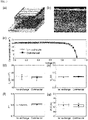
- FIG. 9 shows a structure of the prepared mesoporous PSC (are composed of a FTO substrate as the conductive transparent electrode, a dense TiO 2 (c-TiO 2 ) film and a mesoporous TiO 2 (mp-TiO 2 ) film as the electron transport layer, a MAPbI 3 perovskite film as the photoactive layer, a spiro-MeOTAD film as the hole transport layer, and an Au electrode as a counter electrode). Thicknesses of the FTO, TiO 2 , MAPbI 3 , spiro-MeOTAD and Au films are indicated in (b) in FIG. 9 showing a cross-sectional SEM image of PSC, and were 600 nm, 220 nm, 430 nm, 200 nm, and 100 nm, respectively.
- Jsc of IE-PSC was slightly higher than that of CO-PSC. It is known that photocurrent of PSC mainly depends on light absorption capacity and charge transportability of the perovskite layer. As described above, the absorbance of the IE-MAPbI 3 film and the CO-MAPbI3 film are equal to each other. Therefore, the higher Jsc of the IE-PSC film may be due to the improvement of the charge transportability of the IE-MAPbI 3 film.
- the IE-MAPbI 3 film has greater crystallinity and a larger particle size than those of the CO-MAPbI 3 film.
- the best solar cell exhibits a fairly high PCE >18%.
- the average PCE (17.5%) of IE-PSC is equal to that of CO-PSC (17.5%) in the reverse directional scan, and was similar thereto in the forward directional scan with only a 0.3% difference therebetween.
- the power conversion efficiency of IE-PSC is similar to that of CO-PSC this proves that when a production scale of the ion exchange method for the preparation of the organic halide precursor increases, the LE-PSC is applicable to the perovskite solar cell industry.
- a simple and environmentally friendly ion exchange method was used as an alternative to the conventional method using HI and HBr for mass production of MAI, MABr, FAI, and FABr.
- the present method was carried out based on ion exchange between NaI (or NaBr) and MACl (or FACl). NaCl was produced as a by-product.
- the yield after the separation of each of the four organic halides was in a range of 96 to 100%.
- substantially 100% of the reactants are converted into the product in the ion exchange method when MAI is produced. Recrystallizing the prepared MAI may allow the highest purity to be achieved, which is similar to that of a commercially available material.
- IE-PSC IE-PSC
- IE-PSC IE-PSC
- CO-PSC commercial MAI-based solar cell
- a trace of Cl - ions were incorporated into the MAI after the recrystallization. This promoted formation of larger crystals during coating of the perovskite layer, thereby improving the PCE.
- the ion exchange method according to the present disclosure for the preparation of the PSC precursor is expected to contribute substantially to the PSC field at an industrially available scale.
Landscapes
- Chemical & Material Sciences (AREA)
- Organic Chemistry (AREA)
- Inorganic Chemistry (AREA)
- Physics & Mathematics (AREA)
- Electromagnetism (AREA)
- Engineering & Computer Science (AREA)
- Materials Engineering (AREA)
- Photovoltaic Devices (AREA)
Applications Claiming Priority (2)
| Application Number | Priority Date | Filing Date | Title |
|---|---|---|---|
| KR20190176037 | 2019-12-27 | ||
| PCT/KR2020/019067 WO2021133085A2 (ko) | 2019-12-27 | 2020-12-24 | 페로브스카이트 제조용 유기 할라이드의 제조 방법, 이에 의해 제조된 페로브스카이트, 및 태양 전지 |
Publications (2)
| Publication Number | Publication Date |
|---|---|
| EP4083048A2 true EP4083048A2 (de) | 2022-11-02 |
| EP4083048A4 EP4083048A4 (de) | 2024-09-11 |
Family
ID=76862415
Family Applications (1)
| Application Number | Title | Priority Date | Filing Date |
|---|---|---|---|
| EP20906729.7A Pending EP4083048A4 (de) | 2019-12-27 | 2020-12-24 | Herstellungsverfahren für organisches halogenid zur herstellung von perowskit, dadurch hergestellter perowskit und solarzelle |
Country Status (2)
| Country | Link |
|---|---|
| EP (1) | EP4083048A4 (de) |
| KR (1) | KR102566527B1 (de) |
Families Citing this family (3)
| Publication number | Priority date | Publication date | Assignee | Title |
|---|---|---|---|---|
| KR102927358B1 (ko) * | 2022-06-07 | 2026-02-13 | 주성엔지니어링(주) | 페로브스카이트 화합물의 박막 형성 방법 및 그를 이용한 태양전지의 제조 방법 |
| KR102901468B1 (ko) * | 2022-07-25 | 2025-12-17 | 한화솔루션 주식회사 | 델타상 페로브스카이트 결정체 합성방법 및 이 방법으로 제조된 델타상 페로브스카이트 결정체 |
| KR20250171864A (ko) * | 2024-05-30 | 2025-12-09 | 한국화학연구원 | 증착용 페로브스카이트 전구체 |
Family Cites Families (1)
| Publication number | Priority date | Publication date | Assignee | Title |
|---|---|---|---|---|
| EP3135633B1 (de) * | 2014-04-28 | 2021-06-09 | Research & Business Foundation Sungkyunkwan University | Vorläufer zur herstellung von perowskit, herstellungsverfahren dafür sowie perowskitsolarzelle und herstellungsverfahren dafür |
-
2020
- 2020-12-24 EP EP20906729.7A patent/EP4083048A4/de active Pending
- 2020-12-24 KR KR1020200182839A patent/KR102566527B1/ko active Active
Also Published As
| Publication number | Publication date |
|---|---|
| EP4083048A4 (de) | 2024-09-11 |
| KR102566527B1 (ko) | 2023-08-11 |
| KR20210084303A (ko) | 2021-07-07 |
Similar Documents
| Publication | Publication Date | Title |
|---|---|---|
| Mohammed et al. | Introduction of cadmium chloride additive to improve the performance and stability of perovskite solar cells | |
| Suazo et al. | Solar cell using spray casted Cs2SnI6 perovskite thin films on chemical bath deposited CdS yielding high open circuit voltage | |
| EP3396729B1 (de) | Verfahren zur herstellung und verwendung von perowskit-materialien und vorrichtungen daraus | |
| Koh et al. | Nanostructuring mixed‐dimensional perovskites: a route toward tunable, efficient photovoltaics | |
| EP3044817B1 (de) | Umgekehrte solarzelle und verfahren zur herstellung davon | |
| KR101666563B1 (ko) | 페로브스카이트 태양전지 및 그의 제조 방법 | |
| EP4002505B1 (de) | Funktionalisierte ionische flüssigkeiten als stabilisatoren für perowskit-solarzellen | |
| KR101906017B1 (ko) | 혼합 할라이드 페로브스카이트 화합물, 이의 제조방법 및 이를 포함하는 태양전지 | |
| Xie et al. | Direct observation of cation-exchange in liquid-to-solid phase transformation in FA 1− x MA x PbI 3 based perovskite solar cells | |
| EP4083048A2 (de) | Herstellungsverfahren für organisches halogenid zur herstellung von perowskit, dadurch hergestellter perowskit und solarzelle | |
| Murugadoss et al. | Metals doped cesium based all inorganic perovskite solar cells: Investigations on Structural, morphological and optical properties | |
| EP3518301A1 (de) | Mittel zur minderung von kristalldefekten für hohe leistungsumwandlungseffizienz und stabilität von perowskit-fotovoltaikvorrichtungen | |
| EP3648187B1 (de) | Perowskit-solarzelle | |
| KR20150124412A (ko) | 페로브스카이트 제조용 전구체 및 그의 제조 방법, 그리고 페로브스카이트 태양전지 및 그의 제조 방법 | |
| Badrooj et al. | Zn-doped Pb/Sn hybrid perovskite solar cells: Towards high photovoltaic performance | |
| EP3223323A1 (de) | Hocheffiziente grossflächige perowskit-solarzellen und verfahren zu ihrer herstellung | |
| Feng et al. | Solution-processed perovskite solar cells using environmentally friendly solvent system | |
| Ghaderian et al. | The impact of fluorine atoms on a triphenylamine-based dopant-free hole-selective layer for perovskite solar cells | |
| Lou et al. | Unraveling the colloidal composition of perovskite precursor solutions and its impact on film formation | |
| Rahbari et al. | Ambient-air fabrication of triple-cation mixed-halide perovskite cells with high-speed doctor-blade printing by PEG as ink additive and triton X-100 as ETL surface modifier | |
| WO2021133085A2 (ko) | 페로브스카이트 제조용 유기 할라이드의 제조 방법, 이에 의해 제조된 페로브스카이트, 및 태양 전지 | |
| Min et al. | Hydrogen halide-free synthesis of organohalides for organometal trihalide perovskite solar cells | |
| Bidikoudi et al. | Low-temperature annealed methylammonium-free perovskites prepared under ambient conditions in C electrode-based perovskite solar cells | |
| EP4290595A1 (de) | Verfahren zum steuern des kristallisationsprozesses zur erzeugung der schwarzen phase (alpha-phase) von perowskiten auf fapbi3-basis | |
| US12408548B2 (en) | Perovskite layer, fabrication method and use the same |
Legal Events
| Date | Code | Title | Description |
|---|---|---|---|
| STAA | Information on the status of an ep patent application or granted ep patent |
Free format text: STATUS: THE INTERNATIONAL PUBLICATION HAS BEEN MADE |
|
| PUAI | Public reference made under article 153(3) epc to a published international application that has entered the european phase |
Free format text: ORIGINAL CODE: 0009012 |
|
| STAA | Information on the status of an ep patent application or granted ep patent |
Free format text: STATUS: REQUEST FOR EXAMINATION WAS MADE |
|
| 17P | Request for examination filed |
Effective date: 20220727 |
|
| AK | Designated contracting states |
Kind code of ref document: A2 Designated state(s): AL AT BE BG CH CY CZ DE DK EE ES FI FR GB GR HR HU IE IS IT LI LT LU LV MC MK MT NL NO PL PT RO RS SE SI SK SM TR |
|
| DAV | Request for validation of the european patent (deleted) | ||
| DAX | Request for extension of the european patent (deleted) | ||
| P01 | Opt-out of the competence of the unified patent court (upc) registered |
Effective date: 20230526 |
|
| REG | Reference to a national code |
Ref country code: DE Ref legal event code: R079 Free format text: PREVIOUS MAIN CLASS: C07F0013000000 Ipc: C07F0007240000 |
|
| A4 | Supplementary search report drawn up and despatched |
Effective date: 20240813 |
|
| RIC1 | Information provided on ipc code assigned before grant |
Ipc: H10K 85/50 20230101ALI20240807BHEP Ipc: H10K 30/10 20230101ALI20240807BHEP Ipc: H10K 30/15 20230101ALI20240807BHEP Ipc: C07F 7/24 20060101AFI20240807BHEP |