EP4083073A1 - Nouveau récepteur antigénique chimérique et utilisation associée - Google Patents
Nouveau récepteur antigénique chimérique et utilisation associée Download PDFInfo
- Publication number
- EP4083073A1 EP4083073A1 EP21760732.4A EP21760732A EP4083073A1 EP 4083073 A1 EP4083073 A1 EP 4083073A1 EP 21760732 A EP21760732 A EP 21760732A EP 4083073 A1 EP4083073 A1 EP 4083073A1
- Authority
- EP
- European Patent Office
- Prior art keywords
- cell
- cancer
- chimeric antigen
- domain
- antigen receptor
- Prior art date
- Legal status (The legal status is an assumption and is not a legal conclusion. Google has not performed a legal analysis and makes no representation as to the accuracy of the status listed.)
- Granted
Links
Images


Classifications
-
- C—CHEMISTRY; METALLURGY
- C07—ORGANIC CHEMISTRY
- C07K—PEPTIDES
- C07K14/00—Peptides having more than 20 amino acids; Gastrins; Somatostatins; Melanotropins; Derivatives thereof
- C07K14/435—Peptides having more than 20 amino acids; Gastrins; Somatostatins; Melanotropins; Derivatives thereof from animals; from humans
- C07K14/705—Receptors; Cell surface antigens; Cell surface determinants
- C07K14/70503—Immunoglobulin superfamily
- C07K14/7051—T-cell receptor (TcR)-CD3 complex
-
- A—HUMAN NECESSITIES
- A61—MEDICAL OR VETERINARY SCIENCE; HYGIENE
- A61K—PREPARATIONS FOR MEDICAL, DENTAL OR TOILETRY PURPOSES
- A61K39/00—Medicinal preparations containing antigens or antibodies
- A61K39/0005—Vertebrate antigens
-
- A—HUMAN NECESSITIES
- A61—MEDICAL OR VETERINARY SCIENCE; HYGIENE
- A61K—PREPARATIONS FOR MEDICAL, DENTAL OR TOILETRY PURPOSES
- A61K40/00—Cellular immunotherapy
- A61K40/10—Cellular immunotherapy characterised by the cell type used
- A61K40/11—T-cells, e.g. tumour infiltrating lymphocytes [TIL] or regulatory T [Treg] cells; Lymphokine-activated killer [LAK] cells
-
- A—HUMAN NECESSITIES
- A61—MEDICAL OR VETERINARY SCIENCE; HYGIENE
- A61K—PREPARATIONS FOR MEDICAL, DENTAL OR TOILETRY PURPOSES
- A61K40/00—Cellular immunotherapy
- A61K40/30—Cellular immunotherapy characterised by the recombinant expression of specific molecules in the cells of the immune system
- A61K40/31—Chimeric antigen receptors [CAR]
-
- A—HUMAN NECESSITIES
- A61—MEDICAL OR VETERINARY SCIENCE; HYGIENE
- A61K—PREPARATIONS FOR MEDICAL, DENTAL OR TOILETRY PURPOSES
- A61K40/00—Cellular immunotherapy
- A61K40/40—Cellular immunotherapy characterised by antigens that are targeted or presented by cells of the immune system
- A61K40/41—Vertebrate antigens
- A61K40/42—Cancer antigens
- A61K40/4202—Receptors, cell surface antigens or cell surface determinants
- A61K40/421—Immunoglobulin superfamily
- A61K40/4211—CD19 or B4
-
- A—HUMAN NECESSITIES
- A61—MEDICAL OR VETERINARY SCIENCE; HYGIENE
- A61P—SPECIFIC THERAPEUTIC ACTIVITY OF CHEMICAL COMPOUNDS OR MEDICINAL PREPARATIONS
- A61P35/00—Antineoplastic agents
-
- A—HUMAN NECESSITIES
- A61—MEDICAL OR VETERINARY SCIENCE; HYGIENE
- A61P—SPECIFIC THERAPEUTIC ACTIVITY OF CHEMICAL COMPOUNDS OR MEDICINAL PREPARATIONS
- A61P35/00—Antineoplastic agents
- A61P35/02—Antineoplastic agents specific for leukemia
-
- C—CHEMISTRY; METALLURGY
- C07—ORGANIC CHEMISTRY
- C07K—PEPTIDES
- C07K14/00—Peptides having more than 20 amino acids; Gastrins; Somatostatins; Melanotropins; Derivatives thereof
- C07K14/435—Peptides having more than 20 amino acids; Gastrins; Somatostatins; Melanotropins; Derivatives thereof from animals; from humans
- C07K14/705—Receptors; Cell surface antigens; Cell surface determinants
- C07K14/70503—Immunoglobulin superfamily
- C07K14/70517—CD8
-
- C—CHEMISTRY; METALLURGY
- C07—ORGANIC CHEMISTRY
- C07K—PEPTIDES
- C07K14/00—Peptides having more than 20 amino acids; Gastrins; Somatostatins; Melanotropins; Derivatives thereof
- C07K14/435—Peptides having more than 20 amino acids; Gastrins; Somatostatins; Melanotropins; Derivatives thereof from animals; from humans
- C07K14/705—Receptors; Cell surface antigens; Cell surface determinants
- C07K14/70575—NGF/TNF-superfamily, e.g. CD70, CD95L, CD153, CD154
-
- C—CHEMISTRY; METALLURGY
- C07—ORGANIC CHEMISTRY
- C07K—PEPTIDES
- C07K14/00—Peptides having more than 20 amino acids; Gastrins; Somatostatins; Melanotropins; Derivatives thereof
- C07K14/435—Peptides having more than 20 amino acids; Gastrins; Somatostatins; Melanotropins; Derivatives thereof from animals; from humans
- C07K14/705—Receptors; Cell surface antigens; Cell surface determinants
- C07K14/70578—NGF-receptor/TNF-receptor superfamily, e.g. CD27, CD30, CD40, CD95
-
- C—CHEMISTRY; METALLURGY
- C07—ORGANIC CHEMISTRY
- C07K—PEPTIDES
- C07K14/00—Peptides having more than 20 amino acids; Gastrins; Somatostatins; Melanotropins; Derivatives thereof
- C07K14/435—Peptides having more than 20 amino acids; Gastrins; Somatostatins; Melanotropins; Derivatives thereof from animals; from humans
- C07K14/705—Receptors; Cell surface antigens; Cell surface determinants
- C07K14/715—Receptors; Cell surface antigens; Cell surface determinants for cytokines; for lymphokines; for interferons
- C07K14/7155—Receptors; Cell surface antigens; Cell surface determinants for cytokines; for lymphokines; for interferons for interleukins [IL]
-
- C—CHEMISTRY; METALLURGY
- C07—ORGANIC CHEMISTRY
- C07K—PEPTIDES
- C07K16/00—Immunoglobulins [IG], e.g. monoclonal or polyclonal antibodies
- C07K16/18—Immunoglobulins [IG], e.g. monoclonal or polyclonal antibodies against material from animals or humans
- C07K16/28—Immunoglobulins [IG], e.g. monoclonal or polyclonal antibodies against material from animals or humans against receptors, cell surface antigens or cell surface determinants
- C07K16/2803—Immunoglobulins [IG], e.g. monoclonal or polyclonal antibodies against material from animals or humans against receptors, cell surface antigens or cell surface determinants against the immunoglobulin superfamily
-
- C—CHEMISTRY; METALLURGY
- C12—BIOCHEMISTRY; BEER; SPIRITS; WINE; VINEGAR; MICROBIOLOGY; ENZYMOLOGY; MUTATION OR GENETIC ENGINEERING
- C12N—MICROORGANISMS OR ENZYMES; COMPOSITIONS THEREOF; PROPAGATING, PRESERVING, OR MAINTAINING MICROORGANISMS; MUTATION OR GENETIC ENGINEERING; CULTURE MEDIA
- C12N5/00—Undifferentiated human, animal or plant cells, e.g. cell lines; Tissues; Cultivation or maintenance thereof; Culture media therefor
- C12N5/06—Animal cells or tissues; Human cells or tissues
- C12N5/0602—Vertebrate cells
- C12N5/0634—Cells from the blood or the immune system
- C12N5/0636—T lymphocytes
-
- A—HUMAN NECESSITIES
- A61—MEDICAL OR VETERINARY SCIENCE; HYGIENE
- A61K—PREPARATIONS FOR MEDICAL, DENTAL OR TOILETRY PURPOSES
- A61K2121/00—Preparations for use in therapy
-
- A—HUMAN NECESSITIES
- A61—MEDICAL OR VETERINARY SCIENCE; HYGIENE
- A61K—PREPARATIONS FOR MEDICAL, DENTAL OR TOILETRY PURPOSES
- A61K2239/00—Indexing codes associated with cellular immunotherapy of group A61K40/00
- A61K2239/10—Indexing codes associated with cellular immunotherapy of group A61K40/00 characterized by the structure of the chimeric antigen receptor [CAR]
- A61K2239/11—Antigen recognition domain
- A61K2239/15—Non-antibody based
-
- A—HUMAN NECESSITIES
- A61—MEDICAL OR VETERINARY SCIENCE; HYGIENE
- A61K—PREPARATIONS FOR MEDICAL, DENTAL OR TOILETRY PURPOSES
- A61K2239/00—Indexing codes associated with cellular immunotherapy of group A61K40/00
- A61K2239/10—Indexing codes associated with cellular immunotherapy of group A61K40/00 characterized by the structure of the chimeric antigen receptor [CAR]
- A61K2239/17—Hinge-spacer domain
-
- A—HUMAN NECESSITIES
- A61—MEDICAL OR VETERINARY SCIENCE; HYGIENE
- A61K—PREPARATIONS FOR MEDICAL, DENTAL OR TOILETRY PURPOSES
- A61K2239/00—Indexing codes associated with cellular immunotherapy of group A61K40/00
- A61K2239/10—Indexing codes associated with cellular immunotherapy of group A61K40/00 characterized by the structure of the chimeric antigen receptor [CAR]
- A61K2239/21—Transmembrane domain
-
- A—HUMAN NECESSITIES
- A61—MEDICAL OR VETERINARY SCIENCE; HYGIENE
- A61K—PREPARATIONS FOR MEDICAL, DENTAL OR TOILETRY PURPOSES
- A61K2239/00—Indexing codes associated with cellular immunotherapy of group A61K40/00
- A61K2239/10—Indexing codes associated with cellular immunotherapy of group A61K40/00 characterized by the structure of the chimeric antigen receptor [CAR]
- A61K2239/22—Intracellular domain
-
- A—HUMAN NECESSITIES
- A61—MEDICAL OR VETERINARY SCIENCE; HYGIENE
- A61K—PREPARATIONS FOR MEDICAL, DENTAL OR TOILETRY PURPOSES
- A61K2239/00—Indexing codes associated with cellular immunotherapy of group A61K40/00
- A61K2239/31—Indexing codes associated with cellular immunotherapy of group A61K40/00 characterized by the route of administration
-
- A—HUMAN NECESSITIES
- A61—MEDICAL OR VETERINARY SCIENCE; HYGIENE
- A61K—PREPARATIONS FOR MEDICAL, DENTAL OR TOILETRY PURPOSES
- A61K2239/00—Indexing codes associated with cellular immunotherapy of group A61K40/00
- A61K2239/38—Indexing codes associated with cellular immunotherapy of group A61K40/00 characterised by the dose, timing or administration schedule
-
- A—HUMAN NECESSITIES
- A61—MEDICAL OR VETERINARY SCIENCE; HYGIENE
- A61K—PREPARATIONS FOR MEDICAL, DENTAL OR TOILETRY PURPOSES
- A61K2239/00—Indexing codes associated with cellular immunotherapy of group A61K40/00
- A61K2239/46—Indexing codes associated with cellular immunotherapy of group A61K40/00 characterised by the cancer treated
- A61K2239/48—Blood cells, e.g. leukemia or lymphoma
-
- A—HUMAN NECESSITIES
- A61—MEDICAL OR VETERINARY SCIENCE; HYGIENE
- A61K—PREPARATIONS FOR MEDICAL, DENTAL OR TOILETRY PURPOSES
- A61K2300/00—Mixtures or combinations of active ingredients, wherein at least one active ingredient is fully defined in groups A61K31/00 - A61K41/00
-
- C—CHEMISTRY; METALLURGY
- C07—ORGANIC CHEMISTRY
- C07K—PEPTIDES
- C07K2317/00—Immunoglobulins specific features
- C07K2317/60—Immunoglobulins specific features characterized by non-natural combinations of immunoglobulin fragments
- C07K2317/62—Immunoglobulins specific features characterized by non-natural combinations of immunoglobulin fragments comprising only variable region components
- C07K2317/622—Single chain antibody (scFv)
-
- C—CHEMISTRY; METALLURGY
- C07—ORGANIC CHEMISTRY
- C07K—PEPTIDES
- C07K2319/00—Fusion polypeptide
- C07K2319/01—Fusion polypeptide containing a localisation/targetting motif
- C07K2319/02—Fusion polypeptide containing a localisation/targetting motif containing a signal sequence
-
- C—CHEMISTRY; METALLURGY
- C07—ORGANIC CHEMISTRY
- C07K—PEPTIDES
- C07K2319/00—Fusion polypeptide
- C07K2319/01—Fusion polypeptide containing a localisation/targetting motif
- C07K2319/03—Fusion polypeptide containing a localisation/targetting motif containing a transmembrane segment
-
- C—CHEMISTRY; METALLURGY
- C07—ORGANIC CHEMISTRY
- C07K—PEPTIDES
- C07K2319/00—Fusion polypeptide
- C07K2319/01—Fusion polypeptide containing a localisation/targetting motif
- C07K2319/033—Fusion polypeptide containing a localisation/targetting motif containing a motif for targeting to the internal surface of the plasma membrane, e.g. containing a myristoylation motif
-
- C—CHEMISTRY; METALLURGY
- C07—ORGANIC CHEMISTRY
- C07K—PEPTIDES
- C07K2319/00—Fusion polypeptide
- C07K2319/33—Fusion polypeptide fusions for targeting to specific cell types, e.g. tissue specific targeting, targeting of a bacterial subspecies
-
- C—CHEMISTRY; METALLURGY
- C12—BIOCHEMISTRY; BEER; SPIRITS; WINE; VINEGAR; MICROBIOLOGY; ENZYMOLOGY; MUTATION OR GENETIC ENGINEERING
- C12N—MICROORGANISMS OR ENZYMES; COMPOSITIONS THEREOF; PROPAGATING, PRESERVING, OR MAINTAINING MICROORGANISMS; MUTATION OR GENETIC ENGINEERING; CULTURE MEDIA
- C12N2510/00—Genetically modified cells
-
- Y—GENERAL TAGGING OF NEW TECHNOLOGICAL DEVELOPMENTS; GENERAL TAGGING OF CROSS-SECTIONAL TECHNOLOGIES SPANNING OVER SEVERAL SECTIONS OF THE IPC; TECHNICAL SUBJECTS COVERED BY FORMER USPC CROSS-REFERENCE ART COLLECTIONS [XRACs] AND DIGESTS
- Y02—TECHNOLOGIES OR APPLICATIONS FOR MITIGATION OR ADAPTATION AGAINST CLIMATE CHANGE
- Y02A—TECHNOLOGIES FOR ADAPTATION TO CLIMATE CHANGE
- Y02A50/00—TECHNOLOGIES FOR ADAPTATION TO CLIMATE CHANGE in human health protection, e.g. against extreme weather
- Y02A50/30—Against vector-borne diseases, e.g. mosquito-borne, fly-borne, tick-borne or waterborne diseases whose impact is exacerbated by climate change
Definitions
- the present disclosure relates to the field of cellular immunotherapy, in particular, to a novel chimeric antigen receptor containing a cytokine receptor common ⁇ chain (also known as yc chain) or an intracellular region thereof, and use thereof.
- a novel chimeric antigen receptor containing a cytokine receptor common ⁇ chain also known as yc chain
- CAR-T cell immunotherapy is to genetically modify T cells in vitro to enable the T cells to recognize tumor antigens, and the T cells, after being amplified to a certain amount, are infused back into the patients' body to kill the cancer cells, thus achieving the purpose of treating tumors.
- the intracellular signaling domain of the firstgeneration CARs contains only a primary signaling domain, for example, CD3 ⁇ , thus cells carrying the CARs (for example, CAR-T cells) have poor activity, and have short survival time in vivo.
- the second-generation CARs introduce a co-stimulatory domain, for example, CD28 or 4-1BB, so that the cells can continuously proliferate, which enhances the anti-tumor activity.
- the thirdgeneration CARs contain two co-stimulatory domains (for example, CD28+4-1 BB) and the fourth-generation CARs incorporate cytokines or co-stimulatory ligands so as to further enhance T cell response, or incorporate suicide genes so as to make CAR-T cells self-destruct when needed.
- the second-generation CAR structure is still mostly used in current clinical research.
- CAR-T cell therapy still has some problems in clinical application, for example, massive tumor recurrences in the treatment of hematologic tumors, and a low response rate in solid tumor treatment, which may be caused by complex tumor microenvironment, CAR-T cell depletion, and other factors.
- the existing CAR-T cell therapy still needs to be improved, so as to promote proliferation of CAR-T cells in vivo, counteract the immunosuppressive effects of the tumor microenvironment, and further improve the overall therapeutic effect of CAR-T cell therapy against tumors.
- the present disclosure provides a novel chimeric antigen receptor, which contains an antigen-binding region, a transmembrane domain, a co-stimulatory domain, an intracellular signaling domain, and an additional signaling region, wherein the additional signaling region consists of a yc chain or an intracellular region thereof.
- the amino acid sequence of the yc chain is as represented by SEQ ID NO: 14; and theamino acid sequence of the intracellular region thereof is as represented by SEQ ID NO: 16.
- the co-stimulatory domain, the intracellular signaling domain, and the additional signaling region are arranged in order of distance from the cell membrane from nearest to farthest.
- the antigen-binding region is selected from the group consisting of scFv, Fab, single domain antibody, nanobody, antigen binding ligand, recombinant fibronectin domain, anticalin, and DARPIN.
- the antigen-binding region is selected from the group consisting of scFv, Fab, single domain antibody, and nanobody.
- the antigen-binding region is selected from the group consisting of monoclonal antibody, polyclonal antibody, recombinant antibody, human antibody, humanized antibody, murine antibody, and chimeric antibody.
- the antigen-binding region binds to a target selected from the group consisting of: TSHR, CD19, CD123, CD22, BAFF-R, CD30, CD171, CS-1, CLL-1, CD33, EGFRvIII, GD2, GD3, BCMA, GPRC5D, Tn Ag, PSMA, ROR1, FLT3, FAP, TAG72, CD38, CD44v6, CEA, EPCAM, B7H3, KIT, IL-13Ra2, mesothelin, IL-1 1Ra, PSCA, PRSS21, VEGFR2, LewisY, CD24, PDGFR- ⁇ , SSEA-4, CD20, Folate receptor ⁇ , ERBB2 (Her2/neu), MUC1, EGFR, NCAM, Claudin18.2, Prostase, PAP, ELF2M, Ephrin B2, IGF-I receptor, CAIX, LMP2, gp100, bcr-ab1, tyrosinas
- the target is selected from the group consisting of CD19, CD20, CD22, BAFF-R, CD33, EGFRvIII, BCMA, GPRC5D, PSMA, ROR1, FAP, ERBB2 (Her2/neu), MUC1, EGFR, CAIX, WT1, NY-ESO-1, CD79a, CD79b, GPC3, Claudin18.2, NKG2D, and any combination thereof.
- the transmembrane domain is a transmembrane domain of a protein selected from the group consisting of: TCR ⁇ chain, TCR ⁇ chain, TCR ⁇ chain, TCR ⁇ chain, CD3 ⁇ subunit, CD3 ⁇ subunit, CD3 ⁇ subunit, CD3 ⁇ subunit, CD45, CD4, CD5, CD8 ⁇ , CD9, CD16, CD22, CD33, CD28, CD37, CD64, CD80, CD86, CD134, CD137, and CD154.
- the transmembrane domain is selected from transmembrane domains of CD8 ⁇ , CD4, CD28, and CD278.
- the intracellular signaling domain is a signaling domain of a protein selected from the group consisting of: FcR ⁇ , FcR ⁇ , CD3 ⁇ , CD3 ⁇ , CD3 ⁇ , CD22, CD79a, CD79b, and CD66d.
- the intracellular signaling domain is a signaling domain containing CD3 ⁇ .
- the co-stimulatory domain is one or more co-stimulatory signaling domains of a protein selected from the group consisting of: TLR1, TLR2, TLR3, TLR4, TLR5, TLR6, TLR7, TLR8, TLR9, TLR10, CARD11, CD2, CD7, CD8, CD18 (LFA-1), CD27, CD28, CD30, CD40, CD54 (ICAM), CD83, CD134 (OX40), CD137 (4-1BB), CD270 (HVEM), CD272 (BTLA), CD276 (B7-H3), CD278 (ICOS), CD357 (GITR), DAP10, LAT, NKG2C, SLP76, PD-1, LIGHT, TRIM, and ZAP70.
- the co-stimulatory domain is a costimulatory signaling domain of CD27, CD28, CD134, CD137 or CD278.
- the present disclosure further provides a nucleic acid containing a sequence encoding the chimeric antigen receptor of the present disclosure, a vector containing the nucleic acid, and an immune cell containing the nucleic acid or vector.
- the present disclosure provides a nucleic acid, which contains a sequence encoding the chimeric antigen receptor of the present disclosure.
- the nucleic acid is DNA or RNA, more preferably mRNA.
- the present disclosure provides a vector containing the above nucleic acid.
- the vector is selected from the group consisting of linear nucleic acid molecule, plasmid, retrovirus, lentivirus, adenovirus, vaccinia virus, Rous Sarcoma Virus (RSV), polyoma virus and adeno-associated virus (AAV), bacteriophage, phagemid, cosmid or artificial chromosome.
- the vector further contains elements such as an origin of autonomous replication in an immune cell, a selectable marker, a restriction enzyme cleavage site, a promoter, a poly-A tail (polyA), 3' UTR, 5' UTR, an enhancer, a terminator, an insulator, an operon, a selectable marker, a reporter gene, a targeting sequence, and/or a protein purification tag.
- the vector is an in vitro transcription vector.
- the present disclosure provides an immune cell containing the nucleic acid or vector of the present disclosure, which can express the chimeric antigen receptor of the present disclosure.
- the immune cell is selected from the group consisting of a T cell, a macrophage, a dendritic cell, a monocyte, an NK cell, or an NKT cell.
- the T cell is a CD4+/CD8+ double positive T cell, a CD4+ helper T cell, a CD8+ T cell, a tumor infiltrating cell, a memory T cell, a naive T cell, a ⁇ -T cell, or an ⁇ -T cell.
- the present disclosure provides a pharmaceutical composition, containing the chimeric antigen receptor or the nucleic acid encoding the same, the vector or the immune cell containing them of the present disclosure as defined above, and one or more pharmaceutically acceptable excipients.
- the present disclosure provides a method of treating a subject with cancer, including administering to the subject an effective amount of the chimeric antigen receptor, the immune cell or the pharmaceutical composition according to the present disclosure.
- the cancer is selected from the group consisting of: blastoma, sarcoma, leukemia, basal cell carcinoma, biliary tract cancer, bladder cancer, bone cancer, brain and CNS cancer, breast cancer, peritoneal cancer, cervical cancer, choriocarcinoma, colon and rectal cancer, connective tissue cancer, cancer of digestive system, endometrial cancer, esophageal cancer, eye cancer, head and neck cancer, stomach cancer, glioblastoma (GBM), liver cancer, hepatoma, intraepithelial tumor, kidney cancer, larynx cancer, leukemia, liver tumor, lung cancer, lymphoma, melanoma, myeloma, neuroblastoma, oral cancer, ovarian cancer, pancreatic cancer, prostate cancer, retinoblastoma, rhabdomyosarcoma, rectal cancer, cancer of respiratory system, salivary gland cancer, skin cancer, squamous cell carcinoma, stomach cancer, testicular cancer,
- the disease which can be treated with the chimeric antigen receptor, the nucleic acid, the vector, the immune cell, or the pharmaceutical composition of the present disclosure is selected from the group consisting of: leukemia, lymphoma, multiple myeloma, brain glioma, pancreatic cancer, stomach cancer, and so on.
- chimeric antigen receptor refers to an artificially constructed hybrid polypeptide, where a basic structure of the hybrid polypeptide includes an antigen-binding region (e.g., an antigen binding portion of an antibody), a transmembrane domain, a co-stimulatory domain, and an intracellular signaling domain.
- CAR can redirect the specificity and reactivity of T cell and other immune cells to a selected target in a non-MHC-restricted manner by utilizing the antigen binding properties of monoclonal antibodies.
- Non-MHC-restricted antigen recognition gives CAR-expressing T cell the ability to recognize an antigen independent of antigen treatment, thus bypassing the major mechanism of tumor escape.
- the novel chimeric antigen receptor of the present disclosure further includes an additional signaling region consisting of a yc chain or an intracellular region thereof.
- antigen-binding region refers to any structure or a functional variant thereof that can bind to an antigen.
- the antigen-binding region may be an antibody structure, including, but not limited to, monoclonal antibody, polyclonal antibody, recombinant antibody, human antibody, humanized antibody, chimeric antibody, and functional fragment thereof.
- the antigen-binding region includes, but is not limited to, Fab, single chain antibody fragment (scFv), single domain antibody (sdAb), nanobody (Nb), antigen binding ligand, recombinant fibronectin domain, anticalin, DARPIN, and so on, preferably selected from Fab, scFv, sdAb, and nanobody.
- the antigen-binding region may be monovalent or bivalent, and may be a monospecific, bispecific or multispecific antibody.
- the antigen-binding region also may be a specific binding polypeptide or receptor of a specific protein, wherein the specific protein is, for example, PD1, PDL1, PDL2, TGF ⁇ , APRIL, and NKG2D.
- Fab refers to any one of two identical fragments produced after an immunoglobulin molecule is cleaved by papain, and consists of an intact light chain and a heavy chain N-terminal part linked by a disulfide bond, wherein the heavy chain N-terminal part includes a heavy chain variable domain and CH1. Compared with intact IgG, Fab lacks an Fc fragment, has relatively high fluidity and tissue penetration ability, and can univalently bind to an antigen without mediating antibody effects.
- Single chain antibody or “scFv” is an antibody composed of antibody heavy chain variable domain (VH) and light chain variable domain (VL) linked by a linker.
- the optimal length and/or amino acid composition of the linker can be selected.
- the length of the linker will significantly affect the variable domain folding and interaction of the scFv. In fact, intrachain folding can be prevented if a shorter linker (e.g. 5-10 amino acids) is used.
- a shorter linker e.g. 5-10 amino acids
- Size and composition of the linker see, e.g., Hollinger et al., 1993 Proc Natl Acad. Sci. U.S.A. 90:6444-6448 ; US patent applications with publication Nos. 2005/0100543 , 2005/0175606 , 2007/0014794 ; and PCT applications with publication Nos. WO2006/020258 and WO2007/024715 , which are incorporated herein by reference in their entirety.
- Single domain antibody or “sdAb” refers to an antibody that naturally lacks light chain, and the antibody contains only one heavy chain variable domain (VHH) and two conventional CH2 and CH3 regions, also known as “heavy chain antibody”.
- VHH heavy chain variable domain
- CH2 and CH3 regions also known as “heavy chain antibody”.
- Nemobody or “Nb” refers to a VHH structure that is individually cloned and expressed, which has structural stability and binding activity to an antigen comparable to those of the original heavy chain antibody, and is the smallest unit currently known to be capable of binding to a target antigen.
- the term "functional variant” or “functional fragment” refers to a variant that substantially contains the amino acid sequence of a parent, but, compared with the parent amino acid sequence, contains at least one amino acid modification (i.e., substitution, deletion, or insertion), provided that the variant retains the biological activity of the parent amino acid sequence.
- the amino acid modification is preferably a conservative modification.
- conservative modification refers to amino acid modification that does not significantly affect or alter the binding characteristics of the antibody or antibody fragment containing the amino acid sequence. These conservative modifications include amino acid substitution, addition, and deletion. The modifications can be introduced into the chimeric antigen receptor of the present disclosure by standard techniques known in the art, such as sitedirected mutagenesis and PCR-mediated mutagenesis. The conservative amino acid substitution is a substitution in which the amino acid residue is replaced with an amino acid residue having a similar side chain.
- Amino acid residue families having a similar side chain have been defined in the art, including basic side chain (e.g., lysine, arginine, histidine), acidic side chain (e.g., aspartic acid, glutamic acid), uncharged polar side chain (e.g., glycine, asparagine, glutamine, serine, threonine, tyrosine, cysteine), nonpolar side chain (e.g., alanine, valine, leucine, isoleucine, proline, phenylalanine, methionine, tryptophan), ⁇ -branched side chain (e.g., threonine, valine, isoleucine), and aromatic side chain (e.g., tyrosine, phenylalanine, tryptophan, histidine).
- the conservative modifications may be selected, for example, based on polarity, charge, solubility, hydrophobicity, hydrophilicity, and/or
- the "functional variant” or “functional fragment” has at least 75%, preferably at least 76%, 77%, 78%, 79%, 80%, 81%, 82%, 83%, 84%, 85%, 86%, 87%, 88%, 89%, 90%, 91%, 92%, 93%, 94%, 95%, 96%, 97%, 98%, or 99% sequence identity to the parent amino acid sequence, and retains the biological activity, e.g., binding activity, of the parent amino acid.
- sequence identity indicates the degree to which two (nucleotide or amino acid) sequences have the same residue at the same position in an alignment, and is generally expressed by percentage. Preferably, the identity is determined over the entire length of the sequences being compared. Thus, two copies with identical sequences have 100% identity.
- Blast Altschul et al. (1997) Nucleic Acids Res. 25:3389-3402
- Blast2 Altschul et al. (1990) J. Mol. Biol. 215:403-410
- Smith-Waterman Smith et al. (1981) J. Mol. Biol. 147:195-197
- ClustalW ClustalW.
- the antigen-binding region of the present disclosure binds to one or more targets selected from the group consisting of: TSHR, CD19, CD123, CD22, CD30, CD171, CS-1, CLL-1, CD33, EGFRvIII, GD2, GD3, BCMA, Tn Ag, PSMA, ROR1, FLT3, FAP, TAG72, CD38, CD44v6, CEA, EPCAM, B7H3, KIT, IL-13Ra2, mesothelin, IL-1 1Ra, PSCA, PRSS21, VEGFR2, LewisY, CD24, PDGFR- ⁇ , SSEA-4, CD20, Folate receptor ⁇ , ERBB2 (Her2/neu), MUC1, EGFR, NCAM, Prostase, PAP, ELF2M,
- the target is selected from the group consisting of: CD19, CD20, CD22, BAFF-R, CD33, EGFRvIII, BCMA, GPRC5D, PSMA, ROR1, FAP, ERBB2 (Her2/neu), MUC1, EGFR, CAIX, WT1, NY-ESO-1, CD79a, CD79b, GPC3, Claudin1 8.2, NKG2D, and any combination thereof.
- the CAR of the present disclosure may be designed to include an antigen-binding region specific for the antigen.
- a CD19 antibody can be used as an antigen-binding region of the present disclosure.
- transmembrane domain refers to a polypeptide structure that enables expression of a chimeric antigen receptor on the surface of an immune cell (e.g., a lymphocyte, an NK cell, or an NKT cell), and guides a cellular response of the immune cell against the target cell.
- the transmembrane domain may be natural or synthetic, and also may be derived from any membrane-bound protein or transmembrane protein.
- the transmembrane domain is capable of signaling when the chimeric receptor polypeptide binds to the target antigen.
- the transmembrane domains particularly suitable in the present disclosure may be derived from, for example, a TCR ⁇ chain, a TCR ⁇ chain, a TCR ⁇ chain, a TCR ⁇ chain, a CD3 ⁇ subunit, a CD3 ⁇ subunit, a CD3 ⁇ subunit, a CD3 ⁇ subunit, CD45, CD4, CD5, CD8 ⁇ , CD9, CD16, CD22, CD33, CD28, CD37, CD64, CD80, CD86, CD134, CD137, CD154, and functional fragments thereof.
- the transmembrane domain may be synthesized and may mainly contain a hydrophobic residue such as leucine and valine.
- the transmembrane domain is derived from a human CD8 ⁇ chain, which has at least 70%, preferably at least 80%, more preferably at least 90%, 95%, 97% or 99% or 100% sequence identity to an amino acid sequence represented by SEQ ID NO: 4 or a nucleotide sequence represented by SEQ ID NO: 3.
- the chimeric antigen receptor of the present disclosure further may contain a hinge region located between the antigen-binding region and the transmembrane domain.
- the term "hinge region” generally refers to any oligopeptide or polypeptide that functions to link a transmembrane domain to an antigen-binding region.
- the hinge region serves to provide greater flexibility and accessibility to the antigen-binding region.
- the hinge region may contain up to 300 amino acids, preferably 10 to 100 amino acids and most preferably 25 to 50 amino acids.
- the hinge region may be completely or partially derived from a natural molecule, for example, completely or partially from the extracellular region of CD8, CD4 or CD28, or completely or partially from an antibody constant region.
- the hinge region may be a synthetic sequence corresponding to a naturally occurring hinge sequence, or may be a completely synthetic hinge sequence.
- the hinge region contains a hinge region portion of a CD8 ⁇ chain, an Fc ⁇ Rill ⁇ receptor, an IgG4, or an IgG1, more preferably a CD8 ⁇ hinge, which has at least 70%, preferably at least 80%, more preferably at least 90%, 95%, 97% or 99% or 100% sequence identity to an amino acid sequence represented by SEQ ID NO: 12 or a nucleotide sequence represented by SEQ ID NO: 11.
- intracellular signaling domain refers to a protein portion that transduces an effector function signal and guides a cell to perform a specified function.
- the intracellular signaling domain is responsible for intracellular primary signaling after the antigen-binding region binds to the antigen, thus causing activation of immune cell and immune reaction.
- the intracellular signaling domain is responsible for activating at least one of the normal effector functions of the immune cells in which the CAR is expressed.
- the effector functions of T cell can be cytolytic activity or auxiliary activity, including secretion of cytokines.
- the intracellular signaling domain contained in the chimeric antigen receptor of the present disclosure may be cytoplasmic sequences of a T cell receptor and a co-receptor, upon antigen receptor binding, which act together to initiate primary signaling, as well as any derivative or variant of these sequences and any synthetic sequence having the same or similar function.
- the intracellular signaling domain may contain many immunoreceptor tyrosine-based activation motifs (ITAM).
- ITAM immunoreceptor tyrosine-based activation motifs
- intracellular signaling domains of the present disclosure include, but are not limited to, those derived from FcR ⁇ , FcR ⁇ , CD3 ⁇ , CD3 ⁇ , CD3 ⁇ , CD22, CD79a, CD79b, and CD66d.
- the signaling domain of the CAR of the present disclosure may contain a CD3 ⁇ signaling domain, and the signaling domain has at least 70%, preferably at least 80%, more preferably at least 90%, 95%, 97%, or 99% or 100% sequence identity to an amino acid sequence represented by SEQ ID NO: 8 or a nucleotide sequence represented by SEQ ID NO: 7.
- the chimeric antigen receptor of the present disclosure contains one or more co-stimulatory domains.
- the co-stimulatory domain may be an intracellular functional signaling domain from a co-stimulatory molecule, which contains an entire intracellular portion of the co-stimulatory molecule, or a functional fragment thereof.
- “Co-stimulatory molecule” refers to a homologous binding partner that specifically binds to a co-stimulatory ligand on a T cell, thereby mediating a co-stimulatory response (e.g. proliferation) of the T cell.
- the co-stimulatory molecule includes, but is not limited to, MHC class 1 molecules, BTLA, and Toll ligand receptors.
- Non-limiting examples of the costimulatory domain of the present disclosure include, but are not limited to, costimulatory signaling domains derived from a protein selected from the group consisting of: TLR1, TLR2, TLR3, TLR4, TLR5, TLR6, TLR7, TLR8, TLR9, TLR10, CARD11, CD2, CD7, CD8, CD18 (LFA-1), CD27, CD28, CD30, CD40, CD54 (ICAM), CD83, CD134 (OX40), CD137 (4-1BB), CD270 (HVEM), CD272 (BTLA), CD276 (B7-H3), CD278 (ICOS), CD357 (GITR), DAP10, LAT, NKG2C, SLP76, PD-1, LIGHT, TRIM, and ZAP70.
- costimulatory signaling domains derived from a protein selected from the group consisting of: TLR1, TLR2, TLR3, TLR4, TLR5, TLR6, TLR7, TLR8, TLR9, T
- the co-stimulatory domain of the CAR of the present disclosure is a 4-1BB and/or CD28 fragment, more preferably having at least 70%, preferably at least 80%, more preferably at least 90%, 95%, 97% or 99% or 100% sequence identity to an amino acid sequence represented by SEQ ID NO: 6 or a nucleotide sequence represented by SEQ ID NO: 5.
- the chimeric antigen receptor of the present disclosure further contains at least one additional signaling region, and the additional signaling region consists of a yc chain or an intracellular region thereof.
- the intracellular region (i.e., a structure for signaling) of the chimeric antigen receptor of the present disclosure consists of three signaling structures, namely, the co-stimulatory domain, the intracellular signaling domain, and the ⁇ c chain or an intracellular region thereof.
- the chimeric antigen receptor of the present disclosure does not contain a fourth signaling structure, for example, signaling regions of other cytokines, such as intracellular region of IL-2Ra, IL2Ra, IL2Rb, IL4Ra, IL7Ra, IL9Ra, IL15Ra, and IL21Ra.
- signaling regions of other cytokines such as intracellular region of IL-2Ra, IL2Ra, IL2Rb, IL4Ra, IL7Ra, IL9Ra, IL15Ra, and IL21Ra.
- yc chain refers to the ⁇ chain shared by the receptors of cytokines IL-2, IL-4, IL-7, IL-9, IL-15, and IL-21.
- the yc chain was initially identified in the IL-2 receptor, and it was later found that it is also involved in the composition of receptors such as IL-4, IL-7, IL-9, IL-15, and IL-21, so it is also called a common ⁇ chain.
- the IL-2 receptor has three forms, formed by different combinations of ⁇ chain (also known as IL-2R ⁇ ), ⁇ chain (also known as IL-2R ⁇ ), and yc chain (also known as IL-2R ⁇ or IL-2Rg), wherein compared with other combinations, the IL-2 receptor containing all three chains has the highest affinity to the IL-2 cytokine.
- the three chains of the IL-2 receptor are anchored to the cell membrane, and transmit a biochemical signal into the cell by binding to IL-2.
- cytokine receptor-specific components such as IL-2R ⁇ , IL-4R ⁇ , IL-7R ⁇ , IL-9R ⁇ , and IL-21R, are responsible for binding to JAK1, while the yc chain binds to JAK3.
- cytokine receptors bind to cytokines, three major signaling pathways are activated, including MAP kinase, PI3 kinase, and JAK-STAT pathway, thus regulating the survival and proliferation of T cell and NK cell.
- ⁇ c chain is a glycoprotein having a molecular weight of 64 kD, and consists of 347 amino acids, in which an extracellular region of 232 amino acids, a transmembrane region of 29 amino acids, and an intracellular region of 86 amino acids are included.
- the intracellular region contains an Src homologous region, which is crucial for promoting the growth of cells and the expression of IL-2-mediated genes such as c-myc, c-fos, and c-jun.
- yc chain that can be used in the present disclosure has at least 70%, preferably at least 80%, more preferably at least 90%, 95%, 97% or 99% or 100% sequence identity to an amino acid sequence represented by SEQ ID NO: 14 or a nucleotide sequence represented by SEQ ID NO: 13.
- yc chain intracellular region that can be used in the present disclosure has at least 70%, preferably at least 80%, more preferably at least 90%, 95%, 97% or 99% or 100% sequence identity to an amino acid sequence represented by SEQ ID NO: 16 or a nucleotide sequence represented by SEQ ID NO: 15.
- yc chain of the present disclosure consists of SEQ ID NO: 14, and an intracellular region thereof consists of SEQ ID NO: 16.
- the CAR of the present disclosure further may contain a signal peptide such that when it is expressed in a cell such as a T cell, the nascent protein is directed to the endoplasmic reticulum and subsequently to the cell surface.
- the core of the signal peptide may contain a long hydrophobic amino acid segment, which has a tendency to form a single ⁇ -helix.
- At the end of the signal peptide there is usually an amino acid segment recognized and cleaved by signal peptidase.
- the signal peptidase can cleave during or after translocation, so as to generate free signal peptide and mature protein. Then, the free signal peptide is digested by a specific protease.
- Signal peptides that can be used in the present disclosure are well known to those skilled in the art, for example, signal peptides derived from CD8 ⁇ , IgG1, and GM-CSFR ⁇ .
- the chimeric antigen receptor of the present disclosure includes a CD8 ⁇ transmembrane domain, a 4-1BB co-stimulatory domain, a CD3 ⁇ signaling domain, and a yc chain or an intracellular region thereof. More preferably, the chimeric antigen receptor further contains a CD8 ⁇ signal peptide, a CD8 ⁇ hinge region, and/or a CD28 co-stimulatory domain.
- the co-stimulatory domain, the intracellular signaling domain, and the additional signaling region are arranged in order of distance from the cell membrane from nearest to farthest, that is, the co-stimulatory domain is closest to the cell membrane, while the additional signaling region is furthest away from the cell membrane.
- the present disclosure further provides a nucleic acid, which contains a sequence encoding the chimeric antigen receptor of the present disclosure.
- nucleic acid includes a sequence of ribonucleotides and deoxyribonucleotides, such as modified or unmodified RNA or DNA, each in single-stranded and/or double-stranded form, linear or circular, or their mixtures (including hybrid molecules).
- the nucleic acid according to the present disclosure includes DNA (e.g. dsDNA, ssDNA, cDNA), RNA (e.g. dsRNA, ssRNA, mRNA, ivtRNA), their combinations or derivatives (e.g. PNA).
- the nucleic acid is DNA or RNA, more preferably mRNA.
- the nucleic acid may contain a conventional phosphodiester bond or an unconventional bonds (e.g., amide bond, such as found in peptide nucleic acid (PNA)).
- the nucleic acid of the present disclosure further may contain one or more modified bases, such as, for example, trityl base and uncommon base (such as inosine). Other modifications also can be contemplated, including chemical, enzymatic, or metabolic modifications, so long as the multi-chain CAR of the present disclosure can be expressed from polynucleotides.
- the nucleic acid can be provided in isolated form.
- the nucleic acid also may include a regulatory sequence, such as a transcriptional control element (including a promoter, an enhancer, an operon, a repressor, and a transcription termination signal), ribosome binding sites, and introns.
- a transcriptional control element including a promoter, an enhancer, an operon, a repressor, and a transcription termination signal
- ribosome binding sites including a promoter, an enhancer, an operon, a repressor, and a transcription termination signal
- introns such as a promoter, an enhancer, an operon, a repressor, and a transcription termination signal
- the nucleic acid sequences of the present disclosure can be codonoptimized for optimal expression in a desired host cell (e.g., immune cell); or for expression in a bacterial, yeast, or insect cell.
- Codon optimization refers to substitution of a codon in the target sequence that is generally rare in highly expressed genes of a given species with a codon that is generally common in highly expressed genes of such species, and the codons before and after the substitution encode the same amino acid. Therefore, the selection of an optimal codon depends on the codon usage preference of the host genome.
- the present disclosure further provides a vector, containing one or more nucleic acids as described in the present disclosure.
- vector is a nucleic acid molecule used as an intermediary to transfer (exogenous) genetic material into a host cell, wherein in the host cell the nucleic acid molecule can be, for example, replicated and/or expressed.
- the vector generally includes targeting vectors and expression vectors.
- the "targeting vector” is a medium that delivers an isolated nucleic acid to the interior of a cell by, for example, homologous recombination or by using a hybrid recombinases of a sequence at specific target site.
- the "expression vector” is a vector used for the transcription of heterologous nucleic acid sequences (for example, those sequences encoding the chimeric antigen receptor polypeptides of the present disclosure) in suitable host cells and the translation of their mRNAs. Suitable vectors that can be used in the present disclosure are known in the art, and many are commercially available.
- the vectors of the present disclosure include, but are not limited to, linear nucleic acid molecule (e.g., DNA or RNA), plasmid, virus (e.g., retrovirus, lentivirus, adenovirus, vaccinia virus, Rous sarcoma virus (RSV), multiple tumor virus, and adeno-associated virus (AAV), etc.), bacteriophage, phagemid, cosmid, and artificial chromosome (including BAC and YAC).
- the vector itself is usually a nucleotide sequence, and usually is a DNA sequence containing the insert (transgene) and a larger sequence acting as "backbone" of the vector.
- Engineered vector typically also contains an origin autonomously replicating in the host cell (if stable expression of the polynucleotide is desired), a selectable marker, and a restriction enzyme cleavage site (e.g., a multiple cloning site, MCS).
- the vectors may additionally contain elements such as a promoter, a poly-A tail (polyA), 3' UTR, an enhancer, a terminator, an insulator, an operon, a selectable marker, a reporter gene, a targeting sequence, and/or a protein purification tag.
- the vector is an in vitro transcription vector.
- the vector is an in vitro transcription vector.
- the present disclosure provides an engineered immune cell, which contains a chimeric antigen receptor or a nucleic acid encoding the same.
- the term "immune cell” refers to any cell of the immune system that has one or more effector functions (e.g., cytotoxic cell killing activity, secretion of cytokines, induction of ADCC and/or CDC).
- the immune cell may be a T cell, a macrophage, a dendritic cell, a monocyte, an NK cell, and/or an NKT cell.
- the immune cell is a T cell.
- the T cell may be any T cell, such as in vitro cultured T cell, for example, primary T cell, or T cell from in vitro cultured T cell line, e.g., Jurkat, SupT1, etc., or T cell obtained from a subject.
- the T cell can be obtained from a variety of sources, including peripheral blood monocytes, bone marrow, lymph node tissue, umbilical blood, thymus tissue, tissue from sites of infection, ascites, pleural effusion, spleen tissue, and tumors.
- the T cell also may be concentrated or purified.
- the T cell may be any type of T cell and may be at any stage of development including, but not limited to, a CD4+/CD8+ double positive T cell, a CD4+ helper T cell (e.g., Th1 and Th2 cells), CD8+ T cell (e.g., cytotoxic T cell), tumor infiltrating cell, memory T cell, naive T cell, ⁇ -T cell, ⁇ -T cell, etc.
- the immune cell is a human T cell.
- the T cell can be isolated from the blood of a subject using a variety of techniques known to those of skill in the art, such as Ficoll.
- the immune cell is engineered to express the chimeric antigen receptor polypeptides.
- the nucleic acid sequence encoding the chimeric antigen receptor polypeptide can be introduced into the immune cell to express the chimeric antigen receptor polypeptide of the present disclosure using conventional methods known in the art (e.g., by transduction, transfection, transformation, etc.).
- Transfection is a process of introducing a nucleic acid molecule or polynucleotide (including a vector) into a target cell.
- An example is RNA transfection, i.e., the process of introducing RNA (such as in vitro transcribed RNA, ivtRNA) into a host cell. This term is primarily used for a non-viral method in eukaryotic cells.
- transfection is generally used to describe virusmediated transfer of nucleic acid molecules or polynucleotides.
- Transfection of animal cells typically involves opening transient pores or "holes" in the cell membrane, so as to allow uptake of material. Transfection may be carried out using calcium phosphate, by electroporation, by extrusion of cells, or by mixing cationic lipids with the material so as to produce liposomes which fuse with the cell membrane and deposit their cargo into the interior.
- Exemplary techniques for transfecting eukaryotic host cells include lipid vesicle-mediated uptake, heat shock-mediated uptake, calcium phosphate-mediated transfection (calcium phosphate/DNA co-precipitation), microinjection, and electroporation.
- transformation is used to describe the non-virus transfer of a nucleic acid molecule or polynucleotide (including a vector) to bacteria, and also to non-animal eukaryotic cells (including plant cells).
- the transformation is a genetic alteration of bacterial or non-animal eukaryotic cells, which is produced by direct uptake of a cell membrane from its surroundings and subsequent incorporation of exogenous genetic material (nucleic acid molecule).
- the transformation can be achieved by artificial means.
- the cell or bacterium must be in a competent state.
- the techniques may include heat-shock-mediated uptake, fusion to bacterial protoplasts of intact cells, microinjection, and electroporation.
- the immune cell of the present disclosure further contains at least one inactive gene selected from the group consisting of CD52, GR, TCR ⁇ , TCR ⁇ , CD3 ⁇ , CD3 ⁇ , CD3 ⁇ , CD247 ⁇ , HLA-I, HLA-II gene, and immune checkpoint gene such as PD1 and CTLA-4. More particularly, at least the TCR ⁇ or TCR ⁇ gene in the immune cell is inactivated. Such inactivation renders the TCR non-functional in cells. This strategy is particularly useful for avoiding graft-versus-host disease (GvHD).
- GvHD graft-versus-host disease
- Methods for inactivating a gene are known in the art, for example, by mediating DNA breakage by a meganuclease, a zincfinger nuclease, a TALE nuclease, or a Cas enzyme in a CRISPR system, thereby inactivating the gene.
- the present disclosure further provides a pharmaceutical composition, which contains the chimeric antigen receptor, the nucleic acid, the vector or the engineered immune cell of the present disclosure as an active agent, and one or more pharmaceutically acceptable excipients. Therefore, the present disclosure further encompasses use of the chimeric antigen receptor, nucleic acid, vector or engineered immune cell in the preparation of a pharmaceutical composition or medicine.
- the term "pharmaceutically acceptable excipient” refers to a vector and/or excipient that is pharmacologically and/or physiologically compatible (i.e., capable of triggering a desired therapeutic effect without causing any undesired local or systemic effects) with the subject and active ingredient, which is well known in the art (see, e.g., Remington's Pharmaceutical Sciences. Edited by Gennaro AR, 19th ed. Pennsylvania: Mack Publishing Company, 1995).
- Examples of pharmaceutically acceptable excipient include, but are not limited to, filler, binder, disintegrant, coating agent, adsorbent, anti-adherent, glidant, antioxidant, flavoring agent, colorant, sweetener, solvent, co-solvent, buffer agent, chelating agent, surfactant, diluent, wetting agent, preservative, emulsifier, cladding agent, isotonic agent, absorption delaying agent, stabilizer, and tension regulator. It is known to those skilled in the art to select a suitable excipient to prepare the desired pharmaceutical composition of the present disclosure.
- Exemplary excipients for use in the pharmaceutical compositions of the present disclosure include saline, buffered saline, dextrose, and water. Generally, the selection of a suitable excipient depends, in particular, on the active agent used, the disease to be treated, and the desired dosage form of the pharmaceutical composition.
- the pharmaceutical composition according to the present disclosure is suitable for multiple routes of administration.
- the administration is parenterally accomplished.
- Parenteral delivery methods include topical, intraarterial, intramuscular, subcutaneous, intramedullary, intrathecal, intraventricular, intravenous, intraperitoneal, intrauterine, intravaginal, sublingual, or intranasal administration.
- the pharmaceutical composition according to the present disclosure also can be prepared in various forms, such as solid, liquid, gaseous or lyophilized forms, particularly the pharmaceutical composition can be prepared in the form of ointment, cream, transdermal patch, gel, powder, tablet, solution, aerosol, granule, pill, suspension, emulsion, capsule, syrup, elixir, extract, tincture or liquid extract, or in a form particularly suitable for the desired method of administration.
- Processes known in the present disclosure for producing a medicine may include, for example, conventional mixing, dissolving, granulating, dragee-making, grinding, emulsifying, encapsulating, embedding or lyophilizing process.
- the pharmaceutical composition containing, for example, the immune cell as described herein is generally provided in a form of solution, and preferably contains a pharmaceutically acceptable buffer agent.
- the pharmaceutical composition according to the present disclosure further may be administered in combination with one or more other agents suitable for the treatment and/or prophylaxis of diseases to be treated.
- agent suitable for the combination include known anti-cancer medicines such as cisplatin, maytansine derivatives, rachelmycin, calicheamicin, docetaxel, etoposide, gemcitabine, ifosfamide, irinotecan, melphalan, mitoxantrone, sorfimer sodiumphotofrin II, temozolomide, topotecan, trimetreate glucuronate, auristatin E, vincristine and doxorubicin; peptide cytotoxins, such as ricin, diphtheria toxin, pseudomonas exotoxin A, DNase and RNase; radionuclides such as iodine 131, rhenium 186, indium 111, iridium 90, bismuth 210 and 213, actinide
- the present disclosure further provides a method of preparing an engineered immune cell, including introducing the chimeric antigen receptor or the nucleic acid sequence encoding the same of the present disclosure into an immune cell, so that the immune cell expresses the chimeric antigen receptor of the present disclosure.
- the immune cell is a human immune cell, more preferably a human T cell, a macrophage, a dendritic cell, a monocyte, an NK cell, and/or an NKT cell.
- nucleic acid or vector can be introduced into the immune cell by a physical method, such as calcium phosphate precipitation, lipofection, particle bombardment, microinjection, and electroporation.
- a chemical method also can be employed, for example, the nucleic acid or vector is introduced by a colloid dispersion system such as macromolecular complex, nanocapsule, microsphere, bead, and a lipid-based system, including oil-in-water emulsion, micelle, mixed micelle, and liposome.
- a biological method also can be used to introduce the nucleic acid or vector.
- a viral vector particularly a retroviral vector, and the like have become the most commonly used method of inserting a gene into a mammal, such as human, cell.
- Other viral vectors may be derived from lentivirus, poxvirus, herpes simplex virus I, adenovirus, and adeno-associated virus, etc.
- nucleic acid or vector After introducing the nucleic acid or vector into the immune cell, a person skilled in the art could amplify and activate the resulting immune cell by conventional techniques.
- the present disclosure further provides a method of treating a subject with cancer, including administering to the subject an effective amount of the immune cell or the pharmaceutical composition according to the present disclosure.
- an effective amount of the immune cell and/or the pharmaceutical composition of the present disclosure is directly administered to the subject.
- the treatment method of the present disclosure is ex vivo treatment.
- the method includes the steps of: (a) providing a sample of a subject, the sample containing an immune cell; (b) introducing the chimeric antigen receptor of the present disclosure into the immune cell in vitro to obtain a modified immune cell, and (c) administering the modified immune cell to the subject in need thereof.
- the immune cell provided in step (a) is selected from a T cell, an NK cell, and/or an NKT cell; and the immune cell can be obtained from the sample (particularly a blood sample) of the subject by a conventional method known in the art.
- immune cells capable of expressing the chimeric antigen receptor of the present disclosure and exerting the desired biological effect function as described herein also can be used.
- the immune cells generally selected are compatible with the subject's immune system, i.e., it is preferred that the immune cells do not trigger an immunogenic response.
- a "universal recipient cell" i.e., a universally compatible lymphocyte exerting a desired biological effect function and being capable of growing and amplifying in vitro, can be used. The use of such cells will not require obtaining and/or providing the subject's own lymphocyte.
- step (c) may be carried out by introducing the nucleic acid or vector described herein into the immune cell via electroporation or by infecting the immune cell with a viral vector, wherein the viral vector is a lentiviral vector, adenoviral vector, adeno-associated viral vector or retroviral vector as previously described.
- a viral vector is a lentiviral vector, adenoviral vector, adeno-associated viral vector or retroviral vector as previously described.
- Other conceivable methods include using a transfection reagent (such as a liposome) or transient RNA transfection.
- the immune cell is an autologous or allogeneic cell, preferably T cell, macrophage, dendritic cell, monocyte, NK cell and/or NKT cell, more preferably T cell, NK cell or NKT cell.
- autologous means that any material derived from an individual will be later re-introduced into the same individual.
- allogeneic means that the material is derived from a different animal or different patient of the same species as the individual into which the material is introduced. When the genes at one or more loci are different, two or more individuals are considered allogeneic to each other. In some cases, genetic differences in allogeneic material from various individuals of the same species may be sufficient for antigen interactions to occur.
- the term "subject" refers to a mammal.
- the mammal may be, but is not limited to, a human, a non-human primate, a mouse, a rat, a dog, a cat, a horse, or a cow.
- Mammals other than human can be advantageously used as subjects representing cancer animal models.
- the subject is a human.
- the disease is a cancer associated with expression of the target to which the antigen-binding region binds.
- the cancer includes, but is not limited to, brain glioma, blastoma, sarcoma, leukemia, basal cell carcinoma, biliary tract cancer, bladder cancer, bone cancer, brain and CNS cancer, breast cancer, peritoneal cancer, cervical cancer, choriocarcinoma, colon and rectal cancer, connective tissue cancer, cancer of digestive system, endometrial cancer, esophageal cancer, eye cancer, head and neck cancer, stomach cancer (including gastrointestinal cancer), glioblastoma (GBM), liver cancer, hepatoma, intraepithelial tumor, kidney cancer, larynx cancer, liver tumor, lung cancer (such as small cell lung cancer, non-small cell lung cancer, lung adenocarcinoma and squamous lung cancer), lymphoma (including Hodgkin's lymphoma and non-Hodgkin's lymph
- the disease which can be treated with the engineered immune cell or the pharmaceutical composition of the present disclosure is selected from the group consisting of: leukemia, lymphoma, multiple myeloma, brain glioma, pancreatic cancer, gastric cancer, and so on.
- the method further includes administering to the subject one or more additional chemotherapeutic agents, biological agents, medicines, or treatments.
- the chemotherapeutic agents, biological agents, medicines, or treatments is selected from the group consisting of radiotherapy, surgery, antibody reagent and/or small molecule and any combination thereof.
- the T cells used in all the examples of the present disclosure are primary human CD4+CD8+ T cells isolated from healthy donors by Ficoll-PaqueTM PREMIUM (GE Healthcare, Article No. 17-5442-02) using leukapheresis. Nalm6 tumor cells were purchased from GemPharmatech, Co. Ltd.
- CD8 ⁇ signal peptide SEQ ID NO: 9
- anti-CD19 scFv SEQ ID NO: 1
- CD8 ⁇ hinge region SEQ ID NO: 11
- CD8 ⁇ transmembrane region SEQ ID NO: 3
- 4-1BB costimulatory domain SEQ ID NO: 5
- CD3 ⁇ intracellular signaling domain SEQ ID NO: 7
- a bbzg-CAR plasmid was obtained in the same way, which differs from the bbz-CAR plasmid only in that it further includes a ⁇ chain intracellular region (SEQ ID NO: 15) linked to the CD3 ⁇ intracellular signaling domain.
- the 4-1BB costimulatory domain, the CD3 ⁇ intracellular signaling domain, and the ⁇ chain intracellular region are arranged in order of distance from the cell membrane from nearest to farthest.
- Opti-MEM Gibco, Lot No. 31985-070
- a packaging vector psPAX2 (Addgene, Lot No. 12260)
- 120 ⁇ l X-treme GENE HP DNA transfection reagent (Roche, Lot No.
- 06366236001 was added, well mixed immediately, followed by incubation at room temperature for 15 min, and then the plasmid/vector/transfection reagent mixture was added dropwise into a culture flask of 293T cells.
- the viruses were collected at 24 and 48 hours and combined, and then subjected to ultracentrifugation (25000 g, 4 °C, 2.5 hours) to obtain a concentrated lentivirus.
- T cells were activated with DynaBeads CD3/CD28 CTSTM (Gibco, Lot No. 40203D), and cultured for 1 day at 37 °C and 5% CO 2 . Then, the concentrated lentivirus was added, and after 3 days of continuous culture, the conventional con-CAR T cells targeting CD19 (used as control) and the bbzg-CAR T cells of the present disclosure were obtained.
- the bbzg-CAR T cell of the present disclosure can effectively express the scFv, and the expression level thereof is slightly higher than that of the conventional bbz-CAR T cell, indicating that the addition of the ⁇ chain intracellular region does not affect the surface expression of the CAR structure.
- T cell kills target cells the number of target cells is reduced.
- T cell and target cells capable of expressing luciferase are co-cultured, the number of target cells is reduced, and meanwhile, secreted luciferase is also reduced therewith.
- Luciferase can catalyze conversion of fluorescein into oxidating fluorescein, and during this oxidation, bioluminescence is generated. The intensity of such luminescence depends on the level of luciferase expressed by the target cells. Thus, the detected fluorescence intensity can reflect the killing ability of T cell to the target cells.
- Nalm6 target cells carrying a fluorescein gene were first plated into a 96-well plate at 1 ⁇ 10 4 per well, then bbzg-CAR T cells, Con-CAR T cells (positive control), and untransfected T cells (negative control) were plated into the 96-well plate at an effector-target ratio of 32:1 (i.e. a ratio of effector T cells to target cells) for co-culture, and a fluorescence value was measured with a plate reader 16-18 hours later.
- the killing efficiency was calculated, and the result is as shown in FIG. 2 .
- the killing effect of the bbzg-CAR T cell of the present disclosure on target cells is significantly higher than that of the conventional bbz-CAR T cell.
- cytokines IL2, IFN- ⁇ , etc. are also released while the number of target cells is reduced.
- the release levels of cytokines IL2 and IFN ⁇ when the Fite-CARX T cell killed the target cells were detected by enzyme-linked immunosorbent assay (ELISA) according to the following steps.
- Target cells (Nalm6 and Raji) and non-target cells (193F) were plated in a 96-well plate at 1 ⁇ 10 5 /well, respectively, then the bbzg-CAR T, con-CAR T (positive control), and NT cells (negative control) were co-cultured with target or non-target cells, respectively, at a ratio of 1:1, and cell co-culture supernatant was collected 18-24 hours later.
- the 96-well plate was coated with capture antibody Purified anti-human IFN- ⁇ Antibody (Biolegend, Article No. 506502) and incubated overnight at 4 °C, then the antibody solution was removed, 250 ⁇ L of PBST (IXPBS containing 0.1% Tween) solution containing 2% BSA (sigma, Article No. V9009333-1 kg) was added, followed by incubation at 37 °C for 2 hours. The plate was then washed 3 times with 250 ⁇ L of PBST (1XPBS containing 0.1% Tween).
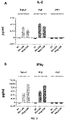
- the bbzg-CAR T cells has a significantly lower IL2 release level than the conventional CAR T cells, but a significantly higher IFN- ⁇ release level than the conventional CAR T cells.
- the cytokine release of the bbzg-CAR T cells of the present disclosure is comparable to the conventional CAR-T cells.
- mice 20 8-week healthy female NCG mice were divided into four groups: PBS group, NT group (negative control), bbz-CART group (positive control), and bbzg-CAR T group. 1 ⁇ 10 6 Nalm6 cells were injected into each mouse through tail vein on day 0 (D0). 7 days (D7) later, PBS solution or 2 ⁇ 10 6 NT cells, con-CAR T cells or bbzg-CAR T cells were injected into each mouse through tail vein according to the grouping. Mice were assessed weekly for changes in survival rate and tumor burden.
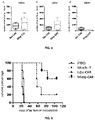
- mice Tumor burden changes in each group of mice were assessed by optical in vivo imaging technologies for living animals. Mouse tumor burden was detected on D7, D14, D21, D28, D35, D42, and D49 and was expressed in Photons/s, with the results as shown in FIG. 4 .
- the tumor burden in mice progressed rapidly, and reached the highest value on D21 (immediately died).
- the tumor burden rapidly decreased after receiving the CAR-T cell treatment, but gradually rebounded on D28 or D35.
- tumor burden of the mice in the bbzg-CAR T group not only rapidly decreased after receiving the treatment, but also maintained a low level until D49 without recurrence. This indicates that the bbzg-CAR T cell of the present disclosure can effectively inhibit the tumor growth, and the effect is significantly superior to that of the conventional bbz-CAR T cell.
- the inventors also monitored the T cell amplification of two groups of mice receiving the treatment of bbz-CART cell and bbzg-CAR T cell on day 21. Specifically, blood was taken from submandibular vein of the mice on D21, and subjected to Trucount FACS analysis (expression levels of hCD3, hCD8, hCD4), and the results are as shown in FIG. 5 .
- T cell amplification is detected in both the bbz-CAR T group and the bbzg-CAR T group of mice.
- the amplification extents of the CD4+ T cells in the two groups are comparable, the amplification of CD3+ and CD8+ T cells in the bbzg-CAR group is significantly higher than that in the bbz-CAR T group. Therefore, although the tumor burden of the two groups on day 21 is almost the same ( FIG.
- the tumor burden in the mice of the bbzg-CAR T group rebounds afterwards.
- the inventors also counted the survival percentage of each group of mice by the end of the experiment (namely, day 105 after inoculation of tumor cells Nalm6) ( FIG. 6 ).
- the survival percentage of each group of mice was measured by the end of the experiment.
- all of the mice in the PBS and NT groups died, only one (20%) mouse treated with the bbz-CAR T cells survived, while 60% of the mice treated with the bbzg-CAR T cells survived. This again indicates that the bbzg-CAR T cell of the present disclosure can effectively inhibit tumors and improve the survival rate.
- the bbzg-CAR T cell of the present disclosure due to the introduction of the cytokine receptor general ⁇ chain, can greatly promote the amplification of the T cell, thus improving the sustained killing effect on tumor cells, improving the in vivo tumor inhibitory effect, and increasing the survival of mice.
- the ⁇ c chain intracellular region (SEQ ID NO: 65) was inserted between the 4-1BB co-stimulatory domain and the CD3 ⁇ primary signaling domain of the bbz-CAR plasmid to obtain the bbgz-CAR plasmid, which differs from the bbzg-CAR plasmid only in that the position of the ⁇ c chain intracellular region is different.
- the bbgz-CAR T cell was prepared according to the method of Example 1.
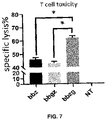
- the killing effect of CAR-T cell on target cells was detected according to the method described in Example 2, and the results are as shown in FIG. 7 . It can be seen that the killing effect of the bbgz-CAR T cell on target cells is comparable to that of the conventional bbz-CAR T cell, but both are significantly lower than the killing effect of the bbzg-CAR T cell. This indicates that the position of the additional signaling region (i.e., the ⁇ c chain or intracellular region thereof) in the CAR structure has an important influence on the killing activity of CAR T cell.
Landscapes
- Health & Medical Sciences (AREA)
- Life Sciences & Earth Sciences (AREA)
- Chemical & Material Sciences (AREA)
- Immunology (AREA)
- Organic Chemistry (AREA)
- General Health & Medical Sciences (AREA)
- Genetics & Genomics (AREA)
- Medicinal Chemistry (AREA)
- Public Health (AREA)
- Animal Behavior & Ethology (AREA)
- Veterinary Medicine (AREA)
- Zoology (AREA)
- Biochemistry (AREA)
- Cell Biology (AREA)
- Engineering & Computer Science (AREA)
- Epidemiology (AREA)
- Proteomics, Peptides & Aminoacids (AREA)
- Biophysics (AREA)
- Molecular Biology (AREA)
- Gastroenterology & Hepatology (AREA)
- Toxicology (AREA)
- Biomedical Technology (AREA)
- Wood Science & Technology (AREA)
- Bioinformatics & Cheminformatics (AREA)
- Biotechnology (AREA)
- Pharmacology & Pharmacy (AREA)
- General Chemical & Material Sciences (AREA)
- Nuclear Medicine, Radiotherapy & Molecular Imaging (AREA)
- Microbiology (AREA)
- Chemical Kinetics & Catalysis (AREA)
- Hematology (AREA)
- General Engineering & Computer Science (AREA)
- Mycology (AREA)
- Oncology (AREA)
- Peptides Or Proteins (AREA)
- Micro-Organisms Or Cultivation Processes Thereof (AREA)
- Medicines That Contain Protein Lipid Enzymes And Other Medicines (AREA)
- Medicines Containing Material From Animals Or Micro-Organisms (AREA)
- Medicines Containing Antibodies Or Antigens For Use As Internal Diagnostic Agents (AREA)
- Pharmaceuticals Containing Other Organic And Inorganic Compounds (AREA)
Applications Claiming Priority (2)
| Application Number | Priority Date | Filing Date | Title |
|---|---|---|---|
| CN202010128134.7A CN111269326A (zh) | 2020-02-28 | 2020-02-28 | 新型嵌合抗原受体及其用途 |
| PCT/CN2021/077580 WO2021169977A1 (fr) | 2020-02-28 | 2021-02-24 | Nouveau récepteur antigénique chimérique et utilisation associée |
Publications (4)
| Publication Number | Publication Date |
|---|---|
| EP4083073A1 true EP4083073A1 (fr) | 2022-11-02 |
| EP4083073A4 EP4083073A4 (fr) | 2023-07-12 |
| EP4083073C0 EP4083073C0 (fr) | 2025-04-09 |
| EP4083073B1 EP4083073B1 (fr) | 2025-04-09 |
Family
ID=70995356
Family Applications (1)
| Application Number | Title | Priority Date | Filing Date |
|---|---|---|---|
| EP21760732.4A Active EP4083073B1 (fr) | 2020-02-28 | 2021-02-24 | Nouveau récepteur antigénique chimérique et utilisation associée |
Country Status (8)
| Country | Link |
|---|---|
| US (1) | US20240277843A1 (fr) |
| EP (1) | EP4083073B1 (fr) |
| JP (1) | JP7462777B2 (fr) |
| KR (1) | KR20220145374A (fr) |
| CN (2) | CN111269326A (fr) |
| AU (1) | AU2021225890B2 (fr) |
| CA (1) | CA3169610A1 (fr) |
| WO (1) | WO2021169977A1 (fr) |
Families Citing this family (28)
| Publication number | Priority date | Publication date | Assignee | Title |
|---|---|---|---|---|
| CN111269326A (zh) * | 2020-02-28 | 2020-06-12 | 南京北恒生物科技有限公司 | 新型嵌合抗原受体及其用途 |
| CN111808821B (zh) * | 2020-06-24 | 2022-06-14 | 南方医科大学珠江医院 | Flt3-nkg2d双靶点car-t的构建与制备 |
| CN113980136B (zh) * | 2020-07-27 | 2023-08-22 | 中国科学院分子细胞科学卓越创新中心 | 一种包含具有Y/F突变的CD3ε胞内区的嵌合抗原受体及其用途 |
| CN111875710A (zh) * | 2020-07-31 | 2020-11-03 | 广东昭泰体内生物医药科技有限公司 | 异质性肿瘤治疗用免疫细胞及其应用 |
| CN111875712A (zh) * | 2020-07-31 | 2020-11-03 | 广东昭泰体内生物医药科技有限公司 | 一种增强型靶向muc1的嵌合抗原受体及其应用 |
| CN114057890A (zh) * | 2020-07-31 | 2022-02-18 | 南京北恒生物科技有限公司 | 新型共刺激结构域及其用途 |
| CN111925448B (zh) * | 2020-08-03 | 2022-06-21 | 山东大学 | 在体生成car-巨噬细胞的制备方法及肿瘤免疫治疗中的应用 |
| CN111956795B (zh) * | 2020-08-27 | 2023-02-03 | 武汉波睿达生物科技有限公司 | 以cd99为靶点的嵌合抗原受体联合抗肿瘤药物的应用 |
| CN112321721B (zh) * | 2020-11-05 | 2021-07-06 | 山东仁济生物科技有限公司 | 一种嵌合抗原受体及其修饰的免疫细胞及该免疫细胞在晚期胰腺癌治疗上的应用 |
| CN113527521B (zh) * | 2020-12-14 | 2022-05-31 | 广州百暨基因科技有限公司 | 一种抗b7h3嵌合抗原受体及其应用 |
| CN112877365A (zh) * | 2021-01-19 | 2021-06-01 | 因诺伟(北京)生物医疗科技有限公司 | 一种外周血造血干细胞采集物来源的嵌合抗原受体t细胞的制备及应用 |
| CN114853900A (zh) * | 2021-02-03 | 2022-08-05 | 南京北恒生物科技有限公司 | 新型嵌合抗原受体及其用途 |
| WO2022179562A1 (fr) * | 2021-02-24 | 2022-09-01 | Hangzhou Qihan Biotechnology Co., Ltd. | Récepteurs chimériques à l'antigène dans des cellules immunitaires |
| CN112870227B (zh) * | 2021-03-09 | 2023-04-14 | 深圳市体内生物医药科技有限公司 | 一种肝癌治疗药物及其制备方法和应用 |
| CN115216449A (zh) * | 2021-04-16 | 2022-10-21 | 南京北恒生物科技有限公司 | 工程化免疫细胞及其用途 |
| CN115232797A (zh) * | 2021-04-23 | 2022-10-25 | 南京北恒生物科技有限公司 | 工程化免疫细胞及其用途 |
| CN113461818B (zh) * | 2021-06-30 | 2022-01-21 | 徐州医科大学 | 靶向CD276的全人源抗体scFv、嵌合抗原受体、工程化免疫细胞及其制备方法 |
| CN113980138B (zh) * | 2021-08-11 | 2023-08-11 | 卡瑞济(北京)生命科技有限公司 | EphA2嵌合抗原受体以及其用途 |
| CN115785279A (zh) * | 2021-09-09 | 2023-03-14 | 南京北恒生物科技有限公司 | 包含新型共刺激结构域的嵌合抗原受体及其用途 |
| CN116103239A (zh) * | 2021-11-11 | 2023-05-12 | 南京北恒生物科技有限公司 | 工程化免疫细胞及其用途 |
| CN114133457B (zh) * | 2021-12-08 | 2022-08-19 | 郑州源创吉因实业有限公司 | 一种靶向ror1和cd33的双特异性嵌合抗原受体(car)及其应用 |
| CN115991790B (zh) * | 2022-09-26 | 2025-09-30 | 东南大学 | 一种增强肿瘤抗原作用的car及其应用 |
| CN115724997B (zh) * | 2022-09-27 | 2025-08-12 | 河南大学 | 一种抗cd97嵌合抗原受体、基因、表达载体、t细胞及应用 |
| CN116041542B (zh) * | 2022-12-06 | 2026-02-17 | 上海恩凯细胞技术有限公司 | 逆转肿瘤微环境抑制性信号的nk细胞制备方法及应用 |
| CN116286660B (zh) * | 2022-12-08 | 2023-10-03 | 全球细胞控股(广州)有限公司 | 一种ipsc-(car)自然杀伤细胞、制备方法及其在肿瘤治疗中的应用 |
| WO2024193687A1 (fr) * | 2023-03-23 | 2024-09-26 | Nanjing Legend Biotech Co., Ltd. | Récepteurs cytokiniques inversés et leurs procédés d'utilisation |
| CN117402261B (zh) * | 2023-10-17 | 2025-03-28 | 北京景达生物科技有限公司 | 一种基于重组腺病毒的car-nk细胞制备方法及其应用 |
| CN117683113B (zh) * | 2023-12-12 | 2025-02-28 | 北京景达生物科技有限公司 | 表达mIL-15的HER2靶向CAR-NK细胞的制备及其应用 |
Family Cites Families (16)
| Publication number | Priority date | Publication date | Assignee | Title |
|---|---|---|---|---|
| US5731168A (en) | 1995-03-01 | 1998-03-24 | Genentech, Inc. | Method for making heteromultimeric polypeptides |
| CN1294148C (zh) | 2001-04-11 | 2007-01-10 | 中国科学院遗传与发育生物学研究所 | 环状单链三特异抗体 |
| KR20060041205A (ko) | 2003-07-01 | 2006-05-11 | 이뮤노메딕스, 인코오포레이티드 | 양특이성 항체들의 다가 담체들 |
| EP1786918A4 (fr) | 2004-07-17 | 2009-02-11 | Imclone Systems Inc | Nouveau anticorps bispecifique tetravalent |
| NZ612578A (en) | 2005-08-19 | 2014-11-28 | Abbvie Inc | Dual variable domain immunoglobin and uses thereof |
| PH12013501201A1 (en) * | 2010-12-09 | 2013-07-29 | Univ Pennsylvania | Use of chimeric antigen receptor-modified t cells to treat cancer |
| GB201518816D0 (en) * | 2015-10-23 | 2015-12-09 | Autolus Ltd | Receptor |
| ES2891578T3 (es) * | 2016-04-01 | 2022-01-28 | Kite Pharma Inc | Antígeno quimérico y receptores de células T y métodos de uso |
| EP3612210A4 (fr) * | 2017-04-19 | 2021-01-27 | Board Of Regents, The University Of Texas System | Cellules immunitaires exprimant des récepteurs d'antigènes modifiés |
| GB201715918D0 (en) * | 2017-09-29 | 2017-11-15 | Tc Biopharm Ltd | Modified CAR-T |
| CN118420783A (zh) * | 2017-12-06 | 2024-08-02 | 恺兴生命科技(上海)有限公司 | 嵌合蛋白、表达嵌合蛋白的免疫效应细胞及其应用 |
| JP2021505131A (ja) * | 2017-12-08 | 2021-02-18 | フェイト セラピューティクス,インコーポレイテッド | 増強されたiPSC由来のエフェクター細胞を用いた免疫療法 |
| US20210017248A1 (en) * | 2018-03-16 | 2021-01-21 | The Regents Of The University Of California | Cellular signaling domain engineering in chimeric antigen receptor-modified regulatory t cells |
| CN110615843B (zh) * | 2018-06-20 | 2023-05-09 | 上海隆耀生物科技有限公司 | 一种包含第三信号受体的嵌合抗原受体及其应用 |
| CN111269326A (zh) * | 2020-02-28 | 2020-06-12 | 南京北恒生物科技有限公司 | 新型嵌合抗原受体及其用途 |
| CN114853900A (zh) * | 2021-02-03 | 2022-08-05 | 南京北恒生物科技有限公司 | 新型嵌合抗原受体及其用途 |
-
2020
- 2020-02-28 CN CN202010128134.7A patent/CN111269326A/zh active Pending
-
2021
- 2021-02-24 KR KR1020227032920A patent/KR20220145374A/ko not_active Ceased
- 2021-02-24 AU AU2021225890A patent/AU2021225890B2/en active Active
- 2021-02-24 US US17/802,242 patent/US20240277843A1/en active Pending
- 2021-02-24 CA CA3169610A patent/CA3169610A1/fr active Pending
- 2021-02-24 JP JP2022549898A patent/JP7462777B2/ja active Active
- 2021-02-24 WO PCT/CN2021/077580 patent/WO2021169977A1/fr not_active Ceased
- 2021-02-24 EP EP21760732.4A patent/EP4083073B1/fr active Active
- 2021-02-24 CN CN202110205785.6A patent/CN113321737B/zh active Active
Also Published As
| Publication number | Publication date |
|---|---|
| CN113321737B (zh) | 2025-10-14 |
| US20240277843A1 (en) | 2024-08-22 |
| EP4083073C0 (fr) | 2025-04-09 |
| KR20220145374A (ko) | 2022-10-28 |
| JP2023514385A (ja) | 2023-04-05 |
| EP4083073A4 (fr) | 2023-07-12 |
| JP7462777B2 (ja) | 2024-04-05 |
| AU2021225890B2 (en) | 2024-12-19 |
| EP4083073B1 (fr) | 2025-04-09 |
| CN111269326A (zh) | 2020-06-12 |
| AU2021225890A1 (en) | 2022-08-25 |
| WO2021169977A1 (fr) | 2021-09-02 |
| CA3169610A1 (fr) | 2021-09-02 |
| CN113321737A (zh) | 2021-08-31 |
Similar Documents
| Publication | Publication Date | Title |
|---|---|---|
| EP4083073B1 (fr) | Nouveau récepteur antigénique chimérique et utilisation associée | |
| US11896620B2 (en) | Engineered immune cell and use thereof | |
| US20230242877A1 (en) | Immune cell comprising chimeric antigen receptor and use thereof | |
| CN110964122B (zh) | T细胞受体融合蛋白及其用途 | |
| US20240009311A1 (en) | Engineered immune cell and use thereof | |
| WO2021147929A1 (fr) | Récepteur antigénique chimérique à chaînes multiples et son utilisation | |
| WO2022218226A1 (fr) | Cellule immunitaire modifiée et son utilisation | |
| WO2022223049A1 (fr) | Cellule immunitaire modifiée et son utilisation | |
| US20230270858A1 (en) | Novel co-stimulatory domain and use thereof | |
| HK40076158A (en) | Novel chimeric antigen receptor and use thereof | |
| HK40076158B (en) | Novel chimeric antigen receptor and use thereof | |
| HK40087333A (en) | Novel co-stimulatory domain and uses thereof | |
| HK40082597A (en) | Engineered immune cell and use thereof | |
| HK40075547A (en) | Engineered immune cell and use thereof | |
| WO2023025009A1 (fr) | Cellule immunitaire modifiée et son utilisation | |
| WO2023016284A1 (fr) | Cellule immunitaire modifiée et son utilisation |
Legal Events
| Date | Code | Title | Description |
|---|---|---|---|
| STAA | Information on the status of an ep patent application or granted ep patent |
Free format text: STATUS: THE INTERNATIONAL PUBLICATION HAS BEEN MADE |
|
| PUAI | Public reference made under article 153(3) epc to a published international application that has entered the european phase |
Free format text: ORIGINAL CODE: 0009012 |
|
| STAA | Information on the status of an ep patent application or granted ep patent |
Free format text: STATUS: REQUEST FOR EXAMINATION WAS MADE |
|
| 17P | Request for examination filed |
Effective date: 20220729 |
|
| AK | Designated contracting states |
Kind code of ref document: A1 Designated state(s): AL AT BE BG CH CY CZ DE DK EE ES FI FR GB GR HR HU IE IS IT LI LT LU LV MC MK MT NL NO PL PT RO RS SE SI SK SM TR |
|
| REG | Reference to a national code |
Ref country code: HK Ref legal event code: DE Ref document number: 40076158 Country of ref document: HK |
|
| DAV | Request for validation of the european patent (deleted) | ||
| DAX | Request for extension of the european patent (deleted) | ||
| REG | Reference to a national code |
Ref country code: DE Ref legal event code: R079 Free format text: PREVIOUS MAIN CLASS: C07K0019000000 Ipc: A61K0039000000 Ref document number: 602021028954 Country of ref document: DE |
|
| STAA | Information on the status of an ep patent application or granted ep patent |
Free format text: STATUS: EXAMINATION IS IN PROGRESS |
|
| A4 | Supplementary search report drawn up and despatched |
Effective date: 20230614 |
|
| RIC1 | Information provided on ipc code assigned before grant |
Ipc: C07K 14/715 20060101ALI20230607BHEP Ipc: C07K 14/725 20060101ALI20230607BHEP Ipc: A61P 35/00 20060101ALI20230607BHEP Ipc: A61K 39/00 20060101AFI20230607BHEP |
|
| 17Q | First examination report despatched |
Effective date: 20230626 |
|
| RAP1 | Party data changed (applicant data changed or rights of an application transferred) |
Owner name: BIOHENG THERAPEUTICS LIMITED |
|
| REG | Reference to a national code |
Ref country code: DE Ref legal event code: R079 Free format text: PREVIOUS MAIN CLASS: A61K0039000000 Ipc: C12N0005078300 Ref document number: 602021028954 Country of ref document: DE |
|
| RIC1 | Information provided on ipc code assigned before grant |
Ipc: C07K 14/715 20060101ALI20240808BHEP Ipc: C07K 14/725 20060101ALI20240808BHEP Ipc: A61K 39/00 20060101ALI20240808BHEP Ipc: C12N 5/0783 20100101AFI20240808BHEP |
|
| GRAP | Despatch of communication of intention to grant a patent |
Free format text: ORIGINAL CODE: EPIDOSNIGR1 |
|
| STAA | Information on the status of an ep patent application or granted ep patent |
Free format text: STATUS: GRANT OF PATENT IS INTENDED |
|
| INTG | Intention to grant announced |
Effective date: 20241004 |
|
| GRAS | Grant fee paid |
Free format text: ORIGINAL CODE: EPIDOSNIGR3 |
|
| GRAA | (expected) grant |
Free format text: ORIGINAL CODE: 0009210 |
|
| STAA | Information on the status of an ep patent application or granted ep patent |
Free format text: STATUS: THE PATENT HAS BEEN GRANTED |
|
| AK | Designated contracting states |
Kind code of ref document: B1 Designated state(s): AL AT BE BG CH CY CZ DE DK EE ES FI FR GB GR HR HU IE IS IT LI LT LU LV MC MK MT NL NO PL PT RO RS SE SI SK SM TR |
|
| REG | Reference to a national code |
Ref country code: GB Ref legal event code: FG4D |
|
| REG | Reference to a national code |
Ref country code: CH Ref legal event code: EP |
|
| REG | Reference to a national code |
Ref country code: IE Ref legal event code: FG4D |
|
| U01 | Request for unitary effect filed |
Effective date: 20250409 |
|
| U07 | Unitary effect registered |
Designated state(s): AT BE BG DE DK EE FI FR IT LT LU LV MT NL PT RO SE SI Effective date: 20250415 |
|
| PG25 | Lapsed in a contracting state [announced via postgrant information from national office to epo] |
Ref country code: ES Free format text: LAPSE BECAUSE OF FAILURE TO SUBMIT A TRANSLATION OF THE DESCRIPTION OR TO PAY THE FEE WITHIN THE PRESCRIBED TIME-LIMIT Effective date: 20250409 |
|
| PG25 | Lapsed in a contracting state [announced via postgrant information from national office to epo] |
Ref country code: NO Free format text: LAPSE BECAUSE OF FAILURE TO SUBMIT A TRANSLATION OF THE DESCRIPTION OR TO PAY THE FEE WITHIN THE PRESCRIBED TIME-LIMIT Effective date: 20250709 Ref country code: GR Free format text: LAPSE BECAUSE OF FAILURE TO SUBMIT A TRANSLATION OF THE DESCRIPTION OR TO PAY THE FEE WITHIN THE PRESCRIBED TIME-LIMIT Effective date: 20250710 |
|
| PG25 | Lapsed in a contracting state [announced via postgrant information from national office to epo] |
Ref country code: PL Free format text: LAPSE BECAUSE OF FAILURE TO SUBMIT A TRANSLATION OF THE DESCRIPTION OR TO PAY THE FEE WITHIN THE PRESCRIBED TIME-LIMIT Effective date: 20250409 |
|
| PG25 | Lapsed in a contracting state [announced via postgrant information from national office to epo] |
Ref country code: HR Free format text: LAPSE BECAUSE OF FAILURE TO SUBMIT A TRANSLATION OF THE DESCRIPTION OR TO PAY THE FEE WITHIN THE PRESCRIBED TIME-LIMIT Effective date: 20250409 |
|
| PG25 | Lapsed in a contracting state [announced via postgrant information from national office to epo] |
Ref country code: RS Free format text: LAPSE BECAUSE OF FAILURE TO SUBMIT A TRANSLATION OF THE DESCRIPTION OR TO PAY THE FEE WITHIN THE PRESCRIBED TIME-LIMIT Effective date: 20250709 |
|
| PG25 | Lapsed in a contracting state [announced via postgrant information from national office to epo] |
Ref country code: IS Free format text: LAPSE BECAUSE OF FAILURE TO SUBMIT A TRANSLATION OF THE DESCRIPTION OR TO PAY THE FEE WITHIN THE PRESCRIBED TIME-LIMIT Effective date: 20250809 |
|
| PG25 | Lapsed in a contracting state [announced via postgrant information from national office to epo] |
Ref country code: SM Free format text: LAPSE BECAUSE OF FAILURE TO SUBMIT A TRANSLATION OF THE DESCRIPTION OR TO PAY THE FEE WITHIN THE PRESCRIBED TIME-LIMIT Effective date: 20250409 |
|
| PG25 | Lapsed in a contracting state [announced via postgrant information from national office to epo] |
Ref country code: CZ Free format text: LAPSE BECAUSE OF FAILURE TO SUBMIT A TRANSLATION OF THE DESCRIPTION OR TO PAY THE FEE WITHIN THE PRESCRIBED TIME-LIMIT Effective date: 20250409 |
|
| PG25 | Lapsed in a contracting state [announced via postgrant information from national office to epo] |
Ref country code: SK Free format text: LAPSE BECAUSE OF FAILURE TO SUBMIT A TRANSLATION OF THE DESCRIPTION OR TO PAY THE FEE WITHIN THE PRESCRIBED TIME-LIMIT Effective date: 20250409 |
|
| PLBE | No opposition filed within time limit |
Free format text: ORIGINAL CODE: 0009261 |
|
| STAA | Information on the status of an ep patent application or granted ep patent |
Free format text: STATUS: NO OPPOSITION FILED WITHIN TIME LIMIT |
|
| REG | Reference to a national code |
Ref country code: CH Ref legal event code: L10 Free format text: ST27 STATUS EVENT CODE: U-0-0-L10-L00 (AS PROVIDED BY THE NATIONAL OFFICE) Effective date: 20260218 |
|
| 26N | No opposition filed |
Effective date: 20260112 |
|
| U20 | Renewal fee for the european patent with unitary effect paid |
Year of fee payment: 6 Effective date: 20260224 |