EP4084264A1 - Système de surveillance pour un réseau de transmission et/ou de distribution électriques - Google Patents
Système de surveillance pour un réseau de transmission et/ou de distribution électriques Download PDFInfo
- Publication number
- EP4084264A1 EP4084264A1 EP21170493.7A EP21170493A EP4084264A1 EP 4084264 A1 EP4084264 A1 EP 4084264A1 EP 21170493 A EP21170493 A EP 21170493A EP 4084264 A1 EP4084264 A1 EP 4084264A1
- Authority
- EP
- European Patent Office
- Prior art keywords
- portable device
- monitoring system
- signal
- controller
- alert
- Prior art date
- Legal status (The legal status is an assumption and is not a legal conclusion. Google has not performed a legal analysis and makes no representation as to the accuracy of the status listed.)
- Pending
Links
Images


Classifications
-
- H—ELECTRICITY
- H02—GENERATION; CONVERSION OR DISTRIBUTION OF ELECTRIC POWER
- H02J—ELECTRIC POWER NETWORKS; CIRCUIT ARRANGEMENTS OR SYSTEMS FOR SUPPLYING OR DISTRIBUTING ELECTRIC POWER; SYSTEMS FOR STORING ELECTRIC ENERGY
- H02J50/00—Circuit arrangements or systems for wireless supply or distribution of electric power
- H02J50/90—Circuit arrangements or systems for wireless supply or distribution of electric power involving detection or optimisation of position, e.g. alignment
-
- H—ELECTRICITY
- H02—GENERATION; CONVERSION OR DISTRIBUTION OF ELECTRIC POWER
- H02J—ELECTRIC POWER NETWORKS; CIRCUIT ARRANGEMENTS OR SYSTEMS FOR SUPPLYING OR DISTRIBUTING ELECTRIC POWER; SYSTEMS FOR STORING ELECTRIC ENERGY
- H02J7/00—Circuit arrangements for charging or discharging batteries or for supplying loads from batteries
- H02J7/90—Regulation of charging or discharging current or voltage
- H02J7/94—Regulation of charging or discharging current or voltage in response to battery current
-
- H—ELECTRICITY
- H02—GENERATION; CONVERSION OR DISTRIBUTION OF ELECTRIC POWER
- H02J—ELECTRIC POWER NETWORKS; CIRCUIT ARRANGEMENTS OR SYSTEMS FOR SUPPLYING OR DISTRIBUTING ELECTRIC POWER; SYSTEMS FOR STORING ELECTRIC ENERGY
- H02J50/00—Circuit arrangements or systems for wireless supply or distribution of electric power
- H02J50/80—Circuit arrangements or systems for wireless supply or distribution of electric power involving the exchange of data, concerning supply or distribution of electric power, between transmitting devices and receiving devices
-
- H—ELECTRICITY
- H02—GENERATION; CONVERSION OR DISTRIBUTION OF ELECTRIC POWER
- H02J—ELECTRIC POWER NETWORKS; CIRCUIT ARRANGEMENTS OR SYSTEMS FOR SUPPLYING OR DISTRIBUTING ELECTRIC POWER; SYSTEMS FOR STORING ELECTRIC ENERGY
- H02J7/00—Circuit arrangements for charging or discharging batteries or for supplying loads from batteries
- H02J7/80—Circuit arrangements for charging or discharging batteries or for supplying loads from batteries including monitoring or indicating arrangements
-
- H—ELECTRICITY
- H04—ELECTRIC COMMUNICATION TECHNIQUE
- H04W—WIRELESS COMMUNICATION NETWORKS
- H04W64/00—Locating users or terminals or network equipment for network management purposes, e.g. mobility management
Definitions
- the present inventive concept generally relates to the field of electrical transmission and/or distribution networks. More particularly it relates to safety systems for persons working with such networks in general, and electrical substations in particular.
- Safety precautions may therefore be taken with the aim of protecting the employees from accidental exposure to energised components.
- the safety precautions may include safety equipment installed at the facilities, such as physical barriers, warning signs and clearly marked evacuation routes, and personal protective accessories such as gloves, face masks and the like. Training, authorisation, and practical routines are also crucial to prevent incidents and fatalities.
- An object of a least some of the embodiments of the present inventive concept is to provide an improved alternative to the above-mentioned prior art. This and other objects may be achieved by means of a monitoring system and method having the features defined in the independent claims. Preferable embodiments of the inventive concept are defined by the dependent claims.
- a monitoring system for an electrical transmission and/or distribution network comprising a short-range wireless transceiver and a controller.
- the transceiver is configured to be arranged at a predetermined position relative to an equipment device of the electrical transmission and/or distribution network, and to receive a signal from a portable device.
- the controller is configured to determine a location of the portable device based at least partially on the received signal, and to verify if the determined location is within a predetermined alert zone at least partly surrounding the equipment device. Further, the controller may be configured to generate an alert signal in case the determined location is verified to be within the alert zone.
- a monitoring method comprising receiving a signal from a portable device and determining a location of the portable device relative to an alert zone at least partly surrounding an equipment device of an electrical transmission and/or distribution network. The location is determined at least partially on the received signal and a predetermined position of the transceiver relative to the equipment device. Further, the method comprises verifying if the determined location is within the alert zone, and generating an alert signal in case the determined location is within the alert zone.
- the present inventive concept is based on the technical insight that one or several short-range wireless transceivers can be utilised to detect if a portable device is arranged within a predetermined alert zone around an equipment device.
- the portable device may preferably be carried by a person moving around in an environment in which the equipment device is arranged, such as for example an electrical substation, and the alert signal may be generated in case the person comes too close to the equipment device, i.e., enters the predetermined alert zone. It should be noted that by determining the location of the portable device relative to the transceiver and thus the equipment device, information may be retrieved not only about a distance between the person and the equipment device, but also the direction from which the person approaches the equipment device.
- alert zone This allows for the alert zone to be irregular or asymmetric in shape and hence more precisely defined around the equipment device.
- the extension of the alert zone may thus vary between different sides of the equipment device.
- the alert zone may hence be adjusted or tailored manually so as to meet specific needs for the actual environment, or be predetermined based on for example a stipulated, general clearance distance (plus a possible safety margin).
- the alert signal may be generated to notify or warn the person carrying the portable device about this fact.
- a safety block mechanism may be activated, which de-energises the equipment device.
- the monitoring system may be based on local decisions and does not require any communication between different transceivers or between a transceiver and any central control or monitoring system. Further, the present inventive concept is advantageous over techniques based on for example global navigation satellite systems, since the present monitoring system works also in environments that are shielded from satellite signals.
- the alert signal may be transmitted to the portable device by the transceiver. This allows for the portable device to inform a person carrying the portable device that he or she has entered the alert zone, and that he or she is approaching a potentially hazardous equipment device.
- the alert signal may thus trigger a warning mechanism of the portable device, which for example may be brought to vibrate or issue a sound or light signal calling for the attention of the carrier.
- the portable device may further indicate when it exits the alert zone, i.e., when the person carrying the portable device moves out of the alert zone again. The indication may for example be based on the transceiver ceasing the transmission of the alert signal or transmitting a further signal to the portable device indicating that it is no longer in the alert zone.
- the alert signal may be transmitted to a safety block mechanism.
- the safety block mechanism may for example be configured to cause the equipment device to enter a safe mode in response to receipt of the alert signal.
- the safe mode may for example be characterised by the equipment device being de-energised.
- the monitoring system according to the present inventive concept may be capable of monitoring the movement of a person carrying the portable device, and de-energising hazardous equipment in case the person is getting too close, i.e., within the predetermined alert zone around the equipment.
- the safety block mechanism may be configured to prevent the equipment device from being energised in case the alert signal is received.
- the monitoring system may verify that the portable device is not within the alert zone before the equipment device is energised. Should it be verified that the portable device actually is arranged within the alert zone, the monitoring system may act to ensure that the equipment device is not energised.
- the controller may be configured to determine the location of the portable device based on a determined distance between the portable device and the short-range wireless transceiver, and further on determined directional information of the signal from the portable device.
- the determination of the location may hence involve determining the direction of propagation of the signal transmitted by the portable device and incident on an antenna of the transceiver.
- the directional information may for example be achieved by determining a maximum signal strength during antenna rotation, or by measuring the time difference of arrival between individual elements of an antenna array of the transceiver.
- the transceiver may for example comprise an array of antenna elements allowing for an angle of arrival (AoA) or the received signal to be determined.
- the AoA may be determined by measuring a difference in phase of the signal received at individual antenna elements in the array, wherein the determined AoA may indicate the angular direction in which the portable device is arranged in relation to the transceiver.
- the AoA determination may be combined with a distance determination based on the received signal strength for obtaining a measure of the actual location of the portable device relative to the transceiver and hence the equipment device.
- the present inventive concept is advantageous in that is allows for the location of the portable device to be determined using the signal from the portable device as received by a single transceiver.
- several transceivers may also be used to verify the location of the portable device but unlike for example triangulation-based techniques this is not a requirement in the context of the present disclosure.
- the determined location of the portable device may not be limited to the alert zone, but to the coverage area of the transceiver. This allows for movements of the person carrying the portable device to be monitored and tracked also outside the alert zone.
- the controller may be configured to receive information indicating whether the equipment device is energised or de-energised. This information can be used for determining if the alert signal should be generated or not when the portable device is determined to be within the alert zone. Preferably, the alert signal may be generated only in case the equipment device is energised and thus dangerous to approach.
- the monitoring system may hence provide a warning functionality which alerts a person approaching live equipment.
- the information indicating the status of the equipment device may be received from the equipment device itself, for example via a serial interface or a wired communication channel between the equipment device and the controller and/or the transceiver. This allows for the monitoring system to operate and make decisions locally, without involving any central controller or central intelligence.
- the information may be received from a central node, such as a central controller, configured to control and coordinate a plurality of transceivers installed at various locations throughout a substation or the like.
- the controller may be integrated in the transceiver, such that the transceiver and the controller form a common unit. This allows for the functionality and intelligence of the present inventive concept to be provided in a single unit that is relatively easy to move and install at the desired locations - either permanently or temporarily, depending on the actual safety requirements.
- the controller may be arranged in the portable device.
- the controller or the functionality of a controller as outlined above, also may be distributed over two or more different entities such as the central station control system, the individual transceivers, the portable device, and a remote cloud-based server.
- the monitoring system may comprise a central controller, or central node, and a plurality of transceivers communicatively connected to the central node.
- the central controller may for example form part of a station control system.
- the connection may for example be achieved over a local network, or backbone, which may be wired or wireless.
- the central controller may be configured to receive the signal from the portable device from one or several of the transceivers, and may be configured to process the information from the transceivers to determine the location of the portable device, track the movement of the person over time, monitor the status of the equipment devices (such as keeping track of whether the equipment devices are energized or not, as mentioned above), generate the alert signal to be transmitted via the transceivers, or cause the transceivers to generate the alert signal, in response to the person being determined to be within the alert zone.
- the local network, or backbone may further be used for transmitting the alert signal to the safety block mechanism.
- the central controller may in an example be configured to receive one or more signals from one or more portable devices via a plurality of transceivers and use that information to determine the location of the portable device(s).
- the determination of the location may for example involve triangulation between two or more of the transceivers.
- the controller may be configured to track the movement of the portable device in relation to one or more transceivers and store the tracked movement in a database. This allows for tracking of personnel operating in proximity of the equipment devices, and further for their movements to be analysed at a later point in time, for example in case of incidents, to better understand the course of events leading to the incident.
- the controller may be configured to share location information with other controllers, for example located arranged at other geographic places.
- the location information may for example be shared through a wide-area network.
- the transceiver may for example be arranged at a remote, or unmanned station, and the location information sent to a central control facility from which the station can be monitored and operated.
- the controller may be configured to share the determined location with a control system of a second substation. This makes it possible to hinder the second substation from energising a feeder if a person is determined to be too close to a feeder termination at the first substation.
- short-range wireless transceiver for brevity also referred to as “transceiver” in the present application, is generally meant a radio-frequency transmitter device utilising a technology such as Bluetooth, Wi-Fi, near-field communication, ultra-wideband and IEE 802.15.4.
- a short-range transceiver may typically be a low-power transmitter limited to 25-100 mW effective radiated power, limiting its useful range to a few hundred metres.
- the transceiver may also be referred to as an anchor or a beacon.
- the equipment device may form part of the installed equipment of a substation.
- Substations may act as connection points between different transmission lines of electrical systems, and might additionally transform voltage from high to low, or the reverse, or perform any of several other important functions in electrical transmission or distribution networks.
- the substations and the installed equipment of various substations are often designed differently.
- the present inventive concept is advantageous in that it makes it easier for the field operator or technician to safely navigate through the substation assists in their work of accessing, examining and carrying out actions on the equipment.
- the portable device may be integrated in a handheld device, such as a cell phone or a tablet, or in a garment or personal protective accessory such as for example a safety vest or protective helmet, which preferably may mandatory to wear for the personnel.
- the portable device may be configured to broadcast the signal, preferably constantly when being carried in the facility housing the equipment devices.
- the monitoring system may be capable of handling, i.e. determining the location of and sending an alert signal to, a plurality of portable devices carried by different persons within the facility.
- the system may hence be capable of identifying a specific portable device, out of a plurality, that is arranged within the alert zone and generate an alert signal that targets that specific portable device. This may for example be achieved by each portable device adding a unique identifyer to the signal, which can be used by the controller for generating an alert signal that is addressed to a specific portable device.
- any of the features and advantages of the embodiments described above for the monitoring system according to the first aspect may be combined with the method according to the second aspect.
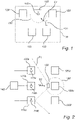
- the system may comprise a short-range wireless transceiver 110, in the following also referred to as "receiver”, arranged at a predetermined position relative to an equipment device 120 of the electrical transmission and/or distribution network.
- the transceiver 110 may be configured to receive a signal S1 from a portable device 130, and to send an alert signal in case a determined location of the portable device 130 is within an alert zone 150 at the equipment device 120.
- the equipment device 120 may form part of a substation 10 and may for example be (or form part of) a lightning arrester, a power transformer, a busbar, a circuit breaker, a relay, and the like.
- the equipment device 120 may be energised, for example with high-voltage power, and may generate electromagnetic fields which can be harmful in close proximity of the equipment. Further, the equipment device 120 can comprise components or parts which normally are not energised, or which may be de-energised temporarily, and which may become energised unexpectedly or accidentally.
- the equipment device 120 may be associated with the alert zone 150, which may be defined as a clearance that should be observed in order to avoid accidental contact with the equipment device 120 or a dangerous part of the equipment device 120.
- the alert zone 150 may in some examples be larger than the recommended or stipulated minimum clearance so as to allow for the alert signal to be generated with some safety marginal before the portable device 130 gets too close to the equipment device 120.
- the alert zone 150 may have a shape that varies in different directions from the equipment device 120. As illustrated in figure 1 , the alert zone 150 may be defined by a certain radius measured from a point on the equipment device 120, such as the exposed live part to which access should be avoided.
- the alert zone 150 may for example extend on a first side of the equipment device 120, and not on a second side, depending on the location and accessibility of the dangerous part of the equipment.
- the alert zone 150 may correspond to a two-dimensional area, such as the one indicated by the dashed line in the present figure, or by a three-dimensional volume in space.
- the transceiver 110 may be arranged at a predetermined, or known, position relative to the equipment device 120 and/or the alert zone 150.
- the transceiver may hence be arranged at a known distance from the equipment device 120 or be collocated with the equipment device 120.
- the transceiver 110 may be part of or integrated with the equipment device 120.
- the transceiver 110 may be releasably or permanently attached to the equipment device 120.
- the signal incident on the transceiver 110 may be used to determine the location of the portable device 130 relative to the alert zone 150.
- the location may be determined based on a distance and a direction between the transceiver 110 and the portable device 130, as will be discussed in more detail with reference to figures 3a and b, combined with the known positional relationship between the transceiver 110 and the equipment device 120 and/or the alert zone 150.
- the portable device 130 is arranged outside the alert zone 150.
- the portable device 130 may be configured to broadcast a radiofrequency signal S1, which for example may be configured to support the Bluetooth 5.1 direction finding functionality.
- the broadcast signal S1 may be received by the transceiver 110 and analysed by a controller (not shown) to determine the location of the portable device 130. Should it be determined that the portable device 130 is arranged within the alert zone 150, an alert signal may be generated by controller and sent via the transceiver 110.
- the alert signal may for example be transmitted to the portable device 130, which may be configured to act on the signal to notify a person carrying, or at least being in close vicinity of the portable device 130, that he or she is within or at least close to the alert zone 150.
- the portable device 130 may for example be configured to notify the person by means of an audio signal, a visual signal or a tactile signal.
- the controller may send the alert signal to a dedicated alarm device, such as a siren or beacon light, which may be arranged to generate a warning signal based on the alert signal and hence notify any person approaching the equipment device.
- the alert signal may be transmitted to a safety block mechanism (not shown in figure 1 ), which may be configured to cause the equipment device 120 to enter a safe mode in response to the receipt of the alert signal.
- the safe mode may for example result in the equipment device 120 being de-energised.
- the alert signal may be generated only in case the equipment device is not already in a safe mode.
- the monitoring system may be configured to check whether the equipment device 120 is energised or not, before any alert signal is generated.
- the alert signal may be generated in response to the equipment device 120 being dangerous to touch, i.e., being energised. Consequently, no alert signal may be generated should the equipment device 120 already be in the safe mode, i.e., be de-energised, such that it can be approached and touched without risk.
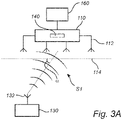
- FIG. 2 shows a monitoring system comprising a plurality of transceivers 120a, 120b, 120c (collectively referred to by reference numeral 120), which may be arranged at a respective equipment device 110a, 110b, 110c (collectively referred to by reference numeral 110).
- the monitoring system and the transceivers 120 may be similarly configured as the embodiment discussed above with reference to figure 1 .
- the monitoring system may be implemented in an environment comprising a plurality of equipment devices 110, such as the six exemplary equipment devices 120a-f illustrated in figure 2 .
- One or several alert zones 150 may be defined, such as the one encircling equipment device 120e.
- the alert zone 150 at equipment device 120f may be monitored by transceiver 110b, which in the present example is arranged at the neighbouring equipment device 120b and at a predetermined location relative to the equipment device 120e. In case the portable device 130 enters the alert zone 150 the transceiver 110b may generate the above-discussed alert signal S2.
- the transceivers 110 may be communicatively connected to the controller 140, which in the present example may be a central controller 140 that may be common to all three transceivers 110.
- the controller may be configured to determine the location of the portable device 130 based on the signal from the portable device 130 received at one of the transceivers 110, and/or by means of triangulation between two or more of the transceivers 110.
- the controller 140 may further be configured to track the movements of the portable device 130 through the environment comprising the equipment devices 120 and store the path P1 of the portable device 130 in a database for future reference and analysis. The tracking may be based on input from one or several of the transceivers 110.
- the portable device moves along the path P1 into the alert zone 150 at equipment device 120e, receives an alert signal S2 from transceiver 110b, leaves the alert zone 150 in response to the reception of the alert signal S2, continues to equipment device 120c, and then leaves the environment.
- the illustrated path P2 is the result of the monitoring of the movements of the portable device 130 performed by the transceivers 110, which may be configured to receive a signal S1 that is broadcast by the portable device 130 as it moves through the environment.
- the transceivers 110 may communicate with the central controller 140 via a wired or wireless network.
- the network may in some examples comprise one or several relay nodes configured to transmit the communication signal from the transceivers 110 to the central controller 110.
- Such a network may also be referred to as a backbone network and may be provided to ensure that the short-range signal from the transceivers 110 is allowed to be correctly transmitted to the central controller 140.
- the central controller 140 may for example form part of a station control system.
- the controller 140 which hence may be central and thus common to several transceivers 110, or local to each transceiver 110, may be configured to receive (or keep track of) a status of the equipment device associated with the alert zone 150.
- the controller 140 may hence have access to information indicating whether the equipment device is dangerous to approach or not, such as being energised or not, and may act accordingly.
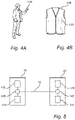
- FIGS 3a and b show a transceiver 110 and a portable device 130 according to some embodiments, which may be similarly configured as the ones disclosed in connection with figures 1 and 2 .
- the transceiver 110 may comprise a controller 140, which in the present example may be integrated in the transceiver 140, and may be communicatively connected to a safety block mechanism 160 for causing the equipment device to enter a safe mode as mentioned above.
- the transceiver 110 is configured to receive a signal S1 transmitted by the portable device 130.
- the transceiver 110 and the portable device 130 may for example be configured to support the Bluetooth 5.1 direction finding functionality.
- the transceiver 110 may be arranged at a predetermined position relative the alert zone, whereas the portable device 130 may be carried by a person moving in the environment in which the equipment device is arranged.
- Figure 3a show a portable device 130 comprising a single antenna 132 for transmitting a radiofrequency signal, and a transceiver 110 comprising an array of antenna elements 112 for determining an angle of arrival (AoA) ⁇ of the signal S1.
- AoA angle of arrival
- a phase difference of the incident signal may be observed and used to determine the AoA and thus the direction in which the portable device 130 is arranged relative to the alert zone/equipment device.
- the angle of arrival ⁇ is indicated as the angle ⁇ between a plane (indicated by the line 114 in figure 3a ) defined by the array of antenna elements 112 and the line of sight between the array of antenna elements 112 and the antenna 132 of the portable device 130.
- FIG 3b An alternative configuration is shown in figure 3b , wherein the portable device 130 comprises an array of antenna elements 132 and the transceiver 110 comprises a single antenna 112. Similar to the configuration in figure 3a a direction of the transmitted signal S1 may be determined by observing the phase. In figure 3b the direction may be defined as the angle of departure (AoD) ⁇ and may be described by the angle ⁇ between a plane (indicated by the line 134 in the present figure) defined by the array of antenna elements 132 of the portable device 130 and the line of sight between the array of antenna elements 132 and the antenna 112 of the transceiver 110.
- AoD angle of departure
- the portable device 130 may be configured to be carried by a person, such as a technician or a field operator, moving in an environment in which the equipment device is arranged, or from which the equipment device at least can be accessed.
- the portable device 130 may for example be arranged in a handheld device 134, such as a smart phone illustrated in figure 4a .
- the portable device 130 may be arranged in a personal protective accessory such as a safety vest 136 illustrated in figure 4b .
- FIG. 5 is a schematic illustration of a monitoring system according to an embodiment, which may be similarly configured as the monitoring systems discussed with reference to figures 1-4 .
- the monitoring system may be arranged in an environment comprising an equipment device and an alert zone as previously discussed.
- An example of such an environment may include a substation of the electrical transmission and/or distribution network, such as the first substation 10 shown in figure 5 .
- the controller 140 which may be communicatively coupled to one or several transceivers 110, may be configured to determine the present location of a person carrying the portable device (not shown), and in particular to monitor whether the person is located within the alert zone or not.
- Figure 5 illustrates that this information, pertaining to the location of the person carrying the portable device, may be transmitted to another substation 20, different from the first substation 10.
- the second substation 20 may comprise a similar system, i.e., a controller 140 and one or several transceivers 110 for receiving a signal from a person carrying a similar portable device in the second substation 20.
- a location of the person in the first substation 10 may be shared with a controller 140 of the second substation 20, such that the second substation 20 can be hindered from energizing a feeder if the person is located within the alert zone of a feeder termination at the first substation 10.
- FIG. 6 is a flowchart illustrating a method in a monitoring system according to any of the embodiments of figures 1-5 .
- the method may involve monitoring the movement of a person in an environment comprising an equipment device associated with an alert zone.
- a signal S1 from the portable device 130 may be received 210 at a transceiver 110 arranged at a predetermined position relative to the alert zone 150.
- the received signal S1 may be processed by a controller 140 so as to determine 220 the location of the portable device 130, followed by a verification step in which it is verified 230 whether the determined location is within the alert zone 150 of not.
- an alert signal S2 may be generated 240.
- the alert signal S2 may trigger the notification 250 of the person carrying or wearing the portable device 120 so as to avoid accidental exposure to live parts of the equipment device 120. Alternatively, or additionally the alert signal S2 may trigger the entry 260 of the equipment device 120 into a safe mode, in which the equipment device 120 may be de-energised.
- the method may comprise sending 270 the determined location to another, remotely arranged controller.
- the determined location may for example be shared with another substation, as outlined above, so as to hinder the equipment from being energized by the other substation.
- the location of the person carrying the portable device 110 may be checked prior to the equipment device being energized, so as to avoid energizing the equipment device in case a person is too close to the equipment device.
Landscapes
- Engineering & Computer Science (AREA)
- Power Engineering (AREA)
- Computer Networks & Wireless Communication (AREA)
- Signal Processing (AREA)
- Alarm Systems (AREA)
- Emergency Alarm Devices (AREA)
- Remote Monitoring And Control Of Power-Distribution Networks (AREA)
- Supply And Distribution Of Alternating Current (AREA)
Priority Applications (6)
| Application Number | Priority Date | Filing Date | Title |
|---|---|---|---|
| EP21170493.7A EP4084264A1 (fr) | 2021-04-26 | 2021-04-26 | Système de surveillance pour un réseau de transmission et/ou de distribution électriques |
| US18/557,175 US12470093B2 (en) | 2021-04-26 | 2022-04-25 | Monitoring system for an electrical transmission and/or distribution network |
| PCT/EP2022/060794 WO2022229040A1 (fr) | 2021-04-26 | 2022-04-25 | Système de surveillance pour réseau de transmission et/ou de distribution électrique |
| JP2023565577A JP7818621B2 (ja) | 2021-04-26 | 2022-04-25 | 送電および/または配電ネットワークのための監視システム |
| CN202280031179.XA CN117242667A (zh) | 2021-04-26 | 2022-04-25 | 用于输电和/或配电网络的监测系统 |
| EP22724769.9A EP4331074A1 (fr) | 2021-04-26 | 2022-04-25 | Système de surveillance pour réseau de transmission et/ou de distribution électrique |
Applications Claiming Priority (1)
| Application Number | Priority Date | Filing Date | Title |
|---|---|---|---|
| EP21170493.7A EP4084264A1 (fr) | 2021-04-26 | 2021-04-26 | Système de surveillance pour un réseau de transmission et/ou de distribution électriques |
Publications (1)
| Publication Number | Publication Date |
|---|---|
| EP4084264A1 true EP4084264A1 (fr) | 2022-11-02 |
Family
ID=75674739
Family Applications (2)
| Application Number | Title | Priority Date | Filing Date |
|---|---|---|---|
| EP21170493.7A Pending EP4084264A1 (fr) | 2021-04-26 | 2021-04-26 | Système de surveillance pour un réseau de transmission et/ou de distribution électriques |
| EP22724769.9A Pending EP4331074A1 (fr) | 2021-04-26 | 2022-04-25 | Système de surveillance pour réseau de transmission et/ou de distribution électrique |
Family Applications After (1)
| Application Number | Title | Priority Date | Filing Date |
|---|---|---|---|
| EP22724769.9A Pending EP4331074A1 (fr) | 2021-04-26 | 2022-04-25 | Système de surveillance pour réseau de transmission et/ou de distribution électrique |
Country Status (5)
| Country | Link |
|---|---|
| US (1) | US12470093B2 (fr) |
| EP (2) | EP4084264A1 (fr) |
| JP (1) | JP7818621B2 (fr) |
| CN (1) | CN117242667A (fr) |
| WO (1) | WO2022229040A1 (fr) |
Families Citing this family (1)
| Publication number | Priority date | Publication date | Assignee | Title |
|---|---|---|---|---|
| EP4084264A1 (fr) * | 2021-04-26 | 2022-11-02 | Hitachi Energy Switzerland AG | Système de surveillance pour un réseau de transmission et/ou de distribution électriques |
Citations (3)
| Publication number | Priority date | Publication date | Assignee | Title |
|---|---|---|---|---|
| US20080012761A1 (en) * | 2006-07-14 | 2008-01-17 | Remotemdx | Remote tracking system and device with variable sampling and sending capabilities based on environmental factors |
| US20140062695A1 (en) * | 2012-09-03 | 2014-03-06 | Eric C. Rosen | Method and apparatus for improving tracker battery life while outside a base safe-zone |
| US20160125348A1 (en) * | 2014-11-03 | 2016-05-05 | Motion Insight LLC | Motion Tracking Wearable Element and System |
Family Cites Families (68)
| Publication number | Priority date | Publication date | Assignee | Title |
|---|---|---|---|---|
| JPS6417196A (en) * | 1987-07-10 | 1989-01-20 | Ngk Insulators Ltd | Safety supervisory equipment |
| US4998095A (en) * | 1989-10-19 | 1991-03-05 | Specific Cruise Systems, Inc. | Emergency transmitter system |
| US5552767A (en) * | 1994-02-14 | 1996-09-03 | Toman; John R. | Assembly for, and method of, detecting and signalling when an object enters a work zone |
| US5825283A (en) * | 1996-07-03 | 1998-10-20 | Camhi; Elie | System for the security and auditing of persons and property |
| FI110456B (fi) * | 1998-03-09 | 2003-01-31 | Nokia Corp | Järjestelmä ympäristömittausten suorittamiseksi ja mittaustietojen välittämiseksi |
| US6879300B2 (en) * | 2000-02-08 | 2005-04-12 | Cms Partners, Inc. | Wireless boundary proximity determining and animal containment system and method |
| US20020024424A1 (en) * | 2000-04-10 | 2002-02-28 | Burns T. D. | Civil defense alert system and method using power line communication |
| US7034695B2 (en) * | 2000-12-26 | 2006-04-25 | Robert Ernest Troxler | Large area position/proximity correction device with alarms using (D)GPS technology |
| CA2343435C (fr) * | 2001-04-06 | 2006-12-05 | International Road Dynamics Inc. | Systeme dynamique de securite pour zone de travail |
| US7230546B1 (en) * | 2001-11-06 | 2007-06-12 | Craig Nelson | Roadway incursion alert system |
| WO2003044743A2 (fr) * | 2001-11-20 | 2003-05-30 | Hutchins Nicholas D | Systeme de gestion d'installations |
| US6963278B2 (en) * | 2002-02-13 | 2005-11-08 | Frame Gary M | Method and apparatus for enhancing safety within a work zone |
| US7535369B2 (en) * | 2006-01-20 | 2009-05-19 | Fong Gordon D | Method and apparatus for a wireless tether system |
| DE10347894B4 (de) * | 2003-10-15 | 2005-11-24 | Dräger Safety AG & Co. KGaA | Vorrichtung und Verfahren zum kontrollierten Betreten oder Verlassen eines Bereiches |
| US7088284B2 (en) * | 2003-11-16 | 2006-08-08 | Preco Electronics, Inc. | Portable proximity-sensing safety device |
| US7817046B2 (en) * | 2004-02-11 | 2010-10-19 | Cstar Technologies Inc. | Method and apparatus for cataloging and poling movement in an environment for purposes of tracking and/or containment of infectious diseases |
| US7212113B2 (en) * | 2004-05-04 | 2007-05-01 | Lockheed Martin Corporation | Passenger and item tracking with system alerts |
| US7046150B2 (en) * | 2004-05-11 | 2006-05-16 | Gary Mark Shafer | Electronic article surveillance label with field modulated dielectric |
| US7242288B2 (en) * | 2004-10-15 | 2007-07-10 | Ranco Incorporated Of Delaware | Method for initiating a remote hazardous condition detector self test and for testing the interconnection of remote hazardous condition detectors |
| US9182480B2 (en) * | 2005-01-28 | 2015-11-10 | Hewlett-Packard Development Company, L.P. | Information technology (IT) equipment positioning system |
| JP2005293600A (ja) | 2005-04-07 | 2005-10-20 | Hitachi Ltd | 保守支援システム及びそのサーバ |
| US20060238370A1 (en) * | 2005-04-26 | 2006-10-26 | Samsung Electronics Co., Ltd. | RFID reader for RFID tag related information and method thereof |
| DE602006006821D1 (de) * | 2005-05-27 | 2009-06-25 | Charles Machine Works | Bestimmung der position eines fernbedienungsanwenders |
| JP2007052671A (ja) | 2005-08-18 | 2007-03-01 | Chugoku Electric Power Co Inc:The | 作業者管理システム |
| US20070057786A1 (en) * | 2005-09-13 | 2007-03-15 | Mednovus, Inc. | Ferromagnetic threat warning system |
| US7443298B2 (en) * | 2006-02-15 | 2008-10-28 | International Business Machines Corporation | Dynamic boundary mapping using position-determination systems |
| US7825793B1 (en) * | 2006-06-21 | 2010-11-02 | Sunrise Technologies, Inc. | Remote monitoring and control system |
| US8115650B2 (en) * | 2006-07-11 | 2012-02-14 | PSST Mobile Equipment Ltd. - Richard Shervey | Radio frequency identification based personnel safety system |
| US7705734B2 (en) * | 2006-12-21 | 2010-04-27 | Martinelli Lawrence G | Secure product packaging |
| US8237558B2 (en) * | 2007-03-30 | 2012-08-07 | University Health Network | Hand hygiene compliance system |
| WO2008119158A1 (fr) * | 2007-03-30 | 2008-10-09 | Toronto Rehabilitation Institute | Système de respect des règles d'hygiène des mains |
| WO2009030255A1 (fr) * | 2007-09-04 | 2009-03-12 | Bartec Gmbh | Système d'avertissement d'approche permettant de détecter une personne en approche d'un objet, en particulier d'une machine |
| CA2617976A1 (fr) * | 2008-01-11 | 2009-07-11 | John Dasilva | Systeme de securite du personnel faisant appel a des frequences a variation temporelle |
| US8212653B1 (en) * | 2008-03-20 | 2012-07-03 | The General Hospital Corp. | Protected zone system |
| WO2009134868A2 (fr) * | 2008-04-29 | 2009-11-05 | Alliance Coal, Llc | Système et procédé pour une détection de proximité |
| US20090211773A1 (en) * | 2008-05-02 | 2009-08-27 | Gooch Rodger J | Fire suppression system and associated methods |
| US8547220B1 (en) * | 2009-06-18 | 2013-10-01 | The General Hospital Corporation | Ultrasonic compliance zone system |
| US8164439B2 (en) * | 2009-06-18 | 2012-04-24 | The General Hospital Corp. | Ultrasonic compliance zone system |
| US8248210B2 (en) * | 2009-06-30 | 2012-08-21 | Intermec Ip Corp. | Method and system to determine the position, orientation, size, and movement of RFID tagged objects |
| US8564452B2 (en) * | 2010-03-19 | 2013-10-22 | Marlex Engineering Inc. | Radio-frequency identification (RFID) safety system |
| US9280902B2 (en) * | 2010-04-09 | 2016-03-08 | DSG TAG Systems, Inc. | Facilities management |
| US8648709B2 (en) * | 2010-05-12 | 2014-02-11 | Proxisafe Ltd. | Event warning system and method thereof |
| IT1400168B1 (it) * | 2010-05-21 | 2013-05-17 | Selex Sistemi Integrati Spa | Sistema per monitorare l'utilizzazione di dispositivi di protezione individuale da parte di lavoratori in un luogo di lavoro. |
| CA2720194A1 (fr) * | 2010-11-05 | 2012-05-05 | Prairie Tech Enterprises Ltd. | Dispositif d'identification de securite par radiofrequences |
| US20120280812A1 (en) * | 2011-05-04 | 2012-11-08 | General Electric Company | Rfid based guidance in remote locations |
| US8917172B2 (en) * | 2012-02-15 | 2014-12-23 | Epc4Roi Limited Partnership | Wireless pet barrier using RFID |
| MX2015008834A (es) * | 2013-01-09 | 2016-04-28 | Frederick Energy Products Llc | Controlador de area mecanizada. |
| US10127739B2 (en) * | 2014-07-25 | 2018-11-13 | Matrix Design Group, Llc | System for detecting angle of articulation on an articulating mining machine |
| US9041546B2 (en) * | 2013-03-15 | 2015-05-26 | Matrix Design Group, Llc | System and method for position detection |
| US10470437B1 (en) * | 2013-03-15 | 2019-11-12 | GPSip, Inc. | Wireless location assisted zone guidance system |
| US9513606B1 (en) * | 2013-04-05 | 2016-12-06 | The Boeing Company | Safety systems and methods for production environments |
| US10001514B2 (en) * | 2013-06-13 | 2018-06-19 | Astrolink International Llc | System and method for detecting and localizing non-technical losses in an electrical power distribution grid |
| US9594996B2 (en) * | 2014-12-20 | 2017-03-14 | Ebay Inc. | Garment tags for intelligent laundering alerts |
| KR101816743B1 (ko) * | 2016-01-13 | 2018-01-09 | 이길석 | 감전예방 자동 차단 시스템 |
| CN118900405A (zh) * | 2016-04-19 | 2024-11-05 | 工业科技有限公司 | 工作人员安全系统 |
| CN119485151A (zh) * | 2016-09-12 | 2025-02-18 | 工业科技有限公司 | 具有相关范围的信标广播的系统和方法 |
| GB201716442D0 (en) * | 2017-10-06 | 2017-11-22 | Highway Resource Solutions Ltd | Governing the operation of an asset within a geo-zone |
| US10575134B2 (en) * | 2018-07-20 | 2020-02-25 | Verizon Patent And Licensing Inc. | Dynamic virtual boundary methods and systems |
| US10661111B2 (en) * | 2018-08-06 | 2020-05-26 | Peter A. Gish | Apparatus and system for decentralized electricity generation and power conditioning |
| US11353881B2 (en) * | 2018-10-04 | 2022-06-07 | Modular Mining Systems, Inc. | Systems and methods for guided maneuvering with wave-off alerts |
| EP4553367A3 (fr) * | 2018-11-20 | 2025-06-18 | Transocean Sedco Forex Ventures Limited | Système et procédé de sécurité de personnel basés sur la proximité |
| US20200226895A1 (en) * | 2019-01-16 | 2020-07-16 | Schweitzer Engineering Laboratories, Inc. | Acoustic tamper detection for metal structures |
| US11710085B2 (en) * | 2019-11-26 | 2023-07-25 | Saudi Arabian Oil Company | Artificial intelligence system and method for site safety and tracking |
| US10959056B1 (en) * | 2019-11-26 | 2021-03-23 | Saudi Arabian Oil Company | Monitoring system for site safety and tracking |
| US10984644B1 (en) * | 2019-11-26 | 2021-04-20 | Saudi Arabian Oil Company | Wearable device for site safety and tracking |
| US11404861B2 (en) * | 2020-08-28 | 2022-08-02 | The Mitre Corporation | System and methods for mitigating ground induced currents on commercial power infrastructure |
| EP4084264A1 (fr) * | 2021-04-26 | 2022-11-02 | Hitachi Energy Switzerland AG | Système de surveillance pour un réseau de transmission et/ou de distribution électriques |
| US12277845B2 (en) * | 2021-12-29 | 2025-04-15 | Adam Jordan Selevan | Vehicular incursion alert systems and methods |
-
2021
- 2021-04-26 EP EP21170493.7A patent/EP4084264A1/fr active Pending
-
2022
- 2022-04-25 US US18/557,175 patent/US12470093B2/en active Active
- 2022-04-25 EP EP22724769.9A patent/EP4331074A1/fr active Pending
- 2022-04-25 CN CN202280031179.XA patent/CN117242667A/zh active Pending
- 2022-04-25 WO PCT/EP2022/060794 patent/WO2022229040A1/fr not_active Ceased
- 2022-04-25 JP JP2023565577A patent/JP7818621B2/ja active Active
Patent Citations (3)
| Publication number | Priority date | Publication date | Assignee | Title |
|---|---|---|---|---|
| US20080012761A1 (en) * | 2006-07-14 | 2008-01-17 | Remotemdx | Remote tracking system and device with variable sampling and sending capabilities based on environmental factors |
| US20140062695A1 (en) * | 2012-09-03 | 2014-03-06 | Eric C. Rosen | Method and apparatus for improving tracker battery life while outside a base safe-zone |
| US20160125348A1 (en) * | 2014-11-03 | 2016-05-05 | Motion Insight LLC | Motion Tracking Wearable Element and System |
Also Published As
| Publication number | Publication date |
|---|---|
| CN117242667A (zh) | 2023-12-15 |
| US20240213820A1 (en) | 2024-06-27 |
| WO2022229040A1 (fr) | 2022-11-03 |
| JP2024516209A (ja) | 2024-04-12 |
| JP7818621B2 (ja) | 2026-02-20 |
| EP4331074A1 (fr) | 2024-03-06 |
| US12470093B2 (en) | 2025-11-11 |
Similar Documents
| Publication | Publication Date | Title |
|---|---|---|
| RU2401947C2 (ru) | Шахтная система мониторинга, оповещения и определения местоположения горнорабочих | |
| US11748836B2 (en) | Construction site safety management apparatus | |
| CA2720374C (fr) | Dispositif de surveillance de la position de personnes | |
| JP4785031B2 (ja) | 鉄道用作業区間防護システム、そのための列車用搭載装置及び作業員用携帯装置 | |
| KR101941667B1 (ko) | 옥외 전력설비 근접경보 시스템 및 그 방법 | |
| CN109275097A (zh) | 基于uwb的室内定位与监测系统 | |
| JPS6081698A (ja) | 電磁波を用いた監視および指令誘導システム | |
| KR20120031787A (ko) | 실시간 위치 확인/추적 시스템(rtls)을 이용한 스마트 빌딩 내 보안 및 관리 시스템 | |
| KR101775393B1 (ko) | 송배전설비 보안 및 안전관리 제어유닛 | |
| CN110058196B (zh) | 一种用于化工厂中的位置监测系统 | |
| KR20150045204A (ko) | 스마트 디바이스 기반의 교통시설물과 안전설비의 안내 및 표시방법 | |
| US12470093B2 (en) | Monitoring system for an electrical transmission and/or distribution network | |
| JP2017037516A (ja) | トンネル内の避難誘導システムおよびトンネル内の非常用設備 | |
| RU82270U1 (ru) | Шахтная система мониторинга, оповещения и определения местоположения горнорабочих | |
| KR20240024652A (ko) | 공사 현장의 안전관제 방법 및 시스템, 작업자용 다기능 단말기 | |
| KR20190058975A (ko) | 송전선로의 중장비 접근 감지 시스템 및 방법 | |
| KR20180022441A (ko) | Rtls 기반의 실시간 안전, 보안 및 위치추적 통합관제시스템 | |
| GB2599465A (en) | System and method for tracking personnel | |
| CN116631151B (zh) | 一种用于养护区域的报警方法和报警系统 | |
| JPH0480353B2 (fr) | ||
| JP7230510B2 (ja) | 接近監視システム | |
| KR101775392B1 (ko) | 송배전설비 보안 및 안전관리시스템 | |
| JP2016134885A (ja) | 使用制限システム | |
| KR102618854B1 (ko) | 작업자 안전 관리 시스템 및 방법 | |
| JP2018194498A (ja) | 発信機の保守点検支援システム |
Legal Events
| Date | Code | Title | Description |
|---|---|---|---|
| PUAI | Public reference made under article 153(3) epc to a published international application that has entered the european phase |
Free format text: ORIGINAL CODE: 0009012 |
|
| STAA | Information on the status of an ep patent application or granted ep patent |
Free format text: STATUS: THE APPLICATION HAS BEEN PUBLISHED |
|
| AK | Designated contracting states |
Kind code of ref document: A1 Designated state(s): AL AT BE BG CH CY CZ DE DK EE ES FI FR GB GR HR HU IE IS IT LI LT LU LV MC MK MT NL NO PL PT RO RS SE SI SK SM TR |
|
| STAA | Information on the status of an ep patent application or granted ep patent |
Free format text: STATUS: REQUEST FOR EXAMINATION WAS MADE |
|
| 17P | Request for examination filed |
Effective date: 20230125 |
|
| RBV | Designated contracting states (corrected) |
Designated state(s): AL AT BE BG CH CY CZ DE DK EE ES FI FR GB GR HR HU IE IS IT LI LT LU LV MC MK MT NL NO PL PT RO RS SE SI SK SM TR |
|
| P01 | Opt-out of the competence of the unified patent court (upc) registered |
Effective date: 20230527 |
|
| RAP1 | Party data changed (applicant data changed or rights of an application transferred) |
Owner name: HITACHI ENERGY LTD |
|
| RIN1 | Information on inventor provided before grant (corrected) |
Inventor name: LUVISOTTO, MICHELE Inventor name: GERSPACH, STEPHAN Inventor name: DECK, BERNHARD |