EP4084585A1 - Dispositif de commande de spectre, programme de commande de spectre et procédé de commande de spectre - Google Patents
Dispositif de commande de spectre, programme de commande de spectre et procédé de commande de spectre Download PDFInfo
- Publication number
- EP4084585A1 EP4084585A1 EP20908023.3A EP20908023A EP4084585A1 EP 4084585 A1 EP4084585 A1 EP 4084585A1 EP 20908023 A EP20908023 A EP 20908023A EP 4084585 A1 EP4084585 A1 EP 4084585A1
- Authority
- EP
- European Patent Office
- Prior art keywords
- information
- spectrum
- light
- user
- illumination
- Prior art date
- Legal status (The legal status is an assumption and is not a legal conclusion. Google has not performed a legal analysis and makes no representation as to the accuracy of the status listed.)
- Pending
Links
Images



Classifications
-
- H—ELECTRICITY
- H05—ELECTRIC TECHNIQUES NOT OTHERWISE PROVIDED FOR
- H05B—ELECTRIC HEATING; ELECTRIC LIGHT SOURCES NOT OTHERWISE PROVIDED FOR; CIRCUIT ARRANGEMENTS FOR ELECTRIC LIGHT SOURCES, IN GENERAL
- H05B47/00—Circuit arrangements for operating light sources in general, i.e. where the type of light source is not relevant
- H05B47/10—Controlling the light source
- H05B47/105—Controlling the light source in response to determined parameters
-
- H—ELECTRICITY
- H05—ELECTRIC TECHNIQUES NOT OTHERWISE PROVIDED FOR
- H05B—ELECTRIC HEATING; ELECTRIC LIGHT SOURCES NOT OTHERWISE PROVIDED FOR; CIRCUIT ARRANGEMENTS FOR ELECTRIC LIGHT SOURCES, IN GENERAL
- H05B47/00—Circuit arrangements for operating light sources in general, i.e. where the type of light source is not relevant
- H05B47/10—Controlling the light source
- H05B47/175—Controlling the light source by remote control
- H05B47/196—Controlling the light source by remote control characterised by user interface arrangements
- H05B47/1965—Controlling the light source by remote control characterised by user interface arrangements using handheld communication devices
-
- A—HUMAN NECESSITIES
- A61—MEDICAL OR VETERINARY SCIENCE; HYGIENE
- A61N—ELECTROTHERAPY; MAGNETOTHERAPY; RADIATION THERAPY; ULTRASOUND THERAPY
- A61N5/00—Radiation therapy
- A61N5/06—Radiation therapy using light
- A61N5/0613—Apparatus adapted for a specific treatment
- A61N5/0618—Psychological treatment
-
- A—HUMAN NECESSITIES
- A61—MEDICAL OR VETERINARY SCIENCE; HYGIENE
- A61N—ELECTROTHERAPY; MAGNETOTHERAPY; RADIATION THERAPY; ULTRASOUND THERAPY
- A61N5/00—Radiation therapy
- A61N5/06—Radiation therapy using light
- A61N2005/0626—Monitoring, verifying, controlling systems and methods
-
- A—HUMAN NECESSITIES
- A61—MEDICAL OR VETERINARY SCIENCE; HYGIENE
- A61N—ELECTROTHERAPY; MAGNETOTHERAPY; RADIATION THERAPY; ULTRASOUND THERAPY
- A61N5/00—Radiation therapy
- A61N5/06—Radiation therapy using light
- A61N2005/0635—Radiation therapy using light characterised by the body area to be irradiated
- A61N2005/0636—Irradiating the whole body
-
- A—HUMAN NECESSITIES
- A61—MEDICAL OR VETERINARY SCIENCE; HYGIENE
- A61N—ELECTROTHERAPY; MAGNETOTHERAPY; RADIATION THERAPY; ULTRASOUND THERAPY
- A61N5/00—Radiation therapy
- A61N5/06—Radiation therapy using light
- A61N2005/0658—Radiation therapy using light characterised by the wavelength of light used
- A61N2005/0662—Visible light
- A61N2005/0663—Coloured light
-
- H—ELECTRICITY
- H05—ELECTRIC TECHNIQUES NOT OTHERWISE PROVIDED FOR
- H05B—ELECTRIC HEATING; ELECTRIC LIGHT SOURCES NOT OTHERWISE PROVIDED FOR; CIRCUIT ARRANGEMENTS FOR ELECTRIC LIGHT SOURCES, IN GENERAL
- H05B47/00—Circuit arrangements for operating light sources in general, i.e. where the type of light source is not relevant
- H05B47/10—Controlling the light source
- H05B47/105—Controlling the light source in response to determined parameters
- H05B47/11—Controlling the light source in response to determined parameters by determining the brightness or colour temperature of ambient light
-
- H—ELECTRICITY
- H05—ELECTRIC TECHNIQUES NOT OTHERWISE PROVIDED FOR
- H05B—ELECTRIC HEATING; ELECTRIC LIGHT SOURCES NOT OTHERWISE PROVIDED FOR; CIRCUIT ARRANGEMENTS FOR ELECTRIC LIGHT SOURCES, IN GENERAL
- H05B47/00—Circuit arrangements for operating light sources in general, i.e. where the type of light source is not relevant
- H05B47/10—Controlling the light source
- H05B47/16—Controlling the light source by timing means
-
- Y—GENERAL TAGGING OF NEW TECHNOLOGICAL DEVELOPMENTS; GENERAL TAGGING OF CROSS-SECTIONAL TECHNOLOGIES SPANNING OVER SEVERAL SECTIONS OF THE IPC; TECHNICAL SUBJECTS COVERED BY FORMER USPC CROSS-REFERENCE ART COLLECTIONS [XRACs] AND DIGESTS
- Y02—TECHNOLOGIES OR APPLICATIONS FOR MITIGATION OR ADAPTATION AGAINST CLIMATE CHANGE
- Y02B—CLIMATE CHANGE MITIGATION TECHNOLOGIES RELATED TO BUILDINGS, e.g. HOUSING, HOUSE APPLIANCES OR RELATED END-USER APPLICATIONS
- Y02B20/00—Energy efficient lighting technologies, e.g. halogen lamps or gas discharge lamps
- Y02B20/40—Control techniques providing energy savings, e.g. smart controller or presence detection
Definitions
- the present disclosure relates to a spectrum control system, a spectrum control program, and a spectrum control method.
- a lighting control device that controls the dimming levels of a lighting apparatus to achieve a predetermined brightness is known (for example, see PTL 1).
- a spectrum control system includes a storage unit, an illumination device, a terminal device, and a control unit.
- the storage unit stores first information and second information related to the first information.
- the illumination device is capable of controlling, based on the first information, a spectrum of light.
- the terminal device is capable of acquiring the second information.
- the control unit is communicably connected to the storage unit, the illumination device, and the terminal device.
- the control unit acquires second information from the terminal device, and acquires first information related to the second information from the storage unit.
- the control unit causes the illumination device to control, based on the first information, the spectrum.
- a spectrum control program causes a terminal device communicably connected to an illumination device that controls, based on first information, a spectrum of illuminating light for illuminating an illuminated space to execute a step of acquiring second information related to a user present in the illuminated space.
- the spectrum control program causes the terminal device to execute a step of acquiring, based on the second information, the first information.
- the spectrum control program causes the terminal device to execute a step of outputting the first information to the illumination device.
- a spectrum control method includes a step of acquiring second information, a step of acquiring first information related to the second information, and a step of controlling, based on the first information, a spectrum of light.
- a space may be illuminated by illuminating light suited to a user.
- An illumination device that can control the spectrum of illuminating light by selecting a spectrum from among a plurality of spectra is conceivable.
- the illuminating light is light having one of the stored spectra. In this case, if increasing the number of selectable spectra is attempted, it is necessary for the illumination device to store data about more types of spectra.
- An illumination device that allows a user to freely set the spectrum of illuminating light is conceivable.
- a spectrum that is suited to the user is not set.
- the present disclosure describes a spectrum control system, a spectrum control program, and a spectrum control method with which a space where a user spends time may be illuminated by illuminating light having a spectrum suited to the user.
- a spectrum control system 1 includes an illumination device 10, a terminal device 20, a storage unit 32, and a control unit 40.
- the illumination device 10 emits illuminating light that illuminates an illuminated space 50 where a user 2 is present.
- the illumination device 10 controls the spectrum that specifies the illuminating light.
- the control unit 40 outputs information for controlling the spectrum that specifies the illuminating light to be emitted by the illumination device 10.
- Information indicating the spectrum that specifies the illuminating light is also referred to as first information.
- the storage unit 32 stores the first information.
- the control unit 40 acquires the first information from the storage unit 32 and outputs the first information to the illumination device 10.
- the storage unit 32 may include, for example, an electromagnetic storage medium such as a magnetic disk, or a memory such as semiconductor memory or magnetic memory.
- the storage unit 32 can store various information, programs to be executed by each constituent of the spectrum control system 1, and the like.
- the storage unit 32 may function as a working memory for each constituent of the spectrum control system 1.
- the spectrum control system 1 may further include a server 30.
- the storage unit 32 is included in the server 30.
- the server 30 may include at least one processor.
- the processor included in the server 30 may be a processor that is the same as or similar to a processor included in the control unit 40.
- the storage unit 32 may be disposed in at least one configuration of the control unit 40, the server 30, the terminal device 20, or the illumination device 10. In other words, the storage unit 32 may be included in at least one of the control unit 40, the server 30, the terminal device 20, or the illumination device 10.
- the control unit 40 may include at least one processor.
- the processor may execute a program that achieves various functions of an illumination control unit 12.
- the processor may be achieved as a single integrated circuit.
- An integrated circuit is also referred to as an IC.
- the processor may be achieved as a plurality of communicably connected integrated circuits and discrete circuits.
- the processor may be achieved based on various other known technologies.
- the terminal device 20 includes a terminal control unit 22 and an input unit 26.
- the terminal control unit 22 outputs control instructions to each constituent of the terminal device 20 and acquires various information from each constituent.
- the terminal control unit 22 may include at least one processor to provide control and processing power for executing various functions.
- the processor included in the terminal control unit 22 may be a processor that is the same as or similar to a processor included in the control unit 40.
- the terminal control unit 22 may achieve at least a portion of the functions of the control unit 40.
- the terminal control unit 22 may include a terminal storage unit.
- the terminal storage unit of the terminal control unit 22 may be configured in a way that is the same as or similar to the storage unit 32.
- the terminal storage unit stores various information, programs to be executed by the terminal control unit 22, and the like.
- the terminal storage unit may function as a working memory of the terminal control unit 22. At least a portion of the terminal storage unit may be configured as a separate entity from the terminal control unit 22.
- the input unit 26 may include an input device that accepts input from the user 2.
- the input device may include a touch panel, a keyboard, or a mouse, for example.
- the input unit 26 may include sensor, camera, or the like that detects the state of the user 2 or the state of the illuminated space 50. In other words, the input unit 26 may also acquire the state of the user 2 or the state of the illuminated space 50 through the sensor or the like.
- the sensor or the like may include, for example, a heart rate sensor that detects the heart rate of the user 2 as biological information about the user 2.
- the sensor or the like may include a temperature sensor that detects the temperature of the illuminated space 50 as environmental information about the illuminated space 50, for example.
- the input unit 26 is not limited to these examples, and may include a sensor that detects any of various types of parameters.
- the terminal device 20 may also be achieved as a portion of the functions of a communication terminal such as a smartphone or a feature phone, a mobile personal computer (PC) such as a tablet PC or a laptop PC, or the like.
- a communication terminal such as a smartphone or a feature phone, a mobile personal computer (PC) such as a tablet PC or a laptop PC, or the like.
- PC mobile personal computer
- the illumination device 10 includes an illumination control unit 12 and a plurality of light-emitting units 16.
- Each light-emitting unit 16 emits light specified by a predetermined spectrum.
- the predetermined spectrum may have one or multiple peak wavelengths in a wavelength region from 360 nm to 780 nm.
- Light having a peak wavelength in the wavelength region from 360 nm to 780 nm is also referred to as visible light.
- the wavelength region from 360 nm to 780 nm is also referred to as the visible light region.
- the light-emitting units 16 may emit light specified by a spectrum having one or multiple peak wavelengths in the visible light region.
- the spectrum specifying the light is measured using spectroscopy, for example, with a spectrophotometer or the like.
- Light that is the combination of the light emitted by the light-emitting units 16 is also referred to as combined light.
- the combined light is regarded as illuminating light emitted by the illumination device 10 as a whole.
- the spectrum of the light emitted by at least one light-emitting unit 16 is different from the spectrum of the light emitted by the other light-emitting unit(s) 16.
- the illumination control unit 12 can control the spectrum of the illuminating light emitted by the illumination device 10 as a whole by controlling each of the plurality of light-emitting units 16 that emit light in different spectra.
- the illumination control unit 12 may include at least one processor to provide control and processing power for executing various functions of the illumination device 10.
- the processor included in the illumination control unit 12 may be a processor that is the same as or similar to a processor included in the control unit 40.
- the illumination control unit 12 may achieve at least a portion of the functions of the control unit 40.
- the illumination control unit 12 may include an illumination storage unit.
- the illumination storage unit may be configured in a way that is the same as or similar to the storage unit 32.
- the illumination storage unit stores various information, programs to be executed by the illumination control unit 12, and the like.
- the illumination storage unit may function as a working memory of the illumination control unit 12. At least a portion of the illumination storage unit may be configured as a separate entity from the illumination control unit 12.
- the light-emitting units 16 may include a light emitter and a wavelength conversion member, for example.
- the light emitter may emit light specified by a spectrum having a peak wavelength in a wavelength region from 360 nm to 430 nm, for example.
- Light specified by a spectrum having a peak wavelength in the wavelength region from 360 nm to 430 nm is also referred to as violet light.
- the wavelength region from 360 nm to 430 nm is also referred to as the violet light region.
- Visible light is taken to include violet light.
- the visible light region is taken to include the violet light region.
- the wavelength conversion member converts light entering the wavelength conversion member from the light emitter into light specified by a spectrum having a peak wavelength in the visible light region, and emits the converted light.
- the wavelength conversion member may also be considered to be excited by the light emitted by the light emitter and emit light of another wavelength.
- the light emitted by the light emitter is also referred to as excitation light.
- the excitation light is not limited to violet light, and may also be blue light specified by a spectrum having a peak wavelength in a wavelength region from 430 nm to 500 nm, for example.
- the wavelength conversion member may include a phosphor.
- the phosphor may convert the excitation light into light specified by a spectrum having a peak wavelength in a wavelength region from 400 nm to 500 nm, or in other words into light of a blue color, for example.
- the phosphor may convert the excitation light into light specified by a spectrum having a peak wavelength in a wavelength region from 450 nm to 550 nm, or in other words into light of a bluish-green color, for example.
- the phosphor may convert the excitation light into light specified by a spectrum having a peak wavelength in a wavelength region from 500 nm to 600 nm, or in other words into light of a green color, for example.
- the phosphor may convert the excitation light into light specified by a spectrum having a peak wavelength in a wavelength region from 600 nm to 700 nm, or in other words into light of a red color, for example.
- the phosphor may convert the excitation light into light specified by a spectrum having a peak wavelength in a wavelength region from 680 nm to 800 nm, or in other words into near-infrared light, for example.
- the phosphor may also convert the excitation light into light of a vermilion color, a yellow color, or a white color, for example.
- the wavelength conversion member may include multiple types of phosphors.
- the types of phosphors are not limited to the types described above, and may include other types.
- the combination of the types of phosphors contained in the wavelength conversion member is not particularly limited.
- the ratio of the phosphors contained in the wavelength conversion member is not particularly limited.
- the wavelength conversion member converts the excitation light into light specified by a spectrum determined based on the types and ratio of the contained phosphors.
- the illumination device 10 is assumed to include light-emitting units 16 that emit light of each of the following colors: violet, blue, green, bluish-green, vermilion, yellow, red, and white.
- the illumination device 10 controls the spectrum of the combined light by controlling the intensity of the light emitted by each light-emitting unit 16.
- the illumination device 10 is configured to control, based on the first information, the spectrum that specifies the illuminating light.
- the first information may include information that specifies the intensity of light to be emitted by each light-emitting unit 16.
- the light emitted by each light-emitting unit 16 corresponds to each color.
- the first information may be expressed as information that specifies the intensity of light corresponding to each color.
- the intensity of the light corresponding to each color is also referred to as the power of each color.
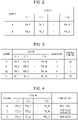
- Each row of the table corresponds to a type of illumination scene.
- the second row corresponds to an illumination scene indicated by A.
- the third row corresponds to an illumination scene indicated by B.
- Each column of the table corresponds to a type of color.
- the types of colors are indicated by the signs C_1 to C_N, where N is the number of colors that the illumination device 10 can emit.
- the second column corresponds to the color indicated by C_1.
- N is taken to be a natural number equal to or greater than 2.
- Each cell of the table indicates the power of each color used to form the illumination scene. For example, among the colors used to form the illumination scene A, the power of the color indicated by C_1 is indicated by PA_1. Among the colors used to form the illumination scene B, the power of the color indicated by C_N is indicated by PB_N.
- the control unit 40 outputs, to the illumination device 10, first information (for example, the table information illustrated in Fig. 1 or the like) indicating the power of each color.
- the illumination control unit 12 of the illumination device 10 controls the light-emitting units 16 based on the first information.
- the illumination device 10 can emit illuminating light specified by a spectrum according to the illumination scene designated by the control unit 40. It is also possible to control the power of each color to 0.
- the first information may also include information associated with time.
- the sixth column indicates the duration of the control based on each illumination scene.
- the seventh column indicates the order in which the control based on each illumination scene is executed.
- the order in which the control is executed is also referred to as the control order.
- the illumination control unit 12 initially starts the control based on the illumination scene B1 for which the control order cell is blank (-), and continues the control for 12 hours. Following the control based on the illumination scene B1, the illumination control unit 12 starts the control based on the illumination scene A for which the control order cell contains B1, and continues the control for three hours. Following the control based on the illumination scene A, the illumination control unit 12 starts the control based on the illumination scene B2 for which the control order cell contains A, and continues the control for five hours.
- the illumination control unit 12 starts the control based on the illumination scene C for which the control order cell contains B2, and continues the control for four hours.
- the illumination device 10 can change the illuminating light over time.
- the illumination control unit 12 may start the control based on the illumination scene B1 again.
- the illumination device 10 can change the illuminating light cyclically.
- the information indicating the order of control included in the first information is also referred to as a control pattern.
- the power of each color in the illumination scene B1 and the power of each color in the illumination scene B2 are set to the same value.
- a configuration may be expressed in which a period for executing control based on the same illumination scene is included twice in a single control pattern.
- the number of types of illumination scenes included in the first information may be increased to match to the number of times the illumination scene is changed in the control pattern.
- the expression of the order of the illumination scenes is not limited to the expression illustrated by way of example in Fig. 3 .
- the order of the illumination scenes may also be indicated by a ranking, for example.
- the sixth column indicates the time of day of the control based on each illumination scene.
- the illumination control unit 12 executes the control based on the illumination scene A.
- the illumination control unit 12 executes the control based on the illumination scene B.
- the illumination control unit 12 executes the control based on the illumination scene C.
- the illumination control unit 12 executes the control based on the illumination scene B.
- the illumination device 10 can change the illuminating light over time.
- two times of day are associated as the times of day for executing the control based on the illumination scene B.
- the rows indicating the control based on the illumination scene B are decreased to one row compared to Fig. 3 .
- the data size of the first information may be reduced.
- the first information may also include an illumination scene in which the power of all colors is 0, and thereby indicate a state in which illuminating light is not to be emitted.
- the illumination control unit 12 controls the light-emitting units 16 such that illuminating light is not emitted.
- the first information may indicate that illuminating light is not to be emitted at that time of day.
- the first information may indicate that illuminating light is not to be emitted without including an illumination scene in which the power of all colors is 0.
- the data size of the first information may be reduced.
- the terminal device 20 is configured to acquire information of at least one of information related to the user 2 or information related to the illuminated space 50.
- the information of at least one of information related to the user 2 or information related to the illuminated space 50 is also referred to as second information.
- the terminal device 20 outputs the second information to the control unit 40.
- the control unit 40 acquires the second information from the terminal device 20.
- the control unit 40 acquires the first information associated with the second information from the storage unit 32.
- the storage unit 32 is assumed to store the first information and the second information in association with each other.
- the control unit 40 outputs the first information acquired from the storage unit 32 to the illumination device 10.
- the illumination device 10 controls the light-emitting units 16 based on the first information, and controls the power of each color.
- the illumination device 10 can control the spectrum that specifies the illuminating light to be a spectrum based on information related to the user 2 or information related to the illuminated space 50, or in other words, the second information. As a result, the illumination device 10 can emit illuminating light suited to the user 2 present in the illuminated space 50.
- the second information may include information inputted by the user 2.
- the terminal device 20 may present a survey to the user 2 and accept a response inputted by the user 2 through the input unit 26.
- the survey may include, for example, questions related to the lifestyle of the user 2, such as when the user 2 sleeps, the content or timing of meals, and whether the user 2 drinks alcohol.
- the survey may also include questions related to symptoms the user 2 is aware of, such as areas of the body where the user 2 feels pain or how the user 2 feels. More specifically, a plurality of items are displayed on the terminal device 20, such as a mobile phone, for example, and by selecting any of the items, the spectrum is controlled based on optimal first information with respect to the selected item (second information).
- the second information may also include biological information about the user 2.
- the biological information about the user 2 may include, in relation to the user 2, heart rate, blood pressure, a sweating state or blood flow volume, an autonomic index, an activity level, and a period of no physical activity, as well as hormonal indicators such as stress.
- the biological information is not limited to the above and may also include various other information.
- the second information may include environmental information about the illuminated space 50 where the user 2 is present.
- the environmental information about the illuminated space 50 may include, for example, the temperature or humidity, the amount of sunlight incident from the outside, or the carbon dioxide concentration of the illuminated space 50.
- the environmental information may also include the daylight hours, for example. Consequently, for example, in the winter, the illuminance or blue light power may be raised in the morning. In the summer, the illuminance or blue light power may be lowered in the evening. In this way, the illuminance or blue light power can also be adjusted to match the daylight hours.
- the environmental information is not limited to the above and may also include various other information.
- the second information may also include information for estimating the physical state of the user 2.
- the control unit 40 may estimate the physical state of the user 2, based on information inputted by the user 2, biological information about the user 2, or environmental information about the illuminated space 50.
- the physical state of the user 2 may include a state indicating that the user 2 is afflicted with a predetermined disease or shows signs of a predetermined disease.
- the predetermined disease may include any of various types of diseases, such as a sleep disorder, dementia, depression, or diabetes, for example.
- the physical state of the user 2 may also include an obesity index of the user 2.
- the physical state of the user 2 may include states such as one indicating that the user 2 feels tense, the user 2 is concentrating, or the user 2 feels stressed.
- the physical state of the user 2 may include states such as one indicating that the user 2 feels sleepy, the user 2 is inattentive, or the user 2 is relaxed.
- the second information may include information indicating present or future behavioral information about the user 2.
- the control unit 40 may specify behavioral information about the user 2, based on information inputted by the user 2.
- the control unit 40 may also estimate behavioral information about the user 2, based on information inputted by the user 2, biological information about the user 2, or environmental information about the illuminated space 50.
- the information indicating behavioral information about the user 2 may also include information indicating whether the user 2 is performing a simple task or information indicating that the user 2 is performing a creative task.
- the information indicating behavioral information about the user 2 may also include information indicating whether the user 2 is performing a creative task or information indicating that the user 2 is performing a task that requires concentration.
- the second information may include information indicating emotional information about the user 2.
- the control unit 40 may specify emotional information about the user 2 based on information inputted by the user 2.
- Information indicating emotional information about the user 2 may include how good of a mood the user 2 is in, what colors the user 2 likes (such as warm colors or cool colors), and the like.
- the control unit 40 acquires, based on the second information, the first information.
- the control unit 40 may acquire the first information associated with the second information from the storage unit 32.
- the control unit 40 may also transmit the second information to the server 30 and acquire first information generated based on the second information in the server 30.
- the server 30 receives the second information from the control unit 40, generates the first information based on the second information, and transmits the first information to the control unit 40.
- the storage unit 32 stores in advance a table associating the first information and the second information.
- the server 30 may generate the first information, based on the second information and the table.
- the table stored in advance in the storage unit 32 may be prepared by an administrator of the spectrum control system 1.
- the server 30 accepts a registration of the first information by the administrator.
- the administrator associates spectra with states of the user 2 such that the illuminating light will induce an effect according to the state of the user 2.
- the administrator may be considered to be the subject who provides the first information.
- the administrator may register the first information by associating the second information corresponding to the case of the user 2 being afflicted with a predetermined disease with the first information indicating a spectrum that specifies illuminating light effective for treating the predetermined disease.
- the administrator may also register the first information only if there exists evidence proving a causal relationship between the illumination and an effect of treating the predetermined disease.
- the evidence may be issued by a qualified person such as a physician, for example.
- the first information may be considered to be authenticated in advance by the providing subject.
- the administrator may register the first information by associating the second information corresponding to the case of the user 2 being in a predetermined state with the first information indicating a spectrum that specifies illuminating light effective for getting out of the predetermined state.
- the predetermined state may include a state in which the user 2 feels sleepy or the concentration of the user 2 is lowered, for example.
- the administrator may also register the first information only if there exists evidence proving a causal relationship between the illumination and an effect of getting out of the predetermined state.
- the administrator may register the first information by associating the second information corresponding to the case where the user 2 needs to be in a predetermined state with the first information indicating a spectrum that specifies illuminating light effective for getting into the predetermined state.
- the predetermined state may include a state in which the user 2 can concentrate, for example.
- the predetermined state may also include a state in which the user 2 maintains a high level of concentration while remaining relaxed, also referred to as a flow state.
- the administrator may also register the first information only if there exists evidence proving a causal relationship between the illumination and an effect of getting into the predetermined state.
- the spectrum control system 1 and terminal device 20 can illuminate the illuminated space 50 where the user 2 is present with illuminating light suited to the user 2.
- the spectrum control system 1 may execute a spectrum control method including the procedure of the flowchart illustrated by way of example in Fig. 5 .
- the spectrum control method may also be achieved as a spectrum control program to be executed by a processor.
- the storage unit 32 is assumed to be included in the server 30.
- the control unit 40 acquires the second information (step S1).
- the control unit 40 may acquire the second information from the terminal device 20.
- the terminal device 20 may accept the input of the second information from the user 2 through the input unit 26. If the input unit 26 includes a sensor, the terminal device 20 may acquire, as the second information, information related to the user 2 detected by the sensor.
- the terminal device 20 outputs the acquired second information to the control unit 40.
- the server 30 accepts the registration of the first information (step S11).
- the server 30 registers the first information by causing the storage unit 32 to store the first information and the second information in association with each other.
- the server 30 may cause the storage unit 32 to store the first information indicating a spectrum suited to the physical state of the user 2 in association with the second information corresponding to the physical state of the user 2.
- the server 30 may cause the storage unit 32 to store the first information indicating a spectrum suited to the environment of the illuminated space 50 in association with the second information corresponding to the environment of the illuminated space 50.
- the control unit 40 transmits the second information to the server 30 (step S2).
- the server 30 receives the second information (step S12).
- the server 30 acquires, based on the second information, the first information (step S13).
- the server 30 may extract the first information associated with the acquired second information from among the first information that is registered by being stored in advance in the storage unit 32.
- the server 30 transmits the first information to the control unit 40 (step S14). After the procedure in step S14, the server 30 ends the execution of the flowchart of Fig. 5 .
- the control unit 40 receives the first information (step S3).
- the control unit 40 outputs the first information to the illumination device 10 (step S15). After the procedure in step S4, the control unit 40 ends the execution of the flowchart of Fig. 5 .
- the control unit 40 may execute a spectrum control method including the procedure of the flowchart illustrated by way of example in Fig. 6 .
- the spectrum control method may also be achieved as a spectrum control program to be executed by a processor.
- the storage unit 32 may be included in at least one of the control unit 40, the server 30, the terminal device 20, or the illumination device 10.
- the control unit 40 accepts the registration of the first information (step S21).
- the control unit 40 may register the first information in the storage unit 32 by executing a procedure that is the same as or similar to the procedure in step S11 of Fig. 5 executed by the server 30.
- the control unit 40 acquires the second information (step S22).
- the control unit 40 may executes a procedure that is the same as or similar to step S1 of Fig. 5 .
- the control unit 40 acquires, based on the second information, the first information (step S23).
- the control unit 40 may acquire the first information by executing a procedure that is the same as or similar to the procedure in step S13 of Fig. 5 executed by the server 30.
- the control unit 40 outputs the first information to the illumination device 10 (step S24). After the procedure in step S24, the control unit 40 ends the execution of the flowchart of Fig. 6 .
- the illuminated space 50 where the user 2 is present may be illuminated by illuminating light suited to the user 2.
- the illumination device 10 may also be configured to control the illuminance as a parameter of the illuminating light.
- the illumination device 10 may also control the illuminance of visible light included in the illuminating light.
- the illumination device 10 may also control the spectrum to keep the illuminance constant. By controlling the spectrum with the illuminance as a parameter, the illumination device 10 can avoid discomforting the user 2 as much.
- the illumination device 10 may also be configured to control the color temperature as a parameter of the illuminating light.
- the color temperature is a parameter associated with the temperature of a black body.
- T the color temperature of the spectrum of light radiated by the black body is expressed by T.
- the color temperature of the spectrum of light radiated by a black body at 5000 K (Kelvin) is expressed as 5000 K.
- the color of light having a color temperature of approximately 4000 K to 5000 K is also referred to as white.
- the color of the light may include more of a red component. In other words, light having a low color temperature appears reddish.
- the color of the light may include more of a blue component. In other words, light having a high color temperature appears bluish.
- a spectrum approximating the spectrum of light radiated by a black body may be expressed by the color temperature.
- a predetermined spectrum approximates the spectrum of light radiated by a black body having a color temperature expressed by T
- the color temperature of the predetermined spectrum is assumed to be expressed by T.
- a determination of whether two spectra of light exist in an approximate relationship with each other may be made according to various conditions.
- the conditions under which two spectra of light exist in an approximate relationship with each other may include, for example, the condition that when the relative intensities of each wavelength are compared between the two spectra of light, the difference for each wavelength is within a predetermined range.
- the conditions under which two spectra of light exist in an approximate relationship with each other may also include, for example, the condition that the difference between peak wavelengths respectively included in the two spectra of light is within a predetermined range.
- the conditions under which two spectra of light exist in an approximate relationship are not limited to the above and may also include a variety of conditions.
- the spectrum of sunlight around noon may be approximated by the spectrum of light radiated by a black body at approximately 5000 K.
- the color temperature of sunlight around noon is assumed to be expressed as approximately 5000 K.
- the color of light expressed by a color temperature of approximately 5000 K is also referred to as neutral white.
- the color of light expressed by a color temperature of approximately 6500 K, higher than the color temperature of neutral white is also referred to as daylight color.
- Daylight color includes more blue light components or components having wavelengths shorter than blue light compared to neutral white, and appears bluish. Conversely, neutral white appears to be a color closer to white than daylight color.
- the illumination device 10 may also control the spectrum to raise the color temperature of the illuminating light.
- the illumination device 10 may also control the spectrum to lower the color temperature of the illuminating light.
- the illumination device 10 may induce the state of the user 2 to get into a predetermined state or get out of a predetermined state.
- the illumination device 10 may also control the spectrum of the illuminating light to keep the color temperature constant as a parameter of the illuminating light. With this configuration, the user 2 is not discomforted as much.
- biological information about the user 2 and the first information of the illumination device 10 may be stored in a coordinated manner in the storage unit 32.
- a usage record of the first information of the illumination device 10 and the biological information when the first information (spectrum) is used may be stored in association with each other.
- the usage record of the first information may not only include spectral information about the plurality of light-emitting units 16, but also the use times of specific spectra and the like.
- the spectrum control system 1 additionally includes an AI
- the usage record of the first information and the biological information can be used as training data to train the AI, and thereby control the illumination device 10 based on more optimal first information.
- environmental information about the illuminated space 50 and the first information of the illumination device 10 may be stored in a coordinated manner in the storage unit 32.
- a usage record of the first information of the illumination device 10 and the environmental information when the first information (spectrum) is used may be stored in association with each other.
- the usage record of the first information may not only include spectral information about the plurality of light-emitting units 16, but also the use times of specific spectra and the like.
- the spectrum control system 1 additionally includes an AI
- the usage record of the first information and the environmental information can be used as training data to train the AI, and thereby control the illumination device 10 based on more optimal first information.
- the spectrum control system 1 may also train the AI with the usage record of the first information, the biological information, and the environmental information.
- control unit 40 the illumination control unit 12, and the terminal control unit 22 are described as respectively separate configurations, but as an example, the control unit 40 may also be disposed in the illumination device 10 and additionally include the functions of the illumination control unit 12. Moreover, the control unit 40 may also be disposed in the terminal device 20 and additionally include the functions of the terminal control unit 22.
- control order or durations are predetermined as fixed values
- the control order or the durations of the first information may also be variable values that change depending on the season, for example.
- the daylight hours or the like may be acquired as the second information, and the duration of each spectrum may also be controlled by the control unit 40 such that the human circadian rhythm approaches a constant in conjunction with the length of the daylight hours.
- the storage unit 32, terminal device 20, or the like may be connected to an external server or the like and acquire external information such as a weather forecast.
- qualifiers such as “first” and “second” are identifiers for distinguishing configurations.
- the numerals denoting the configurations distinguished by qualifiers such as “first” and “second” in the present disclosure can be exchanged.
- the first information can exchange the identifiers “first” and “second” with the second information.
- the identifiers are exchanged at the same time.
- the configurations are still distinguished after the exchange of the identifiers.
- the identifiers may be removed.
- the configurations with the identifiers removed therefrom are distinguished by signs.
- the description of identifiers such as “first” and “second” in the present disclosure shall not be used as a basis for interpreting the order of the configurations or the existence of identifiers with smaller numbers.
Landscapes
- Health & Medical Sciences (AREA)
- Biomedical Technology (AREA)
- Engineering & Computer Science (AREA)
- Psychiatry (AREA)
- Nuclear Medicine, Radiotherapy & Molecular Imaging (AREA)
- Psychology (AREA)
- Social Psychology (AREA)
- Developmental Disabilities (AREA)
- Child & Adolescent Psychology (AREA)
- Pathology (AREA)
- Hospice & Palliative Care (AREA)
- Radiology & Medical Imaging (AREA)
- Life Sciences & Earth Sciences (AREA)
- Animal Behavior & Ethology (AREA)
- General Health & Medical Sciences (AREA)
- Public Health (AREA)
- Veterinary Medicine (AREA)
- Circuit Arrangement For Electric Light Sources In General (AREA)
Applications Claiming Priority (2)
| Application Number | Priority Date | Filing Date | Title |
|---|---|---|---|
| JP2019239384 | 2019-12-27 | ||
| PCT/JP2020/048042 WO2021132282A1 (fr) | 2019-12-27 | 2020-12-22 | Dispositif de commande de spectre, programme de commande de spectre et procédé de commande de spectre |
Publications (2)
| Publication Number | Publication Date |
|---|---|
| EP4084585A1 true EP4084585A1 (fr) | 2022-11-02 |
| EP4084585A4 EP4084585A4 (fr) | 2024-01-17 |
Family
ID=76575954
Family Applications (1)
| Application Number | Title | Priority Date | Filing Date |
|---|---|---|---|
| EP20908023.3A Pending EP4084585A4 (fr) | 2019-12-27 | 2020-12-22 | Dispositif de commande de spectre, programme de commande de spectre et procédé de commande de spectre |
Country Status (3)
| Country | Link |
|---|---|
| EP (1) | EP4084585A4 (fr) |
| JP (2) | JP7569333B2 (fr) |
| WO (1) | WO2021132282A1 (fr) |
Family Cites Families (13)
| Publication number | Priority date | Publication date | Assignee | Title |
|---|---|---|---|---|
| JPH06196269A (ja) * | 1992-12-25 | 1994-07-15 | Matsushita Electric Ind Co Ltd | 照明装置 |
| JP2006021568A (ja) * | 2004-07-06 | 2006-01-26 | Toyota Motor Corp | 光源装置 |
| CN102273323B (zh) * | 2009-01-07 | 2014-09-10 | 皇家飞利浦电子股份有限公司 | 智能的可控照明网络及用于其的大纲 |
| JP6617521B2 (ja) * | 2015-11-09 | 2019-12-11 | パナソニックIpマネジメント株式会社 | 照明制御装置及び照明システム |
| JP6490023B2 (ja) * | 2016-03-30 | 2019-03-27 | 富士フイルム株式会社 | 生体情報通信装置、サーバ、生体情報通信方法及び生体情報通信プログラム |
| JP2017213984A (ja) * | 2016-05-31 | 2017-12-07 | 株式会社東芝 | 自律制御システム、サーバ装置及び自律制御方法 |
| WO2018039433A1 (fr) * | 2016-08-24 | 2018-03-01 | Delos Living Llc | Systèmes, procédés et articles permettant d'accroître le bien-être associé à des environnements habitables |
| JP7009068B2 (ja) * | 2017-03-01 | 2022-01-25 | 任天堂株式会社 | 照明装置、照明器具及び電子機器 |
| JP6848687B2 (ja) * | 2017-05-26 | 2021-03-24 | トヨタ紡織株式会社 | 乗物用照明装置 |
| JP2019114498A (ja) * | 2017-12-26 | 2019-07-11 | 興和株式会社 | 照明装置、照明装置の制御方法、およびデータ構造 |
| JP2019194983A (ja) * | 2018-04-25 | 2019-11-07 | 京セラ株式会社 | 照明装置、照明モジュールおよび照明システム |
| JP7045674B2 (ja) * | 2018-06-19 | 2022-04-01 | イリスコミュニケーション株式会社 | 照明光調整システム、照明光調整方法、及び、照明光調整プログラム |
| US11012659B2 (en) * | 2018-08-07 | 2021-05-18 | International Business Machines Corporation | Intelligent illumination and sound control in an internet of things (IoT) computing environment |
-
2020
- 2020-12-22 JP JP2021567501A patent/JP7569333B2/ja active Active
- 2020-12-22 EP EP20908023.3A patent/EP4084585A4/fr active Pending
- 2020-12-22 WO PCT/JP2020/048042 patent/WO2021132282A1/fr not_active Ceased
-
2024
- 2024-06-05 JP JP2024091742A patent/JP7789126B2/ja active Active
Also Published As
| Publication number | Publication date |
|---|---|
| WO2021132282A1 (fr) | 2021-07-01 |
| JP7789126B2 (ja) | 2025-12-19 |
| JPWO2021132282A1 (fr) | 2021-07-01 |
| JP2024107143A (ja) | 2024-08-08 |
| JP7569333B2 (ja) | 2024-10-17 |
| EP4084585A4 (fr) | 2024-01-17 |
Similar Documents
| Publication | Publication Date | Title |
|---|---|---|
| Andersen et al. | A framework for predicting the non-visual effects of daylight–Part I: photobiology-based model | |
| Zhu et al. | Effects of illuminance and correlated color temperature on daytime cognitive performance, subjective mood, and alertness in healthy adults | |
| Figueiro et al. | Circadian-effective light and its impact on alertness in office workers | |
| Bellia et al. | A proposal for a simplified model to evaluate the circadian effects of light sources | |
| Spitschan et al. | Verification, analytical validation and clinical validation (V3) of wearable dosimeters and light loggers | |
| Figueiro et al. | Comparisons of three practical field devices used to measure personal light exposures and activity levels | |
| Ámundadóttir et al. | Unified framework to evaluate non-visual spectral effectiveness of light for human health | |
| Figueiro et al. | Office lighting and personal light exposures in two seasons: Impact on sleep and mood | |
| Rea et al. | Circadian light | |
| Figueiro et al. | Designing with circadian stimulus | |
| Kim et al. | Development of a natural light reproduction system for maintaining the circadian rhythm | |
| Ye et al. | The effect of dynamic correlated colour temperature changes on alertness and performance | |
| Rea et al. | Scene brightness of illuminated interiors | |
| Chen et al. | Museum lighting environment: Designing a perception zone map and emotional response models | |
| Lin et al. | Effect of intensity of short-wavelength light on electroencephalogram and subjective alertness | |
| David et al. | Methods for assessing quantity and quality of illumination | |
| Spitschan et al. | Human-centric lighting research and policy in the melanopsin age | |
| CN115484713A (zh) | 一种具有多光谱节律照明情境的照光系统 | |
| Rea et al. | A new rationale for setting light source luminous efficacy requirements | |
| Babilon et al. | A field test of a simplified method of estimating circadian stimulus | |
| Tang et al. | Influence of full-spectrum lighting on blood pressure, heart rate and visual comfort on young adults | |
| Durmus et al. | Research note: Red light to mitigate light pollution: Is it possible to balance functionality and ecological impact? | |
| EP4084585A1 (fr) | Dispositif de commande de spectre, programme de commande de spectre et procédé de commande de spectre | |
| CN119498024A (zh) | 对照明现场环境进行环境光监测的智能人因照明系统 | |
| Su et al. | The benefit of Daylight-Simulcasted Dynamic Lighting: An experiment isolating simultaneousness from dynamicity |
Legal Events
| Date | Code | Title | Description |
|---|---|---|---|
| STAA | Information on the status of an ep patent application or granted ep patent |
Free format text: STATUS: THE INTERNATIONAL PUBLICATION HAS BEEN MADE |
|
| PUAI | Public reference made under article 153(3) epc to a published international application that has entered the european phase |
Free format text: ORIGINAL CODE: 0009012 |
|
| STAA | Information on the status of an ep patent application or granted ep patent |
Free format text: STATUS: REQUEST FOR EXAMINATION WAS MADE |
|
| 17P | Request for examination filed |
Effective date: 20220623 |
|
| AK | Designated contracting states |
Kind code of ref document: A1 Designated state(s): AL AT BE BG CH CY CZ DE DK EE ES FI FR GB GR HR HU IE IS IT LI LT LU LV MC MK MT NL NO PL PT RO RS SE SI SK SM TR |
|
| DAV | Request for validation of the european patent (deleted) | ||
| DAX | Request for extension of the european patent (deleted) | ||
| P01 | Opt-out of the competence of the unified patent court (upc) registered |
Effective date: 20230508 |
|
| REG | Reference to a national code |
Ref country code: DE Ref legal event code: R079 Free format text: PREVIOUS MAIN CLASS: H05B0047115000 Ipc: H05B0047175000 |
|
| A4 | Supplementary search report drawn up and despatched |
Effective date: 20231215 |
|
| RIC1 | Information provided on ipc code assigned before grant |
Ipc: A61N 5/06 20060101ALN20231211BHEP Ipc: H05B 47/115 20200101ALI20231211BHEP Ipc: H05B 47/105 20200101ALI20231211BHEP Ipc: H05B 47/175 20200101AFI20231211BHEP |
|
| STAA | Information on the status of an ep patent application or granted ep patent |
Free format text: STATUS: EXAMINATION IS IN PROGRESS |
|
| 17Q | First examination report despatched |
Effective date: 20250411 |