EP4085708B1 - Erhöhen von übertragungen von sondierungsreferenzsignalen in drahtlosen kommunikationssystemen - Google Patents
Erhöhen von übertragungen von sondierungsreferenzsignalen in drahtlosen kommunikationssystemen Download PDFInfo
- Publication number
- EP4085708B1 EP4085708B1 EP20887357.0A EP20887357A EP4085708B1 EP 4085708 B1 EP4085708 B1 EP 4085708B1 EP 20887357 A EP20887357 A EP 20887357A EP 4085708 B1 EP4085708 B1 EP 4085708B1
- Authority
- EP
- European Patent Office
- Prior art keywords
- srs
- symbols
- resource
- orthogonal code
- time
- Prior art date
- Legal status (The legal status is an assumption and is not a legal conclusion. Google has not performed a legal analysis and makes no representation as to the accuracy of the status listed.)
- Active
Links
Images


Classifications
-
- H—ELECTRICITY
- H04—ELECTRIC COMMUNICATION TECHNIQUE
- H04L—TRANSMISSION OF DIGITAL INFORMATION, e.g. TELEGRAPHIC COMMUNICATION
- H04L5/00—Arrangements affording multiple use of the transmission path
- H04L5/003—Arrangements for allocating sub-channels of the transmission path
- H04L5/0048—Allocation of pilot signals, i.e. of signals known to the receiver
-
- H—ELECTRICITY
- H04—ELECTRIC COMMUNICATION TECHNIQUE
- H04W—WIRELESS COMMUNICATION NETWORKS
- H04W72/00—Local resource management
- H04W72/12—Wireless traffic scheduling
- H04W72/1263—Mapping of traffic onto schedule, e.g. scheduled allocation or multiplexing of flows
- H04W72/1268—Mapping of traffic onto schedule, e.g. scheduled allocation or multiplexing of flows of uplink data flows
-
- H—ELECTRICITY
- H04—ELECTRIC COMMUNICATION TECHNIQUE
- H04J—MULTIPLEX COMMUNICATION
- H04J13/00—Code division multiplex systems
- H04J13/16—Code allocation
- H04J13/18—Allocation of orthogonal codes
-
- H—ELECTRICITY
- H04—ELECTRIC COMMUNICATION TECHNIQUE
- H04L—TRANSMISSION OF DIGITAL INFORMATION, e.g. TELEGRAPHIC COMMUNICATION
- H04L1/00—Arrangements for detecting or preventing errors in the information received
- H04L1/08—Arrangements for detecting or preventing errors in the information received by repeating transmission, e.g. Verdan system
-
- H—ELECTRICITY
- H04—ELECTRIC COMMUNICATION TECHNIQUE
- H04L—TRANSMISSION OF DIGITAL INFORMATION, e.g. TELEGRAPHIC COMMUNICATION
- H04L5/00—Arrangements affording multiple use of the transmission path
- H04L5/0001—Arrangements for dividing the transmission path
- H04L5/0014—Three-dimensional division
- H04L5/0016—Time-frequency-code
-
- H—ELECTRICITY
- H04—ELECTRIC COMMUNICATION TECHNIQUE
- H04L—TRANSMISSION OF DIGITAL INFORMATION, e.g. TELEGRAPHIC COMMUNICATION
- H04L5/00—Arrangements affording multiple use of the transmission path
- H04L5/003—Arrangements for allocating sub-channels of the transmission path
- H04L5/0048—Allocation of pilot signals, i.e. of signals known to the receiver
- H04L5/0051—Allocation of pilot signals, i.e. of signals known to the receiver of dedicated pilots, i.e. pilots destined for a single user or terminal
-
- H—ELECTRICITY
- H04—ELECTRIC COMMUNICATION TECHNIQUE
- H04L—TRANSMISSION OF DIGITAL INFORMATION, e.g. TELEGRAPHIC COMMUNICATION
- H04L5/00—Arrangements affording multiple use of the transmission path
- H04L5/003—Arrangements for allocating sub-channels of the transmission path
- H04L5/0053—Allocation of signalling, i.e. of overhead other than pilot signals
-
- H—ELECTRICITY
- H04—ELECTRIC COMMUNICATION TECHNIQUE
- H04L—TRANSMISSION OF DIGITAL INFORMATION, e.g. TELEGRAPHIC COMMUNICATION
- H04L5/00—Arrangements affording multiple use of the transmission path
- H04L5/0091—Signalling for the administration of the divided path, e.g. signalling of configuration information
- H04L5/0094—Indication of how sub-channels of the path are allocated
-
- H—ELECTRICITY
- H04—ELECTRIC COMMUNICATION TECHNIQUE
- H04W—WIRELESS COMMUNICATION NETWORKS
- H04W72/00—Local resource management
- H04W72/20—Control channels or signalling for resource management
- H04W72/23—Control channels or signalling for resource management in the downlink direction of a wireless link, i.e. towards a terminal
- H04W72/231—Control channels or signalling for resource management in the downlink direction of a wireless link, i.e. towards a terminal the control data signalling from the layers above the physical layer, e.g. RRC or MAC-CE signalling
-
- H—ELECTRICITY
- H04—ELECTRIC COMMUNICATION TECHNIQUE
- H04W—WIRELESS COMMUNICATION NETWORKS
- H04W80/00—Wireless network protocols or protocol adaptations to wireless operation
- H04W80/02—Data link layer protocols
-
- Y—GENERAL TAGGING OF NEW TECHNOLOGICAL DEVELOPMENTS; GENERAL TAGGING OF CROSS-SECTIONAL TECHNOLOGIES SPANNING OVER SEVERAL SECTIONS OF THE IPC; TECHNICAL SUBJECTS COVERED BY FORMER USPC CROSS-REFERENCE ART COLLECTIONS [XRACs] AND DIGESTS
- Y02—TECHNOLOGIES OR APPLICATIONS FOR MITIGATION OR ADAPTATION AGAINST CLIMATE CHANGE
- Y02D—CLIMATE CHANGE MITIGATION TECHNOLOGIES IN INFORMATION AND COMMUNICATION TECHNOLOGIES [ICT], I.E. INFORMATION AND COMMUNICATION TECHNOLOGIES AIMING AT THE REDUCTION OF THEIR OWN ENERGY USE
- Y02D30/00—Reducing energy consumption in communication networks
- Y02D30/70—Reducing energy consumption in communication networks in wireless communication networks
Definitions
- This document is directed generally to wireless communications.
- Wireless communication technologies are moving the world toward an increasingly connected and networked society.
- the rapid growth of wireless communications and advances in technology has led to greater demand for capacity and connectivity.
- Other aspects, such as energy consumption, device cost, spectral efficiency, and latency are also important to meeting the needs of various communication scenarios.
- next generation systems and wireless communication techniques will provide support for an increased number of users and devices, as well as support for higher data rates.
- US 2017/048717 A1 relates to a 5G or pre-5G communication system for supporting a data rate higher than that of the 4G system.
- 3GPP R1-154303 relates to a SRS enhancement schemes for capacity and channel estimation accuracy.
- This document relates to techniques for increasing transmission capacity of sounding reference signals (SRS) in mobile communication technology, including 5th Generation (5G) and New Radio (NR) communication systems.
- SRS sounding reference signals
- uplink reference signals that provide information about channel quality
- DMRS demodulation reference signal
- SRS sounding reference signal
- a network node e.g., base station or gNB
- the SRS is an uplink reference signal which is transmitted by the wireless device to the network node, and gives information about the combined effect of multipath fading, scattering, Doppler and power loss of transmitted signal.
- the network node is able to estimate the channel quality using this reference signal and manages further resource scheduling, beam management and power control of signal.
- the SRS provides information to network node about the channel over the entire bandwidth of interest and using this information, the network node can make decisions regarding resource allocation based on improved channel estimates compared to other portions of the bandwidth.
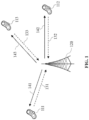
- FIG. 1 shows an example of a wireless communication system (e.g., an LTE, 5G or New Radio (NR) cellular network) that includes a BS 120 and one or more user equipment (UE) 111, 112 and 113.
- the downlink transmissions (141, 142, 143) include a configuration for the SRS.
- the UEs transmit (131, 132, 133) the SRS to the BS 120.
- the UE may be, for example, a smartphone, a tablet, a mobile computer, a machine to machine (M2M) device, a terminal, a mobile device, an Internet of Things (IoT) device, and so on.
- M2M machine to machine
- IoT Internet of Things
- the present document uses examples from the 3GPP New Radio (NR) network architecture and 5G protocol only to facilitate understanding and the disclosed techniques and embodiments may be practiced in other wireless systems that use different communication protocols than the 3GPP protocols.
- NR 3GPP New Radio
- uplink SRS in NR supports inter-symbol repetition.
- Each SRS resource can be configured with N ⁇ 4 SRS time-domain OFDM symbols.
- the inter-symbol repetition factor R ⁇ N which means that every R adjacent OFDM symbols are transmitted repeatedly over the same time-frequency domain resources.
- R the number of symbols transmitted repeatedly over the same time-frequency domain resources.
- this capacity may not be sufficient for the increasing demand for capacity and connectivity.
- Embodiments of the disclosed technology include systems and methods to expand the capacity of SRS.
- Section headings are used in the present document for ease of understanding and do not limit the embodiments and techniques to the corresponding sections. As such, embodiments from one section can be combined with embodiments from other sections.
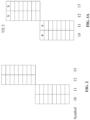
- the number of SRS symbols available in a slot can be expanded from 6 to 14, so that any symbol can be a potential position for the SRS resource.
- orthogonal code sequences can be introduced among adjacent SRS symbols.
- orthogonal code sequences generally refer to time-domain orthogonal cover code (TD-OCC) orthogonal sequences, which are also referred to as orthogonal masks. This terminology extended to other orthogonal sequences, e.g., Discrete Fourier Transform (DFT) orthogonal sequences.
- TD-OCC time-domain orthogonal cover code
- DFT Discrete Fourier Transform
- the length L of each orthogonal sequence refers to the number of values contained in the orthogonal sequence.
- a network node e.g., a base station or gNB
- the high-level signaling may include Radio Resource Control (RRC) signaling or Medium Access Control (MAC) Control Element (CE) signaling.
- RRC Radio Resource Control
- MAC Medium Access Control
- CE Control Element
- the time-domain orthogonal code sequence used by SRS may be related to the time-domain symbol index.
- the time-domain orthogonal code sequence used by the SRS may be related to the number of times the SRS is transmitted. For example, when the SRS cycle is 10 slots, and the SRS is transmitted on slots 0, 10, 20, 30, 40, ... (corresponding to the transmission time index 0, 1, 2, 3, 4, ...), then the time used by the time-domain orthogonal code sequence is related to the number of SRS transmissions. For example, the TD-OCC length is 4, and with reference to Table 2, the TD-OCC codes used on slots 0, 10, 20, 30, 40, ... are G0, G1, G2, G3, G0, ....
- the SRS sequence changes with the time-domain OFDM symbol.
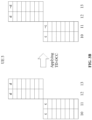
- the TD-OCC code sequence of the new users needs to be the same as that of UE 1.
- the sequence of UE 0 also needs to change as the symbol changes, and it needs to have the same frequency-domain start position as UE 1, and the bandwidth and sequence length also need to be the same.
- the SRS basic sequences of UE 0 (before using the TD- OCC) and UE 1 (without the application of the TD- OCC) will be different, and the TD-OCC cannot be used to multiplex UE 0 and UE 1.
- two new users such as UE 2 and UE 3 can be multiplexed, even if their SRS frequency-domain starting positions or bandwidths are different. Even if the basic sequences are different, as long as UE 2 and UE 3 include an overlapping symbol and the sequences do not change with time, then they can still be used to perform time-domain code division multiplexing.
- the base station can configure a user through high-level signaling to determine whether the basic sequence of the R' SRS time-domain symbols is repeated.
- the basic sequence on symbols ⁇ 10, 11 ⁇ (before using TD-OCC as shown on the lefthand side of FIG. 3B ) is the same.
- RRC signaling is used to configure the R' symbols and the SRS time-domain sequence is changed, then the resulting effect is the same as in existing implementations.
- the base station can configure a user with high-level signaling to inform the UE whether the basic sequence has a repetitive relationship. That is, an SRS resource includes B symbol groups, and each symbol group includes R' consecutive OFDM symbols, where B ⁇ 1.
- the high-level signaling is used for B symbol groups, and indicates whether the basic sequence of the R' SRS symbols in each symbol group (the sequence before the time-domain orthogonal code is used) is the same. Even if it is a resource, on multiple SRS symbol groups in a slot, the indications used to inform repetitive relationship in different groups can be different.
- the base station can use 2-bits of RRC signaling to indicate that the basic sequences on symbols 10 and 11 are the same, whereas the basic sequences on symbols 12 and 13 are not duplicated.
- the relationship between the application of the time-domain orthogonal sequence code and whether the basic sequence is repeated or not can be established. This approach advantageously saves signaling overhead.
- the basic sequence may be repeated within the R' symbols. In other embodiments, if the time-domain orthogonal sequence does not change with the change of the slot index, or the symbol or symbol group index, or the sequence number of the transmission, the basic sequence is not repeated.
- the SRS and physical uplink control channel (PDCCH) signals collide when the SRS and physical uplink control channel (PDCCH) signals collide, the SRS on the overlapping symbol will be dropped if the priority of the SRS is low.
- the UE will not transmit the SRS on time-domain symbols that are overlapping with the PDCCH (or other high priority signals). It is noted that the SRS is still transmitted in the non-overlapping symbols.
- PDCCH physical uplink control channel
- the time-domain orthogonal code sequences that are applied to SRS resources may be used to distinguish SRS resources of different users that may be mapped to the same time-frequency domain resources.
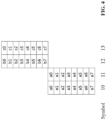
- UE 0 and UE 1 are multiplexed on the same time-frequency domain resources.
- UE 0 uses the TD-OCC code [1 1] and UE 1 uses the TD-OCC code [1 -1].
- the SRS from both UE 0 and UE 1 on symbol 13 should be dropped, but the SRS on symbol 12 should be still be transmitted.
- orthogonality from TD-OCC multiplexing is no longer maintained, and the base station cannot correctly detect SRS from either UE 0 or UE 1. In effect, the SRS may cause serious interference between UE 0 and UE 1.
- determining which SRS to drop is based on the applied or configured time-domain orthogonal code.
- the actual dropped number of SRS or the dropped SRS location are associated with the applied or configured time-domain orthogonal code.
- time-domain orthogonal codes may be used.
- time-domain orthogonal codes such as [1 j] and [1 -j], respectively, may be used.
- the SRS unit that is dropped refers to the minimum granularity of the number of dropped SRS symbols.
- determining which SRS symbols to drop is based on a higher layer configuration. That is, the SRS drop unit is configured by one or more higher layer parameters.
- determining which SRS symbols to drop may be predefined. For example, it may be predefined that the SRS drop unit is 1 if TD-OCC code is [11 1 1] or [1 1], and higher layer signaling is used to configure the value of SRS drop unit if another TD-OCC code is used.
- SRS coverage issues are also important to ensure meeting the increasing demands of capacity and connectivity. Especially for cell edge users, power is relatively limited, so coverage is relatively limited. Current implementations (e.g., NR Rel-15) support up to 4 consecutive SRS time-domain symbol repetitions, which may not be enough for some users.
- additional high-level signaling parameters are configured for one or more of the following parameters: an SRS resource, an SRS resource set, or an SRS trigger state.
- the additional high-level signaling parameters may include one or more of the following: SRS resource repetitions, T > 1, and time offsets, C > 1.
- the base station configures an inter-slot repetition factor T for each aperiodic SRS resource or SRS resource set or SRS trigger state. If the SRS resource or resource set is triggered by the base station, the UE needs to repeatedly transmit the SRS on consecutive T slots or consecutive T uplink slots or consecutive T available uplink slots. Available uplink slots refer to the slots that can transmit all symbols of the SRS resource or resource set.
- the base station configures C time offsets for each SRS resource or SRS resource set or SRS trigger state.
- the time offset refers to the symbol offset or slot offset. If the SRS resource or resource set is triggered by the base station, the UE needs to repeatedly transmit the SRS C times at time locations corresponding to the C time offsets.
- N 4
- R 2
- C 2
- the time offsets being 3 slots and 5 slots.
- the PDCCH triggering aperiodic SRS is sent on slot n
- the UE will send the SRS on slots (n + 3) and (n + 5).
- the frequency-domain resources used by SRS on slot (n + 5), the hopping pattern, the spatial relation or quasi-colocation (QCL) assume that the precoding used in this slot is the same as in slot (n + 3).
- the UE when C time offsets are configured for a periodic or semi-persistent SRS resource or resource set, the UE repeatedly transmits the SRS in C time locations based on C time offsets within one period.
- all values of C time offsets are smaller than the periodicity.
- C time offsets are configured for other signals, e.g., physical uplink control channel (PUCCH) and physical downlink control channel (PDCCH).
- PUCCH physical uplink control channel
- PDCH physical downlink control channel
- independent beams are configured for C repeated PUCCH, PDCCH or SRS transmissions, where each beam corresponds to a quasi-colocation (QCL), TCI (transmission configuration indicator) or a spatial relation configuration.
- QCL quasi-colocation
- TCI transmission configuration indicator
- FIG. 6 shows an example of a method 600 for wireless communication.
- the method 600 includes, at operation 610, transmitting, by a network node, a configuration comprising A orthogonal code sequences for a sounding reference signal (SRS) resource, each of the A orthogonal code sequences being configured for L adjacent SRS symbols within the SRS resource.
- SRS sounding reference signal
- L is a length of each of the A orthogonal code sequences
- L and A are positive integers.
- FIG. 7 shows an example of a method 700 for wireless communication.
- the method 700 includes, at operation 710, receiving, by a wireless device from a network node, a configuration comprising A orthogonal code sequences for a sounding reference signal (SRS) resource, each of the A orthogonal code sequences being configured for L adjacent SRS symbols within the SRS resource.
- SRS sounding reference signal
- L is a length of each of the A orthogonal code sequences
- L and A are positive integers.
- the method 700 includes, at operation 720, transmitting a reference signal that is generated based on the configuration.
- the A orthogonal code sequences for the SRS resource are configured by a high-level message comprising Radio Resource Control (RRC) signaling or Medium Access Control (MAC) Control Element (CE) signaling.
- RRC Radio Resource Control
- MAC Medium Access Control
- CE Control Element
- the A orthogonal code sequences applied to the SRS symbols are based on a time-varying pattern.
- the configuration further comprises B indications of whether basic SRS sequences of L, R or N SRS symbols within the SRS resource are repeated, N is a number of SRS symbols in the SRS resource, R is a repetition factor, R, N and B are positive integers, and B ⁇ A.
- the methods 600 and 700 further include the operations of determining that a plurality of physical uplink control channel (PUCCH) symbols are scheduled concurrently with a subset of the plurality of SRS symbols, and refraining, based on the orthogonal code sequences applied to the subset of the plurality of SRS symbols, from transmitting a portion of the plurality of SRS symbols.
- PUCCH physical uplink control channel
- the portion of the plurality of SRS symbols is more than the subset of the plurality of SRS symbols.
- the orthogonal code sequence is [1 -1] or [1 1 -1 -1] or [1 -1 -1 1] or [1 -1 1 -1].
- the methods 600 and 700 further include the operations of
- determining that a plurality of physical uplink control channel (PUCCH) symbols are scheduled concurrently with a subset of the plurality of SRS symbols and refraining, based on a Radio Resource Control (RRC) configuration, from transmitting a portion of the plurality of SRS symbols.
- RRC Radio Resource Control
- FIG. 8 shows an example of a method 800 for wireless communication.
- the method 800 includes, at operation 810, repeatedly transmitting, by a wireless device to a network node, a plurality of sounding reference signal (SRS) symbols at C time locations.
- SRS sounding reference signal
- information associated with the C time locations is configured for each SRS resource, SRS resource set or SRS trigger state, and C is a positive integer.
- a value c of each of the C time offsets corresponds to a c th time slot or a c th available time slot after control signaling which triggers transmission of the plurality of SRS symbols.
- each of the C time offsets comprises a symbol offset or a slot offset.
- repeatedly transmitting is performed on C consecutive slots, consecutive uplink slots or consecutive available uplink slots, and C > 1.
- Embodiments of the disclosed technology include a wireless communications apparatus comprising a processor and a memory, wherein the processor is configured to read code from the memory and implement any one of methods 600, 700, 800 or 900.
- Embodiments of the disclosed technology include a computer program product comprising a computer-readable program medium code stored thereupon, the code, when executed by a processor, causing the processor to implement any one of methods 600, 700, 800 or 900.
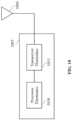
- FIG. 10 is a block diagram representation of a portion of an apparatus, in accordance with some embodiments of the presently disclosed technology.
- An apparatus 1005 such as a base station or a wireless device (or UE), can include processor electronics 1010 such as a microprocessor that implements one or more of the techniques presented in this document.
- the apparatus 1005 can include transceiver electronics 1015 to send and/or receive wireless signals over one or more communication interfaces such as antenna(s) 1020.
- the apparatus 1005 can include other communication interfaces for transmitting and receiving data.
- Apparatus 1005 can include one or more memories (not explicitly shown) configured to store information such as data and/or instructions.
- the processor electronics 1010 can include at least a portion of the transceiver electronics 1015. In some embodiments, at least some of the disclosed techniques, modules or functions are implemented using the apparatus 1005.
- a computer-readable medium may include removable and non-removable storage devices including, but not limited to, Read Only Memory (ROM), Random Access Memory (RAM), compact discs (CDs), digital versatile discs (DVD), etc. Therefore, the computer-readable media can include a non-transitory storage media.
- program modules may include routines, programs, objects, components, data structures, etc. that perform particular tasks or implement particular abstract data types.
- Computer- or processor-executable instructions, associated data structures, and program modules represent examples of program code for executing steps of the methods disclosed herein. The particular sequence of such executable instructions or associated data structures represents examples of corresponding acts for implementing the functions described in such steps or processes.
- a hardware circuit implementation can include discrete analog and/or digital components that are, for example, integrated as part of a printed circuit board.
- the disclosed components or modules can be implemented as an Application Specific Integrated Circuit (ASIC) and/or as a Field Programmable Gate Array (FPGA) device.
- ASIC Application Specific Integrated Circuit
- FPGA Field Programmable Gate Array
- DSP digital signal processor
- the various components or sub-components within each module may be implemented in software, hardware or firmware.
- the connectivity between the modules and/or components within the modules may be provided using any one of the connectivity methods and media that is known in the art, including, but not limited to, communications over the Internet, wired, or wireless networks using the appropriate protocols.
Landscapes
- Engineering & Computer Science (AREA)
- Signal Processing (AREA)
- Computer Networks & Wireless Communication (AREA)
- Mobile Radio Communication Systems (AREA)
- Transmitters (AREA)
- Transceivers (AREA)
Claims (12)
- Verfahren zur drahtlosen Kommunikation, das aufweist: Übertragen (610), durch einen Netzwerkknoten an eine drahtlose Vorrichtung, einer Konfiguration, die A orthogonale Codesequenzen für eine Sondierungsreferenzsignal, SRS, Ressource aufweist, wobei jede der A orthogonalen Codesequenzen für L benachbarte SRS-Symbole innerhalb der SRS-Ressource konfiguriert ist, wobei L eine Länge jeder der A orthogonalen Codesequenzen ist, wobei L und A positive ganze Zahlen sind, undwobei die Konfiguration ferner B Anzeigen dafür aufweist, ob Basis-SRS-Sequenzen von L, R oder N SRS-Symbolen innerhalb der SRS-Ressource wiederholt werden, wobei N eine Anzahl von SRS-Symbolen in der SRS-Ressource ist, wobei R ein Wiederholungsfaktor ist, wobei R, N und B positive ganze Zahlen sind, und wobei B ≤ A; undEmpfangen, durch den Netzwerkknoten von der Netzwerkvorrichtung, des SRS, das basierend auf den Konfigurationsinformationen erzeugt wird.
- Verfahren zur drahtlosen Kommunikation, das aufweist:Empfangen (710), durch eine drahtlose Vorrichtung von einem Netzwerkknoten, einer Konfiguration, die A orthogonale Codesequenzen für eine Sondierungsreferenzsignal, SRS, Ressource aufweist, wobei jede der A orthogonalen Codesequenzen für L benachbarte SRS-Symbole innerhalb der SRS-Ressource konfiguriert ist, wobei L eine Länge von jeder der A orthogonalen Codesequenzen ist, wobei L und A positive ganze Zahlen sind, undwobei die Konfiguration ferner B Anzeigen dafür aufweist, ob Basis-SRS-Sequenzen von L, R oder N SRS-Symbolen innerhalb der SRS-Ressource wiederholt werden, wobei N eine Anzahl von SRS-Symbolen in der SRS-Ressource ist, wobei R ein Wiederholungsfaktor ist, wobei R, N und B positive ganze Zahlen sind, und wobei B ≤ A; undÜbertragen (720), durch die drahtlose Vorrichtung an den Netzwerkknoten, des SRS, das basierend auf der Konfiguration erzeugt wird.
- Verfahren nach Anspruch 1 oder 2, wobei die A orthogonalen Codesequenzen für die SRS-Ressource durch eine Nachricht auf hoher Ebene konfiguriert werden, die eine Funkressourcensteuerung, RRC, Signalisierung oder eine Medienzugangssteuerung, MAC, Steuerelement, CE, Signalisierung aufweist.
- Verfahren nach Anspruch 1 oder 2, wobei A gleich N/R, N/L oder R/L ist.
- Verfahren nach einem der Ansprüche 1 bis 4, wobei die A orthogonalen Codesequenzen, die auf die SRS-Symbole angewendet werden, auf einem zeitlich veränderlichen Muster basieren.
- Verfahren nach Anspruch 5, wobei das zeitlich veränderliche Muster vorbestimmt ist, oder wobei das zeitlich veränderliche Muster unter Verwendung einer Funkressourcensteuerung, RRC, Signalisierung oder eine Medienzugangssteuerung, MAC, Steuerelement, CE, Signalisierung konfiguriert wird.
- Verfahren nach Anspruch 1, das ferner aufweist:Bestimmen, dass mehrere physikalische Uplink-Steuerkanal, PUCCH, Symbole gleichzeitig mit einer Teilmenge von mehreren SRS-Symbolen geplant sind; undUnterlassen, basierend auf den orthogonalen Codesequenzen, die auf die Teilmenge der mehreren SRS-Symbole angewendet werden, einen Anteil der mehreren SRS-Symbole zu übertragen.
- Verfahren nach Anspruch 7, wobei der Anteil der mehreren SRS-Symbole größer ist als die Teilmenge der mehreren SRS-Symbole.
- Verfahren nach Anspruch 8, wobei die orthogonale Codesequenz [1 -1] oder [1 1 -1 -1] oder [1 -1 -1 1] oder [1 -1 1 -1] ist.
- Verfahren nach Anspruch 1, das ferner aufweist:Bestimmen, dass mehrere physikalische Uplink-Steuerkanal, PUCCH, Symbole gleichzeitig mit einer Teilmenge der mehreren SRS-Symbole geplant sind; undUnterlassen, basierend auf einer Funkressourcensteuerung, RRC, Konfiguration, einen Anteil der mehreren SRS-Symbole zu übertragen.
- Drahtlose Kommunikationsvorrichtung (1005), die einen Prozessor (1010) und einen Speicher aufweist, wobei der Prozessor (1010) konfiguriert ist, einen Code aus dem Speicher zu lesen und ein Verfahren nach einem der Ansprüche 1 bis 10 zu implementieren.
- Computerprogrammprodukt, das ein computerlesbares Programmmedium aufweist, auf dem Code gespeichert ist, wobei der Code, wenn er von einem Prozessor (1010) ausgeführt wird, den Prozessor (1010) veranlasst, ein Verfahren nach einem der Ansprüche 1 bis 10 zu implementieren.
Applications Claiming Priority (1)
| Application Number | Priority Date | Filing Date | Title |
|---|---|---|---|
| PCT/CN2020/070239 WO2021093143A1 (en) | 2020-01-03 | 2020-01-03 | Increasing transmissions of sounding reference signals in wireless communication systems |
Publications (3)
| Publication Number | Publication Date |
|---|---|
| EP4085708A1 EP4085708A1 (de) | 2022-11-09 |
| EP4085708A4 EP4085708A4 (de) | 2022-11-16 |
| EP4085708B1 true EP4085708B1 (de) | 2024-12-18 |
Family
ID=75911705
Family Applications (1)
| Application Number | Title | Priority Date | Filing Date |
|---|---|---|---|
| EP20887357.0A Active EP4085708B1 (de) | 2020-01-03 | 2020-01-03 | Erhöhen von übertragungen von sondierungsreferenzsignalen in drahtlosen kommunikationssystemen |
Country Status (6)
| Country | Link |
|---|---|
| US (1) | US12439403B2 (de) |
| EP (1) | EP4085708B1 (de) |
| KR (1) | KR102759143B1 (de) |
| CN (1) | CN114830778B (de) |
| BR (1) | BR112022013335A2 (de) |
| WO (1) | WO2021093143A1 (de) |
Families Citing this family (15)
| Publication number | Priority date | Publication date | Assignee | Title |
|---|---|---|---|---|
| CN115997347A (zh) * | 2020-06-30 | 2023-04-21 | Lg电子株式会社 | 无线通信系统中的上行链路发送和接收方法和装置 |
| WO2023151805A1 (en) * | 2022-02-11 | 2023-08-17 | Nokia Technologies Oy | Configurations and operations related to sounding reference signals |
| US20250175300A1 (en) * | 2022-03-04 | 2025-05-29 | Apple Inc. | Sounding Reference Signal Capacity Enhancement |
| US12156066B2 (en) * | 2022-04-07 | 2024-11-26 | Qualcomm Incorporated | Transmission and reception beam management for cross link interference measurement |
| EP4348913A4 (de) * | 2022-07-29 | 2025-03-05 | ZTE Corporation | Entwurf und konfiguration von referenzsignalen in drahtlosen kommunikationssystemen |
| CN117560776A (zh) * | 2022-08-02 | 2024-02-13 | 展讯通信(上海)有限公司 | 探测参考信号生成方法及装置 |
| CN117640026A (zh) * | 2022-08-10 | 2024-03-01 | 展讯通信(上海)有限公司 | 探测参考信号的传输方法及装置、终端、网络设备 |
| WO2024033892A1 (en) * | 2022-08-12 | 2024-02-15 | Telefonaktiebolaget Lm Ericsson (Publ) | Time domain orthogonal cover codes for uplink sounding reference signal |
| US20240235910A9 (en) * | 2022-10-21 | 2024-07-11 | Qualcomm Incorporated | Techniques for enhanced sounding reference signal multiplexing |
| CN118265134A (zh) * | 2022-12-27 | 2024-06-28 | 维沃移动通信有限公司 | 定位参考信号资源的传输方法及通信设备 |
| CN120166562A (zh) * | 2023-12-15 | 2025-06-17 | 华为技术有限公司 | 信息传输方法及通信装置 |
| CN120417070A (zh) * | 2024-01-31 | 2025-08-01 | 华为技术有限公司 | 上行数据传输方法及通信装置 |
| CN121000561A (zh) * | 2024-05-20 | 2025-11-21 | 维沃移动通信有限公司 | 无线通信方法、装置及设备 |
| CN121173435A (zh) * | 2024-06-18 | 2025-12-19 | 华为技术有限公司 | 通信方法和通信装置 |
| CN122372162A (zh) * | 2025-01-09 | 2026-07-10 | 华为技术有限公司 | 通信方法及相关装置 |
Family Cites Families (13)
| Publication number | Priority date | Publication date | Assignee | Title |
|---|---|---|---|---|
| CN106850023B (zh) * | 2009-03-22 | 2020-09-15 | Lg电子株式会社 | 使用多个天线的信道探测方法以及用于其的装置 |
| CN102195703B (zh) * | 2010-03-17 | 2013-12-18 | 华为技术有限公司 | 中继链路物理上行控制信道信息生成方法及设备 |
| CN102647789B (zh) * | 2011-02-18 | 2016-06-15 | 中兴通讯股份有限公司 | 发送探测参考信号的方法、资源分配方法、系统及基站 |
| EP2813024A1 (de) * | 2012-02-10 | 2014-12-17 | Nokia Solutions and Networks Oy | Verfahren und vorrichtung zur übertragung eines referenzsignals in einem kommunikationssystem |
| WO2013153269A1 (en) * | 2012-04-13 | 2013-10-17 | Nokia Corporation | Arrangement for enhanced multi-transmit antenna sounding |
| WO2017026857A1 (en) * | 2015-08-13 | 2017-02-16 | Samsung Electronics Co., Ltd. | Method and apparatus for communication in wireless communication system |
| KR20190017994A (ko) | 2016-06-15 | 2019-02-20 | 콘비다 와이어리스, 엘엘씨 | 새로운 라디오를 위한 업로드 제어 시그널링 |
| US20180137199A1 (en) * | 2016-11-17 | 2018-05-17 | Social Evidence, Llc | Targeted collection and storage of online social network data in evidence domains |
| KR102287106B1 (ko) * | 2017-02-14 | 2021-08-06 | 엘지전자 주식회사 | Srs 설정 정보를 수신하는 방법 및 이를 위한 단말 |
| WO2018159939A1 (ko) | 2017-03-01 | 2018-09-07 | 엘지전자 주식회사 | 무선통신 시스템에서 srs를 전송하는 방법 및 이를 위한 단말 |
| CN112567675B (zh) * | 2018-08-10 | 2024-10-25 | 苹果公司 | 探测参考信号(srs)传输框架 |
| KR102543958B1 (ko) * | 2019-10-02 | 2023-06-16 | 엘지전자 주식회사 | 무선 통신 시스템에서 사운딩 참조 신호 송수신 방법 및 장치 |
| US20230018270A1 (en) * | 2019-12-20 | 2023-01-19 | Ntt Docomo, Inc. | Terminal and radio communication method |
-
2020
- 2020-01-03 CN CN202080086439.4A patent/CN114830778B/zh active Active
- 2020-01-03 KR KR1020227026370A patent/KR102759143B1/ko active Active
- 2020-01-03 EP EP20887357.0A patent/EP4085708B1/de active Active
- 2020-01-03 BR BR112022013335A patent/BR112022013335A2/pt unknown
- 2020-01-03 WO PCT/CN2020/070239 patent/WO2021093143A1/en not_active Ceased
-
2022
- 2022-07-01 US US17/856,622 patent/US12439403B2/en active Active
Also Published As
| Publication number | Publication date |
|---|---|
| KR102759143B1 (ko) | 2025-01-22 |
| EP4085708A1 (de) | 2022-11-09 |
| KR20220121866A (ko) | 2022-09-01 |
| CN114830778A (zh) | 2022-07-29 |
| BR112022013335A2 (pt) | 2022-09-13 |
| CN114830778B (zh) | 2025-04-29 |
| WO2021093143A1 (en) | 2021-05-20 |
| US20220338220A1 (en) | 2022-10-20 |
| EP4085708A4 (de) | 2022-11-16 |
| US12439403B2 (en) | 2025-10-07 |
Similar Documents
| Publication | Publication Date | Title |
|---|---|---|
| US12439403B2 (en) | Increasing transmissions of sounding reference signals in wireless communication systems | |
| US11251831B2 (en) | Frequency hopping | |
| US11139855B2 (en) | Frequency hopping method for machine type communication | |
| US20240187184A1 (en) | Sounding reference signal transmission techniques | |
| EP3072346A1 (de) | D2d-datenkanalsignalisierung | |
| CN114788209B (zh) | 用于无线通信系统中的改进的信道估计的参考信号参数修改 | |
| US20240250787A1 (en) | Design and configuration of reference signals in wireless communication systems | |
| US11201704B2 (en) | Interlace hopping in unlicensed band | |
| EP3197219B1 (de) | Verfahren und vorrichtung zur übertragung von d2d-daten auf basis eines ressourcenmusters | |
| WO2025091383A1 (en) | Channel state information reporting configuration | |
| KR20230175130A (ko) | 비면허 대역에서 사이드링크 통신을 위한 방법 및 장치 | |
| JP7780652B2 (ja) | 半静的伝送のための構成方法およびデバイス | |
| WO2025236395A1 (en) | Procedures for user equipment-initiated or event-driven beam reporting in wireless networks | |
| WO2022205452A1 (en) | Reference signal configuration for multi-beam communication in wireless networks | |
| AU2015203120A1 (en) | Frequency hopping technique for EUTRA uplink |
Legal Events
| Date | Code | Title | Description |
|---|---|---|---|
| STAA | Information on the status of an ep patent application or granted ep patent |
Free format text: STATUS: THE INTERNATIONAL PUBLICATION HAS BEEN MADE |
|
| PUAI | Public reference made under article 153(3) epc to a published international application that has entered the european phase |
Free format text: ORIGINAL CODE: 0009012 |
|
| STAA | Information on the status of an ep patent application or granted ep patent |
Free format text: STATUS: REQUEST FOR EXAMINATION WAS MADE |
|
| 17P | Request for examination filed |
Effective date: 20220803 |
|
| AK | Designated contracting states |
Kind code of ref document: A1 Designated state(s): AL AT BE BG CH CY CZ DE DK EE ES FI FR GB GR HR HU IE IS IT LI LT LU LV MC MK MT NL NO PL PT RO RS SE SI SK SM TR |
|
| A4 | Supplementary search report drawn up and despatched |
Effective date: 20221017 |
|
| RIC1 | Information provided on ipc code assigned before grant |
Ipc: H04L 5/00 20060101ALI20221011BHEP Ipc: H04W 72/04 20090101AFI20221011BHEP |
|
| DAV | Request for validation of the european patent (deleted) | ||
| DAX | Request for extension of the european patent (deleted) | ||
| GRAP | Despatch of communication of intention to grant a patent |
Free format text: ORIGINAL CODE: EPIDOSNIGR1 |
|
| STAA | Information on the status of an ep patent application or granted ep patent |
Free format text: STATUS: GRANT OF PATENT IS INTENDED |
|
| RIC1 | Information provided on ipc code assigned before grant |
Ipc: H04L 5/00 20060101ALI20240925BHEP Ipc: H04W 72/04 20090101AFI20240925BHEP |
|
| INTG | Intention to grant announced |
Effective date: 20241007 |
|
| GRAS | Grant fee paid |
Free format text: ORIGINAL CODE: EPIDOSNIGR3 |
|
| GRAA | (expected) grant |
Free format text: ORIGINAL CODE: 0009210 |
|
| STAA | Information on the status of an ep patent application or granted ep patent |
Free format text: STATUS: THE PATENT HAS BEEN GRANTED |
|
| AK | Designated contracting states |
Kind code of ref document: B1 Designated state(s): AL AT BE BG CH CY CZ DE DK EE ES FI FR GB GR HR HU IE IS IT LI LT LU LV MC MK MT NL NO PL PT RO RS SE SI SK SM TR |
|
| REG | Reference to a national code |
Ref country code: CH Ref legal event code: EP |
|
| REG | Reference to a national code |
Ref country code: DE Ref legal event code: R096 Ref document number: 602020043523 Country of ref document: DE |
|
| REG | Reference to a national code |
Ref country code: IE Ref legal event code: FG4D |
|
| REG | Reference to a national code |
Ref country code: LT Ref legal event code: MG9D |
|
| PG25 | Lapsed in a contracting state [announced via postgrant information from national office to epo] |
Ref country code: HR Free format text: LAPSE BECAUSE OF FAILURE TO SUBMIT A TRANSLATION OF THE DESCRIPTION OR TO PAY THE FEE WITHIN THE PRESCRIBED TIME-LIMIT Effective date: 20241218 |
|
| PG25 | Lapsed in a contracting state [announced via postgrant information from national office to epo] |
Ref country code: FI Free format text: LAPSE BECAUSE OF FAILURE TO SUBMIT A TRANSLATION OF THE DESCRIPTION OR TO PAY THE FEE WITHIN THE PRESCRIBED TIME-LIMIT Effective date: 20241218 |
|
| PG25 | Lapsed in a contracting state [announced via postgrant information from national office to epo] |
Ref country code: BG Free format text: LAPSE BECAUSE OF FAILURE TO SUBMIT A TRANSLATION OF THE DESCRIPTION OR TO PAY THE FEE WITHIN THE PRESCRIBED TIME-LIMIT Effective date: 20241218 |
|
| PG25 | Lapsed in a contracting state [announced via postgrant information from national office to epo] |
Ref country code: NO Free format text: LAPSE BECAUSE OF FAILURE TO SUBMIT A TRANSLATION OF THE DESCRIPTION OR TO PAY THE FEE WITHIN THE PRESCRIBED TIME-LIMIT Effective date: 20250318 |
|
| REG | Reference to a national code |
Ref country code: NL Ref legal event code: MP Effective date: 20241218 |
|
| PG25 | Lapsed in a contracting state [announced via postgrant information from national office to epo] |
Ref country code: GR Free format text: LAPSE BECAUSE OF FAILURE TO SUBMIT A TRANSLATION OF THE DESCRIPTION OR TO PAY THE FEE WITHIN THE PRESCRIBED TIME-LIMIT Effective date: 20250319 Ref country code: LV Free format text: LAPSE BECAUSE OF FAILURE TO SUBMIT A TRANSLATION OF THE DESCRIPTION OR TO PAY THE FEE WITHIN THE PRESCRIBED TIME-LIMIT Effective date: 20241218 |
|
| PG25 | Lapsed in a contracting state [announced via postgrant information from national office to epo] |
Ref country code: RS Free format text: LAPSE BECAUSE OF FAILURE TO SUBMIT A TRANSLATION OF THE DESCRIPTION OR TO PAY THE FEE WITHIN THE PRESCRIBED TIME-LIMIT Effective date: 20250318 |
|
| PG25 | Lapsed in a contracting state [announced via postgrant information from national office to epo] |
Ref country code: NL Free format text: LAPSE BECAUSE OF FAILURE TO SUBMIT A TRANSLATION OF THE DESCRIPTION OR TO PAY THE FEE WITHIN THE PRESCRIBED TIME-LIMIT Effective date: 20241218 |
|
| REG | Reference to a national code |
Ref country code: AT Ref legal event code: MK05 Ref document number: 1753288 Country of ref document: AT Kind code of ref document: T Effective date: 20241218 |
|
| PG25 | Lapsed in a contracting state [announced via postgrant information from national office to epo] |
Ref country code: SM Free format text: LAPSE BECAUSE OF FAILURE TO SUBMIT A TRANSLATION OF THE DESCRIPTION OR TO PAY THE FEE WITHIN THE PRESCRIBED TIME-LIMIT Effective date: 20241218 |
|
| PG25 | Lapsed in a contracting state [announced via postgrant information from national office to epo] |
Ref country code: PL Free format text: LAPSE BECAUSE OF FAILURE TO SUBMIT A TRANSLATION OF THE DESCRIPTION OR TO PAY THE FEE WITHIN THE PRESCRIBED TIME-LIMIT Effective date: 20241218 |
|
| PG25 | Lapsed in a contracting state [announced via postgrant information from national office to epo] |
Ref country code: ES Free format text: LAPSE BECAUSE OF FAILURE TO SUBMIT A TRANSLATION OF THE DESCRIPTION OR TO PAY THE FEE WITHIN THE PRESCRIBED TIME-LIMIT Effective date: 20241218 |
|
| PG25 | Lapsed in a contracting state [announced via postgrant information from national office to epo] |
Ref country code: IS Free format text: LAPSE BECAUSE OF FAILURE TO SUBMIT A TRANSLATION OF THE DESCRIPTION OR TO PAY THE FEE WITHIN THE PRESCRIBED TIME-LIMIT Effective date: 20250418 |
|
| PG25 | Lapsed in a contracting state [announced via postgrant information from national office to epo] |
Ref country code: PT Free format text: LAPSE BECAUSE OF FAILURE TO SUBMIT A TRANSLATION OF THE DESCRIPTION OR TO PAY THE FEE WITHIN THE PRESCRIBED TIME-LIMIT Effective date: 20250421 |
|
| PG25 | Lapsed in a contracting state [announced via postgrant information from national office to epo] |
Ref country code: EE Free format text: LAPSE BECAUSE OF FAILURE TO SUBMIT A TRANSLATION OF THE DESCRIPTION OR TO PAY THE FEE WITHIN THE PRESCRIBED TIME-LIMIT Effective date: 20241218 |
|
| PG25 | Lapsed in a contracting state [announced via postgrant information from national office to epo] |
Ref country code: RO Free format text: LAPSE BECAUSE OF FAILURE TO SUBMIT A TRANSLATION OF THE DESCRIPTION OR TO PAY THE FEE WITHIN THE PRESCRIBED TIME-LIMIT Effective date: 20241218 Ref country code: AT Free format text: LAPSE BECAUSE OF FAILURE TO SUBMIT A TRANSLATION OF THE DESCRIPTION OR TO PAY THE FEE WITHIN THE PRESCRIBED TIME-LIMIT Effective date: 20241218 |
|
| PG25 | Lapsed in a contracting state [announced via postgrant information from national office to epo] |
Ref country code: SK Free format text: LAPSE BECAUSE OF FAILURE TO SUBMIT A TRANSLATION OF THE DESCRIPTION OR TO PAY THE FEE WITHIN THE PRESCRIBED TIME-LIMIT Effective date: 20241218 |
|
| PG25 | Lapsed in a contracting state [announced via postgrant information from national office to epo] |
Ref country code: CZ Free format text: LAPSE BECAUSE OF FAILURE TO SUBMIT A TRANSLATION OF THE DESCRIPTION OR TO PAY THE FEE WITHIN THE PRESCRIBED TIME-LIMIT Effective date: 20241218 |
|
| PG25 | Lapsed in a contracting state [announced via postgrant information from national office to epo] |
Ref country code: IT Free format text: LAPSE BECAUSE OF FAILURE TO SUBMIT A TRANSLATION OF THE DESCRIPTION OR TO PAY THE FEE WITHIN THE PRESCRIBED TIME-LIMIT Effective date: 20241218 |
|
| REG | Reference to a national code |
Ref country code: CH Ref legal event code: PL |
|
| PG25 | Lapsed in a contracting state [announced via postgrant information from national office to epo] |
Ref country code: SE Free format text: LAPSE BECAUSE OF FAILURE TO SUBMIT A TRANSLATION OF THE DESCRIPTION OR TO PAY THE FEE WITHIN THE PRESCRIBED TIME-LIMIT Effective date: 20241218 |
|
| PG25 | Lapsed in a contracting state [announced via postgrant information from national office to epo] |
Ref country code: MC Free format text: LAPSE BECAUSE OF FAILURE TO SUBMIT A TRANSLATION OF THE DESCRIPTION OR TO PAY THE FEE WITHIN THE PRESCRIBED TIME-LIMIT Effective date: 20241218 Ref country code: LU Free format text: LAPSE BECAUSE OF NON-PAYMENT OF DUE FEES Effective date: 20250103 |
|
| REG | Reference to a national code |
Ref country code: DE Ref legal event code: R097 Ref document number: 602020043523 Country of ref document: DE |
|
| PG25 | Lapsed in a contracting state [announced via postgrant information from national office to epo] |
Ref country code: DK Free format text: LAPSE BECAUSE OF FAILURE TO SUBMIT A TRANSLATION OF THE DESCRIPTION OR TO PAY THE FEE WITHIN THE PRESCRIBED TIME-LIMIT Effective date: 20241218 |
|
| PG25 | Lapsed in a contracting state [announced via postgrant information from national office to epo] |
Ref country code: BE Free format text: LAPSE BECAUSE OF NON-PAYMENT OF DUE FEES Effective date: 20250131 |
|
| PG25 | Lapsed in a contracting state [announced via postgrant information from national office to epo] |
Ref country code: CH Free format text: LAPSE BECAUSE OF NON-PAYMENT OF DUE FEES Effective date: 20250131 |
|
| REG | Reference to a national code |
Ref country code: BE Ref legal event code: MM Effective date: 20250131 |
|
| PLBE | No opposition filed within time limit |
Free format text: ORIGINAL CODE: 0009261 |
|
| STAA | Information on the status of an ep patent application or granted ep patent |
Free format text: STATUS: NO OPPOSITION FILED WITHIN TIME LIMIT |
|
| 26N | No opposition filed |
Effective date: 20250919 |
|
| PGFP | Annual fee paid to national office [announced via postgrant information from national office to epo] |
Ref country code: GB Payment date: 20251204 Year of fee payment: 7 |
|
| PGFP | Annual fee paid to national office [announced via postgrant information from national office to epo] |
Ref country code: FR Payment date: 20251208 Year of fee payment: 7 |
|
| PG25 | Lapsed in a contracting state [announced via postgrant information from national office to epo] |
Ref country code: IE Free format text: LAPSE BECAUSE OF NON-PAYMENT OF DUE FEES Effective date: 20250103 |
|
| PGFP | Annual fee paid to national office [announced via postgrant information from national office to epo] |
Ref country code: DE Payment date: 20251203 Year of fee payment: 7 |
|
| PG25 | Lapsed in a contracting state [announced via postgrant information from national office to epo] |
Ref country code: CY Free format text: LAPSE BECAUSE OF FAILURE TO SUBMIT A TRANSLATION OF THE DESCRIPTION OR TO PAY THE FEE WITHIN THE PRESCRIBED TIME-LIMIT Effective date: 20241218 |
|
| PG25 | Lapsed in a contracting state [announced via postgrant information from national office to epo] |
Ref country code: TR Free format text: LAPSE BECAUSE OF FAILURE TO SUBMIT A TRANSLATION OF THE DESCRIPTION OR TO PAY THE FEE WITHIN THE PRESCRIBED TIME-LIMIT Effective date: 20241218 |
|
| PG25 | Lapsed in a contracting state [announced via postgrant information from national office to epo] |
Ref country code: LT Free format text: LAPSE BECAUSE OF FAILURE TO SUBMIT A TRANSLATION OF THE DESCRIPTION OR TO PAY THE FEE WITHIN THE PRESCRIBED TIME-LIMIT Effective date: 20241218 |